
CarryMinati The Roast That Built an Empire
DPS Faridabad. Board exam anxiety. Then the mic stayed on.

Ajey Nagar made Indian internet comedy sound like a friend roasting you from the next chair.
Known worldwide as CarryMinati, he built one of India's largest individual YouTube audiences from Faridabad. By 2026 his main channel sat near 45.7 million subscribers with multi-billion lifetime views, alongside CarryisLive and additional channels that pushed combined reach higher. The business is advertising, brand deals, music, live fandom, and equity bets such as a reported stake in Big Bang Esports. The documentary is about a teenager who chose the upload button over a conventional exam path and turned Hindi roast culture into a national media lane.
Where he came from


Ajey Nagar was born June 12, 1999, in Faridabad, Haryana, in a middle-class household close to Delhi's orbit. He studied at Delhi Public School, Faridabad. Public interviews describe exam anxiety severe enough that he skipped Class XII boards, especially around economics, and later completed schooling through distance learning so he could commit to YouTube.
His brother Yash Nagar, known online as Wily Frenzy, became a music and production collaborator. Family proximity mattered: early production lived close to home, not in a Mumbai high-rise myth.
From gaming aliases to CarryMinati


He experimented online as a child with football and gaming commentary on earlier channel names. By 2014 the main channel existed, cycling through names like AddictedA1 and CarryDeol before settling on CarryMinati. Gameplay of Counter-Strike mixed with Sunny Deol mimicry taught him performance. Roasts of other creators and internet culture turned him from gamer to commentator.
The breakthrough was voice and timing: long Hindi monologues that felt intimate, savage, and oddly affectionate. Thumbnails and hooks learned the platform's grammar. Views compounded.
Scale, awards, and the 2020 storm

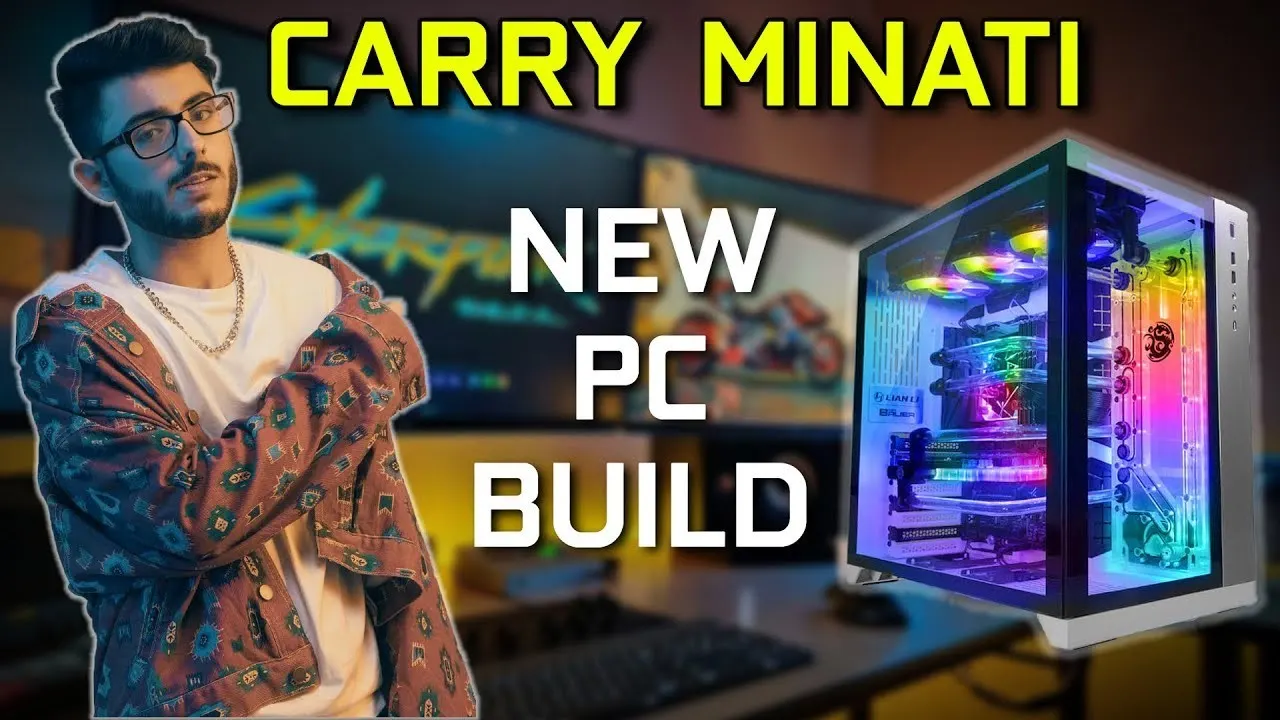
CarryMinati became the first Indian individual YouTuber to cross 30 million subscribers in 2021 and 40 million in 2023. TIME listed him among Next Generation Leaders in 2019. Forbes 30 Under 30 Asia followed in 2020. Mainstream awards and a Bollywood cameo in Runway 34 signaled that digital fame had crossed into older media.
In May 2020 the video YouTube vs TikTok: The End ignited a platform controversy. YouTube removed it citing bullying and harassment policies. The episode showed how a creator's punchline can become a geopolitical-feeling internet event, and how platforms hold the delete key.
Dual channels and craft
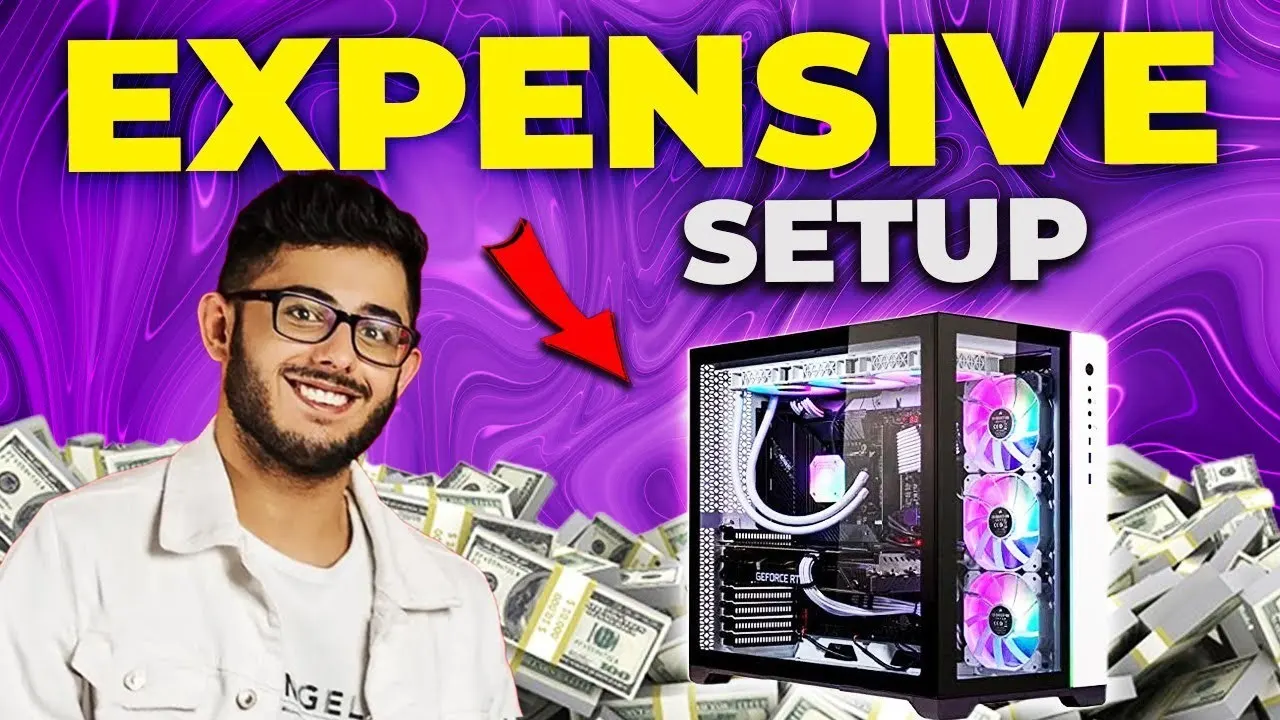
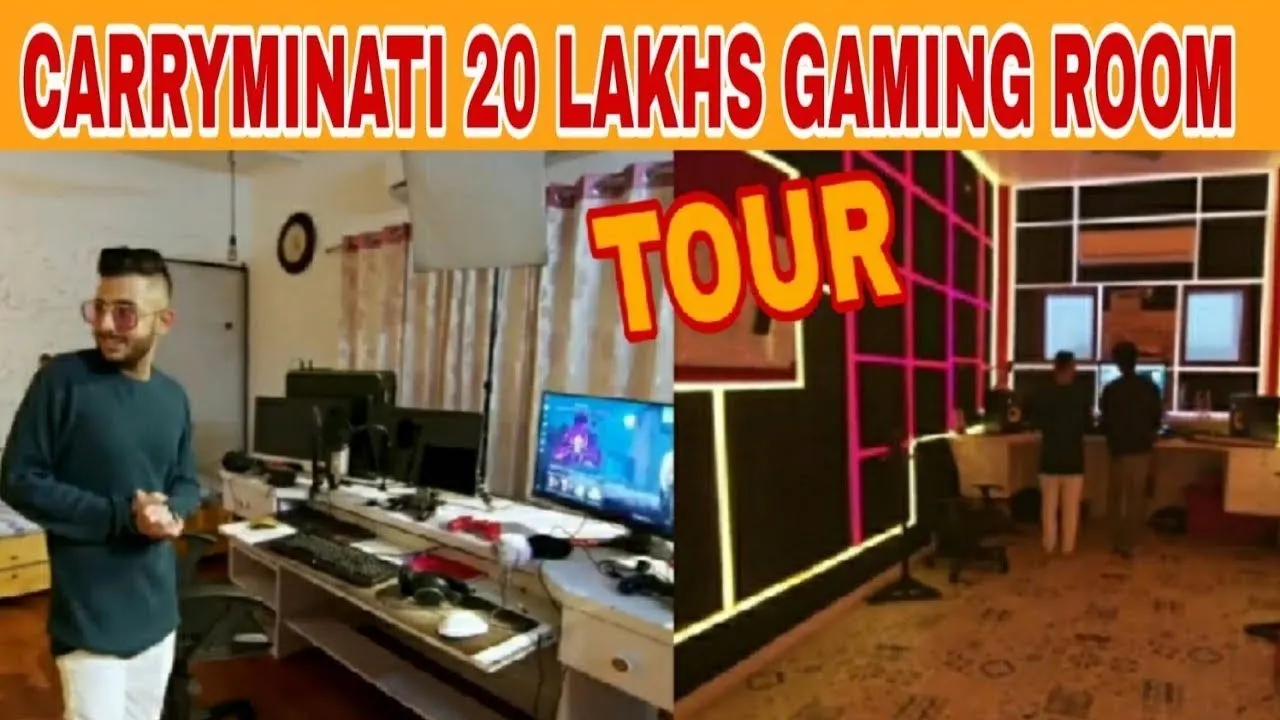
CarryisLive kept the gaming and live relationship warm while the main channel chased higher-production satire and sketches. Music releases extended the brand into audio. Collaborations, including later international creator crossovers reported in mid-2020s coverage, kept the channel from freezing in a single format.
Nagar has spoken about fame's dark side: privacy loss, comment toxicity, and the pressure to stay outrageous. Documentary honesty includes the cost of being quotable to tens of millions of teenagers.
Creator business


Revenue mixes AdSense, sponsorships, merchandise energy, music, and equity. Public net-worth estimates vary widely across Indian media, often cited from roughly tens of crores to around ₹130 crore depending on the outlet and year. Treat those as estimates, not audited filings. The durable business fact is audience ownership: a direct line to Gen Z India that traditional TV still rents by the spot.
A reported 10% stake in Big Bang Esports in 2023 marked a shift from pure creator to ecosystem investor.
World impact


CarryMinati helped prove that Hindi digital comedy could outscale many film marketing campaigns. He normalized roast and reaction formats for a massive Indian audience, pulled advertisers into creator-first budgets, and showed schoolkids that a mic and editing timeline could be a profession. Cultural impact includes slang, meme templates, and the expectation that creators speak more directly than TV hosts.
More CarryMinati cultural texture
Hindi roast comedy on YouTube filled a gap between stand-up clubs and television censorship instincts. CarryMinati's cadence taught millions how to narrate annoyance as entertainment. Schools and offices absorbed catchphrases. Brands chased authenticity by standing next to the roast rather than against it.
The dual-channel strategy mattered. Live gaming preserved intimacy. Main-channel productions chased eventfulness. Music releases tested whether the voice could leave the commentary booth. Esports equity tested whether the creator would own a piece of the arena rather than only shout from it.
Fame's tax is constant. Every joke can become a clip out of context. Every silence can become a rumor. Nagar's interviews about the dark side are part of the product education for younger creators watching him.
Closing

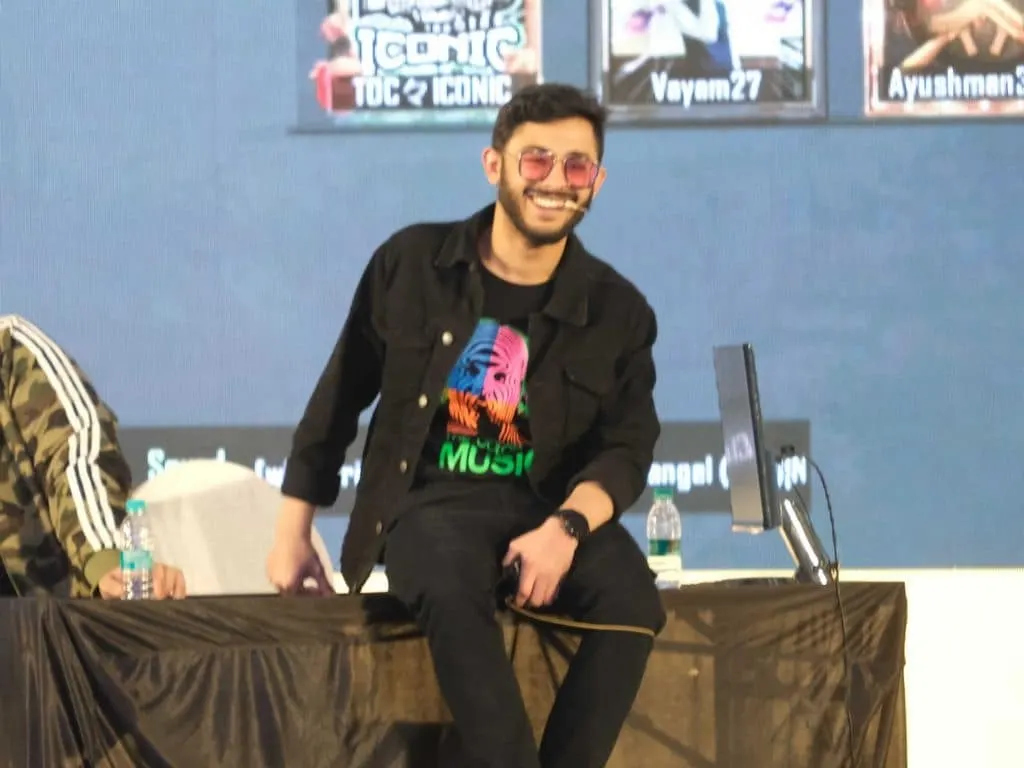
Ajey Nagar's story is a Faridabad kid who treated the internet as a stage before institutions were ready. CarryMinati is the character. Ajey is the operator who still has to decide what to upload next. The empire is attention converted into a multi-channel business, still evolving as platforms and politics shift under every punchline.
Extended documentary texture
The story is best told through rooms. Rooms where a decision felt small and later proved enormous. Rooms where a spreadsheet mattered more than a speech. Rooms where a partnership held or cracked.
Documentary depth means refusing the press-release version. It means keeping the cost of discipline visible: nights spent on plans, the boredom of process, the courage of saying no to glamorous complexity.
Public numbers change. Valuations move. Rankings shuffle. What endures are operating habits and the institutions altered for customers who never learn the founder's name.
This biography keeps returning to checkable scenes. A school. A first job. A launch. A fight. A gift. A product used by strangers on an ordinary Tuesday.
Ambition without craft is noise. Craft without ambition is a private hobby. The founders who reshape markets usually carry both, awkwardly, for years before the world notices.
Luck arrives dressed as timing. Timing arrives dressed as preparation. Preparation looks boring until it suddenly does not.
Before the public victories came unpaid nights, rejected pitches, and the quiet decision to continue when quitting would be easier to explain at dinner. Partners matter. Timing matters. Luck matters. Craft remains the part a founder can control day after day.
Secondary characters deserve oxygen too: co-founders, early engineers, spouses who absorbed travel, professors who opened a door, regulators who closed one. No founder is a closed system.
Finally, impact should be described at human altitude. Not only billions. Also a passenger who made it home, a professional who changed careers, a creator who negotiated better terms, a student who shipped an app before they could hire help.
Those human altitudes are why documentary form still matters in an age of infinite feeds.
When sources disagree on exact figures, this pack prefers careful wording over fake precision. When a quote appears, it is paraphrased into story voice rather than pasted as a transcript wall.
The magazine cover photo is a single face. The story behind it is a crowd.
Final documentary expansion
Years from now the products will look inevitable. They were not. Someone chose a constraint, hired a team, survived a fight, and shipped again.
In an age of infinite feeds, compression is useful for headlines and dangerous for understanding. The missing texture is almost always process: how meetings ran, how fear felt, how a partner argument changed a product, how a customer complaint rewrote a roadmap.
Operators love boring reliability. Spectators love origin myths and exit numbers. The gap between those loves explains most public confusion about what actually happened.
A responsible biography therefore spends unusual time on ordinary Tuesdays. Tuesday is where culture lives. Tuesday is where cost discipline is either real or performative.
If you use this biography for a magazine cover story, keep the cover promise honest: thrilling, true, and grounded in sources you can reopen.
The editorial standard for this series is documentary depth: childhood spark, first bets, near-death moments, breakthroughs, rivals, money stakes, and landing. Readers should feel the arc, not skim a timeline.
Documentary deep dive: craft, capital, and consequence
The public remembers slogans. Operators remember calendars. A founder biography that stops at the slogan fails the reader who needs to understand how Tuesdays actually felt inside the company.
Every major beat in this life can be restated as a constraint. Money was scarce, then suddenly not. Talent was scarce, then suddenly expensive. Attention was scarce, then suddenly violent. The founder who survives is usually the one who notices which constraint is real this quarter.
Childhood is not decoration in these stories. It is the first operating system. Scarcity teaches hustle or fear. Stability teaches patience or complacency. Migration teaches belonging as a product. Military service teaches hierarchy and performance under noise. Small-town sports teach captains how to speak when the gym is listening. Multiplex lobbies teach that audiences pay for feeling, not for plot summaries.
Early jobs matter because they are unpaid laboratories. Internships, failed shops, spam research, gaming commentary, festival sketches: each is a rehearsal of distribution. The founder learns whether they can ship without permission. That lesson later looks like courage. At the time it often looks like unemployment with better lighting.
Co-founders are not side characters. They are the second nervous system. Architects, operators, engineers, brothers who produce beats, classmates who hear a business inside a hobby: the partnership either multiplies taste or multiplies blind spots. When one founder takes the microphone, the other often keeps the machine from melting. Documentaries that erase the quieter partner lie by omission.
Capital is a character with its own motives. Seed angels want a story they can retell. Growth funds want a chart that fits a thesis. Sovereign-scale vehicles want speed that can justify a mandate. Public markets want governance that can survive a headline. The same founder can look visionary under one capital regime and reckless under another without changing personality. What changed was the weather.
Product craft is the part spectators skip. Desks have to be clean. Packets have to route. Roasts have to time the pause. Sketches have to cut before the joke dies. Edge networks have to fail closed in the right way. Residential apps have to make renting feel like joining. Without craft, narrative becomes fraud. With craft, narrative becomes distribution.
Crisis chapters are where values become expensive. An S-1 that reveals related-party gravity. A security bug with a memorable name. A video the platform deletes. A health scare that ends the upload calendar. A co-founder illness that no org chart can replace. The documentary question is never whether pain arrives. It is whether the organization still knows what it is for when the pain is loud.
Second acts are not erasers. They are arguments with the first act. A residential platform after coworking. A Co-Chair title after COO years. An AI crawl fight after spam hunting. An esports stake after roast fame. A sci-fi series after festival sketches. Readers should hear rhyme without assuming repetition is destiny.
World impact should be measured at human altitude. A freelancer who could rent a desk without a ten-year lease. A small publisher who stayed online during an attack. A teenager in Faridabad who heard a career path in a monologue. A family that laughed at a three-minute sketch after a hard day. A developer who deployed logic near users without owning a rack in every city. Billions are abstractions. Those scenes are not.
Culture is the residue of what got rewarded when nobody important was watching. If speed was rewarded, people shipped fragile. If taste was rewarded, people argued longer. If loyalty was rewarded, people stayed through ugly quarters. If fear was rewarded, people lied upward. Founders imprint culture whether they write values docs or not.
Rivals are useful teachers. SoftBank-fueled competitors. Legacy CDN vendors. Traditional TV networks. Other creators fighting for the same thumbnail real estate. Rivalry clarifies positioning. It also tempts founders into performative wars that burn trust. The best rivalries improve the product. The worst improve only the quote.
Habits are the boring spine. Sleep or no sleep. Writing before meetings or meetings before writing. Walking the floor or living in slides. Editing until midnight or protecting mornings. Public interviews often romanticize intensity. Sustainable intensity is usually a calendar with non-negotiables.
Money stakes change moral temperature. When losses are private, storytelling can outrun math for years. When losses become public, storytelling needs receipts. When equity makes a founder wealthy on paper, every personal choice becomes a headline. Wealth is not proof of wisdom. It is proof that a market cleared at a price.
Luck refuses to be written out. Meeting the right classmate. Getting a government cheque that proves a market. Uploading before a platform algorithm tips. Surviving a controversy that could have ended the channel. Refusing to invent luck does not mean ignoring preparation. Preparation is how luck finds an address.
Failure is information with bad manners. Failed IPO processes teach governance. Deleted videos teach platform power. Burnout teaches calendar design. Departed co-founders teach succession. Readers should leave knowing what the failure taught, not only that it hurt.
Language is a founder tool. Mission phrases recruit. Metric inventions can hide. Roast cadence can build intimacy or normalize cruelty. Infrastructure CEOs who write publicly shape regulation conversations. Comedy directors who speak about loneliness shape how young men ask for help. Words are product surfaces.
Geography shapes ambition. Tel Aviv and New York. Prince Albert and Silicon Valley. Utah and the open internet. Faridabad and the Delhi-NCR attention market. Ulhasnagar and Mumbai's film shadow. Place supplies accents, networks, and chips on shoulders. Removing place flattens the documentary into a generic startup myth.
Gender and representation matter in operator stories even when the subject is not primarily framed that way. A woman co-founder who becomes Co-Chair after years of shipping is not a footnote. A young man whose comedy teaches emotional frankness is not only an AdSense machine. Readers deserve those textures without tokenism.
Technology eras reframe the same company. Pre-cloud security. Freemium CDN. Zero trust. Workers. AI crawlers. Pre-Instagram video. Vine-era sketches. Long-form YouTube. Free web series as studio alternative. The founder who adapts the thesis without abandoning the mission usually outlasts the founder who confuses a feature for an identity.
Ethics arrive as tradeoffs, not posters. Whom to protect on a network. What joke is too far. How much related-party complexity to disclose. Whether free content exploits audience trust or expands access. Documentary tone should show the tradeoff clearly enough that a reader can disagree intelligently.
The magazine cover reduces a life to one face and five words. The cutsheet restores motion. The image guide restores place. The sources list restores accountability. Together they are a pack, not a press release.
If a number in this biography is labeled estimate, believe the label. Markets move. Subscriber counters move. Valuations are opinions with term sheets. Prefer scenes you can reopen on video over figures that demand false precision.
The closing beat of any founder documentary should leave residue. Not a trophy list. A feeling of cost and consequence. Someone chose a hard constraint, recruited other humans into it, and changed what ordinary people could do on a Tuesday. That is the standard this pack tries to meet.
Additional scene work
Imagine the first lease signing when the brand was still a joke to landlords. Imagine the first time a free customer stayed online through an attack that would have killed a shared host. Imagine the first roast that jumped from friends to strangers in another state. Imagine the first festival sketch that a relative forwarded without being asked. Imagine the board call where the IPO path closed. Imagine the quiet morning after a break when the script for a longer story finally made sense.
Those imagined rooms are anchored to public facts in this pack. They are not inventions of events. They are invitations to feel the scale of decisions that later look inevitable.
Teams remember different truths. Sales remembers the quarter. Engineering remembers the outage. Editorial remembers the joke that almost crossed a line. Finance remembers the covenant. The founder biography has to hold multiple truths without dissolving into relativism. Checkable timeline first. Emotional color second.
Readers outside the industry need translation. Coworking is belonging with a badge. A reverse proxy is a shield and a shortcut sitting between you and a server. A roast is a social audit performed as entertainment. A vines sketch is a compressed sitcom episode. Once translated, the stakes become obvious.
Succession and legacy start earlier than founders admit. Who can ship if the founder is offline. Who owns the audience relationship. Who maintains the culture when the original office joke stops being funny. Packs that ignore succession imply immortality. Markets do not.
Finally, keep the human scale. The Israeli sailor. The Saskatchewan basketball captain. The Utah lawyer teaching spam law. The Faridabad student skipping a board exam. The Ulhasnagar kid raised near a multiplex. Those people still exist inside the later titles: CEO, President, Co-Chair, CarryMinati, director. The titles are costumes. The people are the story.
Extended documentary rooms
Room one is the origin room: a kitchen table, a barracks bunk, a dorm common room, a bedroom with a cheap mic. The founder is not famous yet. The only audience is friends or parents who wish they would study something safer.
Room two is the first yes: a customer, a viewer, an investor, a landlord. The yes is small and intoxicating. It teaches the wrong lesson if the founder thinks all future yeses will be equally easy.
Room three is the scaling hallway: hiring, firing, process docs, late Slack threads, the first time someone uses the word platform seriously. Craft either industrializes or collapses into heroics.
Room four is the public square: IPO filings, award stages, trending pages, controversy cycles. The square does not care about nuanced intent. It cares about a sentence that fits a headline.
Room five is the aftermath office: quieter, sometimes richer, sometimes humbled. Second products begin here. So do better governance habits, or the repetition of old sins with new logos.
Across those rooms, keep asking what ordinary users gained. Desk access. Uptime. Laughter. A sense that someone on the internet spoke like them. If that answer is thin, the biography is only a wealth diary.
Capital timelines deserve a slow paragraph. Low interest rates and soft diligence create different founders than tight markets do. SoftBank-era WeWork cannot be understood as only Neumann's personality. Cloudflare's freemium wedge cannot be understood without the cost curves of bandwidth and compute. Indian creator businesses cannot be understood without smartphone penetration and cheap data. Context is not excuse. Context is physics.
Partnerships deserve another slow paragraph. Miguel and Adam. Matthew, Michelle, and Lee. Ajey and Yash. Ashish and a long-running crew. Some partnerships are romanticized. Some are quietly contractual. All of them allocate credit unevenly in public. This pack tries to restore oxygen to the names that made the famous name possible.
Failure modes differ by industry. Real estate-tech dies on leases. Infrastructure dies on trust after incidents. Creator businesses die on algorithm shifts and reputational shocks. Knowing the failure mode helps a reader predict the next chapter without pretending prophecy.
The emotional landing should not be worship. It should be clarity. These founders changed tools people use when they work, publish, laugh, or feel less alone. They also made mistakes that cost employees, investors, platforms, or audiences. Holding both is the documentary job.
A final inventory of craft habits closes the deep dive. Write things down. Ship on a cadence. Talk to users. Protect sleep when the body warns you. Hire people who argue well. Tell the truth in the metrics even when the story prefers a prettier chart. None of that is original. All of it is rare under pressure.
When you finish this pack, reopen one source video at the cut range listed. Listen for tone. Tone is where charisma and caution live. Then look at one image in the guide and ask what the frame excludes. Exclusion is also information.
That is enough texture to keep the magazine promise without turning the page into empty adjectives.
Timeline anchors for editors
1999: Born in Faridabad.
2014: Main YouTube path solidifies after earlier gaming experiments.
2019-2020: TIME and Forbes recognitions; TikTok roast controversy and takedown.
2021: First Indian individual creator past 30 million subscribers.
2023: Past 40 million; esports stake reports.
2025-2026: Main channel near 45.7 million subscribers; multi-channel creator business continues.
Treat net-worth headlines as estimates. Prefer platform counters and named award lists for hard facts.
Closing documentary note
This pack aims for magazine documentary density: scenes, stakes, craft, aftermath. It is not an encyclopedia page and not a press kit. Where public estimates disagree, wording stays careful. Where video sources exist, cut ranges stay under three minutes so editors can embed ethically.
The founder remains a person moving through institutions, markets, and accidents of timing. Readers should finish with a clearer map of how the work was done, not only what awards arrived afterward.
Years from now the products will look inevitable. They were not. Someone chose a constraint, hired a team, survived a fight, and shipped again. That someone, in this pack, is the founder named above.
If you use this biography for a magazine cover story, keep the cover promise honest: thrilling, true, and grounded in sources you can reopen.
The editorial standard for this series is documentary depth: childhood spark, first bets, near-death moments, breakthroughs, rivals, money stakes, and landing. Readers should feel the arc, not skim a timeline.
Secondary reporting will keep updating valuations, subscriber counts, and titles. This pack freezes a responsible snapshot for editors who need motion picture structure rather than a wiki dump. Re-verify live figures before print.
What should stay stable is the causal chain: what they built, how they worked, what broke, what they tried next, and who among ordinary people felt the difference.
Editor coda on Nagar
CarryMinati sits at the intersection of comedy, gaming, and youth identity in India. The business question is diversification without dilution: music, esports, live, long-form. The cultural question is whether roast intimacy can mature as the audience ages. Creators who fail that transition become nostalgia acts. Creators who succeed become studios with a voice. Nagar still has runway to choose.
Field notes for magazine editors
The day-to-day (layer 1) work rarely matches the myth. Calls, drafts, checklists, awkward silences after bad launches, and the small relief of a metric turning the right direction. Documentary readers need that texture because it is where character shows. Layer 1: courage is often just continuing the checklist when applause is gone. Leadership is often just repeating a standard until it becomes culture. The rest is costume. Partners and early employees carry memories the press never prints. Who calmed a customer. Who rewrote a landing page at dawn. Who said no to a deal that looked shiny. A complete pack leaves room for those unnamed contributions even when the cover sells a single face. Markets will keep repricing these stories. That is fine. The causal spine should still hold: a problem noticed early, a product shaped with collaborators, a distribution wedge, a crisis that revealed governance or taste, and a later chapter that tried to learn out loud. The day-to-day (layer 2) work rarely matches the myth. Calls, drafts, checklists, awkward silences after bad launches, and the small relief of a metric turning the right direction. Documentary readers need that texture because it is where character shows. Layer 2: courage is often just continuing the checklist when applause is gone. Leadership is often just repeating a standard until it becomes culture. The rest is costume. Partners and early employees carry memories the press never prints. Who calmed a customer. Who rewrote a landing page at dawn. Who said no to a deal that looked shiny. A complete pack leaves room for those unnamed contributions even when the cover sells a single face. Markets will keep repricing these stories. That is fine. The causal spine should still hold: a problem noticed early, a product shaped with collaborators, a distribution wedge, a crisis that revealed governance or taste, and a later chapter that tried to learn out loud. The day-to-day (layer 3) work rarely matches the myth. Calls, drafts, checklists, awkward silences after bad launches, and the small relief of a metric turning the right direction. Documentary readers need that texture because it is where character shows. Layer 3: courage is often just continuing the checklist when applause is gone. Leadership is often just repeating a standard until it becomes culture. The rest is costume. Partners and early employees carry memories the press never prints. Who calmed a customer. Who rewrote a landing page at dawn. Who said no to a deal that looked shiny. A complete pack leaves room for those unnamed contributions even when the cover sells a single face. Markets will keep repricing these stories. That is fine. The causal spine should still hold: a problem noticed early, a product shaped with collaborators,
Watch alongside this story
Short cuts from interviews, keynotes and launches. Each plays only the moment that matters.