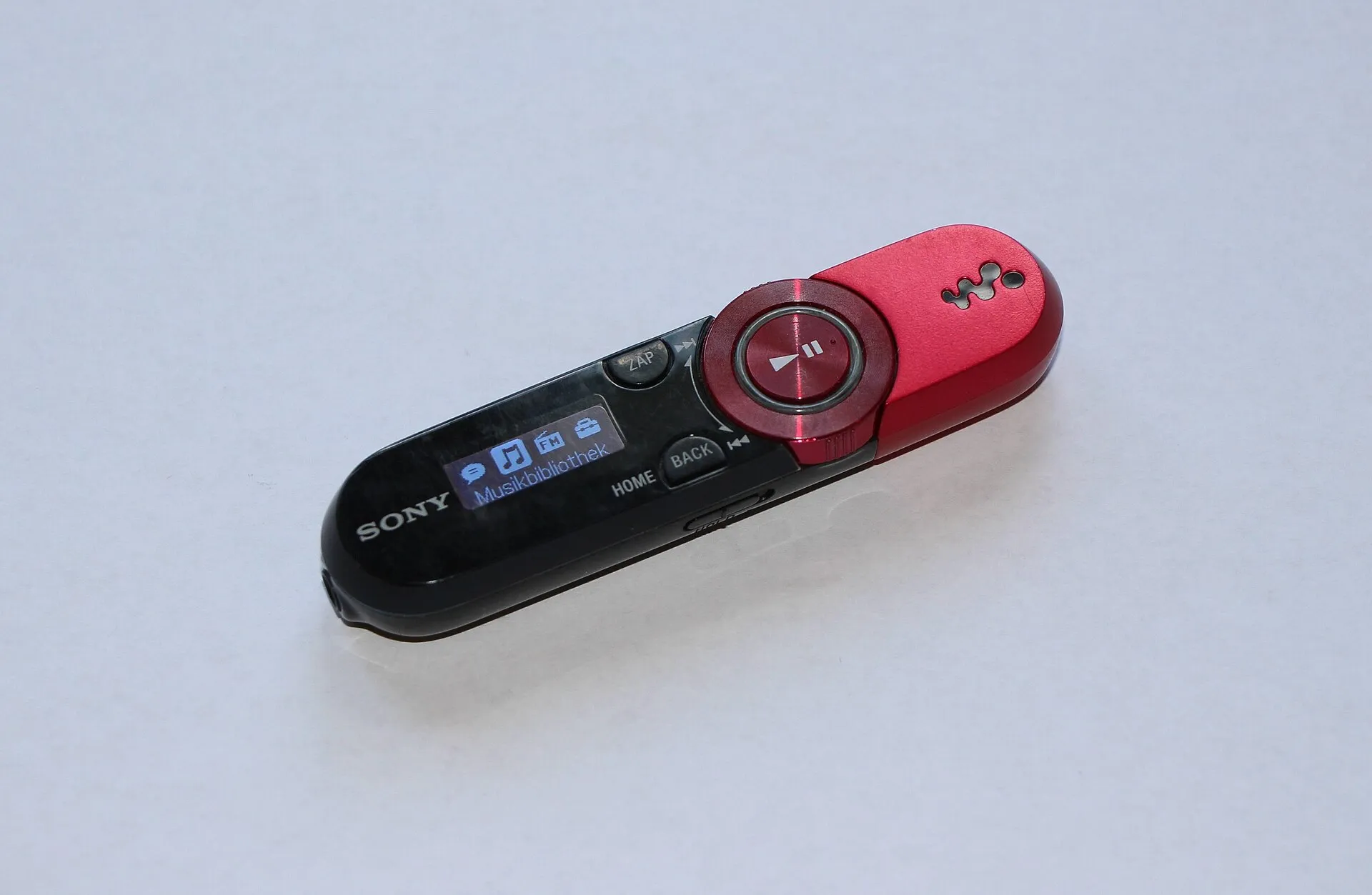
The Sake Heir Who Taught the World to Carry Sound
He walked away from four centuries of sake. He partnered with an engineer thirteen years older. Then he made Made in Japan mean desire, not discount.
On July 1, 1979, a blue-and-silver cassette player small enough to palm slipped into Japanese shops under a name that sounded like a joke and a mission at once: Walkman. Inside Sony, retailers and veterans muttered that a tape machine that could not record was unfinished. Outside, young people put on light headphones and turned city noise into a private soundtrack. Akio Morita, the man who forced the product into the world, had spent three decades teaching buyers that Japanese electronics could be intimate, beautiful, and branded. He would not live to see streaming apps or the PlayStation empires that still wear the Sony mark in 2026. He died on October 3, 1999, of pneumonia in Tokyo, at seventy-eight, after a cerebral hemorrhage on a tennis court in late 1993 took him from the public stage. The story that follows is a completed life, then a living corporate echo: radios, televisions, film libraries, music catalogs, and a group that, in the fiscal year ended March 31, 2026, still reported more than twelve trillion yen in continuing sales under the name he helped invent.
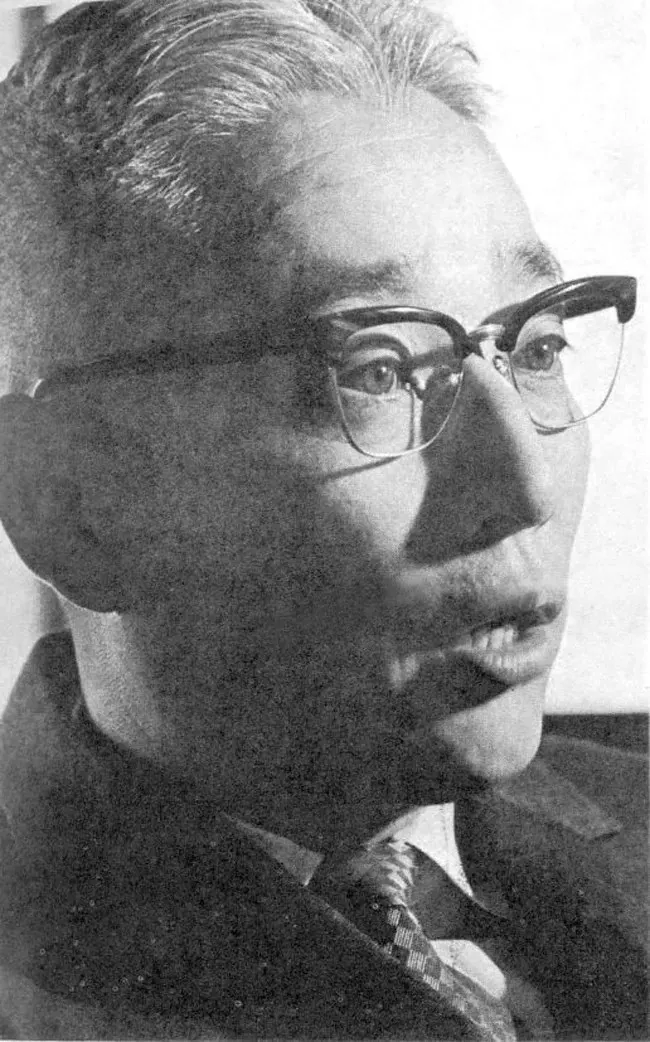
Sake steam, a Victrola, and a boy who wanted circuits
Akio Morita was born on January 26, 1921, in Nagoya, Aichi Prefecture, the eldest son of Kyuzaemon and Shu Morita. The family had brewed sake for roughly three to four centuries around Tokoname and the Chita Peninsula. He was raised as the fifteenth-generation heir. Continuity was not a slogan in that house. It was inventory, yeast, seasons, and a father's eye. School holidays meant sitting through business meetings. The Moritas of his childhood were prosperous enough for a home tennis court, a car, a refrigerator, and a gramophone. When an electric phonograph replaced an older Victrola, the sound of recorded music entered the boy's body as a physical fact. He loved mathematics and physics more than the idea of spending his life guarding a brewery ledger.
He graduated from the science track of the Eighth Higher School, then entered Osaka Imperial University's Department of Physics in 1942. War compressed every timetable. In January 1944 he entered the Navy as a student assigned to continue university work. He graduated in September 1944 and, by March 1945, served as a Navy technical lieutenant in avionic research at Yokosuka. Defeat arrived as ash and rumor. He later remembered hearing of Hiroshima as a working scientist who understood, too quickly, what an atomic bomb meant for the calendar of physics. Tokyo burned. Japan's industrial cities were charcoal. The heir to a sake house stood inside a ruined nation's technical corps and still wanted to build.
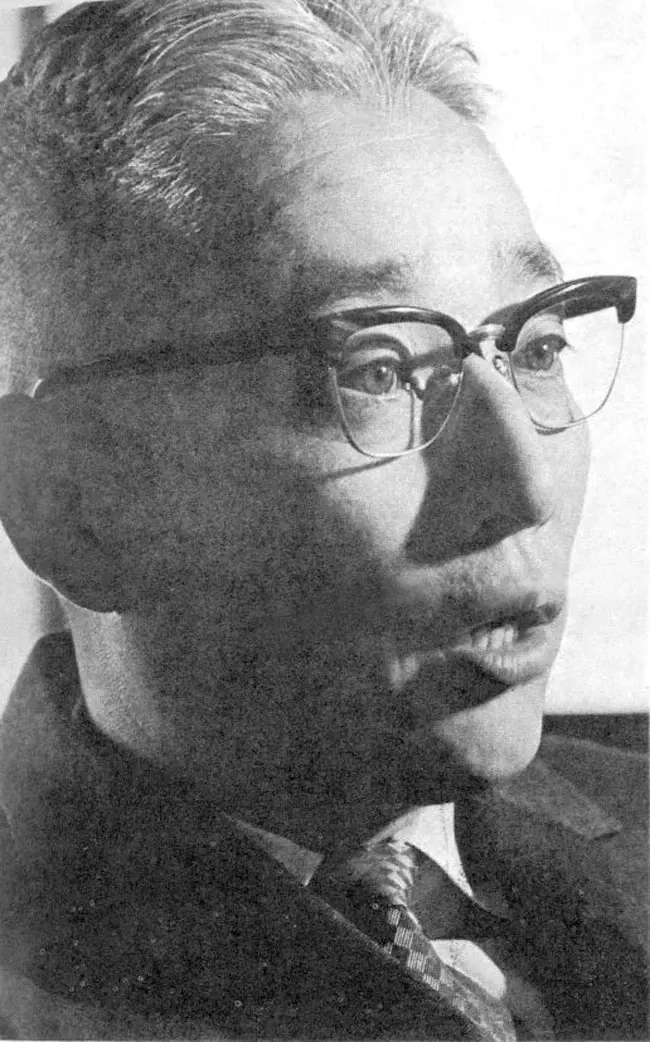
Ibuka, a newspaper column, and ¥190,000
In 1945, on a wartime research committee that mixed Army, Navy, and civilian engineers, Morita met Masaru Ibuka, managing director of Japan Measuring Instruments and thirteen years older. They recognized each other as restless makers. That October, Ibuka opened Tokyo Telecommunications Research Institute in the Shirokiya department store building in Nihombashi. Morita, back in the family orbit after the surrender, found Ibuka again through the Asahi Shimbun's "Blue Pencil" column, which noted the new research shop. Correspondence turned into partnership.
On May 7, 1946, after restructuring, they founded Tokyo Tsushin Kogyo Kabushiki Kaisha, Tokyo Telecommunications Engineering Corporation, with about twenty employees and initial capital of 190,000 yen. Morita was twenty-five and a director. Ibuka was thirty-eight. The shop moved toward Shinagawa. Early products were improvised survival: shortwave adapters, voltmeters, electric rice cookers that failed, and a stubborn insistence that research should outrun mere repair work. In July 1950 they launched Japan's first tape recorder, the G-type, a bulky reel-to-reel machine that taught sales teams how to demonstrate magnetic sound to skeptical offices and schools. Morita learned that invention without theater dies in a warehouse.
In May 1951 he married Yoshiko Kamei. Sons Hideo and Masao and daughter Naoko followed across the 1950s. Domestic life ran in parallel with a company that still looked, from the street, like a small postwar workshop with big talk.
Transistors, TR-55, and the order he refused
Bell Labs had invented the transistor. Western Electric held patents. Sony's predecessors bought rights and struggled with yields that would have closed a less stubborn factory. Defective devices piled up. Loans kept the lights on. In August 1955 the company launched Japan's first transistor radio, the TR-55. It worked. It also announced a new ambition: radios small enough to become personal objects, not furniture.
Then came the story Japanese business students still recite. A major American watch brand, remembered in company lore as Bulova, offered to buy on the order of one hundred thousand transistor radios. For a firm whose capital was still tiny, the order was a dream of cash. The condition was a nightmare of identity: sell them under the American brand, not Sony. Ibuka and Tokyo colleagues leaned toward yes. Morita, traveling and negotiating, said no. In the polished retelling he told the counterpart that in fifty years the Sony name would be as famous as theirs. Exact dialogue softens and hardens depending on the teller. The strategic fact does not. He refused to become a silent OEM for someone else's logo while "Made in Japan" still meant cheap imitation in Western minds.
In March 1957 the TR-63 arrived as a still smaller portable for export. Marketing called it pocketable. The chassis was a little larger than many American shirt pockets, so salesmen, in a Nightline-era anecdote that stuck, received shirts with bigger pockets so the claim would look true on a counter. The joke was serious. Morita understood that perception is part of engineering.
Sony as a word, and America as a classroom
Morita wanted a name foreigners could pronounce without apology. Tokyo Tsushin Kogyo was accurate and impossible abroad. He and Ibuka hunted for a global sound. They fused sonus, Latin for sound, with the friendly English slang of "sonny," and arrived at Sony. The brand was registered and, in January 1958, became the official company name. Insiders resisted a katakana, Romanized identity. Morita treated resistance as proof they were early.
In February 1960 he helped establish Sony Corporation of America and served as its president. He watched American employees change jobs with a mobility that shocked lifetime-employment Japan, then encouraged mid-career hiring back home. In June 1961 Sony became the first Japanese company to offer American depositary receipts on the New York over-the-counter market, a capital-markets signal as loud as any product launch. In October 1962 a Sony showroom opened on Fifth Avenue. In 1963 Morita moved his family to New York for a planned stretch of years that Japanese vice presidents were not supposed to take. He wanted to live among customers, not merely export at them. Weekends meant driving suburbs and watching how Americans actually used living rooms. The Ginza instinct, a flagship that teaches desire, transferred to Manhattan stone.
Trinitron light and an Emmy on the shelf
Color television was a brutal quality war. Sony's answer in October 1968 was Trinitron, launched with the KV-1310 and sold as brighter, sharper, more reliable than the crowded field. The set became a living-room trophy and a brand sermon: Japanese picture tubes could win on delight, not only price. In May 1973 the Trinitron work earned an Emmy for engineering excellence. Morita, already the public face of the company abroad, collected the kind of Western applause that earlier generations of Japanese exporters had been denied.
In March 1968 Sony also entered music software through CBS/Sony Records, a fifty-fifty venture with CBS. Hardware alone, Morita increasingly believed, was a half conversation. Content would matter. That conviction would later price itself in billions.
In April 1971 Time magazine put him on its cover. In June he became president of Sony, succeeding Ibuka's long run. In January 1976 he became chairman and chief executive. The partnership never became a single personality. Ibuka chased technical frontiers. Morita chased markets, finance, human resources, and the global stage. Colleagues who overheard their arguments sometimes thought the founders were fighting. Morita liked divergent opinions. In his 1966 book arguing that school records should not define people, he pushed Sony toward debate less trapped by age, gender, or pedigree.
Betamax, a living-room war Sony lost
In 1975 Sony released Betamax, a pioneering home videocassette recorder that let families time-shift television. Image quality and compactness were real. The market did not award purity prizes. Matsushita's VHS camp licensed widely. More VHS decks meant more VHS tapes. Rental shelves and studios followed the volume. Sony's format starved for software even as Morita believed in it. By the late 1980s Sony would even build VHS machines for parts of the market. The loss hurt because it was a story about standards, not only circuits. Morita absorbed a lesson he would apply to compact discs and to Hollywood: if you do not help shape the software ecosystem, hardware heroism can die alone.
Walkman: playback only, world changed
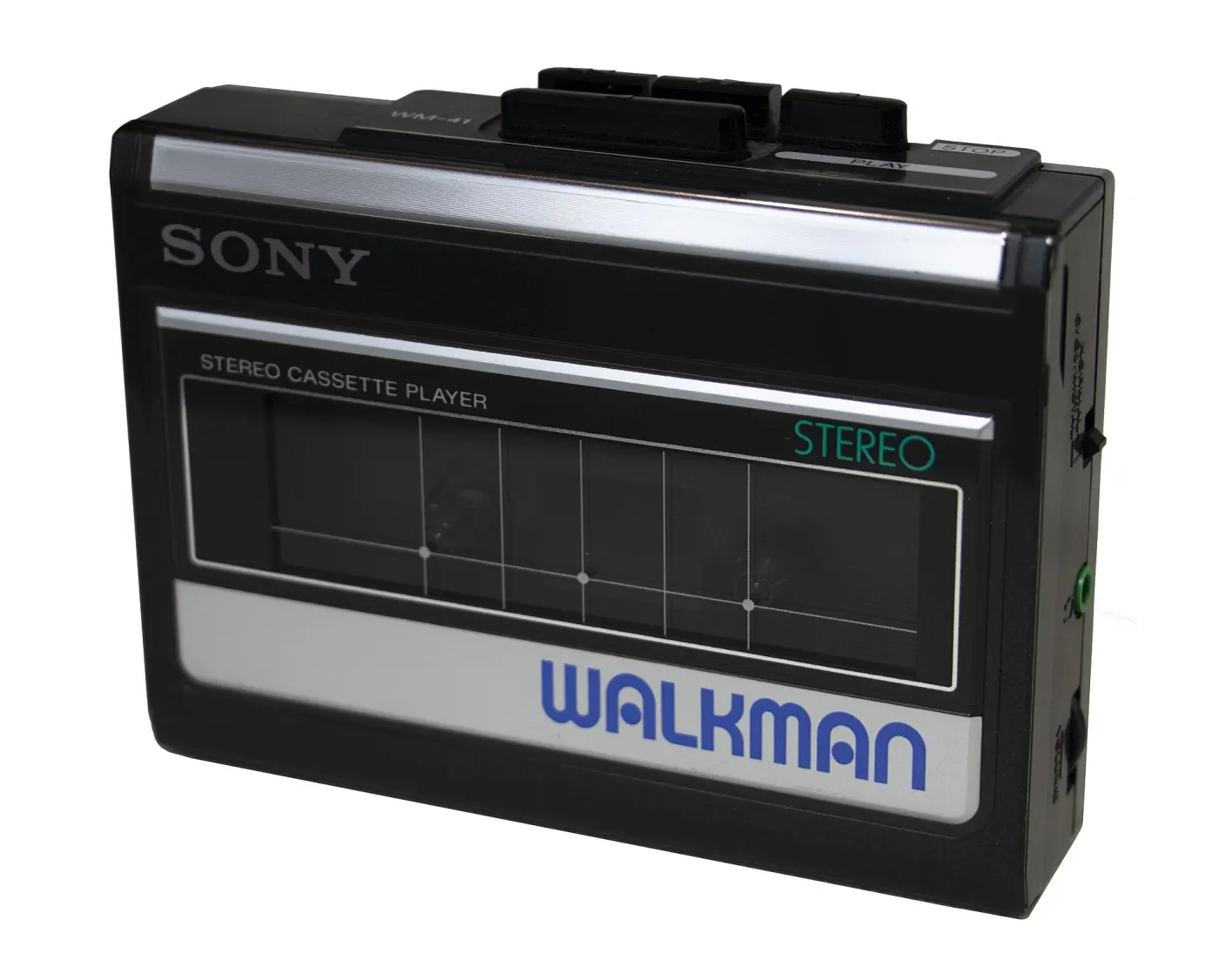
In 1978, honorary chairman Ibuka asked engineers to modify a Pressman cassette recorder so he could hear stereo music on long flights. They removed recording, added stereo playback, and paired it with light headphones. When Ibuka returned, he handed the toy to Morita. Morita heard a product, not a gadget. Young people, he argued, could not live without music. Boom boxes were public and heavy. A personal stereo could be private and light.
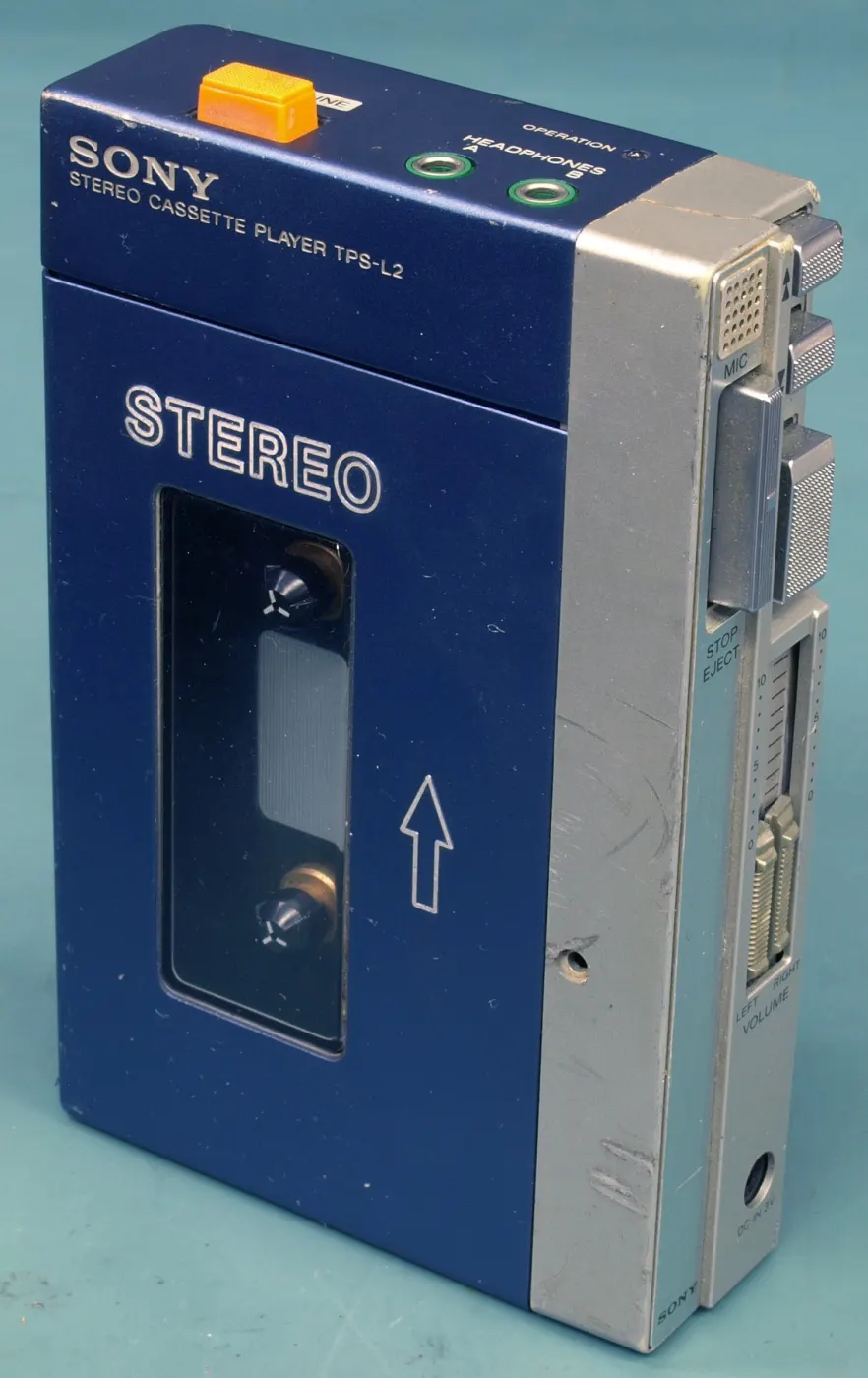
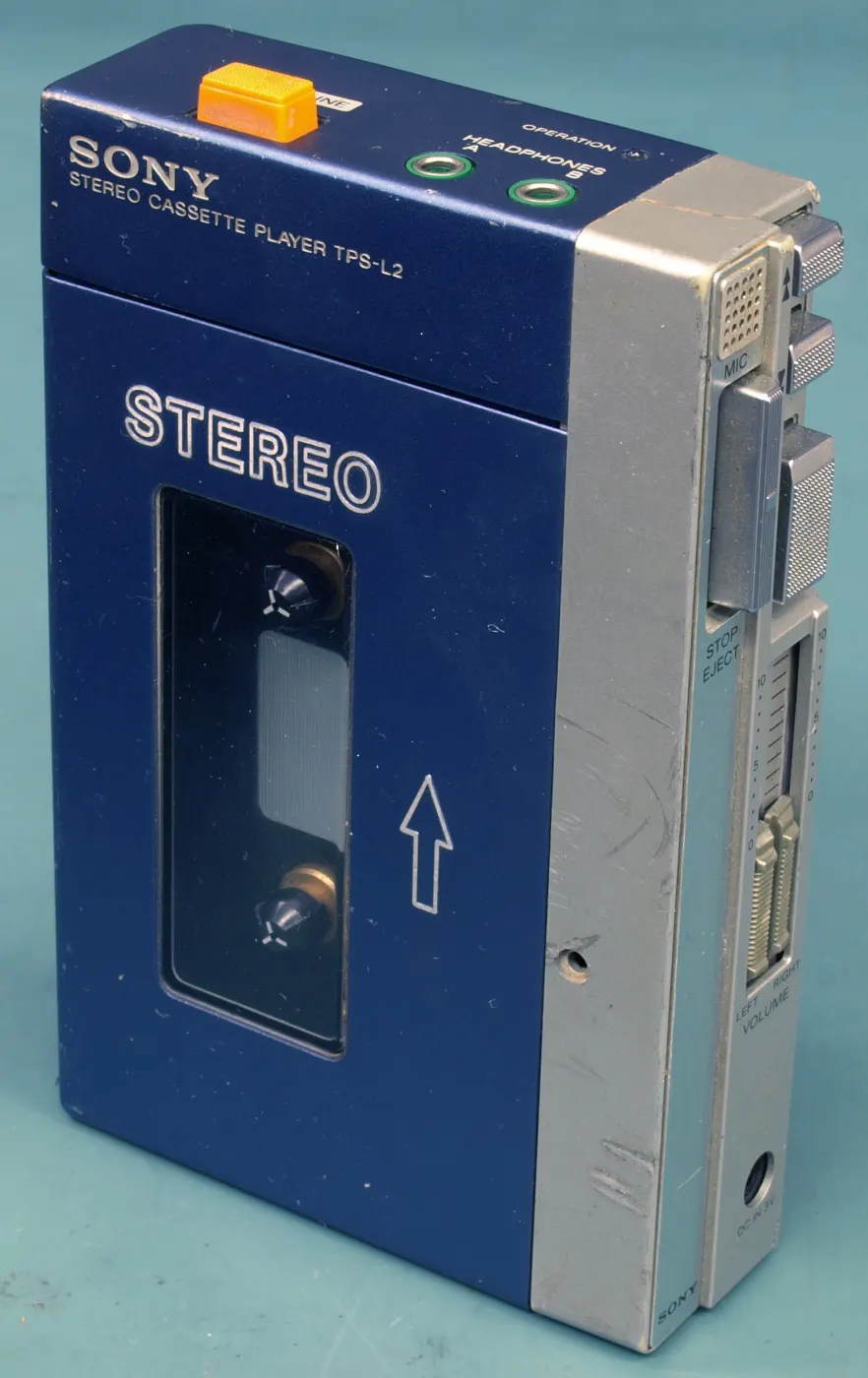
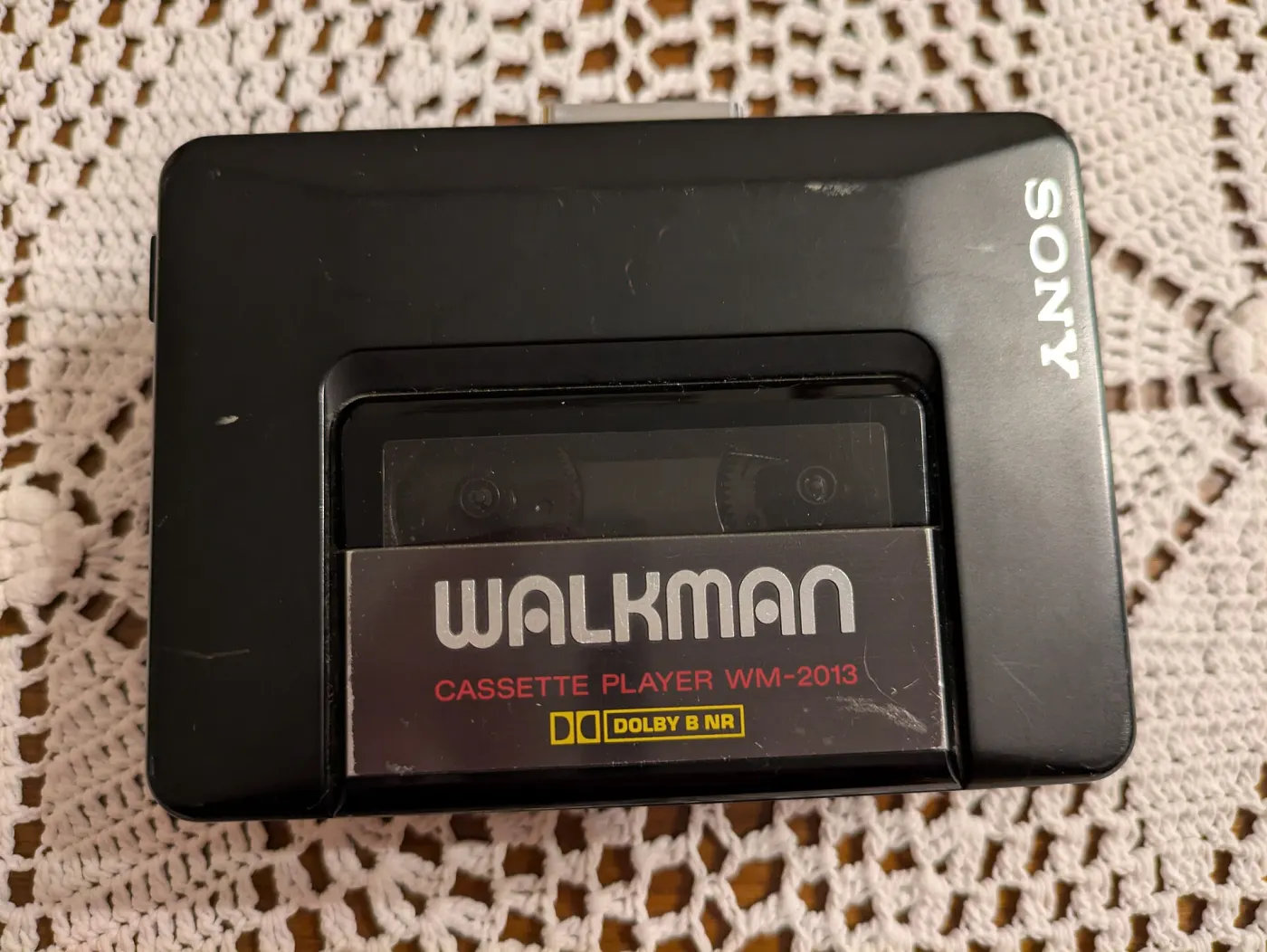
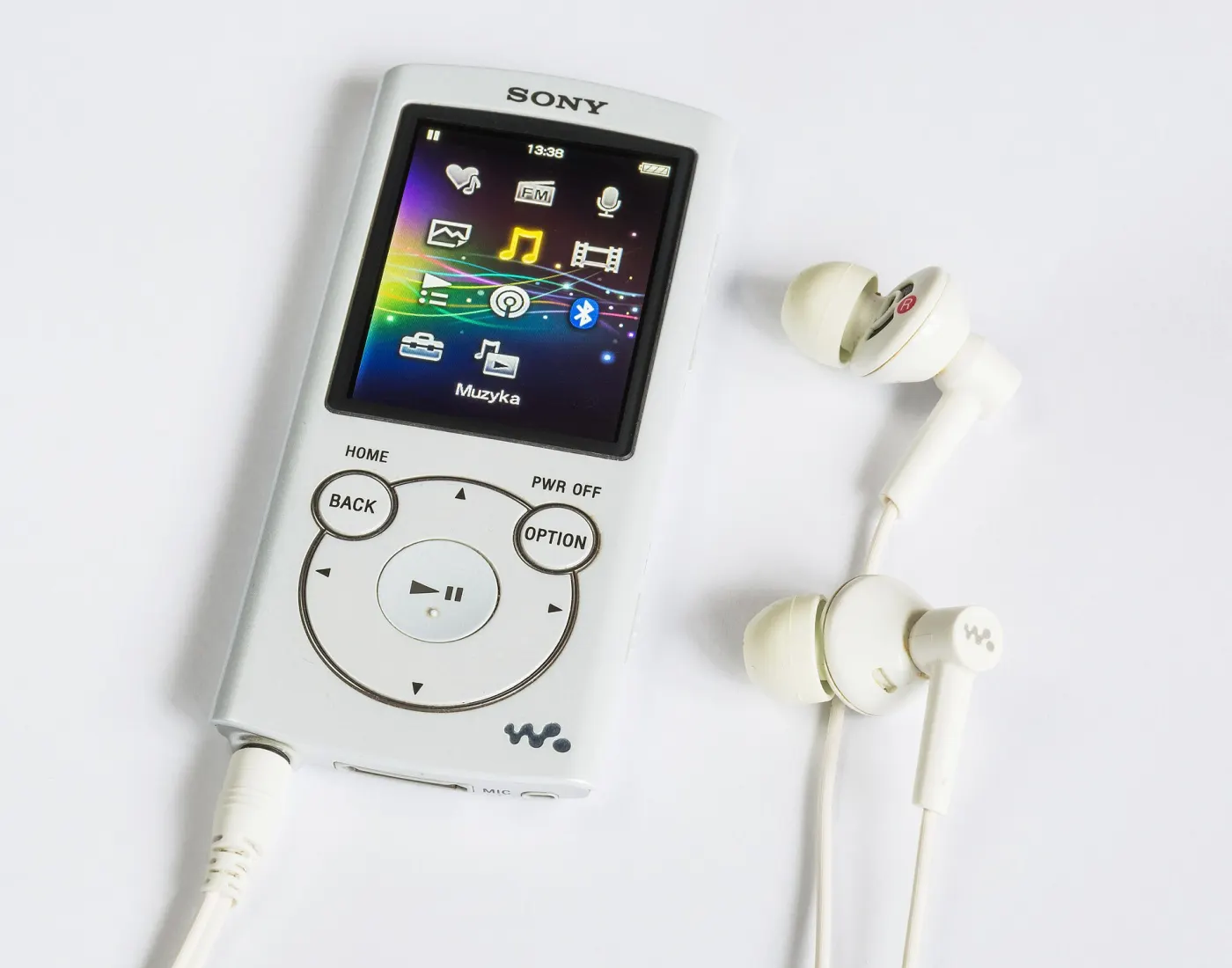
Internal resistance was fierce. A cassette machine that did not record seemed incomplete. Retailers doubted. Morita pushed commercialization anyway. On July 1, 1979, the first Walkman, the TPS-L2, went on sale. It carried two headphone jacks so friends could share, and a bright Hot Line button so a wearer could talk over the music through a built-in microphone. Morita worried about isolation even as he sold solitude. Culture did not wait for the debate. Commuters, joggers, and students wrapped cities in private playlists. Across cassette, CD, MiniDisc, and digital generations, Walkman-branded products would eventually approach roughly four hundred million units in cumulative company tallies often cited by the 2010s. The precise census depends on which formats accountants include. The social fact is simpler. Morita helped invent the modern habit of carrying a soundtrack through the street.
Compact discs, records, and a $2 billion catalog
Remembering Betamax, Morita favored standards shared with strong partners. With Philips, Sony co-developed the compact disc. In 1982 the CDP-101 arrived as a flagship player for a format that offered clearer sound and tougher media than vinyl scratched on a shelf. Because the standard was joint, the software world could grow without a single-vendor hostage crisis. Sony's hardware and, increasingly, its music interests reinforced each other.
In November 1987 Sony agreed to buy CBS Records. On January 5, 1988, the roughly two-billion-dollar purchase completed, bringing a vast catalog and artist roster under Sony. The business would become Sony Music Entertainment in 1991. Morita had argued for years that electronics companies needed software gravity. The check made the argument concrete.
Columbia Pictures, $3.4 billion, and the Hollywood bet
On September 27 and 28, 1989, headlines announced Sony's agreement to acquire Columbia Pictures Entertainment for about $3.4 billion in cash, plus assumption of debt on the order of $1.4 billion. It was then among the largest Japanese purchases in the United States. Columbia's library held thousands of film and television titles. Sony pledged to keep the studio as American-facing as possible while seeking synergy for video formats, including eight-millimeter ambitions and future high-definition dreams. Critics heard wounded pride after Betamax. Supporters heard vertical strategy. Both readings contained truth. Morita's generation had learned that owning stories could protect devices. The following years would bring management turmoil, write-downs, and later recoveries under successors. The strategic bet still reshaped Sony into an entertainment-and-electronics hybrid that 2026 investors recognize.
Books, trade friction, and the man who could say complicated things
In 1986 Morita published Made in Japan: Akio Morita and Sony with Edwin Reingold and Mitsuko Shimomura, an English-language autobiography that taught Western readers how a postwar workshop became a verb for quality. He wrote that Sony planned to lead the public with new products rather than ask them what they wanted, because the public did not know what was possible. The line traveled through business schools and into the notebooks of younger founders, including admirers like Steve Jobs who studied Sony's product theater.
In 1989 he co-authored The Japan That Can Say No with politician Shintaro Ishihara. Unauthorized English circulation tied Morita's name to nationalist edges he did not want as his American brand. He removed his chapters from the official 1991 English edition and worked in essays and speeches to clarify that his critique targeted short-term layoff culture and weak worker share of gains, not a fantasy of permanent confrontation. Trade friction in the late 1980s made every sentence radioactive. Morita kept talking anyway, because silence would have left only caricature.
He served as a vice chairman of Keidanren, sat on international boards, and played diplomat in suits when Washington and Tokyo needed a Japanese face who could joke in English and still defend factories. Jack Welch and other Western executives treated him as a peer. At home he could wear the same gray company uniform as employees and disarm interviewers with manners that did not match his bargaining power.
How he worked
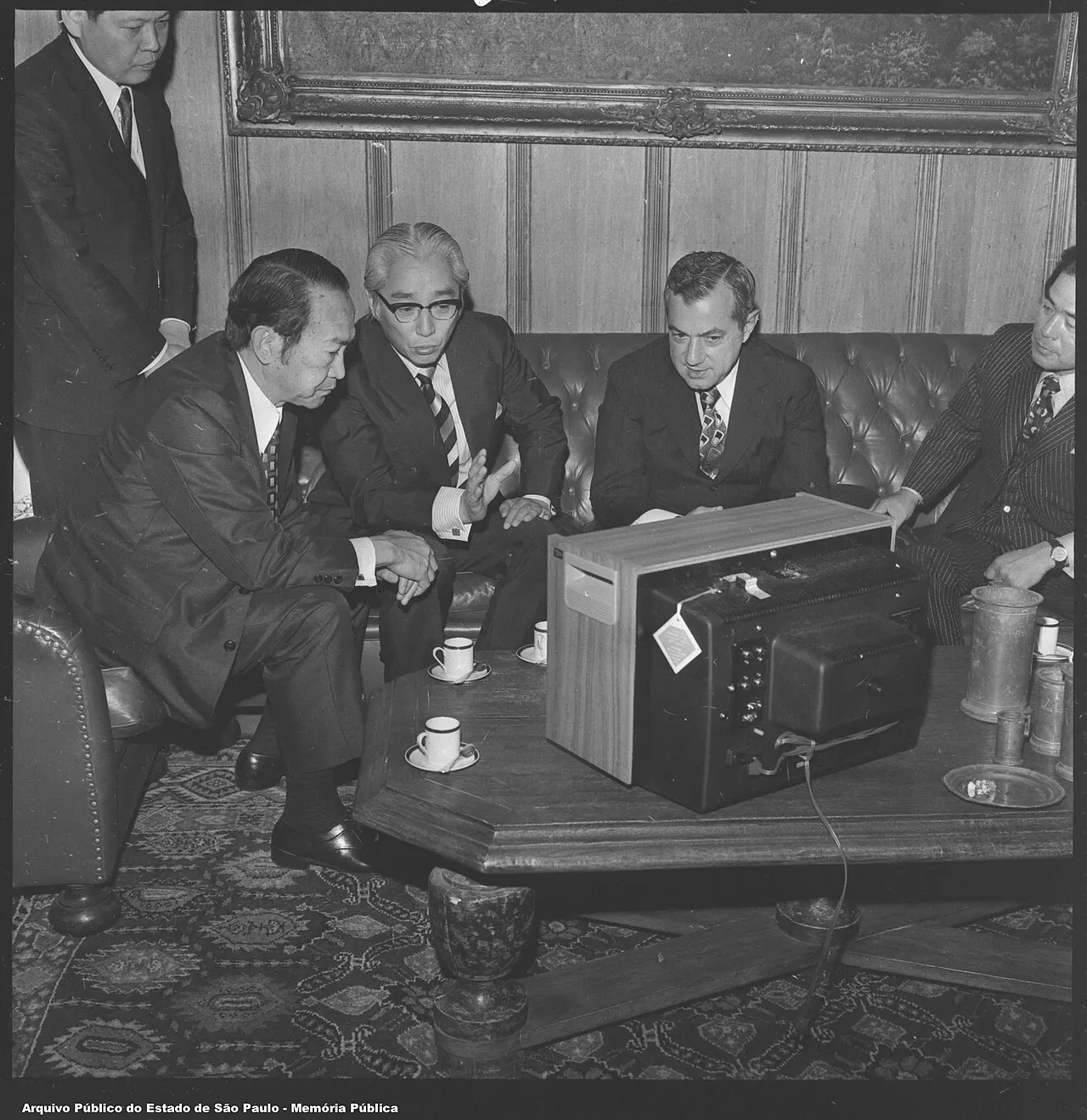
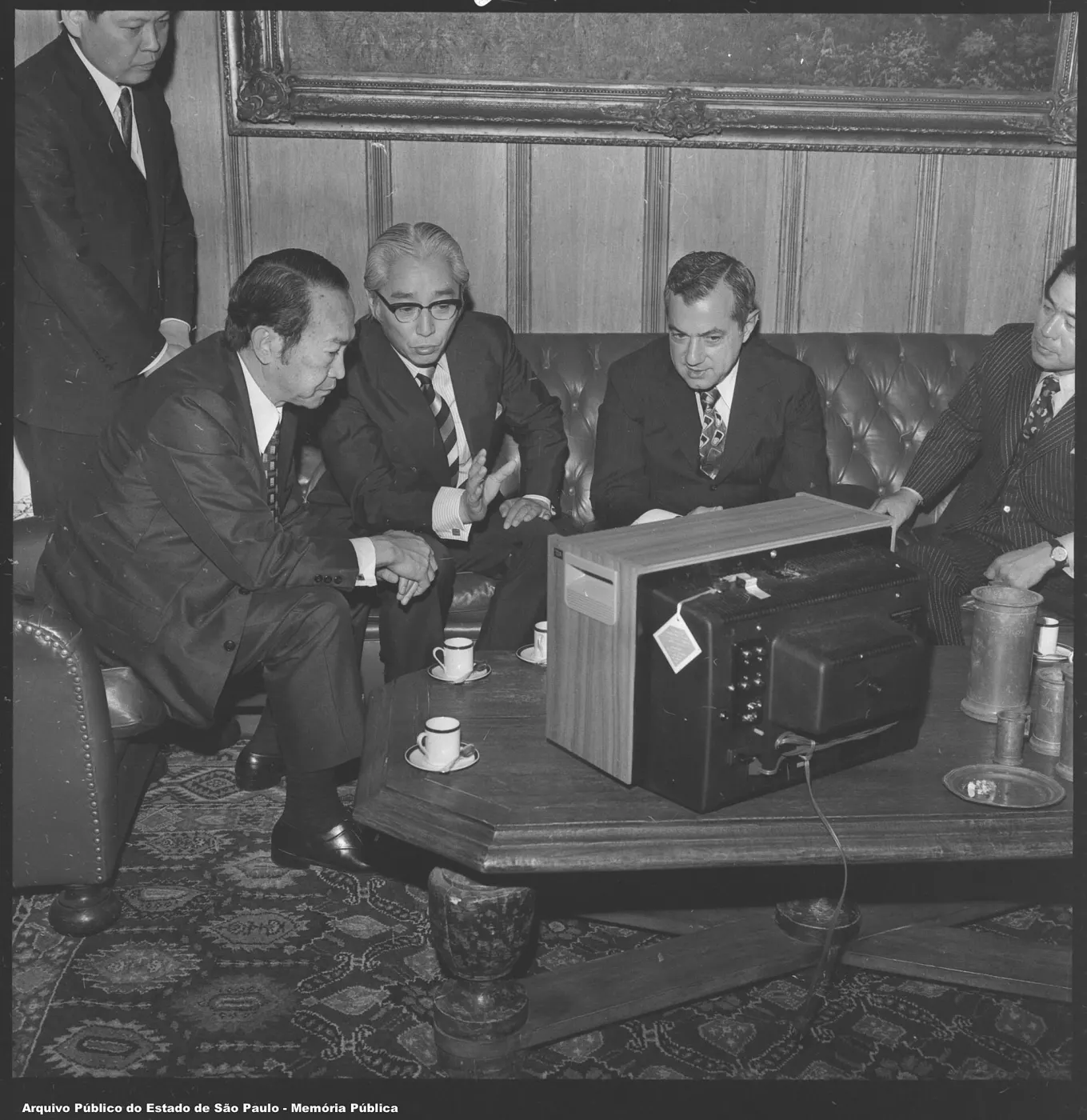
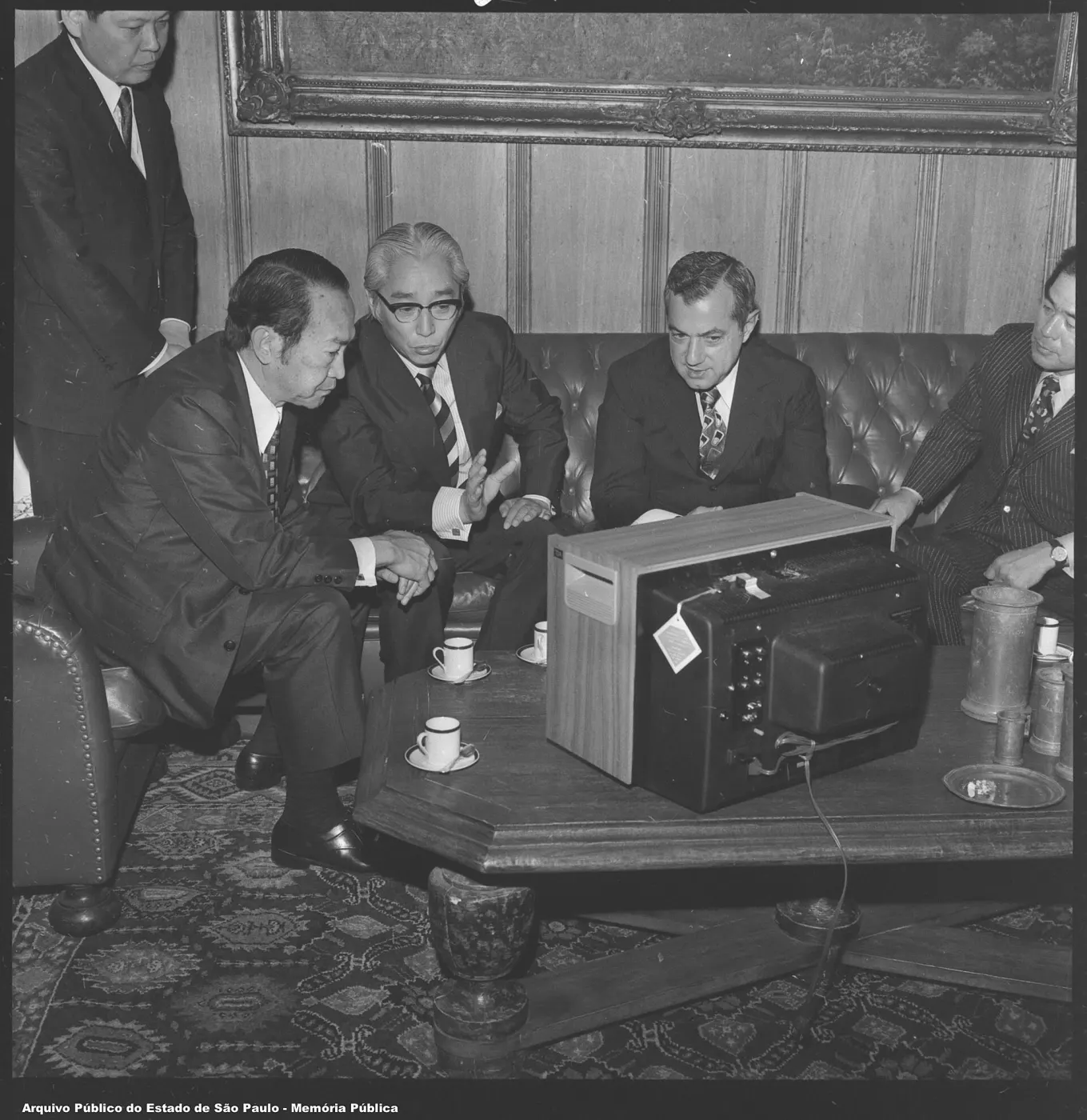
Morita sold by demonstrating. Photographs from foreign trips show him leaning over a set on a coffee table, finger raised, translating engineering into appetite for governors and buyers. He moved his family into the market he needed to understand. He protected brand even when cash shouted otherwise. He tolerated argument with Ibuka as a design feature. He hired across conventional Japanese boundaries more readily than many peers. He slept on airplanes and woke for showrooms. He believed marketing was not decoration on top of invention. It was part of invention. When retailers said Walkman would fail, he treated their certainty as a signal that the category did not yet exist, which was exactly why it might.
He could be wrong in public and still compound. Betamax remains the classroom failure. Columbia's early Hollywood years bruised balance sheets. The pattern of recovery was to widen the company's definition of itself until hardware, music, and pictures shared a roof.
Stroke, honorary chair, and a quiet last chapter
On November 30, 1993, while playing tennis, Morita felt ill. Doctors diagnosed a cerebral hemorrhage. Surgeons operated for hours to remove blood from the brain. Recovery was partial. The public statesman of Japanese business stepped back. In November 1994 he became founder and honorary chairman. Norio Ohga and the next executive generation ran the operating company through the PlayStation launch era and the hard accounting of entertainment assets. Morita did not stage a melodramatic farewell tour. Friends describe dignity and limitation. The tennis court that kept him fit became the last public battlefield he lost.
Pneumonia took him on October 3, 1999. He was seventy-eight. Global obituaries called him Mr. Sony. In Tokyo he was remembered as a sake heir who refused a predetermined life. In New York and London he was remembered as the Japanese executive who made Fifth Avenue and the living room feel newly Japanese without asking permission.
Sony after Morita, through the fiscal year ended March 31, 2026
The company kept the name. It did not freeze in 1999. Sony Computer Entertainment, established in Morita's final active years, released PlayStation in 1994 and turned living rooms into network-connected theaters of play. By June 30, 2026, Sony Interactive Entertainment's public tallies placed PlayStation 5 lifetime sell-through above ninety-five million units. Game and network services, music, and imaging and sensing semiconductors became profit engines in ways the tape-recorder shop of 1950 could not have diagrammed.
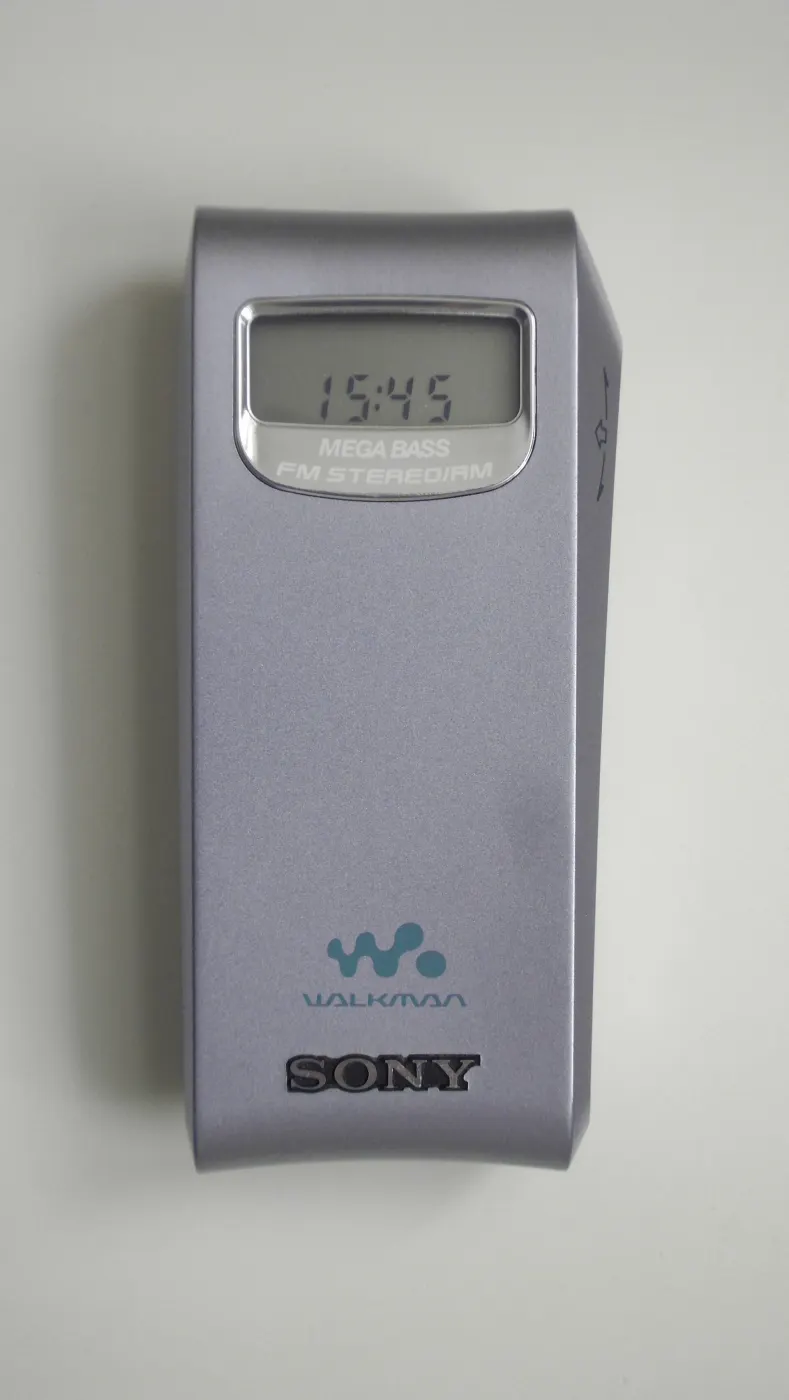
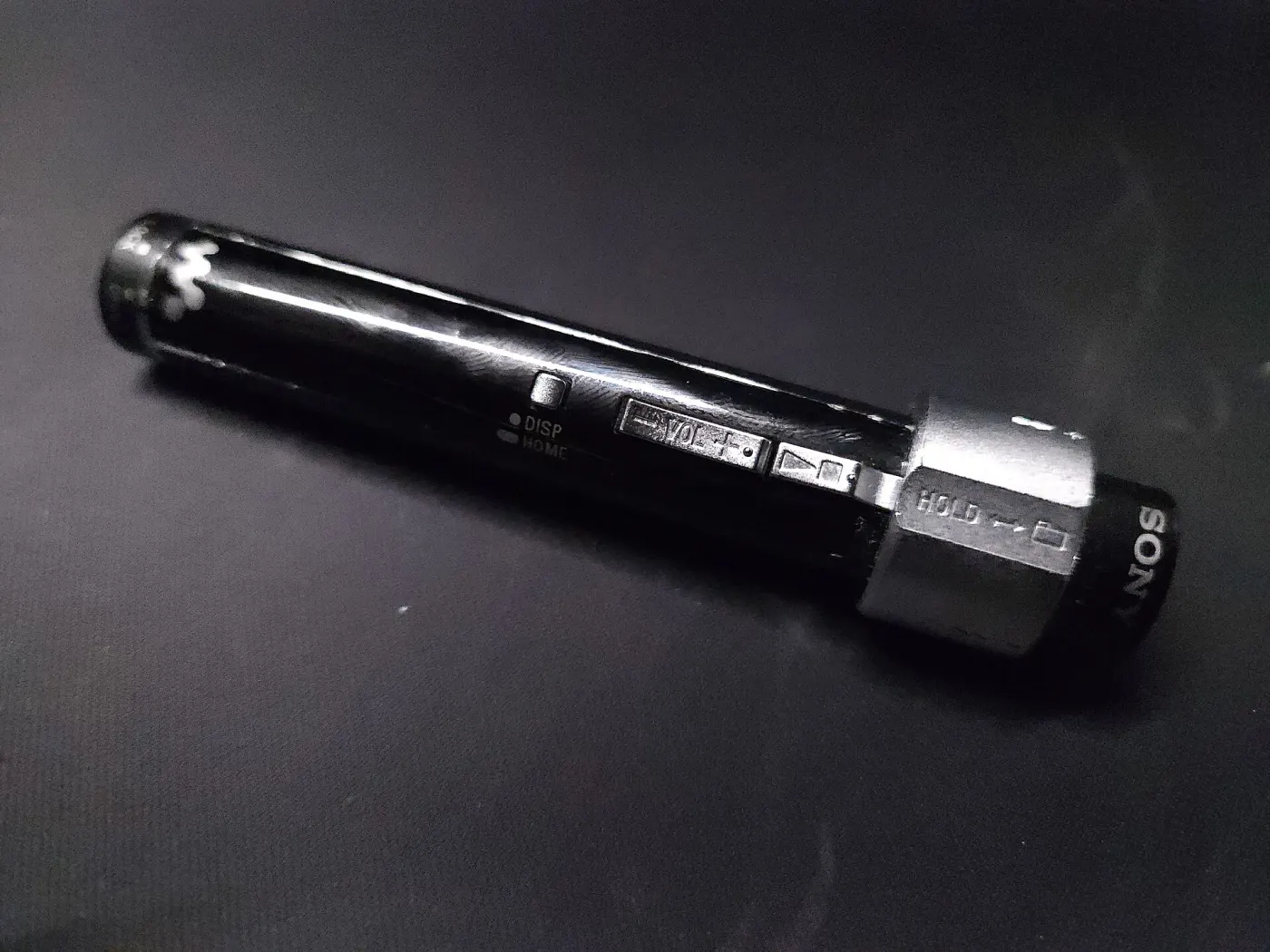
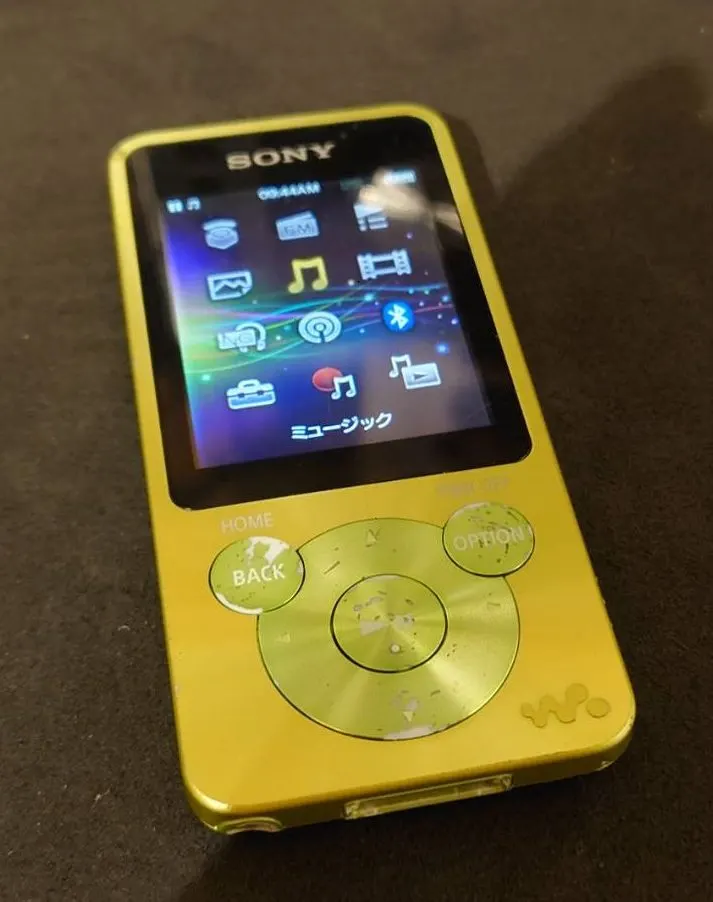
For the fiscal year ended March 31, 2026, Sony Group reported continuing-operations sales of about 12,479.6 billion yen, up 3.7 percent from the prior year, with operating income of about 1,447.5 billion yen. Management's early forecast for the following fiscal year pointed toward sales near 12,300 billion yen and higher operating income targets. On October 1, 2025, the group executed a partial spin-off of Sony Financial Group Inc., reshaping the perimeter of "Sony" while the entertainment and electronics core remained. Walkman survives as a digital audio brand for listeners who still want a dedicated player. Trinitron is history; the habit of obsessing over picture and sound is not. Columbia's descendants live inside Sony Pictures. CBS Records' descendants live inside Sony Music. The Betamax scar remains a case study. The Walkman habit remains a human default, now often delivered by phones Sony no longer uniquely owns.
In 2021, the centenary of Morita's birth, Japanese essays still cast him as a symbol of postwar hunger that later generations fear losing. The Akio Morita official memorial site keeps chronology, photographs, and a curated pride that corporations extend to founders who become myths. None of that resurrects the man. It measures how long a brand argument can outlive a body.
World impact: what actually changed
Before Morita's generation finished its work, "Made in Japan" was a warning label in many Western shops. After transistor radios, Trinitron sets, and Walkmans, the phrase could mean miniaturized excellence. That shift was not nationalist advertising. It was millions of private purchase decisions.
Personal audio changed sidewalks, subways, exercise, and the politics of attention. People learned to curate privacy in public. Critics worried about antisocial listening. Morita answered, in interviews, that he did not claim to know whether the product was simply good or bad for society, only that it gave people joy in music for themselves. The honesty mattered. He sold a behavior, then admitted its ambiguity.
Standards wars taught every later tech founder that formats are political. Compact disc partnership showed a better pattern than Betamax solitude. Buying CBS Records and Columbia Pictures announced that consumer-electronics companies would become entertainment platforms, a template visible in twenty-first-century device makers who chase studios, sports rights, and game publishers.
Inside Japan, Morita's insistence on open argument and skepticism toward pure credentialism nudged at least one major employer's culture. Abroad, he modeled a Japanese executive who could live in New York, joke on American television, and still refuse brand erasure. For countries rebuilding after catastrophe, his arc remains a usable myth: start small, protect the name, invent the category, absorb the loss, buy the library if you must, and keep shipping.
Rice cookers that failed and the salesman who learned theater
The earliest Tokyo Telecommunications years were a catalog of almosts. An electric rice cooker that scorched. Instruments that sold one week and stalled the next. Morita discovered that a laboratory victory meant nothing if a clerk in a provincial office could not see why the machine mattered. He practiced demonstration as a craft. Open the case. Thread the tape. Let the room hear its own voice played back. The G-type recorder was heavy and expensive, yet it trained the company's muscle memory: invent, then stage the invention until a buyer feels slightly behind if they refuse.
Capital remained thin. Morita's father had backed the founding stake when the brewery heir chose circuits over vats. That family money was not infinite forgiveness. Paydays sometimes came from founders' pockets. The Shinagawa factory floor smelled of solder and ambition. Workers watched two leaders argue in daylight and still ship. The culture that later business books romanticize began as necessity. If everyone agreed, the product might already be too safe to matter.
Western Electric's transistor license was a door and a trap. Yields wrecked schedules. Engineers sorted good devices from bad like jewelers sorting grit. Morita kept the overseas dream alive while Ibuka kept the physics from collapsing. The TR-55 did not merely shrink a radio. It proved a defeated country's workshop could master a frontier American invention and sell it under a name inventing itself in real time.
Showrooms, neon, and the politics of being liked abroad
By 1966 the Sony Building rose in Ginza as a vertical advertisement for curiosity. In 1970 Sony lit Times Square with a neon signature that told New York the brand intended to stay visible after dark. These were not vanity projects. Morita treated geography as product design. A showroom teaches first adopters. A neon sign teaches taxi passengers. A Fifth Avenue address teaches status buyers who will not climb a dusty staircase in Shinagawa.
Living in the United States changed his management vocabulary. He saw middle managers change employers without social death. He imported that restlessness selectively into Sony hiring. He collected friends across industries: bankers, airline directors, artists, politicians. The network later helped when trade friction made Japanese executives look like villains in American editorial cartoons. Morita could walk into a television studio and speak as a person rather than a tariff statistic.
French president Charles de Gaulle's circle, in the lore Nightline repeated, once dismissed Japan as a nation of transistors. Morita wore the insult as fuel. If the world reduced Japan to components, he would make the components glamorous. The greatest transistor salesman line was half joke and half job description.
Insurance, finance, and the widening definition of Sony
Morita did not stop at consumer gadgets. In August 1979, the same season Walkman arrived, Sony entered a life-insurance joint venture with Prudential that would evolve into Sony Life. The move looked odd to electronics purists. To Morita it looked like another way to deepen the company's relationship with Japanese households over decades, not product cycles. Finance and entertainment were not distractions from manufacturing. They were bets that a brand trusted for a Walkman might be trusted for a policy or a film night.
He sat on boards from Pan Am to IBM's world trade orbit and advised Morgan Guaranty. The resume read like a man collecting vantage points. Critics could call it status hunger. Operators saw pattern recognition. He wanted Sony fluent in capital markets, aviation schedules, semiconductor cycles, and living-room desire at once.
PlayStation's shadow and the unfinished argument
Morita's stroke came just as Sony Computer Entertainment organized for a future of interactive software. The PlayStation launch in 1994 belonged operationally to Ohga's generation and to Ken Kutaragi's engineering rebellion, yet it sat inside the strategic house Morita helped design: hardware plus software plus cultural reach. When later decades made Game and Network Services a profit pillar, the through-line was not nostalgia for cassette blue. It was the same refusal to let Sony remain only a box maker.
By mid-2026, PlayStation 5's lifetime unit tally above ninety-five million meant more living rooms carried a Sony silicon story than ever carried a Betamax deck. Music streaming catalogs under Sony Music still monetize songs first pressed in eras Morita negotiated by hand. Image sensors in phones around the world, including rivals' phones, often carry Sony silicon. That last fact would have amused and annoyed him: the brand sometimes wins even when the logo is hidden, the opposite of the Bulova lesson, yet still a kind of industrial victory.
The October 2025 financial spin-off showed successors still redrawing the map of what counts as core. Morita redrew maps constantly. Continuity was never the same as freezing an org chart.
Rivals, Matsushita, and the long race
Sony's drama makes no sense without rivals. Matsushita's VHS coalition taught volume politics. Other Japanese giants had deeper keiretsu roots and softer brand poetry. Morita competed by being earlier, louder abroad, and more willing to look Western without becoming Western. He marketed youth and sound. He hired designers who treated plastics as fashion. He insisted engineers talk to salespeople before the mold was final.
American competitors underestimated miniaturization until their living rooms filled with Japanese sets. European buyers learned the Sony name as a premium signal. Developing markets met transistor radios as first modern electronics. Each geography required a different sales story. Morita collected those stories personally when he could, then delegated when the company outgrew any single passport.
Family, succession pressure, and the cost of being firstborn
Being the eldest son of a sake dynasty meant every electronics triumph carried a private ledger of what the brewery did not receive. Biographers note the tension without turning it into melodrama. He honored parents even as he redirected the family's talent into a different industry. When his father Kyuzaemon died in 1964 and his mother Shu in 1988, the personal arc closed in pieces while the corporate arc accelerated. Children grew up inside a global experiment: New York apartments, Tokyo pressures, a surname that meant headphones to strangers.
Succession at Sony was never a simple blood transfer. Professional managers and creative technologists rose. Morita's gift was building a company that could survive his absence, which is a colder praise than genius and a rarer one. The stroke forced the test early. The company continued. That continuation is part of his product.
Detail from the factory floor to the living room
Morita liked to say that creativity was seeing what consumers would love before they could name it. That sentence can sound arrogant until you watch the product list. Nobody mailed Sony a request for a tape player that refused to record. Nobody circulated a petition for dual headphone jacks on a device that did not yet exist. Teams built, argued, trimmed, and shipped. Then culture rearranged itself around the object.
He also understood fear. Postwar Japan feared hunger and humiliation. American buyers feared shoddy imports. Retailers feared dead inventory. Engineers feared yields. Morita's job was often to choose which fear to defy. He defied brand erasure. He defied the polite no on Walkman. He could not defy the VHS tidal volume, so he learned and spent later. Courage without adaptation is just stubbornness with better stationery.
By the time memorial essays marked one hundred years since his birth, younger founders in Tokyo and elsewhere still used his arc as a measuring stick: Did you protect the name? Did you move into the customer's city? Did you invent a habit, not only a chassis? Those questions remain useful in 2026, when Sony's continuing sales sit above twelve trillion yen and the Walkman logo still appears on digital players sold to people born after Morita died.
Closing
Akio Morita began as a physics student expected to steam rice into wine for ancestors. He ended as the face of a company whose name was invented to travel. Between those poles he refused a hundred-thousand-unit order that would have hidden Sony, put a showroom on Fifth Avenue, lost a videotape war, put headphones on the world, bought music and movies at billion-dollar prices, and left the stage after a stroke on a tennis court. Pneumonia closed the life in 1999. In 2026 the balance sheet that still says Sony sells games, songs, cameras, sensors, and memories of a blue cassette player with an orange Hot Line button. The farmer of sound is gone. The habit of carrying music is not.