Ali Abdaal: The Doctor Who Logged Off
He trained for eight years to be a doctor. He made videos between shifts. Then the videos won.
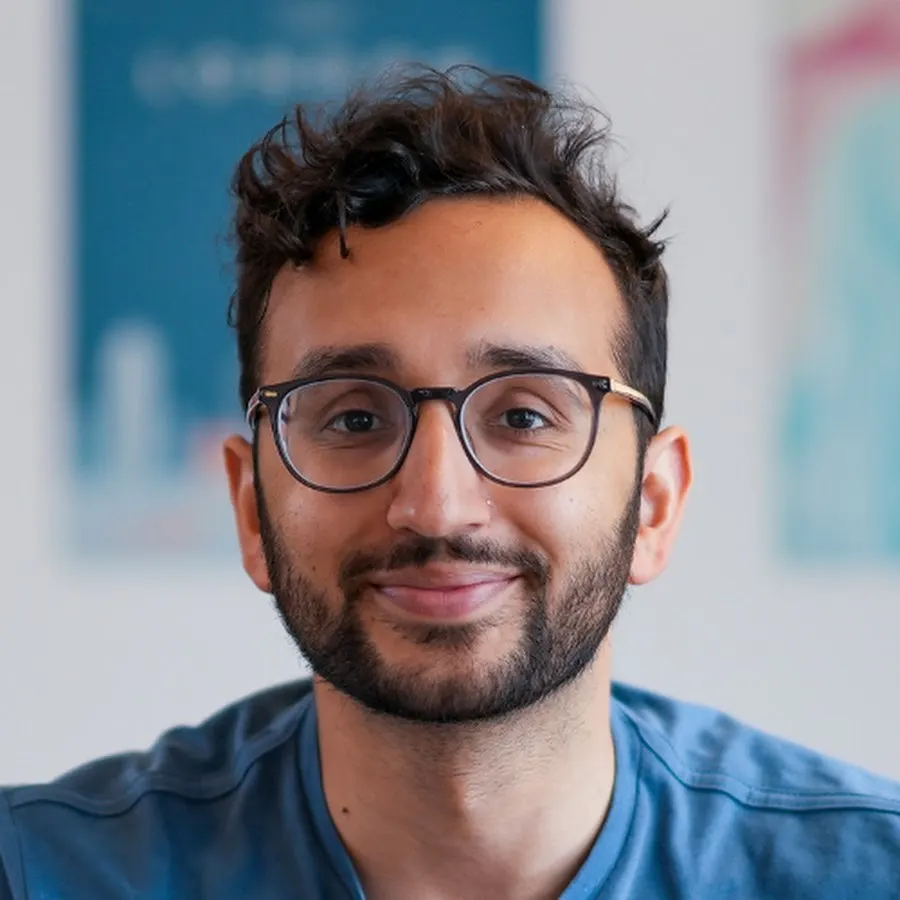
Three people sat on a Zoom call and stared at a web page.
It was late 2020. The world was locked down by a pandemic. Ali Abdaal was 26 years old, a junior doctor on a break from the hospital, and he had just opened sign-ups for an online course that taught people how to build a YouTube channel.
The team was tiny. There was Ali. There was Elizabeth, his part-time assistant. There was Angus, who helped run things and would later become his general manager. Their video editor, Christian, was working from Romania and was not even on the call.
They had posted about the course on Twitter and in Ali's email newsletter. Then Elizabeth told him to refresh the page.
He did. There was about $10,000 sitting in the account.
Ten thousand was roughly four months of pay for a junior doctor in Britain, and it had arrived in about two minutes. He refreshed again. Twelve thousand. Fifteen. Twenty. Twenty-eight. He started posting screenshots on Instagram. His doctor friends replied with shocked messages. One of them pointed out that this was half a year of salary.
By the end of that day, the course had taken in about $70,000. The first group of students, which the team called a cohort, would bring in hundreds of thousands of dollars more.
That day did not come out of nowhere. It came from a boy who had moved across three countries, a teenager who charged five dollars for websites, and a medical student who once rode a train for three hours to deliver a box of booklets by hand.
It also raised a question that Ali would spend years answering in public. If you can earn in one afternoon what a doctor earns in half a year, why would you keep being a doctor?
Karachi, then Lesotho
Ali Abdaal was born in Karachi, Pakistan, in 1994.
When he was two years old, his parents divorced. His mother was a doctor, and she made a bold move. She took her young son to Lesotho, a small mountain kingdom in southern Africa that is completely surrounded by South Africa. Most people have never heard of it. She found work there as a doctor, and the family lived there for about five or six years.
Ali has said his mother cared about education more than almost anything. The schools in Lesotho were not what she wanted for her children. So the family made a plan to move to the United Kingdom.
In 2003, when Ali was about nine, they arrived in Britain. It was Ali, his mother, his younger brother Taimur, and his grandmother. His mother started working as a doctor for the National Health Service, the public health system that treats almost everyone in Britain. The family moved around a few times before they settled.
His grandmother mattered a great deal in those years. She had been a teacher, and biographers say she helped him with English and maths when the family was split between countries. Years later, when Ali was a famous YouTuber, she would still gently push him back toward medicine. He has joked that she would tell him to just become a family doctor before she died, so she could stop worrying that he would end up broke.
The kid who ran home to code
The family ended up near Southend-on-Sea, a seaside town in Essex, east of London. That is where Ali went to secondary school, and that is where he found the thing that would shape his life: the internet.
At school, he was the kid who got good grades. But the part of the day he looked forward to was going home. At home there was a computer, and on the computer he could build things.
He learned to code at around 12. He has said he started making websites partly to pay for a World of Warcraft habit. He offered his services as a freelance web and graphic designer to small businesses online. There was one problem. You needed to be 18 to have a PayPal account. So, by his own account, he lied about his age at 13 so that businesses could pay him.
The jobs were tiny. Five dollars here. Five dollars there. But to a 13-year-old in Essex, it felt like magic. He could sit in his bedroom and get paid by strangers across the world.
Around the same age, he started tutoring younger kids after school and privately, charging about 15 pounds an hour. Teaching, he found, was fun. He liked the moment when a kid finally understood something.
He was not a cool kid. He has described himself at 12 as a "weedy nerd" who got slightly bullied at school. That picture of himself stuck around for a long time, even after he became successful. He has talked about it as a story he had to unlearn.
Why medicine?
If Ali loved computers so much, why did he become a doctor?
He has been honest about this. His mother was a doctor. Her friends were doctors. Almost every family they knew had doctor parents. In that world, he said, it felt like there were only three real jobs: doctor, lawyer, or engineer.
When he was six or seven, adults would ask him what he wanted to be. He would say a neurosurgeon or a gastroenterologist. He did not know what those words meant. He just knew they were big words, and adults smiled when he said them.
He has admitted that part of the pull of medicine was prestige, the respect other people give you for a job. That feeling never fully went away. Years later, when he left medicine, his mother would still try to talk him back by reminding him of the prestige of being a doctor.
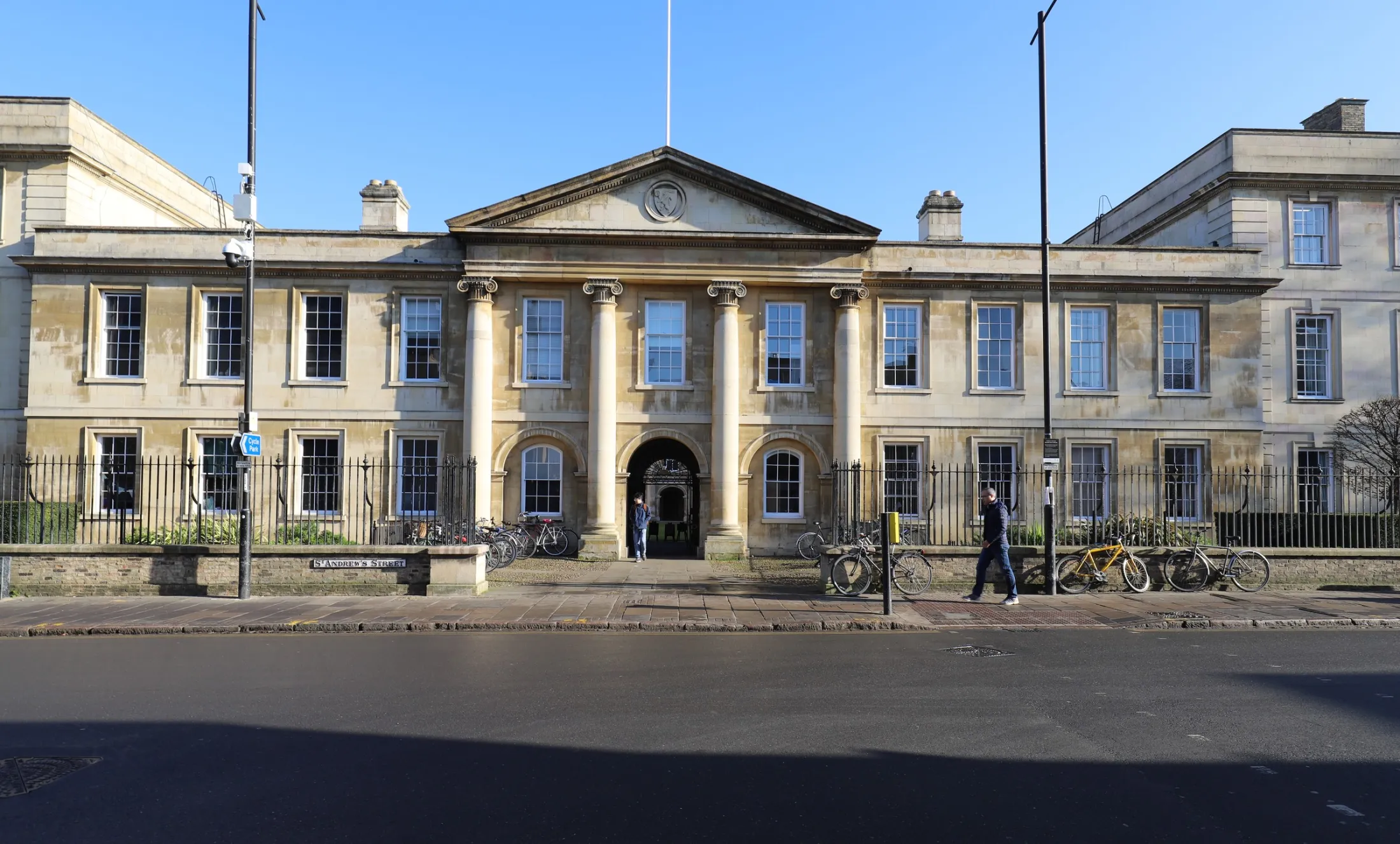
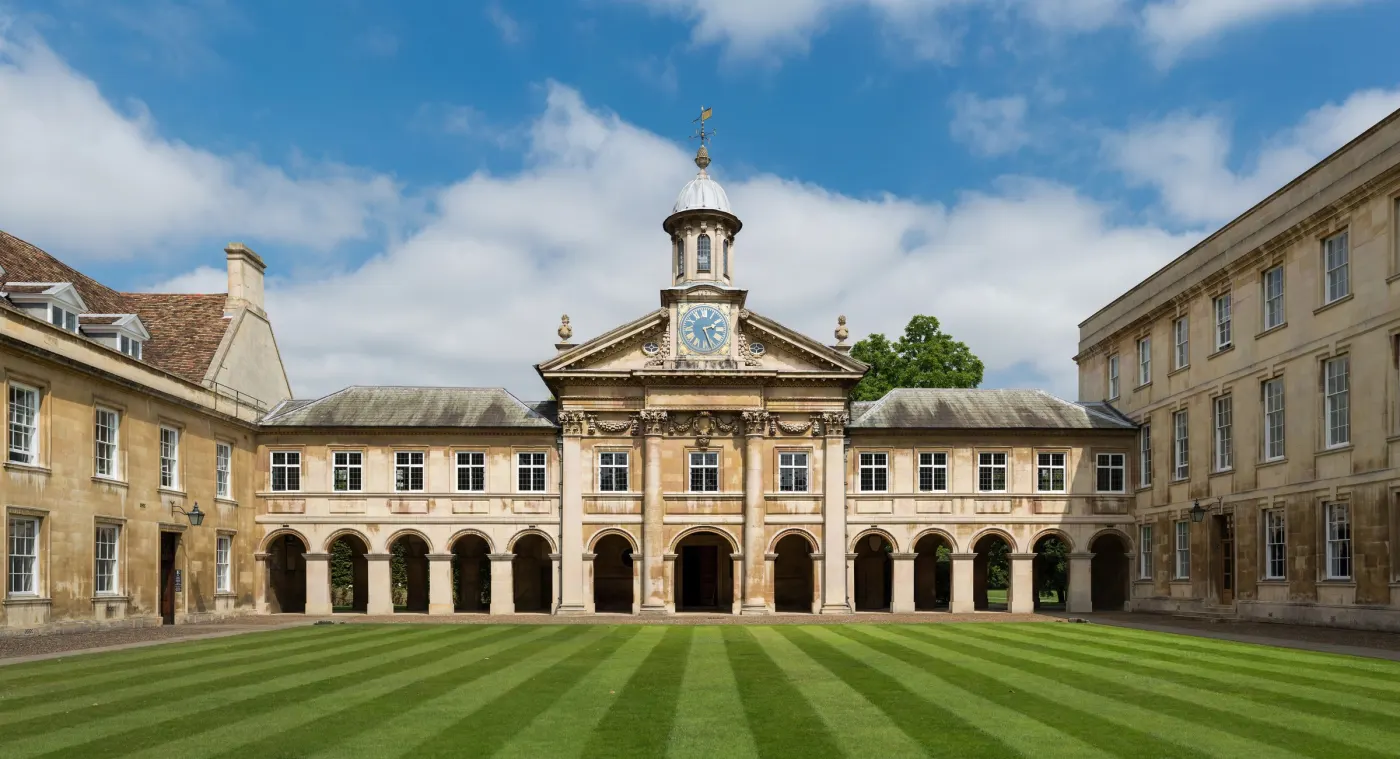
He applied to Cambridge, Imperial College, University College London, and King's College London. He got offers from Cambridge, Imperial, and King's. In 2012, he went to Emmanuel College at the University of Cambridge to study medicine.
The worst day of his life
Before he even started at Cambridge, something happened that he still calls one of the worst days of his life.
He had saved up about a thousand pounds from years of tutoring and online jobs. It was the most money he had ever had. That summer, before medical school, he decided to buy his first Apple product, a MacBook.
He found a seller on Craigslist. They met at Paddington Station in London. Ali handed over about a thousand in cash and took the laptop.
A few hours later, he realized what he had bought. It was a four-year-old model, old and nearly useless. The seller was gone. So was his life savings.
He was crushed. But he also got angry in a useful way. He decided he needed a real way to make money. He opened a note on his computer and started writing down business ideas. He has said he still has that note file from 2012.
At the top of his mind was a simple question. What was he good at?
He was good at exams. He had just gotten into medicine at Cambridge, which is one of the hardest things a British teenager can do. Maybe he could teach other kids how to do it.
Six medical students and a mosque
Ali teamed up with five other medical students. Because there were six of them, they called the business 6med.
The plan was small at first. They would run a one-day course to help students prepare for the tests and interviews that medical schools use to pick applicants. They rented a conference room at the local mosque in Southend. They also wanted to give free places to students from low-income families.
The first classes were tiny. Ali charged about 60 pounds per student for a full day. With a class of around eight, he made about 400 pounds in a day. He remembers thinking that was amazing.
Then his old hobby kicked in. He had been building websites since he was 12. Why not build a proper website and sell the course to students across the whole country?
He has said that if he had not known how to make a website, the course would have been a dozen kids at a mosque in Southend, and that would have been the end of it. Instead, the website looked polished and trustworthy, even next to bigger rivals. Students started signing up from all over Britain.
Soon classes had 30 students. At 60 pounds each, that was 1,800 pounds in a single day. A Saturday and a Sunday during the summer holidays could hit the goal he had quietly set for himself.
The three thousand pound goal
That goal is one of the most important details in Ali's story.
He never set out to be a millionaire. When he was about 18 or 19, he looked at what a junior doctor earned in Britain, roughly 3,000 pounds a month when starting out. He thought that if he could make an extra 2,000 or 3,000 pounds a month on the side, it would double his income.
With that extra money, he figured, he could work as a doctor three or four days a week. He had noticed that the happiest doctors he knew were the ones who worked part-time.
That was the whole dream. A little freedom. A shorter week.
He has said that growing up with a single mother who was a doctor, the top of the ladder seemed to be about 100,000 pounds a year. A million was not even on his radar. Later, he said he was glad about that. If he had chased big numbers, he thinks he would have frozen up and never started.
In its first year, 6med made about 8,000 pounds. The next year it brought in about 70,000 pounds in revenue. After that, it grew to about 150,000 pounds a year and stayed there. For several years, from around age 20 to 24, Ali took home about 40,000 pounds a year in profit. That was just over 3,000 pounds a month.
He had hit his target while still a student.
Life in the trenches
Ali calls the stretch from the first thousand to the first hundred thousand "the trenches." He was in them for about four years.
On evenings, weekends, and holidays, he wrote the course booklets, found a printing company, booked hotel conference rooms up and down the country, and answered customer emails. He ran a course in Singapore with a friend and another in Amsterdam. He has said it made him feel like a real businessman, taking a plane to teach a class.
It was also exhausting, and sometimes it went badly wrong.
One morning, two of his friends had taken a train at five in the morning to teach a course in Manchester, about three hours from Cambridge. Thirty students were waiting. The course started at nine. At eight, they discovered the printed booklets had not arrived.
The books had been printed and handed to a delivery company. But the driver, Ali later learned, had run out of credits on his work device and had simply not delivered them.
Ali happened to have a pile of spare books in his room in Cambridge. He canceled his plans for the day, grabbed the books, and took the train three hours to Manchester to deliver them by hand.
The lesson of the empty room
There is a small story from those years that Ali tells against himself.
In his fifth year at university, friends came to hang out in his room. A customer problem blew up, and he spent three hours at his computer answering support emails while everyone chatted behind him.
Eventually they left. He has said the moment stuck with him because it showed him what was wrong. He was doing everything himself. He had no systems and no templates. He was the bottleneck for everything.
He did learn one trick early. Teaching alone was boring, so he began teaching with a friend. One day he could not make it because of a family event, and he asked two friends to teach the course without him. They did it well. He paid them a few hundred pounds for the day, and they were delighted.
That was the day he realized he could build a system that made money without his being in the room. It was his first taste of what business people call leverage.
A couple of years later, he read a book called The E-Myth Revisited by Michael Gerber. It explained how to write down processes and hand work to other people. He has said it changed how he ran every business after that.
A massive nerd at Cambridge
Ali was not a party person at university. He once told the Cambridge student newspaper Varsity that he was "a massive nerd." Instead of clubbing, he would play board games until six in the morning with friends, eating takeaway. One night he stayed up playing a word game called Articulate so late that he walked into an 8:30 lab session wrecked. His supervisor assumed he was hungover.
He also became obsessed with studying efficiently. Medicine at Cambridge meant memorizing huge amounts of detail. Ali hunted for methods that saved time, like testing himself instead of rereading notes, and spacing out his review. He has said he does not have a strong work ethic. He only really does things that are fun, and if something is not fun, he finds a way to make it fun.
That idea, that the secret to doing more is to enjoy it more, would one day become the heart of his bestselling book.
A camera in a student room
In 2017, Ali was 23 and in his final years of medical school. He had a new idea for marketing 6med. If he made YouTube videos about getting into medical school, some viewers might trust him and sign up for a course.
So he started filming. He talked about studying, about exams, about life as a Cambridge medical student. He filmed his first vlog in the summer of 2017. He made 52 videos in about six months, and the channel reached 1,000 subscribers.
He has pointed out that this meant YouTube was a business from day one for him, not a hobby. The videos brought students to his courses, so even a small channel was paying its way. He believes that is part of why he kept going when many creators quit.
There was a catch. The channel was growing at exactly the time he had to study for his final medical exams.
He had a choice. At the top of the class was a grade called a distinction, for roughly the top 10 percent. He thought he could reach it, but only by studying about 20 extra hours a week. Or he could aim to simply pass and put those 20 hours into YouTube.
He chose YouTube.
He has been careful to say he is not advising other medical students to do this. He did well in the clinical exams, the ones closest to real doctoring, scoring in the 80s. But for the written exams full of details he thought he would rarely use, he aimed only to pass. He passed by about two percent. He remembers thinking, "Thank God for that."
Dr. Abdaal
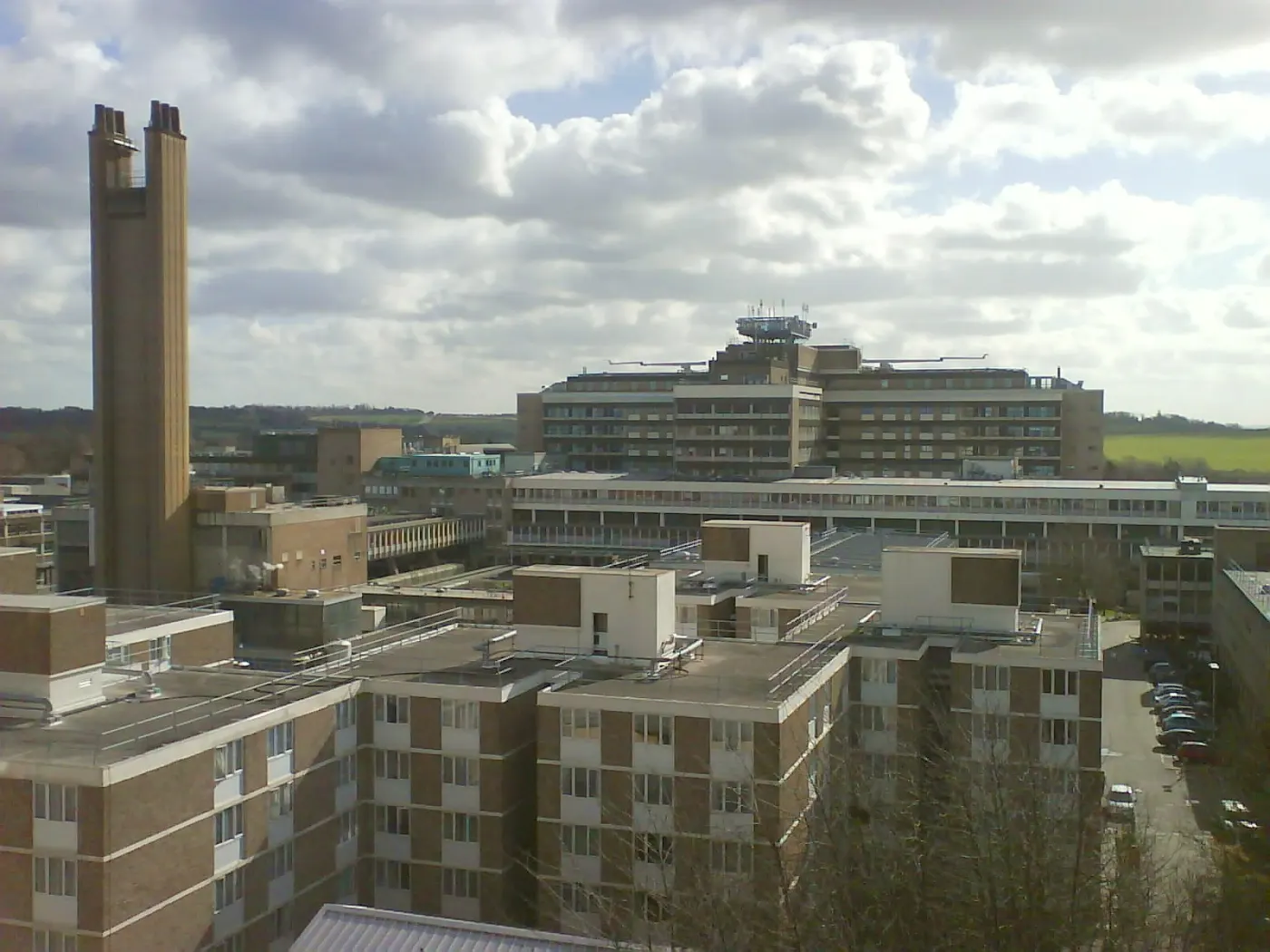
In 2018, Ali graduated from Cambridge after six years of medicine. He started work as a junior doctor at Addenbrooke's Hospital in Cambridge, one of the busiest hospitals in England.
Junior doctors in Britain rotate through different departments. In his first year, Ali worked in cardiology, which deals with the heart, in geriatric medicine, which cares for older patients, and in general surgery. He took blood, joked with nurses, talked to patients, and learned the science up close. He has said he genuinely enjoyed much of it.
He also kept making videos. On evenings, weekends, and days off, he wrote scripts, filmed, and edited. That first year as a doctor, his channel grew to about 100,000 subscribers. Around 80,000 subscribers, he got his first sponsorship deal, where a company paid him to mention its product.
In 2019, someone offered to buy 6med. It was not a lot of money. But Ali realized he no longer wanted to spend his life helping kids get into medical school. By then, 6med had brought in roughly 800,000 pounds in total revenue over about six years. He sold it.
The buyer, a man named Rohan, became a friend and mentor. Rohan looked at Ali's YouTube numbers and asked why he was still editing his own videos. Ali said he had tried an editor overseas for five dollars an hour, and the work was poor. Rohan told him he could not expect good results for five dollars an hour. Hire a real editor, he said.
The numbers were scary. A good full-time editor would cost around 2,500 pounds a month. The channel was making about 3,000 pounds a month. Ironically, that was the same "extra 3K" he had dreamed of as a teenager. Hiring an editor would eat almost all of it.
Around then, a man named Christian emailed him asking to be his editor. Ali posted a job description, ran a proper process, and hired him. Christian stayed with the channel for about four years.
Ali took the plunge because he still had his doctor's salary to live on. Freed from editing, he had time to make more videos, teach classes on the learning site Skillshare, and land more sponsors. He has said those changes took the business from about 100,000 to 300,000, and then to 500,000.
The pandemic ward
For his second year as a junior doctor, Ali moved to West Suffolk Hospital, about half an hour east of Cambridge. There he worked in psychiatry, and in obstetrics and gynaecology, the part of medicine that looks after pregnancy and childbirth.
Then, in early 2020, COVID-19 arrived.
Ali was working as a doctor during the first months of the pandemic. He has called it "a very interesting time to be a doctor," which is a very British way to describe fear, confusion, and long shifts.
He has said that in his first months as a doctor, he felt drained. Then he started to notice that much of the drain came from not feeling engaged with the work. He also watched friends burn out and looked ahead ten years at older doctors. He doubted he would be the special person who loved working 60 hours a week in medicine forever. He wanted the option to work part-time.
Accidentally unemployed
In Britain, junior doctors reach a natural break after two years. They must choose a specialty, like surgery or emergency medicine, or take time out.
Back in August 2019, Ali had decided to take a year out after his second year. He liked emergency medicine. His plan was to go to Australia in 2020 and work in emergency departments there, as some of his friends had done. He was also thinking about America.
Then the pandemic closed borders around the world. Australia shut its doors.
In August 2020, Ali left his hospital job as planned. But he had nowhere to go. As he later put it, he "accidentally ended up unemployed."
So he did the obvious thing for someone stuck at home with a camera and an audience. He went all in on YouTube and the business.
It worked faster than anyone expected. In 2020, the channel passed one million subscribers. Late that year came the launch of the Part-Time YouTuber Academy, the online course that filled his bank account while he refreshed the page. By Ali's own count, the business made about $1.2 million in revenue that year. At 26, on paper at least, he had become a millionaire.
He had set out to earn 3,000 pounds a month. He had overshot by a very long way.
Going back, and leaving for good
The strange thing is that Ali did not want to quit medicine. Not at first.
In March 2021, he posted a video saying he was going back into medicine part-time. He wanted to test an assumption. Did he actually enjoy being a doctor two or three days a week? He also missed the human side of the job, the teamwork and the patients. Working from home on Zoom calls all day during lockdown was lonely.
He tried it. He worked a few shifts in emergency departments.
He found he could not shake a feeling. Hour by hour, every day in the hospital, he kept thinking that this was nowhere near as much fun as the work he did at home: teaching, writing, building.
In mid-2021, he moved from Cambridge to London. On November 30, 2021, he published a video called "Why I Left Medicine... Forever."
In it, he laid out five reasons people work: money, fun, helping people, meaning, and status. Money was not a reason to stay, he said. British doctors are not paid very much, and YouTube paid far more. He admitted this was a privileged position. He said he loved parts of medicine, but his real joy came from teaching. He wanted people to think of him as a good teacher who inspired them.
He also confessed that fear had made the choice hard. What if people hated him for leaving medicine in the middle of a pandemic? Medicine feels sacred to many people. Leaving it felt bigger than quitting a job as a lawyer or an engineer.
He kept one safety net. He still held his full medical registration, meaning he could legally return to medicine if he chose.
The reaction
The video drew huge attention, and not all of it was kind.
Some doctors made reaction videos. Some viewers felt he was turning his back on patients during a crisis. Others cheered him on. Many young people, especially medical students unhappy in their training, wrote to say he made them feel less alone.
A year later, in December 2022, he posted another long video about his regrets. He said there were some. He missed the banter with other doctors and the social side of hospital life. He now got some of that from working in person with his own team.
But he explained the thinking tools that kept him calm. The first was what he calls asymmetric upside. Quitting a stable job to try something risky usually has a capped downside, he argued. In the worst case, you go back to a job. The possible upside is much bigger. The second was regret minimization. He asked himself which he would regret more in thirty years: trying YouTube and failing, or never trying at all. He decided the regret of not trying would be worse.
Money in public
One unusual thing about Ali is how openly he talks about money.
Every year or so, he published videos breaking down exactly how much he earned and from where: YouTube ads, sponsors, affiliate links, Skillshare classes, and his own courses. Critics called it bragging. Fans called it rare honesty in an industry that usually hides its numbers.
The figures show how fast things moved. In 2020, the first cohort of the YouTuber Academy brought in about $282,000 in top-line revenue before costs. In 2021, with three cohorts during the lockdown boom in online learning, it made just over $2 million. In 2022, it made about $1.76 million. Across all his income streams, his 2022 breakdown pointed to more than $4.5 million in revenue.
He was also frank about mistakes. The course sold out so easily that the team kept raising prices and adding more material. By 2022, the cheapest package cost about $2,000. Ali later said that was probably too much for most people to pay without talking to a real person first. He also admitted the team had done a poor job with sales and marketing, and that he had made fewer videos for would-be YouTubers while he focused on writing a book.
Hard questions
As his fame grew, so did the criticism. It is worth laying out fairly.
Some people say his courses cost too much for information that is often free on YouTube. On forums like Reddit, some students have complained that refund terms were unclear for their group or required them to finish work first. Others have defended the courses, saying live teaching, feedback, and a motivated community were worth the price. Ali has said his team offers refunds to people who are unhappy and that very few ask.
Some critics have called his model a kind of pyramid, where he teaches people to do what he did, who then teach others. Ali's answer is that this is simply how teaching works. He got good at exams and taught exams. He built a YouTube channel and taught YouTube.
Others argue that his advice is recycled from books, that his large team makes his productivity easy to preach, or that his cheerful tone hides the pressures of hustle culture.
There was also a clear misstep. In October 2022, he posted a Twitter thread of 15 productivity tips that went viral, with around a million views. He then revealed that 14 of the 15 tips had been written by an artificial intelligence tool called Lex, built on the GPT-3 model. Some followers felt tricked. Ali apologized, said he understood why people might feel duped, called it an experiment, and promised his future tweets would not be written by AI.
Feel-Good Productivity
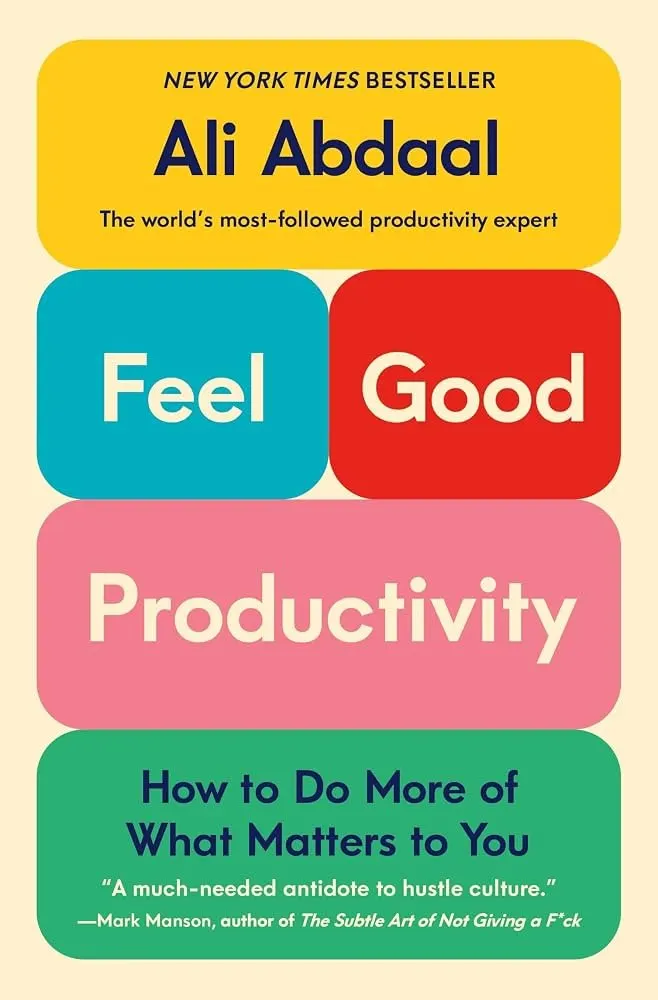
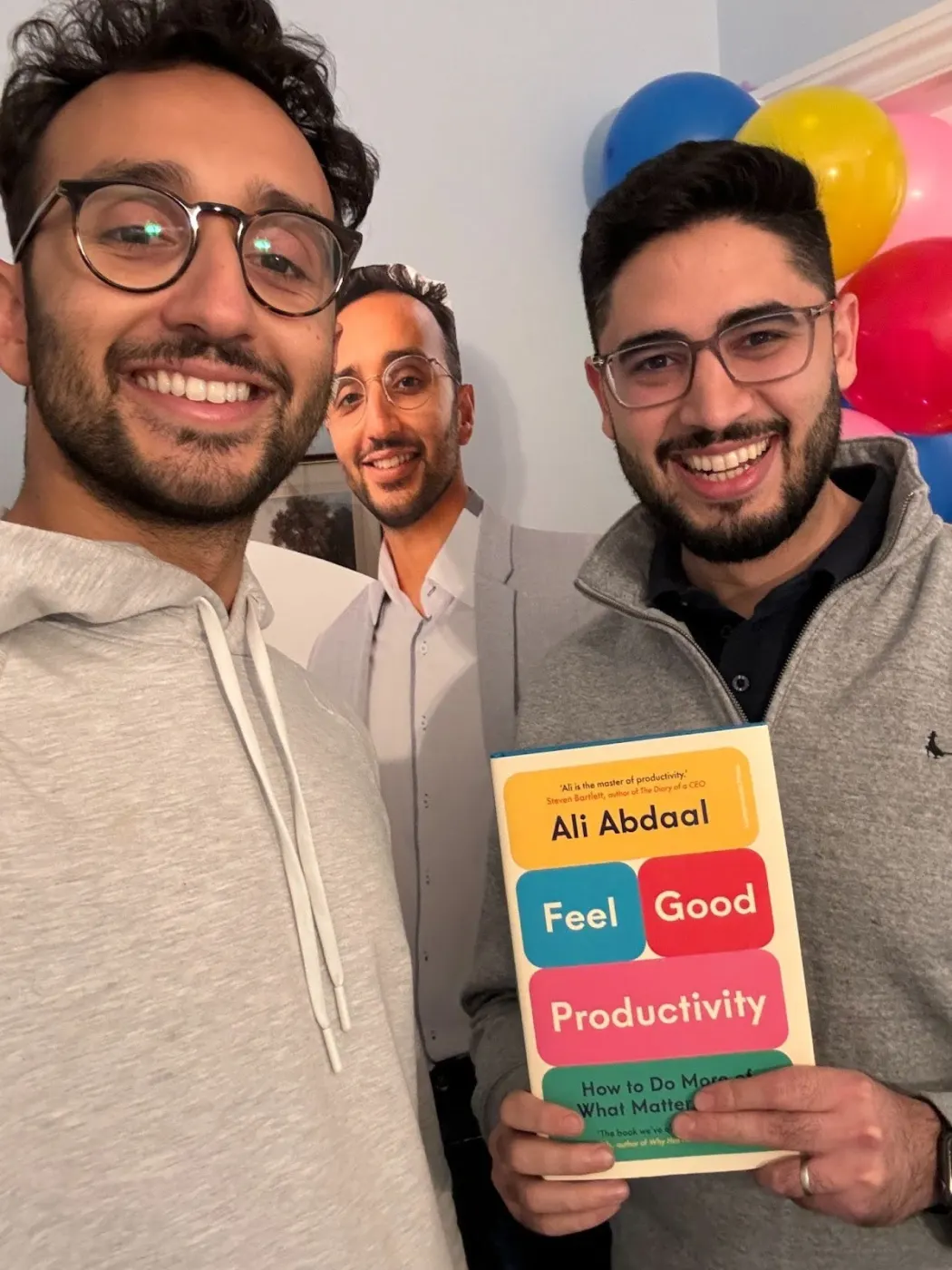
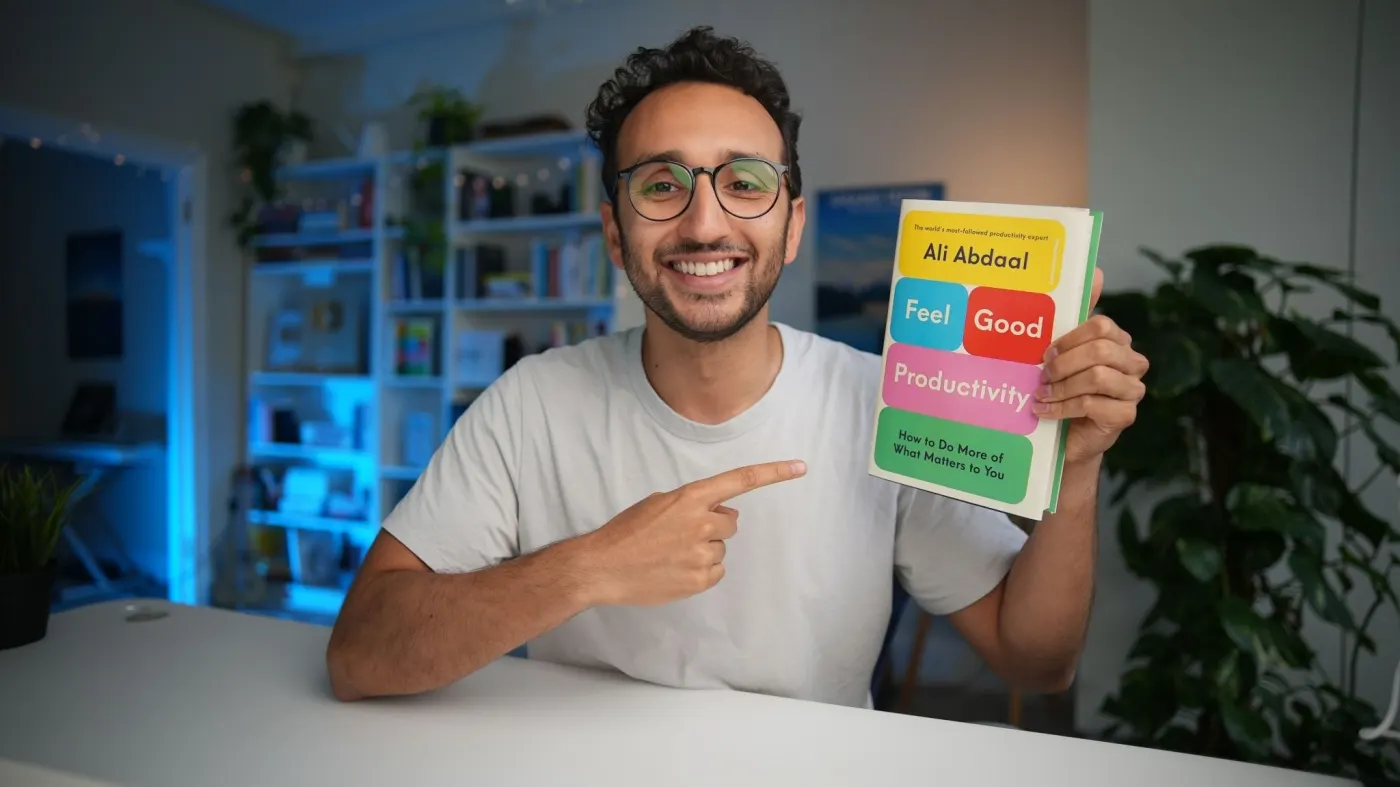
Starting in 2021, Ali spent more than two years writing his first book. It was published in December 2023 under the title Feel-Good Productivity: How to Do More of What Matters to You.
The big idea came straight from his Cambridge years. Most productivity advice says to push harder, use more discipline, and grind. Ali argues the opposite. He says feeling good is what makes us productive, not the reward we get at the end.
The book is built around a few simple ideas. There are three "energizers" that make work feel good: play, power, and people. Play means bringing fun and curiosity to a task. Power means feeling skilled and in control. People means doing things alongside others. Then there are three "blockers" that stop us from starting: uncertainty, fear, and inertia. Finally, there are three "sustainers" that help us avoid burnout: conserving energy, recharging, and aligning our work with what we care about.
The launch was a turning point. The book became an instant New York Times and Sunday Times bestseller. Ali has reported that tens of thousands of copies were preordered around the world. It has since sold hundreds of thousands of copies and been translated into more than 35 languages. He went on television and podcasts to talk about it, and the doctor who once passed his written finals by two percent was suddenly a bestselling author.
Kew Gardens and Hong Kong
In 2024, Ali spent a few months traveling the world as a digital nomad. Then came the biggest change in his personal life.
In August 2024, he married Dr. Izzy Sealey, a fellow doctor and YouTuber. They had kept their relationship mostly private. The wedding took place in the Nash Conservatory at Kew Gardens in London. It blended cultures. Ali's brother performed a traditional Islamic nikah, and the couple included the Chinese ritual of the red thread of fate. They honeymooned in Costa Rica.
Soon after, they moved to Hong Kong. Ali has explained that Izzy disliked London's gray, cold weather. They looked at Miami and Austin, then at Singapore and Kuala Lumpur. They picked Hong Kong for its warm climate, its green hills and parks, its skyscrapers, and its flights to everywhere. They promised to stay at least a year and build a routine, with a proper studio and local sports clubs.
How he works
Ali's working life follows a few rules he has repeated for years.
First, make it fun. If a task is dull, he looks for a way to add play, people, or a sense of skill.
Second, build systems. The Manchester train ride taught him that doing everything yourself does not scale. He writes down processes and hands work to a team.
Third, keep the business the right size. He calls what he runs a "lifestyle business," one built to serve his life rather than to take over the world. His mentor, the entrepreneur and author Daniel Priestley, warned him about a "desert" between about 12 and 30 employees. Ali has said that every time his team grew to 15 to 18 people, things broke, and they shrank back to a core team of about 12.
He also uses AI tools heavily inside the business, for brainstorming, studying sales calls, and reviewing applications. But he tells creators not to let AI write their posts, because audiences can tell and the connection is lost. After his own 2022 experiment, that advice carries some weight.
2026 snapshot
By 2026, Ali Abdaal is 31 or 32 and one of the best-known productivity voices in the world.
His main YouTube channel has about 6.7 million subscribers, according to public trackers in September 2026. His website counts about 8 million followers across social platforms. He says he has made more than a thousand videos since 2017.
In June 2025, he said his business made "a few million" dollars a year in revenue and profit, but had never crossed $10 million.
In November 2025, he launched the Lifestyle Business Academy, a coaching program that aims to help people build a business earning around $100,000 a year within 12 months. It uses applications, and his team, with help from AI, screens who they think they can actually help. His YouTube courses continue alongside it.
He co-founded Sparkle Studios, which launched a voice-note writing app called VoicePal in August 2024. He also runs free workshops through the year. In 2026, those included Spark in January, a Spring Reset in April, and a Summer Reset in July, each built around reflection and goal setting.
In August 2026, he said his team was preparing a new office in Hong Kong, with a small studio to film interviews with students.
He has said he is preparing a second book, but no title or release date had been announced by September 2026.
World impact
It is easy to judge Ali by his income. His real impact is on how a generation thinks about work.
For many students, his study videos were the first time someone explained, in plain words, how to learn with less misery. Techniques like testing yourself and spacing out review reached millions of teenagers through a laptop in Cambridge.
For young doctors and professionals, his story made it feel normal to question a "safe" career. He never said everyone should quit. But he showed that leaving is not the end of the world, and that a good job can still be the wrong job for you.
For creators, his open income reports helped pull back the curtain on how online education makes money. His course trained thousands of people to start channels, including some who went on to build careers of their own.
And for readers, Feel-Good Productivity pushed back on the idea that success must hurt. His claim is simple: people do more when they feel better, not when they punish themselves.
Critics still ask whether a millionaire with a team is the right person to preach balance. That debate is part of his story too.
Closing
Ali Abdaal once stood at Paddington Station holding a useless laptop and an empty wallet. He was 18, embarrassed, and angry at himself.
He did not decide to become rich that day. He decided to earn an extra 3,000 pounds a month, so that one day he could be a doctor who worked three days a week.
He got there. Then he kept going, one small step at a time, until the side project swallowed the career.
Along the way, he taught kids in a mosque, carried books across England by train, filmed videos instead of chasing a distinction, and refreshed a web page until the numbers stopped making sense.
He still says it was mostly an accident. Maybe it was. But accidents like his tend to happen to people who keep showing up, keep teaching, and keep trying to make the work feel good.
Watch alongside this story
Short cuts from interviews, keynotes and launches. Each plays only the moment that matters.