The Reluctant Billionaire: Ali Ghodsi and Databricks
He fled a war at five with his family and almost nothing else. He learned to code on a broken Commodore 64. He now runs one of the most valuable private companies on Earth.
In November 2015, a tense meeting took place in a boardroom on the thirteenth floor of a skyscraper in downtown San Francisco. The company in that room was called Databricks. It was two years old. It had been started by seven researchers from the University of California, Berkeley, and it had created one of the most exciting pieces of software in the world. It also had almost no money coming in.
For five months, the company had been trying to raise more funding. Investors kept their distance. They loved the technology, but they did not love the sales. One existing investor, Pete Sonsini of the venture firm NEA, finally raised his hand and offered an emergency thirty million dollars to keep the company alive.
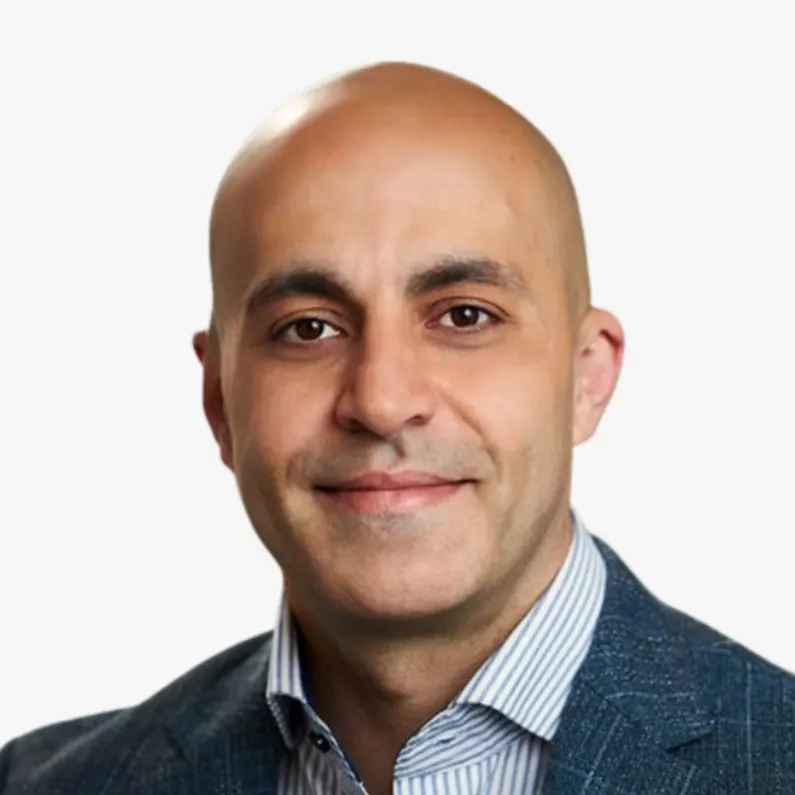
Then came the harder question. Who should run it? The founding chief executive, the Berkeley professor Ion Stoica, had agreed to step aside and go back to teaching. The obvious choice was to hire an experienced Silicon Valley boss. Instead, Stoica and the other founders pushed for one of their own: a bald, soft-spoken Swedish computer scientist who was then leading engineering. His name was Ali Ghodsi.
Some board members thought the idea made no sense. Why swap one founder professor for another? The investor Ben Horowitz, the company's first backer, had doubts too. The board reached a compromise. Ghodsi would get a one-year trial.
A decade later, that trial looks like one of the best bets in the history of business software. In August 2026, Databricks announced a funding round that valued it at $190 billion. It said it was bringing in revenue at a pace of more than seven billion dollars a year and growing more than eighty percent. Its software sits underneath the data and artificial intelligence systems of thousands of companies, from drug makers to carmakers to banks. And Ghodsi, the professor who once said he never wanted to run a company, is one of the most closely watched chief executives in technology.
His path to that boardroom began with air raid sirens.
Lights going out over Tehran
Ali Ghodsi was born in Iran around 1978, during the Islamic Revolution. He jokes that there was a baby boom at the time, because when revolutions happen, people think the world is ending and decide to have children.
His family was well off. They lived in Shemiran, a neighborhood in the hills of northern Tehran with a wide view over the city. Then war broke out between Iran and Iraq. Ghodsi's earliest memories are of that war. When bombing raids began, sirens wailed. From their windows, the family watched the lights of Tehran shut off neighborhood by neighborhood, so enemy pilots could not see where the houses were. The children hid under tables. His parents lit candles and listened to the radio news.
Some nights, the planes flew very close. The windows rattled. One night, a blast shattered all the windows in their home. Young Ali thought their building had been hit. It had not. The next morning, the family went outside and saw that the building across the street had completely collapsed. People were crying and searching for their children. There was blood on the ground.
He also remembers happier things: learning to read and write Farsi in preschool, and trips north to the Caspian Sea, where fishermen hauled in huge nets and sang as they worked.
But his parents were part of a political opposition group, fighting the new government from underground. In 1984, they were almost caught. The family had about twenty-four hours to escape. They left behind their home and their savings and fled to the first country that would give them visas. That country was Sweden. Ali was five years old. He has not been back to Iran since.
A family in a dorm room
In Sweden, the Ghodsis went from comfortable to poor overnight. They moved to the rough outskirts of Stockholm. At first they bounced between cheap student dormitories. Again and again, landlords discovered that a whole family, not a student, was living in a single room, and the family was evicted within months.
Sometimes people called them names. One common insult for darker-skinned immigrants was svartskalle, which means black head. Ali and his younger sister kept changing schools and making new friends. Looking back, he credits all those moves with teaching him how to get along with almost anyone.
The war also left a lasting mark on how he thinks. Years later, he would call himself the most paranoid chief executive most people have ever met. It comes naturally, he says, because he grew up in a war. When you see people die on the streets as a child, you learn that anything can change at any moment.
The broken Commodore 64
His parents could not afford new toys. But they found a deal on a used Commodore 64, one of the most popular home computers of the 1980s. It was cheap for a reason. The tape player that loaded games was broken, so no games would run.
Ali thought the machine was useless. Then one of his uncles told him something that changed his life. You can program this thing, the uncle said. The computer had a language called BASIC built in. Around the third or fourth grade, Ali began reading the manuals and typing in code.
He fell in love with the idea that you could talk to a machine and make it do what you wanted. Since he could not play other people's games, he built his own. He drew little pictures called sprites and wrote code to move them around the screen. Back then, he says, one kid working alone could make a game almost as good as the professional ones.
As a teenager, he was ahead of almost everyone around him. Personal computers and the internet were arriving in homes and offices across Sweden, and few adults knew how to build software. So young Ali started a small consulting business. He wrote programs for people, and even large government agencies hired him to build websites. He earned a hundred dollars here and a hundred dollars there, which felt like a fortune to a kid.
Over several summers, he also wrote a complete content management system in a programming language called Perl, so a Persian-language news website could run itself. He kept maintaining it all through high school and into college.
The dream job he did not take
In high school, Ali had one dream. He wanted to move to the United States and make video games for Electronic Arts, one of the biggest game companies in the world. And he got close. He says he received a verbal job offer from the company for about seventy thousand dollars a year while he was still in high school. It felt like the best thing that could ever happen.
His parents said no. They had lost everything to give their children a new start, and they insisted he go to college. Ali says they told him he was throwing his life away. He was furious. He thought his life was over. Today he is grateful he listened.
He enrolled at Mid Sweden University in Sundsvall, a quiet industrial town, and stayed an extra year to earn master's degrees in both computer engineering and business administration, finishing in 2003. Then he won a place in a doctoral program at KTH Royal Institute of Technology in Stockholm, one of the top technical universities in Europe.
He almost did a doctorate in business instead. He was accepted to both programs. He chose computer science, he says, simply because it was at the better school.
Timing the wave
At KTH, Ghodsi's lab mostly studied programming languages. He was more interested in distributed systems, the science of getting many computers to work together as one. It was an old field, he says, and for decades it had not mattered much. But the internet was changing that. Companies like Google were building services that ran on thousands of machines at once.
This became one of his core beliefs. Research matters most, he says, when it lines up with a big change in society. When personal computers arrived in every home, the people studying operating systems could start Microsoft. When the internet connected everyone, the people studying networks could invent the protocols the world still uses. The trick is to be early, but not twenty years early.
He earned his doctorate in 2006. When he started the program, he was sure he would leave academia afterward. By the end, he wanted to be a professor forever.
He also got a first taste of startups. A Swedish program helped researchers turn promising doctoral work into companies, and Ghodsi helped launch a peer-to-peer software company called Peerialism, mostly as an advisor. The idea was to make video delivery cheaper by letting users share data with each other. The technology worked. But companies laid so much fiber-optic cable that internet bandwidth became extremely cheap, and the problem the startup solved became much less important. Ghodsi took a lesson from it that he still uses. Before you solve a problem, ask whether the market will make that problem disappear on its own.
The new computer
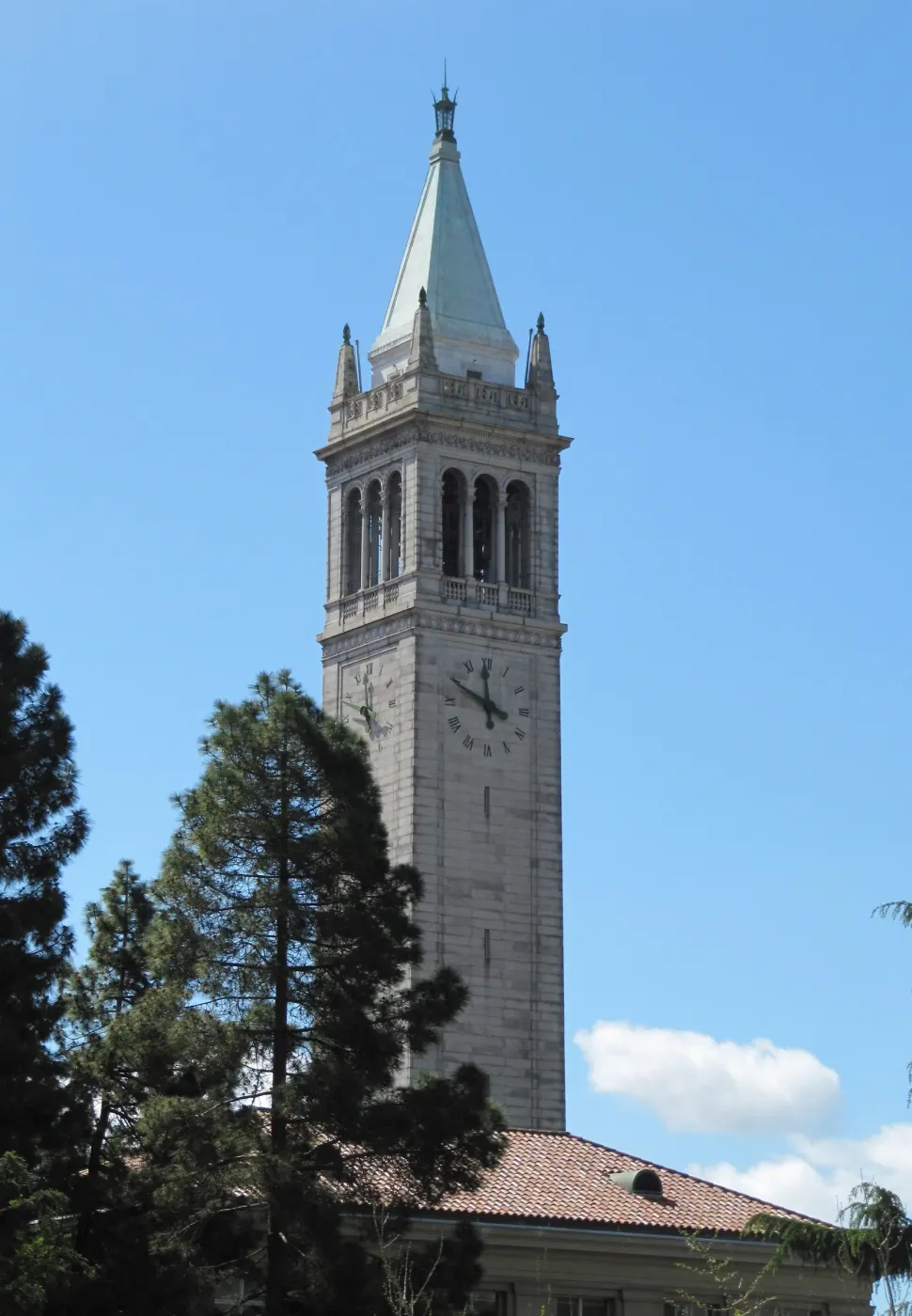
In 2009, at age thirty, Ghodsi arrived at UC Berkeley as a visiting scholar. He stayed in the United States on a series of visas for people with extraordinary ability. He had already built a reputation in Sweden, where he had taken a professorship. Berkeley, he says, turned out to be even better than he had imagined.
He calls the university a place with a hippie, anything-goes spirit. Crazy ideas were welcome. Some of them were bad, he admits, but some of them changed the world.
The timing was perfect. In the same building, the computer architect Dave Patterson and his team were delivering shocking news. For decades, computers had doubled in speed about every eighteen months. That was ending. Chips had hit a wall, and single machines were no longer getting much faster.
To Ghodsi and his labmates, that sounded like a dream. He had always wished he had been born in the 1950s or 1960s, when the first computers were invented and every piece of software had to be created from scratch. Now it felt like that moment was happening again. If single machines would not get faster, then the new computer would be the data center, thousands of machines working together in the cloud. All the software for that new computer, from the operating system to the applications, would have to be rebuilt.
Patterson also changed how the lab worked. There was not enough space for an open office, so the professors gave up their private rooms. Everyone moved into one big shared space. Machine learning experts sat next to theory experts, mathematicians, and systems builders. At Berkeley, Ghodsi says, nobody asked whether a problem was academically respectable. If the person at the next desk had a problem, you helped.
Ghodsi also started a seminar. He noticed that Berkeley was not using its famous name to attract speakers, so he simply started inviting important people from around the world. They came. The seminar helped him build a network with top professors and engineers across the country.
A spark from a movie contest
The lab's first big project was an operating system for the data center called Mesos, which Ghodsi worked on. Twitter later adopted it and ran much of its service on it.
Then came a happy accident. Some machine learning researchers sitting nearby wanted to enter the Netflix Prize, a contest in which Netflix offered a million dollars to anyone who could build a better movie recommendation system. They complained that the tools of the day made it painfully slow. A young doctoral student named Matei Zaharia, sitting next to them, thought it was an interesting problem. He quickly wrote a small program on top of Mesos to help. It worked extremely well.
That program grew into Spark, a system that let people process huge amounts of data across many machines, and do it much faster than older tools. Ghodsi, Zaharia, and their colleagues kept improving it. In 2014, Spark set a world record for sorting data. Zaharia's dissertation on it won an award as the best in computer science that year.
Not everyone cared. Ghodsi remembers that some people at MIT dismissed cloud research as work that just helped Google and Facebook. Stanford, he jokes, was busy doing startups. So Berkeley researchers dominated the field for a few years. He calls 2009 to 2013 the best years of his life.
But the team faced a growing frustration. Spark was free and open source, meaning anyone could download it. They believed it was far better than the popular big data tools of the time, especially a system called Hadoop. Yet big companies were slow to adopt it. The researchers even sent students as interns to companies to push it. Companies selling Hadoop had a strong interest in not switching. And when the researchers offered Spark for free, companies told them it was not ready for serious business use.
We were a bunch of Berkeley hippies, Ghodsi later told Forbes. We just wanted to change the world. We would tell companies to just take the software for free, and they would say no, we have to give you a million dollars.
Burritos, ramen, and fourteen million dollars
Starting around 2012, a core group of seven academics began meeting at cheap Indian restaurants near campus to talk about starting a company. There was Ion Stoica, a Romanian-born professor who had already helped build a video startup. There was Scott Shenker, a respected professor who had been the first chief executive of a networking company sold for about $1.3 billion. There was Zaharia, and there were Reynold Xin, Patrick Wendell, Andy Konwinski, Arsalan Tavakoli-Shiraji, and Ghodsi. Stoica would be chief executive. Zaharia would be chief technologist. Shenker would sit on the board.
At one early dinner, they went around the table and asked what a truly amazing outcome would be. One person said a company worth $100 million. Another said $150 million. Someone else said $200 million. That, Ghodsi says, was the biggest they could imagine.
Naming the company took a long time. The team kept a spreadsheet of votes. The runner-up name, Ghodsi recalls with a laugh, was Data Poem. He says he cannot imagine working for a company with that name today.
Shenker arranged a meeting with Ben Horowitz of the venture firm Andreessen Horowitz. The researchers almost did not want his money. He is not a researcher, they thought. They hoped to raise a couple hundred thousand dollars in seed money and code for a year. Horowitz told them ideas like theirs have a time limit. He wanted to go big.
The following Friday afternoon, the team sat in their office while one of them kept pressing the F5 key to refresh the page showing the company's bank account. Suddenly it read fourteen million dollars. They were blown away. Ghodsi was earning about fifty-seven or fifty-eight thousand dollars a year at the time.
The bet everyone called stupid
Databricks made a choice that experts told them was a mistake. In 2013, open source companies usually sold software that customers installed in their own data centers. That was where the money was. Databricks decided to run everything in the cloud instead.
People told them it was a terrible idea. Only students swiping credit cards would use it, critics said. But the founders had reasons. Writing one version of software for the cloud would let them move much faster. And they were betting that the cloud market, small at the time, would keep doubling. If they could win half of a small market that grew every year, they would grow with it. They were inspired, Ghodsi says, by Jeff Bezos, who in the 1990s bet that the internet would take over and started selling on it.
Ghodsi later turned this into a rule. To beat giant companies, you must bet on long-lasting trends, like the cloud, machine learning, and open source. And the rest of the industry has to believe you are wrong. If everyone agrees with you, the giants will copy you quickly and your advantage will disappear.
Like taking care of a kid
Ghodsi did not dream of running Databricks. His heart, he says, was in research. He planned to go back to Berkeley and keep publishing papers. But nearly everyone from the lab was joining the company. If he stayed at the university, the people he worked with would be gone. So he spent more and more time at the company, almost against his will.
It was like having a child, he says. Once it exists, you have to take care of it. The company needed them, or it would fall apart.
The founders argued about everything, often using data. One fight was over where to put the office. Stoica wanted to move to San Francisco, saying that was the only way to look like a serious company. Ghodsi wanted to stay in Berkeley and put their mark on the map. The company split into two camps. The team studied commute times and even crime rates. Ghodsi later noticed that Stoica had a bus stop right outside his house that went directly to the proposed San Francisco office. The mayor of Berkeley even came with his staff to try to convince them to stay, and sat through a presentation packed with technical terms nobody in his group understood.
San Francisco won. Databricks moved to the thirteenth floor of a Financial District tower. Nobody minded the unlucky number. They got a cheaper price, Ghodsi says, maybe for that reason.
The hottest thing since apple pie
In 2014, NEA invested $33 million, valuing the young company at $250 million. By 2015, Ghodsi says, Spark was the hottest thing since apple pie. Everyone wanted it.
That was the problem. Because Spark was free, big companies like Amazon Web Services and the Hadoop company Cloudera simply built it into their own products. All of our competitors started talking about how much they loved Spark, Ghodsi says. But Databricks had almost no revenue. The company was taking too long, Horowitz said later, to figure out how to sell.
That is how the company ended up in that tense boardroom in November 2015, with an emergency investment on the table and a professor on a one-year trial.
Three moves in the first year
Ghodsi took over as chief executive in January 2016 and moved fast. He made three big changes.
First, he built a real sales team, hiring people who knew how to pitch to the technology chiefs of large corporations. Second, he filled the leadership team with executives who had done it before, people who had helped steer other software companies to big outcomes. Third, and most controversial for a team of open source believers, he created paid features that went beyond free Spark. At the time, he admitted, Databricks did not have anything special to sell, because competitors had all of Spark for free.
Within a year, the executive team was almost entirely new. Ghodsi offered the old leaders a choice: stay, but report to the new hire above you. If people were smart enough, he said, they put their egos aside. Only two of the seven quit.
The results came quickly. Sales reached about twelve million dollars in 2016. Horowitz said the first year was so spectacular that it was obvious Ghodsi should stay as chief executive.
Then Horowitz wrote a letter to Microsoft's chief executive, Satya Nadella, calling Databricks a leader in the coming revolution in artificial intelligence and big data. Ghodsi had tried for years to reach Nadella without success. This time, Nadella replied almost instantly and copied a group of top Microsoft executives. Suddenly Microsoft was eager to partner. The two companies built Azure Databricks, which put Databricks directly inside Microsoft's cloud, and Microsoft's sales force began offering it to customers. In 2019, Microsoft invested in the company.
The professor learns to lead
Ghodsi says the job of a chief executive is completely different from the job of a professor. In research, he explains, you find a hard problem, solve it better than anyone else, write it up in a twelve-page paper, and convince people you are right. Do that again and again and you can reach the top. It barely matters whether you can lead a team.
A company needs other skills. You have to get people to believe in your vision. You have to build a strategy to reach it. You have to find great people and put them together, not just engineers but marketers, salespeople, and finance experts. And you have to keep them all moving toward the goal. He found he liked the challenge. It had more dimensions to practice, he says, and that made it more fun.
Some academic skills turned out to be useful. Convincing other researchers that your idea is good, he points out, is a kind of marketing. And the constant push to do something no one has done before is exactly what a company needs to keep inventing.
He also learned that a leader cannot know everything once a company grows past a certain size. Somewhere between one hundred and three hundred people, he says, you no longer know what is going on everywhere, even if you never sleep. You have to learn to manage through processes and other leaders.
And he kept his paranoia. Every year, he puts his teams through what he calls sky is falling exercises. They write detailed plans for what they would do if the market dried up or the economy crashed. When the pandemic hit in 2020, those plans helped the company handle the chaos.
The lakehouse and the rival
Under Ghodsi, Databricks grew far beyond Spark. It released open source tools such as MLflow, for managing machine learning projects, and Delta Lake, for keeping data reliable. It began describing its platform with a new word: the lakehouse.
The idea was to combine two older kinds of systems. Data warehouses stored neat, organized data for business reports, but they were expensive. Data lakes stored huge amounts of raw data cheaply, but they were messy. A lakehouse aimed to do both in one place and then let companies run artificial intelligence on top.
That put Databricks on a collision course with Snowflake, the fast-growing data warehouse company that went public in 2020 with one of the biggest software stock debuts ever. The two had once been partners. Now they were fierce rivals, trading public barbs about whose technology was better.
By 2021, Databricks had more than five thousand customers, and investors valued it at $28 billion and later $38 billion. Ghodsi, Stoica, and Zaharia had become billionaires on paper. Ghodsi said the company could someday be worth far more.
Buyers came knocking over the years, but Ghodsi never sold. Part of the reason, he says, is that the founders were academics who did it for impact, not money. Selling would have meant giving up the mission. He also explains a simple piece of math that he thinks big companies misunderstand. When Databricks was valued at $38 billion and growing fast, he said, a buyer would have needed to offer something like $100 billion or more to even get the founders' attention. No buyer wants to pay that. But from the founders' side, why sell? Just wait two or three more years and the company will be worth more. That is why, he argues, truly successful startups almost never get acquired. The ones that sell are usually the ones that are struggling.
The company had also spread across the world. By 2021 it had about 2,500 employees in some twenty countries, with teams in Japan, Australia, New Zealand, Europe, and Latin America. Somewhere, at every hour of the day, Databricks was working.
Around that time, he also faced something much more personal. He told Forbes that genetic testing had shown his young son had a predisposition to kidney cancer, allowing doctors to catch the disease early. Ten or fifteen years earlier, he said, the illness might not have been found until far too late. It made him even more convinced that data and computing can save lives.
Riding the AI wave
When ChatGPT set off a race in generative artificial intelligence in late 2022, Ghodsi moved quickly. In June 2023, Databricks agreed to buy MosaicML, a startup that helped companies train their own AI models, for $1.3 billion. In 2024, it released an open AI model of its own and bought Tabular, a company founded by the creators of a popular open data format called Iceberg, in a deal reported at between one and two billion dollars. In May 2025, it agreed to buy Neon, a startup offering the Postgres database in the cloud, for about one billion dollars. That deal became the base of a new product called Lakebase.
Investors poured in money. In December 2024, Databricks raised ten billion dollars at a $62 billion valuation. In August 2025, it announced a round valuing it at more than $100 billion. A round that closed in February 2026 valued it at $134 billion. By then, it said it was bringing in revenue at a pace of about $5.4 billion a year. Ghodsi told CNBC the company does not burn any cash at all.
Thirty-one thousand people in one room
In June 2026, Ghodsi walked onto the stage in San Francisco to open the Data + AI Summit. He told the crowd that 31,309 people had registered, making it, he said, the largest data and AI conference in the world. Spark, the program that began as a favor for some researchers entering a movie contest, now gets more than three billion downloads a year, he said. His co-founder Zaharia had just released another open source project that weekend.
Ghodsi's message was about AI agents, software that can carry out tasks on its own. The biggest obstacle, he argues, is not intelligence. AI does not have an intelligence problem, he told CNBC. It has a context problem. The models are smart enough, he says, but they need the right company data to do useful work, and that data must be governed, secure, and affordable.
On August 13, 2026, Databricks announced it had closed a five billion dollar funding round at a valuation of $190 billion. The company said its revenue run rate had passed seven billion dollars and that it had grown more than eighty percent year over year in the second quarter. Lakebase alone had passed $100 million in annual run rate, and its data warehousing product had passed $1.5 billion. CNBC reported that Databricks had become worth more than Snowflake, the rival that once overshadowed it, and ranked it third on its 2026 Disruptor 50 list. Forbes estimated Ghodsi's personal fortune at about $5.5 billion in late August 2026.
Ghodsi says Databricks will go public someday. But not this year. With AI changing so quickly, he says, it is better to keep building in private than to face the distractions of the stock market.
What he changed
Databricks' customers use its tools in ways that reach far beyond software. Ghodsi likes to point to the drug maker Regeneron, which used the platform to help identify a gene linked to chronic liver disease and develop a drug candidate. He mentions Rolls-Royce, which studies sensor data from jet engines to predict when parts need service. During the pandemic, he says, vaccine teams at several companies used Databricks behind the scenes. Farm equipment maker John Deere has used it to predict when tractors might break down.
The bigger change is in how companies think about data. The idea Ghodsi and his labmates had in 2009, that the data center was the new computer, turned out to be right. Spark became a standard tool for processing data. The lakehouse became an industry word. And Databricks showed that a company built on free, open source software could become one of the most valuable businesses in the world.
Closing
Ali Ghodsi left Iran as a five-year-old with a family that had lost almost everything. He learned to code on a computer so broken it could not play a single game. He turned down his dream job because his parents begged him to study. He went to Berkeley planning to be a professor forever.
Instead, he became the chief executive nobody expected, handed a one-year trial in a boardroom on an unlucky floor. The seven founders once dreamed of a company worth $100 million. Today it is valued at nearly two thousand times that.
He still calls himself paranoid. He still plans for the sky falling. The boy who watched Tehran go dark, one neighborhood at a time, now spends his days building systems meant to keep the world's data lit.