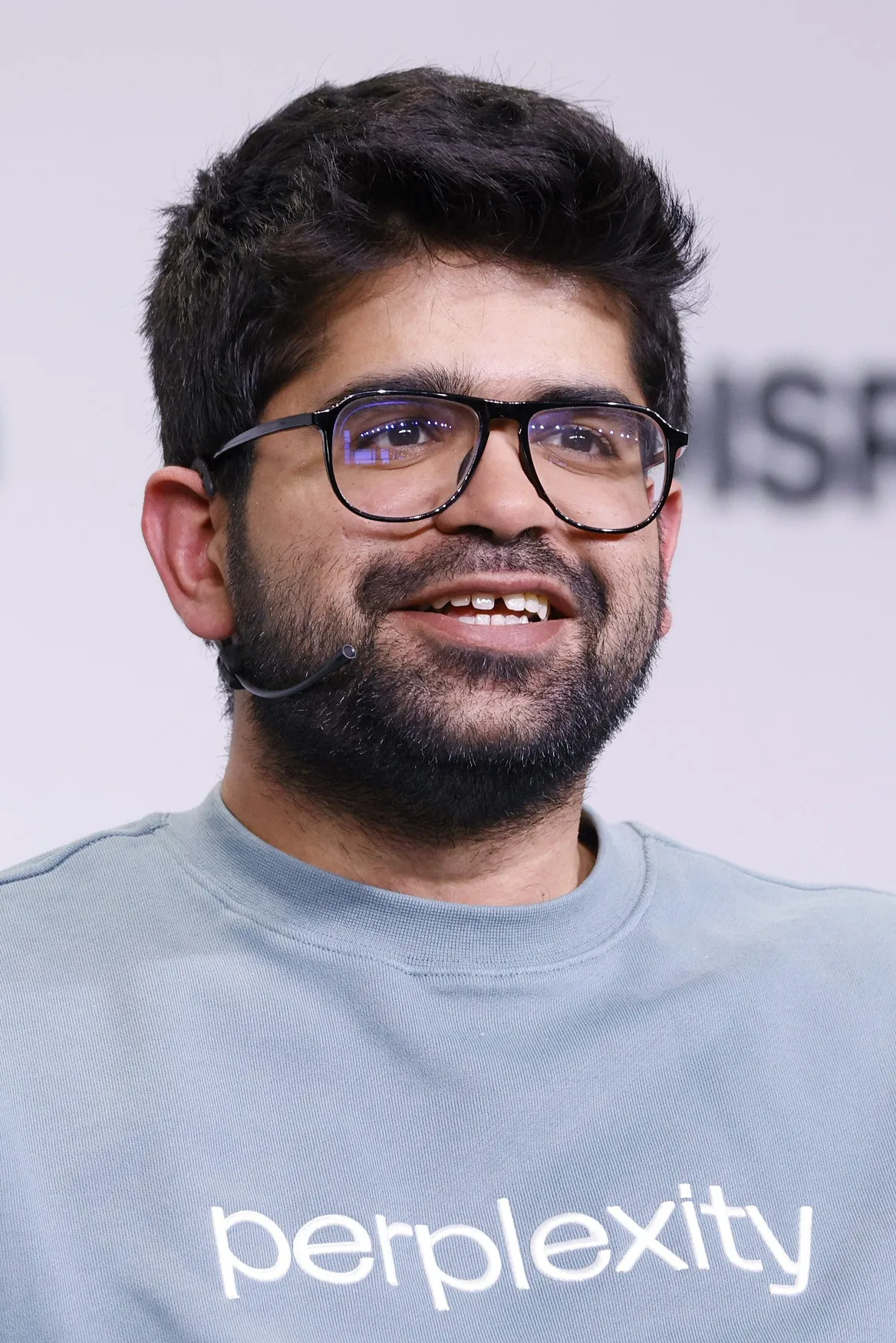
The IIT Kid Who Challenged Google Search
He studied at IIT Madras. He researched AI at OpenAI and DeepMind. Then he built Perplexity.
Aravind Srinivas was born on June 7, 1994.
He grew up in Chennai, India.
He loved taking apart gadgets.
He wanted to study at IIT Madras.
His mother encouraged him.
She imagined him at IIT.
Early Life in Chennai
Aravind lived in a lower‑middle‑class home.
He spent time with electronic parts.
He learned by fixing things.
Family and Education
His mother pushed his education.
She saw a future at IIT Madras.
Aravind earned a dual degree in electrical engineering in 2017.
University Years
He completed B.Tech and M.Tech at IIT Madras.
He then went to UC Berkeley.
He earned a Ph.D. in computer science.
His research focused on machine learning, reinforcement learning, and transformers.
Research and Early Career
Aravind interned at OpenAI in 2018.
He later became a full‑time research scientist there in 2021.
He also interned at DeepMind in 2019.
He worked at DeepMind from 2020 to 2021.
He spent time at Google on machine learning for computer vision.
Founding Perplexity AI
In August 2022 he co‑founded Perplexity AI.
His co‑founders were Denis Yarats, Johnny Ho, and Andy Konwinski.
The first idea was an internal search tool.
It was rejected, so they made BirdSQL, a natural‑language Twitter search demo.
A retweet by Jack Dorsey made it go viral.
A week after ChatGPT they launched a fact‑grounded answer engine.
Perplexity grew fast.
By April 2026 it reported about $500 million in annualized revenue.
It raised between $1.5 billion and $1.72 billion in funding.
Its valuation reached $20 billion to $22.6 billion in early 2026.
The company aims for an IPO in 2028.
Aravind has faced lawsuits from publishers.
The suits claim unauthorized scraping and plagiarism.
He says the technology is fair use.
He also works on revenue‑sharing deals with publishers.
He is married to Sharmada Vishwanath, a classical dancer.
He enjoys reading and golfing.
He adds charitable donation features to Perplexity with Charity Navigator.
He often repeats Alan Kay’s words: The best way to predict the future is to invent it.
As of September 2026 he leads Perplexity as CEO.
He is expanding enterprise and agentic tools.
He launched the Perplexity Computer operating system.
He released an open‑source security tool called Numbat.
The company is discussing a new funding round that could value it over $30 billion.
He also invests in startups like Architect Labs and Prime Intellect.
Founding Story
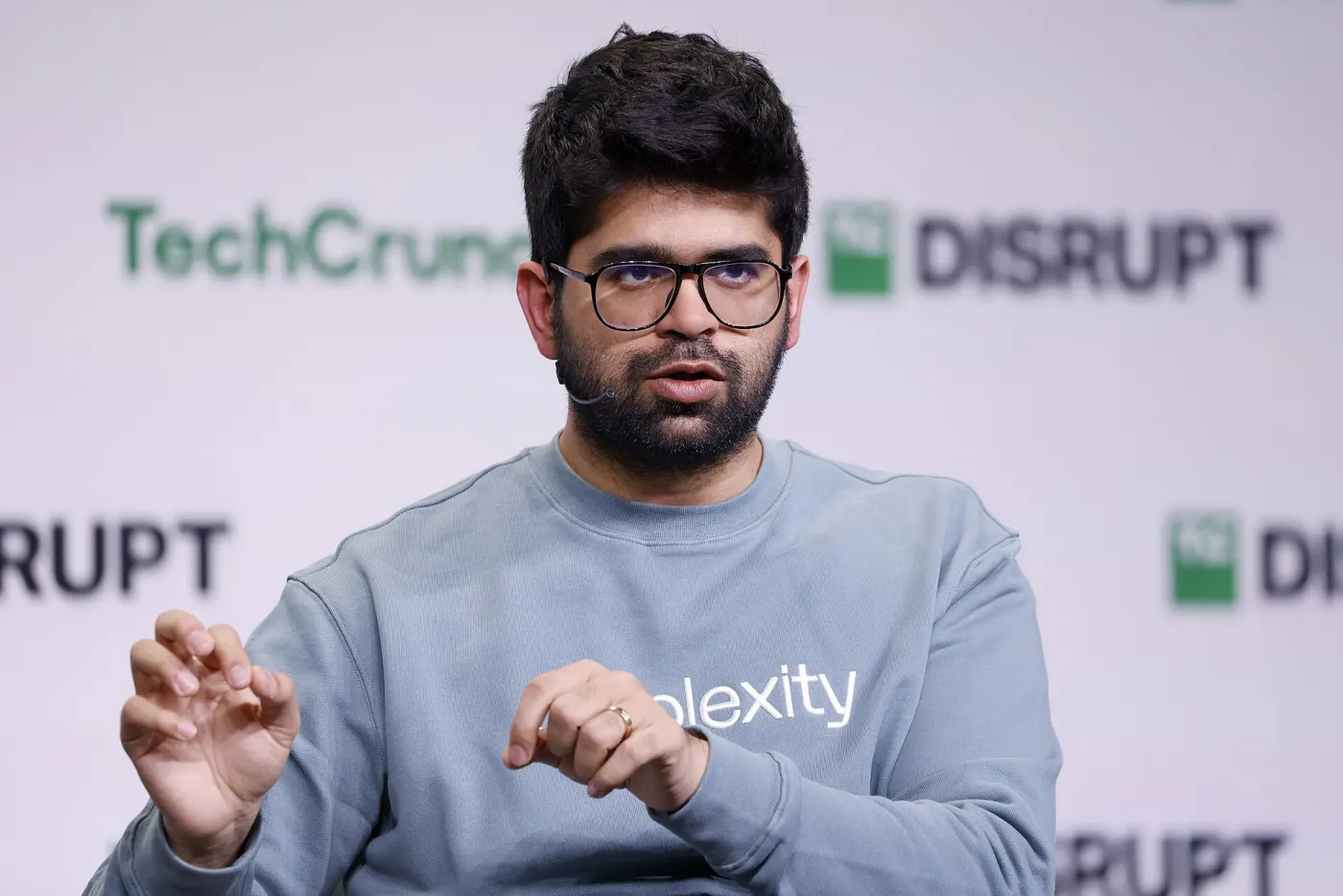
Aravind Srinivas started Perplexity in August 2022.
He did it with Denis Yarats, Johnny Ho, and Andy Konwinski.
His work at OpenAI, DeepMind, and Google Brain gave him ideas.
He wanted a product that could synthesize information with large language models.
First Product and Early Customers
The team first built internal search tools for companies.
Those tools were rejected.
They then built BirdSQL, a natural‑language Twitter search demo.
BirdSQL used OpenAI’s Codex.
A retweet by Jack Dorsey made it go viral.
The buzz helped them launch a general‑purpose answer engine.
The launch came one week after ChatGPT appeared.
Early Struggles
The internal search idea did not get any customers.
BirdSQL collapsed when X changed its API.
Aravind faced academic setbacks too.
He was rejected from the IIT Madras computer science program.
He missed a branch‑change cutoff by 0.01 CGPA.
He could not enter a machine‑learning course.
He was also turned down by an MIT doctoral program.
As CEO, he now faces lawsuits from The New York Times, News Corp, Yomiuri Shimbun, and Reddit.
Publishers say Perplexity scrapes copyrighted content.
Key Turning Points
Jack Dorsey’s retweet gave the product its first users.
Launching after ChatGPT put Perplexity in the AI spotlight.
The company quickly added a fact‑grounded answer engine.
Revenue began to rise fast.
Growth and Numbers
In April 2026 the company reported an annualized revenue run rate of about $500 million.
It has raised between $1.5 billion and $1.72 billion in total funding.
Funding came in 11 rounds.
Early 2026 valuation was between $20 billion and $22.6 billion.
The user base now includes tens of millions of monthly active users.
Funding, IPO and Future Plans
Perplexity aims for an IPO in 2028.
It has not bought any other companies.
Discussions are under way for a new round that could value the firm at over $30 billion.
The team recently launched the Perplexity Computer agentic operating system.
They also released Numbat, an open‑source tool to watch rogue AI agents.
Aravind continues to invest as an angel.
In 2026 he backed Architect Labs and Prime Intellect.
These facts show how Aravind Srinivas turned research experience into a fast‑growing AI company.
Aravind Srinivas was born on June 7, 1994 in Chennai, India.
He grew up in a lower‑middle‑class family.
His mother wanted him to study at IIT Madras.
He earned a dual B.Tech‑M.Tech in Electrical Engineering from IIT Madras in 2017.
He later earned a Ph.D. in Computer Science at UC Berkeley, focusing on machine learning and transformers.
Setbacks
Aravind faced early academic setbacks.
He was rejected from the Computer Science program at IIT Madras.
He missed a branch‑change cutoff by 0.01 CGPA.
He was denied entry into a machine‑learning course.
He was also rejected from an MIT doctoral program.
His first startup, a Twitter search tool, collapsed when X changed its API.
Criticisms and Controversies
As CEO of Perplexity AI, Aravind has faced lawsuits from major publishers.
The New York Times, News Corp, Yomiuri Shimbun and Reddit sued the company.
The suits claim unauthorized scraping, plagiarism and free‑riding on original reporting.
Aravind says the technology is fair use and helps share information.
He also works on revenue‑sharing deals with publishers to ease the tension.
Recent Changes
In 2024 Perplexity launched a new agentic operating system called Perplexity Computer.
The company also released Numbat, an open‑source tool to monitor rogue AI agents.
Aravind added a charitable donation feature that works with Charity Navigator.
He remains an active angel investor, backing Architect Labs and Prime Intellect in 2026.
Perplexity is in talks for a new funding round that could value it over $30 billion.
Where He Is in 2026
Aravind still serves as CEO and co‑founder of Perplexity AI.
The company reports an annualized revenue run rate of about $500 million.
It has raised between $1.5 billion and $1.72 billion across 11 funding rounds.
Perplexity’s valuation sits between $20 billion and $22.6 billion.
The user base includes tens of millions of monthly active users.
No corporate acquisitions have been made yet.
The firm aims for an IPO in 2028.
Why the story matters
Aravind shows that early setbacks do not stop big achievements.
His path proves that research can become a product that changes daily life.
The legal fights remind us that new tech must respect existing creators.
His work on AI safety tools shows responsibility matters as AI grows.
He blends curiosity, hard work and a willingness to fix problems.
Curiosity drives the future.