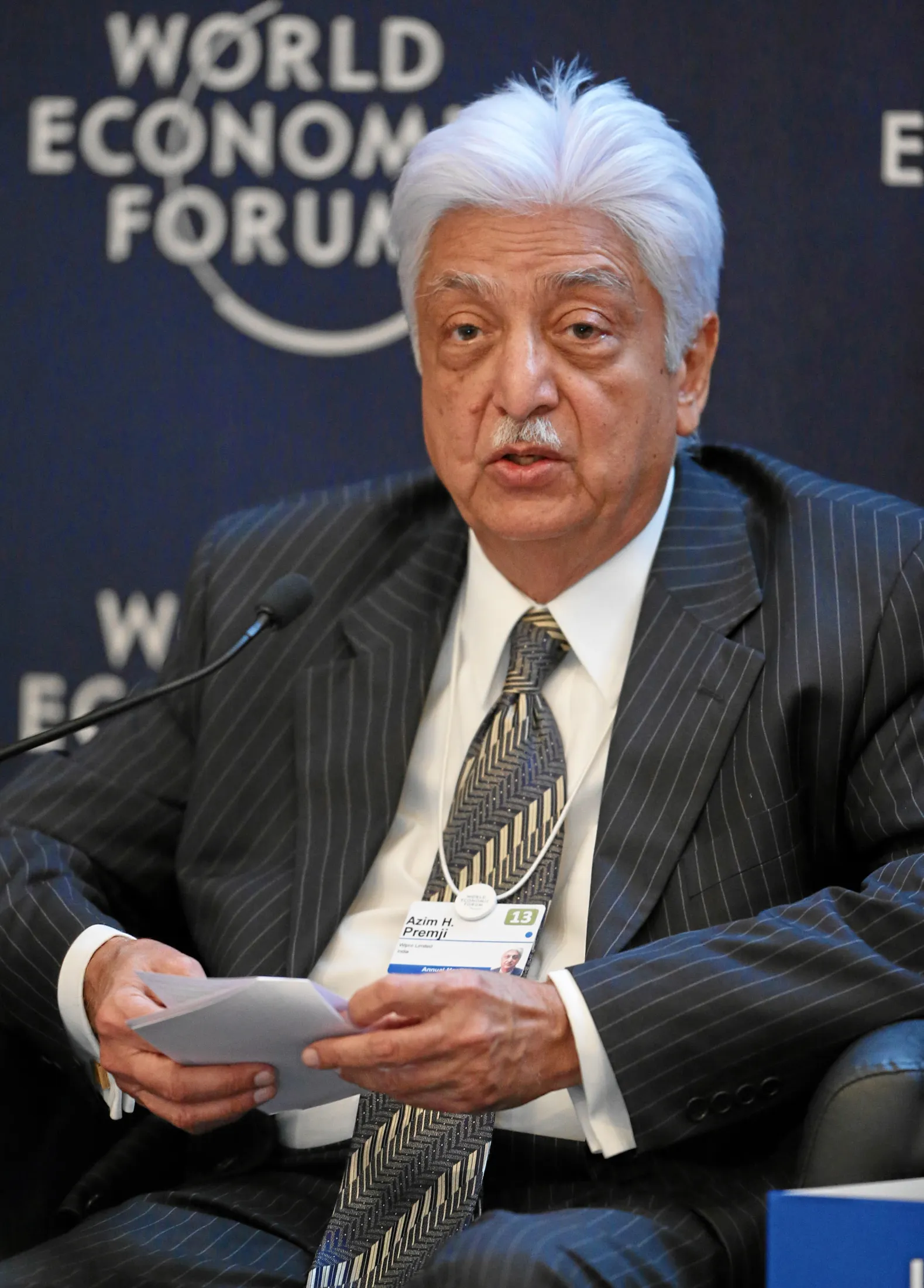
The Oil Heir Who Built India's Quiet Empire
His father died while he was still an engineering student. A shareholder told the boy to sell and get out of the way. He stayed, rebuilt a commodity mill, then rode India's software wave.
On July 24, 2025, Azim Hashim Premji turned eighty. There was no Wipro press circus and almost no public show. His son Rishad, by then Executive Chairman of the company the elder Premji had led for more than five decades, posted a short birthday line and a photograph. That thin public footprint was typical. Premji had spent a lifetime treating attention as a cost, not a currency.
The quieter scoreboard was harder to ignore. In May 2025, TIME named him among its Titans of philanthropy for work that had already reached millions of children through India's public schools. His foundation's own 2026 report would later put the endowment created by his irrevocable gifts at roughly three lakh crore rupees as of June 30, 2026, about thirty-six billion dollars at then-prevailing conversions. Forbes, which often strips charitable trusts out of personal tallies, showed a lower personal figure near eight billion dollars by late August 2026. Bloomberg's broader method still placed him among the richest people alive. The divergence itself was the point. Much of what used to look like personal wealth had already been moved into public purpose.
This is the story of how a twenty-one-year-old who never planned to run a cooking-oil company turned Western India Vegetable Products into Wipro, one of India's defining information-technology firms, and then spent the second half of his working life trying to give the money away faster than markets could restock it.
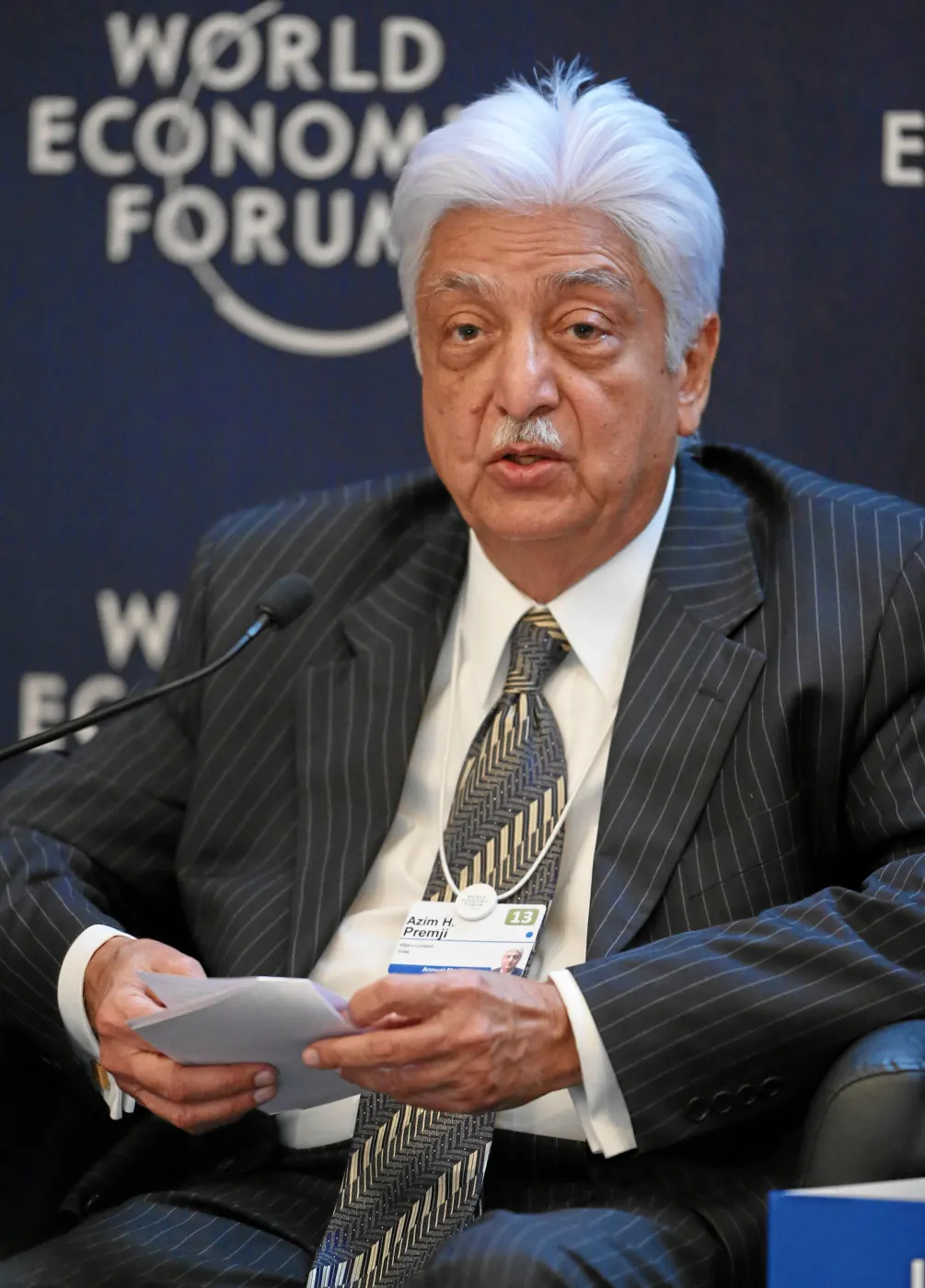
Bombay, a trading house, and a mother who built a hospital
Azim Premji was born in Bombay on July 24, 1945, into a Gujarati Shia Nizari Ismaili Khoja Muslim family with deep trading roots. His father, Muhammed Hashim Premji, was known in business lore as a Rice King of Burma before the family's Indian chapter hardened. After Partition, Muhammad Ali Jinnah invited the elder Premji to move to the new Pakistan. He said no and stayed in India. That refusal is one of the first moral forks in the son's later telling of the house: the family chose the harder continuity of a plural India over a simpler ethnic exit.
The deeper imprint, Premji has said repeatedly, came from his mother. She was a medical doctor who never built a private practice. Instead, shortly after Independence, she poured decades into building and running a charitable hospital in Bombay for children with polio and cerebral palsy. Premji later described the work as nearly fifty years of grinding logistics: fundraising that never got easy, operations that never ran themselves, and a purpose that did not blink. In a short Carnegie Medal reflection filmed years later, he still reached for her example first when asked where his culture of giving began.
Gandhi's idea of wealth as trusteeship sat next to that household example. Money, in the version Premji absorbed, was something you held for society, not a private costume. He would spend decades proving he meant it.
Stanford interrupted
By the mid-1960s Premji was at Stanford University studying electrical engineering. He has joked that he was never a brilliant engineer. The Reserve Bank of India, in those controlled-currency years, mainly permitted undergraduate foreign exchange for engineering study, so engineering was the door, not necessarily the dream. What he liked about the American course was breadth. He came out thinking like a generalist.
Then the call came. In 1966 his father died suddenly. Premji was twenty-one and still short of his degree. He flew home to take charge of Western India Vegetable Products Limited, a Maharashtra company centered at Amalner in Jalgaon district. The firm made hydrogenated cooking fat under names like Sunflower Vanaspati and a laundry soap called 787, a byproduct of the oil trade. It was not Silicon Valley. It was commodity chemistry, wholesalers, and debt pressure.
He has been blunt about what he did not get. There was no formal grooming. His father had not walked him through the ropes with a succession binder. Premji has also said he was not even sure he would have joined the family firm if fate had given him a clean choice. In a long CNBC conversation later rebroadcast around his eightieth birthday, he said that if he had been free he might have spent a few grounding years at the World Bank or a similar institution before deciding what he wanted. Instead, the company was the decision.
He eventually finished the Stanford degree decades later, around the turn of the millennium, after persuading the engineering committee to let him close the last quarter by correspondence. The certificate mattered less than the interruption. The interruption made him.
The shareholder who told him to quit
At his first annual general meeting as a very young owner-manager, a shareholder delivered a line Premji never forgot. Sell your holding, the man said. Hand the company to mature management. There is no way a person of your age and experience can lead this.
Years later, when an interviewer asked what Premji would say if he met that shareholder again, Premji answered with dry steel. The poor fellow was dead, so a meeting was impossible. Then he added the real reply. The comment had lit his determination to prove the man wrong. Ten and fifteen years on, even that early shareholder could measure the results.
The scene is small and perfect. It is not a Hollywood boardroom coup. It is one rude sentence in a room of owners, aimed at a boy who still had Stanford dust on his shoes. Premji kept the sentence like fuel.
Rebuilding a commodity into a brand
The first hard problem was not computers. It was dignity inside oil. Premji later called the early Wipro a pure commodity company: oilseed crushing, sales to wholesalers, no brand of its own, no loyal consumer channel. The frustrating work was re-engineering the whole model so the firm could reach retailers and households, not only traders.
That rebuild pulled the company into consumer logic. Toilet soaps and toiletries were a natural adjacent move because the firm already understood fats, procurement, and input-output ratios. Lighting products and hydraulic cylinders followed as Premji hunted for businesses that could compound skills rather than trap the company in a single commodity cycle. People with marketing and finance sophistication entered a culture that had been built for mills. Family members were deliberately kept off the payroll. Premji wanted the signal clear: this would become a professional company, not a cousins' club.
The rename to WIPRO, from Western India Palm Refined Oils and related roots, marked the identity shift. The letters still carried oil history. The ambition was already leaving the mill gate.

IBM leaves, and Premji walks into the vacuum
In the late 1970s the Indian government forced IBM to exit rather than accept local ownership rules. For many managers that looked like a technology winter. Premji saw a vacuum. Sales presence disappeared. Support disappeared. Even the old unit-record machines that had lingered began to look like leftovers. India still needed computing.
Wipro moved into minicomputers and high technology, including collaboration with Sentinel Computer Corporation in the United States. Premji later said the firm "zeroed in on computers" because the opportunity was sitting in plain sight after a market leader left. The company poured money into research and development and application software. Early hardware success threw off cash. That cash was plowed into a global software export business that would eventually matter more than any single box.
This is the hinge of modern Wipro, and of a large slice of India's IT story. Premji did not invent the microprocessor. He recognized a national policy shock as a corporate opening, then staffed and funded a path from hardware assembly into services the world would later call outsourcing. By the 1990s and the Y2K years, Wipro was riding the same export wave that lifted Infosys and TCS. The company listed on Indian exchanges and, in time, on the New York Stock Exchange. Premji's personal fortune swelled with the market capitalization of a firm that still traced its legal ancestry to cooking fat.
How the machine actually worked
Scaling a services company is a different sport from launching a product. At Stanford in October 2006, Premji walked students through the arithmetic with unusual frankness. Wipro's information-technology business already employed more than sixty thousand people globally. A thirty percent growth rate plus attrition meant adding on the order of twenty thousand people a year after productivity offsets. The firm visited roughly one hundred sixty engineering campuses and dozens of business schools. Induction could be standardized. Cultural continuity could not. Premji called cultural scale the hardest problem in a service organization, the place where top management hours get spent whether you like it or not.
He also talked about failure as a design requirement. Quoting Richard Feynman, he told the room to fail as fast as possible. Bad ideas were expensive, he said, but inevitable if you wanted a few good ones. Wipro had built an Innovation Council that behaved like an internal venture fund. Remote delivery of research and development, testing, and infrastructure management had become a business-model innovation as important as any product feature. Premji claimed Wipro was already the world's largest third-party R&D service provider to multinational labs, with more than sixteen thousand engineers in that lane alone.
The management creed underneath was consistent across decades. Hire professionals. Avoid family employment inside the operating company. Listen to customers for unsaid needs. Protect diverse thinkers so they do not wither. Do not let yesterday's success become gravity that kills tomorrow's idea. It sounds like business-school wallpaper until you remember he was saying it as the controlling shareholder of a company that still made soap in another wing of the house.
Money, modesty, and the embarrassment of being watched
By the early 2000s Premji was regularly listed among the world's richest people. For a stretch he was briefly counted as India's richest, richer even than the headlines usually reserved for other industrial dynasties. He hated the zoo feeling. A later profile recalled him saying he felt like an animal on display. The public legend that grew around him instead emphasized refusal: economy-class flights, Wipro's own Chandrika soap in his bathroom, modest hotels on business trips. Not every anecdote can be audited like a securities filing. Enough independent profiles repeated the pattern that frugality became part of his operating brand.
Inside the company he kept pushing for institutional strength over personality worship. In 2006 he set up PremjiInvest, a family office that would later take private-equity and public-market stakes across India, including consumer names and, by the mid-2020s, selective artificial-intelligence bets. Bloomberg and business press have described its scale in the single-digit to low double-digit billions of dollars under management depending on the year and method. The office mattered because it separated family investing from Wipro's listed operating company, and because it gave the Premji system another engine besides salary and dividends.
In 2013 Wipro sharpened further by spinning consumer care, lighting, and engineering into Wipro Enterprises, leaving the listed Wipro more clearly focused on information technology services. Premji was pruning the conglomerate he had once needed, now that software was the main trunk.
The second company: a foundation, not a vanity wing
Premji has said that as Wipro's market value climbed he began asking what the wealth was for. Markets, public systems, and philanthropy all seemed necessary if India wanted inclusive development. He chose public school education, especially primary schools serving the disadvantaged, as the place where money and operating discipline might compound for citizens rather than only for shareholders.
The Azim Premji Foundation took shape around 2000 and 2001 as an operating organization, not a check-writing hobby. Premji's Giving Pledge letter later stressed a lesson from Indian experience: collecting money is easier than building execution. The foundation hired field workers who lived inside teacher training, head-teacher support, and government partnerships in difficult districts. In 2009 the strategy review pushed toward institutions: district and state capacity bodies, and a university focused on education and related human development.
In December 2010 he moved about 8.7 percent of Wipro, then valued near two billion dollars, into an endowment. More tranches followed. February 2013 added roughly twelve percent. July 2015 added another eighteen percent, taking cumulative contributions near thirty-nine percent of the company. In March 2019 he pledged an additional thirty-four percent, lifting the foundation's endowment from his gifts to about twenty-one billion dollars at the time and making him, by multiple tallies, India's defining living philanthropist. Over the full arc, more than two thirds of Wipro shares moved into irrevocable philanthropic trusts.
In 2013 he became the first Indian to sign the Giving Pledge started by Warren Buffett and Bill Gates. His letter returned to his mother, to Gandhi's trusteeship language, and to a blunt sentence he has repeated for years: those privileged to have wealth should contribute significantly to create a better world for the millions who are far less privileged.
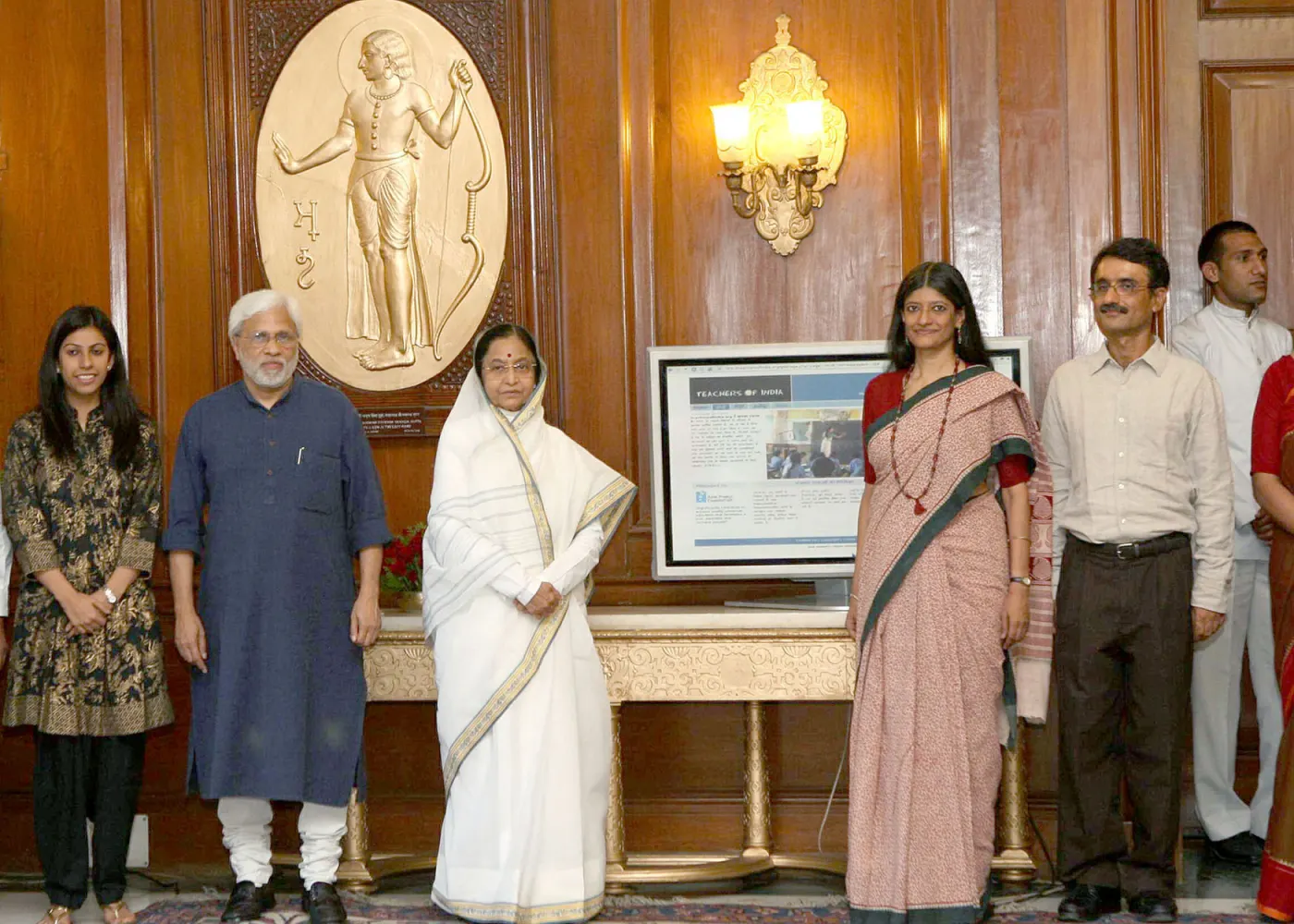

Classrooms, a university, and the long clock of philanthropy
Premji likes to say philanthropy runs on a longer clock than business. Patience is not optional. In Big Think remarks he explained the education bet with three filters: focus, national need, and leverage beyond a single child. Educate children better and you get better citizens. Educate girls and you tend to get smaller families and stronger household health awareness, outcomes India needed at population scale.
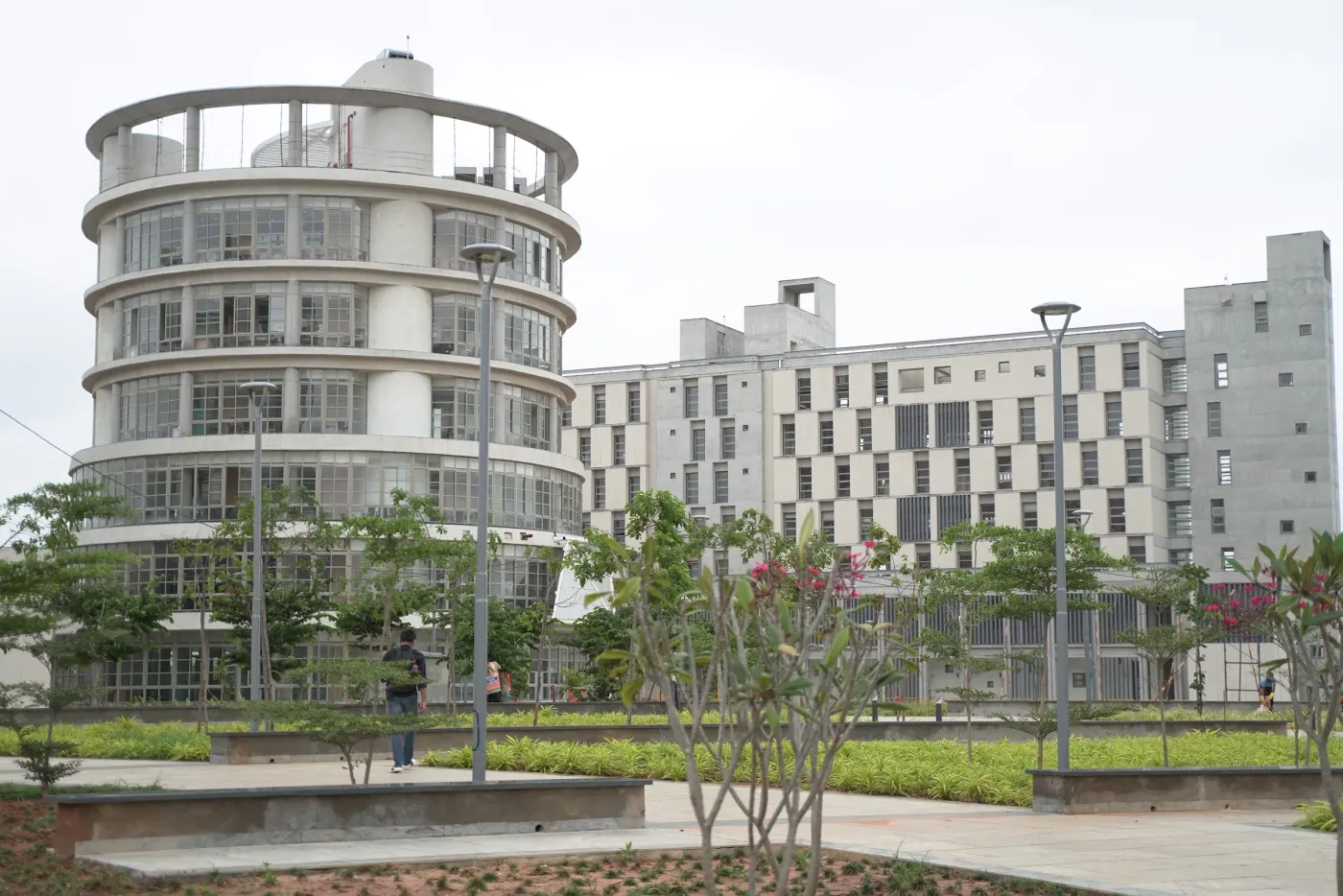
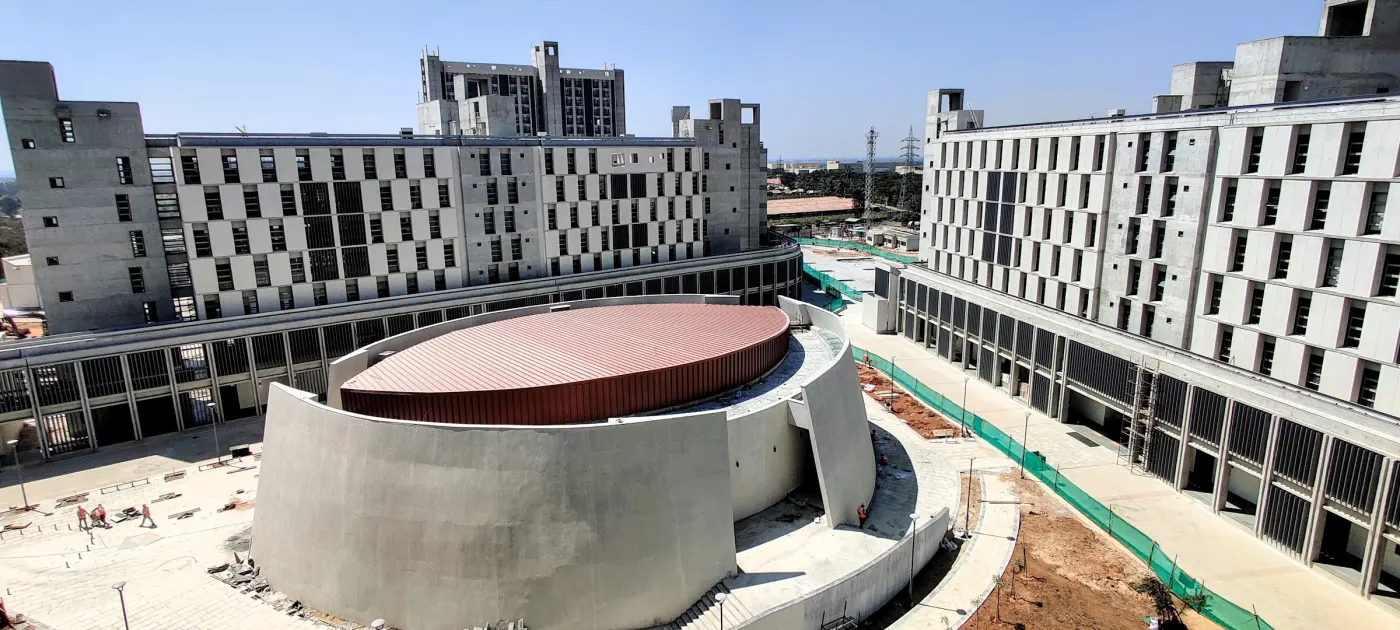
By the mid-2020s the foundation's public footprint was enormous. TIME's 2025 philanthropy profile cited dozens of field offices, hundreds of teacher learning centers, and educational programs that had already helped more than eight million children, plus grantmaking that sent over a hundred million dollars to hundreds of partner organizations in a recent year. Azim Premji University in Bengaluru became a visible brick-and-mortar expression of the same thesis, with programs in education, public health, and sustainability, and work underway on additional campus capacity. The foundation also pushed early childcare centers and, in 2025, major commitments for girls' college completion and school meal expansion covering millions of children.
During COVID-19, the foundation, Wipro, and related entities committed large relief packages, including more than one thousand crore rupees in early 2020 and another thousand crore later toward vaccination support. Premji treated crisis giving as continuity, not a rebrand.
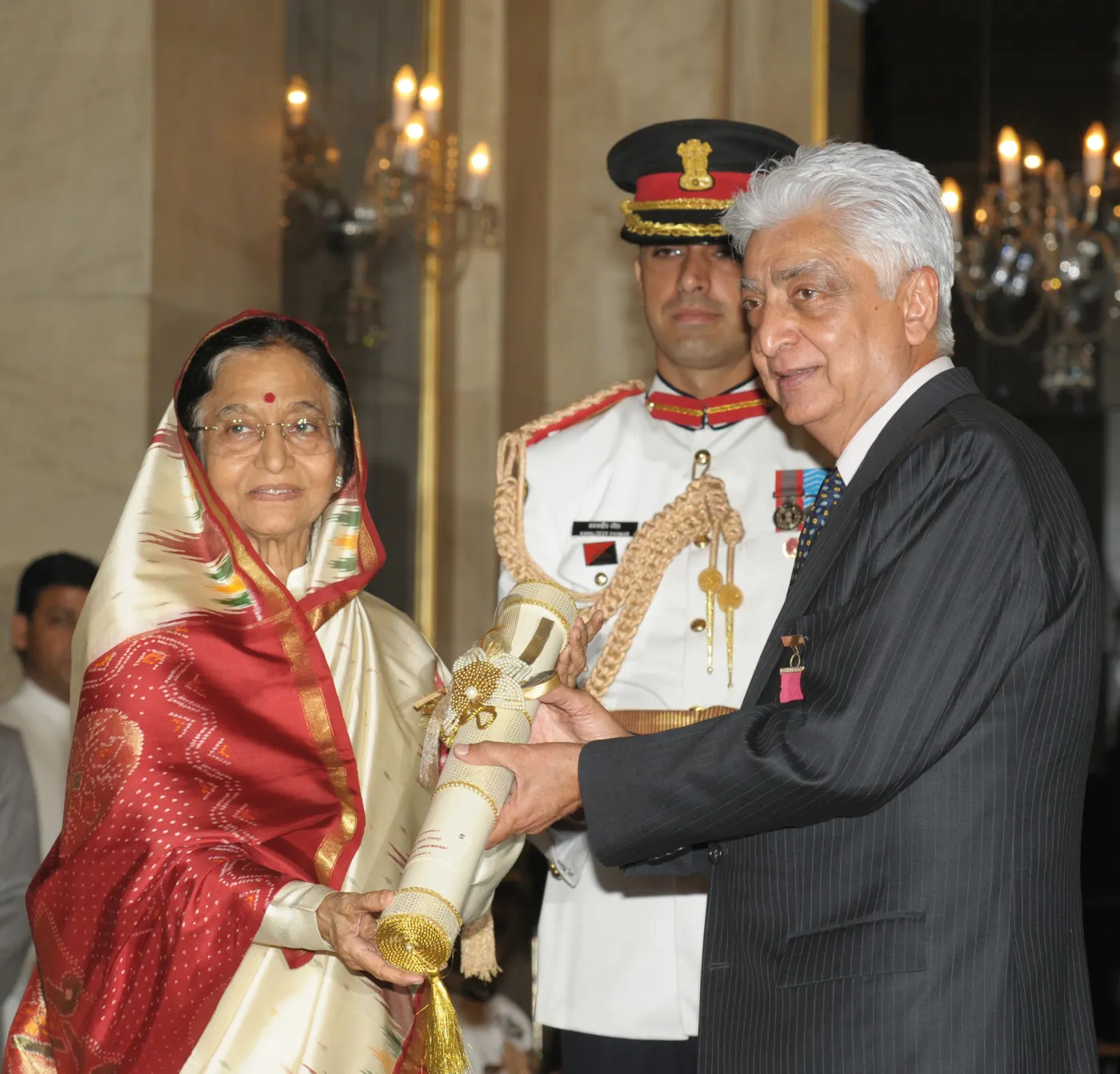
Honors stacked in parallel with the work: Padma Bhushan in 2005, Padma Vibhushan in 2011, France's Legion of Honour in 2018, Carnegie recognition, repeated Hurun philanthropy rankings, and TIME 100 listings in earlier decades before the 2025 philanthropy Titans list. He remained, for many Indians, less a celebrity CEO than a proof that industrial fortune could be rerouted into state-capable public systems.
Handing the chair to Rishad
On July 30, 2019, after fifty-three years, Premji stepped down as executive chairman. Rishad Premji, who had joined Wipro in 2007 after Bain and GE Capital, and who had already run strategy and helped conceive Wipro Ventures, became Executive Chairman. The elder Premji stayed as Founder Chairman and a non-executive board presence. The succession was orderly by Indian family-business standards and long telegraphed. One son had already been close to the foundation. The operating company moved under the next generation with professional managers around him. By FY2026 the chief executive seat was held by Srini Pallia, with Rishad as Executive Chairman guiding strategy and culture under the Spirit of Wipro values the family still treats as a product.
The handoff did not end Azim Premji's relevance. It clarified it. Wipro would fight the global services wars. The foundation would fight the education long war. PremjiInvest would compound family capital. The founder could inhabit all three without confusing their scoreboards.
Wipro in 2026, and the world the model changed
For the year ended March 31, 2026, Wipro reported IT services revenue of about 10.5 billion dollars, down 1.6 percent in constant currency in a cautious demand environment, with operating margin near 17.2 percent. Gross revenue reached roughly 926 billion rupees. Large-deal bookings jumped more than forty-five percent to about 7.8 billion dollars. Total bookings rose to roughly 16.4 billion. Operating cash flow stayed above net income. The board announced a 15,000 crore rupee buyback. Leadership talked openly about pivoting toward an AI-native, services-as-software posture.
Those numbers are a mature-company chapter, not a startup rocket. The deeper world impact sits in the path Premji opened decades earlier. Indian firms proved that complex software work, research support, and business processes could be delivered remotely at global quality. That model changed labor markets in Bangalore, Hyderabad, Pune, and dozens of other cities. It changed how Western companies staffed IT. It changed India's foreign-exchange story and its middle-class imagination. Premji was not alone in that shift, but Wipro was one of the primary instruments, and his early bet after IBM's exit was one of the primary triggers.
On the philanthropy side, the 2026 endowment figure near three lakh crore rupees means education reform in India now has a private capital base that can outlast any single budget cycle. That is a different kind of soft power. It does not replace the state. It tries to make the state's schools less unequal.
Disputes, refusals, and living-person care
Living fame attracts litigation weather. Beginning in 2020, an NGO styled India Awake for Transparency filed a maze of cases alleging improper asset transfers into private trusts. Karnataka courts called the suits frivolous. Complainants faced contempt consequences. In March 2022 the Supreme Court of India closed the remaining matters after an unconditional apology from the principal complainant. In 2024 a Lucknow complaint under equal-remuneration law, aimed at issues involving a third-party security provider for Wipro, briefly named Premji. The Allahabad High Court quashed the criminal proceedings in May 2024, noting he had no direct role in the alleged facts. These episodes belong in a careful biography as court outcomes, not as proven scandals.
In September 2025 the Karnataka government asked to use part of Wipro's Sarjapur campus to ease Outer Ring Road congestion. Premji declined, citing legal and SEZ constraints on private property, and offered instead to fund a serious mobility study. The answer was vintage Premji: polite, structural, uninterested in theatrical sacrifice that broke governance rules.
Unverified or soft spots should stay labeled. Older narrations sometimes peg the 1960s company at about 1.5 million dollars in sales; treat that as approximate period color. Forbes and Bloomberg net-worth methods disagree because they treat philanthropic holdings differently. PremjiInvest's exact assets under management move with private marks. Hospital founding-year details for his mother's work vary slightly across tributes. Absolute claims that he "always" flew economy are journalism habit more than a stamped ledger. The safe rule is the one Premji's own public style suggests: underclaim, then let institutions do the talking.
PremjiInvest, COVID, and the machinery of giving at scale
PremjiInvest, launched in 2006, became the family's professional capital allocator while the foundation became the family's moral allocator. Over time the office built positions across public markets and private companies, including consumer stalwarts and later-stage technology. Business press in 2024 described an appetite for artificial-intelligence companies as part of a fund story that some outlets pegged near ten billion dollars in influence when portfolio marks were generous. Other summaries still cite a few billion in more conservative frames. The exact private ledger is not a retail filing. What matters for the documentary is function. Premji did not want Wipro management distracted by every family investment idea, and he did not want philanthropy to become an afterthought funded only by leftover dividends.
COVID-19 tested both systems. In April 2020 the Azim Premji Foundation, Wipro, and Wipro Enterprises committed 1,125 crore rupees to relief. In June 2021 another 1,000 crore rupee commitment backed universal vaccination logistics and support. Those were not branding exercises timed for magazine covers. They were balance-sheet answers to a national emergency from a man who had spent twenty years arguing that private capital must reinforce public capacity.
By FY 2025-26 the foundation's own report sketched an operating machine: thousands of crores in grants committed, more than sixteen hundred partner organizations funded in the year, and disbursements above sixteen hundred crore rupees. An endowment office professionally managed the corpus so program teams could plan beyond one budget season. That institutional dullness is part of Premji's taste. He distrusts philanthropy that depends on the founder's mood.
Rivals, peers, and what made Wipro's lane distinct
India's IT ascent had several captains. Infosys offered a different founder mythology. TCS carried the Tata institutional weight. Cognizant and global majors fought for the same Fortune accounts. Premji's distinction was the origin story itself. He did not begin as a pure software partnership out of a Pune or Mysuru garage. He began as an interrupted heir who had to earn professional legitimacy inside a mill business, then use that cash and managerial spine to enter computing when policy ejected IBM. The path created a conglomerate memory inside a services firm: consumer branding discipline, manufacturing cost habits, and only later the offshore delivery engine.
He also competed on trust vocabulary. Spirit of Wipro language, stock awards instead of only options in some eras, and a public allergy to family executives on the operating payroll were ways of telling global clients that this was not a black box family shop. When Premji told Stanford students that Western firms faced engineering shortages and that global sourcing was talent leverage rather than only wage arbitrage, he was selling a geopolitical labor thesis. That thesis hired hundreds of thousands of Indians over decades and rearranged night shifts in New Jersey and London boardrooms.
Failures and almost-paths belong here too. Not every diversification worked equally. Hardware margins are cruel. Product businesses in India stayed a small share of export software for years because services offered lower-risk cash, a fact Premji admitted openly in 2006 when he said he did not expect India to become a giant packaged-product nation soon. Scaling culture while hiring twenty thousand people a year forced compromises. Competitors sometimes moved faster into specific verticals. Premji's answer was usually institutional patience rather than theatrical pivots.
Daily method: questions, campuses, and distrust of clones
Across interviews Premji returns to a few working habits. He wants ideas from customers that the customers themselves have not fully articulated. He wants recruiting teams to resist cloning the current staff. He wants middle managers protected when they hire strange talent, because unprotected strange talent leaves and poisons the employer's reputation. He wants innovation confrontations timed neither so early that fragile ideas die nor so late that sunk costs lie. He wants leaders to show commitment through behavior, not slogans, because people hear speeches and copy actions.
He also kept returning to campuses. Wipro's growth model depended on converting engineering graduates into billable professionals at industrial scale. Premji spoke about virtual universities for induction, quality-process onboarding, and the danger that rapid headcount turns a service firm into a factory that clients can feel. McKinsey's own research, which he cited, suggested even elite partnerships struggle beyond roughly twenty percent annual growth without cultural loss. Wipro tried to beat that curve for years. Sometimes it did. Sometimes attrition and quality stress showed the cost.
The personal method matched the corporate one: understate, measure, institutionalize. Colleagues and profiles describe a man more comfortable with process questions than with victory laps. That temperament helped when the work shifted from winning outsourcing contracts to building teacher-support institutions that cannot show a quarterly bounce.
2025 to 2026 in sharper focus
The twelve months around Premji's eightieth birthday compressed symbols. TIME's philanthropy list in May 2025 framed him as a systems builder in public education rather than a check writer. The foundation's May 2025 commitment of about 265 million dollars over three years for underprivileged girls' college education, and a later school-meal expansion on the order of 175 million dollars for more than five million children, showed the endowment doing what endowments are for: multi-year public goods.
Wipro's FY26 results in April 2026 showed a company navigating AI disruption without pretending the transition was painless. Revenue in constant currency slipped slightly. Bookings and large deals improved. Margins held. Cash returned to shareholders through dividends and a planned buyback. The AI Native Business and Platforms unit and a services-as-software vocabulary were admissions that classic staff-augmentation economics face model risk. Premji was no longer the daily operator of that pivot. His earlier career still supplied the company's permission structure: reinvent before comfort becomes a trap.
On wealth scoreboards, careful readers in September 2026 had to hold two numbers. Forbes realtime figures near 8.2 billion dollars reflected a personal fortune after decades of giving. Bloomberg figures above 24 billion dollars reflected another lens on residual economic power and holdings. Foundation materials pointing to an endowment near three lakh crore rupees by mid-2026 explained where much of the missing personal wealth went. For a documentary, the triad is the story. Personal fortune, corporate franchise, philanthropic corpus. Premji optimized the third with unusual aggression.
What children and citizens actually got
World impact claims fail when they stay at valuation altitude. Premji's more grounded claim is that teacher learning centers, field offices, curriculum advocacy, university training pipelines, childcare centers, girls' scholarships, and meal support change the daily probability that a child in a disadvantaged district meets an adult who can teach. Eight million children touched by foundation programs, if the TIME accounting holds, is not a press release abstraction. It is attendance, literacy odds, and the civic bet that public schools can be improved without abandoning them for private enclaves.
Wipro's grounded claim is different: enterprise software kept running, banks reconciled, telecom features shipped, hospitals digitized, and Western and Asian firms hired Indian talent at scale. Premji's generation turned a brain-drain fear into a brain-circulate industry. Remittances of skill, not only money, moved through Wipro badge scanners.
The unfinished work is obvious and Premji has never pretended otherwise. India's public education quality remains uneven. Learning poverty metrics still shame policy makers. IT services face automation pressure. Inequality inside booming cities can mock average progress. Premji's wager was never that one foundation ends those problems. It was that a serious private endowment, locked away from vanity, can keep pushing for decades after the founder stops taking economy-class jokes as his main public identity.
Awards, identity, and the private man inside the public trusts
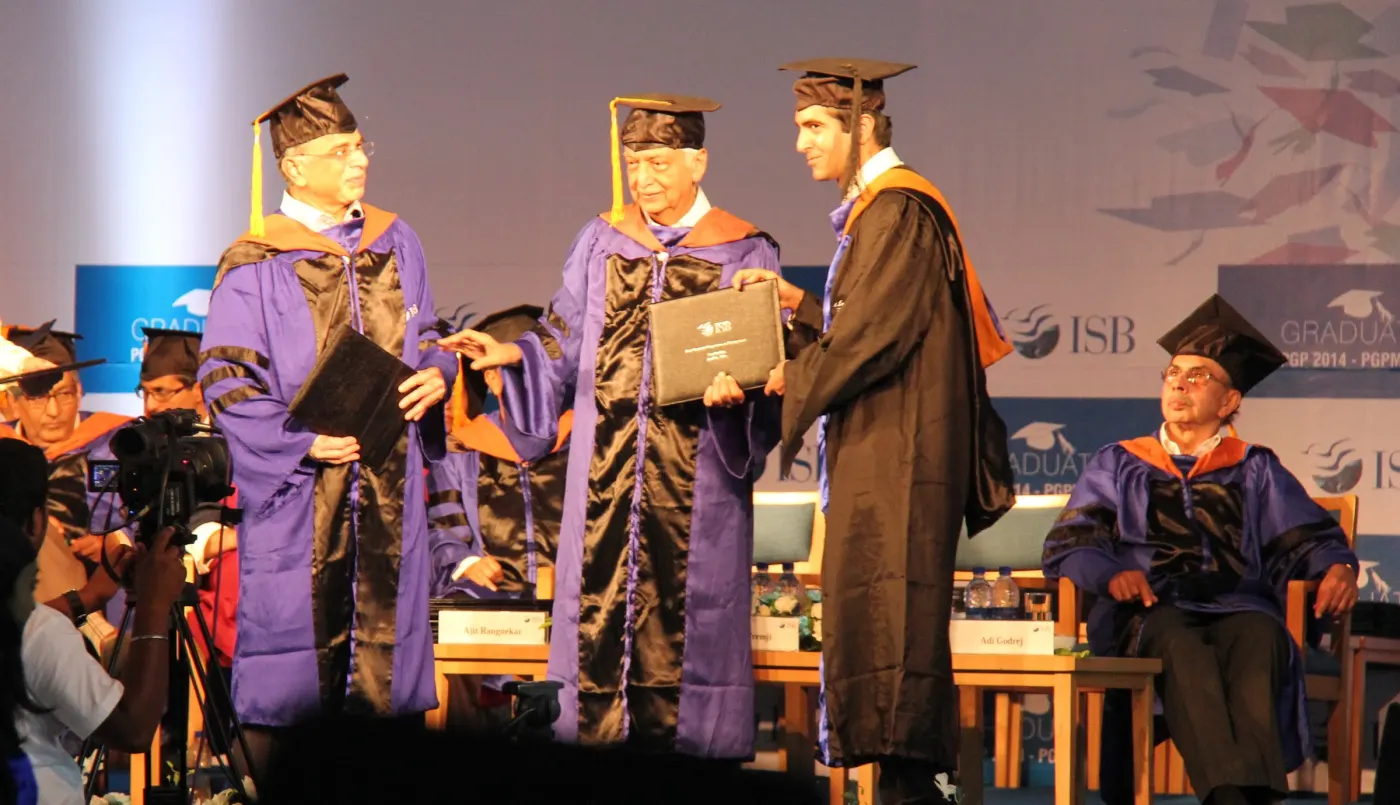
Premji's honor wall can read like a state dinner list if you only stack the medals: Padma Bhushan, Padma Vibhushan, French Legion of Honour, honorary doctorates from Manipal, Wesleyan, Mysore, IIT Bombay, and others, BusinessWeek entrepreneur rankings, EY lifetime recognition, Carnegie Medal of Philanthropy. The more revealing pattern is which identities he refused to let define him. He is regularly listed among influential Muslims worldwide, yet he rarely performed religion as corporate theater. He is a billionaire who flinched at billionaire pageantry. He is a Muslim industrialist who stayed in India after Partition pressure on his father's generation, then spent fortune on universal public schooling rather than communal monuments.
Family remained tightly drawn. Yasmeen Premji kept a low public profile. Rishad became the visible corporate successor. Tariq stayed closer to foundation orbits in earlier descriptions. Premji's own interviews deflect dynasty talk. In the CNBC conversation, when asked about formal timelines for sons on the company board, he offered no specific plan. The operating answer arrived later through Rishad's earned path inside Wipro strategy roles rather than a coronation at age twenty-one. That difference from Premji's own forced arrival is one of the quiet corrections he could offer the next generation.
Privacy had costs and benefits. It protected the foundation from becoming a personality cult. It also meant the public sometimes understood Premji only through caricature: the economy-class billionaire, the soap-using chairman, India's Bill Gates. The real method was colder and more interesting. Transfer shares irrevocably. Build field capacity. Fund universities and teacher centers. Let courts dismiss frivolous attacks. Decline illegal shortcuts even when a chief minister asks for a road through your SEZ. Keep returning to the same sentence about privilege and duty until the sentence is backed by an endowment measured in lakh crores.
Closing
Picture a Bombay boy watching his mother wrestle a children's hospital into existence while a newly free country still smelled of idealism. Picture a Stanford hallway in 1966, a sudden death, and a twenty-one-year-old packing for Amalner instead of a World Bank internship. Picture a shareholder telling that boy to sell. Picture oil drums giving way to branded soap, then to minicomputers after IBM's exit, then to armies of engineers shipping code across oceans.
Picture a foundation field office in a district most investors never visit. Picture share-transfer documents that moved tens of billions of dollars out of personal reach on purpose. Picture a quiet eightieth birthday in 2025, a TIME philanthropy line, and an endowment large enough to fund teachers long after the founder is gone. Picture FY2026 Wipro still booking multi-billion-dollar deals while the Founder Chairman's real operating system is classrooms.
Azim Premji's life is not the story of a man who chased being richest. It is the story of a man interrupted into responsibility, stubborn enough to rebuild a commodity firm, shrewd enough to catch a national technology vacuum, disciplined enough to professionalize a family company, and finally restless enough to treat education as the harder enterprise. The oil mill became a software multinational. The software fortune became a public-school endowment. The boy told to quit stayed long enough to make leaving the money behind look like the real promotion.