Buy Bitcoin
A shy San Jose kid read a white paper in 2010. He coded nights after Airbnb. Coinbase took crypto to the public markets.
On April 14, 2021, Nasdaq flipped on a ticker that sounded like a dare: COIN. Coinbase Global was not selling a batch of shares through the usual banker roadshow. It was walking straight onto the public market through a direct listing, letting buyers and sellers discover a price in daylight. Reference talk had hovered near $250 a share. By the close, the stock sat near $328. For a few hours the company was valued like a giant that Wall Street had spent a decade calling a toy.
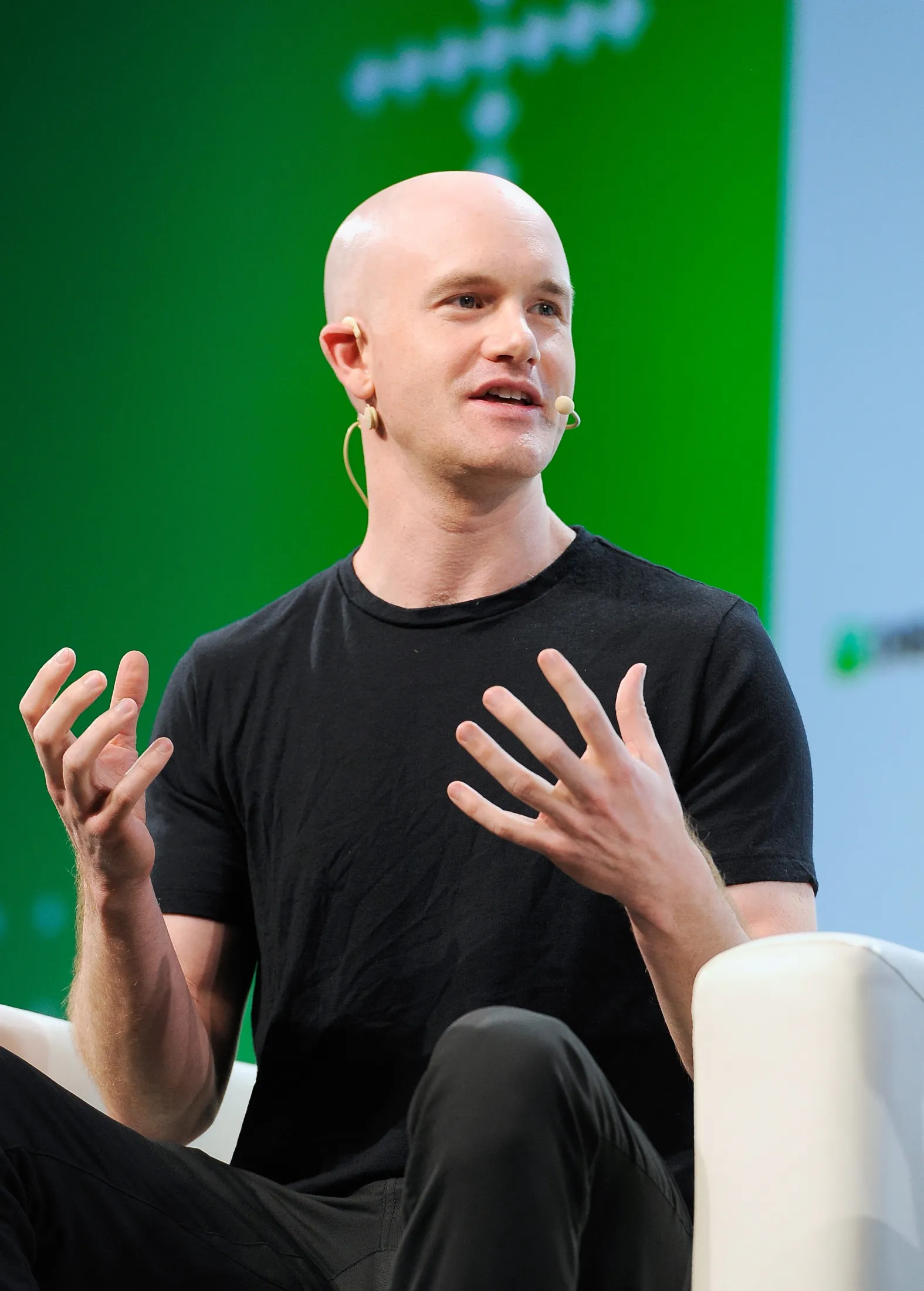
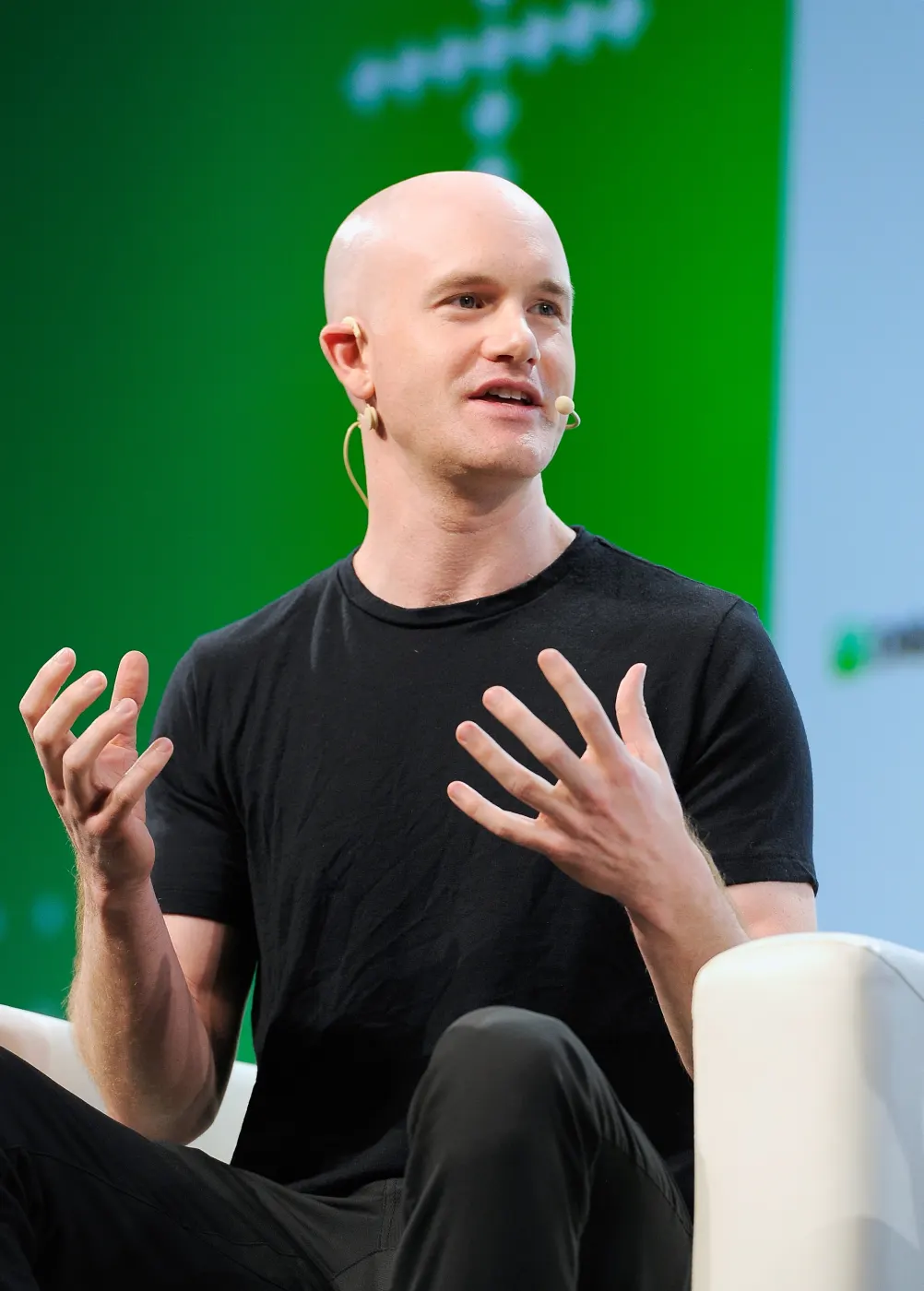
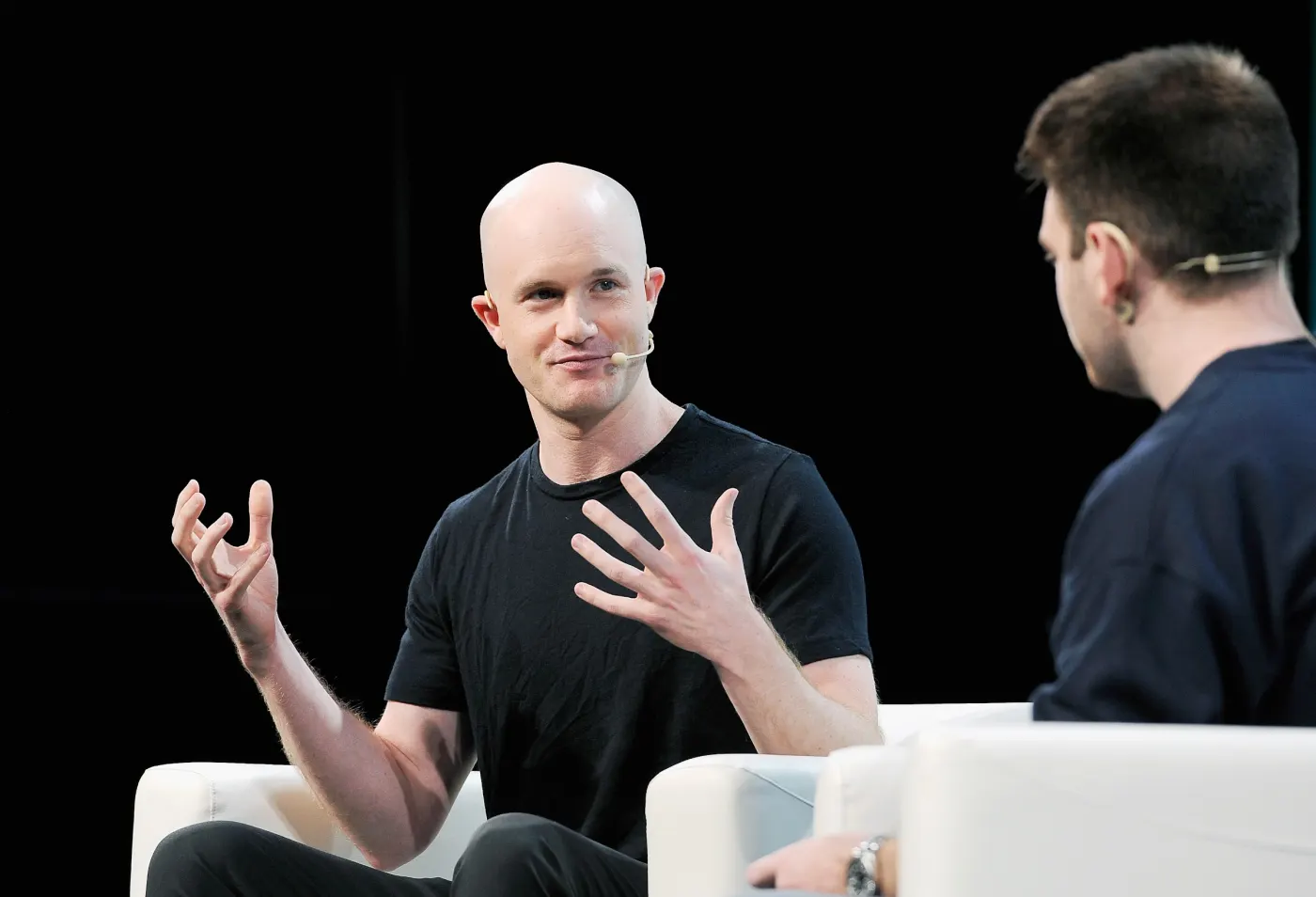
Brian Armstrong stood inside that moment as co-founder and chief executive. He was thirty-eight. A decade earlier he had been an Airbnb engineer sneaking code onto nights and weekends, trying to make Bitcoin feel as ordinary as email. Friends had warned him that storing other people's coins was a hack waiting to happen. Banks had treated crypto like radioactive waste. Now millions of people could tap a button that said, simply, Buy Bitcoin.
The listing was not the end of the story. Crypto winters still came. Regulators still sued. Employees still walked out. Armstrong still wrote long blog posts that split the internet. By fiscal 2025 Coinbase would report about $7.2 billion in revenue and push trading volumes into the trillions. By mid-2026 Bloomberg would describe roughly $246 billion of assets held on the platform and frame Armstrong's stake in the mid-teens. The shy kid from San Jose had not become quieter. He had become harder to ignore.
San Jose, shy rooms, and two engineer parents
Brian Armstrong was born on January 25, 1983, near San Jose, California, while the early internet was still a rumor that adults argued about at dinner. His father, Dave, worked as an environmental engineer. His mother programmed computers at IBM in an era when that sentence still surprised people. The household was nerdy in the unfashionable way: machines, curiosity, and a boy who felt he had ideas that adults did not always hear.
He has described himself as deeply shy. In the authorized documentary COIN: A Founder's Story, cameras return to his childhood room and to parents who remember a quiet intensity more than a natural showman. He kept unusual pets, including a tarantula he named Anansi and a green iguana named Spike. Caring for strange animals was an early practice in responsibility without applause.
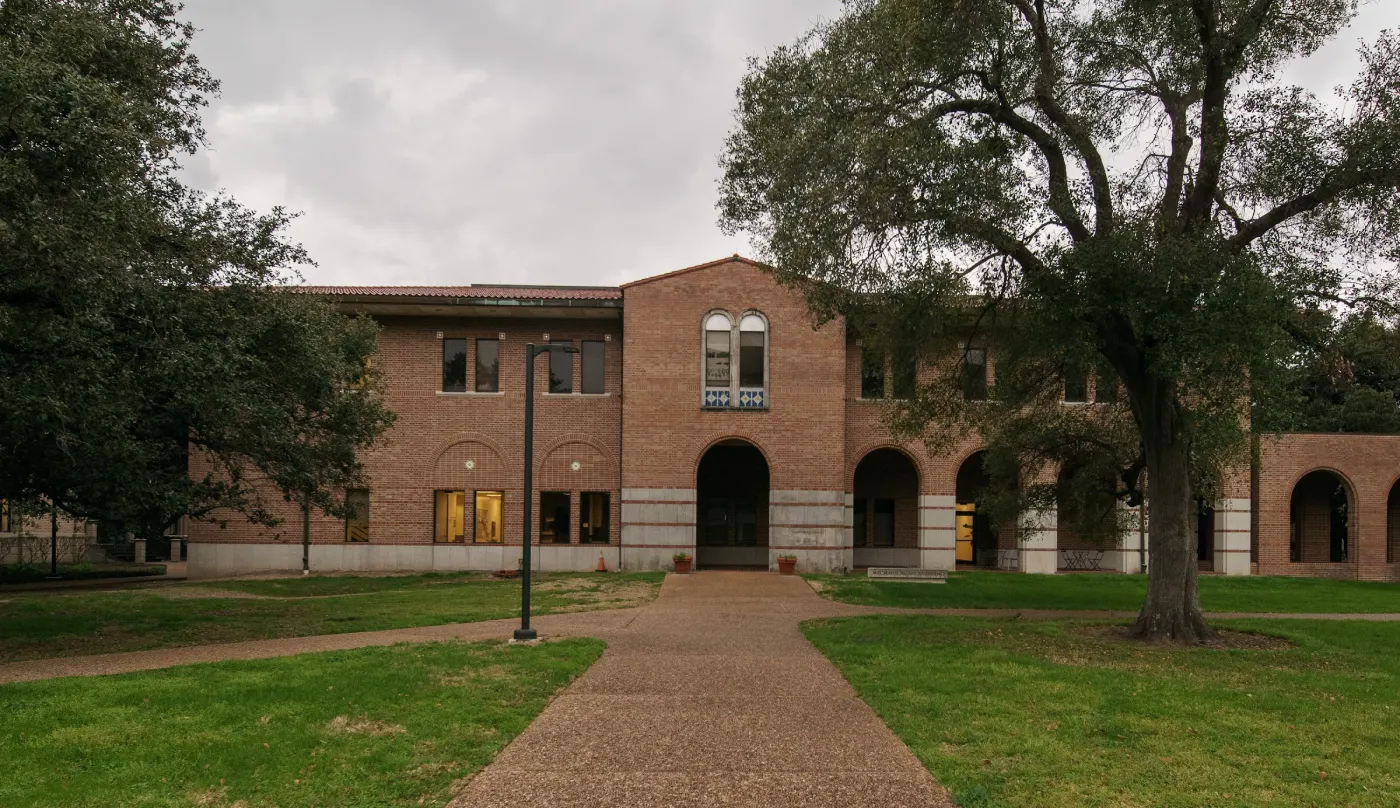
He attended Bellarmine College Preparatory, then left the Bay for Rice University in Houston. At Rice he collected three degrees that still show up on his short bio: bachelor's work in economics and computer science in 2005, then a master's in computer science in 2006. The double track mattered. Economics taught him markets and incentives. Computer science taught him how to ship systems that did not care about his social anxiety.
UniversityTutor and the marketplace that leaked
While still a student builder, Armstrong helped create UniversityTutor, a matching service that tried to connect students with tutors and take a cut of the billing. It was an early lesson in marketplace physics. Matching was valuable. Owning the payment flow was hard. Tutors and students often met once through the site, then paid each other under the table. The platform became friction instead of infrastructure.
He learned a founder sentence the hard way: if you are in the way of what customers already want to do, they will route around you. Years later, when he put UniversityTutor on autopilot as a simple directory rather than a full billing machine, the site kept drawing thousands of monthly visitors without constant babysitting. The company was later acquired in 2014. It never became Airbnb. It became tuition for Coinbase.
After Rice he stretched himself geographically. He spent about a year in Buenos Aires working with an education company, practicing life outside the Silicon Valley comfort zone. He also passed through IBM as a developer and Deloitte as a consultant in enterprise risk. The resume looked respectable. It did not yet look inevitable.
Bitcoin white paper, meetups, and Airbnb nights
In December 2010, Armstrong read the Bitcoin white paper published under the name Satoshi Nakamoto. The idea hit him like a protocol, not a get-rich tip. Email had SMTP. Code had Git. Ordinary people did not run their own mail servers or Git servers. They used Gmail and GitHub. Someone, he thought, would eventually build the hosted, secured, backed-up version of Bitcoin for everyone else.
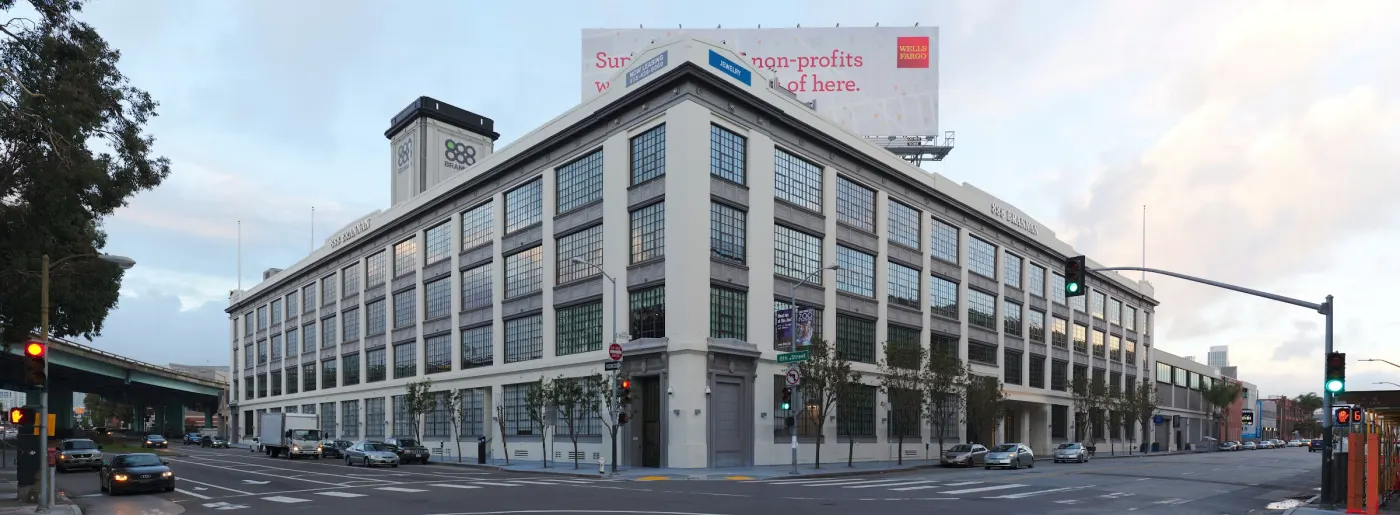
He started showing up at Bay Area Bitcoin meetups. The rooms mixed brilliant engineers, anarchists, scammers, and true believers. He began prototyping on nights and weekends while holding a day job. In 2011 he joined Airbnb as a software engineer, working on problems like fraud prevention and payment complexity across a company that already touched roughly 190 countries. Sending money to South America, he saw, could still feel broken in the age of smartphones.
The side project schedule was brutal and specific. He has said he often worked at Airbnb until early evening, ate dinner, then coded from about 8 p.m. to midnight several weeknights, plus long Sunday sessions. Call it roughly twenty hours a week for a year or more. Friendships thinned. Sleep thinned. The prototype grew in Ruby and JavaScript: a hosted wallet meant to make receiving, storing, and sending bitcoin feel less like a science experiment.
Smart friends split into two camps. Some thought Bitcoin itself was a scam. Others understood Bitcoin and still thought his idea was dumb, because a honeypot of customer coins would attract hackers. Armstrong's compromise with himself was gradualism. He would not quit tomorrow and custody the world's coins. He would build enough to learn.
Y Combinator, Hacker News, and Fred Ehrsam

In 2012 Armstrong applied to Y Combinator. He posted on Hacker News looking for a co-founder. He took meeting after meeting, more than fifty by his later count, hunting for someone who matched the risk. British programmer Ben Reeves nearly joined, then split over how a Coinbase wallet should work. The partnership that stuck arrived through Reddit: Fred Ehrsam, a former Goldman Sachs trader who could feel markets in his fingertips.
Y Combinator wrote a seed check of about $150,000. That check, Armstrong has said, gave him confidence to quit Airbnb and go full time. Bitcoin still traded in a world where a coin might be talked about near single digits or low double digits, depending on the week you asked. The first office felt like a bachelor apartment more than a bank. Early teammates later joked about an old building so tired that masonry trouble became office lore. Armstrong and Ehrsam worked six or seven days a week, writing product code and answering support tickets until the tickets taught them they had to hire.
They named an early wallet iteration Toshi, a nod to Satoshi and also to one of Armstrong's cats. The brand Coinbase itself borrowed from the special "coinbase" transaction that introduces new coins in proof-of-work systems. Even the name was a protocol joke wearing a company suit.

The trough of sorrow and the Buy Bitcoin button

Launching was not winning. Armstrong put early Coinbase in front of Reddit and crypto forums. Hundreds signed up. Most did not come back. Y Combinator had a name for the feeling: the trough of sorrow. Hype spikes, silence follows, and founders either iterate or die politely.
He did the unglamorous thing Paul Graham's universe recommends. He emailed a handful of users and asked for phone calls. Pattern recognition arrived on those calls. People liked the idea. They had no bitcoin. Getting coins meant wiring money into confusing foreign exchanges and hoping. When Armstrong asked whether a Buy button inside the app would have changed behavior, the answer was basically yes.
Building the button was not a UI afternoon. It meant finding a U.S. bank partner willing to touch crypto rails, explaining anti-money-laundering controls, coding ACH-like funding, and sourcing bitcoin when customers clicked. Late 2012 into early 2013, the simple Buy Bitcoin path finally worked. Armstrong later called it the moment of product-market fit. Growth turned organic. The metaphor he repeats in interviews and in COIN is physical: first you push a boulder uphill; then the boulder rolls and you chase it downhill as fast as you can.
Venture fuel, first hires, and becoming infrastructure
Money followed usefulness. In May 2013, Union Square Ventures led a roughly $5 million Series A with Fred Wilson's name attached to the bet. In December 2013, Andreessen Horowitz led a $25 million round that told the Valley Coinbase was not a hobby. Olaf Carlson-Wee became a famous early employee story: a hungry Bitcoin believer who cold-emailed his way in and, for a stretch, took pay in bitcoin.
Through 2014 the company crossed toward a million users, built vault-style cold storage ideas, bought talent through small acquisitions, and chased merchant acceptance so bitcoin could feel spendable at names like Overstock, Dell, and Expedia. In January 2015 a $75 million round brought in unusual institutional flavor, including interest connected to the New York Stock Exchange ecosystem. Coinbase launched a professional exchange venue that later wore names like GDAX and Coinbase Pro. Retail ease and trader depth were becoming one company with two faces.
Regulation was never optional in Armstrong's preferred narrative. New York's BitLicense era, listings for ether and litecoin, and later the Centre consortium work that helped birth USD Coin with Circle all pushed Coinbase toward the respectable lane of crypto: know-your-customer, bank partners, and a public claim that economic freedom still needed adult supervision.
Culture collisions, Neutrino, and learning in public
Scale made mistakes louder. In 2019 Coinbase acquired Neutrino, a blockchain intelligence firm. Reporting quickly tied some Neutrino roots to Hacking Team, a company long criticized for surveillance tools sold into ugly politics. Users revolted in the only language crypto trusts: withdrawals of trust. Armstrong published a blog post admitting the company had evaluated product and security more carefully than mission and values. Staff with Hacking Team history would transition out. He did not dress the wound as a triumph. He called it a mistake.
Other scars accumulated. Customer support pain became a running complaint in boom years. An IRS fight forced reporting of high-volume users. A failed spear-phishing attempt using browser zero-days in 2019 became a proud security story because it was caught. Insider trading by a former product manager and associates later produced the first major U.S. crypto insider-trading case, with Coinbase cooperating after internal detection. None of these chapters make a founder look mythical. They make the company look like a financial institution that happens to speak blockchain.
Mission focused: the blog that split the company
In June 2020, after George Floyd's murder, Armstrong faced internal pressure over what Coinbase should say about racial justice. He initially leaned on an apolitical instinct, then posted personal support on Twitter against racism and police brutality. The deeper conflict did not vanish. During pandemic remote life, activism questions intensified. Employees walked out. Laptops closed in protest. Armstrong realized the company lacked a shared answer to a basic leadership question: what is work for?
On September 27, 2020, he published "Coinbase is a mission focused company." The mission, as he framed it, was to build an open financial system and increase economic freedom with crypto. Broader political debates at work, he argued, created division and distraction. Days later he offered generous severance to anyone who could not align. In an October 8 follow-up he reported that about sixty people, roughly five percent of the company, took the package.
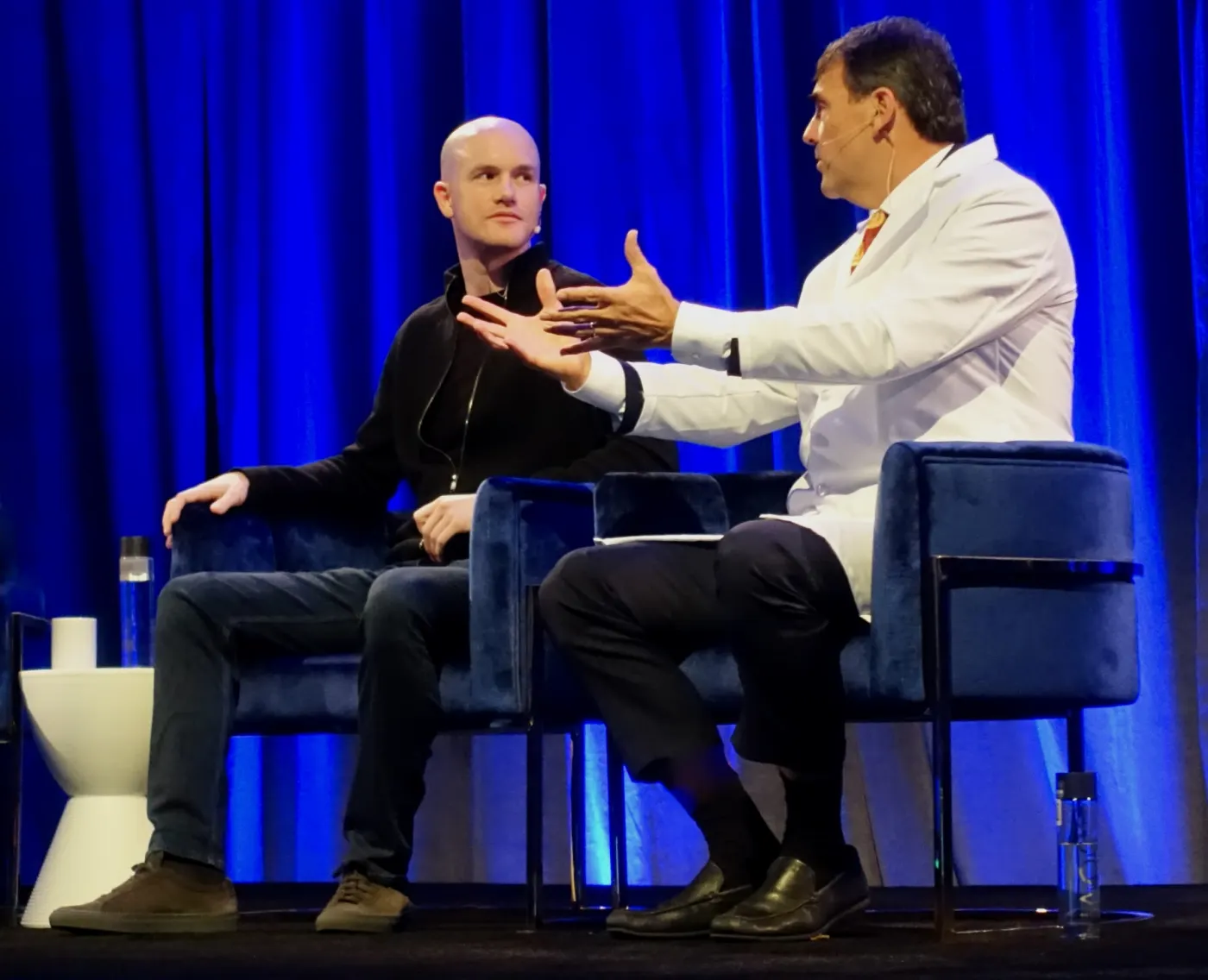
Supporters called it clarity. Critics called it a silencing. Armstrong told Tim Ferriss he had written multiple discarded drafts, argued with leaders who begged him not to post, and decided bad headlines mattered less than an aligned culture that could pursue a ten- or twenty-year problem. Legal care matters here: this was a management policy fight inside a private then soon-public company, not a court verdict about anyone's politics. It remains one of the defining public acts of his CEO identity.
Direct listing day and the first public chapter
By late 2020 Coinbase was preparing to live in daylight. It chose a direct listing rather than a traditional IPO or a SPAC. Armstrong told CNBC he liked the idea that the market, not a small private allocation, would set the opening truth, and that the approach felt closer to crypto's open ethos. Coinbase also had a strong balance sheet, so it was not primarily raising survival cash on day one.
April 14, 2021, became a cultural event as much as a financial one. Crypto finally had a large U.S. exchange with a household ticker. Armstrong's personal wealth printed in billionaire lists that swung with every bitcoin candle. Fred Ehrsam, who had stepped back from operating work in 2017, remained intertwined through ownership and board service. Emilie Choi, hired from LinkedIn's deal world, had become president and COO, a signal that Coinbase wanted operating depth beyond founder myth.
Then the cycle turned, because crypto always turns.
Crypto winter, layoffs, and Base
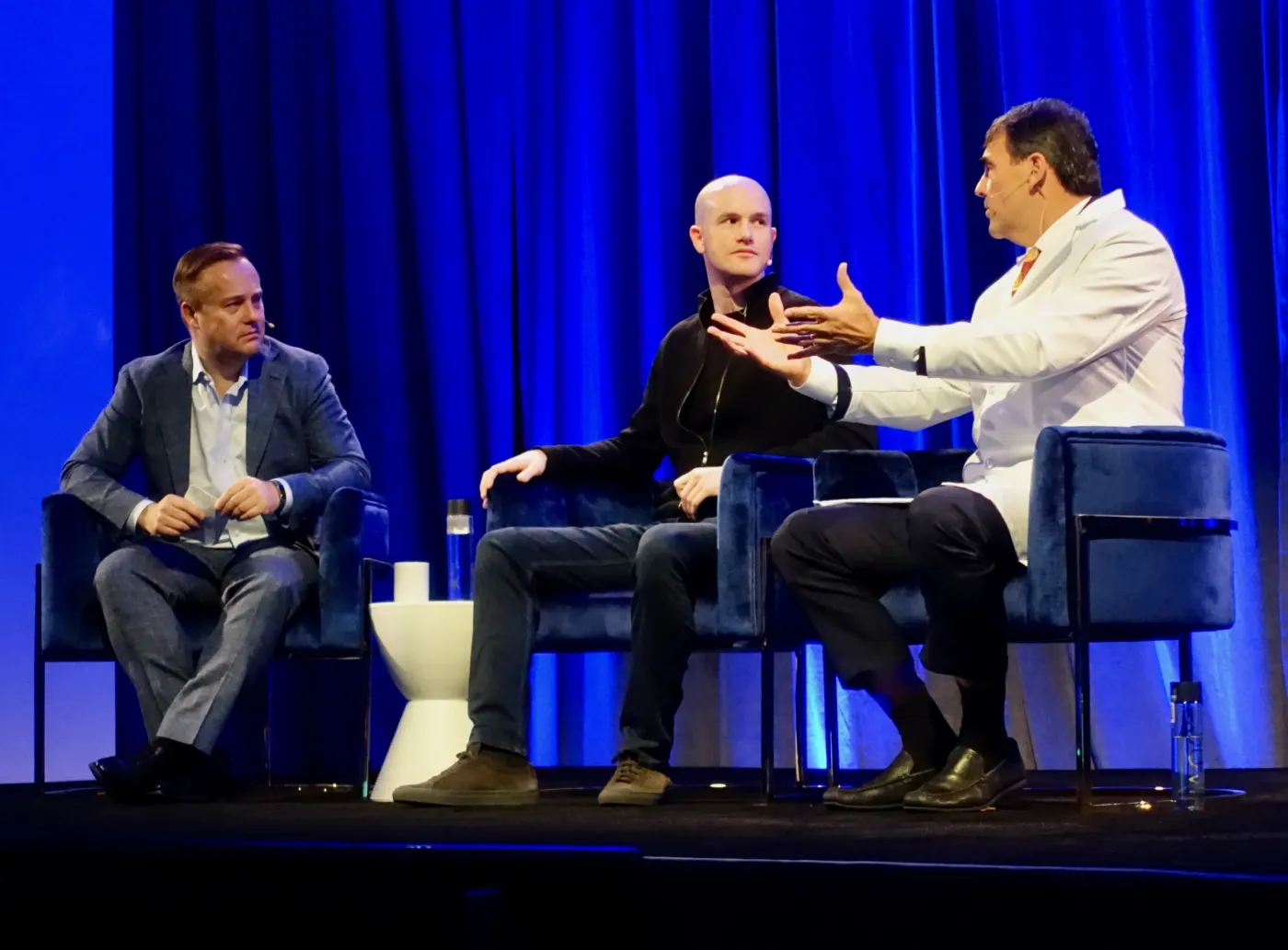
Boom revenue in 2021 created a company shaped for perpetual summer. 2022's crypto winter did not care. In June 2022 Coinbase cut about eighteen percent of staff, on the order of 1,100 roles, and talked openly about winter. After FTX collapsed and fear of contagion spread, January 2023 brought another roughly 950 job cuts. Armstrong's public tone stayed clinical: shut down lower-probability projects, survive, keep building.
Building did not stop. In February 2023 Coinbase launched Base, a layer-2 Ethereum network using Optimism's OP Stack, aiming to make onchain apps cheaper and more reachable. International derivatives experiments, custody for institutions, staking products, and the long push of USDC distribution kept the company from being only a spot trading casino. Armstrong's thesis was becoming clearer: Coinbase had to be an everything exchange for a crypto economy, not a single-coin shop window.
Regulators, lawsuits, and a dismissal
Coinbase's respectable lane still collided with Washington. In March 2023 the SEC issued a Wells notice. In June 2023 the SEC sued, alleging Coinbase had operated as an unregistered exchange, broker, and clearing agency, and raising staking registration claims. Coinbase disputed the framing and argued for clearer rules rather than enforcement-first governance. Separately, New York's DFS extracted a $50 million penalty in January 2023 over anti-money-laundering control failures and required another $50 million into compliance.
These fights are legal processes, not morality plays with a final score printed on the founder's forehead. In February 2025, after a change in presidential administration, the SEC dismissed its lawsuit against Coinbase. Armstrong's political spending through crypto-aligned vehicles such as Fairshake, and Coinbase's own heavy election-cycle contributions reported in 2024 and 2026, made him a Washington character as much as a San Francisco one. Admirers called it defending innovation. Critics called it buying a rulebook. A careful biography records both the expenditures and the arguments without turning either into gospel.
Other 2025 shocks tested operations. In May, Coinbase disclosed that overseas support agents had been bribed in a data-theft extortion scheme. The company refused a reported $20 million ransom, announced a matching bounty for information, and warned that customer reimbursement and response costs could approach $400 million. That same month it agreed to acquire Deribit, a major crypto derivatives venue, in a cash-and-stock package reported around $2.9 billion, and Coinbase joined the S&P 500 on May 19, 2025. Index inclusion is a dull sentence with a loud meaning: crypto market structure had entered the default American portfolio machine.
How Armstrong works
Armstrong's working style shows up in repeated scenes across interviews. He writes to think. The mission blog went through discarded drafts. He likes narrow focus and hates corporate attention spilled across every social controversy. He cites Paul Graham's startup essays the way some CEOs cite strategy consultants. He talks about full-contact entrepreneurship: if you cannot take a hit, stand up bloody, and swing again, you may not belong in the arena.
He is not a pure operator monk. He co-founded ResearchHub in 2020 to push scientific papers into a more open, GitHub-like conversation. In 2022 he co-founded NewLimit to chase epigenetic reprogramming and longer healthspan, raising a $40 million Series A in May 2023. Longevity is a second mountain beside crypto. Whether NewLimit becomes a defining company or a rich man's lab is still an open 2020s question. Wall Street Journal coverage in 2026 treated its valuation climb as news, which at least means the bet is no longer invisible.
He married Angela Meng in 2024. The private life stays mostly private, which fits the shy childhood more than the Nasdaq lights.
2026: what Coinbase became and what changed
By the company's own 2025 scorekeeping, Coinbase delivered about $7.2 billion in total revenue, with subscription and services revenue near $2.8 billion, far more diversified than the pure trading spike of 2021. Total trading volume reached about $5.2 trillion, up 156 percent year over year, with crypto trading market share around 6.4 percent, roughly double. Paid Coinbase One subscribers approached one million. Average USDC balances held in Coinbase products sat near $17.8 billion. Armstrong's "Everything Exchange" line was marketing, but the product map underneath it was real: spot, advanced trading, wallet, staking, stablecoin rails, institutional prime brokerage, and onchain tools.
World impact is bigger than a ticker. Coinbase helped turn bitcoin from a forum curiosity into a funded, app-store gesture for mainstream Americans. It normalized the idea that a regulated company could custody digital assets at national scale. It also concentrated risk: when support fails, when an exchange lists an asset badly, or when politics capture the rulebook, millions feel it at once. Armstrong's bet is that economic freedom through open money outweighs those concentrations. Detractors argue that easy on-ramps also easy-on-ramp speculation, washouts, and political capture. Both statements can be true in the same decade.
Forbes listings around late 2025 and 2026 put Armstrong's fortune in the high single-digit billions, moving with COIN. Bloomberg's billionaire desk has described on the order of a mid-teens percent economic stake. Exact percentages differ across trackers because dual-class votes, trusts, and market prices refuse to sit still. What does not blur is the control story: Coinbase remains a founder-shaped company.
Not every 2025 and 2026 headline was triumphant. Armstrong drew criticism in November 2025 after dropping crypto buzzwords on an earnings call in a way that looked aimed at prediction markets. Industry voices called it manipulation-adjacent. He treated it more like a troll. In legislative fights over digital-asset market structure, including the Clarity Act saga through 2026, he has been cast as both the industry's most effective lobbyist and a dealer who walks when draft language turns ugly. Report the fights as fights. Do not pretend a living CEO's last move is settled history.
Banks, BitLicense, and the respectable bet
Armstrong's strategic personality showed early in what he refused to be. While other crypto venues chased offshore opacity, Coinbase chased bank partnerships, state licenses, and the dull paperwork that lets a teacher in Ohio fund an account without learning hex addresses. The New York BitLicense fights of the mid-2010s were expensive and slow. They also became part of the brand: if Coinbase could operate under New York scrutiny, it could sell trust to people who would never attend a meetup.
That trust bargain cut both ways. Know-your-customer rules meant Coinbase was never the anonymous cash machine some Bitcoiners wanted. Armstrong accepted the trade. His argument, repeated for years, was that economic freedom for a billion people required on-ramps ordinary humans would use, and ordinary humans live inside nation-states. Idealists called it capture. Pragmatists called it the only path that scales.
Merchant experiments in 2014 tried to make bitcoin feel spendable at mainstream brands. Some partnerships faded when volatility and checkout friction returned. The deeper durable product was not paying for a laptop with satoshis. It was the habit of treating crypto balances like an asset account you could fund from a checking account on a Tuesday night.
Co-founder tension and the long board
Fred Ehrsam was not a decorative co-founder. He brought trading instincts Armstrong did not grow up with. Early Coinbase needed both the engineer who could ship a hosted wallet and the trader who could smell market structure. Documentary interviews with family and colleagues describe obsessive shared hours and complementary brains. They also hint at the classic co-founder weather: who runs what, how long, and what happens when the company outgrows the apartment myth.
Ehrsam stepped away from day-to-day leadership in 2017 while remaining economically and governance-linked. Armstrong stayed CEO. Outside observers sometimes reduce that to a sitcom. Inside a high-stakes crypto firm it is more like separating cockpit roles while the plane is still being built in midair. Emilie Choi's rise into the president and COO seat added another kind of adult supervision: deals, org design, and the unromantic work of making a mission survive headcount.
Armstrong has talked about learning to manage the co-founder relationship deliberately rather than assuming friendship plus equity equals forever alignment. That sentence is easy to print and hard to live. Coinbase's survival through multiple boom-bust cycles suggests the governance patchwork held even when egos and priorities diverged.
Security theater versus security reality
Crypto exchanges die from hacks in public. Coinbase marketed cold storage vaults, insurance narratives, and a security culture hired from serious engineering shops. The 2019 Firefox zero-day spear-phishing attempt against staff became a case study because detection worked and funds were not drained. Customers rarely clap for non-events. Founders still lose sleep over them.
The May 2025 support-agent bribery case showed a different threat model: not a glamorous chain exploit, but human weak points in customer support overseas. Personal data theft for social engineering is an old bank problem wearing a crypto hoodie. Armstrong's public posture was refusal to pay extortion, a bounty for tipsters, and a costly promise to make customers whole. Whether that response was virtue, brand defense, or both, it revealed how large Coinbase had become. At enough scale, your support roster is part of your attack surface.
Product map beyond the orange coin
Bitcoin made the brand. The company that reached 2026 could not live on bitcoin alone. Ether support, ERC-20 expansion, stablecoin distribution through USDC relationships, institutional prime services, staking, a self-custody wallet, debit card experiments, developer APIs, and Base as a layer-2 home for cheaper onchain activity all tried to answer the same fear: what if spot trading fees compress forever?
Armstrong's "Everything Exchange" language in 2025 earnings talk pointed at that diversification. Coinbase One subscriptions climbing toward a million paid users mattered because subscription revenue does not vanish the moment volatility sleeps. USDC balances held in Coinbase products created float economics tied to interest-rate worlds traditional finance already understood. Critics said this made Coinbase look like a bank that cosplays as a revolution. Armstrong said revolutions that cannot pay engineers do not ship.
BlackRock's 2022 partnership narrative, Google Cloud payment experiments, and later derivatives expansion through Deribit all pushed the company further into the center of market plumbing. The more Coinbase became plumbing, the more every outage and political fight became national news.
Remote-first, then offices again
In May 2020 Coinbase announced it would be remote-first and stop pretending a San Francisco headquarters defined it. Pandemic timing made the choice look inevitable. Culture fights over politics happened on Slack and Zoom rather than in a single cafeteria, which may have sharpened them. Years later the company leased serious Bay Area space again and talked up a Charlotte operations hub. Pure remote idealism met the gravitational pull of compliance teams, lawmakers, and the human habit of putting bodies in rooms.
Armstrong's leadership challenge in that whiplash was consistency. Mission focus was supposed to be the constant when real estate strategy moved. Employees who wanted a company that spoke on every social controversy had already been offered a door in 2020. Employees who wanted only a trading shop had to accept that Armstrong also wanted longevity science and research software on the side. Living CEOs rarely fit one slogan.
Politics without pretending neutrality is empty
After the mission memo, Armstrong did not become politically invisible. He became selectively political around crypto's legal survival. Meetings with legislators, support for market-structure bills, and large hard-money politics through crypto super PACs made him a factional figure in Washington. In Ohio's 2024 Senate race, crypto spending against banking-committee power became a national story. In 2025 he was reported in closed-door orbit of the returning Trump administration on personnel and policy questions.
A fair account separates two claims often mashed together. Claim one: Armstrong wants narrow workplace culture at Coinbase. Claim two: Armstrong wants aggressive policy outcomes for digital assets. Both can be true. The first is about employee discourse. The second is about the industry's oxygen. Opponents argue the combination is hypocrisy. He argues the mission itself is the politics that matters. Readers can decide. The documentary's job is to keep the timeline clean.
When the Clarity Act fight soured in 2026 and Armstrong pulled support over draft language he called problematic, allies and rivals alike treated it as proof that Coinbase had leverage inside the bill factory. Leverage is not the same thing as wisdom. The bill's failure became another unfinished scene rather than a trophy.
World change you can touch
What did Armstrong actually change for people who will never meet him? He shortened the distance between "I heard about bitcoin" and "I own a little." That sounds small until you remember how hostile the early on-ramps were. He forced a generation of U.S. regulators and brokers to treat crypto market structure as a permanent problem, not a fad to wait out. He helped make stablecoin dollars a circulating tool inside consumer apps. He also helped concentrate custody, which means operational failures and policy capture have wider blast radii.
In countries with broken local banking, crypto on-ramps can be lifelines or traps depending on design and law. Coinbase's product is uneven globally; India onboarding hit UPI and regulatory walls quickly in 2022. The mission slogan travels farther than the app store availability list. Armstrong still sells the slogan because the unfinished map is part of the pitch: economic freedom as a multi-decade install.
Habits of attention
People who work with Armstrong often describe a bias toward writing, metrics, and uncomfortable clarity. He will cut filler from a slide. He will ask whether a product is simple enough for a hundred million people, not for crypto Twitter. He will accept being disliked if the dislike comes from a trade-off he can defend. The COIN film, which he funded with unusual creative freedom for an Emmy-winning director, shows a man willing to be filmed through awkward all-hands moments rather than only victory laps. That vanity is a kind of confidence. It is also a kind of control: shape the myth before someone else does.
He still talks like an engineer about protocols needing hosted services. The Gmail metaphor never really left. In his mind, blockchains are infrastructure, and Coinbase is the interface layer that makes infrastructure humane. Humane interfaces need customer support, fraud teams, and lawyers. The teenager who felt unlistened to built a machine that must listen to tickets at industrial volume.
Money, lists, and the soft numbers
Billionaire rankings will keep twitching as long as COIN and bitcoin twitch. Treat any single net-worth print as weather. What stays steadier is the shape of power: a founder CEO with a large ownership and voting position, a public float that marks the company to market every second, and a business whose revenue still breathes with volatility even after subscriptions grew. Armstrong has said in earlier interviews that sudden wealth is strange and not the point. The point he returns to is whether open money systems get built before politics closes the window.
NewLimit and ResearchHub are hedges against a life that is only order books. If crypto regulation froze tomorrow, he would still have a science bet on the calendar. That does not make him a saint of curiosity. It makes him a founder who refuses to keep only one company in his identity.
Closing
Brian Armstrong's story is not a straight line from shy bedroom to ringing bell. It is a white paper read after hours, a tutor marketplace that leaked value, a year in Buenos Aires, fraud queues at Airbnb, and a Buy button that finally answered why users vanished. It is Y Combinator seed money, a Reddit co-founder, bank partners who had to be convinced, and a Nasdaq morning when crypto put on a suit without quite learning manners.
It is also sixty people walking out over a mission memo, an SEC complaint that arrived and later left, winters that cut thousands of jobs, a layer-2 bet named Base, a longevity lab named NewLimit, and a 2025 company that booked billions while still arguing with Congress about what a token is.
Remember the apartment office and the parents testing early product flows. Remember Paul Graham's email arriving when banks still flinched. Remember the trough of sorrow when signups would not return. Remember April 14, 2021, when COIN became a public language for a private obsession. Remember the support-agent crisis of 2025 and the S&P 500 invitation that arrived in the same season. Those contrasts are the real biography: trust and breach, mission and mess, protocol and paperwork.
In 2026 the open financial system is not finished. It is installed enough to matter. Every retail purchase of bitcoin that feels as dull as a bank transfer carries a fingerprint from the engineer who refused to accept that protocols must stay hobbies. Armstrong is still in the chair, still writing the mission down so the company cannot pretend it floated in from nowhere. The boulder is rolling. He is still chasing it.
Watch alongside this story
Short cuts from interviews, keynotes and launches. Each plays only the moment that matters.