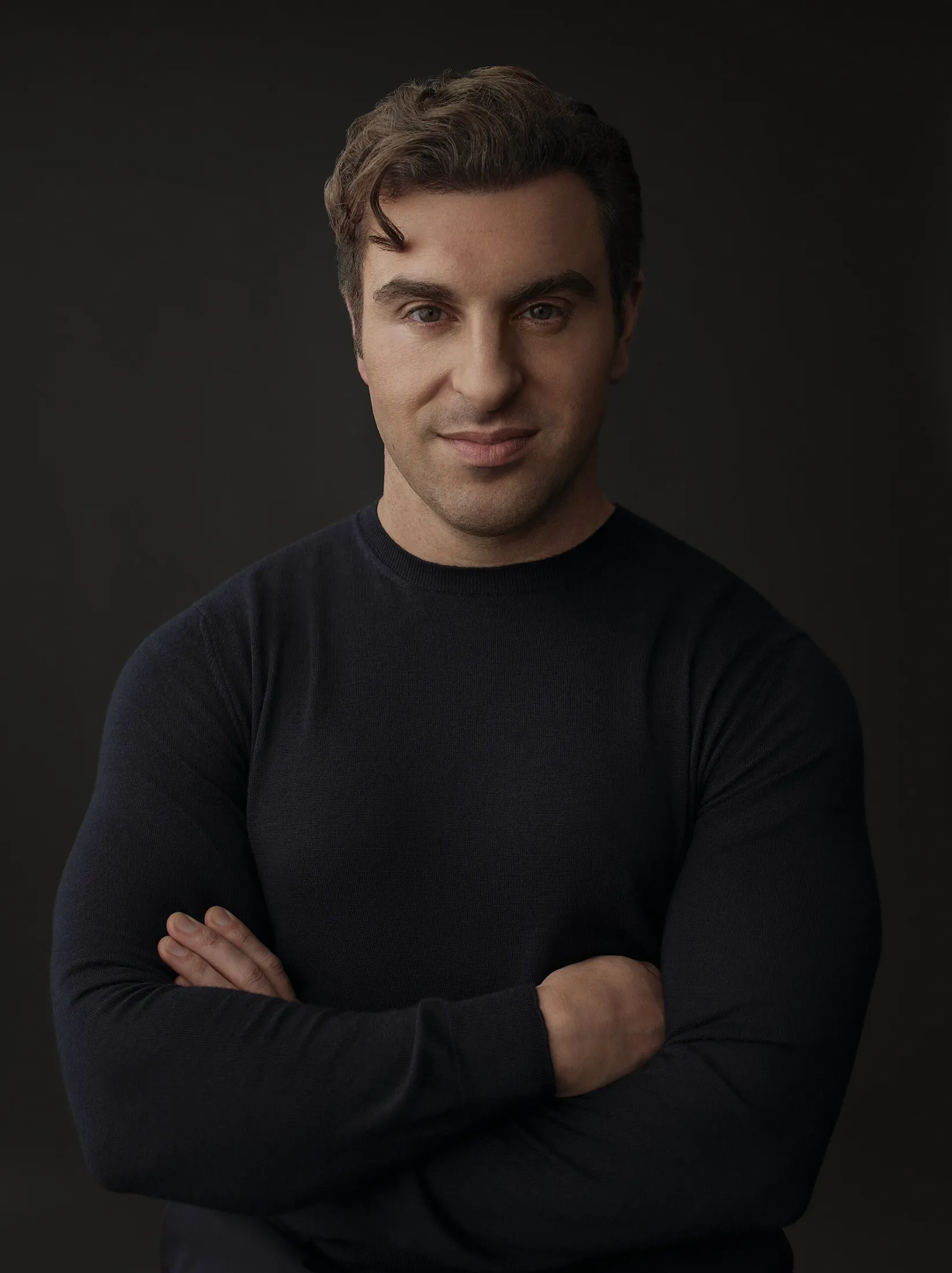
From Air Mattresses to a Global Belonging Machine
A Niskayuna bodybuilder with a design degree. A Rausch Street apartment and three strangers on air beds. A company that now hosts more than two billion arrivals.
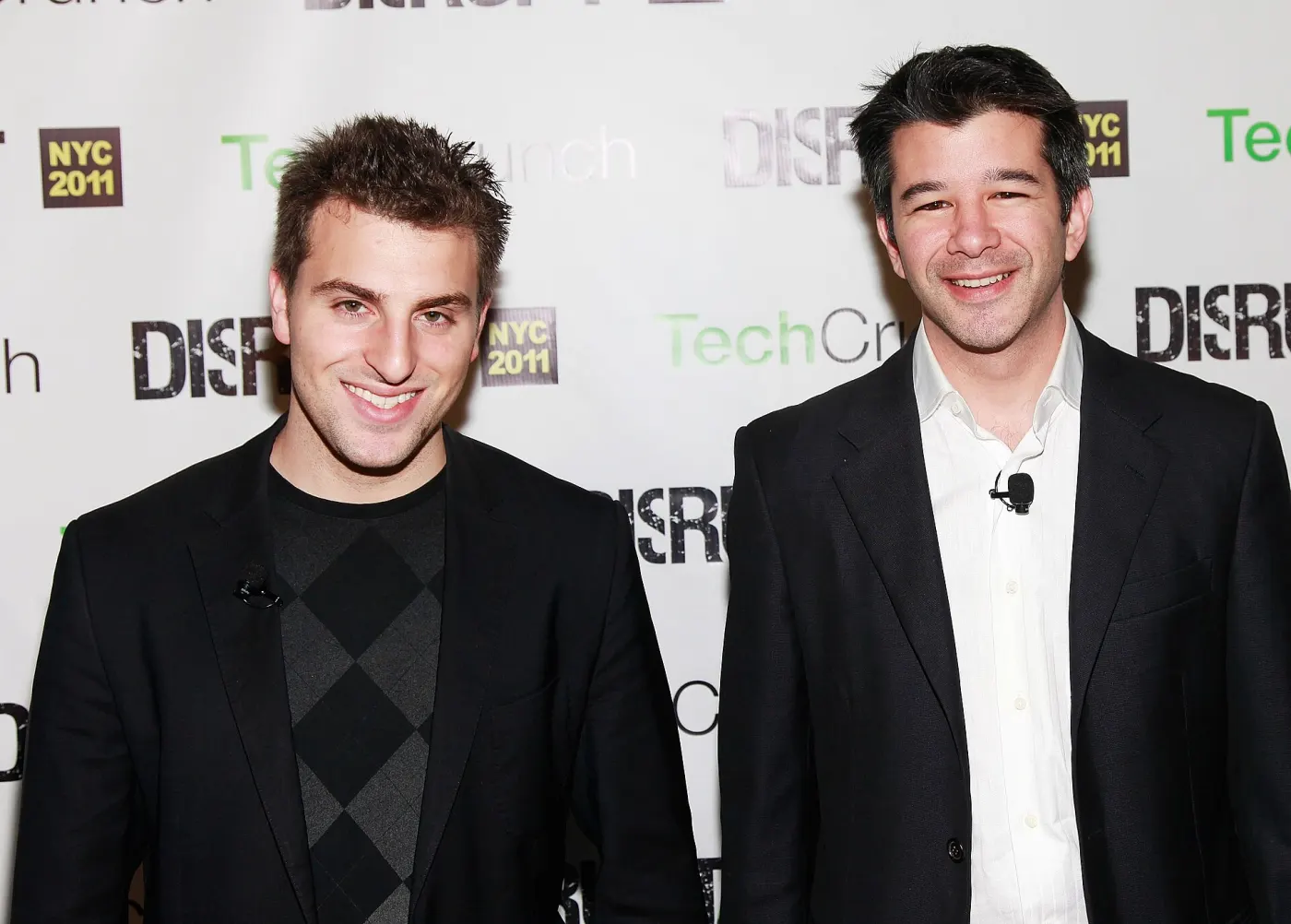
In August 2026, Airbnb reported one of its strongest growth quarters in years. The timing mattered. Travel demand was strong, the FIFA World Cup year was flooding host cities with first-time guests, and Chesky was arguing that years of unsexy product work plus a full AI rebuild were finally visible in the financials, not only in keynote demos. Revenue hit three point six billion dollars, up seventeen percent. Bookings accelerated in core markets. Hotels on the platform were growing about three times as fast as homes. An AI assistant was already closing nearly half of support cases without a human. Brian Chesky, still CEO and still roughly fourteen percent of the company by beneficial ownership, told CNBC he would spend a lot more on AI tokens because the return was showing up in revenue and speed.
He was not born into that dashboard. He was born on 29 August 1981 in Niskayuna, New York, the son of two social workers, a kid who lifted weights, drew constantly, and told his mother he would get a "real job" with health insurance so he would not end up in her basement. He went to the Rhode Island School of Design wanting to be an artist and discovered industrial design instead. On campus he met Joe Gebbia. The friendship would matter more than any grade.
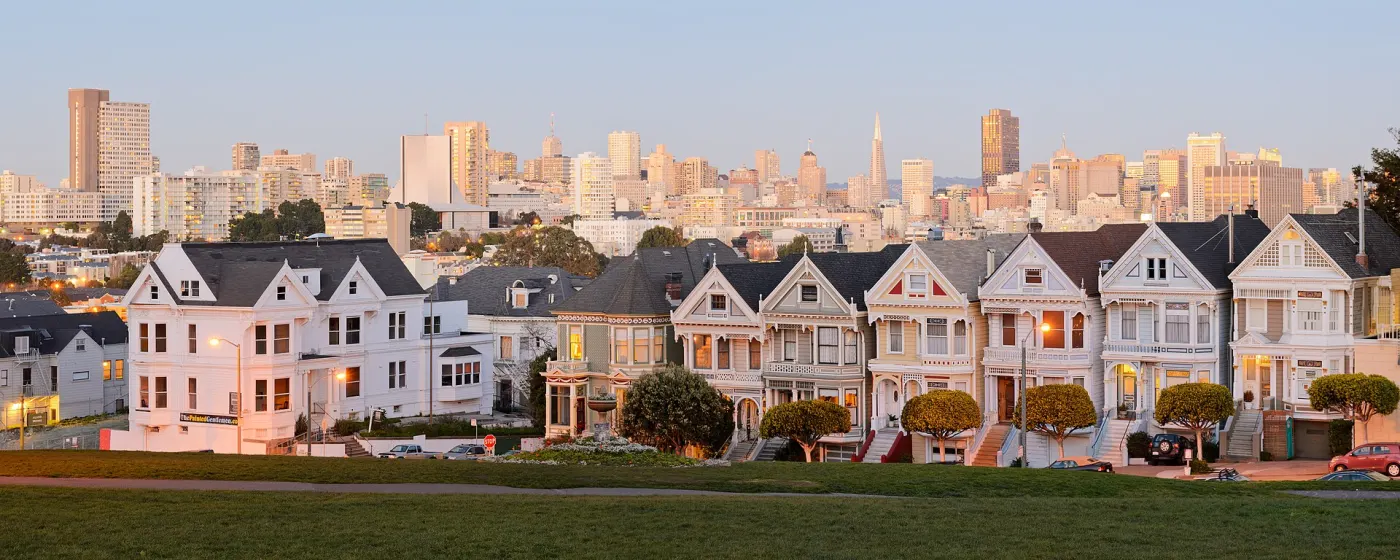
After RISD he took a design job in Los Angeles that paid about forty thousand dollars a year. It was respectable. It was not enough to quiet the hunger for something bigger. In October 2007 he packed up and moved into Gebbia's San Francisco apartment on Rausch Street. Rent was due. Money was thin. A design conference, the Industrial Designers Society of America gathering, had swallowed every hotel room in town. They bought air mattresses, posted a simple site, and offered strangers a place to sleep plus breakfast. Three guests came. AirBed and Breakfast was not a pitch deck. It was a way to make rent that week. They did not know they were founding a category. They knew the rent check cleared if strangers paid for air.
Nathan Blecharczyk, a sharp engineer and Gebbia's friend, joined as the third cofounder. The product was weird on purpose. Strangers in spare rooms. Pop-Tarts for breakfast. Investors looked away. The three kept shipping. By 2008 they were deep in credit card debt. Chesky later described binders of cards the way kids once kept baseball cards, each card maxed near a five thousand dollar limit, until issuers stopped saying yes. He has put his personal hole near twenty-five to thirty thousand dollars. Gebbia was in a similar hole. They needed a miracle that looked like a joke.
Their first real launch was built for a crowd. In March 2008 they pushed the site live for the South by Southwest festival in Austin, where hotels filled up fast. The idea made sense on paper: people going to a big event need a cheap place to sleep. Chesky later joked about the result. Two people booked. One of them was him. He flew to Austin and slept in a stranger's home to test his own product, because there was almost nobody else to test it.
The 2008 Democratic National Convention in Denver gave them one. Hotels were full again. Campaign fever was everywhere. They designed collector cereal boxes: Obama O's, "the breakfast of change," and Cap'n McCain's, "a maverick in every bite." They bought bulk cereal, hot-glued custom boxes like origami in the apartment, priced them around forty dollars as collectibles, and mailed free samples to press. The stunt worked. They cleared something like twenty to thirty thousand dollars, enough to claw back from the card abyss and stay alive long enough for the next door to open.
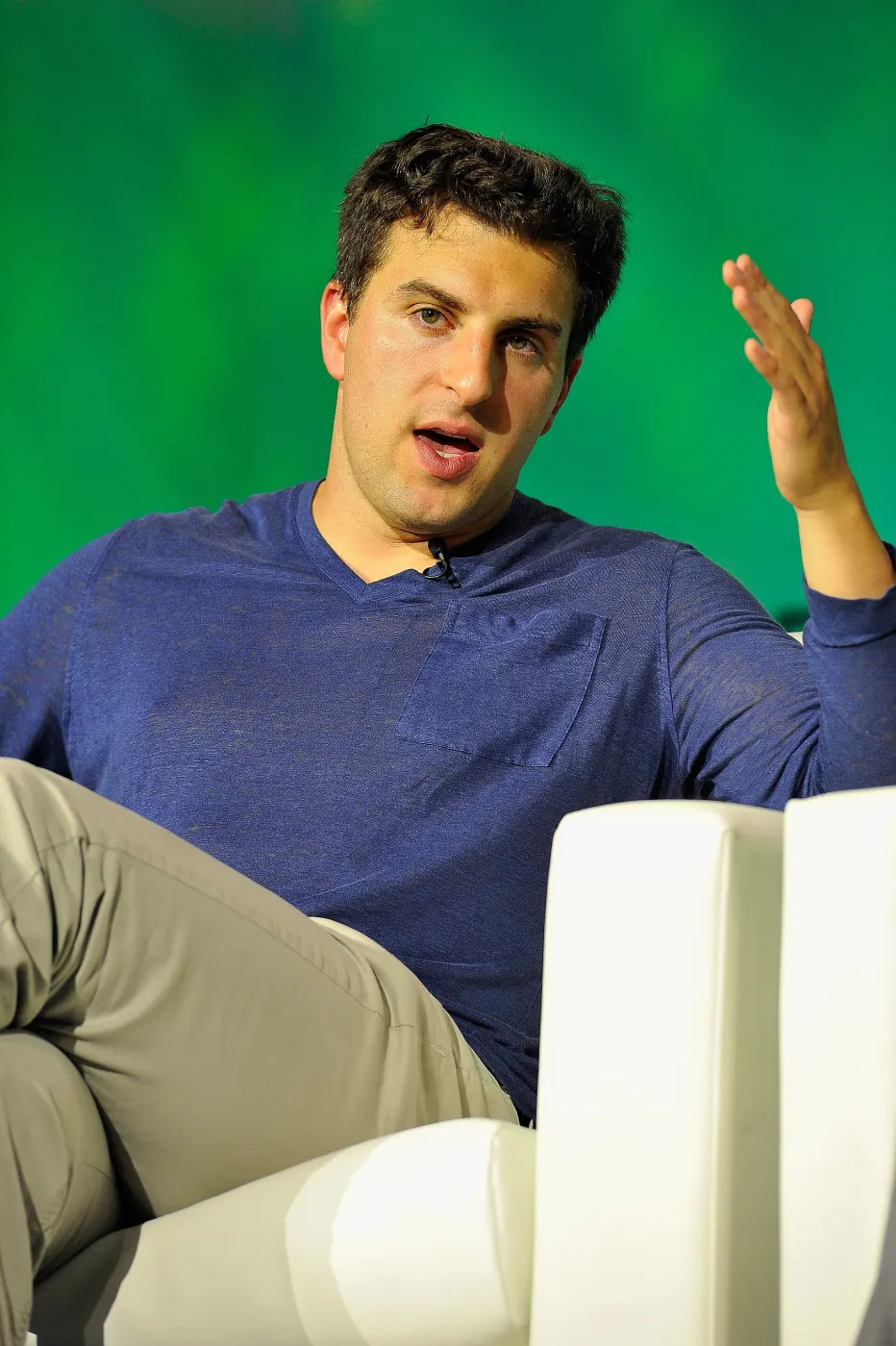
Y Combinator, seven lines of trust, and doing things that do not scale
The rejection season still stings in his retellings. He and his cofounders sent pitch after pitch. One version of the story counts about twenty investor emails with zero yeses. Another version stretches the humiliation across rooms where people laughed at the idea of sleeping on a stranger's air mattress. Chesky kept the laughter as fuel. If the idea was ridiculous, the only answer was to make the ridiculous feel inevitable.
Childhood in Niskayuna gave him an early template for grit that was not Silicon Valley grit. His parents worked in social services. Money was careful. Status was not the family sport. Sports and drawing were. He took bodybuilding seriously enough that the discipline of sets and recovery later became a metaphor he reaches for when talking about product reps: you do not get a different body by wishing, and you do not get a different company by writing a vision memo and leaving the room.
At RISD the critique culture mattered. You put work on the wall. Peers tore it apart. You revised. That muscle, more than any marketing class, prepared him for a marketplace where every listing photo and every review is a public critique. Gebbia was the roommate who understood the same language. When they reunited in San Francisco, the apartment became both home and laboratory.
In early 2009 the cofounders entered Y Combinator. The deal was about twenty thousand dollars for roughly six percent of the company, plus Paul Graham's blunt gospel: make something people want, and do things that do not scale. Chesky has said that before YC he thought he needed a polished business plan. Graham redirected them toward users, craft, and grit. Near the end of the batch, Sequoia Capital's Greg McAdoo led an investment of about five hundred eighty-five thousand dollars. That check did not erase the memory of unanswered investor emails. It proved that survival plus focus could reopen rooms that had slammed shut.
Graham was not won over by the idea at first. He was won over by the cereal. When he heard that three broke founders had printed and sold political cereal boxes to keep their company alive, he said they were like cockroaches. The economy was in what he called an investment nuclear winter, and in a nuclear winter, cockroaches are what survive. Chesky has said it was the nicest thing anyone told him in about six months. He called his mom and told her he was a cockroach, and that he got in.
The most famous early move was almost embarrassingly small. Chesky and Gebbia flew to New York, knocked on host doors, and took better photographs of listings themselves. Bookings jumped. The lesson became company scripture. Years later he would still teach new recruits that growth theater means nothing if a host's kitchen photo looks like a cave. The New York trip also trained a habit of proximity: go to the city where supply is weak, meet the humans, fix the listing, measure the lift. It is the opposite of remote strategy culture. It is why, even as Airbnb became a public giant, Chesky kept defending the idea that leaders should remain close enough to smell the product.
Sequoia's early check and the YC network opened later doors, but Chesky likes to remind audiences that capital followed proof, not the reverse. The cereal money bought time. The photo trips bought conversion. The storyboard bought a shared language for what "better" meant when metrics disagreed. Only then did bigger funds lean in. That sequence matters because modern founders often reverse it: raise first, invent urgency later.
You do not invent belonging from a whiteboard alone. You walk into the room, fix the photo, talk to the host, and feel why a guest trusts a stranger's couch.
They also drew a storyboard of a perfect trip, frame by frame, from the moment someone dreams of leaving home to the moment they return changed. The board borrowed energy from Pixar-style thinking and became a north star for product decisions. Chesky liked to talk about a "ten-star" experience, then invent what one through ten might feel like, so the team would stop aiming for merely fine. Design school had trained his eye. YC had trained his urgency. Together they made a marketplace that treated trust as a product feature, not a slogan.
Building the machine, then watching travel fall off a cliff
Between first guests and first real scale there were ugly middle years. The site broke. Payments were clumsy. Trust and safety incidents forced new rules, ID checks, and a host guarantee that tried to put money behind the promise that your home would not be destroyed. Chesky has described early customer support as answering the phone himself. That is founder mode before it had a name: the CEO is still the person on the other end of the line.
Growth created enemies and imitators. Rocket Internet's Wimdu flooded Europe with capital and speed. Airbnb's answer was to buy Accoleo and fight city by city for density of hosts rather than rent a clone's network. Inside the company, categories expanded from shared rooms to entire homes, then to Experiences, then to longer stays. Each expansion brought new edge cases: parties, discrimination complaints, neighborhood backlash, tax fights. Chesky's public voice stayed focused on belonging. Critics heard spin. Supporters heard a designer who believed the product could outrun the worst stories if quality rose fast enough.
A harder test came in 2016. Black travelers shared stories online under the hashtag AirbnbWhileBlack about hosts who rejected them and then accepted white guests for the same dates. A Harvard study had found similar patterns. Chesky called discrimination the greatest challenge the company faced. Airbnb brought in former U.S. Attorney General Eric Holder to help write new rules, and from November 2016 every user had to agree to a community commitment to treat all people without bias. Airbnb later said more than a million people declined and were removed from the platform.
One under-told craft chapter is how aggressively the company professionalized trust and safety after early disasters. Background checks, risk scoring, a twenty-four hour line, and insurance-like host protections were not glamorous launch videos. They were the boring rails that let parents book a loft for their kids and still sleep. Chesky, the designer, had to learn to love compliance work because without it the marketplace would be a horror story with a beautiful homepage.
The disaster that forced that change had a name. In the summer of 2011 a San Francisco host known online as EJ wrote a blog post about guests who had trashed her apartment, stolen valuables, and left it wrecked. The story spread just as Airbnb was raising a huge round. The company's first replies were slow and cautious, and the internet turned on it. Chesky then wrote a public letter admitting they had really messed up. Airbnb launched a 50,000 dollar host guarantee, a twenty-four hour customer hotline, and a bigger trust team. The next year it raised the guarantee to one million dollars.
Experiences arrived as an attempt to sell the city, not only the bed. Cooking classes, tours with locals, concerts in living rooms. Some categories thrived. Others fizzled. The 2026 supply surge in Experiences shows the company still believes the trip includes Tuesday afternoon, not only Friday check-in. Services such as grocery delivery and airport pickups push further into the messy middle of travel, where hotels traditionally bundled convenience and home rentals left guests to figure it out.
He also leaned on theater that was also strategy. Annual product launches with cinematic videos. Host meetups. Letters that read like essays. The brand tried to feel like a movement, not a booking engine. That choice helped during the good years and became heavier during the bad ones, because a movement that lays people off has to explain itself in moral language, not only in EBITDA.
In July 2014 the company swapped its old bubbly logo for a new symbol called the Bélo, a looping shape meant to stand for belonging. The internet mocked it within hours and compared it to body parts. Chesky did not back down. The mark stayed, and within a few years it was one of the most recognized symbols in travel.
Through the 2010s Airbnb climbed from oddity to infrastructure. Chesky became CEO in fall 2010. In 2011 the company bought German rival Accoleo and pushed into Europe rather than buying Rocket Internet's heavily funded clone Wimdu, a bet on owning local density instead of renting it. Money arrived from Sequoia, Greylock, Andreessen Horowitz, Founders Fund, and others. Private fundraising across the life of the company is often tallied above four billion dollars. Hosts multiplied. Guests multiplied. Cities argued about short-term rentals, noise, and housing supply. Regulators in places like New York and Barcelona became recurring characters. Chesky's public posture stayed product-first: belonging, travel, community, while policy fights ran in parallel.
Then March 2020 arrived. Travel did not slow. It stopped. Board member Ken Chenault, who had led American Express through September 11 and the 2008 crash, called Chesky with a line the CEO has retold for years. Chenault had once warned that every leader gets a defining crisis. On about 15 March he said this pandemic was the size of ten of those. Chesky framed the moment with an Andy Grove idea he likes: bad companies are destroyed by crisis, good companies survive it, great companies are defined by it.
He chose definition over denial. Airbnb cut deep. Roughly twenty-five percent of the company, about nineteen hundred people, were laid off. Chesky published a long, plain letter. Severance, extended health care, and an alumni directory were part of the package. He has said the letter and the care around exits mattered because culture is what you do when the spreadsheet turns red. Inside the company he pulled senior leaders closer to the work, cut layers of handoffs, and returned to a founder posture: fewer debates about process, more nights deciding what guests and hosts actually needed tomorrow.
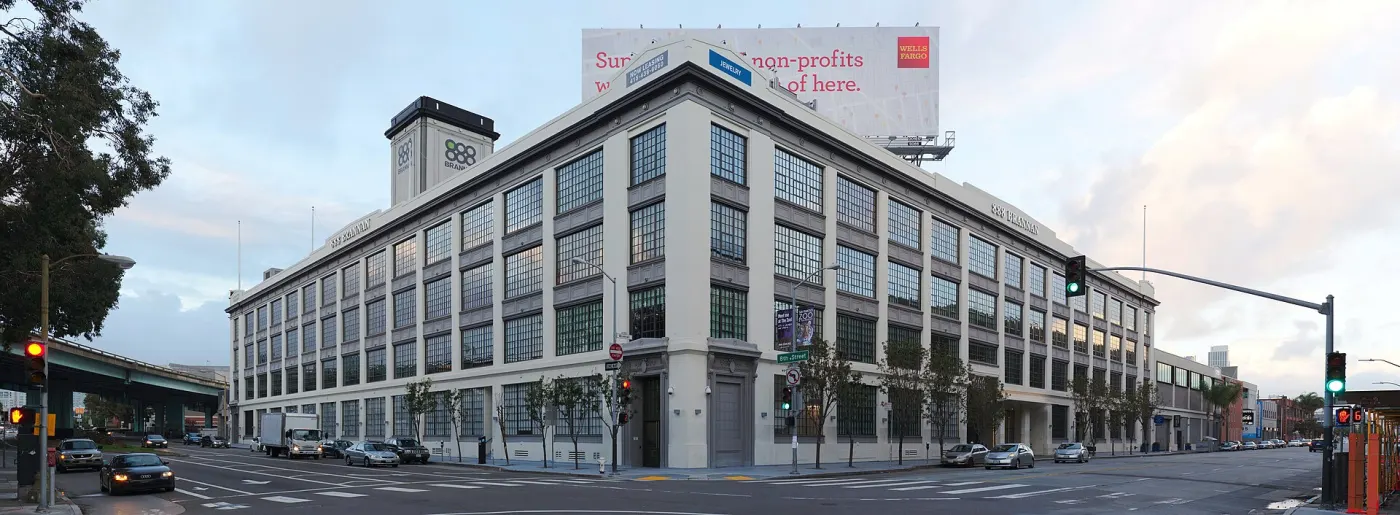
IPO day, loneliness, and living inside the product
The loneliness theme is not a throwaway therapy line in his interviews. He describes a pattern familiar to many breakout founders and still rarely admitted on earnings stages. Early friends become reports. New friends want something. Romantic life gets scheduled around board meetings and crises. After the IPO, money removed one kind of fear and intensified another: the fear that nobody will tell you the truth again.
Living on Airbnb was his attempt to stay honest to the guest path. Different city, different host, different quirks in the lockbox. He could see whether search ranked the right homes, whether the messaging tools felt human, whether cleaning fees shocked people at checkout. In The Circuit interview he connects that immersion to the same instinct that sent him and Gebbia into New York with cameras years earlier. If you stop tasting the product, the product becomes a slide.
On 10 December 2020 Airbnb went public. Shares priced at sixty-eight dollars and blasted higher in early trading, pushing the company's value past one hundred billion dollars on the pop. Chesky, Gebbia, and Blecharczyk became freshly minted multi-billionaires in a single market open. The victory lap was real. So was a quieter confession Chesky kept repeating in long interviews afterward. Nobody had warned him how lonely the job could feel. He had started with friends. Employees became a second friend group. Success rearranged every relationship. Some friendships could not survive the asymmetry of power and fame.
In 2022 he announced he would live on Airbnb full time, moving every few weeks. It was branding, yes. It was also research. The CEO of a company built on guest experience chose to keep waking up in other people's homes, tasting the product the way a designer tastes a prototype. He has said he still sometimes answers phone numbers that hosts saved from the earliest years. That habit is not efficient. It is a refusal to become abstract.
Founder mode: presence, not swagger
The meme version of founder mode annoyed him because it flattered ego. The operating version is stricter. Stay in design reviews. Sit with the pricing team. Read the support tickets that AI cannot close. Know the names of the experts two layers down. When trust is earned, give them room. When trust is not earned, do not pretend a title equals competence.
He is blunt that the professional-manager playbook he absorbed during hypergrowth was incomplete. Hire great people and leave them alone sounds mature until the company drifts. COVID forced a reset because there was no time for drift. The company had to cut costs, rebuild the host and guest value proposition for a world of cancelled trips, and prepare for an IPO while travel was still wounded. That sequence is why he tells the founder-mode story as a re-founding, not a flex.
In 2024 Chesky almost skipped a Y Combinator alumni gathering. Gary Tan told him the talk would be quiet. Ron Conway texted in all caps that founders needed to hear him. Chesky arrived late, around nine or nine-thirty, planned for twenty or thirty minutes, and spoke for about two hours with a handheld mic while the room delayed drinks. The story he told was the rebuild after COVID: a company that stopped managing by absence and started shipping again because leaders stayed in the details with experts.
Paul Graham wrote an essay that named the approach "founder mode." The phrase went viral, then warped. People joked about going founder mode on a burrito. Chesky pushed back in later interviews. For him the point was not swagger or founder privilege. It was presence. Great leadership, he said, is presence, not absence. If the CEO is not in the details, the next layer will not be either, and someday you wake up with four layers of management and no experts left near the work. Hire great people, build trust in the room, then loosen the grip. Do not hire great people and disappear.
The method borrowed from how he imagines Steve Jobs ran Apple: set the vision, set the pace, stay close enough to feel quality. Critics heard micromanagement. Chesky heard craft. Airbnb's later product cadence became his proof. By 2026 the company was talking about cutting concept-to-delivery time by as much as sixty percent and shipping nearly eighty percent more features and improvements than the year before, with AI in the loop and headcount roughly flat.
What Airbnb actually changed
On the ground the impact is uneven and local. A teacher in Lisbon covers rent with weekend bookings. A family in Mexico City loses quiet on their block because of rotating parties. A retiree in Kyoto finds new income. A regulator in New York writes rules that wipe thousands of listings overnight. Chesky's company sits in the middle of that argument whether he wants the politics or not. The honest documentary take is not that Airbnb is purely liberatory or purely extractive. It is that a design idea about spare capacity became a global housing and tourism force large enough to bend city laws.
For travelers the change is easier to feel. You can cook in a kitchen in Lisbon, put kids in bunk beds in a cabin, or stay near a stadium for a final without booking a corporate tower. For hotels the change is competitive: independent properties now use Airbnb as another demand channel, and Airbnb is courtship them with credits and price match promises. For culture the change is subtler. "Airbnb" became a verb. Belonging became a brand word that millions either love or roll their eyes at. Both reactions prove the footprint.
Strip away the valuation theater and the change is still physical. More than five and a half million hosts have welcomed more than two and a half billion guest arrivals across more than two hundred twenty countries and regions, per Airbnb's own 2026 leadership bio. Spare rooms became income. Neighborhoods became destinations. Hotel chains gained a competitor that did not own the buildings. Travelers gained a way to live inside a city instead of circling it from a tower.
The costs are real too. Cities still argue about housing pressure, party houses, and enforcement. Hosts still face platform rule changes and local bans. Guests still gamble on trust, even with reviews and verification. Chesky's answer has usually been more product: better search, clearer cancellation, stronger support, and, lately, services and experiences that try to own more of the trip than the night alone.
Philanthropy sits beside the empire. He joined the Giving Pledge in June 2016. During COVID he gave about ten million dollars to nonprofits supporting frontline workers. In May 2022 he pledged one hundred million dollars over five years to the Obama Foundation for the Voyager Scholarship, a program mixing tuition help, stipends, Airbnb housing for summer travel, and long-term travel credits for students aiming at public service. He has also said net proceeds of his CEO equity compensation are committed to community and charitable causes. The Giving Pledge is a future promise. The Voyager checks and COVID grants were present tense. Chesky talks about both because a company that sells belonging invites questions about what its leader gives back when the stock makes him a billionaire.

2026: AI native, hotels, World Cup, and a raised outlook
Chesky's 2026 interviews keep returning to leverage without headcount. Spend more on tokens, keep staffing flatter, ship more. Customer support cost per booking down about sixteen percent year over year is the kind of metric finance teams cheer and support veterans watch warily. He argues the AI assistant, available in more than fifty languages and already resolving about forty-five percent of issues without a human, is winning on quality benches against other travel platforms. Later in 2026 he promised an AI voice assistant on phone calls. The bet is that hospitality can be both warmer and more automated if the models summarize homes honestly and escalate when a guest is stuck outside a dark door at midnight.
The World Cup partnership showed the event playbook at planetary scale. Millions of arrivals. More than one hundred fifty thousand first-time host listings in host cities. The same muscle flexed toward Olympics, cycling, art fairs, festivals, soccer leagues, and NASCAR. Chesky treats these not as sponsorship vanity but as demand shocks that mint new hosts and new first-time guests who may return for an ordinary Tuesday in another year.
By mid-2026 Chesky was selling a second rebuild. Airbnb, he said, had been remade as an AI-native company. The Q2 results published on 6 August 2026 put numbers under the claim. Revenue three point six billion dollars, up seventeen percent. Gross booking value twenty-seven point two billion, up sixteen percent. Nights and seats booked up ten percent. Net income eight hundred sixteen million. Adjusted EBITDA one point three billion at a thirty-five percent margin. Management raised full-year 2026 guidance to at least mid-teens revenue growth and an adjusted EBITDA margin of at least thirty-five and a half percent. Bloomberg's summary of 2025 put annual revenue near twelve point two billion dollars, a base the 2026 acceleration was climbing from.
Product bets spread beyond homes. Experiences supply jumped nearly eighty percent year over year in the quarter. Services expanded into grocery delivery, car rentals, airport pickups, luggage storage, and resort day passes. Boutique and independent hotels joined in more than twenty top destinations, with price-match offers and credits; hotel nights were growing about three times as fast as the homes business, even while still a single-digit share of nights. First-time bookers were growing at the fastest pace in four years. App nights were up twenty-three percent and were about sixty-four percent of total nights booked.
Major events became a growth engine. As an official Tournament Supporter of the FIFA World Cup 2026, Airbnb said it hosted millions of guest arrivals during the tournament and saw more than one hundred fifty thousand homes listed for the first time across host cities. Partnerships with the International Olympic Committee, Tour de France, Art Basel, Lollapalooza, La Liga, and NASCAR extended the same playbook: temporary demand, new hosts, brand trust that outlasts the final whistle.
Forbes put Chesky's realtime net worth near thirteen point one billion dollars around 25 August 2026. Bloomberg's billionaires index showed about twelve point four billion on 8 September 2026. An SEC Schedule 13G/A for the 30 June 2026 event date listed beneficial ownership of roughly sixty-five and a half million Airbnb shares, about fourteen percent of the reported class. The fortune moves with the stock. The operating story he prefers to tell is simpler: more guests finding a place that feels like a neighborhood, not a transaction.
How he works when the cameras are off
Day to day he is still a visual thinker. He sketches. He storyboards. He asks for the guest journey in frames, not only in funnel charts. He wants leaders who can argue about a button and a moral tradeoff in the same meeting. He recruits for taste as much as for credentials, a RISD habit that sometimes clashes with classic enterprise hiring.
He is also a storyteller who knows the founding myth must stay sharp. Cereal boxes. Airbeds. Paul Graham. Ken Chenault. Layoff letter. IPO bell. Founder mode. Living out of a suitcase on his own platform. Those beads on the string are how he teaches new employees what kind of company this is supposed to be. Myth can become propaganda. In his best interviews he lets the ugly beads stay visible: debt, rejection, loneliness, the night travel died.
Ask Chesky for a management system and he returns to design habits. Start with the end-to-end journey. Draw it. Obsess over the first five minutes a guest feels after unlocking a door. Sit with hosts until the photo, the price, and the welcome make sense. Keep the phone numbers. Stay in the review comments. Use AI to remove friction, not to erase judgment.
He still frames himself as a designer who happened to become a CEO, not the reverse. Bodybuilding taught him reps. RISD taught him critique. YC taught him focus on a hundred true fans before a million lukewarm ones. COVID taught him that a travel company can die in a month if it pretends the world is normal. Founder mode taught a generation of operators that absence is not sophistication.
The contradictions remain. He runs a public company that thrives on scale while preaching intimacy. He is worth more than ten billion dollars on most tracker days and still performs the role of a traveler with a backpack and a booking confirmation. He wants cities to welcome hosts and also has to hear cities that want fewer of them. He cannot make those tensions vanish. He can only keep shipping through them.
In practical terms that means calendar blocks for deep product time, not only investor roadshows. It means reading a raw guest complaint before it becomes a dashboard average. It means asking whether a new fee is honest at checkout. It means sitting through a design critique where a junior researcher can tell the CEO the homepage is confusing without fear. Founder mode, stripped of internet jokes, is mostly that kind of Tuesday work repeated for years.
Closing
If you meet him only through net-worth lists, he is a billionaire with a fourteen percent stake and a stock ticker. If you meet him through the documentary grain, he is still the designer who solved rent with an air mattress, then refused to stop redesigning the night someone spends in a place that is not home. The 2026 company is bigger, richer, and more automated than the Rausch Street experiment. The through line is the same stubborn attention to detail that Paul Graham's essay accidentally turned into a meme.
On Rausch Street the first product was an air mattress and a promise that a stranger could sleep safely in your living room. On a 2026 earnings call the product is a mesh of homes, hotels, experiences, services, and AI support across a planet of trips. Same founder. Same allergy to leaving the details. The tools changed from hot glue and cereal boxes to large models and global event partnerships. The stubbornness did not. The boy who promised his mother a real job with health insurance built a company where millions of people make rent by opening their doors, and millions more find a bed that feels less like a room number and more like a life briefly borrowed for a few nights.
The magazine version of his life ends with a net-worth number. The working version ends with a host unlocking a door for a stranger and a guest deciding, in the first five minutes, whether the gamble felt human. Everything between Rausch Street and the 2026 AI rebuild is an attempt to industrialize that feeling without killing it.
That is Brian Chesky's documentary arc: design school hunger, cereal-box survival, trust as infrastructure, a pandemic that forced him back into the room, and a 2026 machine still trying to make belonging scale without going numb.
Watch alongside this story
Short cuts from interviews, keynotes and launches. Each plays only the moment that matters.