The Refugee Who Taught Creatives to Charge
His family fled Saigon on the day it fell. His father went from busboy to chief engineer. His son learned that nothing should be wasted.
He was lying on the floor beside a futon in a small room, curled up, crying until there was nothing left. He was seventeen or eighteen. His girlfriend was lying to him. His brother had just told him he hated him. And his mother, the person he expected to rescue him, had just said the words he dreaded most. Maybe private art school is not for you. Go to the state university. Come home. Chris Do remembers the feeling of floating out of his own body and looking down at himself. Where will this road lead you, he wondered. Nobody believes in me. Then something snapped back. He decided, right there on the floor, that he would prove every single person who doubted him wrong. He would put himself through art school if he had to work part time and take semesters off. That night, he has said, the child died and the man was born.
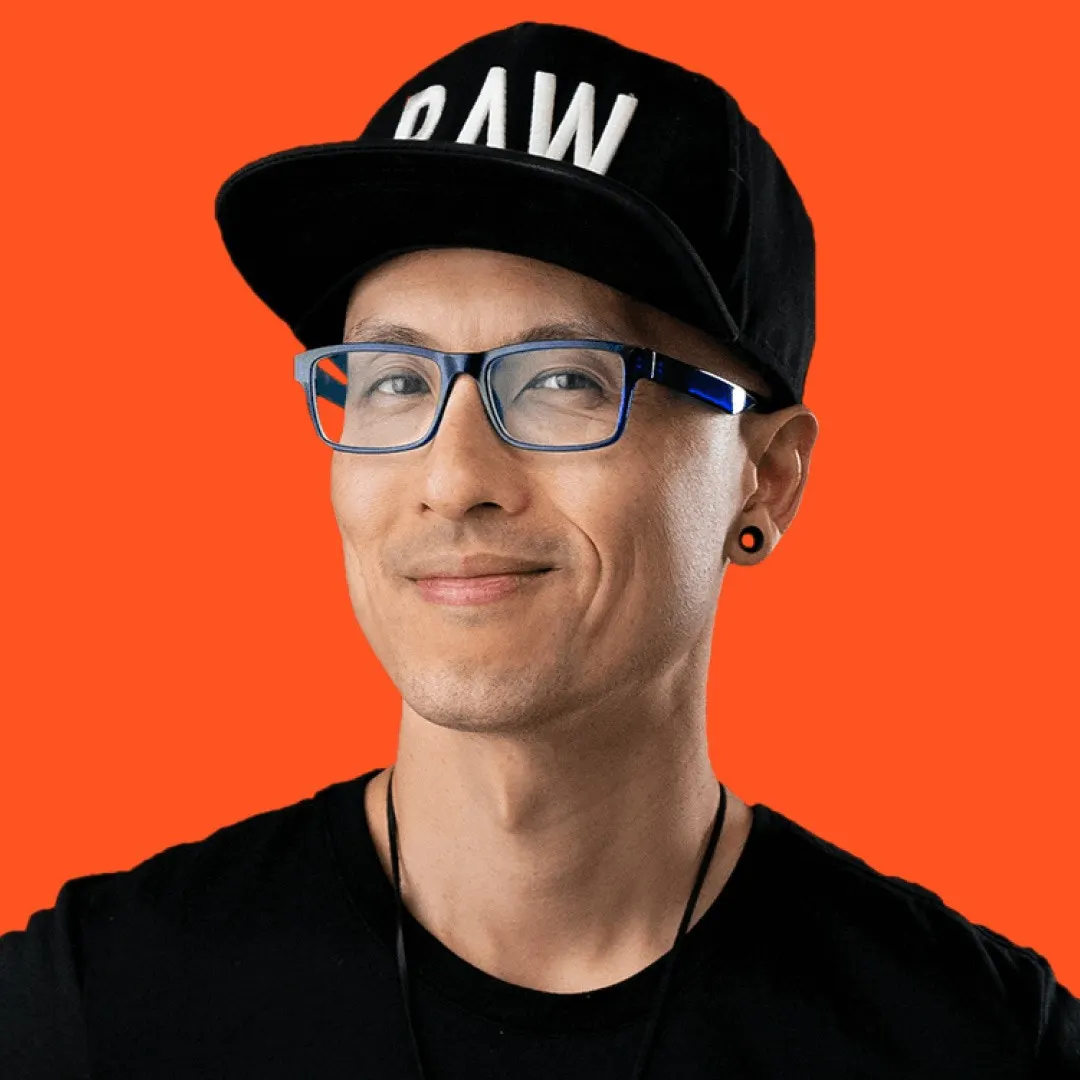
Decades later, that boy became Chris Do, an Emmy-winning director and designer, founder of the Los Angeles motion design studio Blind, and founder and chief executive of The Futur, an online school that teaches creative people how to run a business. His YouTube channel has more than two and a half million subscribers. He has spoken at more than two hundred events around the world. He charges thousands of dollars for a single hour of private coaching, and gives away far more for free. His stated mission is to teach one billion creatives how to make a living doing what they love.
But the path from that futon to the stage was not straight. It began with a family escaping a war.
The last day of Saigon
Chris Do was born in Saigon, in what was then South Vietnam. On April 30, 1975, communist forces took the city, and the American-backed government collapsed. In the last frantic hours, tens of thousands of Vietnamese people tried to get out. Chris's family was among them. His parents fled with their three young sons. Chris was a small boy, the middle child.
He sometimes thinks about the other version of his life, the one where the family stayed behind. He knows people who stayed, some by choice and some because they could not escape. Their lives turned out completely different. His education, his exposure, his entire path would have been different too.
The family landed in Kansas City, Missouri, through a Catholic church program that paired Vietnamese refugees with host families. Everything was new: the language, the food, the customs. His parents did not understand American ideas about race or neighborhoods. His parents like to tell the story of an older Black man who stopped them on the street soon after they arrived. Ma'am, sir, he warned, you do not want to walk down this street. They did not understand what he meant. They had come from a place where everyone looked and sounded like them. They were starting over in one of the poorest neighborhoods in the city, with no map for the country's history, its tensions, or its unwritten rules. They learned by listening, by making mistakes, and by working whatever jobs they could find.
About two years later, the family moved to San Jose, California, to join relatives. That is where Chris grew up.
A busboy who became a chief engineer
Chris's father arrived in America without an American college education and without much English. His first job was clearing tables in a restaurant. From there he worked, studied, and climbed. By the time he retired, he was the chief engineer at a semiconductor company in Silicon Valley. In one generation, Chris has said, his family climbed from poverty to the upper middle class.
From his father, Chris took a strong work ethic and the habit of delaying rewards. Put in the work today. Enjoy it later. From the refugee experience, he took a fierce dislike of waste. Even now, if his son leaves food on his plate, Chris will often eat it, even if he is not hungry. His parents taught him that you never know what you will have tomorrow. Doing more with less, making every resource count, became a habit that runs through everything he builds.
He also took gratitude. America opened its doors to his family, he has said, maybe not with its whole heart, but it opened them and gave them a fresh start. He calls himself forever grateful for that. He also sees his parents' values as an operating system built for a different time and place. As the child of immigrants, he says, you get something like an idea buffet. You keep the parts of the old world and the new world that serve you, and you let the rest go.
The invisible middle child
Inside the house, Chris felt a little invisible. His older brother got the attention. His younger brother got the affection. Chris, the middle child, learned to take care of himself and everyone else. He remembers his mother forgetting his birthday once. He remembers sitting through a dinner party, starving, until his mother finally noticed him and asked if he had eaten. He burst into tears.
Both parents worked, so the boys were latchkey kids who came home from school to an empty house. Chris spent a lot of time alone, thinking about his thoughts. Why am I sad? Why am I happy? What is driving me? He ran away from home twice. He had dark thoughts as a teenager, the kind he now speaks about openly to help others. But overall, he says, he remembers a mostly happy childhood, with moments of feeling that he did not belong anywhere.
The caretaker habit followed him into adulthood. Years later, as the owner of his own company, he found that some employees could push him around because he hated confrontation. A therapist helped him see why. He cared so much about other people's feelings, she told him, that he was not taking care of himself. If he kept ignoring that, his body would eventually make him pay.
He also found an early role model in a children's book. The Great Brain series follows a scheming boy in a small town who is always hustling the other kids out of their money. Young Chris loved it. By eleven or twelve, he was sure he would start a company someday. Maybe washing cars. Maybe selling candy. Maybe ninja stars. Whatever adventure he read about, he tried at school, and it got him into all kinds of trouble.
The glowing room
Chris always drew. At fairs, he watched caricature artists sketch people's faces and thought they were the only real artists in the world. But he grew up in what he calls a strict Asian household that valued practical careers, and he did not let himself imagine art as a job. In his junior year of high school, his commercial art teacher told him he should think about a career in art. He nodded politely and went back to studying.
Then his younger brother's wrestling coach, who knew Chris liked to draw, introduced him to a man who owned a silk-screening shop called Screen Designs. The owner looked at Chris's thin portfolio and hired him anyway. His first job was as a tracer. The owner drew in pencil. Chris laid clear film over the drawing and inked it with a technical pen. His hands shook. How do you keep the lines from wiggling, he wondered.
One day his boss, Brad Shuboya, a stocky rugby player with a handlebar mustache, sent him on an errand. Go to Dean's place and pick up the type, he said. Chris did not know what type meant. He drove to an ordinary suburban house with a dead lawn. A man in shorts and a T-shirt answered and led him down a hallway. Chris turned a corner into a home office.
It felt, he says, like the scene in Pulp Fiction where the briefcase opens and glows. Inside were two drafting tables and a perfectly organized wall of colored markers. This was not a screen-printing shop with ink everywhere. It was a professional graphic designer's studio. They exist, Chris thought. And that is what one looks like. When he stepped across that doorway, he says, he stepped from his world into the design world. He was about seventeen. He knew right then what he wanted to do.
ArtCenter and the long way in
Knowing what he wanted and getting there were different problems. Chris started at community college. He wanted to attend ArtCenter College of Design in Pasadena, one of the most respected and expensive design schools in the country. That was the dream his mother questioned on the night of the futon. After that night, he threw himself into building a portfolio.
He got in. At ArtCenter he was the student who did more than the assignment. If a teacher asked for two design ideas, he brought four. If a teacher assigned one reading, he read that and something else. He chose teachers he thought he could learn the most from and gave them everything. People noticed. Motivated students sought him out, and he helped them. He sometimes gave away sleep to help classmates, but he learned to set a limit. Give as much as you can, he tells students now, without hurting yourself.
Those favors mattered later. A film student he helped with her titles went on to introduce him to editors. A scruffy classmate he helped in the computer lab became a successful inventor and later hired Chris's studio to make his videos. Chris calls these threads. Some turn into something. Most do not. You cannot know which ones will, so you keep putting goodwill into the world.
He graduated from ArtCenter in 1995. He was in his early twenties and ready to work.
A $100,000 question
After graduation, Chris worked wherever he could learn. He did a stint at an advertising agency. He worked for a punk rock record label. He freelanced at a broadcast design company called Novacom, which had booked him for two weeks at a time. He was learning the craft of moving type and pictures on screens, a field that did not even have the name motion design yet.
In December 1995, about two and a half months after he graduated, the phone rang. It was his uncle, an attorney. His uncle had a partner named Bob, whose client owned hotels and had money to invest. Bob wanted to know if Chris would be interested in starting a design company.
Chris's first instinct was to say no. He felt he had only just started learning. But his uncle's question landed on the old dream from The Great Brain, the boy who wanted to run his own business. He decided to take a shot.
There was one problem. He had never written a business plan. He did not know what one looked like. So he called the father of his ArtCenter roommate, Edward. Edward's father was an investment banker. What is a business plan, Chris asked him, and how do I write one? The man walked him through it. Chris stayed up all night and wrote an eight-page plan.
The next evening he met his uncle and Bob for dinner at the Westin Bonaventure hotel in downtown Los Angeles. Chris walked them through the plan. Then Bob asked the obvious question. How much money do you need?
Chris had no real idea. He knew a new company might go months without clients. He knew it takes time to find work, close deals, finish jobs, and get paid. So he picked a round number that he felt would give him a six-month cushion, what business people call runway. One hundred thousand dollars, he said. He knew as he said it that he could never spend that much in six months. He was being aggressive on purpose.
Bob said it sounded good. Then he reached into his briefcase, pulled out a checkbook, and wrote Chris a check on the spot. It was not for $100,000. It was for $5,000, five percent of the ask. Bob said it was a good faith gesture that they would move forward. There was no contract. There was no discussion of ownership. That was it.
Chris went back to Novacom and told them he would not renew his booking. He was starting a company. His office mates looked at him like he was crazy. You barely know anything about broadcast design, they seemed to say. Call us when you fail. Chris could read their faces. In his own head, there was no way he could fail.
He named the company Blind.
Sleeping upstairs from the studio
Blind began in a loft at the Brewery, an artists' complex in downtown Los Angeles. The space was about two thousand square feet. Chris slept upstairs, walked down a metal staircase in the morning, and was at work. It was one big open room. Friends came to work there. ArtCenter students heard about the studio and knocked on the door to hang out and talk design.
Within the first year, Bob was no longer part of the business. Chris was on his own, running a small shop of young designers scraping money together.
He knows exactly when Blind stopped being a hobby. It was about a year in, when the studio landed its first national television commercial. That was a catch-22, he says. Nobody gives you a national campaign unless you have already done one. His break came through the threads he had spun at school. The film student he had helped with titles introduced him to an editor. Chris designed the editors' logo. When they were cutting a commercial and needed graphics, they asked if Blind could do it. Chris said yes, of course, even though he had never done it before.
That pattern repeated. Say yes, then learn fast. Blind reinvented itself three or four times over its life. First it only animated titles, moving type around the screen, the thing a graphic designer is good at. Then Chris wanted to design entire commercials, so the studio learned character animation. Then it started shooting live action in service of the graphics. Every time a client asked whether Blind could shoot live action, Chris said yes, even when, he admits, they were not ready. Each job, they got a little better, until live action became normal. Editing, shooting, animation, and typography all lived under the umbrella of motion graphics.
Nike, Coldplay, and Dogtown
Over the next two decades, Blind grew into one of the better-known motion design studios in Los Angeles. According to The Futur and Chris's own accounts, its client list included Nike, Sony, Google, Microsoft, and Xbox. The studio made work for musicians including Justin Timberlake, Coldplay, and Gnarls Barkley. Chris directed commercials and music videos, and Blind collected industry honors, including recognition from the Clio Awards, The One Show, and D&AD. The Futur's biography of Chris describes him as an Emmy-winning director and designer. Chris has said Blind generated more than $80 million in creative services over its lifetime. That figure comes from Chris and has not been independently audited.
One of the projects Chris talks about most is the main title design for Dogtown and Z-Boys, the 2001 documentary about the Southern California skateboarders of the 1970s, directed by skating legend Stacy Peralta. The story is less about the design than about the handoff.
Chris had a junior designer named Tom. He trained Tom with a simple three-step method he calls I do, we do, you do. First Tom sat in on calls and only listened and took notes. Then Chris introduced Tom to the client as the art director and invited him to ask questions. On Dogtown, once Stacy Peralta approved the first design exploration, Chris made the official handoff. Clients often worry they are being passed to the B team, so Chris reassured Peralta. I am putting Tom in charge because I trust him, he said. He is my right-hand person and has been running this project behind the scenes the whole time.
The third step is the hardest for most owners. The person being trained takes the lead and becomes the first contact for the client, along with a project manager. They get the authority to make decisions in the best interests of the company and the client. Chris says the owner must stay out of it at this stage. If you jump back in, you undermine the person's authority, they start to second-guess themselves, and clients learn to go around them and call you directly. That defeats the whole point.
So Chris avoided micromanaging. He told the people he trained that he was there if they got stuck, but that they did not need to check in with him. Instead he offered optional office hours once a week or every two weeks, where they could bring questions about pricing or difficult clients. People keep needing coaching to level up, he says, but they should not need permission.
Soon Tom and Peralta were talking directly, like friends. For Chris, that was the goal. The best outcome, he says, is when clients forget who he is, or go out of their way to tell him how much they love working with the person he trained. It is a lesson he later taught to millions: you cannot grow a business if every decision runs through you.
Learning to be a boss
Running Blind taught Chris things art school never had. He hated confrontation, and some employees learned they could push him. They would announce a sales trip he had not approved, or buy something he did not want, almost daring him to object. The therapist who helped him with that pattern taught him that his body would pay for his silence if he did not learn to speak up.
He also worked for about thirteen years with a business coach, Keir McLaren, who pushed him to think like a business owner rather than only a designer. Chris taught sequential design at ArtCenter and at Otis College of Art and Design for more than fifteen years. He later served as chairman of the board of the Society for the Promotion of Japanese Animation, the nonprofit behind the Anime Expo convention in Los Angeles.
Teaching became a second life. He liked standing in front of students. He remembered being one of them, listening to studio owners visit ArtCenter and wondering what their breakthrough moment had been. Almost none of them could name it. Chris made a point of always knowing his own answer, so he could give it to students who asked.
Give without hurting yourself
When students ask Chris how to get their first clients, he tells them about goodwill. At the start, he says, you know nobody. You have no professional experience. Your portfolio is student work, and everyone can tell. So the only way through the catch-22 is to put enough goodwill into the world that some of it comes back.
He is careful with the lesson. He does not mean helping people because you expect a job in return. He gives freely, he says, and judges people on whether they seem like good people. If someone seems self-centered, a taker, he will not help them much. But most people reciprocate. Many of Blind's first clients and job leads came from people he had helped years before, back when neither of them had anything to trade.
He also believes in what he calls a law of attraction. Motivated people attract motivated people. If you do four comps when the teacher asks for two, the people who come to you for help will be the ones who also want to do more. You are self-selecting, he says, by the energy you put out. The same idea later shaped The Futur, where he built a community of creatives who wanted to learn the business side as seriously as the craft.
He warns students about the limit, too. If you help all your friends finish their homework and then fail the class yourself, you have hurt yourself. His personal trade was sleep. He would give away his free time, never his own work.
The Skool
In 2014, when he was about forty-two, an old college classmate named Jose Caballer pushed him to start sharing what he knew on YouTube. They launched a channel called The Skool. The first video went up in January 2014.
Chris has described himself as an introvert. He was stiff on camera. His wife watched the early videos and, he has said, told him they were unwatchable. Instead of quitting, he made rules. He would teach from prepared slide decks so he always had structure. He would not sell anything in the videos. He would simply try to help.
For the first two years, the channel barely paid for one staff member. Some peers in the industry were upset that he was giving away the business secrets that took them years to learn. His business coach warned him that he was neglecting Blind, the company that actually paid the bills. Chris kept going. He had a feeling the world was shifting.
He could see it in his own industry. In a 2016 talk to students, he explained that commercials, Blind's biggest source of revenue, were trending down. Few young people owned a television. Many skipped ads with a DVR. Online, pre-roll ads made viewers angry at the brand interrupting them. On the internet, Chris said, people want what they want when they want it. If he wanted to learn how to cut something out in Photoshop, he did not want to sit through a commercial first. The future, he argued, belonged to entertainment and education, not interruption.
In that same talk, Chris told the students that Blind, then in its twenty-first year, was going through the biggest reinvention in its history. The studio had survived the move from titles to animation to live action. This time the change was bigger than a new technique. The market that had fed the company for two decades was shrinking, and Chris was betting that teaching, not commercials, was where his future lay.
In 2016, Chris and Caballer parted ways over creative differences. Chris formed a new company to carry the channel forward. He called it The Futur.
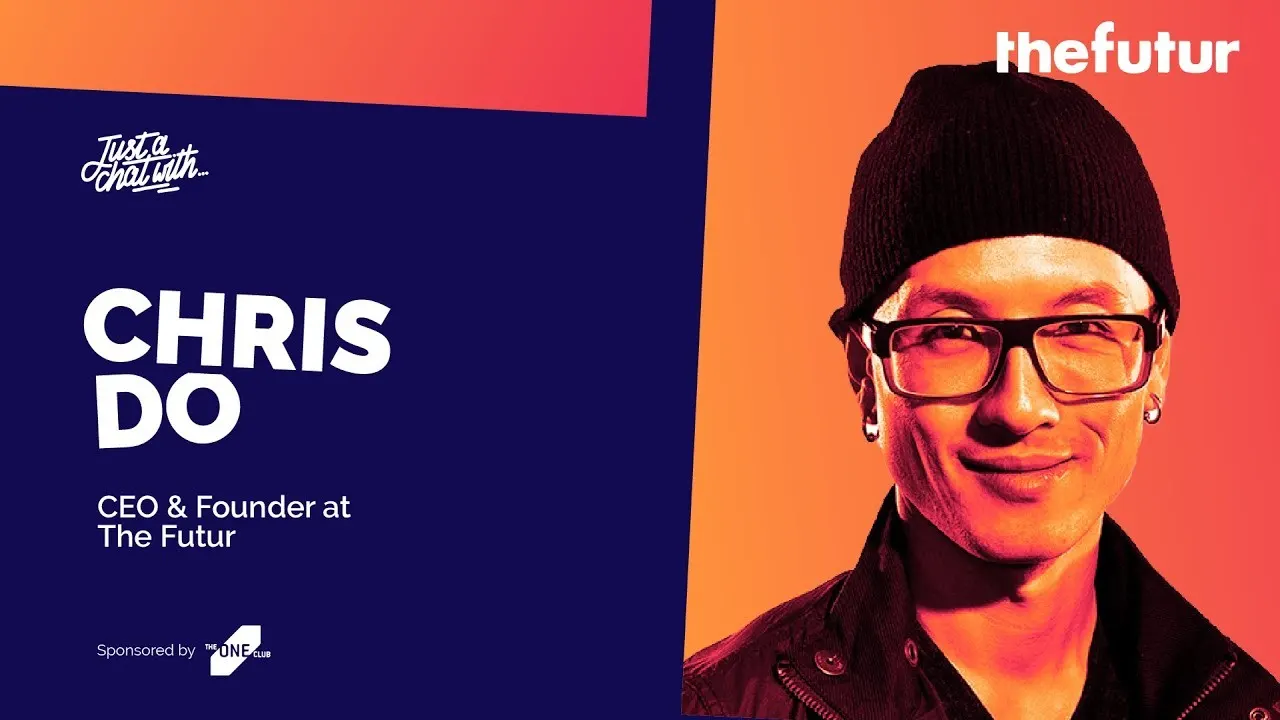
The Futur
The Futur's mission, as Chris states it, is to teach one billion creatives how to make a living doing what they love. The core idea is simple. Art schools teach craft. They rarely teach pricing, negotiation, sales, marketing, or how to run a studio. Chris had learned those things painfully at Blind. Now he would teach them in public.
The channel became known for blunt, practical lessons. How to price a logo. How to talk about value instead of hours. How to handle a client who asks for free work. How to stop being the cheapest option. Chris often role-played sales conversations on camera, playing a tough client while a young designer tried to defend a price. The videos felt like watching a master class and a therapy session at the same time.
He started a podcast, bringing on designers, entrepreneurs, marketers, and creators. He built paid programs and online courses. He spoke at conferences around the world. As of 2026, The Futur's biography says he has spoken at more than two hundred events, that the YouTube channel has more than 2.6 million subscribers, and that he has more than a million followers across other social platforms. The Futur lists his private coaching at $4,999 per session and his speaking fees starting at $35,000.
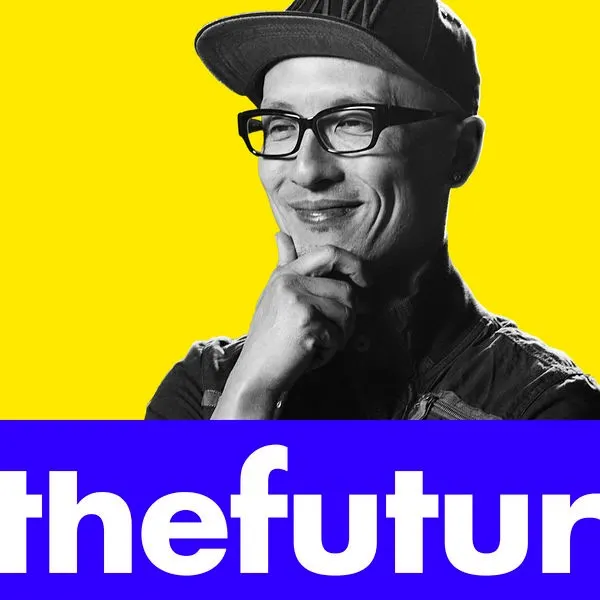
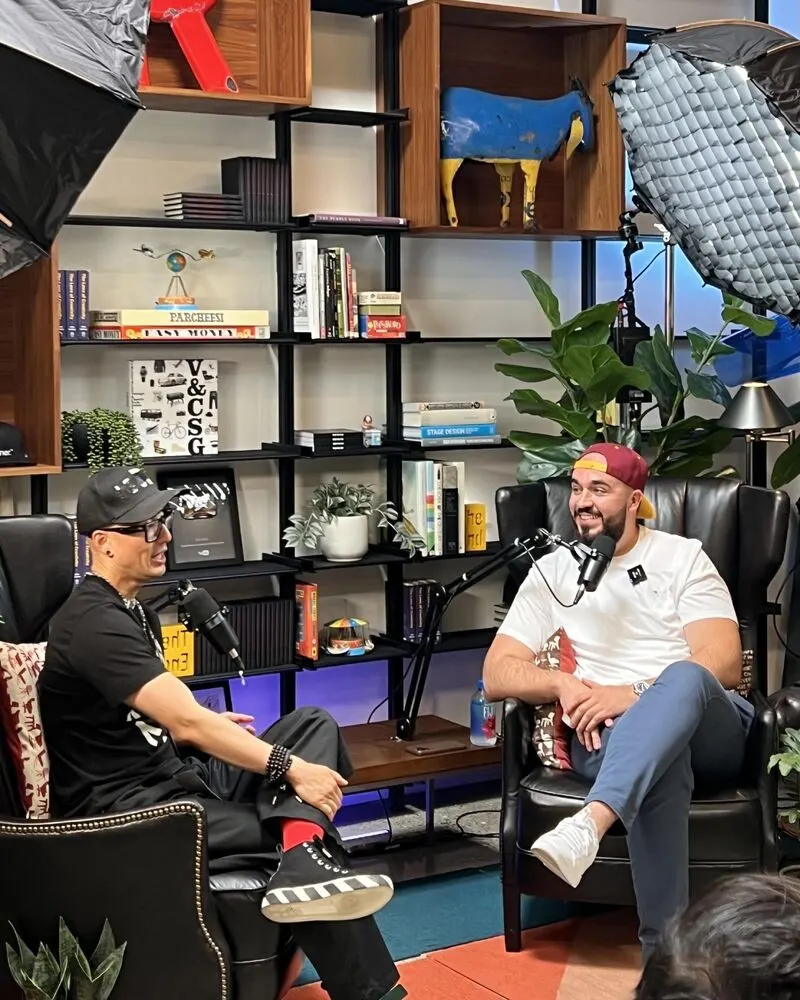
By 2022, The Futur had a team of about fifteen people. Blind, meanwhile, had quietly stepped back. Chris has said he has not done client work since December 2018. The studio that began with a $5,000 check had served its purpose. The teacher had taken over from the director.
Selling without apology
One of Chris's favorite targets is the belief that creative people should be embarrassed to talk about money. He grew up in a household that prized security and humility. He built a business in an industry where artists often undercharge. Much of The Futur's teaching pushes creatives to learn sales and marketing as seriously as they learn software.
When other designers complain that someone is charging less and winning more work, Chris flips the question. Maybe that is a signal, he says, that you need better sales skills or better marketing skills. He argues that failing to solve a client's problem wastes their time, their energy, and your reputation, so you had better know how to lead the conversation. His thumbnails and titles lean into the tension: views do not pay the bills, a brand is not a logo, stop competing on price.

Listening before designing
Chris gets criticized, he admits, for talking so much about pricing, selling, and negotiation. Critics accuse him of teaching second-rate creatives how to grab more money. His answer is that when people with less skill charge more, it lifts the whole industry. When talented people undercharge, they pull prices down for everyone. Instead of hate mail, he jokes, people should send him love letters.
The first skill he teaches is not a design skill at all. It is listening. Most trained creatives can make almost anything, he says, so the real question is what they should make, not how. He learned a line from his longtime business coach that he repeats often: you do not need to tell me where the bullseye is, just tell me which wall it is on. Designers waste days on concepts aimed at the wrong wall. Chris wants them to replace some of that exploration with questions, dialogue, and careful listening with open ears, not happy ears that only hear what they want.
Unbland yourself
In recent years, Chris has focused more and more on personal branding. He argues that creative people must stop hiding behind their work and become known for something specific. His framework, which he calls Unbland Yourself, asks three core questions. What do you want to be known for? Who or what is your enemy, the idea you stand against? And what is your rallying cry?
The Futur sells an Unbland Yourself workbook as a $99 digital download and offers a shorter Unbland Essentials version for $39. The company's shop page has described a printed edition planned for mid-2026. The ideas are the same ones Chris has lived. His enemy is the starving artist myth. His rallying cry is that creative people deserve to be paid well for what they do.
The same boy on the floor
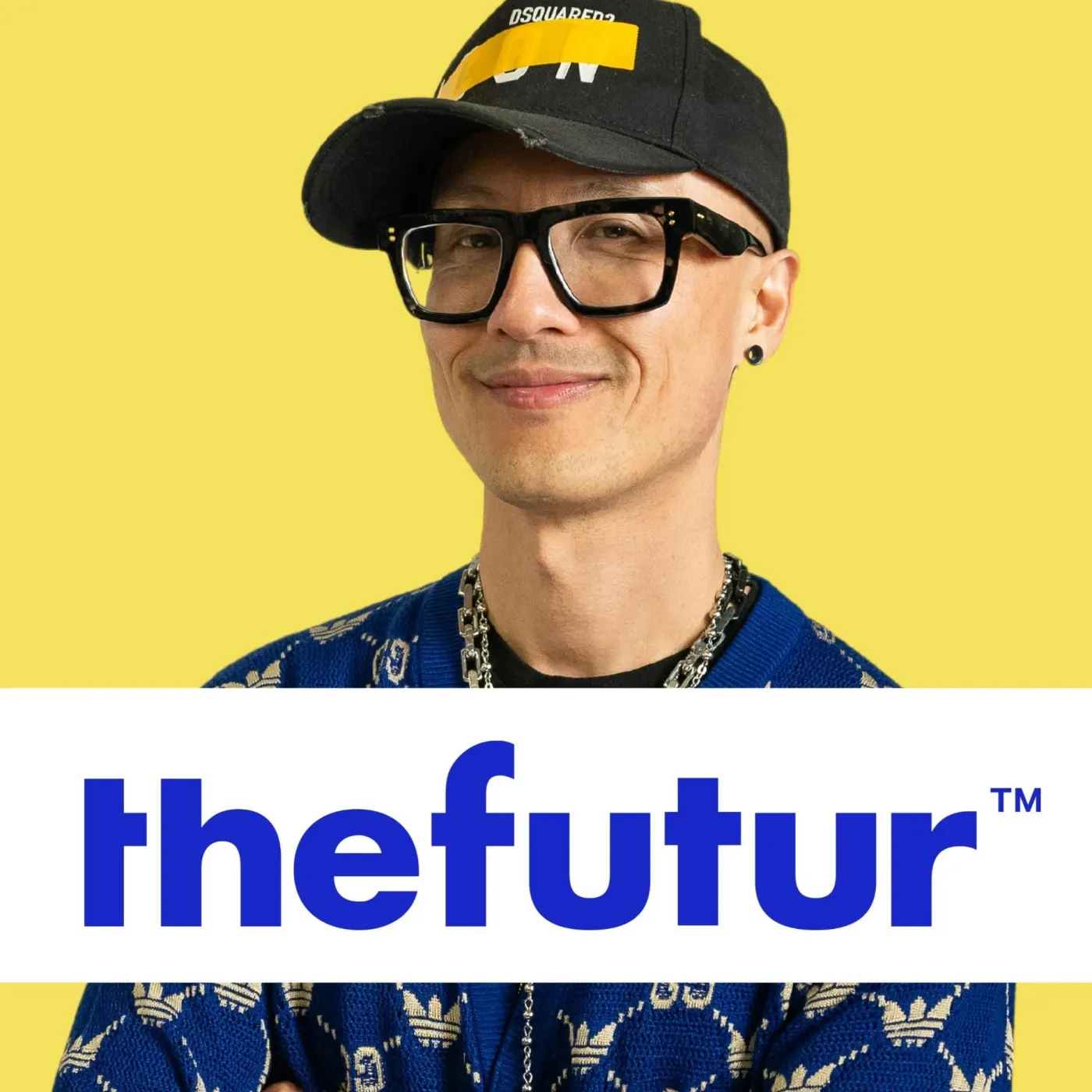
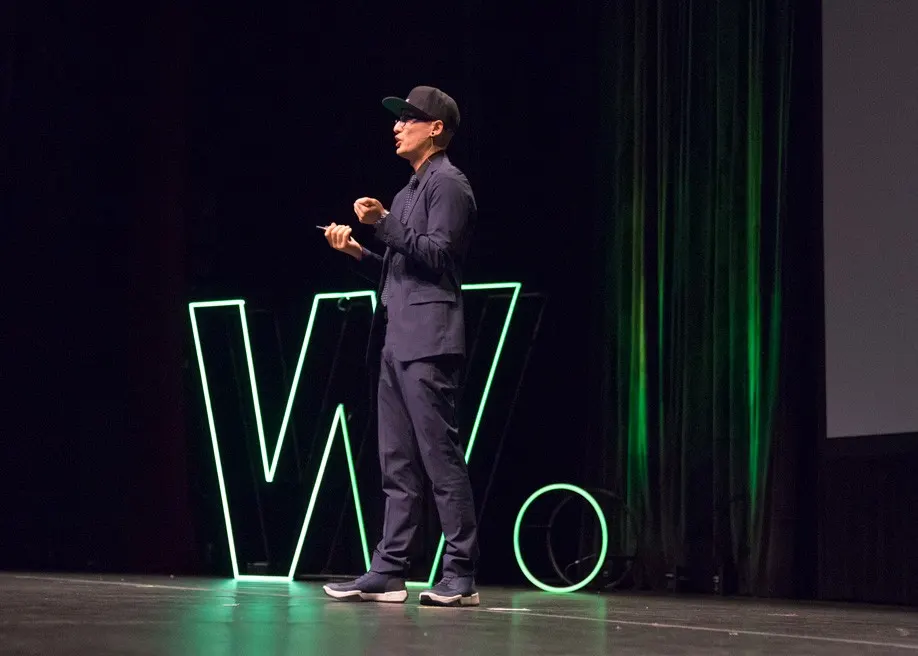
Chris is a public figure now, recognizable by his glasses, his beanie or cap, and his calm, careful way of speaking. He is not loud. He still describes himself as an introvert who had to learn to perform. Some of his most-watched talks are about exactly that, how quiet people can speak up and be heard.
He talks openly about his childhood, his therapist, his dark teenage thoughts, and the night on the floor beside the futon. He does it, he says, because many of the people watching are where he once was. They are young, talented, broke, and surrounded by people who do not believe in them.
He also talks about his parents without bitterness. They fled a war with three small boys. His father cleared tables before he could speak English and finished his career as a chief engineer. His mother, who told him to give up on art school, lived to see him build a studio and a school. The values they gave him, work hard, waste nothing, delay rewards, are all over The Futur. So is the one thing he chose for himself: the belief that art can be a real career.
Closing
Chris Do's story runs from the last day of Saigon to a studio with a glowing room of markers, from an eight-page plan written overnight to a $5,000 check across a hotel dinner table, and from a loft at the Brewery to a YouTube channel watched by millions. Along the way he learned that saying yes before you are ready can build a company, and that letting go of control can grow one.
He built Blind by learning each new skill just as clients asked for it. He built The Futur by giving away what he had learned, even when peers and advisors told him not to. His wife called his first videos unwatchable. He kept making them.
Today, his goal is bigger than any title sequence. He wants to teach one billion creative people how to earn a living from their talent. The boy who once lay on the floor thinking nobody believed in him has spent the second half of his life trying to make sure other people hear the opposite.