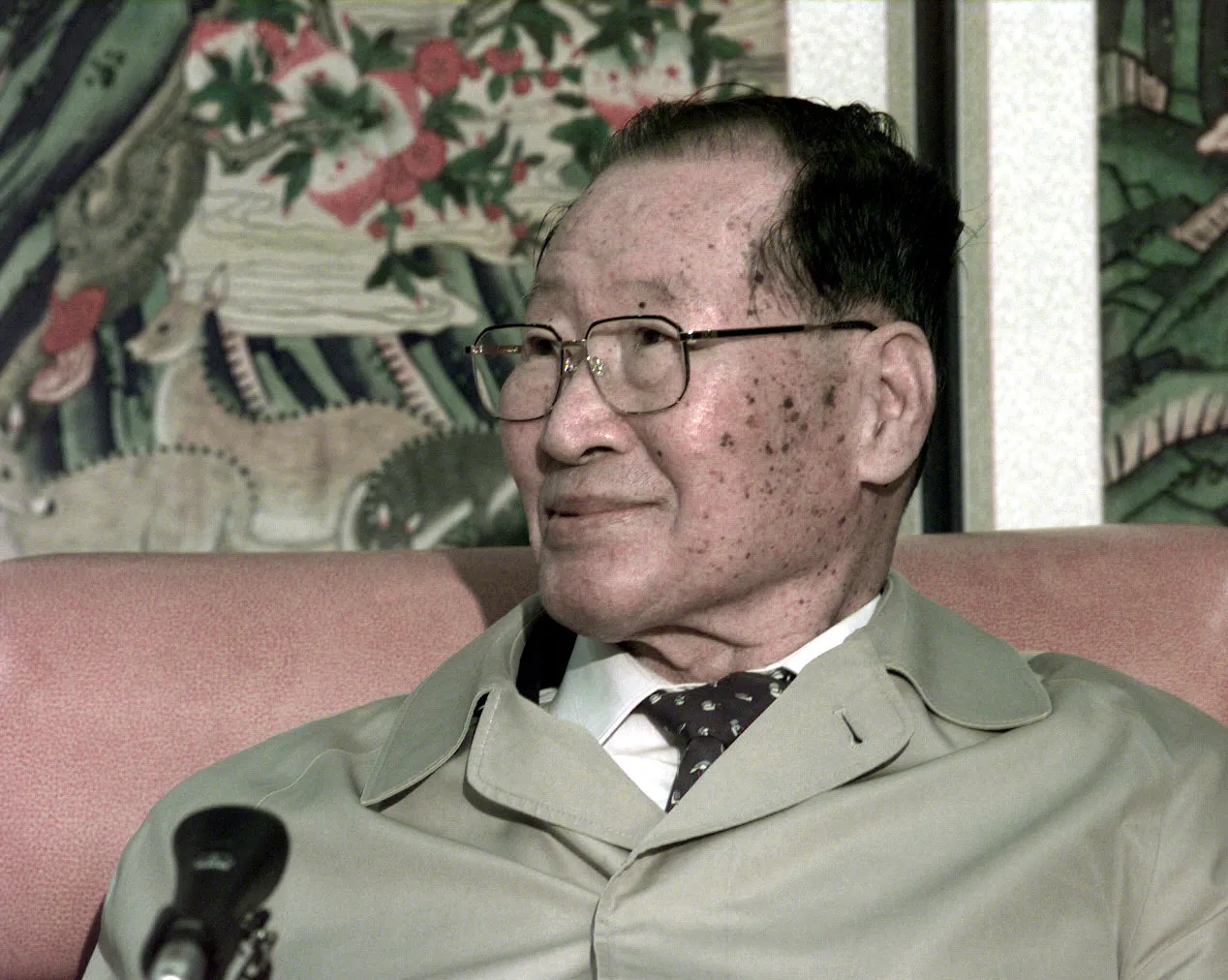
The Farmer Who Built Korea's Modern Machine
He ran from a northern farm with almost nothing. He rebuilt after fire, war, and canceled tankers. Then he put Korean cars and ships on the world map.
On February 25, 2026, more than 2,500 people filled the Concert Hall at the Seoul Arts Center for a memorial titled Resonance That Continues. Four Korean pianists shared four pianos. Hyundai Motor Group Executive Chair Euisun Chung stood for a grandfather who had died twenty-five years earlier and told the room that every hard bet in that life had begun with people. Automotive News had already, in 2025, given a Centennial Award framing to Ju-yung Chung, Mong-koo Chung, and Euisun Chung together: one family line that helped turn a ruined peninsula into a manufacturing power that sells cars on every continent that matters. The concert was not nostalgia for a logo. It was a reminder that Hyundai, as a word and as a machine, still answers to a farmer's son who refused to treat poverty as destiny.
Chung Ju-yung died on March 21, 2001, in Seoul, of pneumonia after long illness. He was eighty-five. The story that follows is a completed life, then a living industrial echo through 2026: roads, dams, ships, cars, hospitals, and a family of companies that still argue about how far his dare can travel.
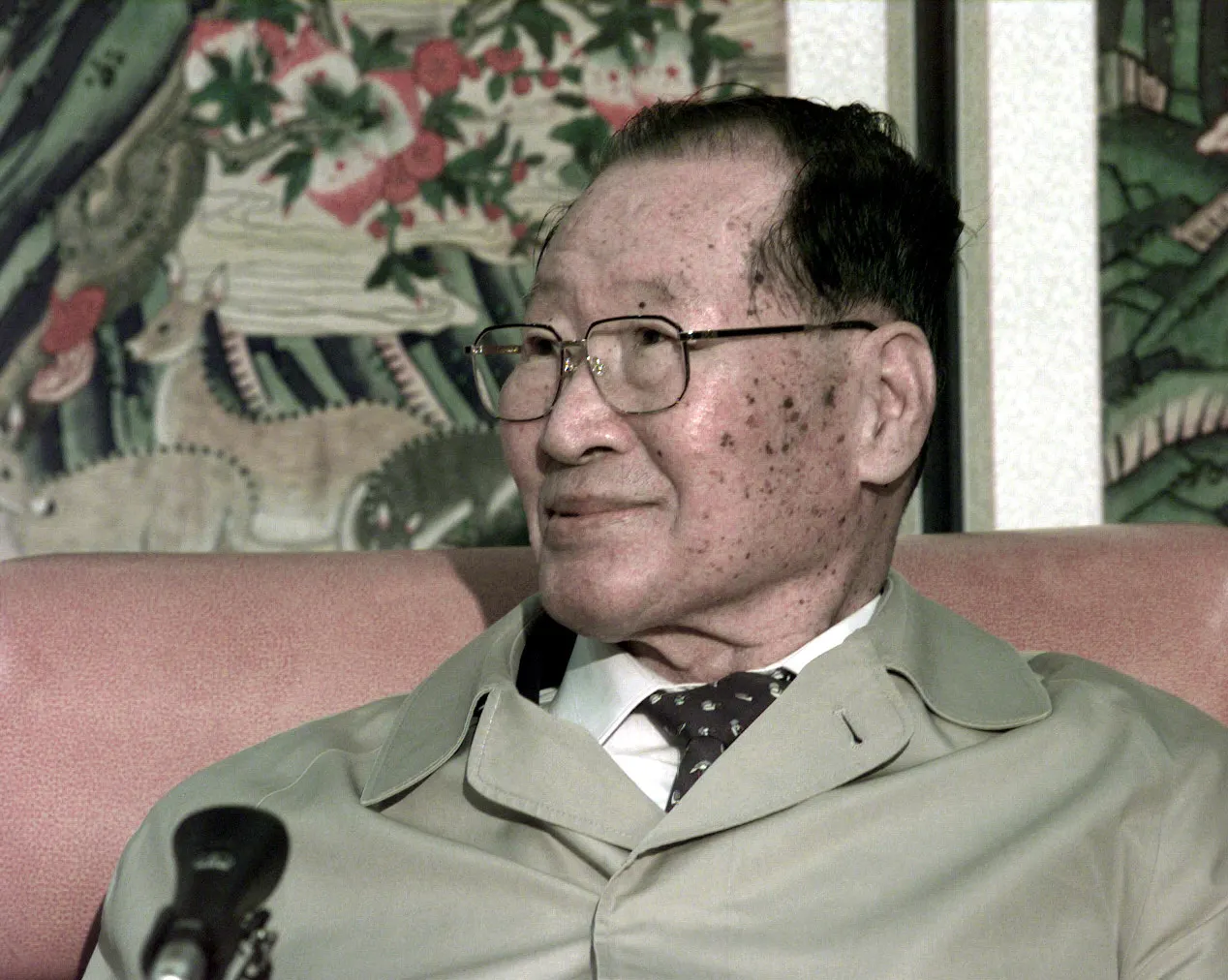
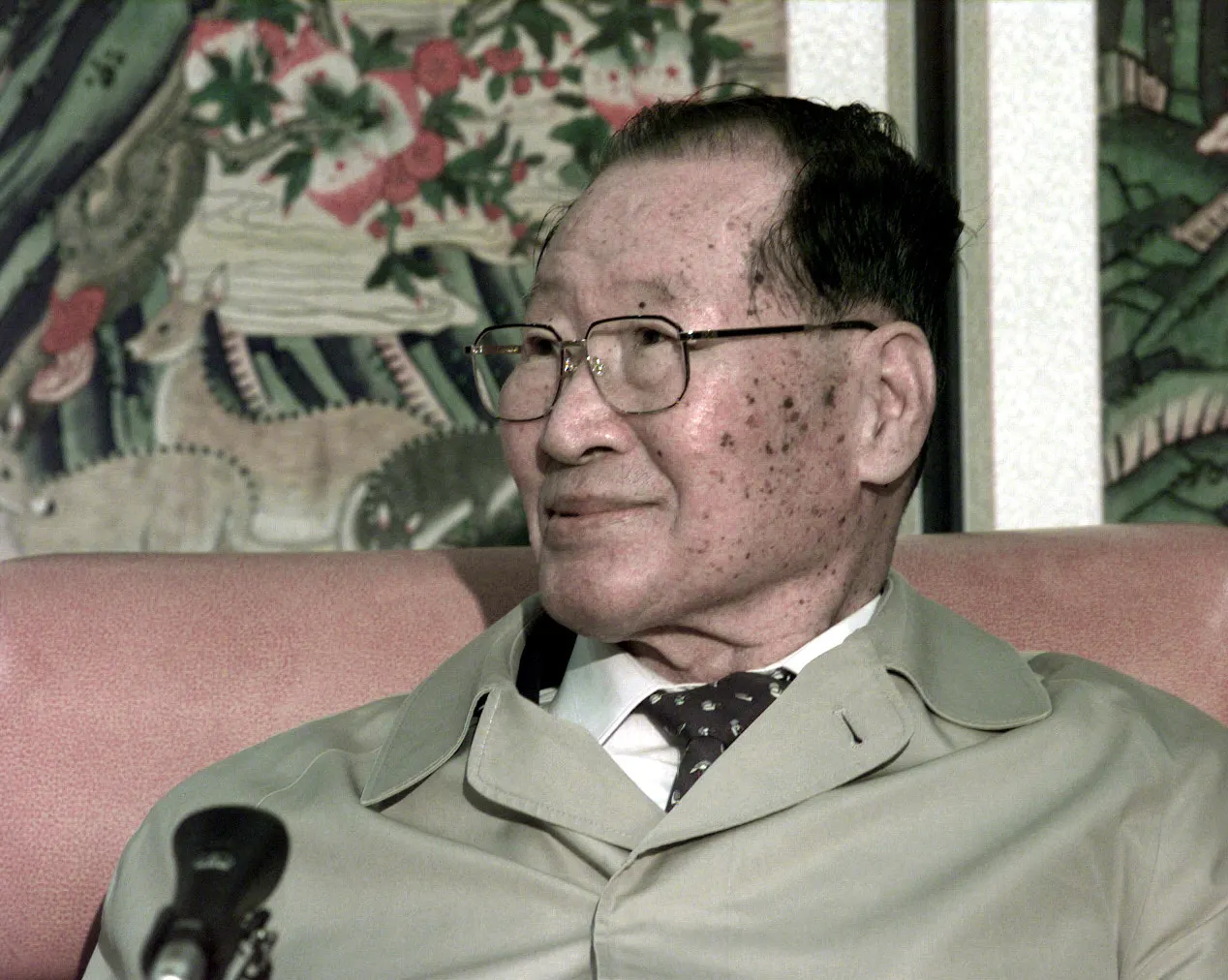
Asan village, a crooked back, and the first escapes
Chung Ju-yung was born on November 25, 1915, in Tongchon County, in what is now North Korea's Kangwon region. His art name would become Asan, after the mountain village that raised him. The household was farming and hunger. He finished Songjun Primary School in March 1931, then sat in his grandfather's Confucian school while the fields still claimed his body. In the Knowledge Project telling that still circulates on YouTube in 2026, the boy watches the hardest-working man he knows fail to feed a family through winter and asks himself whether a crooked farmer's back is the only future available.
He ran. Multiple times. The lore that later filled Korean textbooks and business films says that around age sixteen or seventeen he took money from the sale of his father's cow and walked toward city work. Exact won amounts vary by teller. The emotional math does not. He reached places like Kowon and then Seoul with a sixth-grade education and no network. He hauled freight on docks at Incheon, then called Jinsen Harbor under Japanese rule. He worked construction day labor, including sites remembered in biographies as connected to Korea University buildings. He swept factory floors and learned starch syrup. Then he found a rice shop, Bokheung, where delivery work turned into bookkeeping because he could be trusted with numbers and customers.
In 1936 he married Byun Joong-seok. In 1937 the ailing shop owner handed him the store. He renamed it Kyungil Rice Store. Creditworthiness became capital. Japanese colonial rice controls around 1939 shut Korean ownership of such shops. The first real business died by decree, not by soft demand. He went home, then returned to Keijo, the colonial name for Seoul, because quitting was not a method he respected.
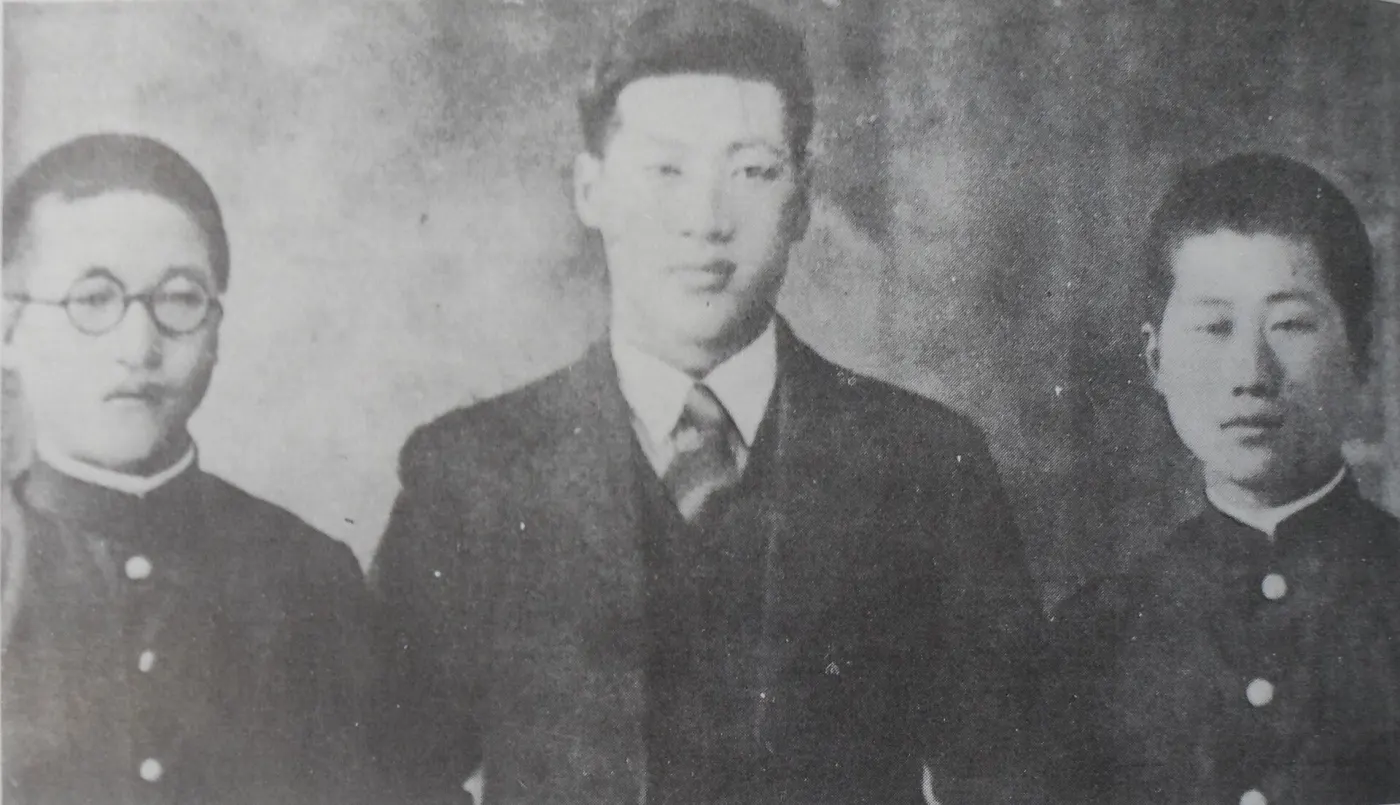
A garage, a fire, and a forced steel merger
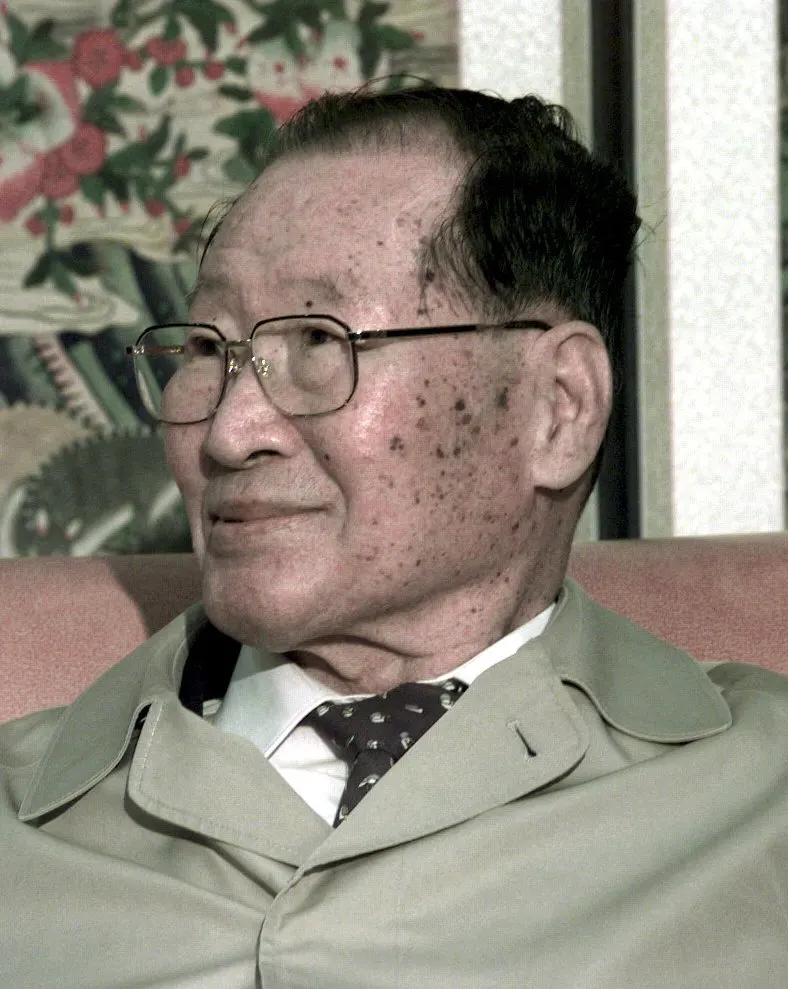
In 1940 he borrowed roughly three thousand won and opened the A-do Service Garage. Within about a month fire ate the place. Debt arrived faster than pride. He rebuilt anyway. Within three years the shop grew from about twenty workers to about seventy. The Japanese wartime economy then forced a merge into a steel plant around 1943. He left the city again with savings on the order of fifty thousand yen and a lesson he would never retire: assets can vanish overnight, but a reputation for finishing work can be rebuilt if you stay alive.
Liberation in 1945 cracked the colonial ceiling. In 1946 he returned to Seoul and opened Hyundai Auto Service. Hyundai means modern. The name was not branding fluff. It was a mission statement for a poor country that wanted machines, roads, and dignity. In 1947 he founded Hyundai Civil Works. Construction and repair sat side by side because the American military and a shattered capital needed both. In 1950 he merged the pieces into Hyundai Engineering and Construction. Then the Korean War arrived like a second fire.
Busan refugee yards and the reconstruction contract
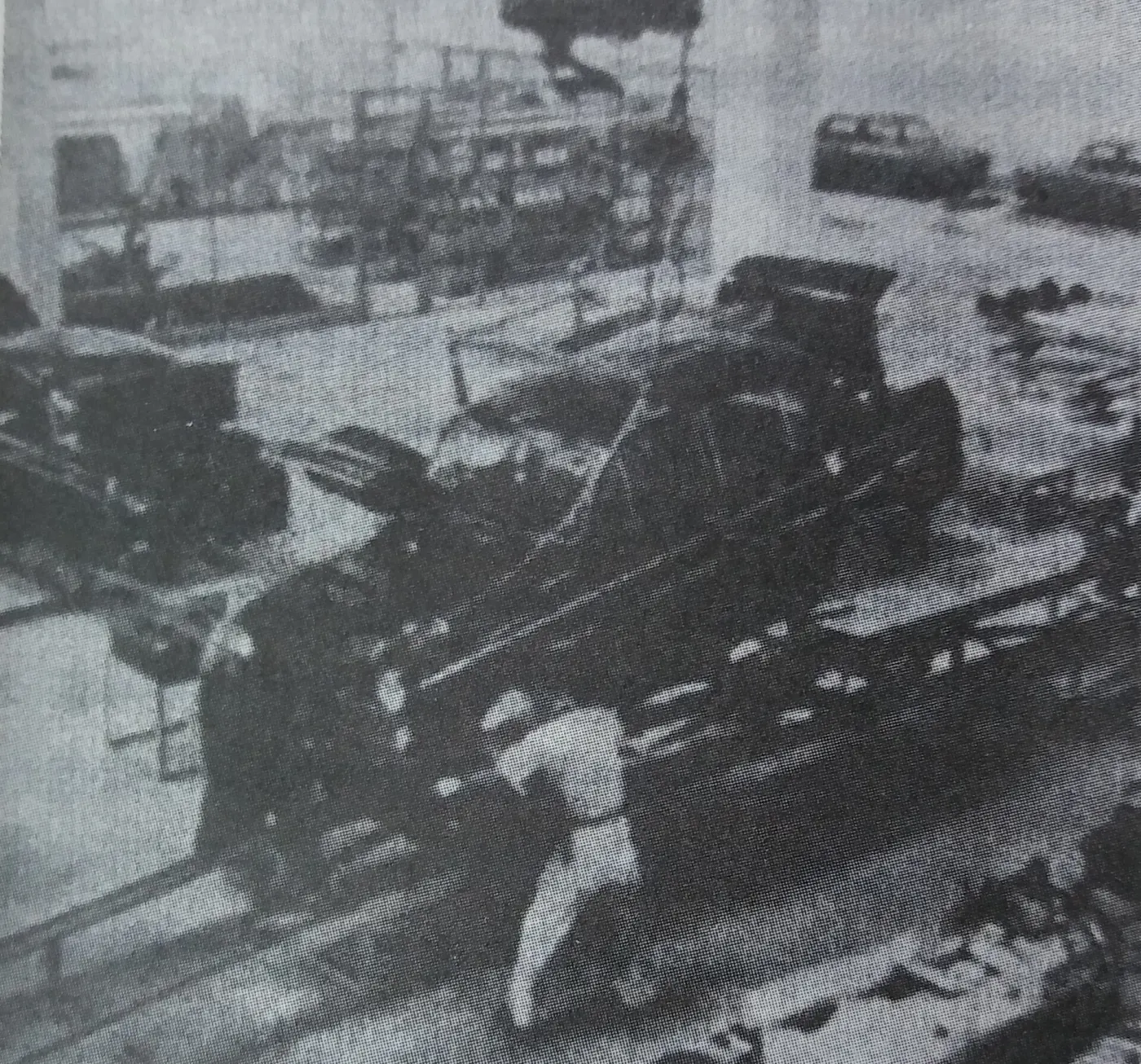
When northern forces took Seoul, Chung fled south with a younger brother. Busan became a refugee city of tents, fear, and odd jobs. His son Chung Mong-joon was born there. Hyundai took whatever work the United Nations Command and the Korean Ministry of Transportation would award. When Seoul was retaken, he went back and rebuilt the company again. Reconstruction was not a metaphor. It was bridges, docks, barracks, and schedules that punished delay. Goryeong Bridge over the Nakdong, Hangang bridge work, Incheon First Dock, fertilizer plants, thermal plants, and dams became the company's classroom. Governments noticed a builder who showed up early, argued hard, and finished.
July 1962 brought the Danyang Cement Plant, a vertical integration move so concrete would not always be someone else's choke point. In September 1965 Hyundai won the Pattani-Narathiwat Highway in Thailand, remembered as the first overseas construction project by a Korean firm. Leaving the domestic government-job trough was strategic. So was learning how to operate far from home in another language of contracts and risk.
Soyang Dam, Park's security question, and an earthen answer
In April 1967 Hyundai began the Soyang River multipurpose dam, finished in December 1973. The Knowledge Project episode preserves a sharp political engineering scene: President Park Chung-hee challenging a concrete design on national-security grounds. The DMZ was close. A bomb on concrete, Park argued, could open a catastrophic hole and send water toward Seoul. An earthen dam might fail differently under attack. Chung's team built the earthen answer. The project made Hyundai a national-scale actor and made Chung a man presidents called when the map needed rewriting.
February 1968 began construction of the Gyeongbu Expressway, the Seoul-to-Busan artery that still defines Korean logistics. Chung liked to drive the finished road and say he was driving on his road. The boast was half joke and half ownership. Highways without cars would be incomplete. Cars without highways would be trapped. He intended to build both.
Hyundai Motor, Ford Cortina, and the refusal to stay a subcontractor
December 1967: Hyundai Motor Company. Early production leaned on Ford, assembling Cortina cars around 1968. The easier path was to remain a local plant for foreign designs. Chung refused that ceiling. He wanted Korean models, Korean parts depth, and export pride. After grinding localization fights and design partnerships, 1976 delivered the Hyundai Pony, Korea's first mass-produced car built as a national product rather than a badge swap. He named it without focus-group theater. The Knowledge Project line is blunt: Chung and his company designed the car they thought Korean people should have. President Park's industrial policy helped finance the bet. Workers and suppliers made it real.
The Pony became a domestic symbol and an export beachhead. The Excel, arriving for the mid-1980s American market, turned that beachhead into a volume story Americans could see in dealership lots. Quality crises would come later and force painful reforms under the next generation. The founding bet still mattered: Korea would not permanently rent its automotive future.
Ulsan beach, a turtle-ship banknote, and a shipyard from sand
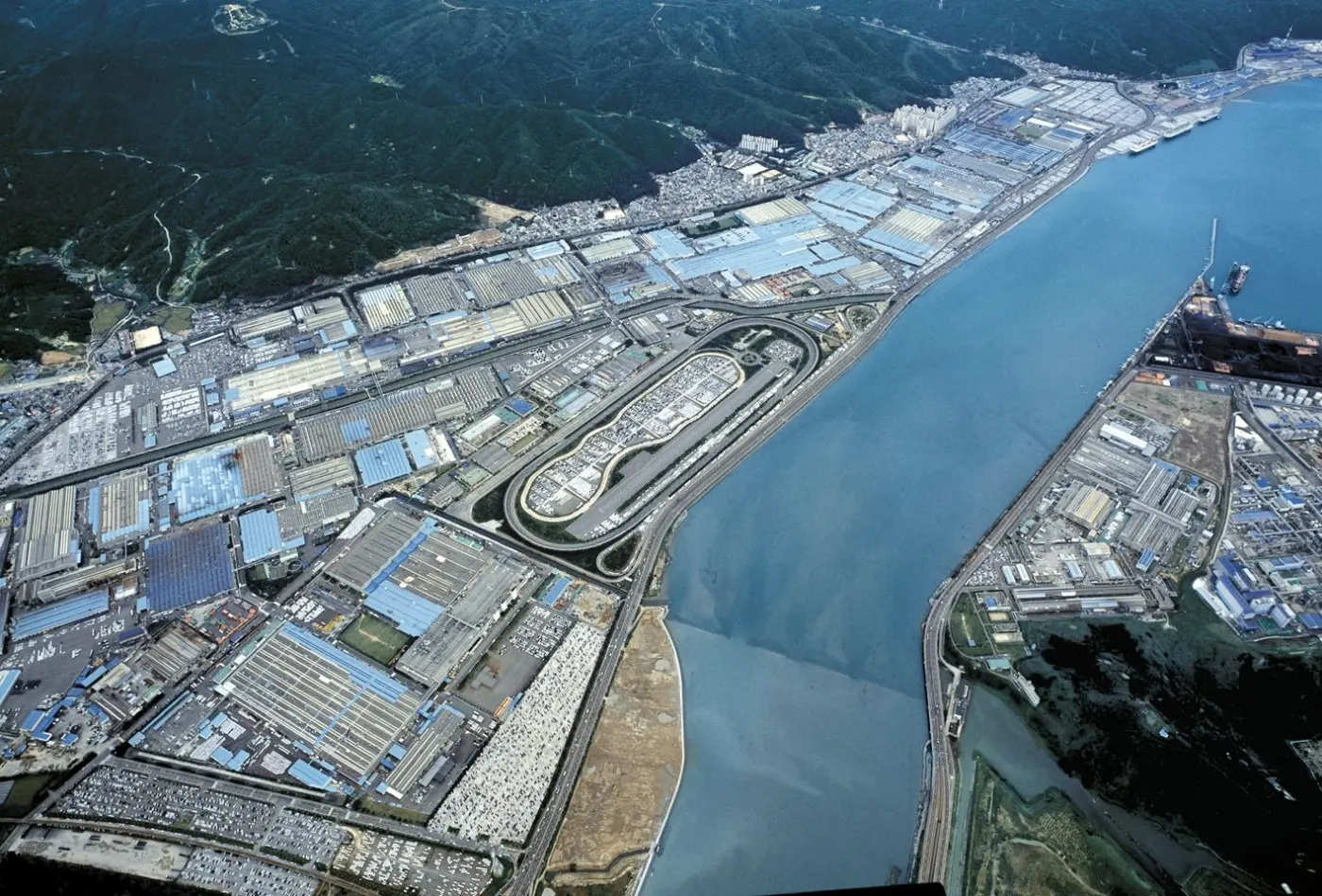
Around 1972 Chung founded Hyundai Shipbuilding and Heavy Industries and aimed the headquarters at Ulsan's Mipo shore. Korea's largest prior vessel was on the order of seventeen thousand tons. Chung talked about two-hundred-sixty-thousand-ton tankers. Capital needs approached nine hundred million dollars in the lore that bankers still retell. British advisers and yards, including A and P Appledore and Scott Lithgow, entered technical cooperation. Loans stalled. Experience was thin. Then comes the scene documentary makers never skip: Chung sliding a five-hundred-won note across a table, the turtle ship of Admiral Yi printed on the currency, plus a photograph of empty white sand at Ulsan. The argument was civilizational memory as credit collateral. Koreans had built fighting ships centuries earlier. Empty beach was not emptiness. It was a yard waiting for steel.
The first giant tankers rose. The 1973 oil shock then canceled or refused delivery on part of the VLCC book. Many builders would have drowned in unfinished hulls. Chung turned refused ships into a shipping company, converting crisis inventory into a new line of business. Construction logic again: if the customer disappears, become the customer of last resort and keep the asset working.
Jubail, nine hundred thirty million dollars, and barges from Korea
In the oil-shock 1970s, when Korea starved for foreign currency, Chung chased Middle East work and won the Jubail Industrial Port project in Saudi Arabia. Hyundai's later memorial narrative places the contract near nine hundred thirty million dollars, on the order of twenty percent of the Korean government budget of that moment. Rivals had deeper resumes. Hyundai lacked a tidy bid bond and overseas prestige. Chung's method was research, networks, and a public insistence that it can be done.
On site, rented foreign marine gear arrived late on purpose, threatening the schedule. Chung's counter-move stunned contractors: fabricate marine equipment, steel, and concrete elements in Korea, then barge the pieces to Saudi Arabia at industrial scale. Ulsan's new shipyard muscle became a logistics weapon. Deadlines bent back toward Hyundai. Other Korean builders followed the Middle East trail he cut.
Seosan tides and a sunken ship for a seawall
On Korea's west coast, the Seosan and Cheonsu Bay reclamation aimed to create arable land from tidal flats with brutal currents. Rock dumped into eight-meter-per-second water washed away. Chung ordered a decommissioned vessel from Ulsan scrap berths and sank it to close the final gap, a technique remembered as the oil-tanker method or the Ju-yung method. Engineers still cite it as improvisation with industrial toys. Farmers later worked land that had been open sea. The founder treated food security as seriously as factories.
Baden-Baden flowers and Seoul's Olympic upset
In October 1979, weeks after Park's assassination, Seoul formally entered the race for the 1988 Summer Olympics. Economic planners flinched. Chung chaired the private bid push. In Baden-Baden, early vote counts looked hopeless against Nagoya. He ran daily strategy sessions, mapped IOC members, mobilized expatriates and employees, and, in company lore, bought entire flower fields so bouquets would not run out when persuasion needed theater. Seoul won fifty-two to twenty-seven. The Games became a coming-out party for a country still healing from dictatorship and war. Hyundai concrete and schedules sat underneath the ceremony.
Asan Foundation, hospitals, and returning profit as duty
In 1977 he founded the Asan Foundation, an early chaebol-scale welfare vehicle aimed at medical care, social support, scholarships, and research. Rural and fishing communities got clinics first. In 1989 Seoul Asan Hospital opened and grew into a major medical center. He wrote books whose titles became slogans: there may be hardships, but never complete failure; born of this land; lips must burn if you plan to succeed. In 1982 the American Academy of Achievement gave him its Golden Plate. The philanthropy was not a late apology for wealth. It was consistent with a man who treated the nation as an extended balance sheet of obligation.
How he worked
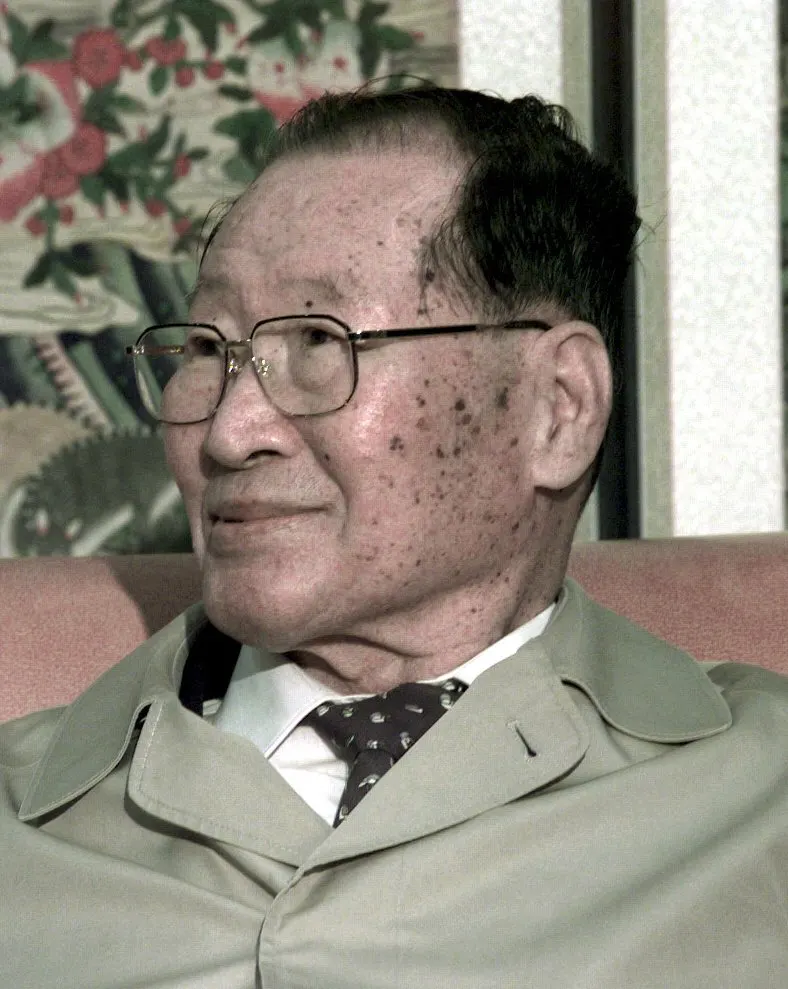
Colleagues called him the bulldozer, and not only as flattery. He woke early. He walked sites in boots. He asked the question that still hangs in Hyundai training rooms: have you tried. He preferred positive language that sounded naive until the schedule proved otherwise. He slept little during crises. He negotiated personally when banks or ministries stalled. He trusted credit and sincerity as twin currencies, phrases that recur in his autobiography Born of This Land. He could be harsh with sons and executives. Succession inside Hyundai became a family war story for Korean business pages. The operating style remained constant across decades: pick a national bottleneck, gather engineers, refuse the polite no, and make the finished object argue for you.
Politics, sixteen percent of the vote, and a split inheritance
In 1992 Chung entered politics under the Unification National Party. He won a National Assembly seat, then ran for president and finished third with roughly sixteen percent of the vote, about 3.88 million ballots. Contemporary estimates put his wealth near four billion dollars. The campaign did not deliver the Blue House. It did show a founder who believed national division and economic anxiety were problems a builder might solve from a podium. Afterward the Hyundai Group began the long fission into satellite empires: Motor under Mong-koo, heavy industry orbits tied to Mong-joon, department stores under Mong-kun, insurance under Mong-yoon, and other brothers' earlier spinoffs such as Halla and KCC. The word Hyundai remained a shared ancestry more than a single org chart.
One thousand one cattle and a debt across the DMZ
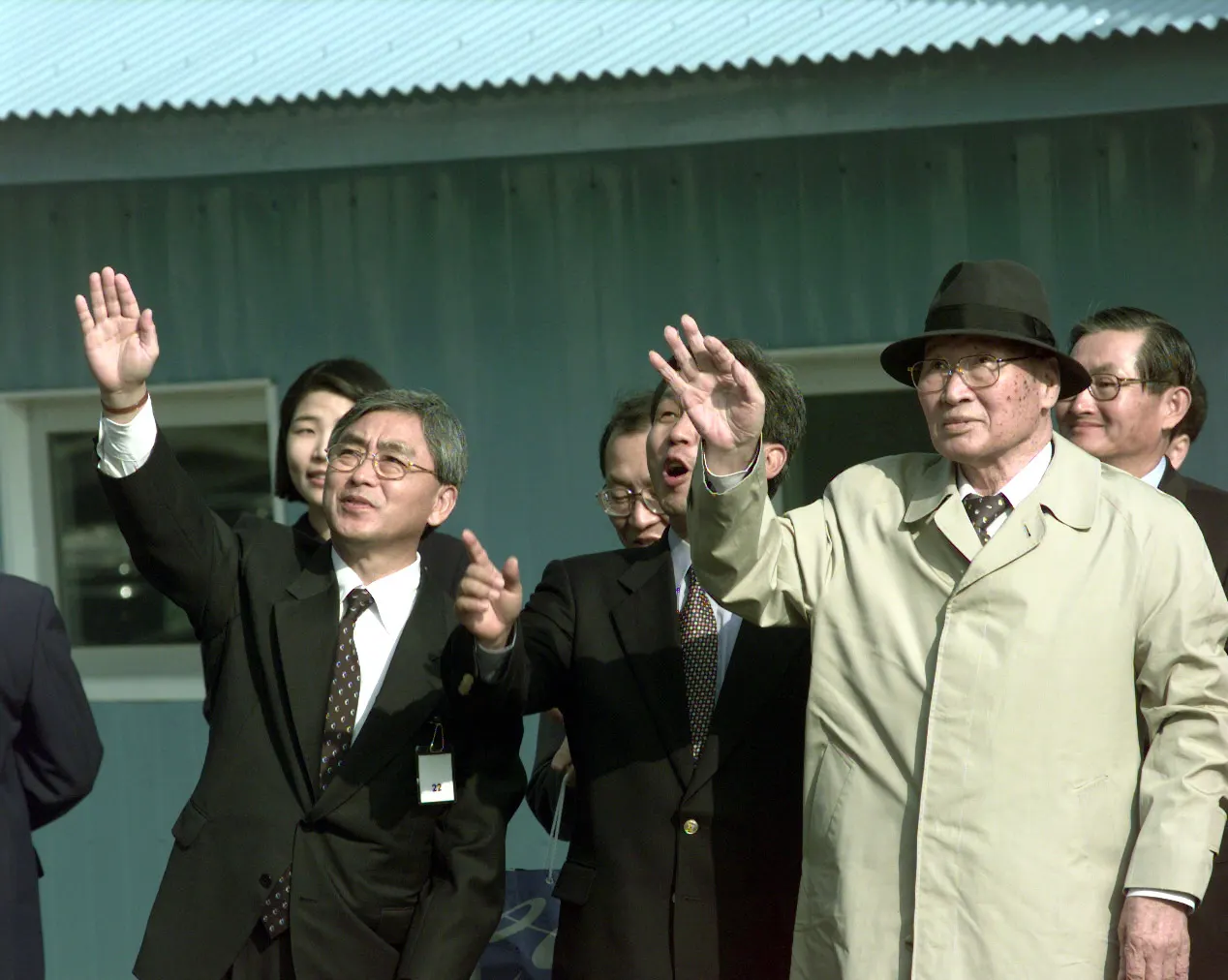
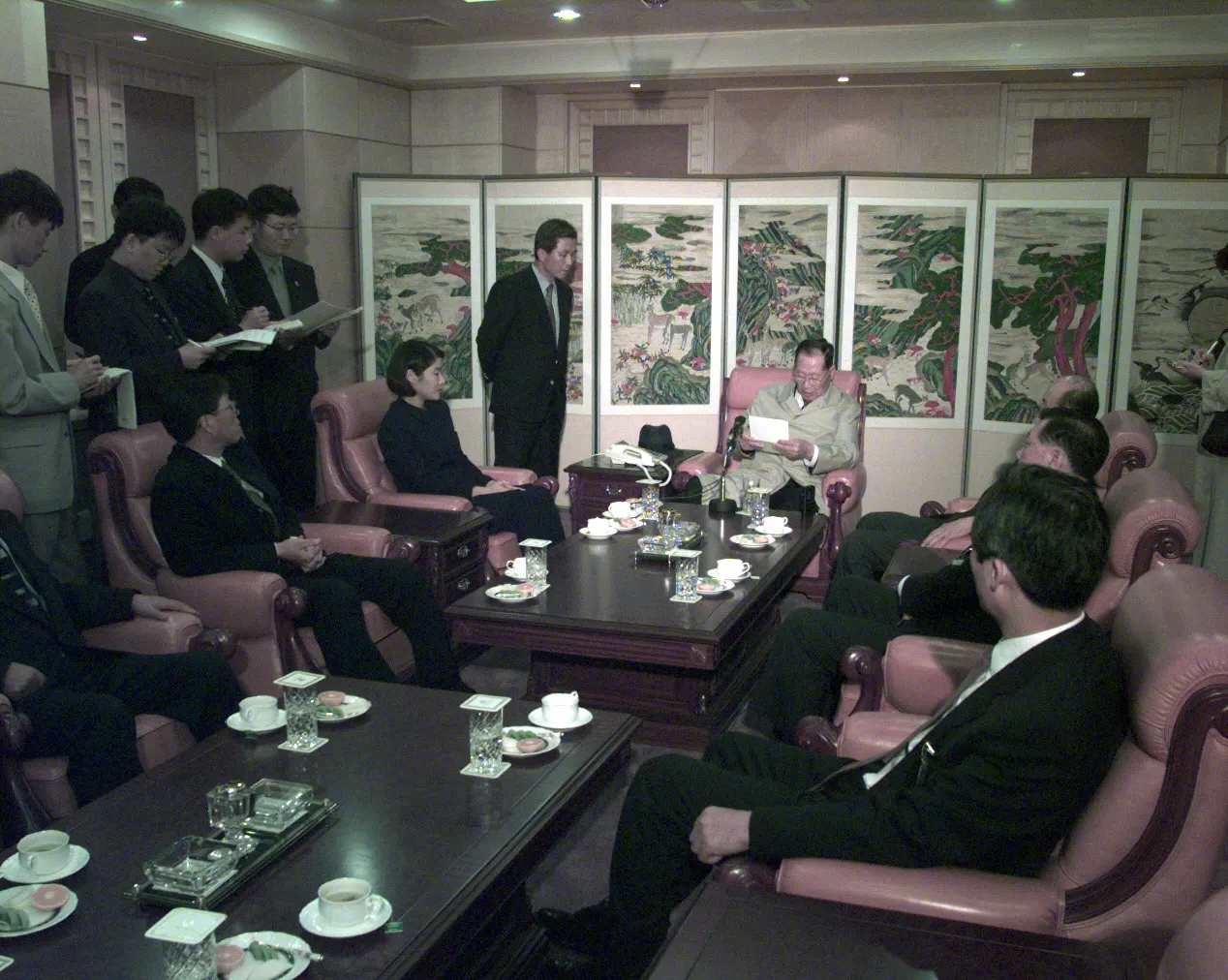
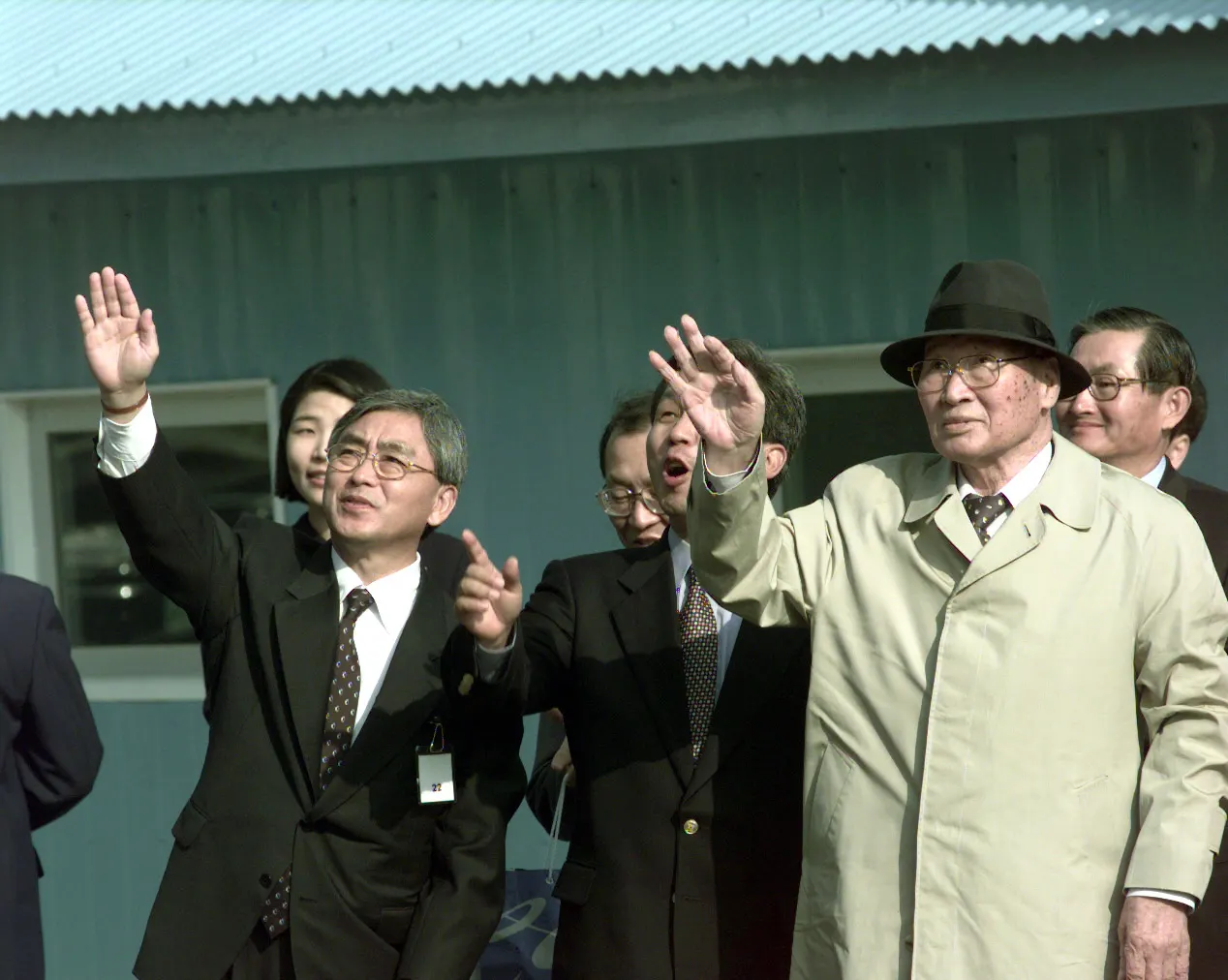
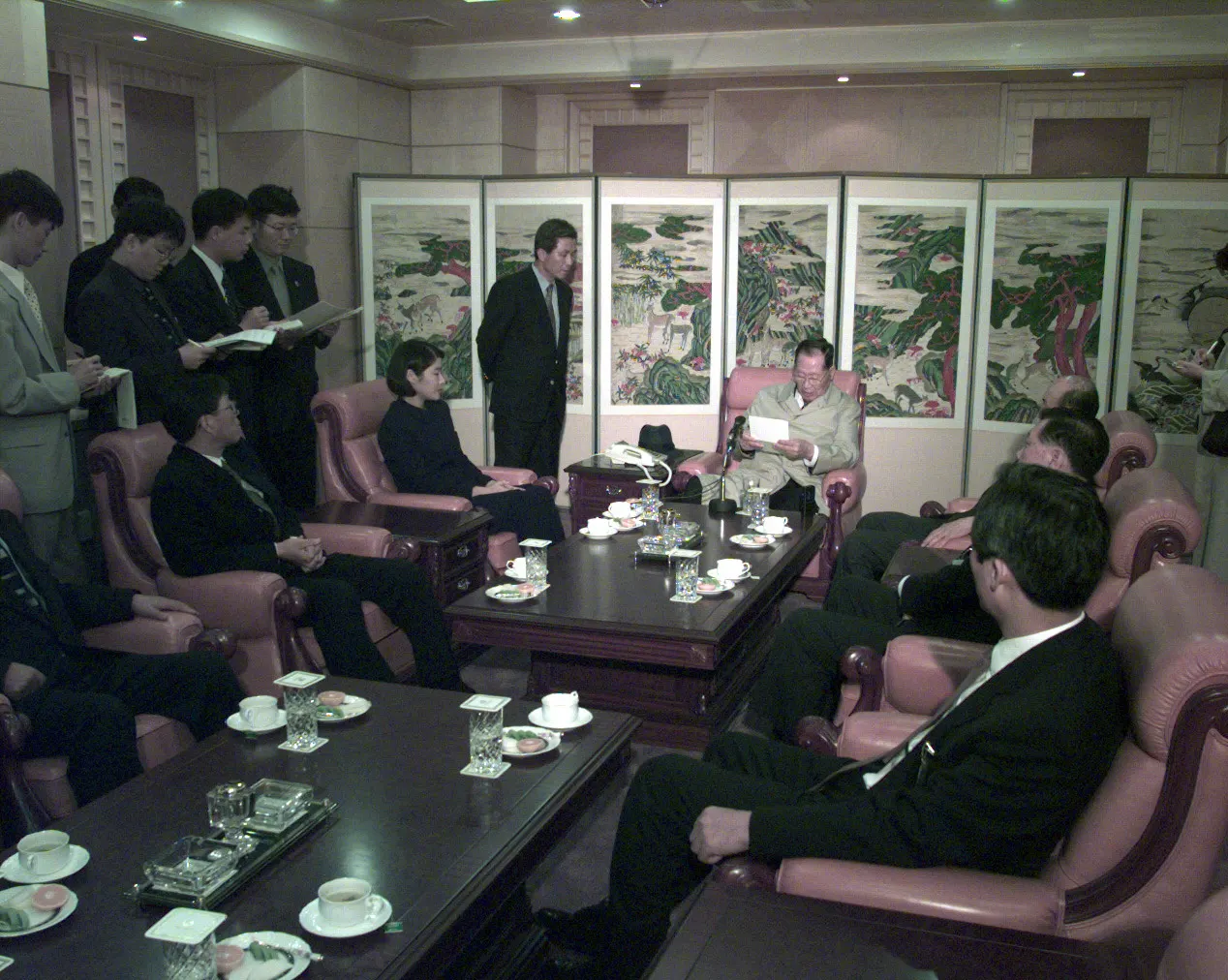
On June 16, 1998, the eighty-two-year-old honorary chairman climbed into the lead vehicle of a fifty-truck convoy. Five hundred cattle from Seosan pastures rolled toward Panmunjom. Monks chanted. Women in hanbok waved. He became, in the civic telling, the first civilian to cross that military seam for such a gift after the peninsula's division. In October he returned with five hundred one more animals, one thousand one in total: one cow for the debt of youth, one thousand for interest, as the Knowledge Project and Korean encyclopedia entries both frame the symbolism. He met Kim Jong-il. Mount Kumgang tourism opened that November through Hyundai Asan. The projects later bled money and political risk. The gesture still rewired what private Korean capital could attempt across the wire.
His health was already failing. Pride and exhaustion shared the same body.
March 2001: a completed life
On the night of March 21, 2001, Chung died of respiratory failure from pneumonia at a Seoul hospital, with sons and executives nearby. Buddhist and Confucian rites followed. His wife Byun Joong-seok died in August 2007 and was buried beside him in Hanam. After his death, Korean media also reported two daughters from a long private relationship with Kim Kyung-hee, public facts that belong in a careful biography without soap-opera volume. The founding marriage and the eight sons who carried corporate titles remain the spine of the succession map. Chung Mong-hun, once positioned as a Hyundai Group heir for North projects, died by suicide in 2003 amid political investigations; his widow Hyun Jeong-eun later steered the remnant Hyundai Group. Those tragedies sit outside cheerleading. They are part of what the empire cost the family that built it.
What the companies did after the founder
Hyundai Motor Group under Mong-koo and then Euisun Chung professionalized quality, bought and rebuilt Kia, launched Genesis, and bet early on hydrogen and battery-electric platforms. HD Hyundai and related heavy-industry brands kept Ulsan's shipbuilding identity alive in a world still hungry for tankers, container ships, and offshore structures. Construction affiliates continued overseas. The Asan Foundation's hospitals kept treating patients who never met the founder. The corporate map is messy. The industrial residue is not: Korean highways, apartments, export docks, and dealership networks still carry fingerprints of his urgency.
2025 and 2026: the living scoreboard
Hyundai Motor's 2025 results show the scale of the machine he started. Annual revenue reached 186.3 trillion won, up 6.3 percent. Global wholesale volume hit about 4.14 million vehicles. The United States, for the first time, took a million Hyundai wholesales in a year. Electrified sales rose 27 percent to about 961,800 units, including roughly 275,700 battery electrics and 635,000 hybrids, with hybrids alone at 15.3 percent of the mix. Retail sales landed near 4.11 million, with electrified vehicles around 27 percent of that mix. For 2026 the company guided more than 4.16 million units, operating margin between 6.3 and 7.3 percent, and investment near 17.8 trillion won.
In the first half of 2026, SNE Research tallies put Hyundai Motor Group battery and plug-in deliveries near 370,000, up about 25 percent, lifting global electric share from 3.1 to 3.7 percent even as Chinese brands surged. Outside China the group's share sat near 8.0 percent, slightly down as the market grew faster than its volume. On July 30, 2026, Euisun Chung toured Hyundai Motor Türkiye to inspect IONIQ 3 production readiness for a European electric hatch push planned for the second half of the year. The founder's old pattern repeats in a new powertrain: localize, then export, then refuse to be a permanent junior partner.
The February 2026 memorial concert closed the circle emotionally. Euisun recalled that if he had asked his grandfather whether to stage such a night, the answer would have been: why hesitate, just do it. The line is corporate folklore and also an accurate compression of Ju-yung's method.
World impact: what actually shifted
Before Chung's construction wave, South Korea lacked the highways, ports, and power plants that make factories rational. After Gyeongbu and Soyang and Incheon docks, logistics became a national advantage rather than a daily humiliation. Before Pony, car ownership was mostly imported status. After Pony and Excel, Korean households and then foreign buyers sat in cars designed as Korean industrial policy on wheels. Before Ulsan, shipbuilding was a rumor. After Ulsan, Korean yards became a global pricing and delivery force that still shapes freight rates. Jubail and Thailand taught Korean engineers that the exportable product was not only steel. It was project management under heat, language barriers, and hostile schedules.
The cattle convoy did not reunify Korea. It did prove that private capital and personal myth could reopen a sealed border for a day and seed tourism and dialogue experiments, however fragile. The Asan medical network shifted who could get complex care without leaving for Tokyo or Los Angeles. The 1988 Olympics, which Chung helped wrestle into Seoul, changed how the world photographed Korea: not only as a war memory, but as a host with stadiums, subways, and cameras.
Often-cited claims say Hyundai at its peak touched on the order of sixteen percent of South Korean economic output. Treat that figure as a widely repeated magnitude, not a single audited line in this telling. Even with caution, the qualitative truth holds. When foreigners say Korea today, they often mean Hyundai steel, Hyundai schedules, and Hyundai badges without knowing the farm boy who insisted the modern century could be built on purpose.
Hard truths without sandpaper removed
Chung's rise rode authoritarian industrial policy as well as personal grit. Park-era favors, labor conflict, and chaebol concentration are part of the same history as the dams. Environmental costs of reclamation and mega-projects deserve airtime beside the food-security argument. Family succession fights fractured the group and hurt workers who only wanted a stable badge on their paystub. North projects mixed idealism with commercial loss. Quality problems in early American exports forced a later generation to rebuild trust the founder had spent reputation to win. A honest documentary keeps those scars visible. Polish without sandpaper teaches the wrong craft.
Cement, Thailand heat, and learning to win away from home
The Danyang cement plant was not a side hobby. Chung had watched materials choke schedules on Korean sites. Owning cement meant owning tempo. Thailand's Pattani-Narathiwat Highway then forced a different education: tropical rain, foreign inspectors, currency risk, and the politics of being the first Korean crew to prove competence abroad. Failure there would have branded Korean construction as provincial forever. Success became a passport. Every later Middle East bid rode that passport. Young engineers who survived Thailand came home speaking a new language of claims, progress photos, and liquidated damages. Chung collected those people the way other founders collected patents.
The national car as industrial policy with a steering wheel
The Pony plant did not appear from a single speech. It required press shops, paint lines, supplier parks, and a design philosophy that could survive without endless foreign vetoes. Italdesign's Giugiaro styling often enters the footnote, but Chung's nonnegotiable was localization depth. Engines, transmissions, and parts ecosystems had to grow inside Korea or the car would remain a costume. Export markets then became the exam. Canada and other early destinations taught warranty pain. The United States later taught brand perception pain. Those pains are why Mong-koo's quality war in the 2000s reads as sequel rather than contradiction. The founder opened the factory door. The next generation had to make the door worth walking through twice.
Ship orders, canceled steel, and becoming your own customer
When oil prices convulsed tanker demand, unfinished hulls became floating accusations. Chung's shipping pivot was not elegant finance. It was refusal to scrap years of labor because a charterer blinked. Completing canceled ships and sailing them under a Hyundai-related flag turned a balance-sheet wound into operating experience. Crews learned. Managers learned bunker math. The yard learned that vertical integration could mean owning the voyage, not only the weld. That same instinct appeared when marine gear rentals stalled Jubail: if a supplier can hold your schedule hostage, stop renting the hostage.
Brothers, sons, and the cost of a surname empire
Chung's brothers left with major pieces and founded parallel fortunes: Halla under In-yung, Sungwoo under Soon-yung, housing under Se-yung, paints and glass under Sang-yung. Nephews still run industrial niches that tourists never brand-check. Inside the direct line, Mong-koo took the automotive core that foreigners mean when they say Hyundai. Mong-joon linked politics, football governance, and heavy industry capital. Mong-kun's department stores mapped urban retail. Mong-yoon's insurance book sat closer to risk than to steel. The public saw one surname. The org charts became a map of negotiated exits. Workers lived through badge changes that felt like weather. The founder had built a single camp. History turned it into a constellation.
Credit as religion and the morning site walk
Autobiographical lines about sincerity and credit sound soft until you watch how Korean subcontracting culture punishes bounced paper. Chung treated a kept promise as compound interest. He also treated a broken promise as personal insult. Morning walks through muddy sites were inspections and theater. Men straightened when the honorary chairman's car appeared. He asked about concrete temperatures, rebar spacing, and why a crane sat idle. The questions trained managers to expect a founder who could smell delay. That habit scaled poorly into a global group, which is why professional boards later mattered. It scaled perfectly into the decades when Korea needed a human megaphone who could shame a ministry into releasing a permit.
Mount Kumgang's fragile door and the bill that followed
The cattle gift opened cameras. Mount Kumgang tourism opened cash registers and controversies. Hyundai Asan carried political hope and commercial bleed. Later shooting incidents and freezes reminded everyone that private reconciliation cannot outrun state hostility forever. Still, for a generation of South Korean families, the idea that a bus might roll north for sightseeing stopped being science fiction. Chung spent late-life capital on that imagination. Balance sheets recorded losses. Memory recorded a door briefly ajar.
What fifth-grade readers should keep
If you remember only five objects from this life, keep these: a burned garage rebuilt on debt; an earthen dam chosen for a war that never fully ended; a turtle-ship banknote on a banker's table; a sunken hull closing a seawall; fifty trucks of cattle facing razor wire. Those objects explain more than any net-worth estimate. They show a builder who used physical facts to argue with fear. Fear said Korea was too poor, too late, too divided, too inexperienced. The objects answered with finished work.
Engineers, not miracles
Korean schoolbooks sometimes compress Chung into a cartoon of willpower. The real machine was denser. Surveyors, welders, quantity estimators, interpreters, and unpaid overtime made Soyang and Jubail stand up. Chung's gift was selecting which impossible job to attempt next and then refusing to let ministries or banks redefine success as delay. He hired people who could translate his impatience into drawings. When drawings failed, he changed methods in public, which embarrassed experts and liberated juniors. That social permission to improvise became part of Hyundai culture long after his death.
Export docks and the sound of a country earning dollars
Stand at an Ulsan quay in the late twentieth century and you heard cranes, horns, and languages that did not exist in Asan village. Ships leaving with cars and ships leaving as products themselves were the same bet: Korea would earn hard currency by making heavy things on time. Chung understood that a poor country's dignity is partly a trade surplus story. Every completed foreign contract bought machinery, scholarships, and political room. The 2025 American million-unit wholesale milestone for Hyundai Motor sits downstream of that older hunger for dollars that do not apologize.
Frugality theater and private complexity
Public Chung ate simply, slept little, and preached labor. Private family life included strains the company histories soft-pedaled for decades, including children acknowledged late. A documentary that respects living relatives still owes readers the outline: empires concentrate love and injury in the same houses. He was not a saint in boots. He was a consequential operator whose virtues and failures both scaled. Readers building companies should copy the site walks and the finished-object obsession, not the myth that one man's virtue explains a nation's factories.
From honorary chairman to resonance
After formal retirement into honorary roles, Chung did not become decorative. The cattle convoy, the North meetings, and the public persuasion tours kept him on front pages while sons fought over operating control. Twenty-five years after pneumonia ended the body, Hyundai Motor Group still stages music under his art name Asan and quotes his dare language. That is institutional memory doing work: reminding hundreds of thousands of employees that the badge began as a repair shop with a modern name chosen in poverty. Resonance, in the 2026 concert title, means the founder remains a standard against which hesitation looks expensive.
Closing
Chung Ju-yung's life ends in 2001, but the argument he started does not. A northern farm boy who lost a rice shop to colonial rules, a garage to fire, and a capital city to war kept answering the same question: have you tried. He built a construction company that taught a country to pour concrete at national scale. He built a car company that refused permanent subcontract status. He built a shipyard on sand with a banknote for a speech. He sank a ship to close a seawall. He carried cattle toward the village of his childhood when most men his age were writing memoirs in quiet rooms.
In 2025 and 2026 the companies that still wear his chosen word, Hyundai, sell millions of vehicles, pour capital into electrification, and gather pianists to remember a man who preferred boots to balconies. Euisun Chung's memorial line about innovation for people is marketing and inheritance at once. The completed life is the farm escape, the war restart, the dam, the expressway, the Pony, the yard, Jubail, Seosan, Baden-Baden, the foundation, the cattle, and a death from pneumonia after the body finally stopped matching the will.
The modern Korea that tourists photograph from expressway overpasses is not a miracle that fell from the sky. It is a sequence of finished jobs by people who were told the jobs were impossible. Chung Ju-yung made that sequence his biography. The rest of us still drive on it.