
The Reporter Who Went Looking for Power
She wrote about families split by a border. An old woman asked if America would help now. So she went where the money was.
The banker turned the screen around. Codie Sanchez leaned in and read the number twice. She had walked into the bank expecting to borrow against a healthy account, one she believed held close to a million dollars. The screen said almost nothing. The banker said the account would need to be refilled soon. Her stomach dropped. There was payroll to make. There was a lease to pay. There were people counting on a business she had built and then, as she would later admit, stopped watching closely enough. That night she sat on her couch with the lights off and called her father. He did not tell her it would be fine. He told her something she has repeated on stages ever since: if you have never sat in the dark in the middle of the night with no idea what to do next, you are not really in the game yet.

It is a strange scene to start with for a woman who is now known as one of the loudest, most confident voices in small business. In 2026 Codie Sanchez runs Contrarian Thinking, a media, advisory and investment company with a stated mission to create one million business owners. Forbes put her at number ten on its 2026 Top Creators list. She landed the September and October 2026 cover of Entrepreneur. Her first book, Main Street Millionaire, became a New York Times bestseller. Her second, Own or Be Owned, came out on September 18, 2026. She owns, through her holding company, a crowd of businesses most people drive past without noticing: laundromats, car washes, roofing crews, handyman services.
But the dark couch matters. Her whole story runs through moments where the confident plan fell apart and she had to build a better one. This is the story of a Phoenix girl who wanted to be a reporter, discovered that stories alone could not save anyone, and went hunting for the thing that could. She found it in money. Then she spent the next fifteen years trying to hand the keys to everybody else.
A teacher, a builder, and a girl from 48th Street
Codie Sanchez grew up in Phoenix, Arizona. She went to Arcadia High School and graduated with the class of 2004. Her mother worked as a special education teacher. Her father was a self-made, blue-collar builder who ran his own jobs. Between the two of them, she has said, she learned two lessons that would later look like her whole business model. From her mother came the value of education. From her father came the value of ownership.
Her father's lessons were not delivered as speeches. They came as sayings, dropped at the right moment and never forgotten. Tell the truth, even when it will cost you. When you step on a nail, do not waste time complaining about who left it there. Pull it out, tape up your foot, and keep walking. Years later, when she left a comfortable finance career, he gave her two more words: exit tax. Freedom always charges a toll, he told her. You pay it on the way out.
She has called herself a public school kid, and she means it as a badge. There were no summer houses, no family friends at investment banks, no uncle who could make a phone call. There was a family that believed learning would open doors, and a father who showed her every day that a person could work for himself. It would take her many years, and a lot of detours, to put those two ideas together.
At first, she did not want money at all. She wanted to tell stories that mattered.
The reporter at the border
Sanchez went to Arizona State University and studied journalism and political science. She moved fast and graduated early. At the university's Walter Cronkite School of Journalism, she joined a group of students working on a project called Divided Families. The idea was simple and heavy. Every year people crossed the border between Mexico and the United States. What happened to the ones they left behind?
The students fanned out across Mexico. Sanchez spent months traveling and reporting. She has described writing about violence against women in Ciudad Juárez, where the killings of young women had become an international scandal, and about the brutal underside of the border economy. She was around twenty years old. It was, in her words, heavy stuff. She loved it anyway.
Her piece for the project was called Generation Abandoned. It told the story of elderly Mexicans who stayed behind when their children and grandchildren went north. Along the border, small old folks' homes had sprung up to care for them. Sanchez and her reporting partners spent weeks inside one of them in the town of Agua Prieta, across from Douglas, Arizona. The residents told them their secrets, their wishes, and their fears.
One woman stood out. Sanchez calls her Carita. She was about ninety, stuck in bed, always smiling, always holding a teddy bear she had named Alberto. Hers was one of the stories the students chose to tell. Readers loved the series. The project went on to win the Robert F. Kennedy Journalism Award in the college print category, one of the most respected prizes a student reporter can earn. Sanchez also received a grant from the Howard Buffett Foundation for her work.
Then came the moment she says changed her life.
The question she could not answer
After the awards, the students drove back to Agua Prieta. They brought copies of the stories and small gifts for the people who had trusted them. Carita beamed when she saw them. Then she asked a question.
Now that you are back, she said, and now that America knows, and you have spread the word and won your awards, they are going to help us, right? They are going to fix it? We are going to be with our families again?
Sanchez has said she does not know how she did not see that question coming. She had no good answer. The stories were true and beautifully told, and they had changed nothing for the woman in the bed. Around the same time, she noticed something else about the news business. In 2008, as the stories made their way into print, the country was busy with celebrity drama. A pop star's public meltdown and a famous actress having twins filled the headlines. Within about fifteen minutes, she said later, nobody remembered what her team had written.

A mentor gave her a blunt piece of advice. If you want to change things, find the centers of power. And the center of power, most of the time, is money.
So the young reporter did something that surprised almost everyone who knew her. She walked away from journalism and toward finance. She did not know what a mutual fund was. She did not know how to build a spreadsheet model. What she knew was how to ask questions until somebody gave her the real answer. She decided to report her way into Wall Street.
A $37,000 job and a front-row seat to a crash
Her first job out of college paid about thirty-seven thousand dollars a year. In 2008 she joined Vanguard, the giant investment company famous for low-cost index funds. The timing looked terrible. Within months, the global financial crisis tore through the economy. Banks failed. Home values collapsed. Families lost savings they had spent decades building.
For Sanchez, the crash was a second lesson in the same class. At the border, she had watched poverty split families. Now she watched financial confusion wreck ordinary people who had never been taught how money really worked. She has said she became determined to learn how to earn more, so she could eventually help others do the same.
She landed a spot in a competitive accelerated program. Everyone else, she noticed, came from Ivy League schools. She came from Arizona State. She has said she worked at least twice as hard to keep up. She also spotted a gap. The company did not have a strong international business arm. So she wrote a proposal, handed it to her boss, and waited. He told her he might hire her to run the very program she had proposed. Hours later, he came back. The job, he said, was going to someone else.
She did not quit. She filed the lesson away. People will take your idea and hand it to someone with a better resume. The only answer is to keep building a resume that cannot be ignored.
Goldman Sachs and the secret language
The next stop was Goldman Sachs, the most famous name on Wall Street. Getting in was brutal by design. Sanchez has said she went through somewhere between seven and twelve interviews. She flew to headquarters, prepared a full presentation, and delivered it live. Then partners ran role plays, pushing back on every assumption. You said this would happen. I do not believe you. Prove it. She beat out hundreds of candidates for a starting analyst seat.

Inside, she felt like a stranger in a foreign country. Her new coworkers had been training for this world their whole lives. They talked about where they had summered. She had never heard summer used as a verb. They tossed around shorthand like levfin for leveraged finance, LTV, churn, and basis points. Sanchez carried a little notebook. Every time someone said a word she did not know, she wrote it down, nodded, and looked it up later. It was the same trick she had used as a reporter. Listen hard. Take notes. Figure it out tonight.
That notebook taught her something that would become the core of her later career. Rich people, she decided, build a language that keeps other people out, whether they mean to or not. If you do not speak it, you cannot join the conversation. And if nobody translates it for you, you never will.
She knew she could not out-credential the Ivy League crowd, so she chose the only lever she had: time. For most of her first year, she was the first person in and the last person out of her small group. She has joked that she did not see the sun her entire first winter. She watched who rose and who fell. One colleague tried to hide his mistakes behind spin and got pushed out with a bad reference that followed him for years. The people who admitted failure early, and fixed it, often went on to big things. She wrote that down too.
A mentor there gave her advice she still repeats. Your first half million dollars of investing experience is for losing, he told her. You will buy at the top and make bets that look obvious and turn out wrong. So why lose your own money? Learn on somebody else's dime first. She also noticed that the real wealth at Goldman did not come from salaries. It came from deals on the side and from partnership stakes that compounded for decades. Everyone talked about where they were putting their own money.
So Sanchez started putting hers to work too. She made small private bets through people she trusted, including an advertising company that paid off and, of all things, a fortune cookie company. None of it made headlines. It was practice.
Zero to billions, and not her casino
After Goldman and a stint at State Street, another major asset manager, Sanchez moved to First Trust. From 2014 to 2019 she led its Latin America and United States offshore investment business. She also earned an MBA from Georgetown University along the way. At First Trust she built something real. She has said she took the business from nothing to a couple of billion dollars in assets under management.
She was the youngest person at her level by far. She was the only woman among the managing directors around her. And as the business grew, the pressure grew with it. Some of the senior leaders wanted her to run things their way, quietly, by their rules. Sanchez pushed back. Their way, she argued, had not built this couple of billion. Her way had.
It was an argument she could not truly win, and she knew it. She has described the realization in gambling terms. It was not her casino. They were not her chips. She was working inside someone else's house, and the house writes the rules. Sooner or later, she figured, she would either be pushed out or walk out.

She also looked down the hallway at her own future and did not like it. When she pictured herself ten years on, she saw bosses on their second and third divorces, stressed and unhappy despite big paychecks. She did not want that life. The problem was that she had no brilliant startup idea and no plan. She had what people call golden handcuffs: a salary too good to leave and a job too draining to love.
Two flops before the first win
Like a lot of ambitious people with a day job, Sanchez tried side businesses. The first one hurt. She started a company called Threads Refined, a fashion styling marketplace. It was a massive flop. She has said she lost six figures on it, which at the time was a lot of money for her. Then she started a consulting business called Selling South, built around business ties between the United States and Latin America. It was a subject she cared about deeply. That was part of the problem.
Looking back, she drew two lessons from those failures. The first was that the popular advice to build a business from your own pain can backfire. If you build around pain, you often get more of it. The second was harder to swallow. She had built what she wanted to build, not what customers wanted to buy. She never tested the market first. Today she gives a blunt rule to anyone with a new idea. Ask three people if they will pay for it. Then take their credit cards. If you cannot get three people to pay, do not do it.
Those two flops cleared the way for a very different idea. What if she stopped trying to invent something new and bought something that already worked?
Quarters, clothes, and a $100,000 bet
Sanchez was around twenty-nine or thirty and still working sixty to seventy hours a week in finance when she bought her first small business. Her biggest limit was not knowledge. She already knew how deals worked. Her limit was time. She needed something that did not require her to stand behind a counter all day.
The insight that unlocked it came from her day job. She had worked on deals worth tens of millions, hundreds of millions, even billions of dollars. One day it hit her that the steps were basically the same at every size. Look at the numbers. Check what the business really earns. Figure out a fair price. Arrange the money. Sign the papers. A billion-dollar deal and a hundred-thousand-dollar deal used the same bones. She has compared it to the moment in The Wizard of Oz when the curtain is pulled back and the great wizard turns out to be a fairly short man with a microphone.
So she worked backwards. Just as a real estate investor might start with a single studio apartment before buying a whole building, she would start with the smallest, simplest business she could find. She chose a laundromat. It was about a one-hundred-thousand-dollar deal, small enough that a mistake would not bankrupt her. It could run without her there full time. And she knew a man who already operated a couple of laundromats. She made him an offer: if I find one, will you help me run it?
He said yes. The laundromat, by her account, made about sixty-seven thousand dollars a year. For a hundred-thousand-dollar purchase, that was a remarkable return. She understood the business in one sentence: dirty clothes, clean clothes, quarters, rinse and repeat. She later bought two more laundromats, combined them, and sold the group for close to a million dollars.
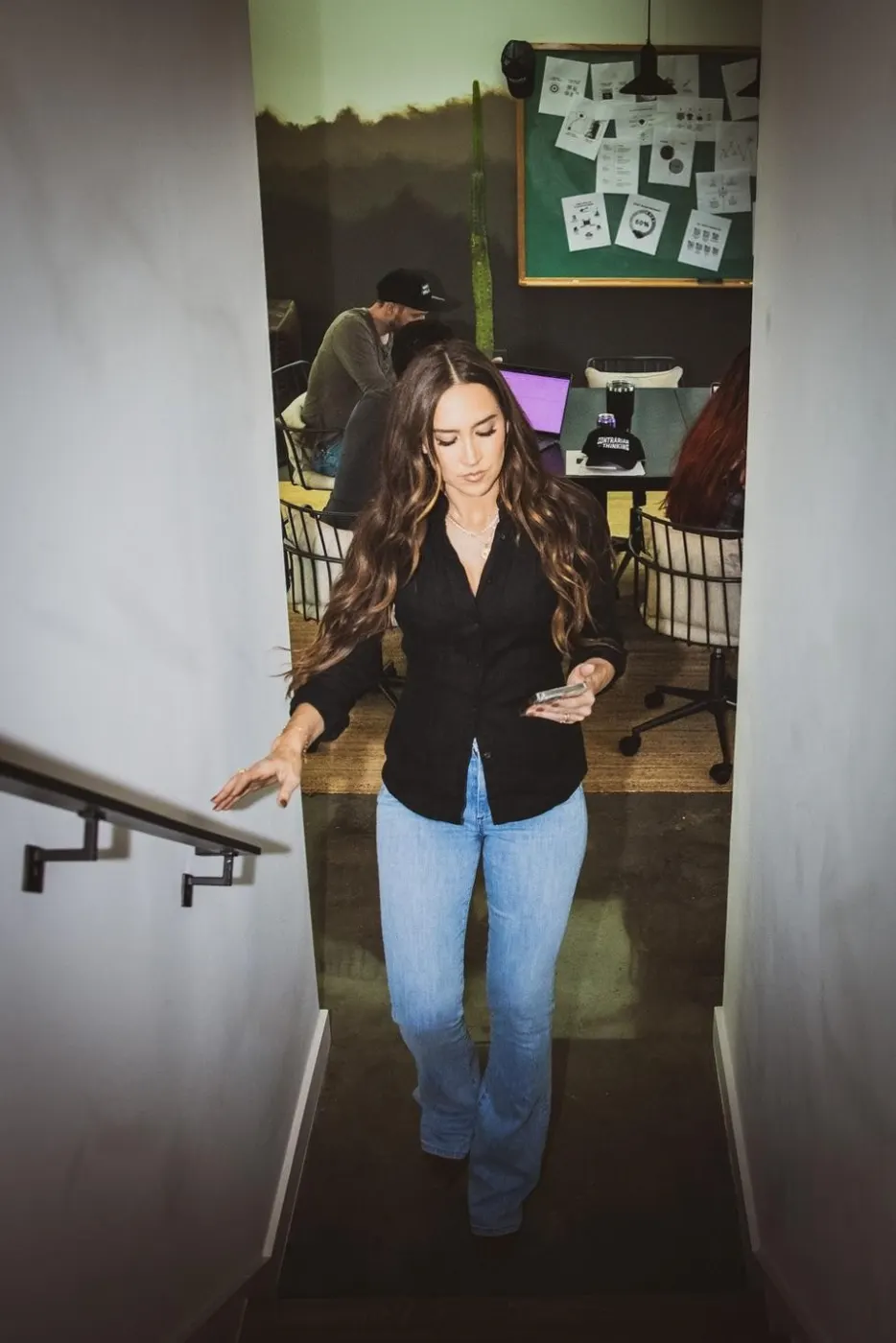
She jokes now that she should tell people a different first-business story, because laundromats can be a tough business with broken machines and messy problems. But she keeps the story because it is so easy to understand. If you cannot understand quarters, machines, and clean clothes, she says, do not buy any business at all.
Row left or row right
By 2019 Sanchez could see where media was heading. She was spending her days on the road, doing steak dinners and pitching pension funds and sovereign wealth funds in person. Meanwhile, newsletters and social media were letting a single person reach millions of readers from a laptop. She went to her company's leadership and made the case that much of this could move online.
The answer, as she tells it, was a nautical one. If you want to row left and I want to row right, you need a new boat.
She found a new boat. In 2019 she founded Contrarian Thinking. It started as a newsletter and a social media voice with a simple pitch: stop chasing sexy startups and start buying boring businesses that already make money. She was burned out on having her time tied to someone else's schedule, she wrote in an early post. So she had started investing in cash-flowing businesses. Not glamorous ones. Boring ones.
For a stretch she also worked in venture capital. From 2019 to 2021 she was a managing director and partner at Entourage Effect Capital, a firm that invested in the young legal cannabis industry, and she stayed on as an advisor into 2022. But the center of her energy was shifting toward Contrarian Thinking.
When the pandemic arrived in 2020 and millions of people suddenly found themselves at home, uncertain about their jobs, her message caught fire. People wanted a plan B. She offered one that sounded almost old-fashioned. Buy the car wash. Buy the plumbing company. Buy the business down the street from the owner who wants to retire.
Her formula, she later explained, was newsletters plus private equity plus social media plus laundromats and car washes. It sounded like a strange recipe. It worked. Her audience grew into the millions. That audience became a deal machine. Sellers came to her. Operators came to her. Investors came to her. By the time she sat down for a long interview on The Diary of a CEO, she said her group included about twenty-six businesses, with the combined companies bringing in tens of millions of dollars a year, much of it bought with her own money instead of outside investors.

The night the account was empty
Growth brought the crisis from the opening of this story. Sanchez had done what the business books said to do. She hired a person she thought was great and got out of his way. What she did not do, she admits, was track his work closely.
That was the day at the bank. The account she thought held about a million dollars was nearly empty. When she went to the head of operations, he explained that there were some spreadsheets she had seen and some she had not. He mentioned that he had once told her the summer might be tight. In her telling, he had been hiding the bad news, a little at a time, because he did not want to deliver it.
She took the blame herself. It was my fault for not tracking him, she has said. That night, on the couch in the dark, she believed she might lose the business and have to go back to a regular job. She called her father. He told her about the nail. Pull it out, tape it up, figure out how to keep going. She had a good cry. The next morning she went to work and started cleaning up the mess.
The scar changed how she built everything afterward. She promised herself she would never run a business that way again. Cowboys, she likes to say, do not have long lives. Riding a bucking bronco with no system and no support ends one way. So she started studying the problem like a doctor studies a disease. What causes it? What prevents it from coming back? Her answer was the thing private equity firms had been doing for decades. Diagnose the business. Score it. Set a strategy. Review it every quarter. Track the numbers every single week.
Her new rule replaced the old slogan. Do not just hire great people and get out of their way. Hire great people, line up their incentives with yours, get out of their way, and then track their performance, consistently, forever.
The SEAL, the interpreter, and the partnership
Sanchez's husband, Chris Petkas, is a Navy SEAL veteran who served in Iraq. He has written that before his fifth deployment, when they were still dating, he offered her an easy way out. If you want to live a separate life while I am gone, he told her, I understand. She looked at him like he was crazy and said they were doing this. Through that deployment they talked every night they could, sent letters and packages, and, as he put it, got to introduce themselves to each other all over again.
Today Petkas is a general partner at Contrarian Thinking Capital, the venture arm that invests in early-stage technology companies. The two often describe their early years the same way. They took the hardest jobs they could find while they were young, jobs that taught them the most, so they could enjoy the rewards later. Being a Navy SEAL, she has joked, is not fun. You do it while you are young.
How she works
The first thing people notice about Sanchez at work is the speed. She talks fast, decides fast, and has built teams that move fast. Her companies have grown to more than one hundred employees across the media company and the advisory business. Some of them came from private equity and left, she says, because they wanted work that felt more meaningful than grinding out deals on Wall Street.
She hires with a tool she calls the anti-sale. Borrowed from another founder, it is a job description that tries to talk people out of applying. Do not join, it says, if you do not love hard things that almost break you. The idea is that the right people will read it and feel excited instead of scared.
She sorts what motivates people into a handful of levers: money, relevance, significance, impact, and freedom. Her team takes personality assessments so managers know which lever to pull. She freely admits she stole the system from private equity. It is not that I am smart, she has said. I stole all of this.
She has also had to fight her own worst habit, something she calls the hero complex. Early on, she believed that if she was not the savior in every situation, her business would collapse. The most painful example involved Richard Branson, the Virgin founder she had admired for years. Branson invited her to his private island. She said no. She told herself the business would fail if she left for a few days without her phone. At the time, she recalls, the business was bringing in about five million dollars a year, growing and profitable, with no fire to put out. Friends who went made deals and met powerful people. She stayed home and stared at spreadsheets. It was, she says, a total lie she told herself.

That lesson became a pillar of her later teaching. The founder who does everything eventually becomes the reason the business cannot grow. Being the hero feels good. In her words, being the hero is like heroin. The real job of a chief executive, she argues, is vision, systems, and a little delusional optimism, not answering every email.
Main Street Millionaire
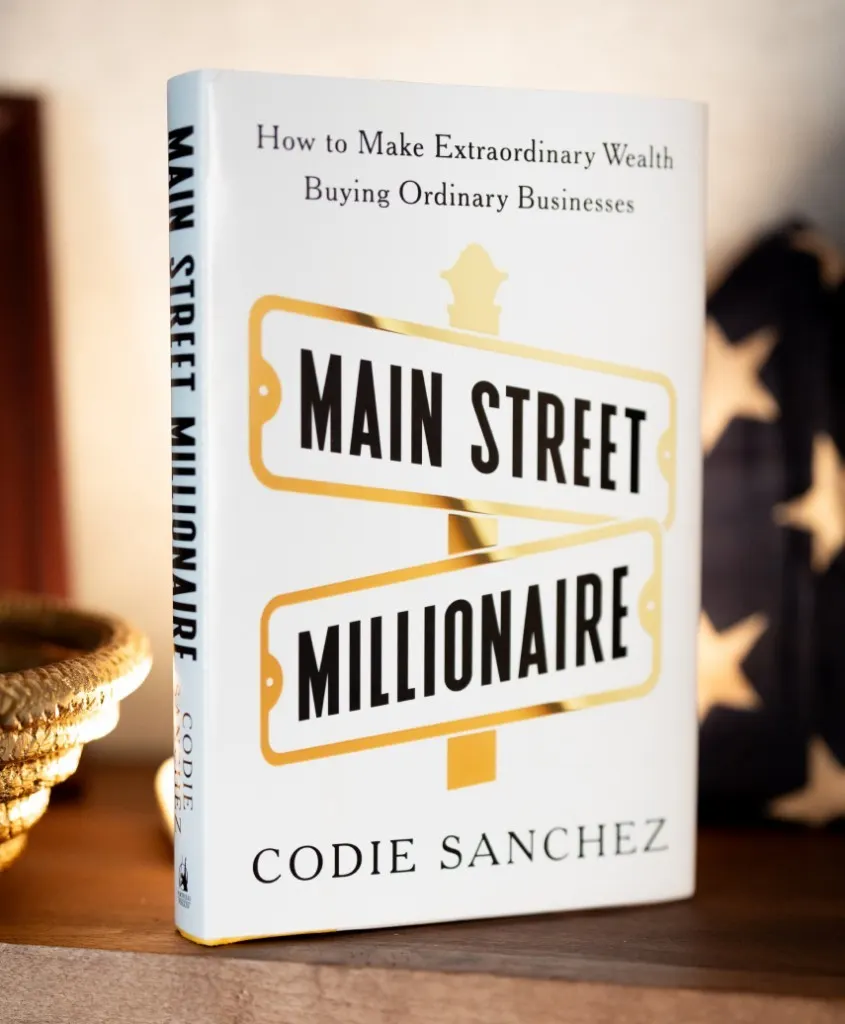
On December 3, 2024, Portfolio, an imprint of Penguin Random House, published Main Street Millionaire: How to Make Extraordinary Wealth Buying Ordinary Businesses. In January 2025 it appeared on the New York Times business bestseller list.
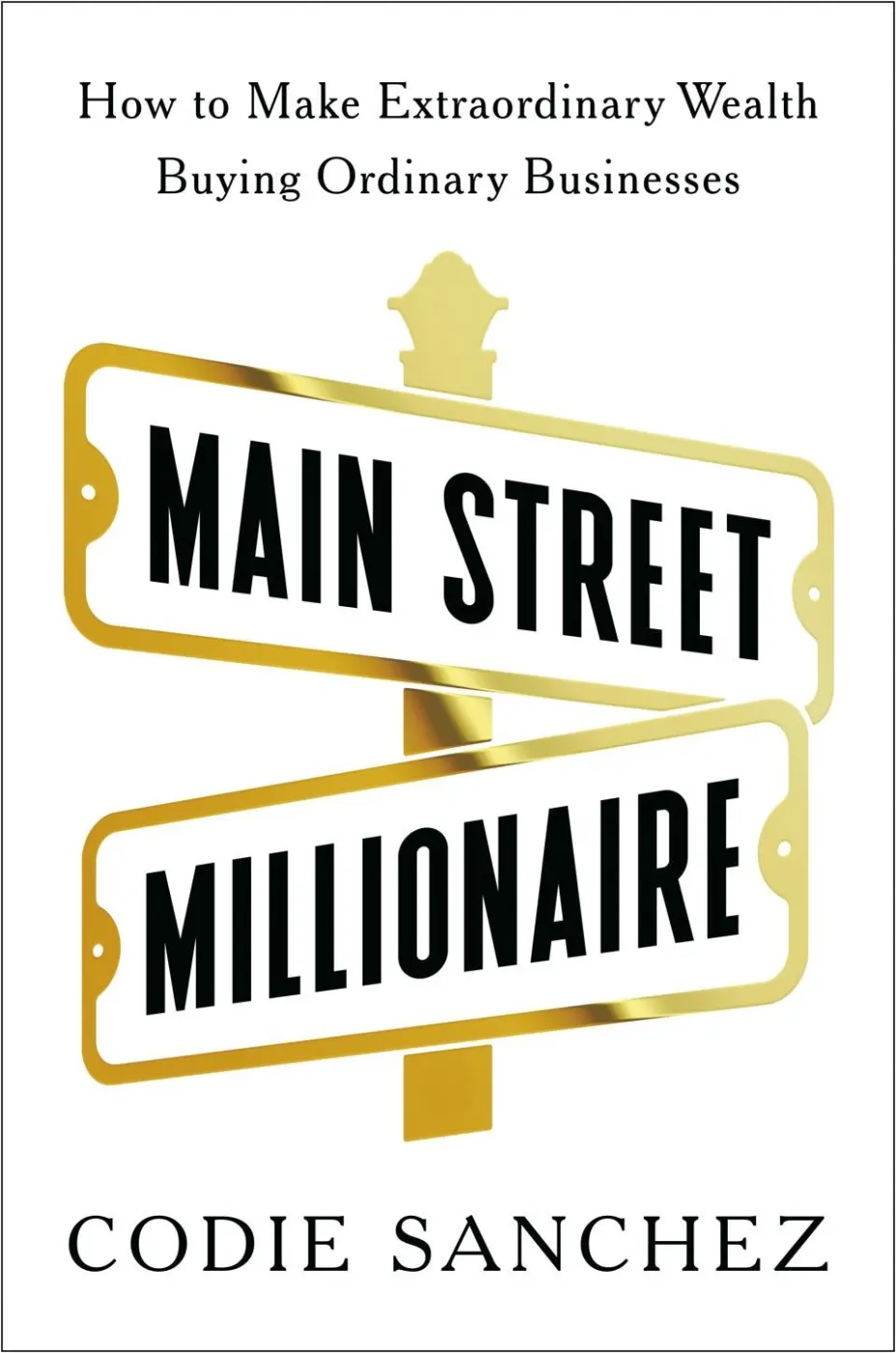
The book was not a pep talk. Sanchez has said plainly that she is not the best in the world at inspiration, and that people who want motivation should go watch Tony Robbins. What she is good at, she says, is playbooks, the step-by-step guides that private equity firms use. So the book is full of checklists, flowcharts, and spreadsheets. She wrote it, she said, for her twenty-five-year-old self, the journalist who thought wealth was for other people. The hardest part was cutting out the jargon. Wall Street loves complexity, she said. Main Street needs simplicity.
At the heart of the book is a test she calls BRRT. First, buy a boring business, one so simple your grandmother could understand it. Second, pick something recession resistant, like plumbing, because people need it even when they lose their jobs. Third, raise prices, because many small businesses charge too little. Fourth, add simple technology, like a real website, online reviews, and basic software. Her list of target industries reads like a drive through any American town: car washes, vending machines, storage units, repair shops, pack-and-ship stores, portable toilets, landscaping, electrical work, bookkeeping, carpet cleaning, pet grooming, and heating and air conditioning.
On a SiriusXM show hosted by Michael Smerconish, she explained why this matters now. Artificial intelligence was supposed to take over the dull, dirty, and dangerous work. Instead, she argued, it is coming first for creative office jobs like design and writing. The work that needs human hands, the handy work, is the work people will keep. Nobody has invented an AI that can clean your carpets.

She also shared a statistic she built much of her argument on. When she asks a room of business owners whether they would sell at the right price and terms, almost every hand stays up. Most owners, she says, have ninety percent of their wealth tied up in their companies, with no pension and no easy exit. Many are baby boomers whose kids do not want the family business. That creates what she calls secret sellers, owners who would sell if someone simply asked and offered a fair, creative deal, often with the seller financing part of the price.

The machine behind the message
By the mid-2020s, the Sanchez universe had several moving parts. Contrarian Thinking handled media, education, and advisory work. Her newsletter grew to more than a million subscribers, according to Inc., and the company says its total audience tops thirteen million people. The BigDeal podcast brought on guests from Tony Robbins to Robert Herjavec to Ryan Serhant. Main Street Holding Company owned and ran the portfolio of real businesses: laundromats, car washes, landscaping, roofing, and service companies. Contrarian Thinking Capital made venture bets on young technology firms. BizScout, where she serves as chief executive, became a marketplace meant to help buyers find small businesses for sale. In 2026 Contrarian Thinking was named to the Inc. 5000 list of fast-growing private companies.


She is careful to say this path is not for everyone. On one podcast she said that with enough caffeine, obsession, and sleep deprivation, almost anyone could become a business owner, but that does not mean everyone should. Buying a business carries real risk, from bad hires to hidden debts to simple bad luck. She points to her own lost six figures and her own empty bank account as proof. Her advice is to test, learn on smaller deals, and treat the profit and loss statement as the single source of truth.
2026: a baby, a cover, and a second book
The year 2026 brought the biggest changes of her life, and not all of them were about business.
On June 22, 2026, she shared news with People magazine that she and Petkas were expecting their first child, due in December. Both were thirty-nine. She told the magazine the journey had taken three years, most of it out of public view: rounds of IVF, windows that did not work, and a family history of pregnancy loss that made every step feel fragile. My whole life, she said, I have been the one who handles it, who does not need help. Getting pregnant was the thing I could not brute-force. She found out she was pregnant while home alone, bracing for another negative test. She called her husband, who was away on a work trip, right away. The Texas couple said they would wait until the birth to learn whether the baby was a boy or a girl.
For a woman who built a brand on outworking everyone, it was a turning point. In later interviews she talked about designing a business that could survive her maternity leave. It was, in a way, the final exam for everything she had been teaching.
In June 2026 she hosted Main Street Millionaire Live, a three-day virtual event for aspiring buyers. Forbes named her number ten on its 2026 Top Creators list. She appeared on the cover of Entrepreneur for its September and October issue.
Then, on September 18, 2026, came Own or Be Owned: Build a Business So Good It Doesn't Need You, published by Contrarian Thinking Press. A United Kingdom edition from Ebury Edge followed on September 24. The book is aimed at people who already own businesses and feel trapped by them. Its core idea is what she calls owner dependency. If a business needs your constant input and your final say, she argues, you do not own a business. You own a job with more risk. The book borrows private equity tools, including a ten-minute Owner Score quiz, twelve profit levers, and a one-page dashboard, and applies them to companies far smaller than private equity usually buys. Its cover line sums up her whole second act: heroics do not scale, systems do.
She launched it with a free livestream for business owners that promised more than one million dollars in combined cash and prizes from sponsors. More than one hundred forty thousand owners and operators registered.

World impact: the great handoff
Why does any of this matter beyond one woman's success? Because of a wave that is already breaking across Main Street.
Her 2026 launch materials cite a McKinsey projection that roughly six million small businesses in the United States will change hands between 2026 and 2035, representing about five trillion dollars in value. Many of the owners are baby boomers heading into retirement. Sanchez argues that without buyers, many of those businesses will close or be scooped up by large private equity firms. She has pointed out that private equity went from owning a small slice of businesses to a much larger share over two decades, and she worries about what happens when a few big players own everything.
Her answer is to turn more ordinary people into owners. She wants a plumber's apprentice to see himself as a future plumbing company owner. She wants a laid-off office worker to consider buying the local car wash. She wants women who describe their companies as a little side project to call them what they are. She has said her biggest vision is to make entrepreneur a normal career choice.
Critics of the buy-a-boring-business movement warn that it can make hard work sound easy, and that not every buyer will find a good deal or have the skills to run one. Sanchez's own story is part of the reply. She does not pretend it is easy. She talks about the flops, the losses, and the night on the couch. Her pitch is not that ownership is painless. It is that the pain can pay you back.
Closing
Go back to the old woman in the bed in Agua Prieta, holding her teddy bear, asking a college reporter whether America would help now. Codie Sanchez could not answer her that day. Almost twenty years later, she has built a life around a different answer. Stories alone do not change what happens to people. Ownership can.
She learned the language of money in a Goldman Sachs notebook. She learned humility from a failed fashion startup and a nearly empty bank account. She learned systems from the same private equity firms she now warns small owners about. And in 2026, with a second book out, a portfolio of unglamorous businesses humming along, and a baby on the way, she was trying to prove that a business, and a life, can be built so well that it does not need a hero to hold it up.
Her father told her that you are not really in the game until you have sat in the dark with no idea what to do next. She has sat there. Then she got up, turned on the lights, and wrote the playbook for everyone still sitting in the dark.