
The Purple Card That Broke Brazil Banks
Company: Nubank. Company value: ~$70B*. Net worth: ~$10B.


The night the lights went out across São Paulo, a young entrepreneur stared at a blank screen and felt the same emptiness that had followed his family from Medellín to the hills of Costa Rica when he was nine. The power outage was not a setback; it was a signal that the banking system, built on paper and bureaucracy, could be shattered by a single idea. In that darkness he imagined a purple card that would never charge a fee, a card that could be accepted by anyone with a smartphone, and a bank that would answer to its customers instead of shareholders.
He remembered the cramped kitchen in Medellín where his mother counted change for neighbors, the way the local bank’s slow lines seemed to swallow time. Those memories resurfaced as he walked the streets of São Paulo, watching commuters juggle cash and cards, each transaction a reminder of a system that left the poor invisible. The contrast between his childhood in Colombia and the sleek, digital world he was about to build sharpened his resolve.
At Stanford, his MBA classmates talked about venture capital as if it were a sport, but he saw it as a tool to level the playing field. Internships at Morgan Stanley and General Atlantic taught him the language of finance, while a stint at Sequoia showed him how startups could scale without losing their soul. The lessons were clear: to change a market the size of Brazil’s, you needed both deep financial knowledge and the audacity to rewrite the rules.
When he met Cristina Junqueira, a former investment banker with a fierce commitment to financial inclusion, the pieces began to click. Together with Edward Wible, a seasoned technologist, they sketched the first prototype of a credit card that would be issued entirely online, bypassing the brick‑and‑mortar branches that had kept millions at arm’s length. The trio chose purple not because it was trendy, but because it symbolized a break from the gray monotony of traditional banking.
In 2013 they launched Nubank in a modest office in São Paulo, armed with a single product: a no‑fee credit card that could be managed through a mobile app. The first customers were skeptical, but the card’s simplicity and transparency turned curiosity into loyalty. Within months the user base swelled, each new account a silent protest against the hidden fees that had plagued Latin America for decades.
The company’s growth was meteoric. By the time the IPO arrived in December 2021, Nubank was valued between $41 billion and $45 billion, a figure that stunned investors who had once dismissed a fintech from Brazil as a regional curiosity. The public offering was not just a financial milestone; it was a cultural moment, a declaration that a company founded by a Colombian‑born immigrant could stand shoulder to shoulder with the world’s most valuable tech firms.
Today the brand serves more than 100 million customers across Brazil, Mexico and Colombia, a testament to the power of a simple promise: no fees, no hidden charges, no excuses. The purple card that began as a sketch on a napkin now sits in the wallets of people who once could not afford a bank account, turning a once‑exclusive privilege into a daily reality for millions.
The next chapter of the story unfolds beyond Latin America. In 2026 Nubank announced its first foray into the United States, a market that will test whether the same principles that resonated in São Paulo can thrive in a landscape dominated by legacy banks and fintech giants. The move is bold, but it follows the same pattern that defined the company’s birth: identify a gap, build a solution that is both elegant and accessible, and scale it with relentless focus.
Forbes now estimates David Vélez’s personal net worth at between $10 billion and $14 billion, a figure that reflects not only his share of a $70 billion enterprise but also the impact of a business that has redefined banking for an entire continent. Yet the numbers, impressive as they are, tell only part of the story. The real measure lies in the faces of the people who, for the first time, can check their balance without fear of surprise charges, who can dream of a home or a business because credit is no longer a closed door.
Every time a new customer signs up, the memory of that power outage resurfaces, reminding him that disruption often begins in the darkest moments. The lights may return, but the glow of a system that finally works for everyone is a brighter, more lasting illumination. The journey from a boy fleeing conflict to a billionaire reshaping finance is still unfolding, and each chapter begins with the same question: what will the next crisis reveal?
Origin and early life



David Vélez entered the world in 1981 in Medellín, a city whose hills and bustling streets would later echo in the rhythm of his entrepreneurial ventures. His parents, both engineers, instilled a respect for problem‑solving and a curiosity about how systems worked, whether in a workshop or on a schoolyard. Even as a child he would dismantle radios and reassemble them, fascinated by the way a small change could alter an entire circuit. Those early experiments taught him that complexity could be tamed with a clear, focused intention.
When David was about nine years old his family fled to Costa Rica, seeking stability amid the turbulence that marked Colombia’s early 1980s. The move introduced him to a new language, a different school system, and a broader view of Latin America’s economic landscape. In the coastal town where they settled, he watched tourists exchange dollars for colones, noticing the friction and fees that accompanied every transaction. The experience left a lingering impression of how ordinary people were forced to pay for the simple act of moving money.
Back in Colombia for his secondary education, David attended a private school that emphasized both academic rigor and extracurricular leadership. He excelled in mathematics and debate, often arguing that technology could bridge gaps that politics could not. A mentor, a professor of economics, encouraged him to read about the rise of Silicon Valley, pointing out the contrast between the rapid innovation he saw in the United States and the slower pace of financial services in his home region. Those conversations seeded a desire to bring the efficiency of tech to everyday banking.
After completing his undergraduate studies in engineering, David earned a place at Stanford Graduate School of Business, where he pursued an MBA. The campus exposed him to a network of entrepreneurs and venture capitalists, and he spent countless evenings in the Palo Alto coffee shops listening to stories of startups that had disrupted entrenched industries. A class on disruptive innovation resonated deeply, reinforcing his belief that the traditional banking model in Latin America was ripe for overhaul. He left Stanford with a sharpened strategic mindset and a notebook full of ideas about low‑cost, user‑centric financial products.
His first professional steps took him to Morgan Stanley, where he worked on emerging markets financing. The role gave him a front‑row seat to the challenges that corporations faced when accessing capital across borders. He later moved to General Atlantic, a global growth equity firm, where he evaluated technology‑driven businesses in Latin America and Asia. Those years honed his ability to assess market potential and to identify founders who could execute at scale. A brief stint at Sequoia Capital added a venture‑capital perspective, teaching him how to structure deals that aligned incentives between investors and founders.
In 2013, while living in São Paulo, David met Cristina Junqueira, a former investment banker with a deep understanding of the Brazilian consumer market. Their conversation turned quickly to the idea of a credit card that would eliminate the hidden fees that plagued millions of Brazilians. They were soon joined by Edward Wible, a technologist with experience building large‑scale platforms. The trio imagined a purple, no‑fee credit card that could be managed entirely through a smartphone, bypassing the cumbersome paperwork of traditional banks. The concept was simple on paper but required a bold rethinking of risk assessment, customer acquisition, and regulatory navigation.
Launching Nubank, they faced skepticism from established banks that viewed fintech as a fleeting trend. David’s background in finance and venture capital proved invaluable as he negotiated early funding rounds, leveraging relationships built at General Atlantic and Sequoia. The company’s first product - a sleek, plastic card with a distinctive purple hue - quickly attracted users who were tired of surprise charges and opaque terms. Within a few years the platform expanded to offer digital accounts, loans, and a suite of financial tools, all anchored by a commitment to transparency.
The growth trajectory accelerated when Nubank went public in December 2021, listing on the stock exchange with a market valuation hovering between $41 billion and $45 billion. The IPO marked a historic moment for a Brazilian startup, signaling that the continent’s fintech ambitions could compete on a global stage. By that time the company had already amassed more than one hundred million customers, a testament to the resonance of its no‑fee promise across diverse socioeconomic groups.
As of 2026, David Vélez is steering Nubank toward its next frontier: entry into the United States market. The move reflects both confidence in the scalability of the model and an awareness of the competitive landscape that awaits. Forbes estimates his personal net worth in the range of ten to fourteen billion dollars, a figure that underscores the financial impact of turning a simple idea - making credit affordable and transparent - into a multinational enterprise. Yet, despite the scale of his success, David often recalls the early days in Medellín and the curiosity that led him to take apart radios, reminding himself that innovation starts with questioning the status quo.
First bets and building



David Vélez grew up in a world of contrast. Born in Medellín in 1981, his family left Colombia for Costa Rica when he was still a child, seeking safety and new opportunities. The move at age nine taught him early how to navigate uncertainty, a skill that later became central to his entrepreneurial mindset. Years later, a scholarship carried him across the Pacific to Stanford, where an MBA sharpened his analytical tools and exposed him to Silicon Valley’s relentless pace.
After Stanford, Vélez entered the world of finance, first at Morgan Stanley and then at General Atlantic. In those corridors he learned how capital moves, how investors evaluate risk, and how a disciplined pitch can open doors. A stint at Sequoia gave him a front‑row seat to the startup ecosystem, where he watched founders turn modest ideas into global enterprises. Those experiences forged a clear vision: technology could remake financial services for a continent still dominated by legacy banks.
Back in São Paulo in 2010, Vélez launched his first venture, a modest payments platform that aimed to simplify transactions for small merchants. The office was a cramped loft on a busy street, its walls lined with whiteboards covered in scribbles of user flows and cost structures. He and a handful of engineers spent long evenings debugging code on laptops that often overheated, while the city’s traffic roared outside. The product was simple - a digital gateway that let merchants accept cards without the traditional fees that ate into their margins. It was not a blockbuster, but it proved that a lean tech stack could deliver real value in a market hungry for alternatives.
The early days were a grind of relentless iteration. Vélez and his team would wake before sunrise, grab coffee from a nearby kiosk, and dive back into the codebase, testing new features on the fly. They relied on open‑source tools, cloud services that charged by the gigabyte, and a culture that prized rapid feedback over polished presentations. When a bug caused a payment to fail, the team would rally around a whiteboard, sketching solutions in real time, and push a fix before the next batch of merchants logged in. Those moments of crisis forged a camaraderie that would later become the backbone of a much larger venture.
In 2013, the trio of Vélez, Cristina Junqueira, and Edward Wible took the lessons from the payments platform and turned them into something bigger. They gathered in a modest coworking space, surrounded by the hum of other startups, and sketched the outline of a new kind of bank - one that would exist entirely on a smartphone, free of the fees and bureaucracy that plagued traditional institutions. The idea was bold: a purple, no‑fee credit card that could be requested with a few taps, managed through an intuitive app. The color purple was chosen deliberately, a visual cue that the experience would be different, vibrant, and inclusive.
The first prototype was built on a stack of Java, MySQL, and a handful of third‑party APIs that handled identity verification and credit scoring. The team worked in short sprints, each lasting two weeks, and held daily stand‑ups where they reviewed metrics, celebrated small wins, and identified bottlenecks. Cristina brought deep knowledge of the Brazilian regulatory landscape, while Edward contributed engineering rigor and a knack for simplifying complex systems. Together they convinced early investors that the market needed a digital challenger, and they secured seed funding that allowed them to hire a small group of engineers and designers.
The early launch was a test of patience and perseverance. The app went live with a limited number of users, and the team monitored every transaction, every customer query, and every crash report with obsessive detail. They set up a makeshift support center in a corner of the office, where a handful of staff answered calls late into the night, translating technical jargon into plain language for anxious customers. Each piece of feedback was logged, categorized, and fed back into the product roadmap. The purple card quickly became a symbol of trust for those who had been excluded from the formal banking system.
Growth came not from a single breakthrough but from a series of incremental improvements. The team added features such as instant notifications, easy bill payment, and a rewards program that resonated with younger users. They refined their credit‑risk models using machine learning, reducing default rates while expanding access. As the user base swelled, the company moved into a larger office, hired dedicated data scientists, and built a robust compliance team to navigate Brazil’s evolving financial regulations. The grind never stopped; each new feature required rigorous testing, and every launch was accompanied by a flurry of marketing campaigns that emphasized simplicity and transparency.
By the time the company filed for an initial public offering in December 2021, the story had transformed from a modest startup to a fintech powerhouse valued at somewhere between forty‑one and forty‑five billion dollars. The IPO attracted investors worldwide, and the purple card had become a household name across Brazil, with more than one hundred million customers using its services. The success was a testament to the early decisions made in that cramped loft: a focus on user experience, a willingness to iterate quickly, and a belief that technology could democratize finance.
Even after the public offering, Vélez and his co‑founders continued to look beyond the Brazilian market. In 2026 they announced exploratory steps into the United States, seeking to adapt the model that had worked so well in Latin America to a new regulatory environment and a different consumer mindset. The move required building new partnerships, hiring talent familiar with the U.S. banking landscape, and rethinking product features to meet local expectations. It was another gamble, but one rooted in the same ethos that had guided the first bets: solve real problems with technology, stay close to the customer, and move fast.
Forbes now estimates Vélez’s personal net worth in the range of ten to fourteen billion dollars, a figure that reflects both the scale of the enterprise he helped create and the lasting impact of those early choices. The journey from a fledgling payments platform to a global fintech leader illustrates how a handful of determined individuals, armed with modest tools and an unyielding work ethic, can reshape an entire industry. The story of those first bets remains a reminder that great ventures often begin in the most unassuming settings, driven by a clear vision and the willingness to grind through every obstacle.
Breakthrough and hard seasons


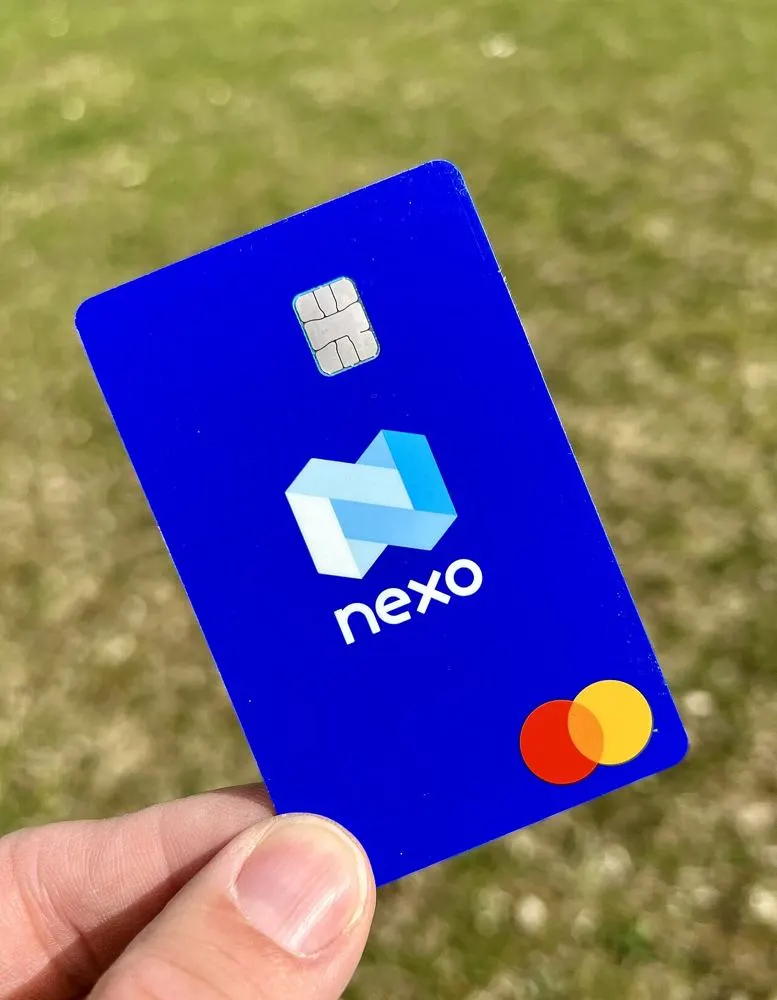
David Vélez grew up in the bustling streets of Medellín, a city that taught him early how to read opportunity in chaos. When his family fled to Costa Rica at nine, the experience of leaving behind familiar walls and navigating a new school system sparked a restless curiosity about how systems could be rebuilt from scratch. Those formative years left him with a quiet confidence that the rules of finance, like any other rule, could be rewritten if someone was brave enough to try.
In the early 2000s Vélez arrived in the United States to study at Stanford, where the MBA program exposed him to a network of technologists and investors who spoke a language of disruption. He absorbed the lessons of Silicon Valley while keeping a vivid memory of the cash‑starved customers he had seen in Latin America. The contrast between the polished lecture halls and the gritty reality of his hometown would later become the engine of his ambition.
After graduation he entered the world of high finance, first at Morgan Stanley and later at General Atlantic. The long hours and the relentless focus on metrics taught him how to read balance sheets like a novel, but also showed him the limits of traditional banking. A brief stint at Sequoia Capital placed him at the intersection of venture capital and fintech, where he watched startups challenge the status quo with elegant code and bold branding. It was here that the seed of a new idea began to sprout.
In 2013 Vélez returned to São Paulo with a clear vision: to create a credit card that would be as simple as a swipe and as transparent as a conversation. He partnered with Cristina Junqueira, a seasoned executive who understood the regulatory maze, and Edward Wible, a technologist with a knack for building scalable platforms. The trio imagined a purple card that would carry no hidden fees, a color that would stand out in a market dominated by drab, fee‑laden plastic.
The first prototype was built in a modest office, with a handful of engineers working late into the night. Their early users were skeptical; many had never held a credit card without an annual charge. The team responded by offering a zero‑interest trial period and a mobile app that showed every transaction in real time. Word spread slowly, but the combination of a sleek design, honest pricing, and a user‑friendly interface began to attract a community that felt finally respected by a financial product.
Growth was not linear. In 2015 a regulatory review threatened to halt the issuance of new cards, and the company faced a costly legal battle that drained cash reserves. Vélez remembers the sleepless nights when the team debated whether to pause operations or push forward. The decision to keep going was bolstered by a modest surge in sign‑ups from a group of tech workers who appreciated the simplicity of the service. That small influx of loyal customers provided just enough revenue to keep the servers running and the lawyers paid.
Rival banks tried to copy the model, launching their own no‑fee cards and flooding the market with aggressive marketing. Yet Nubank’s advantage lay in its technology stack, which could process transactions at a fraction of the cost of legacy systems. While competitors struggled with legacy infrastructure, Vélez’s team refined their machine‑learning risk engine, allowing them to extend credit to users with thin credit histories. The ability to serve the underbanked became a defining competitive edge, turning a perceived weakness into a strength.
There were moments when the weight of responsibility felt unbearable. In 2017 the company burned through a significant portion of its venture capital, and the board pressed for a quick exit. Vélez considered stepping aside, believing that a new leader might better navigate the crisis. It was a conversation with Cristina that changed his mind; she reminded him that the mission was larger than any single person’s comfort zone. Together they renegotiated terms with investors, securing a bridge round that bought them another two years of runway.
Luck played its part when a major partnership with a Brazilian e‑commerce platform opened a new distribution channel. The collaboration introduced millions of shoppers to the purple card, and the resulting surge in activation numbers caught the attention of global investors. By the time the company filed for an IPO in December 2021, the valuation hovered between $41 billion and $45 billion, a figure that seemed unimaginable just a decade earlier. The public offering was a watershed moment, cementing Nubank’s status as a fintech powerhouse.
Post‑IPO, the challenges shifted from survival to scaling responsibly. Managing a customer base that had surpassed 100 million required robust governance, and the leadership team had to balance rapid expansion with regulatory compliance across multiple countries. In 2026 the firm announced its first foray into the United States, a market where competition was fierce and consumer expectations high. The move was both a test of the company’s operational maturity and a gamble on whether the purple brand could resonate beyond Latin America.
Today Forbes estimates Vélez’s personal net worth in the ten‑to‑fourteen billion range, a testament to a journey that began with a child fleeing conflict and ended with a global financial brand. The story is not merely about numbers; it is about a series of choices made in moments of doubt, the willingness to learn from setbacks, and the belief that a simple, fee‑free credit card could change the way millions interact with money. The breakthrough was earned through relentless iteration, and the hard seasons forged a resilience that continues to guide the company’s next chapters.
How they work and what they built



David Vélez grew up in Medellín before his family moved to Costa Rica when he was nine, a shift that taught him early on how to adapt to new environments. The experience of leaving familiar streets for a different culture left a mark on his approach to problem‑solving: he learned to ask why the status quo existed and then to look for a simpler way to do it. Those questions resurfaced years later when he sat in a São Paulo coffee shop and imagined a bank that could operate without the brick‑and‑mortar overhead that plagued traditional institutions.
After completing an MBA at Stanford, Vélez spent several years at Morgan Stanley and later at General Atlantic, where he observed the friction points that customers faced when trying to obtain credit. A brief stint at Sequoia Capital gave him exposure to the startup mindset, reinforcing the belief that technology could replace layers of bureaucracy. He carried those lessons into the founding of Nubank in 2013, alongside Cristina Junqueira and Edward Wible, each bringing a complementary skill set: Junqueira’s deep knowledge of the Brazilian financial system, Wible’s engineering expertise, and Vélez’s vision for a customer‑first model.
The first product they launched was a purple, no‑fee credit card. The choice of color was not merely aesthetic; it signaled a break from the drab palettes of legacy banks and made the card instantly recognizable in a crowded market. The card’s lack of annual fees appealed to a generation that had grown up with digital services that were free or low‑cost. By removing hidden charges, Nubank built trust quickly, and word‑of‑mouth spread faster than any paid campaign could have achieved.
Internally, Vélez cultivated a culture that prized transparency and autonomy. Teams were given clear objectives but were free to choose the tools and processes that best suited their work. Weekly “open office” hours allowed any employee to raise concerns directly with senior leadership, a practice that kept the organization agile and prevented the siloed decision‑making common in larger banks. This habit of open dialogue also reinforced a shared sense of purpose: every employee understood that they were part of a mission to democratize financial services.
Product development at Nubank follows a rapid iteration cycle. A small cross‑functional squad drafts a hypothesis, builds a minimal viable feature, and pushes it to a subset of users within days. Feedback is collected through in‑app surveys and usage analytics, then fed back into the next sprint. This loop has allowed the company to expand its suite beyond the credit card to include personal loans, digital checking accounts, and a rewards platform, all delivered through a single mobile interface that remains intuitive for users with limited banking experience.
Data security and reliability are non‑negotiable pillars of the operation. Early on, Vélez insisted on building a cloud‑native infrastructure that could scale horizontally, avoiding the single‑point‑of‑failure architectures that plagued many incumbents. The engineering team adopted a microservices approach, allowing independent teams to deploy updates without disrupting the entire system. Continuous monitoring and automated rollback mechanisms became standard practice, ensuring that outages were rare and short‑lived.
Customer service reflects the same philosophy of simplicity. Instead of maintaining call centers staffed with hundreds of agents, Nubank relies on a chat‑based support model that routes queries to specialists who can resolve issues in real time. The system uses natural language processing to suggest solutions, but a human representative always has the final word, preserving the personal touch that customers value. This blend of technology and empathy has kept satisfaction scores consistently high.
When the company went public in December 2021, the IPO valued Nubank at roughly forty‑two billion dollars, a milestone that validated the founders’ belief that a fintech could thrive without compromising on ethics or user experience. The public offering also provided capital to fund an ambitious expansion plan, including a 2026 exploratory push into the United States market. The move required adapting the product suite to comply with U.S. regulations while preserving the core user‑centric design that had made Nubank successful in Brazil.
Vélez’s personal habits echo the disciplined environment he created at work. He starts each day with a brief meditation, a practice he says clears his mind for strategic thinking. He also allocates time each week to read financial reports and emerging technology research, ensuring that his decisions are grounded in both data and broader market trends. This routine of reflection and continuous learning has helped him steer Nubank through rapid growth phases without losing sight of the original mission.
The result of these habits, decisions, and cultural choices is a company that now serves over one hundred million customers across Latin America. Its valuation hovers around seventy billion dollars, and Forbes estimates Vélez’s personal net worth in the ten‑to‑fourteen billion range. Yet the narrative remains focused on the people who use a simple purple card to manage their finances, rather than on the massive balance sheets behind it. In every product launch, in every internal meeting, the imprint of Vélez’s early experiences - adaptability, curiosity, and a relentless drive to simplify - continues to shape how the organization works and what it builds.
Current achievements as of September 2026
David Vélez arrived in the world in 1981, a child of Medellín whose early years were marked by a sudden move to Costa Rica when he was about nine. The displacement taught him early how to navigate uncertainty, a skill that later proved essential in the volatile world of fintech. After completing his undergraduate studies, he earned an MBA from Stanford, where the rigor of the program sharpened his analytical mindset and exposed him to a network of technology entrepreneurs.
His first professional steps were taken on Wall Street, where he spent several years at Morgan Stanley. There he learned the mechanics of capital markets and the importance of disciplined risk management. A subsequent stint at General Atlantic deepened his understanding of growth‑stage investments, while his time at Sequoia Capital gave him a front‑row seat to the scaling of disruptive startups. These experiences formed a composite view of how technology could be married to finance to serve underserved populations.
In 2013, Vélez returned to Brazil with a clear vision: to create a bank that would break the mold of traditional Latin American financial institutions. Together with Cristina Junqueira and Edward Wible, he launched Nubank in São Paulo, introducing a purple, no‑fee credit card that quickly resonated with a market tired of hidden charges and bureaucratic hurdles. The trio’s complementary backgrounds - Vélez’s financial engineering, Junqueira’s operational expertise, and Wible’s product design - allowed the company to iterate rapidly and expand its service suite beyond the original card.
The early years were defined by aggressive user acquisition. By leveraging mobile‑first technology and a transparent fee structure, Nubank amassed a customer base that crossed the hundred‑million mark within a decade. Each new user not only represented a transaction but also a data point that refined the company’s risk models, creating a virtuous cycle of growth and profitability. The brand’s distinctive purple hue became a cultural signifier of financial independence across Brazil and, eventually, other Latin American markets.
December 2021 marked a watershed moment when Nubank went public on the New York Stock Exchange. The initial valuation hovered between forty‑one and forty‑five billion dollars, positioning the firm among the most valuable fintechs worldwide. The IPO not only provided capital for further expansion but also cemented Vélez’s reputation as a leader capable of guiding a home‑grown startup to global prominence. The proceeds were earmarked for technology upgrades, regulatory compliance, and the launch of new product lines aimed at small‑business owners.
Since the public offering, Nubank has pursued a strategy of measured diversification. The company introduced a suite of digital savings accounts, personal loans, and a small‑business platform that leverages artificial intelligence to streamline credit decisions. By 2024, the firm reported a steady increase in revenue per user, reflecting a shift from pure acquisition to deeper engagement. These moves have helped sustain a market capitalization that now approaches seventy billion dollars, a figure that underscores the firm’s resilience in a competitive sector.
In 2025, Vélez announced Nubank’s first foray into the United States, targeting a demographic of immigrants and underserved credit‑worthy consumers. The expansion was built on the same principles that guided the original Brazilian launch: low fees, intuitive mobile interfaces, and transparent terms. Early adoption metrics suggest that the U.S. operation is on track to reach several million users within its first year, a foothold that could serve as a springboard for broader North American growth.
Forbes’ latest assessment places Vélez’s personal net worth in the ten‑to‑fourteen billion dollar range, reflecting both his equity stake in Nubank and the appreciation of his holdings since the 2021 IPO. The wealth accumulation is a direct byproduct of the company’s sustained valuation growth and the strategic decisions made over more than a decade. Yet Vélez remains focused on reinvesting profits into technology, talent, and social impact initiatives that aim to close the financial inclusion gap across emerging markets.
Looking ahead, the entrepreneur’s agenda includes deepening Nubank’s presence in Europe, expanding its suite of credit‑building tools, and exploring partnerships with blockchain platforms to enhance security and transparency. While the path forward is fraught with regulatory challenges and fierce competition, Vélez’s track record of turning bold ideas into scalable operations suggests that the next chapter will be defined by the same blend of vision, discipline, and an unwavering commitment to democratizing finance.
World impact and closing
The story of Nubank’s world impact begins with a child born in 1981 in Medellín, Colombia, whose early years were marked by a sudden move to Costa Rica at about nine years old. That displacement taught him to navigate uncertainty and to see opportunity where others saw only obstacles, a perspective that would later shape a new kind of banking experience for millions.
After completing an MBA at Stanford, he entered the corridors of global finance, first at Morgan Stanley and later with investment firms General Atlantic and Sequoia. Those years gave him a deep understanding of capital markets, risk assessment, and the power of networks, but also a clear view of how traditional institutions often left ordinary people paying hidden fees and enduring opaque processes.
In 2013, together with Cristina Junqueira and Edward Wible, he launched Nubank in São Paulo. Their first product - a purple, no-fee credit card - was more than a sleek piece of plastic; it was a statement that banking could be transparent, affordable, and designed for the user rather than the bank. The card’s color and simplicity turned it into a cultural symbol for a generation tired of bureaucracy.
Customers who signed up discovered a world where monthly statements arrived instantly on a mobile app, where support was answered by real people rather than automated scripts, and where the dreaded annual fee simply did not exist. For many, especially those in Brazil’s underserved middle class, the experience felt like financial freedom for the first time, reshaping how they saved, spent, and planned for the future.
The ripple effect on the industry was swift. Established banks, long accustomed to charging fees for basic services, were forced to re‑evaluate their pricing structures and digital strategies. Competitors began rolling out their own fee‑free cards, investing heavily in mobile platforms, and simplifying onboarding processes, all in an effort to keep pace with the new benchmark set by Nubank.
Job creation followed the product’s popularity. Nubank’s headquarters in São Paulo grew from a handful of engineers to a workforce numbering in the thousands, spanning technology, design, compliance, and customer care. The company’s rapid scaling also spurred a surge in fintech talent across Latin America, prompting universities to add specialized courses and encouraging young professionals to pursue careers outside traditional banking.
Beyond employment, a cultural shift emerged. The brand’s playful purple aesthetic and its emphasis on user empowerment inspired a broader conversation about financial inclusion. Social media buzz turned the act of opening a Nubank account into a badge of modernity, and the company’s open‑source contributions helped democratize technology tools that could be reused by other startups.
By December 2021, the company went public, achieving an IPO valuation of roughly $41‑45 billion. The market’s response signaled that investors saw more than a profitable fintech; they saw a catalyst for systemic change in how money moves across the continent. The public listing also gave the firm the capital needed to pursue its next frontier.
Today, Nubank serves over 100 million customers and is valued at about $70 billion. Those numbers translate into everyday realities: families that can now afford a child’s education without worrying about hidden banking costs, entrepreneurs who can access credit quickly to grow small businesses, and retirees who can manage their savings with confidence on a single app.
Looking ahead, the company’s 2026 exploration of the United States market promises to extend its influence beyond Latin America. If the same principles of simplicity and zero fees take hold in a market as mature as the U.S., the ripple could reshape global banking standards, pushing even the most entrenched institutions to adopt more consumer‑friendly practices.
For the founder, the journey has also been reflected in personal wealth estimates that range from $10‑14 billion according to Forbes. Yet the true measure of his success is not the balance sheet but the way millions now interact with money - without fear, without hidden charges, and with a sense of control that was once reserved for a privileged few.
The cultural imprint of Nubank reaches into everyday language. Phrases like “going purple” have entered colloquial speech to describe opting for transparent, fee‑free financial services. Young professionals cite the brand as a reason they feel financially empowered, and older generations note how the company has softened the once‑intimidating world of credit.
In the final scene, the founder walks through a bustling São Paulo office, walls painted in the same shade of purple that first appeared on a credit card. He watches a team of engineers troubleshoot a new feature, sees a customer service rep celebrate a resolved complaint, and hears a junior analyst explain how the company’s data models are helping a small retailer secure a loan. The moment feels both personal and universal.
It is a closing beat that ties together resilience, vision, and humanity. From a boy who fled his hometown to a man whose ideas now touch a hundred million lives, the narrative proves that bold ideas can rewrite the rules of an entire industry. As Nubank prepares to step onto new continents, the world watches, reminded that a single purple card once turned a system on its head, and that the same spirit of daring can continue to reshape the future of finance.
Watch alongside this story
Short cuts from interviews, keynotes and launches. Each plays only the moment that matters.