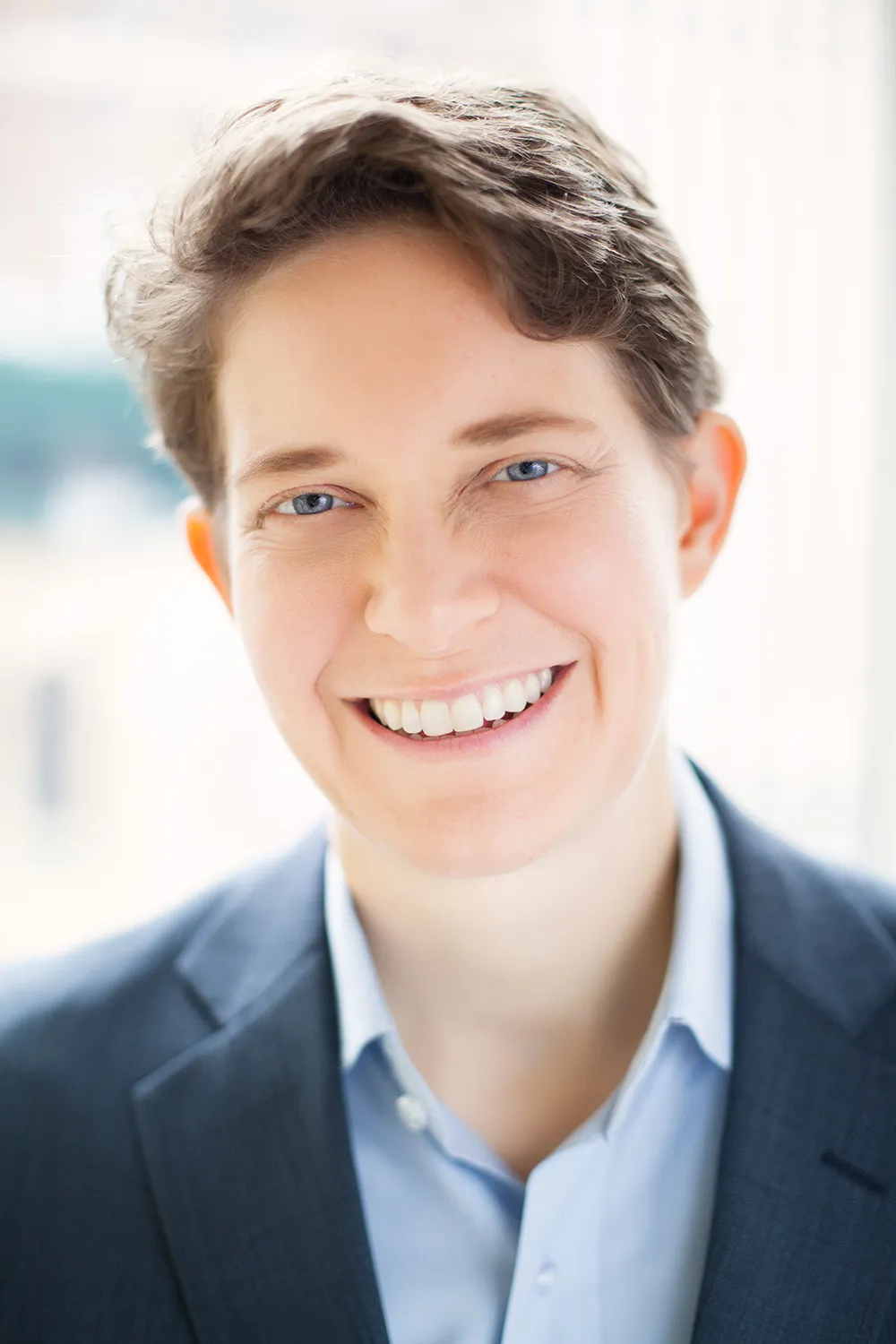
The Day Before the World Changed
A fourteen-year-old left home for college. A journalist lost her job the day before 9/11. Then she taught the world how to reinvent.
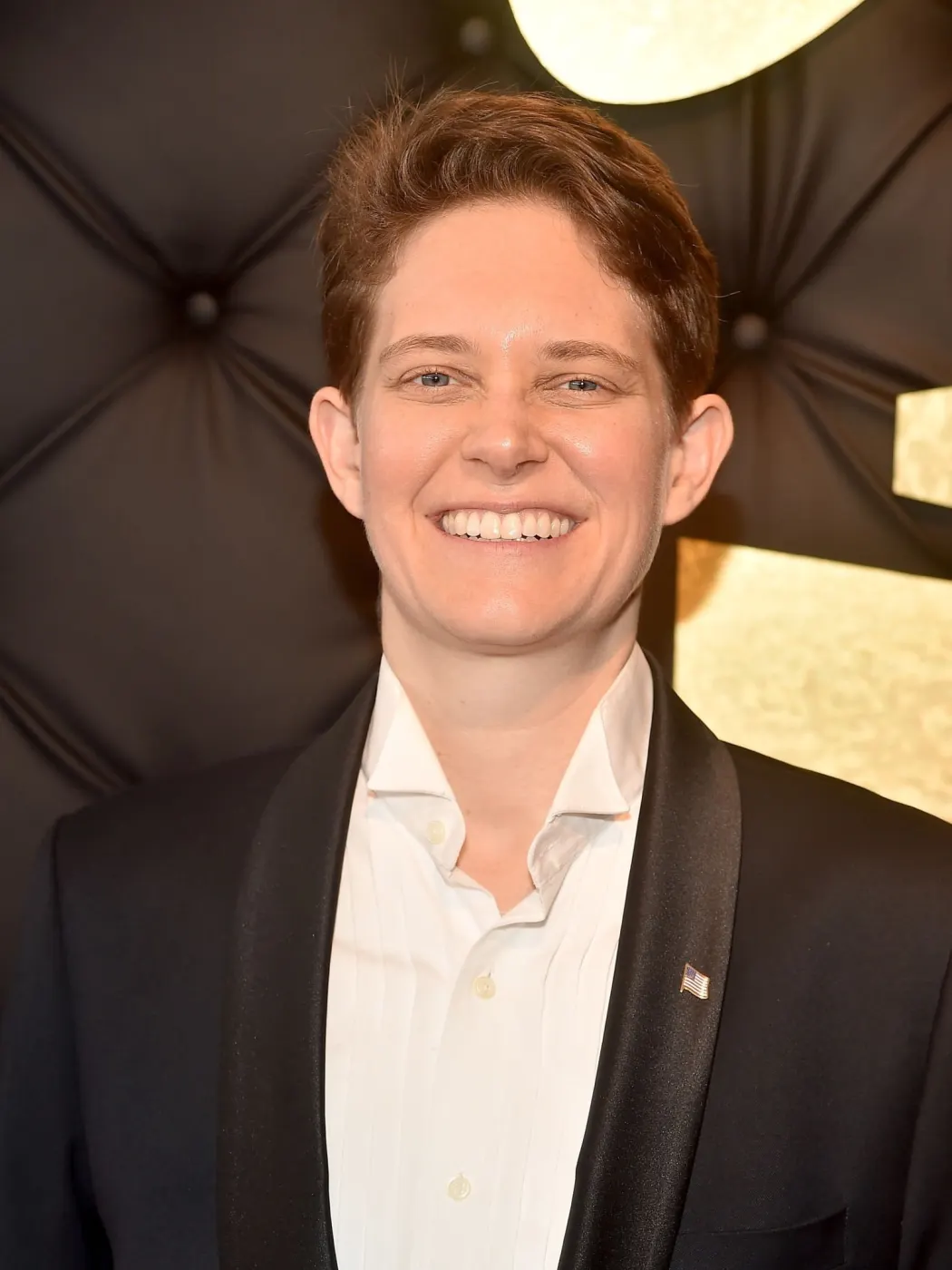
On Monday, September 10, 2001, Dorie Clark lost her job as a political journalist at the Boston Phoenix. The paper had been rolling in advertising money. She was young, early in a career she loved, and she went to sleep telling herself she would simply find another newsroom. She woke up on Tuesday into a country that no longer cared about her employment status. The towers fell. Newsrooms froze. The job market for reporters bent in ways that would, over the next two decades, shed hundreds of thousands of journalism roles. Clark later told Google audiences that nearly forty percent of American journalists would eventually lose theirs. Soft industry percentages belong to later studies. The personal fact does not. She was unemployed on the worst morning in modern American memory, and she never wanted to be caught that exposed again.
By September 2026 that forced education had become a public method. Clark had written four books for Harvard Business Review Press and Portfolio, taught executive education at Columbia Business School and Duke's Fuqua School of Business, and been named four times among Thinkers50's Top 50 business thinkers. The Marshall Goldsmith Leading Global Coaches Awards had ranked her the world's number one communication coach. Her Recognized Expert program claimed more than eight hundred alumni since 2016. In June 2026 she announced a fifth book, The Definitive Guide to Becoming a Coach, co-written with Marshall Goldsmith and Alisa Cohn for Harper Business in fall 2027. The drama of her life is not a factory floor or a rocket launch. It is the harder theater of reputation: how a person rebuilds after the floor drops, then teaches other people to do the same without sounding fake.

Pinehurst pines and a door out at fourteen
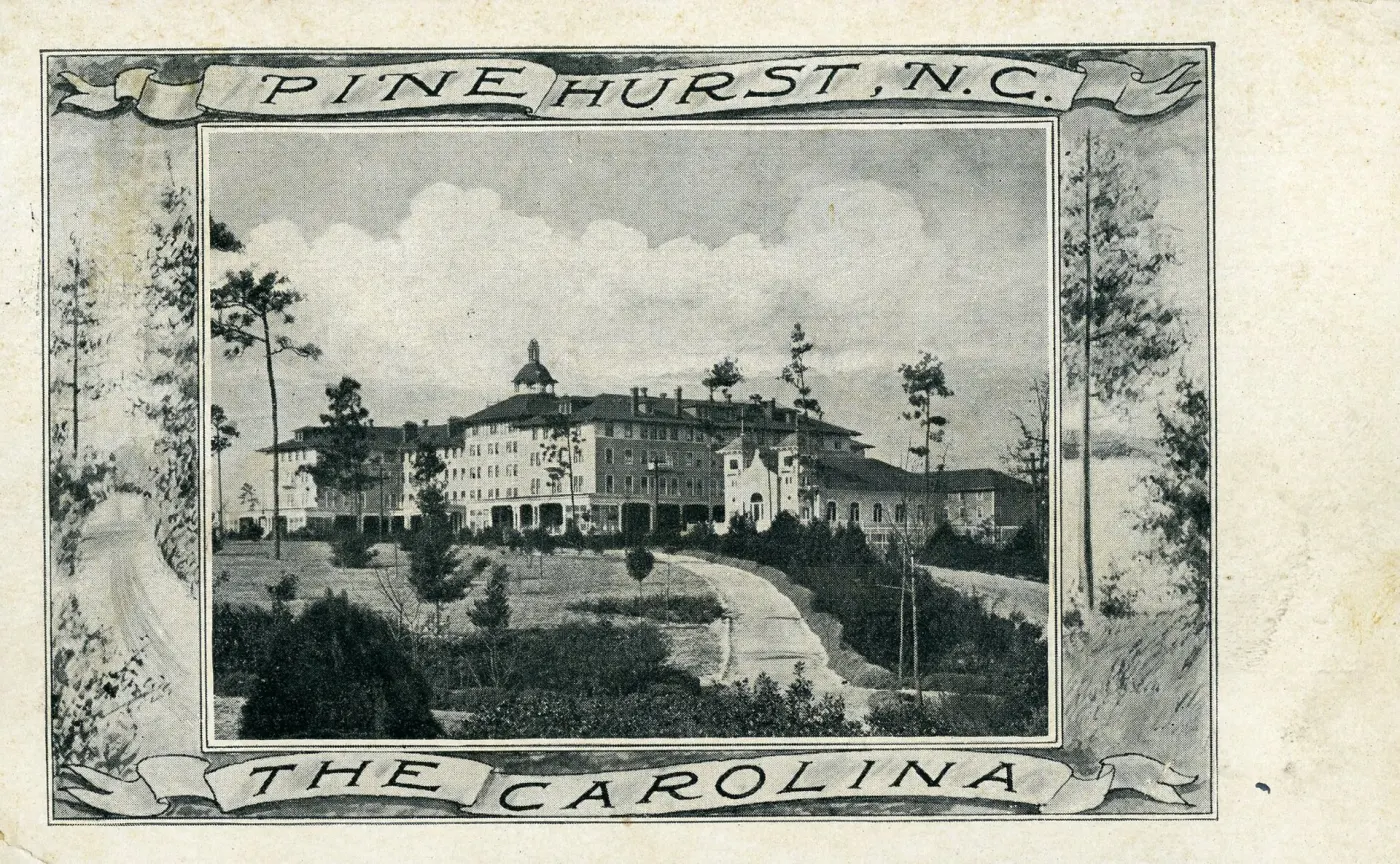
Dorie Clark was born in 1978 in Pinehurst, North Carolina, a resort town of golf courses, pine forests, and resort hotels that still sold a certain kind of Southern leisure. Exact birth date stays soft in public bios. What she says plainly on her own site is simpler. Pre-internet small-town life felt short on options. She wanted out early enough to start the work she cared about.
At fourteen she entered Mary Baldwin College's Program for the Exceptionally Gifted in Staunton, Virginia. Later she transferred to Smith College in Northampton, Massachusetts. In 1997 she graduated magna cum laude with a Bachelor of Arts in philosophy and Phi Beta Kappa honors. Soft secondary lines say she finished at eighteen. The verified arc is early departure, rigorous liberal arts training, and a mind trained to argue about meaning rather than product metrics.
Two years later, in 1999, she completed a Master of Theological Studies at Harvard Divinity School. Divinity school is an odd launchpad for a branding consultant. Clark has never pretended otherwise. The degree trained her to sit with big questions about calling, community, and what a life is for. Those questions followed her into newsrooms, campaign buses, nonprofit budgets, and finally into Harvard Business Review essays that treated career change as a moral and practical problem, not only a LinkedIn makeover.


Newsrooms, campaigns, and a nonprofit classroom
After Divinity School she became a New England Press Association award-winning journalist at the alternative weekly the Boston Phoenix, with correspondent work that also touched the Boston Globe. Soft exact start dates. The craft stuck. She learned to chase sources, write clean, and live inside deadline pressure. She also learned how fragile media economics can be even when the party still looks crowded.
The September 10 layoff shoved her into freelancing and then into politics. In 2002 she served as press secretary for Robert Reich's unsuccessful campaign for Massachusetts governor. Reich had been United States Secretary of Labor under President Bill Clinton. The campaign did not win. Clark learned how a message dies when voters do not buy the story, no matter how talented the candidate's resume looks on paper.
In 2003 she joined Howard Dean's presidential campaign. Public campaign records place her as deputy press secretary in Burlington starting around April 10, then as New Hampshire Communications Director with an official start on June 2, 2003. Secondary bios also note earlier Massachusetts political work, including a campaign manager role for State Representative Jarrett Barrios and LGBTQ community liaison work for Somerville Mayor Dorothy Kelly Gay, plus founding OutSomerville. Soft on exact dating of those local roles. The national chapter is clearer. Dean rose from single-digit polling into frontrunner heat, then finished third in Iowa and second in New Hampshire before the race drained away. Clark later told Design Matters she had been all-in. When it ended, she went back to Boston looking for nonprofit communications work or a smaller organization to run.
She found MassBike, the Massachusetts Bicycle Coalition. LinkedIn dates put her as executive director from May 2004 to May 2006. A tiny statewide advocacy group with roughly eighteen hundred dues-paying members in mid-decade press meant she had to do everything: legislation, agencies, board management, fundraising, and the daily diplomacy of bike zealots versus traffic engineers. Local reporting from the period shows MassBike pushing a Bike Bill of Rights and Responsibilities and Safe Routes to School legislation. Clark has said the job taught her how to run a business because there was no one else to do the parts she disliked. Soft membership and bill outcomes. The education was real. Jack-of-all-trades nonprofit leadership became the bridge into consulting.

2006: a firm, a film, and a portfolio life
In 2006 Clark launched Clark Strategic Communications, a marketing strategy consulting practice. She did not wait for a perfect niche to appear on a billboard. She took client work, wrote in public, and stacked skills the way a freelancer stacks invoices. Over time the client list she names in bios grew to include Google, Microsoft, the World Bank, Morgan Stanley, the Ford Foundation, Yale University, Deloitte, the Royal Bank of Canada, Mount Sinai Medical Center, and the U.S. National Park Service. Soft: that list is marketing, not a complete audited roster. What matters for the story is the pattern. She sold strategy to institutions that already had brand departments, which meant she had to be useful in rooms that did not need another slogan.
She also built side doors. She directed The Work of 1000, an environmental documentary about Marion Stoddart and the cleanup of the Nashua River. Documentary Educational Resources lists the Marion Stoddart film around 2010. Soft exact credit year beyond her director claim. She produced a multiple-Grammy-winning jazz album, per her site. Soft album title. She became a Broadway investor and later a member of BMI's Lehman Engel Musical Theatre Advanced Workshop, widely treated as a premier training ground for musical theater writers. The portfolio was not decoration. It was proof of the thesis she would later sell: multiple streams, multiple identities, all still one person.

Reinventing You and the book that took a decade
Around 2011, about ten years after the layoff, Clark landed a book contract. Reinventing You: Define Your Brand, Imagine Your Future arrived from Harvard Business Review Press in April 2013. She told interviewers she did not want to write the memoir the day after the crash. She wanted distance. The book is not a diary of September 11. It is a field guide built from interviews with people who changed careers on purpose, plus the hard lesson she learned when the Phoenix door closed.
At a Harvard alumni talk in Fong Auditorium in September 2013, she put the core line plainly. Your brand is not what you think it is. It is not what you wish it is. It is what other people say it is. The New York Times later called her an expert at self-reinvention and helping others make changes in their lives. Associated Press, Fortune, and Inc. tagged her as a branding expert. Soft media labels. The operational advice was concrete. Assemble a small circle and ask how they would describe you. Build a clear narrative for a move from A to B because strangers are not paying that much attention. Find a wingman who can praise your skills more credibly than you can. Take leadership roles instead of hovering at the edge of a committee. Volunteer to practice the identity you want before anyone pays you for it.

Stand Out: how experts get heard
Stand Out: How to Find Your Breakthrough Idea and Build a Following Around It landed in 2015 from Portfolio/Penguin. Clark spent roughly two years interviewing about fifty top experts across genomics, real estate, urban planning, business, and productivity. At Talks at Google she told the audience that keeping your head down and waiting to be noticed was obsolete advice. In crowded markets, silence is a career risk.
The book became a Washington Post bestseller, Inc. magazine's number one Leadership Book of the Year, and one of Forbes's Top 10 Business Books of the Year. Soft ranking methodologies. The cultural hit was larger than a trophy shelf. Stand Out gave consultants, coaches, and operators a vocabulary for becoming known without pretending to be a celebrity. Clark's method leaned on content, networks, and worthy challenges rather than viral stunts. She argued that breakthrough ideas often come from mixing perspectives, making time for reflection, and cultivating an attitude of luck, meaning curiosity and openness, not waiting for lightning.
She spoke about the book at the U.S. Library of Congress in April 2016. She taught and guest lectured at Harvard Business School, the Harvard Kennedy School, Stanford Graduate School of Business, Wharton, Berkeley Haas, Georgetown, NYU, MIT Sloan, Michigan, IE Business School in Madrid, and Moscow's SKOLKOVO. Soft: guest lecture lists in bios can drift. The pattern is a thinker who treated classrooms as distribution, not only prestige.

Entrepreneurial You: monetize without one fragile paycheck
Entrepreneurial You: Monetize Your Expertise, Create Multiple Income Streams, and Thrive arrived from Harvard Business Review Press in 2017. Clark later said that only while writing it did she see her first three books as a trilogy. Reinventing You was how to change who you are known as. Stand Out was how to become a recognized expert. Entrepreneurial You was how to get paid sustainably for that expertise through multiple streams.
At Talks at Google she opened with the September 10 story again, then walked into case studies. Soft individual case details belong to the interviewees. The thesis was blunt. Talent is not a business model. Speaking, consulting, courses, books, affiliate relationships, and digital products can be stacked so that one canceled client or one platform change does not erase a year. Inc. called it one of the most important books of the year. Forbes named it among its Top 5 Business Books. Soft awards language. For readers, the book functioned like permission to treat their knowledge as inventory.
Clark had already been testing the idea on herself. She started experimenting with online courses in 2014. On a later Duke Fuqua conversation she said she had tried roughly half a dozen providers. Some courses made a few hundred dollars. One platform made her well over two million dollars. Soft exact totals and which platform. She used the power-law story as data, not swagger. You cannot know which channel works until you place small bets you can afford to lose. Failure is data only if the bet does not destroy you.

The Long Game and the war on busyness
The Long Game: How to Be a Long-Term Thinker in a Short-Term World came from Harvard Business Review Press in 2021 and became a Wall Street Journal and USA Today bestseller. The book arrived into a culture that treated exhaustion as status. Clark cited a study of about ten thousand senior leaders in which ninety-seven percent said better long-term thinking was the most important thing they could do for their organizations, while a separate study found ninety-six percent said they had no time for strategic thinking. Soft study publishers and exact wording. The contradiction is the point. Almost everyone wants the long game. Almost nobody schedules it.
On April 4, 2022, she delivered a Long Now Foundation Seminar in San Francisco under Stewart Brand's long-term thinking series. She talked about white space on calendars that look like a sea of blue. She quoted David Allen on needing space, not endless hours, for brilliant ideas. She warned that American busyness often functions as status signaling. She offered strategies that sound simple and are hard: say no, protect thinking time, practice strategic patience, and treat failure as affordable data.
She also told a personal long-game story. After years of living in New York while spending most of her time on planes, she made a New Year's resolution to do one uniquely New York activity each week. Early on, a friend invited her to Fun Home, the musical that won the 2016 Tony Award for Best Musical. Soft exact week. The show hit her hard. She woke up determined to learn musical theater writing. She began trainings and fellowships. She learned that the average show takes roughly seven or eight years from inception to Broadway. In 2016 she set a ten-year goal: have a show on Broadway for the 2026 season. By the Long Now talk in 2022 she was still working the plan. Soft 2026 outcome as of this rewrite. The point for her readers was not celebrity. It was a visible example of a goal that cannot be finished in a quarter.
How she works: teaching, courses, and a community product
Clark's day job is a stack. Executive education at Columbia and Duke keeps her inside rooms of managers who are paid to ship short-term results and secretly hungry for longer ones. Keynotes for corporate clients pay for the brand and force her ideas into pressure tests. Harvard Business Review and Fast Company essays keep the flywheel of discovery spinning for people who will never buy a course. Soft article counts. She has also hosted Better, a weekly interview series for Newsweek on LinkedIn Live, talking with operators about improvement without guru fog.
The Recognized Expert program is the productized version of Stand Out. Since 2016, her site has claimed more than eight hundred professionals through the program, with sixty-plus later contributing to Harvard Business Review or other high-profile outlets, plus Wall Street Journal bestsellers, TEDx talks with large view counts, and guests on shows like Good Morning America, Today, and Tim Ferriss. Soft marketing counts. Alumni testimonials describe a community that acts as cheerleaders and peer pressure. Clark's own framing is that recognized expertise is a system: ideas, content, network, and patience, not a single viral post.
She teaches the same system she uses. Write in public for years before you expect inbound. Test courses before you film a cathedral. Do not bet more than you can afford to lose. Measure yourself against people a few steps ahead, not against someone who has been in the arena seventeen years longer. On the Duke podcast she made the last point with dry humor. Of course you are not where that person is yet. Time handicapping is part of sanity.
2024 to 2026: marriage, Miami, Thinkers50, and a coaching book
In 2024 Clark married Alexis Redding, a developmental psychologist who teaches at Harvard. The New York Times wedding coverage framed the match through a shared world of books and intellectual life. Soft private details stay private. Publicly, the marriage is a dated fact in an otherwise professional biography.
By 2026 her public base included Miami, Florida, after earlier Boston and New York chapters. Soft exact move date. The geographic shift fits a portfolio career that no longer requires a single city's newsroom or campaign headquarters.
Thinkers50 had named her to its Top 50 list four times by the language on her 2025 and 2026 bios. Soft which exact ranking years. The Marshall Goldsmith award for number one communication coach sat beside that. Soft award mechanics. Together they placed her in the small set of independent thinkers who sell ideas without running a giant software company.
In June 2026 she posted that she would write The Definitive Guide to Becoming a Coach with Marshall Goldsmith and Alisa Cohn. Harper Business set a fall 2027 release. The site DefinitiveCoach.com collected questions and updates. The three authors marketed the book as a blueprint for coaches and consultants who want stronger inbound brands and better clients. Soft "million-dollar practice" claims in the announcement. The strategic continuity is obvious. After teaching reinvention, expertise, monetization, and long-term thinking, she turned toward the profession that sells those transformations one client at a time.
What she actually built
Clark did not invent personal branding. Tom Peters's 1997 Fast Company cover story "The Brand Called You" had already lit that fuse. What she built was a practical curriculum for professionals who felt allergic to the phrase. She redefined brand as reputation you live, then gave people drills: feedback circles, narrative scripts, wingmen, content habits, and productized expertise.
She also built a distribution machine without a venture-backed platform company. Books created authority. Articles created discovery. Talks created enterprise leads. Courses created leverage. The Recognized Expert community created peer effects that made the advice stick. Soft revenue mix in any given year. The architecture is visible even when the numbers are private.
Her world impact sits in classrooms and inbox folders more than in market share charts. Managers at Google and World Bank retreats heard her say that white space is a strategic asset. Mid-career professionals used Reinventing You after layoffs. Consultants used Stand Out to stop waiting to be chosen. Freelancers used Entrepreneurial You to add a course or a newsletter instead of one more fragile retainer. Coaches in 2026 lined up for a Goldsmith-Clark-Cohn book that promises to treat coaching as a buildable practice, not a mystic gift.
Critics can fairly say personal branding culture can become performance. Clark's better talks push against phoniness. She tells audiences that foghorn self-promotion fails, and that the work is to live in a way that makes the right reputation easy to extrapolate. Soft whether every reader hears that nuance. The published record shows her arguing for substance first.
Inside the Dean press shop
The Dean years matter because they were a live case study in narrative momentum. Soft on private campaign memos. Publicly, Clark watched a governor from a small state become a national story through online organizing and press oxygen, then watched the story crack after Iowa. She has said she believed he would have been a terrific president. Belief does not rewrite vote totals. When the campaign dribbled out, she had a choice that many political staffers recognize. Stay in the party apparatus and chase the next race, or cash the skills for a different life.
She chose Boston roots and nonprofit leadership. That decision looks tidy in a bio paragraph. In practice it meant leaving the adrenaline of national press calls for the slower math of membership renewals and legislative calendars. Soft on salary comparisons. The emotional whiplash is part of the reinvention curriculum she later sold. Identity is sticky. Leaving a hot campaign for bike lanes can feel like demotion until you notice you are learning general management.
MassBike as a forced MBA
MassBike forced Clark into budgets, boards, and conflicting stakeholder maps. Commuter cyclists wanted safer streets and fewer cars. Recreational zealots wanted trails and culture. Legislators wanted bills that could pass. Drivers wanted not to be lectured. A 2006 board announcement quoted her saying Massachusetts had the potential to be one of the best states for biking. Soft booster language. The operational truth underneath was smaller. An organization founded in 1977 with roughly eighteen hundred members cannot buy a statewide identity overnight. It can show up at hearings, push Safe Routes to School, and keep the Minuteman Bikeway success story alive as proof that advocacy compounds.
Clark has called the job humbling. Board members knew more about bike culture than she did. She knew more about communications. The overlap taught her to respect domain experts without surrendering the need to translate for outsiders. That translation skill is the same muscle she later used in corporate keynotes when engineers and marketers shared a room but not a vocabulary.
Writing for HBR before the books paid
Before the books became a stack, Clark wrote her way into the conversation. Frequent Harvard Business Review and Fast Company pieces were not vanity. They were a discovery engine. Soft exact article counts. A free essay can travel farther than a cold email to a speaking bureau. She also published into HBR guide anthologies on jobs and networking. The strategy looked like generosity. It was also distribution. Readers who trusted a two-thousand-word piece were more likely to buy a two-hundred-page book.
She understood search and sharing before every consultant had a Substack. Soft platform chronology. The durable habit was consistency. Years of public writing created a corpus that search engines and conference bookers could find. When Reinventing You arrived in 2013, she was not a stranger asking for attention. She was a familiar byline asking for a deeper commitment.
Rooms where the advice had to survive
Executive education is a brutal QA lab. Columbia and Duke participants can nod politely and then ignore a slide. Soft classroom anecdotes. Clark's public talks show she prefers stories with sharp edges: the HR executive who asked final-round candidates how they were presently reinventing themselves, not whether they would; the genomics leader who hunted cross-domain ideas; the nurse who became a chief information officer by treating learning as a second job. Soft names beyond her published examples. The method is case-first. Abstract frameworks come after a human scene.
Corporate clients sharpened the same blade. Google, Microsoft, and World Bank rooms contain people who have already heard every branding cliche. Soft whether every engagement was a triumph. Surviving those rooms required specificity. When she told Google about September 10, she was not harvesting pity. She was establishing authority on adaptability before asking anyone to change their calendar.
The Broadway clock in 2026
The Fun Home shock in 2016 created a ten-year clock aimed at the 2026 Broadway season. Soft whether any Clark-written show has opened or will open in that window. What is verified is the goal, the workshop training, the investor role, and her public retelling of average seven-to-eight-year development timelines. In a culture that celebrates overnight launches, she chose an art form that punishes impatience.
That choice is not a side hobby in the biography. It is a live demonstration of The Long Game. She still shows up for BMI workshop craft while running a global thought-leadership business. Soft weekly hours. The coexistence matters. She does not tell executives to protect white space while filling every hour with billable speech. She protects a non-billable ambition that might never pay, which is exactly the kind of bet her books defend.
World change without a consumer app
Clark's world impact is diffuse by design. She did not ship a social network. She shipped language and drills that moved through corporations, coaching practices, universities, and solo businesses. Soft attribution. When a mid-level manager blocks two hours for strategic thinking, or a consultant launches a paid newsletter, or a laid-off journalist builds a portfolio career, Clark is rarely the only influence. She is often in the stack of influences, which is how idea businesses change culture.
The Recognized Expert alumni network multiplies that effect. Soft exact conversion rates from course to HBR byline. Even if marketing counts are optimistic, the direction is clear. She productized a path from invisible expert to visible one, then surrounded students with peers who made the path less lonely. Loneliness is an underrated failure mode in independent careers. Community is infrastructure.
In 2026 the coaching book announcement extended the same infrastructure toward people whose product is other people's growth. If consultants learned to monetize expertise from Entrepreneurial You, coaches are being offered a joint curriculum from three practitioners who claim to have built significant practices. Soft revenue claims. The market timing fits a decade of remote work, career churn, and demand for guides who can sell trust.
How a day actually runs
Soft on private calendar screenshots. From her talks, the operating system is visible enough. Protect white space on purpose or the sea of meetings wins. Say no to good opportunities that do not serve a longer aim. Ship content on a cadence that compounds. Test new offers with small bets. Stay in rooms with executives so the advice cannot float free of reality. Keep at least one project, like musical theater, that refuses quarterly logic.
She also practices visible learning. TEDx talks in Beacon Street, Lugano, and elsewhere forced ideas into short public forms. Soft view counts. A TEDx clock is a compression tool. If a framework cannot survive twelve minutes, it may not deserve a keynote hour.
Failures, almost-quits, and the cost of the long bet
Clark's biography is full of public wins, so it is easy to miss the losing streak she herself narrates. Journalism job gone. Reich campaign lost. Dean campaign collapsed after Iowa. Nonprofit leadership paid in stress and small budgets. Early online courses that returned a few hundred dollars. A Broadway ambition that, by design, might take a decade and still fail.
She uses those failures as teaching objects. In Entrepreneurial You she profiles makers who sold one course copy and then learned to pre-sell. Soft case identities beyond her talks. In The Long Game she argues for rainy-day thinking and goals large enough to require patience. In interviews she returns to September 10 as the master class in career insurance: keep evolving before the industry tells you to.
The almost-quit moments are quieter. After Dean, she could have stayed in campaign politics forever. After MassBike, she could have remained a nonprofit executive. After Reinventing You, she could have repeated the same book under new covers. Instead she kept extending the trilogy into monetization and then into time horizons, then into coaching infrastructure. Soft private despair. Publicly, the pattern is expansion after each plateau.
Money pressure is part of the honesty. Soft personal net worth. An independent expert business can look glamorous from a conference stage and fragile in a quiet January. Multiple income streams are not a lifestyle brand slogan for her. They are the architecture she built after learning that a single employer, a single campaign, or a single course platform can fail. The two-million-dollar course outcome she has described sits beside the few-hundred-dollar outcomes for a reason. Power laws reward people who keep shipping while the distribution is still ugly.
Clients, stages, and the translation job
Soft client outcomes. What Clark sells in those rooms is translation. Engineers need a story that procurement can fund. Marketers need a story that engineers will not mock. Nonprofit leaders need a story that donors can repeat. Clark's early life as a journalist and campaign spokeswoman trained her to hear the gap between what a speaker intends and what an audience actually receives. That gap is where most personal brands die. People assume their motives are obvious. They are not.
She also treats stages as labs. A Talks at Google slot, a Long Now seminar, a TEDx clock, and a Duke podcast each punish different weaknesses. Google audiences punish vagueness. Long Now audiences punish short-term framing. TEDx punishes bloat. Podcasts punish rehearsed polish that cannot survive a follow-up question. Soft whether every appearance was excellent. The cumulative effect is a thinker whose frameworks have been stress-tested in public for more than a decade.
Books as a product line, not a trophy case
Reinventing You, Stand Out, Entrepreneurial You, and The Long Game work as a sequence even when readers enter in the middle. Soft sales figures by title. The product-line logic is rare among business authors who repeat one insight across four covers. Clark's books escalate commitments. First change how you are seen. Then earn recognition for an idea. Then build money systems around that recognition. Then protect the time horizon so the system does not burn you out.
Translations into Russian, Chinese, Arabic, French, Polish, Korean, Spanish, Italian, Vietnamese, and Thai, as listed on her site, push that sequence beyond U.S. professional culture. Soft completeness and local reception. The export matters because reinvention anxiety is not only an American LinkedIn problem. Career churn is global. Her frameworks travel because they are procedural, not purely cultural.
Self-assessments attached to the books extend the product after the hardcover ends. Soft download counts for the Long Game and Entrepreneurial You assessments on dorieclark.com. A questionnaire is a cheap way to turn a reader into a practitioner for an evening. Practitioners remember authors longer than passive readers do.
The 2026 scoreboard
As of September 2026, the verifiable scoreboard looks like this. Four major books in market, with a fifth announced for 2027. Dual executive-education homes at Columbia and Duke. A consulting and speaking practice still naming global institutional clients. A Recognized Expert community marketed at eight hundred-plus alumni. Thinkers50 Top 50 recognition four times. A number one communication coach award from the Marshall Goldsmith process. A marriage in 2024. A Miami base. A Broadway ten-year goal whose deadline year is now. Soft unfinished creative outcomes. Soft private wealth. The public arc is a person who turned a layoff into a methodology and kept updating the methodology as the labor market kept breaking old promises.
That scoreboard is also a warning label for imitators. Clark's results took years of unpaid writing, uneven course experiments, and identity changes that looked sideways from the outside. Soft hardship details she has not published. The books can compress the lessons. They cannot compress the calendar.
Closing
Dorie Clark's biography is a proof about reinvention under pressure. A gifted teenager left Pinehurst for college because the town felt too small. A divinity graduate entered journalism because she wanted to report the world. A layoff on September 10, 2001 taught her that industries can vanish overnight. Campaigns taught her message discipline and heartbreak. MassBike taught her to run a whole enterprise with too few hands. Consulting taught her to sell clarity. Four books taught a global audience that reputation, expertise, money, and time can be designed. Courses and the Recognized Expert community turned that teaching into a business that did not depend on one paycheck. In 2026 she was still playing a long game that began with a Tony-winning musical and a ten-year Broadway target, still teaching executives to protect white space, and still writing the next manual for coaches who want to matter without becoming noise.
She never promised that reinvention is painless. She promised it is learnable. That is a quieter kind of empire. It shows up every time a laid-off professional opens one of her books and finds a next step instead of a pep talk.
Watch alongside this story
Short cuts from interviews, keynotes and launches. Each plays only the moment that matters.