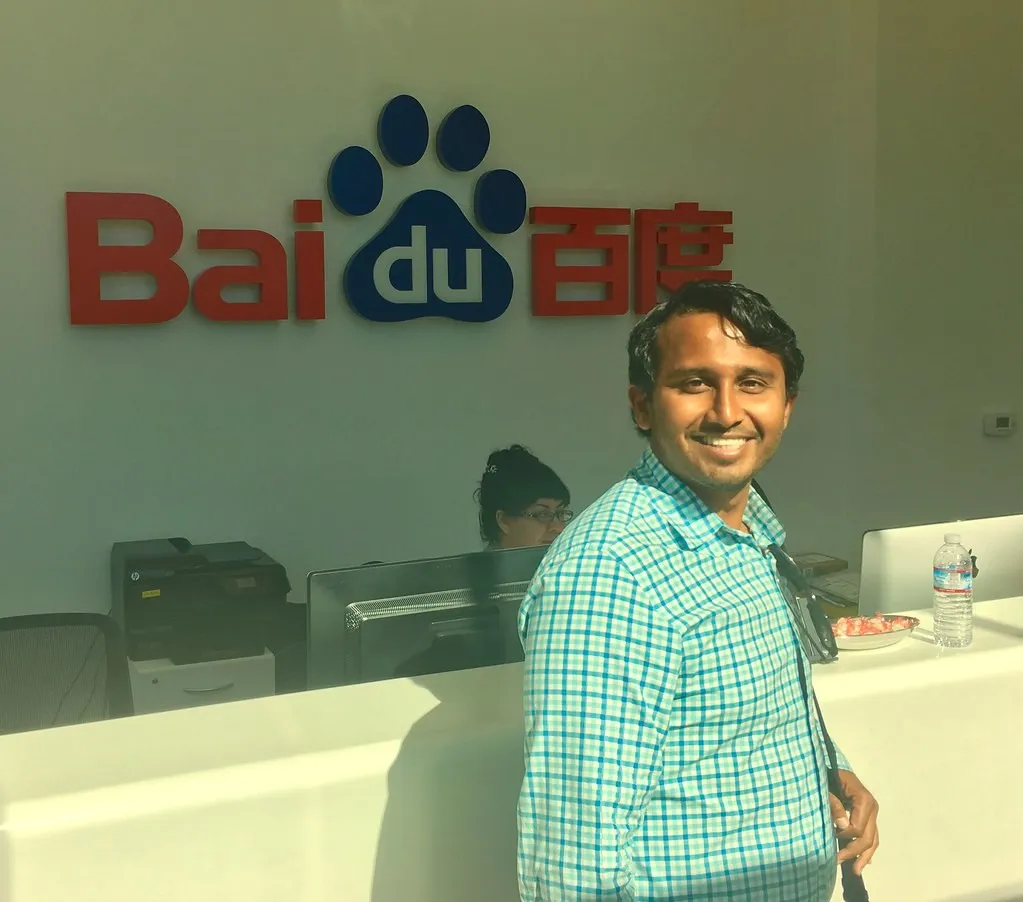
Baidu’s Other Co‑Founder
A biology PhD. A partnership with Robin Li. The birth of Baidu.
Eric Xu helped start Baidu.
He met Robin Li in Silicon Valley.
They saw a need for Chinese search.
They built a company together.
Early Life
Eric Xu was born in Beijing in 1964.
His parents graduated from Beijing Normal University.
He has one brother who runs hotels.
He grew up in the city.
Schooling
He attended Beijing No. 4 High School.
He also went to the Second High School attached to Beijing Normal University.
He studied at the Experimental Primary School attached to Beijing Normal University.
University and Research
He earned a B.S. and an M.S. in biology at Peking University.
He studied there from 1982 to 1989.
He later earned a Ph.D. in biology at Texas A&M University.
He was a Rockefeller Foundation fellow.
He completed a post‑doctoral fellowship at the University of California, Berkeley.
Early Career
He worked in technical support, sales, and marketing.
His employers were two California biotech startups: Qiagen, Inc. and Stratagene, Inc.
He learned how to raise money for tech projects.
He also filmed a documentary about Silicon Valley’s tech scene.
Building Baidu
In January 2000 Eric Xu and Robin Li co‑founded Baidu.
They secured $1.2 million in seed funding from Peninsula Capital and Integrity Partners.
They opened their first office in a hotel room near Peking University.
Their early model was to provide search back‑ends for Chinese portals.
The model did not scale.
In May 2000 they signed their first major client, Silicon Valley Power, for $80,000 a year.
After the tech bubble burst they switched to a consumer‑facing, ad‑supported model.
The new model made Baidu profitable by 2003.
Eric Xu served as Baidu’s first CEO until 2004.
Later Career
After leaving Baidu, Xu kept a low public profile.
He became deputy chairman of Huawei.
He also served as rotating chairman of Huawei in 2025.
In September 2025 he led Huawei’s AI‑infrastructure messaging.
In September 2026 he warned that Chinese AI may need faster development to match safety risks seen in the United States.
Controversy
In 2019 a legal dispute arose between Huawei and CNEX Labs.
CNEX claimed Xu orchestrated a conspiracy to steal solid‑state drive trade secrets.
The claim said Xu sent an engineer to pose as a customer.
It also said he used a partnership with Xiamen University to get proprietary technology.
Huawei denied the accusations.
The company called the claims unsubstantiated and misleading.
Eric Xu’s story shows how a scientist can help launch a tech giant.
His early work set the stage for Baidu’s rise.
His later work keeps him at the heart of China’s telecom and AI push.
Eric Xu: Baidu Co‑Founder
Founding Story
Eric Xu was born in Beijing in 1964.
His parents graduated from Beijing Normal University.
He went to Beijing No. 4 High School and two other schools attached to the university.
He earned a B.S. and M.S. in biology at Peking University.
He later earned a Ph.D. in biology at Texas A&M as a Rockefeller Foundation fellow.
He completed a post‑doc at UC Berkeley.
He worked in technical support, sales and marketing at Qiagen and Stratagene in California.
In January 2000 he met Robin Li in Silicon Valley.
Li was a search expert.
Li asked Xu to join him to build a Chinese search engine.
They agreed to start a company together.
They raised $1.2 million from Peninsula Capital and Integrity Partners.
The seed money let them rent a hotel room near Peking University for the office.
They hired top engineers from local universities.
First Customer and Product
Baidu’s first product was a backend search service for Chinese portals.
The model did not grow because portals did not focus on search.
In May 2000 they signed Silicon Valley Power as the first major client.
The contract was worth $80,000 per year.
Early Struggles
The tech bubble burst in 2000.
Revenue fell sharply.
The founders switched to a consumer‑facing, ad‑supported model.
The new model copied Overture’s pay‑per‑click system.
By 2003 Baidu became profitable.
Key Turning Points
In 2004 Xu stepped down as CEO.
Robin Li took over the chief executive role.
Xu stayed on as executive vice president and chief strategy officer.
He left Baidu’s board in August 2004 and left the company in December 2004.
Growth and Real Numbers
Baidu went public on NASDAQ in 2005.
The IPO raised $109 million.
In 2021 Baidu listed a second time in Hong Kong.
That secondary offering raised $3.1 billion.
As of 2024 Baidu reported $18.5 billion in annual revenue.
It served over 679 million monthly active users.
Baidu completed 22 acquisitions by 2024.
One was 91 Wireless for $1.9 billion in 2013.
Another was YY Live for $2.1 billion in 2025.
Funding, IPO and Acquisitions
The initial $1.2 million seed round came from Silicon Valley firms.
Later rounds added more capital from Chinese investors.
The 2005 NASDAQ IPO was a major milestone.
It gave Baidu global visibility.
The 2021 Hong Kong listing added another $3.1 billion to the balance sheet.
Acquisitions helped Baidu expand into AI, autonomous driving and cloud services.

Eric Xu’s early work laid the foundation for Baidu’s rise.
His biology training helped him think analytically.
His fundraising skill secured the seed money.
His decision to pivot to ads saved the company.
Baidu grew from a hotel‑room office to a global tech giant.
The story shows how a scientist can become a tech pioneer.
Eric Xu co‑founded Baidu and later helped lead Huawei.
Setbacks
Baidu’s first business model failed.
It tried to be a backend search provider for Chinese portals.
Portals did not need that service.
The model could not scale.
The tech bubble burst in 2000.
Funding dried up.
Baidu struggled to stay afloat.
Criticism and Controversies
In 2019 CNEX Labs sued Huawei.
CNEX said Xu organized a plan to steal SSD trade secrets.
They claimed Xu sent an engineer to pose as a buyer.
They also said he used a partnership with Xiamen University to get data.
Huawei called the claims unsubstantiated.
It said the actions were normal competitive analysis.
What Changed Recently
Xu became Huawei’s deputy chairman and rotating chairman in 2025.
He led AI‑infrastructure and telecom growth messaging in September 2025.
In September 2026 he warned that Chinese AI needs faster model development to match safety risks seen in the U.S.
Where He Is Now (2026)
Eric Xu is still a deputy chairman of Huawei.
He continues as rotating chairman for the second half of 2025‑2026.
His focus is on AI infrastructure and telecom expansion.
He remains a low‑profile figure in public media.
Why the story matters
Eric Xu shows how a scientist can build a tech giant.
Early setbacks teach the value of pivoting quickly.
Controversies remind leaders that legal battles can affect reputation.
His move from Baidu to Huawei shows career flexibility.
The lesson: early partners and funding shape long‑term impact.
The Record
Studied: Peking University (B.S., M.S.); Texas A&M (Ph.D.); UC Berkeley (post‑doc)
Built: Baidu (with Robin Li)
Left Baidu: 2004
Huawei Role: Deputy Chairman, Rotating Chairman (2025‑2026)
Timeline
1964 to Born in Beijing, China.
1982‑1989 to Earned B.S. and M.S. in biology at Peking University.
1990‑1995 to Completed Ph.D. at Texas A&M and post‑doc at UC Berkeley.
1999‑2000 to Co‑founded Baidu with Robin Li.
2000‑2003 to Pivoted Baidu to an ad‑supported model; became profitable.
2004 to Stepped down as CEO and left Baidu.
2005 to Baidu listed on NASDAQ, raising $109 million.
2019 to Involved in CNEX Labs legal dispute while at Huawei.
2025 to Became Huawei’s rotating chairman and deputy chairman.
2026 to Leads AI‑infrastructure strategy at Huawei.