
The App That Deleted Itself
That single design choice felt like a prank when Snapchat started. Friends sent silly pictures that vanished in seconds. Parents did not understand it. Competitors laughed. Then millions of teenagers made it a daily habit, and the rest of the industry copied the "Stories" format.
Spiegel co-founded Snap Inc. and pushed a bold claim: Snap was a camera company, not another feed. Snap's market value has swung hard over the years and is often discussed in the teens of billions. Spiegel's wealth is often estimated near $2.5B. The numbers move. The product idea stayed stubborn.

Where he came from
Evan Thomas Spiegel was born on June 4, 1990, in Los Angeles, California. He grew up in a comfortable Pacific Palisades world of good schools and design awareness. His mother worked in education. His father worked in law and business. Evan learned early how presentation matters: clothes, objects, rooms, interfaces.



He enrolled at Stanford University and studied product design. Stanford mixed engineering with art-school attention to how things feel in the hand. Spiegel liked that mix. He was not chasing a pure computer science identity. He was chasing products people wanted to touch every day.

Campus life also meant friends with complementary skills. Bobby Murphy brought deep coding strength. Reggie Brown was part of the earliest idea conversations. The group dynamic would later turn painful and legal. At the start it felt like a student project with heat.
The spark called Picaboo
The first version was called Picaboo. The joke was in the name: peek, then gone. Users sent photos that self-destructed. In a world of permanent Facebook posts, impermanence felt like relief. You could be goofy without building a forever archive.


They renamed the product Snapchat. Growth spread through high schools and colleges the way slang spreads: peer to peer, faster than ads. Spiegel left Stanford to run the company. That choice shocked relatives who wanted a diploma first. He bet that timing mattered more than a ceremony.
Early Snapchat was messy. Servers strained. Features were sparse. The team worked out of Los Angeles energy as much as Silicon Valley process. Spiegel cared intensely about craft. Buttons, timing, animation. Tiny details were not tiny to him.
How Snap grew up
Disappearing photos were only chapter one. Snapchat added Stories, a day-long chain of snaps that competitors later imitated across the industry. Chat deepened. Lenses and filters turned faces into playful masks. The camera became a creative studio in a pocket.


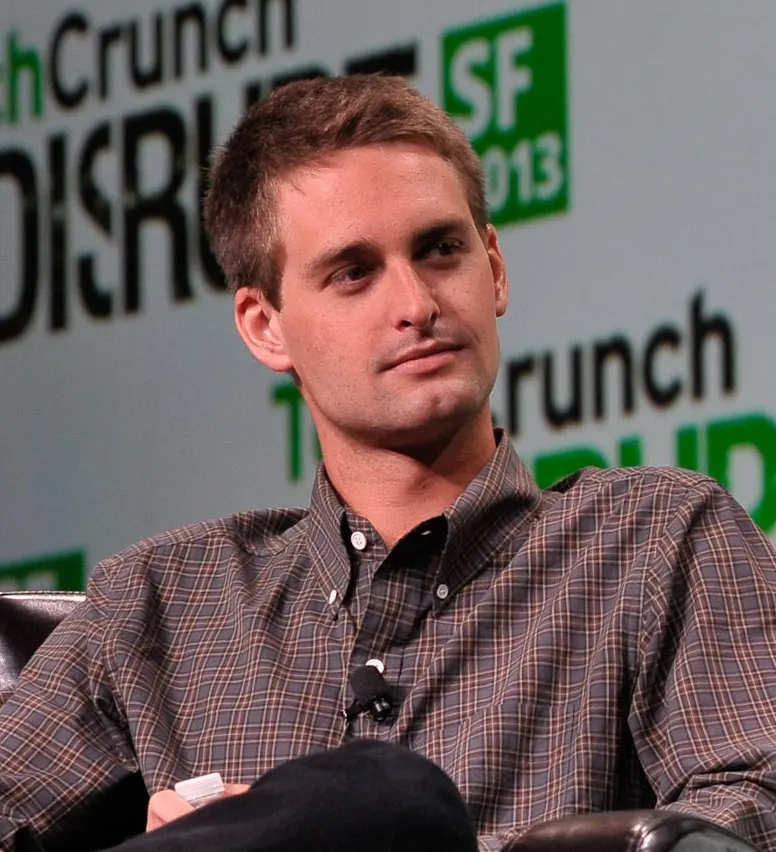

Spiegel and Murphy built a company culture that prized design independence. When Facebook offered to buy Snapchat for around $3 billion, Spiegel said no. Many outsiders called the refusal arrogant. He believed the product could be larger on its own terms.
Snap Inc. went public in 2017. The IPO made the young founders highly visible and very rich on paper. It also put every product miss under a brighter spotlight. Redesigns angered users. Competition from Instagram intensified. Advertisers demanded results. Being a public CEO at a young age meant learning crisis management in real time.

Spectacles and the camera company claim
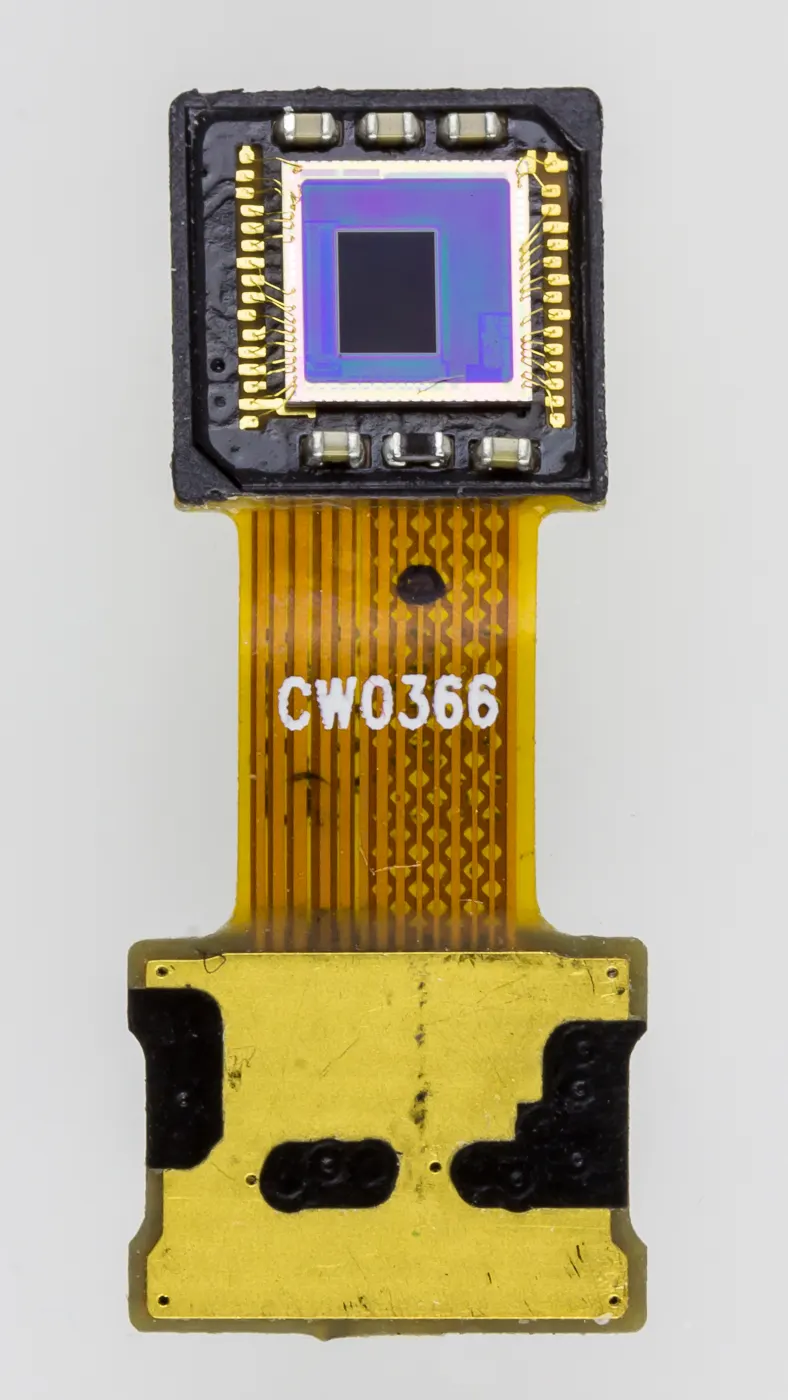
Spiegel kept repeating that Snap was a camera company. Spectacles, the camera glasses, were a flashy proof point. Some generations sold out as novelty. Others struggled. The deeper bet was augmented reality: making the camera a layer on the world, not only a tool for posting.



Whether every hardware swing worked or not, the claim shaped hiring, partnerships, and how Snap talked to Wall Street. Software lenses paid the bills more reliably than plastic glasses. Still, the ambition signaled Spiegel's taste: he would rather look slightly futuristic than perfectly copy a feed.
Hard times
Snap's story includes lawsuits over founding credit, brutal competition, stock drawdowns, and public criticism of leadership style. Spiegel had to mature from campus founder to enterprise manager. Some employees loved the taste-driven culture. Others wanted clearer process.
Privacy debates followed ephemeral messaging too. "Disappearing" is not the same as "impossible to save." Screenshots exist. Trust still depends on norms and engineering. Spiegel's company had to educate users without killing the magic.
Family life also entered the public frame when he married Miranda Kerr. Paparazzi attention is a strange tax on consumer tech fame. Spiegel tried to keep a designer’s focus anyway.

Where he is now
Evan Spiegel remains CEO of Snap and a defining voice for camera-first social computing. Snap's valuation and his net worth estimates near $2.5B move with ad markets and product cycles. He continues to argue that friends deserve a place that is not only a broadcast stage for influencers.
Lessons and legacy
Spiegel's legacy is already visible on every major social app: Stories. The format he popularized became industry standard. That is rare influence.
His second legacy is taste as strategy. He showed that a consumer company can refuse a huge acquisition and still reach a public market, for better and worse. He also showed the cost of that path: relentless competition and public second-guessing.
For young builders, the usable lessons are concrete. Design for a feeling, not only a feature list. Ship to real users early. Expect copycats if you win. Hardware is harder than demos. Saying no is easy; surviving yes-we-build-it-ourselves is the real test.
Evan Spiegel started with photos that vanished. The industry never forgot them.
Los Angeles as a product advantage
Silicon Valley often treats Los Angeles as a sibling who likes cameras more than compilers. Spiegel flipped that bias into strategy. Entertainment culture understands youth trends early. Design culture obsesses over how an object feels. Snapchat's headquarters energy drew from that mix. The app felt less like enterprise software and more like a fashion drop that updated weekly.
That location choice also shaped recruiting. Some engineers wanted Mountain View predictability. Others wanted to build the coolest camera in the pocket of culture. Spiegel recruited for taste and urgency. When it worked, Snap shipped playful lenses that spread like dance crazes. When it failed, the company had to apologize with the same speed it shipped.
Money, power, and saying no
Refusing a multi-billion-dollar acquisition is easy to romanticize. The hard part is the decade after. Instagram copied Stories and reached a wider base. Google and others tested camera social ideas. Advertisers compared return on spend with ruthless math. Spiegel had to grow up as a capital allocator, not only as a designer.
Dual-class shares kept voting power concentrated so he could make long bets. Investors who wanted faster profit grumbled. Spiegel's wager was that camera computing and AR would justify patience. Some years the market believed him. Some years it did not. Leadership in public markets is partly theater and partly endurance.
What teenagers taught him
Snapchat's first true product managers were teenagers. They invented norms the company then formalized. Streaks. Bitmojis as identity. Lenses as social play. Spiegel's gift was listening without sanding off the weirdness. Many adult executives would have forced a more "serious" product and killed the magic.
The risk of listening to youth culture is age drift. Users grow up. New kids arrive with new apps. Snap has to renew itself without becoming a museum of 2013 jokes. That renewal problem is now the center of Spiegel's job.
Field note 1
Teams under stress reveal culture. The founders who survive keep a few people who can disagree without theater. Applied to evan spiegel, this means treating each growth spurt as a systems test: support, security, hiring, and messaging must scale together. When one lags, trust leaks. The biography above shows moments when those systems held and moments when they strained. Readers should track those moments carefully, because they are the transferable curriculum.
Field note 2
Customers teach faster than advisors. Watch where they hesitate. Redesign that hesitation away. Applied to evan spiegel, this means treating each growth spurt as a systems test: support, security, hiring, and messaging must scale together. When one lags, trust leaks. The biography above shows moments when those systems held and moments when they strained. Readers should track those moments carefully, because they are the transferable curriculum.
Field note 3
Capital is fuel and temptation. Raise enough to win the window. Not so much that you lose urgency. Applied to evan spiegel, this means treating each growth spurt as a systems test: support, security, hiring, and messaging must scale together. When one lags, trust leaks. The biography above shows moments when those systems held and moments when they strained. Readers should track those moments carefully, because they are the transferable curriculum.
Field note 4
Public narratives flatten luck. Real timelines include dead ends, quiet mentors, and boring weekends of work. Applied to evan spiegel, this means treating each growth spurt as a systems test: support, security, hiring, and messaging must scale together. When one lags, trust leaks. The biography above shows moments when those systems held and moments when they strained. Readers should track those moments carefully, because they are the transferable curriculum.