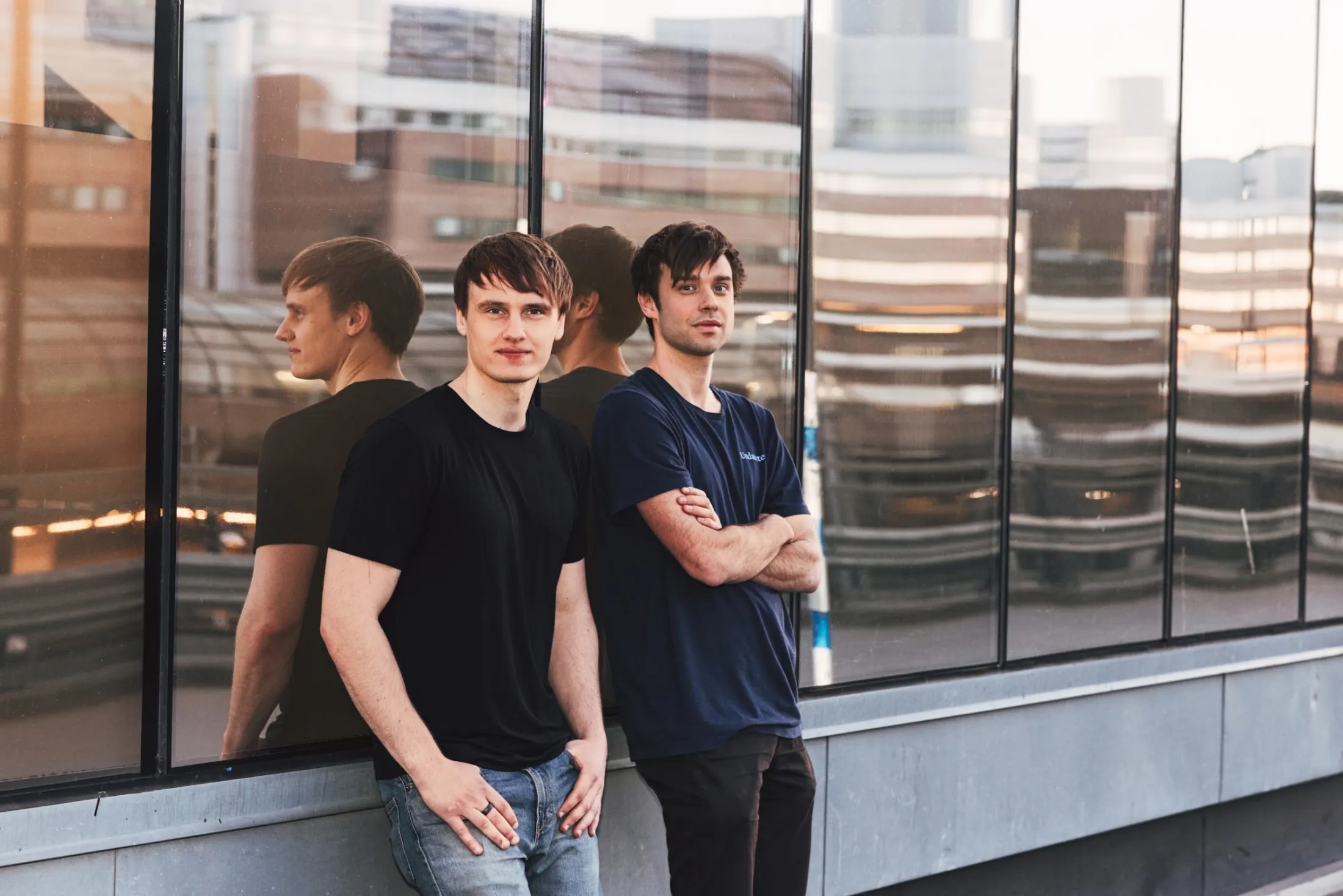
The Quiet Sheepdog of Lovable
He learned code to run a Minecraft server at eleven. He sold a quiet proptech firm, then quit a YC job for freedom. Then Anton Osika woke him up and asked about GPT Engineer.
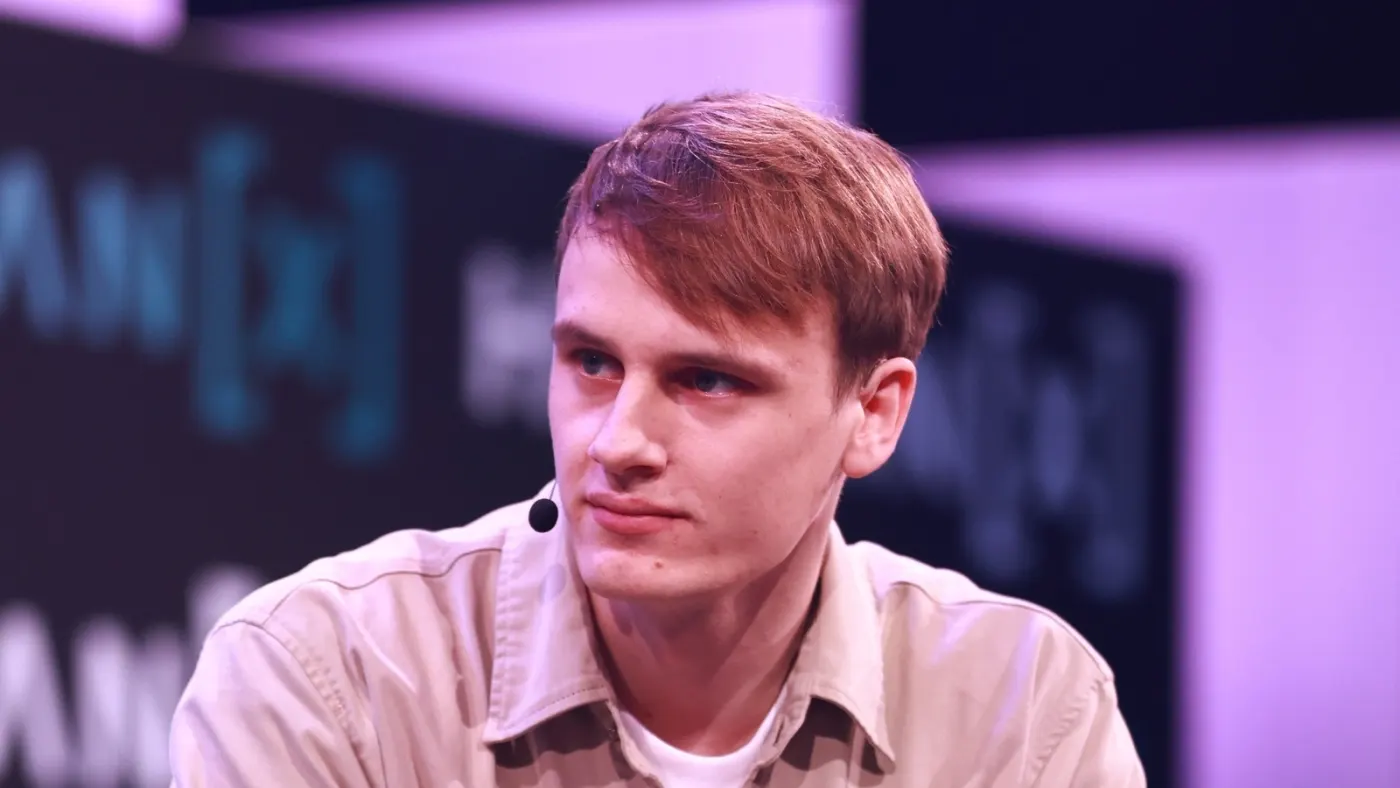
On a Thursday in Amsterdam in September 2026, Fabian Hedin sat on a HumanX stage and said out loud a number that would have sounded like science fiction two years earlier. Lovable, the Stockholm company he cofounded and runs as chief technology officer, had crossed about six hundred million dollars in annualized revenue. He told the room that roughly two thirds of Fortune 500 companies were already using the product, often because someone inside those companies had simply started building without waiting for an IT ticket. Apps created on Lovable, he said, were drawing close to a billion visits a month, an order of magnitude more traffic than Lovable’s own site.
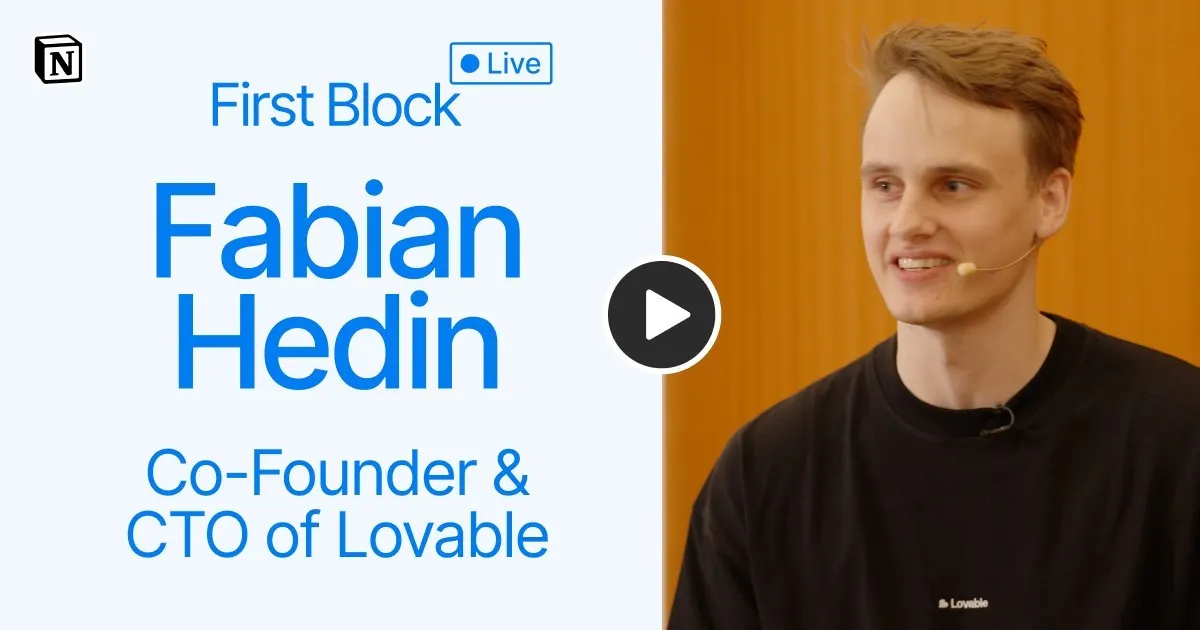
He was twenty-seven. Forbes had already estimated his fortune near three point one billion dollars after an August 2026 funding round valued the company at thirteen point three billion. The louder public face of Lovable was still his cofounder and chief executive, Anton Osika. Hedin’s own style stayed quieter. In a Swedish profile he compared his job to a sheepdog, a vallhund, keeping the flock pointed the same way. On a Notion podcast months earlier he had joked that if he had to rebuild Lovable from scratch, the first block would be simple. He would just use Lovable.
That combination is the door into his story. A boy who learned programming because a game server needed a website. A teenager who got tired of coding other people’s ideas. A young founder who sold a steady proptech tool, worked under Osika at a Y Combinator startup, quit to fly and fiddle with blockchain, then answered a Saturday morning knock that turned into one of Europe’s fastest software rockets. By late 2026 the rocket was enterprise-scale, Europe-proud, and still oddly frugal at the center.
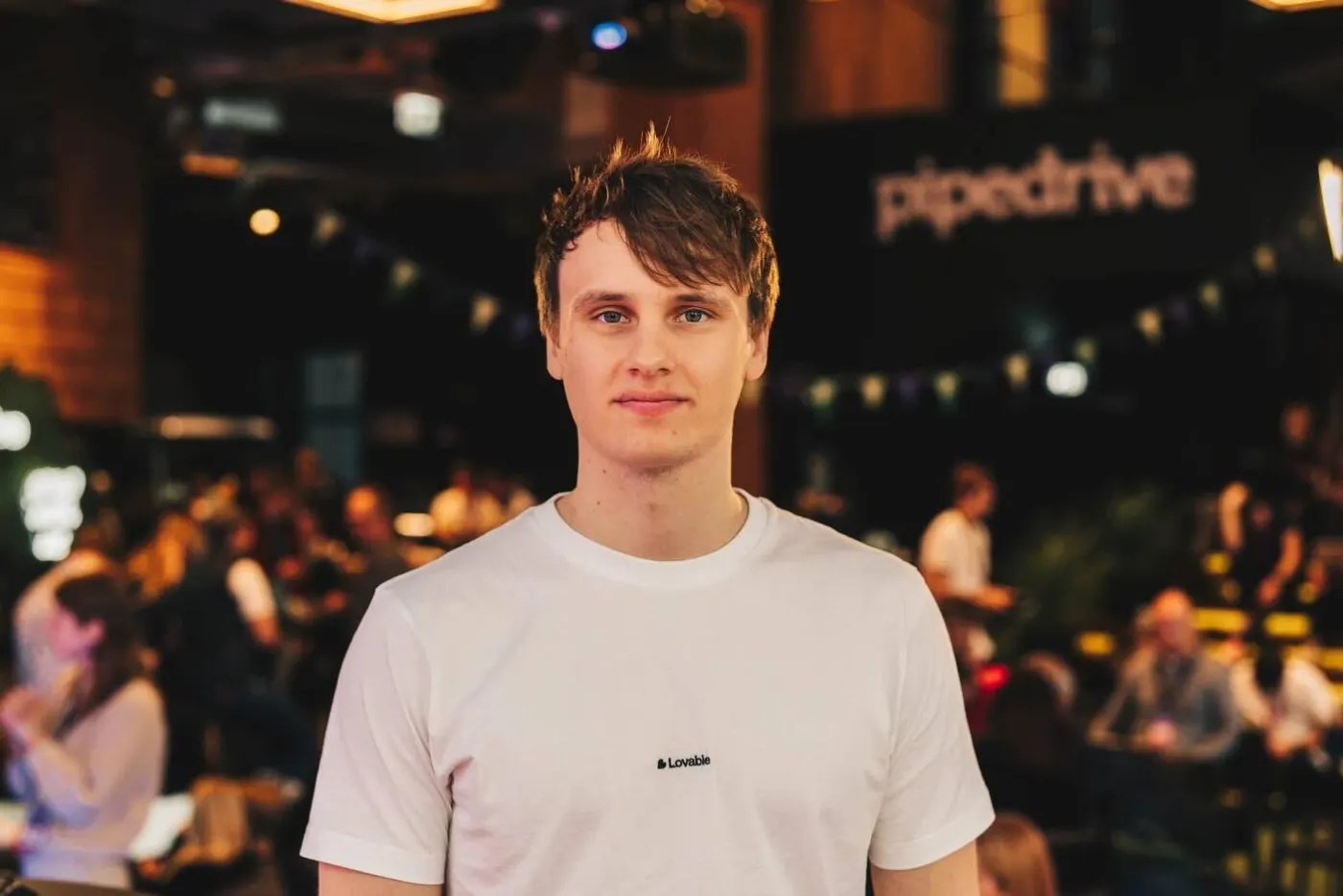

Minecraft, a website, and a few thousand dollars
Fabian Nils Mikael Hedin was born on June 22, 1999, in Sweden. The public record of his childhood is thinner than the record of his twenties, but the origin story he tells is consistent across interviews. Around age ten or eleven he was deep into Minecraft. He wanted his own server. Moderating a global multiplayer world meant learning how the software worked, then wanting to change the experience, then needing a website for the community. HTML, CSS, and JavaScript stopped being abstract school subjects. They became the price of admission to a world he already loved.
He has said the Minecraft chapter was his first entrepreneurial trip. He earned a few thousand dollars from it. The sum was small next to later Forbes tallies, but it taught a pattern that never left him. Build something people actually use. Own a piece of it. Do not wait for permission. Swedish interviews describe the arc cleanly: server first, then a site for the server, then original games, then paid business systems for strangers who heard he could code. By the end of gymnasium he already knew the difference between being useful and being an owner.
In high school the games got more ambitious, then other people noticed. Someone would hear that this guy could program and ask him to build a business application. He said yes often enough that SaaS work became normal before he finished secondary school. After a while the pattern bored him. Building other people’s ideas made him a contractor, not a stakeholder. He wanted something he would still own years later.
Right after high school, in the summer, he teamed up with a classmate and friend and started a property-tech SaaS company aimed at Swedish landlords and the rental market. The product became known as TenFAST. It was not a viral toy. It was administrative software for a slow industry, the unglamorous work of helping property owners and tenants navigate Swedish rental reality. Hedin later said it grew steadily rather than explosively. That honesty matters. TenFAST gave him real founder reps, a path through KTH Innovation in Stockholm, and eventually a sale that was large enough to take financial panic off the table, even if it was not a life-changing lottery win. On First Block he described the exit without mythology. Not huge. Enough that he did not need to scramble for any job that called. That calm is what made the Depict conversation optional rather than desperate, and optional conversations are often the ones that change a life.
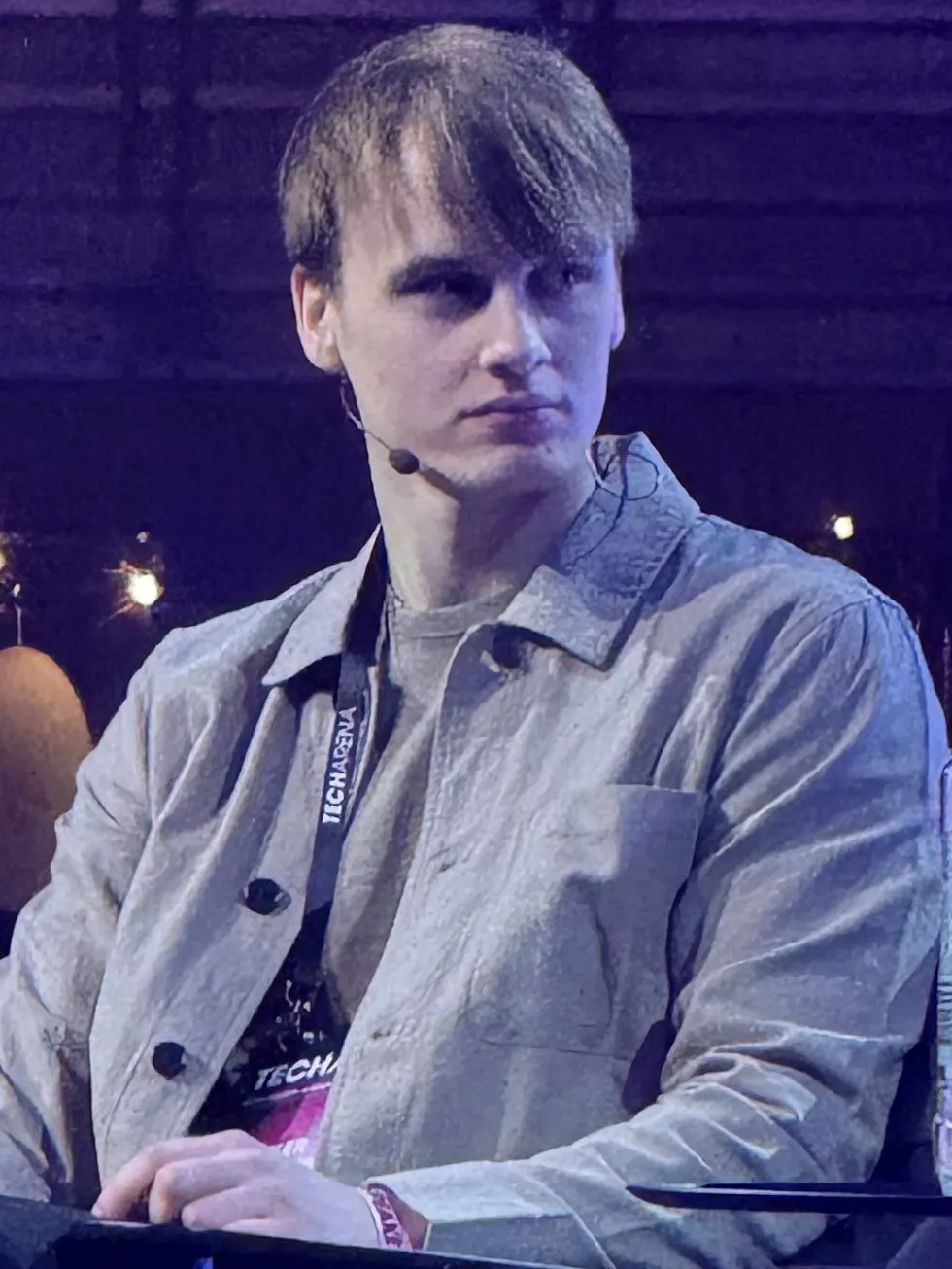
Stockholm, KTH, and the longest job of his life
After high school he moved to Stockholm, Sweden’s capital and tech center, and enrolled at KTH Royal Institute of Technology in industrial engineering and management. Some profiles list a 2021 bachelor’s graduation. Other wealth databases mark him as a dropout. The careful version is that he studied industriell ekonomi at KTH, moved through the school’s innovation programs, and left with enough technical and business range to keep shipping software while the degree paperwork stayed secondary to the companies.
Before and around university he stacked odd technical jobs that look scattered until you see the theme: Algorithm engineer at VIKON Vibrationkonsult, web developer at Sjukvårdskonsulterna, intern at ABB Robotics. A Stockholm Chamber of Commerce biography also credits him with work touching Stephen Hawking’s personal computer systems, smart pillows with former SpaceX engineers, and technical diligence on listed companies. Those Chamber claims are self-reported color and should be treated carefully. What is solid is the pattern. He kept putting himself next to hard technical problems instead of waiting for a perfect title.
Through the Stockholm network he met Anton Osika and Osika’s then cofounder at Depict, a Y Combinator-backed AI company building merchandising and search tools for e-commerce. Hedin was not hunting for a job. The TenFAST exit had bought him calm. Talking with people in the space still felt useful. He joined Depict as frontend lead. Osika was his boss. Hedin stayed about ten months and later joked on First Block that it remains his longest employment to date.
Depict mattered for two reasons. First, it put him inside a modern AI product company with YC habits. Second, it taught him Osika’s pace up close: impulsive, idea-dense, exhausting in the affectionate sense colleagues later described on Swedish television. After ten months Hedin quit anyway. He wanted his own thing again. He explored blockchain. He got a private pilot license. He lived what he later called a fairly good life. For a short window he looked like a young founder who had already cashed a modest chip and might never board another rocket.
A Saturday morning walk and GPT Engineer
In the summer of 2023, on a Saturday morning, Osika called and woke him up. Hedin was not eager to take a walk. Osika said he was already outside. They walked. Osika asked whether Hedin knew what GPT Engineer was.
He did not. The project was only a few days old. Osika had built a command-line tool as a side project that could generate software from natural language prompts. It was already climbing GitHub’s trending lists. The question under the question was bigger. Could they build a company around this? Hedin had been thinking about what AI models could unlock since the GPT-3 and GPT-4 wave. The timing landed.
He framed the decision with a Jeff Bezos-style regret test. At eighty, what would he regret less: staying a chill solo operator living on earlier upside, or becoming a rocketship entrepreneur again? He chose the rocket.
They were two people at the start. The company name was Lovable from the beginning. The early product still wore the GPT Engineer label. Hedin later admitted he fought to keep that name longer than he should have. Attachment is real. The deeper naming idea was sharper. Classic software taught teams to ship a minimum viable product, throw it away, and rebuild the real thing. With AI, they wanted people to build the real thing sooner. Call it a minimum lovable product. Hence Lovable.

Betting on the ninety-nine percent
Plenty of startups in that season chose the obvious lane: help professional developers write code faster. Cursor and GitHub Copilot pointed that direction. Hedin said he was never that interested. He wanted non-technical people to go from zero to one. A construction manager should think about construction, not about which database to pick. Lovable should absorb the technical choices.
That problem was harder. Early foundation models were not really good enough. Basic prototypes worked. Production systems wobbled. Hedin and Osika debated vertical traps: maybe only landing pages, maybe only restaurant sites. They argued until they chose breadth. Hedin later said they hit their heads against the wall until it worked.
They also made mistakes they now teach as warnings. They built complex agent systems betting that future models would rescue the architecture. Hedin’s advice on First Block was blunt. Do not overbuild for GPT-5. There is a steam engine on the table today. Apply it. They also stayed behind a waitlist too long. Hedin believes they had an early chat-and-preview interface and still let others take the first general launch. Launch earlier than you think, he told founders.
Seed capital arrived. Forbes narration around the period cites roughly eight million dollars from Hummingbird in October 2023 after Osika recruited Hedin as cofounder and CTO. The exact early cap table is private. What became public later is the trajectory after the commercial rebrand and launch.
November 2024 and the vertical curve
Lovable’s consumer-facing platform launch in November 2024 is the moment Hedin says the company became real outside his own head. Within about eight months, annualized subscription revenue moved from roughly one million dollars to one hundred million. Company and press materials called it the fastest climb to that mark in software history, beating earlier record holders that had needed a year and a half or more.
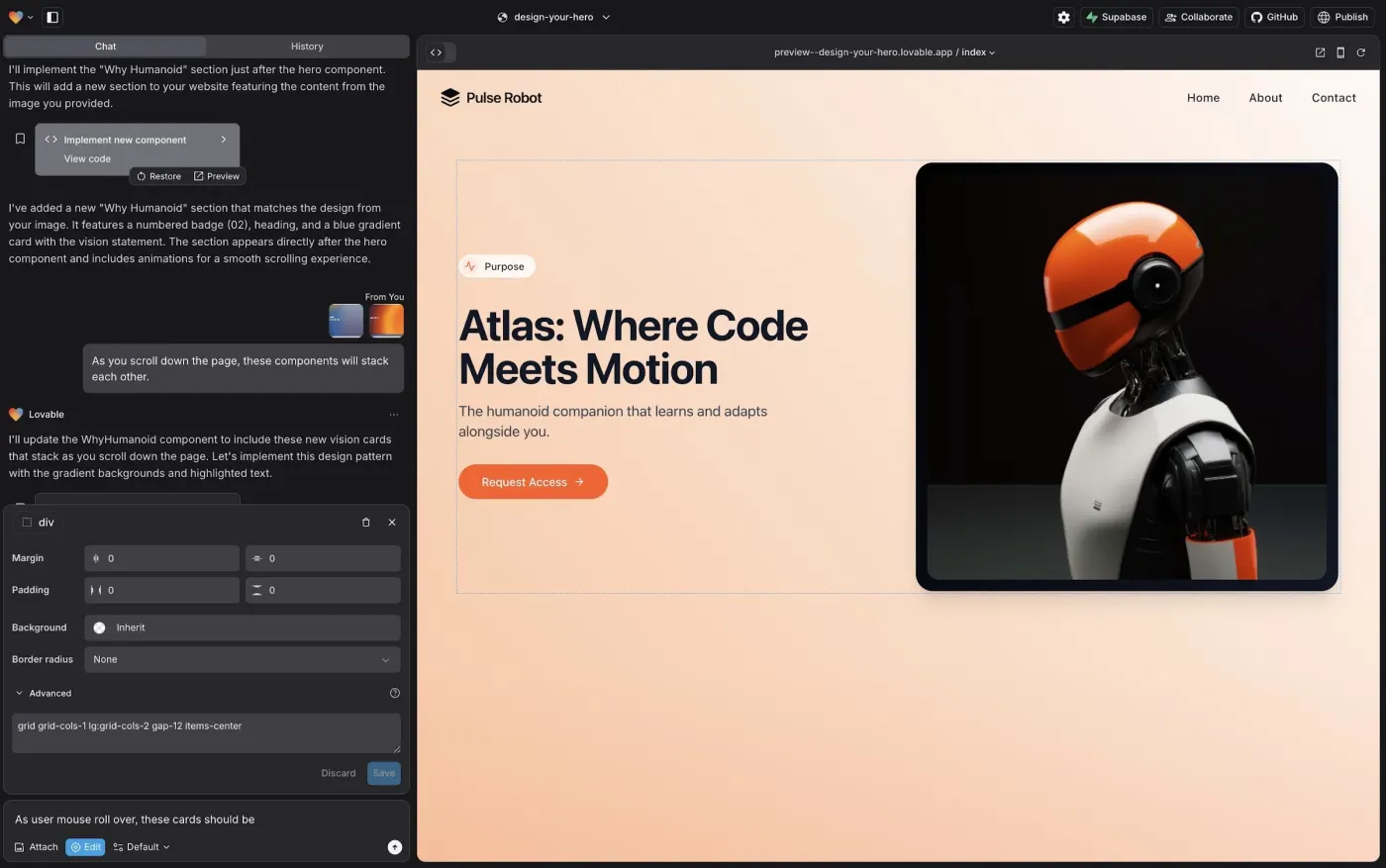
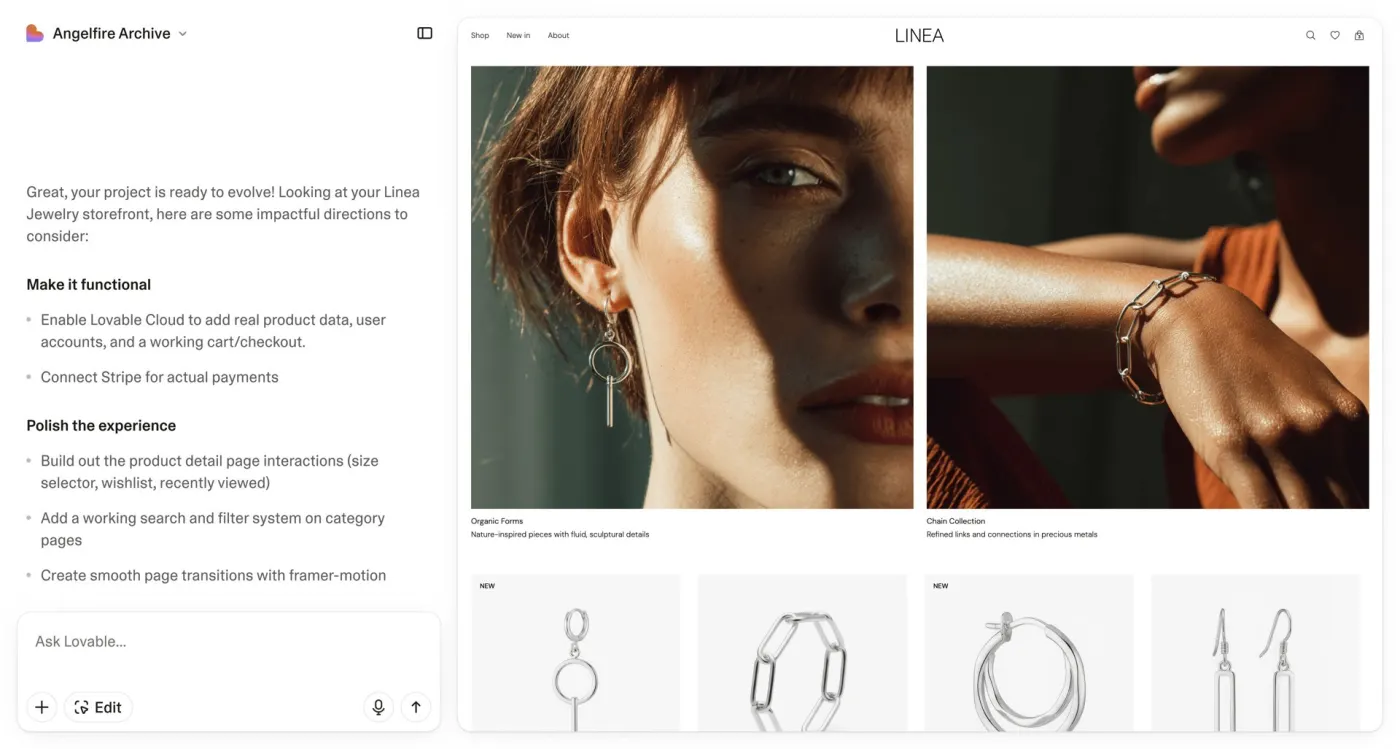
The product thesis stayed stubborn. Lovable does not primarily spit raw code at a developer. It tries to output a product: hosted, deployable, editable in chat, increasingly wrapped with payments, email, SEO, and ads under Lovable Cloud. Internal teams dogfood the tool constantly, building office CRMs and ops software on their own platform. Hedin has said that habit is addictive and necessary. It keeps the company honest about what the product can actually do today.
Growth compounded through word of mouth. Hedin told Swedish reporters that people build something, tell a friend, and that loop remains a core engine. By mid to late 2025 the company was reporting tens of millions of projects and daily creation rates in the high tens of thousands. Enterprise bottoms-up adoption followed. Employees inside giant companies discovered they could solve a local problem in hours instead of waiting months on an engineering backlog. Then the companies called Lovable asking what to do with thousands of shadow apps and how to set permissions.
Money, valuation, and a thirteen billion stamp
The financing timeline in 2025 and 2026 looked like a chart drawn by adrenaline. In July 2025 Lovable raised about two hundred million dollars at a valuation near one point eight billion dollars, with Accel, Creandum, and notable European founder-angels in the mix. By November the company was talking about roughly two hundred million dollars in annual recurring revenue and on the order of one hundred thousand projects built per day. In December 2025 a new round, reported around three hundred to three hundred thirty million dollars, valued the firm at about six point six billion. Menlo Ventures and CapitalG featured prominently. Accel stayed in the story.
That December round is when Forbes estimated that Osika and Hedin each held about twenty-four percent and crossed into billionaire territory at roughly one point six billion dollars apiece. Hedin, then twenty-six, joined a tiny club of self-made dollar billionaires under thirty. Swedish coverage translated the paper wealth into local shock value, noting how few people in history had held that much at that age.
They did not treat the number as a shopping list. Both founders said they would give away at least half of what they earn from an exit or IPO, aiming the capital at a safer human transition through powerful AI. Osika is associated with Founders Pledge framing. Hedin repeats the fifty percent line in interviews and on camera. On a Swedish day-in-the-life shoot he shrugged at Lamborghini fantasies, rode a used bike, treated a merino wool T-shirt that cost a little over one hundred dollars as a nearly scandalous luxury, and bought a frying pan on sale because it cleared an arbitrary thousand-kronor silliness threshold the host invented.
In August 2026 Lovable raised another four hundred million dollars at a thirteen point three billion dollar valuation, co-led by Menlo Ventures and the Scaleup Europe Fund managed by EQT, an EU-backed scaleup vehicle. Earlier June reporting had floated talks near twelve billion. The final stamp cleared thirteen. Total capital raised across the recent mega-rounds passed seven hundred million dollars. Company messaging around the round cited more than sixty million projects built on the platform and on the order of one point two million new projects a week, plus hundreds of millions of monthly visits to those apps. Plans included growing headcount toward roughly four hundred fifty people, expanding in Latin America, and hardening security features. Both founders kept saying it was still day zero. Forbes updated Hedin’s real-time fortune near three point one billion dollars by late August 2026, a paper number that moves whenever private markets reprice the same underlying stake.
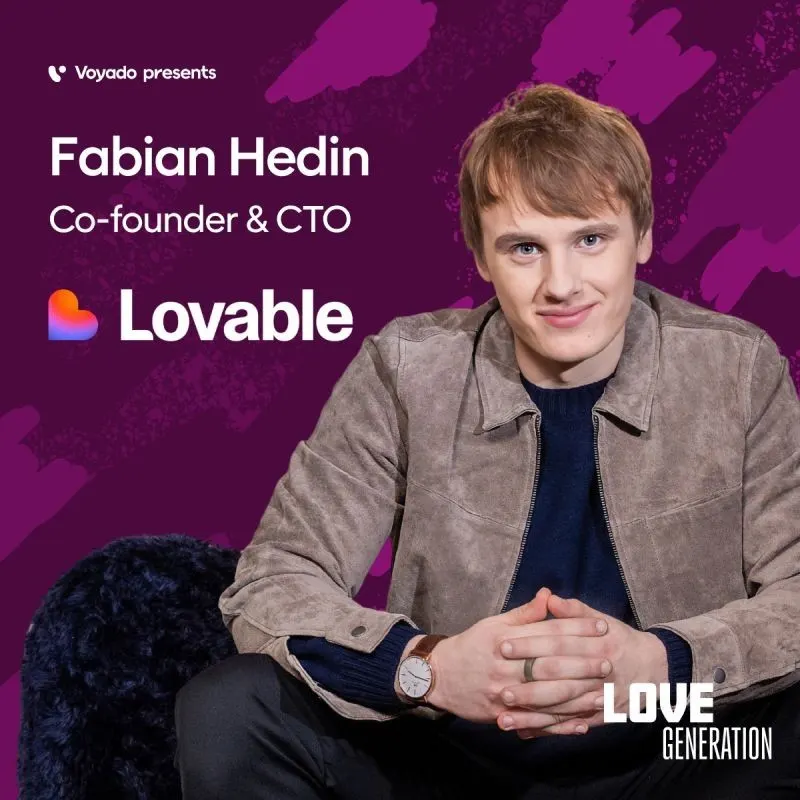
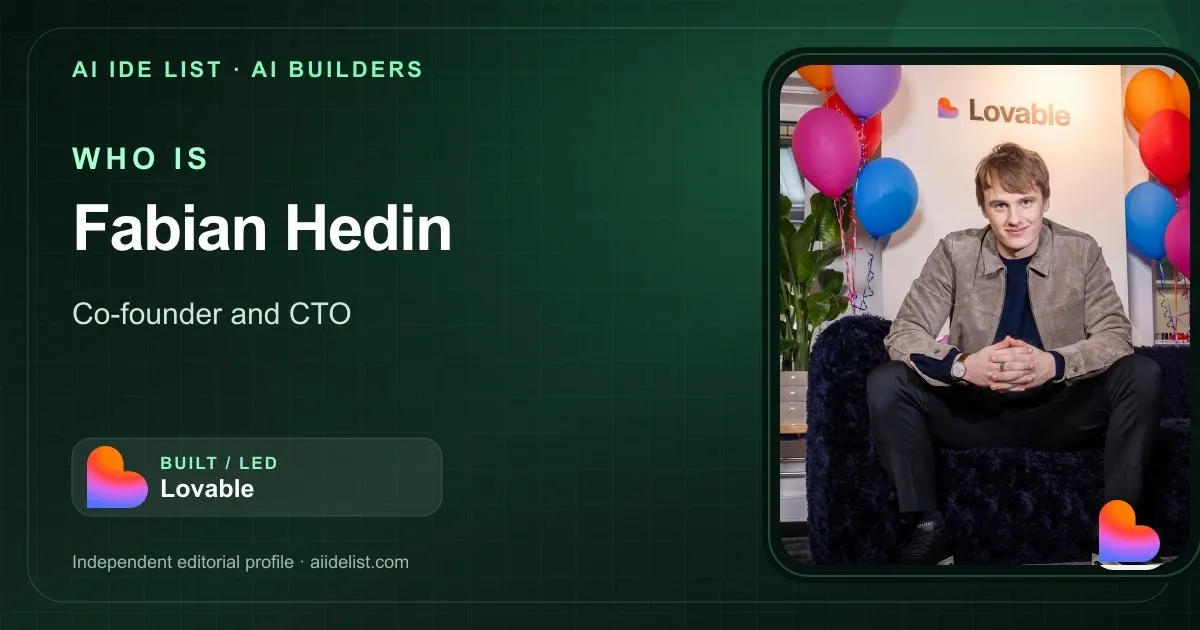
How the sheepdog works
Hedin’s operating style mixes startup intensity with almost comic personal restraint. On First Block he talked about waking at four in the morning while traveling so he could stay hands-on. He resists becoming a pure manager who only hires chiefs of chiefs. The CTO title, in his telling, is less about writing every line and more about making the whole company run efficiently in one direction.
Swedish television captured the office texture. A modest sign. A chief of staff named Jesper who shadows him so closely they joke about cloning. A clone test on favorite color and vegan food that they somehow answer in sync. A Post-it improvisation for a missing door sign that Osika later turns into a Lovable-built surprise. Late dinners where the founders talk about p-doom, the probability that advanced AI goes catastrophically wrong, and insist that responsibility plus philanthropy is part of the job, not a retirement hobby.
His mother, Petra, when ambushed for a description of her son on that same show, offered smart, creative, warm, and, when prompted, frugal. Hedin has said he reached a low material satisfaction level even before Lovable’s wealth. After a point, more money does not change the morning bike ride. What changes is the size of the flock he is trying to keep together.
Product decisions still carry his fingerprints. Lovable never offered users a model picker. Under the hood, Hedin has said, a single task may route across more than a hundred models trading off cost, speed, and quality. The company increasingly tunes its own models for some jobs. Security scanning runs across more than a million new projects a week, too many for human review, and keeps watching after builders walk away. Enterprise work includes helping CIOs decide who may build what, which data an app may touch, and who may edit it, because editors inherit power. Hedin prefers the phrase agentic coding over vibe coding when the conversation gets serious. The output, he keeps repeating, is a product and increasingly a business, not a gist of code.
World impact: who gets to build
Before tools like Lovable scaled, software creation sat behind years of training, expensive agencies, or scarce engineering bandwidth. After November 2024, a salesperson who understood restaurant pitching end to end could spin a customized pitch tool in a day and revise it in minutes. Hedin told HumanX about a Brazilian founder named Rafael who built an AI education company on Lovable, put about fifty employees onto the same platform for internal processes, and was tracking toward roughly twenty million dollars in annual recurring revenue. Deutsche Telekom, he said, had built more than two thousand applications for real operational uses. Microsoft and Nvidia appeared on his customer list. Finance, HR, engineering, product, and design teams all showed up as builders.
That shift is double-edged. Security teams worry, rightly, about uncontrolled code. Shadow IT becomes shadow software factories. Hedin does not pretend the risk is fake. He argues the answer is governance plus continuous scanning, not nostalgia for a world where only a few people could create. He also argues Europe can compete. He and Osika visited San Francisco early, did their diligence, and still chose to build from Stockholm, mixing Y Combinator speed with Swedish team-first culture. When critics treat European tech as permanently behind, Lovable’s revenue curve is his counterexample.
Competitive pressure is fierce. Developer-focused tools raised enormous rounds. Consumer and prosumer builders like Replit fought for the same non-coder pool. Design giants and website platforms shipped their own AI builders. Google and others bought into adjacent stacks. Lovable’s wager remains that the largest market is the people who never wanted to become programmers, and that hosting, permissions, payments, and ongoing security are the difference between a demo and a business.
Awards followed the money. Forbes 30 Under 30 Europe in 2025. A KTH Innovation Award in 2025 for challenging tech giants and democratizing creation. TechSverige’s AI Swede of the Year in 2025, shared with Osika. Neon River’s 2025 EMEA CTO lists put Hedin’s name beside operators at much older firms, a category joke that only works because Lovable’s revenue line looks older than the company’s birthday. None of those plaques matter as much as the weekly project count and the enterprise phone calls asking how to tame two thousand internal apps.
Love Generation stage talks in 2026 framed the mission in almost civic language: what if everyone could create software? That slogan can sound soft until you watch a non-engineer ship a payments-ready storefront in an afternoon. Hedin’s contribution to that slogan is the systems layer underneath the demo. Model routing. Hosting. Permissions. Scanning. The unsexy machinery that turns a prompt into something a Fortune 500 security team can live with.

Failures, almost-paths, and the lives he did not live
It is easy to narrate Hedin’s path as an unbroken ascent. The documentary truth includes the forks. TenFAST was steady, not explosive, and he left that comfort because steady was not enough. Depict was a credentialed AI job under a future cofounder, and he still quit after ten months. The pilot license and blockchain summer could have become a permanent lifestyle of soft optionality. The Saturday walk could have been declined.
Inside Lovable the almost-failures were strategic. Vertical lock-in. Agent architectures that assumed tomorrow’s models. A waitlist that protected polish and cost them first-mover theater. Early doubt about whether foundation models could serve true non-coders. Hedin’s own bias toward keeping the GPT Engineer name longer than the market needed. SoftBank-era mythology is not their story, but valuation theater is a temptation in any thirteen billion dollar conversation. Hedin’s frugality and fifty percent pledge are partly character and partly a public commitment to keep the company’s moral center from floating away with the term sheet.
Unverified or soft spots belong in the open. Exact TenFAST sale terms are not public. The Chamber of Commerce Hawking and SpaceX-adjacent anecdotes are not independently documented in the same way as the Minecraft and Depict chapters. Forbes ownership estimates are estimates. Net worth moves with private rounds. Childhood hometown detail beyond Sweden is lightly sourced in English-language profiles. The KTH graduation-versus-dropout conflict remains unresolved in secondary sources. Living-person care means stating those limits instead of inventing glue.
Depict months, the restless summer, and choosing the hard problem
The Depict chapter deserves a slower look because it is the hinge between employee and cofounder. Depict was not a hobby club. It was a Y Combinator company in Stockholm selling AI merchandising and search to online retailers that needed better product discovery. Hedin’s frontend lead role meant shipping interfaces customers touched, under a CEO who thought in leaps. Ten months is short on a resume and long inside a startup. Hedin is proud of that tenure precisely because it is his record for staying inside someone else’s machine. Quitting was not a tantrum. It was a return to the stakeholder instinct that had already powered Minecraft and TenFAST.
The months after Depict are easy to romanticize as a gap year. They were also a stress test of appetite. Blockchain exploration in 2022 and 2023 put him near a noisy speculative market without forcing him to become a permanent crypto founder. The private pilot license added a literal altitude metaphor Swedish profiles love, but the practical point is simpler. He was training for difficult, sequential skills again. He had runway. He had options. He did not yet have a second company that matched his hunger for extreme potential.
When Osika appeared on that Saturday with GPT Engineer, Hedin was choosing between two futures that both looked rational. One was a calm portfolio life. The other was another all-consuming build while foundation models were still clumsy. He has said the company felt real in his head from day one even while the product path remained foggy. That distinction matters. Conviction about the destination is not the same as knowing the road. Cursor-like tools improving professional developers looked logical. Enabling a construction worker or a restaurant owner to create production software looked harder and larger. Hedin kept picking the harder, larger problem.
Waitlists, word of mouth, and the first enterprise phone calls
The waitlist era is one of the few regrets Hedin states without hedging. Being early with a chat-and-preview surface did not automatically mean being first to a broad public launch. A waitlist can feel like quality control. It can also feel like hiding. When Notion’s founders were already telling friends to try Lovable, the product had crossed from experiment into recommendation. That is usually the moment to open the gate wider, not narrower.
After the November 2024 launch, growth behaved less like classic enterprise sales and more like consumer software with business consequences. A user built something useful. A colleague asked how. A team adopted it. Months later a security or IT leader discovered hundreds or thousands of apps and called Lovable not to ban the tool, but to ask how to govern it. Hedin’s HumanX comments about Fortune 500 bottoms-up adoption describe exactly that pattern. Deutsche Telekom’s reported two thousand-plus applications are not a hobby count. They are evidence that agentic building lands inside regulated, complex organizations when the time-to-first-version collapses from months to hours.
The Uber Eats sales-leader example he offered is small and revealing. The person knew the restaurant pitch process intimately. Engineering bandwidth did not. Lovable let process knowledge become software without waiting for a backlog slot. First version in hours or a day. Later changes in about ten minutes. That rhythm is the world-impact claim in miniature. Knowledge workers stop translating their expertise through scarce programmers for every iteration. They still need guardrails. They no longer need permission to start.
Money without the yacht, Europe without the apology
Hedin’s frugality can sound like public-relations theater until you stack the scenes. The used bike. The merino shirt treated as almost too expensive. The frying pan purchase invented as a dare. The mother who reaches for the word frugal. The comment that he had already hit his material saturation point before Lovable’s paper billions. None of that cancels the power of a twenty-four percent estimate on a thirteen billion dollar company. It does explain why he talks about wealth as a tool for AI-era responsibility rather than a costume change.
Staying in Europe is another deliberate choice. San Francisco diligence happened. Talent access, team culture, and a refusal to accept a permanent confidence gap kept the company in Stockholm while it courted global capital from Accel, Menlo, CapitalG, and an EU scaleup fund. When Osika speaks about Europe’s confidence problem, Hedin’s product metrics are the rebuttal slide. Six hundred million dollars in annualized revenue by September 2026 is not a regional participation trophy. It is a claim that the next software creation layer can be built from the Nordics and still set the pace for Fortune 500 behavior.
Headcount plans toward roughly four hundred fifty people, Latin America expansion, and heavier security investment show what the thirteen point three billion dollar round is for. Reliability becomes the product when a million projects appear every week. Lovable’s free security scanning across those projects, including after builders stop editing, is an attempt to industrialize a duty of care the category previously outsourced to luck. Hedin’s curl anecdote on stage, reminding listeners that even ancient command-line tools ship flaws, is a way of saying perfection is not the standard. Continuous repair is.
Rival maps and the meaning of production-ready
Map the rivals and Lovable’s lane clarifies. Cursor and similar systems arm experts. Replit and other builders chase accessible creation with different packaging. Figma, Squarespace, Wix, and Google have motives to keep creation inside their existing surfaces. Hedin’s differentiation line is stubborn enough to repeat. Lovable should not merely emit code. It should emit a running product and, more and more, a business with hosting, payments, and growth tooling attached. Eighty percent of ideas users bring, he has said, are about creating a business. That statistic, if even roughly right, explains why Cloud features for email, SEO, and ads are not side quests. They are the completion of the zero-to-one promise.
Production-ready, in Hedin’s vocabulary, is where AI hype usually dies. Generating a first draft is easy. Keeping a growing codebase editable, migrating a database, and surviving real users is hard. Models still struggle as complexity rises. Lovable’s job is to keep the second and third hours of building as magical as the first five minutes. That is why dogfooding internal tools matters. If the company cannot run its own operations on Lovable, the ninety-nine percent thesis is a slogan.
Partnership chemistry and the second name problem
Every breakout company invents a public narrative that overweights one face. Osika is older, more visible, and often the quoted visionary. Hedin’s media-shy reputation in Swedish business press is part of the brand of the company and part of his temperament. The sheepdog metaphor is self-aware. Someone has to keep cadence while the other founder generates weather systems of ideas. Their Depict history means the hierarchy flipped. Boss became peer. Peer became cofounder. That flip only works when ego can stand it.
The fifty percent pledge binds them publicly. So do late dinners about catastrophic AI risk. So does the shared line that it is still day zero after a thirteen billion dollar stamp. Partnership risk remains real for any living company at this velocity. Hiring wrong chiefs, losing security trust, or letting valuation storytelling outrun product truth could still puncture the curve. As of September 2026 the public evidence still shows accelerating revenue, expanding enterprise presence, and founders who keep showing up on bikes instead of in costume.
Closing
Picture an eleven-year-old staring at a Minecraft server console, realizing the website is the real gateway. Picture a summer after high school when two classmates decide landlords deserve better software. Picture a ten-month stretch as someone else’s frontend lead, then a restless pilot-training interlude. Picture a Saturday sidewalk in Stockholm in 2023, a days-old GitHub project, and a young man choosing regret minimization over comfort.
Then picture November 2024, a rebranded product, and a revenue curve that bent almost vertically. Picture a used bicycle leaning outside a Stockholm office while Forbes updates a billionaire line. Picture Amsterdam in September 2026, a CTO saying six hundred million in annualized revenue and nearly a billion monthly visits to other people’s apps. Picture a frying pan on sale and a promise to give half away.
Fabian Hedin’s life so far is not the story of the loudest founder in the room. It is the story of a builder who kept choosing ownership over employment, breadth over safe verticals, and today’s models over tomorrow’s excuses. Lovable’s bet is that software creation should belong to almost everyone. Hedin’s bet inside that bet is that a sheepdog can help a flock move that fast without forgetting why it started running.