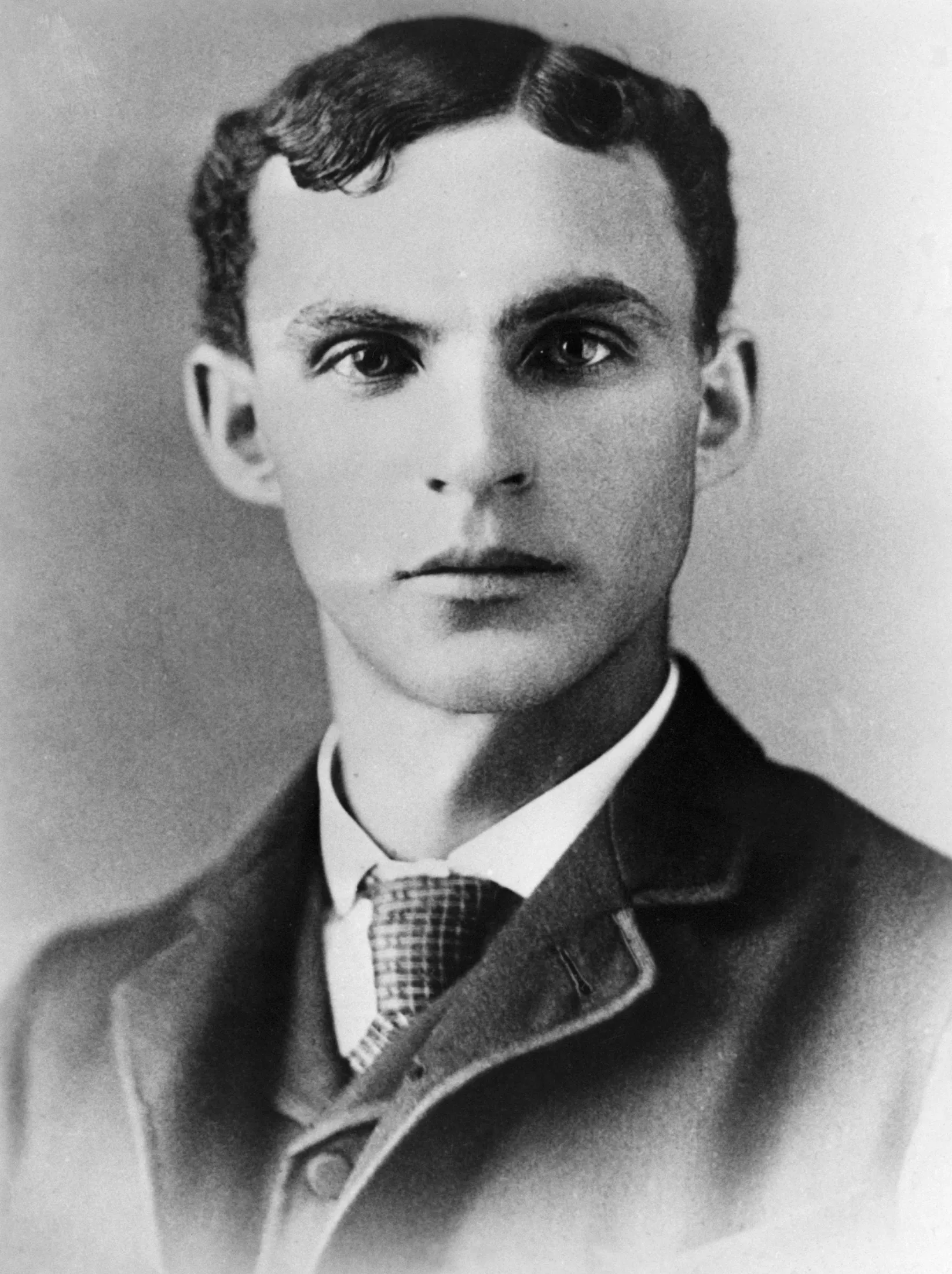
Henry Ford: The Man Who Put the World on Wheels
He failed twice before he was forty. Then he built a car a farmer could afford. Fifteen million of them.
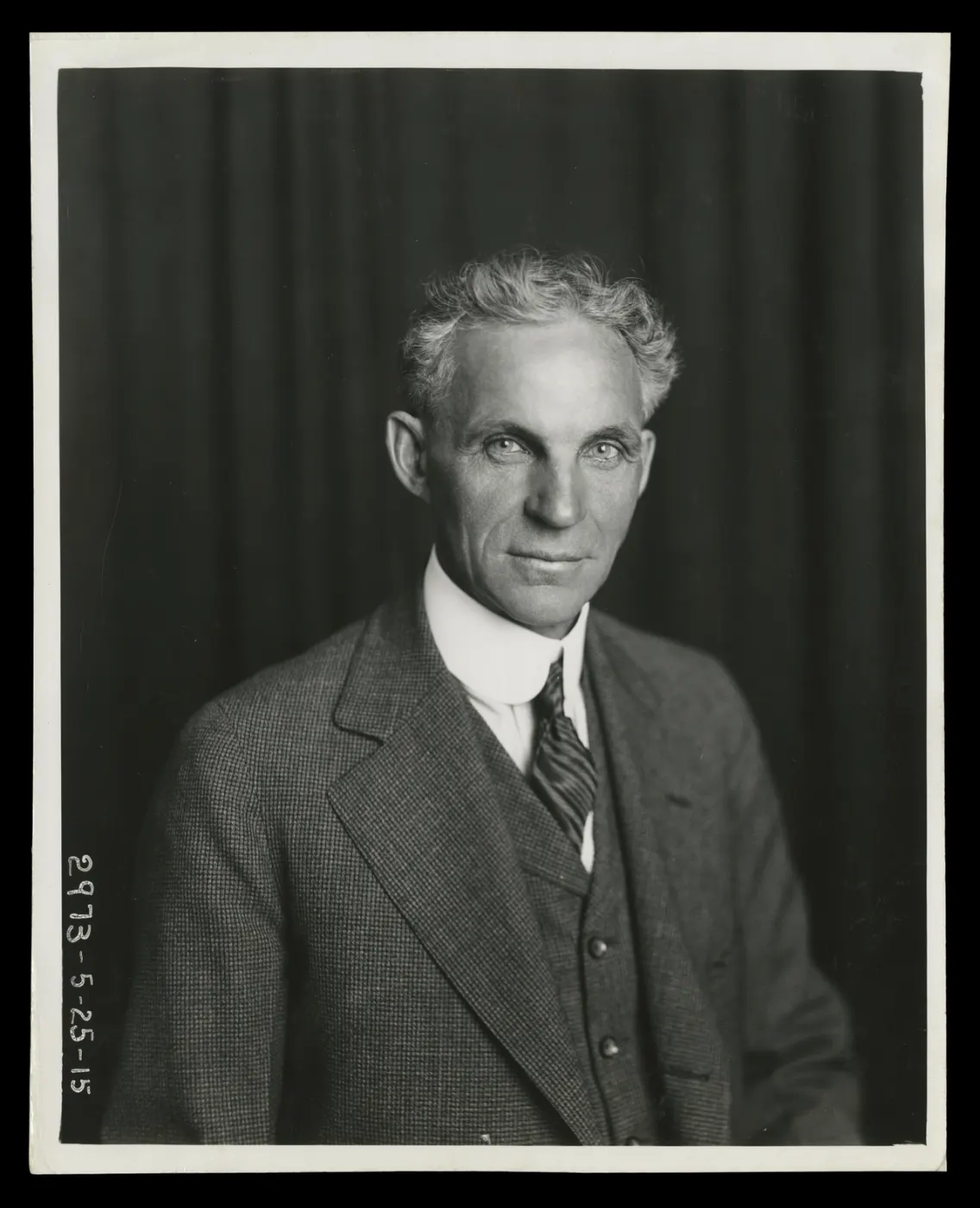
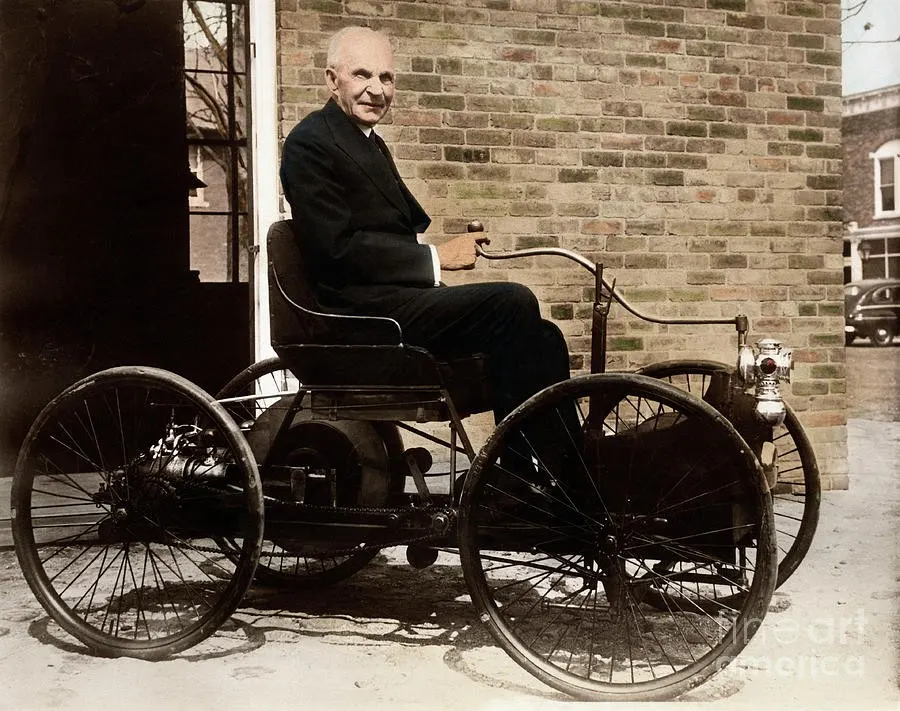
It was about four o'clock in the morning on 4 June 1896, and it was raining in Detroit. In a small brick shed behind a rented house on Bagley Avenue, a 32-year-old engineer stood next to a strange machine. It had four bicycle wheels, a seat like a buggy, and a little gas engine underneath. He called it the Quadricycle.
There was just one problem. The machine was wider than the shed door.
Henry Ford had been so busy building it that he never checked. So he picked up an axe and knocked bricks out of the wall until the opening was big enough. Then he pushed his machine out into the wet street.
A friend named Jim Bishop rode ahead on a bicycle to warn anyone who might be out that early. The Quadricycle coughed, shook, and rolled. It had two speeds, about 10 miles per hour and about 20. It had no brakes. It could not back up. To stop, Ford dragged his foot or pressed it against a tire.
It broke down on the way, and he had to fix it on the spot. But it ran. After breakfast he went to his day job at the Edison Illuminating Company as if nothing had happened.
Ford was not the first person to build a car. Another Detroit man, Charles Brady King, had driven one through the city a few months earlier. Germans like Karl Benz had been selling cars for years. But the man pushing that little machine through the rain would do something none of them did. He would make the car cheap enough for almost everyone.
He would also become one of the most admired men on Earth, one of the richest, and one of the most harmful voices of hatred in American history. This is the story of how one person could be all of those things at once.
A farm boy who hated chores
Henry Ford was born on 30 July 1863 on a farm in Springwells Township, Michigan, near a small place that would later be called Dearborn. The United States was in the middle of the Civil War. His father, William, had come from Ireland. His mother, Mary, had grown up nearby.
The Fords were not poor. They owned good land and worked it hard. Every child was expected to help with the cows, the fields, and the endless chores.
Henry did not like farm work. He liked what made farm work easier. He took apart anything with gears. He took apart his own toys, and then other children's toys. He fixed neighbors' watches with tools he made himself, including a tiny screwdriver he filed out of a nail.
When he was older, Ford liked to tell a tale about a harsh father who wanted him to stay on the farm. The truth was kinder. His parents let him skip some chores. They even set up a workbench for him in the kitchen so he could tinker. His father later helped him find work in the city.
The road engine and a hard loss
In 1876, when Henry was about 12, he was riding in a wagon with his father when he saw something he never forgot. A steam engine was moving down the road on its own power. It was the kind of engine farmers used to run threshing machines, but usually horses pulled it from farm to farm. This one pulled itself.
Henry jumped off the wagon before his father could stop it. He ran to the man driving the engine and asked question after question. How fast did it go? How did the chain drive the wheels? The driver answered every one. Decades later, Ford said that moment was the reason he became an engineer.
That same year brought a much worse moment. His mother died after giving birth. Henry was heartbroken. He later said the house felt like a watch without a mainspring.
He kept her rules in his head for life. Do the hard things first. Do not feel sorry for yourself. Those lessons helped him survive long hours and failures. They also made him stubborn, and sometimes cold, toward people who did not live the way he thought they should.
Walking to Detroit
In December 1879, 16-year-old Henry walked about nine miles from the farm into Detroit. The city was loud, smoky, and full of machines. That was exactly what he wanted.
He took a job as an apprentice machinist at James F. Flower and Brothers, a shop that made valves and fittings. The pay was small, so he worked nights repairing watches for extra money. Later he moved to the Detroit Dry Dock Company, where workers built steel ships and their engines.
Later he became a traveling repairman for Westinghouse, fixing steam engines on farms across southern Michigan.
At a dance, he met a young woman named Clara Bryant. She was calm, practical, and she believed in him. They married on 11 April 1888. Henry built them a small house on the timber land.
Clara would matter more than almost anyone in his story. She kept the money straight. She put up with his late nights. Henry later called her "the Believer," because she trusted his ideas before anyone else did.
Edison Illuminating and the kitchen sink engine
In 1891, Henry and Clara moved to Detroit. He took a job as an engineer at the Edison Illuminating Company, the business that made electricity for the city. He was good at it. Within two years he was chief engineer, on call day and night to keep the power plant running.
The job paid well enough to give him something he wanted badly: time and money to experiment. People in magazines were writing about "horseless carriages." Ford read everything he could find.
On 6 November 1893, Clara gave birth to their only child, a son named Edsel.
A few weeks later, on Christmas Eve, Clara was cooking dinner in the kitchen. Henry came in with a small engine he had built from scrap. He clamped it to the kitchen sink and hooked it to the house's electric light for a spark. He asked Clara to drip gasoline into it, a little at a time.
The engine sputtered, smoked, and then ran, shaking the sink while the kitchen filled with fumes. It was a tiny thing. But it proved the idea. Now he needed wheels.
The Quadricycle
For more than two years, Ford spent nights and weekends in the shed behind his home. Friends from the power plant helped him. They bought sheet metal, gasoline, bicycle chains, and wheels with money they did not really have to spare.
After the first drive in June 1896, the Quadricycle became a sight around Detroit. Crowds gathered every time he parked it. Ford had to chain it to lampposts so curious people would not try to drive off in it.
That summer he went to a meeting of Edison company managers in New York. At dinner, someone pointed out that the young engineer from Detroit had built a gas car. Thomas Edison himself, the most famous inventor in the world, asked Ford to explain it.
Ford drew sketches on a menu. According to Ford's own telling, Edison banged his fist on the table and told him to keep going, that a car carrying its own fuel was the right idea. Whether the words were exactly that, the meeting changed Ford. His hero had not laughed at him.
Two failed companies
By 1899, rich men in Detroit were paying attention. The city's mayor and several business leaders put money behind Ford. On 5 August 1899, the Detroit Automobile Company was formed. Ford quit his Edison job to become its chief engineer.
It did not go well. The first vehicle was a delivery wagon. It was heavy and slow and broke down often. Ford did not think it was good enough, and he refused to build more until he could fix it. He kept moving parts around, testing, and moving them again.
His investors wanted cars they could sell now. Ford wanted a car that was right. The two sides could not agree. By January 1901, the company was dead. It had made only about 20 vehicles.
Ford took a hard lesson from it, but not the one his backers hoped. He decided that investors who wanted quick profits would always get in his way. From then on he wanted to control his own shop.
He needed money again, though. To get it, he did something that seems strange for a man who said he wanted a practical family car. He built a race car.
Racing for attention
On 10 October 1901, at a horse track in Grosse Pointe, Michigan, Ford entered a race against Alexander Winton. Winton was the best-known car builder in America, and his cars had won race after race.
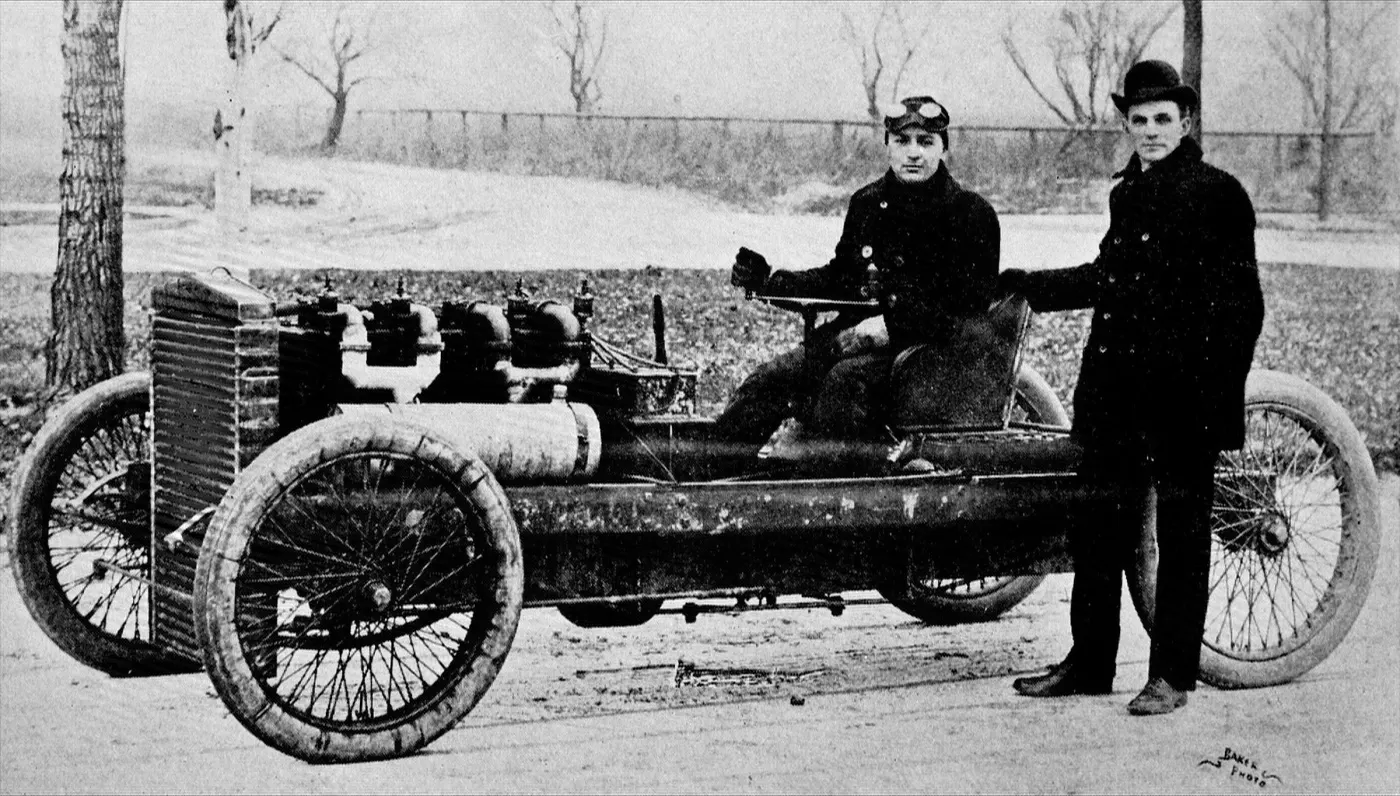
Ford had never raced before. He drove his own machine, with a helper standing on the running board and leaning out on the turns to keep it from tipping. Winton pulled ahead early. Then his car began to overheat and slow down. Ford passed him and won.
The win brought new investors, and in November 1901 they formed the Henry Ford Company.
Within months, the old fight began again. The backers brought in an expert named Henry Leland to check Ford's work. Ford hated being watched and second-guessed. In March 1902 he walked out, taking 900 dollars and the right to his name. The company he left behind was renamed Cadillac.
Ford kept racing. He built a huge, loud machine called the 999, with an engine so powerful that almost no one dared to drive it. A bicycle racer named Barney Oldfield did. In October 1902 Oldfield drove the 999 to victory, and later he set speed records with it. Ford was now famous for fast cars, even though fast cars were not really his dream.
Ford Motor Company, June 1903
On 16 June 1903, Ford tried a third time. The Ford Motor Company started with 28,000 dollars in cash from 12 investors. The biggest backer was a coal dealer named Alexander Malcomson. His clerk, a sharp and serious man named James Couzens, became the business manager.
Two brothers, John and Horace Dodge, owned a machine shop that agreed to build the engines and chassis. They took a big risk and were paid partly in stock.
This time, Ford had learned something. Instead of making every part himself, the company bought parts and put them together in a rented wagon factory on Mack Avenue. The first car was called the Model A. The first one was sold in July 1903 to a dentist in Chicago.
A powerful group of carmakers soon claimed that all gas cars broke a patent held by a lawyer named George Selden. They wanted Ford to pay them. Ford refused. The court fight dragged on for years. In 1911, a court ruled for Ford. Every small carmaker in America was suddenly free to build without paying a fee. Ford looked like a hero to the little guy.
Inside the company, there was another fight. Malcomson wanted big, expensive cars for rich buyers. Ford wanted small, cheap ones. Ford and Couzens slowly pushed Malcomson out, and by 1906 Ford owned a majority of the company. For the first time, it was truly his shop.
A car for the great multitude
On 1 October 1908, Ford Motor Company introduced the Model T.
It sat high off the ground, so it could get through muddy country roads. It used a strong, light steel called vanadium steel. It had a simple engine that farmers could fix with basic tools. Its pedals and levers were strange at first, but people learned fast.
Ford had described exactly what he wanted. He said he would build a motor car for the great multitude, big enough for a family and small enough for one person to take care of. And it would be so low in price that any man with a good salary could own one.
At first the Model T cost about 850 dollars. That was still a lot of money. But it was far less than most cars, and it was tough. People gave it nicknames like the Tin Lizzie and the flivver.
Ford had built the right car. Now he had to figure out how to build it fast enough, and cheaply enough, to keep his promise.
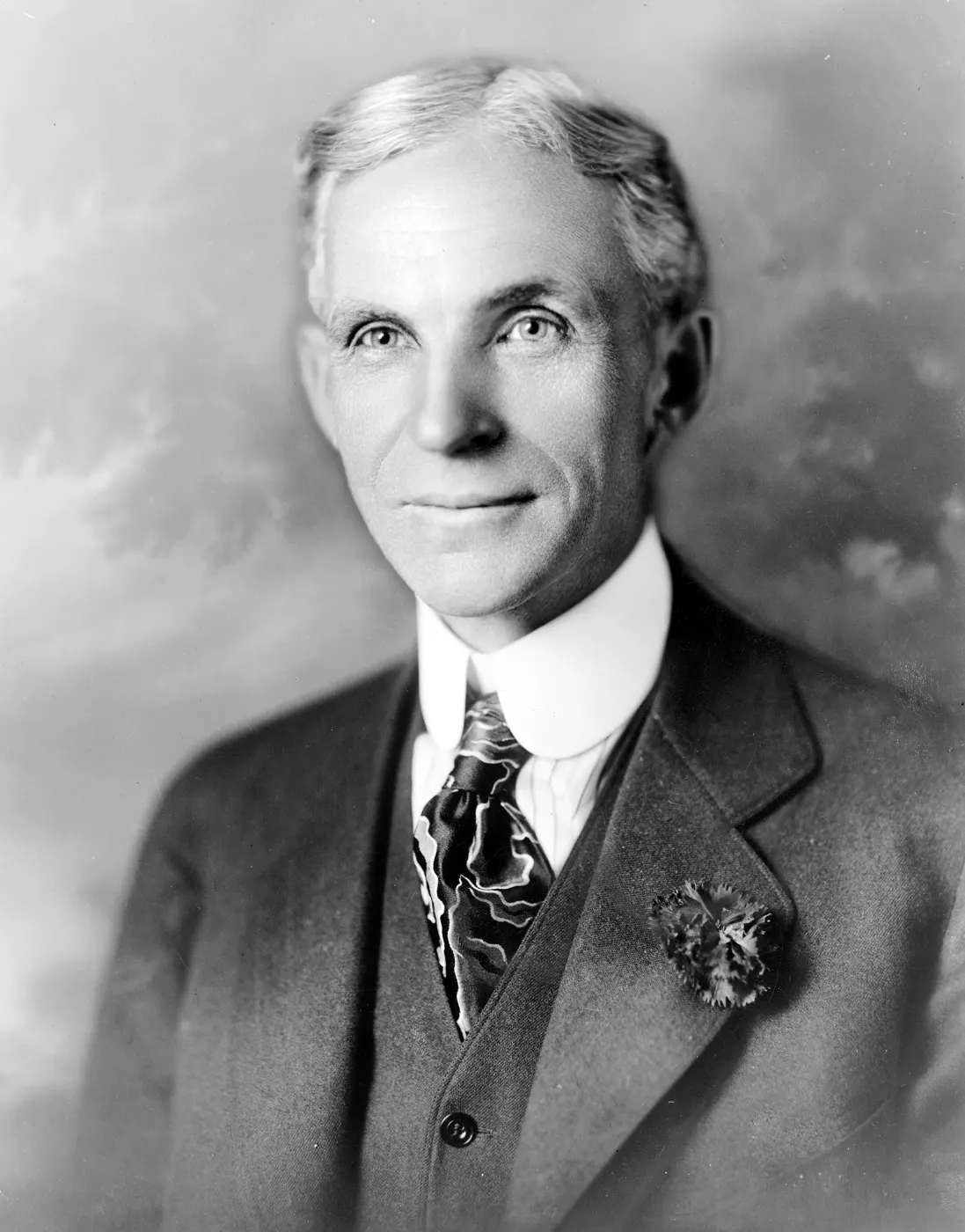
Highland Park and the moving line
In 1910, Ford opened a huge new factory in Highland Park, just north of Detroit. People called it the Crystal Palace because of its giant glass windows, which let in light for the workers.
At first, Model Ts were still built the old way. A car sat in one spot. Teams of workers walked around it, grabbed parts, and bolted them on. It was slow and full of wasted steps.
Ford and his engineers, including Charles Sorensen, Clarence Avery, and Peter Martin, began to test a different idea. What if the work moved to the worker, instead of the worker moving to the work?
The idea came partly from meatpacking plants in Chicago, where carcasses hung from moving overhead lines and each worker made one cut. Ford's team reversed it. Instead of taking something apart, they would put something together.
In April 1913 they tried it on a small part, the magneto that helped make sparks. Before, one worker built a whole magneto in about 20 minutes. On a moving line, with each worker doing one small step, it took about five.
Then they tried it on the whole car. In the late summer of 1913, workers pulled a Model T chassis across the floor with a rope and winch while others added parts. By early 1914, a chassis that once took more than 12 hours to build could be finished in about an hour and a half.
The results were stunning. More cars meant lower costs. Lower costs meant lower prices. Lower prices meant more buyers. Ford cut the price of the Model T again and again, eventually to under 300 dollars for the cheapest version by the mid-1920s.
To keep the line simple, Ford made nearly every car the same. For years after 1914, the only color was black, partly because black enamel dried fastest. The famous line credited to him, that a buyer could have any color he wanted so long as it was black, summed up his whole method.
But the line had a cost that did not show up on the price tag. The work was boring, fast, and exhausting. Men did the same motion hundreds of times a day. In 1913, so many people quit that Ford had to hire several workers for each job he wanted filled.
Five dollars a day
On 5 January 1914, Ford Motor Company made an announcement that landed on front pages across the country. Many of its workers would now earn five dollars for an eight-hour day. The usual pay in Detroit factories was about two dollars and thirty-four cents for nine hours.
Thousands of men rushed to the Highland Park gates the next morning, and they kept coming. On 12 January, in freezing weather, a crowd of job seekers grew so large and so angry that fire hoses were turned on them. Their wet clothes froze in the cold.
The five dollars came with strings. Only half was wages. The rest was a share of profits, and a worker got it only if he lived the way the company wanted. Ford created a Sociological Department. Its investigators visited workers' homes. They asked about drinking, savings, and cleanliness. They checked whether families took in boarders. Immigrant workers were pushed to take English classes and give up old customs.
The plan worked as business, too. People stopped quitting. Workers could now afford the cars they built. The line ran smoothly. Profits climbed higher than ever.
Ford became a folk hero. Ordinary people wrote to him as if he were a kind uncle. He started to believe he could fix more than cars.
The Peace Ship
In 1915, World War I was killing soldiers by the hundreds of thousands in Europe. A peace activist named Rosika Schwimmer convinced Ford that a private mission might help end it.
Ford rented an ocean liner, the Oscar II. He invited peace activists, students, and reporters. He told the press they would get the boys out of the trenches by Christmas.
When the ship reached Norway, he left the group and sailed home. The war went on for three more years.
It was a public embarrassment. Later, Ford would blame the war on bankers, and he began to repeat an old and poisonous idea: that Jewish financiers were behind it.
Courtrooms, a Senate race, and buying out his partners
In 1916, the Chicago Tribune called Ford an ignorant idealist and an anarchist. Ford sued for libel. At the trial in 1919, the newspaper's lawyers tried to show he really was ignorant. They asked him history questions. He did badly. When asked who Benedict Arnold was, he reportedly guessed he was a writer.
The jury found the Tribune had libeled him and awarded him six cents. Critics laughed, but many ordinary Americans liked him even more.
In 1918, at President Woodrow Wilson's request, Ford ran for the United States Senate from Michigan. He barely campaigned and lost by only a few thousand votes.
Meanwhile, he was fighting his own shareholders. Ford wanted to hold back profits and spend them on a giant new factory. The Dodge brothers, who owned stock, sued to force him to pay dividends. In 1919 the Michigan Supreme Court ruled against Ford and ordered a large payout.
Ford's answer was to buy everyone out. In 1919 and 1920, the Ford family paid about 105 million dollars for all the other shares. James Couzens, who had left the company earlier, received about 29 million dollars. Now Henry, Clara, and Edsel owned the entire company. No one could tell Henry Ford what to do.
The Rouge
The giant new factory rose along the Rouge River in Dearborn. Construction began in 1917. First it built boats for the Navy and then Fordson tractors, which brought cheap farm power to thousands of farmers.
Ford wanted the Rouge to do everything. Ford ships carried iron ore from the company's own mines. Coal came from its own mines too. The Rouge had its own docks, blast furnaces, steel mill, glass plant, power station, and more than 90 miles of railroad track. Raw materials went in one end. Finished cars came out the other.
By the 1930s, around 100,000 people worked there. Visitors, artists, and even Soviet engineers came from around the world to study it.
The Rouge made Ford the model of the modern factory. It also made him more powerful than many governments.
The Dearborn Independent
In late 1918, Ford bought a small weekly newspaper in his hometown, The Dearborn Independent. He wanted a voice that no editor could silence. Each issue carried a column called Mr. Ford's Page, written by an assistant named William J. Cameron from Ford's ideas.
On 22 May 1920, the paper ran a front page headline: "The International Jew: The World's Problem." It was the start of a series that ran in 91 issues in a row.
The articles blamed Jewish people for almost everything Ford disliked or feared. War. Financial panics. Communism. Jazz music. Movies. Even scandals in baseball. They drew heavily on a forged document called The Protocols of the Elders of Zion, a fake plan for world domination created in Russia and falsely presented as a secret Jewish plot. The series named real Jewish Americans and accused them of scheming against the country.
None of it was true. It was hate, printed on a huge scale by one of the most trusted men in America.
Ford made sure the paper was read. Ford car dealers were required to take copies and hand them out. Free copies went to clergy, schools, and community groups. At its peak in the mid-1920s, the paper claimed between 700,000 and 900,000 readers, putting it among the most widely read papers in the nation.
The articles were then collected into four books, called The International Jew, printed between 1920 and 1922. They spread around the world and were translated into many languages.
Ford's editor at the start, E.G. Pipp, quit rather than run the attacks. Jewish leaders protested. In 1921, more than 100 prominent Americans, including former president William Howard Taft, signed a public statement condemning the campaign. Ford kept going.
There were strange moments. For years Ford had given a new car every year to Rabbi Leo Franklin, a respected Detroit leader who was once his neighbor. In 1920, Franklin sent the gift back. Ford was reportedly surprised and asked what was wrong. In Ford's mind, the Jews he attacked in print seemed separate from the real Jewish man he knew.
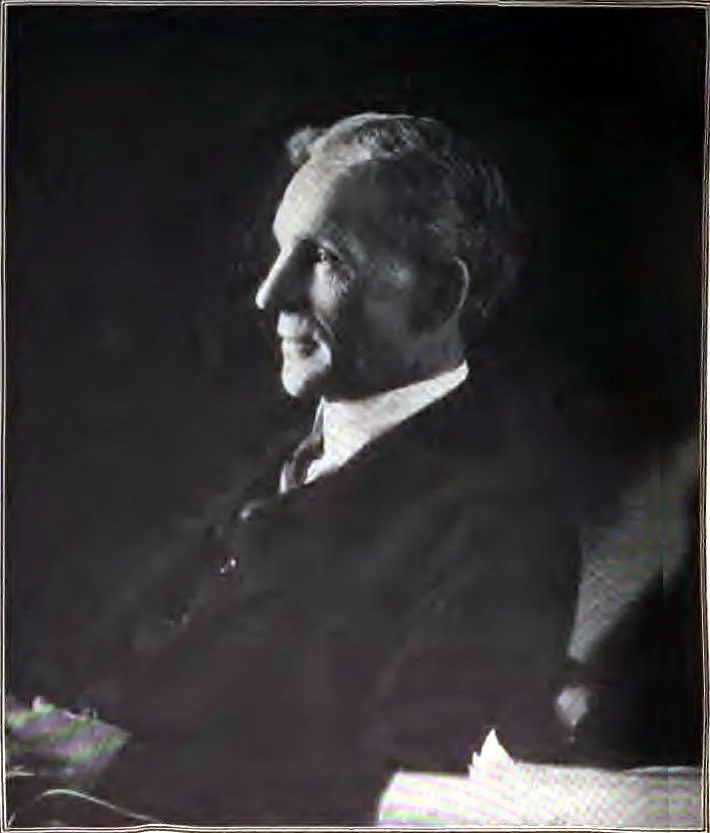
Hitler's wall and a lawsuit
In Germany, The International Jew became a best seller among extremists. Six German printings appeared between 1922 and 1924. When a New York Times reporter visited the young Nazi leader Adolf Hitler in Munich in 1922, he saw a large portrait of Ford on the wall. Hitler praised Ford in his book Mein Kampf. Years later, the Nazi youth leader Baldur von Schirach said at his war crimes trial that reading The International Jew had shaped his hatred.
The end of the newspaper came through a courtroom. The paper had accused Aaron Sapiro, a Jewish lawyer who organized farm cooperatives, of leading a Jewish plot to cheat American farmers. Sapiro sued Ford for libel for one million dollars.
The trial began in Detroit in March 1927. Ford avoided taking the stand. Just before he was due, he said he had been hurt when his car was forced off a road, though some doubted the timing. In April, after a juror gave a newspaper interview, the judge declared a mistrial.
Ford did not want a second trial. In July 1927, he signed a public apology. It was written by Louis Marshall, a leading Jewish lawyer. The statement said Ford had not known what his paper was printing and regretted the harm. It promised to stop selling the books. At the end of 1927, the Dearborn Independent closed.
Many people doubted the apology. The books kept circulating, especially in Germany, where Ford's orders to stop were ignored. In July 1938, on his 75th birthday, Ford accepted the Grand Cross of the German Eagle from Nazi Germany, the highest honor it gave to foreigners. He was criticized heavily at home and kept the medal.
During World War II, the Nazi government took control of Ford's German company, Ford-Werke. It used forced laborers, including prisoners of war and concentration camp inmates. Ford Motor Company's own later research said Dearborn had lost control of the German plant during the war, but the history still stains the name.
In January 1942, a letter in Ford's name told the Anti-Defamation League that he hoped hatred against Jews would end. Historians still argue about how much he meant it. What is not in doubt is the damage. The International Jew is still passed around by hate groups today.
The last Model T
By the mid-1920s, the Model T was growing old. Americans had more money and more choices. General Motors offered cars in many colors, with new styles every year and payment plans. Its Chevrolet was more comfortable and more modern.
Edsel Ford, now company president, begged his father to design a new car. Henry refused. He believed the Model T was perfect. According to one story often told at the company, when engineers built a new prototype while he was away, he tore it apart with his own hands.
Sales kept falling. At last even Henry gave in. On 26 May 1927, the 15 millionth Model T rolled off the line, with Henry and Edsel driving it. Then the factories shut down for months while the company retooled.
In December 1927, the new Model A appeared. Edsel shaped its style. Henry shaped its engine. It was a hit. But Ford never again ruled the market the way the Model T once had.
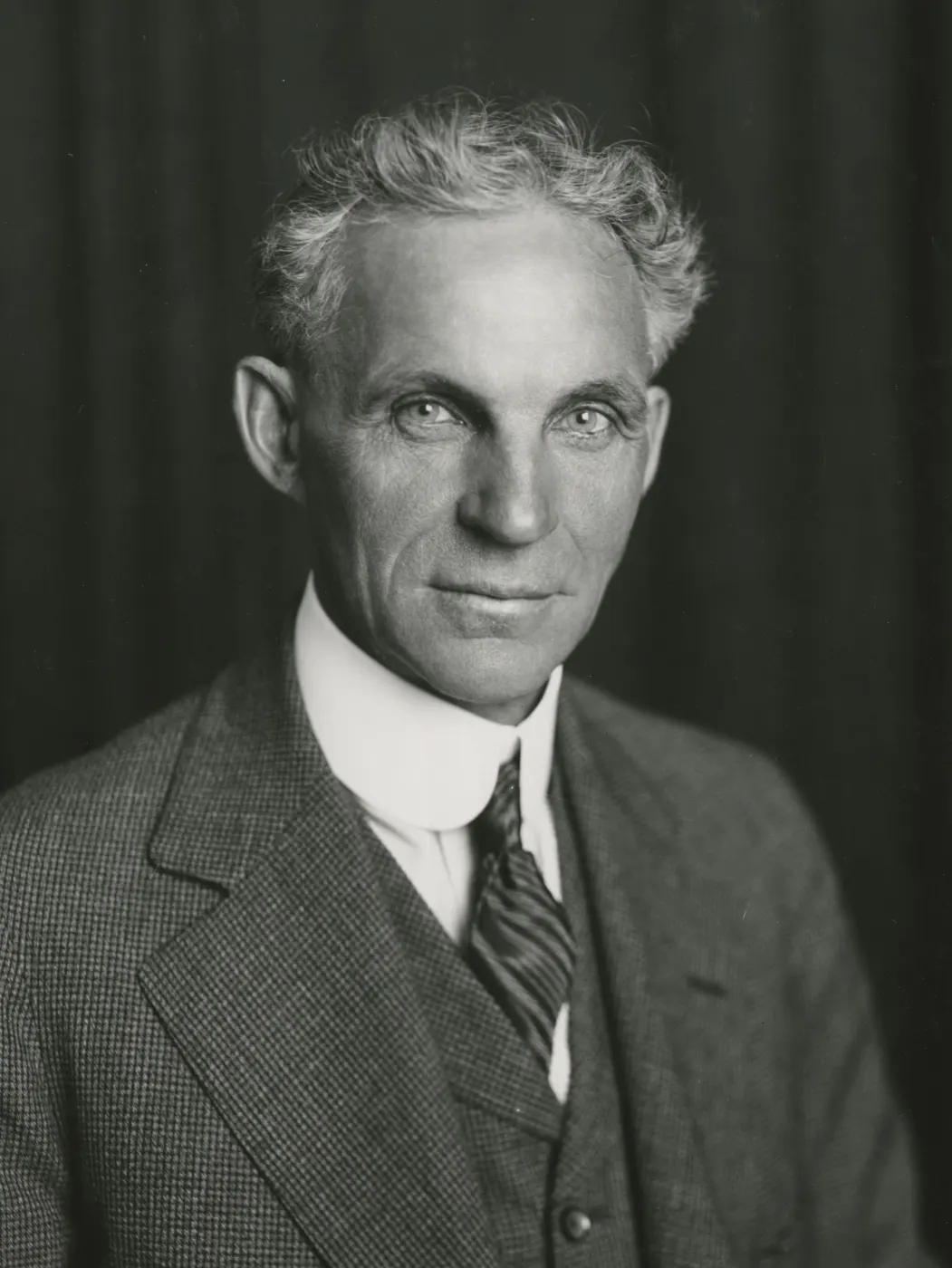
How he worked
Henry Ford did not like offices, charts, or meetings. He walked the factory floor, stopped at machines, and asked workers what they were doing. He trusted what he could see and touch.
He hated waste. He saved scrap wood from car crates and turned it into charcoal, a business that later became Kingsford. He tested soybeans as material for car parts and even wore a suit made of soybean fiber.
He also distrusted experts. He fired accountants on a whim and liked to set managers against each other.
Over time, he leaned on hard men to enforce his will. His longtime production boss, Charles Sorensen, was tough and feared. Later, a former boxer and Navy sailor named Harry Bennett became his closest adviser. Bennett ran the Service Department, a private security force full of ex-fighters and men with criminal records.
At the same time, Ford spent huge sums on the past. He collected old farm tools, clocks, and whole buildings. He moved them to Dearborn to create Greenfield Village and a museum. In 1929 he dedicated it with Thomas Edison, recreating Edison's lab for the 50th anniversary of the electric light.
He had built the fast, crowded, modern world. Part of him always wanted to run back to the farm.
The Depression, the Hunger March, and the V8
When the Great Depression struck, Ford at first raised wages and said the crisis would pass. It did not. By 1931, sales had collapsed. Tens of thousands of Ford workers lost their jobs.
On 7 March 1932, several thousand unemployed workers and supporters marched through the cold toward the Rouge plant. They wanted jobs, relief, and the right to organize. At the Dearborn line, police and Ford security men tried to stop them. Tear gas and rocks flew. Then shots were fired. Four marchers were killed, and a fifth died later from his wounds.
That same year, Ford gave the market one more great machine. The Ford V8 put a powerful eight-cylinder engine in a low-priced car. The V8 was fast and popular, and it became a favorite of hot rodders for decades.
The Service Department and the overpass
Through the 1930s, workers at other carmakers joined the United Auto Workers union. Ford refused to deal with it. Bennett's Service Department spied on workers, followed them, and fired those suspected of union ties.
On 26 May 1937, union organizers, including Walter Reuther and Richard Frankensteen, walked onto a pedestrian bridge outside the Rouge to hand out leaflets. Service Department men attacked them. They were punched, kicked, and thrown down the stairs. Newspaper photographers captured the beatings. The fight became known as the Battle of the Overpass.
The photos turned many Americans against Ford's labor tactics. The federal labor board ruled against the company. In April 1941, workers walked off the job at the Rouge in a huge strike.
Ford wanted to fight on. According to family and company accounts, Clara told him she would leave him if he did not settle. In June 1941, Ford signed a union contract that gave the workers more than any other carmaker had agreed to. The man who once shocked the country by paying high wages had become the last great holdout against the union.
Willow Run and losing Edsel
When the United States entered World War II, Ford took on a huge job: building B-24 Liberator bombers at a new plant called Willow Run. It was one of the largest factories in the world under one roof.
At first it was a mess. Airplanes were far more complex than cars. By the end of 1942, only 56 bombers had been built. Critics called it Willow Run, or Will It Run. The company kept working. By 1944 it was turning out bombers at close to one per hour, and more than 8,000 were built in all.
Edsel carried much of the load while his father, who had suffered strokes, grew more erratic. Edsel had stomach cancer. On 26 May 1943, he died at 49.
Henry, nearly 80, took back the presidency. Many historians believe he had worn his son down for years, overruling and embarrassing him in front of managers. Now the company was in serious trouble. The Navy released Edsel's son, Henry Ford II, to return home and help.
The last years
In September 1945, under pressure from Clara and from Edsel's widow, Eleanor, Henry finally stepped aside. Henry Ford II became president at 28. One of his first acts was to fire Harry Bennett.
Henry spent his last months quietly, visiting Greenfield Village and his estate, Fair Lane. On the night of 7 April 1947, heavy rains had flooded the Rouge River and cut the power at the house. Henry Ford died by the light of candles and oil lamps, the old-fashioned light of his childhood. He was 83.
About 100,000 people filed past his casket. On the day of his funeral, car factories across Detroit paused in silence.
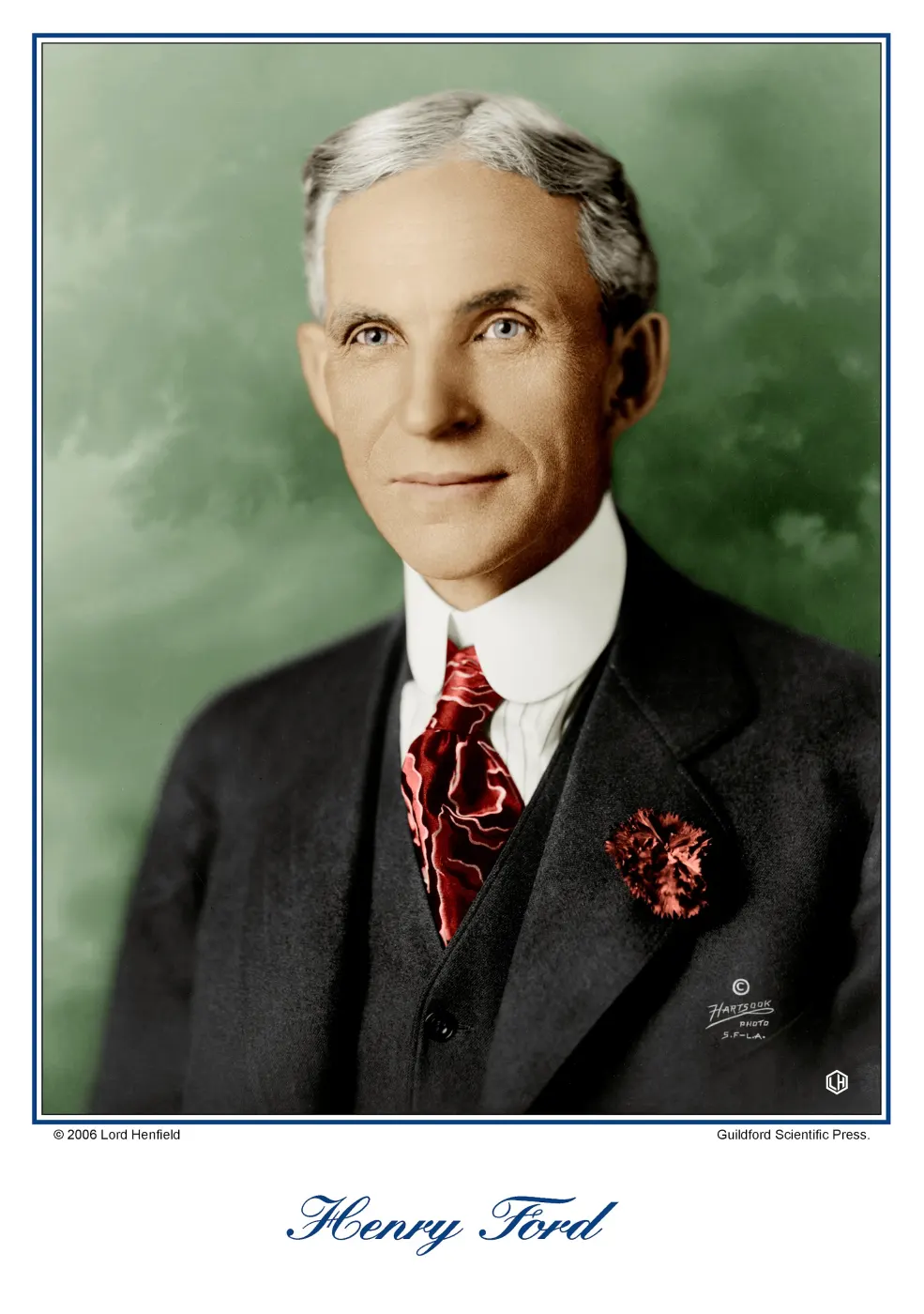
World impact
The Model T did more than sell cars. It changed where people lived and worked. Farm families could reach town in an hour instead of a day. Cities spread into suburbs. Roads, gas stations, motels, and drive-in stores appeared. Governments paved highways because millions of Ford owners demanded them.
The moving assembly line spread to almost every kind of product: radios, refrigerators, airplanes, and later computers and phones. People even used the word Fordism for the whole system of mass production and mass buying.
The five-dollar day helped set a new idea: workers should earn enough to buy what they make. Ford's eight-hour day, and later his five-day week in 1926, pushed the country toward the 40-hour week.
Ford's darker legacy traveled just as far. His newspaper gave antisemitism a respectable face and a giant megaphone. His books fed movements in Europe that led toward genocide. And his Service Department showed how a hero of the working man could turn against the workers who made him rich.
2026 snapshot
More than a century later, Ford Motor Company is still based in Dearborn, and the family still controls it through a special class of shares. Henry's great-grandson, Bill Ford, is executive chairman. Jim Farley is the chief executive.
In August 2025, the company announced a new Universal EV Platform in Louisville, Kentucky. Its first vehicle, a midsize electric pickup targeted at about 30,000 dollars, is set for 2027. Farley called it a "Model T moment," saying it was the biggest change in how Ford designs and builds vehicles since the Model T.
Just months later, in December 2025, the company announced about 19.5 billion dollars in special charges as it pulled back from larger electric vehicles, ended production of the all-electric F-150 Lightning, and shifted toward hybrids and gas-powered trucks.
In 2026, the road has been bumpy. Ford's U.S. sales through August were down almost 10 percent from the year before. In September 2026, analysts at Cox Automotive forecast that Hyundai might outsell Ford in the United States for a quarter for the first time. The F-Series pickup is still America's best-selling truck.
Henry's first car, the Quadricycle, sits in The Henry Ford museum in Dearborn, a few miles from the farm where he was born.
Closing
Henry Ford taught the world how to make things for everyone. A farm boy who hated chores built a machine that ended the loneliness of the farm. He paid workers enough to buy what they built, then sent men with fists to stop them from organizing. He gave millions of people freedom on the road, and he used his fame to spread lies that helped hatred grow.
It would be easier to remember only one Henry Ford. The hero. Or the villain. But the true story holds both. Every time a car rolls off a line, every time a family drives somewhere new, his idea is still moving. So is the warning of what a powerful man can do when no one around him is allowed to say no.
Watch alongside this story
Short cuts from interviews, keynotes and launches. Each plays only the moment that matters.