
The Farm Boy Who Flat-Packed the World
He sold matches from a bicycle in Småland. He named a company after a farm and a village. Then he taught strangers to build their own furniture.
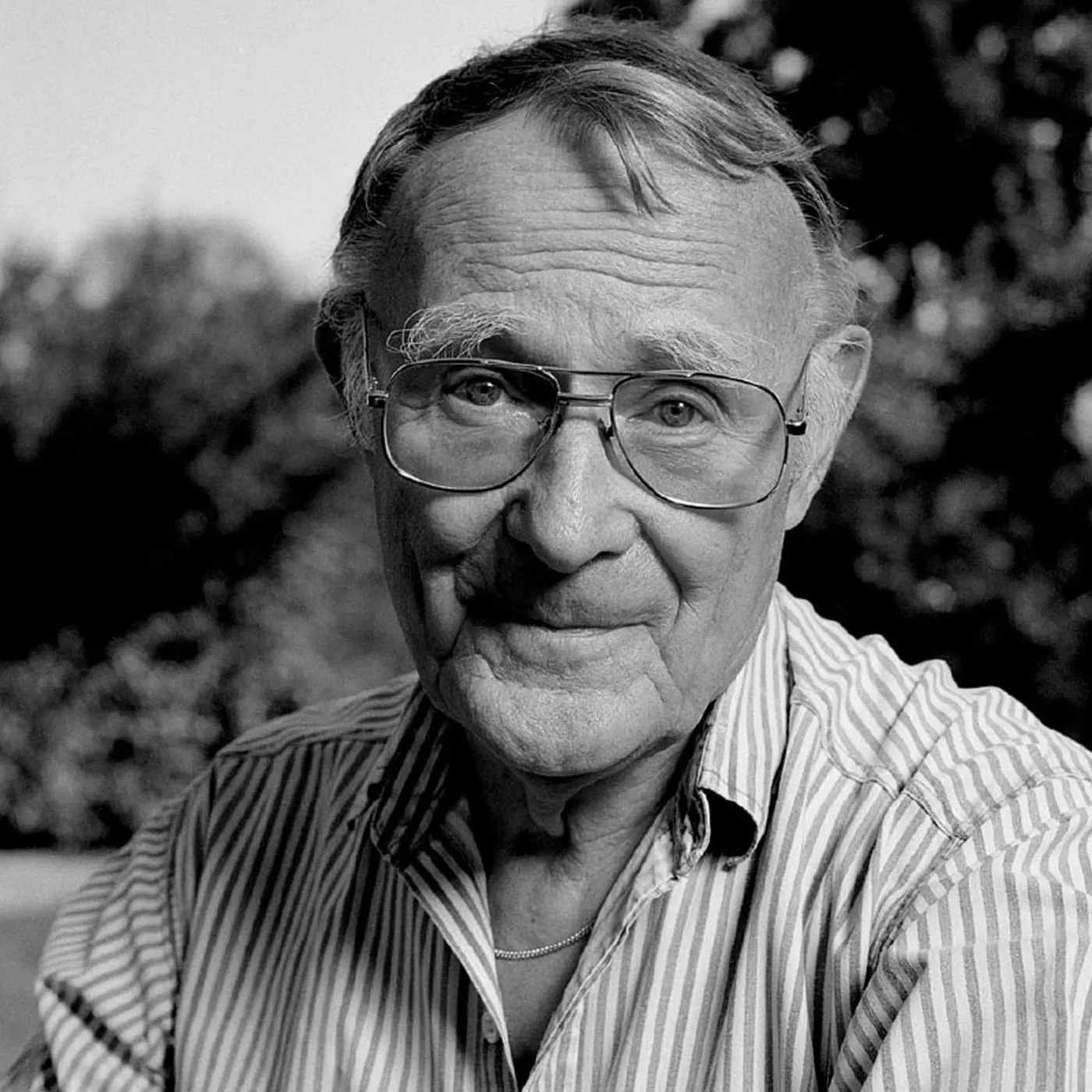
On a Småland farm road in the 1930s, a boy rode a bicycle with matches, seeds, and Christmas cards in the basket, counting öre the way other children counted birds. Soil in that corner of Sweden was stony. Money was short. The lesson was simple and permanent: waste is a kind of disrespect. Decades later the same boy, now an old man in thin glasses, would walk IKEA warehouses like a priest inspecting pews, asking why a screw cost too much and why a sofa could not travel flatter. Ingvar Kamprad died of pneumonia at home in Småland on January 27, 2018, at ninety-one. He did not live to see financial year 2025's forty-four point six billion euros in IKEA retail sales, nor the March 2026 centenary storytelling around his birth. The life was complete. The living-room habit he industrialized was not. This is the story of how a mail-order teenager turned thrift into a global grammar of home, and what that grammar still does to cities, forests, and first apartments in 2026.
Stony soil, a hardware paradise, and a grandmother's coin
Feodor Ingvar Kamprad was born on March 30, 1926, near Älmhult in southern Sweden. Official company storytelling places the birth at the Vita Korset maternity ward in Älmhult. Encyclopedias often list Pjätteryd parish. The geography that mattered was smaller than either label. Early childhood included Majtorp, his mother Berta's farm home, and the sensory education of his maternal grandfather Carl Bernhard Nilsson's rural store: herring, leather, nails, sweets, even dynamite behind a counter that smelled like work. The boy played shop as if play were rehearsal.
His paternal grandparents, Achim and Franziska Kamprad, had crossed from German-speaking Europe into Småland in the 1890s and taken on Elmtaryd, a large farm that demanded stubborn bookkeeping. Achim died by suicide when the farm's finances looked fatal. Franziska kept the land and later adored her grandson with a sternness everyone else felt as weather. Company historians and Kamprad himself later said that close bond helped tilt a teenage Ingvar toward nationalist circles that mirrored his grandmother's politics. That sentence sits heavy because it must. Love and poison can share a kitchen.
Around age seven the family life centered more fully on Elmtaryd near Agunnaryd. Father Feodor talked about improvements the farm could not afford. Mother Berta rented rooms and stretched krona. Ingvar watched the gap between factory cost and shop price the way a detective watches a locked door. A pencil bought wholesale for a fraction of a öre could cost twenty times as much on a grocery shelf. Distribution, he decided while still a child, was where money hid and where a clever seller could live.
He sold matches door to door, then fish from nets, then seeds and cards. Profits bought a bicycle and a typewriter. The typewriter meant a customer list. The bicycle meant range. At boarding school in Osby he kept a brown box under the bed stacked with belts, wallets, watches, and pens for classmates. Commerce was not a weekend hobby. It was identity.
Seventeen, a guardian's signature, and the letters IKEA
In spring 1943, before business school in Gothenburg, he told the family he wanted a firm of his own. He was seventeen and still a minor. He needed a guardian's permission. He got it. Feodor paid the registration fee as a graduation gift. On July 28, 1943, the trading company IKEA was recorded: Ingvar Kamprad, Elmtaryd, Agunnaryd. Uncle Ernst's kitchen table enters the legend as the paperwork stage. The early assortment was anything that turned: pens, wallets, picture frames, nylon stockings, jewelry, watches. Mail order was the channel. Trust was the product you could not photograph.
He studied at Gothenburg's Handelsinstitut in the mid-1940s while the company remained a young man's sideline that refused to stay small. In 1948 furniture entered the mix. Wood made the brand destiny visible even before the brand knew the word flat-pack. By 1951 a catalog was teaching distant Swedes to desire sofas they had not yet touched. Catalogs were expensive and fragile as promises. If the delivered piece looked worse than the page, the company died by post.
Älmhult showroom, a cartel, and the legs that came off
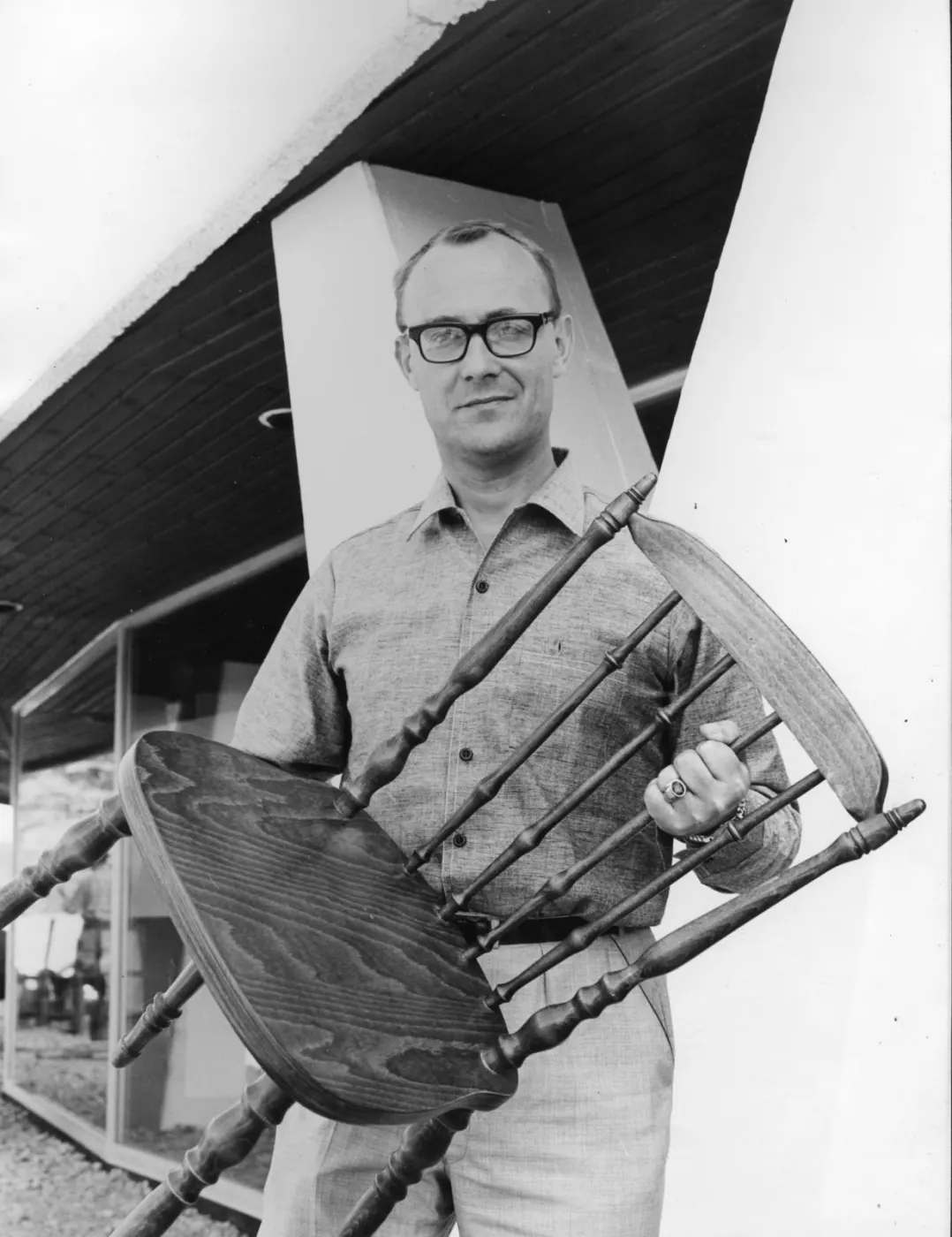
On March 30, 1953, his twenty-seventh birthday, IKEA opened a furniture showroom in Älmhult so customers could resolve the catalog's credibility problem with their hands. Touch became policy. In October 1958 the first purpose-built IKEA store opened in the same town, thousands of square meters of showroom ambition designed with architect Claes Knutson. Locals wondered who would travel to a forest town to buy a wardrobe. People traveled anyway. A day out began to form inside a blue idea still waiting for its full paint.
Swedish furniture retailers and manufacturers did not applaud. Price undercutting threatened guild comfort. Boycotts and supplier pressure closed doors. Kamprad answered with geography. In 1961 IKEA deepened buying in Poland through state export channels, securing rights that made Polish wood furniture a lifeline for Swedish shelves. Cold War politics made the sourcing controversial in some mouths. For Kamprad it was arithmetic: if Swedish mills would not sell to him at his price, he would find mills that would.
The flat-pack revelation arrived as irritation, not prophecy. Gillis Lundgren, an early recruit who would become one of IKEA's defining designers, was packing furniture for a catalog shoot when a table stole too much space in the car. The legs came off. Suddenly a truck could carry a forest of tables where a few assembled pieces had been. Self-assembly shifted labor to living rooms and savings to tags. Competitors who sold finished bulk looked suddenly antique. IKEA began designing for the box as seriously as for the room.
Kungens Kurva, a spiral, and a fire that opened the warehouse
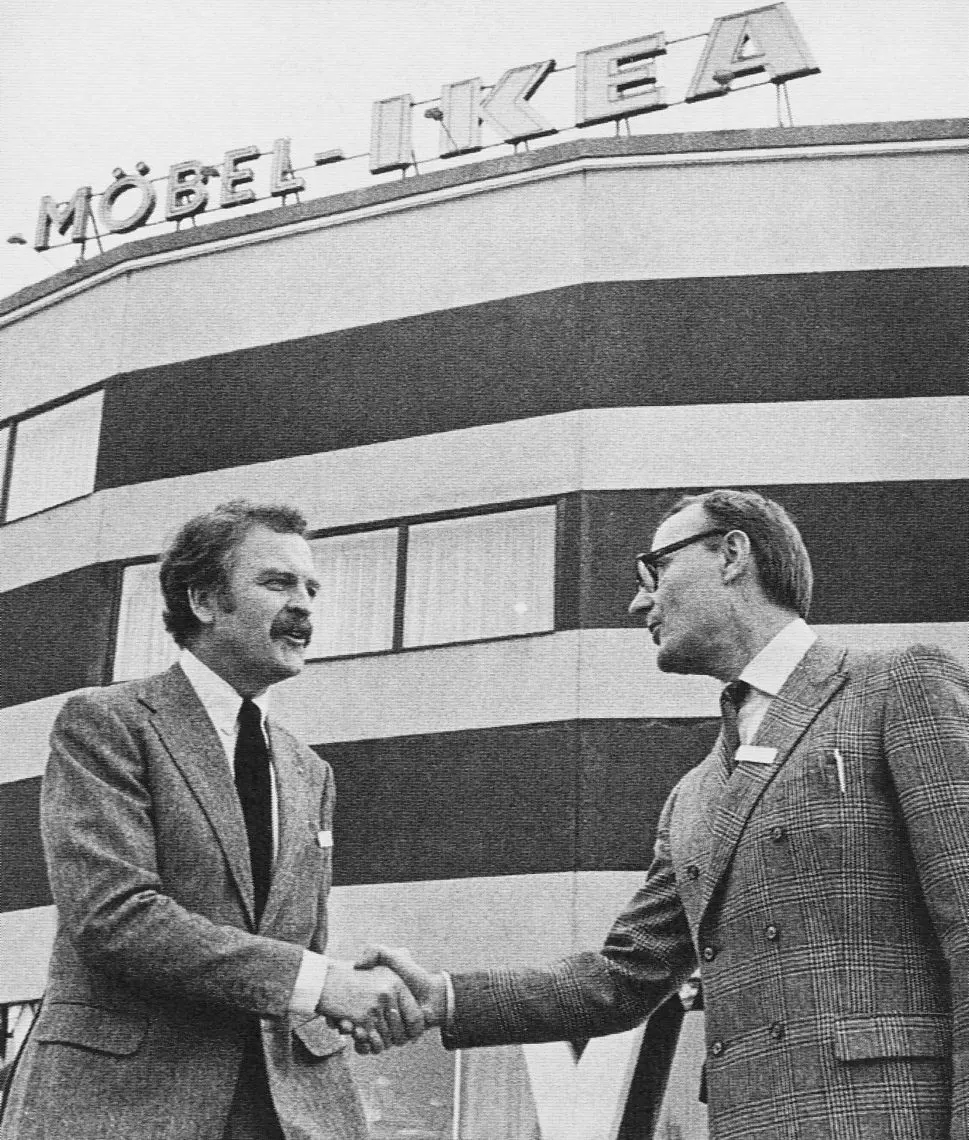
Stockholm demanded a monument. In 1965 IKEA opened Kungens Kurva, a vast store whose circular logic was compared to the Guggenheim's climb, a path that led families through room sets before releasing them toward checkout. Parking lots mattered as much as upholstery. Roof racks sold at cost so a sofa could ride home like a hunted animal. First-year turnover smashed forecasts. The warehouse groaned.
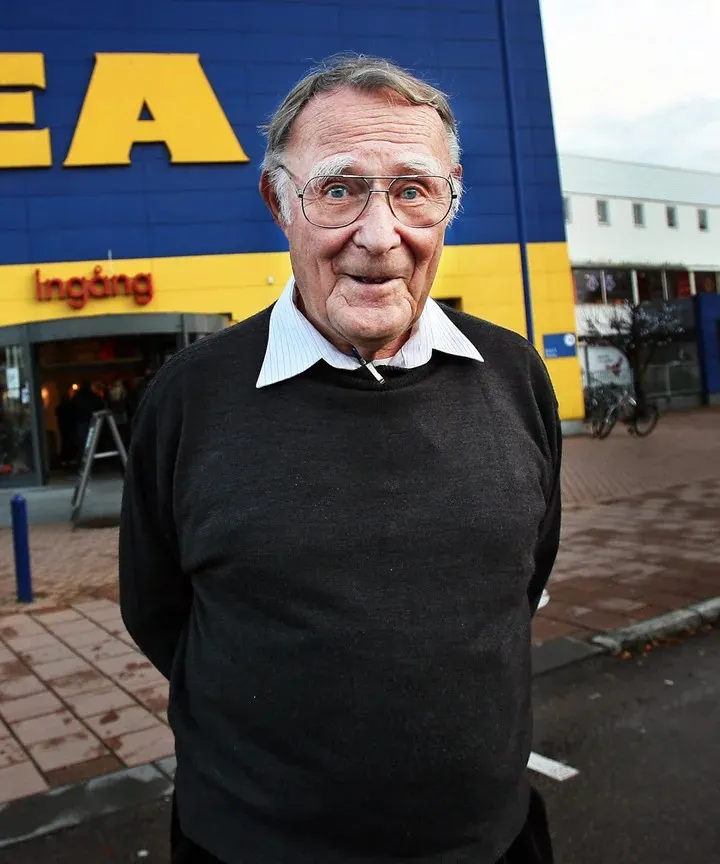
On the evening of September 5, 1970, a neon sign on the roof caught fire. No one died. Stock was partly salvageable. Store leader Hans Ax, a builder-manager Kamprad prized for order, saw rebuild as upgrade. In the chaos the team opened warehouse picking to customers with carts. Self-service stopped being emergency theater and became the model. When the rebuilt store returned, the customer journey of modern IKEA was largely visible: inspire in the showroom, pick in the warehouse, feed in the restaurant, leave with a car that sits lower on its springs.
Europe, a testament, and the politics of eternal life
Norway and Denmark had already proven the concept could cross a border. In 1973 Spreitenbach, Switzerland, became the first store outside Scandinavia, a test of whether Småland thrift could speak German and French without a translator in every aisle. Germany followed with a hunger that turned IKEA into a continental habit. Stores multiplied through the 1970s like a retail weather system.
In 1976 Kamprad wrote The Testament of a Furniture Dealer, a short creed still handed to co-workers decades later. It preached the many people over the few, simplicity as a virtue, cost consciousness as a moral muscle, and planning as a risk when it became vanity. The tone was half sermon, half operating manual. Managers who rolled their eyes still quoted it. Culture needed paper when the founder could not stand in every doorway.
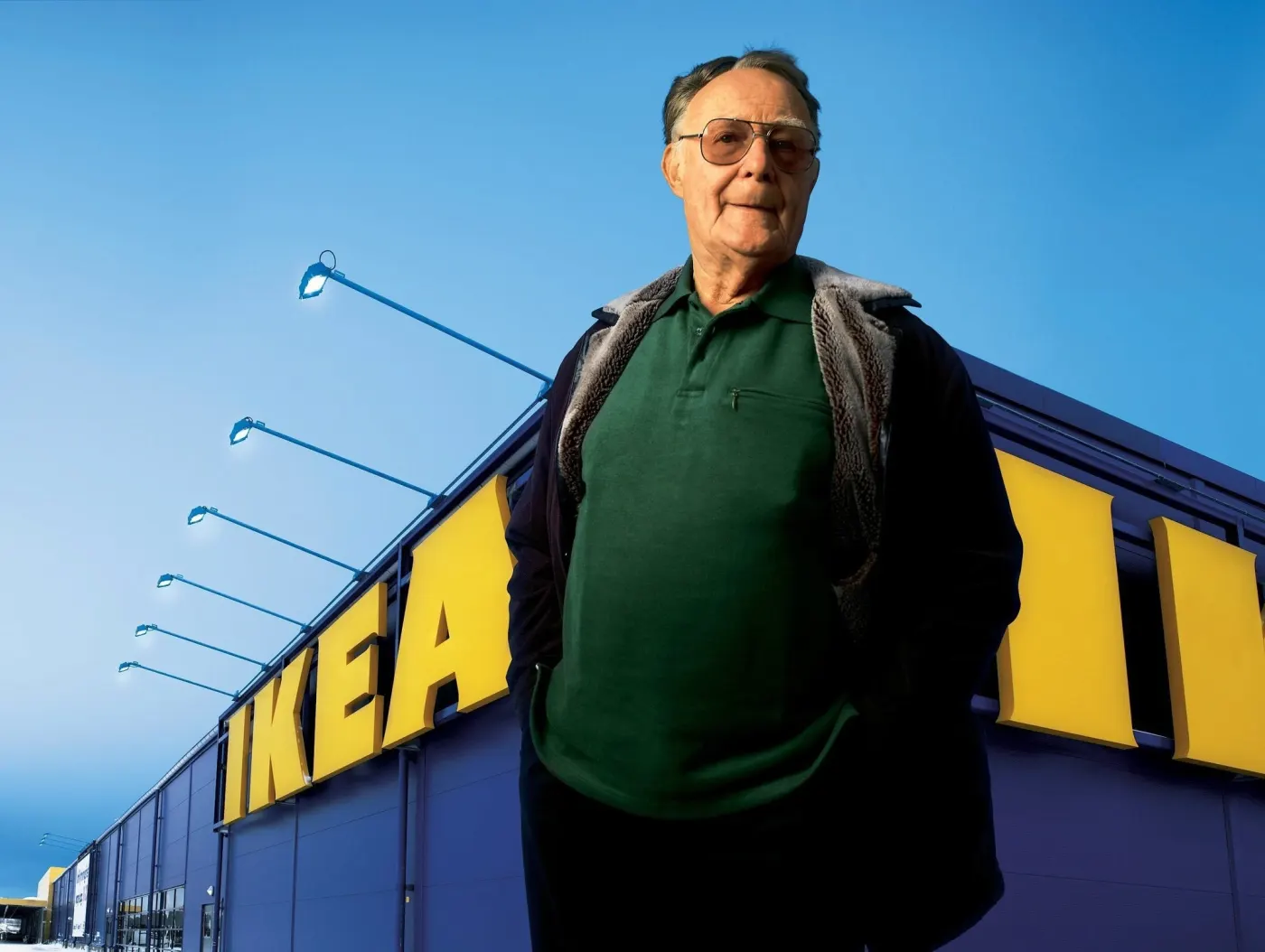
Ownership became a puzzle designed for permanence. In the early 1980s Kamprad separated the IKEA concept and brand platforms from the main retail operating group so that franchise logic, not a single heir's mood, would carry the name. Stichting INGKA Foundation in the Netherlands became owner of what is now Ingka Group, the largest franchisee. Inter IKEA systems sat in a related but distinct governance story as franchisor and concept keeper. Critics called the structure tax cleverness. Kamprad called it a way to give the brand eternal life beyond any one family's cash needs. Both descriptions can be true at once. The legal engineering still shapes how IKEA money moves in 2026: profits recycle into stores, price cuts, and foundation purposes rather than ordinary public-shareholder dividends.
Billy, meatballs, and the American living room
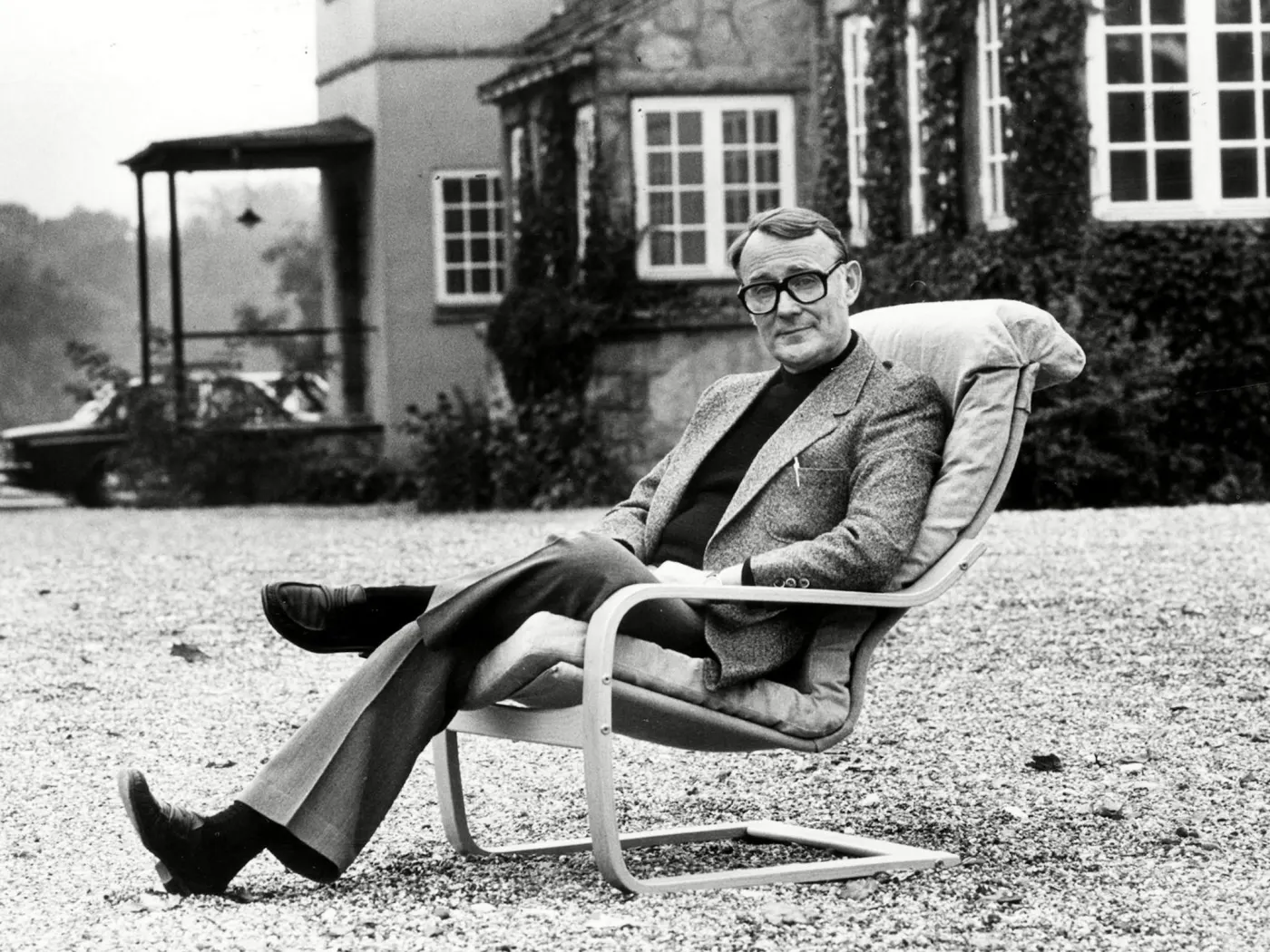
Gillis Lundgren sketched the Billy bookcase in the late 1970s on something as humble as a napkin, afraid the idea would vanish. Simple, tall, forgiving, endlessly repeated, Billy became a noun. Company tallies later spoke of more than a hundred million units across decades, then higher. Exact censuses shift with factory math. The social fact does not. Students, first jobs, and temporary rooms met each other on Billy's shelves.
Food was not an afterthought. The store restaurant turned a shopping errand into a family outing and a calorie buffer against decision fatigue. Swedish meatballs became a punchline that also sold gravy and identity. Playrooms parked children while parents argued about sofa depth. The building was a machine for converting a Saturday into a basket.
In 1985 the first United States store opened near Philadelphia. American scale tested logistics and teased cultural jokes about hex keys and unfinished oak. Kamprad's answer was volume and patience. More countries followed. Catalogs arrived like seasonal scripture until digital channels began to share the job. By the time smartphones turned browsing into a thumb habit, IKEA already knew how to stage desire in room sets. The website inherited a museum of lifestyle suggestions.
The stain he could not sand away
No honest film of Kamprad skips the political past. As a teenager and young man he took part in Swedish fascist and pro-Nazi aligned networks. Researchers and journalists later documented recruitment activity, a security-police interest beginning around the year IKEA was founded, and a long personal connection to Per Engdahl, a leading Swedish fascist activist. In 1988 Kamprad publicly discussed parts of that history. In 1994 Expressen's archival reporting forced a wider reckoning. He sent a handwritten message to tens of thousands of IKEA employees calling the involvement the mistake of his life and asking for forgiveness.
That apology did not end the story. Elisabeth Åsbrink's later research argued the entanglement ran deeper and longer than a brief teenage error. A 2010 remark praising Engdahl as a great man renewed anger. Company spokespeople said the founder no longer held those politics. Critics said memory had been curated for brand safety. This biography states what the record supports: early extremist involvement, documented friendships and notes, repeated public regret, and continuing dispute about depth and duration. It does not launder the past into a colorful footnote. Customers who love a Billy shelf are not required to love every chapter of the man who sold it. They are entitled to the chapter anyway.
Marriages, sons, alcohol, and the cost of being everywhere
Kamprad married Kerstin Wadling in 1950. They adopted a daughter, Annika. The marriage ended around 1960. In 1963 he married Margaretha Stennert, who became a steady public partner until her death in 2011. They raised three sons, Peter, Jonas, and Mathias, who later took different roles around the IKEA universe and family offices. Inheritance stories after 2018 showed uneven envelopes and old family fractures that tabloids loved and this narrative refuses to invent beyond what reputable reporting already aired: the founder structured wealth through foundations and companies more than through a simple personal pile.
He struggled with alcohol in the early 1960s, a period he later linked to exhausting travel and a toasting culture around Polish supplier dinners. He described deciding to stop before drink removed him from the work he loved. Documentary interviews also recorded later health fights, including cancer. The body was not immortal. The schedule often pretended otherwise.
Tax residence moves to Denmark and then Switzerland drew criticism at home. He returned to Sweden in his final years. The frugal persona, economy flights, bus anecdotes, flea-market clothes, sat beside reports of a comfortable lakeside life and other quiet luxuries. The paradox is not a gotcha so much as a portrait. He marketed restraint as culture while building one of the largest privately controlled retail systems on earth. Both the myth and the mansion need to be in the frame.
How he worked
Kamprad's management style was intrusive thrift. He wandered stores, questioned packaging, and treated a wasted centimeter as a moral problem. He wrote personal letters in the early years to suppliers and customers. He named products because dyslexia made numbers slippery and names sticky. He hired people who could build organizations he could not patiently administer alone, then haunted them with questions. He wanted co-workers to feel like members of a mission that sounded almost religious: create a better everyday life for the many people.
He was not a soft boss in the sentimental sense. Price wars with Swedish incumbents taught him to accept being disliked. He could cry from stress in the boycott years and still order night deliveries. He praised simplicity and then constructed ownership charts that required lawyers to unpack. Contradiction was not a bug in the personality. It was the personality.
Stepping back without leaving
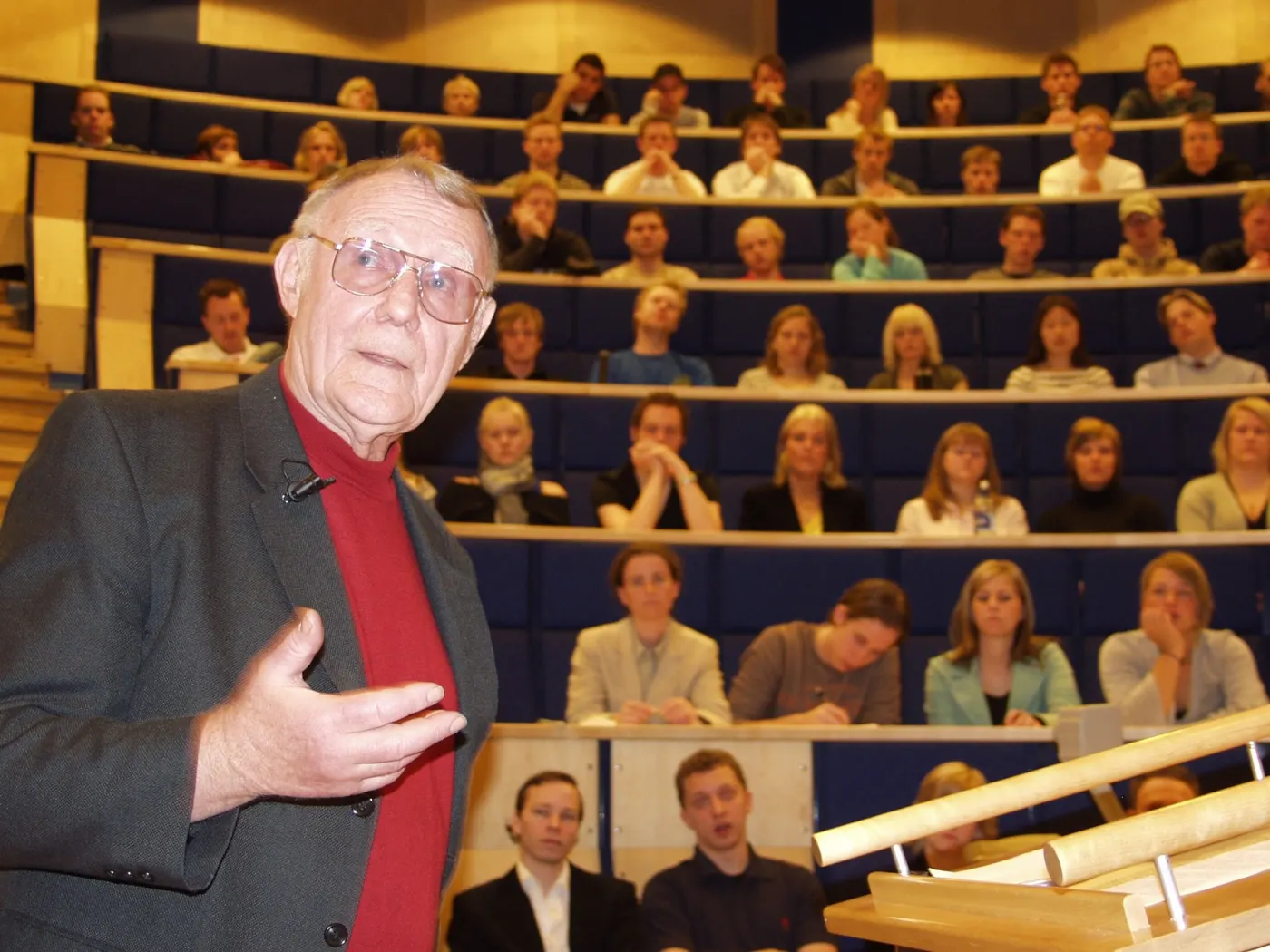
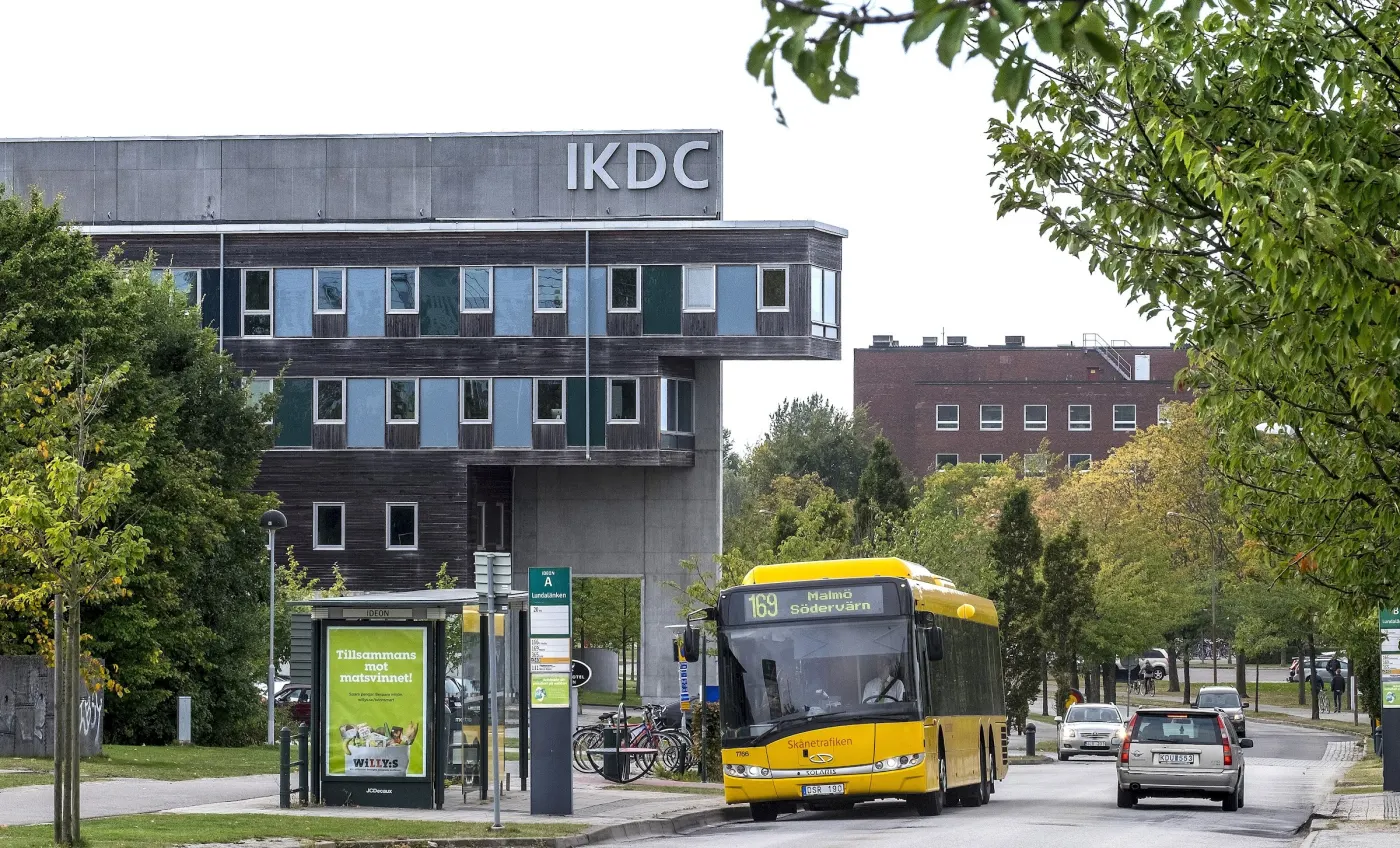
By 1988 he had largely left day-to-day retail operations, remaining as a symbolic inspector and adviser. In 2013 he left the board of Inter IKEA, with Mathias moving into chair roles in that governance lane. The founder kept visiting, kept commenting, kept embodying the brand's peasant memory even as stores opened in cities he would never know street by street. Älmhult remained spiritual headquarters. He also paid for design education. At Lund University he backed a large building for design students, which opened as the Ingvar Kamprad Design Centre, known on campus as IKDC. He spoke of a school that could gather young designers from around the world and teach them a Swedish way of making useful things. In 2016 the IKEA Museum opened in the first store building, turning origin into exhibit without fully turning origin into apology.
January 2018 and the words about a glorious future
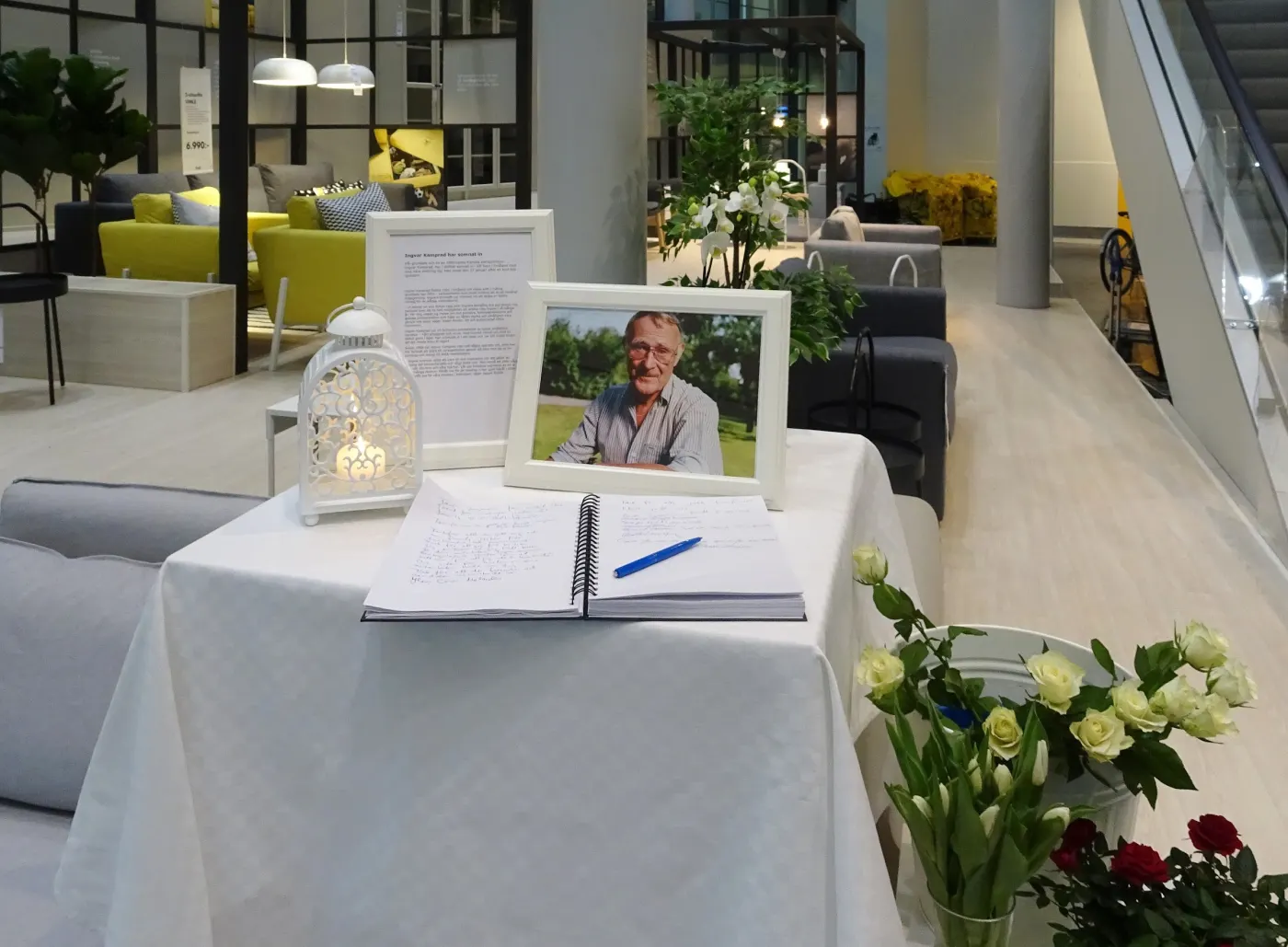
On January 27, 2018, Ingvar Kamprad died at his home in Småland after pneumonia. He was ninety-one. IKEA's public farewell framed him as one of the century's great entrepreneurs. In last communications circulated by the company he expressed gratitude and told the living they were only at the beginning of a glorious future. Funeral and memorial notes stayed close to Älmhult's gravity. The man who sold the world a hex key was buried in the landscape that taught him to count matches.
What he built that you can still touch in 2026
Walk into an IKEA in 2026 and you are walking inside Kamprad's unfinished sentence. Financial year 2025, running September 2024 through August 2025, brought about EUR 44.6 billion in total IKEA retail sales across franchisees. That figure sat slightly below the prior year's EUR 45.1 billion because the company had spent two years cutting prices on the order of ten percent to chase volume and traffic. Volumes and customer counts rose about three percent. Online sales reached roughly twenty-eight percent of the mix. Stores still hosted hundreds of millions of visits. About sixty-six new sales locations opened in that year alone. Co-worker counts hovered near two hundred twenty-two thousand.
Inter IKEA Group, the concept and supply side of the system, reported about EUR 26.3 billion in revenues for FY25, with operating income near EUR 1.7 billion and net income near EUR 1.5 billion. Franchise fees remained a billion-euro-scale stream. Ingka Group, the largest franchisee, continued to run the majority of stores in dozens of countries under the foundation-owned model Kamprad shaped. IKEA's public story counted more than five hundred stores in sixty-three markets. Exact store censuses move with openings and format experiments, including smaller city-center sites and planning for markets such as New Zealand e-commerce and further Americas expansion.
Product culture still obeys his price-first religion. FY25 leaned on bedroom ranges and a more assemble-friendly PAX wardrobe logic. FY26 messaging turned toward kitchen and dining, including low-price series meant to keep first kitchens reachable. Sustainability language is louder than in Kamprad's early catalogs, because forests, cotton, and climate policy now sit beside öre. Yet the core dare is recognizable: make the room nicer without demanding a rich father's wallet.
World impact: apartments, forests, and the expectation of home
Kamprad's system changed what a first home looks like for tens of millions of people. Flat-pack logistics altered trucking, warehousing, and the Saturday labor of couples arguing over step six. Design schools still study how IKEA set a price tag before a sketch. Competitors copied the warehouse path, the kids' ball room, the cafeteria bribe. Cities felt traffic and land-use pressure wherever a blue box landed beside a highway.
The company became a meaningful consumer of wood and other materials, which made it both a climate actor and a climate target. Philanthropic arms such as the IKEA Foundation directed foundation wealth toward poverty and climate programs, a downstream effect of the ownership design. The Mrs Berta Kamprad Cancer Foundation, rooted in his mother's death in 1956 and formalized later, poured hundreds of millions of kronor into Swedish cancer research over decades. Commerce and grief shared a ledger.
Culturally, IKEA normalized the idea that good design could be democratic and temporary at once. You could move apartments and take the shelves. You could laugh at the names and still cry assembling a crib at midnight. That emotional mixture, irritation plus belonging, is a Kamprad invention as much as any sofa.
Centenary echo and the museum that keeps saying Hej
March 30, 2026, marks one hundred years since his birth. IKEA's own channels framed a centenary narrative: one man, one vision, one hundred years. The Älmhult museum and related exhibitions continue to stage "Hej Ingvar" storytelling for pilgrims who treat the first store like an industrial saint's shrine. That reverence should never erase the fascist chapter. It also should not pretend the retail machine stopped when the founder stopped breathing. The glorious future line was corporate poetry. The FY25 volume rebound after price cuts was math. Both are part of the legacy.
Catalog mathematics and the fear of a bad photograph
Before warehouses, the catalog was the store. A bad print run could strand a season. Kamprad obsessed over paper stock, color fidelity, and whether a sofa arm looked thicker than the real arm arriving by post. Early co-workers remembered him rewriting headlines and prices late into the night. The book had to feel like a promise you could open on a kitchen table in a village far from Älmhult. When showrooms arrived, the catalog did not retire. It became the invitation that made a car trip feel planned rather than impulsive. Print runs later climbed into numbers usually reserved for religious texts and phone books. Exact peaks are argued over by marketers. The cultural fact is simpler. For years, millions of households received a free annual argument that their home could be different by autumn.
Dyslexia shaped naming. Article numbers slipped in his mind. Swedish place names, first names, and playful words stuck. A bookshelf called Billy was easier to remember than a seven-digit string. The joke names that English speakers mispronounce in aisles began as a memory prosthetic for a founder who refused to let a reading disability decide the company's vocabulary.
Poland, night roads, and the cost of being frozen out
The Swedish furniture boycott years taught Kamprad a cold lesson about clubs. If established makers and retailers could starve his supply, he needed another forest. Poland in the early 1960s offered wood, factory capacity, and a government export machine hungry for hard currency. He traveled, toasted, negotiated, and came home with chairs and table parts that kept IKEA's prices aggressive while some Swedish peers tried to declare him illegitimate. Night deliveries and quiet trucks enter the folklore of those years because open commerce had become political theater. He did not romanticize the politics of communist suppliers in later tellings so much as he romanticized survival. The customer, he insisted, should not pay for a guild's pride.
Those trips also fed the drinking problem he later described with unusual bluntness for a billionaire brand saint. Lunches that required a toast for the factory, a toast for friendship, a toast for the next order, stacked into a fog. He claimed a hard stop when he saw the fog winning. Whether every date in that recovery story is tidy matters less than the admission that the empire builder was also a man bargaining with a bottle while bargaining with ministers.
Designers in the forest and the napkin that became a forest of Billys
IKEA's design story is often flattened into Kamprad alone. That flatness is false. Gillis Lundgren and later waves of in-house designers treated constraints as a brief: cheaper materials that still looked honest, fittings that survived a moving van, packaging that did not waste air. Billy's origin story, napkin and all, survives because it matches the company's theology. A good idea is allowed to be quick. A good idea must then survive decades of cost engineering. Tiny changes to board, edge, and screw placements accumulated into a product that could be sold for less in real terms across generations while remaining recognizable in a student flat in Seoul or Seville.
Kamprad's genius here was less pencil skill than insistence. He kept asking whether a design served the many people or merely impressed a fair booth. He could kill a pretty prototype with a price question. Designers who stayed learned to love the price tag as a starting line.
Money, myths, and the man on the bus
Journalists loved the bus ticket. They loved the secondhand coats. They loved the story that the world's furniture peasant king ate cheap meatballs in his own cafes. Some of that was true enough to photograph. Some of it was brand oxygen. Investigations and profiles also noted Swiss years, a home with lake views, and other comforts that sit awkwardly beside flea-market lore. Kamprad seemed to understand the contradiction without resolving it. He wanted employees and customers to feel that waste was vulgar. He did not always apply the same vulgarity test to every private comfort. The usable lesson for managers was still sharp: cost consciousness has to be culture, not a quarterly memo. He made thrift emotional. That emotion scaled farther than any spreadsheet alone.
Sons, foundations, and the refusal to IPO the idea
Peter, Jonas, and Mathias Kamprad grew up inside a machine that was already becoming mythology. Their later work threaded through investment vehicles, board seats, and the Inter IKEA side of concept ownership rather than a simple crown-prince takeover of every store key. Kamprad's public talk about succession often sounded like a man more afraid of spoiled heirs than of empty shelves. The foundation and franchise architecture was his answer. Keep the concept owned in a way that resists ordinary stock-market hunger. Let franchisees operate. Let profits feed expansion, price cuts, and stated foundation purposes. Critics still debate how charitable versus how controlling the Dutch structures are. What is not seriously debated is that the design blocked a normal IPO of the whole IKEA idea. In 2026 that choice still explains why IKEA governance stories sound like legal origami compared with a typical listed retailer.
China, Russia, and the bet that rooms are universal
Late-century and early-twenty-first-century expansion pushed the concept into markets that did not share Småland's winters or Sweden's wage history. Kamprad liked to say language barriers should not stop a good store, a line remembered from trips when China still looked like a rumor to European furniture men. Russia, with its early Moscow years and later political whiplash for Western brands, tested how far a flat-pack system could lean into chaos and still sell wardrobes. Some country bets outlived him cleanly. Some became cautionary chapters for successors who had to read sanctions and supply maps he never held. The through-line remained his: if the many people need furniture, the concept should find a bus route to them.
What co-workers inherited as muscle memory
Ask long-time IKEA managers what Kamprad left in their hands and they rarely begin with a yacht story. They begin with range reviews, with the shame of overpackaging, with the insistence that a store walk is a research method. They talk about "the many people" until the phrase risks becoming wallpaper, then they cut a price and make it concrete again. FY24 and FY25's deliberate price investments, taking roughly ten percent off many tags across two years, were modern executives speaking his dialect. Sales in euros softened while volumes and visits rose. That trade was Kampradian: protect affordability first, trust volume to argue with the income statement later.
The Testament's lines about simplicity still get taped inside offices that also run app checkouts and remote inventory AI. The technology changed. The paranoia about complexity eating the customer did not.
Älmhult as memory palace
Even after stores conquered continents, Älmhult remained the emotional capital. Trainees still travel there to learn the concept the way clergy once traveled to a cathedral town. The museum inside the first store building sells origin without fully selling absolution. Visitors see early catalogs, room sets, and film of an old man in a cardigan who looks harmless until the timeline reaches the 1990s newspaper storms. Kamprad wanted the town to stay a working village of product development, not only a souvenir. In that sense he succeeded. Designers still argue about edge bands within driving distance of the farm names encoded in IKEA. The bicycle distances of his childhood became, by strange arithmetic, the aisle distances of other people's Saturdays.
He liked to end speeches with forward motion. The line about a glorious future was not only farewell garnish. It was how he forgave himself for never being finished. A store could always be cheaper. A range could always be simpler. A customer walking in with a child and a tired face could always be served with more respect per krona. That restlessness outlived the lungs that failed him in 2018. It is visible whenever IKEA cuts a price and accepts a softer sales number for a harder volume number, whenever a new city-center format tries to keep the many people who no longer own cars, whenever a kitchen series in FY26 aims at households that will never hire an architect.
Closing
Ingvar Kamprad began as a child merchant in a hard county and ended as the absent landlord of millions of living rooms. He built a company that turned packaging into strategy, customers into unpaid assemblers, and thrift into a global aesthetic. He wrote rules like scripture. He sought an ownership form that would outlive blood. He apologized for a political youth that still disgusts readers who otherwise love a cheap bookshelf. Pneumonia took him in January 2018. In 2026 the blue boxes still open, the meatballs still sell, the Allen keys still vanish into couch cushions, and the many people still push carts through a maze he sketched with farm roads and catalogs. The life is finished. The furniture, stubbornly, is not.