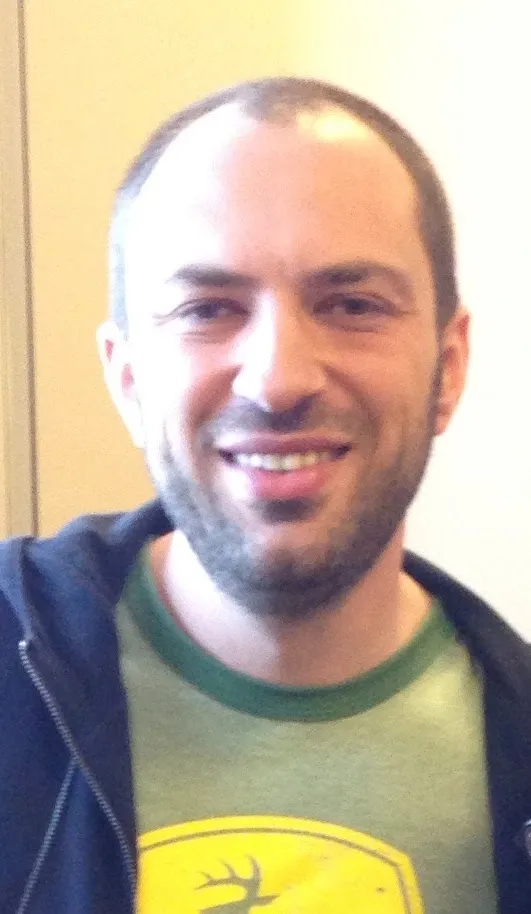
Status Became a Message
He left Soviet Ukraine at sixteen. He built the world's default phone chat. Then he walked away from Facebook over privacy.
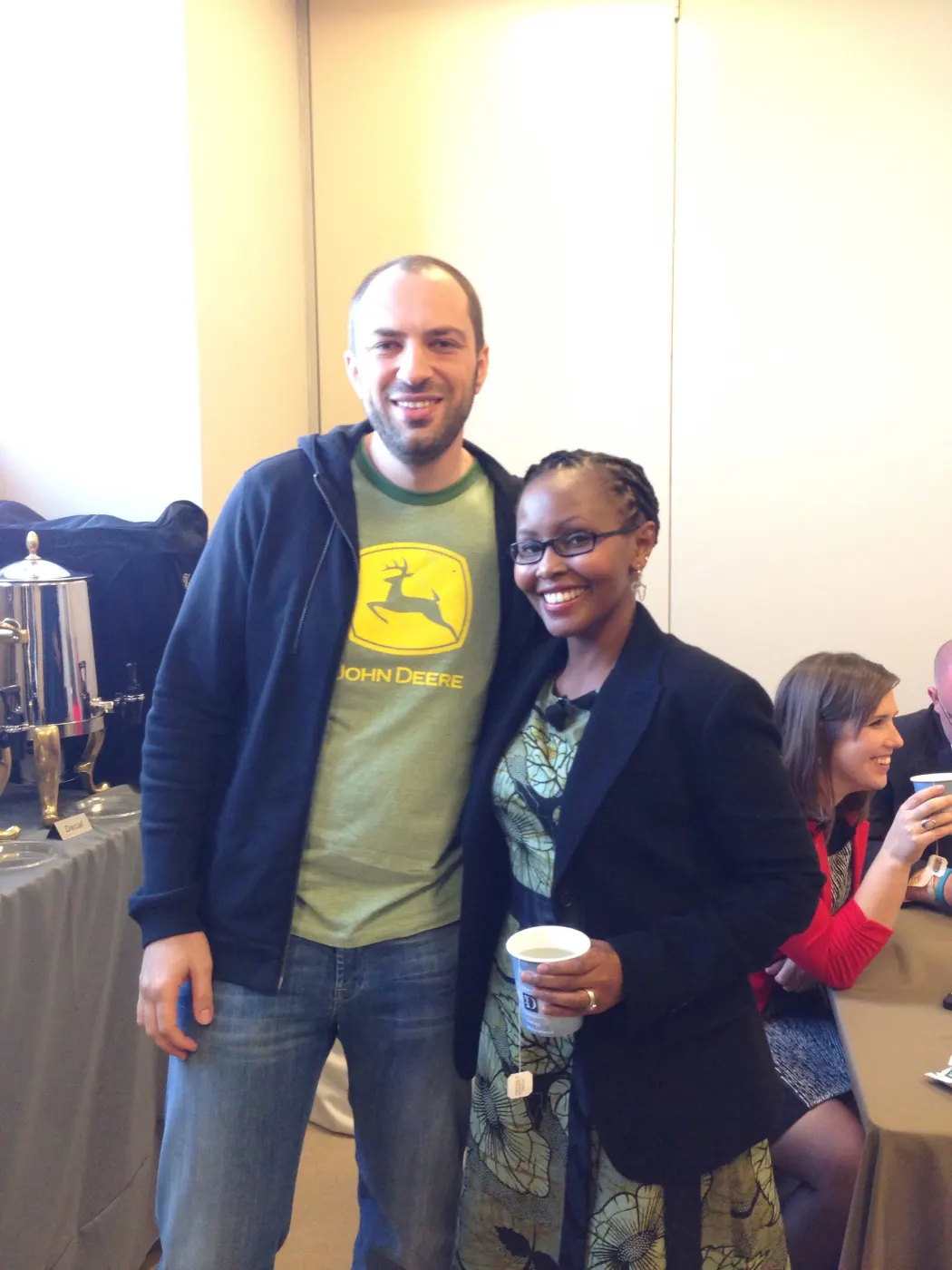
In February 2014, Jan Koum leaned against the door of a Mountain View social services office and signed papers that made WhatsApp part of Facebook. The office sat a short walk from the unmarked building where his tiny team shipped chat to hundreds of millions of phones. Years earlier, his family had collected food stamps near that same stretch of Silicon Valley pavement. The signature was theater with teeth. It said the immigrant who once needed public help had just closed one of the largest tech acquisitions in history, reported around nineteen billion dollars in cash and stock.
This biography follows Jan Borysovych Koum from a Jewish childhood outside Kyiv under late Soviet rule, through Mountain View hardship, Yahoo infrastructure nights, a status app that almost died, a pivot into global messaging, the Facebook sale, a public break over privacy, and the quiet 2026 philanthropy that put his name on a Jerusalem hospital tower. It is a story about simple software, network effects, and a man who kept saying he was not an entrepreneur, only a builder of useful tools.
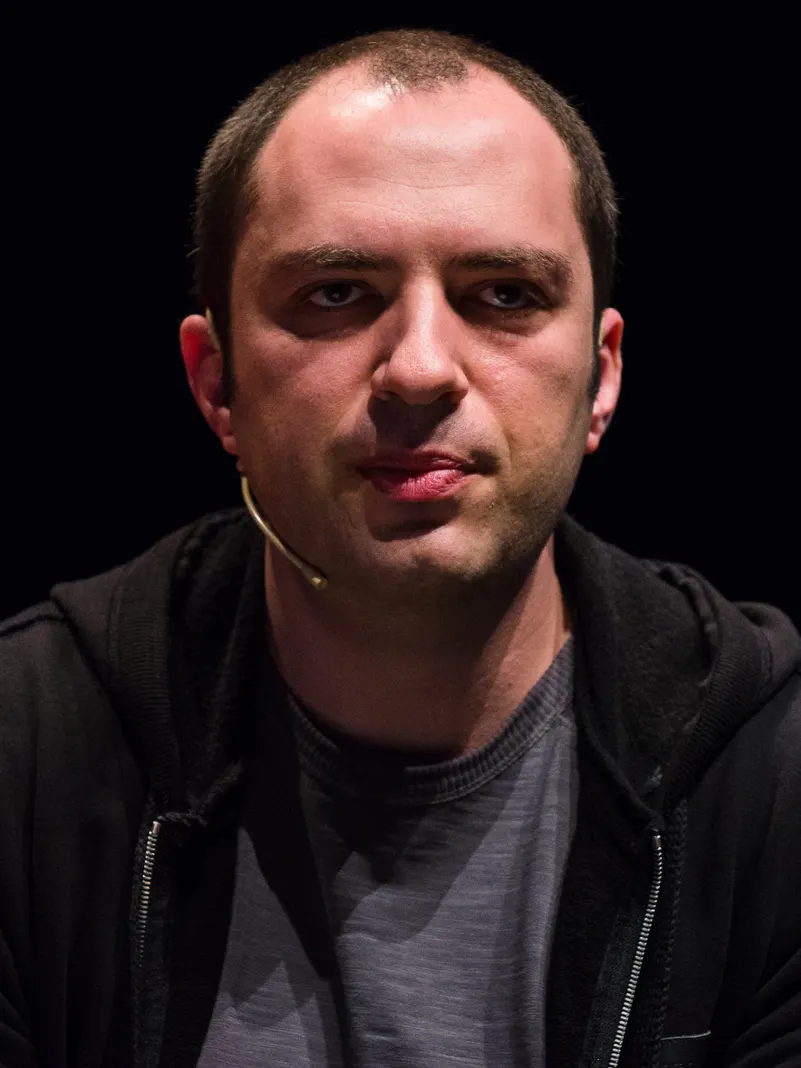
Fastiv, cold toilets, and a state that listened
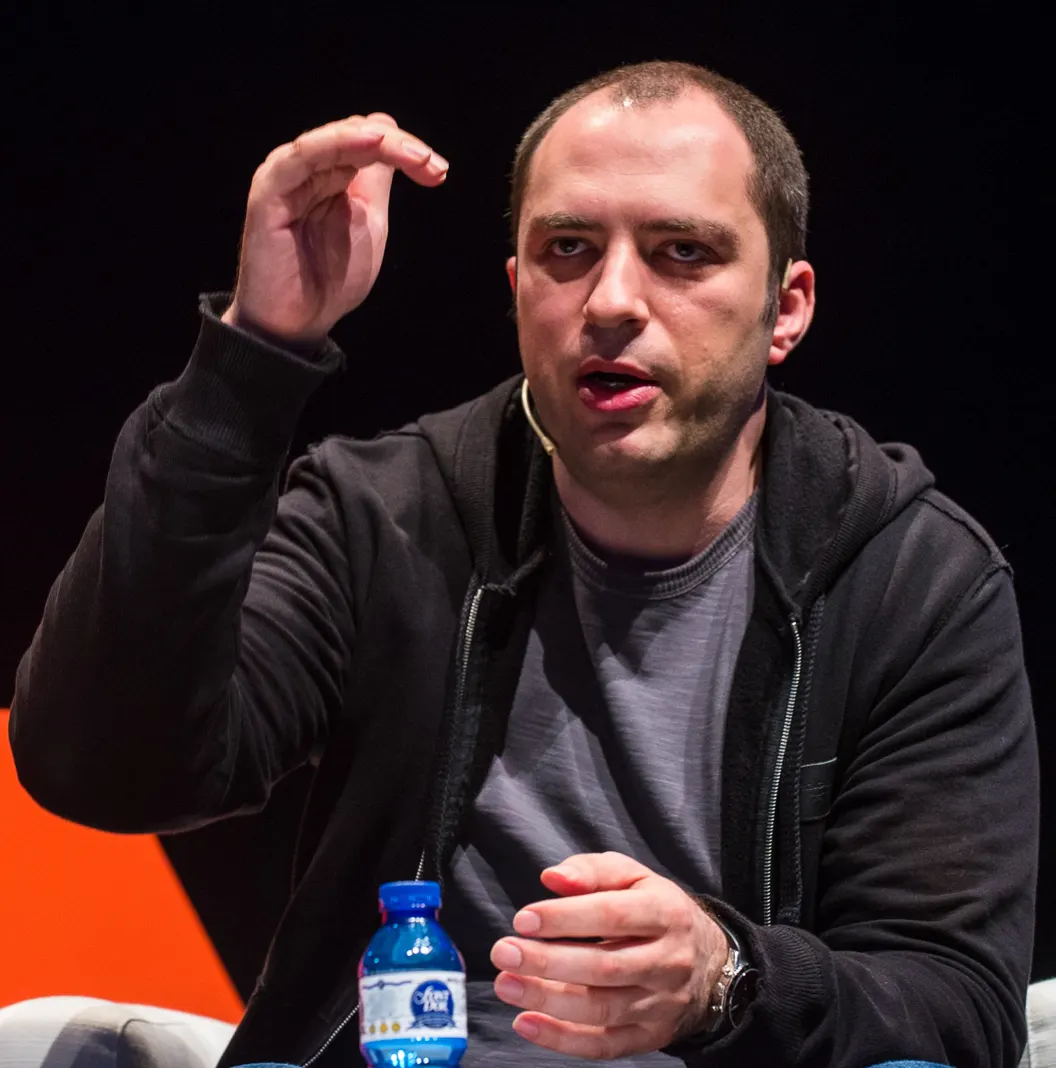
Jan Koum was born on February 24, 1976, in Kyiv, then in the Ukrainian Soviet Socialist Republic. He grew up in Fastiv, a hard town outside the capital. He has described a school without an indoor bathroom, Ukrainian winters near minus twenty Celsius, and a house without hot water. He was Jewish in a society that made Jewish life cautious. He has said phones were treated as risky because the state might listen. Classmates could get questioned for mocking politicians. He later told interviewers that reading Orwell was one thing and living that closed feeling was another.
His father ran a government construction company and worked late. Koum remembers a "get it done at any cost" style: the building still had to go up. His mother kept the household together. He has said he rarely saw his father in those years and that instant messaging him then would have meant something. The family did not own the soft American idea of endless social contacts. Tight circles mattered.

Mountain View, 1992: two bedrooms and food stamps
In 1992, at sixteen, Koum moved with his mother and grandmother to Mountain View, California. A social support program helped them into a small two bedroom apartment. His father planned to follow later. He never left Ukraine. He died in 1997. Koum and his mother stayed in touch until then. His mother worked as a babysitter. He cleaned at a grocery store. They used food stamps. He has said he was the kid without a car who woke at six for the bus, spoke little English, and got into fights when other kids came for him. He is about six foot two. Ukraine, he later joked, prepares you physically and mentally.
He bagged groceries. He worked at Fry's Electronics. He worked at an internet service provider. By eighteen he was deep into networking books bought used. He enrolled at San Jose State University and took a security tester role at Ernst and Young. In 1997 he joined w00w00, a computer security group where he crossed paths with people who would later help birth Napster. The same year he met Brian Acton while interviewing around systems security. Yahoo hired him as an infrastructure engineer. Two weeks into the job, a server broke and Yahoo cofounder David Filo called his mobile. Koum was in class. The story, told often later, ends with Filo telling him to get to work. He dropped out of university soon after.



Yahoo years: nine seasons of scale
For nearly nine years Koum and Acton worked at Yahoo. Acton had been employee forty four and had worked display ads, shopping, travel, and keyword ads. Koum lived in the guts of infrastructure: keep big systems up, keep them fast, keep them boring in the best way. That skill later mattered more than any pitch deck. Messaging at global scale is not a logo. It is servers that do not drop packets when Brazil wakes up and India stays online.
In September 2007 they left Yahoo. Sources also cite October 31, 2007 as a shared last day. They took time off, traveled in South America, played ultimate frisbee. Both applied to Facebook and were rejected. The rejection would become a Silicon Valley punch line after 2014. For them it was just another closed door in a valley full of them.
February 24, 2009: WhatsApp as a status light
In January 2009 Koum bought an iPhone. The App Store was about seven months old. He sat with friend Alex Fishman and talked for hours about an app idea. He wanted something that showed whether it was a good moment to call, a status light for modern life. He almost immediately liked the name WhatsApp because it sounded like "what's up." Zap was another contender. On his thirty third birthday, February 24, 2009, he incorporated WhatsApp Inc. in California. He ran onto a frisbee field and told Acton he had just registered the company.
The first release in May 2009 went nowhere. Users did not need a lonely status toy. Koum grew discouraged. Acton told him, in the telling that later became lore, that he would be an idiot to quit: give it a few more months. In June 2009 Apple added push notifications to apps. That change flipped the product. Suddenly a status update could ping a friend's pocket. People began writing short messages into status fields. Koum rebuilt WhatsApp as a cross platform messenger that treated the phone address book as a ready made social graph and the phone number as the login. He had burned through Skype accounts because he forgot passwords. He wanted an app that "just worked."
Acton, two hundred fifty thousand dollars, and the desk note
By late 2009 Acton, then unemployed after the Yahoo exit path, joined. He helped raise about two hundred fifty thousand dollars in seed funding and received co founder status. They worked from small shared space. On Koum's desk sat a handwritten note from Acton: "No ads! No games! No gimmicks!" Beside it, for a time, walkie talkies sat while they studied how to make voice notes simpler. They shipped across Android, iPhone, BlackBerry, Nokia, Symbian, and Windows Phone. Cross platform was not a slogan. It was how a Ukrainian immigrant's tool reached cousins in Europe and workers in Brazil on whatever handset they could afford.
They experimented with pricing. Free spurts could bring ten thousand downloads a day. Paid modes slowed that to about a thousand. They settled on a small fee model, later an annual charge of about ninety nine cents after a free year, depending on market. Koum later explained at Startup School that charging was a lever to slow growth on purpose so servers would not crash, messages would not drop, and support email would get answers. Silicon Valley often worships raw growth. WhatsApp treated growth like a furnace that needed a damper.
Sequoia, uptime boards, and global first
Sequoia Capital invested about eight million dollars in 2011 and later about fifty million more. Partner Jim Goetz argued messaging could be winner take most because of network effects. By early 2014 public numbers put WhatsApp near four hundred fifty million monthly active users, with days carrying more than eighteen billion messages. A whiteboard in the office tracked uptime into many decimal places. Hundreds of servers aimed to move hundreds of thousands of messages per second. India became a huge base. Mexico, the United Kingdom, and parts of the Gulf and Asia showed deep penetration even when United States share stayed smaller. Support staff answered in Spanish, Mandarin, Turkish, Arabic, Indonesian, and more.
Koum and Acton called themselves atypical: founded by thirtysomethings, revenue before vanity scale, mobile first, global first, almost invisible in the Valley press. Acton called himself the naive optimist who watched bills. Koum watched product and carried more paranoia. That split matched their histories. Acton had Florida golf and Stanford computer science. Koum had Fastiv winters and food stamps.
How he worked: focus as a swear word
Koum liked to say the f word at WhatsApp was focus. He quoted the old joke that all software bloats until it can send email. Users asked for desktop clients and user names. The team often said no. They wanted intimate communication, not a hookup toy and not a portal stuffed with logos. Koum argued interrupting a chat with an ad was the wrong answer for the most personal screen on a phone. He also argued ad targeting demands knowing where you are, who you are with, and what you like. That, he said, is an insane amount of data. He grew up in a world with no advertising in the Soviet sense. He did not romanticize poverty. He romanticized not being sold while talking to your mother.
Reliability was the product. Outages made people panic on Twitter. The company chased boring excellence: deliver the message, get out of the way. Voice notes were tuned so a phone near the ear softened volume. Picture messaging arrived early enough to matter in markets where SMS photo costs hurt. Encryption between client and server was part of the early privacy story; later, WhatsApp moved toward the Signal protocol for end to end encryption, a path that became central to later fights with Facebook.
February 2014: dinner, board seat, nineteen billion
Mark Zuckerberg had approached Koum as early as 2012 over coffee in Los Altos. On February 9, 2014, Zuckerberg hosted dinner and formally proposed a deal that included a Facebook board seat. Ten days later Facebook announced it would acquire WhatsApp. Headlines clustered around nineteen billion dollars; some tallied roughly sixteen billion plus about three billion in restricted stock for founders and staff, and other roundings reached the low twenties. Whatever the exact accounting line, it was then among the largest premiums ever paid for a venture backed mobile company with a small headcount, reported near fifty people in the Wired period.
Koum signed at the social services door. In a blog post he said WhatsApp would stay autonomous, with no ads interrupting communication. Acton had earlier told Wired that selling could feel unethical and that long term hands off promises rarely hold. Money at that scale softens many principles for a while. It does not erase them.

Inside Facebook: growth, ads pressure, and a public exit
After the deal, WhatsApp kept growing toward and past a billion users. Meta later described the service as used by more than three billion people across many countries. That world impact is hard to overstate. Families split by migration could talk without burning wage money on SMS. Small shops took orders. Organizers shared news. During political crises, messaging apps became part of how information moved, for better and for worse. Koum had pointed to Ukrainian protest news spreading quickly as a sign that messaging could support openness. The same pipes can carry rumor and harm. The tool does not choose.
Conflict with Facebook's ad based model sharpened over years. Acton left Facebook in 2017 and later tweeted "#deletefacebook" during the Cambridge Analytica storm. He helped fund the Signal Foundation with a large personal commitment widely reported around fifty million dollars. In April 2018 Koum announced he was leaving WhatsApp and stepping down from Facebook's board. Contemporary reporting described disputes over privacy, encryption, and monetization approaches. Koum wrote that it had been almost a decade since he and Acton started WhatsApp and that it was time to move on.
Early coverage suggested he might forfeit nearly a billion dollars in unvested stock. Months later, reporting said he remained formally employed in a "rest and vest" arrangement that could yield on the order of four hundred fifty million dollars in stock. The episode showed how acquisition contracts and human exits rarely match the clean story of a slammed door.
Newlands, yachts, and a private second act
After WhatsApp, Koum stayed mostly quiet in public. Forbes and other outlets described Newlands, a vehicle associated with him and led day to day by former Sequoia partner Michael Abramson, holding on the order of ten billion dollars in public equities in the early 2020s, including a large Meta position, plus early stage bets. Koum has been linked to substantial real estate and yachts, including reports that in November 2023 he acquired Château de la Garoupe in Cap d'Antibes for about sixty five million euros, a property once tied to Boris Berezovsky. A support vessel image in the archive folder fits the expedition yacht life that tabloids love. The more important ledger for this magazine is not hull color. It is what he funded.


Philanthropy that got loud in 2026
For years Koum gave quietly to Jewish and Israeli causes. Reporting around 2022 noted millions for Ukraine related Jewish relief, including about seventeen million dollars to the European Jewish Association and about ten point six million to the Federation of Jewish Communities of the CIS after Russia's full scale invasion. He has given large university gifts, including a figure reported around forty one million dollars to Stanford and one million to Fordham, plus support tied to Tel Aviv University, which awarded him an honorary degree in 2024. Political donations to pro Israel PACs and other campaigns are part of the public record and are noted here as disclosed giving, not as a verdict on any race.
In May 2026 the Koum Family Foundation announced a two hundred million dollar gift to Shaare Zedek Medical Center in Jerusalem, described as the largest donation in Israeli hospital history. The money backs a new medical tower, reported as about twenty four stories with roughly eight hundred new beds and more than a million square feet of facility space, with designs that account for regional security needs. Hospital leaders said the campus may be renamed Koum Shaare Zedek Medical Center. Earlier foundation gifts to the same hospital, including work such as a catheterization center, had built trust over about a decade. In 2026 the foundation also donated thirty six million dollars to Milken Community School to name a Bel Air campus the Jan Koum Campus. Inside Philanthropy later described heavy concentration of some Jewish grantmaking toward Chabad affiliated nonprofits, including multi million support in the Bay Area.
Forbes listings in recent years have placed his net worth in the mid teens of billions of dollars, with a 2026 snapshot near sixteen point eight billion depending on Meta and other marks. Rankings move with markets. The durable fact is that a messaging utility built by two ex Yahoo engineers still sits at the center of daily human speech.
Failures, scrapes, and edges held carefully
WhatsApp's first product failed in the market. Facebook rejected the founders as job applicants. Apple removed WhatsApp from the App Store for several days in 2012 over compliance issues that were later resolved. Saudi regulators threatened blocks. Governments pressured messaging firms worldwide. Growth sometimes outran servers. Critics said WhatsApp innovated slowly compared with fashionable apps. Acton shrugged at Snapchat era hype and said he cared more about lasting family messages than ephemeral games.
On a personal legal note from long before WhatsApp fame: in February 1996 a San Jose court issued a restraining order after an ex girlfriend accused Koum of threats. In October 2014, after the Facebook deal made him newly famous, Bloomberg reported his statement of regret. He said he was ashamed of how he acted and ashamed that his behavior forced her to take legal action. This biography records that sourced apology and does not pretend the episode never happened.
Koum has also pushed back on the word entrepreneur. He once joked online that the next person to call him that would meet his bodyguard. His point was cultural: he wanted to be judged by useful product, not by fundraising theater.
What he actually built
He built a messenger that used phone numbers instead of fragile usernames. He built a culture that treated ads as pollution inside private talk. He and Acton proved a tiny team could serve hundreds of millions if the feature list stayed short and the uptime board stayed honest. They showed that charging a little could be a product decision, not only a finance decision. Under and after their tenure, WhatsApp became default communication infrastructure in huge parts of the world, later folding into Meta's wider stack while keeping a distinct brand. The world impact is measured in trillions of messages and in ordinary evenings when a parent abroad hears a child's voice without paying a day's wage for the call.
World impact that still shows in 2026
By 2026 WhatsApp remains one of Meta's core services, with user counts reported above three billion. That scale changed carrier SMS economics, forced regulators to argue about encryption, and changed how diaspora families stay close. It also created new responsibilities around misinformation, fraud, and state pressure. Koum's 2018 exit fixed his public brand as the privacy minded founder who would not forever bless an ad company's instincts. His 2026 hospital and school gifts show a second identity: a Jewish philanthropist writing nine figure checks toward Jerusalem medicine and American Jewish education. Newlands keeps him inside tech capital allocation even when he avoids the conference circuit.

Alex Fishman, Russian speaking friends, and the first real graph
The early user base was not a marketing campaign. It was friends. Fishman's circle and other Russian speaking people around the South Bay began treating WhatsApp as SMS without the SMS bill. That mattered for immigrant networks where a night of texts to relatives abroad could wreck a weekly budget. Once a cluster forms inside an address book, invitations travel along trust lines. Koum and Acton did not buy Super Bowl ads. They let cousins recruit cousins.
Koum liked that discovery path. If you hear about a product from a friend, that is an endorsement. If you hear about it from a commercial, it is noise. Staying unmarked in Mountain View was strategy as much as shyness. Reporters had to hunt for the office. Users did not need a billboard. They needed a green send button that worked on cheap Androids.
Voice notes, pictures, and the fight against feature fat
Picture messaging arrived when it still felt expensive on carrier SMS in many countries. Voice notes followed a walkie talkie mental model: hold to talk, release to send, hold the phone to your ear and the volume behaves. These were not decorative launches. They were ways to beat literacy barriers, noisy streets, and the awkwardness of typing long messages on small screens. Feature requests poured in. A desktop client. Custom usernames. Games. Stickers races with Asian super apps. The team often answered with the desk note. Every extra surface invited ads, fraud, or support load.
Acton was blunt about fashion. He said he did not care if teenagers used ephemeral apps to flirt. He was sending baby photos and "I love you" texts he wanted to keep. Chat history, to him, was testimony of a relationship. That stance later looked conservative next to Snapchat's cultural surge, and it also looked correct for a utility aiming at parents and overseas workers.
Jim Goetz, Sequoia patience, and the half billion club
When Sequoia wrote checks, WhatsApp still looked odd on a Valley spreadsheet: tiny staff, paid consumer model, almost no PR, founders who disliked the word entrepreneur. Goetz bet that the active graph on mobile could rival and then pass Facebook's. By DLD in January 2014 Koum was citing roughly four hundred thirty million active users and climbing, with tens of billions of messages in short windows. He stressed active over registered. Registered vanity metrics, he said, compare a Ferrari to a skateboard.
The company kept hiring people who could answer tickets in the languages of the graph. That is unglamorous globalization. It is also why a messaging app becomes infrastructure. When your aunt in Jakarta gets a human reply, she stays. When the app dies every evening in São Paulo, she deletes it.
Encryption, Saudi threats, and the Soviet memory
Koum's privacy talk was not borrowed consultant language. He told Wired he grew up where everything could be eavesdropped, recorded, or snitched. Friends got in trouble for jokes about leaders. Parents told stories of dissidents like Andrei Sakharov. He wanted a system that knew as little as possible: not your gender, not your real name if it could avoid it, not a permanent message archive sitting for easy fishing. Early WhatsApp emphasized client server encryption and not storing messages as chat history on company servers. Later the product adopted the Signal protocol for end to end encryption, raising the stakes of any parent company plan that needed message insight for product growth.
When Saudi Arabia threatened blocks for noncompliance with local rules, Koum shrugged that WhatsApp was a United States company without a Saudi office. Blocking would bother him less as a CEO, he said, than as someone who believed in speech and privacy. That sentence travels differently after 2018. It is easier to say before you sit on the board of a company that negotiates with governments daily.
The almost independent years and the soft acquisition fear
Before Facebook's final offer, Koum and Acton told visitors they wanted to stay independent. They had worked inside a large company and had not been happy. They named Facebook, Google, Apple, and Yahoo as firms that built greatness partly by not selling. Acton worried aloud about what an acquirer would do with their user population. Hands off promises, he said, do not last. IPO talk was not on the active agenda. They had bugs. They wanted to go back to work.
Then the number got large enough to rearrange the argument. Nineteen billion dollars is not only wealth. It is distribution muscle, data center cash, and a board seat next to Mark Zuckerberg. Koum's blog voice after the announcement insisted on autonomy and no ads. For a time the product largely kept that public face. The internal temperature rose as Facebook looked for deeper commercial integration and as regulators worldwide asked harder questions about messaging power.
Stock sales, rest and vest, and the price of leaving
In the first half of 2016, reporting said Koum sold more than two point four billion dollars of Facebook stock, about half his holdings at the time. Liquidity after a paper fortune is normal. It also reduces how tied a founder feels to the parent's share price. When he left in 2018, the first story was moral clarity and possible forfeiture of nearly a billion in unvested value. The second story, months later, was contractual complexity: remaining employed enough to keep vesting. Both can be true in corporate America. Readers should hold the tension. He left the operating seat and the board. He did not stage a pure financial self immolation.
Brian Acton, Signal, and the other fork in the road
Acton's path after WhatsApp became a foil. He left Facebook earlier, funded privacy infrastructure through Signal, and became the public face of regret about aspects of the sale. Koum stayed quieter. Their partnership had always been yin and yang. After the company, that split hardened into two different answers to the same scar: what do you owe users when the buyer is an advertising empire? Acton built nonprofit cipher tools. Koum built a family office and a philanthropic foundation. Neither erased WhatsApp's scale inside Meta. Both kept arguing, in different dialects, that private conversation deserves defense.
Ukraine 2022 and the politics of the checkbook
When Russia launched its full scale invasion of Ukraine in 2022, Koum's giving to Jewish communal groups tied to the region became newly visible. Tens of millions of dollars moved through European and CIS Jewish organizations for relief. He also continued support for Israeli institutions and American political vehicles aligned with his views on Israel, including large AIPAC related sums reported in primary seasons and a five million dollar gift to a Super PAC backing Nikki Haley in the 2024 cycle. He gave a quarter million dollars toward Daniel Lurie's San Francisco mayoral effort around 2024. These are public campaign finance facts. They show a billionaire choosing sides in democratic fights. They do not turn this biography into a campaign ad for or against any candidate.
Milken campus, Chabad notes, and the style of quiet wealth
The thirty six million dollar Milken Community School gift in 2026 put his name on a Bel Air campus. Education naming gifts are a classic American Jewish philanthropic pattern: permanence, youth, identity. Inside Philanthropy's 2026 look at the Koum Family Foundation noted heavy flows toward Chabad Lubavitch affiliated nonprofits, including millions to Chabad of the North Peninsula in San Mateo. Whether one admires that concentration or questions it, the pattern matches a donor who left Soviet restriction and later funded visible Jewish life in California and Israel.
Atherton living, French Riviera stone, and ocean going support ships sit in the same decade as hospital blueprints. The contrast is the point of the welfare door photo. American capitalism can move a person from food stamps to named medical towers inside one lifetime if the product catches a global wave. It does not automatically make the person a public teacher. Koum still prefers low press. The gifts speak louder than keynotes.
Competitors he outran and the ones he ignored
iMessage locked many Americans into Apple bubbles. WeChat owned a different universe in China. Facebook Messenger competed from inside the same parent after 2014. LINE, Kik, KakaoTalk, Telegram, and later Signal all took slices of attention. WhatsApp's bet was boring universality outside China: phone number identity, tiny learning curve, ruthless reliability. Carrier partnerships, like discounted WhatsApp bundles in places such as Hong Kong, lowered friction further. Neeraj Arora and others on the business side worked those deals while Koum stayed near product.
Critics said the company was slow. Supporters said the company was adult. In messaging, being early to every fashion can mean being early to every distraction. Being late to stickers is survivable. Being late to deliver a message to Lagos at dinner time is not.
Fifth grade truth about power and privacy
If a fifth grader asks what Jan Koum did, the honest answer is simple. He helped make talking across the world almost free on a phone. If the fifth grader asks what he feared, the honest answer is also simple. He feared a world where every private sentence becomes someone else's data. If the fifth grader asks whether selling to Facebook matched that fear, the honest answer is complicated. The sale spread WhatsApp farther and faster. It also put the product inside a company whose blood is advertising. Koum tried to wall the garden. Then he left. The garden remained.
The unmarked office and the long shadow of SMS
Before the sale, WhatsApp's daily message volume was already challenging global SMS totals on some days. That was not a party trick. It was a shift in who collects the toll for human speech. Carriers lost a stream. Users gained a habit. Nations gained a new kind of soft infrastructure they did not fully control. Coups, weddings, remittances, homework photos, and scam rings all ride the same rails. Builders of rails do not get to choose only the pretty trains.
Bodyguard joke, builder identity, and refusal of the costume
Silicon Valley sells a costume: hoodie, keynote, disrupt slogan. Koum's joke about punching whoever called him an entrepreneur was crude humor with a thesis. He thought entrepreneurs chase money theater. He wanted to claim the older craftsman pose: make the thing work. You can argue he became a capitalist titan anyway. You can also notice that the product stayed closer to a utility than to a media feed for years, and that the culture of the early office fought feature gluttony with religious stubbornness.
From abacus to App Store
He has said he did not have a computer until he was nineteen, but he had an abacus. The line is almost too perfect for magazine use, which is why it must be handled as his own storytelling, not as a fairy tale certificate. What is solid is the sequence: late computer access, fierce self teaching, security subculture, Yahoo scale, iPhone curiosity, status flop, push notification luck, Acton's cash and spine, Sequoia's bet, Facebook's check, privacy rupture, foundation era. Remove any one hinge and the arc changes. Keep them all and the arc looks inevitable only in hindsight.
Why 2026 still argues about him
Some people remember Koum as the immigrant fairy tale. Some remember him as the man who sold a privacy brand to an ads company. Some remember only the green icon on their parents' phones. In 2026 all three memories can sit on one table because WhatsApp is still how much of the planet says good night, and because a two hundred million dollar hospital gift does not settle the older argument. It only proves the ledger kept growing after the exit.
Customer support as the real growth team
While other startups poured money into acquisition ads, WhatsApp poured attention into ticket queues. A user in Turkey who cannot send a video to Germany does not care about your Series B narrative. She cares whether a Turkish speaking support person fixes the bug. That operational choice compounded. Happy clusters invite the next clusters. Angry clusters write one star reviews and leave. Koum's DLD insistence on active users was the public face of an internal religion: if it does not work today for the people already inside, stop celebrating the people outside.
The board seat that became a pressure seat
The Facebook board seat was part of the acquisition romance. It signaled respect. It also trapped Koum inside governance of a company whose core metric machine ran on attention and ads. When product debates about WhatsApp monetization intensified, the board seat was no longer a trophy. It was a weekly reminder that independence language and parent incentives can share a calendar invite while still fighting. Leaving the board in 2018 closed that chapter more cleanly than any blog sentence could.
Closing
Start with a Fastiv schoolyard in winter. End with a signature on a welfare office door and, later, a hospital tower rising in Jerusalem with his family name on the gift. Between those scenes sits a stubborn piece of software that refused banners and asked for pocket change. Jan Koum did not invent friendship. He lowered the cost of keeping it across borders. He learned servers at Yahoo, learned distribution from address books, and learned limits when a parent company wanted more than a utility. In an age that sells attention by the second, a chat window that tries not to sell you still feels like a radical act, even after the sale, even after the fight, even after the quiet years of writing checks instead of shipping builds.
Watch alongside this story
Short cuts from interviews, keynotes and launches. Each plays only the moment that matters.