From Looms to Motors: The Kiichiro Toyoda Story
The day he stepped down
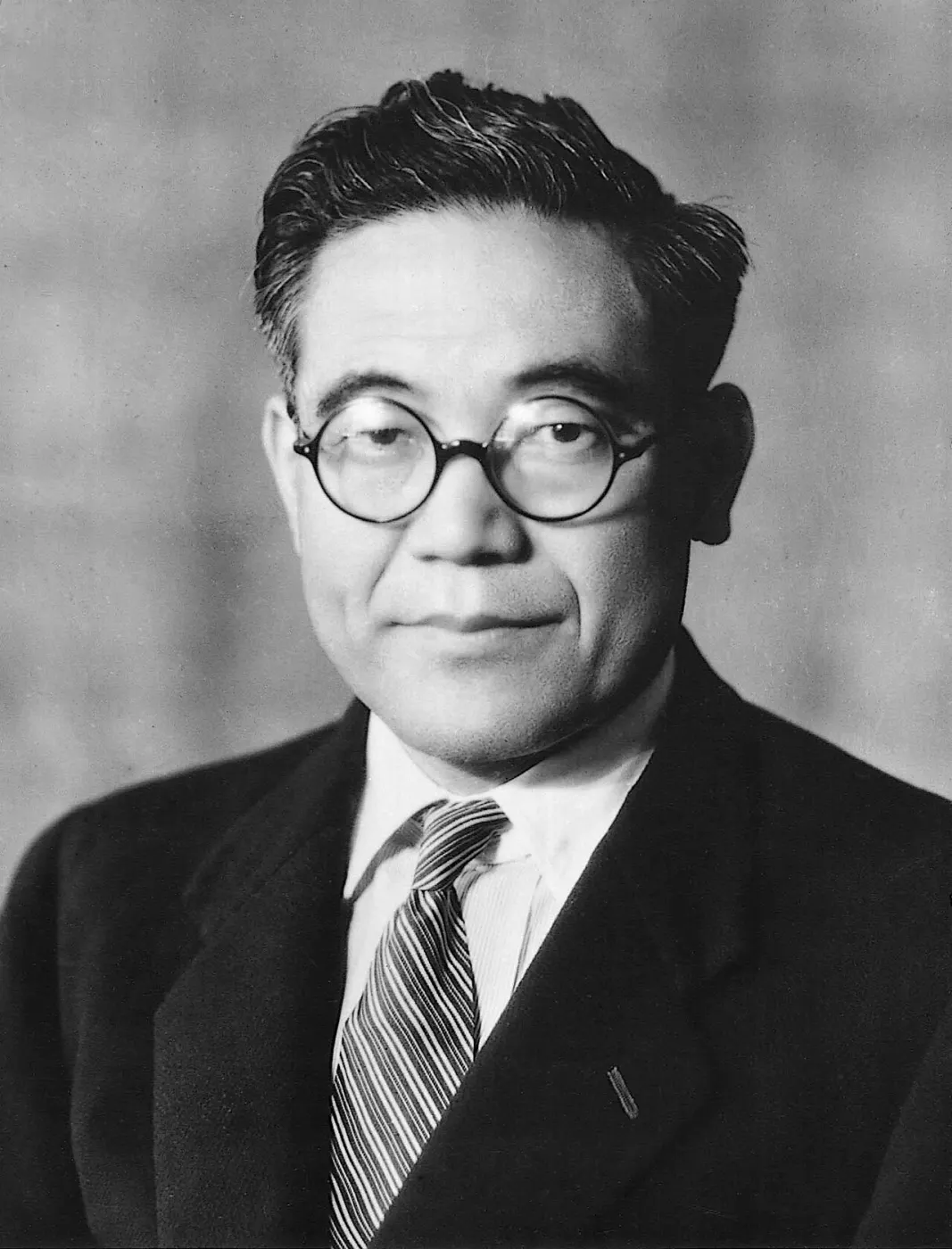
On June 5, 1950, Kiichiro Toyoda stood up and told his company he was quitting.
He was fifty-five years old. He was the president of Toyota Motor Company, the car maker he had dreamed up, fought for, and built from nothing.
The company was bleeding money. For months, workers had been on strike. Factory output had crashed. Banks had lost patience. To save the company, managers had asked 1,600 workers to leave. But Kiichiro had promised the year before that there would be no layoffs. He felt he had broken his word.
So he took the blame. He resigned.
His workers were shocked. Even the union, which had fought the company for weeks, respected what he did. The strike soon ended.
Kiichiro planned to return one day, once the company was healthy again. In early 1952, that moment finally came close. Toyota was making money again. He was expected to take back the top job.
Then, on March 27, 1952, he died. He was fifty-seven.
He never saw the Toyota Crown, the first car the company made in real volume, which came out three years later. He never saw the Corolla or the Camry. He never saw Toyota become the biggest car company on Earth.
But almost everything Toyota became started with him.
A baby left behind
Kiichiro Toyoda was born on June 11, 1894, in a small village called Yoshitsu, near the city now called Kosai, in Shizuoka Prefecture in central Japan.
His father was Sakichi Toyoda, a carpenter's son who would become one of Japan's most famous inventors. His mother was Tami.
Sakichi cared about one thing above all: machines. He was obsessed with making a better loom, the machine used to weave thread into cloth. He came to the village to name his new son, then went straight back to his work in another city.
Less than two months after Kiichiro was born, his mother left. She felt her husband cared more about his inventions than about his family.
The baby was raised by his grandparents in the village. When he was about three, he moved to Nagoya to live with his father. Sakichi remarried, and his new wife, Asako, helped raise the boy.
Kiichiro grew up surrounded by the clatter of looms. His father's workshop was full of wooden frames, gears, belts, and half-built machines. His father tested ideas, failed, and tried again.
That was Kiichiro's first school.
The inventor father
To understand Kiichiro, you have to understand Sakichi.
Sakichi Toyoda was born in 1867 in the same village as his son. His father was a carpenter. Sakichi had little formal schooling. He taught himself by reading and tinkering.
In his village, women wove cloth by hand for long hours. Sakichi wanted to make their work easier. In 1890, he patented a wooden hand loom that made weaving smoother and faster.
In 1896, he built Japan's first power loom, a machine that ran on engine power instead of human hands.
His biggest idea came later. He wanted a loom that could stop by itself when a thread broke, so it would not waste cloth. In 1924, after years of work, the Toyoda Type G Automatic Loom was finished. It could change shuttles without stopping and would halt on its own when something went wrong.
Kiichiro, by then a trained engineer, helped his father develop it.
That idea, a machine that stops itself the moment something goes wrong, would one day become one of the pillars of the Toyota Production System. The Japanese word for it is jidoka.
Self-help
Sakichi was shaped by two sets of ideas.
One came from Japan. In his village, people followed the teachings of a farmer-philosopher named Ninomiya Sontoku, who preached hard work, thrift, honesty, and giving back to the community. The other came from the West. Sakichi read a Japanese translation of Self-Help, a book by the Scottish writer Samuel Smiles full of stories about inventors who rose through effort and persistence.
Sakichi mixed the two together. Work hard. Study. Invent. Use what you make to help your country.
He passed those beliefs to his son. In 1935, five years after Sakichi's death, his teachings were written down as the Toyoda Precepts. They told employees to work together for the good of the country, to stay ahead of the times through research and creativity, to be practical and avoid showing off, to make the workplace warm like a family, and to be grateful.
Those five principles still appear in Toyota's official materials today.
The engineer
Kiichiro was a strong student. He went to good schools in Nagoya and then to the Second High School in Sendai.
In 1920, he graduated in mechanical engineering from Tokyo Imperial University, the top university in Japan. He even stayed on for a few months to study law.
In 1921, he joined his father's spinning and weaving company in Nagoya.
That same year, he took his first trip abroad. He traveled to San Francisco, then to England, visiting the great textile mills in towns like Oldham. He came home by way of Marseille and Shanghai.
In America, something caught his eye that had nothing to do with cloth. Cars were everywhere. Ordinary families owned them. Trucks carried goods down wide roads.
Japan had very few cars at the time. Kiichiro began to think that one day, the age of the automobile would come to Japan too.
In December 1922, he married Hatako Iida, the daughter of a founder of the Takashimaya department store family.
Earthquake and trucks
On September 1, 1923, the Great Kanto Earthquake destroyed much of Tokyo and Yokohama. More than 100,000 people died. Trains and trams were wrecked.
In the months after, trucks and buses helped move people and supplies. Japan's need for motor vehicles suddenly became clear.
American companies noticed. Ford set up an assembly plant in Yokohama in 1925. General Motors opened one in Osaka in 1927. Soon, most cars on Japanese roads were American, built from imported parts.
Kiichiro watched this closely. If Japan did not learn to make its own cars, he believed, foreign companies would control the industry forever.
The loom works
In 1926, Sakichi's new company, Toyoda Automatic Loom Works, was founded in Kariya, near Nagoya. Kiichiro became its managing director.
The Type G loom was a hit. It made the company money and made the Toyoda name known around the world.
In 1929, the British loom maker Platt Brothers, one of the biggest in the world, paid for the rights to make and sell the Toyoda automatic loom outside Japan and a few nearby countries. It was a huge moment of pride. A Japanese invention had impressed the country where the industrial revolution began.
Kiichiro traveled to England to help handle the deal. On that same trip, from September 1929 to April 1930, he went to the United States again. This time he visited car factories in Detroit.
He saw assembly lines, huge presses, and thousands of workers turning out cars every day. He came home more sure than ever. Japan needed a car industry, and he wanted to build it.
The trip taught him a second lesson. At Platt Brothers in Oldham, he saw a giant, proud company that had led the world for a century. Yet it struggled to build the Toyoda loom as well as the Toyoda factory did. Great size did not guarantee great skill. A small, careful team could beat a giant if it paid attention to every detail.
A father's blessing
Kiichiro's family did not all agree.
His brother-in-law, Rizaburo Toyoda, had married Kiichiro's sister Aiko and had been adopted into the family as an heir. Rizaburo ran the loom business. He thought cars were far too risky. The loom company was doing well. Why gamble it on something Japan had never done?
His father saw it differently. Family and company histories say that Sakichi encouraged his son to follow the dream. Sakichi had served the country with looms, he is said to have told Kiichiro. Now Kiichiro should serve it with cars.
In October 1930, Sakichi Toyoda died.
The same year, Japan was sinking into a deep depression. Orders fell. The loom works had to cut jobs, and there was a painful labor dispute. Kiichiro never forgot it. He later said he did not want workers to suffer like that again. He hoped a second business, like cars, would make the company stronger in hard times.
In a quiet corner of the loom works, he began studying small gasoline engines.
Taking apart a Chevrolet
In September 1933, Kiichiro finally got what he wanted. Toyoda Automatic Loom Works set up an automobile department.
He had almost nothing to work with. Japan did not have the steel makers, parts suppliers, or trained car engineers that America had. He had to gather people with any car experience from across the country.
So the team did what beginners do. They bought American cars and took them apart, piece by piece.
They studied a Chevrolet engine and copied its design to make their own, called the Type A engine. It was a six-cylinder engine of about 3.4 liters.
It was brutally hard. Casting engine blocks, pouring hot metal into molds, was an art they did not know. Block after block came out cracked or full of holes. Kiichiro spent long days in the foundry, studying each failure. It took about six months just to get a working engine.
The loom company's money poured in. Some people inside the family business grumbled that the car project was burning cash.
In May 1935, the first prototype passenger car, the A1, was finished. Kiichiro drove it to his father's grave to report the news.
A law that changed the field
Kiichiro was not building his car company in a free market.
In 1936, the Japanese government passed the Automobile Manufacturing Industry Law. It said that only licensed companies, mostly owned by Japanese investors, could make large numbers of cars and trucks in Japan. In September 1936, Toyoda Automatic Loom Works and Nissan became the first two companies to get licenses.
The law was part of Japan's military buildup. The army wanted a domestic supply of trucks it could control. The rules squeezed Ford and General Motors, and by 1939 both had stopped assembling cars in Japan.
So Toyota's early growth was helped by government protection, and it was tied to a country preparing for war. That is part of the honest story.
Kiichiro himself had mixed feelings. He worried that being a protected, licensed company could make Japanese car makers lazy and weak. He wanted Toyota to become good enough to compete with the Americans on its own.
The people he gathered
A car company needs much more than one engineer. Kiichiro spent these years collecting talent.
In 1935, he hired Shotaro Kamiya, a salesman who had worked for General Motors in Japan. Kamiya understood how American companies sold cars through networks of dealers. He left a secure job at GM to join a tiny Japanese company that had not yet sold a single car. He would go on to build Toyota's sales network and later lead Toyota Motor Sales.
In 1936, Kiichiro's younger cousin Eiji Toyoda joined after graduating in mechanical engineering from Tokyo Imperial University. Kiichiro put him to work on research and, later, on the factory floor. Eiji would one day run the whole company.
Kiichiro also brought in engineers from universities, from the navy's workshops, and from other factories. Few had built a car. All of them had to learn together.
Trucks that broke down
The government wanted trucks more than cars. So in 1935, the team built the G1 truck and began selling it.
It was a disaster at first. The trucks broke down again and again. Axles snapped. Parts failed. Customers were stranded on the side of the road.
Kiichiro did not hide. He rushed out to customers himself to apologize and help fix the trucks. His team brought broken parts back to the factory and studied why they failed. Then they made better parts.
From these painful months came two ideas that Toyota still talks about today. Customer first. Quality first.
It also gave birth to a habit called genchi genbutsu, which means "go and see for yourself." Do not guess what went wrong from an office. Go to the place where the problem is, look at it with your own eyes, and fix it there.
The Model AA
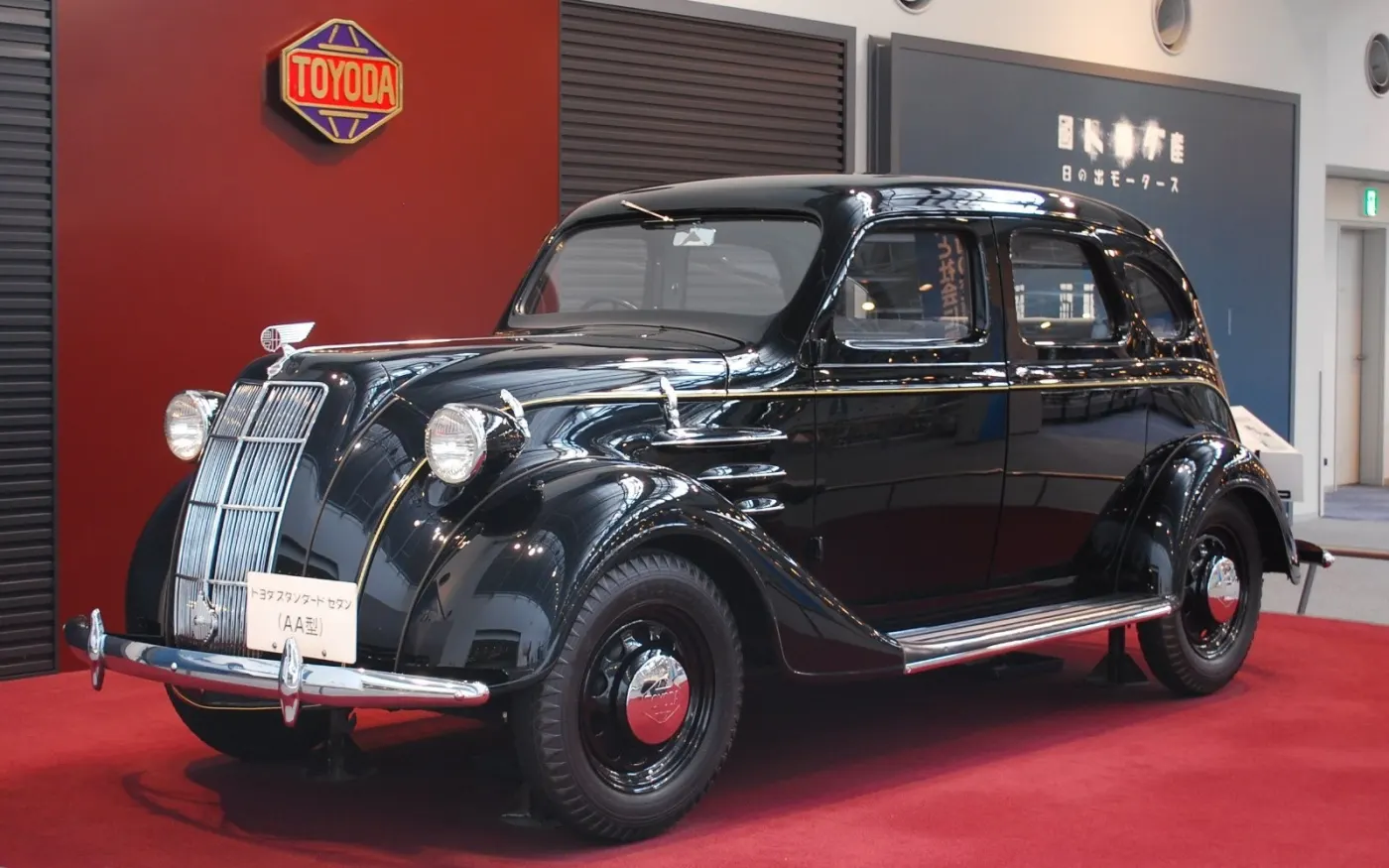
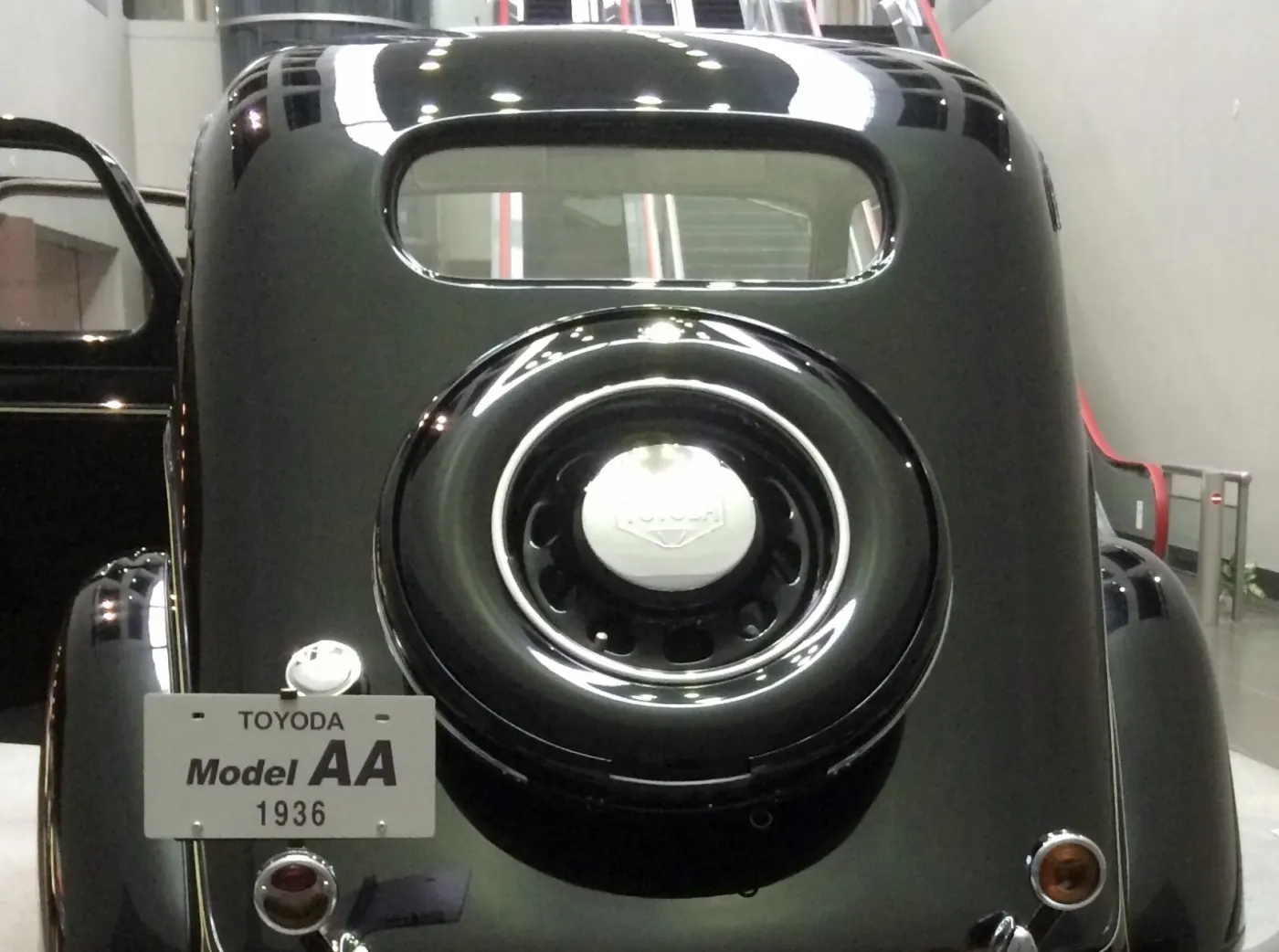
In 1936, Kiichiro's team produced the Toyoda Model AA, the company's first production passenger car.
It was a big, rounded sedan with a curved nose, inspired by American cars of the time such as the Chrysler Airflow. It had the six-cylinder Type A engine with about 65 horsepower. Its steel body was shaped by hand. It had fake wood grain on the dashboard.
It was expensive, and not many people in Japan could afford it. But it proved something. A Japanese company, starting from nothing, had built a real passenger car.
Only a small number were made. Today, original AAs are extremely rare. Toyota built a careful reproduction in the 1980s for its museum.
Why Toyota, not Toyoda
In 1936, the company held a public contest for a new logo. It drew about 27,000 entries.
Around the same time, the name changed from Toyoda to Toyota.
There were several reasons. Toyota sounded clearer and was easier to say. It separated the business from the family's private life. And written in the Japanese katakana script, Toyota takes eight strokes. In Japan, eight is a lucky number, because the way the character is written spreads wider at the bottom, like growth and good fortune.
On August 28, 1937, the car department became its own company: Toyota Motor Company. Rizaburo was named president. Kiichiro was vice president, but everyone knew whose dream it was.
Building what Japan lacked
To make cars, you need thousands of parts. You need special steel, precise machine tools, electrical systems, and bodies stamped from sheet metal. In the 1930s, Japan had very little of this.
So Kiichiro started building the pieces himself.
In 1934, the loom works began its own steel making. That work later became Aichi Steel. Kiichiro pushed Toyota to make its own machine tools, and that effort grew into Toyoda Machine Works. In 1940, he founded a research institute for physics and chemistry to study materials and new technology.
Later, other parts of Toyota became separate companies too. The electrical parts division became Nippondenso, known today as Denso, one of the largest auto parts makers in the world. A body works became Toyota Auto Body.
This web of related companies, working closely together, became known as the Toyota Group. It started because Kiichiro could not buy what he needed, so he made it.
Koromo and just in time
Kiichiro wanted a real car factory, built for mass production.
He chose a large piece of land in Koromo, a small town in Aichi Prefecture. The Koromo plant opened on November 3, 1938. Many years later, in 1959, the town changed its name to Toyota City.
At Koromo, Kiichiro put a new idea into words. He called it "just in time."
The idea was simple. Make only what is needed, when it is needed, in the amount needed. Do not pile up parts in warehouses. Do not build extra cars that sit unsold. Waste costs money, and a small company could not afford waste.
He organized the plant so that parts arrived at each station right when workers needed them. He wrote detailed guides for how the flow should work.
Decades later, a Toyota engineer named Taiichi Ohno took Kiichiro's just-in-time idea and Sakichi's self-stopping machine idea and built them into the Toyota Production System. It became one of the most copied ways of running a factory in the world. Factories in America, Europe, and Asia would later study it under the name "lean manufacturing."
War
Just as Toyota Motor Company was born, Japan went to war with China in 1937.
The government took control of the economy. A national mobilization law passed in 1938. Car makers were told to build trucks for the army and war industries. Selling passenger cars became nearly impossible.
In 1941, Kiichiro became president of Toyota. That December, Japan went to war with the United States.
Through the war years, Toyota built trucks. Materials ran short. Trucks were made with fewer parts, one headlight, and simple wooden beds. Kiichiro was frustrated. He wanted to build cars for families, not military vehicles.
Even so, he kept thinking about engineering problems. He believed that when peace came, Japan would need cars.
In August 1945, American bombs hit the Koromo plant. Days later, Japan surrendered.
Catch up with America
After the war, Japan was in ruins. American forces occupied the country. At first, they allowed Japanese companies to make only trucks.
Kiichiro gave his team a hard goal. Japan had to catch up with America's car makers in three years, he said, or the Japanese car industry would not survive.
It was an almost impossible target. But it pushed Toyota's engineers to think about how to make cars faster and cheaper, with less waste.
Kiichiro also led the effort to restart the whole industry. In November 1945, he became chairman of a new national group for car makers. He met with occupation officials himself and argued for Japan's right to make vehicles again.
He invited car dealers from across Japan to Koromo and spoke to them about the future. Many of them later became Toyota dealers. They trusted him because he talked to them directly and fixed problems fast.
Toyota also repaired American military vehicles in Japan. That work gave its engineers a chance to study American cars closely.
The Toyopet
In June 1947, the occupation allowed Japanese companies to make a small number of passenger cars. Kiichiro jumped at it.
That October, Toyota released the SA, a small car with a new engine. It was nicknamed the Toyopet.
Car experts liked it. Buyers did not. Most Japanese people could not afford a car for personal use. In five years, Toyota sold only 197 of them. In the same period, it sold nearly 12,800 trucks.
Kiichiro worried that Toyota could not yet build a car better and cheaper than foreign ones. He even considered working with a foreign car maker.
He would not give up on the dream of a Japanese car for ordinary Japanese people.
The money runs out
In 1949, the American-led occupation launched a harsh economic plan to stop runaway prices in Japan. It was called the Dodge Line, after the American banker who designed it.
It worked against inflation. It also crushed businesses. Credit dried up. More than 8,000 Japanese companies went bankrupt that year.
Toyota was losing about 22 million yen every month. Kiichiro and other executives went out themselves to sell cars and collect money that customers owed.
In August 1949, Kiichiro made a deal with his workers. They would accept a ten percent pay cut. In return, the company promised not to fire anyone.
He visited banks every day, begging for loans. Most said no. Finally, a Toyota sales executive named Shotaro Kamiya convinced the Bank of Japan's Nagoya branch to step in. A group of 24 banks lent Toyota about 188 million yen. But there were conditions. Toyota had to cut costs and split off its sales operation into a separate company.
The strike
It was not enough.
Car prices were still controlled by the government while the cost of materials kept rising. From November 1949 to March 1950, Toyota lost over 76 million yen.
Kiichiro, who had high blood pressure, fell ill. Other managers took over the talks with the union.
On April 22, 1950, the company announced that 1,600 workers would have to leave.
The union was furious. The company had promised no layoffs. Strikes went on day after day for about two months. Production in April and May fell by around seventy percent.
Kiichiro felt the promise had been his. On June 5, 1950, he resigned as president to take responsibility.
The strike ended. Many workers left. The company survived.
And then, just weeks later, war broke out in Korea. The American military suddenly needed thousands of trucks. Large orders came to Toyota. The company that had nearly gone bankrupt started making money again.
Kiichiro was no longer in charge.
The helicopter
Kiichiro did not sit still after he stepped down.
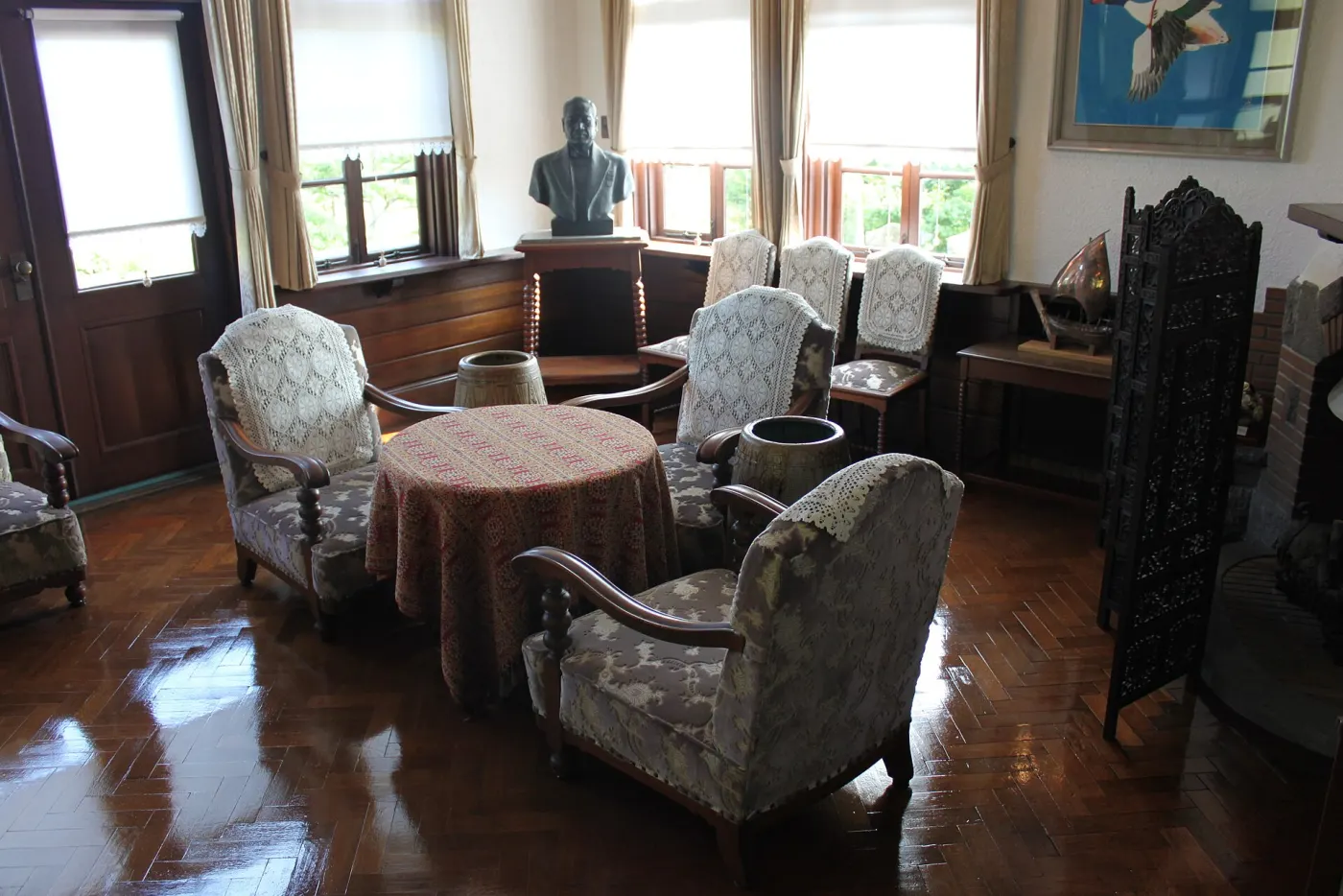
He set up a small laboratory at his home in the Okamoto neighborhood of Setagaya, in Tokyo. There, he worked every day on designs for a small helicopter.
He was still an engineer at heart. He wanted to build things.
By early 1952, Toyota was back on solid ground. The plan was for Kiichiro to return as president.
On March 27, 1952, he suffered a fall. Doctors believed it was caused by a bleed in the brain linked to his long illness. He died at the age of fifty-seven.
His cousin, Eiji Toyoda, who had worked beside him for years, carried on.
In 1950, Eiji had spent about three months studying Ford's giant Rouge plant in Michigan. The gap was staggering. According to the well-known MIT study The Machine That Changed the World, the Rouge was turning out about 8,000 vehicles a day, while Toyota had built only about 2,685 cars in its first thirteen years.
Eiji did not come home trying to copy Ford. Toyota did not have the money, the space, or the huge home market for that. Instead, he came home convinced that Toyota could beat mass production by doing things its own way, with less waste. That was Kiichiro's idea, carried forward.
Ohno's workshop
The man who turned Kiichiro's words into daily practice was Taiichi Ohno.
Ohno had started at the Toyoda spinning and weaving company and moved to Toyota Motor in 1943. After the war, he took charge of machine shops at Koromo and began experimenting.
He had read about American supermarkets, where shelves were refilled only after customers took what they needed. He thought a factory could work the same way. Each station would take parts from the one before only when it needed them, and a simple card, called a kanban, would signal what to make next.
He also brought back Sakichi's old loom idea. Machines, and later people, would stop the line the moment they saw a problem, so defects did not travel down the line.
It took Ohno and his teams years of trial and error to spread these methods across Toyota. Many workers and managers resisted at first. But over time, the system cut waste, raised quality, and lowered costs. Ohno always said that the roots of the system were just-in-time from Kiichiro and self-stopping machines from Sakichi.
The dream, finished by others
In January 1955, Toyota launched the Toyopet Crown. It was a fully Japanese-designed car built for Japanese roads and Japanese drivers. It sold well and helped build trust in Japanese cars.
It was the car Kiichiro had worked toward for twenty years.
Toyota began exporting cars. The Corona came, then the Corolla in 1966, which became one of the best-selling cars in history. The Camry followed.
Taiichi Ohno turned just-in-time and jidoka into a full system. Workers were encouraged to suggest improvements every day, a habit called kaizen. Toyota worked closely with its parts suppliers and grew with them.
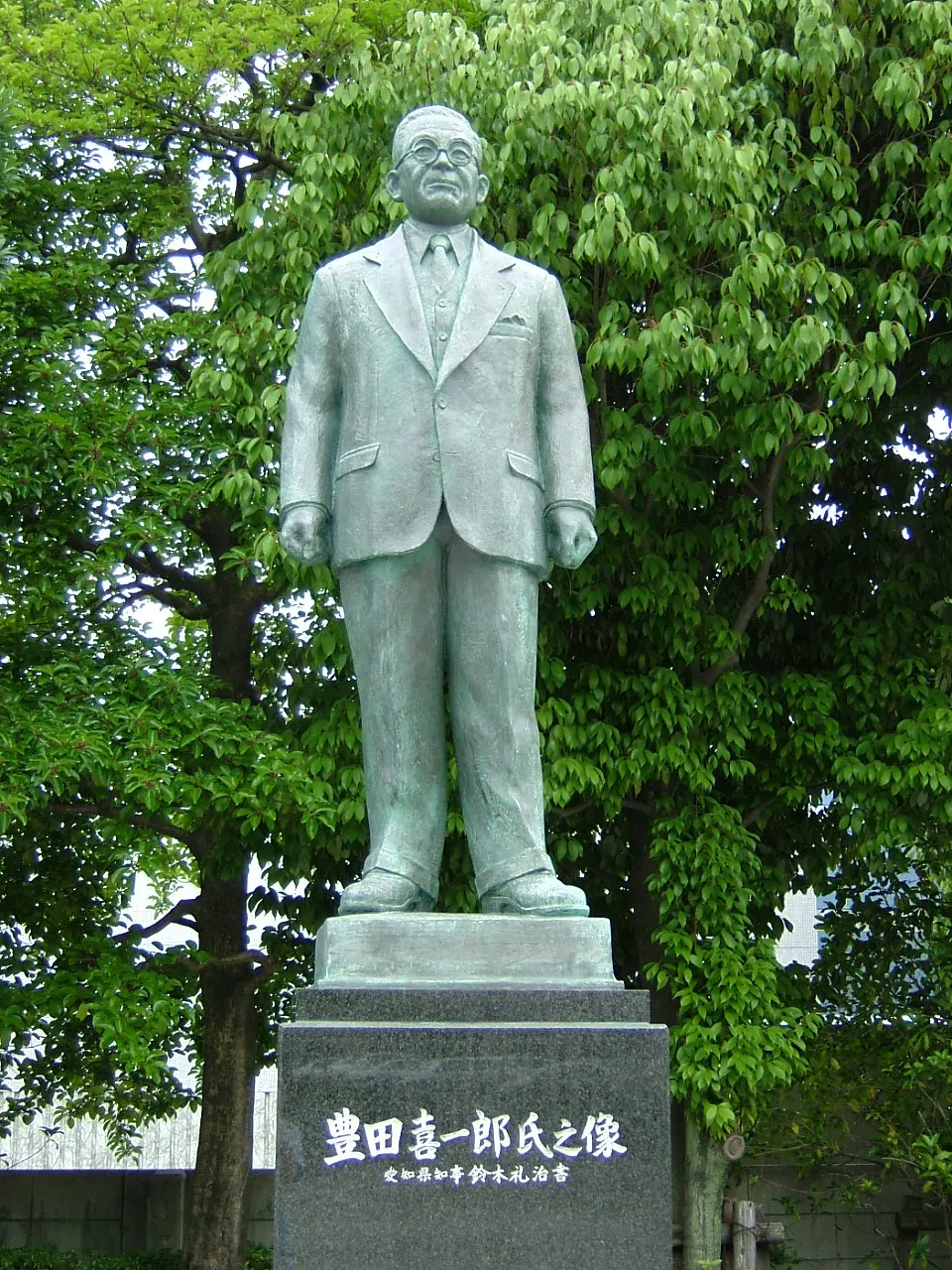
Kiichiro's son Shoichiro Toyoda later became president and then chairman of Toyota. His grandson, Akio Toyoda, became president in 2009 and is now chairman.
Akio often speaks about his grandfather. As president, he faced a huge crisis in 2010, when millions of Toyota cars were recalled over problems with unwanted acceleration and he was called to testify before the United States Congress. He later said that moment reminded him of the founder's rule: customer first, and go see the problem for yourself.
Akio also became known for driving race cars himself under a made-up name, testing Toyota vehicles on the track. It was his own version of going to the place where the work happens.
In 2008, Toyota passed General Motors to become the world's biggest car maker by sales.
How he worked
Kiichiro was not a salesman or a showman. He was an engineer.
He loved to be where the work happened. He went into the foundry when engines cracked. He went to the roadside when trucks broke down. He believed the answer to a problem was usually found at the place where the problem was.
He was stubborn about big goals. His family's loom business was safe and profitable. He risked it on cars anyway because he believed Japan needed its own auto industry.
He cared deeply about his workers. He had seen layoffs during the 1930 depression and hated them. He tried to protect jobs even when the company was sinking. When that failed, he took the blame himself.
He was also humble about what Japan did not know. He studied American cars, American factories, and British machines. He copied what worked, then tried to improve it.
He treated waste as the enemy. His just-in-time idea was born from a small company's need to survive, but it changed how the whole world builds things.
Honored in Detroit
In July 2018, Kiichiro Toyoda was inducted into the Automotive Hall of Fame in Detroit, the city that had inspired him almost ninety years earlier.
At the ceremony, Toyota played a video message from Akio Toyoda. In it, Akio played a playful scene, talking with an actor as his grandfather. The "grandfather" said he had always looked up to America and could never have imagined that one day people would say Toyota was proudly made in America, by Americans.
Toyota now builds cars in the United States and around the world.
Toyota in 2026
In 2025, Toyota sold a record of about 10.5 million Toyota and Lexus vehicles worldwide and remained the world's top-selling car maker, ahead of Volkswagen. Hybrid cars led the way.
For the fiscal year that ended in March 2026, Toyota reported revenue of about 50.7 trillion yen. Its operating profit fell to about 3.8 trillion yen, down from about 4.8 trillion the year before. United States tariffs on imported cars cut profit by about 1.38 trillion yen.
On April 1, 2026, Kenta Kon became Toyota's chief executive, taking over from Koji Sato. Akio Toyoda stayed on as chairman.
The year also brought a big change to the company where the whole story began. Toyota Industries, the firm that grew out of Toyoda Automatic Loom Works, was taken private by Toyota Group companies. The tender offer closed in March 2026 at 20,600 yen per share. On June 1, 2026, Toyota Industries was removed from the Tokyo and Nagoya stock exchanges after nearly eight decades as a listed company.
The loom company that had once paid for Kiichiro's car experiments was now fully folded back into the family of companies his dream created.
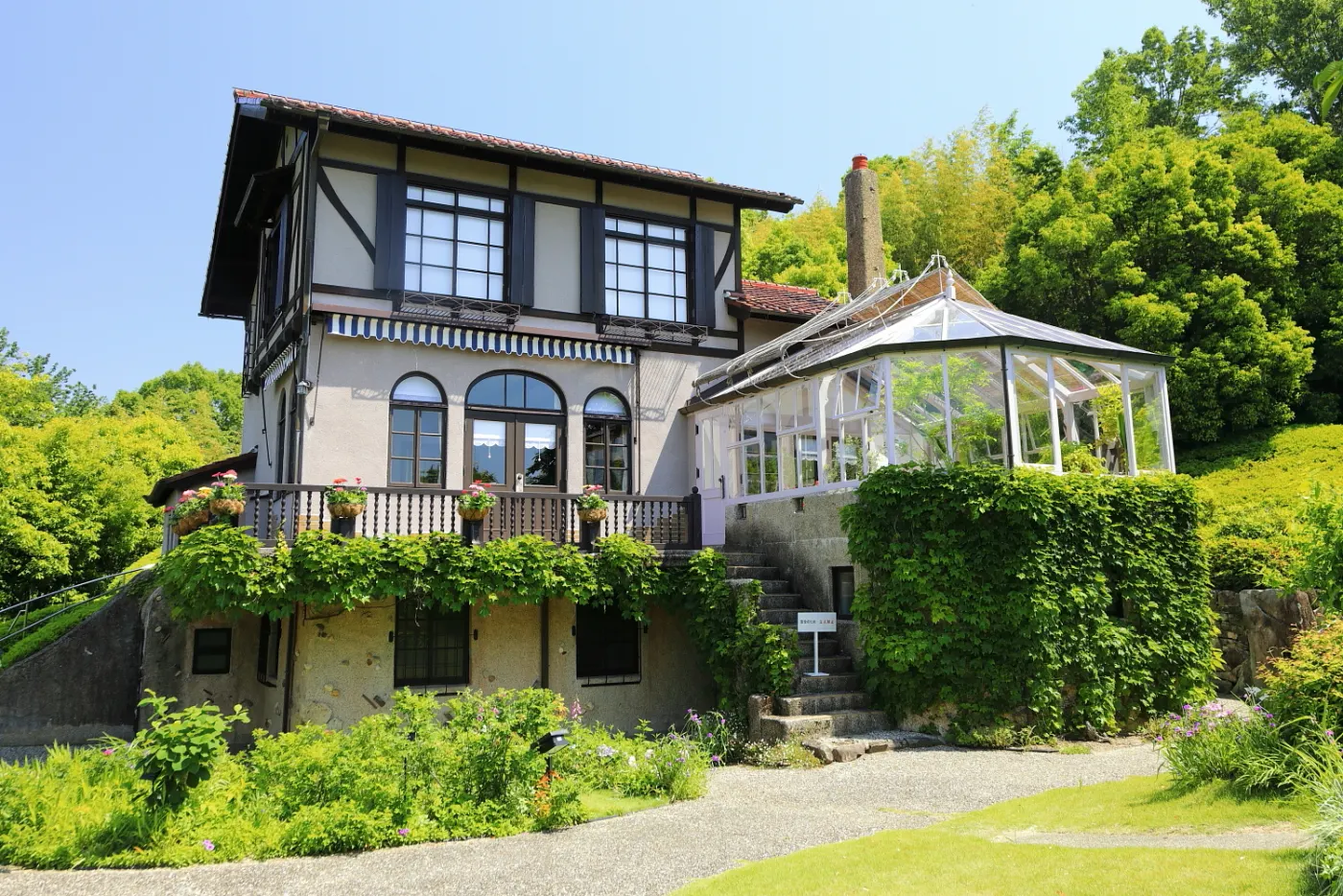
In Nagoya, the old red-brick Toyoda textile factory is now the Toyota Commemorative Museum of Industry and Technology. Visitors can see Sakichi's looms clattering beside early Toyota engines and cars.
What changed because of him
Before Kiichiro, Japan bought its cars from America or assembled American parts. After him, Japan became one of the greatest car-making nations in the world.
Japanese car production grew from about 70,000 vehicles in 1955 to over 11 million in 1980, passing the United States that year. Toyota led the way.
His ideas about waste and flow shaped the Toyota Production System. Lean manufacturing spread far beyond cars, into hospitals, software companies, airplane factories, and warehouses.
His habit of going to see problems with his own eyes became a management lesson taught in business schools around the world.
His insistence on quality helped Japanese cars earn a reputation for reliability that changed what people everywhere expected from a car.
His belief that a car company must keep researching new technology lived on too. In 1997, Toyota launched the Prius, the first mass-produced hybrid car. Hybrids later became the backbone of Toyota's sales, and in 2025 they helped the company set a sales record even as tariffs rose.
And his choice to protect workers, even at great cost to himself, became part of Toyota's story about what kind of company it wanted to be.
Closing
In 1921, a young engineer from Nagoya saw American streets full of cars and thought, one day this will come to Japan.
He took apart a Chevrolet engine. He cracked block after block in a foundry until one worked. He apologized to customers stranded by his broken trucks. He named his company for a lucky number of brush strokes. He gave up his job to save it.
He died believing his company would survive. He did not live to see how far it would go.
Today, somewhere in the world, a Toyota rolls off an assembly line about every few seconds, built with parts that arrived just in time.
The loom maker's son got his wish.