Scissors in the Suitcase
She cut shapewear in hotel bathrooms for years. Then she built the brand she could not buy. By late 2025 SKIMS was valued at five billion dollars.
In a launch film for her own company, Kim Kardashian said something plain that still explains the fortune. Growing up she felt shy. In grade school she did not look like the women she saw in media. Years later, when she needed shapewear under red-carpet clothes, she could not find a nude that matched her skin. So she cut pieces with scissors. She dyed fabric with tea bags and coffee in bathtubs and sinks. She packed the experiments in her travel bag the way other people pack chargers.
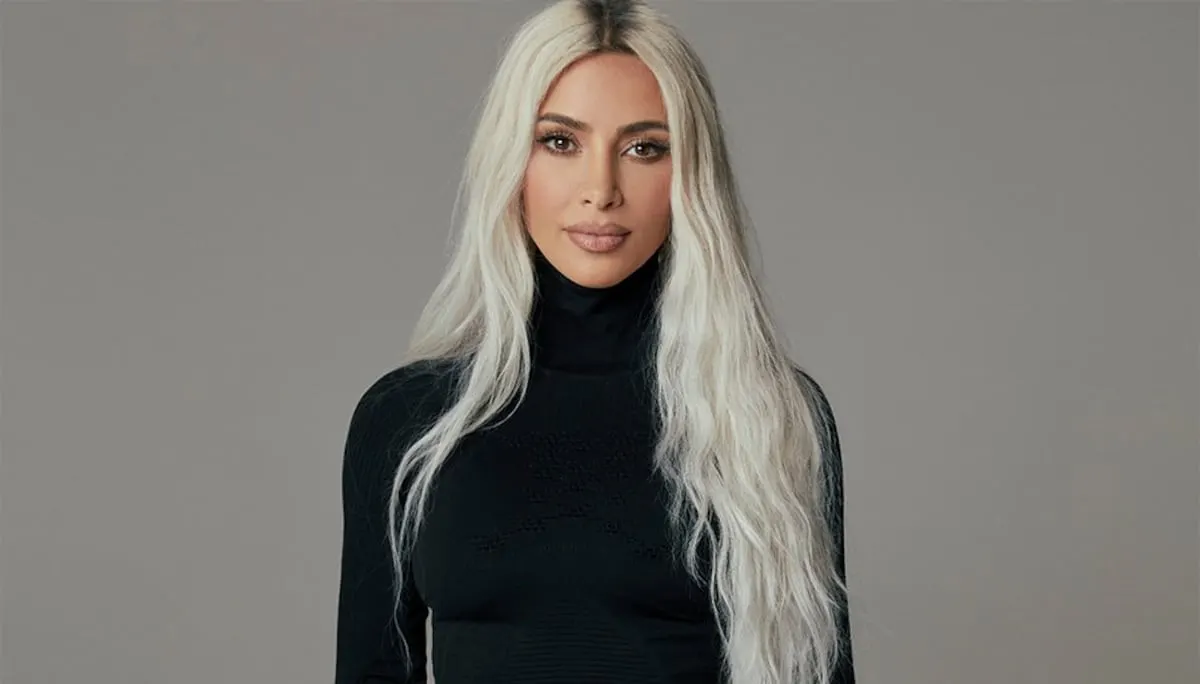
That habit did not look like a venture deck. It looked like a famous woman refusing to accept a seam showing through a dress. In 2019 the habit became SKIMS, co-founded with Jens Grede and Emma Grede. In November 2025 the company raised about $225 million led by Goldman Sachs Alternatives, with participation from BDT and MSD Partners, at a valuation of about $5 billion. Company guidance said SKIMS was on track to exceed $1 billion in net sales that year. Forbes estimated Kim's fortune near about $1.9 billion after the round, up from about $1.7 billion before it, with the vast majority tied to a stake Forbes described as just under one-third of SKIMS.
The drama of Kim Kardashian as a founder is not that cameras found her. Cameras found millions of people. The drama is that she converted attention into a product system for bodies, then into retail rooms, then into a Nike joint brand, while still sitting for constitutional-law midterms and saying out loud that she is not a lawyer yet. Numbers move. Ownership percentages are private-company estimates. The arc is clearer than the ticker: a closet organizer who learned distribution in public built one of the defining apparel companies of the 2020s.
Beverly Hills daughter, contracts, and a father's desk
Kimberly Noel Kardashian was born on 21 October 1980 in Los Angeles to Robert Kardashian and Kris Houghton. She was the second of four children with Robert and Kris: Kourtney older, Khloé and Rob younger. Family histories place childhood across Beverly Hills and later the Calabasas orbit. Robert was an attorney whose public fame peaked when he joined O.J. Simpson's defense team during the 1995 murder trial. Simpson was also Kim's godfather. The household already knew what a camera could do to a last name.
Kris and Robert divorced in 1989. Kris later married Olympic champion Bruce Jenner, who publicly transitioned and became Caitlyn Jenner. Kendall and Kylie Jenner arrived as half-sisters. The blended family would become a television machine, but that machine did not exist yet. What existed was school, chores, and Robert's habit of making money feel contractual. Variety and Business Insider retellings say he had the children sign contracts for ordinary things, and that after Kim totaled a car at sixteen he agreed to replace it only if she would cover future damage costs herself. Exact paperwork. Real enough direction: money was not magic, even in a zip code that looked magical from the outside.
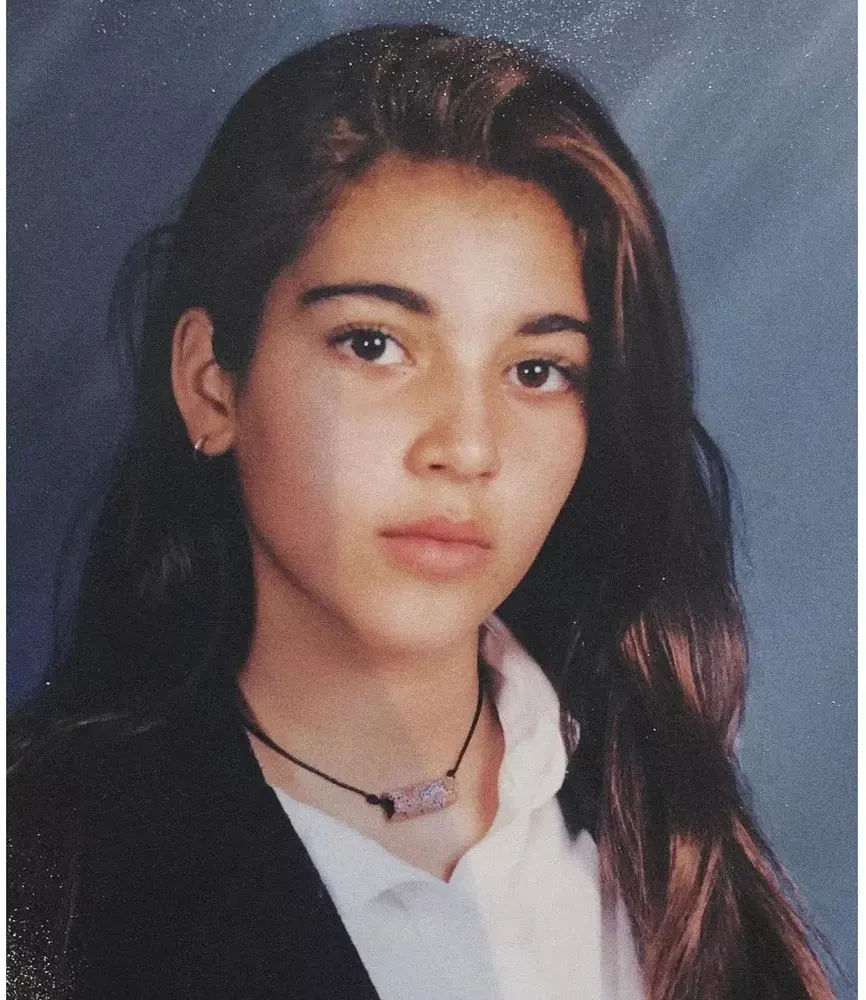
She attended the Buckley School in Sherman Oaks, where soft class lists put her near Paris Hilton, then Marymount High School, a Roman Catholic girls school, graduating in 1998. Teenage Kim worked. Secondary accounts place her for about four years at Body, a clothing store in Encino, helping with a Calabasas opening before she stepped away around 2000 during her first marriage. The point is labor: folding, opening, watching what sold, learning that a store is a set of decisions, not a backdrop.
Closet girl: eBay, Hilton, and Dash
Through Hilton and Nicole Richie, Kim learned the nightlife map of early-2000s Los Angeles. Around 2006 she worked as Hilton's personal assistant and closet organizer, appearing on The Simple Life while cameras followed the hotel heiress. In an E! interview from that era she explained the business simply: she went into clients' homes, cleaned closets, and sold what they did not want on eBay. Press lists of clients include Hilton, Brandy, Serena Williams, and Cindy Crawford. Treat the roster as colorful secondary reporting. Treat the skill as real. She was already translating taste into inventory and inventory into cash.
In 2006 she opened DASH boutiques with Kourtney and Khloé. The stores later closed in 2018 after the sisters' focus moved. Dash never published a clean revenue ledger. What matters for the founder arc is sequence. Before the family show, Kim was already practicing retail, styling, and the soft power of being useful inside famous closets. Years later she would say Hilton "literally gave me a career," a credit that rejects the myth that fame arrived from nowhere.
The tape, the show, and a new kind of distribution
Early 2007 brought an unauthorized sex tape with then-boyfriend Ray J into public circulation. Britannica describes the release as unauthorized. The internet did what the internet does. The family, managed in public by Kris, turned the attention into Keeping Up with the Kardashians on E! the same year. The show ran for twenty seasons through 2021. Spin-offs multiplied. In 2022 the family revived the franchise on Hulu as The Kardashians under a multi-year deal. Deal dollars stayed private.
Reality television is often dismissed as noise. Operators saw a different machine: weekly proof of life, product placement without calling it an ad, and a direct line to millions of people who felt they already knew Kim's closet, her fights, her babies, her face. Follower counts bounced across platforms; a TODAY introduction from the SKIMS launch era framed her social reach above two hundred million. Exact counts change. The distribution did not need a retailer to open the door. She was the aisle.
Endorsements, guest appearances, a mobile game, fragrances, and early fashion experiments filled the 2010s. Some were clever. Some were temporary. Critics called it all fame laundering. Kim kept filming and kept selling. The deeper bet was still forming in hotel bathrooms with scissors.
Paris, October 2016: the night that changed the feed
In the early hours of 3 October 2016, during Paris Fashion Week, masked men posing as police entered the residence where Kim was staying at the Hotel de Pourtalès. AP reporting describes her bound with duct tape and plastic ties, locked in a bathroom, and robbed of jewelry estimated around $6 million in some tallies, with other outlets printing higher ranges toward $10 million. Exact insured values are not a clean public spreadsheet. The scene is not disputed in court coverage: a gunpoint robbery of one of the most photographed women on earth.
The aftershock ran through celebrity security culture. AP analysis later framed the night as a turning point in how public figures think about posting luxury in real time. Kim took a social-media hiatus. On Keeping Up with the Kardashians she spoke through tears about fearing for her life. Later she said the robbery made her less materialistic. Treat those as her words, not as a moral report card.
Nearly a decade later, in May 2025, a Paris court convicted eight of ten defendants in the case. Reuters and BBC reported that sentences were largely suspended, and with time already served none returned to prison. Secondary tallies also note two acquittals and one weapons-only conviction. In September 2026, Reuters and CNN reported that the court awarded Kim the symbolic one euro in damages she had asked for. The euro was theater with legal teeth: she wanted the record more than a payday. For the founder story, Paris is the scar that sits under the brand smile. Attention can pay. Attention can also draw a map for strangers with guns.
Alice Marie Johnson and the turn toward law
After Paris, another storyline hardened. Kim has said she learned of Alice Marie Johnson through a viral video about a woman serving life without parole for a nonviolent drug case. In late May 2018 she went to the White House with her attorney Shawn Holley to lobby President Donald Trump. On 6 June 2018 Trump commuted Johnson's sentence after more than twenty years in federal prison. That is the AP and New York Times record. A full pardon followed in 2020. In February 2025 Trump named Johnson a "pardon czar." Narrate as public appointments, not as Kim's personal victory lap.
In 2020 Kim starred in and produced the Oxygen documentary Kim Kardashian West: The Justice Project. She also entered California's Law Office Study Program, the old "read the law" path that lets apprentices sit for the bar without a traditional ABA law school degree. She has no undergraduate degree in the usual sense of the pathway story. She failed California's first-year "baby bar" three times and passed on the fourth try in December 2021, per Reuters and BBC. The ABA Journal reported she later passed the Multistate Professional Responsibility Examination, a prerequisite for the bar, and took about six years on a track that often takes four.
In July 2025 she sat the California bar exam among thousands of candidates. The ABA Journal reported she did not pass. On Instagram she wrote that she was not a lawyer yet, that there would be no shortcuts, and that she would keep studying. She also appeared in Hulu's legal drama All's Fair while still in the student seat, a cultural joke she answered by refusing to pretend the exam was optional. TMZ chatter about a private testing area is unverified as special treatment; leave it as rumor unless courts say otherwise.
The law beat matters to the business beat. It tells employees and investors that Kim will endure boring work. SKIMS is not only a face. It is fittings, factories, SKUs, and returns. A founder who retakes a bar exam is practicing the same muscle.
KKW Beauty, Coty, and the skin brand under the house
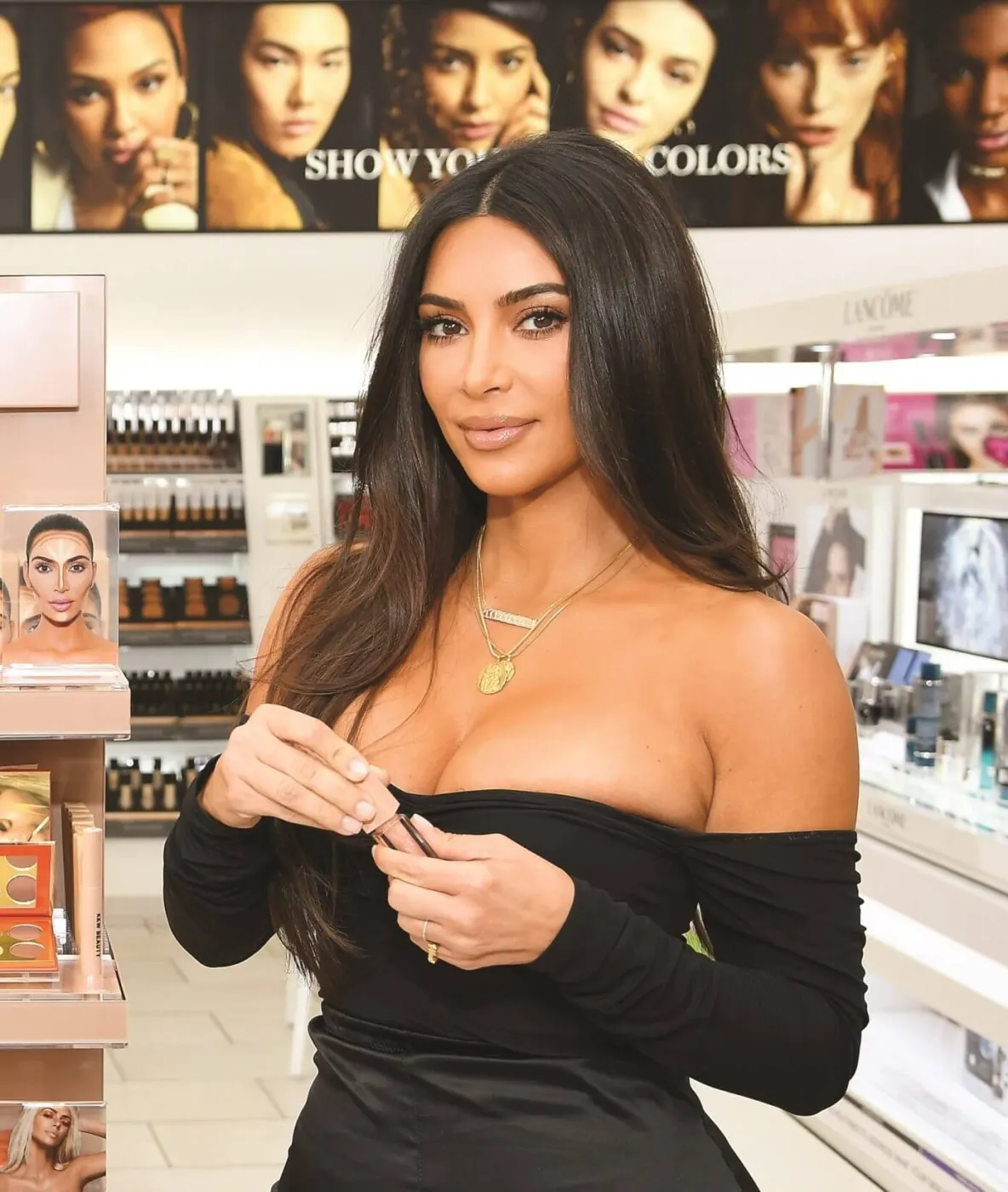
In 2017 Kim launched KKW Beauty and related fragrance lines, riding the same DTC rails that later powered SKIMS. Early sell-through stories are loud in secondary press and soft as audited truth. In January 2021 Coty announced a strategic relationship and bought 20 percent of her beauty business for $200 million, implying a roughly $1 billion valuation for that beauty vehicle, per Coty's SEC exhibit language. The beauty line later became SKKN BY KIM. Outlets tell the later restart and wind-down story differently.
In March 2025 Coty said it was divesting its SKKN stake, and SKIMS announced it was acquiring SKKN along with related beauty rights, bringing more of Kim's beauty ventures under the SKIMS roof. The price was not disclosed. The move reads like consolidation: one operating company, one founder brand stack, fewer competing logos on the same face.
2019: Kimono, backlash, SKIMS
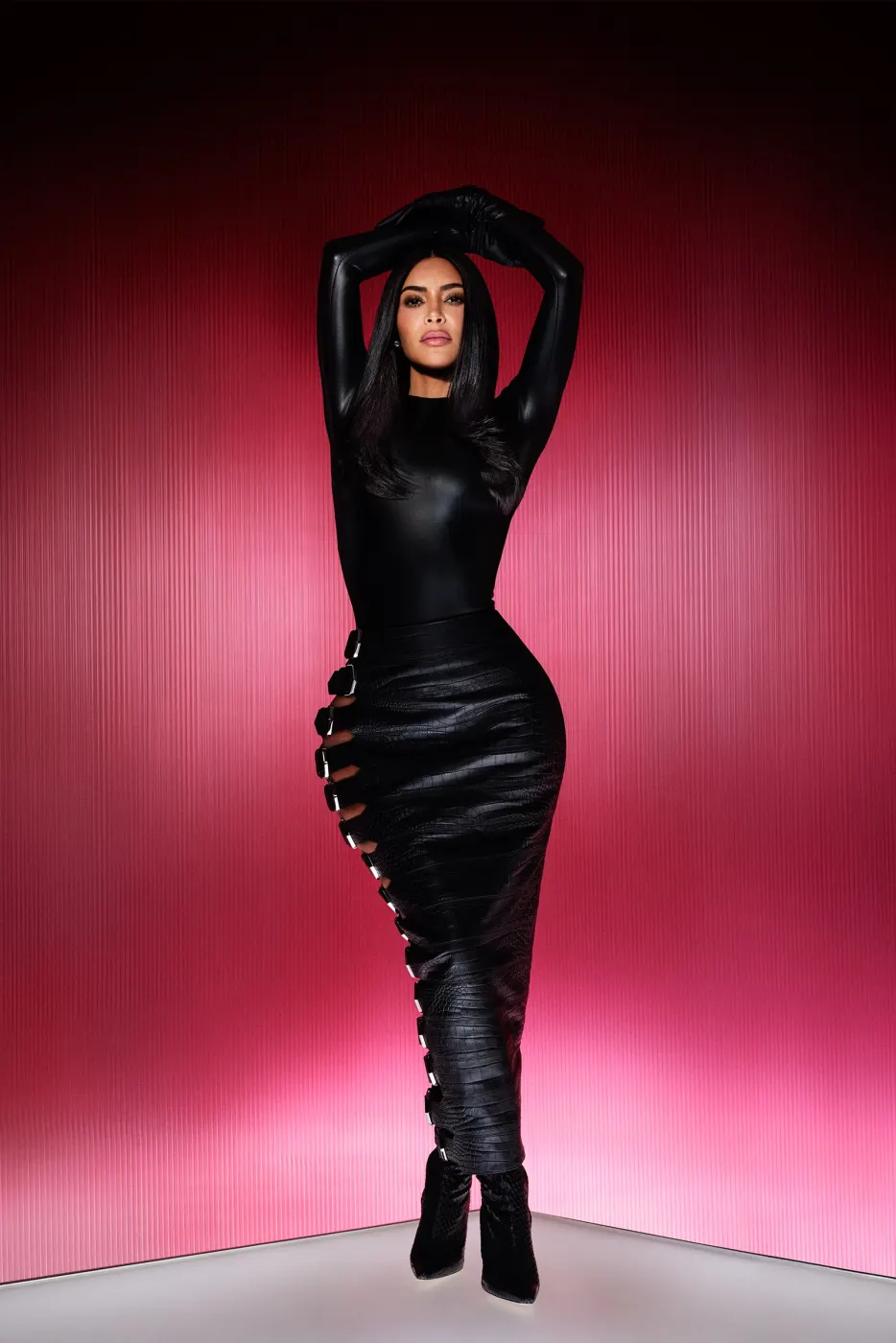
The shapewear company almost launched under another name. Kimono. The choice drew immediate criticism for cultural appropriation and for attempting to trademark a Japanese garment word. Kim apologized and renamed the brand SKIMS. The rename is not a footnote. It is an early stress test: could the company survive a public correction without losing the product thesis?
The thesis stayed. In W Magazine and People interviews at launch she said she had been redesigning shapewear for about fifteen years; scissors for one-legged solutions under slit dresses; catsuits for hold; seamless fabric so seams would not print through; comfort so people who hated classic shapewear would still wear it. Sizes and skin tones ran far beyond the old nude-or-black binary. She called it solutionwear. Jens Grede took the CEO seat. Emma Grede helped build the operating partnership. Kim owned creative direction, campaigns, fittings, and the relentless try-on storytelling that turned Instagram into a fitting room.
Early SKIMS sold direct to consumer. In the launch film Kim claimed social was about ninety percent of the push, even while she still loved billboards. Drops sold out. Underwear became a quiet engine; soft The Cut reporting later said about half of first-time shoppers checked out with underwear and that panties were among the hardest items to keep in stock. Treat percentages as interview-era color. Treat the category expansion as visible: loungewear, sleep, socks, swim, menswear, then sport.
The fitting-room method
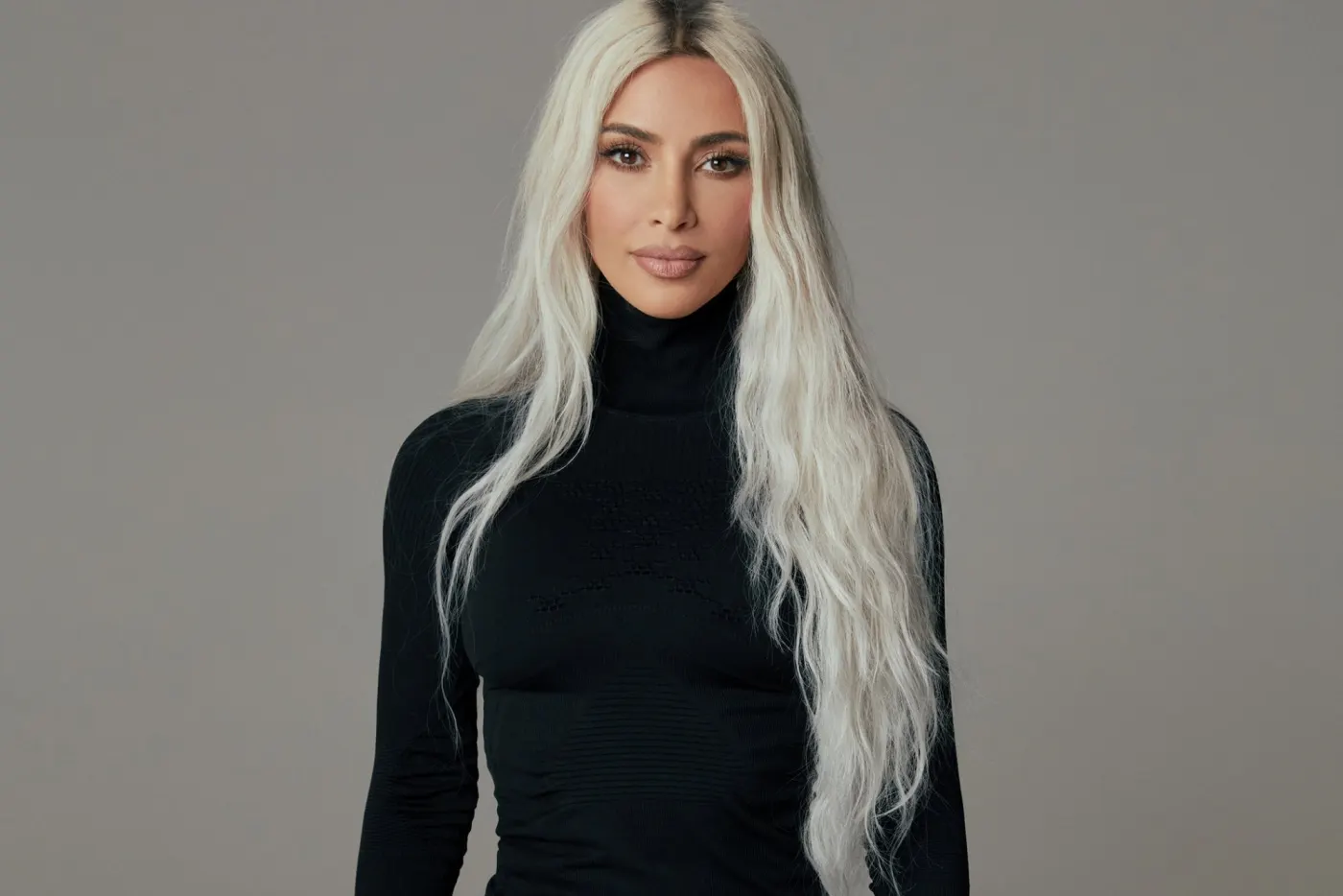
On TODAY in 2019, Kim explained the product the way a patient explains a symptom. She is photographed from every angle, so shapewear made her feel secure. Then she talked to women who did not live on red carpets but still wore shapewear all day. They needed it to feel comfortable, not like punishment. She walked the hosts through outfits she had worn. For one tight New York dress she chose a higher-waisted piece that smoothed and held. For a sheer set she wore a shaping bra and underwear underneath so the look worked. Every outfit became a case study.
That is the fitting-room method in plain terms. Start with a real outfit problem. Solve it on her own body first. Ask friends to test it. Then show strangers exactly how it works, including the unflattering angles. Some solutions look absurd on a hanger. They make sense when the model turns around. Kim told W Magazine the one-legged short came from wearing a slit dress and needing support everywhere except the bare leg. Other brands had made shapewear for years. Few had made it by starting from a specific dress.
The method also explains why returns and restocks matter more than launch hype. If a piece fails in the first wash or rolls at the waist, no celebrity post saves it. If it works, the customer comes back for three more colors. Grede's seventy percent returning-customer figure is the business version of that fitting-room test.
Law school around the drop calendar
The law path ran on the same stubborn rhythm. On a TODAY visit to a SKIMS pop-up at Rockefeller Center, Kim said Constitutional Law One and Two were her toughest subjects. She said she was not a fan. Then she said she had scored one hundred percent on one midterm and ninety-five on another, and that the scores gave her confidence to push toward the official bar. The host also noted that she had paid off restitution for many struggling women around Mother's Day with a partner. That is the host's summary, not a program audit, but it matches the public shape of her justice work: money and attention aimed at specific people stuck in a system.
Studying that way is not glamorous. It means flashcards after campaign shoots, practice essays after board meetings, and giving up events she wanted to attend. It means failing the baby bar three times in public and trying again. The July 2025 bar result did not end the story. It added one more public failure to a founder whose company depends on getting the fit right after many wrong cuts.
Building the machine: factories, fits, and return customers
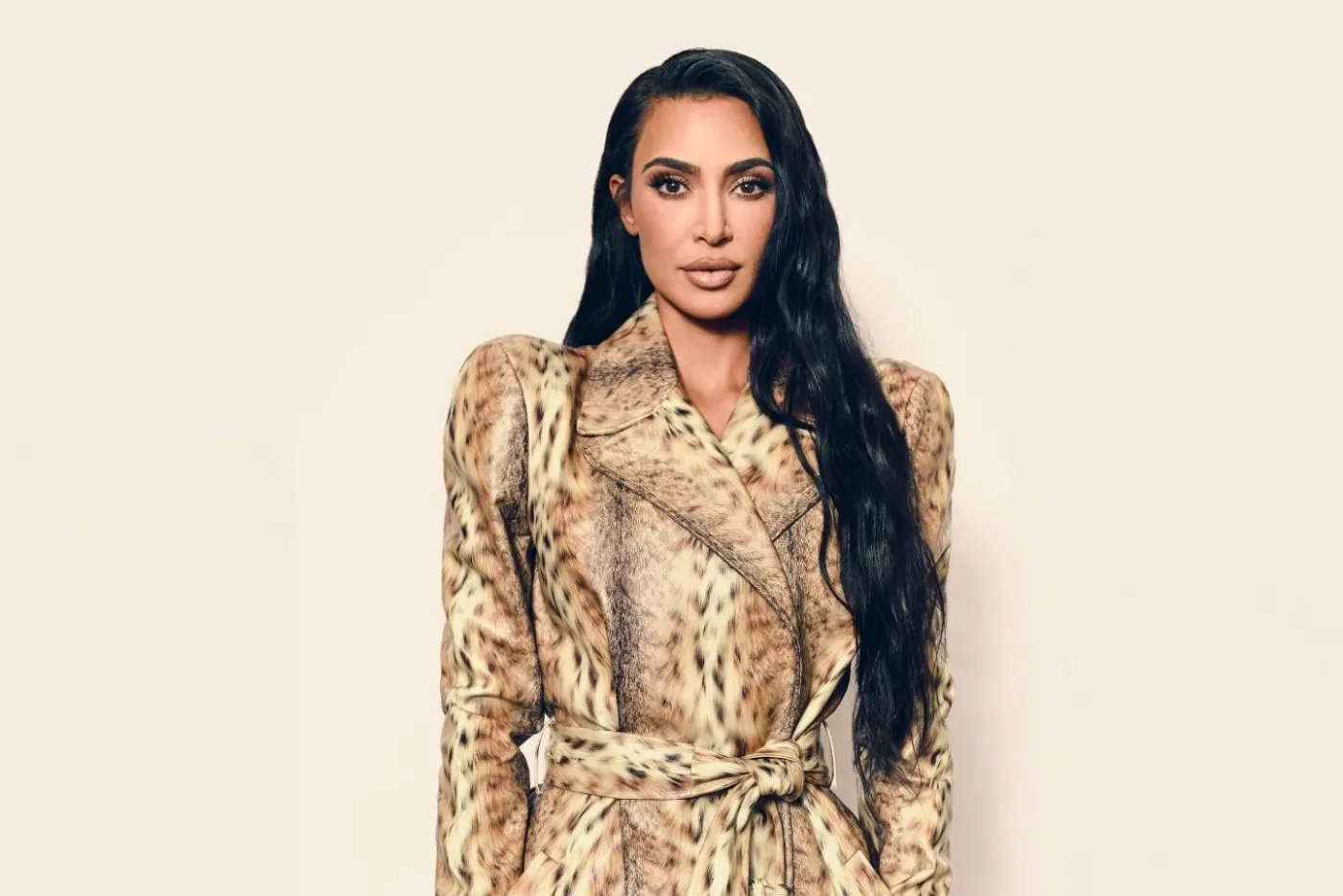
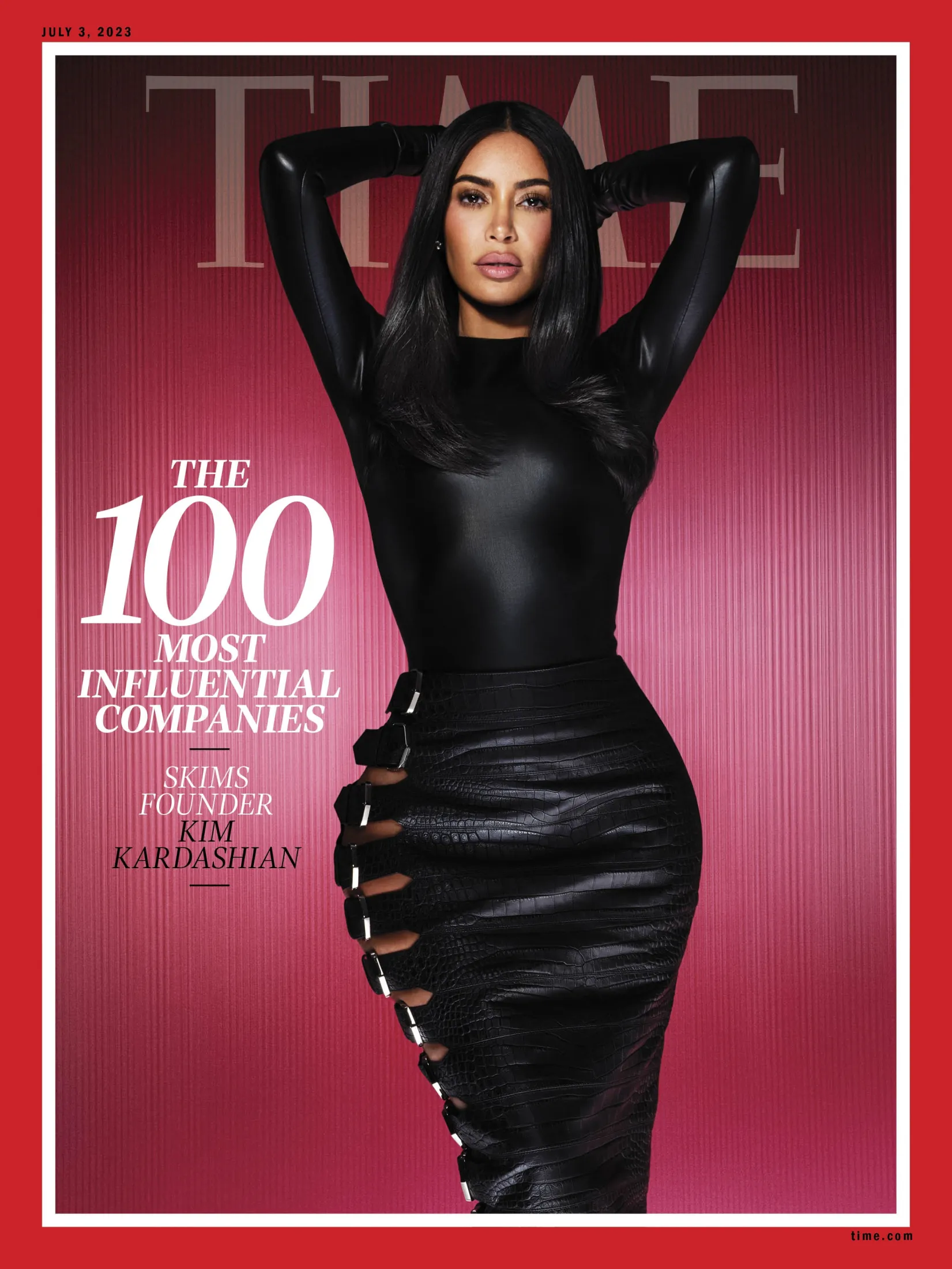
Fame can force a first purchase. Jens Grede told Vogue Business in September 2026 that about seventy percent of SKIMS customers were returning customers. That is the line that separates a celebrity candle from a real apparel company. Grede credited Kim's obsessiveness around product. In the TIME100 Companies film Kim said she sits in every board meeting and every strategy meeting; her strength is marketing, campaigns, models, every fabric, every fit, every cut, every drop.
The Cut reported that she hunted a factory that could make seamless shapewear to her standard and developed exclusive fabric technology. Exact mill names are private. What shoppers meet is the feeling: compression without panic, shades that do not assume one nude, cuts that solve a slit, a backless dress, a postpartum body, a men's hoodie, a basketball locker room.
SKIMS became a cultural default in a way older intimates giants struggled to copy. Inclusivity was not only a slogan; mannequins in stores skewed mid-size and curvy, a contrast Kim noted after London Fashion Week shows that still lacked size range. Critics still argue celebrity brands extract more than they invent. The counter-evidence SKIMS offers is operational: capital raises from serious allocators, a path to billion-dollar sales, and retail rooms people line up to enter.
Billions on paper: 2023 to November 2025
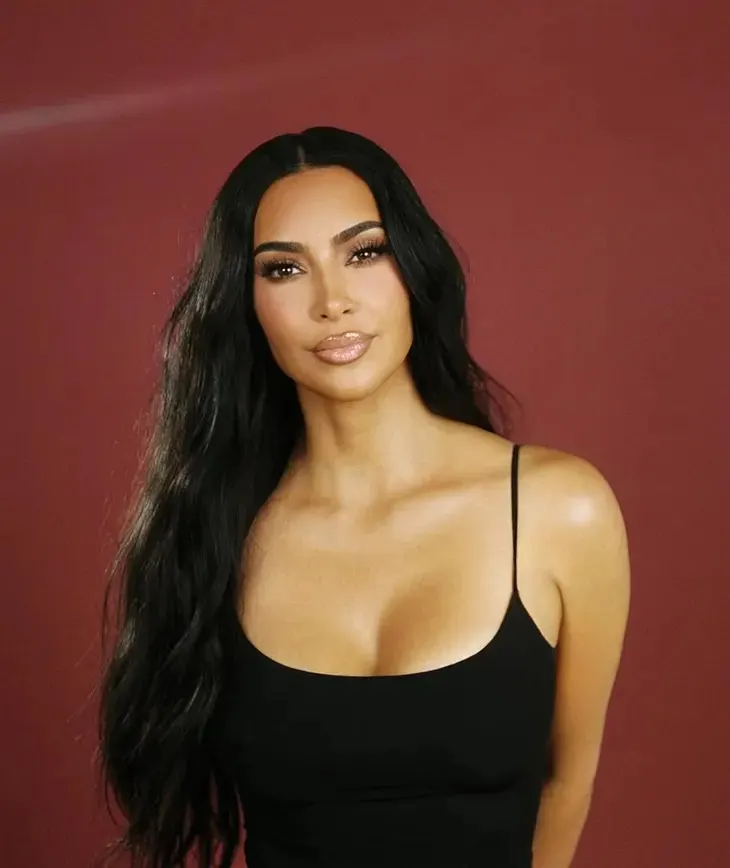
A prior fundraising valued SKIMS around $4 billion in 2023. On 12 November 2025 Reuters reported a new $225 million raise at a $5 billion valuation, led by Goldman Sachs Alternatives with BDT and MSD. Forbes reported the same day: Kim richer than ever; fortune estimated at $1.9 billion; stake just under one-third; the Gredes together estimated just under fourteen percent. Investor names on the Forbes profile include Stephen Mandel, Daniel Sundheim, and Josh Kushner. Private cap tables are fog. Forbes and Reuters agree on the headline valuation and the round size.
Company commentary through Reuters said SKIMS was on track to exceed $1 billion in net sales in 2025. If that track held, the brand crossed a rare line for a celebrity-founded apparel house: not only cultural heat, but scale that looks like a modern consumer franchise. Earlier WWD reporting floated about $145 million in 2020 revenue and a path beyond $300 million soon after. Those early prints are directional, not a substitute for audited statements.
For Kim personally, the Forbes card mattered because it answered a decade of jokes. Reality TV money and Instagram money are real. They are not usually enough, alone, to land a nine-figure self-made score tied to an operating company. Forbes self-made framing and Celebrity Billionaires lists in 2026 placed her near the top of reality-era fortunes. Ranks move. The SKIMS stake is the engine.
Stores: from pop-ups to Fifth Avenue and Regent Street
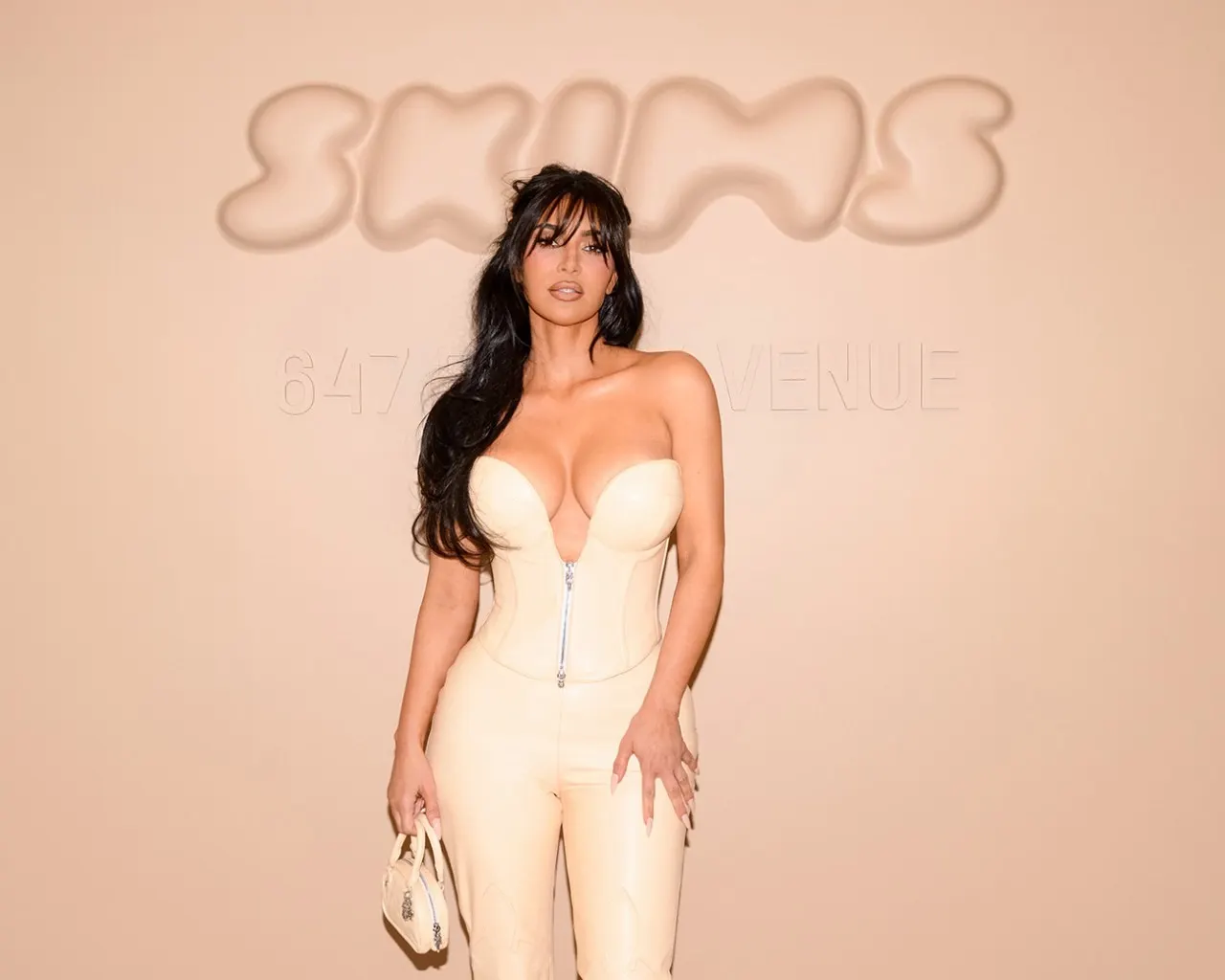
Kim told morning-show hosts that pop-ups mattered because people needed to feel fabric, not only scroll it. The TODAY plaza segment came with branded ice cream. The company then pushed into permanent retail. Forbes profile language around the $5 billion era cited about twenty stores in the U.S. and Mexico with ambitions to lean harder into brick-and-mortar. Later secondary tallies floated higher network counts as openings accelerated; treat precise worldwide counts as soft unless the company publishes a clean list.
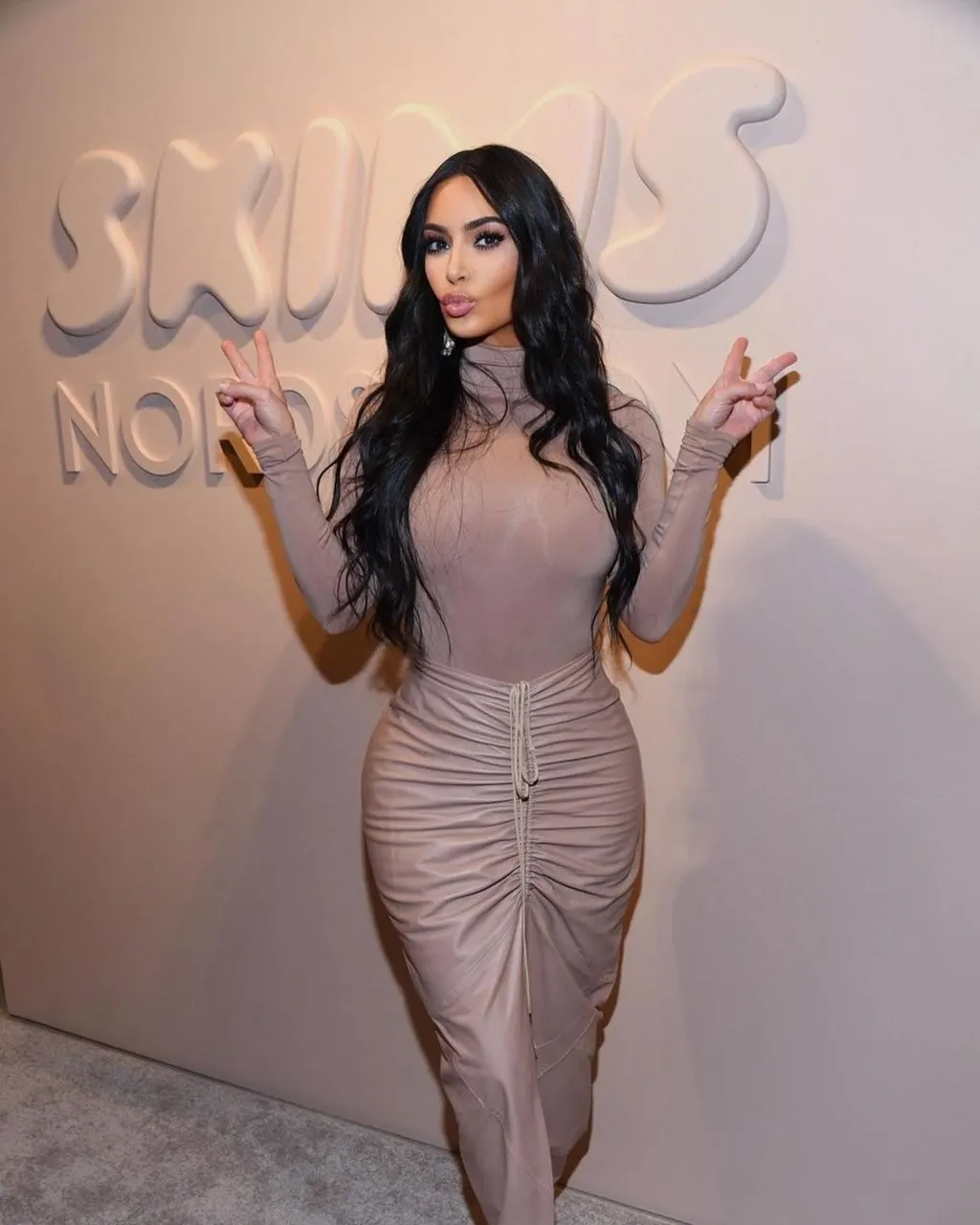
The New York energy crystallized at addresses like 647 Fifth Avenue, where Kim stood in cream leather against raised SKIMS lettering on opening night. Los Angeles and other U.S. rooms followed the same immersion idea. In 2026 London became the European statement. Vogue Business reported on 19 September 2026 a roughly 12,000-square-foot flagship at 245-247 Regent Street inside a former Ted Baker space, designed with architect Rafael de Cárdenas, featuring a Vanessa Beecroft sculpture, soft-opened in July, celebrated during London Fashion Week with a party that drew musicians and fashion names. Kim recalled that twenty years earlier she drove London streets amazed by individual style and did not dream of a store there. Grede joked: location, location, location.
Vogue also noted that after London, Grede eyed Shanghai and Tokyo NikeSKIMS openings; Kim flagged Delhi and Mumbai SKIMS rooms for early the next year. Secondary store-target chatter (tens by end of 2026, more beyond) should stay soft. The strategy is not soft: the brand wants rooms where texture ends the argument Instagram cannot finish.
NikeSKIMS: performance meets shape
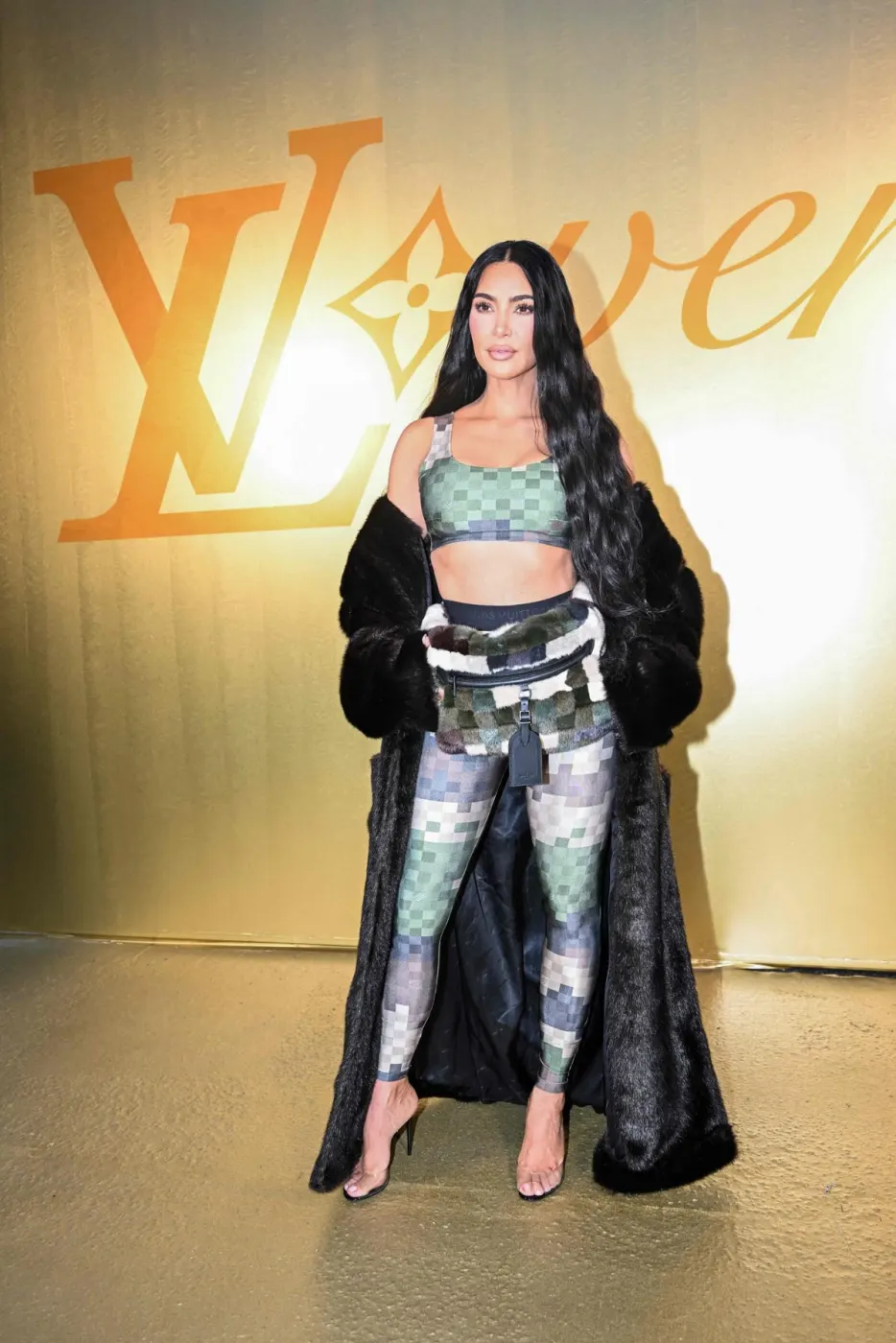
On 18 February 2025 Reuters reported that Nike would launch a new women's fitness brand with SKIMS called NikeSKIMS, spanning training apparel, footwear, and accessories. For Nike it was part of a wider push to win women as CEO Elliott Hill recalibrated. For SKIMS it was proof that a shapewear house could sit beside the world's most famous sports company without being absorbed into a costume line.
Nike's 22 September 2025 newsroom release described the first collection as seven collections and fifty-eight silhouettes with more than ten thousand combination paths, filmed as Bodies at Work by Janicza Bravo, photographed with more than fifty athletes including Serena Williams, Sha'Carri Richardson, Jordan Chiles, Chloe Kim, Nelly Korda, and others, plus Kim herself. Product landed 26 September 2025 on Nike and SKIMS sites and in select flagships in New York and Los Angeles. The Spring 2026 collection pushed a ballerina-inspired head-to-toe system into Europe, the Middle East, Australia, and Korea in February, with gym essentials and footwear following in March per Nike releases. In a Complex interview Kim said that when the SKIMS New York flagship opened across the street from Nike's flagship, the deal was already in motion, and she stared out the window imagining a bridge of product between the two stores for launch day.
NikeSKIMS also extended the world-impact claim. Activewear for women is a battlefield of compression, swagger, and sweat science. SKIMS brought sculpt language. Nike brought performance credentials and athlete trust. Whether every silhouette becomes a classic is a future question. The partnership itself already moved culture: Olympic names wearing a Kardashian co-brand without irony.
How she works when the cameras leave
Day to day, the public Kim is glam. The operating Kim, by her own TIME100 description, is meetings and fits. She has said she invests her own money into SKIMS and would invest more because she believes in it. Interview claim. She still shoots try-ons in closets because authenticity converts. She still studies casebooks between drops. On TODAY she said she once skipped a premiere because exams were coming and she needed to study; she has described doing homework in a sister's room while glam happened around her.
Co-parenting four children with Kanye West after their marriage ended is part of the calendar, not a side note. Public tension over creative choices for their daughter North has played out on the Hulu show and in interviews; Kim has talked about protecting kids while letting them create. Treat family conflict as her narrated experience, not as a verdict on anyone else.
She also learned to survive ridicule. On Complex she wondered if she comes off like a villain on the show and says she is not. The founder answer to ridicule is shipment quality. If the bra fits, the comment section loses force.
Momager machine and the 2010s side bets
Kris Jenner did not only manage schedules. She treated the family name like a studio lot with many sound stages. Kim learned that paid appearances, licensing, and tie-in products could stack on top of a weekly show. Some bets were small and noisy. Some were very large. The 2014 mobile game Kim Kardashian: Hollywood, built with Glu Mobile, turned her into a character players could dress and promote. Press at the time reported that it pulled in tens of millions of dollars in its first months. The exact lifetime take belongs to company filings, not fan math. The lesson was cleaner than the number: people would pay to rehearse fame with her face on the screen.
Emoji packs, fragrance drops, and brand deals followed the same pattern. The public often read them as vanity. Inside the business they were tests. How fast does a drop sell out? What price can a fan accept? What happens to demand when she posts once versus five times? By the time KKW Beauty launched in June 2017 with contour kits that sold through quickly, Kim had already run years of informal market research in front of millions of people.
Her personal life stayed in the same spotlight. A brief first marriage to music producer Damon Thomas ended in the early 2000s. A 2011 marriage to basketball player Kris Humphries lasted seventy-two days and became tabloid fuel. In May 2014 she married Kanye West in Florence. They had four children: North, Saint, Chicago, and Psalm. She filed for divorce in February 2021, and a settlement followed in late 2022. Those facts belong to the public record. Private motives do not, and this story leaves them alone. What matters for the founder story is load. She built the most serious company of her life while raising young children and working through a public breakup.
Collaborations, the Olympics, and the SKIMS drop calendar
SKIMS learned early that scarcity plus quality could beat constant discounting. Drops arrived on a calendar that felt like a show schedule. New colors. New fabrics. A limited run that vanished. Then a restock that pulled customers back to the site. Fast Company and Fox News reported that SKIMS became Team USA's official underwear and loungewear partner for the Tokyo 2020 Olympic and Paralympic Games, held in 2021. Athletes got kits, and fans could buy a public version. It was the first proof that a shapewear-born label could sit inside elite sport. Nike would later deepen that link.
In November 2021 a Fendi x SKIMS collaboration tested luxury pricing on the same body-first design ideas. TMZ reported that the launch pulled in about one million dollars in its first minute and nearly sold out. Treat minute-by-minute sales claims as launch-day reporting, not audited revenue. The strategic point holds either way. A Roman luxury house wanted to borrow SKIMS demand. Two years earlier, legacy intimates brands had largely dismissed the idea.
Menswear launched in 2023 with athletes as faces, and SKIMS signed on as official underwear partner of the NBA and WNBA. Swimwear, sleep sets, and basics widened the closet. Every extension carried the same promise: a problem solved on a real body, shown on camera, then sold in sizes and shades that did not treat one body as the default.
SKKY Partners and the investor habit
In September 2022 Kim co-founded SKKY Partners with Jay Sammons, a former partner at the Carlyle Group, according to a BusinessWire release and Bloomberg reporting. Kris Jenner joined as a partner. The firm said it would invest in consumer and media businesses. Fund sizes, returns, and portfolio marks stay private in the sources used here. The point is intent. Kim wanted to sit on the side of the table that owns companies, not only the side that promotes them.
That habit shows up inside SKIMS too. In the TIME100 Companies film she said she had put her own money into the business and would invest more because she believed in it. Put that next to the board-meeting line and the Forbes stake, and a pattern appears. She is not a paid face on someone else's cap table. She is a large owner who chose to keep her upside tied to fabric, fit, and repeat purchases.
World impact: bodies, retail, and the fame-to-equity path
Before SKIMS, mass shapewear often meant a narrow nude and a claustrophobic squeeze associated with one earlier giant. After SKIMS, inclusive shade ranges and solution cuts became table stakes competitors had to answer. Underwear drawers changed. Loungewear that looked like shape logic moved into daylight. Men got a line and league partnerships; soft Complex notes SKIMS as official underwear partner for the NBA and WNBA. Retail landlords on Fifth Avenue and Regent Street treated the brand as destination traffic.
Culturally, Kim accelerated a template now copied worldwide: use narrative fame as a customer-acquisition channel, then trap value in equity of a real product company. Not every celebrity who launches a bottle becomes a billionaire. Most do not sit in every fit session. The world impact is therefore double. For consumers, better options for bodies that were ignored. For builders, a proof that attention can be converted into enterprise value if the product survives the second purchase.
There is also the justice afterimage. One commutation does not fix a system. Kim's visibility helped free Alice Marie Johnson and pulled criminal-justice content into living rooms that never watched policy shows. Whether she ever practices law remains unwritten as of September 2026. The attempt itself changed what a reality star is allowed to want.
Failure modes, critiques, and what she does not dodge
Legal care requires the ugly rooms. The sex tape was unauthorized and exploitative in origin even if the family later used the fame that followed. The Kimono naming harm was real to people who saw cultural theft; the rename was the repair. Paris was terror, not content. Labor and sustainability critiques of fast fashion logic apply to any scale apparel brand and should not be waved away because the founder is famous. Exact factory audits are not fully public in the sources used here.
Bar failure is public. Family show conflict is public. Divorce is public. Kim's method is not to disappear from the mess. It is to keep shipping SKUs while the mess airs.
2026 snapshot: London night, Nike mornings, exam desk
By September 2026 the live picture looked like this. SKIMS at about $5 billion on the November 2025 print. Kim's Forbes estimate near $1.9 billion. A London flagship glowing on Regent Street after a soft July open. NikeSKIMS collections already through a debut and a Spring 2026 wave. Beauty folded closer under SKIMS after the Coty divestment. A Paris court file ending in a one-euro line. A bar score that said not yet.
The Vogue scene: fans outside Regent Street, Troye Sivan and others at the party, Kim saying you can only describe texture so many ways online. Grede flying toward Asia openings. Erin Magee arriving from Supreme's design world as chief design officer. A Ludovic de Saint Sernin collaboration in the air. The company hiring taste the way it once hunted seamless mills.
Money, myth, and the refusal to be only a muse
It is easy to mythologize Kim as pure spectacle. It is also easy to mythologize her as a solitary genius who needed no partners. The truthful middle is sharper. Kris built a management apparatus. The show supplied distribution. Jens and Emma Grede supplied operating craft. Factories supplied stretch. Kim supplied product paranoia, casting taste, and a willingness to be the fitting model in public for a decade before she owned the label.
Luck mattered: being born into a family that already understood fame, meeting Hilton, surviving the tape's blast radius, catching Instagram's rise. Choices mattered more after luck arrived: scissors instead of acceptance, rename instead of stubbornness, White House lobby instead of hashtag only, board meetings instead of spokesmodel distance, bar study instead of quitting when the first baby bar failed.
Closing
Kim Kardashian started as a shy girl who did not see her body in magazines, then as a closet worker who sold other people's leftovers on eBay, then as a reality figure the culture loved to underestimate. She was robbed in Paris and still returned to public life with different armor. She helped free a woman from a life sentence and then failed a bar exam without quitting the books. She cut shapewear until the cuts became a company worth about five billion dollars on a 2025 financing print, with Nike on the tag and stores on Regent Street and Fifth Avenue.
The lasting image is not a sex-tape headline or a sneering meme. It is a founder in a fitting room, holding scissors in memory and equity in the present, still saying she is not finished becoming what she claimed she would become.
Watch alongside this story
Short cuts from interviews, keynotes and launches. Each plays only the moment that matters.