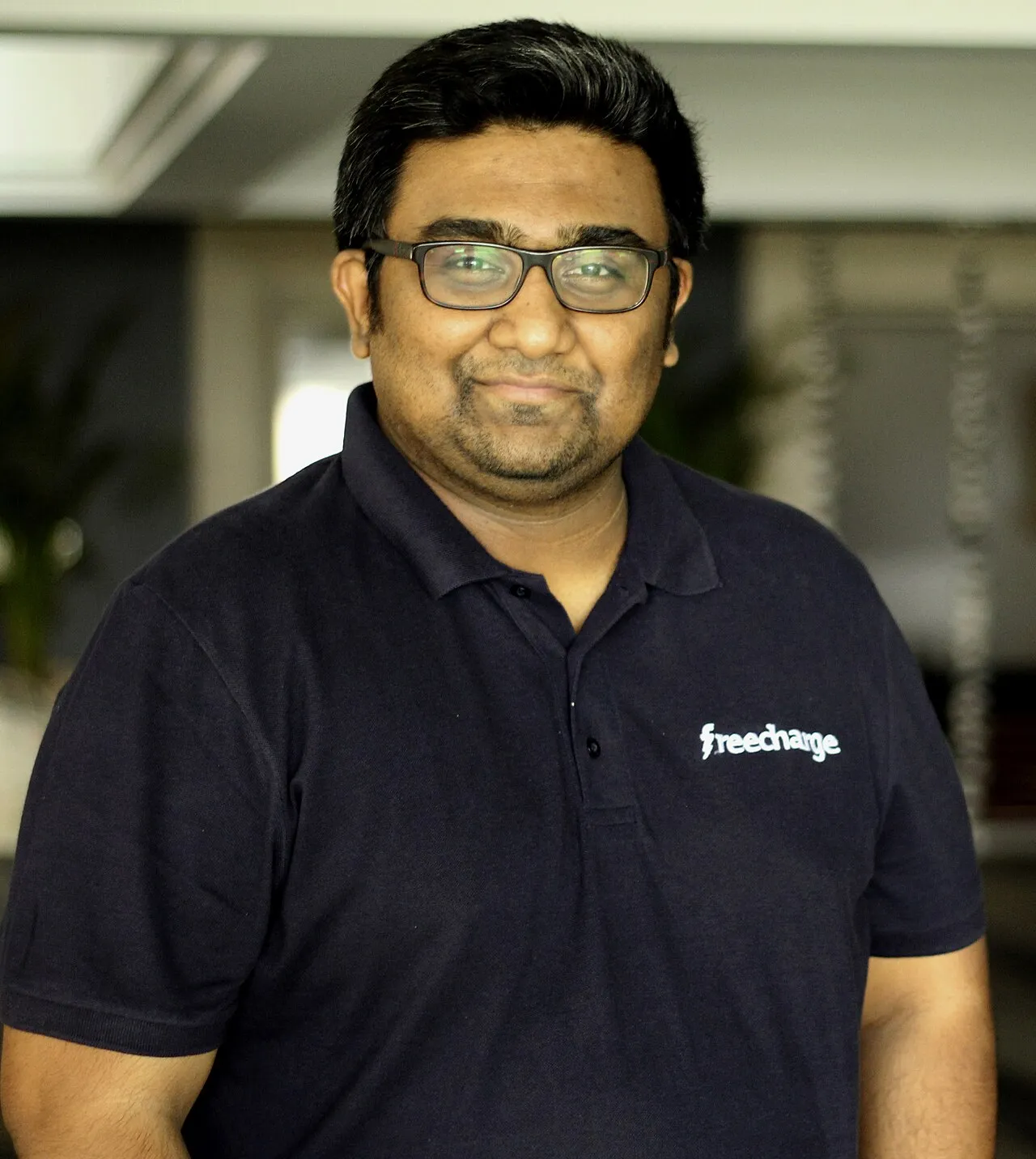
From Delivery Boy to WhatsApp
Mumbai odd jobs at fifteen. FreeCharge sold near half a billion. CRED built for creditworthy Indians.
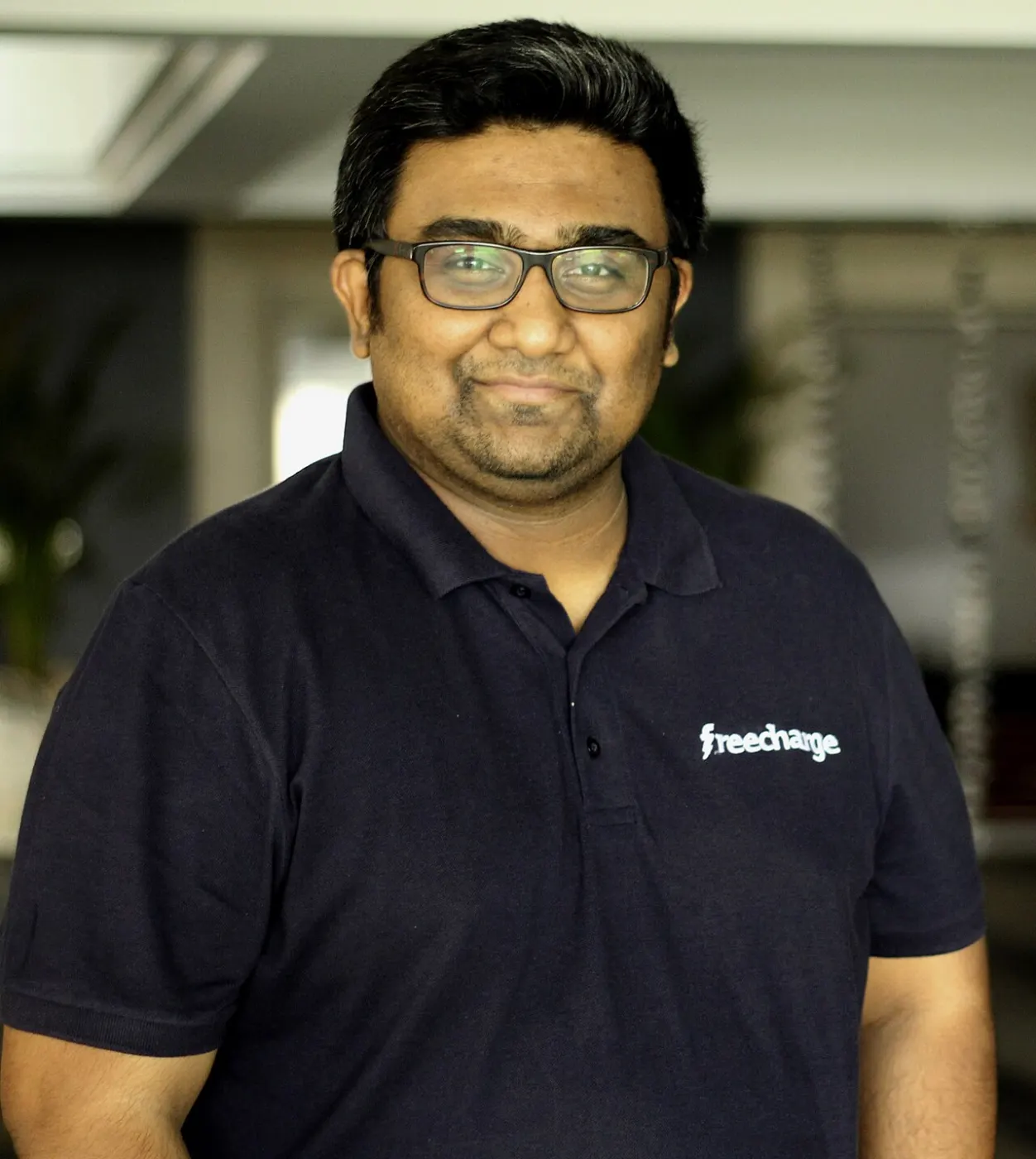
In June 2026, Meta told the world that Kunal Shah would lead WhatsApp. The announcement arrived with another number that made Indian startup timelines feel like a compressed film: about nine hundred million dollars into CRED, the Bengaluru fintech he founded in 2018, for a minority stake near twenty percent and a company valuation near four and a half billion dollars. Mark Zuckerberg praised a builder mentality and a global perspective. Chris Cox, Meta's chief product officer, had started by asking Shah for advice on who should run the world's largest messaging app. Then he asked Shah to be that person.
Shah stepped down as CRED's chief executive, kept his personal shares, and wrote a short note that sounded exactly like him. He still expected his team to be a ten times version of themselves. He was going to lead WhatsApp globally because the gap between what the product is and what it could be remained massive. WhatsApp already reached more than three billion monthly users. India was its largest market. For the first time, an Indian founder who had built his career inside India's own internet stack, not as an immigrant climbing a Silicon Valley ladder, was being handed the keys to the chat network that holds family dinners, shop orders, clinic queues, and migrant workers' remittances.
The appointment was not a fairy tale invented for a news cycle. It was the latest turn in a life that began with bankruptcy, odd jobs, and a philosophy degree chosen because the classes started early enough to leave the rest of the day free for work.
Mumbai mornings and a bankrupt ledger
Kunal Shah was born on 30 May 1979 in Mumbai, into a Gujarati family that understood ledgers before it understood brands. His father worked in pharmaceutical distribution in South Mumbai. The city taught money early, in cash drawers and credit notes and the quiet panic that arrives when a business stops clearing. When the family hit a severe financial crisis, the teenage Kunal did not get a soft landing into coaching classes and campus festivals. He has said he started working around age fifteen and was financially independent by sixteen.
The jobs were not branding stories prepared for podcasts. They were survival. Delivery work. Data entry. Selling mehendi cones. Selling pirated music CDs at a time when physical discs still meant status for a teenager's playlist. Tutoring. Running a cyber cafe from home so neighbors could pay for minutes online. Freelancing as a designer and programmer after teaching himself enough tools to invoice someone. On The Ranveer Show he shrugged through a list that sounded endless, maybe fifteen or twenty early micro-businesses before the world learned his name.
Years later, Info Edge founder Sanjeev Bikhchandani sat with him in a Delhi coffee shop and asked the question Indian founders get asked forever: why philosophy instead of engineering? Shah's answer was practical, not mystical. Philosophy classes at Wilson College ran from about eight to ten in the morning. That schedule let him keep a full-time job while finishing a bachelor's degree. Bikhchandani posted the story with a salute. It stuck because it explained the man. Status ladders in India said engineer or doctor. He took the timetable that paid rent.
He enrolled in a part-time MBA at the Narsee Monjee Institute of Management Studies around 2003 and left in 2004. Structured classroom theories felt, to him, designed for scoring marks more than understanding markets. He preferred learning by shipping messy work and watching customers vote with rupees. Around 2000 he had joined a BPO called TIS International as a junior programmer and stayed for roughly a decade. There he met Sandeep Tandon, an investor who would later become his FreeCharge co-founder. Between shifts and side projects he tried laptop imports, small software experiments, and enough failed pivots that failure became ordinary rather than theatrical.
On Lenny Rachitsky's podcast in March 2024 he still sounded unfinished by that teenage fear. His family went through a severe financial crisis. He started working at fifteen. To this day, he said, he feels he is trying to escape that failure. He does not want credit for playing a poverty card. He wants the scar to stay useful. The line lands harder once you know what came next: a company sold near half a billion dollars, a fintech valued in the billions, and then WhatsApp.
PaisaBack, FreeCharge, and the recharge gateway
In 2009 Shah founded PaisaBack, a cashback and promotional discount business for organized retailers. Running campaigns taught him how coupons bend consumer behavior in a country where a freebie can feel like a festival. Inside mobile stores he noticed something sharper. About ninety-five percent of invoicing was recharges. He was a postpaid user who had never felt how large prepaid top-ups were in daily Indian life. Online recharge, if it could somehow feel free, looked like a door into a population learning to trust the internet one small successful transaction at a time.
He co-founded FreeCharge with Sandeep Tandon in 2010. The consumer launch is often dated to 15 August 2011, Independence Day as product theater. The trick was a loss leader borrowed from grocery stores. Give a free mobile recharge. Draw footfall to a screen. Make money by selling merchant coupons and listings around the new habit. Early partners such as McDonald's helped seed the user base with brands people already trusted. Shah later called recharge the gateway to a transacting India. IRCTC had already taught millions that a screen could hold a train ticket. FreeCharge bet that a screen could hold airtime, then habit, then an entire payments ecosystem.
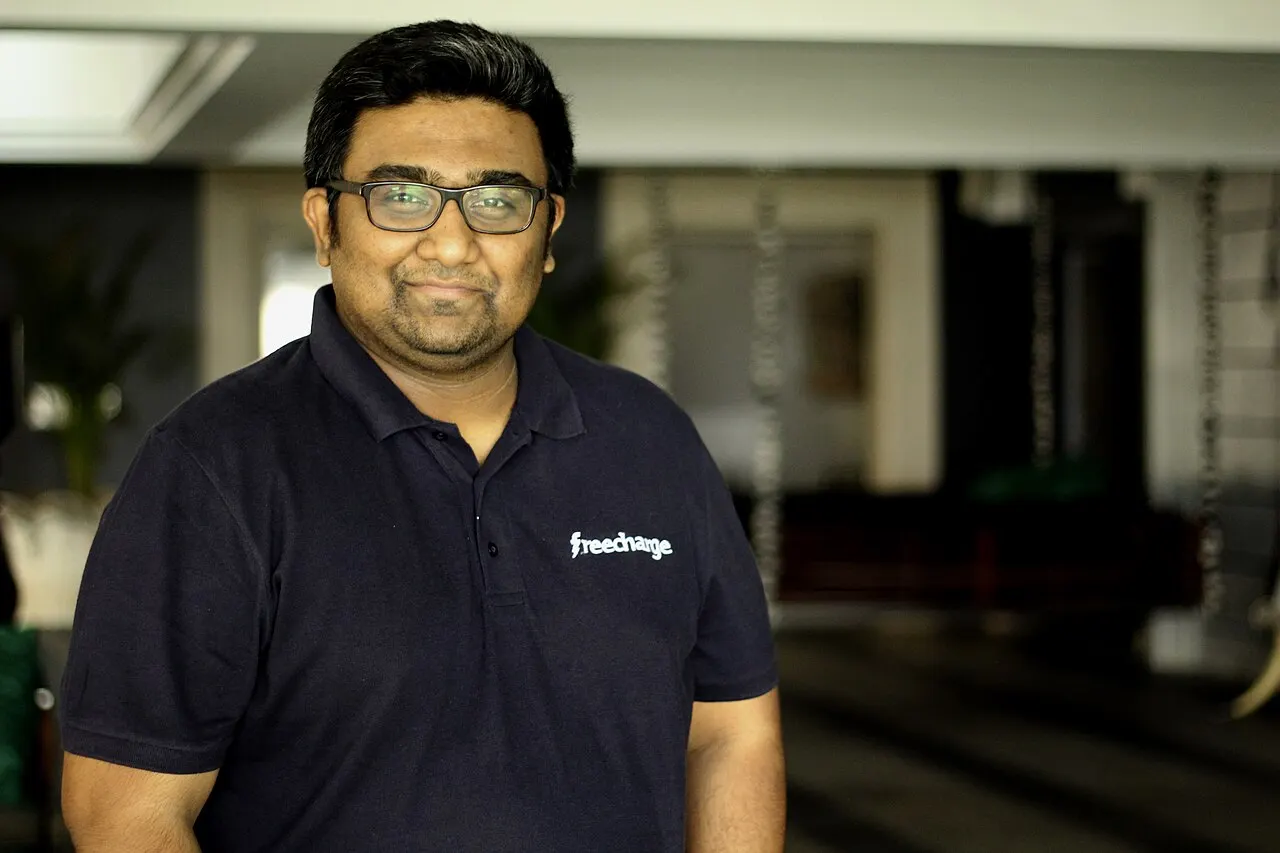
Skeptics treated online recharge as a non-category that would never appear in serious ecommerce reports. Clones arrived anyway. FreeCharge grew fast enough that Bengaluru looked better than Mumbai for product talent, so the company leaned into that mix of engineers and people who had shipped software abroad. Shah talked about product-market fit with a humility that borders on provocation. He called himself a mediocre founder who found a great fit. Terrible product-market fits, he argued, cannot be rescued by legendary founders. Fighting headwinds only burns fuel.
In April 2015 Snapdeal announced it would acquire FreeCharge in a cash-and-stock deal widely reported near two thousand eight hundred crore rupees, roughly four hundred to four hundred fifty million dollars at the time. It was then one of the largest consumer-internet acquisitions in India. Shah stayed on as CEO at first and insisted he was not going home. He was continuing to build. He exited around 2016. Axis Bank later took over FreeCharge. The exit made him famous. It also gave him capital and scars to spend on the next problem.
On Lenny's show Shah still uses the FreeCharge exit as a puzzle he turns over in public. Peers seemed smarter on paper. He was the unusual philosophy major in Indian tech, a humanities graduate in a culture that awards status to engineering ranks. Why did FreeCharge work near four hundred fifty million dollars? His answer became a product rule he still teaches: Delta 4.
Delta 4 and the low-trust map
Shah's Delta 4 framework is simple to say and hard to fake. A new product should create an efficiency jump of at least four times versus the old way of doing the same job. When the delta is that large, three things happen. People forgive early bugs because the new path is still better. They talk without being paid to talk. Customer acquisition cost collapses because word of mouth does the work ads pretend to do. When the delta is smaller, the switch stays reversible. Discounts can rent behavior for a quarter. Behavior walks back when the coupon ends.
He maps India as a low-trust market in the institutional sense. Consumers stay wary because protections against bad companies feel thin compared with markets that have thicker consumer courts and clearer recourse. In those conditions, trust concentrates. Super apps, super brands, and family names that stretch from salt to cars win because people buy the reputation, not the novelty. Tata is his favorite example of brand gravity across categories. The joy of trying something new is lower. Frequency of good transactions becomes a trust engine. Platforms that earn many small correct outcomes can expand categories that pure storytelling never will.
He also warns Indian founders against copying Western vanity metrics. Global giants can farm hundreds of millions of Indian monthly actives and still earn thin average revenue per user, then use the headcount of users to impress public markets. Indian companies that chase hundreds of millions of users at home without a path to ARPU, he argues, often discover they must go abroad to balance the books. Per capita income sets a ceiling that slogans cannot lift. Time itself is priced differently. In his blunt line, no Indian has ever been paid an hourly salary in their entire life, so paying for time feels alien in ways Western product playbooks miss.
Curiosity is his other religion. Wealth, he likes to say, is information asymmetry built by collecting and connecting dots. Second-order thinking, trained early by strategy games as much as by school, predicts who sees around corners. He will also say that inefficiency is the world's largest employer, and that removing it too fast can leave a jobless wreck before a society invents new work. The philosopher never fully left the boardroom. He still reaches for evolutionary biology, mythology, and shopkeeper margins when a product debate gets stuck.
He borrows some of his best tools from Indian stories, not business school. On Lenny's show he credited the writer Devdutt Pattanaik for a simple two by two. One line asks whether a person is high or low on values. The other asks whether they are high or low on obedience. Rama, the prince who follows every rule, is high on values and high on obedience. Krishna, the playful god who breaks rules for a bigger good, is high on values and low on obedience. Founders, Shah argues, need Krishna energy to create and Rama energy to scale. He even used Satya Nadella as an example: Krishna during the OpenAI boardroom crisis, then back to Rama to keep building. As a philosophy student, he has joked, society had written him off. Now philosophy was his edge.
Angel years and the itch to build again
After FreeCharge, Shah could have become a full-time investor and conference panelist. He did invest, aggressively. Profiles across 2021 and 2022 put him among India's most active angels by deal count, with more than two hundred checks cited in Moneycontrol-era reporting. Fintech names such as Razorpay and BharatPe sat beside education, logistics, and commerce bets. He has said he invests to learn from sharp minds as much as to own upside, and that founders often set the cheque size when they believe he can teach something useful.
He also spent stretches of those years near institutions that shape founders. Advisories and board-adjacent roles connected him to Y Combinator, Sequoia Capital India, media groups, and industry associations in different periods of his career. He became a familiar voice on X under the handle kunalb11, posting about incentives, AI, status, and the strange physics of wealth. Founders forwarded his threads the way earlier generations forwarded management books. Young operators treated his posts as homework.
But the builder itch returned. If you have built and created all your life, the idea of not creating is never a good idea, he told interviewers. Sitting on the sidelines felt like a slower kind of failure. In 2018 he founded CRED in Bengaluru under Dreamplug Technologies, putting about one million dollars of his own capital in at the start. The first product looked almost too narrow for a man who had just tasted national fame. Help creditworthy Indians pay credit card bills on time. Reward them for the behavior. Members only. Credit scores as a filter. Trust as the raw material.
CRED: pay on time, then deepen the stack
Shah's CRED insight, told plainly on Lenny's podcast, was that the value of time and per capita income in India concentrates among roughly twenty-five million families. Building only for everyone sounds democratic in a press release. Building for the people who already feel time as money can create a profit pool deep enough to fund real products. CRED's early Series A was twenty-five million dollars. The company turned bill pay into a habit loop, then stacked lending, insurance through CRED Garage, commerce, wealth tools, card management, wallets, and credit lines on top of that trust.
The brand became famous in India for ads that felt like cinema. Humour. Nostalgia. Unexpected celebrity energy. Critics asked whether the brand was ahead of the profit and loss statement. Supporters answered that Amazon and Facebook lost money for years before their models hardened. Shah himself wrote that unicorn tags and high valuations are vanity until profits arrive. He also told the public his own CRED salary was fifteen thousand rupees a month because he did not believe founders should draw fat pay before the company is profitable. He could live on that because FreeCharge had already paid him once. The statement was partly ethics and partly theater. It also matched the members-only tone: discipline as status.
The loudest example landed on 9 April 2021, the opening day of that year's IPL. In a 23-second film, Rahul Dravid, the calmest cricketer India ever produced, sat stuck in Bengaluru traffic and exploded. He yelled at other drivers, smashed a car mirror, and shouted that he was the gunda, the tough guy, of Indiranagar. Virat Kohli posted that he had never seen this side of Rahul bhai. Zomato joked that deliveries in Indiranagar might be late because of an angry gunda on the road. Dravid's own video note said sorry, he had lost his temper and was meditating now. The director later said Dravid never really got angry at all. The crew faked a traffic jam and had someone scream at him until he played along. Some critics grumbled that only a company with plenty of venture money to burn could afford such stunts. Almost everyone watched anyway.
Money still flooded in during the private-market boom. By October 2021 CRED raised a large Series E, about two hundred fifty-one million dollars, at roughly a four billion dollar valuation, with Tiger Global and Falcon Edge among the names in the room. SoftBank appeared in the broader investor set. In June 2022 a GIC-led round pushed the private valuation to about six point four billion dollars. That peak became a reference point for both pride and later skepticism as global private markets cooled and Indian fintechs faced harder questions about unit economics.
The bill for that peak came due in 2025. Filings reported in June 2025 showed CRED raising about 617 crore rupees, roughly 72 million dollars, in a round led by GIC's Lathe Investment at a valuation of about 3.5 billion dollars. That was a cut of roughly 45 percent from 2022. Shah did not stand on the sidelines of the down round. His own investment company, QED Innovation Labs, put in about 162 crore rupees. Indian business press reported that the lower price was meant to line up with a possible stock market listing in India within about two years. A founder who had once sold FreeCharge in a boom was now putting his own money back in at a far lower price.
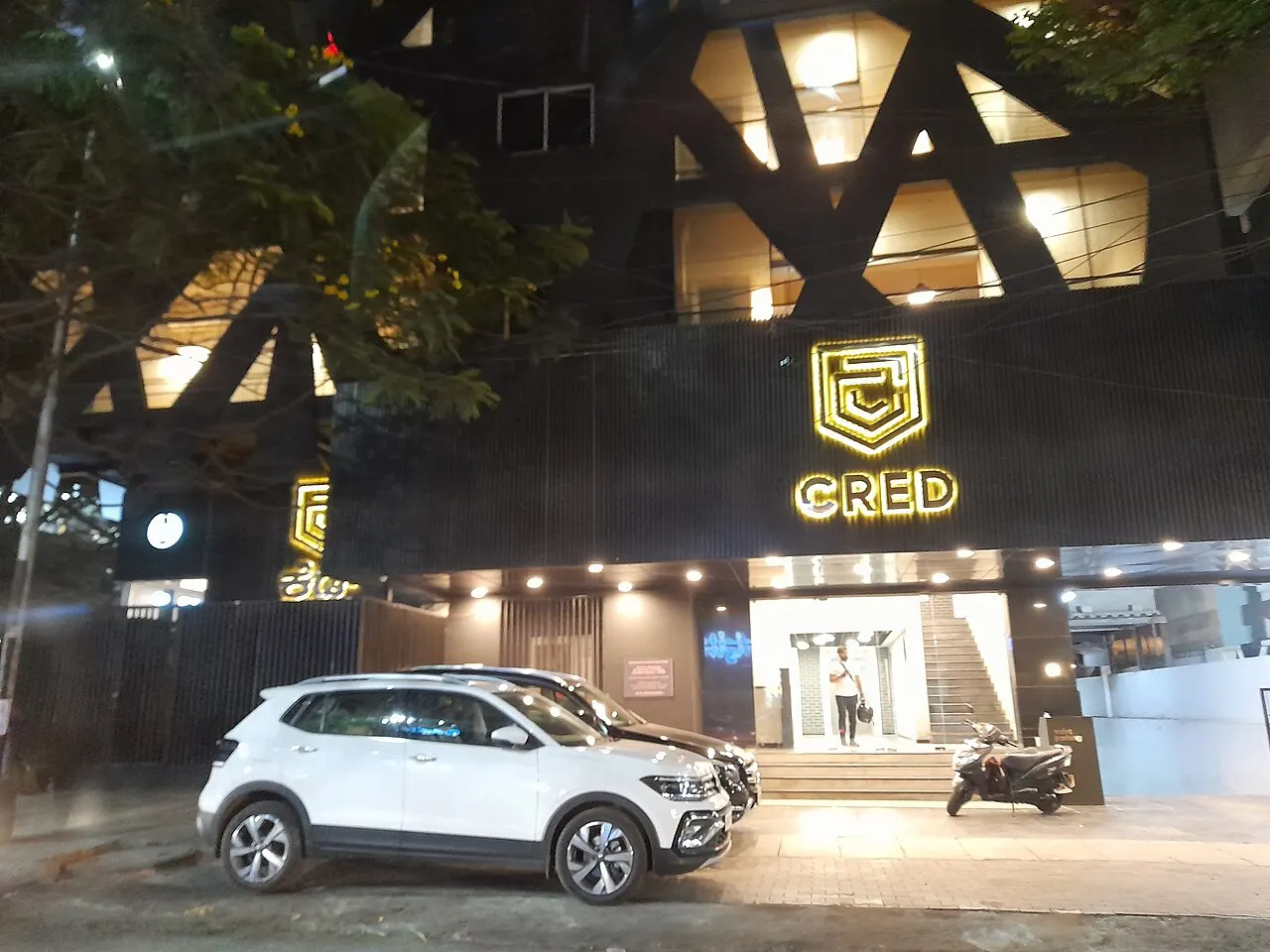
Through COVID lockdowns the company kept shipping products when physical branches were closed and phones became the only teller window many members would open. It completed multiple ESOP buybacks so employees could share liquidity before any IPO. It collected licenses across the financial stack. It argued that rewarding good credit behavior was not a gimmick but a new category: millions of people treated as members rather than as delinquent risks waiting to happen. The neon CRED shield on office facades became a shorthand for a certain kind of urban Indian money confidence.
Numbers, pressure, and the path toward durability
By financial year 2024 CRED reported about two thousand four hundred seventy-three crore rupees in revenue, up sixty-six percent, while cutting operating losses. On 30 January 2026 the company said financial year 2025 operating revenue reached two thousand seven hundred thirty-five crore rupees, up sixteen percent. Operating losses fell fifty-one percent to two hundred ninety-eight crore. Total losses were still one thousand four hundred fifty-seven crore, down about eleven and a half percent. Monthly transacting users rose to one point two six crore. Transaction frequency climbed. Total payment value hit about eight and a half lakh crore rupees. Lending managed AUM reached twenty-two thousand crore. CRED claimed ARPU near two thousand rupees, among the highest in India's payments ecosystem, with members using three or more products monetizing far above the baseline.
Those figures matter because they show a company grinding toward operating leverage even while critics kept the profitability question open. About seventeen million members appeared in company language around the Meta deal. CRED said it held the second-highest base of users pre-approved for personal loans in the country. Over half of new credit cards in India, the company claimed, were issued to its members. Sixty percent of multi-card holders were active on the platform. The affluent niche was no longer a theory. It was a ledger with product velocity attached: CRED Money, credit score tools, card management, PPI wallet, loan-against-securities products, and a wider insurer set inside Garage.
Shah's public style stayed teacherly and sharp. He hosted CRED Curious conversations. He posted long threads that mixed philosophy with unit economics. He hired for excellence over pedigree, reminding people that a philosophy major cannot worship degrees with a straight face. He pushed teams to ask dumb questions in group chats because curiosity should come from security, not from fear of looking small. Inside the company, many leaders had never seen a bigger business than CRED, which he treated as both a strength and a risk: hunger without scar tissue.
The criticism never fully left. BBC coverage of his WhatsApp appointment summarized the split cleanly. Supporters saw a builder who shaped India's internet payments and then its premium fintech layer. Critics saw a startup culture that sometimes celebrated fundraising theater ahead of durable profits. Shah's own reply pattern usually granted the profit point and then defended entrepreneurship as job creation and risk-taking that societies should still encourage. He does not pretend losses are a virtue. He also refuses to treat every unprofitable year as proof that the category is fake.
June 2026: Meta, CRED capital, WhatsApp
Then the Meta deal rearranged the board in a single week. Roughly nine hundred million dollars of capital into CRED, reported in India as about eight thousand five hundred fifty crore rupees. A valuation near four and a half billion dollars, above some intermediate marks after the 2022 peak, still below that peak according to Reuters-linked reporting. Shah out as operating CEO. Miten Sampat, who had led strategy and finance since 2020, in as interim CEO while the board worked on longer-term leadership ahead of a possible IPO path. Shah still a shareholder. WhatsApp now his day job.
Bloomberg reported that Cox's search began with cold outreach across markets like India, Brazil, and Mexico, places where WhatsApp is not a chat toy but infrastructure for business and family life. Shah's advice impressed enough to flip into an offer. BBC coverage stressed the rarity. Indian-origin CEOs are common in global tech. An India-built founder taking WhatsApp is a different story. MediaNama editor Nikhil Pahwa cautioned against reading the hire as only a payments appointment. Shah's edge, in that view, is consumer behavior, incentives, and scaling the business side of a consumer product, with payments as one acquisition mechanism among others.
WhatsApp's next chapter is already larger than chat bubbles. Business messaging, payments, commerce, and AI features sit on a base of billions of people. Will Cathcart, who had led WhatsApp since 2019, moved into a Meta role focused on building products from scratch. Shah inherits a service that is both beloved and scrutinized, encrypted and commercial, intimate and geopolitical. India is both his home court and WhatsApp's densest arena. The opportunity is obvious. The risk is also obvious. Running a hypergrowth private fintech for creditworthy members is not the same as stewarding a planetary utility inside Meta's politics, regulators, encryption fights, and advertising machine.
Friends in the Indian ecosystem heard the news as both pride and pressure. Pride because a founder who never wore an IIT or IIM badge had been asked to run a product used by a large share of humanity. Pressure because WhatsApp failures are never quiet. A bad privacy decision, a payments rollout that feels like spam, or a business tool that breaks small shops would become tomorrow's headline in fifty languages.
How he works when the room gets loud
Watch Shah in long interviews and a pattern repeats. He reframes the question before he answers it. He reaches for evolutionary biology, Indian mythology's creator-preserver-destroyer cycles, or a shopkeeper's margin. He treats status as a measurable force, not a gossip topic. He distrusts motivation posters. He likes anti-motivation honesty because, in his view, telling people to love themselves has become a profit scheme. He wants founders who refuse to fit in because fitting in does not raise the bar.
Inside CRED he built for people who already had credit cards and wanted their financial life to feel rewarding rather than punishing. That choice angered observers who wanted every fintech to chase the next hundred million underbanked users first. Shah's counter was focus. Concentration of income is a fact of the Indian distribution. Ignoring it to sound virtuous can bankrupt a company before it helps anyone. He still talks about second-order effects of AI on jobs and skills with the same restless curiosity he brings to credit-card rewards.
He kept enough of the Mumbai teenager to stay restless. The pirated CD seller and the Meta executive are the same nervous system. Find the inefficiency. Price the trust. Ship before the theory committee finishes. FreeCharge taught him frequency. Angel investing taught him pattern recognition across founders. CRED taught him depth inside a high-ARPU niche. WhatsApp will test whether those lessons travel from a members club of creditworthy Indians to a chat graph that holds almost everyone with a phone.
On hiring he is blunt. Degrees are weak signals compared with demonstrated excellence. He has pointed to senior leaders without fancy credentials as proof that the company should hire for outcomes. On culture he pushes curiosity in public channels, even dumb questions, because fear of looking stupid kills learning faster than any competitor. On wealth he returns to physics metaphors: storage of energy, information asymmetry, entropy changing shape. The podcasts can sound abstract until you remember he used the same mind to price a free recharge and a credit-card reward.
What changed for everyone else
FreeCharge helped normalize the idea that a phone top-up could start an internet habit for millions who were not yet shopping online every week. It turned a dull prepaid chore into a doorway, then sold that doorway to merchants who wanted attention. When Snapdeal bought it, the deal itself became proof that Indian consumer internet could produce exits large enough to reset founder ambition across the country. Young operators suddenly had a local story that did not require a California ZIP code to feel real.
CRED made timely credit-card payment feel like membership in a club rather than a monthly scold. It used that habit to distribute lending, insurance, and other money products to a high-ARPU slice of India, and it forced a public argument about whether premium fintech is elitist or simply honest about where profits start. Shah's angel book seeded a generation of Indian startups with checks and sharp questions. His Delta 4 talks gave product managers a vocabulary for irreversible switches instead of coupon addiction. His threads on low-trust markets and time valuation gave operators a map that was local instead of copied from California slide decks.
The Meta chapter moves that influence onto a different stage. If WhatsApp deepens payments and business tools under a leader who learned product-market fit in Mumbai and Bengaluru, the world's messaging layer may look a little more like India's daily life: dense, commercial, intimate, impatient with wasted taps. If the hire fails, it will fail in public, because three billion people notice when chat breaks or when a new feature feels like spam.
Either way, the through-line is not a clean myth of genius. It is a philosophy graduate who worked delivery routes, sold henna, pivoted a coupon company into a recharge giant, sold it, invested like a man collecting teachers, then built a members-only money app important enough for Meta to buy a seat at the table and hire the founder to run the chat network those members already live inside. Personal net worth estimates floating in Indian media range widely and remain unverified. What is verified is the path: FreeCharge exit, CRED scale, Meta capital, WhatsApp leadership.
Scenes from the builder's notebook
Before FreeCharge had a logo that fit on a polo shirt, Shah was already living inside small experiments. A cyber cafe at home meant neighbors arriving with coins and questions. Tuition meant explaining the same chapter until it stuck. Freelance design meant a client who paid late and a file that had to be perfect anyway. Those rooms trained a tolerance for unfinished systems. Later, when investors asked for polish, he already knew how to keep a product alive while it was still ugly.
The FreeCharge years also left a habit of public storytelling. Shah learned to explain a category that analysts refused to name. He sat across from reporters who wanted ecommerce metaphors when the real story was prepaid airtime. He learned that in India a product can feel inevitable in a neighborhood and invisible in a research report. That mismatch became useful again at CRED, when critics asked why a rewards app for people who already had credit cards deserved unicorn money. His answer was not that everyone should be a member. His answer was that trust concentrates, and concentrated trust can fund a stack.
Angel investing sharpened another muscle: pattern recognition without ownership theater. Shah has said he looks for founders he can learn from. The cheque is sometimes secondary to the conversation. That posture made him a node in India's startup graph, the person who could introduce a payments founder to a logistics founder and then tweet a theory about status the same night. When Meta came calling, that network mattered less than the product instinct, but it explained why so many Indian operators felt the WhatsApp news personally.
There is also the quieter discipline of refusing a soft salary while CRED was still losing money. Fifteen thousand rupees a month as founder pay is easy to quote and hard to live if you did not already have an exit. Shah had the FreeCharge outcome behind him, so the gesture was affordable. It still signaled something to employees watching ESOP buybacks and to members watching ads: the company was supposed to earn the right to look rich.
By early 2026 the financial statements showed the grind. Revenue up. Operating losses down by half. Still unprofitable at the total-loss line. That is the uncomfortable middle where many Indian consumer internet stories either mature or fade. Meta's capital buys time and confidence. It does not erase the need for CRED, under interim leadership, to keep converting affluent members into a durable institution. Shah's X note about expecting a ten times team was not nostalgia. It was a handoff instruction.
WhatsApp, meanwhile, sits in a strange historical moment. Messaging is saturated. Monetization is unfinished. Business tools are growing. Payments work unevenly across countries. AI features promise help and threaten spam. Shah's career has been about incentives that make good behavior feel rewarding. Whether that instinct can scale from a members club to a planetary chat graph is the open question of his next decade. The verified facts stop at the appointment. The work begins after the press cycle ends.
Closing
Kunal Shah's story keeps returning to the same meter. A family ledger that broke. A college timetable chosen for work, not prestige. A free recharge that opened a country. A rewards app that treated trust as inventory. A June morning in 2026 when WhatsApp needed a new captain and Meta bet on the builder from Wilson College.
He still talks like someone escaping an old failure by building the next irreversible product. The delta, as he likes to say, is still massive. Billions of people open WhatsApp every day without thinking about unit economics. Shah's job now is to think about them anyway, without breaking the trust that made the app feel like home. Mumbai taught him how fragile a ledger can be. FreeCharge taught him how a small habit can open a market. CRED taught him how trust can be productized for people who already have choices. WhatsApp will ask whether those lessons survive contact with a service so large it stops feeling like a company and starts feeling like weather.
Watch alongside this story
Short cuts from interviews, keynotes and launches. Each plays only the moment that matters.