
Five, Four, Three, Two, One: The Mel Robbins Story
The alarm
The alarm went off in a dark bedroom outside Boston, and Mel Robbins did not move.
She lay under the covers and stared at the ceiling. She knew what was waiting for her on the other side of the blanket. Unpaid bills. A husband she kept yelling at. Three kids who needed to catch the school bus. A job search she kept putting off. Friends she had stopped calling because she was too ashamed to tell them the truth.
She was about forty years old. She had a law degree from a good school. She had once stood up in courtrooms in New York City and fought for people who had nobody else.
Now she could not make herself stand up in her own bedroom.
Her family was roughly eight hundred thousand dollars in debt. A restaurant business her husband had started with his best friend was sinking. The couple had backed it with their home and with money they had saved for the kids' college. The housing crash had hit, and everything they owned seemed to be sliding downhill at the same time.
Every morning, Mel hit snooze. Then she hit it again. The kids missed the bus. She drank too much at night. She woke up with her heart racing and her stomach in knots.
One night, she saw a rocket launch on television. The countdown ran down, five, four, three, two, one, and the rocket blasted off.
She had a strange thought. Tomorrow, when the alarm rings, I am going to launch myself out of bed like that rocket.
The next morning, the alarm rang. She felt the old heavy dread settle over her. Then she counted backward. Five. Four. Three. Two. One.
And she stood up.
That tiny moment would change her marriage, her career, and her bank account. It would turn into a book, a talk seen by tens of millions of people, and one of the biggest self-help brands on Earth.
But Mel Robbins did not become famous because she had life figured out. She became famous because she told the truth about how often she did not.
Bear Lake
Melanie Lee Schneeberger was born on October 6, 1968, in Kansas City, Missouri. She grew up far from there, in North Muskegon, a small town on the west side of Michigan, where Lake Michigan stretches out to the horizon and winters are long and gray.
Her family lived near Bear Lake. Her mother had grown up on a farm. Mel has described her childhood home as safe and loving. She was a busy, talkative, restless kid who had trouble sitting still and even more trouble following through.
School was harder for her than it looked. Reading took extra effort. Her mind jumped from idea to idea. She could be brilliant in a conversation and then forget the assignment she had promised to finish. Decades later, she would learn that she had dyslexia and attention deficit hyperactivity disorder, known as ADHD. Back then, nobody used those words for a bright, chatty girl in Michigan.
There was also something darker. Mel has said that when she was in fourth grade, something frightening happened to her on an overnight trip, and when her mother asked if she was all right the next morning, she said she was fine. She buried the memory for nearly twenty years. She believes that moment taught her body to stay on high alert, and that it helped plant the anxiety that followed her through school, college, and law school.
She did not know any of that as a teenager. She only knew that she often felt uneasy in her own skin, and that she had learned to smile and say "fine" when she was not.
That word would matter later. Her first book would be called Stop Saying You're Fine.
Dartmouth
Mel left Michigan for Dartmouth College in Hanover, New Hampshire, one of the oldest and most selective schools in the United States.
It was a place of white clapboard buildings, snowy greens, and students who seemed to know exactly where they were going. Mel was not one of them. She was smart and social, and she threw herself into campus life, but underneath she felt unsure. She later described the years around graduation as a kind of panic. She did not know what she wanted, so she chased what looked impressive.
She graduated and chose law school. It sounded serious. It sounded safe. It gave her three more years before she had to decide who she really was.
She enrolled at Boston College Law School and earned her law degree in 1994.
Law school did not calm her down. It made everything louder. Mel has said her anxiety hit a peak there, around 1992. Her thoughts raced. Her body felt like it was bracing for a crash that never came. She had never been diagnosed with anxiety. She did not even know it was something a doctor could treat.
She pushed through anyway. That would become a pattern in her life. She did not wait until she felt ready. She went before she was ready and figured it out on the way.
The courtroom
After law school, Mel moved to New York City and went to work as a criminal defense lawyer for the Legal Aid Society, the group that represents people who cannot afford to hire an attorney.
The work was fast and brutal. Public defenders often juggle huge piles of cases. Their clients may be scared, angry, poor, or all three. A young lawyer might meet someone for a few minutes in a holding area and then stand beside them in front of a judge.
Mel had already trained as a crisis counselor and worked with victims of domestic violence. In the courts, she saw people on some of the worst days of their lives. She learned how quickly fear can shut a person down. She learned how to talk to people who did not trust her. She learned how to stand up in a room full of power and speak anyway.
Years later, when she gave her famous TEDx talk, she would joke that she had helped people get what they wanted "in the courtroom, in the boardroom, in the bedroom, in people's living rooms." The courtroom came first.
Bourbon at the bar
In 1994, at a black-tie party in New York, Mel walked up to the bar and ordered a bourbon.
A tall young man named Chris Robbins was standing nearby. He ordered the same thing. He was impressed that she had asked for bourbon instead of a glass of wine.
The next day they went for a run and then had dinner together. Mel later told a reporter from The New York Times that by the time they reached a burrito place downtown, she knew she was going to marry him. On their third date, they both admitted it.
They were married on August 24, 1996, at her family's home on Bear Lake in North Muskegon. More than two hundred guests ate dinner under a tent by the water. There was no bridal party. Their friends seated the guests and helped strangers get to know each other.
Chris had worked as a commodities trader in Europe and later earned an MBA at Babson College. He was steady where Mel was stormy. They would need every bit of that balance.
Leaving the law
The couple moved to the Boston area. Mel tried a more traditional legal career, but it did not fit. She was restless in offices and bored by paperwork. She liked people. She liked big ideas. She liked talking.
Around 1999, she started working as a life coach and executive coach in Boston. It was a strange move for someone with a law degree. Friends did not always understand it. Coaching was still a small, loosely defined field, and it did not come with a guaranteed paycheck.
She also tried jobs at technology companies during the internet boom. She had three children along the way: two daughters, Sawyer and Kendall, and then a son, Oakley. Life in the house was loud. There were diapers, sports, carpools, snow boots, and missed appointments.
Mel was curious and energetic, but she bounced from thing to thing. She would get excited about a plan, dive in, and then lose steam. Later she would understand some of that as ADHD. At the time, she simply felt like she kept failing to become the person she knew she could be.
In 2007, she got a chance on the radio. A local station in Boston gave her a show called Make It Happen with Mel Robbins. She took calls from listeners and told them, bluntly, what she thought they should do. She was quick, funny, and not shy. A Boston magazine profile that fall described her as "not the bashful type."
The show lasted about a year.
Then the ground gave way.
The pizza business
In August 2005, Chris and his friend Jonathan Schwarz had opened a restaurant in Belmont, Massachusetts, called Stone Hearth Pizza Co.
The two men had met through their wives at a barbecue. Both had technology jobs. Both were ready for something new. Neither had ever run a restaurant.
They built a warm, upscale pizza place with stone ovens and ingredients from local farms. It was a hit. A second location opened in Sudbury in 2006 and a third in Needham in 2007. Boston magazine named it the best pizza in the western suburbs. A local business paper reported sales of about two million dollars a year and a plan to grow to twenty stores.
To grow that fast, the partners needed money. The Robbins family put a lot of their own on the line.
Then, in 2008, the American housing market cracked, and the financial crisis spread through the whole economy. People ate out less. Banks stopped lending. Plans for twenty stores turned into a fight to keep the doors open.
Mel has said the family ended up about eight hundred thousand dollars in debt. They had secured the business with the kids' college fund and with the equity in their home. That kind of borrowing feels great when a business is working, she said later. It is terrifying when it is not.
Liens started showing up. And Mel, who had no job at that point, began to fall apart.
Rock bottom
She has never tried to make that season sound noble.
She was screaming at Chris. She was drinking too much. She was hiding from friends and had not told her parents what was going on. The kids were missing the bus because she could not get out of bed in time to get them there. She felt pinned to the mattress every morning by a wave of anxiety that arrived the second she woke up.
She knew what she needed to do. Look for work. Be kinder to her husband. Get the kids out the door. Ask for help. She just could not make herself do any of it.
That gap, between knowing and doing, is what she would spend the rest of her career talking about.
Every night, she gave herself the same pep talk. Tomorrow will be different. Tomorrow you will stop drinking. Tomorrow you will be nice to Chris. Tomorrow you will get up.
And every morning, the alarm rang, and she lay there.
The countdown
One evening, as she has told the story many times, she was watching television and giving herself that lame pep talk again. A commercial or news segment came on showing a rocket launch. The screen filled with smoke and flame as a voice counted down.
Five. Four. Three. Two. One.
The rocket lifted off.
Mel had a thought that she later said came from either God or bourbon. When the alarm goes off tomorrow, I am going to launch out of bed like a rocket. I am going to move so fast that the anxiety cannot catch me.
It sounded ridiculous. She almost forgot about it.
The next morning, the alarm rang. She has placed that morning in February, and in one long interview she dated it to 2008. The dread came right on schedule. The warm bed. The heavy chest. The flood of reasons to stay put.
Then she remembered the rocket. She counted backward out loud, five, four, three, two, one, and threw off the covers and stood up.
She was stunned. It worked.
She did not understand why. She just knew that for the first time in months she had beaten the part of her brain that kept telling her to wait.
She started counting everywhere. When she felt the urge to snap at Chris, she counted and took a breath. When the kids drove her crazy, she counted and tried to be the mother she wanted to be. When she needed to make a networking call, she counted and dialed before she could talk herself out of it. When she knew she should call her parents and ask for help, she counted and picked up the phone.
One decision at a time, she began to climb.
Why it worked
Later, Mel went looking for the science behind what had happened. She read research on habits, motivation, and the way the brain handles fear.
Her explanation is simple enough for a child to follow. When you know you should do something, there is a short window, about five seconds, before your brain starts to argue. In that window, you begin to think about how hard it will be, how tired you are, and how much easier it would be to wait. Thinking turns into feeling. Feeling turns into hesitation. Hesitation turns into doing nothing.
Counting backward, she said, interrupts that chain. It gives your brain a small job. It pulls your attention away from the worry. And when you hit one, you move.
She does not claim it cures everything. She has said openly that she still struggles to get out of bed on cold Vermont mornings. But the rule gave her a handle to grab. And it gave her a story.
The family climbed out of the hole slowly. Mel went back to work. Chris kept fighting for the restaurants. Stone Hearth survived for years, and Chris stayed with the company until early 2014. The couple paid down what they owed.
And Mel started telling people what she had learned.

Stop saying you're fine
In May 2011, Mel published her first book, Stop Saying You're Fine. It was about the lies people tell themselves to avoid change. The title came straight from her own life.
The next month, in June 2011, she stepped onto a stage in San Francisco for a TEDx talk.
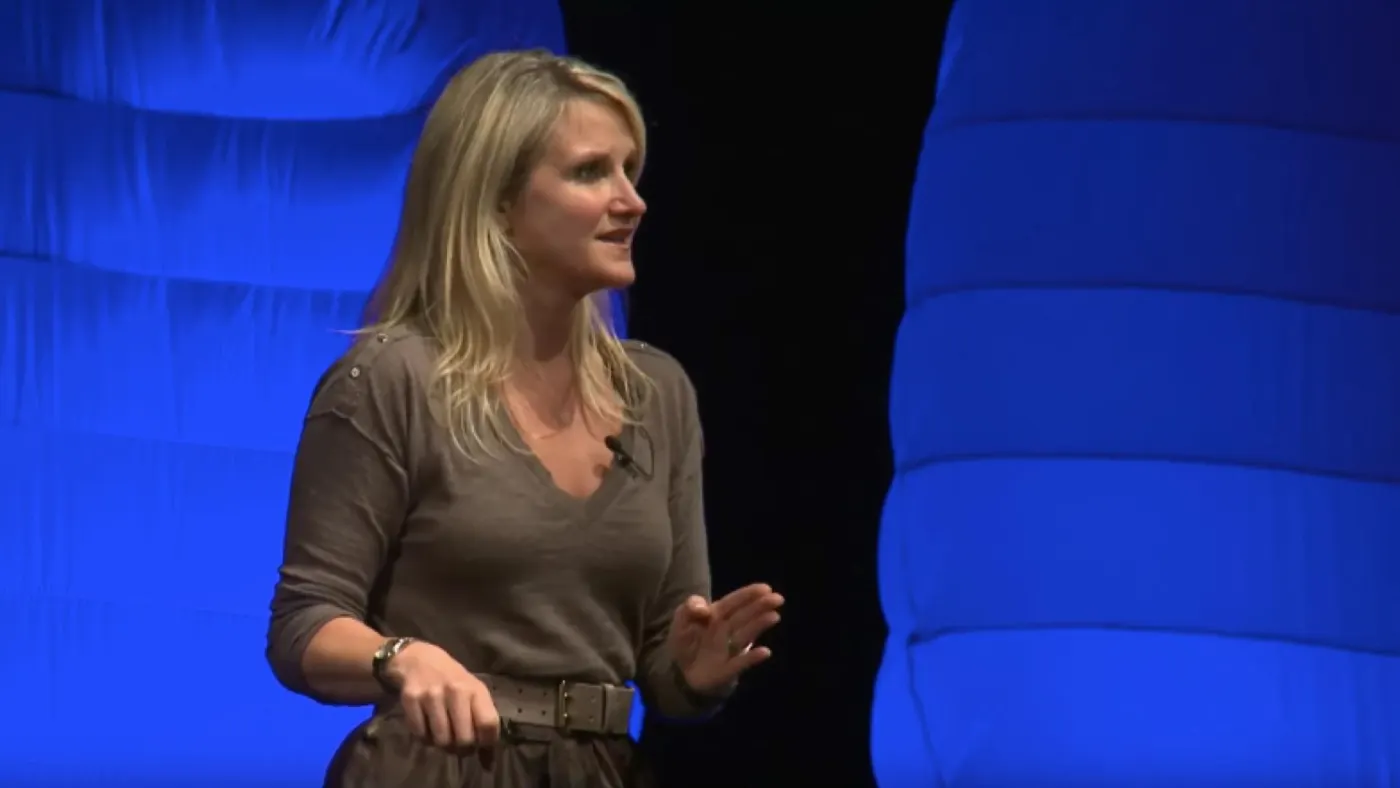
She wore a simple outfit, grabbed the audience by the collar, and did not let go for twenty-one minutes. The title was How to Stop Screwing Yourself Over.
She started by telling the crowd that her job was helping people get what they wanted, by any means necessary. She mentioned that she hosted a syndicated radio show and talked every weekday with people across America who felt stuck. She said a third of Americans were dissatisfied with their lives.
Then she laid out a hard truth. You are never going to feel like it. Nobody is coming to save you. Motivation is garbage. If you wait until you feel ready to change your life, you will wait forever.
She dared the audience to set their alarms thirty minutes early the next morning and get out of bed the moment it rang. No snooze. No negotiating. She said they would come face to face with the physical force it takes to change a habit.
At one point she dragged a man named Doug to his feet and told him the odds of his being born at all were about one in four hundred trillion. You are not fine, she told him. You are fantastic.
The crowd loved it.
Online, the talk spread slowly at first and then exploded. It became one of the most watched TEDx talks in the world, with more than thirty-three million views by 2024.
On the air
The years after the talk were a scramble.
Mel took almost any stage she could get. She hosted radio shows. In 2012, she was on the air in Orlando, Florida, when a neighborhood watch volunteer named George Zimmerman shot and killed a seventeen-year-old named Trayvon Martin in nearby Sanford. The case tore through the country. Mel covered it night after night.
Her legal background suddenly mattered again. In 2013, when Zimmerman went on trial, CNN brought her on as a legal analyst. She explained courtroom strategy in plain English to millions of viewers. She was sharp, fast, and willing to say exactly what she thought.
In 2014, she won a Gracie Award, which honors women in media, as an outstanding host.
She also wrote columns, did television spots, and kept speaking. Corporate event planners began to call. Big companies wanted someone who could wake up a sleepy ballroom full of employees. Mel could do that.
But she was still, in many ways, a working mom hustling for the next gig. She had not yet found the one idea that would carry her.
It was sitting in her own story the whole time.
Self-published
People kept writing to her about the countdown. Somebody used it to get to the gym. Somebody used it to speak up in a meeting. Somebody used it to leave a bad relationship. Somebody used it to stop drinking.
Mel realized that the silly trick she had invented in bed was the most useful thing she had ever shared.
She wrote a book about it. Then she did something that was still unusual for a speaker at her level. She published it herself.
The 5 Second Rule came out on February 22, 2017, through her own small imprint. She bet on herself the way she had once bet on the countdown.
This time the bet paid off. The book became a bestseller. Its audiobook, read by Mel in her quick, raspy, teasing voice, was a monster hit. Together with a later title, her self-published audiobooks eventually sold more than a million copies. She went on to make six number-one Audible Originals and a series called Reinvent Your Life.
She had learned something important. She did not need anyone's permission. If she could reach people directly, she could build her own business.

The talk show
In 2019, Mel reached for the biggest stage in American daytime television.
Sony Pictures Television launched The Mel Robbins Show, a syndicated talk show built around her energy and advice. It was the kind of break that speakers dream about. Oprah Winfrey had built an empire on daytime TV. Maybe Mel could, too.
It did not work. The show ran for a single season. In January 2020, the trade paper The Hollywood Reporter announced it was ending.
For many people, that would have been the end of the dream. A national show canceled after one year is a very public failure.
Mel treated it as a lesson. She said later that she learned a huge amount about production, cameras, lighting, editing, and what it takes to connect with an audience. She would put every bit of that knowledge to use soon enough, but on her own terms and on platforms she controlled.
A doctor's question
Around the same time, another part of her story snapped into focus.
Her son Oakley had profound dyslexia and ADHD. Mel was sitting with his doctor one day, going over his profile, when she asked a question half as a joke. Do you think I might have ADHD?
The doctor put down his papers and laughed. Of course you have ADHD, he told her. You are brilliant, and yet you never do what you say you are going to do. You miss your kids' appointments. You scramble for their physicals every single year.
She asked why he had never said anything. He told her he was not her doctor.
So she got tested. She was around forty-seven. The results showed ADHD and dyslexia, the same pattern as her son.
It changed everything, she has said. For decades she had been treated for anxiety without anyone looking at what might be underneath it. She learned that girls often show ADHD differently from boys, and that a whole generation of women had grown up with it unnoticed. Now she had an explanation for the missed deadlines, the half-finished projects, and the racing mind.
She began talking about it publicly, and women wrote to her by the thousands to say, that is me, too.
High five
In September 2021, she published The High 5 Habit. The idea was even simpler than the countdown. Every morning, look in the mirror and give yourself a high five.
It sounds silly. Mel knows it sounds silly. She came up with it during a stretch when she was waking up overwhelmed, with business stress, world news, and two anxious kids weighing on her. One morning she caught herself in the bathroom mirror, felt a flash of sympathy for the tired woman looking back, and raised her hand.
She argued that the gesture works because it skips words. Many people do not believe the nice things they tell themselves. But a high five is something we give to people we are cheering for. Her team ran a public challenge and said more than a hundred thousand people from dozens of countries took part.
The book became another bestseller. Critics rolled their eyes. Readers bought it anyway.
The microphone
In 2022, Mel launched The Mel Robbins Podcast.
This time she built it from the ground up with her own team. She had learned from the talk show. She had learned from radio. She had learned from years of watching what people actually shared online.
The show is simple. Mel talks to experts, doctors, researchers, and sometimes celebrities about everyday problems. Sleep. Anxiety. Friendship. Money. Divorce. Menopause. Focus. Grief. She asks the questions a smart friend would ask and then turns the answers into steps people can use that afternoon.
She posted full episodes on YouTube, often more than an hour long, and chopped them into short clips for social media. Her audience grew fast, especially among women in their twenties, thirties, and forties.
She made a point of learning every part of the machine. She told CBS in early 2026 that there is not a job at her company she cannot do, from editing to thumbnail design to how episodes are syndicated on YouTube, Spotify, and Apple. Too many people her age lean back when technology changes, she said. She leans in, because if you do not understand the tools, people who do will run you over.
In October 2024, SiriusXM signed her to a three-year deal. The company called hers the number-one education and inspiration podcast in the world. Her YouTube channel had nearly three million subscribers, and viewers had spent more than fifteen million hours watching her show.
She was just getting started.
The prom
The biggest idea of her life came from a high school dance.
Her son Oakley was getting ready for his junior prom. Mel had survived two proms with her daughters, and she figured a boy's prom would be easy. It was not. Oakley was so casual about it that the family was not sure until the last minute whether he was even going. Then there was the scramble for a tux, the right sneakers, the date, the photos.
At the pre-prom party, Mel was wound up tight. When it started pouring rain and the kids said they were going to a tiny taco stand before the dance, she felt what she has called a volcano of control rising up inside her. They had no reservation. They had no umbrella. He was going to ruin his new shoes. The girls' dresses were going to get soaked.
Her daughter Kendall grabbed her arm. Mom, she said. Let them. If they want to go to a taco stand in the rain, let them. It is their prom, not yours.
Mel started repeating the words under her breath. Let them go. Let them get wet. Let them eat tacos. And she felt the tension drain out of her body.
She began using the phrase everywhere. When a coworker was annoyed. When a friend did not invite her to something. When a family member made a choice she did not like. Let them. And then, she added, let me. Let me decide what I will do next.
She posted about it online. The response was enormous.
Let Them
Mel spent about two years turning that moment into a book. She wrote it with her oldest daughter, Sawyer Robbins. Her team interviewed dozens of experts in psychology and neuroscience.
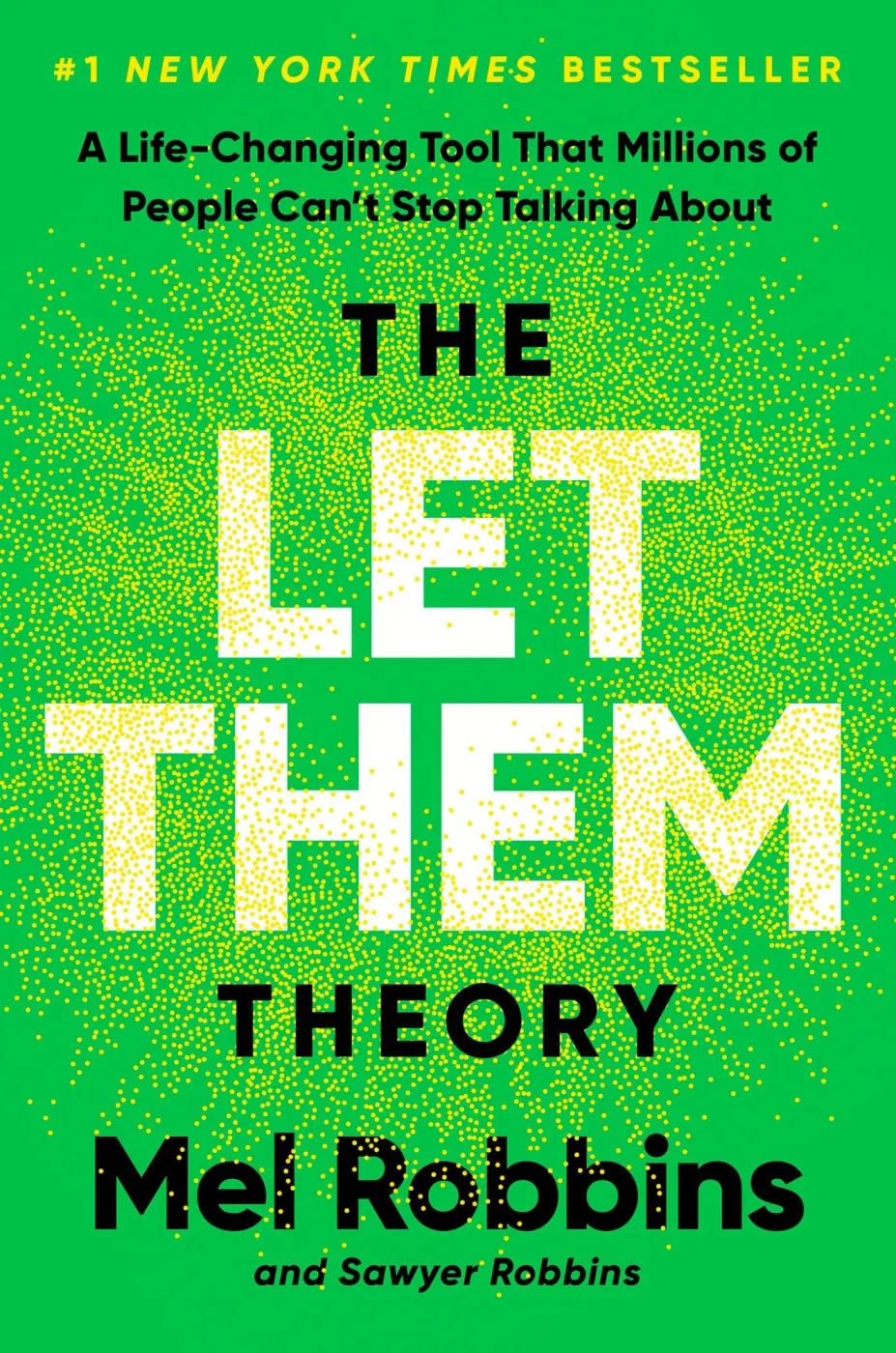
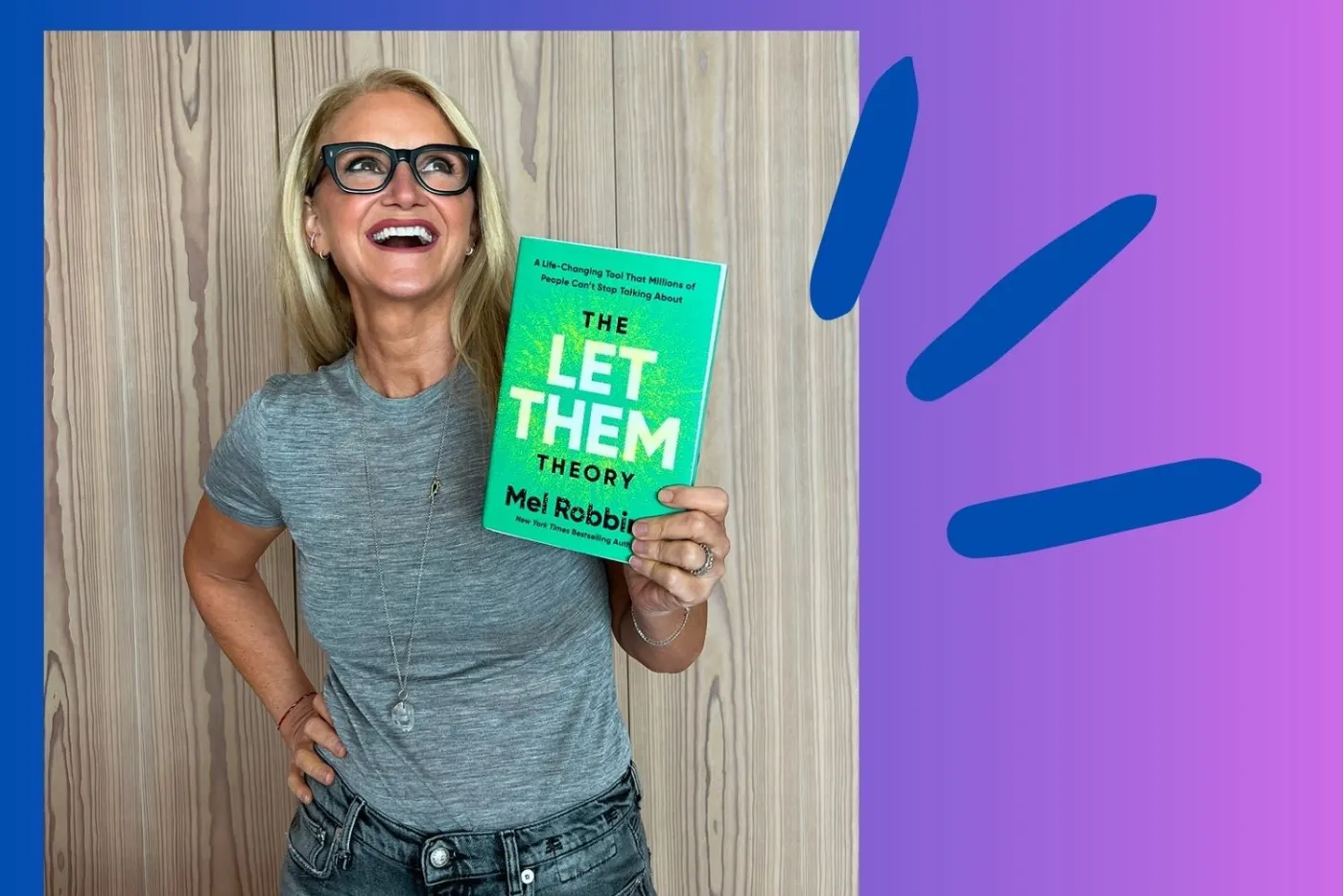
The Let Them Theory came out on December 24, 2024. It promised a simple tool: stop wasting energy trying to control other people, and put that energy into your own choices.
Mel is open that the idea is not brand new. She has called it modern stoicism, a cousin of Buddhism and the Serenity Prayer, boiled down to two words anyone can remember in a hard moment.
The book took off like nothing she had done before. It hit the top of bestseller lists and stayed there. Readers got the words tattooed on their wrists. Celebrities quoted it. Comedians joked about it. Oprah called her in for a long interview. Late-night hosts asked her to explain it.
The success brought criticism, too. Some writers argued the book was obvious, or that it had little hard evidence behind it. One British reviewer said it was labeled nonfiction but had no facts. A cable commentator argued the philosophy was bad for women. Mel answered one skeptic by admitting that yes, it is a cheap trick, and it works.
In April 2026, The Atlantic looked at where the phrase came from. The magazine noted that a poet named Cassie Phillips had posted a viral poem called Let Them in 2022, with lines similar to some in Mel's book. A representative for Mel told the magazine that neither Mel, her fact checkers, her researchers, nor her publishers had seen the poem, and Mel has continued to credit the idea to that prom night and her daughter Kendall.
Through all of it, the book kept selling.
The tour
In 2025, Mel took the idea on the road. Let Them The Tour was her first world tour, with live shows that felt part podcast and part pep rally.
The honors piled up. TIME named her to its TIME100 Creators list. She won the iHeartRadio Podcast Award for best overall host. She won Webby People's Voice awards for her show.
In January 2026, the Golden Globes handed out an award for best podcast for the very first time. The Mel Robbins Podcast was one of the nominees. Amy Poehler's show won, but the nomination put Mel's show alongside the biggest names in audio.
2026
By the middle of 2026, The Let Them Theory had sold more than ten million copies in sixty-five languages, according to her company.
In July 2026, Forbes ranked Mel sixth on its list of the world's highest-paid podcasters. The magazine estimated she earned about thirty-five million dollars from podcasting over the year. It reported that her audience had grown so fast after the book that SiriusXM renegotiated her deal partway through its term to pay her more. Her live podcast episodes sold out in five states, and Microsoft's Copilot signed on as a sponsor.
Her 2026 tour plans reached across the United States, Canada, Australia, and New Zealand.
Her company, 143 Studios, which Forbes once listed with Mel as chief executive, had grown far beyond a speaker's office. It makes corporate training and content for companies such as Starbucks, JPMorgan, and LinkedIn. It has made courses for LinkedIn and audio series for Audible. It runs the podcast, the YouTube channel, the books, the newsletter, and the tours.
When a CBS host called her a media mogul, she brushed it off. She said she feels like a mother of three who lives in Vermont and hosts a podcast that makes a huge global impact.
She was fifty-seven years old. Less than twenty years earlier, she could not get out of bed.
How she works
Mel's habits are not glamorous. That is the point.
She and Chris have done a planning exercise at the end of every year since 2004. They sit down and ask what they want, who they are right now, and what would make the next year better. She tells listeners to do the same before they set goals, because you are not the same person you were a year ago.
She still uses the countdown. She still struggles on cold mornings in southern Vermont, where the family now lives. She says the idea that a habit takes twenty-one days is only true if you like the habit. Some things you will hate forever. You do them anyway.
She prepares hard. She believes being good at something is only the price of entry, and that what makes you exceptional is paying attention to details other people ignore. She studies her own clips. She obsesses over titles and thumbnails. She knows how each platform works.
She talks about her own mistakes on purpose. She has described coming home stressed and snapping at the kids, and Oakley telling her, "I don't work with you." She admits she still has to stop herself from rushing in to rescue her grown children. She tells audiences about her anxiety, her ADHD, her drinking years, and her debt.
And she keeps family close. Her daughter co-wrote the book. Her husband has been beside her through bankruptcy fears, a canceled show, and worldwide fame.

What changed because of her
Mel Robbins did not invent motivation. She did not invent stoicism. What she did was package hard ideas into tools so simple that tired people could use them in the worst moment of their day.
Five, four, three, two, one. A high five in the mirror. Let them, let me.
Those tools spread into schools, therapy offices, locker rooms, sales teams, and kitchens. People tell her they used the countdown to get sober, to leave abusive relationships, to walk into job interviews, to finally see a doctor.
She helped change the business of self-help, too. She showed that a speaker could self-publish, own her audience, and turn a podcast into a global media company. She showed older women that they could lead in technology instead of being left behind by it.
Her openness mattered. By talking about ADHD in women, she helped many adults, especially mothers, recognize themselves and seek a diagnosis. By admitting her own debt, drinking, and fear, she made it easier for listeners to admit theirs.
She has critics, and she has faced fair questions about how much science stands behind a slogan. But her audience keeps growing because people feel she is talking to them like a friend, not preaching from a mountaintop.
Closing
Mel Robbins still sets an alarm.
Some mornings, it is dark and cold outside her window in Vermont, and the bed is warm, and her husband is asleep beside her, and every part of her wants to stay put. She feels the same heavy pull she felt years ago in the house outside Boston, when the bills were piling up and she did not know how to fix any of it.
The difference is that now she knows what to do with that feeling.
She counts. Five. Four. Three. Two. One.
She gets up.
She did not become one of the most listened-to voices in the world because she found a secret. She became that voice because she kept sharing the small, clumsy things that helped her stand up, and millions of people discovered that those small things helped them stand up, too.
The girl from Bear Lake who learned to say "fine" spent her life teaching people to stop saying it.