Fired at Thirty-Nine, Richer Than Kings
Salomon Brothers pushed him out with ten million dollars. The next day he rented one room and hired three friends. Forty-five years later the terminal still sits on desks that move the world.
On a weekday in 1981, Michael Bloomberg drove home knowing the only full-time job he had ever held was finished. John Gutfreund, managing partner of Salomon Brothers, had said the words that end careers on Wall Street. Time for you to leave. Bloomberg was thirty-nine. He had worked twelve-hour days and six-day weeks for fifteen years. Most partners stayed when Phibro bought the firm. About half a dozen men, including him, were pushed out.
He was sad on the drive. He was also too stubborn to show it. As a partner he walked away with roughly ten million dollars in equity from the sale. In his autobiography he later wrote that if they had offered him another job inside the new company, he would have taken it in a second. They did not. So the next day he started building.
That firing became one of the most expensive mistakes a Wall Street partnership ever made for itself, and one of the best days of his life. From a one-room office with a view of an alley, he and three friends built Innovative Market Systems. The product became the Bloomberg Terminal. The company became Bloomberg L.P. By September 2026 Forbes put his fortune near ninety-five billion dollars. Through Bloomberg Philanthropies he had already given away more than twenty-five billion in his lifetime, including about four point three billion in 2025 alone. Between those numbers sits a Medford childhood, a Salomon cage where clerks counted securities in their underwear, a machine that taught traders to ask better questions, twelve years in New York City Hall after September 11, a presidential campaign that spent hundreds of millions and still lost, and a late-career decision to hand day-to-day running of the firm to a new CEO while he kept giving money away at a scale few humans ever match.
Medford, flat feet, and the bookkeeper's paycheck
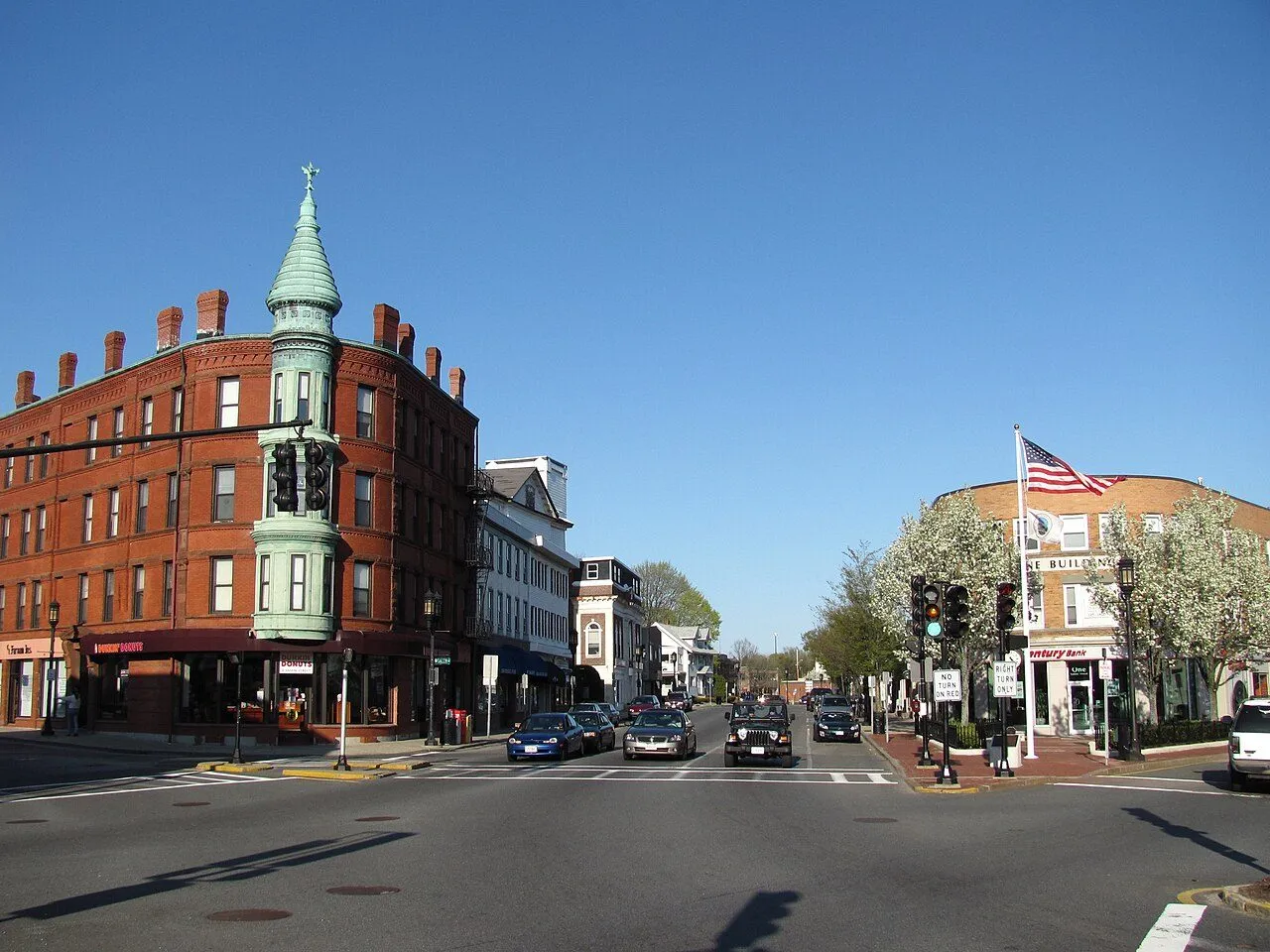
Michael Rubens Bloomberg was born on February 14, 1942, in Boston and raised in Medford, Massachusetts. His father, William, kept the books for a dairy company in Somerville. In talks decades later, Mike still repeats the same quiet fact: the best year of his father's life paid about six thousand dollars. The family was lower middle class. They did not go without food. They also did not own vacation houses in Europe or yachts with foreign flags. When young Bloomberg later sat at a fancy New York dinner and heard those questions, he felt as if he had stepped through a looking glass.
He was a Boy Scout. He jokes that he was a C student who always made the top half of the class possible. He worked as a teenager at an electronics company in Cambridge. The habits that later defined him already showed: show up early, stay late, make yourself useful to the person who runs the room.
School friends remembered a kid who liked gadgets and order. The electronics job in Cambridge put real components in his hands while classmates still treated circuits as textbook drawings. Medford High did not mint him as a celebrity. It minted him as someone who could finish a shift and still do the homework. Later, when Fortune and Forbes tried to summarize him in one line, they reached for the terminal and the mayoralty. The quieter origin is a town of triple-deckers and small paychecks that taught him scarcity without teaching him shame.
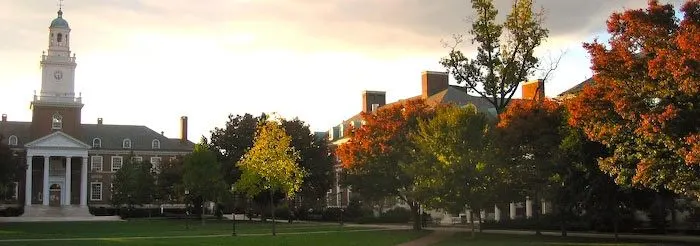
At Johns Hopkins he first tried physics. The German language requirement stopped him cold after a few weeks. He switched to electrical engineering, where no German sat between him and a degree. He graduated in 1964. The engineering habit stuck. Years later colleagues and interviewers would describe the same traits: detached when needed, analytical, pragmatic, allergic to vague plans that never become products.
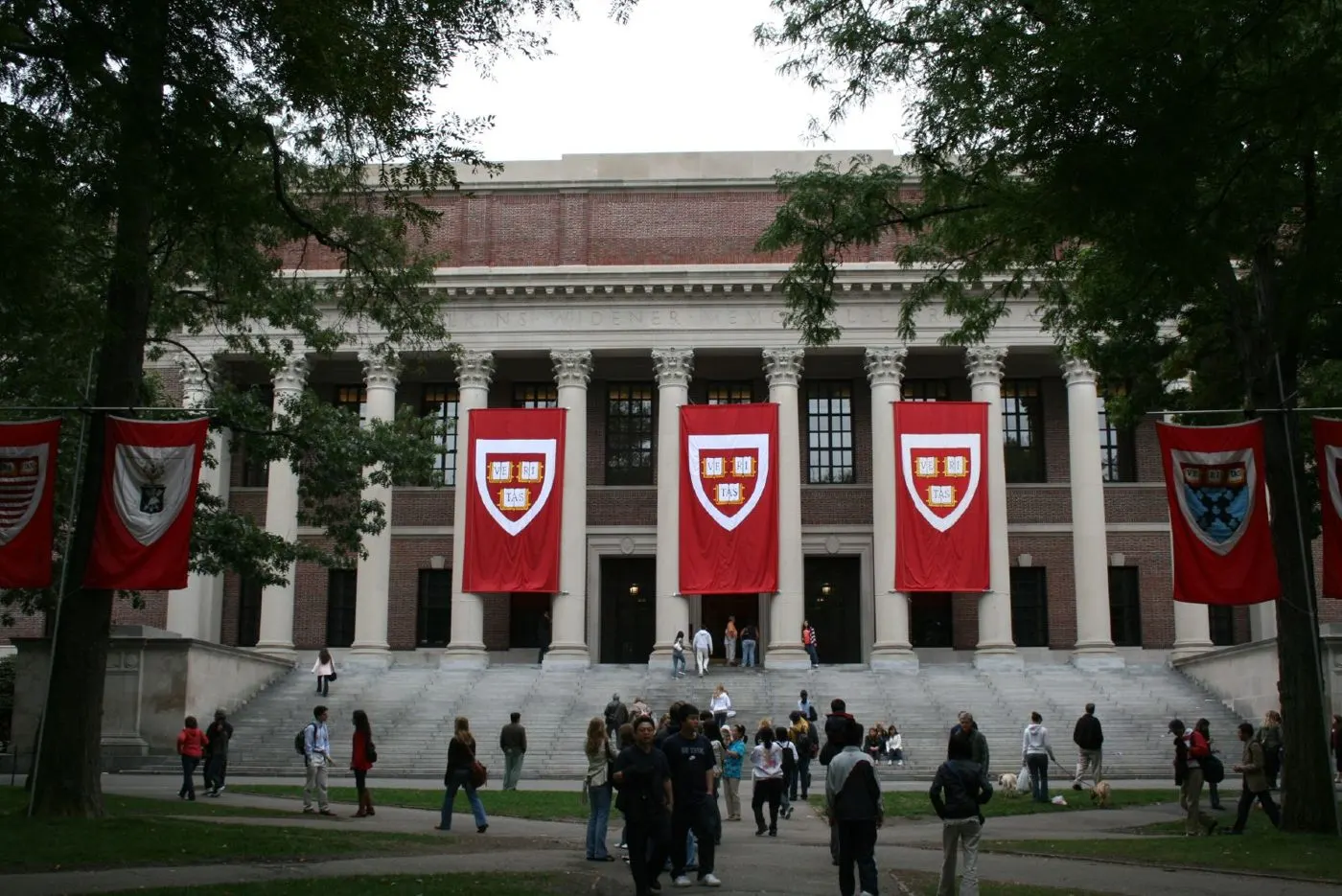
Harvard Business School came next. He earned his MBA in 1966. Case method sharpened how he argued and how he listened. He later wrote that street smarts and common sense predicted careers better than classroom polish. Near graduation the Vietnam War pressed on every young man he knew. He signed up to become a second lieutenant, thinking an officer's path might be safer than a private's. Flat feet kept him out one month before graduation. Suddenly he needed a job at the last minute.
A friend told him to call Goldman Sachs and Salomon Brothers and ask to be an institutional salesperson or equity trader. He barely knew what those titles meant. He called anyway.

Nine thousand dollars, a loan for a suit, and the Salomon cage
Goldman offered fourteen thousand a year. Salomon offered nine thousand. Bloomberg wanted Salomon. He also could not live on nine thousand in New York with student loans still open. He told John Gutfreund he loved the firm but did not own another suit, did not have an apartment, and had no cash. Gutfreund structured a compromise: nine thousand salary plus a twenty-five hundred dollar loan. Bloomberg took it.
His first summer put him in "the cage," physically counting securities by hand in an unair-conditioned bank vault, sometimes in underwear, sometimes with a six-pack of beer to survive the heat. Friends who worked as research analysts and bankers asked what he did. To save face he said he studied methods and procedures. In truth he was a clerk. He stayed because quitting would have felt like admitting defeat, and because the work taught him sales.
Sales became his meta skill. He presented every fact he had, then highlighted whatever let the customer convince themselves the deal was good. Billy Salomon and John Gutfreund would stand over him while he pleaded on the phone. When he closed, they walked away without praise. Closing was the job.
He arrived near seven in the morning so he would be one of the only people in the room when Billy Salomon wanted a match or a sports chat. He stayed late for after-hours client calls. At twenty-six he had made himself a buddy of the managing partner. He never understood why everyone else did not try the same thing. Make yourself indispensable. Work more hours than the person next to you. String together many small advances instead of waiting for one lottery ticket.
He rose into equity trading and sales, then into running information systems after office politics pushed him off the trading seat around 1979. He still loved the firm. He would have stayed forever if asked. In 1981 the Phibro deal closed that door.
One room, three engineers, and a promise that barely existed
The day after the firing he deposited about three hundred thousand dollars into a corporate account and rented roughly one hundred square feet with a view of an alley. He called three Salomon colleagues: Thomas Secunda, Duncan MacMillan, and Charles Zegar. Secunda owned the math and analytics. MacMillan understood what customers needed. Zegar built software. Bloomberg put in most of the seed capital and owned the sales problem.
They named the company Innovative Market Systems. Early consulting work brought cash and legitimacy. The real bet was a terminal that would put more information at a trader's fingertips, faster and cleaner than paper and phone trees. Bloomberg's creed was simple enough for a fifth grader. Smart investors should not need a priesthood of specialists to ask basic questions about bonds and prices. Hit a key. Get an answer. Sometimes get an answer to a question you did not know you should ask.
He sold Merrill Lynch before the product fully existed. When he returned from the meeting, his colleagues celebrated, then panicked. They had promised delivery in about six months for a machine that was still a sketch. Month after month they lived between elation and disaster. Software bugs forced rewrites. Bloomberg shouted that they were out of control. By June 1983 they delivered something on time, close to on time: a machine that worked, sort of, and was useful, somewhat.
Merrill became the first major customer and later bought about thirty percent of the company for roughly thirty million dollars, with an early restriction on selling to Merrill's rivals. Merrill traders nitpicked the product in a helpful way. Every day the system got better because honest users showed exactly when it failed. In 1984 the marketing restriction eased. The Market Master name sounded like a kitchen appliance. Customers already called the boxes Bloombergs. He renamed the product and the company after himself, joking that he would become the Colonel Sanders of financial information.

Crawling under desks, then owning the news
For the first years the founders did everything. They sold. They negotiated contracts. They crawled under client desks on weekends, drilled holes without permission, dragged cables, and turned the system on near midnight to watch it wake up. Bloomberg wrote checks, signed contracts, bought cookies and chips, emptied trash, and handed out paychecks in person. Those, he later said, were the best days.
He refused to confuse the box with the business. Early on they built hardware because personal computers were not ready. When better hardware arrived elsewhere, they focused on content: accurate, fast, analyzable information. Technology would keep changing the pipe. The product was the water.
News became the next pipe. Matt Winkler of the Wall Street Journal kept hearing about the terminal. Bloomberg invited him in, bragged about the people, then handed him a printout of every customer name and phone number and told him to call them himself. From that relationship came Bloomberg News in 1990. The logic was ruthless and elegant. Each story could advertise the terminal's analytical power. More stories meant more demos. More demos meant more subscriptions. More subscriptions paid for more reporters. Radio and television followed the same idea: reach people while they jog, drive, or sit at home, then pull them back to the paid screen.
The terminal's rent became a fortress. Decades later a seat still costs on the order of thirty thousand dollars a year. When customers complain, the house line is blunt. If you cannot make that much value in a workday, you have a bigger problem than the bill.
In 1996 Bloomberg bought back ten percent of Merrill's stake for about two hundred million. In 2008 he bought the remaining twenty percent for about four point five billion. Merrill's original thirty million had become one of the great private-market returns. Bloomberg kept the firm private. Answering to no one, he wrote, was the ultimate situation.
City Hall after the towers fell
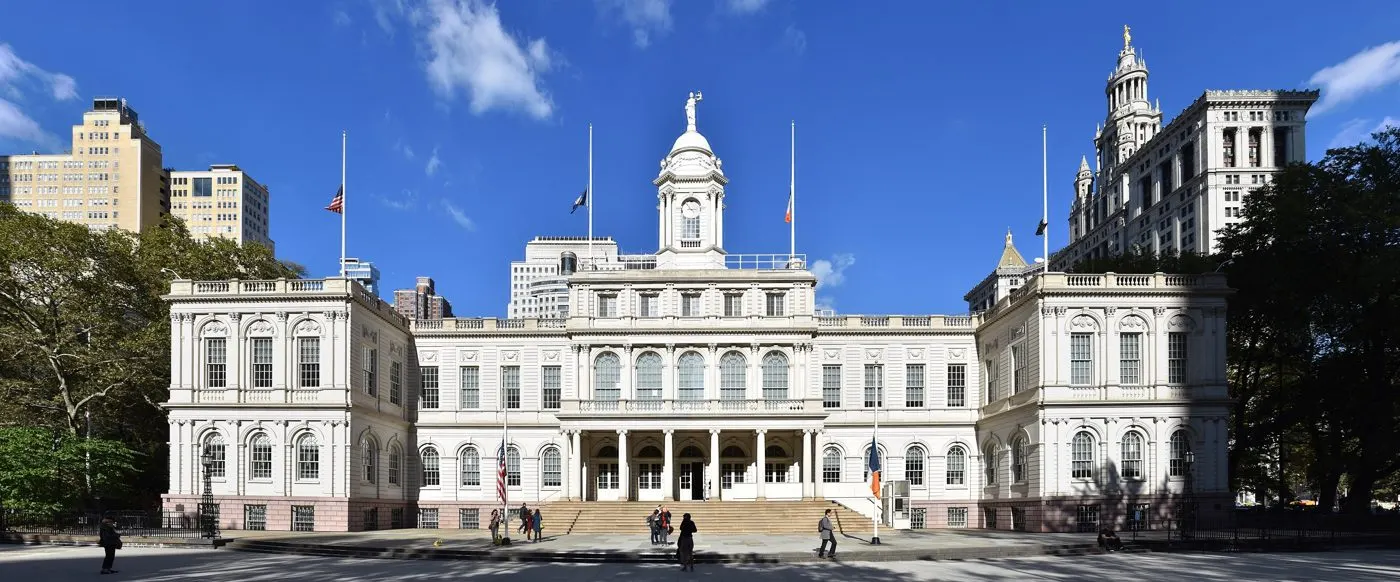
On September 11, 2001, New York City burned and broke. Bloomberg, then a lifelong Democrat who switched to Republican to run, won the mayoral election weeks later. He took office on January 1, 2002, as the 108th mayor of New York City, and stayed for three terms through the end of 2013. He later became an Independent in 2007, then rejoined the Democrats in 2018.
He governed like an engineer with a spreadsheet and a stubborn streak. In 2002 he raised cigarette taxes. In 2003 he pushed a smoking ban through bars and restaurants. Later the rules reached parks and other public spaces. Chain restaurants posted calories. Artificial trans fats left restaurant kitchens. He poured energy into public health, affordable housing plans, and data-driven city management. Supporters saw a city that sparkled again: safer streets in the aggregate, a rebounded skyline, a brand that said New York could still invent itself.
Critics saw another New York. Homelessness rose. Rents climbed with glass towers. Hundreds of thousands of mostly Black and Latino men lived through police stops under an expanded stop-and-frisk practice. Stops climbed from under one hundred thousand in 2002 toward nearly seven hundred thousand in 2011. Civil rights groups sued. A federal judge later found the practice unconstitutional in important respects. Bloomberg defended the policy for years as crime prevention. In November 2019, before a presidential run, he apologized in a Brooklyn church and said he was wrong and sorry. Opponents noted that the sharp drop in stops came late, under legal and political pressure, not as an early conversion. Living biography has to hold both truths: public-health wins that other cities copied, and a policing legacy that still wounds communities and still shadows his name.
Give almost everything away, then try for the White House
After City Hall he returned to Bloomberg L.P. and turned the volume up on philanthropy. Bloomberg Philanthropies grew into a data-driven machine focused on public health, the environment, education, the arts, government innovation, and later the Greenwood Initiative aimed at Black wealth and underinvestment. He signed the Giving Pledge. He has said he plans to give away nearly all of it in his lifetime, and he has committed that his stake in Bloomberg L.P. will go to Bloomberg Philanthropies when he dies, if not sooner.
The checks to Johns Hopkins became historic. In 2018 a gift of about one point eight billion helped the university accept undergraduates without regard to ability to pay. In July 2024 Bloomberg Philanthropies announced another one billion dollars for graduate financial aid, including support that makes medical school free for most Johns Hopkins M.D. students and expands aid for nurses, public-health students, and other graduate programs. Across decades his Hopkins giving passed well beyond three and a half billion dollars. He likes to remind audiences that a federal scholarship and a campus job once opened a door his father's paycheck could not.
In 2020 he ran for the Democratic presidential nomination. He spent on a scale that shocked even American politics: hundreds of millions of dollars on ads and organization, with media tallies later cited near three-quarters of a billion in some OpenSecrets categories. He still failed to convert money into the nomination. The campaign put stop-and-frisk back on national stages. He apologized again under debate pressure. Then he left the race and returned to the twin tracks he knows: company and giving.
In 2023 he appointed product leader Vlad Kliatchko as CEO of Bloomberg L.P. and named former Bank of England governor Mark Carney non-executive chair of a new board. The founder stepped back from day-to-day CEO duty while remaining the dominant owner, with about eighty-eight percent of the private firm. Estimated annual revenue sits near fifteen billion dollars. Headcount runs around twenty-five to twenty-six thousand people across more than one hundred countries.
How he works when the room is watching
Bloomberg's operating style is loud in private rooms and oddly simple on paper. Surround yourself with people who will tell you that you are wrong. Do not centralize every decision through one ego. The most important assets leave at night and come back in the morning. Prefer evolutionary steps over five-year fantasies. Build product and sell it in parallel. Avoid me-too copies. Enter fights with an unfair advantage or do not enter. Keep the company private if answering to analysts would dull the edge.
At the Lexicon-era headquarters and later towers that carry his name, the culture sold free food, open floors, and a deliberate lack of private offices even for the founder. Sixty Minutes filmed him walking those spaces like a mayor of a private city. He wanted employees to bump into each other. He wanted excitement, not corridors of closed doors.
He still talks like a salesman who never retired. In a 2022 conversation with Norway's sovereign-wealth chief, he went back to Medford, the six-thousand-dollar father, the flat feet, the Salomon exit, and the refusal to let journalism become a toy for the owner. One rule he repeats: if you own the company that employs the reporters, do not edit their copy. Hand news to professionals and stay out.
Luck sits in his story and he admits it. Flat feet. A friend who named two banks. A firing that came with capital. Merrill traders who cared enough to complain. A city that needed a manager after a terror attack. He also insists luck compounds with hours. You cannot control how lucky you are, he says, but the more you work, the luckier you get.
What the terminal did to the world
Before Bloomberg, a lot of market truth lived in fragmented papers, delayed prints, and clubs of people who already knew each other. The terminal did not invent capitalism. It changed who could see the field in real time. Smaller firms could rent the same analytical muscle as giants. Bond math that once required a specialist could sit one keystroke away. News, prices, messaging, and charts lived in one paid universe.
That concentration created a new kind of power. A subscription became a workplace identity. "Check Bloomberg" became a verb on trading floors from New York to London to Hong Kong. Competitors from Reuters to FactSet fought for share. None fully replaced the habit. The high price itself became a filter and a status marker. Critics call it a tollbooth on finance. Fans call it infrastructure. Both descriptions can be true at once.
World impact also runs through mayoral copycats and philanthropy ledgers. Smoking bans spread. City data dashboards spread. Climate work through C40 and related efforts pushed mayors and businesses toward coal-plant retirements and emissions goals, with Bloomberg often citing large shares of U.S. and European coal capacity closed in campaigns he backed. Gun-safety funding made him a permanent antagonist to the National Rifle Association and a permanent ally to families who wanted fewer funerals. Public-health gifts shaped how universities train doctors who will never meet him.
In 2024 President Joe Biden awarded him the Presidential Medal of Freedom, the nation's highest civilian honor. In 2025 the Chronicle of Philanthropy again ranked him America's biggest donor for a third straight year. As of late September 2026 Forbes still listed him among the world's richest people, with a real-time figure near ninety-five billion that moves with private-company assumptions. The number flickers. The habit does not: take almost all the profits the information machine throws off, and throw them at problems that outlive any one terminal screen.
Lexicon Tower, free lunch, and the private empire
Walk into a Bloomberg office and the first lesson is physical. There are few doors. Food is free on purpose. The founder wanted collisions. A salesperson bumps into an engineer. A reporter bumps into a product manager. The building is a machine for accidental meetings. Sixty Minutes once filmed him touring that world like a proud landlord of chaos. He said he wanted people to get psyched. He said his job was to get them to work together.
The company stayed a limited partnership. That choice mattered as much as any feature on the terminal. Public markets would have demanded quarterly theater. Private ownership let him fund newsrooms that did not have to pay for themselves on day one, then use those newsrooms as perpetual demos for the paid product. BusinessWeek became Bloomberg Businessweek after a 2009 acquisition from McGraw-Hill. BNA and other specialist information brands later widened the shelf. The core remaining thesis never changed. Own the indispensable screen. Surround it with media so non-subscribers hear the brand while they shower. Convert attention into another seat.
Headcount grew from four people on day two to more than fifteen thousand while he was still telling Founder Stories audiences the number out loud, then toward the mid-twenty-thousands by the mid-2020s. Offices opened across time zones. London became a second heart. Asia desks filled overnight. The messaging function inside the terminal turned into a private social network for finance, a chat graph that competitors envied and compliance officers watched.
He still refuses to romanticize venture capital. In the autobiography he mocked a self-important visitor who said the young company was too unstructured to survive, then advised his partners not to buy. Bloomberg's counter-creed was build first, account later, sell from day one. Banks and funds, he argued, create doubt. Founders who listen too early kill what is different.
Crime numbers, soda fights, and the third term
Mayoral New York under Bloomberg was a continuous argument about what a rich technocrat owes a messy democracy. Murder counts fell across his years compared with the worst earlier decades, continuing a longer city trend that began before him. He claimed credit for management and policing. Opponents credited broader forces and condemned the human cost of street stops. Both debates still run in living rooms.
He fought for a third term when city term limits stood in the way. The Council and a public fight rewrote the rules so he could run again after 2008's financial crisis. Supporters said continuity mattered while banks melted. Critics said a billionaire bought extra time. He won again. By the time Bill de Blasio succeeded him with a "tale of two cities" campaign, many New Yorkers who liked safer streets still felt the city had been redesigned for people who already had money.
Public health kept producing fights that looked small until they were not. Portion caps on sugary drinks became late-night comedy. Calorie counts became normal. Trans-fat rules became national language. Smoking rules that once felt radical in bars became the default in city after city. He treated tobacco like an enemy with a body count. As a philanthropist he funded anti-tobacco work far beyond New York, arguing that fewer cigarettes meant more grandparents at birthdays.
Gun policy became another permanent war. After mass shootings he put serious money behind candidates and ballot measures that the gun lobby hated. Admirers called it moral courage. Enemies called it coastal overreach. He did not pretend the fight was polite.
Climate ledgers and the long money
Bloomberg likes ledgers more than slogans. Climate work through city networks and philanthropy often came packaged as countable plants closed, measurable emissions avoided, mayors enrolled. He co-wrote Climate of Hope with Carl Pope to argue that cities and businesses could move faster than nations stuck in treaty math. Whether every claimed percentage of coal retirements is framed the way advocates prefer, the direction of travel is clear in his public record: treat climate as a management problem with budgets, deadlines, and scoreboards.
Education gifts followed the same pattern. Make the barrier money disappear for students who can do the work. Hopkins undergraduates first. Then medical and graduate students. The July 2024 billion-dollar graduate-aid announcement was not a vanity building with his name in marble alone. It was an attempt to refill pipelines of doctors, nurses, and public-health workers at a moment when American life expectancy and workforce shortages looked like linked emergencies.
The Greenwood Initiative added a racial-wealth chapter to a philanthropy portfolio that had always claimed data and outcomes. Skeptics ask whether billionaire charity can substitute for public policy. He answers by writing larger checks and by pointing at cities where cigarette rates fell or where a clinic stayed open. The argument will not end in his lifetime. The transfers of cash are already historic.
2020 ads, Super Tuesday math, and going home
The presidential campaign was a stress test of whether a terminal fortune could buy a nomination in a party that had moved left of his brand. He entered late. He blanketed television. He built staff at startup speed. For a stretch the ads made him feel inevitable to casual viewers. Then debate stages and voting math intervened. Younger progressive voters did not forget stop-and-frisk. Party actors coalesced elsewhere. He suspended and endorsed the ticket that could actually win the primary calendar.
Failure on that stage did not erase the company. It clarified the lane. He was more effective as a builder of information systems and as a checkbook for causes than as a candidate who had to survive every viral clip. Returning to philanthropy and to the boardroom looked, from the outside, like a man going back to the sports he actually plays well.
The 2023 leadership handoff fit the same pattern. Name a CEO who grew up inside product. Name a chair with central-bank gravitas. Keep ownership. Keep culture. Keep the private key. In an era when tech founders often cling to titles forever or explode their companies in public markets, the move looked almost old-fashioned. It also looked like succession planning from someone who says out loud that he cannot take the access codes with him, even if a cartoon on his wall jokes about trying.
Monday morning on the terminal
Imagine a junior analyst in 2026 unlocking a Bloomberg seat. The price still stings the budget committee. The screen still feels like a city: prices, news headlines, chat messages from a salesperson in another time zone, a chart that answers a question before the meeting starts. Somewhere in that stack sits forty years of iterative design. Somewhere sits the memory of Merrill traders saying a function failed under a specific condition. Somewhere sits Matt Winkler's newsroom logic that every story can be a demo.
That analyst may never meet Michael Bloomberg. She may not care about Medford or flat feet or a cage full of paper securities. She still lives inside his architecture. So does the mayor in a mid-sized city using a data dashboard inspired by New York experiments. So does a Hopkins medical student who will graduate with less debt because a gift landed in 2024. So does a family that never hears his name and still breathes cleaner bar air because a 2003 smoking fight traveled.
World impact, for this founder, is not a single invention like a phone in every pocket. It is a paid window that finance cannot easily close, plus a style of city government that treats spreadsheets as moral instruments, plus a philanthropy engine that moves billions the way other people move expense reports. Love him or distrust him, the combination changed how money sees itself and how some governments count what they owe the living.
Partners, percentages, and the long refusal to go public
Secunda, MacMillan, and Zegar did not become footnotes. Each took a slice of the private company and, over decades, crossed into billionaire territory on Forbes lists as the terminal's value compounded. Bloomberg kept the controlling share near eighty-eight percent by putting in the seed capital and by buying Merrill out when the bank needed liquidity more than a trophy stake. The structure taught a generation of finance workers a lesson founders still quote: you can build a global brand without an IPO if the cash flows are strong enough and the owner is stubborn enough.
Reporters sometimes ask why he never sold. His answers rhyme across decades. More partners mean more opinions. Analysts demand stories that fit quarters. Real builders get nervous when legal has to clear every experiment. He would rather start a new medium, hire three people, and see who swims than announce a transformative merger that looks good in a press release and dies in integration. Time Warner and AOL became his cautionary slide. Small affordable bets became his method.
That method also explains the company's strange dual identity. To traders it is a utility. To journalists it is a newsroom with uncommon resources. To politicians it is a former mayor's ATM for causes. To employees it is a place with free snacks and high expectations. Holding those identities in one private partnership is the actual invention sitting beside the keyboard.
Closing
Picture the alley-view room again. One man with a fresh scar from Salomon. Three engineers. A checking account seeded with partnership scraps. A promise to Merrill that the software is not ready to keep. The easy path is another trading job at another bank. The Bloomberg path is to build a box that makes mediocre investors smarter and then wrap that box in news, radio, television, and a brand so loud the founder's name becomes the product.
Michael Bloomberg's life keeps returning to that lesson. Rejected by a partnership. Rescued by his own stubborn salesmanship. Enriched by a private monopoly on urgency. Tested by a wounded city. Marked by a policing policy he later called wrong. Defined now, in his eighties, less by the next billion than by the next gift. In 2026 the net-worth line on Forbes still looks like a skyscraper. The more durable artifact is quieter and stranger: millions of professionals who still wake up, unlock a screen, and trust that the numbers waiting there are fast enough to trade on.
That trust was not inevitable. It was built keystroke by keystroke, cable by cable under other people's desks, apology by apology where he got public life wrong, and check by enormous check where he decided money only matters if it leaves his hands.