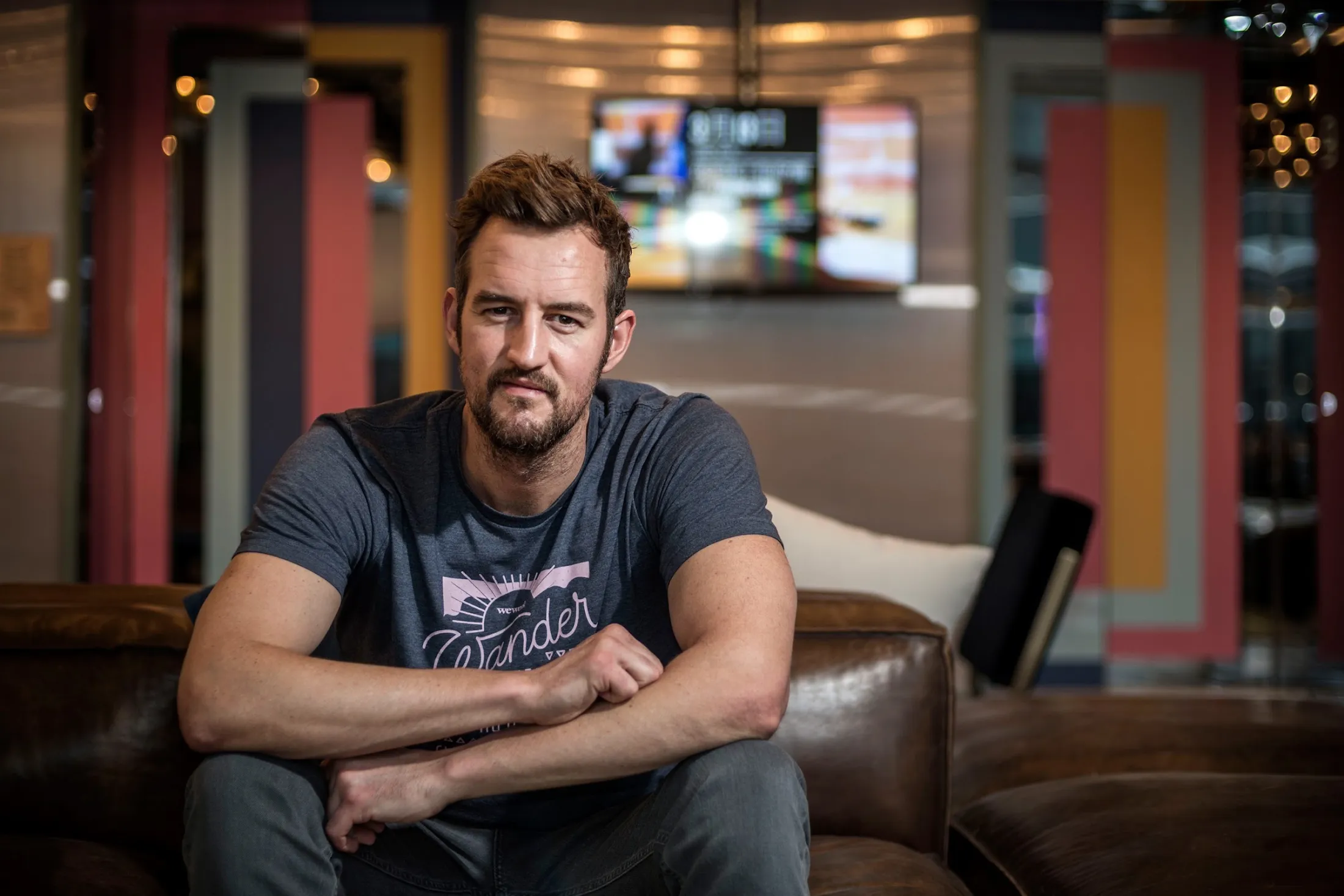
The Quiet Co-Founder of WeWork
He grew up with five mothers in Eugene, Oregon. He wired a SoHo building with his brother and bags of baking soda. Then he watched a company he helped invent nearly vanish.
In June 2020, Miguel McKelvey sent a farewell note to WeWork. SoftBank already controlled the board. Adam Neumann was gone. The spectacular private valuation of early 2019, once reported near forty-seven billion dollars, had cracked under the weight of an S-1 filing that investors did not trust. McKelvey had co-founded the company a decade earlier. He had designed the first brands overnight, laid cable in brick walls, and later taken the strange title of chief culture officer. Now he was leaving at the end of the month. His role would not be replaced.
Five years later, on a podcast called Scale with Soul, he talked about what followed. He said he had wallowed in a bad place. He had walked out with wealth while people he cared about lost jobs and dreams. He remembered a woman who told him she had never met her boss at other companies, and that WeWork had been different. After the layoffs he felt he had failed her. Pointing to his chest, he said the pain sat deep. Intellectual arguments did not erase it. He had to feel it, accept it, and try to let it go. Even as he said that, his heart was still racing.
That confession is the right door into his story. Miguel McKelvey is not the WeWork character Hollywood and late-night comedy preferred. He is the quieter architect who grew up in a house of women in Eugene, who dunked a basketball at six foot eight, who moved to New York at thirty for ten dollars an hour, who sold an eco coworking experiment called Green Desk, and who helped invent the glass-box community offices that remade how millions of people experienced work. By September 2026 he was living that second life in London, co-founding a preventative-health venture called Unbound and a UK youth basketball program called UK50, while WeWork itself had already filed Chapter 11 in late 2023 and exited bankruptcy in mid-2024 with far less debt and far less myth.
Five mothers, smoke from the muffler, and a New York daydream
Miguel McKelvey was born on July 4, 1974. He grew up in Eugene, Oregon, inside what he still describes as a five-mother collective. Five close women friends had decided to raise children without the usual father-in-the-house arrangement. They depended on one another for everything. McKelvey and four girls formed the first wave of kids. About ten years later a little brother arrived. Holidays meant the whole group, not distant biological relatives. Any of the women could be in charge. He called them moms and aunts. In Eugene in those years, kids with names like Wind or Morning Star made his household feel less strange than it would have elsewhere.
What stung more than weirdness was money. The cars were always breaking down and billowing smoke. He noticed other families had things he did not. Still, he did not mainly want to escape Eugene. From a young age, on boring summer days, he would answer the question of what he wanted to do by saying he wanted to go to New York. The dream stuck because he kept saying it.
His mother, Lucia McKelvey, helped found a paper called What's Happening in 1982 with friends. It grew into Eugene Weekly. Looking back, Miguel said her expectations were alternative. There was nothing he was supposed to become. That freedom shaped him. Living and working in a way that matched your values looked normal at the kitchen table.
He loved sports without much coaching at first. His mother learned to care about games later. In high school at South Eugene he became a serious basketball player. At six foot eight he could dunk into adulthood and still bragged about it. Coach Stepp, a strict disciplinarian, gave him a form of accountability he later told Fortune he had missed without a father in the house. He graduated in 1992.
Architecture school, a walk-on jersey, and two summers of fish
He first attended Colorado College. A sculpture professor, Carl Reed, saw something in a piece he made and steered him toward architecture. McKelvey transferred to the University of Oregon and earned a Bachelor of Architecture in 1999. He also made the Oregon Ducks basketball team for two seasons. Official letter records show at least 1997. He rarely played unless the score was lopsided. At that height he was only mid-pack among teammates. Studio deadlines plus practice meant almost no sleep. He has said the grind trained him for later startup nights.
Before and around school he worked as a busboy and spent two summers in an Alaskan fish processing plant. The jobs were not glamorous. They paid. They also taught him that hard physical work was available if a plan failed.
After graduation he went to Tokyo to visit a friend and stayed long enough to co-found English, baby!, a web portal and social network where English learners took quizzes, studied grammar, and found pen-pal style friends. Early days mixed nightlife with product. He and a friend deconstructed American pop lyrics with locals, then turned that social energy into a site. The tagline was blunt: Learn English. Find friends. It's cool. The company grew to roughly twenty-five people and kept running for years after he left. It was a real startup, not a hobby, and it taught him that community software and community rooms are cousins.
Still, the New York daydream never left. Living in Portland after Japan, he kept applying his mind to what an architect's life in Manhattan might look like. When he finally moved, he was not a fresh graduate. He was thirty, with a failed-or-finished first company behind him and no savings cushion. That age made the ten-dollar wage look irrational to outsiders. To him it looked like the only on-ramp that matched the childhood sentence he used to repeat on blank summer days.
Ten dollars an hour, a Queens address, and American Apparel chaos
Around 2004, at age thirty, he started applying to New York architecture firms. Nobody replied while his resume listed an out-of-town address. A friend's brother in Queens let him use that address. Interviews appeared almost immediately. He flew out, met a chic black-clothes firm that felt wrong, then met Jordan Parnass Digital Architecture in Dumbo: two guys in jeans and T-shirts. They liked him. They needed help. Could he start tomorrow? He had lied about already living in New York, so he bargained for Monday, flew back to Portland, packed a duffel, asked his mother to store the rest, and landed Sunday night.
The job paid ten dollars an hour. He was a junior draftsman, the lowest rung, hired for odds and ends. He was not worried. Worst case he could go home to Eugene. Best case he was finally in New York.
Luck arrived through a friendship. Jordan Parnass had grown up with Dov Charney of American Apparel. The tiny firm was designing and building out early American Apparel stores as the brand exploded from wholesale into retail. McKelvey moved from one store to project managing many. Within a few years the concurrent projects ran into the dozens as the chain raced toward hundreds of locations. Deadlines were brutal. Charney could scream. McKelvey remembered a Black Friday call about a Denver store that had to open or else. He got on a plane. Surviving that intensity, he later said, made almost any later crisis feel smaller.
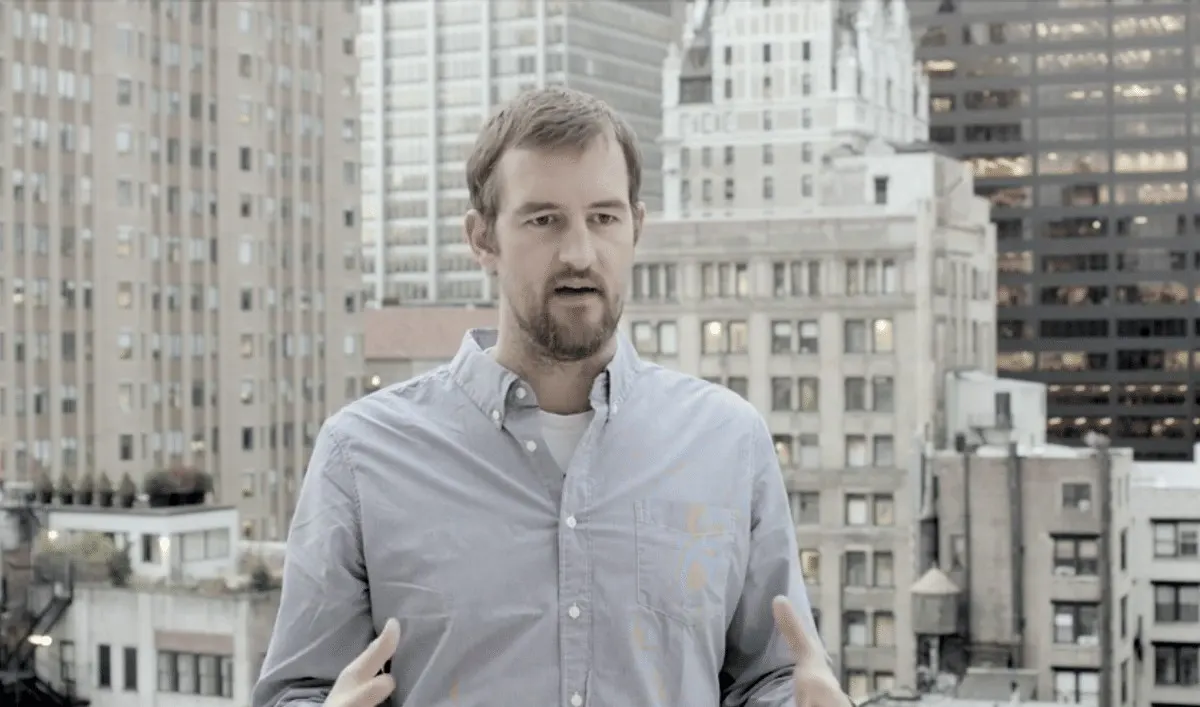
Shirtless in the elevator: meeting Adam Neumann
A coworker named Gil invited him to an apartment. In the lobby walked another tall man with his shirt off, chatting with strangers in the elevator and holding the door to finish conversations. It was Adam Neumann, Gil's roommate, an Israeli entrepreneur then chasing baby clothing ideas, including padded-knee pants under a brand called Krawlers. McKelvey, fresh from Oregon, had never met that kind of abrasive confidence. He liked standing next to the center of attention more than being it. They bonded anyway.
McKelvey convinced Neumann to move the baby-clothes office into the Dumbo building where the architecture firm worked. Down the hall, they started talking about empty floors, landlord service levels, and a model Neumann knew as office suites. Split a floor into small offices. Charge more per square foot than raw empty space. Offer coffee, events, and a place that did not feel like a corporate cube farm.
The landlord of 68 Jay kept saying no. Neumann kept asking. Eventually the landlord offered another warehouse across the street: exposed brick, timber, big windows, water views. The challenge was simple. What would you do with it?
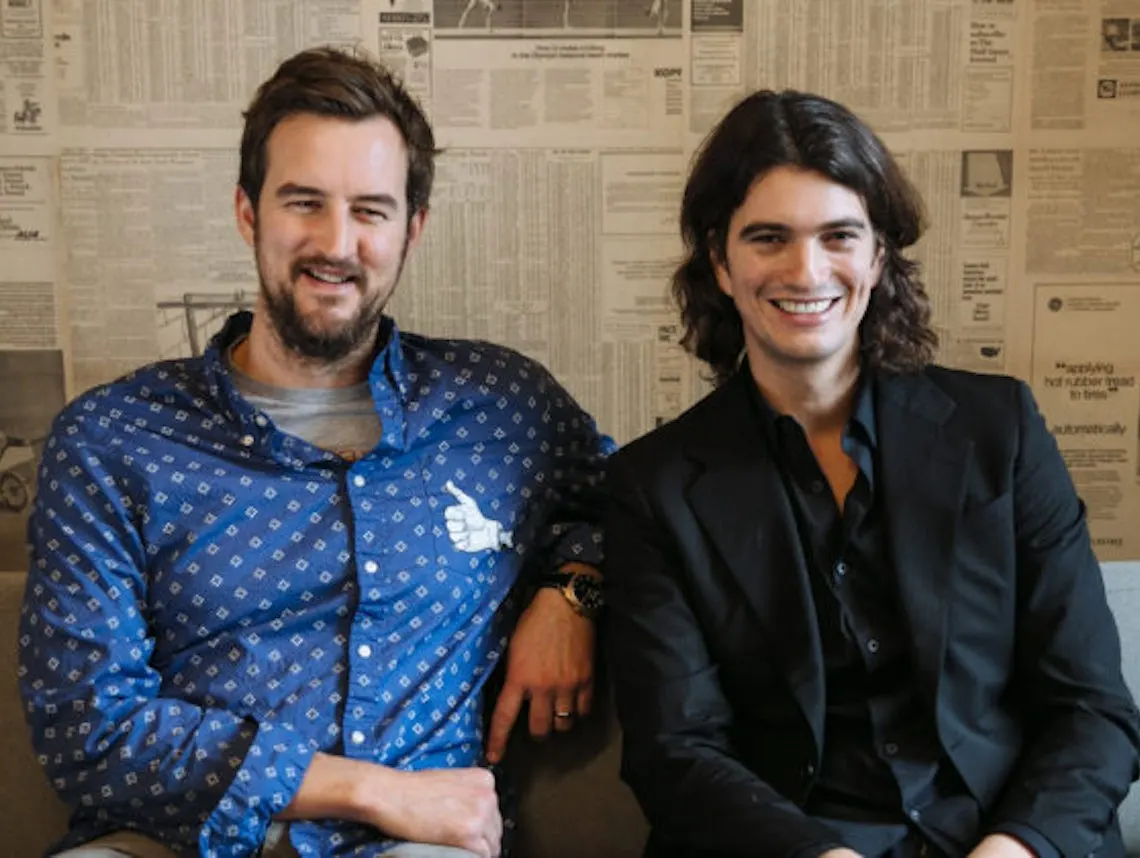
Green Desk overnight and masking tape on the floor
McKelvey went home and stayed up all night. He invented the name Green Desk, an office brand aimed at environmentally minded tenants. He bought a domain, built a website, sketched floor plans, drafted a thin business model, printed business cards and flyers at Kinko's. The point was theater as much as design. If they returned the next day looking prepared, the landlord might believe they had been planning for weeks.
It worked enough. Green Desk opened in 2008 as an eco-friendly coworking and small-office play with recycled furniture and green-power framing. Before build-out finished, they put masking tape on the floor to mark desks, posted on Craigslist, and gave tours on McKelvey's cell phone. People signed leases from tape lines alone. Starting rents were roughly a few hundred dollars for the smallest setups and around a thousand for a four-person office. They filled about five floors and roughly three hundred fifty members. The business was profitable almost immediately.
The partners then included Gil. Neumann still had the baby company. McKelvey became the operator who lived there about eighteen hours a day. Growth ambitions collided with the landlord's portfolio. Owners wanted vacant buildings they already held filled. McKelvey and Neumann wanted Manhattan, San Francisco, and a brand that traveled. They sold Green Desk to landlord Joshua Guttman. Public accounts put the deal near a three million dollar valuation with cash up front and payments over time. On How I Built This, McKelvey recalled walking away with somewhere between half a million and a million dollars each. Gil took his share and returned to Israel. Adam and Miguel rolled the money into the next bet.
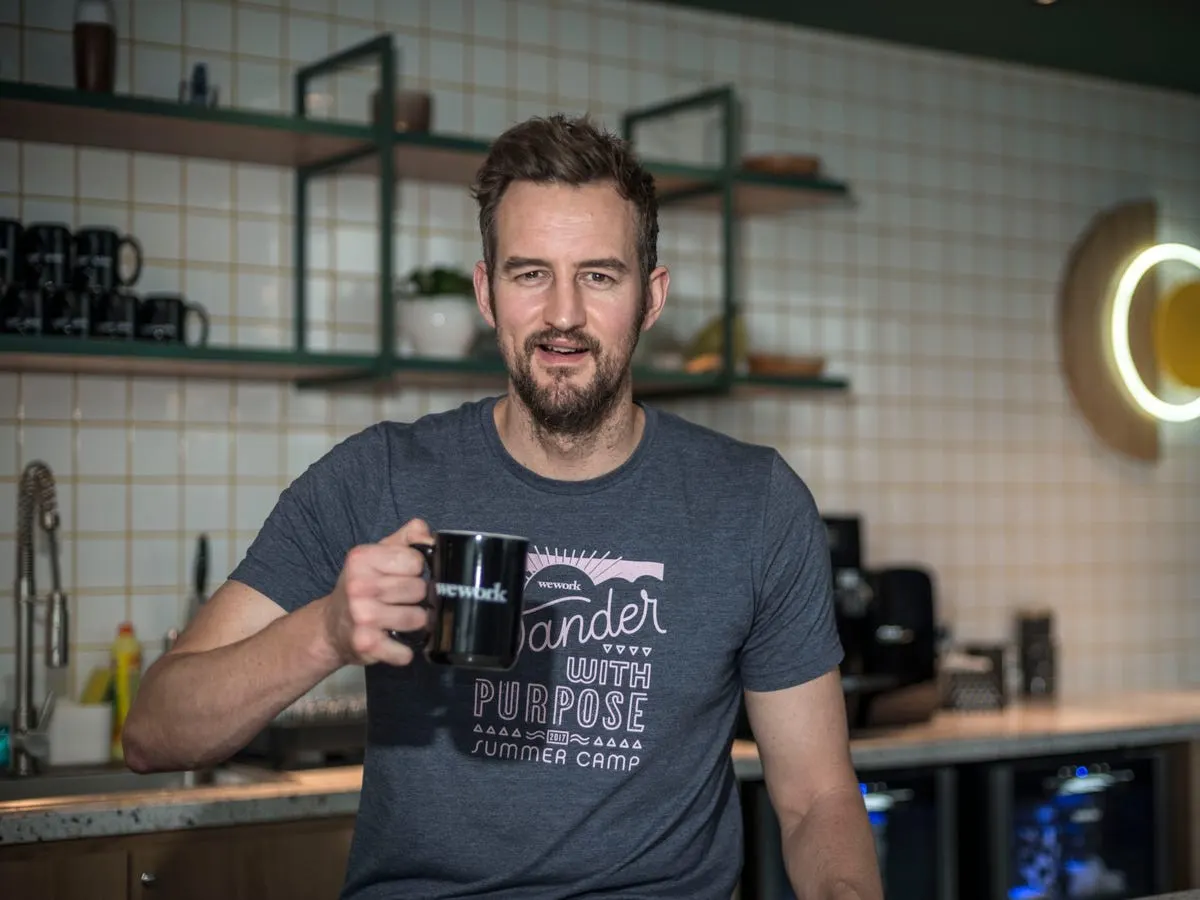
We work, we live: naming the community company
What they had learned at Green Desk was not only rent math. Late at night, strangers in different industries talked across glass. People who worked alone suddenly had neighbors who noticed if they disappeared for two days. Connection and quiet accountability mattered more than the green marketing.
They needed a name that said community without sounding only like a commune. After months of talk, Adam's friend Andrew blurted a string in the middle of the night: we work, we live, we sleep, we eat. WeWork stuck.
A noncompete limited where they could open. Landlords after the financial crisis wanted credit tenants, not two guys with a story. SoftBank money was years away. They finally won a SoHo building through persistence and relationships. The Green Desk proceeds covered a security deposit. The building itself was a full gut. Estimates to renovate ran into the millions.
They did as much as they could with their own hands. IT wiring quotes came in around one hundred thousand dollars. McKelvey's younger brother Kyle, who thought like a research scientist, counted every cable run and termination and estimated materials near eight thousand dollars. They drilled brackets into brick, learned patch panels, and programmed switches. To restore painted brick they rented soda-blasting gear, bought baking soda by the fifty-pound bag in New Jersey, overloaded Zipcars until tires rubbed the wells, and ran a compressor on a Manhattan street while white powder billowed from windows. First floors opened around early 2010 with old wood, exposed brick, iron columns, and modern glass partitions. Incandescent light in an office felt almost rebellious then. Membership filled the early floors within months.
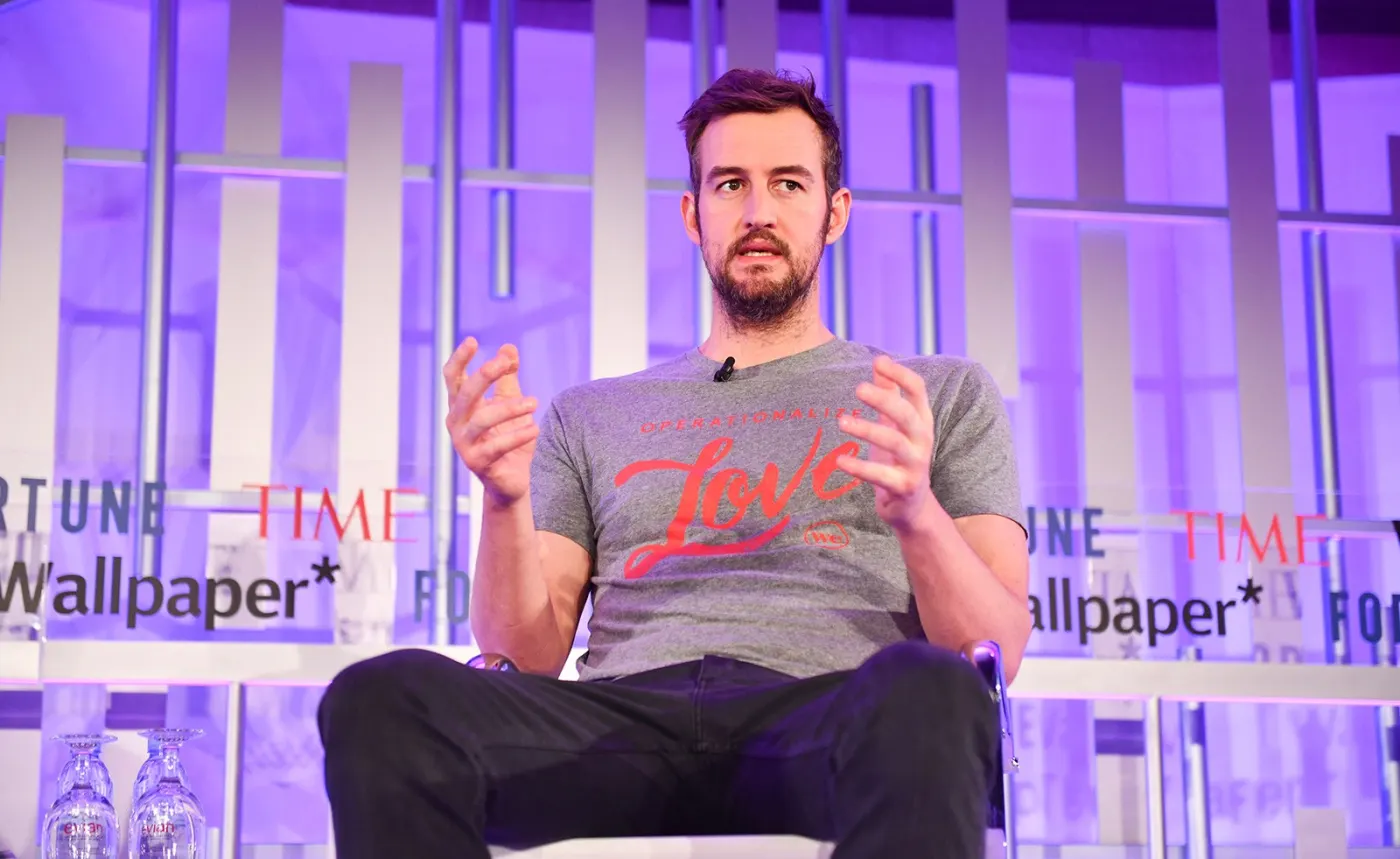
Forty-five million before the lease, then SoftBank gravity
Before the first WeWork even opened, a potential real-estate contact brought in a friend who wanted to invest. McKelvey and Neumann had no signed lease and almost no proof. They floated an outrageous forty-five million dollar valuation for a third of the company, expecting a no. The investor said yes in principle and funded in pieces over time. The number mattered less as cash than as permission to think huge.
Locations multiplied across the United States and then across oceans. Each working building bought credibility that a pure software hockey-stick story could not. Members could walk a hallway and feel the product. SoftBank later poured in capital that pushed private valuations from about twenty billion in 2017 toward a peak near forty-seven billion in early 2019, including large late checks that made the company briefly look like the most valuable startup in America. WeWork became a global noun for flexible office space. Brokers used it as shorthand. Founders used it as a default address. The company launched side experiments: WeLive co-living, Rise by We gyms, WeGrow school. In 2019 it rebranded under The We Company umbrella as if offices were only one organ of a larger social body. Fast Company named McKelvey one of its Most Creative People that year. Forbes at the peak estimated his fortune near two point nine billion dollars on paper.
Inside the company the division of labor was famous. Neumann raised money, cut real-estate deals, and performed the myth on stages and in tequila toasts. McKelvey ran design, construction systems, product surfaces, and later culture. He drafted early websites, logos, and flyers in the same overnight style he had used for Green Desk. He thought in floor plates and member paths. In interviews he said he shifted from head of product and design into chief culture officer because he cared more about the internal journey of thousands of employees than about another lobby material. Community managers became a new kind of operator: social, operational, present on the floor in a way hotel staff and old office landlords rarely matched. McKelvey liked welcoming new hires personally so the first day felt like joining a neighborhood, not processing through HR.
He also knew the partnership strain. On later podcasts he described growing distance from Neumann, teams joking about Team Miguel versus Team Adam, and power concentrating around fundraising. Early on they were tightly bonded. Over time Neumann's ability to raise billions became the loudest power source in the room. McKelvey felt agency in the soul of the product and culture until SoftBank's influence rewrote the board math. He argued that capital without a culture to deploy it means little, and that his DNA and Adam's DNA were both inside the company: one in relentless belief, one in designed belonging.
He defended some of Neumann's most mocked quirks as smaller than the morality play the press wanted, while admitting that absolute control over investment bets and a swelling mission beyond offices became dangerous. Side projects multiplied because the story of We needed more than desks. WeLive, gyms, and schools fed a narrative that social-mission companies could be both good and huge, the Patagonia fantasy applied to urban real estate. When markets turned and demanded profits, that narrative snapped. Culture problems reported by journalists in the late 2010s, including alcohol-heavy meetings and other excesses around Neumann's orbit, stained the brand. McKelvey's public memory emphasizes inclusive rituals, code-switching conversations, and community managers who actually knew members. Both threads belong in the record without turning rumor into courtroom fact.
Summer Camp and company festivals became symbols of that split screen. For employees who loved them, they were belonging at scale. For critics, they were excess funded by soft money. McKelvey wore the shirts, hosted the tone, and later had to explain how a culture that marketed love also produced layoffs. That contradiction sits at the center of his post-2020 guilt.
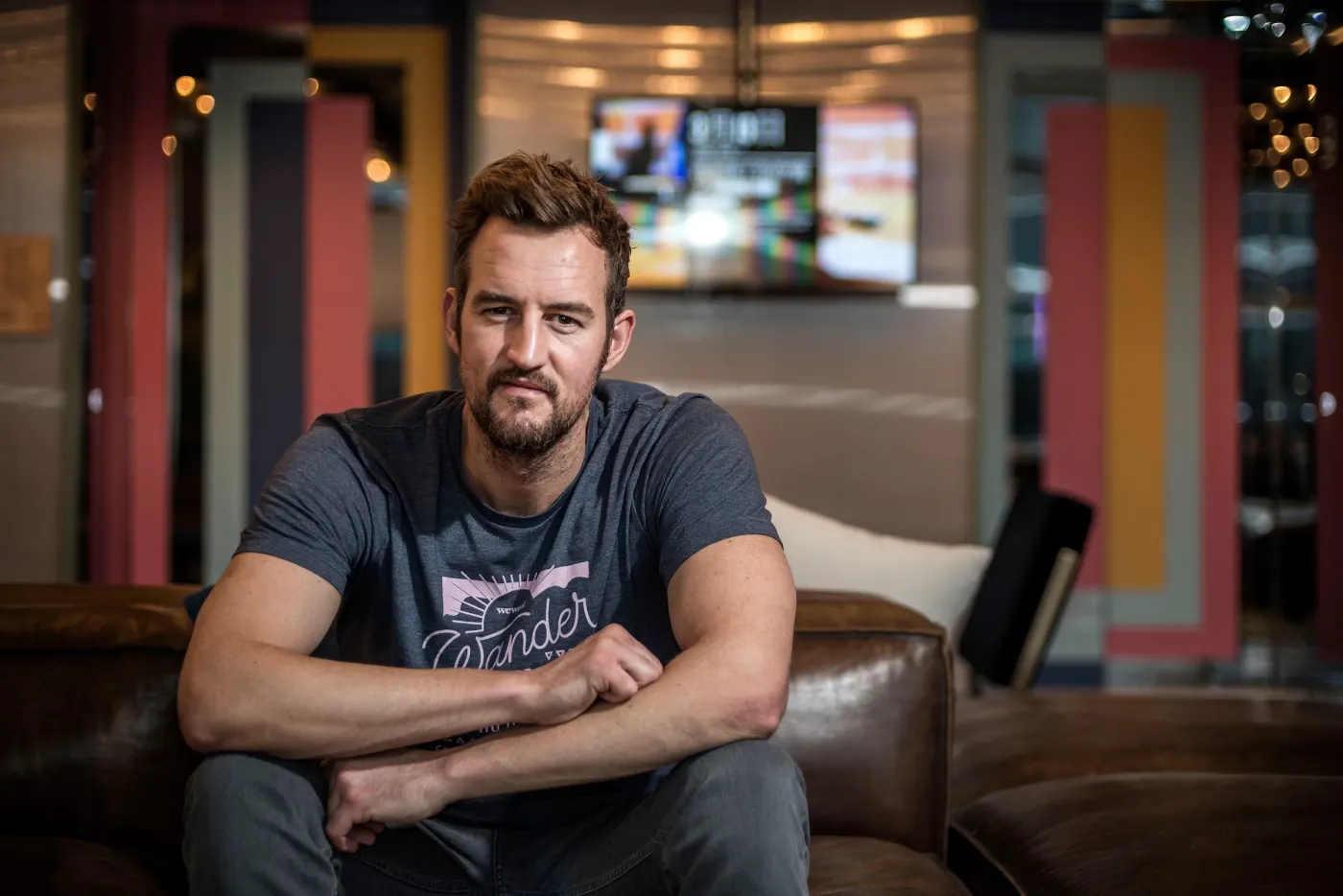
The S-1, the retreat, and the man who stayed
On August 14, 2019, WeWork filed its S-1. Investors focused on losses, governance, and related-party complexity. Within weeks the IPO was postponed and the filing withdrawn. The private valuation narrative collapsed toward something nearer ten billion in public conversation, then lower. Neumann stepped down as CEO and lost majority voting control. SoftBank engineered a bailout package measured in billions, taking dominant ownership and installing new leadership.
McKelvey stayed. In a January 2020 Fortune interview he talked about saving the company through culture rather than through Neumann-style moonshots. He still believed the rooms themselves could be humane. He spoke about high-school basketball and Coach Stepp as the place he learned accountability without a father at home. The subtext was clear. Discipline and care might stabilize what charisma had overextended.
Then the pandemic emptied offices. Flexible space suddenly looked like a liability dressed as a lifestyle. Layoffs that began after the failed IPO, including about twenty-four hundred people, roughly a fifth of staff, continued into COVID rounds. Community managers who had been hired to create belonging now had to walk people out. On June 5, 2020, CNBC reported McKelvey would leave at month's end. He was one of the last original executives still present after SoftBank's control shift. The chief culture officer seat disappeared with him. New CEO Sandeep Mathrani and an operating team would run a smaller, harder company.
Leaving did not feel like a clean founder victory lap. On Scale with Soul years later he said wealth arrived for him while other people's WeWork dreams were crushed. He wanted to correct wrongs and learned he could not reverse a restructuring with personal charm. The woman who had finally met her boss at WeWork became a private emblem. Where was she going back to, he asked, if ordinary companies still treated her as invisible?
On November 6, 2023, WeWork filed Chapter 11 in New Jersey, listing vast assets and liabilities in the tens of billions range depending on the schedule. On May 30, 2024, a judge approved a plan that wiped roughly four billion dollars of debt. The effective date followed on June 11, 2024. Equity shifted toward lenders and a Yardi-linked owner group, with SoftBank retaining a smaller slice. The company that once sold a vision of elevated consciousness returned as a smaller, restructured flexible-office operator. Adam Neumann's alternate buyout ideas during the case did not win the court process.
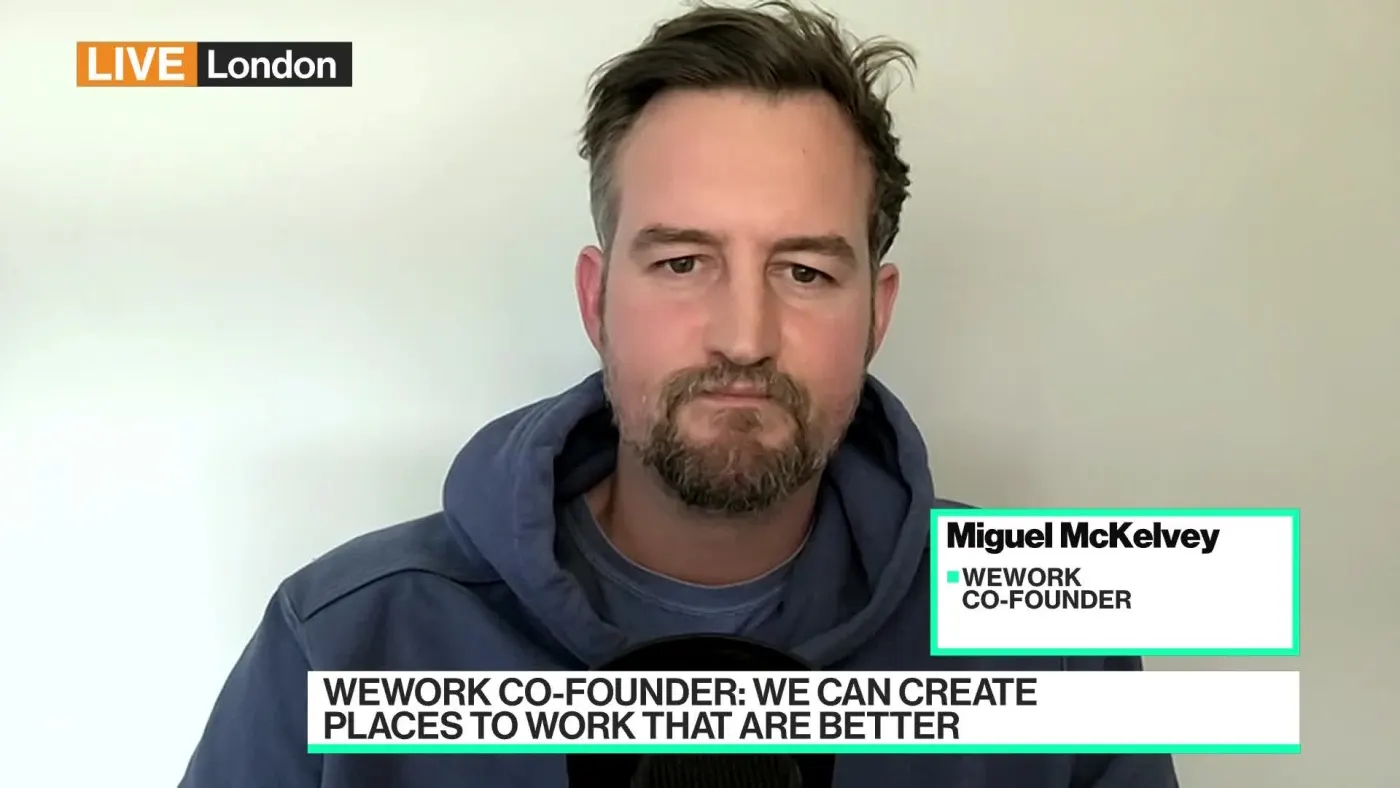
American Giant, Unbound, UK50, and the London years
After WeWork, McKelvey did not vanish into pure leisure. In 2022 he bought a reported ten million dollar controlling stake in American Giant, a United States apparel maker that manufactures domestically. He told interviewers he wanted factories and workplaces that did not feel like punishment, the same instinct that once hated cubicles. On a short Bloomberg TV-style sit-down he linked the investment to revitalizing American manufacturing as an economic engine, not only a nostalgia brand. On later podcasts he admitted the romance of being a full-time culture builder for a company of a few dozen people collided with P and L reality. He could run a thoughtful offsite. He could not fund a permanent culture department the way WeWork once could. Idealism stayed. Headcount math limited how much program he could fund.
By 2025 and 2026 his public trail ran through London. He co-founded Unbound, framed as preventative health and longevity tools meant for more than elite biohackers and pro athletes. Posts described drops and a thesis that longer healthy life should not be a luxury good. He co-founded UK50 Basketball with partners including Kirsty Bowman and Daniel James to identify and support elite UK youth players. Within its first year the program gathered top players for events and sent a travel team to China that won the Shanghai Futures Tournament, a result he celebrated on LinkedIn in August 2025. Earlier experiments under names like NAYAH and The Proto Collective appear in his career listings as concluded around early 2024. Net-worth figures after WeWork's collapse are noisy. Peak paper billions near two point nine on Forbes lists did not survive the IPO wreck as spendable certainty. Later private estimates vary widely and should be treated as uncertain. What is clearer is the portfolio of second acts: manufacturing, health, and youth sport instead of another attempt to be the face of office real estate.
His personal life stayed mostly offstage. He was married to Hiyam Khalifa, a former investment banker; they divorced in 2017. Among the kids from the Eugene collective, relatives later worked at WeWork, and one sister-figure, Sadie Lincoln, built the Barre3 fitness chain, a detail How I Built This noted as proof the communal household kept producing builders. In June 2018 Miguel returned to Eugene as University of Oregon commencement speaker at Matthew Knight Arena. President Michael Schill called him a visionary. Miguel told graduates there is no such thing as making it, because life keeps flipping the board. He told the rat story from early New York, where he stayed up nights to catch a rodent eating his plants, watched it flatten under a door like a pancake, and found more meaning in solving that problem than in magazine covers. Architecture, he said, had taught him to shape external rooms. Culture work taught him the harder interior. The speech circled back to Lucia McKelvey's newspaper: do what comes naturally when your values and your days can share a roof.
How he works
McKelvey's method looks like design studio habits moved into business. Stay up all night if the landlord needs proof by morning. Prototype with masking tape before drywall. Count every cable if the vendor quote feels fake. Prefer community metrics you can feel in a hallway over slogans you cannot defend. Stand beside the charismatic partner rather than compete for the spotlight, then protect the parts of the company that spotlight cannot build.
In architecture school and American Apparel years he treated every crisis as reusable skill. A screaming retail deadline in Denver became proof he could absorb pressure without freezing. A rat under a New York door became a commencement parable about process beating prestige. When Green Desk needed legitimacy, he manufactured the appearance of a company in one night because landlords buy confidence as much as floor plans. When WeWork needed culture at thousands of employees, he quit his product lane, read HR books obsessively, and tried to invent benefits and community roles that standard corporate handbooks did not contain.
He is frank about mistakes. He and Neumann grew apart when they stopped recalibrating their different empathies. He stayed too long in a culture seat after the economic floor had moved. He carried guilt that wealth could not dissolve. In 2025 he described processing that guilt as a body task, not a spreadsheet task. Feel it fully. Accept it. Try to let it go. For a chief culture officer, that admission is part of the biography, not a footnote.
He also keeps returning to Eugene lessons. His mother's newspaper began as a literal list of what was happening, not a grand plan. Passion plus community came before polish. At sixteen he thought he would be a business major, get an MBA, become a stockbroker, and have two kids by twenty-six. That script collapsed. Architecture and empathy replaced it. WeWork at its best tried to industrialize belonging for freelancers, startups, and enterprise teams who wanted a third place between home and a dead office. WeWork at its worst confused valuation theater with durable unit economics. McKelvey lived both truths and still refuses the idea that anyone ever finally makes it.
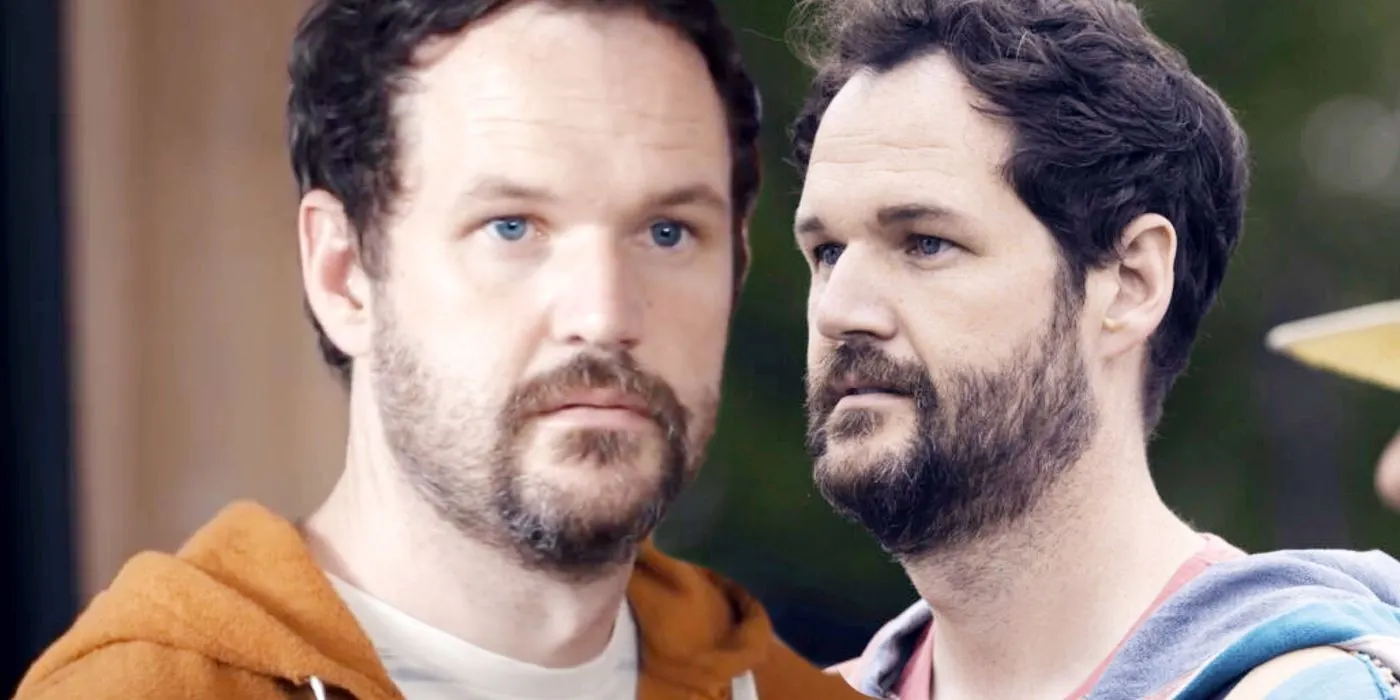
What WeWork changed in the world
Before WeWork scaled, flexible offices existed in dull suites and small tech coworking rooms with headphones and little theater. After WeWork, landlords from New York to London to Bangalore learned to sell membership, community managers, craft coffee, and Instagram-ready interiors as a product. Enterprise companies parked entire teams inside WeWork floors to move faster than traditional leases allowed. Cities felt the leasing wave when WeWork became one of the largest private office tenants in key markets, locking long landlord obligations against shorter member commitments. That mismatch made growth dazzling on the way up and brutal on the way down.
Competitors copied the look until exposed brick and neon mottos became a global cliche. SoftBank's Vision Fund era treated the model as a country-by-country blitz. The failed IPO became a business-school warning about governance, related-party dealing, dual-class control fights, and storytelling that outran cash flow. Documentaries and scripted dramas later made Neumann the face of the cautionary tale. McKelvey appears in those stories as the other founder, the designer, the culture officer who stayed a little longer and left with less mythology attached.
Yet the daily experience many members remember is simpler. Glass walls. Someone who knew your name. A phone booth for calls. A kitchen that did not feel like a corporate cafeteria. Events that mixed a lawyer, a jewelry starter, and a remote employee from a bank. For a generation entering work after the 2008 crash and leaving offices again in 2020, that design language mattered. Hybrid work did not kill flexible space. It forced the industry to drop messianic branding and keep the useful core. McKelvey's architectural fingerprints remain in those rooms even where his name is not on the lease.
World impact also includes the human ledger. Thousands of employees rode the rocket and then the layoff lists. Vendors and landlords renegotiated. Public markets punished similar growth-at-all-costs real-estate hybrids. When WeWork exited bankruptcy in 2024 under new ownership math, flexible office survived as infrastructure. The gospel of we scaled back into operations. That hangover is part of McKelvey's legacy whether or not he still holds a badge.
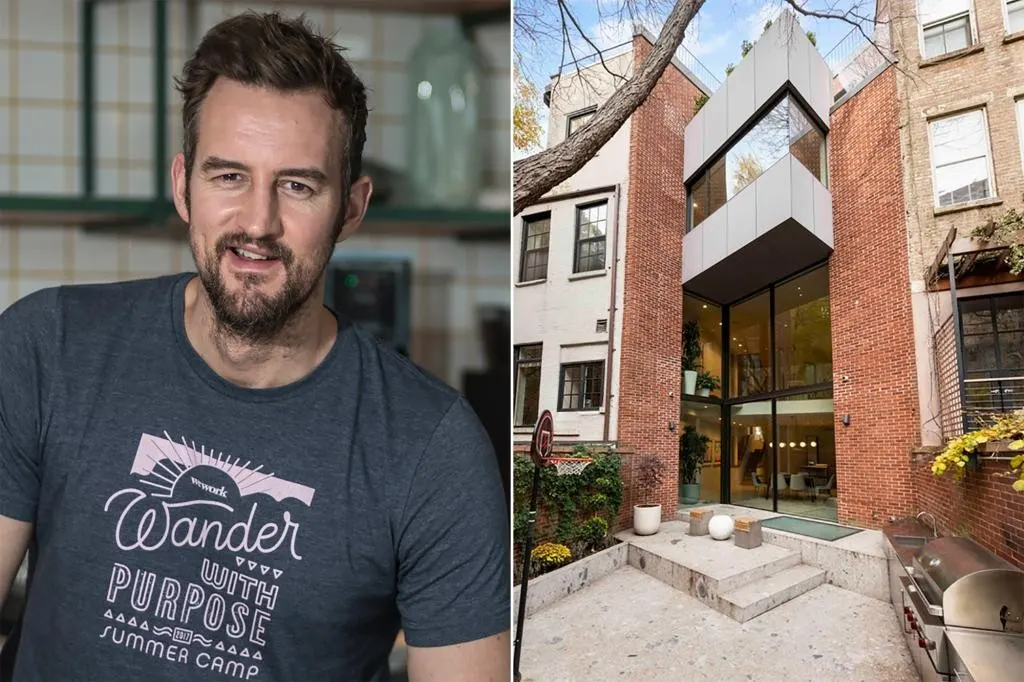
Scrappy SoHo nights and the hundred-year bet
In the earliest WeWork months the company still felt like a construction crew that sold memberships. McKelvey, Kyle, and Neumann lived inside problems that larger firms would have outsourced. Patch panels. Soda blasting. Credit cards. Friends flown in who thought they were visiting and ended up hanging drywall. Profit showed up early on the first floors, which mattered more to McKelvey than a valuation slide. On How I Built This he said they held onto the feeling that they were still figuring it out every day, even after SoftBank-scale numbers arrived. Valuation, he argued, does not solve a business problem. Members change, so the product must change. He and Neumann talked about a hundred-year challenge rather than a quick flip. That long horizon sounded noble in 2017. After 2019 it sounded like a vow made before the bill came due.
The first outside validation at a forty-five million dollar idea stage also taught a dangerous lesson: a confident story can mint partners before operations exist. Used carefully, that lesson funds wiring and leases. Used carelessly, it funds mythology. McKelvey's career sits on both sides of that knife. He was the partner who turned story into floor plans. He was also inside the machine when story outran the floors.
Closing
Picture the overnight before Green Desk. A thirty-something Oregon architect in New York with almost no real-estate credibility. A domain. A logo. Floor plans. Kinko's flyers. Morning meeting with a landlord who had said no for weeks. Then picture the SoHo gut years later: baking soda in the wheel wells, brother on cable charts, first members walking onto refinished wood. Then picture the 2019 S-1, the cameras on Neumann, the quiet co-founder still inside the machine. Then the 2020 goodbye. Then a London gym and a youth basketball tournament win in Shanghai in 2025.
Between those frames sit Alaska fish plants, American Apparel all-nighters, Green Desk masking-tape tours, SoftBank champagne years, and a bankruptcy court docket in New Jersey. The through-line is not perfection. It is a designer who kept trying to make strangers share a hallway without turning the hallway into a cage.
Miguel McKelvey's life is a study in the second name on the door. He built the spaces and the cultural operating ideas that made WeWork feel like a movement, while another man sold the movement to the world. He shared the upside on paper and the shame when the paper burned. By 2026 he was no longer trying to be a forty-seven billion story. He was trying to make factories, health habits, and teenage athletes a little less lonely. The rooms changed. The question he keeps asking did not. Can you design a place where people show up for one another, and can you live with yourself when the place fails the people anyway?