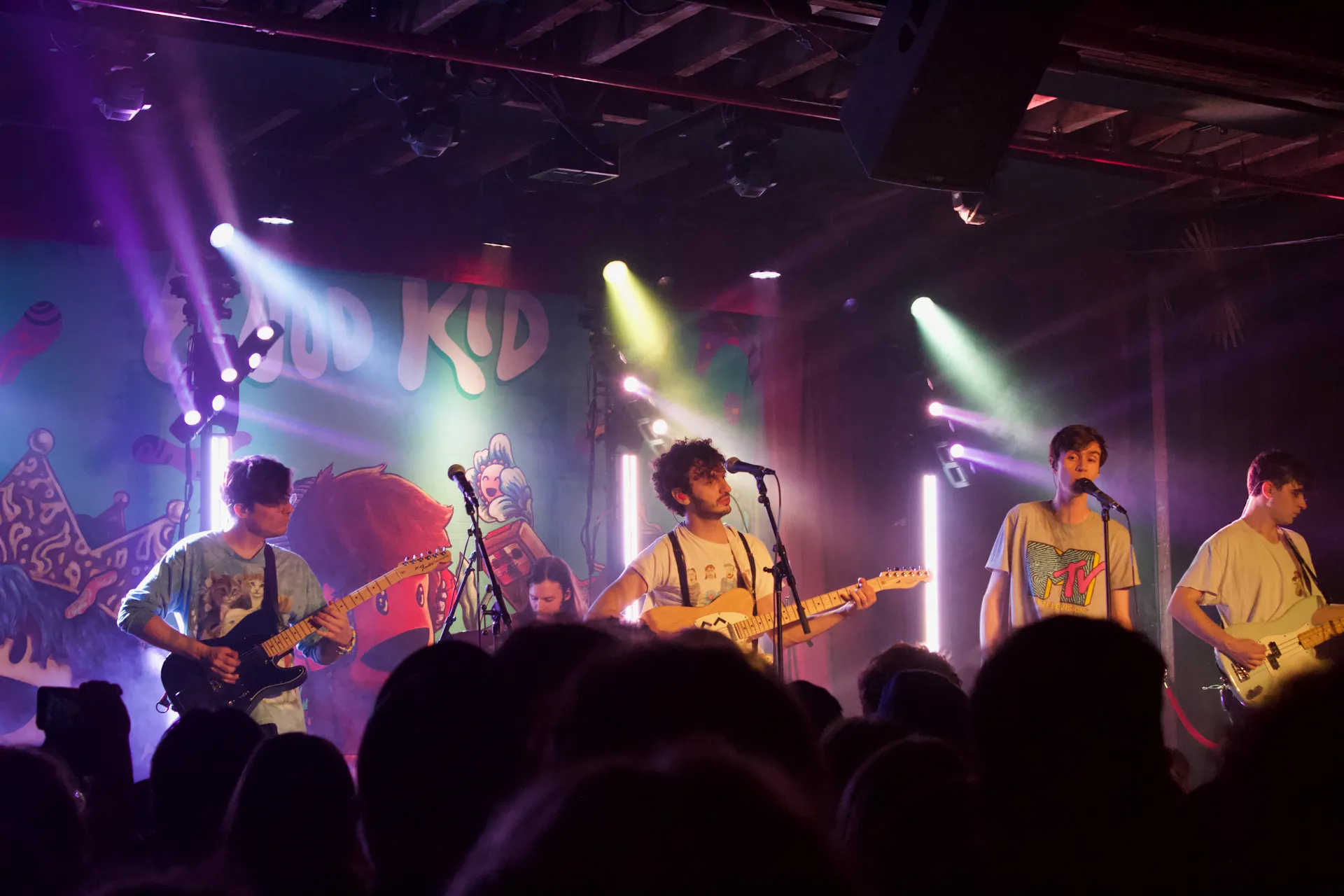
AI Founder by Day, Rock Singer by Night
He was the first hire in Geoffrey Hinton’s Toronto lab. He co‑founded Cohere. He also fronts an indie rock band.
Nick Frosst was born on January 5, 1993, in Canada.
He grew up in the Toronto area.
Details about his parents stay private.
Childhood and Hometown
Nick spent his early years in Toronto.
The city’s tech scene later shaped his path.
He played board games as a kid.
Education and Early Work
Nick attended the University of Toronto.
He earned a B.Sc. in Computer Science and Cognitive Science in 2015.
He studied music while studying computers.
During college he worked as a bartender at Snakes and Lattes.
A chat with a customer led to a research assistant role.
He assisted John Tsotsos at York University.
He also served as a teaching assistant at the University of Toronto.
First Tech Jobs
Nick completed internships at Amazon and Google.
He joined Google Brain in 2016.
He was Geoffrey Hinton’s first lab hire in Toronto.
His time at Google Brain connected him with future co‑founders.
Founding Cohere
In 2019 Nick co‑founded Cohere with Aidan Gomez and Ivan Zhang.
The three met at Google Brain’s Toronto office.
Their goal was to make large language models usable by businesses.
At first they built infrastructure, not a product.
They tried a Chrome extension for text autocompletion.
User adoption was low, so they changed direction.
Cohere pivoted to a B2B platform.
It now offers APIs for document summarisation and data extraction.
Early customers used the tools to automate repetitive tasks.
The company markets an independent, data‑private platform.
It can run inside a customer’s own environment.
Cohere has raised about $1.64 billion.
By September 2026 it was negotiating a $20 billion round after merging with Aleph Alpha.
Revenue hit $240 million in 2025.
Three acquisitions, including Reliant AI and Aleph Alpha, are recorded.
Music and Personal Interests
Nick is the lead singer of the indie rock band Good Kid.
He formed the band with university friends in 2015.
He enjoys philosophy, Japanese, board games, and pottery.
He uses his own AI models to monitor kiln temperature.
He has spoken about AI regulation with Geoffrey Hinton.
He says, The mundane use cases are the ones that I'm like, Hell yeah.
Nick advises Canadian tech trainees to follow their passions.
He supports investment in nuclear energy for sovereign AI infrastructure.
As of mid‑2026 he still leads Cohere.
He keeps the company focused on practical enterprise AI.
He stays away from the race toward artificial general intelligence.
Nick Frosst shows that a tech leader can also be a musician.
His story blends code, chords, and community.
Founding Story
Nick Frosst co‑founded Cohere in 2019.
He met co‑founders Aidan Gomez and Ivan Zhang at Google Brain’s Toronto office.
The three wanted to make large language models easy for businesses.
They left their lab jobs to start a new company.
The goal was to give enterprises private, secure AI tools.
First Customers and Early Product
Cohere first built a Chrome extension for text autocompletion.
Users did not adopt it quickly.
The team learned that businesses needed more than a browser add‑on.
They shifted to an API that could summarize documents.
Early customers used the API to automate repetitive tasks.
These pilots proved the value of a B2B model.
Early Struggles
The team had no clear product vision at first.
They spent months building infrastructure instead of a sellable service.
The Chrome extension experiment cost time and money.
User adoption was low, and investors asked for traction.
The founders decided to pivot to enterprise APIs.
Funding was limited, so they ran lean and used personal savings.
Key Turning Points
The pivot to a B2B API was the first major turn.
Enterprise clients began paying for document summarization and data extraction.
Cohere’s privacy‑first approach attracted companies with strict data rules.
In 2021 the company announced an independent, deployable platform.
That announcement opened doors to larger contracts.
A second turn came with the merger with Aleph Alpha in 2025.
Growth with Real Numbers
Cohere raised about $1.64 billion in total funding.
By 2025 the company reported $240 million in annual recurring revenue.
In September 2026 the firm entered talks for a round valuing it at $20 billion.
Three acquisitions were completed, including Reliant AI and Aleph Alpha.
The company remains private, but an IPO is a possible future step.
Funding, IPO, and Acquisitions
Investors poured capital into Cohere as the AI market expanded.
The $1.64 billion raised came from multiple rounds.
The 2025 merger with Aleph Alpha added European market reach.
Cohere’s acquisitions helped broaden its model portfolio.
No IPO has occurred yet, but the $20 billion valuation hints at a future listing.
Challenges and Public Scrutiny
Nick Frosst has faced criticism from his mentor Geoffrey Hinton.
They disagree on AI risk regulation.
Cohere is also defending a lawsuit from media groups over copyright claims.
Frosst says the focus should stay on practical enterprise uses.
He often repeats, “The mundane use cases are the ones that I’m like, Hell yeah.”
Current Focus
As of mid‑2026, Frosst still leads Cohere’s product vision.
He pushes for secure, custom AI that improves workplace efficiency.
He also speaks for Canadian tech policy and supports nuclear energy for AI compute.
Outside work, he sings with the indie band Good Kid.
His hobbies include philosophy, Japanese, board games, and pottery.
All facts are drawn from publicly available notes.
Setbacks
Nick Frosst left university in 2015.
He worked as a bartender at Snakes and Lattes.
A chat with a customer gave him a research job.
He interned at Amazon and Google.
He taught classes at the University of Toronto.
In 2016 he joined Google Brain.
He was Geoffrey Hinton’s first hire in Toronto.
Cohere started in 2019 with no clear product.
The team tried a Chrome extension for text.
Users did not adopt it.
The early product failed.
The company lost early momentum.
They had to rethink their market.
Criticism and Controversies
Frosst has argued with Geoffrey Hinton.
They disagree on AI risk regulation.
Hinton warns of existential danger.
Frosst says practical use matters more.
Cohere faces a lawsuit from media firms.
The suit claims copyright and trademark breach.
The case is still pending.
Industry critics say AI spending is unsustainable.
Frosst replies that enterprise AI is needed.
He once said, “The mundane use cases are the ones that I’m like, Hell yeah.”
What Changed Recently
In 2024 Cohere pivoted fully to B2B services.
They built APIs for document summarization.
They added data‑private deployment options.
Early enterprise customers proved the model.
Revenue grew to $240 million in 2025.
Cohere merged with German firm Aleph Alpha.
The deal set up a $20 billion financing round.
Frosst began speaking on Canadian tech policy.
He pushed for nuclear energy to power AI.
Where He Is Now (2026)
Nick Frosst still co‑leads Cohere.
The company is negotiating a $20 billion round.
Cohere plans an IPO in the future.
He still sings with Good Kid.
He enjoys philosophy, Japanese, board games, and pottery.
He uses his AI models to monitor his kiln temperature.
Frosst advises Canadian startups.
He champions sovereign AI infrastructure.
Why the story matters
Nick Frosst shows that setbacks can become lessons.
He turned a failed consumer tool into a thriving enterprise platform.
His debate with Hinton reminds us that tech needs balanced voices.
The lawsuit highlights the importance of respecting content rights.
He proves you can run a tech firm and a rock band.
His story encourages young builders to follow multiple passions.
He demonstrates that practical AI can drive real revenue.
His push for sovereign AI infrastructure protects national interests.
The lesson is clear: stay adaptable, stay grounded, stay curious.
Adaptability wins.
The Record
Born: January 5 1993
Country: Canada
Education: B.Sc. Computer Science & Cognitive Science, University of Toronto (2015)
Early jobs: Bartender, research assistant, Amazon intern, Google intern, TA
First major role: First hire at Geoffrey Hinton’s Google Brain Toronto lab (2016)
Co‑founder: Cohere (2019)
Band: Lead singer of Good Kid
Revenue 2025: $240 million ARR
Valuation 2026: $20 billion (pending round)
Acquisitions: Reliant AI, Aleph Alpha, plus one other
Timeline
2015 to Graduates University of Toronto; works at Snakes and Lattes; forms Good Kid band.
2016 to Joins Google Brain as Geoffrey Hinton’s first Toronto hire.
2019 to Co‑founds Cohere with Aidan Gomez and Ivan Zhang.
2020 to Tests consumer Chrome extension; pivots to B2B API model.
2022 to Secures first enterprise customers; revenue begins scaling.
2023 to Completes acquisition of Reliant AI.
2024 to Merges with Aleph Alpha; begins $20 billion financing talks.
2025 to Reports $240 million ARR; prepares for possible IPO.
2026 to Leads Cohere negotiations; continues music with Good Kid; advocates for Canadian AI policy.