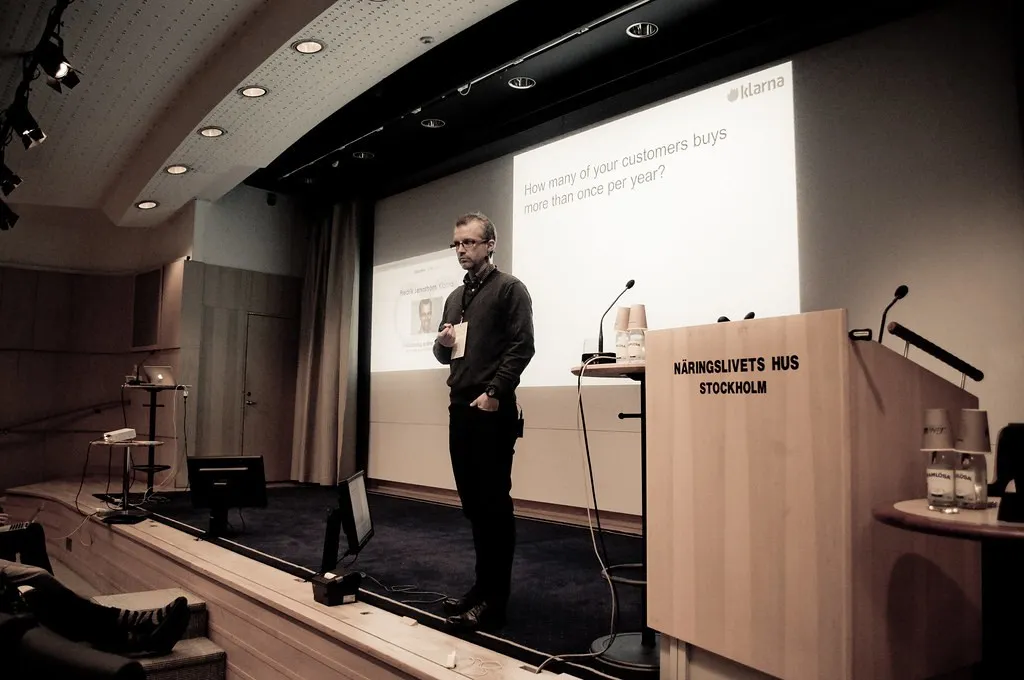
He Gave Away $125 Million to Help Founders
He co‑founded Klarna. He became rich. Then he gave much of it away.
From a small town in Sweden.
To a global fintech leader.
Now a philanthropist.
Started with a school project.
Built a buy‑now‑pay‑later giant.
Now funds impact startups.
Biography: Niklas Adalberth
Niklas was born on October 19, 1981.
He grew up in Gottsunda Parish, Uppsala.
He calls Gottsunda his hometown.
At fifteen he sold forged ID cards.
He also sold forged government coupons.
The police caught him that year.
He paid fines for the offense.
He later said the episode taught him risk.
In junior high he became known for the forgeries.
He learned to work fast under pressure.
After school he spent a year abroad.
He was an exchange student in Connecticut.
He also worked in Switzerland during that year.
He returned to Sweden to study business.
He earned a master’s in international business.
His school was the Stockholm School of Economics.
Before university he gained venture capital experience.
He worked for a venture capital firm.
He learned how investors think.
At the School of Economics he met two friends.
Sebastian Siemiatkowski and Victor Jacobsson were classmates.
They shared a dream of simplifying online payments.
In 2005 the three friends entered a school competition.
Their idea was to let shoppers pay later.
The competition did not award them a prize.
Undeterred they kept building the idea.
They called the startup Klarna.
Klarna meant “clear” in Swedish.
They wanted merchants to get money up front.
Customers would pay after receiving goods.
The model removed invoice risk for sellers.
Early investors were hard to find.
Swedish VCs said the idea was risky.
Angel investor Jane Walerud gave seed funding.
Jane also introduced engineers to build a prototype.
The first MVP launched later that year.
Small merchants signed up one by one.
By 2007 Klarna had 1,000 online merchants.
Growth was steady across Sweden.
The team kept adding features.
Niklas served as deputy CEO of Klarna.
He helped shape the company’s strategy.
He stayed in that role until 2015.
In 2015 he stepped down from daily operations.
He wanted to focus on philanthropy.
He left Klarna with a strong legacy.
The next year he started the Norrsken Foundation.
Norrsken supports impact‑driven businesses.
It began with a large donation.
He has given about $125 million to Norrsken.
The foundation runs venture funds and impact hubs.
Hubs exist in Stockholm, Kigali, Brussels, Barcelona, and Amsterdam.
Norrsken’s funds back startups tackling climate and health.
Niklas also backs research on mental health.
He is interested in psychedelic‑assisted therapy.
He believes companies can be part of the solution.
He says “I realised companies can either be part of the problem or part of the solution.”
He also urges early impact work for snowball effects.
In 2025 Klarna listed on the New York Stock Exchange.
The ticker symbol is KLAR.
By early 2026 the company serves over 119 million users.
Niklas’s personal life faced challenges.
In 2012 he was arrested in New York.
Charges were later dropped after no evidence was found.
He has spoken about feeling unhappy despite wealth.
He noted a loss of personal relationships at Klarna.
These statements are part of the public record.
Today Niklas leads Norrsken’s global expansion.
He promotes impact‑focused venture capital.
He continues to fund entrepreneurs solving big problems.
His story shows how a tech founder can give back.
It offers a model for young builders.
Use success to help others build.
Niklas Adalberth remains a Swedish entrepreneur.
He is also a noted philanthropist.
His work blends finance, tech, and impact.
Niklas Adalberth to Part 2
The Founding Story
Niklas Adalberth was a student at the Stockholm School of Economics.
In 2005 he teamed up with classmates Sebastian Siemiatkowski and Victor Jacobsson.
They wanted to make online shopping easier.
Their idea let shoppers receive goods first and pay later.
The plan promised merchants fast payment and removed invoice risk.
First Customers and Product
Klarna built a simple “buy‑now‑pay‑later” service.
The first version was a basic online checkout tool.
Small online shops tried the service one by one.
By 2007 the company had 1,000 merchant sign‑ups.
Merchants liked getting paid up front while customers paid after delivery.
Early Struggles
The trio entered a school entrepreneurship contest and lost.
Swedish venture capitalists were hesitant to invest.
Angel investor Jane Walerud stepped in with seed money.
She also introduced engineers who built Klarna’s first MVP.
The early team worked long hours to keep the service running.
Key Turning Points
In 2012 Niklas faced a legal issue in New York.
Charges were later dropped after no evidence was found.
In 2015 he left his role as deputy CEO.
He wanted to focus on philanthropy and impact investing.
The next year he started the Norrsken Foundation to help social entrepreneurs.
Growth and Real Numbers
Klarna expanded across Europe and entered the United States.
It became one of the world’s biggest buy‑now‑pay‑later firms.
In 2021 the company was valued at about $45.6 billion.
The New York Stock Exchange listing happened in September 2025.
The ticker symbol is KLAR.
Early 2026 data shows 119 million active consumers.
One million merchants use the platform.
Annual revenue reached $3.5 billion.
Funding, IPO and Later Work
Jane Walerud’s seed funding helped launch the company.
Later rounds brought more capital from Swedish investors.
The 2025 IPO raised billions and made Klarna a public company.
After leaving Klarna, Niklas gave about $125 million to Norrsken.
Norrsken now runs impact hubs in Stockholm, Kigali, Brussels, Barcelona and Amsterdam.
It also manages five venture‑capital funds that back climate and health startups.
The Record
Born October 19 1981 in Gottsunda Parish, Uppsala, Sweden.
Earned a master’s in international business from the Stockholm School of Economics.
Co‑founded Klarna in 2005.
Served as deputy CEO until 2015.
Founded the Norrsken Foundation in 2016.
Donated roughly $125 million to support impact entrepreneurs.
Setbacks
Niklas Adalberth grew up in Gottsunda Parish, Uppsala.
At 15 he was caught selling forged ID cards.
He paid fines and a court record was made.
In 2012 he was arrested in New York for alleged sexual assault.
The case was dropped after investigators found no evidence.
He left Klarna’s day‑to‑day work in 2015.
He stepped down as deputy CEO to focus on philanthropy.

Criticism and Controversies
Klarna’s buy‑now‑pay‑later model drew public criticism.
Critics said the fees could trap shoppers in debt.
The company also faced scrutiny over its installment structures.
Niklas answered that the model was meant to reduce invoice risk for merchants.
Recent Changes
In 2016 Niklas started the Norrsken Foundation.
The non‑profit backs impact‑driven businesses.
It runs venture funds and hubs in Stockholm, Kigali, Brussels, Barcelona and Amsterdam.
In 2025 Klarna went public on the NYSE under the ticker KLAR.
The IPO showed the company’s growth after Niklas left.
Where He Is in 2026
Niklas still leads the Norrsken Foundation.
He pushes the Norrsken Launcher Fund II and Norrsken Evolve.
He promotes entrepreneurship that solves global challenges.
He supports mental‑health research and sustainable food systems.
He says companies can be part of the solution.
Why the story matters
Niklas shows that a founder can change direction.
He turned a fintech success into a platform for impact.
His path teaches young builders to think beyond profit.
He proves that wealth can fund solutions to big problems.
His story reminds us that early mistakes do not define a life.
Impact can be the next big venture.
The Record
Born: 1981
Co‑founder: Klarna (2005)
Deputy CEO: Klarna (until 2015)
Founder: Norrsken Foundation (2016)
Donations: about $125 million to Norrsken
Timeline
1. 2005 to Co‑founds Klarna with classmates.
2. 2007 to Klarna reaches 1,000 online merchants.
3. 2012 to Arrest in New York; charges later dropped.
4. 2015 to Leaves operational role at Klarna.
5. 2016 to Launches Norrsken Foundation.
6. 2020 to Norrsken opens hubs in Kigali and Barcelona.
7. 2025 to Klarna IPO on NYSE (ticker KLAR).
8. 2026 to Leads Norrsken’s global impact initiatives.