Seven Lines That Moved Money
A boy from Dromineer who won a science fair. A teenager who sold software for millions. A CEO whose company moves near two percent of world GDP.
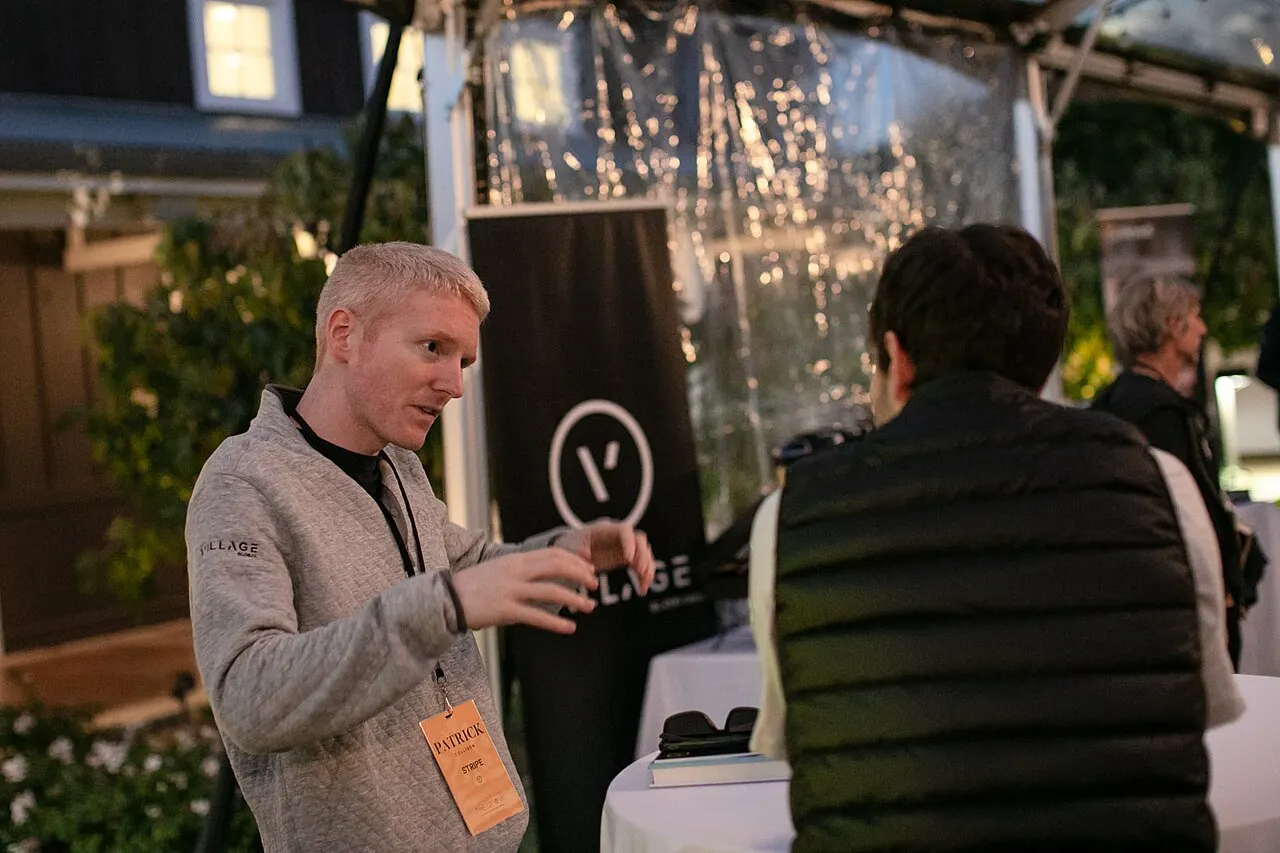

In February 2026, Patrick Collison sat for cameras on a day most founders only dream about. Stripe, the payments company he runs with his younger brother John, had just announced a tender offer that valued the business at about one hundred fifty-nine billion dollars. Investors including Thrive Capital, Coatue, and Andreessen Horowitz were helping employees cash some shares. Stripe itself was buying some too.
The headlines chased the number. Patrick kept pointing at something quieter. The same week, Stripe published its 2025 annual letter. Businesses running on Stripe had moved about one point nine trillion dollars in total volume, up thirty-four percent from the year before. That was roughly one point six percent of global GDP flowing through software the Collisons had started as a winter hack in Buenos Aires.
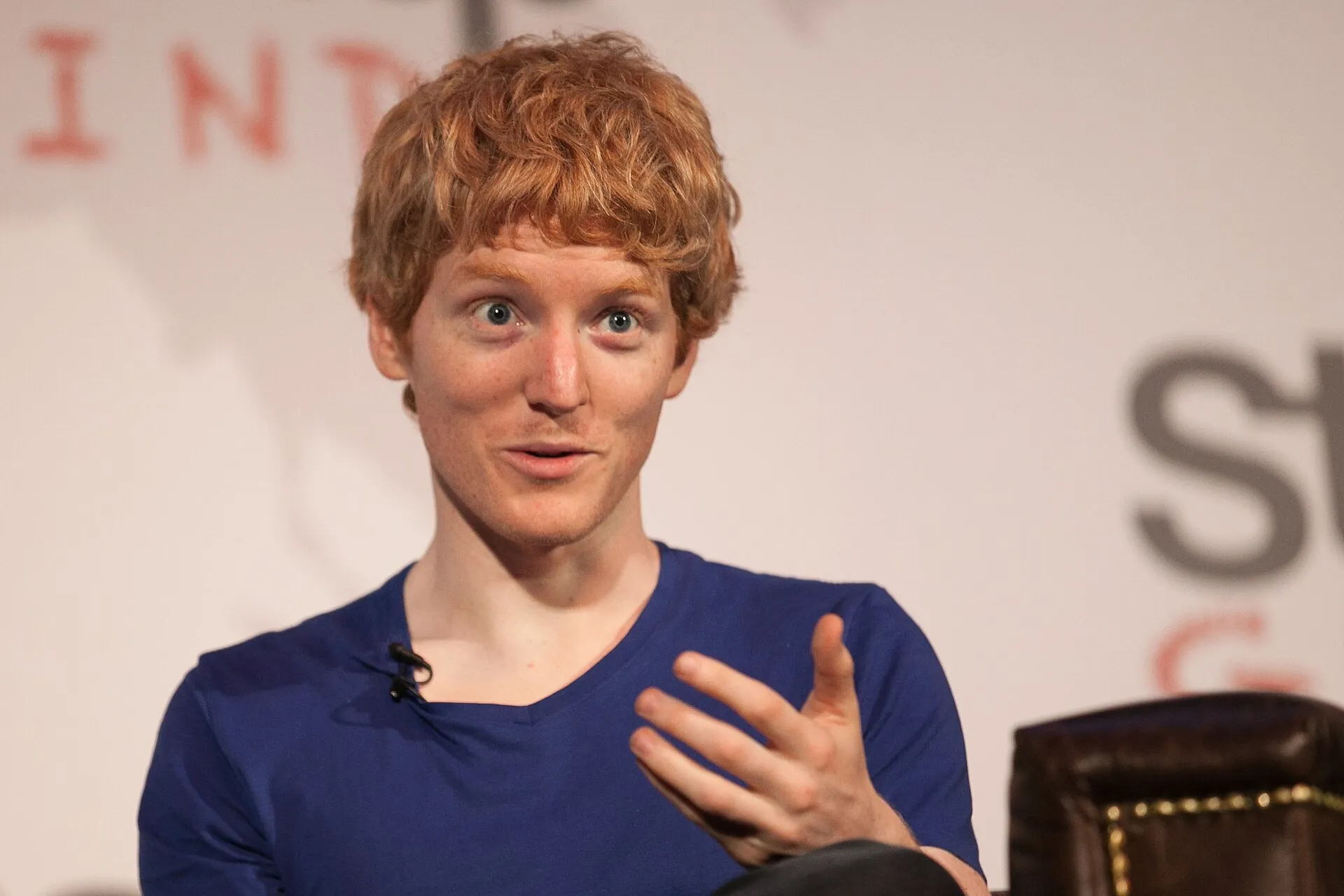
Patrick is not a showman. He talks like a careful engineer who stumbled into public life. The story behind the valuation is older and stranger than the market mark: a lakeside village in Tipperary, a LISP language built for a teenage science fair, a five-million-dollar eBay tools sale before either brother could legally drink in the United States, a fake payments backend wired through a friend's desk, and years of arguing that internet money should feel like seven lines of code.
This is that documentary arc, current through September 2026.
If you only know Patrick from wealth lists, you miss the operating mystery. How does a soft-spoken Irish engineer persuade banks, developers, and markets that money software can feel like good consumer design? How does the same person fund COVID grants, join a social-media giant's board, and still sweat API error messages? The answer is not mystique. It is a long habit of attacking friction with interfaces.
Dromineer and the first computer course
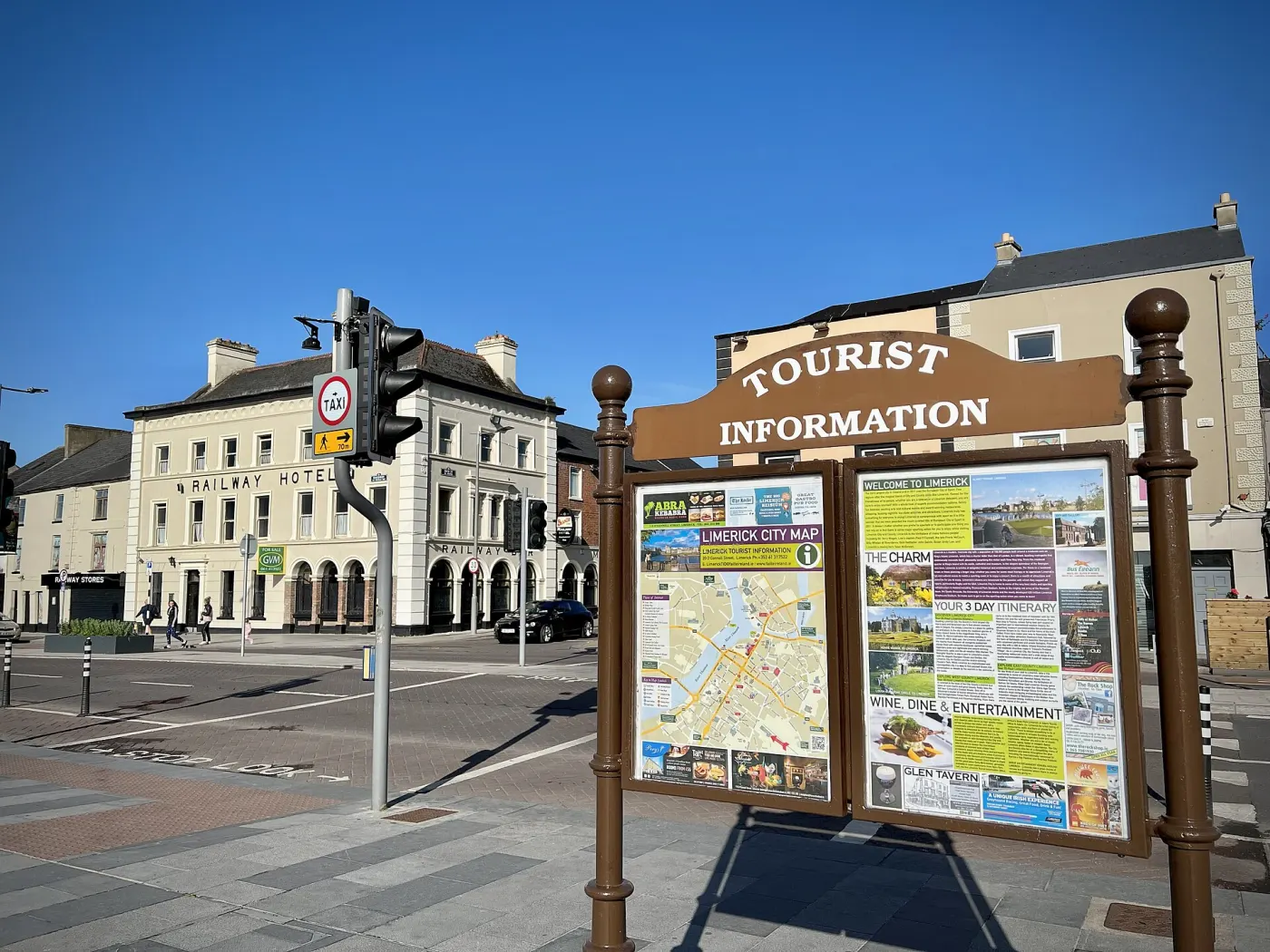
Patrick Collison was born on 9 September 1988 in Limerick. His mother Lily was a microbiologist. His father Denis was an electronic engineer. The family raised three boys in Dromineer, a small lakeside place in County Tipperary, far from the San Francisco offices that would later carry the Stripe logo.
The house was not a tech palace. It was rural Ireland with dial-up patience and parents who treated curiosity as normal. Patrick took a computer course at the University of Limerick when he was eight. By ten he was programming. He went to Gaelscoil Aonach Urmhumhan in Nenagh, then Castletroy College in Limerick. The brothers learned early that if something on the internet felt broken, you could try to fix it yourself.
He did not grow up telling a story of escape. Years later, when a Forbes profile painted Limerick as a warzone the brothers had fled, Patrick pushed back in public. He said the idea of overcoming their home was crazy. They were who they were because of where they grew up. The magazine later removed the piece. The point stuck: Tipperary was not a prop. It was the first workshop.

Family trade and the habit of building
Denis and Lily were not venture celebrities. They were working scientists and engineers who made a house where questions were allowed. Patrick's younger brothers mattered too. John became the co-founder. Tommy later showed up in Young Scientist circles with his own project. The sibling stack meant competition and collaboration lived under one roof.
Rural broadband and distance from Dublin's center could have been an excuse. Instead it became a forcing function. If you wanted a better tool, you shipped it yourself. If eBay seller workflows were clumsy, you wrote software. If payments APIs were hostile, you started a company that treated developers as the customer rather than as a nuisance.
That childhood pattern explains adult Patrick better than any net-worth chart. He still approaches institutions the way a teenager approaches a buggy website: inspect, rewrite, ship a cleaner path.
Croma, Young Scientist, and a trophy from the President
At sixteen, Patrick entered Ireland's Young Scientist and Technology Exhibition for a second time. The year before he had been individual runner-up with an artificial intelligence project nicknamed Isaac. In January 2005 he won. His project was Croma, a LISP-type programming language. President Mary McAleese presented the trophy and a cheque for about seven thousand five hundred euros.
The win mattered more than prize money. It told Irish newspapers that a Tipperary teenager could invent in software, not only study it. Patrick later said the Young Scientist path helped open doors to the company that became Auctomatic. It also put him on a path toward another teenage scientist, Silvana Konermann, whom he met around the European youth science circuit in 2004. They would marry in 2022 and later co-found a biomedical institute together.
Shuppa, Y Combinator, and a Good Friday sale
In 2007 Patrick and John started Shuppa in Limerick, a name playing on the Irish word for shop. Enterprise Ireland did not fund them. Silicon Valley's Y Combinator did notice. The brothers moved west, joined forces with Oxford graduates Harjeet and Kulveer Taggar, and reshaped the product into Auctomatic, tools for heavy eBay sellers drowning in listings and inventory.
They built, launched, and sold fast. On Good Friday in March 2008, Live Current Media bought Auctomatic for about five million dollars. Patrick was nineteen. John was seventeen. Irish and British headlines called them teenage millionaires. Patrick spent a stretch as director of engineering at the buyer's Vancouver base, then kept studying the hard edges of internet commerce.
He enrolled at MIT. He did not stay long enough to collect the usual degree story. Side businesses and a bigger idea were already pulling harder than Cambridge winters.
Slash-dev-payments and the Buenos Aires month
By early 2010 the brothers kept hitting the same wall. Accepting online payments meant merchant accounts, gateways, PCI fear, bank paperwork, and weeks of delay. For a young builder trying to sell something on the web, charging a card felt like applying for a mortgage.
They named the early project slash-dev-payments and decided to stop waiting for the perfect plan. Facing a cold Cambridge winter, they flew to Buenos Aires after reading blog posts that painted the city as cheap, late, and full of cafe Wi-Fi. Patrick later joked they were the worst tourists imaginable. They woke up, went to a cafe, and hacked. Meals cost little. Bars opened when hackers finish. Nobody expected them to sightsee.
After about a month they had a first prototype. Roughly a week into the trip they even had a production user. The trick was not magic rails. They called a friend who worked at a payment company and manually routed early accounts through that friend's world while Stripe's own interface looked finished. Patrick has told the story with a grin: they faked the hard part until they could earn the right to build it for real.
That habit, ship the beautiful front, earn the ugly back, became company culture.
Investors, banks, and the fight to look boring
Stripe came out of stealth with famous friends. In 2011 it raised about two million dollars from people who understood network effects and payments pain, including PayPal co-founders Elon Musk and Peter Thiel, plus Sequoia Capital, Andreessen Horowitz, and SV Angel.
Money was not the hardest part. Banks were. In a Stanford Blitzscaling session years later, Patrick described hunting for someone who could open bank doors the way other founders opened music-label doors. The product had to feel like developer joy. The company had to look trustworthy to institutions that hated surprises.
They hired slowly and carefully. Patrick became known for laptop interviews that watched how people actually thought in code. He argued that the first ten hires set a ceiling that later recruiting cannot easily raise. Stripe's culture prized clear writing, high standards, and a kind of quiet intensity: make payments feel inevitable, then sweat the edge cases until outages become rare enough to fear as moral failures.
Seven lines, Ruby, Mongo, and the rewrite years
Stripe's early marketing promise was almost rude in its simplicity. Integrate payments in a few lines of code. Documentation should feel like a good teacher. Error messages should help, not scold. Patrick cared about beauty in APIs the way some founders care about logos.
Under the hood the stack was pragmatic and sometimes eccentric. In a 2025 conversation about engineering choices, he explained that Auctomatic had lived in Smalltalk because he loved interactive environments after years of LISP. Stripe started on Ruby and, early on, MongoDB. Later the company paid the tax of growth: hot paths, rewrites, and the long work of making a codebase match a business that now sat near the center of internet commerce.
The seven-lines line became legend after profiles like Ashlee Vance's 2017 Bloomberg Businessweek story. The legend was useful. The deeper truth was operational. Payments are not a demo. They are trust, fraud, compliance, currency, dispute, and uptime. Patrick has said that when Stripe approached roughly a percent of global GDP in payment volume, outages stopped being embarrassing and started being terrifying.
Products that widened the pipe
Charging cards was only the door. Stripe kept adding rooms.
Radar used machine learning to cut fraud. Atlas helped founders incorporate and get banking basics without knowing Delaware lawyers by name. By the 2025 letter, Stripe said about one in four Delaware corporations were being created with Atlas. Issuing let platforms create cards. Billing, Invoicing, and Tax grew into a Revenue suite later described as heading toward a billion-dollar annual run rate. Link aimed to make checkout remember people; Stripe later said more than two hundred million people used it. Acquisitions such as Bridge for stablecoins, Privy for programmable wallets, and Metronome for usage-based billing used by AI and cloud firms pushed Stripe further into the plumbing of modern software companies.
Patrick's public face stayed product-first. John, as president, often shared the story and the long-term capital strategies. Together they kept a controlling interest and repeatedly chose to stay private while offering employees tender-offer liquidity.
Billionaire marks and the long valuation climb
In November 2016, funding from CapitalG and General Catalyst valued Stripe around nine point two billion dollars. The Collison brothers were widely described as the world's youngest self-made billionaires. By 2017 public estimates put each near three billion. In September 2019 Stripe raised more at a thirty-five billion dollar valuation.
The numbers floated with private markets. What did not float was the product footprint. Stripe became default infrastructure for startups and, more quietly, for large public companies. The 2025 letter claimed Stripe powered about ninety percent of the Dow Jones Industrial Average and eighty percent of the Nasdaq 100 in some form, plus essentially all of the top AI companies as customers.
Patrick still lived like a reader who happened to run a financial network. Shelves of history, physics, philosophy, and criticism became part of his brand. He co-wrote Atlantic essays arguing that science was getting less bang for its buck and that the world needed a discipline of Progress Studies. In April 2020, with Tyler Cowen, he launched Fast Grants to speed COVID-related science funding when ordinary grant machinery felt too slow.



Arc, Meta, Rhine, and the second stage of influence
In 2021 Patrick co-founded Arc Institute with Silvana Konermann and bioscientist Patrick Hsu. Arc is a nonprofit biomedical research organization aimed at complex disease and new research models. Patrick has talked about hiring scientists who want long research careers without drowning in grant overhead. In August 2026, Arc-linked work made headlines when Science published research on generative design of bacteriophages with genome language models, described in coverage as among the first AI-designed viral genomes of its kind.
In April 2025 he joined the board of Meta Platforms, adding a payments founder's seat to one of the world's largest consumer tech boards.
In 2026 he co-founded the Rhine Group with former Italian prime minister Mario Draghi, a policy forum and think tank. The move fit a pattern: Patrick keeps stepping from company-building into questions about institutions, science, and economic progress.
Not every public moment was gentle. In November 2024, after he posted about a visit to Israel, activists called for Stripe boycotts. The company and Patrick became a political target for a personal post. Treat that episode as contested public reaction, not a simple morality play. In July 2026 Irish reporting said he donated about seven million dollars to a group opposing a California billionaire wealth tax. Living founders attract policy fights. The documentary job is to note them without pretending courtroom certainty.
How he works
Ask people who have watched Patrick for years and the same habits surface.
He writes. Stripe culture treats clear prose as a management tool. He reads widely and recommends books the way other CEOs recommend metrics dashboards. He stays close to product and engineering decisions even as the company grows into millions of businesses. He is wary of theater. In talks he returns to compounding: better APIs, better fraud models, better global coverage, better uptime.
He also thinks in systems outside Stripe. Progress Studies, Fast Grants, and Arc are attempts to reroute how knowledge work gets funded. The same mind that hated merchant-account paperwork hated scientific delay.
When Dwarkesh Patel asked him about Silicon Valley talent and institutions, Patrick talked about Ireland's own climb from poor European cousin to rich small country, and about whether places can learn. Stripe, in that frame, is applied progress: make it easier to start and run an internet business anywhere, then measure the GDP that follows.
February 2026: $159 billion and $1.9 trillion
The February 2026 tender offer reset the private market story. Stripe was marked around one hundred fifty-nine billion dollars, up sharply from earlier employee liquidity rounds that had used lower marks. Patrick and John used the moment to publish the annual letter numbers that mattered more to operators: one point nine trillion dollars in volume, thirty-four percent growth, five million-plus businesses, Revenue suite momentum, and a stablecoin summer even while crypto asset prices wobbled.
Public wealth lists followed the mark. Forbes later put Patrick near seventeen point five billion dollars. Bloomberg's billionaire math around September 2026 sat near sixteen point three billion, often modeled on a roughly twelve percent Stripe stake. Those figures move when private marks move. What is firmer is operational: Stripe remains one of the central pipes of online commerce, still private, still founder-led, still expanding from charges into the wider financial stack.
What changed for the world
Before Stripe, a teenager in Nairobi or a designer in Berlin could build a product and still die on the last mile of money. Banks optimized for incumbents. Gateways felt like enterprise software from another decade. Fraud was a tax on honesty.
After Stripe, accepting payments became a weekend project for millions of builders. Atlas turned incorporation into a form. Link shortened checkout. Platforms embedded finance instead of partnering through years of legal fog. Large retailers and AI labs alike used the same rails. When Stripe volume climbed toward a visible slice of world GDP, the internet stopped treating payments as a side feature and started treating them as infrastructure.
Patrick's bet was never only Ireland-to-billionaire mythology. It was that economic creativity is bottlenecked by boring systems, and that beautiful interfaces on top of stubborn banking networks can unlock real companies. The Tipperary boy who built a language for a science fair kept building languages of a different kind: APIs, ledgers, and institutional experiments.
That shift shows up in ordinary company birth stories. A founder in Lagos can start accepting cards without flying to a bank branch. A two-person studio in Seoul can sell software to Europe on day one. A research lab can meter API usage through Metronome-style billing without inventing finance ops from scratch. Stripe did not invent entrepreneurship. It removed a tax on it.
The Collison method also changed what "fintech" meant to builders. Instead of a consumer brand promising rewards points, Stripe sold infrastructure that disappeared into other products. Amazon, Shopify, Lyft, and waves of AI companies could look modern because the money layer stopped looking ancient. When stablecoin orchestration and agentic commerce entered the 2025 letter, it was the same thesis wearing new clothes: route value with software, keep the developer in control, widen the map.


The slow middle: years when Stripe was not inevitable
The Buenos Aires prototype was a beginning, not a victory lap. Early Stripe still had to persuade banks that two Irish brothers were a serious counterparty. It had to persuade developers that a payments company could care about elegant code. It had to survive the long stretch when many smart people thought payments were already "solved" by PayPal or by whatever gateway their local bank recommended.
Patrick has said in multiple talks that a lot of good ideas do not seem great up front. Payments looked crowded. Margins looked thin. Regulation looked endless. The Collisons kept going because the user pain was personal and repeated. Every side project they tried still died at checkout.
The early office culture was small and intense. People wrote. People debated product copy. People joined customer support threads because a failed charge was not an abstract metric. Patrick's product-CEO style meant he stayed close to the surface where developers first meet Stripe: the docs, the dashboard, the error string, the time-to-first-successful-charge.
Competitors could match a feature list. Matching the feeling of competence was harder. Stripe treated aesthetic clarity as a trust signal for money movement. That choice later looked obvious. In the early 2010s it looked like overthinking.
Brothers as operating system
Patrick is CEO. John is president. The split is not a press fiction. Patrick tends to carry engineering taste, long product arcs, and public intellectual threads. John often carries narrative, capital markets fluency, and the connective tissue between Stripe and the wider founder world.
Growing up as brothers in a small place trained a shorthand. They could argue hard without turning every disagreement into a resignation drama. They could also divide labor without fake org charts. Outside observers sometimes reduce them to a cute sibling brand. Inside the company the point is simpler: two high-agency people who shared the original scar tissue of broken payments.
They also shared the Auctomatic scar of selling early. Teenage millions are a blessing and a distortion. Patrick has spoken about learning from that first exit without letting it become the whole identity. Stripe was the second swing, aimed at a problem large enough to absorb decades.
Atlas and the globalization of company birth
Atlas deserves its own beat because it reveals Patrick's theory of bottlenecks. Many talented people outside the United States could write software and still could not easily form a Delaware company, open the right accounts, or look "real" to customers and payment networks. Atlas tried to compress that paperwork into a guided path.
By the mid-2020s Stripe was saying a huge share of new Delaware corporations were coming through Atlas. Whether the exact percentage moves year to year, the direction mattered. Company formation became another API-shaped problem. That is classic Collison thinking: find a boring gate, put software around it, measure how many builders suddenly appear on the other side.
The same logic powered Issuing, Treasury features, and tax tooling. Each product asked what else a growing internet business trips over after the first charge succeeds. Stripe wanted to be present for the second, third, and twentieth operational headache.
Reliability as moral work
When your volume is tiny, downtime is embarrassing. When your volume approaches a visible share of world GDP, downtime is a public event. Patrick has described that shift without romance. Stripe invests heavily in being able to ship quickly without breaking the money.
That tension sits at the center of his management philosophy. Fast iteration is sacred for product companies. Payments companies that iterate carelessly hurt real payrolls and real rent payments. The engineering culture had to hold both truths: move, and do not casually break trust.
Fraud defense is part of the same moral stack. Radar's machine learning pitch was not only "catch bad cards." It was "do not make honest merchants pay endless manual review taxes." Every false positive is a lost sale. Every false negative is a chargeback spiral. Patrick's company lives in that gray zone daily.
Fast Grants, Progress Studies, and impatience with institutions
Patrick's Atlantic writing with Michael Nielsen and Tyler Cowen made a public claim: modern science spends more and somehow gets less dramatic progress per dollar than earlier eras. Whether every economist agrees, the Collison response was characteristically operational. Fast Grants tried to send money to COVID researchers in days, not academic seasons.
Arc Institute later tried a structural fix for biomedical careers: hire people into environments where tooling and collaboration are first-class, and where grant theater is not the main sport. The 2026 Science-linked genome language model work was a flashy proof point, but the quieter bet is institutional design.
Rhine Group with Mario Draghi extends the same impatience into policy forums. Patrick keeps collecting rooms where slow systems can be argued with. Stripe remains the cash-flow engine. The essays and institutes are the side quests that reveal how he sees civilization-scale bottlenecks.
San Francisco, Ireland, and belonging
Patrick lives in San Francisco and works a global company, yet he refuses the cheap version of the immigrant founder myth. The 2021 Forbes fight was revealing. He would not accept a script that required Tipperary or Limerick to be a hellscape he escaped. He also would not pretend Silicon Valley invented his curiosity.
Ireland's own economic climb sits in his examples when he talks about why some places compound. Stripe Atlas and global payments are, in that light, tools for other places to compound too. The company is American in headquarters and Irish in passport story, but the product ambition is deliberately borderless.
The 2025 letter as industrial census
Read without the valuation noise, Stripe's 2025 annual letter is a census of the internet economy. AI companies, blue-chip retailers, and brand-new startups show up in the same graphs. Growth concentrated among firms that retool quickly. Stablecoin payments rose even when crypto token prices fell. Bridge's volume jumped. Link's user base crossed huge consumer thresholds.
Patrick and John used the letter to argue that the real economy on their rails looked healthier than market mood swings suggested. That is a founder privilege and a data privilege: few CEOs see a near-GDP-scale sample of online business activity. They treated that sample as a responsibility, not only a brag.
Failures, near-misses, and unfinished work
Stripe was not a straight line. Banking partners can walk. Regulators can tighten. Fraudsters adapt. A private company can mis-time liquidity and leave employees stuck. Competitors from Adyen to PayPal to regional champions keep pressing. Staying private avoids some quarterly theater and creates other pressures around transparency and share price discovery.
Patrick's own public controversies show the cost of being a visible billionaire with opinions. A travel post can become a boycott campaign. A tax-policy donation can become a morality debate. The documentary does not need to referee every fight. It needs to show that the builder of "quiet infrastructure" cannot stay fully quiet once the infrastructure matters.
The unfinished work is obvious from Stripe's own roadmap language: agentic commerce, richer stablecoin settlement, wider global coverage, deeper embedded finance, and the eternal war on fraud and downtime. Seven lines of code was never the end state. It was the invitation.
Money, taste, and the refusal to cosplay
Patrick's fortune is a side effect that the press cannot ignore. Public estimates in 2026 put him near the high teens of billions of dollars depending on the Stripe mark and the assumed ownership slice. He does not perform luxury the way some billionaire brands do. The public Patrick is books, product debates, science funding, and long interviews about institutions.
Taste shows up as a management instrument. Hiring screens for people who notice broken edges. Docs teams are treated as core product. Even Stripe's visual language, lowercase logo and calm dashboard, teaches customers that money software can feel modern without screaming.
That taste has limits and critics. Some say Stripe can feel too polished for messy local payment methods. Some say private markets hide too much. Some say metascience essays are easier than reforming universities from inside. Patrick's answer, implied by his calendar, is to keep building parallel institutions while the core company compounds.
A day in the compounder mindset
Imagine a ordinary hard week. An outage postmortem lands beside a product review for a new market. A bank partnership needs executive attention. An Arc board thread competes with a Meta board prep packet. A journalist wants a valuation quote. An employee wants clarity on the latest tender offer rules.
Patrick's pattern, from talks and letters, is to sort by leverage. What unblocks the most builders next quarter? What reduces systemic risk? What compounds knowledge inside Stripe so the next ten years are not only bigger revenue but better craft? He is not allergic to ambition. He is allergic to fake urgency.
That is why the Buenos Aires myth still matters in 2026. The cafe month was leverage hunting: find a place where focus is cheap and ship until reality answers. The adult company is larger, but the question is the same. Where is the bottleneck, and what clean interface removes it?
Why this story still moves
Founder myths often end at the first liquidity event. Patrick's story refuses that ending. Auctomatic was the first liquidity event. Stripe is the multi-decade attempt to make internet business formation and payment acceptance feel like a solved utility.
If the utility works, a designer in Cork, a shop in Nairobi, and a model lab in San Francisco share the same boring miracle: money moves when the customer says yes. That miracle is political, technical, and cultural all at once. It is also unfinished. Fraudsters still adapt. Borders still complicate settlement. Agents still bump into captchas and card forms built for humans.
Patrick Collison's documentary value is not that he became rich. Plenty of people become rich. His value is that he treated a despised, bureaucratic pain as a product worth a life's work, then used the resulting power to poke at science funding and institutional design. Tipperary to trillion-scale volume is the plot. The theme is leverage against friction.
The brothers still correct each other in public interviews with the ease of people who have argued since childhood. That ease is part of Stripe's durability. Companies break when founders stop being honest in the same room. Patrick and John kept the room. They also kept the original customer in mind: a builder who just wants the charge to work so the real product can ship. Everything else, from Atlas paperwork to Arc lab benches, grows from that stubborn focus.
Customers as the hidden cast
Stripe's story can sound like a founder duet. The hidden cast is the merchant. Early users were startups who needed to charge cards without hiring a payments team. Later users included huge platforms that embedded Stripe so their own sellers could get paid. Still later came AI labs with usage-based bills and global customers who expected local payment methods.
Patrick often measures success by whether those customers forget Stripe exists. Infrastructure fame is paradoxical. The better the rails, the less the rider thinks about steel. When a founder says checkout took an afternoon, Stripe won. When a platform launches in twenty countries with less dread, Stripe won. When fraud falls and legitimate sales rise, Stripe won.
That customer-centered scoreboard keeps the mythology honest. Tipperary childhood and science-fair trophies are color. The plot is whether money moves for people who never meet Patrick Collison.
Those customers rarely meet Patrick. They meet a dashboard, a webhook, and a settlement deposit. If those three feel trustworthy, the biography worked in the only way that scales.
Closing
Patrick Collison is still only in his late thirties. Stripe's private valuation can print larger or smaller next year. Boards and think tanks will come and go. The durable image is simpler.
A kid from Dromineer learns to program early. He wins a national science fair with a language. He sells a company before he can rent a car in some countries. He hates how hard online payments are, so he and his brother fake a prototype in Buenos Aires cafes until the product is honest enough to show banks. They hire for taste. They write docs like craft. They stay private long enough to keep compounding. By 2026 their software moves nearly two percent of global GDP for the businesses on top of it, and Patrick's public estimates put him among the richest self-made people alive.
He still sounds like someone debugging a system. That may be the whole point. The checkout button looks easy only because someone refused to leave the hard part broken.
Watch alongside this story
Short cuts from interviews, keynotes and launches. Each plays only the moment that matters.