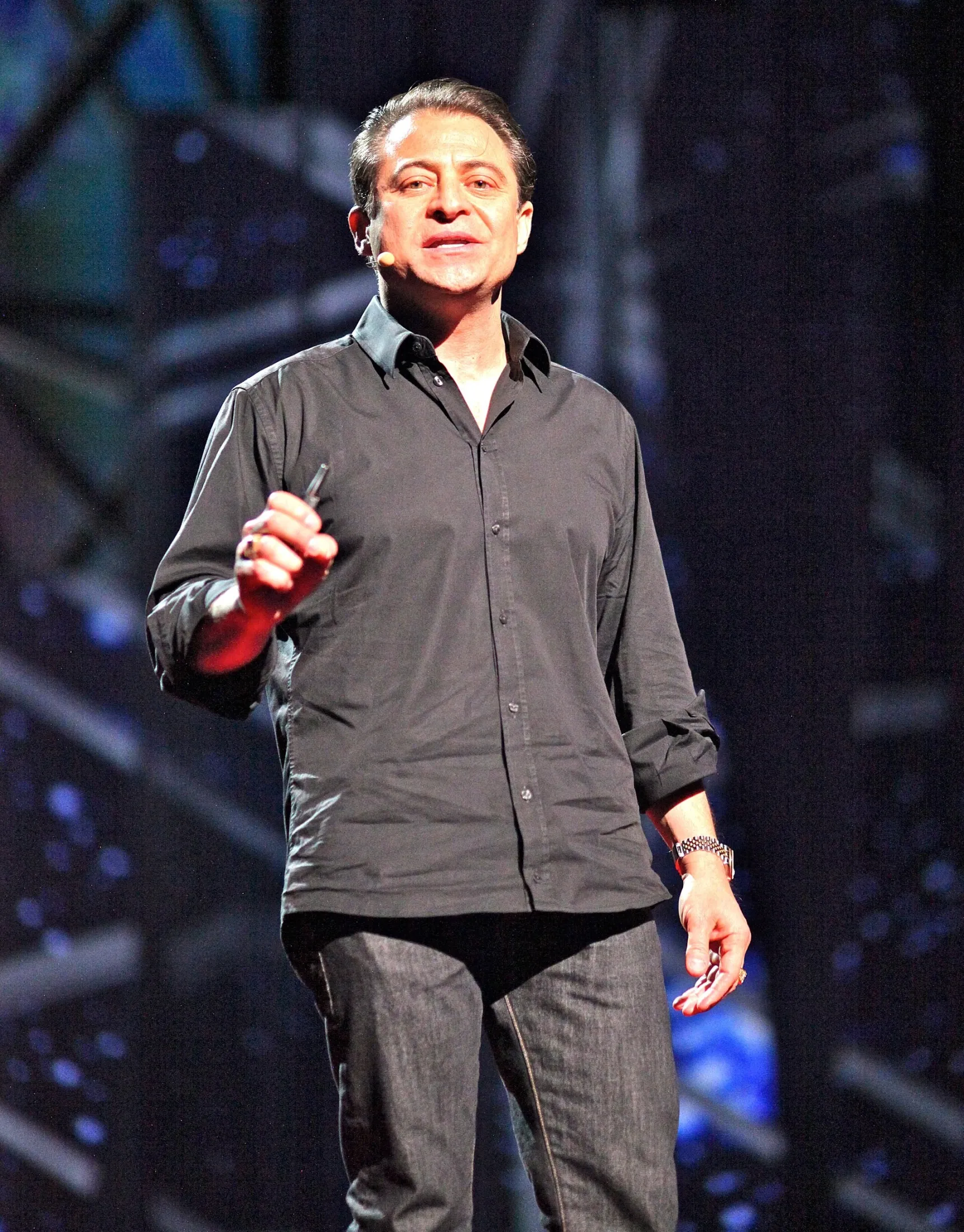
The Prize Maker: Peter Diamandis and the Race to Everywhere
His mother said he would be a doctor. He became one, then never practiced. He built a prize that opened space instead.
Two phone calls came in the same week in 2007. Both were about one man in a wheelchair.
The first call came from the pilot company that flew Peter Diamandis's big white Boeing 727. The man on the line was angry. He said Peter was insane. He said Peter was going to kill the most famous physicist in the world and destroy his own company in the same afternoon.
The second call came from the Federal Aviation Administration. The rules for Peter's weightless flights said passengers had to be able-bodied. Stephen Hawking could not walk, could not use his hands, and spoke only through a computer. The government said the flight could not happen.
Peter asked one question. Who decides if a person is able-bodied? The answer was a doctor. So Peter, who had a medical degree he had promised never to use, bought malpractice insurance and collected letters from three physicians. On April 26, 2007, Stephen Hawking floated free inside an airplane high above the Atlantic off Florida, smiling wider than anyone on board had ever seen.
That stubborn move, finding the one person who can say yes, is the whole story of Peter Diamandis. He is the founder of the XPRIZE Foundation, which has offered hundreds of millions of dollars in prize money to anyone who can solve a hard problem. He helped start private spaceflight, Singularity University, a string of longevity companies, and one of the most watched technology podcasts on the planet.
He also heard the word no more times than almost anyone in this book. This is how a Greek doctor's son from the Bronx learned to turn no into go.
A boat, a pier, and a warning
Peter's story starts on Lesbos, a Greek island in the Aegean Sea. Both of his parents came from there. His mother moved to the United States when she was ten. His father grew up on the island and was the first in his family to leave.
When his father was a young man, his friends expected him to become a priest or a teacher. He wanted to be a doctor. He took a boat to Athens to sit for the medical school entrance exams. As the boat pulled away, his own father stood on the pier and called out a warning. If you don't pass, don't come back.
He passed. Years later, while Peter's mother was visiting Greece for the summer, the two met. She was nineteen. He was in his mid-twenties. They were engaged within a week. He followed her to New York without speaking English, learned the language, and became a successful obstetrician and gynecologist. Peter's mother ran the office.
Peter was born in the Bronx on May 20, 1961. The family moved to Mount Vernon in Westchester and later to Great Neck on Long Island. To Peter, his father's journey from a small island town to a busy American medical practice was the greatest adventure he knew. It also set the rule of the house. The son of a doctor would become a doctor.
The boy who wanted the Moon
Something got in the way of that plan when Peter was eight years old. In July 1969, the Apollo 11 astronauts walked on the Moon. At the same time, reruns of Star Trek showed a future where people from every nation flew between the stars together.
He built model rockets.
One day he told his mother the truth. Mom, I want to be an astronaut.
She smiled. That's nice, son, she said. You're going to be a doctor.
Peter has said that answer shaped the first thirty years of his life. He loved his parents and wanted to make them proud. He was, in his own words, a people pleaser. So he decided he would do both. He would become a doctor for them and chase space for himself.
The pig in the woods
Peter graduated from Great Neck North High School in 1979 and started college at Hamilton College in upstate New York. He was premed, and his biology professor ran a famous lab project. Half the grade depended on dissecting a fetal pig.
Halfway through his first semester, Peter caught chickenpox. He spent about two weeks in the school infirmary and missed every one of the pig labs. He was terrified of failing.
So he hatched a plan with his roommate. One day in the lab, his roommate brushed a fetal pig into Peter's gym bag. Peter walked out and hid it in the refrigerator in their suite, planning to study it at night.
Hamilton had a strict honor code. Taking a specimen out of the lab was not allowed. The next day, the professor stood up in class and said that someone had taken a pig. He asked the person to come forward.
Peter panicked. He took the pig from the refrigerator, walked deep into the woods, and buried it. Then he called his father, in tears, sure his life was over before it had started.
His father told him the hard thing. Son, you have to turn yourself in. You have to be honest.
So Peter went back into the woods and dug the pig up. He carried it in his bag to the professor's office and waited, crying, for half an hour. He confessed. He was not thrown out. He kept his place in school and learned a lesson he still tells today: the cover-up was far worse than the mistake.
A space club in a dorm room
After his first year, Peter transferred to the Massachusetts Institute of Technology. He studied molecular biology in the daytime. At night and on weekends, he did space.
In 1980, during his second year at MIT, he helped start a student group called Students for the Exploration and Development of Space, known as SEDS. He became its national chairman. Chapters opened at campuses across the country. Peter later said that a Princeton student named Jeff Bezos led that school's chapter.
He finished his MIT degree in 1983. Then, to keep the promise to his parents, he started medical school at Harvard through a joint program with MIT.
Two lives at once
Harvard Medical School is one of the hardest schools in the world. Peter treated it like a day job he had to finish so he could get to his real work.
In 1987, in his third year, he co-founded the International Space University with two friends, Todd Hawley and Bob Richards. The idea was bold. Space was international, so the people who would one day run space programs should learn together, from every country, in one place. Today the school has a campus in Strasbourg, France, and has trained thousands of space professionals.
By his fourth year, he was running the space university and a small rocket company at the same time as his hospital rotations. His favorite schedule tells the story. He worked the hospital night shift from ten at night until six in the morning. He slept from six until noon. Then he went to his office and worked on space until dinner.
He bought one of the first mobile phones, a heavy Motorola brick. He would slip out of a patient visit, or even out of surgery, to call and ask how a rocket engine test had gone. His heart was in space. Medicine was something he had to get through.
The dean's bargain
Doctors who trained with Peter noticed. They told the dean of the medical school that the student was always on the phone.
The dean called Peter into his office. You are a bright young man, he said, but you are obviously not applying yourself. What is going on?
Peter began to cry. His perfect plan was coming apart in front of him. He confessed everything. He was running a university. He was running a rocket company. The dean had had no idea.
The dean asked him what he wanted. Peter said he had to graduate. He had promised his mother and father, and he was so close.
So the dean offered a deal. If Peter passed Part Two of his medical boards and promised never to practice medicine, he could graduate.
Peter took the deal. He earned his medical degree in 1989. He mailed the diploma to his parents with a note that said, in spirit, I kept my promise. Now I am going to do what I love. He moved to Houston and went to work on rockets full time.
He has kept his side of that bargain ever since.
Rockets that did not fly
The next few years were not a victory lap. Peter learned how hard space business really was.
His rocket company, International Microspace, set out to build a small launcher called Orbital Express to carry satellites into low orbit. It won a military contract worth up to one hundred million dollars if every option was used. But the market filled with small rockets, and in 1993 Peter sold the company to a defense contractor for about two hundred fifty thousand dollars. The launcher project was later canceled.
There was deeper pain, too. His friend Todd Hawley, co-founder of the space university, became sick with AIDS. Todd died in the mid-1990s, not long before new drug cocktails began saving the lives of many patients with the same disease. Peter later said that loss stayed with him. It planted a thought he would come back to decades later. If you can just stay alive long enough, the next breakthrough may be there to save you.
By the early 1990s, Peter was in his thirties. He had a medical degree he could not use and a string of companies that had not worked out. He had also given up on NASA. Astronauts were picked one in thousands, and many never flew at all.
He needed a different door.
A flight up the Hudson
The door opened with a gift from a friend.
On a sunny October day in 1991, Peter was staying with Gregg Maryniak, a space educator and pilot who had become a mentor. The two had planned to spend the day indoors. Instead they rented a small Cessna from the Princeton airport and flew north up the Hudson River, past the Empire State Building.
Gregg looked over and saw Peter grinning from ear to ear. It was rare to see him that happy. His rocket company was weighing on him. Instead of turning back, they flew over Great Neck and circled Peter's boyhood home. When they landed, Peter was bouncing around the cabin. He announced he was going to finish getting his pilot's license.
A few weeks later, Gregg was in a small bookstore in New Hope, Pennsylvania. He spotted a dusty copy of The Spirit of St. Louis, Charles Lindbergh's own story of flying across the Atlantic. Gregg already owned two copies. He bought it anyway, for Peter.
Peter put it on a shelf and forgot about it. Then, in December 1993, he was visiting his parents in Florida during a slow Christmas week. He picked up the book and started to read.
It changed the course of his life.
The Frenchman's prize
In 1919, a French-born New York hotel owner named Raymond Orteig offered twenty-five thousand dollars to the first person to fly nonstop between New York and Paris. For years, teams tried and failed. Some pilots died. Then, in 1927, a young airmail pilot named Charles Lindbergh flew across the ocean alone and won.
Peter saw the math right away. Nine teams had spent hundreds of thousands of dollars chasing a prize worth twenty-five thousand. The prize did not pay for the work. It started a race. And once Lindbergh landed in Paris, the public's idea of flying changed almost overnight. Within a few years, air travel had become a real business.
What if the same thing could open space?
Peter sketched the rules. A private team, with no government money for the vehicle, had to build a ship that could carry three adults to one hundred kilometers above the Earth, the edge of space. Then it had to do it again, with the same ship, within two weeks. That second flight was the secret. It forced the ship to be reusable, like an airplane, instead of thrown away like a government rocket.
The purse would be ten million dollars. He called it the X Prize. X was the Roman numeral for ten. X also stood for experimental. And X was a blank, waiting to be replaced by the name of the person who would put up the money.
He did not have that person. He did not have the money. He started anyway.
Under the Arch
The foundation took shape in 1994. Peter put in the first money himself. Then he collected checks for twenty-five dollars and one hundred dollars from space fans to keep the lights on. Slowly, bigger checks came in.
He moved the effort to St. Louis. It was the city whose businessmen had backed Lindbergh, and the plane was named after it. A group of local supporters helped raise about half a million dollars in working money. Then the fundraising stalled.
So Peter and his St. Louis allies rolled the dice. They would announce the ten million dollar prize before they had it.
Peter had a theory about this. He called it the line of super credibility. When most people hear a wild idea, they judge it by who says it. If your neighbor's kid says he is flying to Mars, you ignore him. But if a group of people with huge track records says the same thing, you think, that is going to happen. When will it happen?
Two members of his board thought the plan was reckless. They resigned. Peter went ahead.
On May 18, 1996, he stood under the Gateway Arch in St. Louis. Behind him stood about twenty astronauts, including Buzz Aldrin of Apollo 11. The head of NASA was there. So was a top official from the FAA. So was the Lindbergh family. The next morning, the story ran around the world. A St. Louis group had announced a ten million dollar prize for private spaceflight.
One hundred fifty no's
Peter went on the road with his pitch. It sounded simple. Put your name on the prize. You pay nothing unless someone wins. It was like throwing yourself a touchdown pass.
He pitched car companies, airlines, tech companies, and billionaires. He offered to call it the Nissan X Prize, the Virgin X Prize, the Microsoft X Prize. By his own count, he heard no more than one hundred fifty times.
The reasons were almost always the same. Why isn't NASA doing this? Can anyone really pull it off? And the one that killed most deals: someone is going to die trying, and we don't want our brand on that.
Teams started building spaceships in garages and desert hangars, and they kept calling Peter with one question. Do you have the money yet? Then came the September 11 attacks in 2001. In 2003, the space shuttle Columbia broke apart during reentry, killing all seven astronauts on board. Close friends begged Peter to give up. You are torturing yourself, they said. This is not going to happen.
He refused.
A supporter named Bob Weiss came up with a strange idea. Golf tournaments sometimes offer a new car for a hole in one. The tournament does not buy the car. It buys insurance, and the insurance company bets nobody will make the shot. Why not buy hole-in-one insurance for spaceflight?
Peter's team went to insurers who covered satellites. To their surprise, one agreed to take the bet. The insurer was betting that no team would fly to space twice by the deadline. The foundation only had to pay the premium.
That solved one problem and created another. The premium payments came due in chunks. Peter remembers weeks when fifty thousand dollars was due on Friday, and if they missed it, the whole prize would collapse. The foundation was so short of cash that its leaders were close to broke.
The woman in the magazine
Then Peter opened an issue of Fortune magazine that ranked the wealthiest women under forty. One of them was Anousheh Ansari, an Iranian American engineer in Texas. She and her family had just sold their telecom technology company to Sonus Networks for a very large sum.
Her short biography said her dream was to fly to space on a suborbital flight.
Peter read the line three times to make sure he was not imagining it. This is her, he thought. This is the one.
Her company had been sold, and its employees were gone. Peter found her former executive assistant, explained the prize, and asked her to pass along a package. The assistant did. Anousheh heard that some man wanted to talk about private spaceflight, and she said yes, she wanted to meet him.
Peter flew to Dallas with Byron Lichtenberg, a former space shuttle astronaut and one of his partners. They presented to Anousheh, her husband Hamid, and his brother Amir. Peter left without a yes. He was crushed.
Anousheh said later that she had loved the idea from the first slide. As an entrepreneur, she was used to paying teams up front and watching them run late. Here was a way to ask the whole world to build something risky and only pay the team that delivered.
A few days later, Peter was back in his apartment in Santa Monica when the phone rang. It was Hamid, with Anousheh on the line. They said yes. The family's money covered the insurance payments and kept the foundation running. In May 2004, the contest was renamed the Ansari X Prize.
Two years later, in September 2006, Anousheh Ansari flew to the International Space Station on a Russian rocket, through a company Peter had helped fund. She became the first woman to pay her own way to space. Later, she became chief executive of the XPRIZE Foundation.
Eleven years to float
While the prize fight dragged on, Peter was fighting a second battle.
In 1993, the same year he read the Lindbergh book, he started work on a company to give ordinary people the feeling of weightlessness. NASA had done it for decades. A big jet climbs steeply, then pushes over the top of an arc. For about twenty-five seconds, everyone inside floats.
Peter walked into the offices of the FAA and explained the plan. The answer was no. Nothing in the rules allowed a passenger airline to do that.
He petitioned. He filed papers. He was told no again and again. At one point he told himself that the regulators would either die or retire before he gave up.
He co-founded the Zero Gravity Corporation with Byron Lichtenberg and engineer Ray Cronise, and kept pushing. Finally, he found the one person in the whole agency who could say yes: the FAA administrator herself, Marion Blakey. Peter explained that American business people were already flying to Russia to float on cargo planes, wearing parachutes because there were no seats. Why not let them do it safely at home? She agreed to make it happen.
Zero-G flew its first public flights in September 2004. It had taken eleven years. Peter later joked that all of his companies were overnight successes after eleven years of hard work.
Somewhere in those years he also proposed to Kristen Hladecek, the woman who would become his wife. He did it floating in zero gravity. They later had twin sons.
Twenty-nine rolls over Mojave
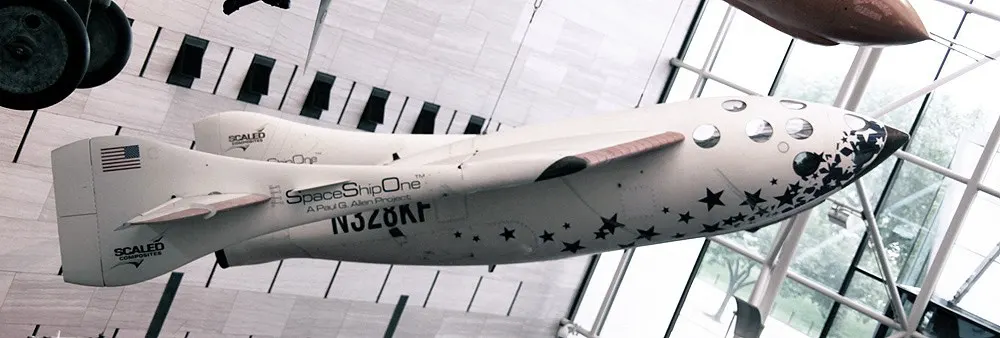
By 2004, twenty-six teams from seven countries had signed up for the X Prize. The leader was Burt Rutan, a legendary aircraft designer in the Mojave Desert, with money from Microsoft co-founder Paul Allen. His ship was called SpaceShipOne.
The prize's insurance ran out at the end of 2004. There would be no more extensions. In June, Rutan's pilot Mike Melvill flew SpaceShipOne past one hundred kilometers and became the first commercial astronaut. But the ship barely made it, and it was not yet carrying the weight the rules required.
The insurance company invited Peter to a meeting. He hoped they wanted to become a sponsor. Instead, they offered a deal. Cut the prize from ten million dollars to five million, and they would lower the altitude to eighty kilometers. Peter stormed out. You guys are going to be writing a check, he told them.
On September 29, 2004, tens of thousands of people camped in the Mojave Desert to watch the first official flight. William Shatner, Captain Kirk himself, was there. So was Peter's father.
Mike Melvill flew the ship so perfectly straight up that it began to spin. On the grainy screen, the crowd went silent. It looked like the ship was coming apart. Melvill rode out the rolls, which were later counted at twenty-nine, and brought SpaceShipOne home safely.
Then, gliding back, he did an extra victory roll that had not been approved. A chase plane pilot cursed over an open microphone. Inside the control room stood the FAA's top space officials, who had the power to take Melvill's license away. Without missing a beat, flight director Doug Shane keyed his microphone. Copy, he said. Roll inspection program complete.
Five days later, on October 4, 2004, pilot Brian Binnie flew SpaceShipOne to about one hundred twelve kilometers, breaking an altitude record for winged aircraft that had stood since 1963. Rutan picked the date on purpose. It was the anniversary of Sputnik, the Soviet satellite that started the space race. The Ansari X Prize was won.
Today SpaceShipOne hangs in the Smithsonian's National Air and Space Museum, close to Lindbergh's Spirit of St. Louis.
Freeing Stephen Hawking
Not long after the prize was won, Peter got a message. Stephen Hawking had heard about the flights. He wanted to go to space.
Peter could not send him to space. But he could offer him weightlessness. Hawking said yes on the spot.
After the FAA objection and the three doctors' letters, Peter's team prepared as if for surgery. They ran a test flight with a sixteen-year-old boy about Hawking's size. They built an emergency room inside the airplane. They practiced what they would do if he had a heart attack, cracked a rib, or had a collapsed lung. They even agreed on code words to radio to Mission Control if something went badly wrong.
On April 26, 2007, the jet took off from the Kennedy Space Center. Peter held Hawking's head. Byron Lichtenberg, who had flown in space twice, held his feet. Three doctors and two nurses watched the monitors.
At the top of the first arc, they lifted him and let go. Hawking, who had not moved freely in decades, floated. When they came down, he was smiling ear to ear. The doctors gave a thumbs up. They did a second arc, then a third. In the end they flew eight. On the last two, his nurses said he wanted to be spun around, and so they spun him gently in the air.
Peter has said that for Hawking, that flight was one of the great experiences of his life.
A university for the future
Winning the X Prize gave Peter something he had never had: super credibility. Larry Page, Elon Musk, and filmmaker James Cameron joined the foundation's board. Peter had actually met Musk around 2001, when Musk had just sold PayPal. Peter told him not to start a rocket company, because so many rich people had failed at it, and to fund the X Prize instead. Musk started SpaceX anyway, and he still teases Peter about that advice.
The foundation grew into XPRIZE and began offering prizes for cars, oceans, education, and health. In 2008, Peter and the inventor Ray Kurzweil started Singularity University at NASA's Ames Research Center in California. Its summer program asked each class a huge question: what could you build that would improve the lives of a billion people within ten years?
The idea behind it was one Peter would spend the rest of his life explaining. Some technologies grow exponentially. Computing power has doubled again and again for decades. Anything that turns into information, from maps to music to medicine, rides the same curve. Most people think in straight lines, so they badly underestimate how fast the future arrives.
A world of abundance
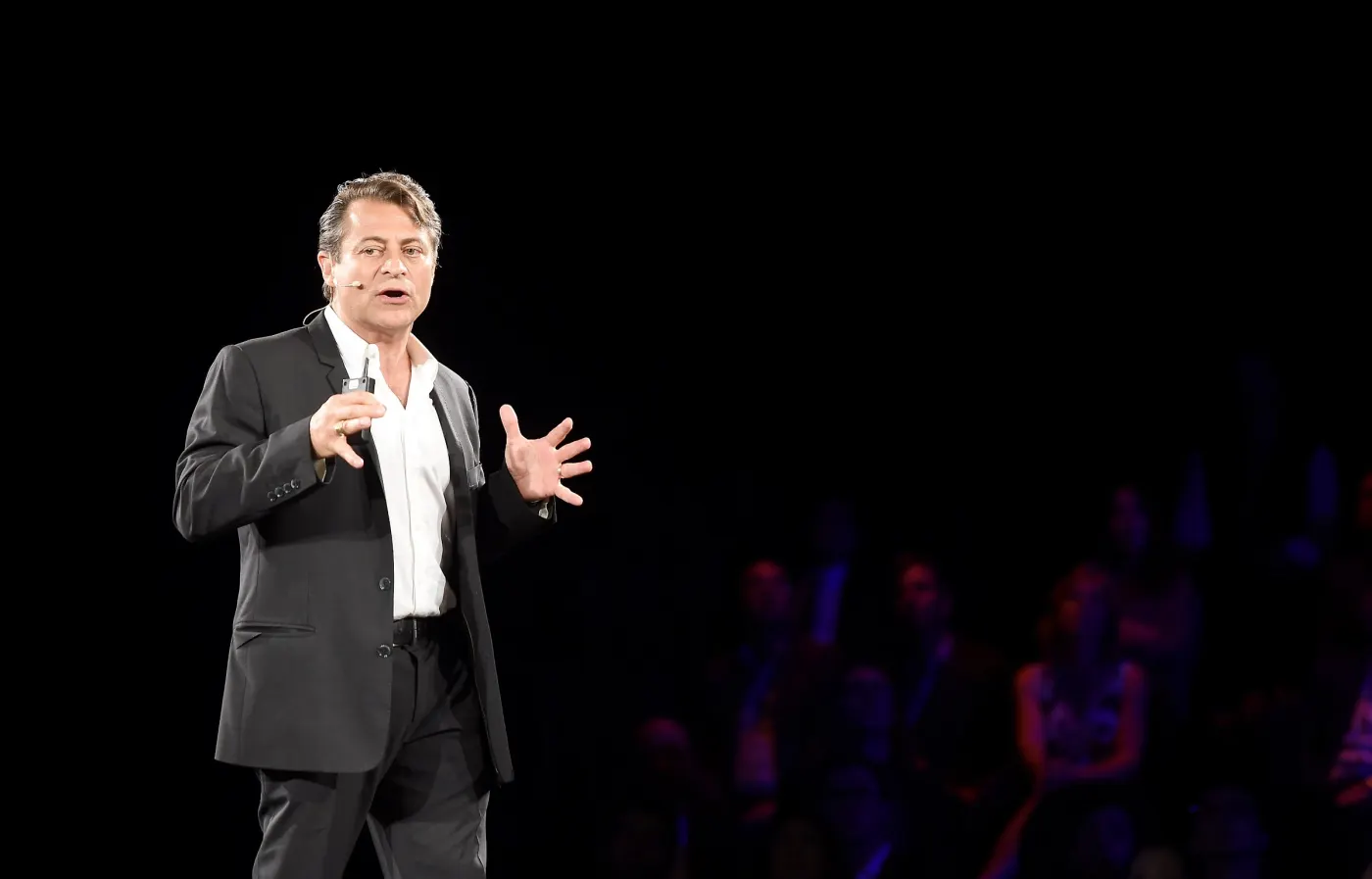
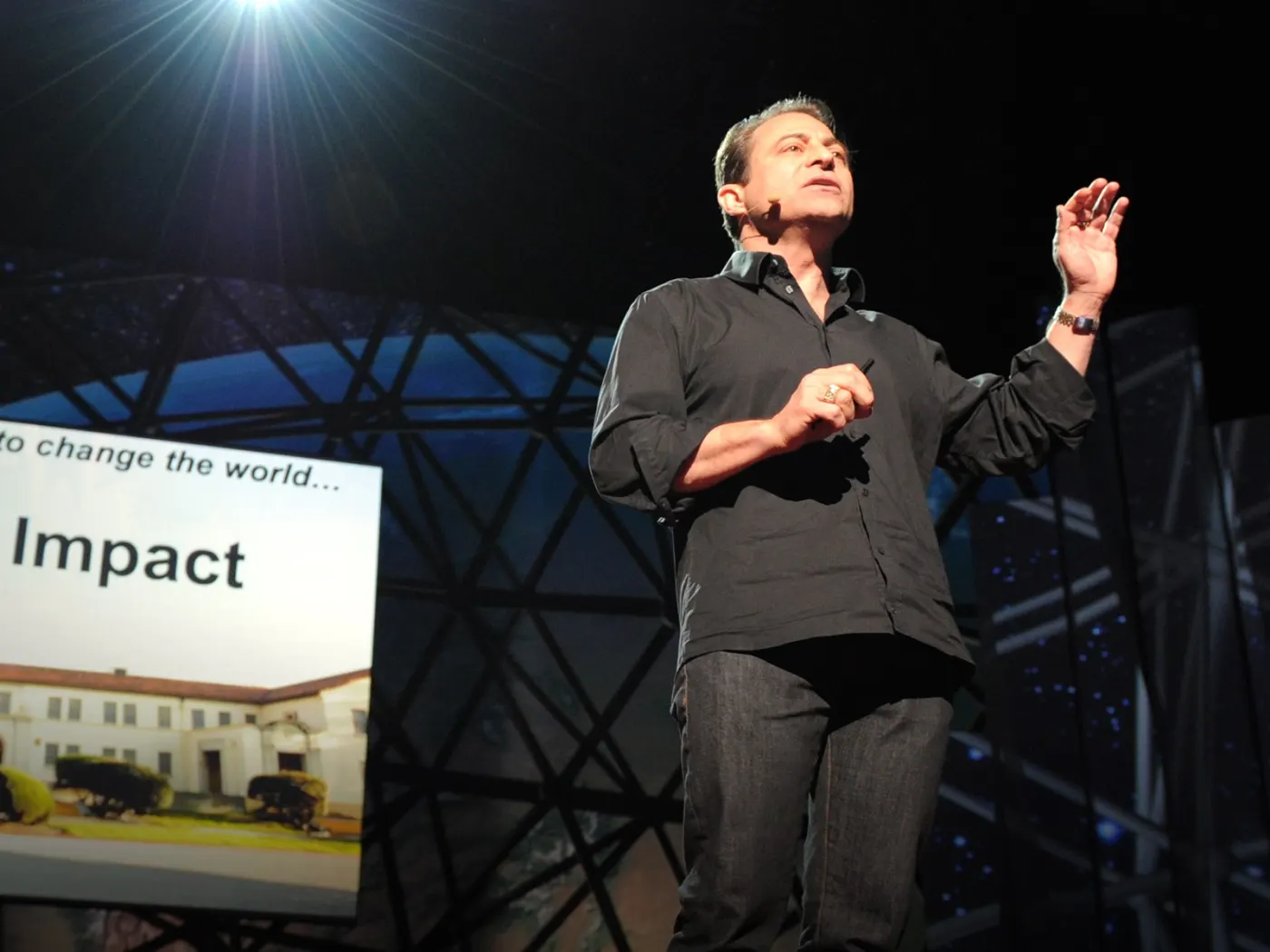
In 2012, Peter walked onto the TED stage in California. He opened with a flood of scary news clips. Then he explained why people feel that way.
Every sight and sound, he said, goes first to an ancient part of the brain called the amygdala, our danger detector. It evolved when a rustle in the grass might be a lion. So we pay far more attention to bad news than good news, and news outlets know it. If it bleeds, it leads.
But the long-term numbers, he argued, tell another story. Over the last century, average lifespans had more than doubled. Child deaths had fallen sharply. The cost of food, energy, and communication had dropped. Literacy had spread around the world.
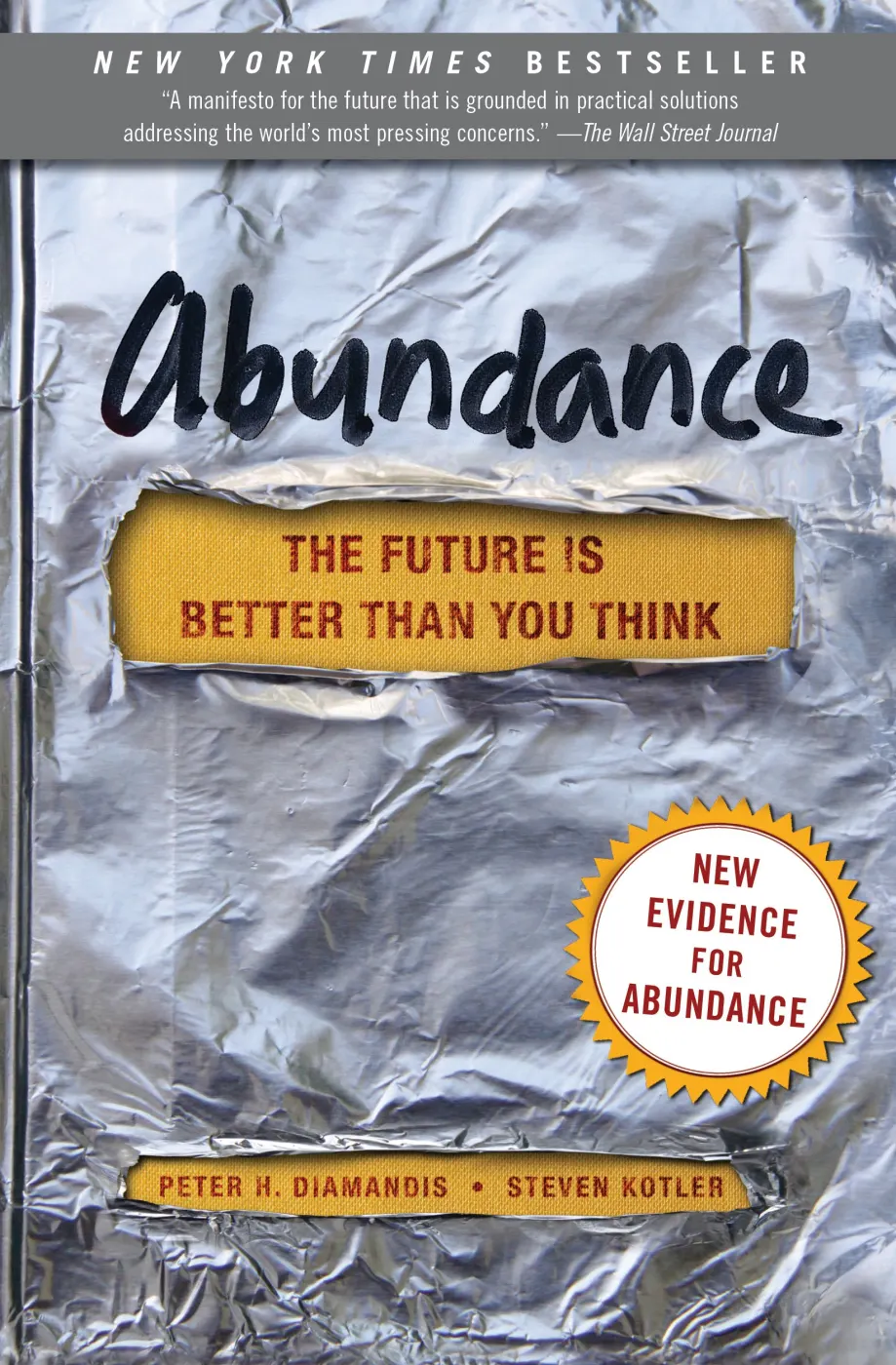
His book with writer Steven Kotler, Abundance: The Future Is Better Than You Think, came out the same year and reached number two on the New York Times bestseller list. Critics said he underplayed hard problems like inequality and climate. Fans said he gave them hope and a plan. The book turned Peter from a space figure into a global speaker on the future. The next year, he launched Abundance360, a yearly summit for business leaders.
Big bets that broke
Not every moonshot landed. Peter's Rocket Racing League, launched in 2005 to race rocket-powered planes like cars on a track, flew a few demonstrations and then faded away. His earlier plan to land a private rover on the Moon, BlastOff, ran out of money in 2001.
In 2012, he co-founded Planetary Resources to prospect asteroids for water and metals, with backing from Google's Larry Page and Eric Schmidt. After money troubles, its team and assets were bought by a blockchain company in 2018. That same year, the thirty million dollar Google Lunar XPRIZE ended with no winner. No team reached the Moon before the deadline.
Chasing more healthy years
As Peter moved into his fifties, his focus turned from outer space to the inner space of the human body. He remembered Todd Hawley, who died just before a cure arrived. He wanted to help people stay healthy long enough to meet the next breakthrough.
In 2014, he co-founded Human Longevity with genome pioneer Craig Venter and stem cell scientist Robert Hariri. Later he co-founded Celularity with Hariri, working with cells from the placenta, and started BOLD Capital, a venture fund that he says manages about six hundred million dollars, mostly in longevity and biotech.
In 2020, he and his friend Tony Robbins joined Dr. William Kapp and Hariri to form Fountain Life. Its centers give members full-body MRI scans, heart scans that look for soft plaque, cancer blood tests, and large amounts of data read by AI, with the goal of finding disease early. Memberships cost thousands of dollars a year, and critics say this kind of care mostly serves the wealthy. Fountain Life says it has raised about one hundred eight million dollars and opened its fifth U.S. center in Houston in 2026.
Peter and Robbins wrote Life Force, a 2022 bestseller about new medicine. In 2025, Peter published his Longevity Guidebook. And in November 2023, XPRIZE launched its largest contest yet, the one hundred one million dollar XPRIZE Healthspan, for treatments that can restore muscle, brain, and immune function in older adults.
A hard lesson in a pandemic
In January 2021, during a deadly winter surge of COVID-19, Peter hosted his Abundance360 summit in person in the Los Angeles area. Guests were tested again and again, and many did not wear masks. The event became a superspreader. About two dozen people were infected, including Peter.
News outlets including the New York Times and MIT Technology Review reported on it. Technology Review also reported that a doctor gave attendees a follow-up talk promoting unproven treatments. Peter published a public apology. He wrote that repeated negative tests had given him a false sense of security, that he had been wrong, and that he was deeply sorry. He said none of the cases turned out to be serious.
How he works
Peter's method has a few steady parts. He starts with what he calls a massive transformative purpose, a mission big enough to pull you out of bed. His own has not changed since he was eight: opening the future for everyone.
He designs prizes so that the money goes only to results. He looks for the single person who can say yes, whether it is an FAA administrator or a woman in a magazine. He borrows credibility by filling a stage with heroes. And he guards his own mind. He does not watch the evening news. He believes our brains are shaped by what we read, watch, and who we spend time with.
He is also honest about his weak spots. He calls himself a recovering people pleaser, and says his hardest struggle has been matching what he says with how he lives.
Moonshots in 2026
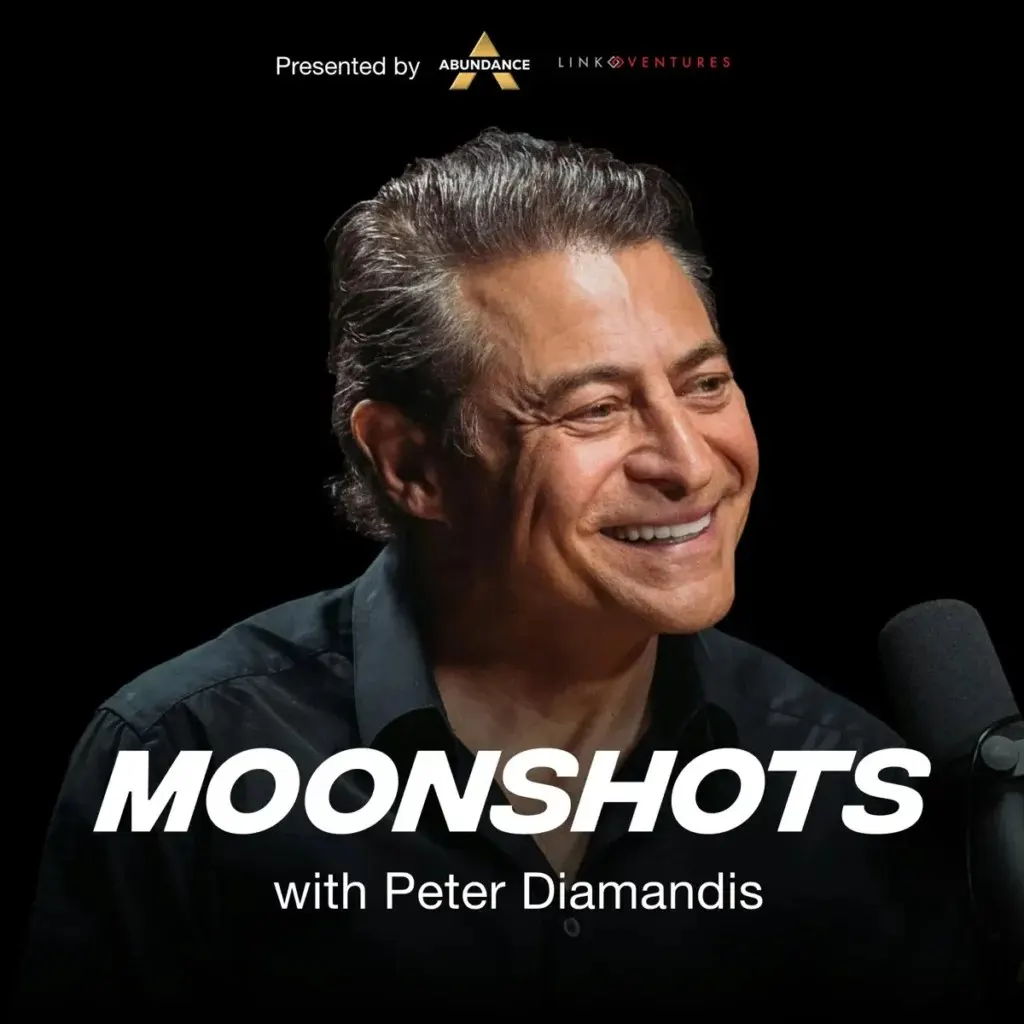
In 2026, Peter's biggest stage is a microphone. His podcast, Moonshots, features him and a group of friends he calls his moonshot mates breaking down news in AI, robots, and longevity. In January 2026, he and investor Dave Blundin sat down with Elon Musk at Tesla's Texas Gigafactory for a long talk about AI and abundance. The episode drew nearly two million views.
In April 2026, Peter and Steven Kotler published We Are as Gods: A Survival Guide for the Age of Abundance, about how people can keep their minds steady while technology gives them almost godlike power.
XPRIZE kept growing too. In April 2025, it awarded one hundred million dollars in its Carbon Removal prize, funded by the Musk Foundation. The fifty million dollar grand prize went to Mati Carbon, which spreads crushed rock on farms in India to pull carbon from the air. In August 2026, XPRIZE Healthspan named twenty finalist teams and gave ten of them one million dollars each to begin clinical trials that will run through 2029.
And in March 2026, Peter launched something that would have delighted his eight-year-old self. The Future Vision XPRIZE offers more than three and a half million dollars to filmmakers who can show a hopeful future, a new Star Trek. More than two thousand five hundred films came in. The top five are set to screen live in Los Angeles on September 25, 2026, with the winner receiving money to make a feature film.
What he changed
Before the X Prize, spaceflight belonged to governments. After SpaceShipOne, private rockets became a real industry, and space tourism became something people could buy. The weightless flights he fought for have carried thousands of passengers.
He also helped make the prize an engine for problem solving again. By his count, XPRIZE has launched about thirty competitions worth roughly five hundred fifty million dollars, pulling in far more private spending from the teams that chase them.
Closing
A father once left an island with a warning ringing in his ears. His son grew up to be told, over and over, that his dream was impossible, too dangerous, or too early.
Peter Diamandis kept his promise to his parents and earned his diploma. Then he mailed it home and went to find the one person who would say yes, again and again. He still believes the best way to predict the future is to create it. Every prize he offers is an invitation to anyone, anywhere, to prove the doubters wrong.