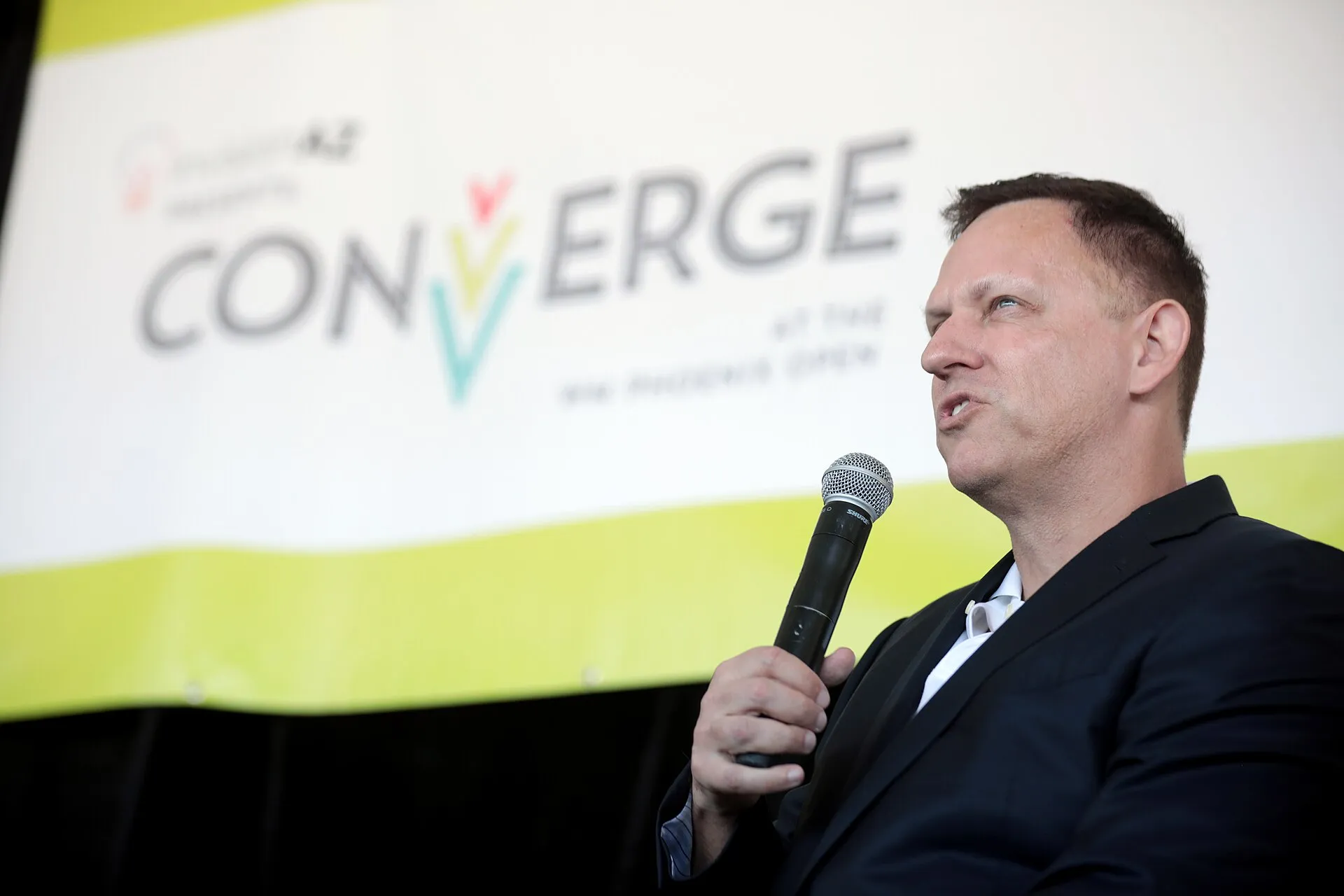
From Chess Master to PayPal
A boy from Frankfurt who learned chess in California. A founder who sold PayPal to eBay. An investor whose first Facebook check changed the web.
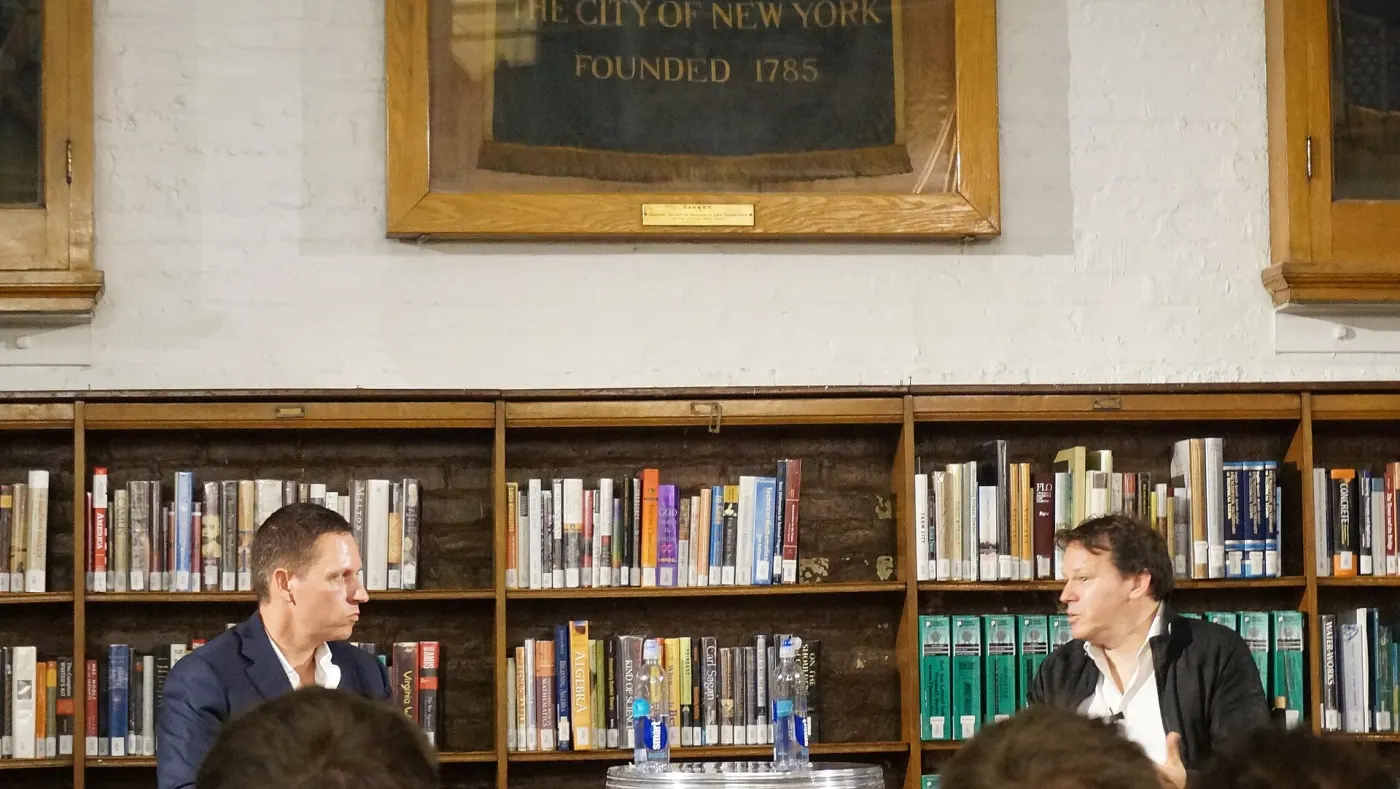
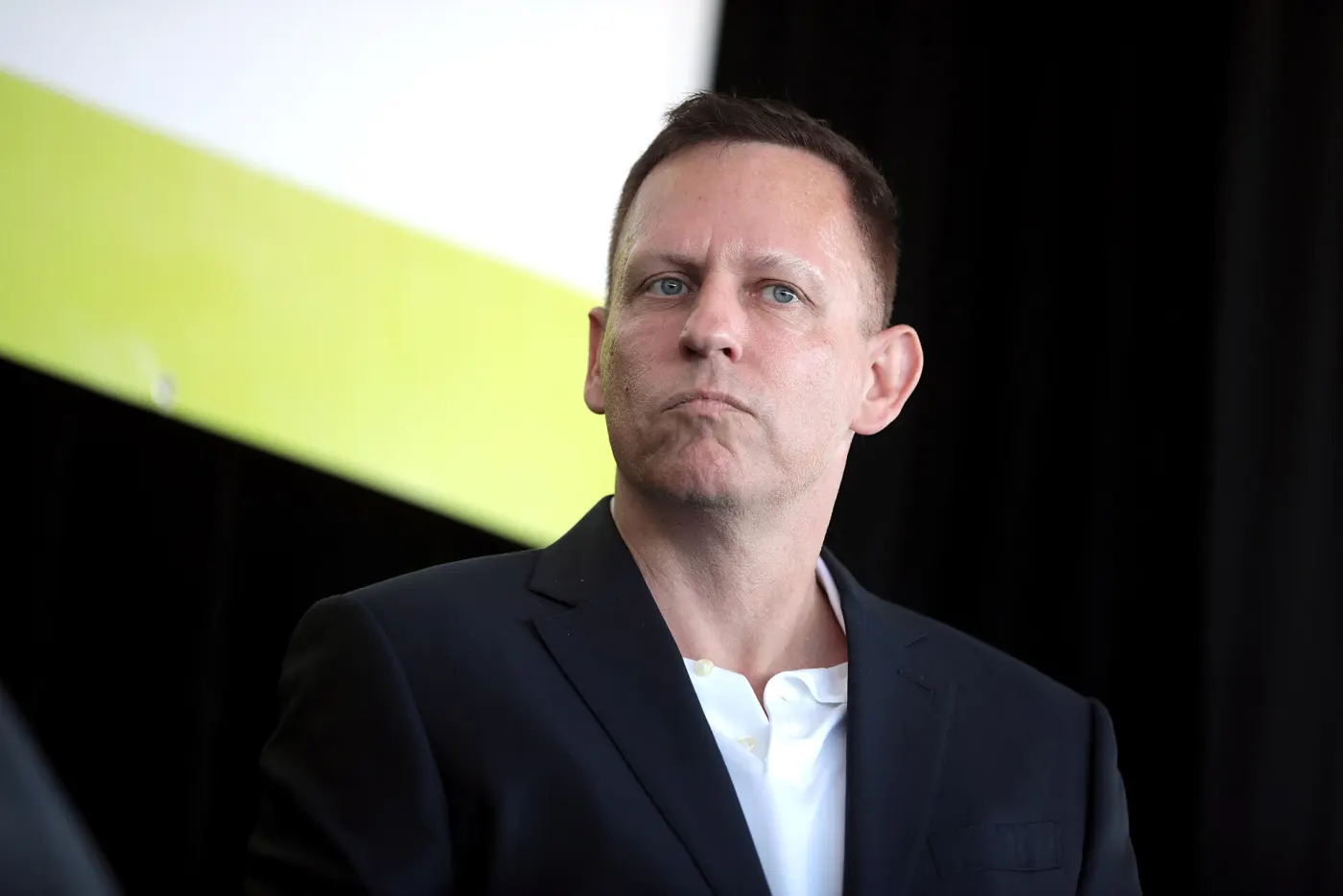
In late 2026, public wealth lists still argue about Peter Thiel the way traders argue about a volatile stock. Forbes put him near thirty-two billion dollars in August. Bloomberg's Billionaires Index printed a lower number in September, near twenty-six and a half billion. Both figures move with Palantir's share price, with private marks on SpaceX and Stripe inside Founders Fund, and with how analysts count entities that hold his name.
The number is not the story. The story is how a German-born chess master became the quiet center of so many American power lines at once: consumer payments, social media's first outside check, intelligence-grade data software, venture capital that preferred rockets over photo apps, a fellowship that paid teenagers to leave college, a bestselling startup book, and a political network that helped move the Republican Party closer to Silicon Valley's hardest edges.
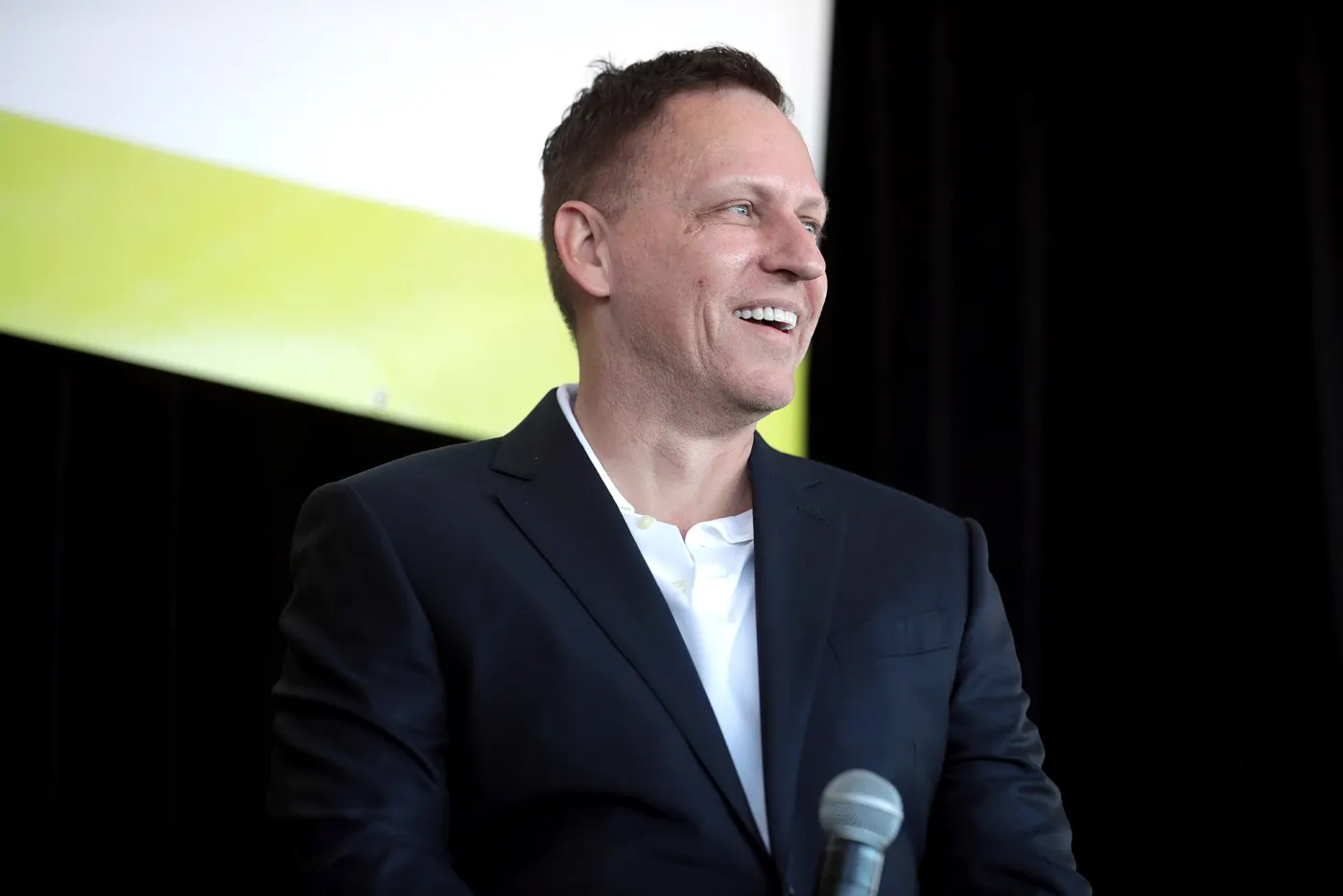
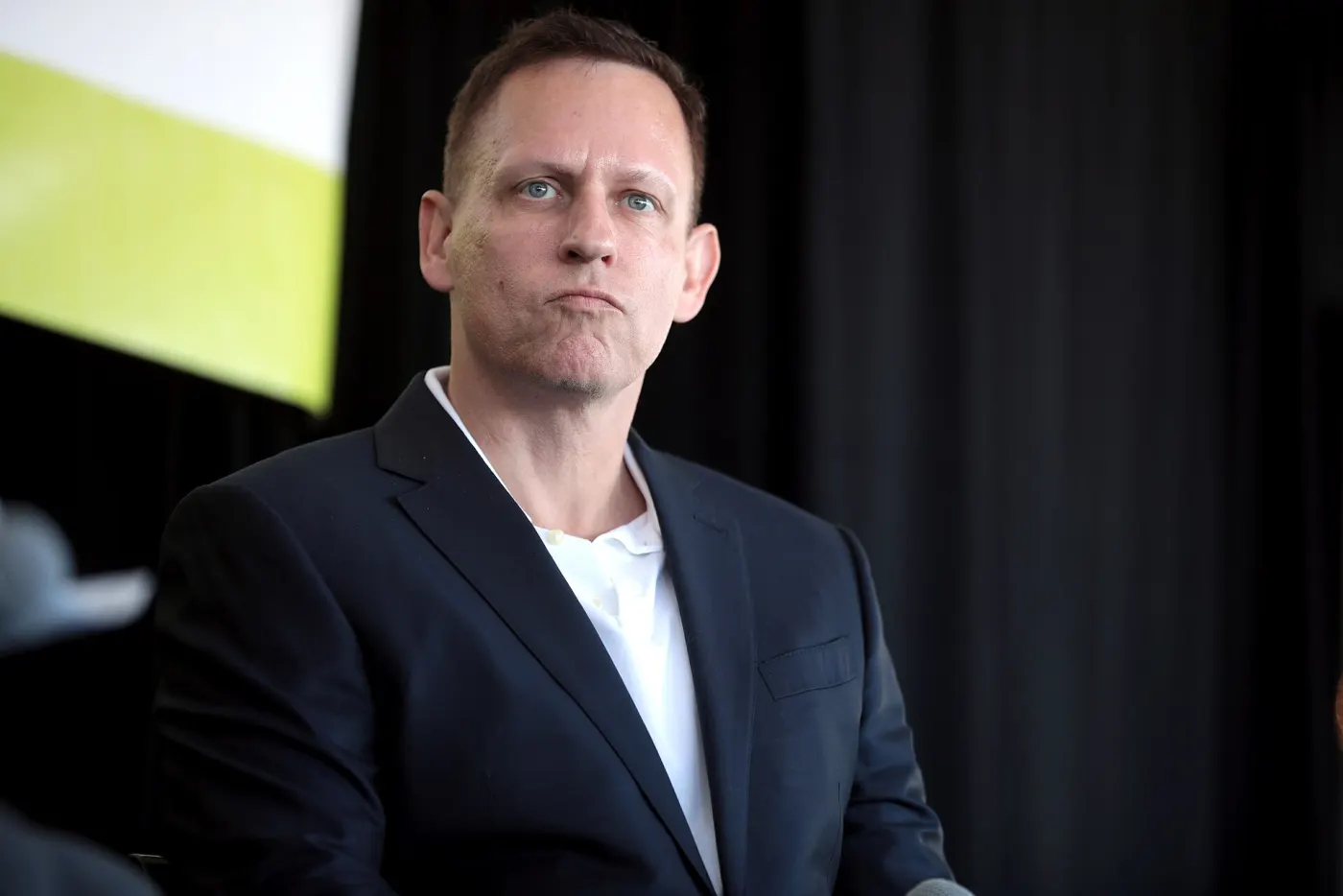
Thiel does not perform like a celebrity founder. He speaks in careful loops, full of pauses and caveats. People who dislike him call the style evasive. People who admire him call it precision. Either way, the companies and checks attached to his name remade how money moves online, how governments search data, and how a generation of founders talk about monopoly, secrets, and progress.
This documentary follows that arc through September 2026. Political fights and the Gawker war appear as sourced public events, not as sermons. The through-line is simpler: Thiel keeps asking what everyone else treats as settled, then puts capital where the answer might compound for decades.
Frankfurt, Namibia, and the chessboard
Peter Andreas Thiel was born on 11 October 1967 in Frankfurt, then West Germany. His father Klaus was a chemical engineer. His mother Susanne helped hold a household that would not stay put. When Peter was about a year old, the family moved to the United States and lived in Cleveland while Klaus worked. Biographers later noted the strangeness of leaving booming Frankfurt for a colder American industrial city. The move was only the first.
In 1971 the family relocated again, this time to South African-occupied Namibia, where mining work pulled Klaus. Peter spent roughly six years of childhood in that landscape, including time around Swakopmund, before the family returned to the United States in 1977. The later California years, including the Bay Area suburbs associated with Foster City in many profiles, gave him American schools and a chess habit that became more than a hobby.
Chess was not decoration. United States Chess Federation records list Peter Thiel as a National Master and Life Master. Published ratings in the mid-2000s sat near 2287 for regular play, with a floor at master level. Fans often cite a peak near 2342 in the early 1990s. His FIDE profile still shows an inactive standard rating near 2199. The board taught him the same lesson he later sold to founders: look several moves ahead, accept that most people copy last week's fashion, and search for a position that is hard to contest.
He also learned early that belonging could feel provisional. German birth, African childhood, American adolescence, later New Zealand citizenship granted in 2011 and debated in public in 2017: the passport stack is unusual. Thiel has kept German ties as well. The practical effect is a man comfortable treating nations as options rather than destiny, which would later color both his investing and his politics.
Stanford Review and the refusal to fit
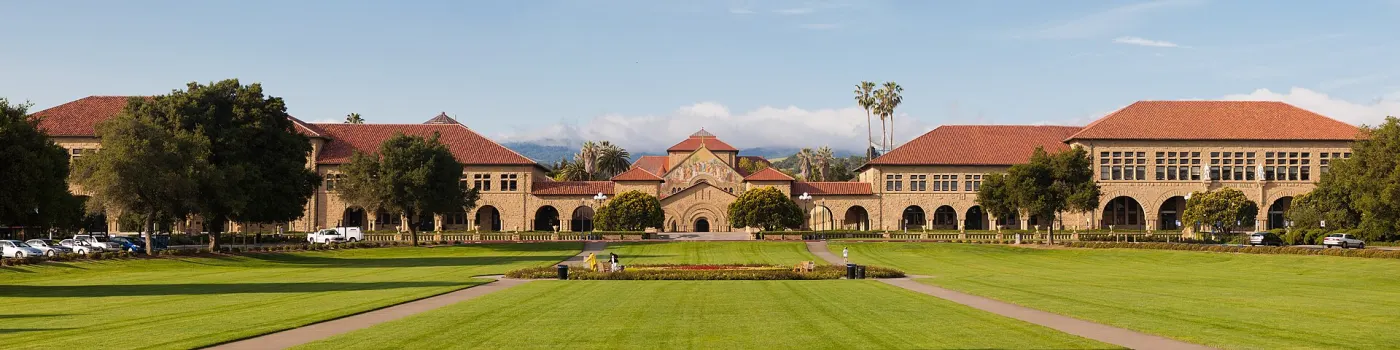
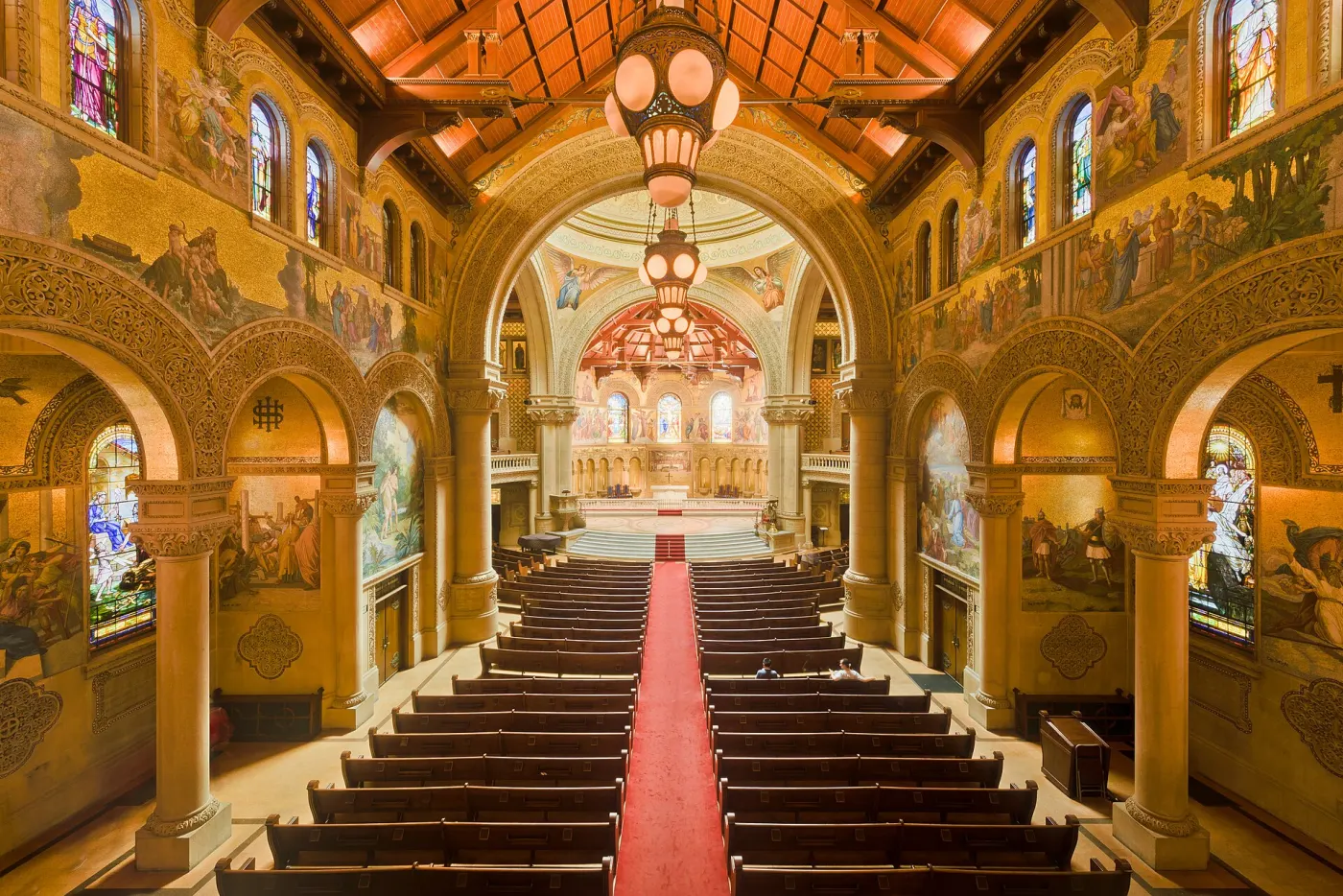
At Stanford University Thiel studied philosophy and built a reputation for arguing against the campus mood of the late 1980s. In 1987 he co-founded The Stanford Review, a student newspaper meant to air alternative and often conservative or libertarian viewpoints. He served as its first editor-in-chief until graduating in 1989. Funding help from Irving Kristol appears in standard accounts. The paper attacked what its staff saw as political correctness and orthodoxy. Whether one likes that project or not, it announced a lifelong pattern: build a platform when the room feels closed.
Philosophy trained him to treat slogans as suspects. Law school at Stanford, completed with a JD in 1992, sharpened the same habit. He worked as a judicial clerk, then as a securities lawyer, then as a speechwriter, then as a derivatives trader at Credit Suisse. In the Blake Masters notes from his later Stanford class, Thiel described how close he came to the ultimate credential ladder of elite clerkships and how the near-miss freed him. The conventional path almost worked. When it did not crown him, he stopped waiting for institutions to declare him finished.
By the mid-1990s he was back in the Bay Area raising a small fund, Thiel Capital Management, in 1996. The internet boom was loud. Thiel was looking for a company that was not only a website, but a new kind of money rail.
Confinity, X.com, and the war for PayPal
In 1998 Thiel co-founded Confinity with Max Levchin and Luke Nosek. The early product lived on PalmPilots: beam money between handhelds. The press-conference stunt that stuck in Silicon Valley lore involved representatives from Nokia and Deutsche Bank sending millions in venture funding through the demo. The deeper insight arrived when the team shifted toward email-based payments. On eBay, sellers were mailing checks that took a week to clear. A fast email balance was a weapon.
Elon Musk's X.com was building overlapping financial software. In 2000 the companies merged. The combined firm kept the PayPal brand that users already trusted. Leadership was not peaceful. Board fights ended with Musk pushed out as CEO in September 2000. Thiel later led as CEO. Years afterward both men would talk about the period with a mix of respect and scar tissue. For this story, the operational fact matters more than the legend: fraud and chargebacks nearly killed PayPal. The company hired aggressively for risk, built tools to catch stolen cards, and developed a culture that alumni still call a mafia with a smile.
PayPal went public on 15 February 2002. In October of that year, eBay bought the company for about one and a half billion dollars. Thiel's stake, reported near 3.7 percent, was worth roughly fifty-five million dollars at the sale. He stayed CEO until the deal closed. The cash and the network mattered more than the title. The so-called PayPal Mafia would fan out into SpaceX, Tesla, LinkedIn, YouTube, Yelp, and more. Thiel became the donor and connector many of them still circle back to.
Clarium: the hedge fund that taught humility
After PayPal, Thiel founded Clarium Capital, a global macro hedge fund based in San Francisco. For a stretch it looked like another triumph. Mid-2008 assets under management are commonly cited in the multi-billion range, with peaks near six to eight billion dollars in press accounts. Then the financial crisis and later positioning errors hit. By around 2011, business coverage described losses and withdrawals that left the fund a fraction of its peak, on the order of a ninety percent decline from the top in some reports.
Clarium did not erase Thiel. It complicated the myth of unbroken genius. He remained wealthy from PayPal and from newer bets, but the hedge fund years showed that markets can punish even a chess master who thinks in decades. That failure sits in this documentary on purpose. Founders who only advertise wins teach the wrong lesson.
The Facebook check that signaled a generation
In August 2004, Thiel became Facebook's first outside investor. The check was five hundred thousand dollars for about 10.2 percent of a company still led by a Harvard sophomore named Mark Zuckerberg. The money and the board seat told other investors the social network was not a toy. Thiel stayed on Facebook's board for seventeen years. He sold down most of the stake over time, especially around and after the 2012 IPO. In February 2022 he said he would not stand for re-election, framing the exit as a way to focus on supporting candidates in that year's elections.
The Facebook story is easy to flatten into destiny. In real time it was a judgment under uncertainty: a college product, a thin corporate shell, and a bet that identity software would eat communication. Thiel's edge was not coding the News Feed. It was recognizing a monopoly forming while others still saw a campus directory.
Palantir: software for the hard rooms
In 2003 Thiel helped launch Palantir Technologies, named after the seeing-stones in Tolkien. Alexander Karp became chief executive. Thiel became chairman, a role he still holds in 2026. Early capital and interest from the intelligence community, including In-Q-Tel in widely reported accounts, pushed the company toward government analysis tools. Gotham served public-sector missions. Foundry later pushed similar data fusion into companies. In the 2020s, artificial intelligence packaging under brands like AIP became a growth story as agencies and corporations raced to put large models onto private data.
Palantir listed via direct listing in September 2020. The stock then became one of the market's loud arguments. Supporters saw a scarce platform for decision-making in war, disaster, and enterprise. Critics saw surveillance power and uncomfortable government contracts, including immigration enforcement work that civil liberties groups protested. In 2025 and 2026, reporting on ICE-related systems such as ImmigrationOS put the company back into front-page ethics debates. This biography records the contracts and the criticism as public facts. It does not pretend the tension is fake.
By mid-September 2026, market notes put Palantir's capitalization in the ballpark of four hundred billion dollars, with day-to-day swings. Coverage in 2026 described Thiel as still the largest individual shareholder even after years of selling, with a stake often estimated near three to four percent. Paper value on that slice alone ran to many billions when the stock ran hot. Karp runs the company day to day. Thiel's name remains on the door as founder-chairman and philosophical brand.
Founders Fund and the anti-smallness bet
In 2005 Thiel launched Founders Fund with PayPal colleagues Ken Howery and Luke Nosek. Sean Parker and others joined the partnership over time. The firm's marketing punch line became a critique of the social era: they wanted flying cars and got status updates. In practice the portfolio mixed internet companies with hard-tech. Founders Fund was an early institutional backer of SpaceX. It backed Stripe on the path toward the payments giant valued around one hundred fifty-nine billion dollars in a February 2026 tender offer. Forbes' 2026 Midas coverage tied Thiel's return to the list to those kinds of marks, including SpaceX public-market talk at enormous valuations.
Thiel also built or co-built Valar Ventures (2010), Thiel Capital (2011), and Mithril Capital (2012). From 2015 to 2017 he spent time as a part-time partner at Y Combinator. The map of vehicles can look like alphabet soup. The intent was consistent: keep making concentrated bets on founders who claim a secret about the future.
Zero to One and the classroom that escaped the classroom
In spring 2012 Thiel taught CS183 at Stanford. Blake Masters, then a law student, posted detailed notes that spread across the internet. In 2014 those notes became the book Zero to One, co-authored with Masters. The argument is now startup folklore. Horizontal progress copies what works (one to n). Vertical progress creates what did not exist (zero to one). Last-mover advantage beats first-mover slogans. Monopoly, properly earned by doing something unique, is the goal. Competition as perfect rivalry is a trap that destroys profits.
Thiel returned to Stanford to talk through the book. In the "Competition Is for Losers" lecture with Sam Altman, he used restaurants as the warning example: a crowded market where capital gets competed away. Founders, he said, should seek a small market they can dominate and expand from, not a giant battlefield where they die politely.
The book made him a teacher to people who would never take his class. It also locked in a brand: the contrarian who thinks stagnation, not disruption theater, is the real danger.
The Thiel Fellowship: pay them to build
Through the Thiel Foundation he launched the Thiel Fellowship in 2011. The headline offer was about one hundred thousand dollars over two years for young people who would skip or pause college and build companies or projects instead. Breakout Labs supported early scientific ideas that were too weird for ordinary grants. Admirers saw a corrective to credential inflation. Critics saw a billionaire undermining universities. Fellows have since founded notable companies; results vary, as with any talent bet. The program's cultural effect was larger than any single portfolio company: it told ambitious teenagers that a degree was optional if the work was real.
Gawker, privacy, and a financed lawsuit
On 25 May 2016, the New York Times published Andrew Ross Sorkin's interview in which Thiel confirmed he had spent roughly ten million dollars funding lawsuits against Gawker Media. The largest was Terry Bollea (Hulk Hogan) suing over Gawker's publication of parts of a sex tape. A jury awarded Bollea one hundred forty million dollars. By August 2016 Gawker was announcing shutdown amid bankruptcy.
Thiel told Sorkin his aim was "less about revenge and more about specific deterrence." He argued Gawker had pioneered attention through bullying with little public-interest justification. Reporting tied his grievance in part to a December 2007 Valleywag piece that publicly discussed his sexuality under a mocking headline. Supporters called the funding a defense of privacy against a media outlet that had crossed lines. Critics called it a billionaire using the legal system to crush press enemies. Both frames remain part of the public record. This documentary states the timeline, the dollar figure he acknowledged, the verdict, and his quoted rationale. It does not appoint a moral referee.
Politics without a fairy tale
Thiel's politics are not a side hobby. He has been a registered Republican voice inside a tech industry that long leaned Democratic. In 2016 he donated about 1.25 million dollars toward Donald Trump's election effort and spoke at the Republican National Convention when few Valley celebrities would. He later backed candidates in Senate races and became an important early mentor and financial supporter of J.D. Vance, whom he met after a talk at Yale Law School around 2011 and later supported through venture roles and political giving. Vance's rise to the vice presidency in the mid-2020s made that mentorship a matter of national interest.
Press accounts describe periods of heavier and lighter political spending, including a quieter stretch in some cycles before renewed activity. Thiel's February 2022 Meta board exit was explicitly linked to wanting room for electoral work. Admirers say he broke a monoculture. Critics say he poured fuel on polarization and empowered surveillance-friendly governance. Again, the documentary's job is the factual chain: donations, speeches, mentorship, board exit, and the ongoing argument those acts created.
He moved his base from San Francisco toward Los Angeles around early 2018 after calling Silicon Valley a one-party state. Geography followed philosophy. He wanted distance from a culture he thought punished dissent.
How Peter Thiel actually works
Strip away the mythology and the operating style looks like this.
He collects people who already share a long prehistory. In Conversations with Tyler he said he looks for Zen-like opposites: stubborn and open-minded, idiosyncratic and still able to execute in a team. He asks how founders met and how long they have worked together before the pitch.
He prefers concentrated ownership of unique positions over diversified copying. PayPal sought a payments monopoly on eBay's power sellers before expanding. Facebook was a social monopoly forming among colleges. Palantir sought hard problems where few vendors could meet government-grade requirements.
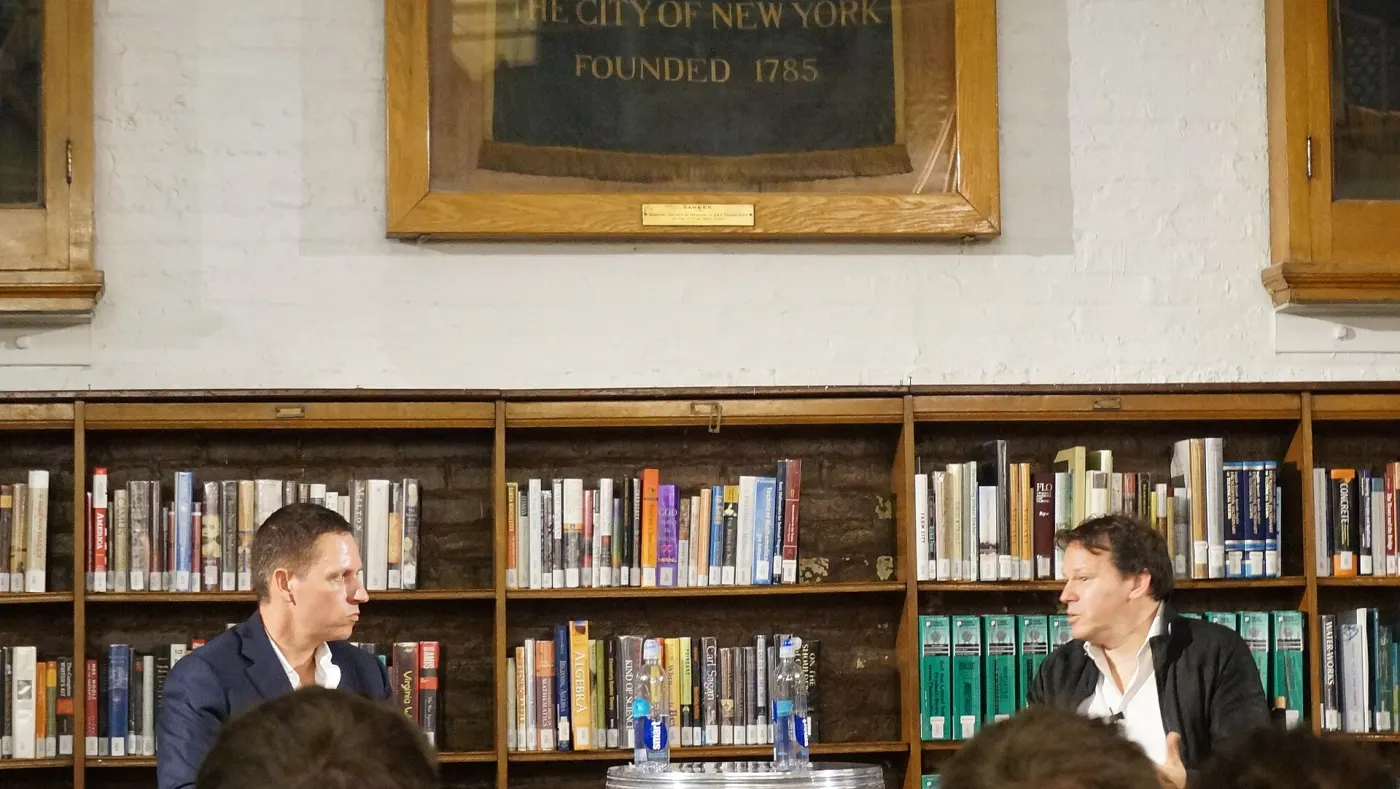
He writes and talks in theses. Stagnation versus progress. Bits versus atoms. Secrets versus crowds. Those talks are not always tidy, and interviewers from Joe Rogan to Ross Douthat to Jordan Peterson have pulled him into theology, AI risk, and apocalypse metaphors. Treat those as intellectual explorations he chose to air, not as corporate roadmaps.
He uses capital as a vote that lasts longer than a news cycle. A five-hundred-thousand-dollar Facebook check, a SpaceX fund commitment, a fellowship stipend, a ten-million-dollar legal war chest: different tools, same instinct to change the payoff matrix.
He accepts public hatred as a cost of certain strategies. That does not make every strategy wise. It explains why he rarely manages his reputation like a consumer brand.
What he built, in concrete terms
PayPal made it normal for strangers to pay each other and small merchants online without mailing paper. That rail underwrote eBay's scale and taught a generation of operators how fraud fighting and product growth braid together.
Facebook's early outside capital and board guidance helped a social network become global infrastructure for identity and media, with all the benefits and harms that followed.
Palantir built software that fuses messy data for analysts in government and industry. Whether one cheers or fears that power, the product category is now central to debates about AI, war, policing, and corporate operations.
Founders Fund and related vehicles pushed venture money into companies that make physical and financial infrastructure, not only feeds. Stripe and SpaceX are the cleanest exhibits for a mass audience in 2026.
Zero to One and the Fellowship changed language. Founders now argue about secrets and monopoly with Thiel's vocabulary even when they reject his politics.
2026: money, machines, and unfinished arguments
As of September 2026, Thiel remains chairman of Palantir while Karp runs the company. The stock's huge capitalization made his remaining personal stake one of the largest single-name concentrations in tech wealth, even after years of sales. Founders Fund continues to sit under marks that dominate venture headlines: Stripe's 2026 tender near one hundred fifty-nine billion dollars, and SpaceX valuation chatter in the trillions ahead of possible public listing plans reported in financial press.
Thiel Macro LLC, a separate vehicle, showed a rebuilt United States long-equity book near four hundred nineteen million dollars in its mid-2026 13F filing after two empty quarters, a reminder that not every entity with his name holds the same assets. Forbes and Bloomberg still disagree on the exact personal total. Readers should treat any single number as an estimate.
World impact is easier to see than net worth. Online checkout feels boring because PayPal and its successors won. Social login and feed culture feel inevitable because Facebook scaled. Governments buy data platforms because Palantir and rivals proved agencies would pay for fusion software. Startup seminars still assign Zero to One. Young builders still apply to skip school with a stipend. American politics still argues about the tech right he helped finance.
None of that settles whether the bargains were good. It settles that they were large.
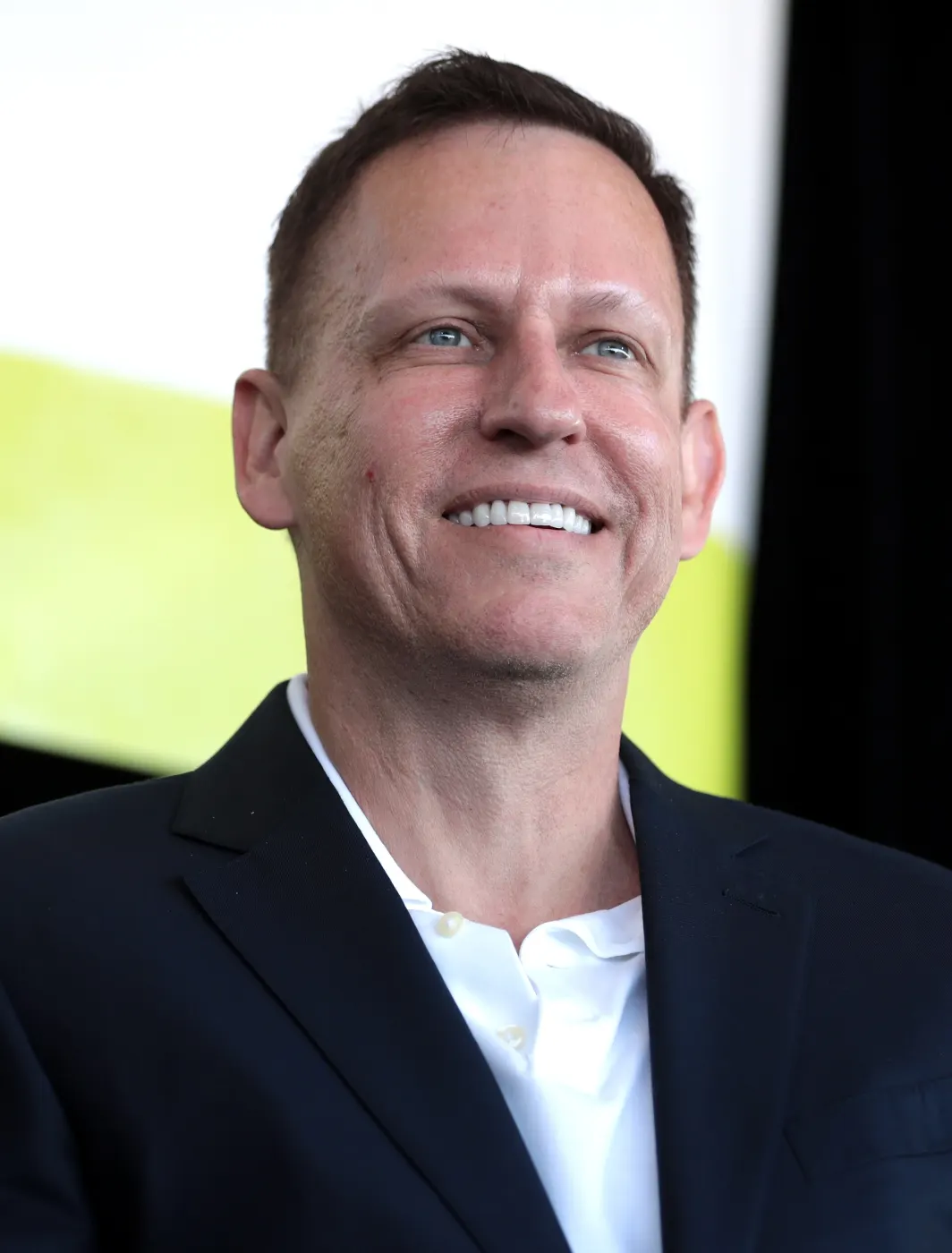
Failures, enemies, and luck
Any honest Thiel film needs the red entries. Clarium's collapse from peak assets humbled the macro-trader myth. PayPal's fraud crisis nearly ended the company before eBay. Internal PayPal politics left bruises that still surface in interviews with Musk and others. Gawker's destruction made him a free-speech villain to one tribe and a privacy avenger to another. Political donations made him a hero or a hazard depending on the cable channel.
Luck was real too. He arrived in Silicon Valley as internet payments and social networks were unformed. He had PayPal proceeds to invest when Facebook needed a believer. He held Palantir through years when public markets mocked government software. Timing is not a moral virtue, but it is part of the plot.
The fraud room that saved PayPal
The romantic version of PayPal is email money and PalmPilot demos. The survival version is a room of analysts and engineers fighting stolen credit cards in 2000 and 2001. Chargebacks could erase a day's growth overnight. Criminal rings tested the system like a game. Max Levchin's engineering culture and Thiel's willingness to hire aggressively for risk created a company that treated trust as a product feature, not a press release.
Alumni later said the intensity forged the PayPal Mafia bond. Shared crisis beats shared free snacks. When eBay bought the company, it was not buying a cute button. It was buying a battle-tested payments network and a team that had already lived through near death. Thiel walked away with fortune and with a template: the hardest operational problem is often the real moat.
Namibia dust and California ladders
Childhood in occupied Namibia is easy to turn into a movie poster. The useful detail is quieter. A chemical engineer's kid watches adults move for work, learns that maps are temporary, and then lands in California schools where chess trophies and debate skills can become social currency. Thiel was not a garage tinkerer in the Jobs mold. He was a competitive intellectual who treated arguments like rated games.
That background helps explain why Stanford Review mattered to him. A newspaper is a cheap institution. You do not need permission from the dean to print. You need writers, a printer, and the nerve to take the heat. Decades later, funding candidates and fellows looks like a scaled version of the same move: build a parallel channel when the main channel feels captured.
Boardrooms, briefings, and the Karp partnership
Palantir's public face is often Karp's, restless and philosophical in interviews. Thiel's role is structural: founder equity, chairman title, recruiting gravity, and a thesis that software should help institutions see patterns across silos. The partnership works because the jobs differ. Karp runs the operating machine. Thiel supplies capital history, customer doors, and a brand that signals seriousness to both defense buyers and enterprise CFOs.
Government sales are slow and political. Commercial sales demand different packaging. Palantir spent years being mocked as a spook vendor that could not expand. Then the stock's later surge forced markets to reconsider. Thiel's patience with unfashionable timelines shows up here. He will sit with an ugly narrative longer than a momentum trader will.
SpaceX, Stripe, and the atoms argument
When Thiel complains that the world of atoms stalled while the world of bits raced, Founders Fund's best marks become the exhibit. Backing SpaceX early meant believing rockets could be iterated like software. Backing Stripe meant believing payments infrastructure could feel like an API. Both companies, by 2026, sit near the center of conversations about industrial capacity and internet commerce.
Thiel is not the founder of either. His documentary role is catalyst and amplifier. Capital plus conviction can pull talent and later capital into a room. That is a softer power than CEO control, and easier to overclaim. The honest version is that without early believers, some of these firms would have died in fundraising winters. With them, the timeline compressed.
JD Vance and the long political bet
The Vance relationship began as ideas before it became ballots. A Yale talk, a mentorship, a venture apprenticeship, then Senate and national politics. By the mid-2020s, when Vance held national office, journalists treated Thiel as a character in the administration's intellectual prehistory. That is influence by patronage and argument, not by holding elected office himself.
For a founder biography, the point is not to campaign. The point is that Thiel applied startup logic to politics: find a talented outsider, fund the early stage, accept reputation damage, and aim for asymmetric payoff. Voters, not investors, deliver the final mark. Recording the method matters because it is part of how he works.
World change you can touch
If you sold handmade goods on the early web, PayPal changed whether you got paid. If you joined a college Facebook in the mid-2000s, Thiel's check was part of the scaffolding that kept the servers alive long enough to become a habit. If you are a refugee caseworker, a soldier, or a bank fraud analyst using Palantir-style tools, you are inside a product category he helped invent. If you raised a seed round quoting Zero to One, you borrowed his language. If you took a fellowship instead of a sophomore year, you walked through a door he paid to open.
World impact is not a compliment. It is a measurement. Thiel's bets moved institutions. Institutions then moved people who never heard his name.
Day-to-day tells
People who meet Thiel in diligence settings describe long pauses, reframed questions, and a preference for talking about what is not being said. He is less interested in total addressable market slides than in why a market is wrongly ignored. He likes founders who can explain a secret in plain speech. He distrusts competition narratives that sound like sports pep talks.
He also compartmentalizes. One week might involve Palantir governance, another a Founders Fund deep-tech review, another a political dinner, another a Fellowship selection discussion. The calendar looks scattered until you notice the filter: every meeting is a search for an edge the crowd refuses to price.
The price of being early and loud
Being early on Facebook looks brilliant after the IPO. Being loud on Trump in 2016 looks prophetic or reckless depending on the news cycle of 2026. Financing the Hogan case looks like justice or intimidation depending on whether one starts from privacy or press freedom. Thiel rarely softens these edges. Soft edges would make him more likable and less himself.
For readers, the discipline is to separate three layers: the product facts, the market outcomes, and the moral contest. This magazine page can deliver the first two with sources. The third belongs to the reader.
Los Angeles distance
Leaving San Francisco for Los Angeles was geography as argument. Thiel wanted space from what he called a one-party culture in the Valley. LA offered entertainment-industry adjacency, different donors, and a less hermetic tech social graph. The move did not end his California identity. It changed which rooms he entered by default.
Distance also sharpened his media strategy. He does fewer interviews than celebrity founders, then chooses long formats where he can develop a thesis for an hour. Rogan, Douthat, Peterson, Cowen: different audiences, same method. Speak slowly. Contest the premise. Leave the clipable fight for later.
What still is unfinished
Palantir's ethics fights are not over. AI safety arguments he joins are not settled. The Fellowship still draws both applicants and protests. Founders Fund still has to prove that atoms-heavy portfolios can outperform through full cycles. Thiel's personal brand remains a Rorschach test in American culture.
A finished biography would require an ending he has not lived yet. Until then, the useful close is operational: watch where he puts the next concentrated check, because that is how he votes when speeches are not enough.
Money as a language he speaks fluently
Thiel's edge is not only selecting winners. It is translating between rooms that barely share vocabulary. Defense buyers speak in authority to operate and classification. Startup founders speak in burn rate and product-market fit. Hedge fund peers speak in asymmetric payoff. Political operatives speak in turnout and narrative. He has spent enough years in each dialect to move value across the borders.
That translation skill explains odd pairings in his calendar. A Fellowship interview can rhyme with a Palantir customer story if both hinge on whether a young team sees a hidden structure. A macro complaint about stagnation can rhyme with a SpaceX board-adjacent dinner if both reject the idea that progress is automatic. The through-line is impatience with complacent stories.
Readers who only know the meme
Internet culture reduces Thiel to a cartoon: the billionaire vampire, the Trump whisperer, the Gawker slayer, the monopoly preacher. Cartoons spread because they are sticky. They fail because they erase the operator who sat in fraud meetings, who wrote checks when Facebook was still "The Facebook," who hired for a newspaper at nineteen, and who watched a hedge fund shrink after a peak that looked permanent.
If this documentary does its job, the meme becomes a footnote. The operator remains.
The magazine reader does not need to adopt Thiel's politics to understand his craft. The craft is selecting non-consensus claims that can become infrastructure, then defending them long enough for compounding to matter.
Closing
Peter Thiel is still only in his late fifties. Palantir's market value can double or halve. Founders Fund marks can slip. Elections can punish patrons. The durable pattern is older than the latest ticker.
A child crosses oceans and learns chess. A Stanford editor builds a paper against the grain. A payments CEO survives fraud and sells to eBay. An investor writes a half-million-dollar check into a college social network. A chairman grows a data company for the hardest customers. A teacher turns lecture notes into a gospel of monopoly and secrets. A citizen funds lawsuits and campaigns that redraw cultural battle lines.
Love him or loathe him, the arc is not small. In 2026 the public estimates of his fortune sit in the tens of billions, the companies he touched move money, attention, and state power, and the questions he popularized still organize how founders talk about the future. The biography ends the only honest way a living documentary can end: mid-game, with the next move not yet forced.
Watch alongside this story
Short cuts from interviews, keynotes and launches. Each plays only the moment that matters.