Grinding It Out: The Ray Kroc Story
Eight mixers
In 1954, Ray Kroc was a traveling salesman with a problem.
He was fifty-two years old. He sold a machine called the Multimixer, a heavy steel mixer that could make five milkshakes at once. For years it had been a good living. Now sales were sliding.
Then an odd order came in. A small hamburger stand in San Bernardino, California, wanted eight Multimixers.
Eight. Most restaurants bought one. Maybe two.
Ray had to see this place for himself. So he flew west, rented a car, and drove out to the desert town east of Los Angeles.
He parked across the street and watched.
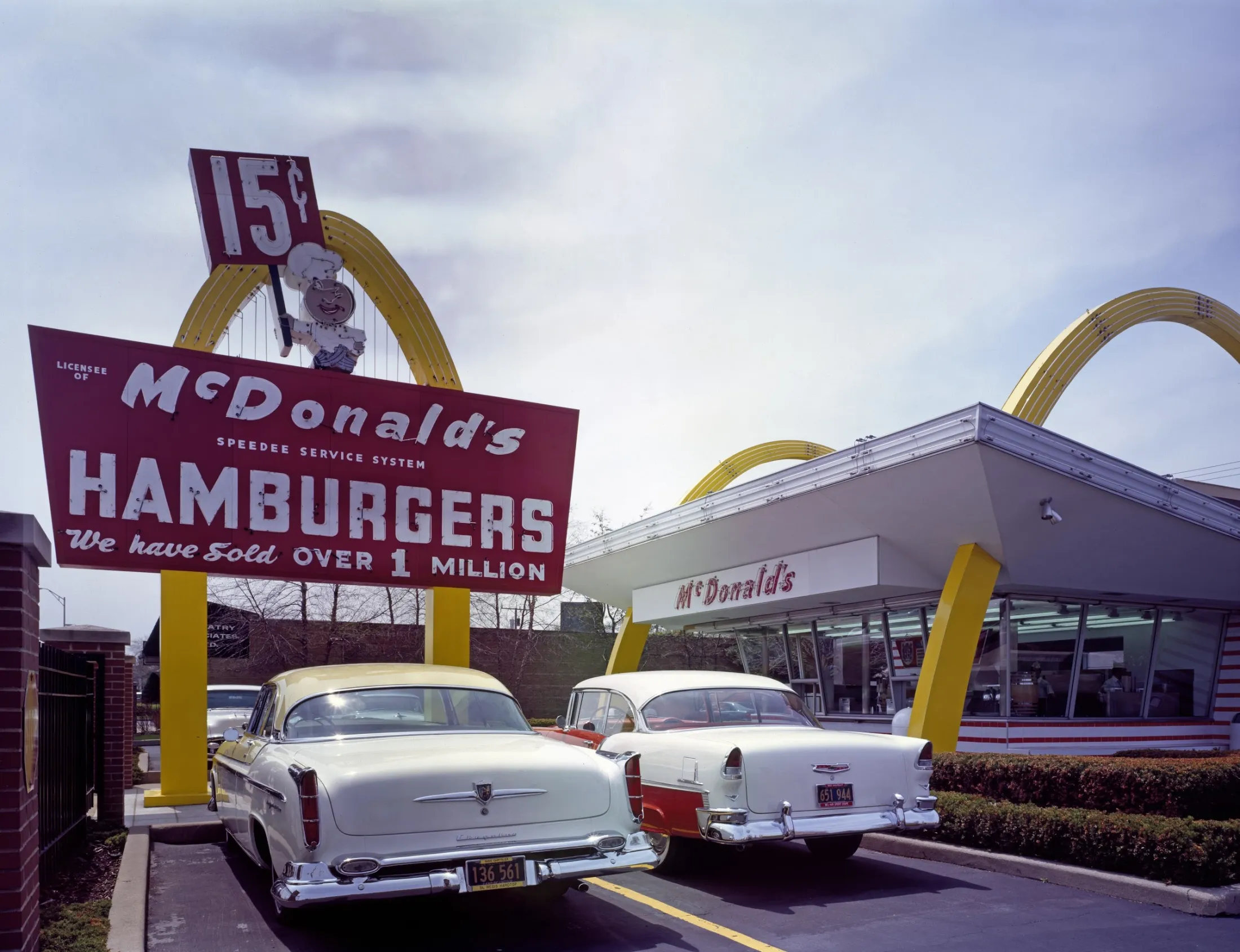
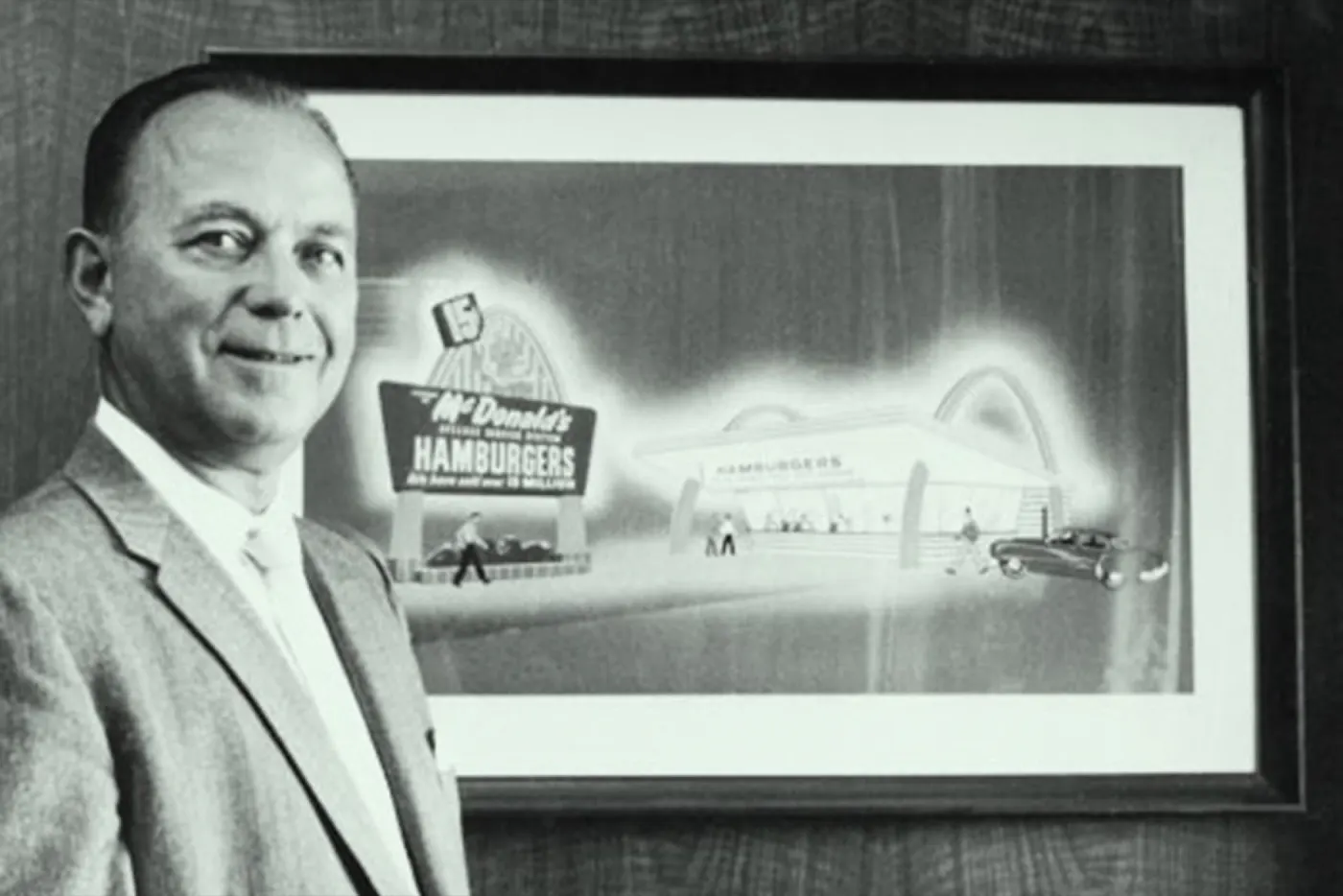
It was not even lunchtime, and there was already a line. Men in work clothes. Mothers with kids. Teenagers. They walked up to a window, ordered, and walked away with paper bags in under a minute. There were no carhops, no plates, no forks. The hamburgers cost fifteen cents.
The whole place was clean. The workers wore white. The windows sparkled. There were flies at every other drive-in in America. Here, he could not find one.
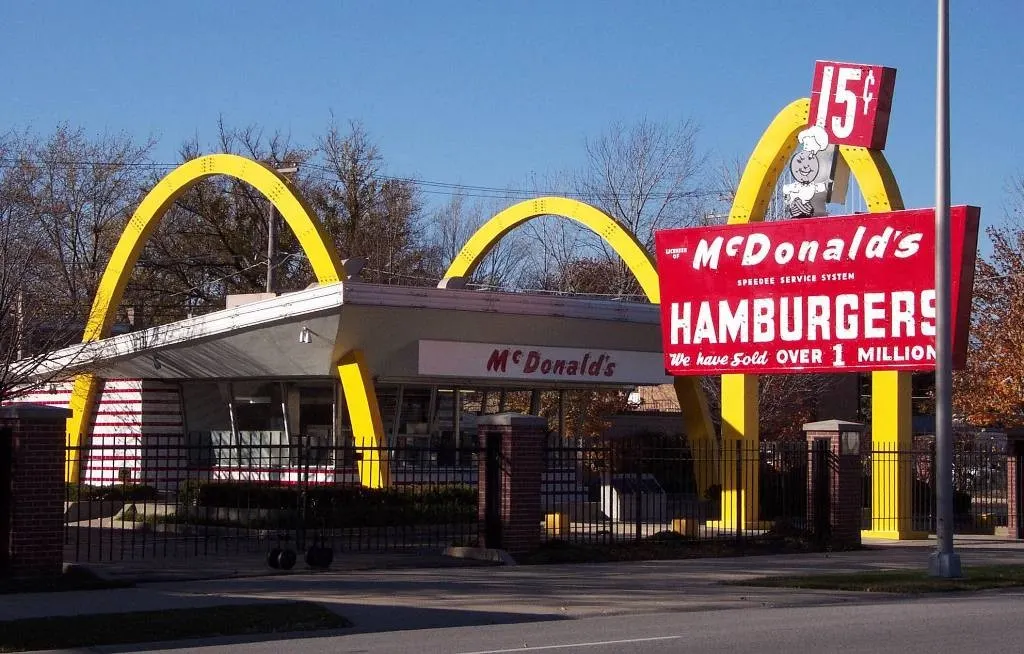
The sign on the building said McDonald's.
Ray walked up to the window, ordered a burger, and talked to anyone who would listen. That night, he later wrote, he could not stop thinking about it. In his head he saw McDonald's stands at crossroads all over the country.
He was not young. He had diabetes. He had arthritis. He had lost his gallbladder and most of his thyroid gland to earlier surgeries. He had no college degree.
But he believed the best part of his life was still ahead.
He was right.
Danny Dreamer
Raymond Albert Kroc was born on October 5, 1902, in Oak Park, Illinois, a quiet town just west of Chicago.
His family had roots in Bohemia, in what is now the Czech Republic. His father, Louis, worked for Western Union, the telegraph company. His mother, Rose, gave piano lessons at home to earn extra money. Ray had a younger brother, Bob, and a younger sister, Lorraine.
The house was full of music. Rose taught Ray the piano, and he loved it. He could play for hours.
He was also a boy who lived inside his own head. He would sit and imagine big plans, whole businesses, whole lives. His family started calling him "Danny Dreamer."
In his memoir, Ray told a strange story from when he was about four. His father took him to a man who read the bumps on people's heads, a practice called phrenology that people then thought could predict the future. The man said young Ray would one day work in food service. Ray told the story with a grin, decades later, when he was the most famous hamburger man on Earth.
He did not care much for school. Books bored him. Doing things did not.
He sold lemonade from a stand in front of his house. He worked at his uncle's soda fountain and learned that a smile and a little chatter could get a customer to buy a sundae instead of a soda. As a teenager, he and two friends pooled a hundred dollars each to open a tiny music store that sold sheet music and small instruments. It failed within a few months.
He learned something anyway. Selling was a game, and he liked playing it.
Ambulance Company A
In April 1917, the United States entered World War I.
Ray was only fifteen. The army would not take him. So he lied about his age and signed up with the Red Cross as an ambulance driver.
He was sent to a training camp. In the same company was another teenager from Chicago who had also lied about his age. The boy spent his free time drawing cartoons while the others chased girls on leave. His name was Walt Disney.
Ray never made it to France. The war ended in November 1918, before his unit shipped out.
He came home and went back to school, but only briefly. He never finished high school. He wanted to work.
Paper cups and piano keys
In the summer of 1919, Ray took a job at a resort area called Paw Paw Lake in Michigan. There he met a young woman named Ethel Fleming. They started dating.
When Ray wanted to marry her, his father said no. They were too young, and Ray did not have a steady job.
So Ray got one. He became a salesman for the Lily Tulip Cup Company, which made paper cups.
He married Ethel in 1922. Their daughter, Marilyn, was born in 1924.
At night, Ray played piano. He played in bands. He played at a Chicago radio station, where he also helped run the music programs. By day, he walked into soda fountains and drug stores and talked about paper cups.
He was good at it. He was neat, always in a pressed suit, hair combed back, shoes shined. He paid attention to how each store worked. He did not just take orders. He showed owners how paper cups could help them sell more.
In the mid-1920s, he took a detour. Florida was in a wild land boom, so Ray moved there to sell real estate. The boom went bust. He ended up playing piano in a nightclub to pay the bills, then drove his family back to Chicago nearly broke.
He went back to Lily cups and stayed for years. He rose to become one of the company's top salesmen in the Midwest.
But all that time on the road came at a price. He was away from Ethel and Marilyn more and more.
The five-spindle mixer
One of Ray's customers was a man named Earl Prince. Prince ran ice cream stores and had invented a mixer with five spindles. It could whip up five milkshakes at the same time.
Ray saw it and felt the old spark. Every soda fountain in America could use one.
In 1939, at age thirty-seven, he left the safe cup job and took the exclusive rights to sell the Multimixer. His wife was frightened. It was a big gamble in a shaky economy.
For a while, it paid off. Through the 1940s, Ray crossed the country selling Multimixers to restaurants, dairy bars, and drug stores. He made a good living.
Then America changed. After World War II, families moved from city neighborhoods to new suburbs. The old corner soda fountains closed. Drive-ins popped up along the highways. Ray's sales began to fall.
He needed something new. He just did not know what it was.
Two brothers from New Hampshire
Richard and Maurice McDonald grew up in Manchester, New Hampshire. Everybody called them Dick and Mac.
In the late 1920s, they moved to California hoping to make it in the movie business. They worked odd jobs on film sets and ran a small movie theater. It did not work out.
In 1937, they opened a food stand near Pasadena. In 1940, they moved to San Bernardino and opened a drive-in restaurant, with carhops who carried food out to cars. It was a hit. They made good money.
But the brothers were not happy. The drive-in had a long menu. The carhops cost money. Teenagers hung around for hours. Dishes broke or went missing. And they noticed something: most of the money came from just a few items, mainly hamburgers.
In 1948, they did something shocking. They shut the whole restaurant for three months.
When it reopened, the carhops were gone. So were the plates and silverware. The menu was cut down to about nine items: hamburgers, cheeseburgers, fries, shakes, sodas, coffee, milk, and pie. A burger cost fifteen cents.
The brothers had designed the kitchen like a factory line. They drew the layout in chalk on a tennis court and had workers act out every move, over and over, until they found the fastest path. One worker grilled. One dressed the buns. One made fries. One made shakes. Each job was simple, and each was done the same way every time.
They called it the Speedee Service System.
At first, customers were confused and business dropped. Then it took off. Families loved the low prices. Workers loved getting their food fast. By the early 1950s, the stand was pulling in hundreds of thousands of dollars a year. It was on the cover of a restaurant magazine.
That was the place that ordered eight Multimixers.
The deal
Ray went back to the stand again and again. He asked question after question. How did they cook fries so crisp? How did they keep it so clean?
The brothers had already tried to franchise their idea. They had signed up a handful of stands, but they did not enjoy the work. They were happy at home, and they did not like to travel.
Ray asked who would sell franchises for them.
"Who could we get?" one of the brothers asked.
Ray said, well, what about me?
They made a deal. Ray would sell McDonald's franchises across the country. Each owner would pay a fee of $950. Then each store would pay 1.9 percent of its sales. Of that, one half of one percent would go to the brothers. Ray's company would keep the rest. Every store had to follow the brothers' exact system. Ray could not change anything without their written approval.
It was a thin deal. It would be years before it made Ray much money.
He signed anyway.
On March 2, 1955, he started a company called McDonald's System, Inc. Before he could open in the Chicago area, he had to buy back the local rights the brothers had already sold to someone else. It cost him $25,000, and he had to borrow to pay it.
Des Plaines
On April 15, 1955, Ray opened his own McDonald's in Des Plaines, Illinois, a suburb north of Chicago. It was meant to be a model, the store he would show to people who wanted to buy franchises.
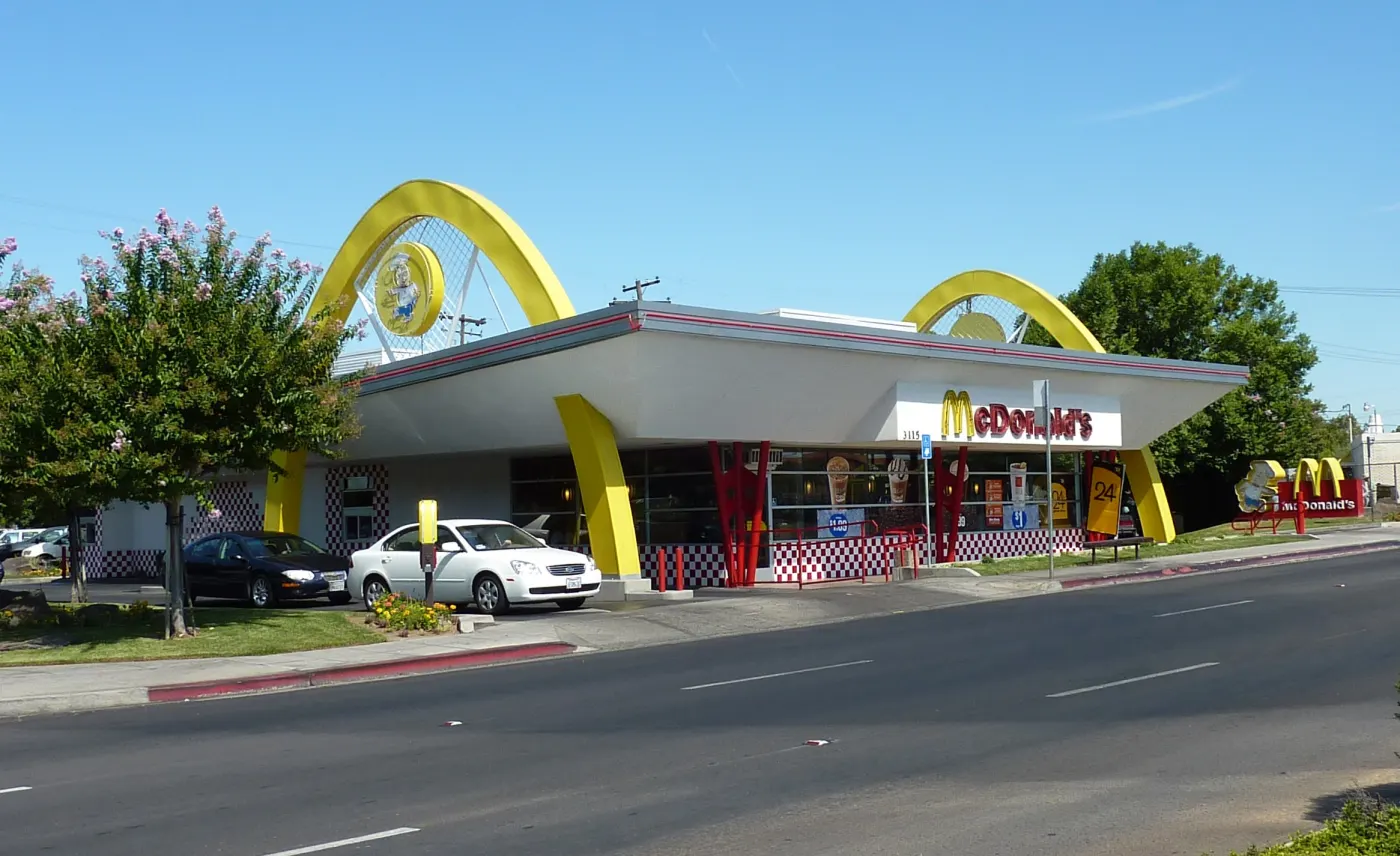
It had red and white tiles and two big yellow arches. Burgers cost fifteen cents.
Ray still kept his Multimixer job. He would go to the Des Plaines store early in the morning, work there, then head downtown to his office.
He was obsessed with the details. He picked up litter from the parking lot himself. He scrubbed the sidewalk. He cleaned out the grease traps. People who knew him said he used a small brush to clean dirt from the holes in a mop wringer. He wanted it to look perfect.
The first year was hard. Cooking in the Illinois weather was different from California. The fries came out limp. Ray and his team worked for months to figure out why. They found that potatoes needed to dry out, or "cure," before frying, the way they did naturally in the dry desert air of San Bernardino. They built a system for storing them.
That kind of problem solving became the heart of McDonald's.
The man who ran the numbers
Franchises began to sell, slowly at first. But Ray was barely making money. His share of the sales was tiny, and he paid for staff, travel, and inspections out of it.
By the late 1950s, McDonald's System was selling lots of hamburgers and still had almost no profit. Ray was deep in debt.
The man who saved him was Harry Sonneborn, a former executive at the Tastee-Freez ice cream chain who joined the company in 1956.
Sonneborn had an idea. McDonald's should not just sell franchises. It should control the land.
Under his plan, a separate company called Franchise Realty Corporation would lease or buy the land and buildings for new restaurants. Then it would rent them to the franchise owners, charging a markup. Rent would be a set minimum or a share of the store's sales, whichever was higher.
Now McDonald's made money every month from every store, no matter what. It also had real power. If an owner broke the rules, McDonald's controlled the lease.
Sonneborn liked to put it bluntly. McDonald's, he told people, was not really in the food business. It was in the real estate business.
Ray did not love that line. He cared about the hamburgers. But he knew Sonneborn had saved the company.
A new kind of partner
Ray chose his franchise owners carefully. He did not want rich investors who would never show up. He wanted people who would work behind the counter themselves.
Many of the early owners were ordinary families. Some were friends from his country club. Later many were couples who put their life savings on the line. Ray liked people who were hungry.
He told them the company would succeed only if they succeeded. His rule was simple: in business for yourself, but not by yourself.
He also had help at the top. June Martino, his longtime secretary and bookkeeper, became a key officer of the company. She kept the books and the peace. Ray gave her stock, which later made her rich.
Then there was Fred Turner.
Turner was a young man who took a job at one of the early stores in 1956. He was sharp, careful, and tireless. Ray noticed him fast. Turner started visiting stores, writing down what worked, and turning it into rules.
He wrote the operations manual. It grew to hundreds of pages. It said exactly how big a burger patty should be: 1.6 ounces, ten to a pound. It said how many pickles went on a bun. It said fries should be cut to a certain width and cooked in fresh oil. It said how often floors, windows, and even the parking lot should be cleaned.
Ray had a phrase for what mattered: QSC. Quality, service, and cleanliness. Later he added a V, for value.
He repeated it until everyone in the company could say it in their sleep.
Hamburger University
In 1961, Turner and Ray opened a training school in the basement of a McDonald's in Elk Grove Village, Illinois.
They called it Hamburger University.
It sounded like a joke. It was not. Owners and managers came to learn how to run a store the McDonald's way. They studied cooking times, equipment, money, and how to lead a crew. Graduates got a degree in "Hamburgerology," with a minor in french fries.
Ray loved it. He believed the system was only as good as the people running it, and training was how you made every store the same.
Hamburger University still exists today. It has trained hundreds of thousands of managers and owners.
Steeples from the sky
By 1958, McDonald's had sold its one hundred millionth hamburger. By 1960, there were more than two hundred restaurants.
Ray wanted a thousand.
He and his team searched for new places in creative ways. In later years, the company plane flew over towns so they could spot church steeples from the air. Ray thought churches meant families, and families meant customers. They looked for schools, new housing, and busy roads.
Ray did not want McDonald's to be a teen hangout. No jukeboxes. No pay phones. No cigarette machines. No pinball. He wanted it to be a place where a mother felt good bringing her kids.
The crews wore neat uniforms. For years, McDonald's hired mainly young men for its crews, a choice critics later called unfair. That policy changed in the late 1960s.
Ray visited stores without warning. If he saw a dirty parking lot, he would climb out of the car and start picking up trash himself. Managers learned to fear that sight.
Heartbreak at home
All this came at a cost.
Ray was in his mid-fifties and working all the time. He and Ethel had grown apart long before.
In 1957, Ray went to a restaurant in St. Paul, Minnesota, to meet a franchise owner. A woman was playing the organ. She was blond, bright, and funny. Her name was Joan Smith. She was married to a man who would later run a McDonald's.
Ray, the lifelong piano player, was smitten.
In 1961, Ray ended his thirty-nine-year marriage to Ethel. He hoped Joan would leave her husband and marry him. She said no.
In 1963, he married Jane Dobbins Green after a very short romance. He later admitted his heart was still somewhere else.
The buyout
By 1961, Ray and the McDonald brothers could barely stand each other.
Ray wanted to change things. He wanted to add freezers, try new menu items, and change store designs. The contract said he needed the brothers' written approval. They often did not give it, and sometimes did not answer at all.
The brothers, for their part, felt Ray was pushing too hard and forgetting that McDonald's was their idea.
Ray decided he had to buy them out. He called and asked what they wanted.
Their answer: $2.7 million, in cash. Enough, after taxes, for each brother to have a million dollars.
Ray was stunned. He did not have that kind of money. Nobody in the company did.
Sonneborn found it. He arranged loans from a group of investors, including money tied to universities. The deal was costly. By the time it was paid off, the total cost to McDonald's was around fourteen million dollars.
The deal closed in 1961. Ray now owned McDonald's.
But there was a catch. Ray thought the price included the brothers' original San Bernardino restaurant. The brothers said it did not. They kept it.
There is also a story, told by the McDonald family, that the brothers were promised a royalty of one half of one percent of future sales, on a handshake, left out of the written contract for tax reasons. Kroc's side did not accept that there was any such promise, and no royalty was ever paid. Had it been, it would have been worth many millions of dollars a year. The two sides never agreed about it.
What happened next is not in dispute.
The brothers could no longer use their own name. They took down the McDonald's sign on their San Bernardino stand and renamed it The Big M.
Then Ray opened a brand new McDonald's just a block away.
By 1970, The Big M had closed.
Ideas from the owners
Ray was full of ideas. Some were terrible.
The people who ran the stores often had better ones. Ray was smart enough, most of the time, to listen.
In Cincinnati, a franchise owner named Lou Groen had a problem. His store was in a heavily Catholic neighborhood. On Fridays, many families did not eat meat, so they went to a fish restaurant nearby instead. His sales crashed every Friday.
Groen created a fried fish sandwich. Ray had his own idea for Fridays: a slice of grilled pineapple with cheese on a bun, which he called the Hula Burger.
They made a bet. On one Friday, both would go on sale, and whichever sold more would win. The fish sandwich crushed the Hula Burger. The Filet-O-Fish went on the menu, and in 1965 it went national.
Near Pittsburgh, an owner named Jim Delligatti wanted a bigger sandwich for hungry steelworkers. In 1967 he built one with two beef patties, special sauce, lettuce, cheese, pickles, onions, and a three-part sesame seed bun. It was called the Big Mac. By 1968 it was sold across the country, and it became the most famous sandwich McDonald's ever made.
In Santa Barbara, California, an owner named Herb Peterson wanted McDonald's to serve breakfast. He built a sandwich from an egg cooked in a round ring, Canadian bacon, and cheese on an English muffin. When he showed it to Ray around 1971, Ray ate two. The Egg McMuffin helped McDonald's open its doors in the morning, and breakfast became a huge business.
The clown and the jingle
Ray believed in advertising. Owners put money into a shared fund, and McDonald's used it to reach families on television.
In 1963, a clown named Ronald McDonald first appeared in TV ads in the Washington, D.C., area. He was played by a local TV personality named Willard Scott, who later became a famous weatherman. Ronald soon became the face of the whole chain.
By the early 1960s, the signs outside every store were counting burgers sold. Over one million. Over one hundred million. In 1963, McDonald's announced it had sold its one billionth hamburger.
Kids begged to go. Parents said yes because it was cheap, fast, and clean.
McDonald's was becoming part of American life.
Going public
In April 1965, McDonald's sold its stock to the public for the first time. The price was $22.50 a share. Within weeks, it had climbed to around $49.
Ray was sixty-two. After a lifetime of chasing money, he was suddenly a multimillionaire on paper. So were many early employees and partners, including June Martino.
In 1967, McDonald's opened its first restaurants outside the United States, in Canada and Puerto Rico. Japan, Germany, Australia, and many other countries followed in the early 1970s.
The company also changed at the top. Ray and Harry Sonneborn had clashed for years. Ray cared about food and people. Sonneborn cared about money and land. In 1967, Sonneborn left. Ray made Fred Turner president in 1968. Turner later became chief executive. Ray stayed on as chairman and kept visiting stores.
Joan
In 1968, at a McDonald's convention, Ray gave an after-dinner speech. He told the room he had everything he had ever wanted in life, except one thing. Joan Smith was sitting next to him. Her husband now ran a McDonald's.
After dinner, Ray invited a few guests up to his suite, where he had a grand piano brought in so the two of them could play.
This time, it worked. Both ended their marriages. On March 8, 1969, Ray and Joan were married.
He was sixty-six. She was forty. Friends said he finally seemed at peace at home.
Joan had strong opinions of her own. She cared about alcohol addiction, peace, and helping sick children. In time, her giving would become one of the biggest parts of the Kroc legacy.
A campaign check
Ray's wealth also pulled him into politics.
In 1972, he gave $250,000 to President Richard Nixon's reelection campaign. Critics questioned the timing, because McDonald's was affected by government decisions on prices and wages at the time. Ray said the gift was simply support for a candidate he liked. The controversy followed him for years.
He did not enjoy politics. He enjoyed selling.
The baseball owner
Ray had loved baseball since he was a boy. He had grown up cheering for the Chicago Cubs. He tried to buy them, but the owner would not sell.
In January 1974, he found another team. The San Diego Padres were losing on the field and losing money. They were about to be sold and moved to Washington, D.C. Ray bought them for around twelve million dollars and kept them in San Diego.
The city loved him for it.
Then came opening night, April 9, 1974.
The Padres were playing the Houston Astros in front of a big home crowd. They were playing awfully. Late in the game they were far behind.
Ray had seen enough. He marched to the public address booth, grabbed the microphone, and spoke to the whole stadium.
He first thanked the fans for coming. Then he told them he had never seen such stupid ball playing in his life.
In the middle of his speech, a streaker ran across the field. Ray shouted into the microphone for security to get him out of there.
The fans cheered. The players were furious. Other teams and the players' union criticized him. Ray apologized to his team, but he did not really change.
He was a boss who had spent twenty years walking into restaurants and telling people what they were doing wrong. Now he was doing it in front of forty thousand people.
The Padres did not win much while Ray was alive. But he kept the team in San Diego, and fans never forgot him.
Ronald McDonald House
In 1974, something else happened that would outlive any hamburger.
In Philadelphia, a football player named Fred Hill had a daughter with leukemia. Families like his traveled far to hospitals and had nowhere to stay near their sick children. With help from the Philadelphia Eagles, local doctors, and local McDonald's owners, a house opened near the children's hospital where families could stay for little or nothing.
It was called Ronald McDonald House.
The idea spread. Today, Ronald McDonald House Charities supports hundreds of houses around the world, and millions of families have stayed in them.
Ray also started the Kroc Foundation, which funded medical research into diseases such as diabetes, arthritis, and multiple sclerosis. He knew some of those diseases from his own body.
How he worked
Ray was not the inventor of fast food. The McDonald brothers deserve that credit, along with many others who came before them.
What Ray did was different. He built a system that could make the same burger, the same fries, and the same clean restaurant in thousands of places at once, run by people who owned their own stores.
He did it with a few rules he never stopped repeating.
First, the details matter. He believed a burger joint lived or died by small things: a clean bathroom, hot fries, a friendly face.
Second, the owners come first. He liked to say that none of us is as good as all of us. McDonald's made money only when its owners made money.
Third, never stop pushing. In his office he kept a famous saying about persistence that is often credited to President Calvin Coolidge. It said that talent, genius, and education are not enough. Only persistence and determination win. Ray lived by it.
He could also be hard. He demanded short hair, clean shoes, and pressed shirts. He fired people for small things. He held grudges, most of all against the McDonald brothers. He could be charming one minute and cruel the next.
In 1977 he published his memoir, called Grinding It Out. The title fit him perfectly.
The last years
In his late seventies, Ray's health began to fail. He had strokes. He used a wheelchair.
On October 2, 1982, the Padres threw him an eightieth birthday party at the ballpark. Fans stood and cheered as he was driven around the field.
Ray Kroc died of heart failure on January 14, 1984, in San Diego. He was eighty-one.
By then, McDonald's had more than seven thousand restaurants in over thirty countries.
That fall, the Padres wore his initials, RAK, on their sleeves. They won the National League pennant for the first time and went to the World Series. Joan, now the team's owner, celebrated with the players on the field.
Joan's gifts
Joan Kroc spent much of her life giving away the fortune.
She funded hospice care, peace studies, and programs for addiction recovery. She gave large gifts to Ronald McDonald House Charities.
When she died in 2003, she left about $1.5 billion to the Salvation Army. The money built Kroc Centers, big community centers with gyms, pools, and classrooms, in poor neighborhoods across the United States. She also left about $200 million to National Public Radio.
Part of the fortune made by selling fifteen-cent hamburgers ended up building swimming pools for kids who had never had one.
The brothers' side
Mac McDonald died in 1971. Dick McDonald died in 1998.
For years, the brothers' story was barely told. Ray was called the founder of McDonald's, and he used that word himself.
The McDonald family always said that story left out the men who invented the system. In 2016, a movie called The Founder, starring Michael Keaton, told the story of Ray and the brothers. It showed Ray as a brilliant, driven salesman who also pushed the brothers aside.
Dick McDonald's grandson, Jason McDonald French, told CBS News his family did not grow up bitter, but they wanted the brothers remembered.
Both things can be true. Dick and Mac created a new way to make food. Ray turned it into one of the largest companies on Earth.
McDonald's in 2026
Seventy years after Des Plaines, the company Ray built is bigger than ever.
By the end of June 2026, there were 46,028 McDonald's restaurants in 114 countries. About 95 percent were owned and run by franchise owners and licensees, just the way Ray set it up. In the United States alone there were more than 13,700. In China there were more than 8,000, and it was the fastest growing big market.
In the spring quarter of 2026, customers spent about $37 billion at McDonald's restaurants around the world. The company's own revenue for those three months was about $7.1 billion, most of it from rent and royalties paid by franchise owners. Harry Sonneborn's real estate idea still pays the bills.
The McDonald's app now has nearly 220 million active users in 70 markets. The company planned to open about 2,600 new restaurants in 2026, and it is aiming for 50,000 restaurants by 2028.
Hamburger University still trains managers in several countries.
What changed because of him
Ray Kroc helped change how the world eats.
Before McDonald's spread, eating out was a treat for many families. Fast, cheap restaurants made it an everyday thing. That brought convenience. It also brought worries, and in later decades doctors and critics linked fast food to rising obesity. McDonald's added salads, fruit, and nutrition information in response.
He changed how businesses grow. His franchise system, with strict rules, shared training, and owners who put their own money in, became the model for thousands of other chains, from hotels to hair salons to gyms.
He changed work. McDonald's became one of the biggest employers of young people in the world. For millions of teenagers, a McDonald's job was their first job. Many managers and owners started behind the counter.
He changed supply chains. To make fries taste the same everywhere, McDonald's pushed farmers and food companies to grow, cut, freeze, and ship food to exact standards. Whole industries grew up around those rules.
And he changed the world's map. The golden arches became one of the most recognized signs on the planet, a symbol of America itself, loved by some and resented by others.
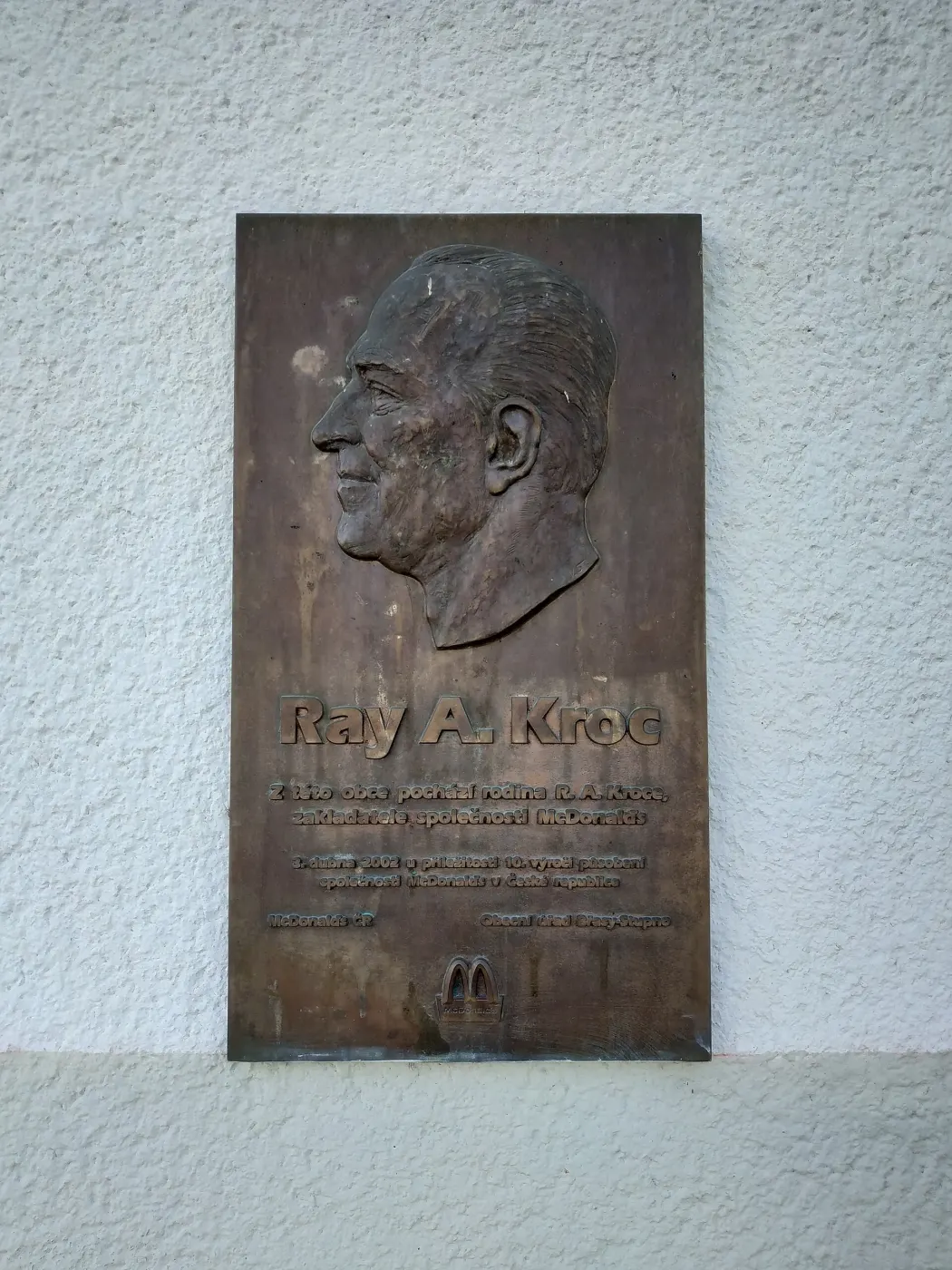
Closing
In 1954, a tired salesman drove out to a hamburger stand in the California desert to find out why it needed eight milkshake machines.
He was fifty-two. He was sick. He had failed at plenty of things before.
He did not invent the hamburger, or fast food, or even McDonald's. He took a great idea from two brothers and turned it into a system that could run anywhere, and then he fought, sometimes unfairly, to own it.
Today, somewhere in the world, a new McDonald's opens every few hours.
The salesman made his last sale. The whole world bought it.