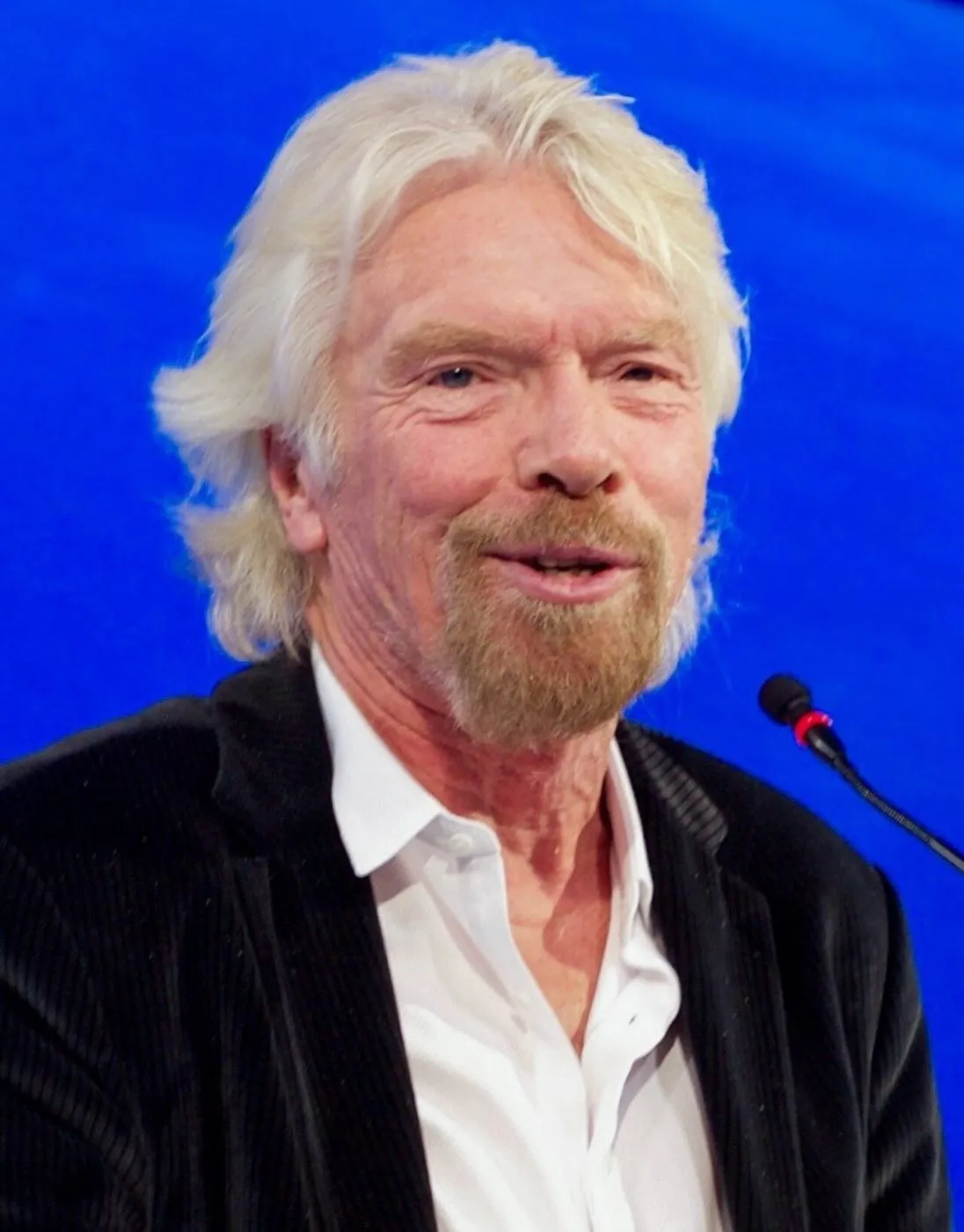
From Student Magazine to Space
A dyslexic school-leaver who started a magazine at sixteen. A record label that rode Tubular Bells and punk. An airline born from a canceled flight and a chalkboard.
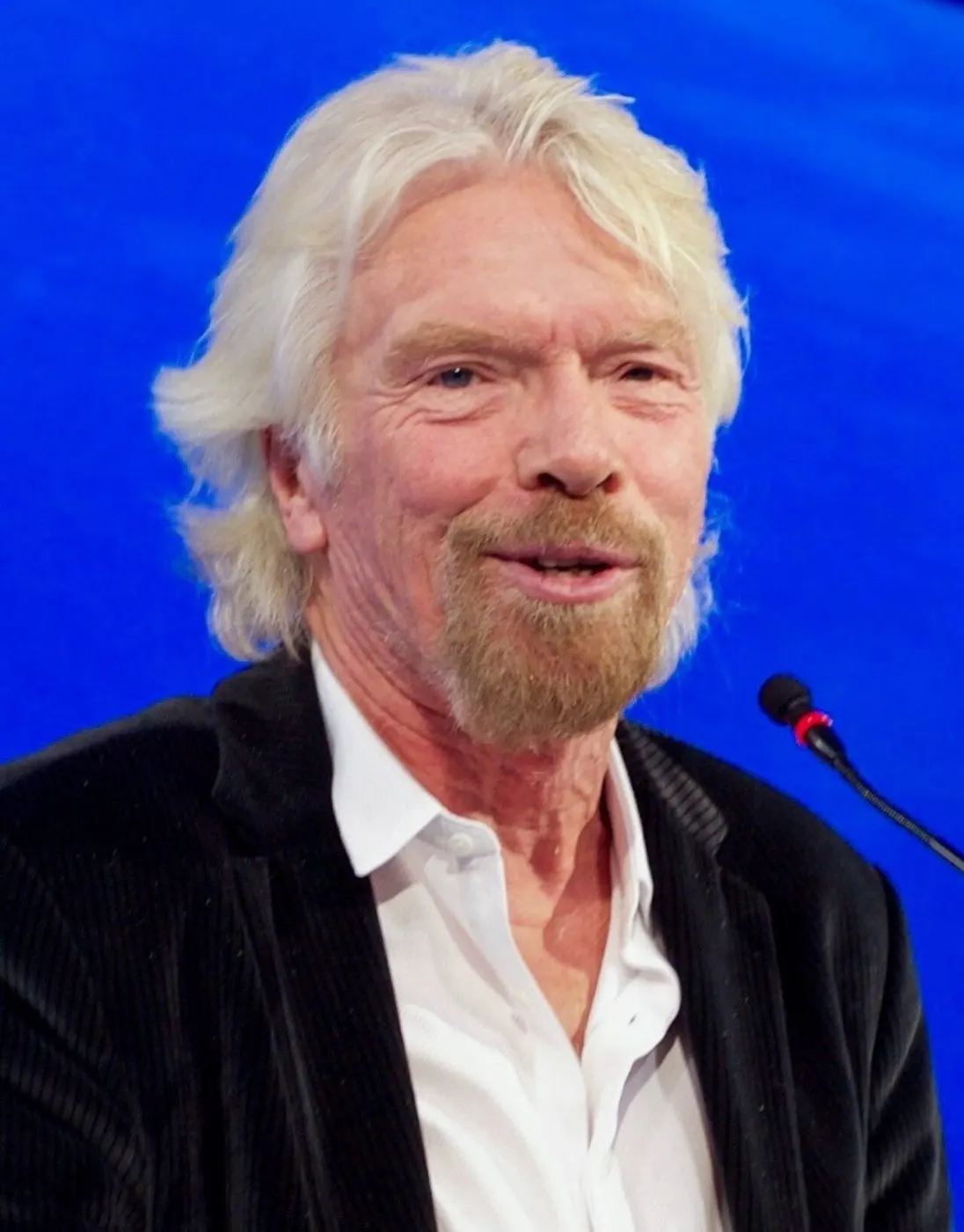
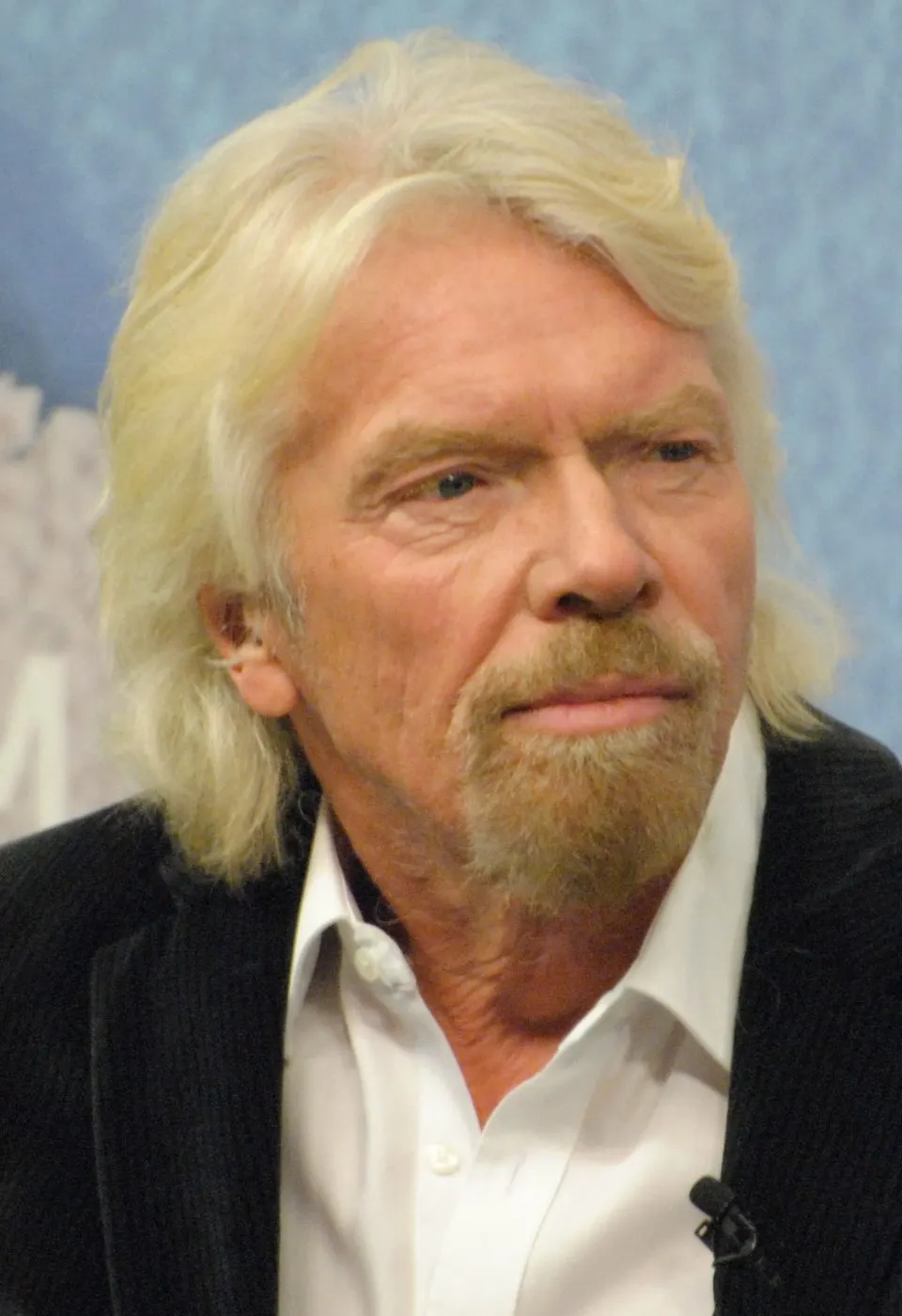
On 11 July 2021, over the New Mexico desert, a white mothership called Eve dropped a smaller craft named Unity. The rocket motor lit. For a few minutes the cabin went quiet and heavy, then weightless. Sir Richard Branson floated where paying passengers would later float. He looked down at the curve of Earth and spoke to children who still only look up.
That flight was not the end of Virgin Galactic's story. In late 2026 the company is still building its next spaceships, the Delta class, with commercial service pushed toward February 2027 after more delays. Branson's personal fortune, according to Forbes updates through 2026, sits near two point eight billion dollars, far below the peaks people once assumed when they saw the grin and the private island.
The number is not the story. The story is how a boy who could not thrive in British classrooms turned customer frustration into a brand that could sell records, seats, gym memberships, hotel nights, cruise cabins, and tickets toward the edge of space. He made entrepreneurship look playful in public while the private work stayed brutal: fuel hedges, libel fights, bankruptcies next door, and nights when the underdog math did not smile back.
This documentary follows that arc through September 2026. The adventures and the balance sheets both belong in the frame.
Blackheath, dyslexia, and the refusal to sit still
Richard Charles Nicholas Branson was born on 18 July 1950 in Blackheath, London. His mother Eve had been a dancer and air hostess. His father Ted was a barrister. The household valued nerve. Eve later became a character in her son's origin stories: inventive, restless, willing to turn found luck into seed money. After she died in January 2021 from complications of COVID-19 at ninety-six, Branson wrote that he owed his career to her, including a necklace she sold that helped fund the early magazine years.
School was a different kind of weather. Dyslexia made print hostile. Stowe School did not turn him into a classic scholar. He left around sixteen and treated the adult world as a better classroom. In interviews decades later he still frames dyslexia as both wound and filter: he could not hide behind paperwork, so he learned to hire people who could, and to listen harder to customers who spoke in feelings rather than spreadsheets.
Around 1966 he began building Student magazine. The first issue appeared in January 1968. He interviewed public figures, sold ads, and ran a Student Advisory Centre that tried to help young people with problems schools preferred not to see. The magazine never became a publishing empire. It did teach him the skill he would use for fifty years: get attention, then convert attention into a next product.
Virgin: a name for people who did not know the rules
By 1970 the magazine needed cash. Branson and his circle began selling discounted and import records by mail. Someone suggested calling the business Slipped Disc. A staffer joked that they were complete virgins at business. The joke stuck. Virgin became the brand.
Mail order almost died in the 1971 postal strike. Branson opened a shop at the cheaper end of London's Oxford Street so the stock could still move. More shops followed. They became hangouts for people who felt out of place in conventional record retailers. The floor was as much culture as commerce.
Early on he also learned how close risk sits to ruin. Import and tax trouble around the young record business forced a painful settlement and left him carrying debts that, in period accounts, ran into tens of thousands of pounds. The lesson was not "never gamble." The lesson was that the state and the bank can end a romantic story overnight.
In 1972 he helped turn a country house into The Manor, a residential recording studio. In May 1973 Virgin Records launched. The first breakthrough was Mike Oldfield's Tubular Bells, catalogue number V2001. The album's strange beauty found a mass audience, helped later by its association with The Exorcist, and suddenly the hippie shopkeepers had a real label.
The mid-1970s were harder. Oldfield could not carry everything forever. Then the Sex Pistols burned through EMI and A&M. Branson signed them in 1977. God Save the Queen and Never Mind the Bollocks shoved Virgin into the center of punk's public fight. The label that began with cosmic instrumentals became a home for post-punk and synth acts: XTC, the Human League, Culture Club, and others. Branson was not the A&R genius in the room every night. Cousin Simon Draper and partners carried much of the music taste. Branson supplied nerve, deal structure, and publicity.
The canceled flight and the chalkboard airline
In 1984 Branson was not looking for an aviation career. He was a music entrepreneur with a taste for stunts. Then a canceled Caribbean flight stranded him and other passengers. In the version he has told for decades, he chartered a plane, wrote a fare on a chalkboard, and sold seats to strangers to get everyone home. The anecdote is polished by retelling, but the business decision that followed was real: if airlines treated customers as cattle, maybe a music brand could treat them as guests.
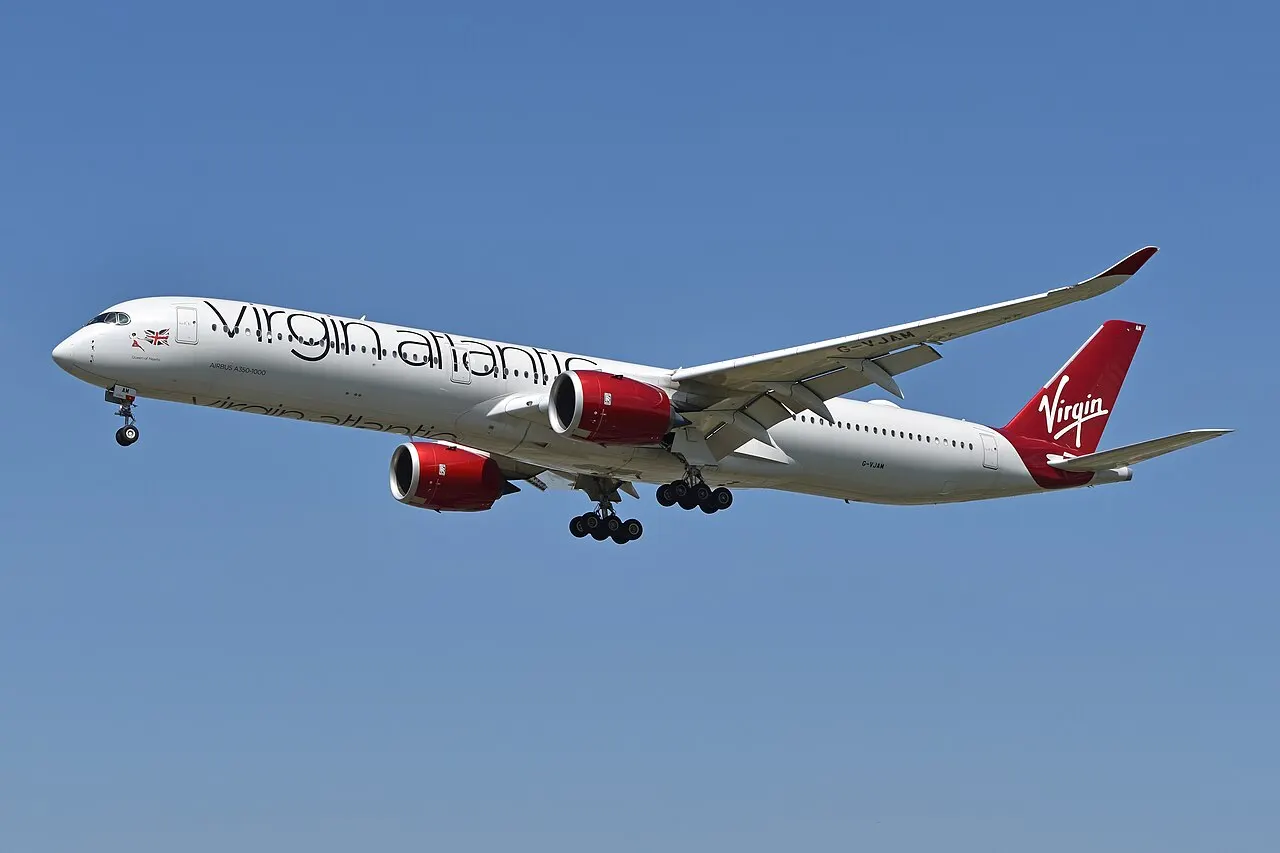
Virgin Atlantic launched that year, initially with partner Randolph Fields, then under Branson's clearer control. The first long-haul reality was leased metal and thin margins on routes like Gatwick to Newark. British Airways was the giant in the room. Virgin's weapon was service theater: better entertainment, friendlier crews, a red identity that photographed well, and a founder willing to dress up, joke, and pick fights in public.
The fight with BA became more than marketing. In the early 1990s Virgin sued over what became known in the press as dirty tricks. The case ended with British Airways apologizing and paying damages. For Branson the courtroom win was also a brand asset: the underdog who beat the flag carrier in daylight.
Selling the music to keep the wings
Airlines eat capital. In 1992 Branson sold Virgin Records to EMI. Press figures commonly place the deal near five hundred sixty million pounds, roughly a billion dollars in the language of the time. Fans felt betrayed. Branson argued that the airline needed the cash more than the catalogue needed his name on the door.
That trade defines him. He will sell a beloved asset to fund the next adventure. He will also keep the Virgin name as a license and culture that can enter new markets without owning every factory. Over the next decades the group spread into mobile phones, health clubs, trains, banking, hotels, cruises, and space. Not every venture worked. Clothing and cosmetics lines faded. Rail franchises ended. Virgin Orbit went public at a multi-billion-dollar story and later went bankrupt in 2023. Brand magic is not a substitute for unit economics.
What remained durable was the method: enter a sector that feels poorly run, attach Virgin's personality, partner for capital and operations, and put Branson's face where advertising budgets cannot reach.
Balloons, islands, and publicity as fuel
Branson treated adventure as marketing that also scared him honestly. He chased Atlantic crossings in balloons when nobody had done them the way his teams attempted. He crashed into the sea. He cut himself free. He went again. TED audiences later heard him describe near-death minutes with the same grin he used for product launches.
Necker Island in the British Virgin Islands became both home and stage. Lightning and Hurricane Irene wrecked structures in 2011. Hurricane Irma smashed the place again in 2017. He rebuilt. The island hosted celebrities, deal talks, and the mythology of the barefoot billionaire. Mythology matters in consumer businesses. It also invites scrutiny when workers are asked to sacrifice while the founder still owns paradise.
He married Joan Templeman on Necker in 1989 after years together. They raised Holly and Sam. In November 2025 Branson announced Joan's death at eighty. The public notes were brief and grieving. A living biography does not need to invent a private ending. It only needs to record that the partner who shared the island years is gone, and that the founder now carries the brand without her.
Space dreams, a crash, and a founder's flight
Virgin Galactic began in 2004 with a promise that ordinary rich people, not only government astronauts, could taste space. The timeline slipped for years. On 31 October 2014 the VSS Enterprise test craft broke apart over the Mojave. Pilot Michael Alsbury was killed. Co-pilot Peter Siebold survived after a fall from altitude. Investigations and redesigns followed. Space tourism's marketing smile had to sit beside a funeral.
Branson kept funding and promoting. On 11 July 2021 he flew on Unity 22 from Spaceport America with pilots and company colleagues. The flight reached about eighty-six kilometers, above the United States fifty-mile line used for astronaut wings, though below the hundred-kilometer Karman line some agencies prefer. He beat Jeff Bezos's Blue Origin passenger flight by days in the media calendar. Critics called it billionaire sport. Supporters called it a proof point for a new industry.
Commercial customer flights on Unity began in June 2023. After a short run of operational flights, Unity was retired around mid-2024. The company shifted to Delta-class vehicles meant to fly far more often. By the second quarter of 2026 Virgin Galactic still had hundreds of millions in cash, was raising equity, and had delayed first Delta commercial service from late 2026 into February 2027 to finish avionics and systems work. Flight testing was aimed at October 2026. A tranche of tickets at seven hundred fifty thousand dollars was reported oversubscribed. Branson's remaining public SPCE stake is a thin slice of his fortune compared with private Virgin holdings. The dream is still a spreadsheet with a countdown clock.

COVID, criticism, and the island as collateral
In March 2020 international flying collapsed. Virgin Atlantic faced the same cliff as every long-haul carrier. Branson asked staff to take unpaid leave and sought support. Public anger was sharp: how can a billionaire with an island ask cabin crew to go unpaid? He argued that without drastic steps the airline and its jobs would vanish. He put Necker up as collateral for financing. In September 2020 the airline completed a privately funded solvent recapitalisation of about one point two billion pounds, including roughly two hundred million from Branson. Further shareholder cash followed, including a four hundred million pound injection split between Virgin Group and Delta Air Lines while ownership stayed fifty-one to forty-nine. Fleet plans shrank. Thousands of jobs were cut. Gatwick operations did not return as before.
To raise cash Branson sold large blocks of Virgin Galactic stock across the pandemic years, more than a billion dollars in proceeds according to contemporary business reporting. Fame did not float the airline. Equity sales, creditor deals, and partner capital did.
The episode bruised the brand of cheerful capitalism. It also showed the limit of personality as a balance sheet. When revenue goes to zero, the grin becomes a press conference.
How he works
Branson's operating system is simple to say and hard to copy.
He picks industries that feel rude to customers. Airlines that treat people as cargo. Banks that confuse. Mobile plans that trap. Then he asks whether Virgin's culture can make the same product feel human.
He decentralizes. Virgin companies often have their own chiefs. The center supplies brand rules, capital allocation, and the founder's megaphone.
He uses himself as media. Balloon attempts, drag-bet flights, beach photos, and stage jokes are not hobbies bolted onto the side. They are distribution. The risk is that the character becomes the product and the product slips.
He writes books that turn scars into curriculum: Losing My Virginity and later Finding My Virginity. The books sell the idea that a dyslexic dropout can out-negotiate empires if he stays curious and hires sharp people.
He says yes too often, then spends years unwinding the yes. Partners and children have described the difficulty of catching his attention when the next idea is already boarding.
He stays close to customer letters. In old TED conversations he talked about answering complaints personally in earlier years. Scale made that impossible, but the instinct remains: the brand promise is a feeling, and feelings break one bad flight at a time.
What Virgin actually changed
Strip away the stunts and the ledger still moves.
Virgin Records widened who got heard in British and global pop, from Oldfield's odd masterpiece to punk's most radioactive band to eighties pop machines. Selling the label did not erase the catalogue's cultural footprint.
Virgin Atlantic forced legacy carriers to take premium economy, cabin mood, and entertainment seriously on competitive routes. Even passengers who never flew Virgin flew on planes that copied pieces of its service script.
Virgin Mobile helped normalize prepaid and youth-friendly telecom packaging in markets that felt stiff.
Virgin Galactic, whatever its delays, pulled suborbital tourism into public markets, New Mexico politics, and ticket deposits that treat space as a consumer SKU. Blue Origin and others share the sky. Branson made sure the conversation included a red logo.
More quietly, Virgin Group's later shape is a family-controlled investment and licensing machine. Virgin Money's sale to Nationwide in 2024 removed a major financial brand from the portfolio while crystallizing cash. Hotels and Voyages sell leisure to people who want the Virgin wink without caring about corporate org charts. The world change is not a single invention. It is the proof that a founder personality can become infrastructure across categories, for better and for worse.
Money in 2026
Forbes and other trackers put Branson near two point eight billion dollars through 2026 updates. The fortune rides on private marks for Virgin Atlantic and other holdings, thin public space equity, and brand economics that are hard for outsiders to audit. He is rich by any normal measure. He is not in the stratosphere with tech founders whose equity prints every second.
That gap matters for the documentary. Branson is famous beyond his wealth rank. He turned showmanship into a substitute for scale in the public mind. The market is colder. Orbit failed. Galactic still burns cash while building Delta ships. Airlines remain fragile. The grin has to clear runway length, not only magazine covers.
Student hustles before Virgin had a name
Before the red logo, there were failed Christmas trees and budgerigars, the kind of teenage experiments that sound cute only after the later fortune arrives. Branson has told versions of those misfires for years. What matters is the pattern: try something that can be sold to neighbors, learn distribution the hard way, move on without waiting for permission.
Student magazine gave him a reason to telephone people above his station. He learned that famous names will sometimes talk to a teenager who sounds confident. He learned that advertisers buy hope. He learned that an advice center attached to a magazine creates moral weight and postal volume at once. None of that scales into a conglomerate by itself. It trains a founder to treat every conversation as distribution.
When the magazine's economics sagged, the mail-order record insert was not a grand strategy deck. It was a rescue. Cheap imports and discounted albums appealed to students who hated high-street prices. The Virgin name arrived as office humor and stayed because it signaled innocence and cheek in one word. Branding professors later wrote case studies. At the time it was a joke that cleared the throat.
Shops, studios, and the texture of early Virgin
The Oxford Street shop and its cousins mattered because they were physical stages. Customers could loiter. Staff could play deep cuts. The stores sold a feeling of belonging to people who did not belong in stiff retail. That same feeling later boarded airplanes as mood lighting and crew banter.
The Manor studio turned a country house into a product. Artists lived where they recorded. Oldfield's long, obsessive sessions for Tubular Bells fit that residential model. Branson and Draper bet that strange music could still be a hit if the company owned the recording and pushed it with unusual patience. When the album connected, Virgin stopped being a cute shop chain and became a label other musicians watched.
Signing the Sex Pistols was not tasteful brand management. Other majors had already burned their fingers. Branson absorbed the scandal because scandal was oxygen. God Save the Queen arrived near a jubilee and forced radio and shops to choose sides. Virgin's identity flipped from hippie inventory to punk lightning rod. Later signings rode the door the Pistols kicked open. Culture Club and other eighties acts then filled the tills with a different glitter. The company learned to surf cultural shocks instead of hiding from them.
Building an airline without an airline resume
After the chalkboard story came the dull work: licenses, slots, leased 747s, insurance, and a product redesign of the long-haul cabin. Virgin Atlantic could not win on route density against British Airways. It could win on whether a passenger felt like a guest. Seatback entertainment, ice cream in the aisle, witty safety videos, and Upper Class lounges with a sense of humor became the arsenal.
Branson flew the routes and posed with crews. He also sat through meetings about load factors and fuel. The public saw costumes. The private company saw a price war. When BA's competitive conduct crossed into territory Virgin could prove in court, the libel and related actions became a second product: justice as marketing. The settlement and apology did not make Virgin the largest airline. They made Virgin the airline that looked brave in British headlines.
Singapore Airlines later bought a large minority stake, teaching Branson another pattern: keep control of the story while sharing the balance sheet. Decades on, Delta's forty-nine percent stake plays a similar role for the modern network. Virgin Group remains the majority partner at fifty-one percent in standard descriptions of the airline's ownership. The founder brand stays British-cheeky while the metal and alliances are global.
Brand latex stretched across industries
Virgin Mobile treated phone contracts as a customer-rights problem. Virgin Active sold gyms as social spaces. Virgin Trains put red liveries on British rails until franchise politics and performance fights ended that chapter. Virgin Money tried to make banking feel less like a scolding. Virgin Hotels and Virgin Voyages chased leisure travelers who already trusted the wink.
Each extension tested how far personality can travel. Sometimes far. Sometimes into a wall. Orbit's collapse in 2023 was a public reminder that aerospace is not a lifestyle brand with engines glued on. Galactic's long cash burn is another. Branson's defenders say the hits fund the experiments. His critics say the logo hides weak units too long. Both can be true in different years.
The internal rule he repeats in interviews is narrow: only enter if the sector feels badly run and Virgin can be meaningfully better for customers. The external reality is messier. Opportunities arrive through friends, headlines, and ego. Saying no is the scarce skill.
Necker as home, stage, and collateral
Necker Island is easy to mock from a distance. Up close it is a working home that storms keep trying to erase. After fires and hurricanes, rebuilding was both personal and symbolic. Guests saw hammocks and sunsets. Branson saw insurance claims and construction schedules.
During COVID the island became a different symbol. Putting it up as collateral told markets he would risk the postcard asset to save the airline. It also told workers and tabloids that the postcard still existed. That tension never fully resolved. Founders who live in public must accept that their private comfort becomes part of the labor story.
Joan Templeman's presence on Necker for decades was part of the emotional architecture. After her death in November 2025, the island photographs land differently. The documentary does not invent her interior life. It notes the absence because any honest 2026 portrait of Branson includes grief beside the product launches.
Galactic's industrial reality after the photo op
Unity 22 made a global audience feel a three-minute weightless cabin. The industrial follow-through is slower. Manufacturing partners, New Mexico spaceport economics, FAA oversight after earlier airspace issues, and a vehicle family change from Unity to Delta all sit between the photo and a weekly flight rate.
Company guidance in August 2026 still pointed toward positive quarterly cash flow within 2027 if Delta ships enter service and fly often. That is a forecast, not a fact. Ticket demand at high price points suggests wealthy customers still want the experience. Cash on the balance sheet buys months, not forever. Branson's remaining public share count is small relative to his private fortune, so his personal upside is less about day-trading SPCE and more about whether the Virgin story still includes space as a living chapter.
The 2014 Enterprise accident remains the moral center of the space beat. A company that sells wonder also accepts lethal risk. Branson's later passenger flight does not erase Alsbury's death. It sits afterward, as a founder choosing to ride the system he funded.
Rivals, peers, and the British founder archetype
Branson is often grouped with other showman industrialists, yet his toolkit is specific. He is not a software monopolist. He is not a pure private-equity stripper. He is a consumer disruptor who uses press the way some founders use growth teams.
British culture gave him a lane: the cheeky knight who refuses a tightened tie on television, who turns up barefoot, who makes capitalism look like a gap-year adventure. That lane inspired a generation of UK entrepreneurs to treat personality as permission. It also created a stereotype that can cheapen serious operators who do not want to wear costumes.
Internationally he became a shorthand for adventure capitalism alongside figures chasing balloons, boats, and rockets. The Rubenstein interview and Ferriss conversation show him translating that shorthand back into management talk: hire people smarter than you, protect company culture, answer the phone when customers shout.
Philanthropy, dyslexia advocacy, and soft power
Alongside commerce he has spent years on ocean and climate messaging, island conservation themes, and dyslexia advocacy through efforts such as Made By Dyslexia. The Eve Branson Foundation's work in Morocco carries his mother's name into practical programs for women and girls. These projects do not cancel airline emissions debates or space tourism critiques. They are part of how he spends attention when he is not launching a cabin design.
Soft power also includes books, speeches, and prison TEDx talks about second chances. He likes rooms where the audience has failed publicly. He tells them failure is tuition. Coming from a knight with an island, the message can sound easy. Coming from someone who nearly lost his core airline and did lose sister companies, it lands with more weight.
What still has to go right
For Virgin Atlantic, fuel costs, labor peace, alliance health with Delta, and premium demand on the Atlantic must keep cooperating. For Galactic, Delta vehicles must actually fly on the new calendar. For the wider group, brand licensing must stay desirable while consumers grow tired of founder mythology everywhere.
Branson himself must decide how visible to remain. At seventy-six, with family losses fresh, he can choose elder statesman mode or keep jumping into campaigns. The companies will continue either way. The myth thins if he disappears, and frays if he overstays the joke.
The honest 2026 scoreboard is mixed and alive: a famous brand family, a repaired-but-scarred airline partnership, a space company still in the factory phase, a fortune near three billion rather than thirty, and a cultural imprint larger than the spreadsheet.
Money lessons hidden inside the grin
Young founders copy Branson's publicity and skip his scar tissue. The scar tissue is the curriculum.
He learned early that a government fine can erase a year of hustle. He learned that a postal strike can kill a mail-order model overnight, which is why shops appeared. He learned that a hit album can save a label and also trap it if you never find the next hit. He learned that an airline without deep capital is a prayer with wings. He learned that selling the music company can feel like betrayal and still be the only adult move. He learned that a courtroom apology from a giant rival is worth more than a dozen billboards. He learned that a private island photographs beautifully and collateralizes awkwardly. He learned that space customers will pay, and that factories still set the calendar.
He also learned to let other people be excellent. Draper on music. Airline chiefs on operations. Partners on capital. Branson's unique job became culture, deal courage, and attention. When he overreaches into every decision, companies stall. When he disappears completely, the myth softens and competitors steal the emotional lane.
The 2026 reader should not copy the costumes. Copy the habit of treating customer frustration as a product brief, then be honest about whether you have the capital to survive the first war.
A note on truth versus legend
Branson is a professional storyteller about his own life. The chalkboard fare, the exact necklace amount from Eve, the precise wording of early staff jokes: these details shift across interviews and books. This documentary treats them as founder anecdotes confirmed by decades of retelling, not as bank-ledger facts. Where public filings, court outcomes, and company press releases exist, those anchor the heavy claims: EMI sale era, BA litigation outcome, COVID recapitalisation figures, Unity 22 date, Galactic's 2026 delay, Forbes wealth band, Joan's 2025 death announcement.
Legend is part of the product. Separating legend from ledger is part of the reader's job. Both belong here because both shaped how millions of people felt when they saw a red tailfin.
World impact beyond British headlines
Branson's largest export may be emotional permission. In countries far from London, founders cite him when they want to look human while selling serious products. Cabin crews elsewhere copied Virgin's tone. Mobile brands elsewhere copied youth packaging. Space startups elsewhere had to answer customer questions Virgin forced into the open: how much, how safe, how soon.
He also exported a warning. Personality-led conglomerates can confuse press share with market share. When Orbit failed, the lesson traveled with the logo. When Galactic delayed again in 2026, ticket holders and shareholders learned that wonder has a factory schedule. When COVID exposed unpaid-leave optics, workers everywhere saw that founder myth and labor reality can collide on the same day.
Impact is not only trophies. Impact is the set of habits competitors copy and the failures students should refuse to romanticize.
The long game after the stunt
Every Branson decade has a stunt that people remember and a spreadsheet that people forget. The stunt gets the camera. The spreadsheet decides whether staff still have rosters next winter. His durable talent is keeping both in the same career without letting either fully kill the other. That balance is rarer than the grin suggests, and it is why the Virgin story still belongs in a founder magazine in 2026 rather than only in a nostalgia reel.
Closing
Richard Branson is seventy-six in 2026. He has buried his mother and his wife. He has sold the record company that made his name. He has nearly lost the airline that remade it. He has floated in a spaceship and returned to island mornings where the next brand extension still knocks.
The usable through-line is not that risk always pays. Sometimes it kills colleagues. Sometimes it forces mass layoffs. Sometimes it ends in bankruptcy court for a sister company. The through-line is that he kept converting customer irritation into a dare, then dared the press to watch.
A boy who could not master school texts mastered attention. A mail-order hustler built shops. A label boss signed a scandal. An airline novice sued a giant and lived. A balloonist fell into the sea and climbed back into the basket. A pandemic-era billionaire took the heat for unpaid leave and still wrote checks. A founder reached space and discovered that the next vehicle is always late.
Love the showmanship or distrust it. The arc is real. In 2026 Virgin's planes still cross oceans, Galactic still sells the dream of looking down, and the barefoot brand still teaches young founders that personality can be a strategy if the operations eventually match the smile. The biography ends mid-air, with the landing gear not yet locked for the last time.
Watch alongside this story
Short cuts from interviews, keynotes and launches. Each plays only the moment that matters.