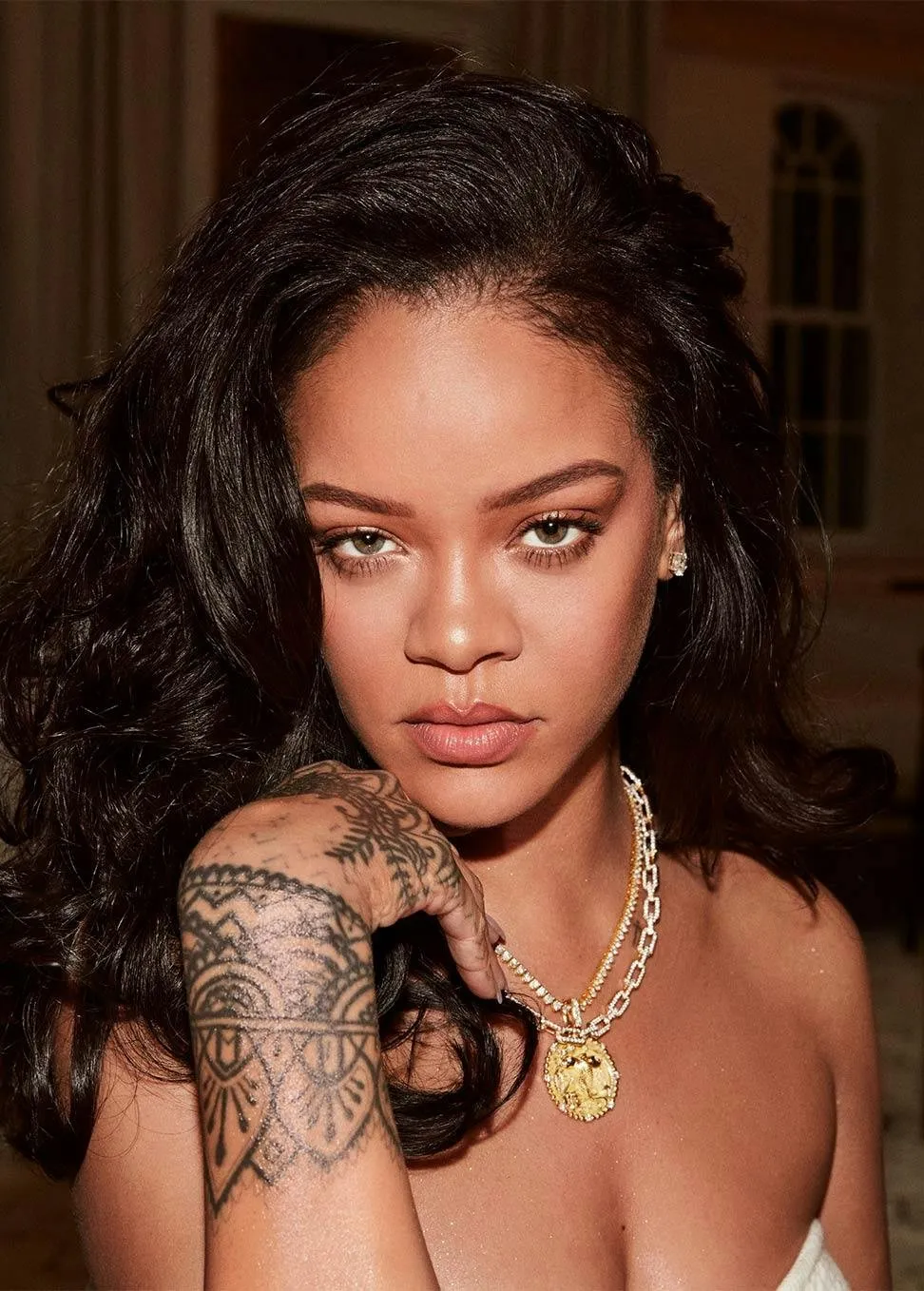
Forty Shades From Barbados
She sold clothes on a street corner with her father. She signed a record deal before dawn at seventeen. Then she built a beauty house with forty shades.
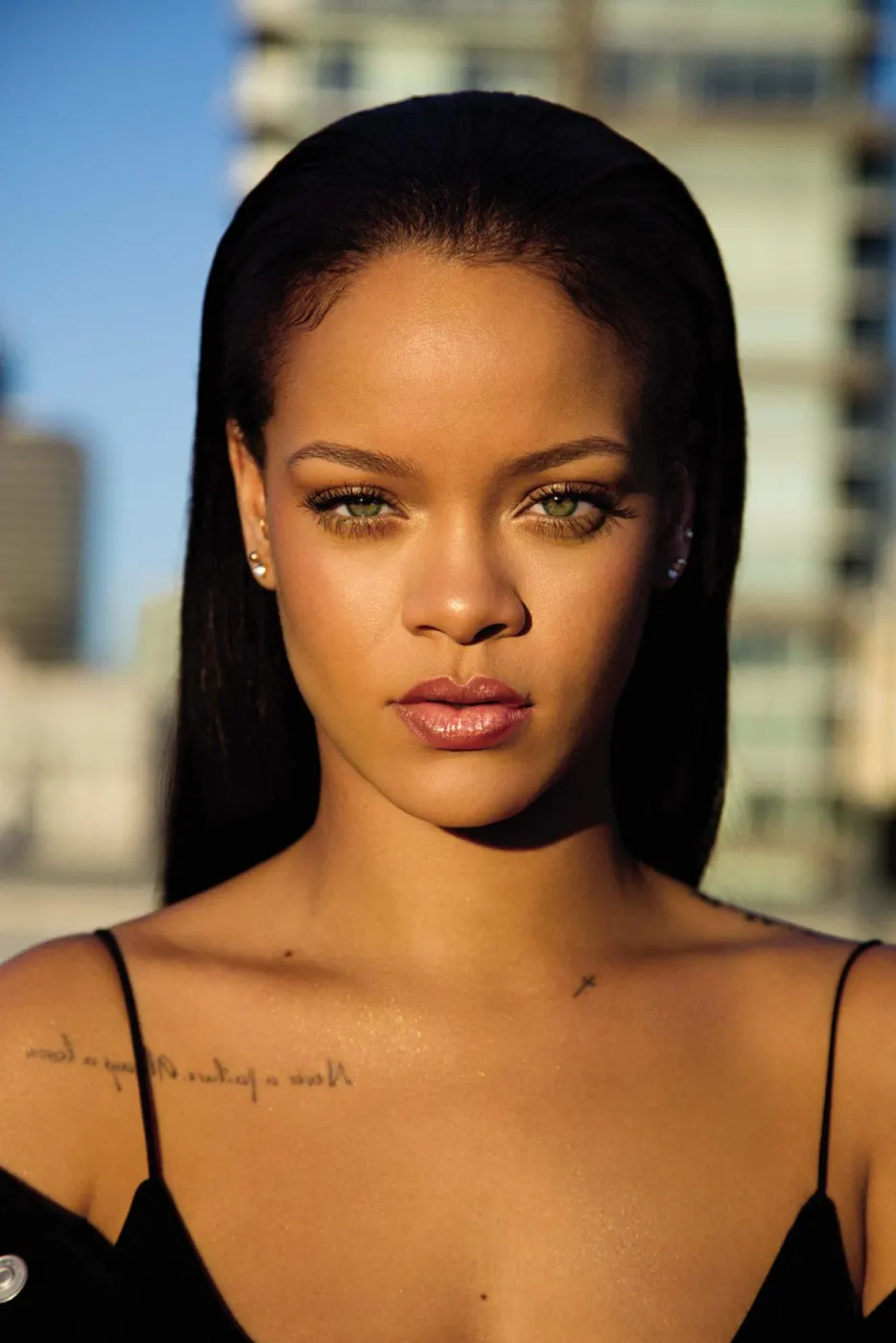
On a February morning in 2023, Rihanna walked into a press room in Phoenix and admitted she had not slept. She had spent the night inside State Farm Stadium, watching three to four hundred crew members practice building a stage and breaking it down in about eight minutes. Her son was nine months old. She had not performed a full show in almost seven years. In three days she would sing to one of the biggest television crowds on earth.
She told the room the truth. When the call came, she wondered if a woman three months after giving birth should be making huge decisions at all. Then she said something about motherhood that sounded like a business plan. Once you become a mom, she said, you feel like you can take on the world.
On Sunday night she rose above the field on a floating platform, dressed in red, one hand resting on a belly that told the world a second child was coming. Midway through the set, she pulled out a small compact and dabbed powder on her face. That powder was Fenty Beauty. The camera saw a pop star. The retail world saw a founder doing a live product demo for more than one hundred million people.
That is the Rihanna story in one frame. The girl from Barbados became one of the best-selling artists of her time. Then she stopped releasing albums and built something that pays better than hits. Forbes named her a billionaire in 2021, with most of that fortune tied to a half share of a makeup company she launched in 2017. The songs made her famous. The shades made her rich.
Westbury Road, a street stall, and a house full of shouting
Robyn Rihanna Fenty was born on 20 February 1988 in Saint Michael, Barbados. Her mother, Monica Braithwaite, was an accountant who had come from Guyana. Her father, Ronald Fenty, worked as a warehouse supervisor. Robyn was the oldest of three children in that house, with two younger brothers, Rorrey and Rajad. Home was a modest bungalow near Westbury Road in Bridgetown.
The island was beautiful. The house was not always calm. Rihanna has said in interviews that her father struggled with alcohol and crack cocaine during her childhood, and that her parents fought often. As a young girl she suffered headaches so sharp that doctors ran scans and worried about a tumor. They found nothing. The headaches faded around the time her parents separated, when she was about fourteen. She later connected the pain to the stress at home.
Money was tight, so the family hustled. Rihanna has described selling clothes with her father from a stall on a Bridgetown street. She learned early that a sale is a conversation. You watch what people pick up. You notice what they put back. You price it so they leave smiling. Those lessons stayed in her body long before she ever walked into a boardroom.
Her grandmother, Clara Braithwaite, whom the family called Dolly, was the soft place in that childhood. Her grandfather was Lionel. Years later she would name her charity after both of them. As a kid she watched charity commercials on television and wished she could help the children on the screen. She did not yet know that one day she would have the money and the platform to do it.
Cadet drills, a girl group, and a hotel room audition
At Combermere School, Rihanna joined an army cadet program. Her drill sergeant was a classmate named Shontelle, who would later become a recording artist too. The cadet program taught order, posture, and loud clear commands. Rihanna already had the loud part. A grade school report card, which she later reprinted in her own coffee table book, described a girl who was sure of herself, took a leading role in group work, and expressed her ideas clearly.
She sang everywhere. She grew up on reggae from Bob Marley and Buju Banton, and she sang along to big voices like Mariah Carey, Whitney Houston, and Celine Dion. She won a local school beauty pageant with a performance of a Mariah Carey song. With two classmates she formed a small girl group. They were teenagers with big hope and no plan.
The plan arrived by accident. In December 2003, an American record producer named Evan Rogers was on vacation in Barbados with his wife, who was from the island. A friend of a friend set up an audition. The three girls walked into his hotel room. Rogers later said that the moment Rihanna walked in, the other two might as well have not been there. She sang a Destiny's Child song and a Mariah Carey ballad. She was fifteen.
Rogers did not sign her on the spot. He did something slower and smarter. Over the next year he brought her to the United States to record demos between school terms. For a teenage girl from a small island, those trips were a first look at a machine far bigger than any stage in Bridgetown.
Connecticut, a demo tape, and a door that stayed locked
By sixteen, Rihanna had moved to Connecticut to live with Rogers and his family so she could record full time. She was homesick. She was also working harder than she ever had. Rogers and his partner Carl Sturken built a demo around her voice, including an early version of a dance song called Pon de Replay. They sent the tape to record labels.
One copy landed at Def Jam in New York. The label's president at the time was Jay-Z. In early 2005, Rihanna walked into his office to audition. She was seventeen and so nervous she later said she could barely look at him. She sang her songs anyway. Jay-Z liked what he heard. Retellings of that night agree on the big picture. He did not want her leaving the building without a contract. Lawyers worked into the early morning hours. By the time she walked out, she had signed a multi-album deal.
Think about how rare that is. Thousands of talented teenagers sing for producers every year. Most never hear back. Rihanna had a voice, but she also had timing, a producer who believed in her, and a presence that made powerful people move fast. She took the chance and did not flinch.
A few months later, in the summer of 2005, Pon de Replay hit radio. The song mixed Caribbean dancehall with American pop, and it climbed to number two on the Billboard Hot 100. Her first album, Music of the Sun, came out in August 2005. She was a new artist with a funny accent to some American listeners and a sound that felt fresh. The island girl was now on the charts.
Pon de Replay to Umbrella: the hit machine years
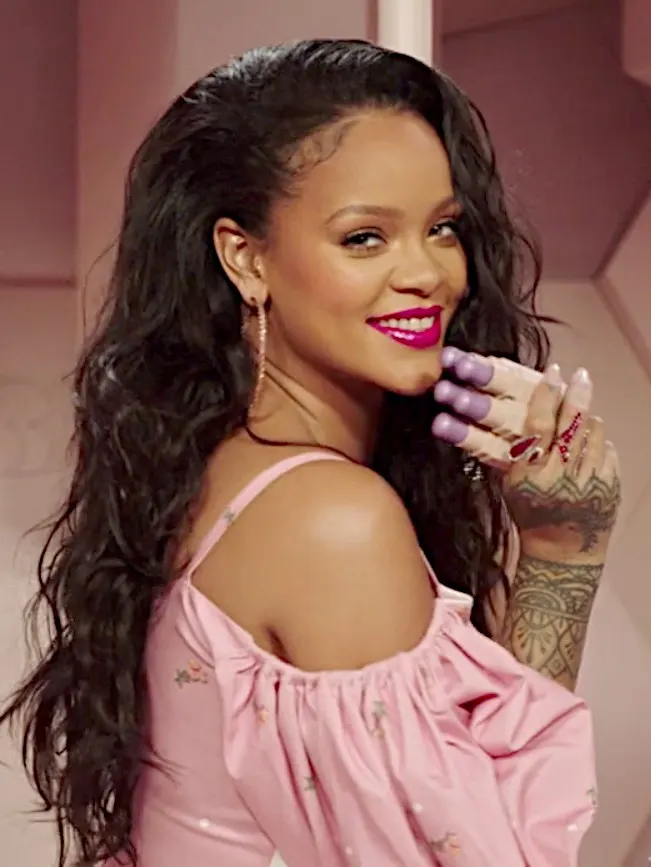
Most new stars take a breath after a first album. Rihanna did not. Her second album, A Girl Like Me, arrived in 2006, less than a year after her debut. It carried SOS, her first number one song in the United States. Then came Good Girl Gone Bad in 2007. She cut her hair into a sharp bob, darkened the music, and released Umbrella with Jay-Z.
Umbrella became a global monster. It sat at number one in the United States for seven weeks and even longer in the United Kingdom. In February 2008 it won her first Grammy. In her acceptance speech she told her father she had promised him her first Grammy, then joked that the two of them might have to fight over it.
For the next several years she barely stopped. A new album almost every November. Tours that crossed continents. Singles that owned radio, then streaming. By the time she paused, she had fourteen number one singles on the Billboard Hot 100 and nine Grammy Awards. The Wall Street Journal later reported that she had sold about sixty million albums and more than two hundred million digital tracks, making her one of the top-selling digital artists ever.
The pace was brutal, and she knew it. She later said that she did not really have a life in those years. She lived out of hotel rooms and tour buses. But inside that grind, she was learning how an entertainment business really works. She saw how merchandise sold at shows. She saw which photos made fans buy. She watched brands pay to borrow her face. She began asking why she was renting out her name instead of owning something with it.
February 2009 and the long walk back
The darkest public moment of her early career came on 8 February 2009, the night before the Grammy Awards in Los Angeles. Her boyfriend at the time, singer Chris Brown, assaulted her in a car. Police photos leaked to the press. The world saw her injuries before she had said a word. Brown later pleaded guilty to felony assault and was sentenced to five years of probation and community labor.
Rihanna was twenty-one. She had to decide how to speak about violence in front of millions of strangers. In a television interview later that year, she said she did not want young girls to think that staying was the right choice. She also said she had felt shame and fear. Her honesty helped many survivors feel less alone, even as tabloids kept picking at the story for years.
Her next album, Rated R, released in November 2009, sounded colder and angrier than anything before it. Critics noticed a new edge. She did not turn the album into a speech. She turned it into art that let her feel something out loud. Then she kept moving.
That pattern matters for understanding the founder she became. Rihanna does not usually explain herself in long statements. She acts. She makes a thing that answers the question people are asking. When the world wanted to see her broken, she made music that sounded like armor. Later, when the beauty industry treated darker skin as an afterthought, she did not write a letter of complaint. She built a product line that made the complaint unnecessary.
Loud, Unapologetic, and the brand deals that taught her
The albums kept coming: Loud in 2010, Talk That Talk in 2011, and Unapologetic in 2012, which finally gave her a number one album on the Billboard 200. We Found Love, a dance track with Calvin Harris, became one of the biggest songs of that era. She was everywhere. Brands noticed.
In 2011 she launched a perfume called Reb'l Fleur. It was a licensed fragrance, the kind many stars sign. More deals followed. She partnered with MAC Cosmetics on limited makeup collections. She designed clothing lines for the British retailer River Island. In 2015 she became the first Black woman to front a campaign for Dior. She worked with shoe designer Manolo Blahnik on boots.
Each deal was a paid lesson. She learned how long it takes to design a lipstick. She learned how factories want minimum orders and how stores fight over shelf space. She learned that most of the money in a licensed product goes to the company that makes it, not the face on the box. That last lesson stung. She was the reason people bought, but she owned little of what they bought.
In the music world, she also tested ownership. She signed with Jay-Z's Roc Nation for management in 2013. When her album Anti arrived in January 2016, it came out first as a free download on Tidal through a sponsorship with Samsung, a deal structure that treated the album itself like a product launch. Anti eventually reached number one, and its tour grossed more than one hundred ten million dollars. Then, to the frustration of fans, the album flow stopped. She had other things to build.
Puma and the Creeper: learning product from the sole up
In December 2014, the sportswear company Puma named Rihanna its creative director for women's lines. Many celebrity titles are just marketing. This one came with real design work. She sat in meetings about materials, soles, and color. She pushed for the look she wore on the street, not what a sports brand thought women wanted.
The result that broke through was a shoe called the Creeper, released in 2015. It was a chunky sneaker with a thick, ridged rubber sole, part classic Puma suede and part punk platform. It sold out quickly. In 2016 the trade magazine Footwear News named it Shoe of the Year. Puma later credited its partnership with Rihanna for part of a rise in its women's sales.
She also took the Fenty x Puma line to Paris Fashion Week, showing full runway collections with themes like a Marie Antoinette fantasy and a preppy boarding school. Fashion editors who once saw her as a pop star now reviewed her as a designer. It was her first real test in a world where taste is judged by people who do not care about chart positions.
The Puma years gave her two tools she would use again and again. First, she learned to run a product calendar, where every season has deadlines and nothing waits for the star to be ready. Second, she learned the power of her family name. Fenty, her father's surname, was plain and strong. It did not sound like a celebrity nickname. It sounded like a house. She had found the word that would sit on everything she built next.
Kendo, LVMH, and a two-year beauty lab
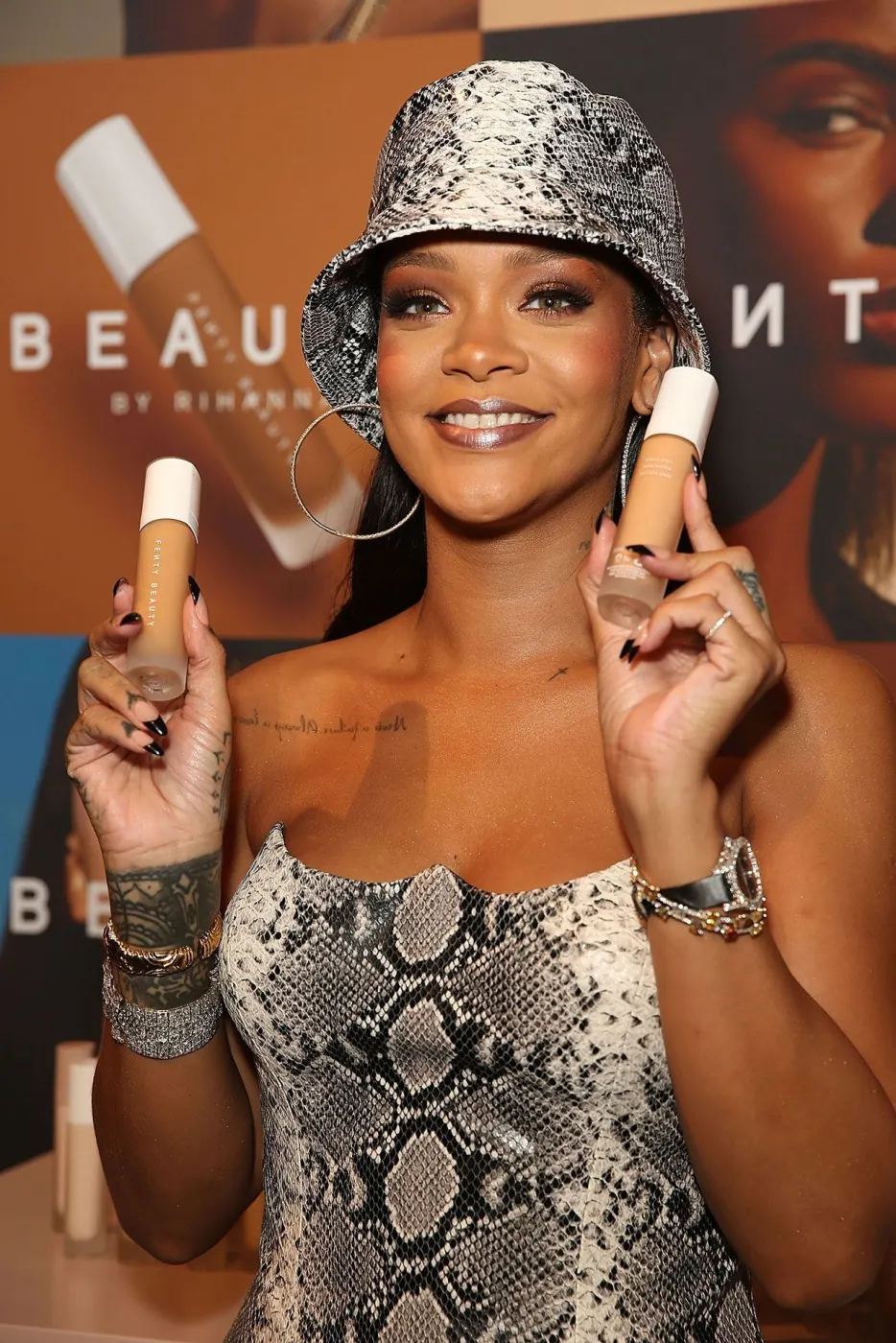
Around 2015, Rihanna began talking with Kendo, a beauty incubator in San Francisco owned by LVMH, the French luxury group behind Louis Vuitton, Dior, and the Sephora store chain. Kendo's job was to build new makeup brands from scratch, handling labs, factories, and shipping while a creative partner shaped the product and the story.
This time Rihanna did not sign a license. She negotiated a joint venture. Forbes later confirmed that she owns half of Fenty Beauty, with LVMH owning the other half through Kendo. That split changed everything about her future. In a license, the star earns a fee or a small royalty. In a joint venture, she owns equity. If the company grows, her share grows with it.
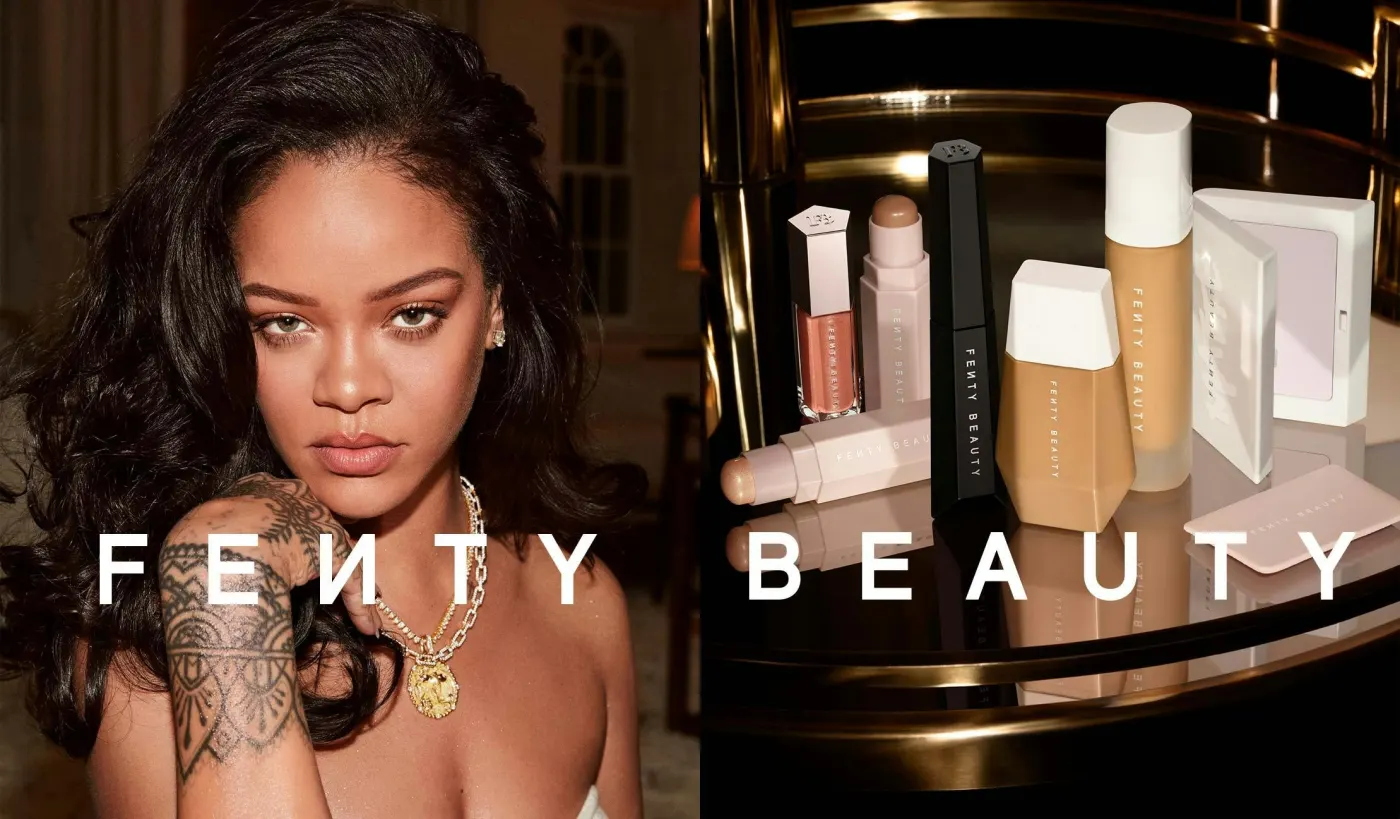
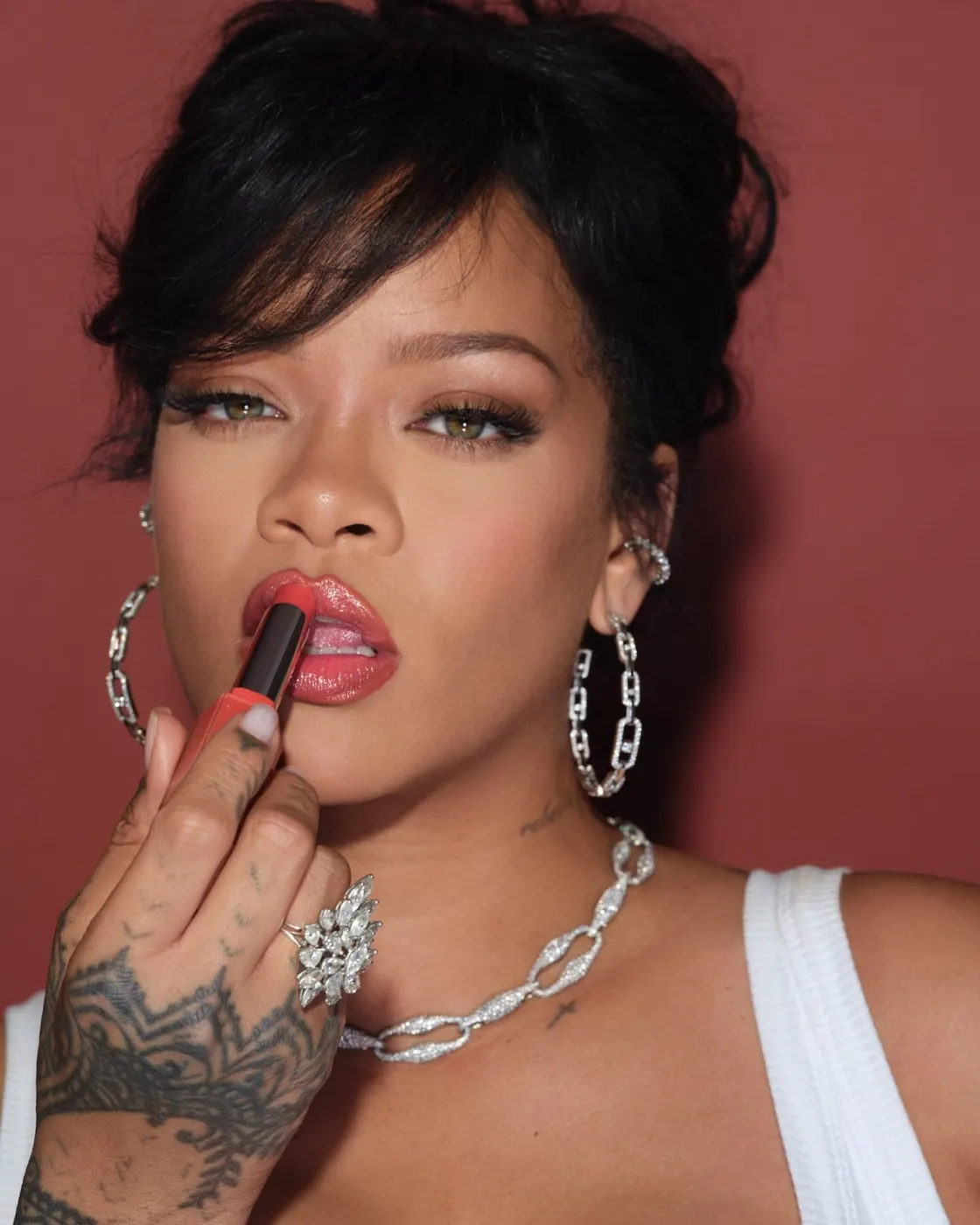
The development took about two years. Rihanna tested formulas on her own skin and on people around her. She pushed on texture, on how a product felt when it went on, and on how it looked under stage lights and on phone cameras. Her team built a foundation called Pro Filt'r in a range of shades far wider than most brands dared. Other companies often made a handful of dark shades as an afterthought. Rihanna wanted the deepest brown and the palest ivory to arrive on day one, on the same shelf, in the same bottle.
She also insisted on the name. Not Rihanna Beauty. Fenty Beauty. The brand would not be a souvenir from a pop career. It would be a company that could live beyond one person's fame. That choice signaled to buyers and to LVMH that she meant to stay.
September 2017: forty shades and the Fenty Effect
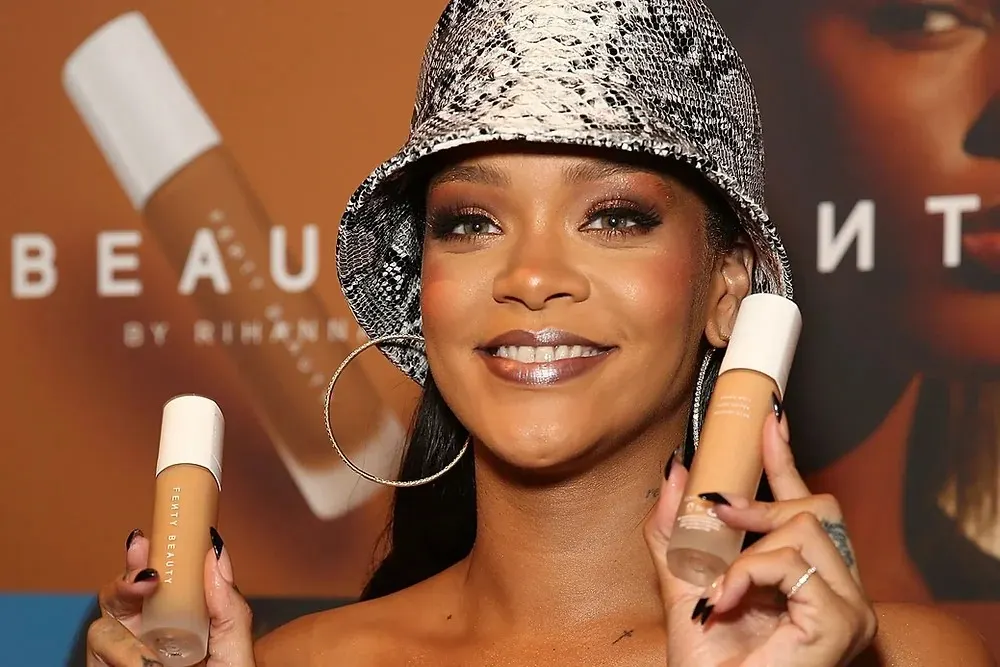
On 8 September 2017, Fenty Beauty launched online and in Sephora stores across many countries at once, with Harvey Nichols in the United Kingdom. The headline product was the foundation in forty shades. Within days, videos of women trying the darkest shades spread across social media. Some shades sold out almost immediately. For many women with deep skin, it was the first time a big-name brand had treated them as the main customer, not an extra.
The launch was a business event as much as a cultural one. LVMH boss Bernard Arnault later said the brand made about five hundred million euros in its first year. Forbes, citing LVMH figures, reported revenue above five hundred fifty million dollars in 2018, the first full calendar year. TIME magazine named Fenty Beauty one of the best inventions of 2017.
The beauty press gave the ripple a name: the Fenty Effect. Within a year, competitors rushed out wider shade ranges of their own. Store shelves that once held a dozen foundation colors now needed room for forty or fifty. Ad campaigns started to feature darker models more often. Rihanna had not only sold a product. She had shifted what customers expected from every brand in the aisle.
Her own social media did heavy lifting. She posted makeup tutorials, answered fans, and wore the products on red carpets. When Fenty Beauty later expanded its foundation to fifty shades, it again turned an inventory decision into news. A pop star with tens of millions of followers could launch a product and test demand in a single afternoon. Few traditional beauty companies had that kind of direct line to buyers.
Savage X Fenty: lingerie for everyone watching
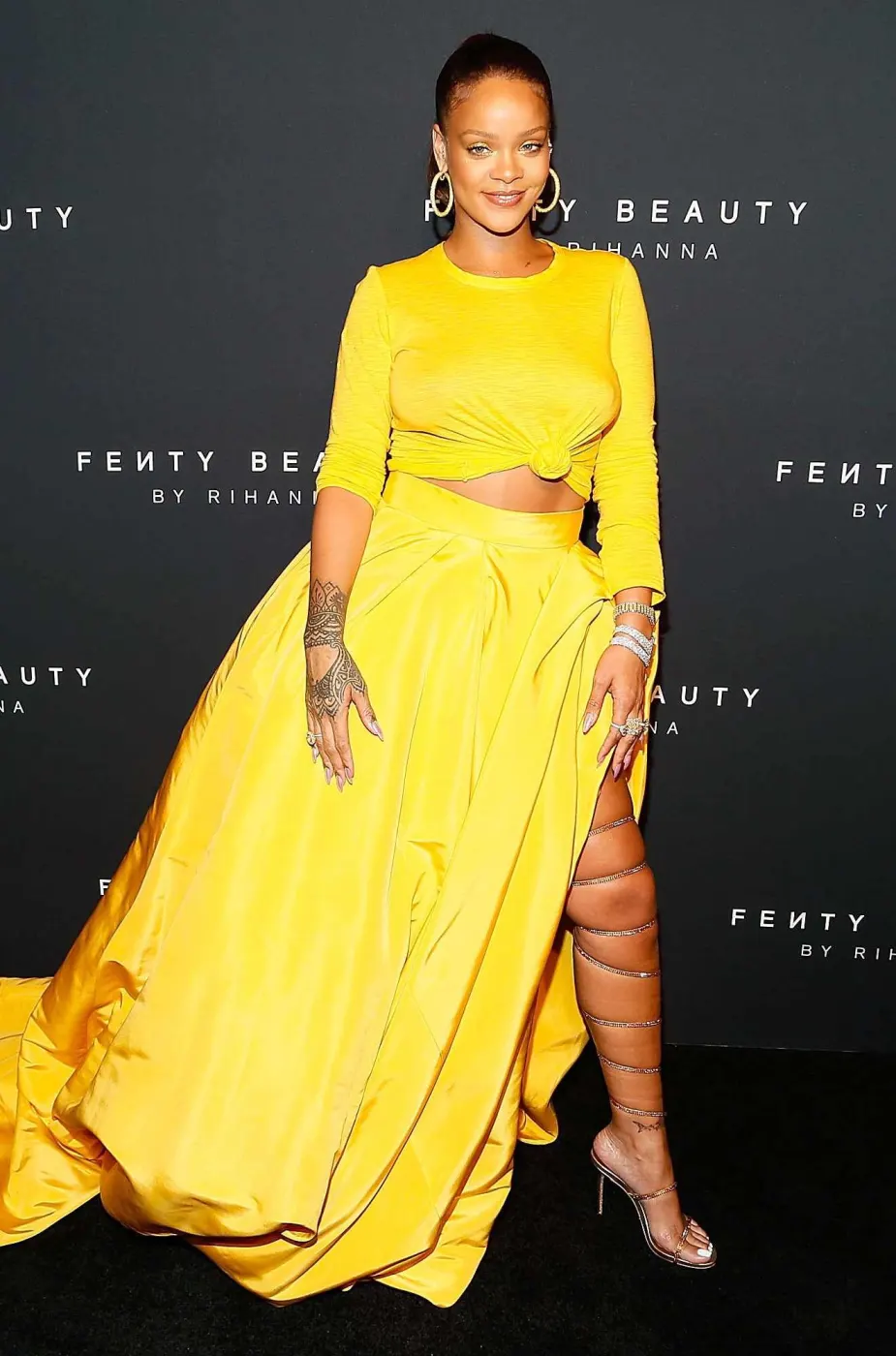
In May 2018, less than a year after the makeup launch, Rihanna started a lingerie brand called Savage X Fenty with TechStyle Fashion Group, the company behind online fashion subscriptions. The target was obvious. For decades, Victoria's Secret had owned American lingerie with one narrow idea of what a sexy body looked like. Rihanna offered bras and underwear in a wide range of sizes, sold mostly online, with an optional membership priced around fifty dollars a month.
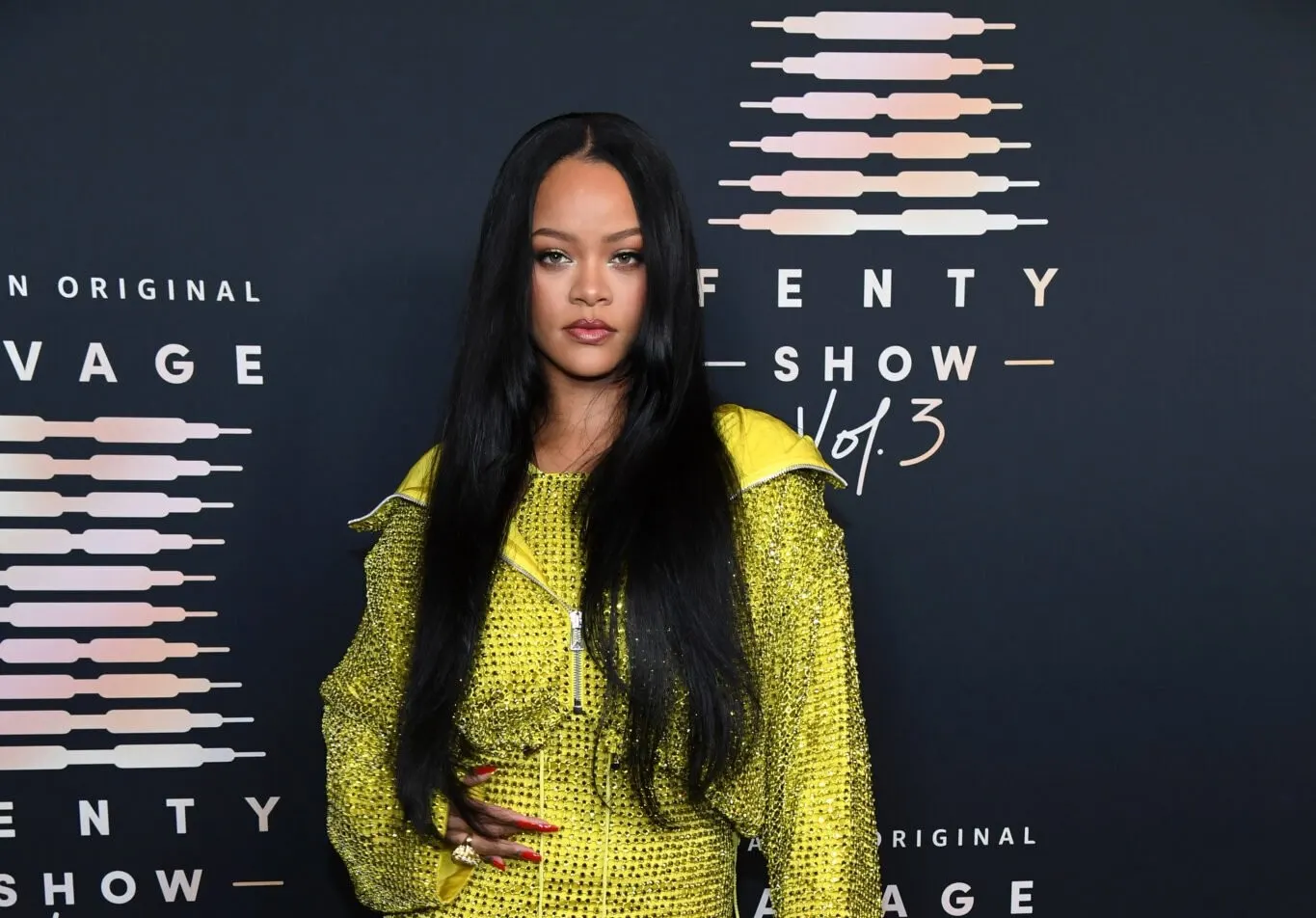
The company grew fast. The Wall Street Journal reported about one hundred fifty million dollars in revenue in 2019. That September, the brand's runway show streamed on Amazon Prime Video. It looked nothing like the angel wings of its rival. Dancers of different sizes, genders, and skin tones moved across the stage. Pregnant models walked. Celebrities made cameos. The show became an annual event, and the third edition won an Emmy for choreography by Parris Goebel.
Investors noticed. In February 2021 the company raised one hundred fifteen million dollars at a valuation of about one billion dollars. In January 2022 it raised another one hundred twenty-five million. Bloomberg reported that year that the company was considering a public listing that could value it near three billion dollars. Forbes estimated Rihanna owned roughly thirty percent.
Savage X Fenty later opened physical stores, first in cities like Las Vegas and Los Angeles. A senior executive there told Bloomberg that stores should feel like an experience, not a transaction, and described in-store 3D body scanning that helped women find the right bra size. She said Rihanna was deeply involved in everything, from product development and store assortment to marketing and the models the brand hired.
Paris 2019: a maison, a pandemic, and a pause
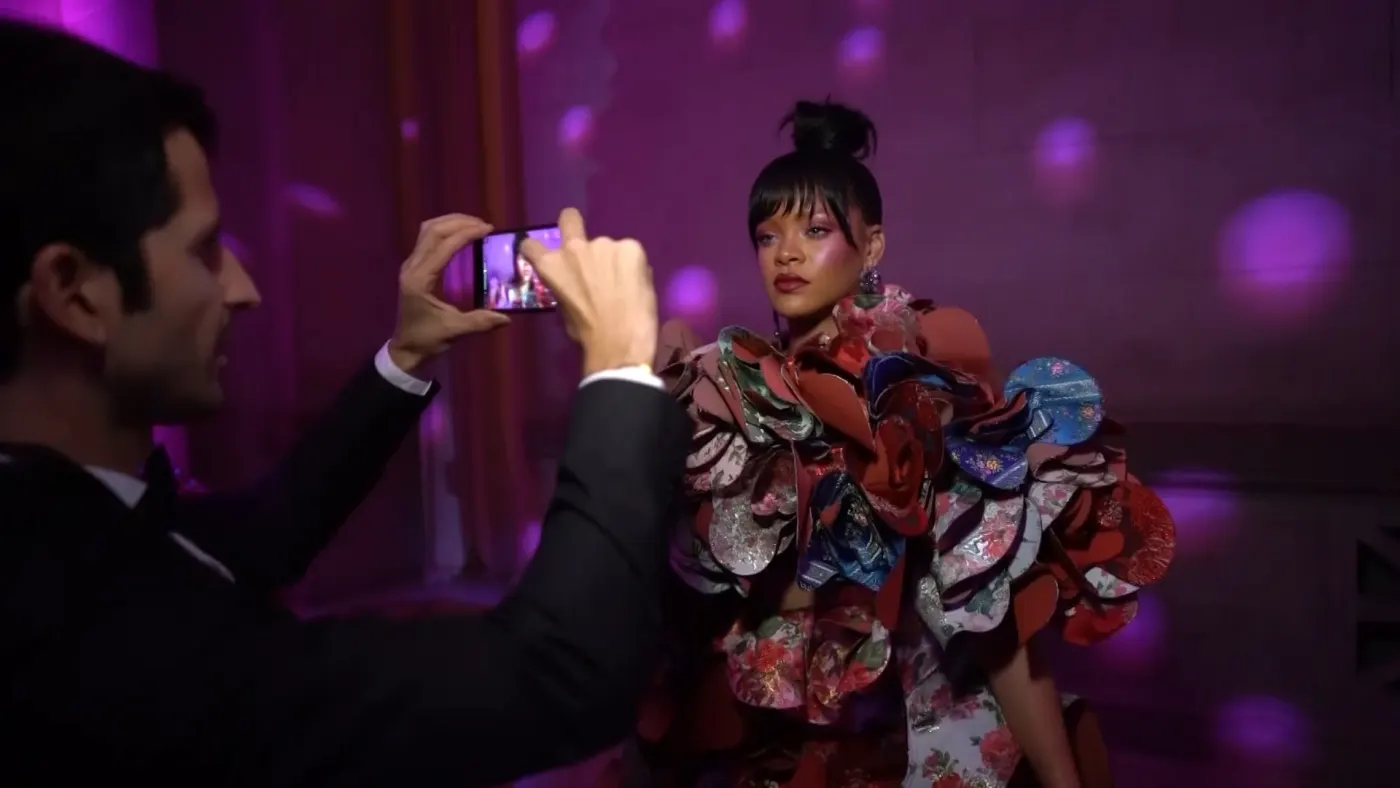
In May 2019, LVMH and Rihanna announced a fashion house called Fenty, based in Paris. The news made history. It was the group's first brand-new fashion house since 1987. Rihanna became the first woman to create an original brand at LVMH, and the first woman of color to lead one of its fashion houses. She opened a pop-up shop in Paris and sold clothes, shoes, and sunglasses online around the world.
The idea was bold. Luxury fashion runs on seasons, runway shows, and slow, careful pricing. Fenty tried to move faster, with online drops that felt more like streetwear. Critics praised some pieces and questioned the prices of others. The ready-to-wear market proved much harder to crack than makeup, where a single hit product can carry a whole brand.
Then the pandemic arrived. Stores closed. Factories stopped. Luxury shoppers stayed home. In February 2021, LVMH and Rihanna announced they would pause the Fenty fashion house. They said they would focus instead on the beauty and skin lines, where the numbers were stronger.
It was the first public failure in her business story, and she did not pretend otherwise. She did not blame the market in long interviews or fight the decision in the press. The fashion house simply went quiet, and the teams moved on to products that were working. For a founder, that is a real skill. Knowing when to stop spending money on a beautiful idea is as important as knowing when to start.
Billionaire on paper
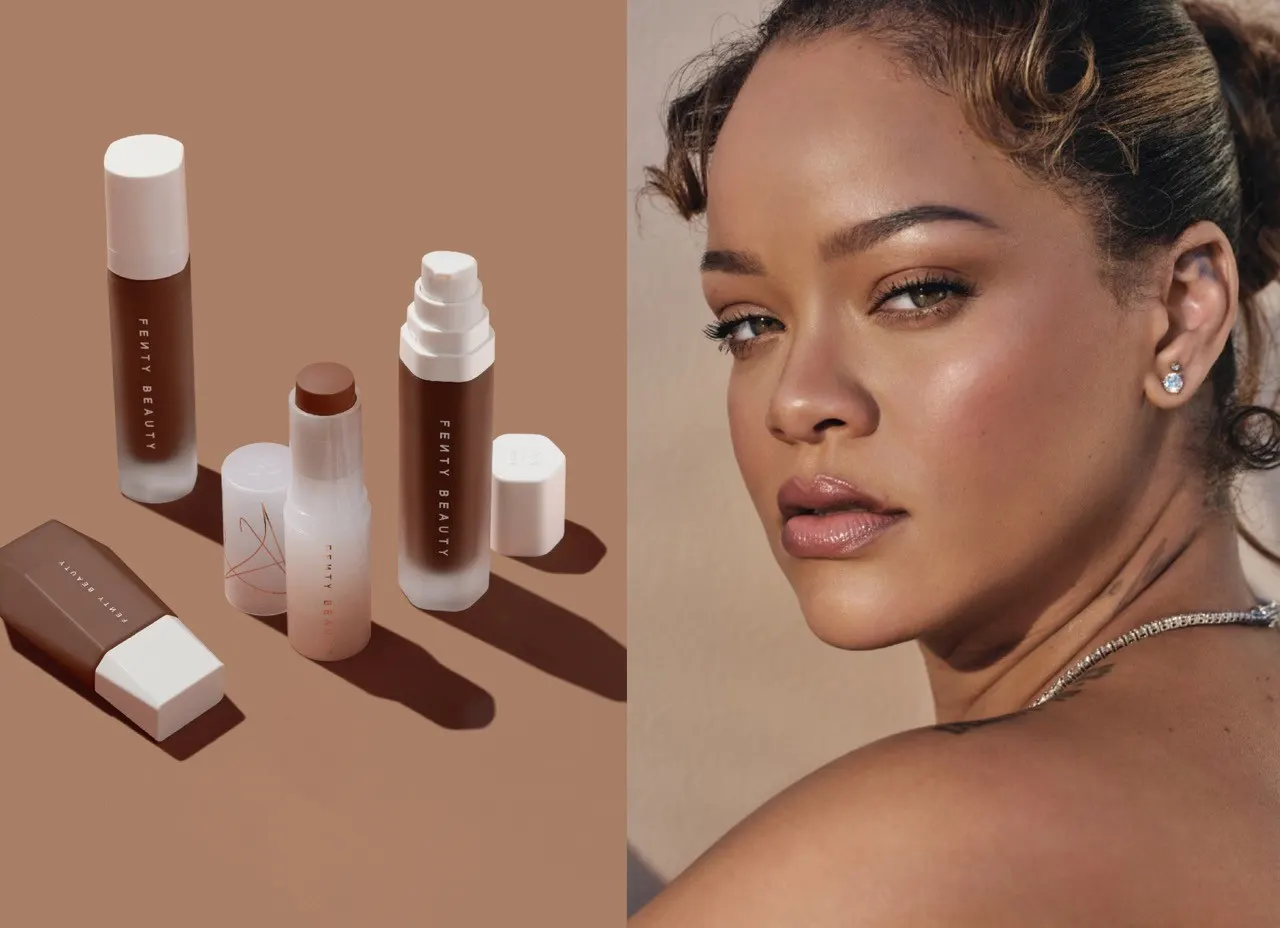
In August 2021, Forbes announced that Rihanna had become a billionaire, with an estimated net worth of about one point seven billion dollars. Forbes said most of that value came from her half of Fenty Beauty, which it valued at about two point eight billion dollars. Her Savage X Fenty stake added a few hundred million more. Her music catalog, tours, and endorsements were a smaller slice.
The headline was striking. She was, in Forbes' reckoning, the wealthiest female musician in the world. Yet she had not released a new album in more than five years. The money came from companies, not concerts. She had turned a pop career into a portfolio.
Numbers like these are estimates, and they move. Private companies do not publish full accounts. Valuations depend on what buyers might pay on a given day. Later Forbes estimates put her fortune near one point four billion dollars, as beauty markets cooled and valuations for celebrity brands fell. By 2025, Reuters reported that Fenty Beauty had net sales of around four hundred fifty million dollars in 2024.
What is not an estimate is the structure. She owns equity. She holds half of the biggest brand and a large minority share of the second. Most celebrities who sell products still earn fees. Rihanna earns ownership. That difference is why a woman who sold clothes from a street stall in Bridgetown could land on a list next to steel magnates and software founders.
How she works: bossy, hands-on, and naming lipsticks
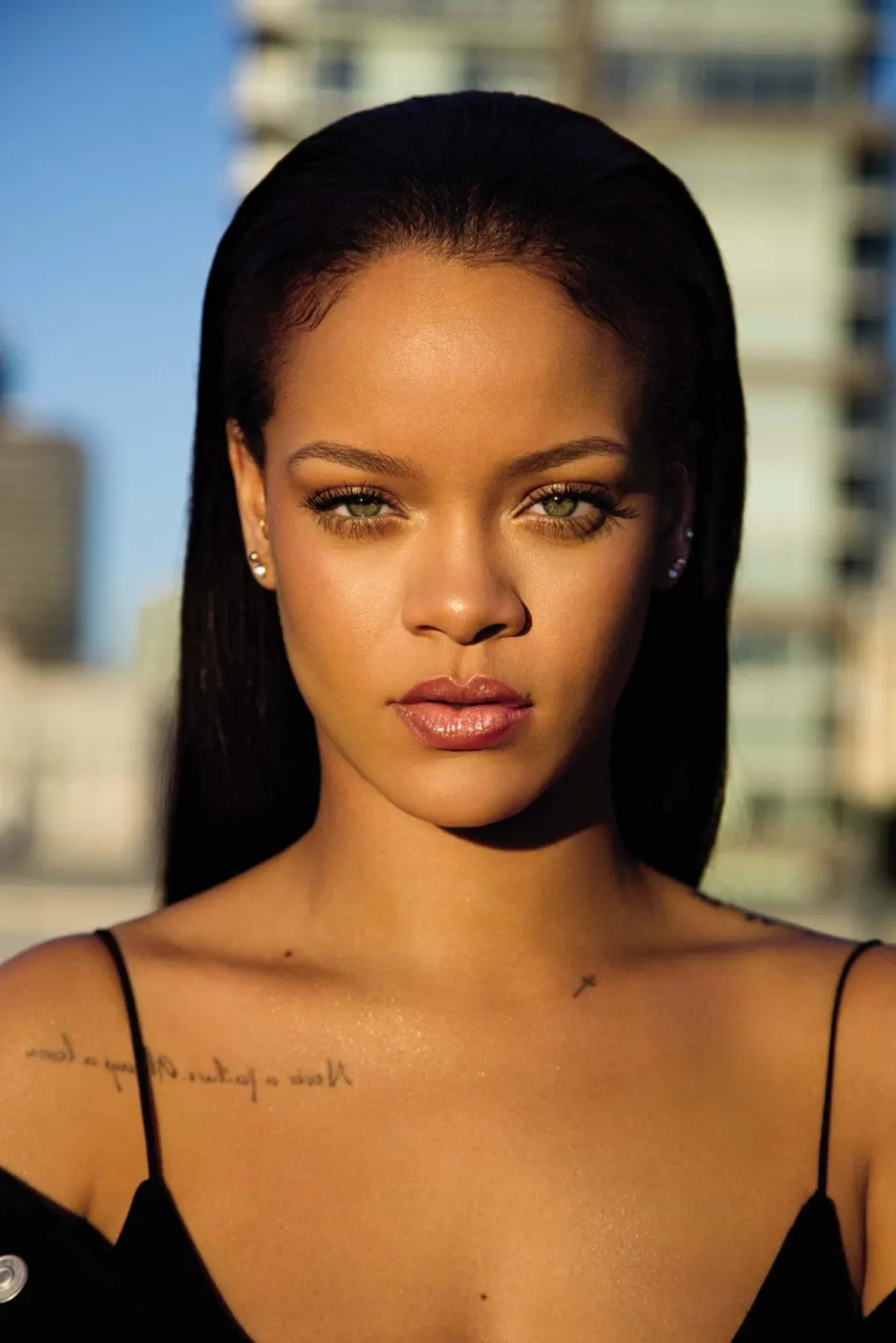
At the 2023 Super Bowl press conference, a host asked Rihanna how deep she gets into the details. She laughed and said she had been bossy all her life, ever since she was a little girl, and that some people find it annoying. Then she explained why. Many people help make her work great, she said, but whether it flops or flies, her name has to stand by it.
So she gets involved in everything. She said she wants to see the copy on the website. She wants to name every lipstick she makes. For the halftime show alone, she said, there were about thirty-nine versions of the set list, because every tiny change, even muting a guitar line, created a new version.
People who work with her describe the same habit. At a Savage X Fenty premiere, she told a reporter that her choreographer sends her rehearsal videos and she answers with blunt notes, like loving the dance but not the song. She said she always wants each show to be better than the last, because if it is the same, there is no growth.
Her style is part instinct and part discipline. She tests products on herself first. She reads customer comments. She pushes teams to include bodies and skin tones that the industry used to skip. But she also delegates. She hires experienced executives to run operations and sits above them as a founder who can say no. Her secret is not that she does every job. It is that she refuses to let anything with her name on it slip out without her taste inside it.
Clara Lionel Foundation and the grandmother's dollar
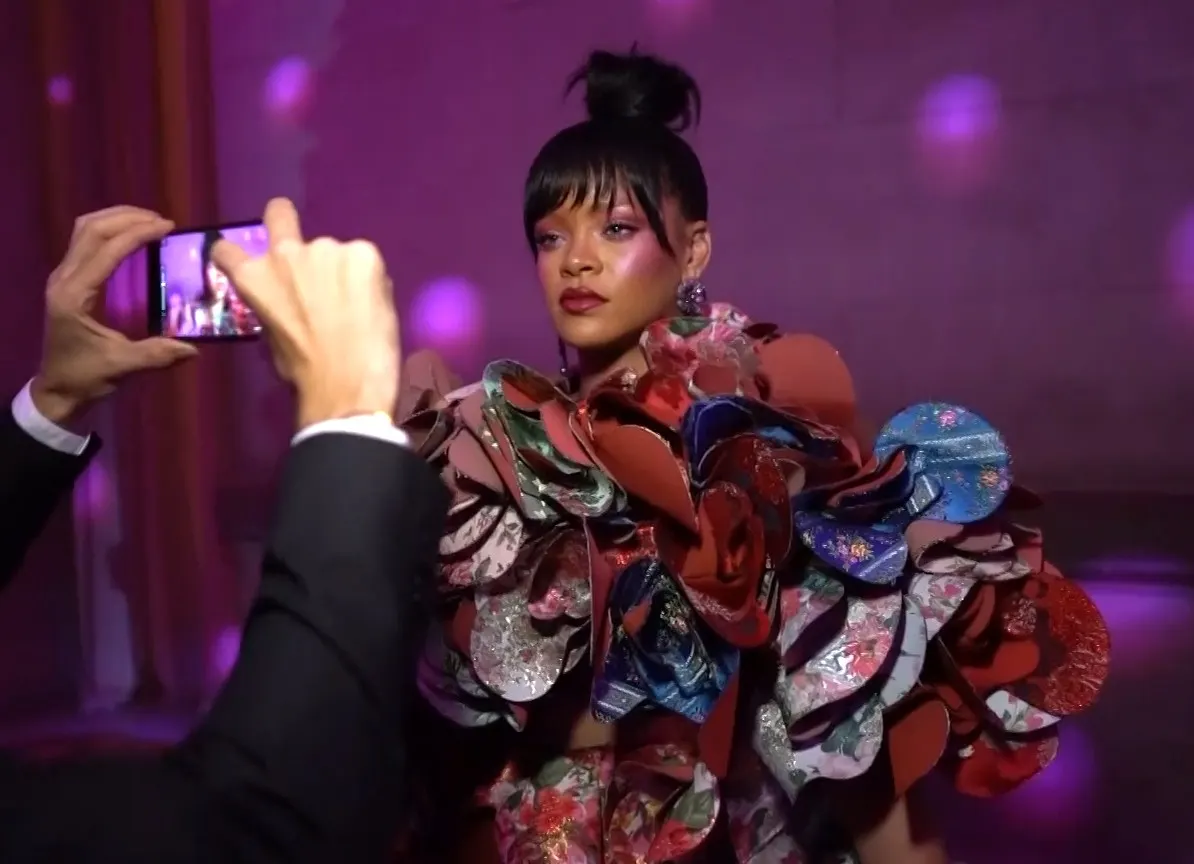
In 2012, Rihanna started the Clara Lionel Foundation, named after her grandparents, Clara and Lionel Braithwaite. Her grandmother had died of cancer that year. The foundation began by supporting a cancer and nuclear medicine center at the main hospital in Barbados. Over time it grew into education programs, scholarships for students from the Caribbean and beyond, and emergency help after hurricanes and other disasters.
To raise money, she created the Diamond Ball, a glamorous yearly gala that drew stars and donors. She used the same skills she used in business. She built an event people wanted to be seen at, then turned attention into funds. During the pandemic, the foundation sent money to coronavirus relief, to people in need in New York, and to support for abuse victims in Los Angeles.
In February 2017, Harvard University named her Humanitarian of the Year. In her speech she remembered being a little girl watching charity commercials, wishing she could help. What that girl did not know, she said, is that you do not have to be rich, famous, or college educated to be a humanitarian. You just have to help one person, expecting nothing in return. She closed with a line from her grandmother: if you got a dollar, there is plenty to share.
That line explains a lot about how she sees money. For Rihanna, wealth is not just a score. It is a tool with a job to do, and the first job is family and home.
Keys for her mother and a road with her name
In a 2012 episode of Oprah's Next Chapter, her mother Monica arrived at a quiet house thinking she was there for an interview. Rihanna was waiting with a surprise. She told her mother she had been an amazing mom, example, and soldier, and handed her the key to the house. It had five bedrooms and a pool, and Rihanna had decorated the living room using her grandmother's china as inspiration. When Oprah asked what made her proudest, Monica said her daughter had stayed humble and close to her family. To them, she said, she was still Robyn.
Barbados has returned that loyalty. In 2017, the road where she grew up was renamed Rihanna Drive. In 2018, the government made her an ambassador with a focus on education, tourism, and investment. On 30 November 2021, the night Barbados became a republic, Prime Minister Mia Mottley named her a National Hero, the highest honor the country gives. Mottley told her to keep shining like a diamond, a nod to one of her biggest songs.
Family ties have not always been smooth. In 2019 she filed a lawsuit against a company run by her father over the use of the Fenty name in business deals. The case was dropped later that year. She has spoken about loving her father while setting firm limits. As with the rest of her life, she handled it quietly in public and firmly in private.
Three months postpartum and a halftime stage
In 2019, Rihanna told Vogue she had turned down an offer to perform at the Super Bowl halftime show, in solidarity with quarterback Colin Kaepernick. Three years later, after the league partnered with Jay-Z's Roc Nation and Apple Music on the show, she said yes.
The timing was wild. Her first son, RZA, with rapper A$AP Rocky, was born in May 2022. She got the call about three months later. At the press conference she said she wondered if she might regret the decision, then decided the challenge was worth it. It was important for representation, she said, for immigrants, for Barbados, for Black women, and for her son to see her take on something new.
On 12 February 2023 at State Farm Stadium in Glendale, Arizona, she performed a thirteen-minute set that squeezed seventeen years of hits into a single run. Organizers said more than one hundred eighteen million people watched, one of the largest halftime audiences ever. Her representative confirmed after the show that she was pregnant again. Her second son, Riot Rose, was born that August. A month after the game she sang Lift Me Up at the Oscars, a song from Black Panther: Wakanda Forever that earned her an Academy Award nomination.
Her daughter, Rocki Irish Mayers, followed in September 2025, after Rihanna revealed the pregnancy on the Met Gala steps that May. She has said that work now always costs her time with her children, so every yes has to be worth it.
Stepping back, stepping sideways: CEOs and chairs
In June 2023, Rihanna stepped down as chief executive of Savage X Fenty and became executive chair. The new CEO was Hillary Super, the former head of Anthropologie Group. Rihanna said she was grateful and excited to welcome a strong leader who could take the business to a higher level.
The move showed a founder learning what not to do herself. She kept control of the vision, the campaigns, and the big product calls. She handed daily operations to someone who had run a large retail business. That is how many lasting companies grow up, and it let her focus on her growing family and on the beauty side.
Then came a twist. In August 2024, Victoria's Secret, the rival Savage X Fenty had spent years challenging, hired Super as its own CEO. The news felt like a plot turn in a business drama. It also showed how much respect the Savage model had earned. The inclusive approach that once looked like an outsider bet had become the playbook the old leader wanted to learn.
Savage X Fenty also faced harder years. The public listing never happened. Reports in 2024 described slower growth and layoffs. Earlier, in 2020, she apologized after a song in one runway show used a sample of an Islamic sacred text, saying the team had made a careless mistake. She did not hide from those moments. She named them and kept going.
Skin, fragrance, and hair: widening the house
Fenty Beauty did not stop at makeup. In July 2020, in the middle of the pandemic, Rihanna launched Fenty Skin with a cleanser, a toner serum, and a moisturizer with sunscreen. She pitched it as simple skin care for everyone, including men, with packaging designed to be refilled. Early reports said the line made about thirty million dollars in online sales before it even reached Sephora stores.
A Fenty perfume followed in 2021. Then, in June 2024, came Fenty Hair, built around repair products. At the launch, she talked about her own damaged hair after years of coloring and styling for the stage. It was the same story as the foundation, told in a new aisle. She found a problem in her own life, then built a product for millions of people with the same problem.
Retail reach kept widening too. Fenty Beauty and Fenty Skin, once sold mainly online and in Sephora, expanded into Space NK stores across the United Kingdom in January 2026. The Australian department store Myer announced that the brand would roll out across its stores in May 2026.
The hard numbers and the soft spots
A fair look at the Fenty empire shows real wins and real weak spots. The makeup brand remains the crown jewel, but its value on paper has come down since 2021, when celebrity beauty was hot and money was cheap. In October 2025, Reuters reported that LVMH was exploring a sale of its half of Fenty Beauty, working with the bank Evercore. Sources told Reuters the whole company might be valued between one and two billion dollars.
In June 2026, trade outlets reported that MarcyPen Capital Partners, an investment firm co-founded by Jay-Z, was in talks to buy the LVMH stake. MarcyPen's earlier fund had invested in Savage X Fenty. As of mid-September 2026, no deal had been announced, and neither LVMH nor Fenty Beauty had confirmed the talks.
If a sale happens, Rihanna would keep her half and gain a new partner. The circle would close in a strange way. The man who refused to let a seventeen-year-old leave his office without a contract could become her partner in the company that made her a billionaire.
The fashion house pause, the lingerie slowdown, and the lower beauty valuation are reminders that fame does not guarantee growth. Still, few celebrity brands from the 2010s have lasted this long, and fewer changed an industry.
World impact: shade ranges, runways, and a Barbados passport
The clearest impact is on the shelf. Before 2017, many big beauty brands offered only a small number of foundation shades, often with few options for deep skin. After Fenty Beauty's forty shades, wider ranges became normal across the industry. A teenager with dark skin can now walk into a store and expect to find her match. That change reaches millions of people who will never read a business magazine.
The second impact is on the runway and in advertising. Savage X Fenty showed that lingerie could be sold with every body type in the frame, and it pressured the old leader to change. The third is about ownership. Rihanna showed other artists that equity, not endorsement, builds lasting wealth, and a wave of stars tried to copy the model.
Finally, there is Barbados. A small island of under three hundred thousand people now has a living National Hero whose name appears on makeup counters from London to Sydney. She brings the Caribbean onto big stages on purpose, from Crop Over costumes to Super Bowl speeches.
2026 snapshot: Paris nights, sale talks, a studio at 2:18 a.m.
In February 2026, Rihanna posted a video captioned commercial break. It showed her walking into a recording studio at 2:18 in the morning and working at a mixing console. Fans read it as proof that her long-awaited ninth album was real. She had said in 2025 that she had finally cracked the sound. In August 2026, A$AP Rocky said on a podcast that she was in the studio cooking. No title or date has been confirmed.
That same season, Savage X Fenty ran a Valentine's Day campaign featuring model Vivian Jenna Wilson. In 2025, Rihanna voiced Smurfette in the animated Smurfs film and recorded its song Friend of Mine.
In mid-September 2026, she joined Rocky and their son Riot onstage at his concert in Copenhagen. A few days later she was in Paris, twice in the audience for Celine Dion, one of the singers she grew up copying in Barbados.
Closing
Rihanna began as a girl in a small house on a small island, selling clothes beside her father and watching charity commercials she could not yet answer. She sang her way into a New York office and signed before sunrise. She survived a public assault, kept making hits, and then did something rarer than fame. She turned her own face, skin, and body into companies that she owns.
The lasting image is not the floating stage or the billion-dollar headline. It is a woman who still wants to read the copy on the website, who still names the lipsticks, and who still walks into a studio in the middle of the night because the next thing is not finished yet.
Watch alongside this story
Short cuts from interviews, keynotes and launches. Each plays only the moment that matters.