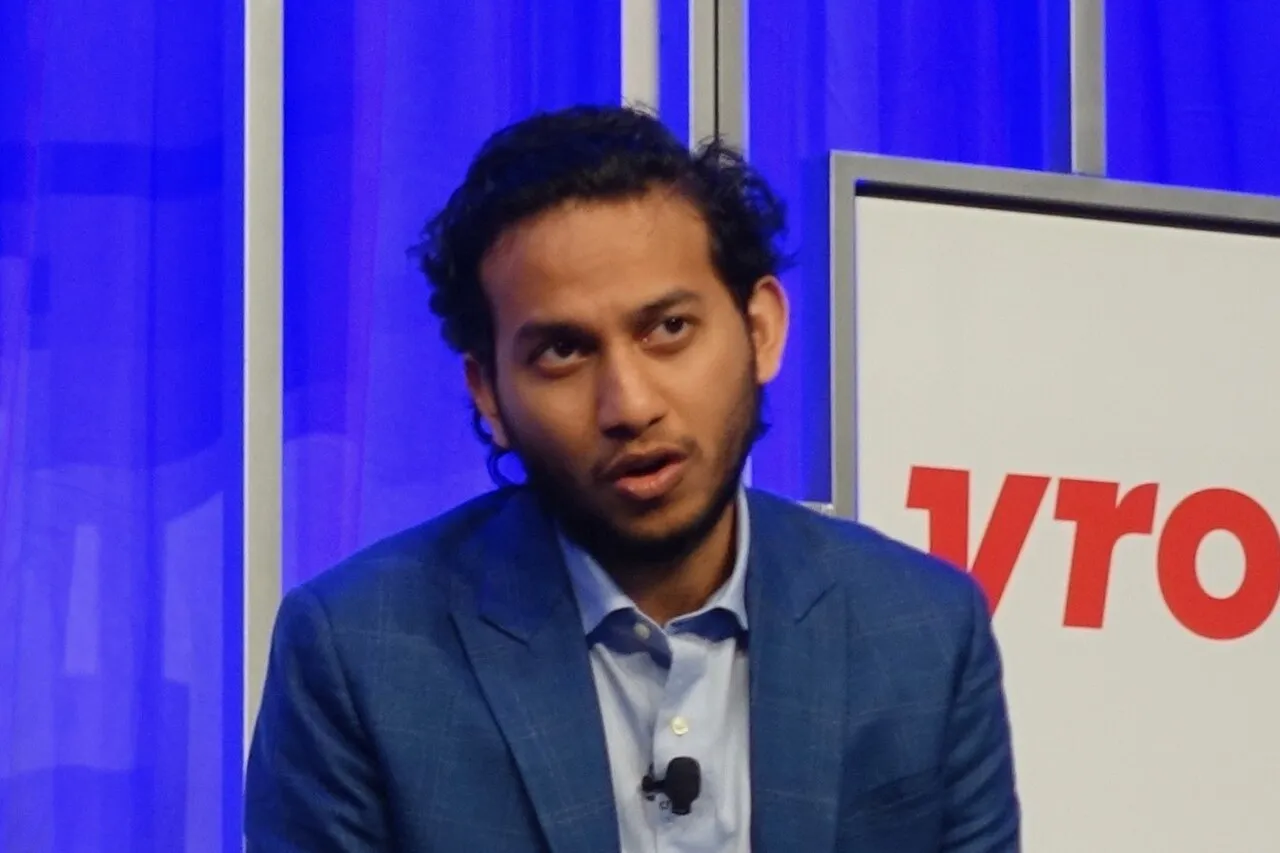
The Boy From Rayagada Who Standardized the Night
He sold phone SIMs in a small Odisha town. He slept in cheap rooms until the pattern hurt. Then he turned that pain into a brand India could book.
In March 2026, rich-list compilers put a number next to a thirty-two-year-old from Odisha that still sounds unreal in the towns where he grew up. Hurun's Global Rich List framed Ritesh Agarwal as India's youngest billionaire, with estimates that swung, depending on the week and the method, from roughly fourteen thousand crore rupees to about eighteen thousand. The variance mattered less than the arc underneath it. The same founder who once sold prepaid SIM cards on commission was preparing to take Prism, the rebranded parent of OYO, toward India's public markets with a pure fresh issue measured in thousands of crores, while SoftBank and Agarwal himself held their stock instead of cashing out in an offer for sale.
That scoreboard is the late chapter. The early chapter is a three-day train ride, a dirty bedsheet, and a teenager who decided India's budget hotels did not have to feel like a lottery.
Rayagada, four siblings, and a shop that stayed open
Ritesh Agarwal was born on November 16, 1993, in Bissamcuttack in Odisha's Rayagada district, into a Marwari family that lived the small-town retail grind. Profiles place stretches of his childhood around Titilagarh and Rayagada. He has described himself as the youngest of four, bilingual across Odia and Telugu on a border belt where languages mix as easily as truck routes. His father kept a modest shop. His mother kept the household standing. Money was not a costume in that house. It was inventory, trust, and whether the day closed without a fight.
He has told interviewers that persuasion started at home. If he could not convince his parents to let him take a strange bet, how would he ever convince investors or hotel owners? That line is not a slogan invented for television. It is the working theory of a youngest child who learned early that belief is a resource you spend carefully.
Summer work taught the rest. As a teenager he sold Airtel SIM cards, learning the hard arithmetic of retail incentives: push five connections, earn the next one free, reverse a bad sale if a customer complained, keep the telecom company's trust. Years later he would joke that OYO's early room prices echoed the old nine-hundred-ninety-nine promotional memory. The joke lands because the muscle is real. He learned distribution before he learned term sheets. He learned that a customer who feels cheated does not stay quiet, and that a channel partner who feels cheated can end your month.
School names in secondary profiles include Sacred Heart and later St. John's Senior Secondary routes as the family pushed education. What mattered more than the letterhead was the hunger. He has said he read business magazines page to page in school, hunting young builders the way other kids hunted cricket scores. By the time his name began appearing in those same pages a few years later, the loop closed in a way only young founders fully feel.
Kota, three trains, and weekends that were not for coaching
After Class 10 he joined the great Indian migration to Kota, Rajasthan, for IIT coaching through Classes 11 and 12. He has been blunt about the second reason. Rayagada to Kota was roughly three trains: home to Bhubaneswar, Bhubaneswar to Delhi, Delhi to Kota. Distance bought freedom. Freedom bought experiments. He has said he wanted room to try things his hometown could not easily supervise.
Kota is a pressure cooker that promises ranks and delivers anxiety. Agarwal did not become an IITian. The coaching factories mint both ranks and dropouts; he landed in the second pile and treated it as information, not a verdict. On weekends he rode to Delhi for entrepreneur conferences, sitting in rooms where founders talked about airlines and motorcycles as if those were normal teenage hobbies. He has named Rahul Bhatia of InterGlobe and Siddhartha Lal of Eicher as early north stars. The point was not celebrity worship. The point was permission. Someone from a normal Indian family could build a national brand without waiting for a perfect degree.
He has described small internships and odd experiments in those years, the kind of unfinished trials that look messy on a resume and priceless in a founder. Failure young, he later argued, can work like a vaccine. It hurts early and leaves you less afraid of the next attempt. That philosophy would be tested at a scale Kota never imagined.
College came anyway: the Indian School of Business and Finance in Delhi, with University of London affiliation. He started companies in parallel. The classroom was never the main plot. Mentors and accelerators mattered more than lectures. Venture Nursery took a look at his early lodging idea. Angels often did not. Later profiles say that as a seventeen-year-old he offered meaningful equity for roughly thirty lakh rupees and heard no after no. Rejection became a calendar.
Oravel, a hundred bad nights, and the pivot called OYO
Around 2011 and 2012 he built Oravel Stays, an Airbnb-style marketplace for affordable lodgings. The research method was brutal and cheap: sleep in the product. He has described staying in roughly a hundred budget hotels and guest houses, collecting the same disappointments travelers already knew by heart. Sheets that did not match the photo. A door lock that needed faith. A bathroom you negotiated with. A television remote that vanished into a staff drawer. He has told the remote story so many times it risks becoming folklore, yet the folklore is load-bearing. Millions of Indian travelers already knew the feeling. He simply decided it was a company.
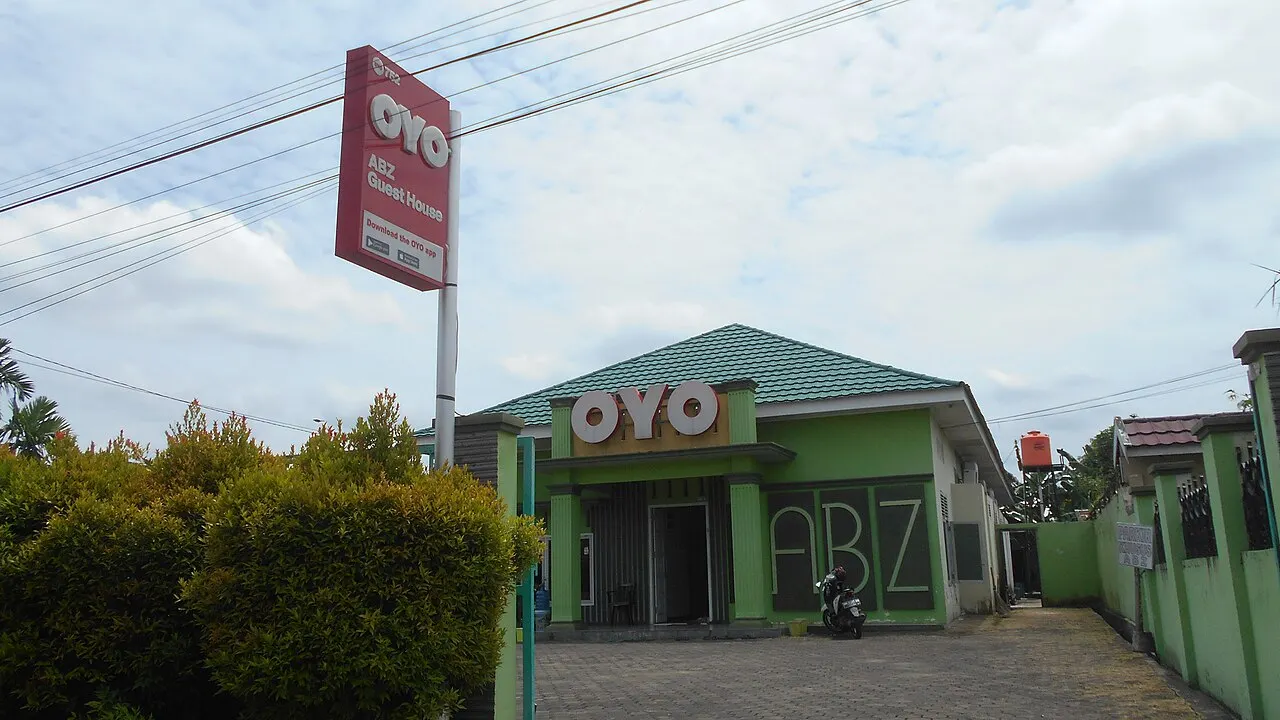
What he found was not a shortage of beds. India had beds. What it lacked was a predictable night. Marketplace listings could show inventory. They could not force a standard. By May and June 2013 the idea bent into OYO Rooms, short for On Your Own. The model was not to own every building. It was to take unbranded budget hotels, impose a checklist, train staff, brand the door, plug the property into a booking engine, and share revenue.
Early lore puts the first hotel in the Gurgaon orbit, with a monthly cost in the hundreds of dollars and an owner often named in founder interviews as Rajesh Yadav, whose word-of-mouth that business had gone up recruited the next owners. BBC reporting from 2015 still described the launch phase as nearly handmade: one hotel, tiny rent, then a network that ballooned into thousands of properties. Agarwal has said he was building both Oravel and OYO for a stretch, with advisers pushing the asset-light marketplace and his own gut pulling toward full-stack control of the guest experience. His heart, he later said, was OYO. Oravel looked smarter on a whiteboard. OYO felt like the product a tired traveler would thank you for at midnight.
The checklist culture became the company. Wi-Fi that worked. Linens on a schedule. Photos that matched reality often enough to earn a second booking. In a market where trust was scarce, trust was the inventory.
Thiel's check and a contract about education
In 2013 the Thiel Fellowship selected him, with a grant on the order of one hundred thousand dollars and a demand that he step away from university. He loves the first line of the contract: fellows do not let university interfere with education. For a kid from Rayagada who had already treated Kota as a launchpad, the sentence felt like oxygen.
He has said he found Peter Thiel the way many of his generation did, sideways through culture and search bars, including the Social Network movie's shadow, then through Zero to One curiosity, then through the fellowship itself. He has also said he could not find another India-resident fellow ahead of him when he applied, which made the odds feel worse and the application feel necessary. Finalist travel dumped him into San Francisco's Mission District near Pride weekend, a cultural distance he still measures in jokes. Rayagada to Kota had been three trains. Kota to the Mission was another planet.
He wrote cold emails by the hundreds, hunting operators who would give a teenager an hour. He has recalled outreach to people like Zappos founder Tony Hsieh in that hungry window, treating the city like an open campus. The fellowship did not invent OYO. It widened the aperture. Suddenly the budget-hotel checklist was allowed to be a global ambition, not only a Delhi-NCR hustle. He dropped out of ISBF. Parents required convincing. He has framed that conversation as the first real investor meeting of his life. If you cannot sell the people who fed you, the rest of the funnel is theater.

SoftBank gravity and the ten-billion mirage
OYO's growth after SoftBank arrived became a case study in modern venture velocity. By 2015, BBC reporting described more than two thousand hotels across about a hundred Indian cities, with monthly revenues already in the millions of dollars and a workforce in the thousands. SoftBank's early hundred-million-dollar cheque was only the on-ramp. Vision Fund capital and Masayoshi Son's appetite for room count pushed the company into China, Japan, Europe, and the United States.
Son praised the young founder in public settings as OYO raced toward a private valuation investors floated near ten billion dollars. In July 2019, coverage said Agarwal moved to buy roughly two billion dollars of shares from earlier investors, tripling his stake in a structure that investigative reporting linked to unusual SoftBank support, including personal-guarantee lore around the debt. The precise plumbing of that deal remains a subject for bankers and reporters. The strategic meaning was clearer. SoftBank wanted speed. Agarwal wanted control. The company tried to become the largest room network on earth the way a rocket tries to beat gravity: burn everything.
China became both trophy and trap. By fiscal 2019, company figures discussed in financial press implied China drove on the order of three-quarters of group losses while consolidated losses swelled into the hundreds of millions of dollars even as revenue multiplied. Hotel owners in more than one country complained about payouts, contracts, and sudden term changes. Newspapers sharpened every wound. An early associate's fraud allegations against Agarwal circulated and were denied by the company; they remain disputed claims, not adjudicated fact, and they belong in the record as conflict, not conviction.
Inside the building, managers who were older and more decorated than the founder still answered to a CEO who called himself the least credentialed person in the room. That self-description was not modesty theater. It was a warning label. The culture ran on founder will, SoftBank timelines, and a belief that standardized rooms could be rolled out like software updates. Some partners experienced that belief as opportunity. Others experienced it as whiplash.
Agarwal has said Masayoshi Son's inputs were transformational, even while later trying to diversify board gravity and show that OYO was not only a SoftBank satellite. Both statements can be true at once. Son funded the dream's maximum size. Size created the nightmare's maximum surface area.
COVID, seventy percent gone, nets to repair
Then the world stopped traveling.
In interviews during the first pandemic year, Agarwal described a collapse on the order of seventy percent of revenue, the kind of cliff that turns a hypergrowth story into a survival story overnight. OYO cut jobs across China, India, and the United States. Japan experiments such as OYO Life hit strategic walls; Yahoo Japan's stake sale in that thread became public without a romantic explanation. Franchise partners who were already angry became angrier. For a company whose product is a stranger sleeping in someone else's building, trust is working capital. That capital ran low.
Agarwal reached for a fisherman's proverb in one televised conversation: when fishermen cannot go to sea, they repair their nets. The poetic version is neat. The operating version was uglier. Close weak markets. Renegotiate. Centralize. Apologize where needed. Keep enough hotels alive that the app still meant a clean room when flights returned. He talked about calm as a discipline, arguing that haste wastes peacetime and wartime alike. Whether every partner felt that calm is a separate question. The company's later numbers suggest the repair crew eventually found the tears.
He also used the crisis to restate a founder thesis he returns to often: founder-driven companies, in his view, create more lasting value than purely professionalized machines, especially when the map is on fire. Critics hear ego. Supporters hear accountability. The pandemic made the argument concrete. Someone had to decide which countries to shrink, which owners to prioritize, which products to kill, and how much personal reputation to spend on asking for time.
Profit, Prism, and Motel 6
The turnaround did not arrive as a single press release. It arrived as quarters. OYO reported strings of positive adjusted EBITDA, then, for fiscal 2023-24, a first-ever profit after tax on the order of two hundred twenty-nine crore rupees, with adjusted EBITDA near eight hundred seventy-seven crore. In May 2024 the company could finally say the word profit without a footnote about almost.
The corporate identity shifted with the economics. Oravel Stays, the old legal skin, moved toward Prism and Prism Life as parent brand, a signal that hospitality technology, not only the red OYO signboard, was the story management wanted public markets to buy. In December 2024 Prism agreed to acquire G6 Hospitality, the Motel 6 and Studio 6 platform, from Blackstone for about five hundred twenty-five million dollars. An Indian founder who once standardized Rayagada-to-Delhi budget nights now owned a classic American roadside brand family.
Fiscal 2025 showed how messy profit can look up close. Prism reported profit after tax near two hundred forty-five crore rupees on revenue about six thousand two hundred fifty-three crore, but a deferred-tax gain on the order of seven hundred sixty-six crore did heavy lifting; strip that out and the year still carried a large pre-tax loss in press reconciliations. Finance costs and depreciation jumped with the G6 debt and assets. The IPO clock, which had already been started and stopped in earlier market weather, began ticking again.
Fiscal 2026 looked more like the company Agarwal had promised in recovery speeches. Coverage of the annual report put profit after tax near nine hundred ninety-four crore rupees, still aided by deferred-tax credits in the mid-to-high hundreds of crores, with an ex-tax profit reading closer to three hundred sixteen crore in some reconciliations. Gross booking value nearly doubled to roughly thirty thousand six hundred eighty-three crore rupees, with G6 contributing on the order of fourteen thousand crore. Management said about sixty-seven percent of room nights came through direct, less commission-heavy channels, and in September 2025 it launched CheckIn, a premium-facing app, to deepen that habit. EBITDA, in company framing, more than doubled toward the mid-two-thousands of crores. Agarwal's public letter language stressed deliberate acquisitions, balance-sheet repair, and technology integration completed faster than textbook mergers. G6 storefront additions and app usage claims became proof points that the American motel system could live on an Indian tech spine.
Shark Tank, a wedding, and the IPO queue
Public India met a softer version of the same man on Shark Tank India Season 3 in 2024, where he became one of the show's youngest sharks. Television compressed the biography into a usable myth: Odisha, dropout, Thiel, SoftBank, survival. The fuller myth includes hotel-owner protests, China losses, and a pandemic. Both versions are true enough to matter. On set he plays the operator who knows unit economics because he has been burned by them. Off set he still has to earn every night from guests who never watched the episode.
On March 7, 2023, he married Geetansha Sood. Coverage of the reception placed SoftBank-orbit names in the room, a social map of how completely his personal life now intersects with the capital that scaled and stressed OYO. The wedding photograph economy treated Masa's reported presence as a soft power signal. For Agarwal it was also simply a life event after a decade when the company had eaten most of his calendar.
By late December 2025 shareholders had cleared a path for a Prism IPO measured near six thousand six hundred fifty crore rupees. On June 30, 2026, updated draft papers described an all-fresh issue with no offer for sale from Agarwal or SoftBank. SoftBank's SVF India Holdings sat near forty percent pre-issue. Agarwal's direct stake near six and a half percent sat beside roughly twenty percent through RA Hospitality Holdings. Billions of rupees of proceeds were earmarked for debt reduction after the G6-era balance sheet. Year-end 2025 figures cited in that coverage put storefronts near two hundred ninety-three thousand across more than thirty-five countries. Other shareholders in the pre-issue map, in press summaries, included names from earlier venture years such as Peak XV, Lightspeed, Greenoaks, Microsoft, Airbnb, and Khazanah. The listing itself, as of those papers, was still a preparation, not a ringing bell. But the direction was no longer a rumor.
Hurun's 2026 youngest-billionaire framing arrived into that queue like a headline magnet. Net-worth estimates remain method-sensitive and should be read as list math, not audited cash. What is more solid is the operating claim: a company that nearly asphyxiated in 2020 was, by 2026, arguing for public capital on the back of profit years, a U.S. motel acquisition, and owners who had survived the bad seasons with it.
How he works
Agarwal's working style, across a decade of interviews, sounds like a hybrid of shopkeeper and venture extremist. He still talks like someone who remembers every failed SIM reversal. He still talks like someone Son once dared to outgrow India. He argues founder-led companies create more value than purely professionalized ones, even while hiring professionals who outrank him on paper. He returns to education as a practice that outlives campus: Thiel's line about university and learning is the closest thing he has to a personal scripture.
He is also a study in narrative control. He will tell the remote-control origin story on cue. He will quote the fishermen and the nets. He will underplay SoftBank's influence in one interview and praise Masa's transformational input in another. The contradictions are not proof of fraud. They are proof of a founder who has lived too many versions of the company to speak in one register.
Legal overhangs travel with a platform this large. Early associate allegations were denied. Franchise conflicts were real in the marketplace even when courts were not the venue. G6's American legacy brings its own disclosed litigation risks into Prism's offering documents, which is how public-market companies inherit history. None of that erases the operating achievement. It keeps the achievement adult.
Day to day he presents as restless rather than ornate. He talks about remaining calm when numbers scream. He talks about repairing process when demand disappears. He talks about thinking big without treating big as a substitute for a room that smells clean at 11 p.m. Those sentences can sound like poster copy until you remember the years when OYO's poster and OYO's reality diverged in public. The work since then has been an attempt to close that gap faster than critics can widen it.
What OYO changed
Before OYO, India's budget traveler often chose between a trusted family guest house and a blind bet on a highway board. After OYO, millions of people learned to open an app and expect a minimum standard, even when the standard sometimes failed them. That expectation is a cultural shift, not only a startup metric. Hotel owners who thrived under the brand gained distribution they could not have bought. Owners who felt crushed by contracts became the company's sharpest critics and forced process changes that balance sheets alone would not have taught.
Globally, OYO tested whether an Indian consumer-tech operating system could standardize hospitality across languages, regulators, and owner psychologies. China answered with scale and losses. Europe and the United States answered with slower, harder growth. The G6 deal answered with a reverse plot twist: the Indian platform buying an American motel institution and wiring it into the same tech spine. If Prism lists cleanly, public shareholders will price that bet in real time. If the listing slips, the operating company still has to earn the night every night.
There is also a softer impact that does not fit on a roadshow slide. Agarwal's story, told and retold on Indian YouTube and Shark Tank, has become permission infrastructure for kids in Tier-3 towns who sell something by day and sketch a company by night. Permission cuts both ways. It can inspire a better product. It can also glorify speed without showing the unpaid invoices and layoff rounds that speed sometimes leaves behind. A responsible telling keeps both halves in the frame.
China, Japan, and the cost of being first
OYO's China chapter deserves its own breath because it explains both the company's swagger and its scars. SoftBank's network opened doors. Local teams rented offices, signed hotels, and chased city counts that looked good on a Monday board slide. For a while the map glowed. Then the unit economics spoke. Press discussions of fiscal 2019 results framed China as the majority of group losses, even while it contributed meaningful gross bookings. That is a dangerous combination: big enough to matter, sick enough to infect the parent.
Agarwal's public posture during those years was stubborn optimism mixed with operational triage. He argued the product still solved a real problem for travelers who wanted a simple standard. He also had to answer hotel owners who said the standard arrived with contracts that shifted under their feet. Some of those disputes were classic franchise friction. Some were the predictable wreckage of a company growing faster than its finance systems. Separating those categories in public is hard. Living them in private is harder.
Japan added another flavor of ambition. OYO tried hotels and living products in a market that rewards precision and punishes improvisation. SoftBank's home-field encouragement made Japan emotionally important beyond the spreadsheet. When pieces of that experiment were later sold or shrunk, including the Yahoo Japan exit from the OYO Life thread, the message was not that Japan was impossible. The message was that SoftBank-speed globalization can outrun local product-market fit.
Europe and the United States taught slower lessons. Brand recognition was thinner. Owner networks were different. Regulatory and labor contexts did not bend easily to Indian playbooks. Those markets kept OYO honest about what traveled and what did not. By the time G6 arrived in late 2024, the company had already paid tuition in almost every major region. Buying Motel 6 and Studio 6 was not a first passport stamp. It was a second attempt to make America work, this time with an existing brand and roadside real estate memory.
Franchise trust and the politics of the night
OYO's hardest stakeholder was never only the guest. It was the hotel owner who had to believe that an app logo on the door was worth giving up some pricing power and some operational freedom. When that belief held, OYO could scale without buying buildings. When that belief cracked, OYO faced a political problem disguised as a customer-support problem.
During the late 2010s and into the pandemic, Indian business pages filled with owner protests, delayed settlement stories, and arguments about commissions and minimum guarantees. OYO answered with process changes, relationship teams, and public denials when allegations targeted the founder personally. The truth on the ground was uneven by city and by year, which is exactly what makes franchise systems fragile. A traveler remembers one bad night. An owner remembers twelve unpaid weeks.
Agarwal's later emphasis on direct booking mix and premium apps like CheckIn can be read as product strategy. It can also be read as trust strategy. If guests come through channels OYO controls, the company can promise owners clearer demand and promise guests clearer standards. Directness reduces the number of middlemen who can muddy responsibility when something breaks at midnight.
Shark Tank India added a strange new stakeholder: millions of viewers who now felt they knew him. That fame helps recruiting and deal flow. It also means every old owner grievance can be retweeted into a character judgment. Agarwal's television persona has to coexist with the ledger.
Rivals, alternatives, and the lane OYO chose
OYO never competed in a vacuum. Booking.com, MakeMyTrip, Goibibo, Treebo, FabHotels, traditional Taj-to-treehouse chains, and later corporate travel tools all fought for the same wallet in different ways. Aggregators offered choice. Heritage chains offered brand trust at higher prices. Homegrown budget brands offered lighter versions of the same thesis.
OYO's lane was aggressive standardization of the fragmented mid-market and budget stock. That lane requires operations muscle, not only media spend. It also requires capital in waves SoftBank was unusually willing to provide. Competitors without that capital could mock OYO's losses while still losing share in cities where the red sign became the default search result. Competitors with patience could wait for OYO to overextend, then hire its refugees and court its unhappy owners. Both dynamics happened.
What made OYO distinct was not a single patent. It was the founder's insistence that the budget night could be productized like consumer internet: ratings, checklists, photography standards, network effects between cities, and a brand that a first-time traveler from a small town would recognize in a strange metro. Whether every property lived up to that promise is the eternal hospitality problem. The attempt itself rearranged traveler expectations in India.
2025 and 2026 without the myth filter
Strip away the motivational poster and the recent years still look dramatic. In 2025 the parent identity settled around Prism, while OYO remained the consumer-facing workhorse. The G6 acquisition moved from announcement to integration slog: systems, owners, pricing tools, and culture. Company claims that technology integration happened inside a year are marketing language that must be tested by guest scores and owner retention, yet they signal managerial priority. Agarwal has said acquisitions should be rare and held to hard return tests. G6 was the exception large enough to redefine the group's geographic profit mix, with North America dominating growth commentary in fiscal 2026.
On the capital markets track, confidential filings, withdrawals, and refilings created a multi-year soap opera before the June 2026 updated draft. The all-fresh structure mattered psychologically. SoftBank not selling said the largest shareholder preferred upside over exit optics. Agarwal not selling said the founder was not using the IPO as a personal liquidity event first. Debt repayment as a use of proceeds said the G6-era balance sheet was real, not a footnote.
Hurun's youngest-billionaire headline in March 2026 sat awkwardly beside deferred-tax explanations in the annual report. Both can be true in the same season: paper wealth from stake marks, and accounting profit that needs careful reading. Adults read both.
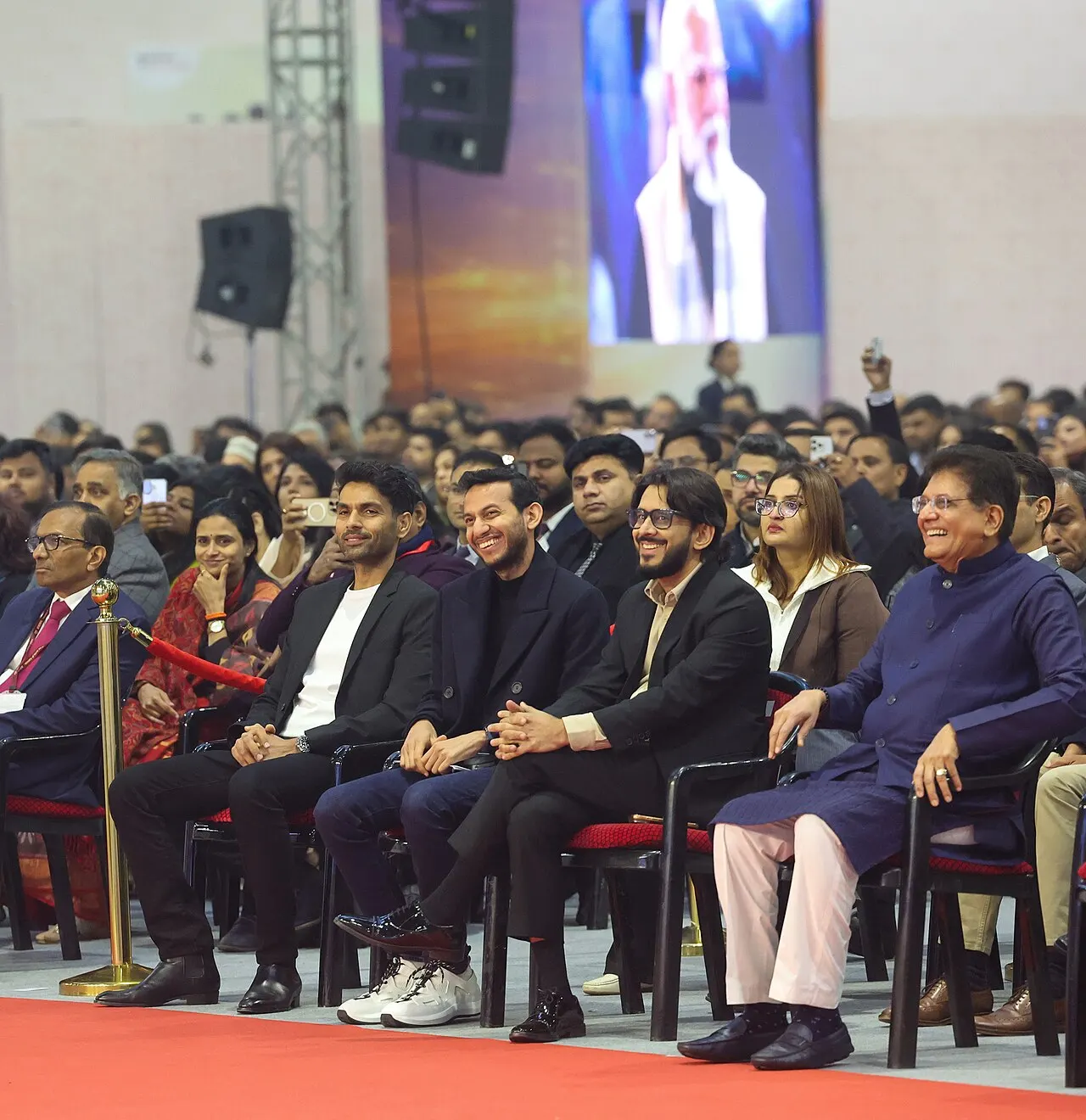
Meanwhile Agarwal kept collecting the soft power of public life: Shark Tank clips, campus talks, founder podcasts, and the occasional SoftBank-adjacent social photograph. He also kept collecting the hard power of inventory: rooms, apps, motel flags, and a salesforce that still has to convince an owner in Indore and a franchisee in Texas that the next twelve months will be better than the last fight.
Closing
Ritesh Agarwal's life is easy to turn into a poster: small town, SIM cards, Thiel, SoftBank, billionaire, IPO. The real documentary is less smooth. It includes a Kota bedroom, a Gurgaon checklist, a San Francisco sidewalk, a Chinese city profit-and-loss statement that would not close, a pandemic quarter where revenue felt like a rumor, and a 2026 filing room where nobody important was selling stock.
He set out to make a stranger's night predictable. Along the way he made his own life unrecognizable. The bet that remains is whether Prism can keep the night predictable at public-company scale, with SoftBank still in the cap table, Motel 6 in the portfolio, and a founder from Rayagada still insisting that education was never the same thing as university.
The boy who wanted the remote back did not stop at owning the remote. He tried to own the standard behind it. Standards are harder than slogans. They need checklists, capital, apologies, and time. By September 2026 his company was asking India to price that harder thing in public. Whatever the listing calendar does next, the night still has to work.