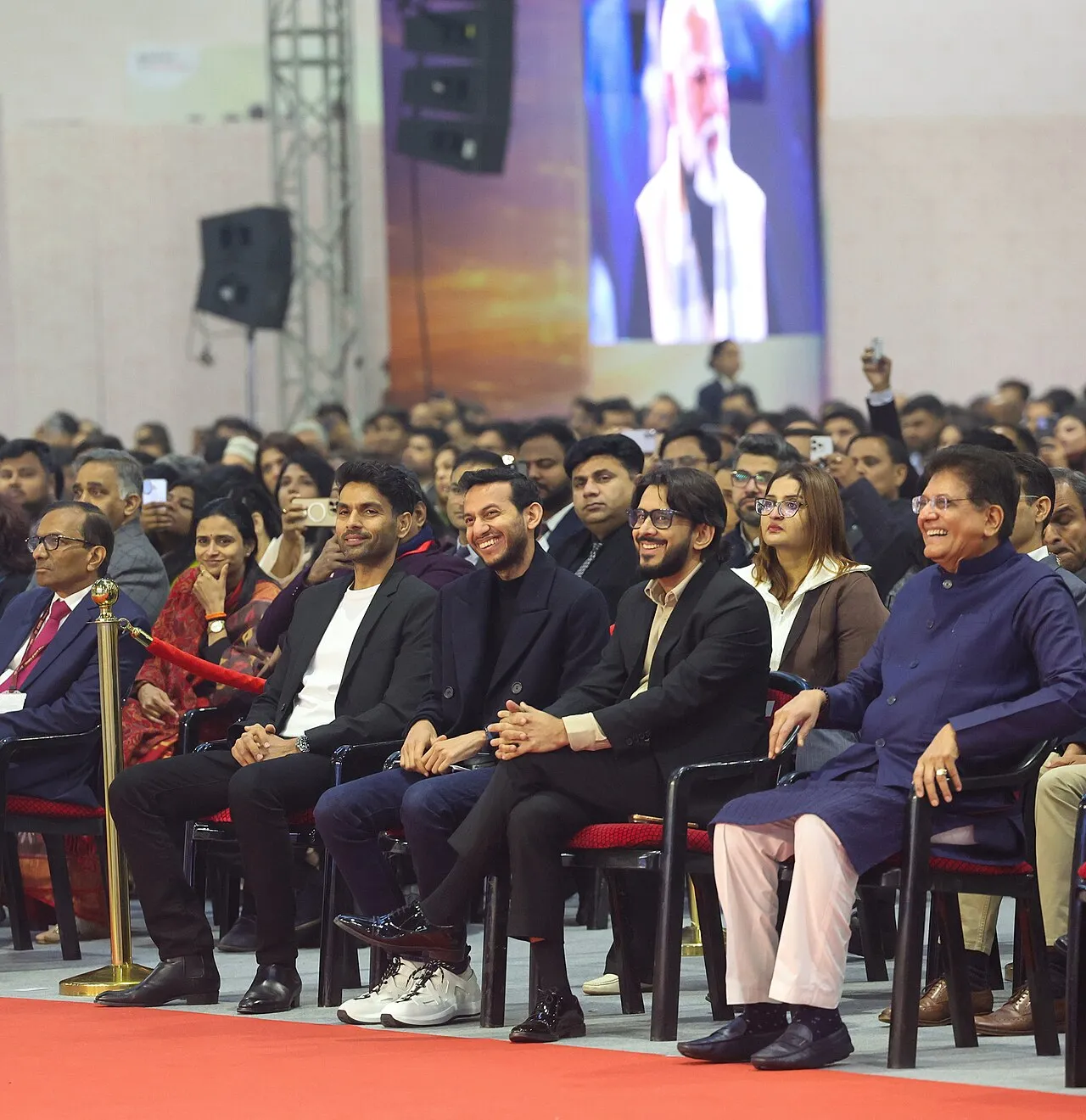
The Doctor Who Built Rooms for Builders
A Delhi doctor's son finished an MBBS and still walked away from the wards. He opened a Connaught Place coworking floor in forty-nine days. Three years later SoftBank-backed OYO paid about two hundred twenty crore rupees for the brand.
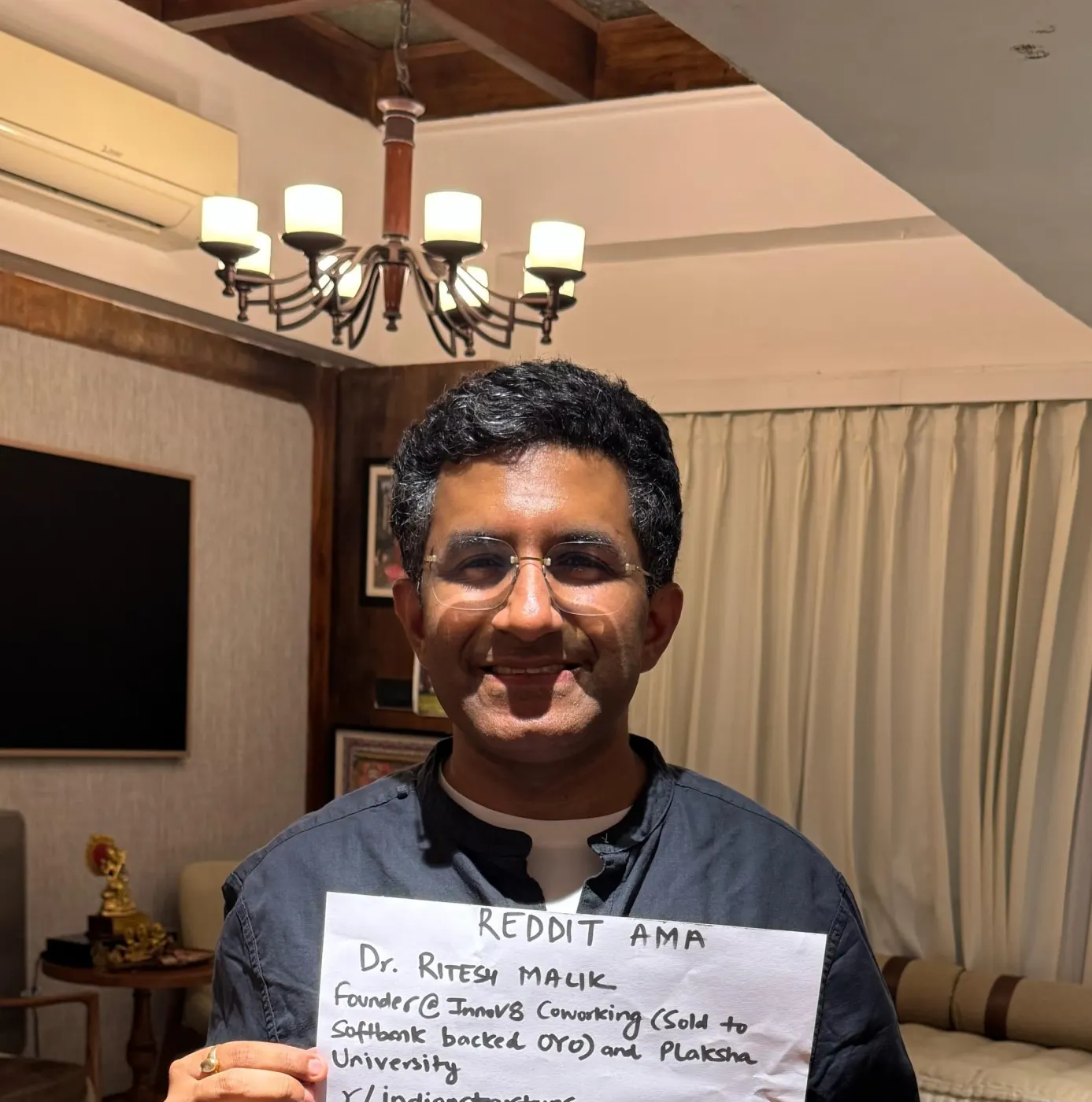
The white coat was supposed to be the whole story. In a Delhi house where a paediatrician father and a gynaecologist mother treated medicine like a family religion, Ritesh Malik did what the script demanded. He enrolled in medical school. He wore the coat. He showed up for wards and night duties. Somewhere under that obedience another sentence kept repeating: prescribing paracetamol for a lifetime was not enough impact for the life he wanted.
By September 2026 that second sentence had become a public career. Malik was the physician-turned-founder who built Innov8, took a coworking brand through Y Combinator, sold it to SoftBank-backed OYO for a reported two hundred twenty crore rupees, and then rebuilt himself as a family-office allocator, university trustee, and policy voice. The World Economic Forum had already named him a Young Global Leader in 2022. In April 2025 MIT's Kuo Sharper Center put him on its Business Circle. The Hurun India under-forty lists kept printing his name. None of that was visible from a Theni classroom or a Sir Ganga Ram corridor. The path there was messy, expensive, and almost too Indian: family pressure, a first exit that paid little, a product that was literally four walls and a reception desk, and an American incubator that told him his ambition was still too small.
Delhi childhood and the hospital house
Ritesh R. Malik was born in New Delhi to Dr. Ravi Malik and Dr. Renu Malik. Public bios do not always pin an exact birth date, and that gap matters for honesty: secondary lists that called him twenty-six in 2016 imply a late-1980s birth, but the calendar day stays soft. What is not soft is the household. His parents built and ran Radix Healthcare, a Delhi hospital story that began in the early 2000s. Dinner conversation was not abstract. It was oxygen, patients, staff shortages, and the particular Indian urgency of a clinic that cannot close because someone is waiting.
He studied at Delhi Public School, Mathura Road, a school that produces both civil servants and restless strivers. The expected next step was an MBBS. He took it at Theni Government Medical College in Tamil Nadu, under Tamil Nadu Dr. M.G.R. Medical University, and finished around 2013. Classmates remembered a student who bunked enough lectures to make room for other obsessions. On a summer break he sat a short Marketing Science course at the London School of Economics and heard Silicon Valley talk that sounded like a different planet. Later secondary bios say he also took a short Harvard program on managing innovation and technology. Treat those as short courses, not a Harvard degree. The degree that hung on the wall was still medicine.
Internship brought him back to Delhi and Sir Ganga Ram Hospital. The building is famous. The work is real: long hours, hierarchical departments, the endless parade of cases. Malik later told audiences he disliked the version of impact that stopped at a prescription pad. That line can sound arrogant if you are a doctor who loves the wards. Coming from him it was a confession. He wanted leverage. Hospitals save lives one by one. Startups, if they work, change the tools a million people use.
He has described those mornings plainly. He woke up, went to Ganga Ram, and hated going. The family lived as a joint family, and his grandmother had the future already written: your father is a doctor, you will be a doctor, and your son will be a doctor. She even picked his specialty, paediatrics, like his father. When she asked what he would do without medicine, he said he would sell chole bhature before he would stay a doctor. And if he sold chole, he told his mother, it would be so good that he would build a big brand out of it.
Alive, Adstuck, and a quick Times Group exit

In 2012, still finishing medicine and rotating through Ganga Ram, he co-founded Adstuck, an augmented-reality outfit. The flagship product was Alive, built with Times of India / Times Internet. In December 2012 the newspaper group soft-launched the app as a way to point a phone at print and watch pages open into video and interaction. Trade press reported a noisy early download day. For a medical student, that was a rocket. For a business, it was still a JV inside a giant media house.
In 2013 the Alive path was acquired or transferred into Bennett, Coleman and Company, the Times Group. Malik has been blunt in later talks: it was a quick exit, and they did not make a lot of money. That honesty is useful. Indian founder lore loves first exits that mint legends. His first exit minted a scar and a skill. He learned that shipping with a powerful partner is not the same as owning the upside. He also learned that he could leave the ward and not die of shame.
Around the same years he began angel investing, sometimes under the Guerilla Ventures label, using family capital and a bias toward intellectual property and hardware that could be salvaged if a company failed. A 2016 Techcircle profile said he had put more than two and a half million dollars across roughly two dozen startups. Treat the exact count and dollars as period reporting. The habit mattered more than the spreadsheet. He was meeting founders in bad offices. He was watching India's startup story accelerate on paper while the rooms where people worked stayed fluorescent, unreliable, and joyless.
The office that sucked, and the idea that did not
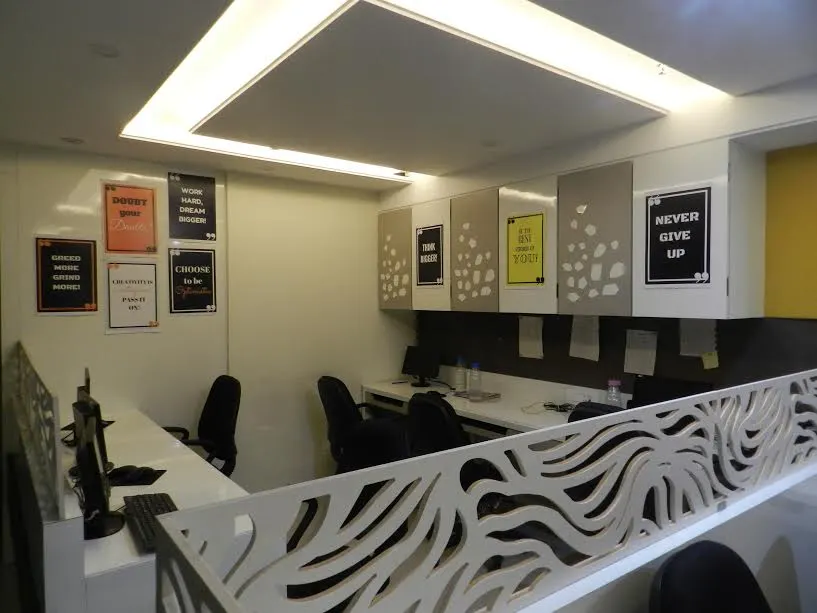
Malik's founding story for Innov8 is almost embarrassingly concrete. Founders, he argued, spend half their waking lives in offices. In India those offices often failed the basics: internet that dropped, air conditioning that wheezed, no community, no pride. An office, he liked to say, is a form of expression. If the room looks like surrender, the work starts to feel like surrender too.
The spark had a smell of coffee. When Starbucks arrived in India, Malik would carry his laptop and an extension cord to a table and work there for six or seven hours. The baristas learned his face. He has said they began giving him evil looks: one small coffee, one table, gone for the whole day. The coffee was eating his monthly budget and the guilt was eating his focus. He asked a simple question. Why could he not have an office where he felt welcome, the coffee was decent, and the bill did not wipe out his month? If he had that problem, he thought, a million other young founders did too.
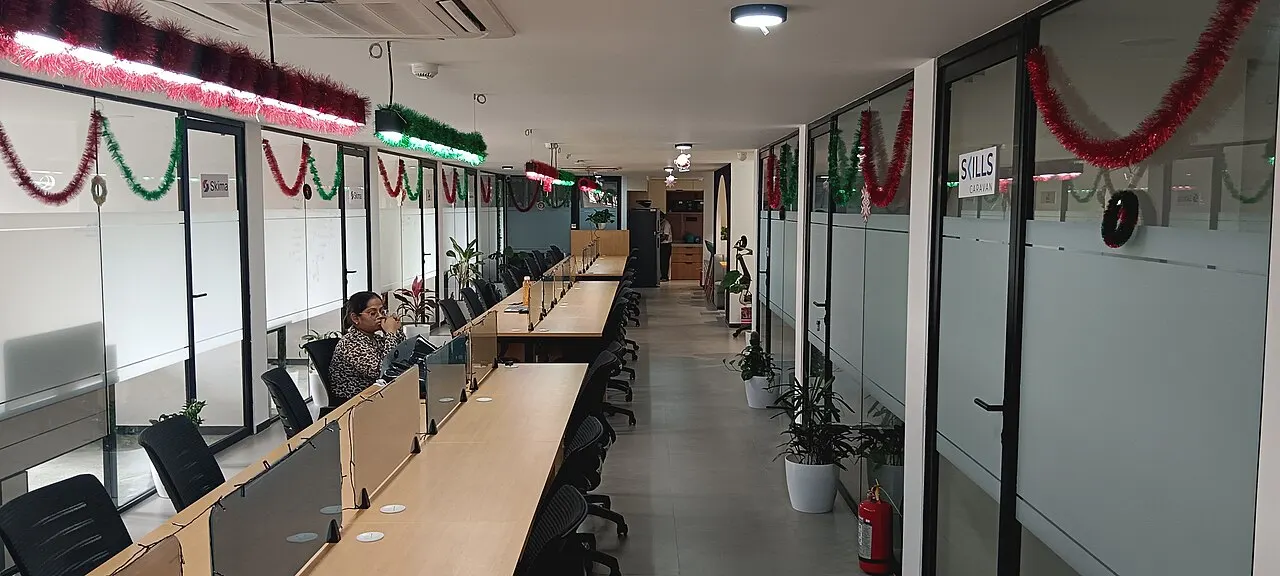
He did not invent coworking. WeWork was already a global carnival. Indian players were multiplying. What he wanted was a workstyle brand layered on real estate: design, community, and technology, not just desks for rent. Innov8 was founded in 2015. The first centre opened in January 2016 in Connaught Place, New Delhi, with about one hundred five seats in one of the most expensive commercial neighborhoods in the country. Press lore says the build finished in roughly forty-nine days and that the floor sold out in about a month. Whether every seat closed on day thirty or day thirty-five, the signal was the same. Demand was waiting for someone to make the room feel worth the commute.
Early pricing was not mystical. Period reporting later listed ladders from a few thousand rupees a month for flexible products up to premium plans near twenty thousand. The point was segmentation: freelancers, startups, and enterprises could share a building without sharing the same invoice. Community programming (kitchen events, yoga, comedy, founder nights) was not decoration. It was distribution in a market Malik described as having two Indian problems: people hesitate to try a new category, and then, once a hundred users love it, herd mentality can carry you toward the first lakh.
Y Combinator, Sam Altman, and thinking in hundreds
Getting into Y Combinator's Summer 2016 batch mattered for a non-software Indian real-estate-ish company more than any press release could. Malik later said non-tech Indian founders rarely made it through that door, so he applied anyway. The interview lore that stuck hardest was a conversation with Sam Altman. Altman asked how many centres he wanted. Malik said about five, one a year, which felt ambitious in Delhi terms. Altman's reaction, in Malik's retelling, was disbelief: you are in Silicon Valley; think about building hundreds in a few years. Ambition, Malik decided, is fuel. It attracts people who would never join a five-centre story.
Another lesson came before the interview. A founder who ran a mock interview asked him the simplest question: what do you do? Malik launched into India's growth, office demand, and how much value coworking could add to the economy. The mock interviewer cut him off and told him to say it in one plain line. Malik tried again: we build beautiful coworking spaces in India. That was it. He still tells founders to cut the clutter the same way.
YC also pushed campus size. Small pretty rooms look good on Instagram. Large campuses create the unit economics of a company that can chase serious revenue. Innov8's Bengaluru centre, remembered as roughly five hundred seats, reportedly filled in about two months. That was the new template: take big space, segment it across startups and enterprises, and sell on location, design, community, and technology.
Demo Day in San Francisco put a doctor from Delhi on a stage explaining why Indian offices were a product opportunity. The clip still exists. It is short, fast, and slightly surreal if you remember the white coat. Partners, brand, and a standard YC check (the era's classic one hundred twenty thousand dollars for about seven percent) were not magic. They were a forcing function. Malik called YC his three-month MBA for scaling. Coming from someone with no formal management degree, that sentence was not branding. It was curriculum.
Angels, Credence money, and centres that looked like statements
After YC, Innov8's early cheque book read like an Indian founder fantasy league: Paytm's Vijay Shekhar Sharma, Freshworks' Girish Mathrubootham, Google India's then-leader Rajan Anandan, CRED's Kunal Shah, and others depending on the round story. In October 2018 a pre-Series A of about four million dollars led by Credence Family Office gave the company more fuel for larger footprints.
Malik obsessed over locations. Coworking is easy to start and hard to scale, he told YourStory, because operations eat amateurs. India, he claimed around mid-2019, had hundreds of players and only a thin handful with more than two centres. Innov8 tried to look like a brand, not a landlord with beanbags. The company converted a cotton mill in Bengaluru's Koramangala after others walked away from approval nightmares. In Delhi it chased an Old Fort property in Saket, a roughly four-hundred-fourteen-seat campus that required Archaeological Survey patience and the nerve to tell members they could work out of a qila. Golf Course Road in Gurugram opened as a fifty-thousand-square-foot statement. Hyderabad plans floated near eighty thousand square feet. Soft marketing numbers moved with every quarter; the direction did not. Bigger rooms, sharper design, denser community.
Filling a thousand new seats a month is a sales problem, so he invented a sales trick. He wrote small angel cheques, often around two lakh rupees, into young startups. He asked for no advisory shares. He just wanted to be on the cap table and be the person founders called at any hour. Many of those startups then moved into Innov8. One early portfolio company took sixty-five seats at Connaught Place. He also turned down easy money when it felt wrong. When a global media company asked for 150 seats in India, he told them they needed about sixty to start and could grow with him later.
Inside the buildings, Innov8 experimented with media and belonging: a production-ish storytelling layer for members, an in-house magazine, events that made foreigners show up early so Indians felt FOMO. Two entrepreneurs meeting and starting a company together was the myth the team wanted on repeat. Myths only work when the Wi-Fi stays up.
March 2019: OYO writes the cheque

By March 2019 Innov8 operated about sixteen centres across Delhi, Noida, Gurugram, Bengaluru, Chandigarh, and Mumbai, with more than two hundred employees. That same month OYO acquired the company. Inc42 reported an all-cash deal of about two hundred twenty crore rupees, roughly thirty-one point eight four million dollars at the time, folding Innov8 into OYO Workspaces. Wikipedia and business press repeated the figure. Exact earnouts, retention packages, and residual equity remain soft unless primary filings appear.
Malik's public explanation was strategic, not romantic. India is huge. OYO had cracked national scale in lodging and even China in a way few Indian consumer companies had. He wanted Innov8 to become Asia's foremost coworking brand, and he believed that story needed a juggernaut. Within months of the deal he was talking about learning velocity from OYO's operating machine. By the end of 2019, reporting said OYO Workspaces had more than sixty centres in India. The brand Malik built became a chapter inside a larger SoftBank-era empire that would later face its own storms. Legal care matters here: OYO's later controversies are OYO's. Innov8's founding arc ends at a cash exit and a scale partnership, not at every headline that followed Ritesh Bansal's company.
For Malik personally, the sale was both victory and amputation. Founders who sell still wake up the next week without the same gravitational pull. He stayed visible around the brand for a time, then shifted capital allocation and institution building. The doctor who hated boring offices had proven the product. The next question was what to do with the years after the toast.
How he worked when the rooms were still his
Malik's operating philosophy shows up in talks more than in memoirs. He told Product Summit audiences that entrepreneurs cannot wait for the market to become polite. Unit economics from day one. Sales as a non-optional skill. Digital selling on the platforms where attention already lives. Trust as a formula he nicknamed TRICCSI: reliability, intimacy, consistency, and credibility, divided by self-interest. The math is cute. The instinct is not. Coworking dies when members feel bait-and-switched on quiet rooms, invoices, or community promises.
He liked physics metaphors: speed versus velocity, direction matters. He liked Darwin metaphors: customers run natural selection. He told founders not to become entrepreneurs if they wanted comfort, then spent years recruiting people into entrepreneurship anyway. The contradiction is human. He had watched Indians build products for Google and Facebook in California and asked why India could not own more of its digital destiny. Coworking was one answer. Investing and policy became others.
Inside his teams he does not call it failure. He calls it trial and error. His favorite question for managers is almost funny: did you do a funeral today? It means, what did you shut down that was no longer working? In a restaurant business his group runs, he has applied the same rule, focusing on about twelve hero dishes instead of a giant menu, with a goal of selling around 25,000 plates of one perfect dal makhani a year from a single outlet.
On the floor he cared about NPS-ish questions every time money moved: does this rupee raise member love or only feed ego? He wrote documents for clarity and called the CEO a chief clarity officer. Frugality sat beside design maximalism. The rooms looked expensive. The process tried not to be stupid with cash.
Mangrove, Radix, and the second act
Around 2020 Malik established The Mangrove Holdings, a family office spanning public equities, early and growth startups, operating businesses, and real estate. Exact AUM is soft. What is public is direction: stay close to operators, keep a hospital business in the family orbit, and back founders across consumer, health, deep tech, and media. His own site and Plaksha University biography list portfolios that include names like Safe Security, Inito, Agnikul Cosmos, Blue Tokai, STAGE and The Viral Fever, Ather Energy, Dukaan, Ketto, and dozens more. Plaksha materials have cited more than one hundred twenty-five startups backed. Treat any week's unicorn count as marketing until a audited schedule says otherwise.
Radix Healthcare, the hospital his parents built, became more than nostalgia during COVID's brutal Indian waves. Family narratives describe frontline inpatient and outpatient work, remote consults, and scrambling for oxygen concentrators, medicines, and vaccines. Soft on exact bed counts and procurement miracles. Hard on the continuity: the son who left clinical medicine still lived inside a medical family when the country gasped.
He co-founded Plaksha University in Mohali as a founding member and trustee, helping seed a private technical university story aimed at India's next engineering and entrepreneurship cohorts. In 2020 he also co-founded the Alliance of Digital India Foundation with Sheroes founder Sairee Chahal and BharatMatrimony's Murugavel Janakiraman, a section-eight style effort around digital startup policy and a fairer playing field for Indian tech firms. He has served on the board of Netaji Subhas University of Technology, a Delhi government-linked public institution. The through-line is institutions, not only term sheets.
Recognition, platforms, and the 2026 frame
Forbes Asia put him on a 30 Under 30 list in 2016, when Innov8 was still young and loud. Fortune India and other under-forty lists followed. Economic Times and entrepreneur magazines hung titles on him that founders both crave and distrust. In 2022 the World Economic Forum's Young Global Leader class made the network global. In January 2026 Business Standard coverage of the Avendus Wealth-Hurun India U40 list again treated under-forty builders as a measurable slice of national GDP storytelling; Malik's name sat in that Hurun under-forty conversation for the 2025 Uth series cycle.
He kept speaking: Harvard and Babson classrooms, IIM Ahmedabad, TiEcon, TEDx, Josh Talks, NASSCOM, government MSME rooms, television debates on CNBC and NDTV. The message rarely changed. India needs product builders, not only service exports. Capital should follow founders who feel the problem in their bones. Offices and universities and policy are infrastructure for ambition.
By his own site's marketing, Innov8 after the OYO years still claimed a top-tier Indian coworking position across more than a dozen cities and over a million square feet under management. Those figures move and should be read as brand claims. What does not move is the founding sequence: CP 2016, YC S16, multi-city scale, March 2019 cash exit, then Mangrove and institutions.
World impact in plain language
Malik's global footprint is not a trillion-dollar valuation narrative. It is quieter and still real. He helped normalize design-led flexible work for Indian startups and enterprises at a moment when the alternative was often a sad leased floor. He carried an Indian coworking company into YC's hall and back, proving the batch was not only for pure software. He recycled exit capital into a thick angel and family-office graph that touched consumer brands, space and deep-tech bets, health tools, and media. He put time into Plaksha's university build and into ADIF's policy fights about how digital India should be governed. MIT's 2025 Business Circle appointment placed a Delhi doctor-founder inside an American prosperity-and-entrepreneurship conversation that usually starts with different accents.
Critics can fairly say coworking is cyclical, that SoftBank-era real estate stories aged badly in places, and that founder celebrity can outrun unit economics. Fair. Malik's useful answer, visible in his own talks, is operational humility: this business looks easy until you try to run thirty centres without breaking trust. The members who raised funding, hired teams, and shipped product from Innov8 floors are the impact that does not fit on a Hurun row.
Money, seats, and the grind behind the pretty rooms
Coworking looks glamorous in photographs. The grind is lease negotiation, fire NOCs, interior contractors who miss deadlines, and a sales team that must refill seats every month because startups churn. Malik leaned into that ugliness in interviews. He said India had hundreds of coworking logos and only a thin set with real multi-city operations. The barrier was not wallpaper. It was operational intensity.
Pre-sales mattered. Period reporting said centres could recover cost quickly when roughly half the seats sold before opening and repeat customers returned. That is a different sport from raising a software round on a slide deck. Innov8's Credence-led four million dollars in 2018 was oxygen for larger campuses, not a substitute for occupancy. Angel names on the cap table helped marketing, but the daily scoreboard was still seats filled at prices that covered rent, staff, and design debt.
Malik also built soft power products around the rooms. Quest-style storytelling about members, a magazine called Vyapar in some tellings, kitchen events and comedy nights: these were acquisition channels dressed as culture. When foreigners joined early cohorts, Indian users felt the fear of missing out. He described that FOMO loop without apology. In a herd-mentality market, social proof is infrastructure.
The doctor who learned sales
At Product Summit 2020 he titled a session like a warning: why you should not pursue entrepreneurship. Then he taught the opposite skill stack. Master sales. Master digital selling. Keep pitches simple. Hire legal, HR, and accounting before chaos taxes you. Write clarity documents for your team. Measure KPIs. Be frugal even when the sofa photographs well.
He argued the best founders invent companies from problems they personally hate. His hate was sucky offices. Airbnb's founders hated expensive hotels. The pattern, not the industry, was the lesson. He also told Indian audiences that a huge share of employees at global tech giants have Indian roots, so the question is why more category-defining products should not be owned from India. Coworking was his wedge. Later investing and ADIF policy work were extensions of the same nationalism-without-slogans: build the rails for Indian builders.
The Alive years still haunted the money talk. A fast Times Group exit that did not enrich him became a teaching story: shipping inside a giant is not the same as capturing value. Guerilla-style angel cheques afterward were his way of staying in the game while searching for a company big enough to matter. Innov8 became that company. OYO became the liquidity event. Mangrove became the lasting vehicle.
Portfolio texture without trophy inflation
Name-dropping portfolio companies is easy and often misleading. What can be said carefully is that Malik's public lists repeatedly include health and safety tools, consumer brands, space and deep-tech bets, and media platforms. Safe Security (with John Chambers association in some decks), Inito, Agnikul, Blue Tokai, STAGE and TVF-linked media, Ather, Dukaan, Ketto, PeeSafe, Josh Talks, Sheroes, and various YC-touched names appear across his site and Plaksha materials. Some companies mark up. Some stall. Soft on any week's valuation. The consistent claim is volume and curiosity across sectors rather than a single-sector fund thesis.
He describes himself as an operator-backed capital partner: useful in governance and strategy, not only a signature on a cheque. That self-image fits someone who ran an operations-heavy company. It also fits a medical family used to protocols and escalation paths. Whether every founder in the portfolio would use the same adjectives is unverified. The public posture is clear.
Plaksha, ADIF, and MIT
Plaksha University in Mohali is a multi-founder trustee project, a fifty-acre campus ambition aimed at rewriting how India trains technologists and entrepreneurs. Malik's role is founding member, seed donor, and trustee, not sole visionary. Still, putting exit capital and time into a university is a different bet from flipping another coworking lease. Universities compound on decade clocks.
ADIF, launched in 2020 with Sairee Chahal and Murugavel Janakiraman, pushed into the less glamorous fight over digital policy and fair competition for Indian technology firms. Netaji Subhas University of Technology board work put him inside a Delhi public institution. The April 2025 MIT Kuo Sharper Center Business Circle appointment extended the same pattern internationally: prosperity and entrepreneurship networks that mix capital, academia, and policy.
During COVID, Radix's frontline story gave the family office a moral centre of gravity that pure fintech portfolios lack. Oxygen concentrators and vaccine logistics do not make Demo Day slides. They make a different kind of reputation in Delhi.
Elite lists and the danger of believing them
Forbes, Fortune, Economic Times, Entrepreneur, Hurun, St. Gallen, and cover shoots can trick a founder into thinking the story is finished. Malik kept collecting them and kept working. The useful reading of the 2016 Forbes Asia 30 Under 30 moment is chronological: it arrived when Innov8 was still proving occupancy, not after the OYO cheque. The WEF Young Global Leader class in 2022 arrived after the exit, when the question was what he would do with credibility. The Hurun under-forty listing in the 2025 Uth series cycle arrived when Mangrove and institution work were the main stage.
Lists are not diligence. Diligence is whether members renewed, whether centres made money after rent, whether portfolio companies survived, whether students at Plaksha get jobs, whether ADIF changed any rule that mattered. On those harder meters the public record is partial. That partial record still shows a coherent arc from wards to workspaces to capital and civic infrastructure.
Rivalries, cycles, and what he refused to become
India's flex-work market filled with copycats. WeWork's global drama taught everyone about growth without discipline. SoftBank's shadow over OYO meant Innov8's acquirer lived inside a louder, riskier narrative than Innov8's founding team had written alone. Malik's public stance after the deal stayed loyal to the logic of scale partnership. He did not narrate himself as the man who escaped a burning building. He narrated himself as a founder who chose a juggernaut to reach Asia.
He also refused, at least in speeches, to call Innov8 "just coworking." Competing only on desk price was a race to the bottom. Brand, community, and media layers were how he tried to keep pricing power. Whether every centre lived up to the brochure is a member-by-member question. The strategy was coherent.
Connaught Place to Koramangala: places that taught the brand
The first Innov8 floor sat in Connaught Place's Regal Building orbit, a location chosen for signal as much as square footage. Paying Delhi rents for a beautiful room was a bet that startups would pay for pride. When that floor filled quickly, Malik read it as permission to leave the boutique trap. YC's large-campus advice met Indian real-estate reality: find awkward assets, win approvals, and turn them into products.
Koramangala's cotton mill conversion became a parable he repeated. The rent looked attractive because the paperwork looked poisonous. Innov8 took the poison and produced a campus. Old Fort in Saket required ASI patience and a story strong enough that members would commute to a qila. Gurugram's Golf Course Road centre stretched toward fifty thousand square feet. Hyderabad plans leaned larger still. Each site taught the same lesson: coworking is a supply-chain business wearing a lifestyle mask.
Member mix mattered. Freelancers wanted flexible passes. Startups wanted density and accidental meetings. Enterprises wanted locked suites and compliance. Innov8's price ladder tried to hold all three without letting one cohort ruin the room for another. Community managers became as important as brokers. A comedy night that felt forced would not save a broken AC. A working AC without belonging would not create referrals. The company had to win both.
What 2026 actually looks like for him
By late 2026 Malik's public identity is less "coworking CEO" and more "Delhi allocator who still talks like an operator." Mangrove sits at the centre. Plaksha and ADIF sit beside it. Television hits on healthcare, startups, and economics continue. The MIT Business Circle role adds an American institutional stamp to a career that began in Theni lecture halls and Ganga Ram corridors.
In a May 2026 talk in Delhi he put numbers on the second act. His startup portfolio, he said, had reached about 128 companies, and his job was to get maybe twelve of them truly right. He said he was the first investor in STAGE, the regional streaming app, about a decade earlier. His bets for the next wave were space technology, drones, robotics, actuators, and products built on top of AI. Asked what he checks first in a founder, product or character, he answered with one word: character.
Innov8 the brand continues under the larger OYO Workspaces history, with marketing claims of multi-city scale and large square footage. Malik's personal scoreboard has moved: portfolio construction, trustee meetings, policy notes, and the occasional podcast where he retells the Altman ambition story because new founders still need permission to think bigger than five centres.
He is still living. That means every wealth print, every portfolio unicorn claim, and every seat-count brag must stay soft unless primary documents lock them. The durable facts are enough. Doctor. Alive. Innov8. YC. OYO cheque. Family office. University. Policy. Young Global Leader. The drama is not that the list is long. The drama is that each item required abandoning a safer identity that his family already understood.
Closing
On some evenings in Delhi the light hits old stone and glass the same way it did when Innov8 was still a rumour in Connaught Place. The boy who was supposed to become only a doctor had already performed a different surgery: he cut open the Indian workday and tried to replace fluorescent resignation with rooms people were proud to enter. He got paid for that cut. Then he kept working anyway, writing cheques, sitting on boards, arguing about policy, and telling younger founders that ambition is not arrogance if you are willing to build the boring systems that keep a promise.
He still talks like someone who remembers both a night ward and a Demo Day timer. That double memory is the product. The white coat still hangs in the origin story. The open laptop on a coworking desk is the present tense. Between them is a short list of dated facts that survive hype: MBBS around 2013, Alive's Times Group exit, Innov8's January 2016 opening, YC Summer 2016, OYO's March 2019 acquisition at about two hundred twenty crore rupees, Mangrove after 2020, WEF YGL 2022, MIT Business Circle 2025. The rest is character. Character, in his case, looks like a man who left the ward without leaving the urgency.
Watch alongside this story
Short cuts from interviews, keynotes and launches. Each plays only the moment that matters.