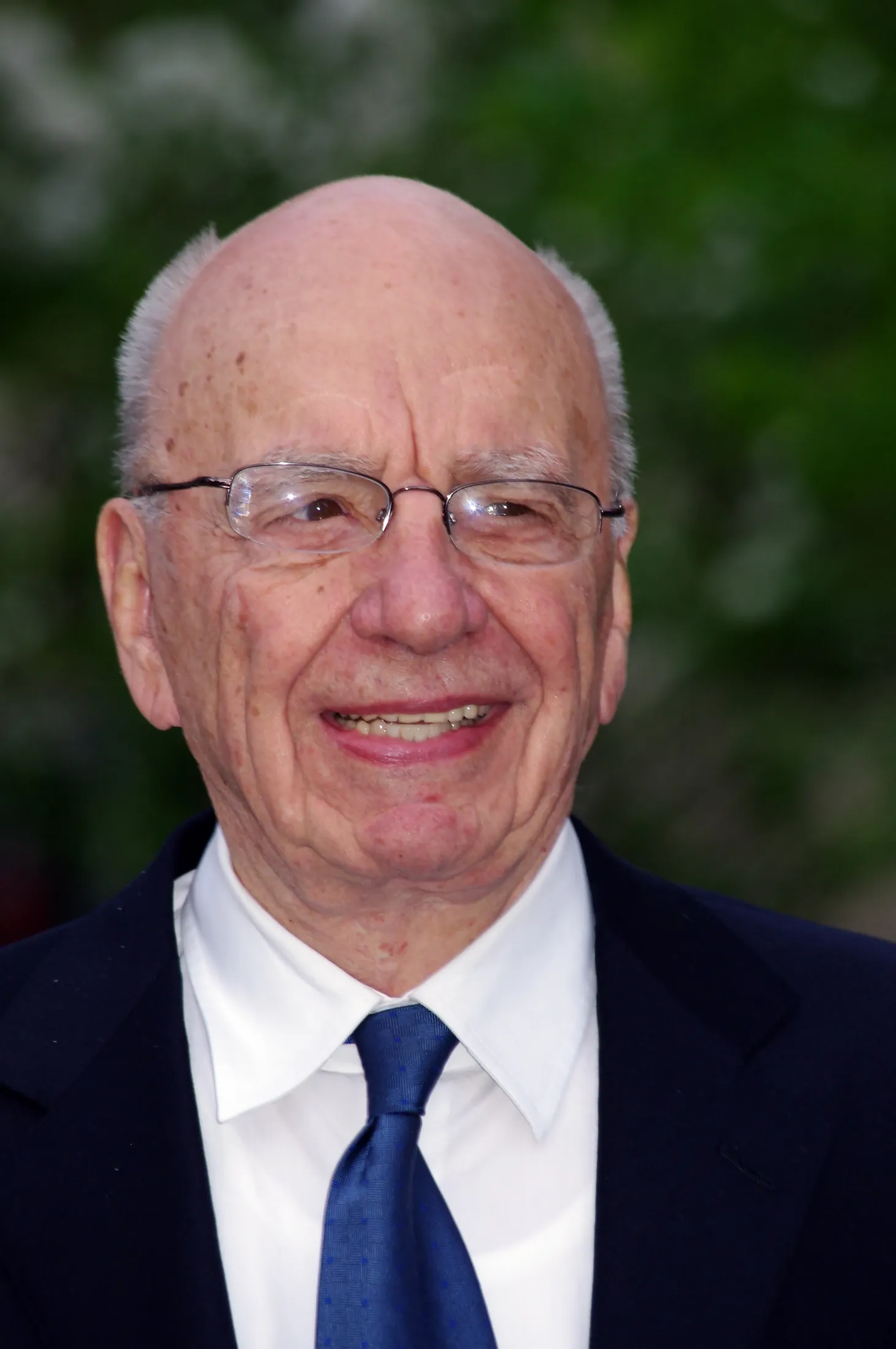
The Last Mogul
He inherited one small newspaper at twenty-two. He built Fox, Sky, and the modern tabloid. At ninety-five, the fight over his legacy still runs.
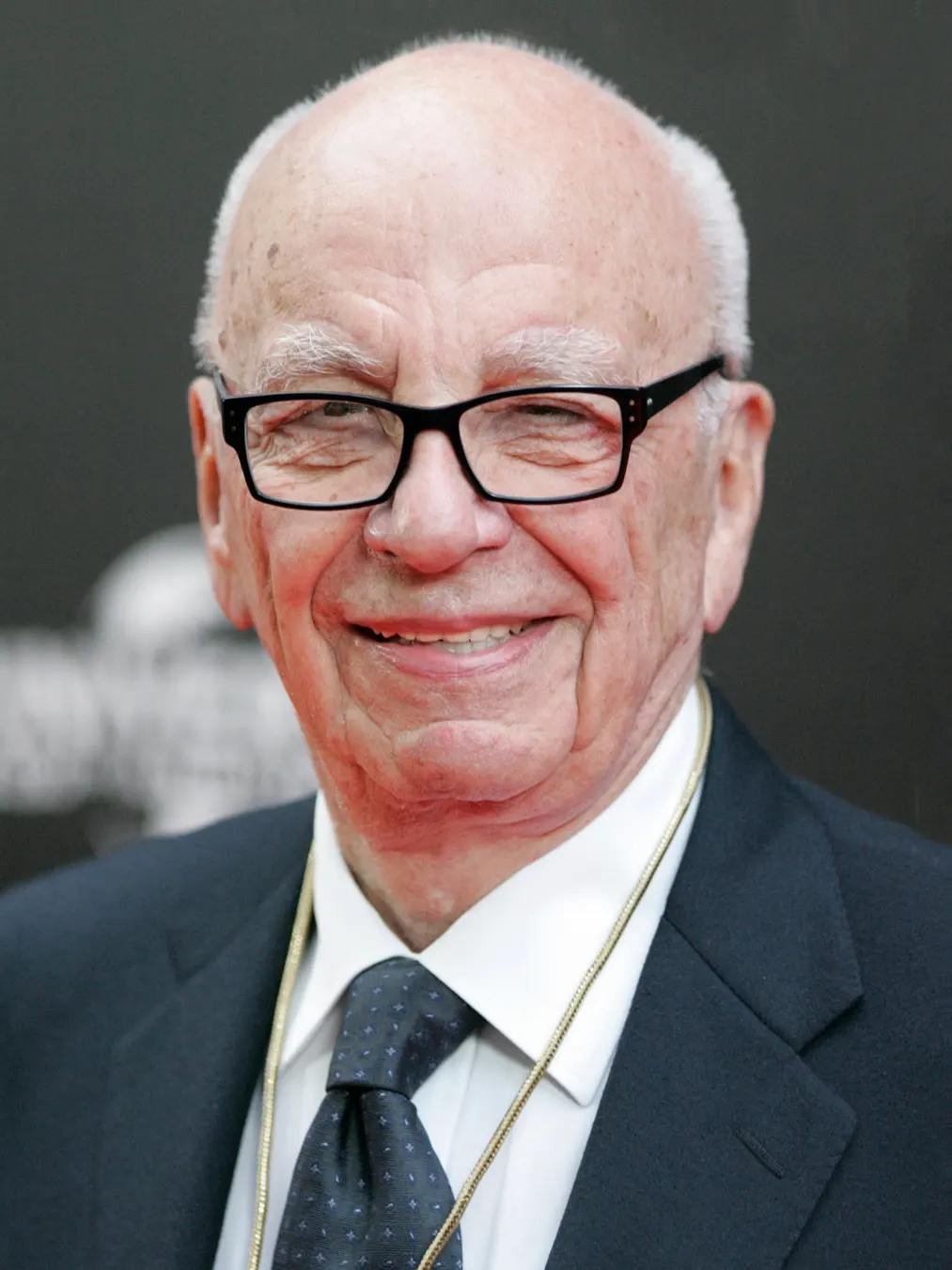
On 19 July 2011, an eighty-year-old man sat at a long table in a committee room of the British Parliament. Beside him sat his son James. Behind him sat his wife, Wendi. Lawmakers wanted to know how journalists at one of his newspapers had broken into the voicemail of murder victims, soldiers' families, and celebrities.
James began a careful answer. His father reached over and stopped him. He wanted to say one sentence first. This, Rupert Murdoch said, was the most humble day of his life.
Later in the hearing a protester rushed forward with a paper plate of shaving foam and pushed it toward Murdoch's face. Wendi leapt up and struck back at the attacker. The images went around the world within minutes. For one afternoon, the most powerful media owner of his era looked old, tired, and exposed.
It was a strange scene for a man who had spent almost sixty years winning. He had taken one small newspaper in Adelaide and turned it into an empire that stretched from Sydney to London to New York. He owned tabloids and serious papers, a Hollywood studio, a television network, satellite systems, and Fox News. Presidents and prime ministers took his calls. Rivals feared him. Critics said he damaged public life. Supporters said he gave ordinary readers what elite editors refused to give them.
That hearing did not end his story. Twelve years later he retired as chairman at ninety-two. At ninety-five he was still fighting in court, this time against a sitting American president, while his family had finally settled a bitter battle over who would control everything after him.
Cruden Farm, a famous father, and a boarding school he hated
Keith Rupert Murdoch was born on 11 March 1931 in Melbourne, Australia. His father, Sir Keith Murdoch, was one of the most famous journalists in the country. During World War I, Keith had written a blistering letter about the disaster at Gallipoli that helped change how the campaign was run. He later rose to lead the Herald and Weekly Times, the biggest newspaper group in Australia.
His mother, Elisabeth, was more than twenty years younger than her husband. She lived to one hundred three and became a famous philanthropist. The family's country home was Cruden Farm, outside Melbourne. Young Rupert grew up around horses, gardens, and dinner-table talk about editors, politicians, and deadlines.
His parents sent him to Geelong Grammar, a strict boarding school. He was not popular there, and he later said he felt like an outsider. He liked to argue. He edited a school magazine. He also developed a lifelong habit of taking the unpopular side just to see who would push back.
One lesson from his father stuck deeper than any school lesson. Keith ran a large newspaper company, but he did not own most of it. He was a hired chief, not a proprietor. Rupert told an interviewer at the Hoover Institution decades later that he saw what that meant. His father built a great group, but it belonged to other people. Rupert could not imagine that kind of life for himself. He wanted to own the thing he built.
Oxford, a bust of Lenin, and a summer on Fleet Street
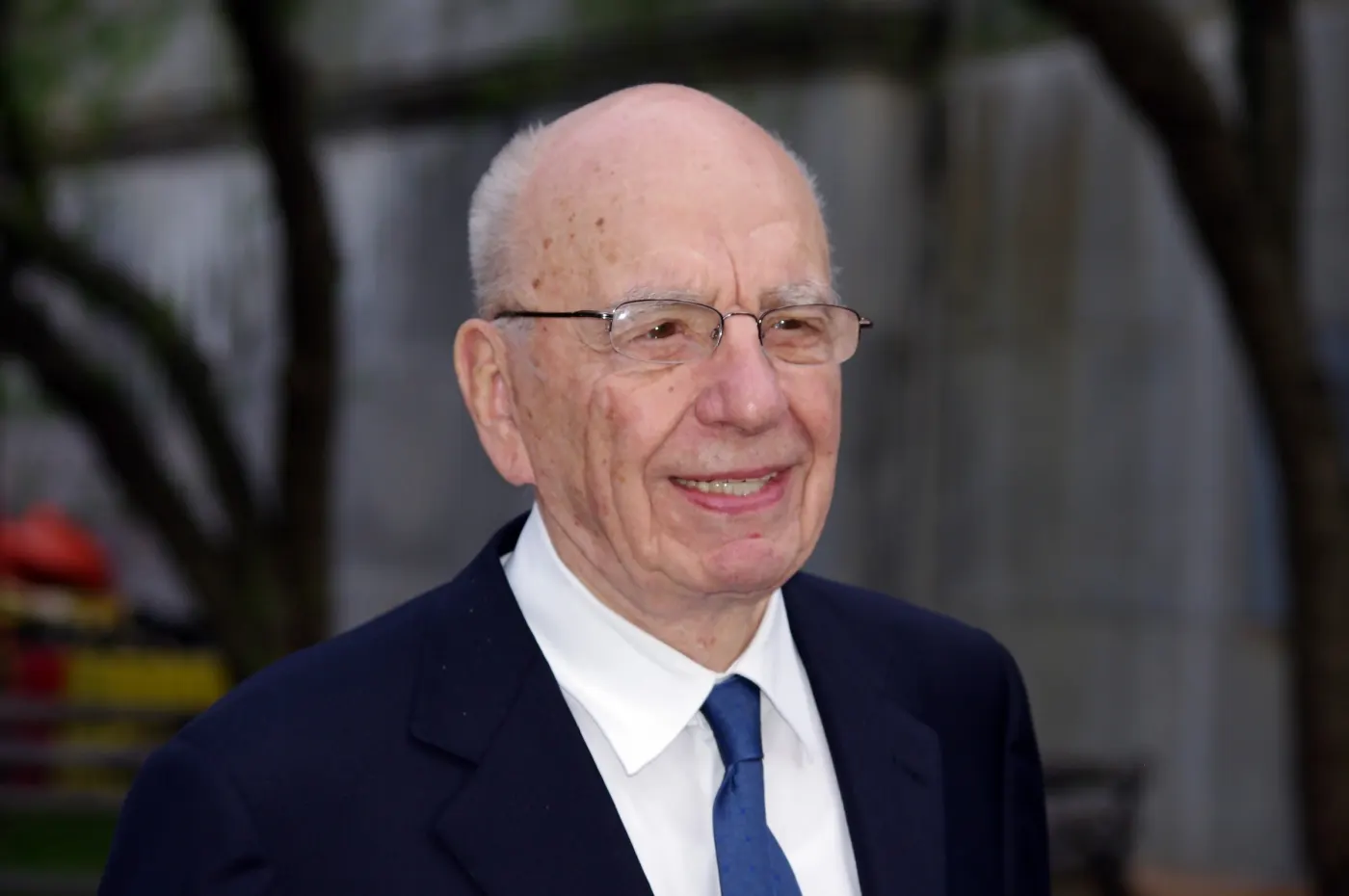
In 1950 Murdoch went to Worcester College at Oxford University in England. He was an odd mix. He was the son of a wealthy establishment figure, yet he kept a small bust of Lenin in his room and friends nicknamed him Red Rupert. He studied politics, philosophy, and economics, gambled a little, and learned how the British class system worked from the inside.
In October 1952, while he was still a student, his father died. Rupert was twenty-one. The estate was smaller than people expected. Death taxes and debts forced the family to sell some holdings. What remained for him was a controlling stake in News Limited, the company that published The News, an afternoon paper in Adelaide, a city much smaller than Melbourne or Sydney.
Before heading home, he spent a short time working as a sub-editor at the Daily Express in London, the mass-market paper run by press baron Lord Beaverbrook. He watched how headlines were sharpened and how stories were cut to fit a page at speed. He later said Beaverbrook's paper taught him what a popular newspaper could be.
In 1953, at twenty-two, he returned to Australia and walked into the office of The News as its new boss. Older staff did not expect much from the young man with the Oxford accent. They were about to learn that he worked longer hours than anyone in the building.
1953: one small paper in Adelaide
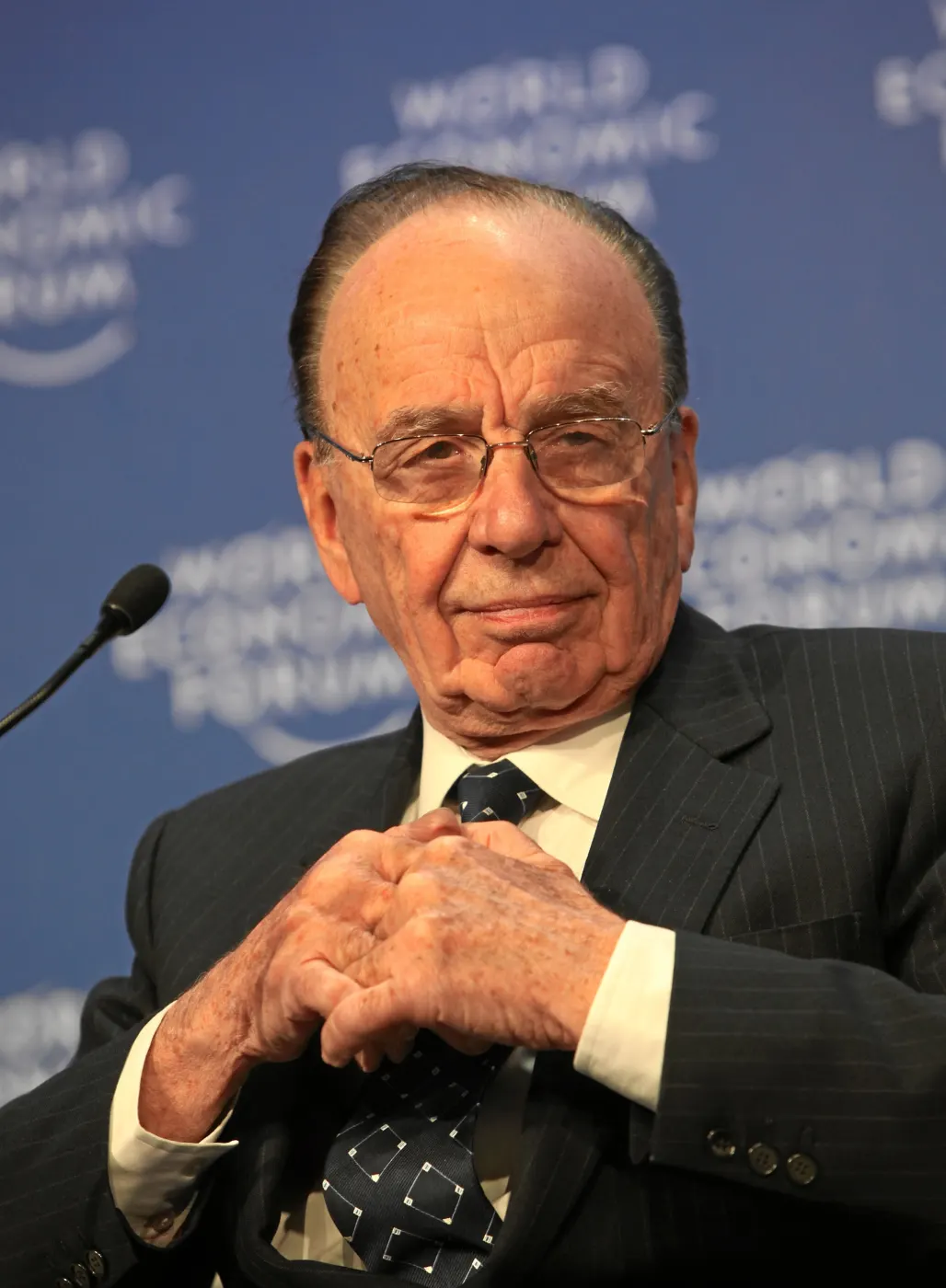
The News was a scrappy underdog. Its big rival was The Advertiser, a powerful morning paper owned by established local money. Murdoch threw himself into every part of the job. He wrote headlines. He worked beside the printers in the composing room. He learned the costs of newsprint, ink, and wages until he could quote them in his sleep.
He also learned that one city was too small. The News had to buy features, cartoons, and stories from bigger papers in bigger cities. That meant paying rivals for content. Murdoch told the Hoover interviewer that he wanted to grow simply so he could compete. Later he felt the same way about television. A small station in Adelaide had to take programs made elsewhere. The dream was to own the studio that made the shows.
So he began buying. In 1956 he bought the Sunday Times in Perth, on the other side of the continent. He picked up weaker suburban and country papers in other states. Many were close to going broke. He cut costs, punched up the front pages, and tried to turn them around. He flew constantly between cities, reading every edition he owned.
In 1958 his company won the license for a television station in Adelaide. For a young newspaper owner, it was a first step into broadcasting. It also taught him something that would shape his whole career. Government licenses and friendly relations with politicians could matter as much as good journalism.
The letter on the front page
The Advertiser wanted The News to disappear. According to Murdoch's own retelling, its leaders sent his mother a letter suggesting that the family sell out before it was too late. It was the kind of quiet pressure the establishment used to settle business fights over lunch.
Murdoch, then about twenty-four, did not take the quiet route. He published the letter on the front page of The News for all of Adelaide to read. Then he started a circulation war. Readers loved the fight. The underdog paper looked brave, and its sales held up.
That move became a pattern. When powerful people tried to box him in, he dragged the fight into public view and made readers part of the drama. He did it in London against unions, in New York against rival papers, and in Washington against regulators. He liked being called an outsider, even after he became one of the richest men in the world.
In 1960 he bought the Daily Mirror in Sydney, a struggling afternoon tabloid. Sydney was already a brutal newspaper market. He threw himself into the tabloid war there, learning how bold headlines, crime stories, and sport could lift sales. Then, in 1964, he did something many thought foolish. He launched The Australian, the country's first national daily newspaper. It lost money for years. But it gave him a serious paper with a voice in national politics. Prime ministers now had to reckon with the young man from Adelaide.
Fleet Street: the News of the World and the Sun
In 1968 Murdoch moved on Britain. The News of the World, a Sunday paper famous for scandal, crime, and gossip, was up for grabs. Its owners feared a bid from Robert Maxwell, a rival publisher. Murdoch presented himself as the friendly alternative, then quickly took control. He had arrived on Fleet Street, the London street that was the heart of British newspapers.
A year later he bought The Sun, a dull, money-losing broadsheet. In November 1969 he relaunched it as a punchy tabloid. It had short stories, big headlines, sport, television, and cheeky humor. A year later it began printing photos of topless models on page three, a feature that drew protests for decades. Critics called the paper crude. Readers bought it by the millions. Within a decade The Sun was the best-selling daily newspaper in Britain.
Murdoch understood something the old publishers had missed. Many working-class readers felt talked down to by serious papers. The Sun talked to them like a loud friend at the pub. It picked fights, cheered for Britain, mocked the powerful, and later swung its huge audience behind politicians it liked. Leaders learned to court it.
He also learned how much money a popular paper could throw off. The profits from The Sun and the News of the World would finance his next and biggest move, across the Atlantic.
America: San Antonio, the Star, and the New York Post
In 1973 Murdoch bought two newspapers in San Antonio, Texas. It was a quiet start in a big country. In 1974 he launched the National Star, a supermarket tabloid built to compete with the National Enquirer. He moved his family to New York.
In 1976 he bought the New York Post, a paper founded by Alexander Hamilton in 1801, from its longtime owner Dorothy Schiff. He turned it into a loud tabloid with headlines designed to be read from across the street. In 1977 its coverage of the Son of Sam serial killer case became famous for its shock value. Journalists at other papers sneered. The Post became a New York institution anyway, and a political weapon. It has lost money for much of its life, but Murdoch kept it because it gave him a voice in the media capital of the world.
In 1981 he bought The Times and The Sunday Times in London from the Thomson family. Now he owned both Britain's best-selling tabloid and its most famous serious paper. Critics worried he would drag The Times down market. The government of Margaret Thatcher allowed the deal without sending it to the competition regulator, a decision that critics have questioned ever since.
He also had embarrassing failures. In 1983 The Sunday Times paid for and published extracts from what were said to be Adolf Hitler's secret diaries. Within weeks experts proved they were forgeries. It was a humiliating episode. Murdoch shrugged it off in public, and the paper moved on, but the story became a warning about the risk of chasing a scoop too fast.
1985: a passport, a studio, and a fourth network
By the mid-1980s newspapers were not enough. Murdoch wanted television, and American television was the biggest prize on earth. In 1985 he bought 20th Century Fox, the Hollywood film studio, completing a purchase that started with a half share from oilman Marvin Davis. Then he agreed to buy a group of big-city television stations from Metromedia for about two billion dollars.
There was a problem. United States law barred foreigners from owning broadcast stations. So in September 1985, Murdoch became an American citizen. Critics mocked the timing. He later said on camera that he loved the free market, and that it had certainly been very good to him.
With a studio and stations in hand, he did what experts said could not be done. In October 1986 he launched the Fox Broadcasting Company, a fourth national network to challenge ABC, CBS, and NBC, which had ruled American television for decades. Early Fox shows were edgy and cheap. Married... with Children mocked the perfect sitcom family. In December 1989 The Simpsons arrived and became one of the longest-running shows in television history.
Fox aimed at younger viewers the big three ignored. It showed that a new network could survive if it took risks the old ones would not. It also gave Murdoch a studio pipeline, just as he had dreamed of back in Adelaide. Now he did not need to buy programs from bigger cities. He owned a place where programs were made.
Wapping: the midnight move
Back in Britain, Murdoch faced a problem every Fleet Street owner shared. The old print unions controlled how papers were made. They resisted new computer typesetting, insisted on large crews, and could stop a paper with a single walkout. Owners often promised to stand together, then gave in one by one.
Murdoch decided to wait until he felt strong enough. He quietly built a modern printing plant at Wapping in east London. Officially, it was for a new paper. In reality, it was designed to print all his London titles with far fewer workers, using new technology. The electricians' union agreed to staff it.
In January 1986, after contract talks failed, more than five thousand print workers went on strike. Murdoch dismissed them. Over a single weekend he moved production of The Times, The Sunday Times, The Sun, and the News of the World to Wapping and shipped papers by truck instead of by rail. Pickets gathered outside for about a year. Some nights turned violent, with police on horseback facing crowds. Murdoch told the Hoover interviewer that the strikers eventually settled for about half of what he had offered a year earlier.
To his supporters, Wapping saved British newspapers from a slow death and opened the way for new titles. To his critics, it was a brutal attack on working families, carried out with help from a friendly government. Both views contain truth. After Wapping, every other Fleet Street paper modernized, and the old street emptied as publishers moved to cheaper sites.
Sky, debt, and the call from Pittsburgh
In February 1989 Murdoch launched Sky Television in Britain, beaming channels from a satellite launched on a European rocket. His former editor Andrew Neil later remembered Murdoch calling from New York again and again while they waited for the rocket to go up. When Neil asked what was wrong, Murdoch said he was betting the company.
He was not exaggerating. Sky lost huge sums as it fought a rival satellite service, British Satellite Broadcasting. At the same time, News Corporation carried billions of dollars of debt from the Fox and Metromedia deals. In 1990 the bill came due. The company owed money to well over a hundred banks around the world.
The crisis nearly ended everything. As the story is usually told, a small bank in Pittsburgh refused to roll over a loan of about ten million dollars. If one lender would not play along, others might follow, and the whole structure could collapse. Neil told 60 Minutes that Murdoch came within hours of going under. Bankers at Citibank helped organize a rescue in which lenders agreed to restructure the debt together.
Sky merged with its rival in late 1990 to form British Sky Broadcasting. For years it lost money. Then it became one of the most profitable pay-television businesses in Europe. The near-death experience changed Murdoch less than it might have. He sold some assets and cut costs, but he never lost his appetite for big bets.
Football, a studio, and the network that grew up
In December 1993 Fox shocked the television world by winning the rights to broadcast National Football Conference games, outbidding CBS, which had carried the games for decades. The price was about one point six billion dollars over four years. Murdoch later said Fox bid so high that it bluffed CBS away from the table.
Many experts thought he overpaid. Instead, the deal turned Fox into a true major network. Local stations switched their affiliation to Fox to get football. Advertisers followed. Sports became a central pillar of his empire, from American football to English Premier League soccer on Sky.
On the film side, the studio had giant hits. In 1997 Fox and Paramount released Titanic, which became the highest-grossing film ever at that time. Later came Avatar in 2009, which broke that record again. The studio also built franchises like X-Men.
Not every bet paid off. Fox failed to win rights to several Olympic Games despite large bids. But the pattern held. Murdoch paid what others thought was crazy for things he believed people could not live without, then used them to pull audiences and advertisers into everything else he owned.
A satellite over Asia and the price of access
In 1993 Murdoch bought control of Star TV, a satellite broadcaster based in Hong Kong that reached millions of homes across Asia. In a speech that year, he said satellite television was a threat to totalitarian governments everywhere, because people could see the world for themselves. Leaders in Beijing were furious.
What happened next shows how Murdoch balanced principle and business. Soon after, Star dropped the BBC's news channel from its service to northern Asia, including China, after Chinese officials objected to its reporting. His publishing house HarperCollins published a book by the daughter of Chinese leader Deng Xiaoping. In 1998 HarperCollins dropped a memoir by Chris Patten, the last British governor of Hong Kong, who had clashed with Beijing. Murdoch has defended his choices as business decisions. Critics saw them as proof that he would bend to power when markets were at stake.
He also found success in India, where Star's channels became major players in entertainment and later sport, including cricket.
Asia taught him the limits of his reach. China never opened to him the way he hoped. Yet the Star business, especially in India, became valuable enough that it was a key piece of the Disney deal decades later.
1996: Fox News and Roger Ailes
In October 1996 Murdoch launched Fox News Channel to take on CNN, the cable news network founded by Ted Turner. To run it he hired Roger Ailes, a television producer and former Republican political strategist. Ailes promised a channel that would feel different, with a slogan of fair and balanced coverage. Critics said it tilted sharply to the right from the start.
The early years were hard. In New York, the city's main cable company, owned by Time Warner, would not carry the channel, and Murdoch was furious. He blamed Turner, who had merged CNN into Time Warner. The New York Post ran a cartoon of Turner in a straitjacket. Turner called Murdoch names in public and compared his use of media to that of dictators. The feud became one of the loudest in business history.
Murdoch spent heavily to win cable carriage, even paying operators to put Fox News on their systems. By 2002 Fox News had passed CNN in ratings. It stayed the most-watched cable news channel in America for most of the next two decades and became hugely profitable. It also became a central force in conservative politics.
Ailes ruled the channel for twenty years. In July 2016 former anchor Gretchen Carlson sued him, alleging sexual harassment. Other women came forward with similar accounts. Ailes denied the allegations, but he resigned within weeks, and Murdoch took over as acting head of Fox News himself. The network later paid settlements in several cases. The episode showed how much power the channel's leaders had held, and how slowly the company acted until the accusations went public.
How he works: the phone, the numbers, and the gut
People who have worked for Murdoch describe the same habits over and over. Andrew Neil, who edited The Sunday Times for eleven years, told 60 Minutes in 1996 that his old boss kept control by what he called telephone terrorism. He would call out of the blue from anywhere in the world, at any hour, and want to know the numbers.
Neil said Murdoch had a mind for figures like an Einstein. He could scan a stack of financial reports and spot the one line that was wrong. He read newspapers obsessively, including every edition of his own papers and many of his rivals'. Neil also said he had almost no hobbies. He did not care much for theater or opera, and was not even keen on films, including the ones his studio made.
Most of all, Neil said, Murdoch got a buzz from deals. He compared him to a Las Vegas high roller who loved the adrenaline of the bet. Because News Corporation had little formal hierarchy, Murdoch could decide quickly and act before rivals finished their meetings. That speed let him snatch assets others were still studying.
He also demanded loyalty, and people who lost his favor often found themselves outside the company. Neil told 60 Minutes that everybody was disposable in Rupert's world. Yet many longtime executives stayed for decades, drawn by the thrill of working inside a company that was always on the move.
The Wall Street Journal and a lesson from MySpace
In 2005 Murdoch bought MySpace, then the most popular social network in America, for about five hundred eighty million dollars. It looked like a smart move into the internet age. Instead, Facebook passed it within a few years, and MySpace lost users fast. In 2011 News Corporation sold it for about thirty-five million dollars. It was one of his costliest mistakes and a sign that the internet moved faster than any newspaper baron.
His other big purchase of that era went better. In 2007 he agreed to buy Dow Jones, the owner of The Wall Street Journal, for about five billion dollars. Members of the Bancroft family, who had controlled the paper for generations, argued over the sale. Many worried Murdoch would damage its famous newsroom. He promised editorial independence and set up a special committee to protect it.
He poured money into the Journal, added more general news, and pushed it head to head against The New York Times. The paper's online subscription business grew into one of the strongest in the industry. Its news pages continued to break major stories, including stories that angered people close to Murdoch himself.
Buying the Journal fulfilled an old dream. The boy who watched his father run other people's papers now owned the most important business newspaper in the world.
July 2011: hacking and the humble day
Trouble had been building for years. In 2007 a royal reporter at the News of the World and a private investigator went to prison for hacking the phones of royal aides. The company said it was one rogue reporter. Then, in July 2011, The Guardian reported that the paper had hacked the voicemail of Milly Dowler, a thirteen-year-old murder victim, while police were still searching for her.
The public reaction was fierce. Advertisers fled. Within days News Corporation closed the News of the World, ending a paper that was 168 years old. Murdoch withdrew his bid to buy the rest of British Sky Broadcasting, a deal worth billions. Senior executives resigned.
At the parliamentary hearing on 19 July, Murdoch said he was not responsible for what happened. He explained that the News of the World was less than one percent of his company, which employed fifty-three thousand people, and that he had trusted the people he appointed. Lawmakers pressed him on his closeness to prime ministers, including why he entered Downing Street by the back door. He said he had been asked to.
The legal fallout lasted more than a decade. In 2014 former News of the World editor Andy Coulson was convicted of conspiracy to hack phones. Former executive Rebekah Brooks was acquitted. A parliamentary committee report in 2012, split along party lines, said Murdoch was not a fit person to run a major international company. The company paid large sums to settle civil claims, and in January 2025 Prince Harry settled his case against the publisher of The Sun, which apologized for unlawful intrusion by people working for the paper. Murdoch has said he did not know about the hacking.
The split, the Disney sale, and a new Fox
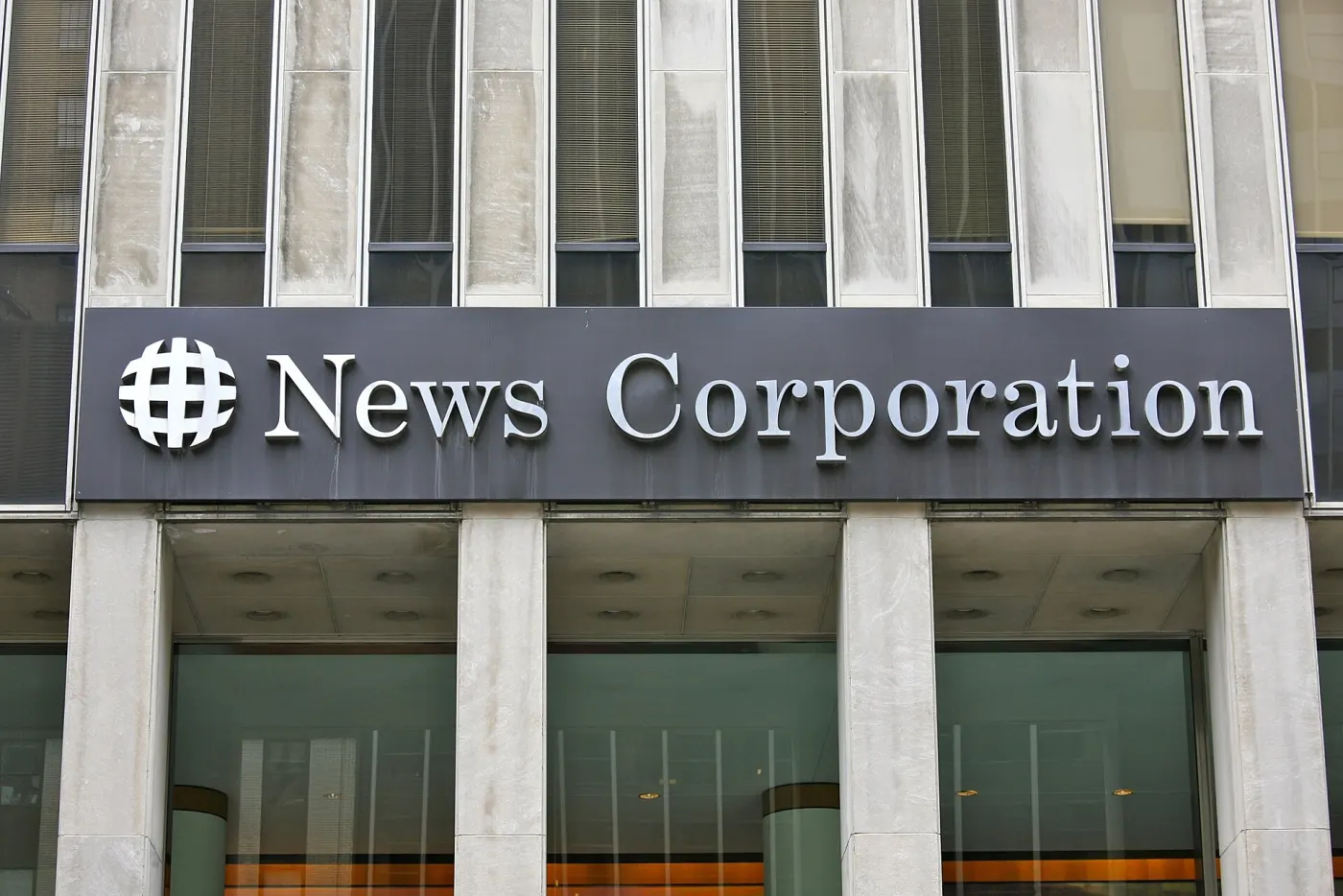
After the scandal, investors pushed for change. In 2013 Murdoch split his empire in two. News Corp kept the newspapers and book publishing. 21st Century Fox took the film studio, television networks, and cable channels. Newspapers made headlines, but entertainment made most of the money.
Then, in a move few expected, he agreed to sell most of 21st Century Fox to Disney. After a bidding war with Comcast, the price reached about seventy-one billion dollars. The deal closed in March 2019. Disney got the studio, the X-Men and Avatar franchises, FX, National Geographic, Star India, and a big stake in the streaming service Hulu. Separately, Comcast won control of Sky in 2018.
Murdoch kept what he cared about most: Fox News, the Fox broadcast network, Fox Sports, and local stations. They became a new company, Fox Corporation, led by his son Lachlan. His son James, who had been expected by many to lead the entertainment business, took his share of the Disney proceeds and started his own investment firm. In 2020 James quit the News Corp board, citing disagreements over editorial content.
The sale showed Murdoch the dealmaker at work. He saw streaming giants coming, decided his studio was too small to fight them alone, and sold at a high price. Then he kept the live news and sports that streaming could not easily replace.
Dominion, Tucker Carlson, and stepping down
After the 2020 American presidential election, several Fox hosts and guests aired false claims that voting machines made by Dominion Voting Systems had flipped votes. Dominion sued Fox for defamation, seeking one point six billion dollars. Court filings released before trial included messages showing that some Fox figures privately doubted the claims. In a deposition, Murdoch acknowledged that some hosts had endorsed the false story, and said he wished they had pushed back harder.
On 18 April 2023, just as the trial was about to begin, Fox settled for seven hundred eighty-seven and a half million dollars. In a statement, the company acknowledged the court's rulings that certain claims about Dominion were false. It was one of the largest defamation settlements ever made public. A separate suit by the voting technology company Smartmatic sought billions more, and Fox has denied its claims. Days after the Dominion settlement, Fox parted ways with Tucker Carlson, its most-watched prime-time host.
In September 2023, at ninety-two, Murdoch announced that he would step down as chairman of both Fox Corporation and News Corp. Lachlan became sole chairman of News Corp while continuing to run Fox. Rupert became chairman emeritus. In a memo to staff he wrote that his companies were in robust health, as was he. He added that he would keep watching the news and sharing ideas.
A former News Corp executive told Reuters that Murdoch might be the last of the founder moguls, in the line of Ted Turner and Sumner Redstone. It was the end of a career that had lasted more than seven decades.
Four marriages, six children, and a trust that would not bend
Murdoch's private life has been almost as eventful as his business life. He married four times. His first wife, Patricia Booker, was the mother of his eldest daughter, Prudence. His second wife, Anna Torv, a journalist, was the mother of Elisabeth, Lachlan, and James. They divorced in 1999. His third wife, Wendi Deng, was the mother of his two youngest daughters, Grace and Chloe. That marriage ended in 2013. He was married to model and actress Jerry Hall from 2016 to 2022. In June 2024, at ninety-three, he married Elena Zhukova, a retired molecular biologist, at his vineyard in California.
For years he set his children against one another in an unspoken race to succeed him. Elisabeth built her own television production company. James rose to run 21st Century Fox, then broke with his father over politics. Lachlan, the most conservative, became his choice.
There was a problem. When Rupert divorced Anna, the settlement included a family trust that gave his four eldest children equal votes over the family's controlling shares in Fox and News Corp after his death. The trust was meant to be irrevocable. Murdoch later tried to change it so that Lachlan alone would control the votes, arguing that this would protect the companies' value and their editorial direction.
Prudence, Elisabeth, and James fought him in a closed probate court in Reno, Nevada. In December 2024 a probate commissioner ruled that Rupert and Lachlan had acted in bad faith in trying to change the trust. It looked like a defeat. Then, on 8 September 2025, the family announced a settlement. The three siblings would leave the trusts that hold the family's voting shares, receiving about one point one billion dollars each, funded partly by selling some of the family's stock. A new trust for Lachlan, Grace, and Chloe would run until 2050, with voting control resting solely with Lachlan.
The fight that inspired comparisons to the television drama Succession ended with the outcome Rupert wanted, at a price paid in cash and in family peace.
World impact: tabloids, cable news, and political weight
Murdoch's impact is enormous and fiercely argued over. In journalism, he helped create the modern tabloid style, with short stories, bold headlines, and relentless focus on celebrity, crime, and sport. Supporters say he kept many papers alive that would otherwise have closed, from The Times to The Wall Street Journal. Critics say he lowered standards and blurred the line between news and opinion.
In television, he broke the old three-network system in America and showed that a fourth network could thrive. With Sky, he built pay television in Britain and made sports rights the engine of the business. With Fox News, he created a template for cable news that talks directly to a political audience. That template changed how Americans get news and how politicians campaign.
In politics, his papers and channels have courted, backed, and sometimes dropped leaders in Australia, Britain, and the United States. Prime ministers from Margaret Thatcher to Tony Blair sought his support. Historians and critics still debate how much his outlets shaped election results versus followed their readers. Few people outside government have held so much sustained influence across three democracies.
For workers, Wapping reshaped the newspaper industry in Britain, and his cost-cutting playbook was copied worldwide. For the media business, his model of owning both content and distribution, from studios to satellites, was followed by many of the giants that came after him.
2026 snapshot: ninety-five, a presidential lawsuit, and Lachlan in charge
Murdoch turned ninety-five on 11 March 2026, and news reports described a large celebration in New York. He remained chairman emeritus of Fox and News Corp, with Lachlan firmly in control under the new family trust.
He was also caught in a rare fight with a political ally. In July 2025 The Wall Street Journal reported on a sexually suggestive birthday letter bearing Donald Trump's name that it said was included in a 2003 album for Jeffrey Epstein. Trump, by then president again, denied writing it and sued the Journal, its parent company, and Murdoch personally for ten billion dollars. The Journal stood by its reporting.
In April 2026 a federal judge in Florida dismissed the suit, saying it failed to show actual malice, the standard public figures must meet, but allowed Trump to refile. Trump filed an amended complaint. Later that year the judge paused discovery, including Trump's efforts to question the ninety-five-year-old Murdoch under oath, while he considered a new motion to dismiss. As of September 2026, the case had not been resolved.
Meanwhile, Fox launched a streaming service called Fox One in 2025, and News Corp pushed deeper into digital subscriptions and real estate websites. The businesses he built kept changing without him in the chair.
Closing
Rupert Murdoch began with one afternoon newspaper in a small Australian city, inherited from a father who never owned what he ran. He refused to live that way. He bought, argued, gambled, and sometimes nearly lost it all. He built papers that millions read and millions hated, a network that grew up on cartoons and football, a satellite empire, and a cable channel that changed politics.
He paid for his mistakes in scandals, settlements, and family courtrooms. He never stopped reading the numbers or making the calls. The boy who published the bully's letter on the front page became the man everyone else wrote letters about, still on the phone at ninety-five, still certain that the next deal matters most.
Watch alongside this story
Short cuts from interviews, keynotes and launches. Each plays only the moment that matters.