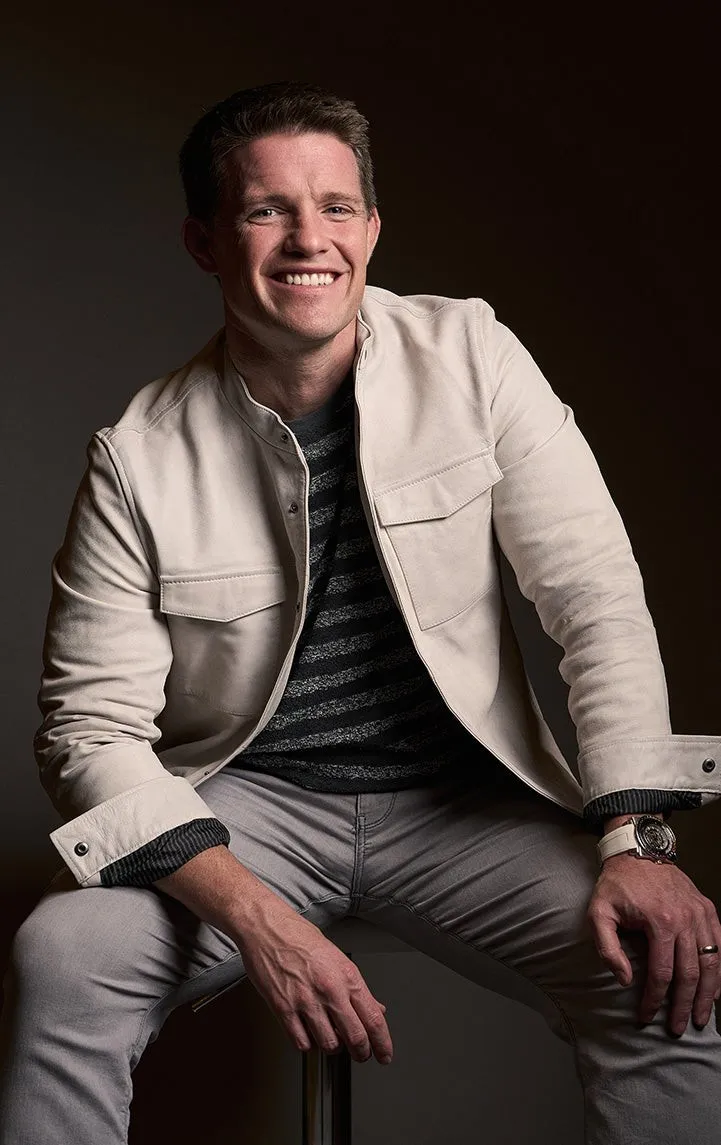
One Funnel Away: The Russell Brunson Story
The email from Dad
Russell Brunson was at a business event in Las Vegas, trying to figure out how to save his company, when he opened an email from his father.
His dad had been keeping an eye on the bookkeepers back home in Boise, Idaho. The message was short and terrible. The person in charge of payroll taxes had not paid them in about a year. She had been hiding it. The company owed the Internal Revenue Service somewhere around two hundred thousand dollars.
His father spelled out what that meant. This was not a normal fine. People who do not pay payroll taxes can go to jail.
Russell stared at the screen. He did not have two hundred thousand dollars. He did not have twenty thousand. For almost a year, his business had been bleeding out. The banks had shut off his ability to take credit card payments. He had already let go of dozens of employees. Soon after that email, his team of forty or fifty phone salespeople walked out together and quit.
That night, lying in bed, he had a thought that shocked him. He wished he had a boss who could just fire him. Then he could walk away.
But there was no boss. There was only Russell, a former college wrestler with a wife, young kids, a building full of empty desks, and a pile of debt.
He could not quit. If he quit, he might go to prison.
So he did the only thing he knew how to do. He got back on the mat.
Within a few years, the same man would co-found ClickFunnels, one of the best-known software companies ever built without venture capital. He would write bestselling books, fill arenas with thousands of fans, and hand out gold and silver awards to entrepreneurs who made millions using his tools.
To understand how he got there, you have to start with a scared eighth grader who did not want to wrestle.
We are wrestlers
Russell Brunson was born in 1980 and grew up in the Boise area of Idaho, in a family that belonged to The Church of Jesus Christ of Latter-day Saints.
His father had been a wrestler. At home, he told wrestling stories the way some fathers tell war stories. He talked about cutting weight, about brutal practices, about matches won in the last seconds. He made it all sound glamorous.
When Russell was very small, maybe in kindergarten, his parents signed him up for wrestling. There are old photos of him in a tiny singlet. He hated it. He cried after every match, and his mom finally let him stop.
He switched to basketball and loved it. In his mind, he was a basketball player.
Then, in eighth grade, a neighbor boy came to church one Sunday and mentioned that he had joined the wrestling team. Russell's father overheard. He turned to his son and said something Russell never forgot. We are wrestlers. You need to come wrestle.
Russell argued. He said he was a basketball player. His dad did not budge. He drove him to practice.
It was a disaster. Russell did not know any moves. Everyone beat him. Even his little brother, Scott, was pinning him. He decided he would wrestle for a year or two to keep his dad happy and then go back to basketball in high school.
That plan lasted until his first real match.
He went out on the mat against a kid from another school who looked older and tougher. Russell remembered that the boy had a mustache. Somehow, Russell scored, held on, and won. The referee raised his hand. He looked over and saw the other kid's head drop. He looked up into the stands and saw his dad jumping up and down.
It was the greatest feeling he had ever felt. That day, he later said, he became a wrestler.
Nick Fresquez
After his sophomore year of high school, Russell told everyone he knew that he was going to be a state champion the next year.
He meant it. He trained all summer. He ran. He lifted. He wrestled. He did not miss a day.
The first match of his junior season was against a boy named Nick Fresquez, who had finished second in the state the year before. Russell was nervous, but he had been telling people he was going to be champion, so he walked out confident.
Nick destroyed him.
It was a Saturday. On Sunday, at church, people kept asking how the match went. Russell had to keep saying he lost. He went home, crawled into bed, and sulked. Being angry felt good in a strange way.
His father had a different reaction. He had filmed the match. That night, he stayed up watching the video over and over, studying exactly how Nick had beaten his son.
The next morning, Russell's dad showed him the moves. They drilled the counters before school. They drilled them again at night. They kept it up for months, morning and night, back and forth, until Russell knew how to stop Nick's moves better than anyone, and how to do them himself.
When they met again, Russell won. He beat Nick using the same move Nick had used to beat him.
Years later, Russell would tell entrepreneurs that this is how business works, too. Your first funnel will probably fail. Most people quit and say funnels do not work. Winners watch the tape, figure out what went wrong, and come back.
Second in the nation
Russell went on to win the state title that junior year. As a senior, he wanted to do it again, and he lost. He finished third in the state, and it felt humiliating. His whole identity was being the best, and now he wanted to hide. But because he had been a state champion, he still qualified for a national high school tournament.
His father asked if he wanted to go. If he did, his dad said, he would need to outwork everyone.
So they made a plan. Russell woke up and ran. Then he lifted. Then he wrestled. Because he knew all his teammates' styles, they drove from school to school around Idaho to find other top wrestlers who were heading to the same national event. Some days they visited two or three schools just to find tougher practice partners.
At the national tournament, Russell took second place in the country in his weight class. He became a high school All-American and earned college scholarship offers.
He wrestled for a year at Brigham Young University and placed third in his conference. Then BYU dropped its wrestling program. Russell served a mission for his church, and while he was away, he got an offer to wrestle for Boise State University.
He came home and wrestled four more years there. The practices were brutal. Boise State's style was simple: get in the room and fight hard for two hours every day. By his senior year, he was ranked in the top ten in the nation, but he did not place at the NCAA championships, which had been his big goal.
The dream of being an Olympian ended. But wrestling had already built the engine he would use for the rest of his life. He knew how to lose, study the loss, and go again.

Collette
While he was still a student at Boise State, Russell married a young woman named Collette.
They were newlyweds with almost no money. Collette took a full-time job to support them both. Russell, meanwhile, was wrestling, going to class in computer information systems, and tinkering with every get-rich idea he could find.
He had always been fascinated by selling. Even as a kid, he had been the type to pore over junk mail and late-night infomercials, wondering why some pitches worked and others did not.
One early scheme was a do-it-yourself screen projector. The parts cost about ten dollars, and he figured he could sell it for forty. He and his brother printed flyers and stuck them on cars around campus until campus security caught them and shut the whole thing down.
It was not a great start. But he kept going.
Potato guns
One night, Russell and a friend thought it would be fun to build a potato gun, the kind made from plastic pipe that fires a potato across a field.
He went online to learn how. What he found surprised him. About eighteen thousand people searched every month for information on building potato guns. And nobody was selling a good product to teach them.
So Russell made one. He and his friends filmed themselves building potato guns and burned the video onto a DVD. He put up a simple website and started selling it for somewhere between twenty-seven and thirty-seven dollars.
Orders came in. People paid him, and he mailed them a disc. It felt like magic.
Then a mentor pointed out something important. After someone buys a DVD on how to build a potato gun, what do they need next? They have to drive to the hardware store, wander the aisles, and figure out which pipes, glue, and igniter to buy.
Why not sell them a kit?
Russell set up what marketers call an upsell. Right after a customer bought the DVD, a new page offered them a complete potato gun kit for around two hundred dollars. Many people said yes. He made far more from the kits than from the DVDs.
A local television station even ran a story about the college wrestler selling potato gun videos on the internet.
It was a tiny business. But inside it was the idea that would one day become ClickFunnels. You do not just sell one thing. You build a path, one step after another, that gives customers what they want next.
One sales letter away
Russell became obsessed with direct-response marketing, the kind of selling that asks you to act right now.
He studied the legends. He read old sales letters from copywriters such as Gary Halbert and devoured the teachings of marketer Dan Kennedy. Halbert told him in an interview that you are always just one sales letter away from being rich. Russell never forgot it.
He sold software tools, information products, and training courses. One of his early hits came when he interviewed the author of a book called The 12 Month Millionaire and sold the recording online. Right after someone bought the interview, he offered them the book itself. About thirty percent of buyers took it.
That offer brought in more than a million dollars. It was his first million-dollar product. Years later, when Russell created an award for entrepreneurs who made a million dollars through a single sales funnel, the very first one he had printed was for that offer.
He was barely out of college, and money was pouring in.
He started hiring. And hiring. And hiring.
Too fast
By the late 2000s and early 2010s, Russell's company had about one hundred employees. They worked in a cool office building in downtown Boise. He had coaching programs, software, events, and a call center full of salespeople.
He felt like he was on top of the world. He admitted later that he had started believing his own press.
Then one January day, a customer tried to buy something, and the payment failed. Then another failed. Then another.
The company had nine merchant accounts, the accounts that let a business take credit cards. All nine were at the same bank. In a single day, the bank shut them all off.
Suddenly, Russell's company could not collect money.
He scrambled for a year. He opened new accounts, processed sales, and then watched the new banks freeze the money for months because it came in too fast. Every morning, he gave himself a pep talk. Then he walked into the office and gave one to his team. This is going to work, he told them. We are going to figure this out.
It did not work. Over the next couple of years, he let people go in waves. Thirty here. Twenty there. By his own count, he eventually let go of about ninety people, many of whom he considered close friends. He moved into smaller and smaller offices.
Then came the email from his father about the payroll taxes.
The funnel that saved him
With his salespeople gone and the IRS bill hanging over him, Russell sat down with the few people he had left in a tiny office.
He did not have money for a big team or a big ad campaign. What he had was a skill: building sales funnels. So they built one. They put everything they had into a single offer, a single sequence of pages, a single story.
They launched it.
Within about ninety days, he has said, the funnel brought in roughly a million dollars. He paid off about half a million dollars in back taxes and debt. He did not go to jail. He had survived.
The lesson burned into him. His company had not been saved by more employees or a bigger building. It had been saved by one funnel that worked.
He would spend the rest of his career telling people they were one funnel away.
The developer from Georgia
By then, Russell had a problem that drove him crazy. Every time he wanted to test a new funnel, he had to wait on programmers. A new page could take weeks. A small change could take days. For a man who thought in minutes, it was torture.
He met a young developer named Todd Dickerson.
Todd had started his first business in third grade, selling stapled booklets of video game cheat codes. In high school, he bought and sold dozens of used sports cars. He had built hundreds of websites and knew how to make software that could handle huge amounts of traffic.
Russell asked Todd to help with a project. Todd agreed on one condition. He did not want a salary. He wanted to be a partner and own a piece of whatever they built.
For more than a year, Todd flew back and forth from his home in Georgia to Boise and worked for Russell for free. At home, his wife, Ashley, was counting dollars to buy groceries while companies emailed Todd six-figure job offers that he barely opened.
Todd had been sketching a new kind of tool for years. It would let anyone, even someone who could not code, build a full sales funnel by dragging and dropping pieces on a screen. A landing page. An order form. An upsell. A thank-you page. All connected, all ready to take money.
When Todd first described it, Russell was honest. That is cool, he said, but I have no idea how to sell something that sophisticated. I can barely get people to build a funnel at all.
Then Todd showed a working prototype to Russell and to Dave Woodward, a friend and business partner who would become the company's chief executive. They got it immediately. This is the thing, they said. This is what everyone needs.
ClickFunnels
In 2014, Russell, Todd, and their small team launched ClickFunnels.
The idea was simple enough to explain in one sentence. Build your whole sales funnel yourself, without hiring programmers.
What made it take off was not only the software. It was the way Russell sold it. He did not run ads bragging about features. He used ClickFunnels to build the pages that sold ClickFunnels. The company was its own best example.
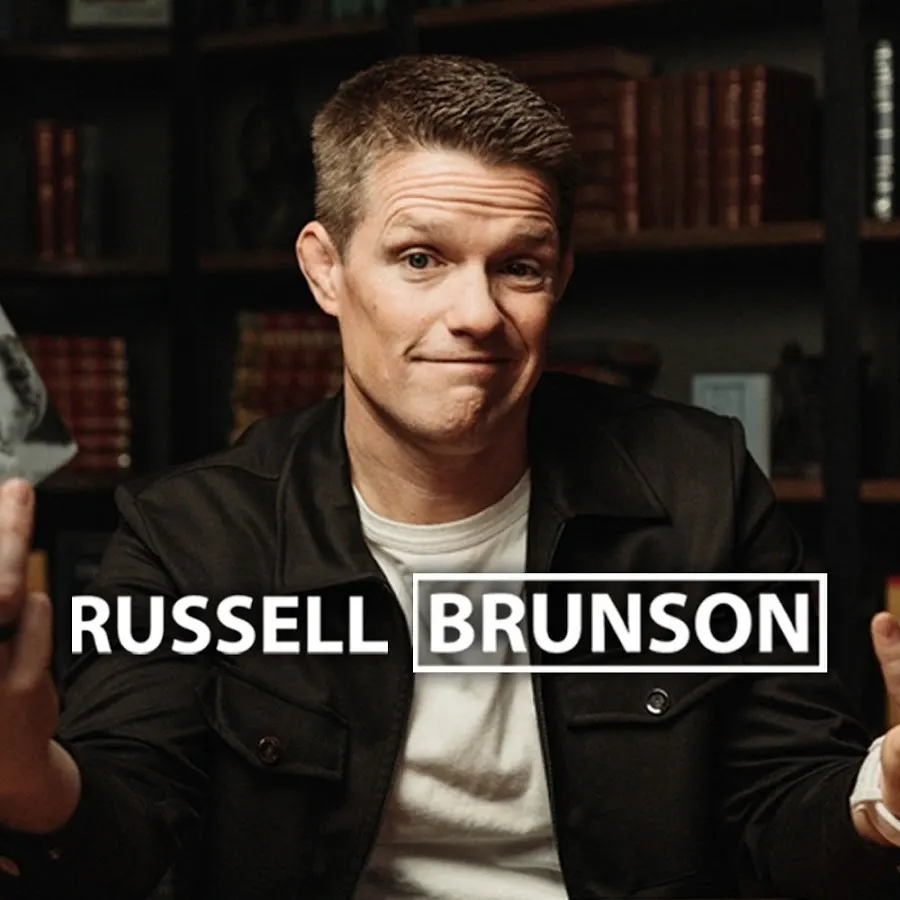
Russell taught constantly. He made videos, webinars, and podcasts about how funnels worked. He invented phrases that spread through the online business world. He called his customers funnel hackers, people who study the funnels of successful companies, figure out how they work, and use the same ideas in their own businesses.
The growth was astonishing. In an interview with the business podcaster Nathan Latka, Russell described ClickFunnels going from about fourteen million dollars to about sixty million dollars in annual recurring revenue in roughly eighteen months. In May 2017, Forbes wrote about the company as a self-funded software business worth hundreds of millions of dollars, built without a single venture capital investor.
There were no investors telling Russell what to do. Every dollar of growth came from customers.
Inside a funnel
To see why ClickFunnels caught on, picture a lemonade stand.
A kid sets up a table and sells cups of lemonade for a dollar. Some people walk by. A few stop. The kid makes a little money.
Now picture a smarter stand. There is a sign down the street that says free sample. People who taste the sample are offered a full cup. People who buy a cup are asked if they want a cookie with it. People who buy a cookie are asked if they want a jug of lemonade delivered to their house every week.
That is a funnel. It starts wide, with many people, and narrows as customers take one step after another. Each step gives them something they actually want next, the same way the potato gun kit followed the potato gun DVD.
Before ClickFunnels, building that kind of path online usually meant paying programmers to make separate pages, connect them to a shopping cart, and track which step lost people. Every test was slow and expensive.
With ClickFunnels, a fitness coach, a baker, or a first-time author could build the whole path in an afternoon. They could change a headline, run a new test, and see results the next day.
Russell liked to say that his customers were not buying software. They were buying the ability to test ideas as fast as he did.
Books as funnels
Russell had a new problem. Bigger software companies had huge advertising budgets. He could not win an ad war by shouting that he had a better page builder.
So he wrote books.
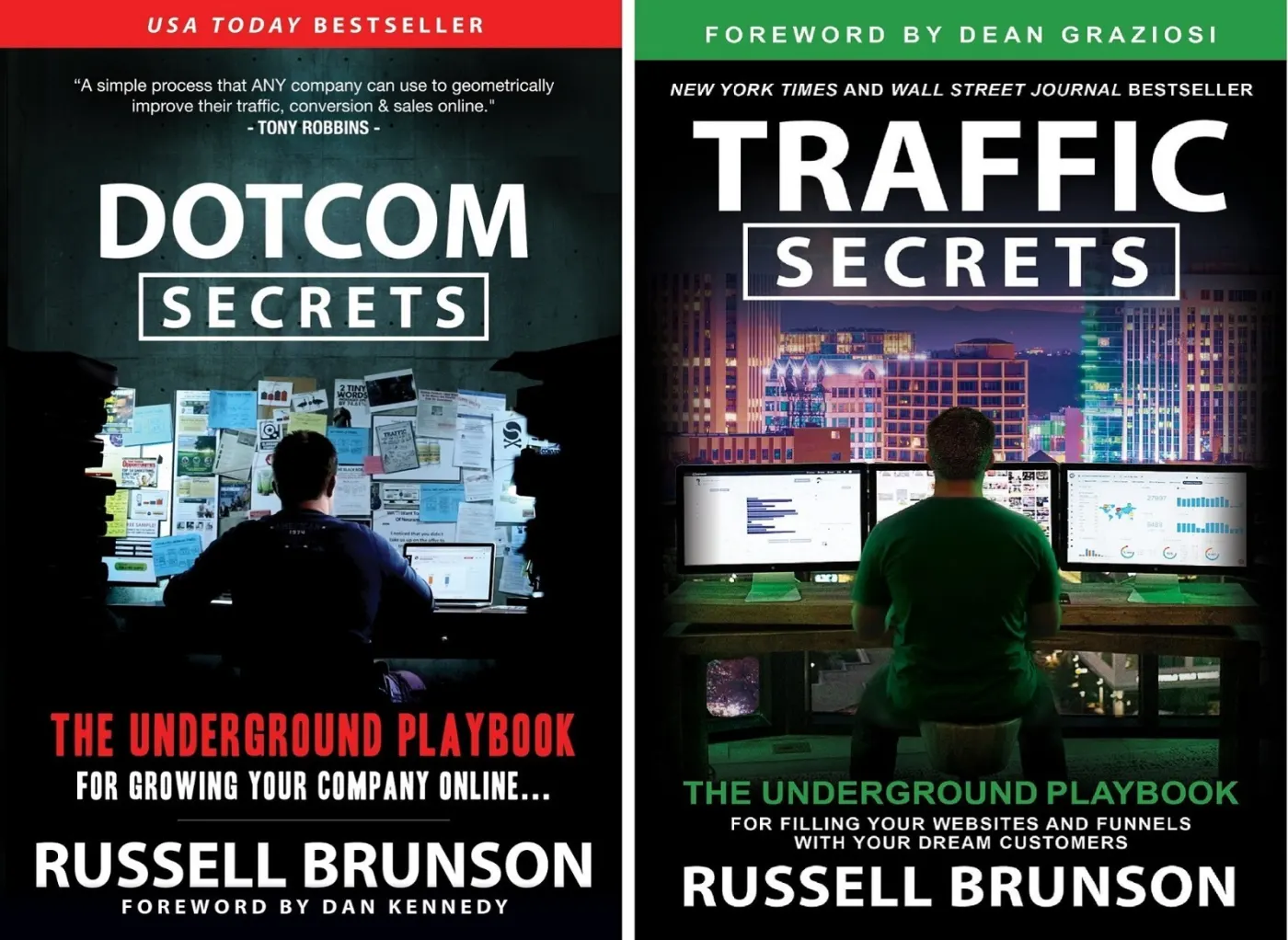
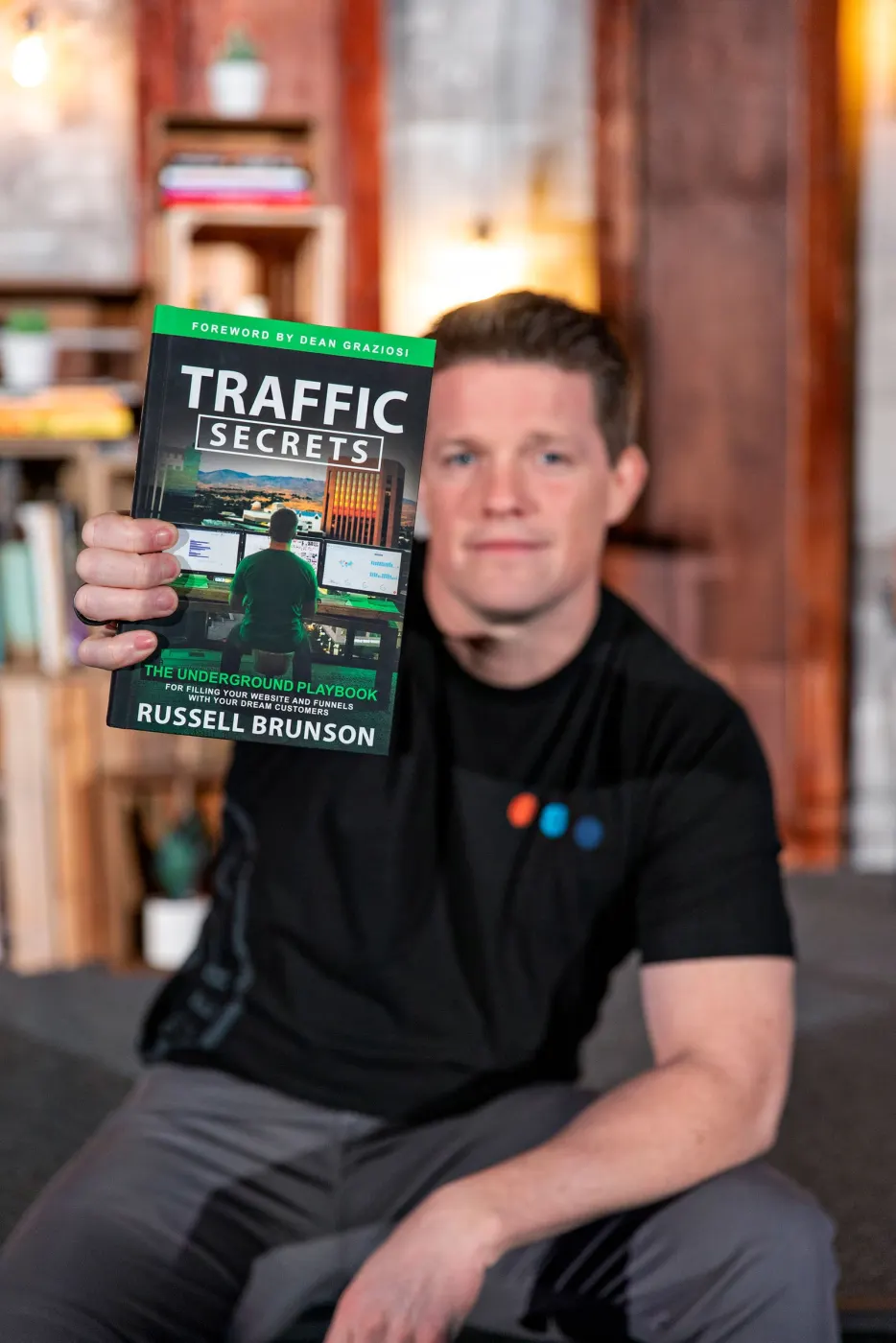
In 2015, he published DotCom Secrets, a guide to building an online business with funnels. Expert Secrets followed in 2017, about building a following around your knowledge. Traffic Secrets came in 2020, about finding customers online.
He did not just put the books in stores. He offered them online for free, as long as the reader paid for shipping. After buying, readers saw other offers: audio versions, training, and eventually a trial of ClickFunnels.
It was a funnel wrapped around a book. Readers spent hours learning his way of thinking. Many of them came out the other side wanting the software.
Critics argued that the upsells were aggressive and that his style of selling could feel relentless. Fans said he was simply practicing what he preached. Either way, the books sold widely and became the front door to his company.
The attractive character
Expert Secrets carried one of Russell's favorite ideas. He called it the attractive character.
People, he argued, do not follow companies. They follow people. A business grows faster when customers know the story of the person behind it, including the flaws.
He compared it to comic books. When writers first created Superman, nobody cared much, because a hero who cannot be hurt is boring. Then they gave him kryptonite. Suddenly he was interesting.
Russell practiced what he taught. He talked openly on stage about his failures: the layoffs, the tax bill, the nights he wanted to quit. He shared his wrestling losses, his faith, and his family. He wanted people to see a real person who had fallen down and gotten back up, not a flawless guru.
That openness helped create a devoted following. People who had never met him felt they knew him.
The Two Comma Club
Russell understood something about people. They crave recognition.
He created the Two Comma Club award for entrepreneurs who made a million dollars through a single funnel built on ClickFunnels. The name came from the two commas in the number 1,000,000. Winners received a shiny plaque and a moment on stage.
Later came the Two Comma Club X for ten million dollars, and the Two Comma Club C for twenty-five million. By 2026, his company said it had handed out more than thirty-five hundred Two Comma Club awards, more than three hundred and fifty Two Comma Club X awards, and more than a hundred C awards.
The awards turned customers into heroes. And every hero was living proof that the software worked.
Funnel Hacking Live
Every year, Russell brought his community together at an event called Funnel Hacking Live.
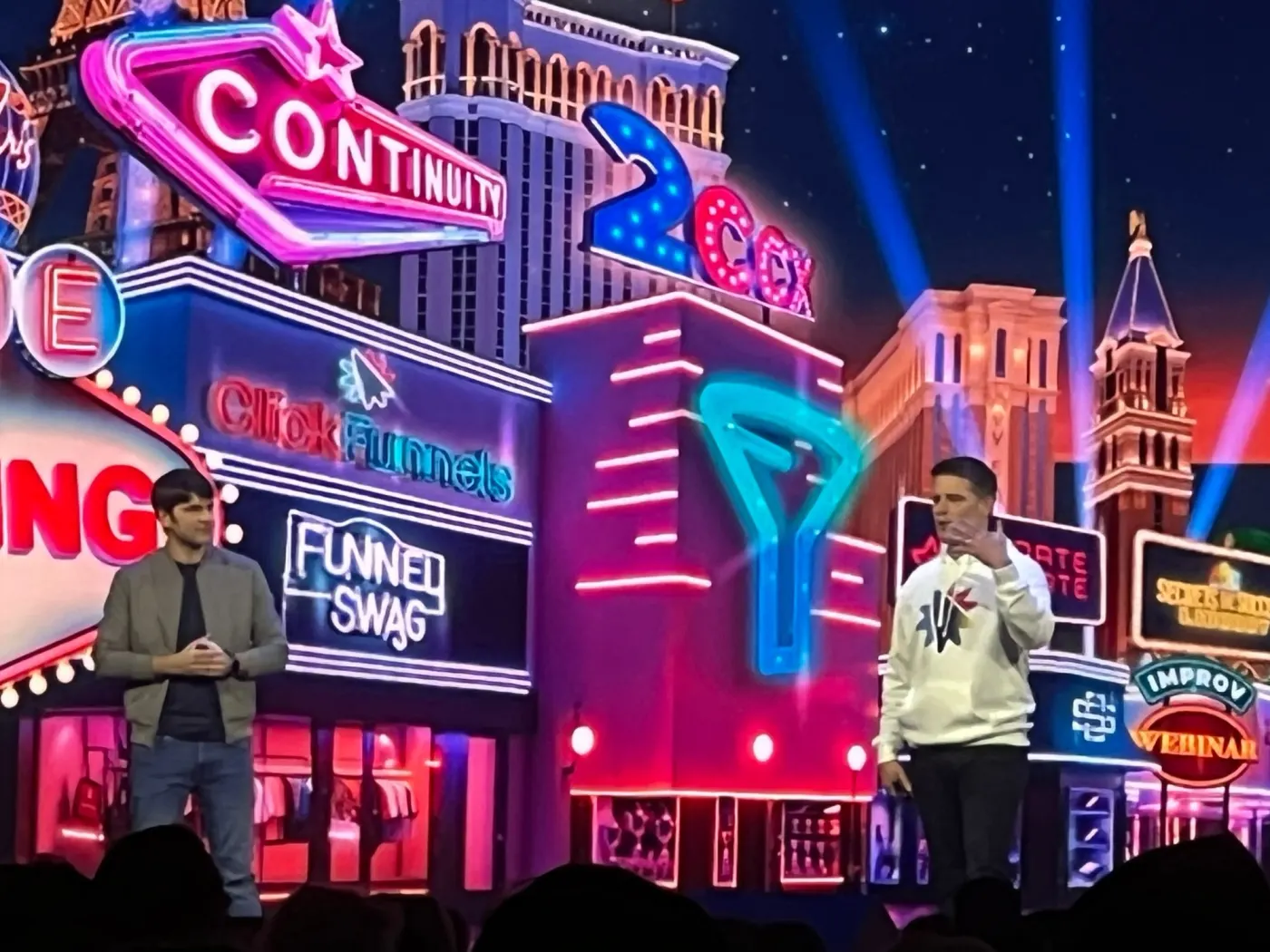
It felt more like a rock concert than a business conference. There was loud music, confetti, costumes, and Russell bouncing across the stage. Thousands of people came, often around five thousand in a room. Speakers included famous names from the business and self-help world. Award winners walked across the stage while the crowd screamed.
One of those names was Tony Robbins. Russell has said he spent about a decade simply showing up for Robbins, serving him and his team without asking for anything in return. Only after years of that did the relationship turn into real business opportunities.
That is how Russell thinks about success. Play the long game. Over-deliver. Show up again and again until people trust you.
Three crises
By 2019, ClickFunnels had about one hundred thousand paying customers and hundreds of employees. Then three storms hit at nearly the same time.
The first was technical. The original ClickFunnels was aging. Todd believed they needed to rebuild the whole platform from the ground up, a new version that could handle email, courses, and much more. It would take years.
The second was personal and painful. Dave Woodward, the company's chief executive and the beloved face of its live events, went in for a scan one Friday. By Monday, he was in surgery for brain cancer. The man who managed the people and the energy of the company was suddenly fighting for his life.
The third was a temptation. Buyers came calling. One conversation began with ClickFunnels possibly buying other companies and flipped into a question: what if we just buy you?
The offer was real and large. Russell and Dave flew to Georgia to talk it through with Todd. There, Todd showed them what he had been building for the next version. Russell got excited all over again.
They turned the offer down.
Ashley Dickerson later put it simply. Saying yes to the check, she said, would have meant saying no to all the hard work and the reason they had gotten there.
The rocky launch
Russell is not known for patience.
At Funnel Hacking Live, he announced ClickFunnels 2.0 before it was ready. Todd knew the team was behind schedule. The announcement created huge expectations.
When the new version finally rolled out in 2022, the reaction was mixed. Some customers loved it. Others were frustrated by bugs and missing features. Russell and Todd owned the problems publicly and went back to work.
It was a humbling stretch. But the company kept fixing, improving, and listening. By the middle of 2024, ClickFunnels dropped the 2.0 label and went back to just being ClickFunnels. Around events, people started saying the same thing: ClickFunnels is back.
How he works
Russell describes his approach as radical imbalance. When he commits to something, he goes all in. He has said that in busy seasons he has worked at the office until four or five in the morning, gone home to sleep a couple of hours, and come right back.
He knows the cost. He has five children with Collette, and he has admitted that the hardest sacrifice is time with them. He says the trick is to be honest about the imbalance, get your family on board, and never lose the very people you are working for.
He and Collette made a rule early in their marriage. They are not allowed to say the word divorce. After more than twenty years and five kids, he says marriage is still hard, but they keep showing up for each other.
His main principle, at home and at work, is to over-deliver. Give more than people expect to your spouse, your kids, your employees, and your customers.
He is a student of history. He has collected rare books, recordings, and magazines from the founders of the self-help and success movement, including early issues of SUCCESS magazine and material from the radio broadcaster Earl Nightingale. He studies how the old masters of persuasion told stories.
And he funnel hacks everything. When he sees something working, he takes it apart, figures out why, and rebuilds it for his own world.
The last dance
Funnel Hacking Live reached its tenth edition, and Russell called it The Last Dance.
At the end, Russell and his partners borrowed a tradition from wrestling. When a wrestler retires, he takes off his shoes and leaves them in the middle of the mat. So Russell left his shoes on the stage. Todd left his. They left a pair belonging to Dave Woodward, too. Then they walked off.
For fourteen months after that, there was no big event. Russell went quiet in public.
He was not resting. Artificial intelligence was changing the internet faster than anything he had seen. He said later that it felt like decades were being compressed into days.
He took his top mastermind group to Baltimore to study a giant publishing company that ran huge teams of copywriters. He came away frustrated. He could never afford an army like that. Then, on the plane home, he wondered whether AI, used the right way, could do the work of that army.
He tried it. By his account, he used AI to study hundreds of successful sales videos and wrote a fifty-minute sales script for one of his own products in about four hours. He said the finished video was soon running on more than a million dollars a month in advertising, profitably.
The AI era
In January 2026, Todd gathered the ClickFunnels team at the company's office in Georgia and delivered a blunt message. Jobs were about to change completely because of AI. Then he promised every employee the tools and freedom to become one of the top AI experts in their field.
Russell said Todd built six complete AI software products by himself, on his phone, in a single month. Russell said he was spending most of his own time on AI and claimed he was doing the work of fifty people.
He also said that in a January 2026 online challenge, about thirty percent of attendees bought a program priced at fifty-five hundred dollars, without a sales team. Those numbers come from Russell and his company, and he uses them to sell his events and programs, so they are best read as his own claims.
On March 24, 2026, Russell went live online with a surprise. We killed Funnel Hacking Live not because it failed, he said, but because the world that created it no longer existed.
And then he announced that it was coming back, one time only.
The encore
He called it an encore, because an encore is what happens when you leave the stage and the audience refuses to accept that the show is over.
The event, called FHL: The A.I. Era, was set for September 21 to 23, 2026, at the Fontainebleau hotel in Las Vegas. Instead of a giant convention hall for five thousand people, Russell picked a theater with a floor and three balconies holding about two thousand to twenty-five hundred people. He wanted it to feel like a concert.
Russell and Todd were the headline speakers. The Two Comma Club awards ceremony was back. Russell told fans he did not know whether it would become a yearly event again.
His company said more than eleven billion dollars had been processed through ClickFunnels funnels over the years, by tens of thousands of entrepreneurs.
What changed because of him
Before ClickFunnels, building an online sales system usually meant hiring programmers, designers, and copywriters. Russell and Todd helped put that power into the hands of ordinary people: coaches, authors, fitness trainers, small product sellers, and stay-at-home parents with an idea.
He also gave a whole industry a shared language. Words like funnel hacking, upsell, and value ladder spread far beyond his own customers. Thousands of entrepreneurs learned to think about selling as a series of steps rather than a single pitch.
His company became a model of bootstrapping, proof that a software business could grow very large while being funded by customers instead of investors.
He has critics. Some see the online marketing world he helped build as full of hype, and some customers have found the upsells and big promises too much. Russell's own story includes failures, layoffs, and a rocky product launch. But his community credits him with teaching them how to sell, and many say it changed their lives.
Closing
At the end of Funnel Hacking Live 10, Russell Brunson took off his shoes and left them on the stage.
It was a wrestler's goodbye. It meant the fight was over.
But Russell has never been good at staying off the mat. He lost to Nick Fresquez and came back. He lost his merchant accounts, his salespeople, and nearly his freedom, and came back. He launched a product too early and came back.
Now, in his mid-forties, he is standing in front of another change as big as the internet itself, telling the same thing to anyone who will listen. Study what works. Take the loss. Go again.
The kid who cried after every wrestling match grew up to believe you are always one funnel away.
He is still trying to prove it.