The Book That Built a Country's Cart
In August 2026, the news cycle finally gave Sachin Bansal a headline that was not only about the company he left. Prosus, the global technology investor that once helped bankroll Flipkart through its parent Naspers, proposed putting about one hundred million dollars into Navi, the Bengaluru financial-services group Bansal founded after walking away from India's most famous e-commerce story. Reports put the valuation near one point three billion dollars. It was Navi's first real institutional outside cheque after years of founder capital, a deferred IPO attempt, a rejected banking-licence application, and a regulatory pause that briefly froze new lending. The line under the story was simple and heavy at the same time: the man who taught a country to trust a cardboard box was still trying to teach it to trust a digital balance sheet.
Bansal does not tell his life as a victory lap. In early interviews he kept returning to a stubborn sentence. Flipkart, he said, was in the business of making shopping easy. Warehouses, sellers, festival chaos, and cash on delivery were methods. The product was a feeling that the promise on the screen would arrive at the door.
Chandigarh, IIT Delhi, and the Amazon itch
Sachin Bansal was born on 5 August 1981 in Chandigarh. He grew up in a middle-class North Indian household that treated engineering as a ladder, not a costume. School led to the Joint Entrance Examination and then to the Indian Institute of Technology Delhi, where he studied computer science and finished around 2005. Campus life was hostel corridors, late code, and the quiet ranking pressure that IIT students learn to wear like a second uniform.
At IIT Delhi he met Binny Bansal. They shared a surname and almost nothing else of family. The coincidence would confuse journalists for a decade. What mattered was the friendship. Both men liked systems. Both men watched the internet stop being a curiosity and start being a market.
After graduation Sachin spent a short stretch at Techspan in Bangalore, then joined Amazon as a senior software engineer. Binny followed into Amazon after Sachin referred him. The warehouse logic of American e-commerce was visible from the inside: catalogue discipline, customer obsession, delivery promises that had to survive contact with reality. It was also, for two restless IIT graduates, a job that could feel finished before the decade began.
In public talks Bansal has said they got bored. The boredom was productive. They first tried to imagine a comparison-shopping engine, a site that would rank prices across other websites. The idea made sense on a whiteboard. India's online retail catalogue was still thin. The comparison layer did not have enough honest inventory underneath it. So they flipped the problem. Instead of comparing other people's shops, they would become the shop.
Koramangala, four lakh rupees, and the first book
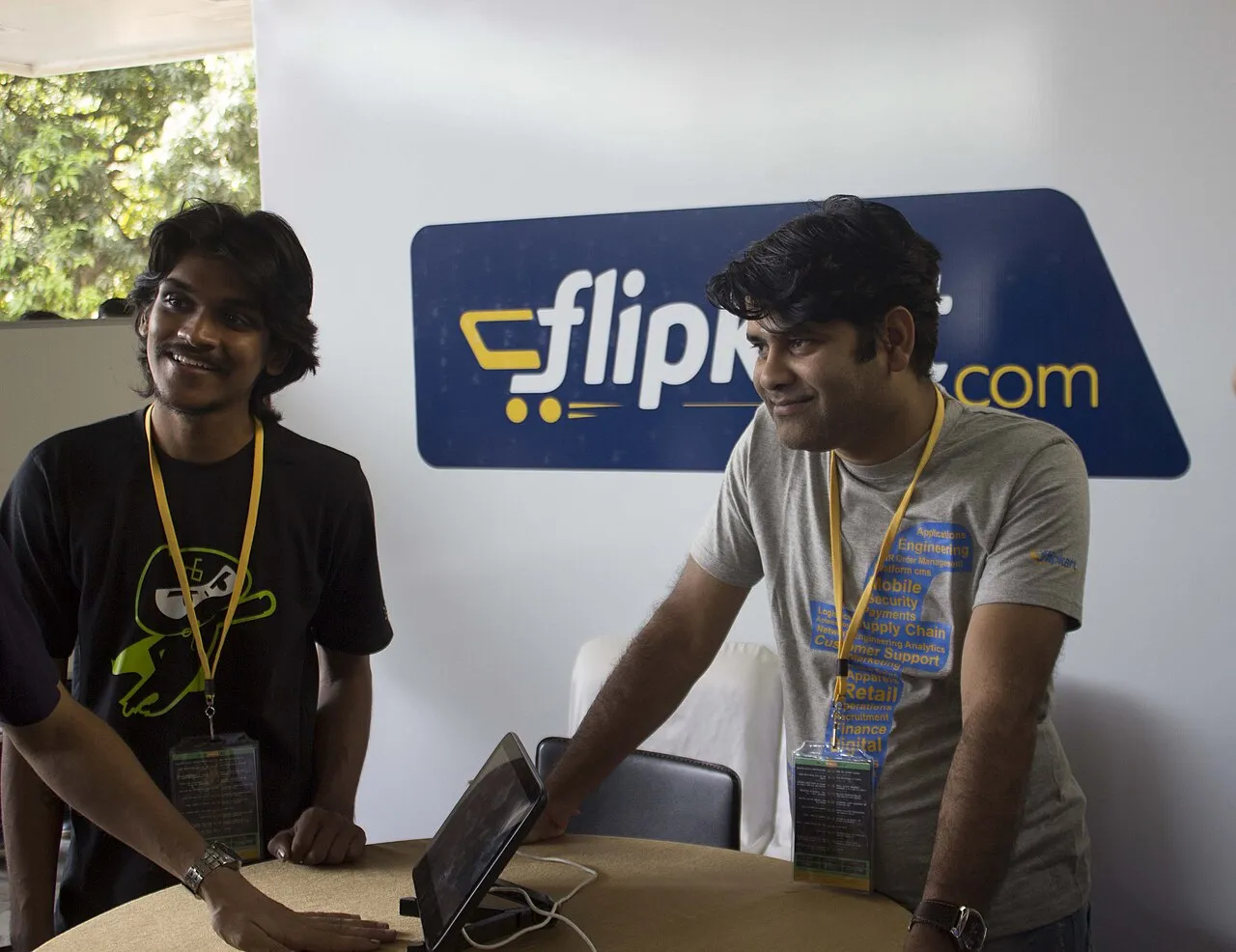
In 2007 they quit Amazon. They pooled about four lakh rupees and set up in a small flat in Koramangala, in southeast Bangalore. The domain was Flipkart.com. The first catalogue was books. The first customers were friends, cousins, and strangers who found them through search. Early marketing was word of mouth because paid marketing was a luxury they did not have.
The logistics were almost comic. They travelled tens of kilometres to buy a title from an offline bookstore after an order landed. One often-told first-order story involves hunting across Bangalore for a book that refused to sit neatly on any shelf. The founders were the warehouse, the customer-support desk, and the delivery plan. Bansal has said his personal phone number sat on the website in those days. When a package failed, the complaint did not go to a ticket queue. It went to a human who had promised a hardcover edition and a three-day window.
Trust was the real inventory problem. Indians were willing to browse. Many were not willing to type card details into a young website run by two men in an apartment. Payment gateways wanted company history, office bills, and paperwork the startup did not yet look like. In one early interview Bansal described asking his father, who had a business in the North, to help secure a gateway through that older entity until Flipkart could stand on its own paperwork. It was not a glamorous founding myth. It was a workaround.
Suppliers also hesitated. Why consign books to a website nobody's aunt had heard of? The answer Flipkart practiced was brutal and simple. Keep the promise. If the page says hardcover, 2009 edition, this price, delivered in three days, then that is exactly what must happen. Service, Bansal liked to say, meant not inventing poetry about customer love. It meant matching the sentence on the screen to the object in the bag.
Cash on delivery and the reinvention of the Indian cart
Books proved the loop. Electronics blew the door open. Around 2010 Flipkart pushed into mobiles, music, games, and appliances, and it popularized cash on delivery as a mainstream checkout choice. Later company lore and founder interviews treat COD as one of the decisive Indian innovations of that era. Customers could order without prepaying. They could refuse the parcel at the door. The company absorbed reverse-logistics pain in exchange for a wider funnel of people who had never trusted an online merchant before.
Bansal has argued that a copy-paste of Amazon's American playbook would have failed. India needed reinvented wheels: different payment habits, different address quality, different courier density, different festival spikes. Flipkart built warehouses and technology capacity because festival sales could destroy a promise overnight if the back end was theatre. Big sale days became national events. Servers shook. Delivery boys became seasonal folk heroes. The brand phrase "shopping easy" turned into a logistics religion.
Geography became a product decision. In talks Bansal described cutting certain pin codes when Flipkart could not yet deliver a great experience there. Growth for its own sake was a trap. A bad delivery in a new town taught the next hundred customers that the brand lied. Better to shrink the map until the promise held, then expand again. That patience sat beside ferocious ambition. Flipkart raised institutional capital as India's consumer internet heated up. Accel, Tiger Global, Naspers, and later SoftBank-era cheques turned a bookstore into a category killer. Fashion deepened through the Myntra acquisition. Categories stacked. The company that began with bookmarks outside bookstores became the default mental model for online retail in India.
Scale, rivalry, and the chair that moved
Success invited rivals. Amazon entered India with capital and patience. Snapdeal and others fought for mindshare. Flipkart's answer was not a single silver bullet. It was assortment, private labels, seller tools, logistics arms, and festival theatre that trained a generation to wait for midnight deals. Inside the company, the founder role changed shape. Sachin served as CEO through the hard-building years, then moved toward an executive chairman seat as professional managers took more operating control. Kalyan Krishnamurthy later became the long-running CEO face of the post-founder operating machine.
The emotional weather of those years is easy to flatten into a straight up-and-to-the-right chart. It was not. Governance fights, investor preferences, and the fatigue of hypergrowth all left marks. Reporting around 2016 and 2017 described periods when founders were pushed further from day-to-day control. Bansal has been publicly quieter about private boardroom heat than about product philosophy. The documentary fact is still visible from the outside. The company outgrew the apartment. The apartment values had to be translated into process, or they would die as nostalgia.
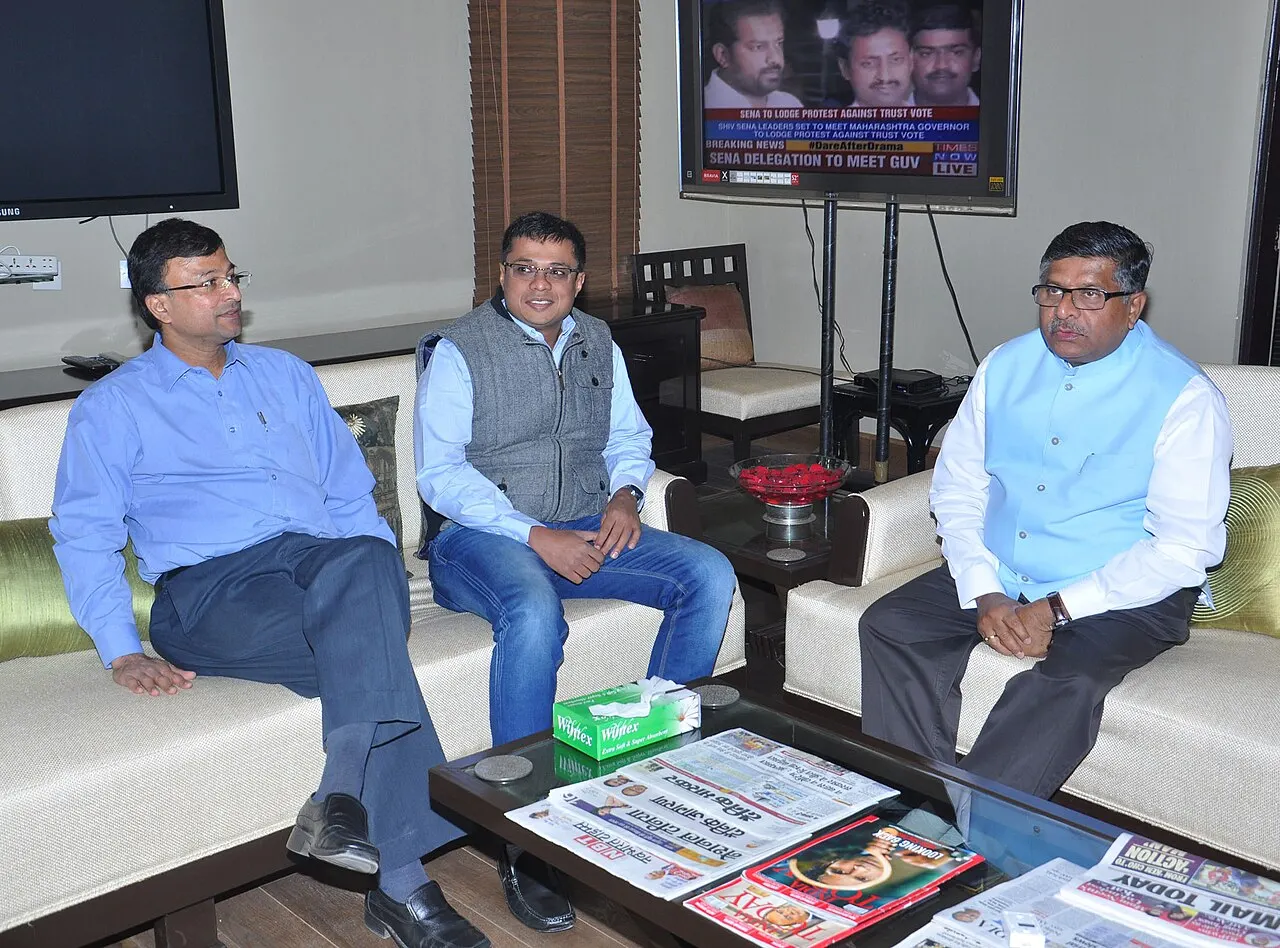
PhonePe, which grew inside the Flipkart group story, showed how payments could become a second spine beside retail. The e-commerce wars were never only about T-shirts and phones. They were about who owned the daily digital habit. Flipkart learned to live inside that wider war.
Bentonville, sixteen billion dollars, and the exit
In May 2018, Walmart announced it would buy a majority stake in Flipkart in a deal valued around sixteen billion dollars for roughly seventy-seven percent of the company. It was one of the largest retail acquisitions in history and a landmark for Indian startups. Walmart got a digital beachhead in India. SoftBank and others got liquidity. Indian founders got proof that a homegrown internet company could clear a global cheque.
Sachin Bansal's ending inside that deal was sharper than a ribbon cutting. Contemporary reporting described tense negotiations in Bentonville, Arkansas, where questions of operating role, minority rights, and who would truly run Flipkart after the sale came to a head. Multiple accounts said Bansal wanted a stronger operating hand than the board and Walmart were prepared to give. The outcome: he sold his entire stake, reported near about five and a half percent, for roughly a billion dollars, and left the company he had co-founded.
The exit can be told as triumph. A billion-dollar personal liquidity event after eleven years is a rare Indian founder outcome. It can also be told as a bruise. Flipkart had been the center of his working life. Being outside the building while the brand kept growing under Walmart and a professional CEO was a different kind of silence. Binny Bansal's path diverged too, with his own later controversies and exits that belong to his biography, not this one. What belongs here is the fork. Sachin took the capital and the scar and started again.
Navi: building a money app with founder money
In 2018 Bansal founded Navi Technologies in Bengaluru. The ambition was blunt. If Flipkart had organized physical goods for a digital India, Navi would organize financial products for the same mass market: personal loans, home loans, insurance, mutual funds, and payments through India's Unified Payments Interface. He poured in hundreds of millions of dollars of his own money. For years Navi stayed unusually independent of classic venture theatre. That independence was a flex and a constraint. It meant product patience. It also meant that when markets turned, there was no crowded syndicate to absorb every shock.
Navi's brand voice tried to sound simple in a category famous for fine print. Loans with clear pricing. Insurance that did not feel like a trap. Mutual-fund investing without a lecture. UPI payments that lived beside credit. The company bought and built across the stack, including microfinance exposure through group entities. In April 2021, Chaitanya India Fin Credit, linked into the Navi group, applied toward a universal banking licence under the Reserve Bank of India's on-tap framework. Bansal spoke publicly about wanting to build a technology-driven financial institution that could eventually look and feel like a bank for ordinary Indians.
In May 2022 the RBI rejected six licence applications, including Chaitanya's. The central bank said the applicants were not found suitable under the guidelines and did not publish a detailed public scorecard for each file. Bansal told reporters the written response would be studied, that options including appeal or reapplication existed, and that it was not the end of the road. The moment mattered because it drew a bright line. Capital and code were not enough. Indian financial infrastructure still ran through supervisory gates that no founder narrative could talk past.
Navi had also filed draft papers for a public listing around 2022, aiming at a multi-thousand-crore issue, then deferred as technology valuations cooled. Founder-funded growth continued. Losses remained part of the story even as user numbers and loan books grew. Building a full-stack fintech in India is a long exposure to credit cycles, fraud, funding costs, and regulators who move on their own clock.
Pressure, pause, and the slow climb back
In October 2024 the RBI directed Navi Finserv and several other NBFCs to stop sanctioning and disbursing new loans after supervisory concerns that included excessive pricing and related issues. The order was a public shock for a brand built on consumer trust. Navi said it would correct course. In December 2024 the RBI lifted the restrictions on Navi after the company took corrective steps, and Bansal publicly thanked the regulator while promising fairness on loan pricing and stronger governance. The sequence is not a morality play with a cartoon villain. It is the cost of operating in a supervised credit market at scale. A company can be both ambitious and reprimanded. A founder can be both sincere and forced to rewrite pricing logic under watch.
Through 2025 and into 2026, Navi kept pushing the consumer surface. Its UPI app rose into the national top tier. By mid-2026, NPCI data cited in TechCrunch put Navi around fourth among UPI apps by volume, behind PhonePe, Google Pay, and Paytm, with hundreds of millions of transactions in a single month and tens of thousands of crores of rupees in value. Navi Finserv's reported assets under management crossed the thirteen-thousand-crore-rupee zone in company and press figures. Lending and payments reinforced each other the way catalogue and logistics once had at Flipkart.
Financial results for the year ended March 2026, as reported in August 2026 coverage, showed roughly thirty point nine billion rupees of revenue and a net loss near four point seven billion rupees, with management pointing to consolidated profitability in the fourth quarter. The curve was not clean. It was directional. That is often what second acts look like when the first act was a generational consumer brand.
Prosus, a one-point-three-billion reading, and the IPO window
August 2026 rearranged Navi's capital story. Prosus proposed a one-hundred-million-dollar investment, subject to customary closing conditions and regulatory approvals including Competition Commission of India clearance. People familiar with the matter told TechCrunch the valuation sat near one point three billion dollars, below some earlier private-market hopes near two billion that had circulated in 2024 talks. Economic Times and other Indian business desks framed the cheque as Navi's first major institutional outside capital and as a relationship with history, because Naspers and Prosus had been Flipkart investors in Bansal's first company.
Bansal called the partnership a strong endorsement of the institution Navi was building and noted that his association with the Naspers and Prosus world stretched back more than a decade. Prosus's India investments lead spoke about loyal users, a multi-line platform, technology-first problem solving, and patient company building. Neither side publicly detailed the exact stake percentage. Media math on a hundred million into a one-point-three-billion reading implied a single-digit minority.
In parallel, Bloomberg and Indian outlets reported that Navi was preparing bankers for a public offering that could raise on the order of thirty billion rupees, about three hundred fifteen million dollars, with names such as JM Financial, Kotak, Goldman Sachs, and JPMorgan circulating in deal talk. Earlier Economic Times reporting described plans to file draft papers in the March quarter of FY27. None of that is a completed listing. It is a window being built. The honest documentary tense is future conditional. The verified present tense is the Prosus proposal, the UPI rank, the loan-book scale, and a founder who still sits as executive chairman while professional managers run daily rails.
How he works
Across interviews spanning UnPluggd, CNBC Storyboard, college talks, and later fintech conversations, a few working habits repeat.
He reduces strategy to a sentence a delivery agent could understand. Making shopping easy. Keeping the promise on the page. Later, making money products feel less like a maze. The compression is not anti-intellectual. It is anti-fog.
He treats trust as an engineering constraint. Cash on delivery was not a marketing slogan. It was a protocol for a low-trust payment environment. Personal phone numbers on an early website were not a growth hack brochure line. They were a feedback sensor. When Navi later faced RBI heat on pricing, the same trust logic reappeared in a harder costume. Supervisors can force a company to prove that "simple" is not a mask for "expensive."
He is willing to shrink geography or product surface until quality holds. Flipkart's refusal, in his telling, to ship everywhere before it could ship well is the ancestor of Navi's more recent need to pause and remediate rather than pretend a regulatory letter is a press inconvenience.
He funds conviction with personal capital when syndicate fashion turns away. That choice bought Navi years of independence. It also meant the first institutional round arrived late, under a valuation conversation less romantic than a 2021 fintech poster.
He stays comparatively low-flash for a billionaire founder of his vintage. The public image is glasses, measured answers, and a preference for systems over swagger. The Walmart exit proved he can fight for control and lose cleanly enough to start again. The Navi years prove he will endure boring compliance work when the alternative is theatre.
What Flipkart changed for everyone else
Before Flipkart's rise, online shopping in India was a niche habit for people willing to prepay and wait. After cash on delivery, festival sales, and nationwide logistics theatre, the cardboard box became ordinary. That ordinariness is easy to forget because it is now the water people swim in. Millions of small sellers learned to list. Courier networks thickened. Customers learned that a return policy could be real. Competitors, including Amazon India, had to play on a field Flipkart helped normalize.
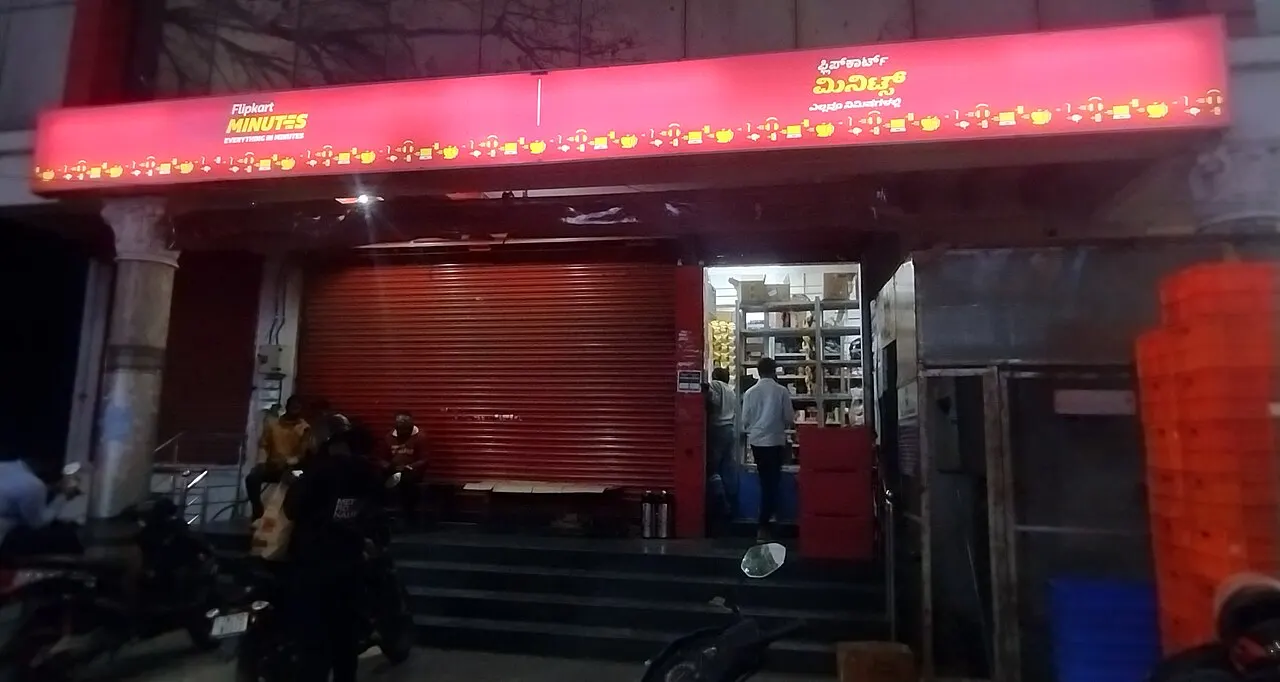
The Walmart deal locked in a different kind of change. Global retail capital treated Indian digital commerce as worth a double-digit billion cheque. Talent who trained at Flipkart spilled into the wider startup graph. PhonePe's payments story, even as a separate operating arc, sat inside the same ecosystem gravity. Later quick-commerce experiments, including Flipkart Minutes storefronts in Indian cities, show the brand still fighting for the ten-minute habit years after the founders left the building.
Bansal's personal second act is part of a larger Indian founder pattern. Build a consumer giant. Take a liquidity event. Attempt a harder, more regulated category with scar tissue and cash. Banking and lending are not e-commerce with a new coat of paint. They are trust plus leverage plus the state. That is why the Prosus headline in 2026 reads less like a victory champagne photo and more like a checkpoint.
Break-even, Accel, and the long fundraising winter
By March 2008, according to Bansal's own early recounting, Flipkart had reached break-even with two employees and roughly six suppliers. That sentence sounds small until you place it beside the ambient skepticism of Indian venture capital at the end of 2008. E-commerce was not a fashionable slide. Investors told founders the category was a mistake waiting to happen. Several later admitted, in Bansal's telling, that passing on Flipkart became one of their most expensive judgments.
The first institutional cheque arrived after months of education. Accel and other early backers had to believe that a bookstore run from a home office could become the trust layer for a country that still preferred cash and kirana credit. Fundraising was less a victory party than a translation job. The founders had to explain why delivery speed, return honesty, and catalogue accuracy were the real defensibility, not a clever logo.
Inside the apartment years, roles were blurry. Bansal later laughed that when investors asked who the CEO was, he and Binny looked at each other and invented the title on the spot. Formal org charts came later. The early culture was closer to a repair shop that happened to take web orders. Someone cleaned the office. Someone called an angry buyer at midnight. Someone rode across town for a missing ISBN.
SEO did more free work than any billboard. Because marketing budgets were thin, organic search became the silent salesman. A clean page for a specific book edition could pull a stranger into a first purchase. If that first package arrived correctly, the stranger told a cousin. Bansal has said, across multiple early talks, that most early customers arrived by word of mouth rather than paid acquisition. The loop sounds romantic. It was actually a quality-control system. Bad deliveries poisoned the only channel they could afford.
Inventory policy grew up the same way. They learned to predict a large share of demand and buy ahead where the signal was strong, while still hunting the long tail title by title when a rare order appeared. It was partial science and partial scavenger hunt. Either way, the customer's clock did not care which mode they were in.
Marketplace pivot without losing the promise
Flipkart began closer to an inventory-led model, holding and shipping goods to protect experience. Selection eventually forced a harder truth. No single warehouse philosophy could catalogue an entire country's ambitions. The company moved toward marketplace mechanics so sellers could widen assortment while Flipkart still tried to own the customer promise. Bansal described the tension carefully in public forums. The older model felt years ahead on experience. The newer model won on range. The company needed both instincts without letting marketplace chaos destroy the trust COD had bought.
That pivot is one reason Flipkart's story is not a straight "copy Amazon" cartoon. In India, Bansal argued, logistics and distribution were less organized, addresses were messier, and payment habits were different. A paste of American playbooks would ignore the grain of the market. Warehouses, data centers, and technology talent had to be forced into existence rather than rented as an afterthought. Festival demand made that lesson violent. If capacity was theatre, the brand broke in public.
Competition, in his UnPluggd framing, was for strategy rooms, not for daily panic. Day to day, the compass stayed on customer needs. Strategy still watched Amazon's entry and local rivals, but the operating religion was not "mirror the other dashboard." It was "do not ship a lie."
Big Billion Day: history and heartbreak in one sunrise
On 6 October 2014, Flipkart ran Big Billion Day. The date itself was mythology. In a note to customers, the founders wrote that 6-10 marked the flat number where they had begun. Sachin slept a couple of hours, returned around 6 a.m., and watched the sale open at 8 a.m. Hours later he told Business Standard the company had targeted about one hundred million dollars in sales across twenty-four hours and hit that mark in roughly ten, with about a billion hits across web and app. He called it history.
Customers and retailers called it other names. Site crashes, vanishing inventory, pricing complaints, and offline trade protests filled the same day's newspapers. The Hindu and BBC captured the whiplash. A company could claim category creation and still look sloppy at the exact moment the nation was watching. Bansal rated his team's execution highly while admitting mistakes. The episode became Indian internet folklore for a reason. Scale without choreography turns a celebration into a stress test that the whole country grades in real time.
The deeper residue was cultural. Festival commerce became a national sport. Competitors had to answer with their own countdown clocks. Logistics networks learned to staff for surges that looked less like retail and more like pilgrimage. Big Billion Days after 2014 refined the machine the first one nearly melted.
SoftBank fuel and the Amazon long war
By April 2017 Flipkart had raised a massive round involving Tencent, eBay, and Microsoft at a valuation reported near eleven to twelve billion dollars. In August SoftBank's Vision Fund added roughly two and a half billion dollars in primary and secondary capital, becoming a major shareholder in India's fiercest e-commerce fight. The founders called it monumental. The practical meaning was oxygen for a multi-year war with Amazon India, which was spending with Bezos patience.
SoftBank's cheque did not invent Flipkart's customer habit. It financed the expensive years when discounts, logistics, and category expansion were weapons. It also thickened the cap table that would later negotiate with Walmart. When Bentonville arrived in 2018, SoftBank and other large holders were part of the gravity that shaped outcomes for founders and employees alike.
Navi as a daily money surface
Navi's consumer face is an app that tries to sit where a salary lands. UPI transfers and bill pay create daily traffic. Personal loans and home loans sit beside that traffic. Mutual funds and digital gold offer a place for surplus. Health and motor insurance fill another drawer. The bet is classic platform logic: frequency products teach trust; trust unlocks higher-stakes products. Bansal's Flipkart years were about making a box feel safe. Navi's years are about making a liability and an asset feel explainable.
Co-founder Ankit Agarwal is part of the operating partnership in public descriptions of the group. Executive chairman is the seat Bansal occupies while professional teams run regulated entities under RBI and insurance constraints. The architecture matters. A founder can brand the app. He cannot casually rewrite a supervision letter.
After the October 2024 lending pause and the December restart, Navi's 2025 and 2026 product story leaned harder into payments visibility. UPI league tables are a brutal public scoreboard. Sitting near fourth nationally, even for a month, is a claim any payments CEO would envy and any competitor would try to knock down the next month. Loan-book figures in the thirteen-thousand-crore-rupee band, if sustained with cleaner pricing, are how Navi argues it is more than a shiny wallet.
The deferred IPO from the 2022 window still shadows the company. Draft papers, withdrawn or cooled ambitions, and later banker mandates all say the same thing. Public markets will eventually ask whether founder capital plus one Prosus cheque can show a path through credit cost, fraud, and compliance that looks like a durable institution rather than a rich man's experiment. Bansal's answer, in speeches and statements, keeps returning to patience and product. The market's answer will arrive with a price.
Ekart, Myntra, and the wider Flipkart machine
Retail was only the visible ice. Under the site sat Ekart, the logistics muscle that had to turn festival fantasies into scanned doorsteps. Fashion needed a different taste brain, which is one reason the Myntra acquisition mattered: it bought capability and brand heat in categories where a pure electronics warehouse instinct was not enough. Payments talent and products inside the broader group orbit showed that checkout was becoming its own kingdom. Bansal's public voice stayed on customer experience even while the org chart filled with specialist CEOs and category heads.
Those layers explain why leaving in 2018 felt like leaving a city, not a shop. Flipkart was already a stack of companies sharing a brand sun. The founder who once answered support calls could not personally hear every ticket. The only way the old promise survived was if process carried it. That translation problem is the quiet bridge between Flipkart and Navi. Financial products also fail in the last mile: a confusing APR, a rejected KYC, a collections call that feels cruel. The medium changed. The failure mode still lives at the edge of a human day.
PhonePe's rise as a payments giant, even after ownership and branding twists relative to Flipkart's core retail story, underlined how thoroughly the 2010s Indian internet war was about rails as much as SKUs. Bansal did not need to remain the face of every rail to have helped normalize the behavior those rails assume: try online first, expect a status ping, believe a refund can exist.
In college talks he sometimes sounded almost allergic to vanity metrics. Rankings mattered less than whether a delivery promise survived a monsoon evening in a new city. That instinct can look conservative beside blitzscaling folklore. It is also why Flipkart's early brand compound interest worked when paid acquisition could not. Navi's harder test is whether the same instinct can survive credit cycles where the "package" is money that must come back with interest, under rules written by someone other than the founder.
Closing
Sachin Bansal's life keeps returning to the same meter. A promise made on a small screen. A physical or financial object that must arrive without humiliation. A willingness to invent local rails when imported playbooks snap. Flipkart's apartment years taught him that trust can be manufactured with COD, SEO, and obsessive delivery. The Walmart year taught him that ownership and operating power can diverge even after you win the market. Navi is teaching him, in public, that money products demand a slower courage: capital, compliance, patience, and the humility to take a regulator's pause without turning it into a conspiracy story.
In 2026 he is no longer the boy refreshing order emails in Koramangala. He is a founder whose first company changed how a country shops, and whose second company is still arguing, with products and with supervisors, for the right to change how a country borrows, pays, and invests. The Prosus term sheet is not the end of that argument. It is evidence that the argument still has outside believers. The carton on the doorstep was only the first format of the same obsession. Make the hard thing feel easy. Then survive long enough to make it true twice.
Watch alongside this story
Short cuts from interviews, keynotes and launches. Each plays only the moment that matters.