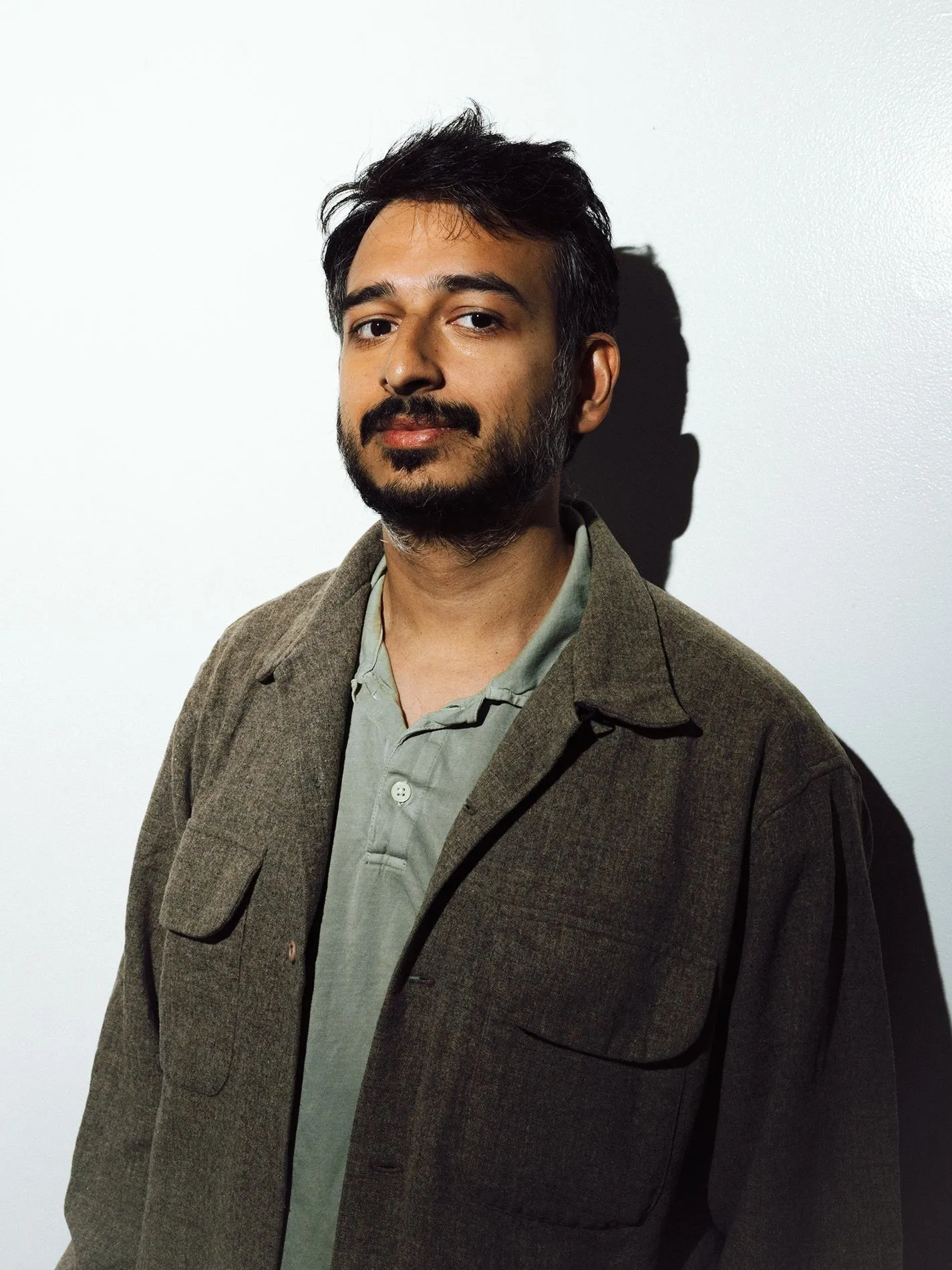
The Failure That Paid Creators
A teenager who quit stock before it vested. A weekend checkout link that hit Hacker News hard. A public essay about missing the billion-dollar mark.

In February 2026, Sahil Lavingia sat through another Gumroad annual meeting with a new title on the slide. He was no longer chief executive. Ershad Kunnakkadan, a Gumroad engineer since 2020, had taken the CEO seat late in 2025. Sahil stayed as chairman. He also carried a quieter day job as an information technology specialist at the Internal Revenue Service. The chart of his twenties, the one that was supposed to climb toward a unicorn IPO, had been redrawn so many times that the redraw itself became the story. Creators still sold through Gumroad links. Shareholders still argued about dividends and AI. The founder who once tweeted that he was starting his first billion-dollar company now measured success in paid-out creator dollars, open financial scars, and the freedom to paint between commits.
He was born in 1992 in New York and spent a large stretch of childhood in Singapore before the United States claimed him again for college. The geography matters less as postcard than as early proof that home could move. He learned to design and code while other kids treated browsers as toys. USC looked like the safe ladder toward a UX job at a big tech campus. Silicon Valley recruiting did not wait for the diploma. Y Combinator's Startup School, Hacker News posts, and a talent war for young builders pulled him north. Mixpanel, Reddit-adjacent shops, and Pinterest all emailed. The math was blunt. College cost money. A startup paid. The mobile App Store moment felt like a door that would not stay open.
In January 2011 he joined Pinterest as employee number two, working on the iPhone app while the product was still a hungry scrapbook for the internet. He lasted months, not years. On 2 April 2011 he posted a cocky tweet about starting his first billion-dollar company the next day. That weekend he built Gumroad: a simple link that let anyone sell a file or product without standing up a full storefront. He dropped it on Hacker News on a Monday. More than fifty-two thousand people showed up on day one. Later that year he left Pinterest before any of his stock vested. Friends called it insane. He called it life's work.
The link that skipped the storefront

The idea was almost insultingly small. Creators already had audiences on Twitter, blogs, and email lists. What they lacked was a payment button as easy as a URL. Gumroad made the checkout the product. No heavyweight cart. No carnival of plugins. Upload, share, get paid. Musicians, writers, illustrators, and indie hackers understood immediately. The venture world understood something else: a wedge into the creator economy before that phrase was worn smooth.
Angels arrived fast. Sahil later listed names that read like a 2011 fantasy draft: Max Levchin, Chris Sacca, Ron Conway, Naval Ravikant, Collaborative Fund, Accel, First Round. About one point one million dollars landed first. In May 2012, Mike Abbott at Kleiner Perkins led a roughly seven million dollar Series A. Sahil was nineteen or twenty, a solo founder with more than eight million dollars in the bank and a tiny team. Tech press treated him as the most interesting teenager in the Valley. The script was familiar. Raise. Hire. Grow at double-digit monthly rates. Raise again. Never look down.
Gumroad hired. It shipped. Monthly volume climbed. For a while the graph obeyed. Then the climb became a walk. Twenty percent month-over-month growth, the venture heartbeat, stopped showing up often enough. Creators who loved the product were real. There were simply not enough of them, at that exact offering, to justify the next fifteen million dollar round. Sahil has said the company was always good and almost never great. In venture double-or-nothing, good is a trap.
Double or nothing
From the outside, the mid-2010s Gumroad still looked alive. Volume trended up. Customers depended on payouts for rent and tuition. Inside the building the air changed. In January 2015, with runway under eighteen months, Sahil told a roughly twenty-person team that the road would be hard. They deprioritized everything that did not move processed volume. They launched Small Product Lab to teach new creators. They shipped weekly payouts, debit card payouts, international payout rails, email tools, recommendations, reading analytics, and cart features in a compressed sprint between late summer and November. Not one person quit during the fight.
They still missed the Series B numbers. Some investors nudged toward a clean shutdown and a second company with fresh capital. Acquisition talks brushed Patreon, Kickstarter, Stripe, Square, and media buyers. Offers felt more like acqui-hires than product futures. Sahil ranked duties in public later: creators first, employees second, investors third. Turning off a faucet that sent millions each month into creator bank accounts felt like vandalism. Selling into a deprecate-later roadmap felt like cowardice. He chose the ugly third path. Shrink until the company could breathe on its own.
Layoffs cut about seventy-five percent of the company, friends included. TechCrunch published the restructuring. Customers panicked in support threads. Some successful creators left for safer rails. Sahil has written that he ignored his own support network that week and answered customers instead. The shame was public. The spreadsheet was worse. In June 2015, monthly revenue near eighty-nine thousand dollars sat under operating expenses near three hundred sixty-four thousand, a net loss around three hundred fifty-one thousand. A year later, June 2016, revenue near one hundred seventy-six thousand dollars and expenses near thirty-two thousand produced a net profit around ten thousand. The patient lived. The dream of the default-live unicorn did not.
Skeleton crew years
After the bloodletting, the crew fizzled from five toward one. Sahil ran support tickets alone. Former engineers, now employed elsewhere, still patched fires when he asked. He left San Francisco for long stretches and found the loneliness traveled with him. He has said he did not tell his mother about the layoffs until she read them online. Happiness, he wrote later, is an expectation of positive change. 2016 was the first year the present felt worse than the past.
He kept the servers up anyway. The product did not need a sales army to keep existing customers alive. Market growth, not heroic sprint theater, set the slope. In November 2017, Kleiner Perkins emailed about selling its ownership back to Gumroad for one dollar. A partner departure and tax housekeeping, on their side, became oxygen on his. Liquidation preferences collapsed from roughly sixteen and a half million dollars to about two and a half. Suddenly an independent, creator-first business was not a fantasy. Sahil began buying back other stakes when he could and sending terse updates to whoever remained.
The emotional turn arrived slower than the balance sheet. For years he had measured himself against billion-dollar or nothing. Profitable lifestyle business sounded like an insult in the zip codes he had left. Only later did he treat the insult as a compass. He started publishing monthly financials in 2018 so other founders could steal the learning. Creators did not flee the smallness. Many leaned in harder. The company donated a slice of profits to disaster relief and literary projects. Open-source talk entered the roadmap. The brand shifted from rocket to workshop.
The essay that renamed failure
In February 2019 Sahil published "Reflecting on My Failure to Build a Billion-Dollar Company." The title refused spin. He walked readers through the tweet, the raise, the stall, the hail Mary, the layoffs, the one-dollar buyback, and the admission that market size governs growth more than founder theater. He tallied creator payouts in the hundreds of millions. He named alumni who had gone on to other companies. He quoted a remembered Bill Gates line about companies capturing only a thin slice of the value they create. He said he still liked billionaires and still felt the pull of that path, and that he was on this one now.
The essay traveled farther than most Series B decks. Founders stuck in the good-but-not-great trap forwarded it like contraband. Investors argued with it. Creators used it as proof that the person behind the checkout link understood downside. Sahil did not pretend the failure felt good. He refused to let the failure be the only column in the ledger.
Minimalist entrepreneur, painter, public books
In 2021 he published The Minimalist Entrepreneur, a field guide for building profitable, community-first businesses without worshipping headcount. The book distilled the Gumroad scar tissue into process: start with community, charge early, keep the team small, talk to customers until it hurts. Classroom founders and Twitter indie hackers treated chapters like worksheets. Sahil kept writing in public, shipping essays and numbers when silence would have been easier.
He also painted. Interviews circle back to canvases, shows, and the stubborn claim that making art trains taste the same way shipping product does. On Lenny Rachitsky's podcast in 2025 he joked about artists posting paintings that would soon compete with generated images, then pivoted to how Gumroad creators might sell prompts, models, and hybrid work. The through line is authorship. Whether the file is an ebook, a brushstroke, or a course, he wants the maker to own the relationship with the buyer.

How the machine runs when it is thin
Strip the mythology and Gumroad's later operating system is almost severe. Prefer part-time specialists over a building full of status meetings. Automate support when you can, hire full-time support when profit allows. Email top creators and ask what to build next instead of inventing a roadmap in a vacuum. Ship payments reliability before brand campaigns. Treat dividends as a real adult company behavior once cash is steady.
By the mid-2020s Sahil described a company that helped creators move on the order of one hundred fifty million dollars a year, roughly flat for a stretch, with a team that could be counted without a badge scanner. Secondary data shops later guessed at annual recurring revenue in wide bands; Gumroad itself grew quieter on public metrics after late 2024. Soft language is required there. What is firm is the philosophy: prefer a durable payments utility over a growth fairy tale.
AI changed the staffing math again. On that Lenny episode he walked through a personal stack of Cursor, Devin, and v0-like tools, sometimes kicking work to an agent from Slack on his phone. He argued the scarce skill was no longer typing every line. It was breaking problems into pieces an agent could finish, knowing which libraries already exist, and keeping product taste when generation gets cheap. He still emailed top creators a living Google Doc of requests. Prioritization stayed human even when implementation got weirdly fast.
Crowdfunding the company, flattening the org

Sahil experimented with turning Gumroad into something closer to a community-owned utility. Crowdfunding and public share experiments invited customers closer to the cap table. Flat organization language replaced ladder language. Antiwork memes and four-day jokes floated through the culture without fully becoming a press stunt. Some traditional managers rolled their eyes. Some burned-out engineers applied the next day. The bet was that creators buying into the stack would defend it better than a single growth team chasing vanity metrics.
Not every experiment became permanent doctrine. The important residue was transparency. When you have already failed in public, hiding mediocre months fools no one. Publishing numbers, admitting flat GMV, and still paying dividends taught a generation of bootstrappers that a company can be unfinished and honest at the same time.
Government months: VA, then IRS
In early 2025 Sahil took a temporary turn that surprised even people who followed his feed. Through connections around the Department of Government Efficiency effort, he landed as a software engineer embedded with the Department of Veterans Affairs for about sixty days. He has described reviewing huge contract piles with script-assisted triage, sitting in IT spend meetings as often the only hands-on builder in the room, and spending nights on VA chatbot and GPT prototypes with career staff. He estimated personal influence on tens of millions of dollars of contract cuts while noting larger tallies happened before he arrived. He also said the tone sometimes felt like a hostile takeover when it should have felt like upskilling. He open-sourced pieces of his contract-review scripting mindset and argued for livestreamed meetings that never arrived.
The episode is political weather. Admirers heard a founder applying product instincts to bureaucracy. Critics heard a Silicon Valley tourist in an agency that already employed hundreds of thousands. Sahil's own exit cue was personal as much as ideological: a newborn at home and a sense that the software-shipping leg of the stool was underweighted compared with cuts. He left after roughly two months.
By November 2025 he made a cleaner institutional move. He stepped down as Gumroad CEO after fourteen years, backed Ershad Kunnakkadan as successor, kept the board chair, and joined the IRS as an information technology specialist. The 2026 annual meeting replayed the handoff for shareholders and creators, pairing succession with AI product talk and the long tally of dollars routed to makers. For a man who once feared becoming a serial founder who abandons customers, the structure is almost poetic. He did not sell the company for parts. He promoted from within and took a day job in tax infrastructure while the checkout links kept clearing.
Childhood habits that never left

The adult pattern is visible in the teenager. Ship something small before anyone grants permission. Post it where sharp people can tear it apart. Treat design and engineering as one craft. Prefer direct audience relationships over landlords of distribution. Singapore years and New York years both taught him that the internet was the stable homeland. USC was a corridor, not a destination. Pinterest was a master class in mobile product velocity and a reminder that equity you never vest cannot trap you.
He has admitted the acceleration had costs. Leaving college early thinned alumni networks. Leaving Pinterest early threw away paper wealth that later looked comic. Racing from high school to Series A compressed the learning that slower operators absorb by osmosis. He says he does not live in regret. He does speak more mildly now about nineteen-year-olds quitting school than the boy who quit.
What Gumroad changed
Before Gumroad, plenty of creators sold digital goods, but the default paths were clumsy storefronts, pay-to-build websites, or platforms that treated sales as a side feature. A single link that felt native to Twitter bios and newsletter footers lowered the activation energy for a generation of indie teachers, designers, and musicians. Competitors and cousins multiplied: Teachable, Podia, Lemon Squeezy, Stripe Payment Links, Notion-adjacent stores. The category won even when Gumroad refused the unicorn costume.
The cultural export may outlast any quarterly GMV print. Sahil's essay and book gave founders language for profitable smallness. Public financials made opacity look optional. Dividend talk inside a former venture darling scrambled status charts on Tech Twitter. Young builders learned they could disappoint a growth model and still keep a promise to users.
Money, ownership, and soft edges
Sahil has said he still owns a majority of Gumroad. That stake, plus fourteen years of salary, dividends, art sales, and book income, supports a comfortable founder life without a reliable public net-worth figure. Treat viral net-worth posts as unverified. Treat precise 2025 and 2026 revenue prints as unverified unless Gumroad files or primary posts return. The hard spine remains: early angel and Kleiner capital, failed B, near-death layoffs, profitability, creator payouts past a billion dollars cumulative by mid-2020s company storytelling, CEO succession in 2025, IRS role, board chair into 2026.
How he works day to day
Ask people who have watched him for a decade and the habits rhyme. Write the uncomfortable thing first. Answer support like it is product research. Keep a personal art practice so taste does not rot inside dashboard metrics. Hire slower than the press wants. Use new AI tools early, but keep a human list of what creators actually begged for. When politics or platforms spike dopamine, return to the ledger: did makers get paid.
He is friendlier to government tech than his 2011 Twitter persona would have predicted, yet still allergic to theater that does not ship. The IRS badge and the Gumroad chair look mismatched until you notice both are infrastructure jobs. One moves tax information. One moves creator commerce. Neither requires a keynote pyro budget.
Singapore, New York, and the early internet bedroom
The childhood map is two cities and one glowing screen. New York gave him the passport story. Singapore gave him years of school corridors and the feeling of being a guest who still had to perform. Exact classroom anecdotes are thin in the public record, so a careful biography does not invent them. What he and interviewers do repeat is the early stack of skills: graphic design taste, coding curiosity, and a habit of shipping small digital objects before anyone asked. He was not waiting for a career counselor to invent a lane labeled creator tools.
By the time American college brochures arrived, the internet had already become his sharper university. Hacker News threads, design galleries, and iPhone SDK docs taught faster than many lecture halls. USC was supposed to refine that raw skill into a credential Google or a design consultancy would recognize. Recruiting email arrived first. The choice to leave was economic and emotional at once. Tuition was real money. Pinterest was real product. The App Store felt like a gold rush with a short fuse. He boarded the rush.
Pinterest months as compressed graduate school
Employee number two sounds glamorous until you remember how small the company still was. Pinterest in early 2011 needed mobile craft more than it needed ceremony. Sahil worked the iPhone surface while the product raced toward mainstream habit. He watched growth tactics, design debates, and the strange intimacy of a startup that might become infrastructure for how people save desire online.
He also watched equity math. Vesting schedules reward patience. He did not feel patient. The Gumroad weekend scratched an itch Pinterest could not: ownership of a problem he wanted to stare at for decades. Leaving before vesting is easy to romanticize after the fact. In the moment it was a bet against a lottery ticket that later would have printed. He has said aloud that the financial miss was real and that the education from building his own thing still justified the door. Both can be true. A documentary that only cheers the bold exit would be incomplete. A documentary that only mourns the unvested shares would miss the point of why he left.
Angels, Kleiner, and the costume of inevitability
The first million dollars of angel checks were not just fuel. They were costume. Suddenly the weekend project wore a grown-up jacket. Hiring became possible. Press became warmer. The Series A from Kleiner Perkins sealed the costume with a famous letterhead. Mike Abbott's lead told the industry to take the teenager seriously. Inside the office it told the team that normal startup physics now applied: headcount, burn, and a calendar aimed at the next raise.
Sahil was honest later about how that physics warps judgment. When you are playing double or nothing, a month of merely strong growth feels like a quiet emergency. When you have creators who depend on payouts, you cannot treat their livelihoods as chips. The conflict between those truths sat under every board conversation. Gumroad's brand smiled in public. The spreadsheet counted nights.
Creators as the real bosses
Throughout the disaster years he kept repeating a priority order that sounded soft until layoffs made it hard: creators, then employees, then investors. The order annoyed people who had written checks, and it comforted people who had pasted links into their bio. When TechCrunch wrote up the restructuring, panicked sellers asked whether they should migrate. Some did. Many stayed because the product still cleared money and because the founder answered tickets like a person who knew the faucet mattered more than his pride.
That creator-first claim also shaped later experiments. Public financials were a love letter to operators who wanted pattern recognition. Crowdfunding and community ownership gestures tried to pull customers inside the proverbial tent. Part-time staffing respected the idea that adults might want a life beside Slack. Not every experiment scaled forever. The loyalty residue did. Creators forgive a small platform that pays on time more readily than they forgive a giant that treats them as inventory.
The nine-month siege before the cut
The popular summary jumps from "failed to raise" to "layoffs." The middle matters. For most of a year the whole company knew the stakes. They built teaching funnels for new sellers. They chased international payouts. They instrumented how buyers read and watched content. They added cart behavior that looked almost mundane next to the original elegant link, because mundane conversion sometimes pays rent. Sahil later listed those launches with the weary precision of someone who still remembers the hope attached to each ship date.
When the needle refused to move enough, the emotional contract broke. Venture culture often pretends the break is clean: return capital, blog a lesson, raise for the next idea. He looked at two and a half million dollars a month heading toward creator bank accounts and could not make the clean story fit. Keeping the company alive as a slim business meant admitting the billion-dollar costume was over. That admission cost him status in rooms that only clap for rockets.
San Francisco quiet and the fantasy novel window
After the staff collapsed, San Francisco became a museum of other people's Series C parties. Sahil has described leaving the city for long trips, trying to outrun the comparison, then discovering loneliness packs easily. He worked support, fixed what he could, asked alumni for help on the rest, forced gym days, and poked at a fantasy novel when willpower remained. Most days, by his own scorekeeping, he failed the personal syllabus. The company stayed up anyway. That split (product alive, founder dimmed) is a more honest picture of startup aftermath than the keynote version where every wound becomes immediately useful content.
The 2016 election season finished his patience with the Bay as home base. He left for good. Distance did not solve the business model. It did reduce the daily humiliation of walking past offices that still believed the myth he had fallen out of.
Publishing numbers as product
Opening the books in 2018 looked reckless by venture standards. Flat months could scare sellers. Competitors could read burn. Hiring pitches might lose magic. Gumroad was already past magic. Profit meant a flat month would not kill them. So Sahil posted GMV, revenue, gross profit, and commentary. Creators, counterintuitively, trusted the company more. Prospective contributors saw a living patient instead of a press release. Investors still poked around, but the company was no longer addicted to their yes.
Transparency became part of the brand stack next to the checkout link. It also became teaching material for the book. The Minimalist Entrepreneur did not invent bootstrapping. It translated one founder's scarred dataset into steps other people could try without raising a friends-and-family round from partners at Kleiner.
AI arrives at a company that already learned small
By 2025 the same lean philosophy met a new lever. Sahil told Lenny Rachitsky's audience that agents and IDE copilots let a tiny team behave bigger overnight. He still did not confuse generation with judgment. Creators got a Google Doc, not a hallucination, when Gumroad asked what to build. Agents got atomic tickets: change this API, update this help article, patch this UI checkbox. Architecture and taste stayed human. The lesson from 2015 still applied. Tools do not invent a market. They only change how fast you can serve the market you actually have.
He speculated about artists selling living prompts and evolving files instead of static JPEGs. Whether or not that future arrives on his timetable, the posture matters: treat AI as a staffing multiplier for a payments utility, not as an excuse to rebuild unicorn cosplay.
The state chapter without the fan fiction
Sahil's VA stretch sits in a noisy political weather system. A careful biography keeps to what he has claimed firsthand and what reporters can check. He worked roughly two months. He wrote tooling that helped non-engineers triage contracts. He tried to push AI prototyping tools into the hands of career staff. He believed software modernization was underweighted relative to cuts. He disliked the stigma theater around the work. He left when family and impact math no longer fit. Larger dollar figures attributed to DOGE broadly should not be stapled onto his personal ledger without attribution. Smaller figures he cites as his own contract work should be labeled as his estimates.
The IRS role that followed is quieter and, in a way, more on brand. Tax infrastructure is another kind of payments system. It is rules, edge cases, legacy databases, and citizens who just want the machine to work. For a founder who spent a decade making payout rails less painful for artists, the rhyme is there even if the employer logo shocks the timeline.
Succession as a product decision
Choosing Ershad Kunnakkadan, an internal leader who joined Gumroad in 2020, was a product decision disguised as an org chart. Sahil could have sold, merged, or installed a famous outside operator. Promoting from within told creators the checkout link would not become a feature buried inside a conglomerate. Remaining chair kept strategic continuity without pretending he would attend every standup forever. Announcing the IRS job at the same time made the handoff feel less like abandonment and more like a second shift.
The February 2026 annual meeting packaged that story for people who hold shares or simply hold affection for the brand. New CEO. AI roadmap. Cumulative creator earnings celebrated in round billions. The founder who once feared becoming a serial quitter instead became a case study in staged withdrawal.
World impact beyond the GMV line
Gumroad's impact is easy to understate if you only watch Silicon Valley leaderboards. Thousands of teachers, designers, musicians, and writers learned that an audience can be a business without permission from a retailer. Alumni of the company carried craft into other firms. Product patterns (inline checkout, simple file delivery, creator-facing analytics) spread until they felt like internet weather. The essay and book shifted kitchen-table conversations about what a "real" startup is allowed to look like.
There is also a labor story. Part-time professional staffing, public talk about antiwork values, and dividends instead of endless reinvestment challenge the assumption that software people must burn at all hours to matter. Some of that talk is branding. Some of it is lived calendar reality for a company that already learned what all-hours panic costs.
Unresolved edges
Honest gaps remain. Soft childhood detail. Soft personal wealth. Soft exact ARR after public metrics dimmed. Soft evaluation of how much any single temporary engineer can move a cabinet-scale agency. Soft prediction of whether Gumroad's AI features will outrun clones. Soft tension among shareholders who want larger dividends, creators who want lower fees, and operators who want more full-time craft.
What does not remain soft is the spine. Teenager ships link. Venture costume on. Growth insufficient. Layoffs. Profit. Essay. Book. Lean years. State experiments. CEO handoff. Creators paid throughout.
Fees, competitors, and the boring power of staying on
Creator platforms fight on take rates, discovery, and trust. Gumroad's historic pitch leaned on simplicity more than marketplace browsing. That choice capped some viral growth loops Patreon-style memberships enjoyed, and it protected a clean mental model: you bring the audience, we clear the payment. Competitors arrived with lower fees, prettier dashboards, or tighter ties to course hosting. Some creators multi-home. Some leave. The boring miracle is how many stay because migrating a decade of customers is painful and because the link still works on Monday morning.
Sahil's public writing rarely pretends fee pressure is imaginary. He frames survival as a willingness to stay boring while the market cycles through shiny course umbrellas and social-native checkouts. Stripe-native tools raised the floor for everyone. Gumroad had to answer with reliability, creator education, and enough product depth to justify habit.
Boardrooms, buybacks, and the long cleanup
Buying back investor stock after the Kleiner one-dollar moment was not a single thunderclap. It was a multi-year cleanup. Each small repurchase simplified the preference stack and psychologically recentered the company around operators and creators instead of a frozen 2012 narrative. Secondary sales and crowdfunding experiments later tried to open ownership to people closer to the product. Corporate mechanics are dull on camera. They are also how a failed venture story becomes a governed small public-ish company with a real board agenda in 2026.
Painting as quality control
Interviewers sometimes treat the painting life as quirky color. Sahil treats it as quality control for his eyes. Canvas work forces decisions about composition, patience, and finishing that a sprint board can erase. When generative images flood social feeds, he argues the scarcity shifts toward taste and relationship. That is not a proof that every founder should oil paint. It is a proof that this founder refuses to let the product roadmap be his only aesthetic gym.
Closing
Sahil Lavingia's story is a refusal to let a single scoreboard own him. He was the kid who could design and code across continents, the Pinterest early employee who walked before vesting, the founder who turned a weekend link into venture rocket fuel, the CEO who laid off friends when the B round did not come, the solitary operator who kept payouts alive, the essayist who typed failure into the title, the author who taught minimalism with receipts, the painter who would not outsource taste, the temporary VA engineer arguing with contract PDFs, and the 2026 chairman clocking IRS hours while someone else ran the standups.
The through line is directness. Direct links. Direct essays. Direct financials. Direct succession. In an industry that sells imaginary futures by the deck, he kept returning to money that cleared for strangers making essays, synth packs, brush sets, and courses. Gumroad did not become the default billion-dollar outcome he promised in a tweet. It became something rarer in its zip code: a company that survived its own mythology.
On the far side of that survival, creators still paste the link. The new CEO ships the roadmap. The founder who once wanted the whole sky now seems content to keep the lights honest.
Watch alongside this story
Short cuts from interviews, keynotes and launches. Each plays only the moment that matters.