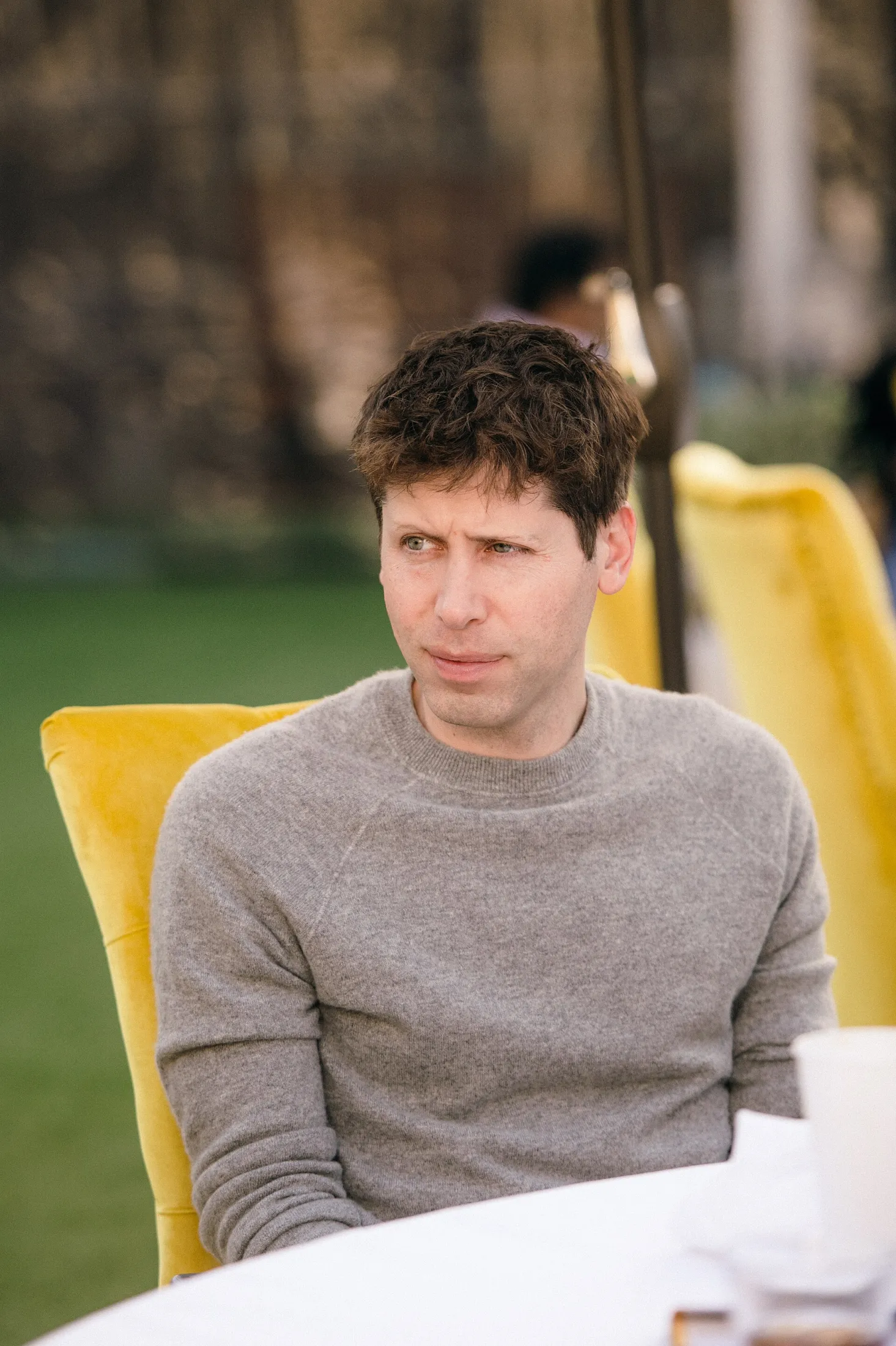
The Unfireable Founder
A Missouri teenager learned to take Macs apart. He built a location app nobody needed. Then he shipped the chatbot that remade the internet.
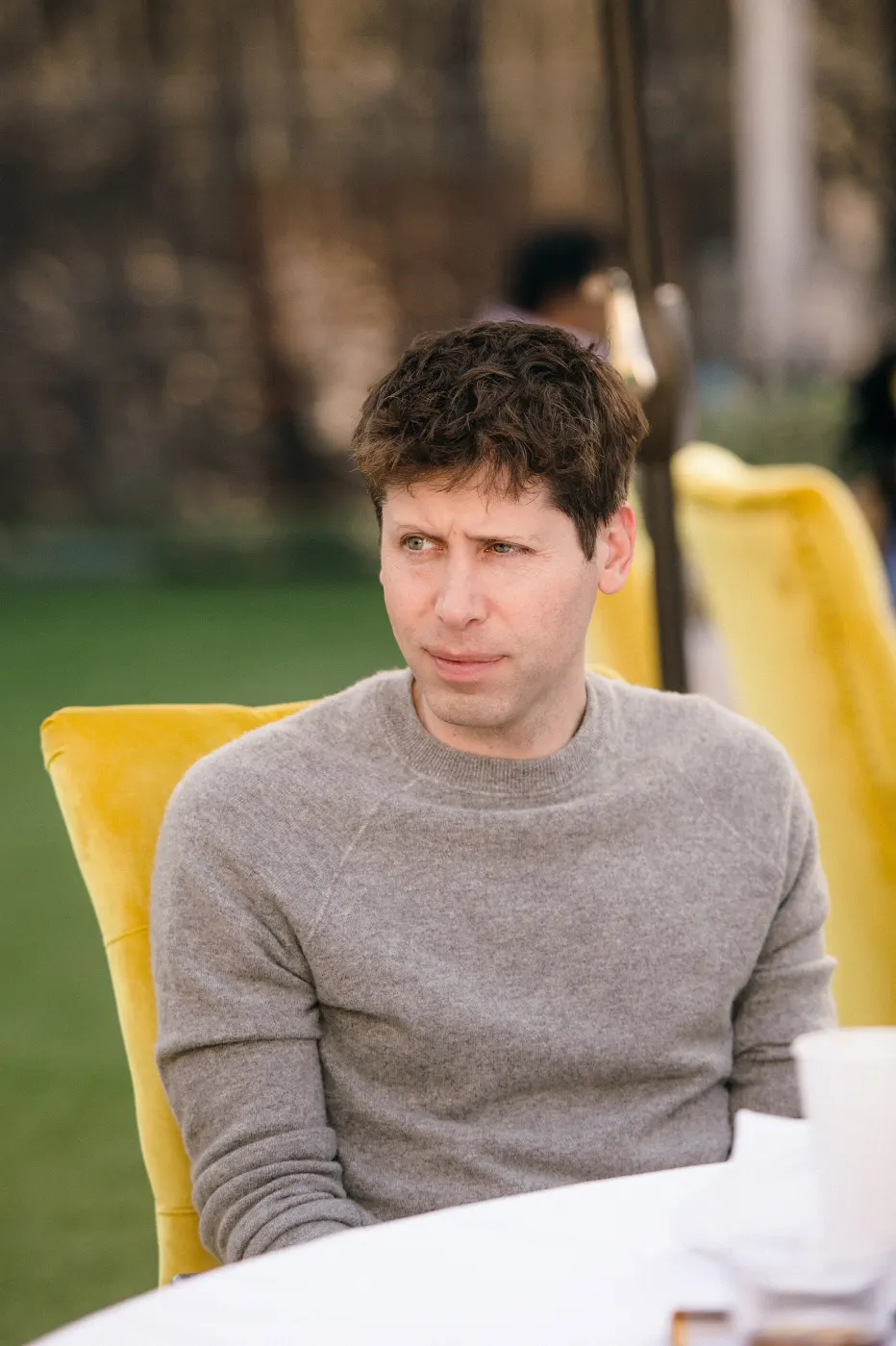
On a Friday in November 2023, the board of OpenAI told the world that Sam Altman was out. The public note said he had not been "consistently candid" in his communications. Greg Brockman, the company's president and co-founder, was stripped from the board in the same spasm. By Monday, Microsoft was offering both men a new advanced AI lab. By Tuesday night, hundreds of OpenAI employees had signed a letter that read like a collective resignation threat. By Wednesday, Altman was CEO again.
Five days. That is the span most people remember. What matters more is what those five days proved. Altman had spent twenty years practicing a rare skill: surviving rooms that decide they do not want him, then returning with more leverage than before. Loopt's board had tried to push him. Y Combinator's partners had grown mistrustful. OpenAI's nonprofit directors believed they could fire the public face of ChatGPT and keep the company. They were wrong about the last part.
By late 2026 the sequel was larger than science fiction. OpenAI said ChatGPT had more than nine hundred million weekly active users and more than fifty million paying subscribers. In March 2026 the company closed a private funding round with one hundred twenty-two billion dollars of committed capital at an eight hundred fifty-two billion dollar post-money valuation. In October 2025 it finished a long-fought restructure into OpenAI Group, a public benefit corporation controlled by a nonprofit foundation. Sam Altman remained CEO. Public filings and company statements said he held no equity in the restructured for-profit. SoftBank, Microsoft, employees, and other investors owned the economic upside. Altman owned the microphone.
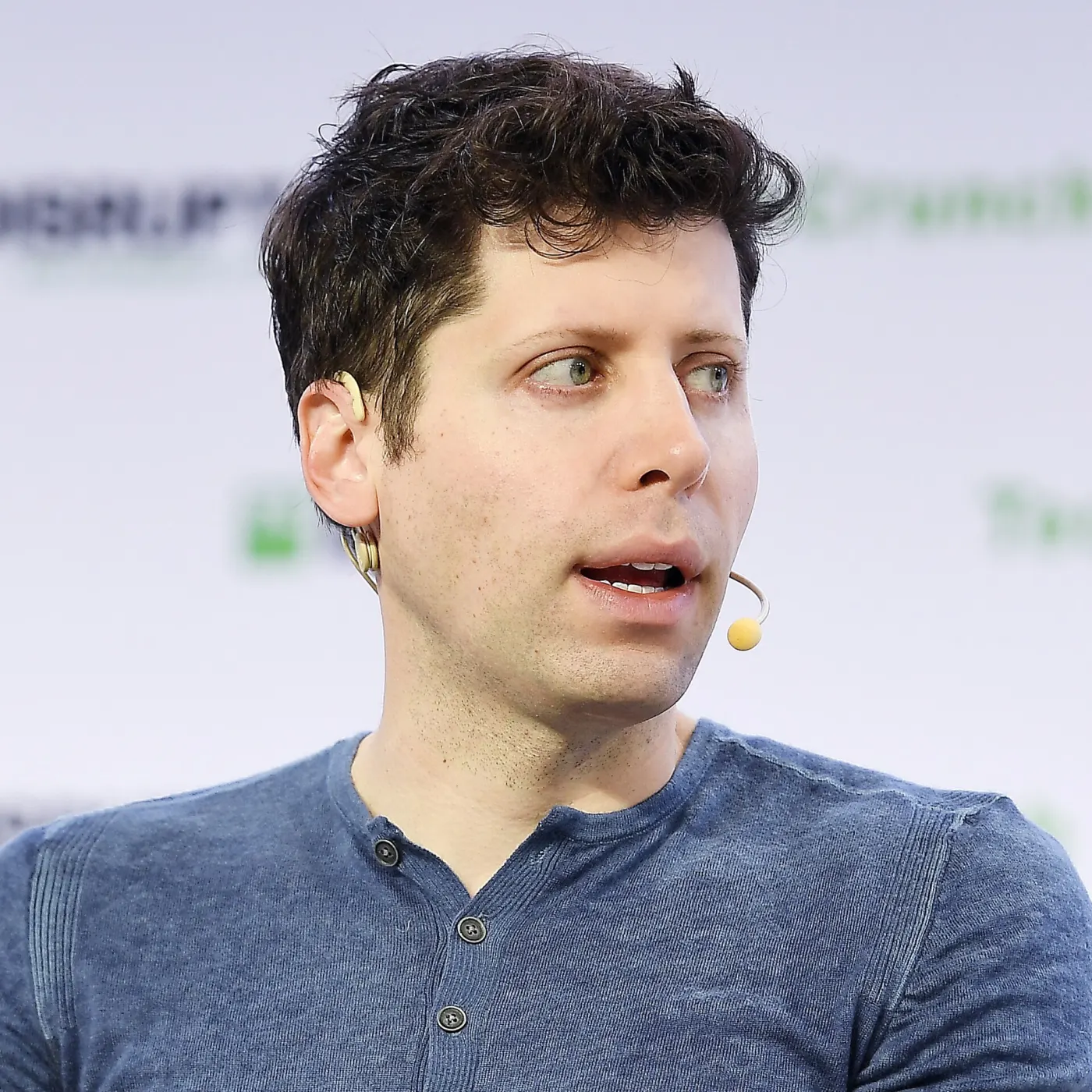
Clayton, a Mac, and a lesson about risk

Samuel Harris Altman was born in Chicago on April 22, 1985, into a Jewish American family. His mother, Connie Gibstine, worked as a dermatologist. His father, Jerry Altman, worked in real estate. He was the eldest of four: brothers Max and Jack, and a sister, Ann. In 1989 the family moved to Jerry's hometown of Clayton, Missouri, a St. Louis suburb where Midwestern manners and private-school ambition sat next to each other on the same quiet streets.
At eight he got an Apple Macintosh. Friends and later profiles say he learned to code and to take the machine apart. The hobby was not cute in the way adult magazines later made it cute. It was a kid discovering that systems have insides, that insides can be changed, and that adults often do not notice until the change ships.
He attended John Burroughs School in the St. Louis area. As a teenager he came out as gay in a conservative Midwestern setting and later described the experience as early training in reading social risk. The detail matters less as identity branding and more as operating system. Altman learned young that telling the truth about yourself and surviving the room are related skills.
He enrolled at Stanford to study computer science, then left after about two years without a degree. The dropout myth in Silicon Valley is overused. In Altman's case the timing was specific. Smartphones were about to put a computer in every pocket. Location data was about to become a product. He wanted to build before the curriculum finished grading him.

Loopt: first company, first almost-firing
In 2005, at nineteen, Altman co-founded Loopt with Nick Sivo, then his boyfriend. The idea was ahead of the market in the hard way: show where your friends are on a phone map before most people wanted that, and before app stores made distribution easy. Loopt landed in Y Combinator's first batch alongside companies that would become legend. Paul Graham noticed Altman early, not because Loopt was a breakout hit, but because Altman's mind moved in nonlinear jumps.
Money arrived anyway. Loopt raised more than thirty million dollars from firms including New Enterprise Associates and Sequoia Capital, plus Y Combinator. It cut deals with wireless carriers. It hired. It shipped. What it did not do was become habitual. Users did not need another reason to broadcast their location. Product-market fit stayed just out of reach.
Inside the company, later reporting said the board tried twice to remove Altman as CEO. Supporters kept him in the chair. The pattern foreshadowed 2023 without guaranteeing it. Altman could polarize a room and still keep a coalition.
In March 2012, Green Dot Corporation bought Loopt for about forty-three point four million dollars. Altman later told interviewers he walked away "pretty unhappy." Failure, he said, always sucks. Failure when you are trying to prove something sucks worse. He collected a personal payout often described around five million dollars and turned toward investing and advising. The romance with Sivo ended around the same season. The first act closed without a parade.
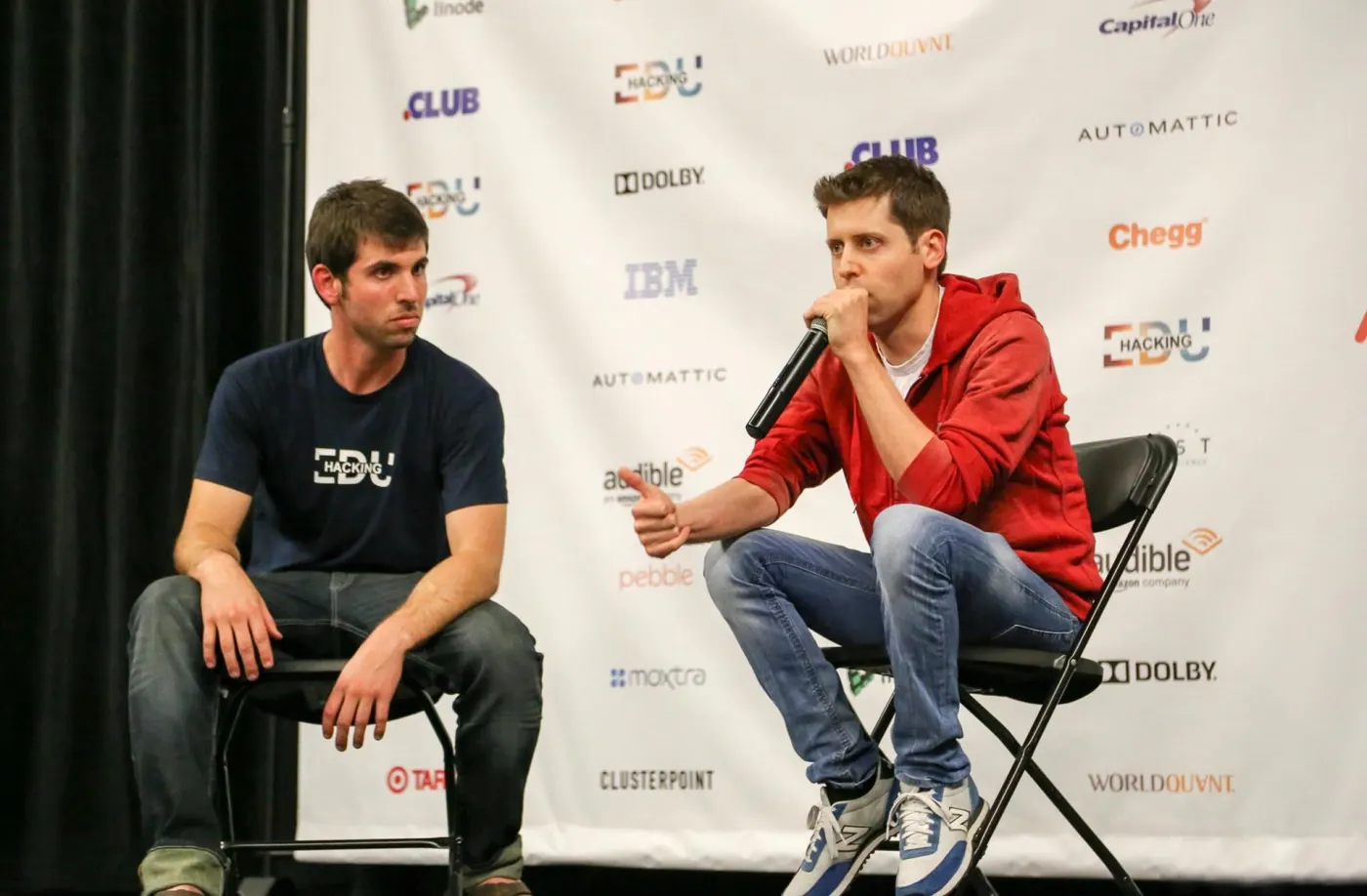
Y Combinator: kingmaker years
By 2011 Altman was a part-time Y Combinator partner. In February 2014, at twenty-eight, he became president, succeeding Graham. His stated ambition was blunt: fund a thousand companies a year and push the batch toward harder technology, not only consumer apps. Under his watch YC's brand stayed the default on-ramp for ambitious founders. Dinner talks, office hours, and the batch network became a private university for people who preferred shipping to seminars.
He also became an investor with wide reach. With his brother Jack he co-founded Hydrazine Capital, seeded heavily by Peter Thiel. Over time Altman's personal portfolio sprawled across hundreds of companies. Reddit was an early and lasting bet. For eight days in 2014 he served as interim Reddit CEO after Yishan Wong resigned, then helped restore co-founder Steve Huffman. He stayed on Reddit's board until 2022. Ahead of Reddit's 2024 IPO he was listed among the largest individual shareholders, with a stake near nine percent in filings.
The YC chapter did not end cleanly. By 2018 Altman's OpenAI work pulled him away from day-to-day batch life. Reporting in The Wall Street Journal, The New Yorker, and elsewhere described partner complaints that he used the president's seat to get priority on deals. Paul Graham later said Altman had agreed to leave but resisted in practice, and that partners' mistrust drove the exit. In 2019 public messaging briefly cast Altman as a less hands-on chairman. Later reporting called that framing false. Whatever the internal minutes said, the outcome was clear: Altman left the accelerator he had come to symbolize and went all-in on OpenAI.
Building OpenAI before the product existed
OpenAI launched in December 2015 as a nonprofit research lab with a dramatic pitch: build artificial general intelligence and distribute its benefits broadly, rather than let a handful of corporate labs own the future. Early names on the project included Altman, Greg Brockman, Elon Musk, Jessica Livingston, Peter Thiel, and large tech backers. Public pledges totaled a billion dollars. Collected cash in the early years was a small fraction of the headline.
The work at first looked like papers, compute budgets, and recruiting wars. Altman helped pull researchers such as Ilya Sutskever and, for a time, Dario Amodei into the orbit. Musk left the board in 2018, citing potential conflicts with Tesla. In 2019 OpenAI created a capped-profit arm to raise the kind of capital a nonprofit could not. Altman became full-time CEO. Reporting later described an informal pact among Altman, Brockman, and Sutskever: if the other two asked, Altman would step down. That private constitution would matter when the board crisis arrived.
For years the lab had no consumer product the public could touch. Then GPT models improved in public leaps. Codex hinted at coding agents. DALL-E made image generation a dinner-table demo. Still, nothing prepared the company for what happened when it put a chat box on the internet.
ChatGPT and the week the world changed
On November 30, 2022, OpenAI released a free preview of ChatGPT, a conversational interface over GPT-3.5. Within five days it had a million users. Within months it became the fastest product adoption story in consumer software memory. Students used it to draft essays. Engineers used it to debug. Offices argued about whether using it was cheating or simply the new baseline.
Altman's job changed overnight. Before ChatGPT, he could speak in research horizons. After ChatGPT, he had to speak to presidents, regulators, parents, and competitors in the same week. In May 2023 he testified before a U.S. Senate subcommittee on AI oversight. The same month he toured roughly twenty-two countries and met leaders including Rishi Sunak, Emmanuel Macron, Narendra Modi, and Ursula von der Leyen. Time named him to its list of the world's most influential people. Inside OpenAI, staff later described exhaustion disguised as momentum. Shipping cadence accelerated. Safety debates sharpened. The company that had started as a research monastery was now a product company with a planetary front door.
The Friday firing
On November 17, 2023, OpenAI's board announced Altman's removal. The directors then included Helen Toner, Adam D'Angelo, Tasha McCauley, and Ilya Sutskever. The public rationale was thin and devastating: Altman was not consistently candid. Brockman was removed from the board and soon resigned as president. Mira Murati became interim CEO. The news hit like a coup inside a company that had just taught the world to talk to machines.
Altman went home and began a counter-operation that later profiles described in granular detail: consultants, friendly executives, staff coordination, and a public narrative war. Microsoft CEO Satya Nadella announced that Altman and Brockman would join Microsoft to lead a new advanced AI team. That offer became a gravitational weapon. If OpenAI's talent could walk across the street with its former leaders, the board's victory would be a hollow building.
Employees published an open letter demanding the board's resignation and Altman's return. Signatures climbed toward and then past seven hundred out of roughly seven hundred seventy people. Sutskever, who had helped oust Altman, posted that he regretted his participation. Negotiations produced a new board architecture. Bret Taylor became chair. Lawrence Summers joined. D'Angelo remained. An independent review of Altman's conduct was promised. On November 21, Altman and Brockman were back.
Later comments from Helen Toner offered the board's private case: she said Altman had not informed directors in advance of ChatGPT's launch, had not been clear about ownership issues around an OpenAI startup fund, and that two executives had reported psychological abuse, claims she said were documented. Altman and his allies disputed the board's fitness and process. The public never received a single agreed transcript of why the directors chose Friday. What the public received instead was a lesson in power. In the ChatGPT era, legitimacy flowed through employees, Microsoft, and the product's users as much as through nonprofit bylaws.
Lawsuits, voices, and disputes told carefully
Living people collect court files. Altman's years after ChatGPT collected several, and a careful biography has to separate allegation, denial, and outcome.
In May 2024, actress Scarlett Johansson said Altman had asked her to voice a ChatGPT system, that she declined, and that a released voice named Sky sounded eerily like her. OpenAI paused Sky. Altman said Sky was not Johansson's voice, had been cast before the outreach, and that the company should have communicated better. SAG-AFTRA publicly supported Johansson's concern about voice likeness. The episode became a symbol of Hollywood's fear that generative models would mint synthetic performers without consent.
In early 2024 Elon Musk sued OpenAI and Altman, alleging the company had abandoned its founding nonprofit mission for profit. OpenAI answered that Musk had contributed far less cash than early myth suggested, on the order of forty-five million dollars rather than a full billion-dollar pledge, and that he had previously explored merging the lab with Tesla. In April and May 2026 the dispute reached a jury. Coverage reported that jurors concluded Musk had waited too long to sue. Musk lost that round. The cultural argument between the two co-founders did not end with the verdict.
In January 2025, Altman's sister Ann filed a federal lawsuit in Missouri alleging childhood sexual abuse spanning 1997 to 2006. Sam Altman, his mother, and his brothers issued a joint statement denying the allegations and describing Ann as mentally ill and financially demanding despite family support. In March 2026, U.S. District Judge Zachary Bluestone dismissed her common-law claims as untimely, while allowing her a path to refile under Missouri's childhood sexual abuse statute, and allowed much of Sam Altman's defamation and abuse-of-process countersuit to proceed. Those are court events. They are not proof of the underlying claims. This story records the filing, the denial, and the procedural ruling without treating contested allegations as established fact.
Other controversies stayed in the industry bloodstream: reports about restrictive departure agreements and equity cancellation clauses in 2024; critic claims about Worldcoin's iris-scanning signup practices in developing markets; debates over whether Altman's side investments created conflicts with OpenAI's commercial needs. Bret Taylor, as board chair, publicly said Altman had been transparent with the board about his portfolio. Skeptics kept asking the same question in different words: can one person be both the steward of frontier AI and a personal investor across the energy, crypto, and longevity stack that feeds the same boom?
How he works
People who have watched Altman up close often describe the same toolkit. He recruits with intensity. He narrates the future in sentences short enough to travel. He keeps coalitions that disagree with each other until the coalition is more valuable than the disagreement. He will apologize for communication failures while refusing to surrender the plot.
He is not a classic product visionary in the Steve Jobs mold, nor a classic research lead in the Sutskever mold. His craft is institutional. At YC he scaled a selection machine. At OpenAI he scaled a research lab into a consumer utility and then into an enterprise platform. He spends unusual amounts of time with national leaders for a startup CEO, treating regulation and industrial policy as part of the product surface.
Habit details that recur in profiles are almost mundane next to the stakes: vegetarian since childhood, long interest in preparedness, a preference for calm affect that he has sometimes credited in part to psychedelic experiences, marriage to engineer Oliver Mulherin in January 2024, a son born in 2025, a Giving Pledge signature in May 2024. In April 2026 his San Francisco home was targeted with a Molotov cocktail at the gate; days later shots were fired nearby. Arrests followed. Altman publicly tied the climate of the attack to rising heat in the AI debate. The detail belongs here because the job had left the office and arrived at his front gate.
Restructure: nonprofit control, public-benefit company, no CEO shares
Through 2024 and 2025 OpenAI fought a structural puzzle. The capped-profit model that had let it raise billions no longer matched the capital required for frontier training runs and data centers. Attorneys general in California and Delaware scrutinized whether converting a nonprofit-controlled AI lab into a more conventional company would betray charitable purpose.
On October 28, 2025, OpenAI announced the completed recapitalization. The nonprofit became the OpenAI Foundation. The for-profit became OpenAI Group PBC, a public benefit corporation obligated to advance the mission alongside stakeholder interests. The Foundation received about twenty-six percent equity, valued around one hundred thirty billion dollars at the then-current mark, plus a warrant tied to future valuation milestones. Microsoft received roughly twenty-seven percent, valued around one hundred thirty-five billion. Employees and other investors held about forty-seven percent. Critically, the Foundation kept governance control, including rights to appoint the for-profit board.
Company statements said Sam Altman received no equity in the restructured OpenAI Group, reversing earlier private discussions that he might take a stake. His cash compensation had long been described as modest by CEO standards, on the order of seventy-six thousand dollars in earlier disclosures. The arrangement looked paradoxical from the outside: the most famous AI executive on earth, running a company valued in the hundreds of billions, without a founder slice of the upside. From the inside it was a political settlement. Regulators, Microsoft, employees, and the nonprofit mission all needed a story they could live with. Altman's power would be operational and narrative, not primarily cap-table.
2026: valuation, users, and a paused IPO
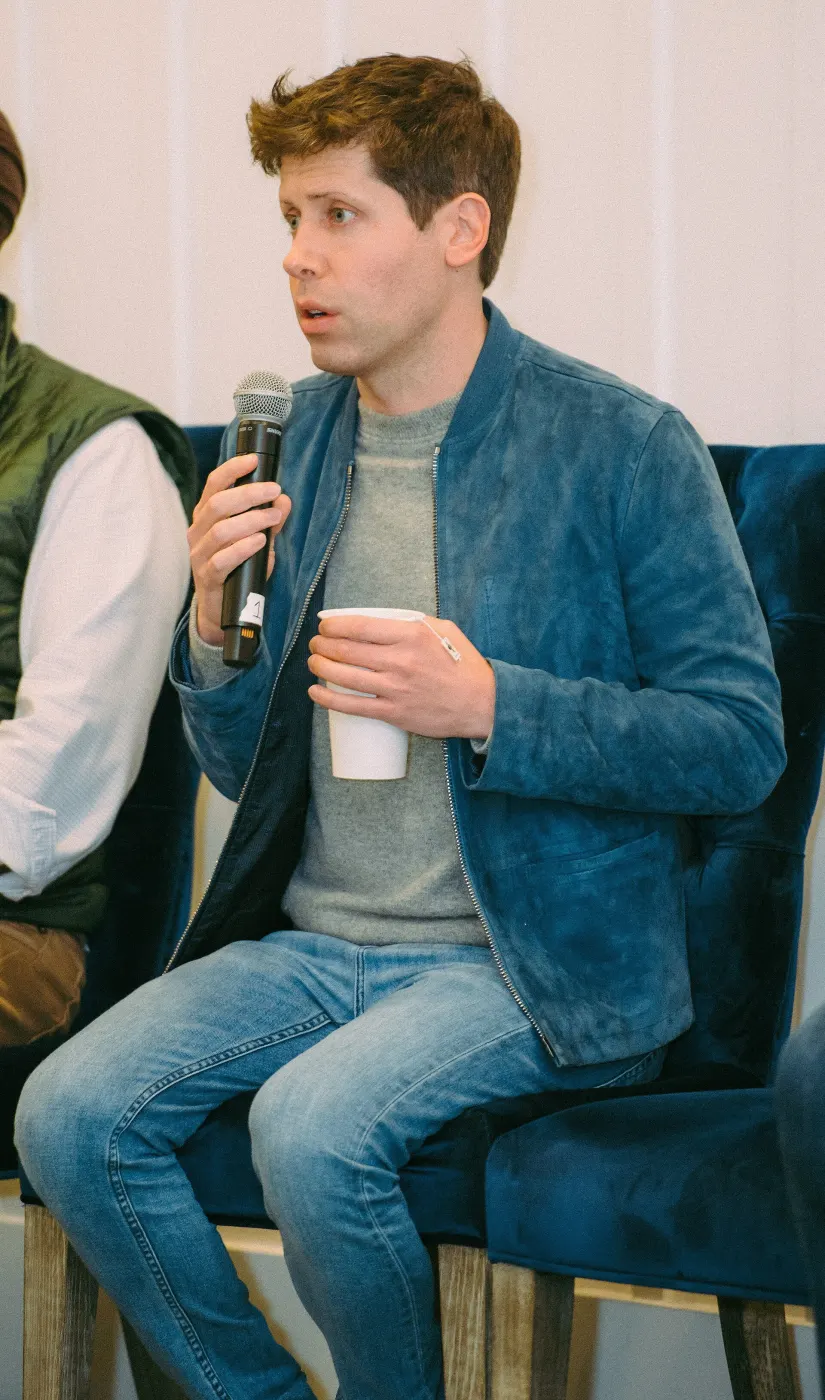
On March 31, 2026, OpenAI said it had closed a funding round with one hundred twenty-two billion dollars in committed capital at an eight hundred fifty-two billion dollar post-money valuation. SoftBank co-led. Andreessen Horowitz, D. E. Shaw, and others joined. For the first time the company routed some participation through bank channels and said it raised about three billion dollars from individual investors. OpenAI reported more than nine hundred million weekly ChatGPT users, more than fifty million subscribers, roughly two billion dollars of revenue per month, and thirteen point one billion dollars of revenue in the prior year. It also remained cash-flow negative while pouring money into compute. Company posts described GPT-5.4 as a new capability step, Codex as a fast-growing coding agent, and an ads pilot that reached more than one hundred million dollars of annualized run rate in under six weeks. Enterprise revenue crossed forty percent and was tracked toward parity with consumer by year end.
By August and September 2026 the public story twisted again. Time reported business revenue surpassing consumer revenue in July, and executives talking about annualized revenue near forty billion dollars. Altman told Fortune that going public in 2026 would be "ill-advised," tying the pause to safety and alignment work still unfinished. Press reports described talks of another private round that could value the company around one point two trillion dollars. CFO Sarah Friar, in internal remarks reported by Time, still sketched a path to being public by 2027 or sooner if the business kept inflecting. Altman at a G20 innovation meeting in September called AI adoption "non-negotiable," comparing it to electricity. Days later he publicly aligned with Anthropic CEO Dario Amodei on the idea of slowing certain advanced development and embedding independent evaluators. The man who had shipped ChatGPT into the wild was now arguing, at least in public, for brakes and referees.
What changed for everyone else
World impact is not a trophy list. It is a set of altered defaults.
Before ChatGPT, talking to software mostly meant menus, search boxes, and apps. After ChatGPT, hundreds of millions of people learned to issue intent in sentences. Schools rewrote honor codes. Call centers rewrote scripts. Junior lawyers and junior engineers discovered that first drafts could arrive in seconds, which raised the bar for second drafts. Microsoft folded OpenAI models deep into Office and Windows strategies. Google, Meta, Amazon, and a wave of startups reallocated capital toward large models. Nations drafted AI safety bills and industrial strategies in the same season.
OpenAI's choices radiated outward. Iterative deployment, the habit of shipping imperfect systems into the real world and learning in public, became an industry argument as much as a research method. Critics said it normalized risk. Altman argued that reality is the only laboratory large enough to teach alignment. When Scarlett Johansson objected to a voice, the industry heard a preview of consent fights over likeness. When employees threatened to walk in November 2023, corporate boards everywhere saw a new veto power: talent aligned with a leader can overrule directors who own the legal form.
Energy and chips became geopolitics. Altman's side bets on fusion via Helion and earlier chair role at Oklo (which he left in April 2025 to reduce conflict) sat beside OpenAI's appetite for data centers. Stargate-scale infrastructure talk turned electricity, permits, and GPU supply into boardroom topics for governments. Competitors such as Anthropic raised enormous rounds of their own. Chinese labs forced open-source pressure into the race. The "AI boom" became a full industrial cycle with winners, lawsuits, layoffs in displaced niches, and new job titles that did not exist in 2021.
Energy, eyeballs, and the side-map of bets
Altman's personal balance sheet was never only OpenAI, especially once the restructure left him without for-profit shares. Helion Energy, where he served as chairman, chased magnetized fusion as a long-shot answer to the electricity hunger of AI data centers. Oklo, a fission startup that went public through his AltC SPAC in 2024, put his name on another nuclear ticket until he stepped down as chair in April 2025, saying he wanted to avoid conflicts and keep future OpenAI deals possible. Exowatt and other energy bets pointed at the same bottleneck: models do not run on press releases. They run on megawatts.
Worldcoin, through Tools for Humanity, tried a different wager. Prove personhood with an iris scan, distribute a token, and build an identity layer for a world where bots can pass for people. Regulators in Kenya, Europe, and elsewhere paused or investigated the project over biometric privacy and marketing practices. Altman's defenders called it necessary infrastructure for the AI age. Critics called it a data extract dressed as utopia. Either way, it showed how far his curiosity wandered from a single company org chart.
Reddit remained a quieter compounder. The interim CEO week in 2014 was a cameo. The shareholding into the 2024 IPO was not. A man who spent his twenties advising consumer startups still held a meaningful slice of one of the internet's largest conversation engines while running the company that was rewriting how those conversations get drafted.
These side bets feed the conflict-of-interest question that never quite leaves Altman's coverage. When OpenAI needs power, chips, or identity rails, and the CEO personally invested in adjacent companies, transparency becomes part of governance. Bret Taylor's public line was that Altman disclosed. Journalists kept publishing maps of the portfolio anyway. The maps are part of the modern Altman story: not because every investment is a scandal, but because frontier AI turns personal capital allocation into public policy.
The Microsoft alliance as second spine
No Altman documentary works without Microsoft. The relationship began as cloud and capital when OpenAI needed more money than a nonprofit could politely ask for. It deepened into product distribution when Copilot features carried OpenAI models into Word, Excel, and GitHub. During the firing week it became a rescue geometry: Nadella's offer gave employees a destination and gave the board a countdown clock.
The October 2025 restructure renegotiated that spine. Microsoft emerged with about twenty-seven percent of OpenAI Group, a stake headlines valued around one hundred thirty-five billion dollars at announcement. Licensing and revenue-share details shifted so OpenAI could raise more freely. Altman kept saying the companies were aligned on making AGI beneficial while competing normally everywhere else. Competitors heard something simpler: the most important distribution company in enterprise software still had a privileged seat next to the most important model lab.
That alliance also shaped geopolitics. When Altman toured capitals in 2023, he was not only OpenAI's CEO. He was a walking demonstration that American AI capacity ran through a private partnership large enough to matter to prime ministers. When DeepSeek and other Chinese labs forced open-source pressure into 2025, Altman talked about dialogue and uncertainty over export rules in the same breath as product pride. The frontier was no longer a San Francisco argument. It was a bloc argument.
Senate rooms and the politics of being the face
In May 2023, Altman sat before a U.S. Senate subcommittee and did something unusual for a tech CEO in that era: he asked for regulation. Not in the vague key of "rules of the road," but with a willingness to discuss licensing regimes for highly capable models. Skeptics called it regulatory capture dressed as responsibility. Supporters called it adult supervision before a worse accident forced panic laws.
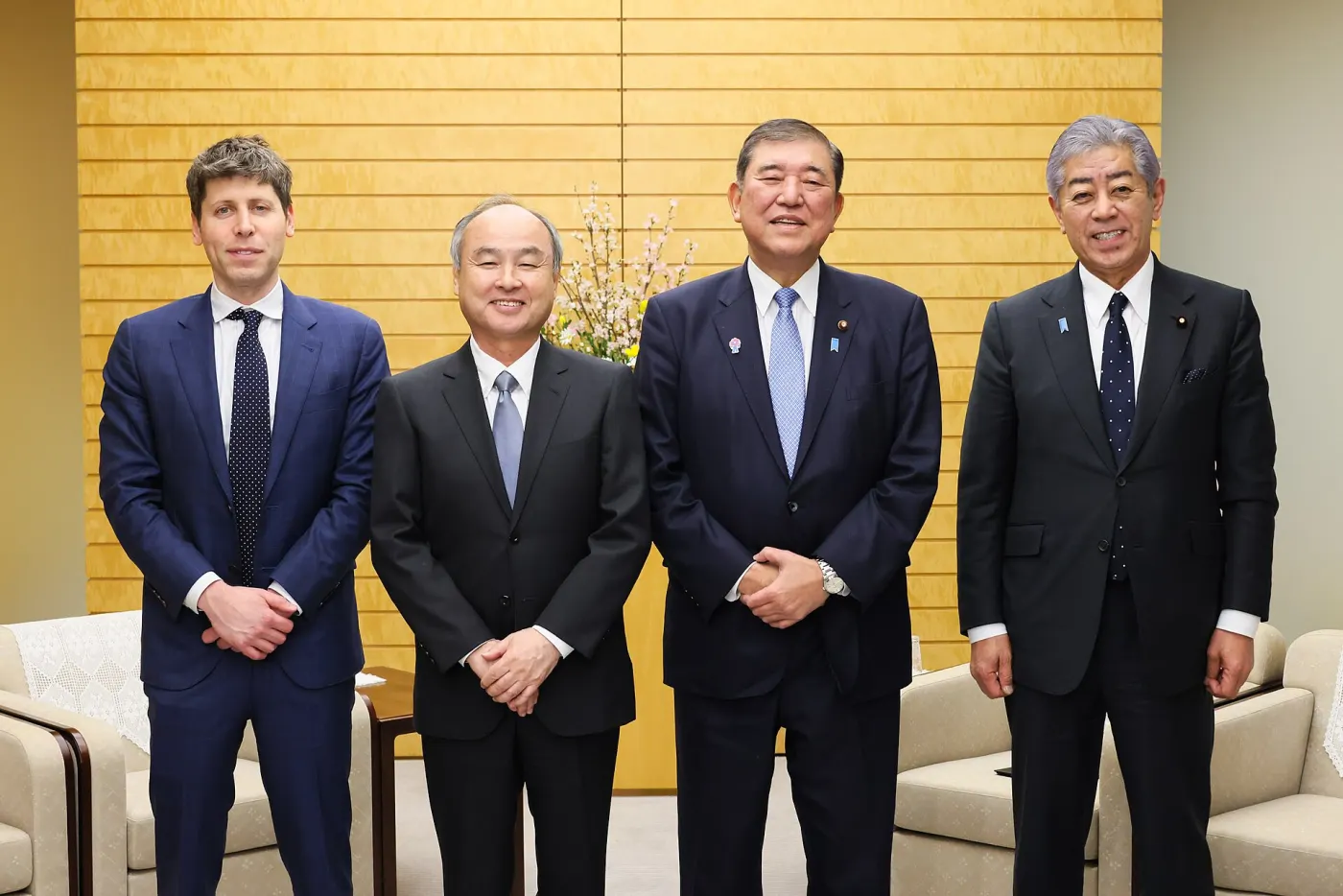
The same season he became a diplomatic traveler. Photos from those weeks show him in suits he does not wear to hackathons, standing with SoftBank's Masayoshi Son and Japanese officials, or in European meeting rooms where AI was suddenly an industrial strategy. He later hosted political fundraisers, donated across cycles, joined a San Francisco mayoral transition circle, and in 2025 publicly called himself "politically homeless," criticizing Democrats for losing a culture of innovation. In December 2024 he donated to Donald Trump's inaugural fund. The through-line is not party loyalty. It is access. Altman treats politics as another system with insides that can be opened.
By September 2026, speaking at a G20 innovation ministerial in North Carolina, he told countries that adopting AI was "non-negotiable," like electricity a century earlier, while warning that weak cybersecurity could set the field back. The rhetoric had matured from demo magic to infrastructure mandate. That is what happens when your product leaves the early-adopter class and enters GDP conversations.
Failures and the long middle
Altman's legend sometimes skips the middle. Loopt did not become the social layer of the phone. YC's endgame left bruised partners and disputed titles. OpenAI's early nonprofit purity collided with Microsoft money and product deadlines. Safety researchers left for rivals. Sora, the short video experiment, was later scaled back as costs and focus tightened. Ads arrived in ChatGPT after years of insisting the product was primarily a subscription relationship. Each compromise fed the same criticism: that the mission bends when the meter's running.
The middle years also include quieter almost-quits that never made a homepage. Before ChatGPT, OpenAI burned serious money on research timelines that slipped. Talent left for Anthropic and other labs in waves that later looked, in hindsight, like schisms over safety culture and equity. Altman had to keep Microsoft confident, researchers inspired, and a nonprofit board calm while the capped-profit experiment strained every legal metaphor in Delaware. That balancing act cracked in November 2023. The surprise is not that it cracked. The surprise is that the product was already too beloved for the crack to finish him.
There is also the personal cost ledger. Fame brought a level of threat that startup CEOs of the 2010s rarely faced at their front doors. The April 2026 attacks on his San Francisco home turned abstract "AI risk" debate into police reports. Altman's blog response asked for de-escalation even as he connected the violence to media temperature. Whether or not that causal link persuades every reader, the physical escalation is part of 2026's record.
Altman's answer, repeated across interviews, is that building AGI requires capital at scales no pure nonprofit ever raised, and that shipping to users is how you learn what breaks. Believers call that iterative deployment. Detractors call it moving fast under a safety brand. The documentary fact is that both descriptions now shape how governments and competitors respond to OpenAI.
What he built that you can name
Strip the mythology and the artifacts are still specific. Loopt was a real carrier-era location app that taught him enterprise sales and board combat. Hydrazine and related vehicles compounded a personal investment map across Reddit, energy, biotech, and hard tech. Y Combinator under his presidency remained the default finishing school for founders. OpenAI under his CEO seat produced GPT-3.5 and GPT-4-class models, ChatGPT, the API ecosystem that let thousands of companies embed frontier models, Codex-class coding agents, multimodal image and voice features, and enterprise chat products that turned a research demo into a revenue machine. The 2025 PBC restructure created a legal shape other frontier labs now study. The March 2026 financing set a private-market high-water mark that forced every AI competitor to explain its own price.
He did not write every model weight. He did not invent the transformer. His product was the company that could recruit the people who could, fund the compute they needed, ship an interface the public would touch, and survive the political weather that followed.
On the cultural layer he helped normalize a new literacy. Prompting became a workplace skill. Teachers redesigned assignments around the assumption that first drafts could be machine-shaped. Doctors and patients experimented with medical Q&A even when official guidance lagged. Artists sued and organized. Students cheated and then learned to edit. None of that is solely Altman's authorship. All of it traces through a product he insisted on releasing as a chat.
Closing
If you meet Sam Altman only through wealth rankings, you will misread him. The OpenAI restructure left him without founder equity in the for-profit while still leaving him the CEO of the most watched AI company on earth. If you meet him only through the five-day firing, you will miss the Missouri teenager who learned to open a Mac, the Loopt founder who sold without glory, and the YC president who practiced power before AGI had a chat box.
In 2026, with ChatGPT used by hundreds of millions of people each week and OpenAI valued in private markets near the trillion-dollar conversation, Altman's story is not a clean hero arc. It is a documentary about leverage: over boards, over talent, over national leaders, over the narrative of what intelligence is for. Courtrooms still hold contested claims. Regulators still hold open questions. Competitors still hold GPUs and research papers of their own.
The boy from Clayton wanted systems he could open. The man in San Francisco opened a system that now opens everyone else. Whether that is triumph, warning, or both is the argument of the age. The factual core is simpler. Sam Altman built a path from a failed location app to the default interface for machine intelligence, got fired by his own board, returned in five days, restructured the lab into a public-benefit giant, and entered late 2026 still CEO, still arguing about safety and speed in the same sentence, still unfinished.
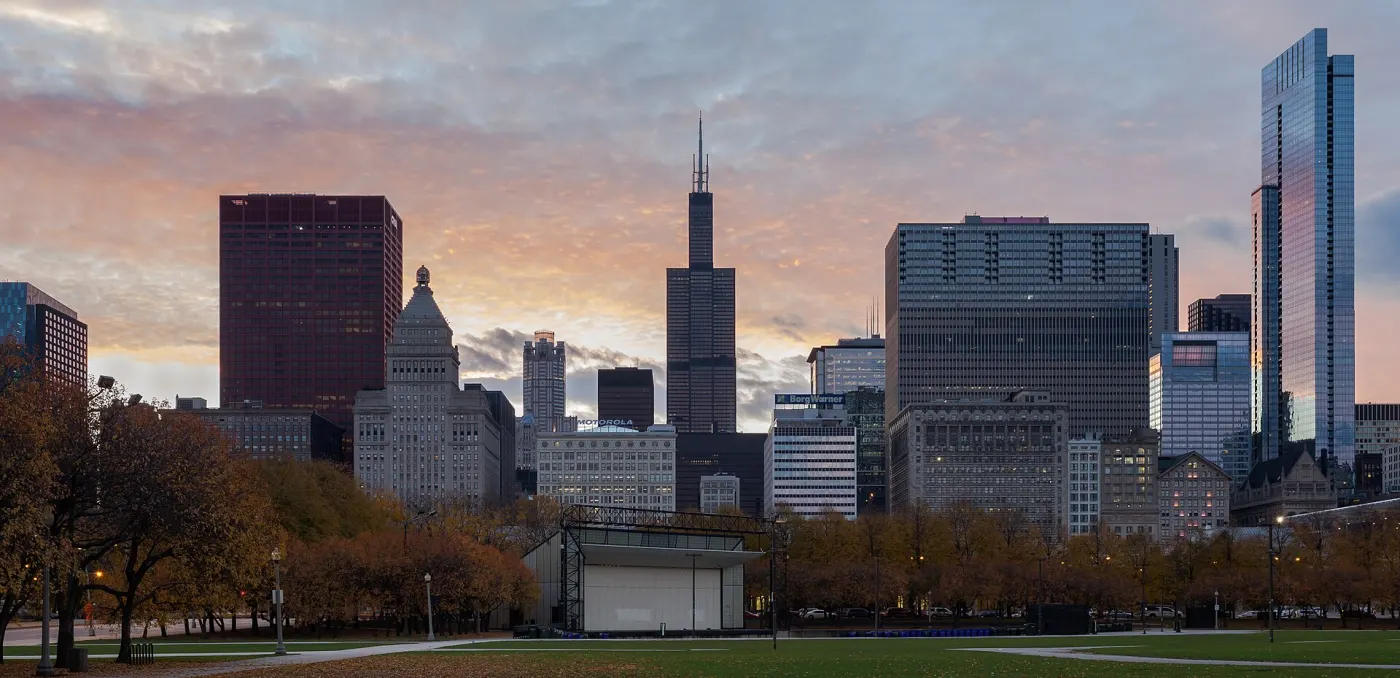
Stand in Chicago at dusk and you can still see the skyline that framed his first years. Stand in San Francisco with a phone and you can open the chat box that framed everyone else's next decade. Between those two images sits a career built on a stubborn hypothesis: that the person who can hold a coalition through fear will shape the machine more than the person who only understands the math. Altman bet his life on that hypothesis. As of late 2026, the market, the users, and the governments were still betting with him, even while they argued about the terms.
Watch alongside this story
Short cuts from interviews, keynotes and launches. Each plays only the moment that matters.