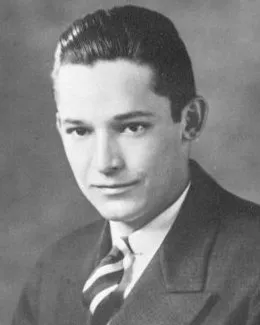
Mr. Sam
A Depression kid sold newspapers in Missouri. He lost a lease in Newport and started over. Walmart remade how America shops.
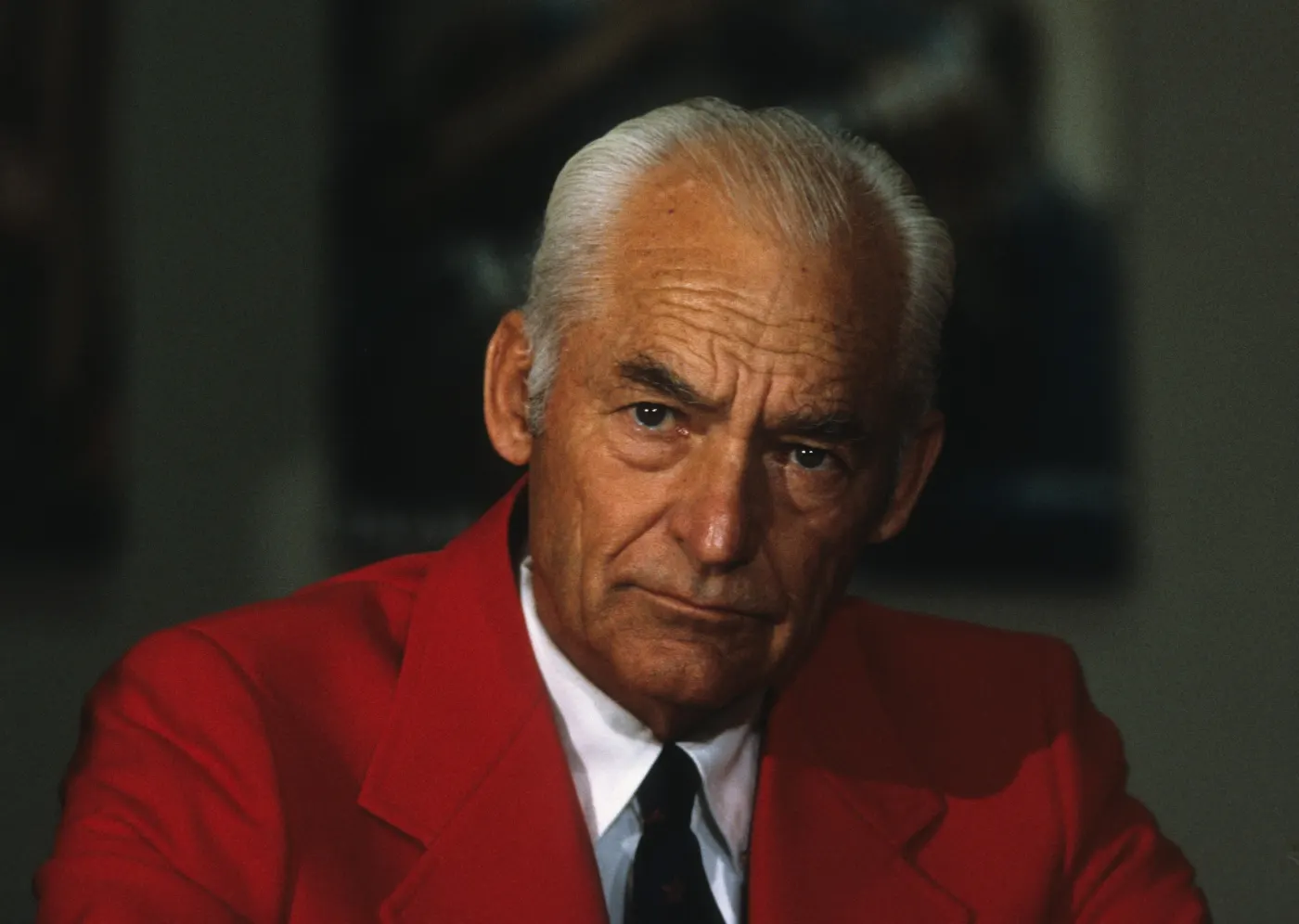
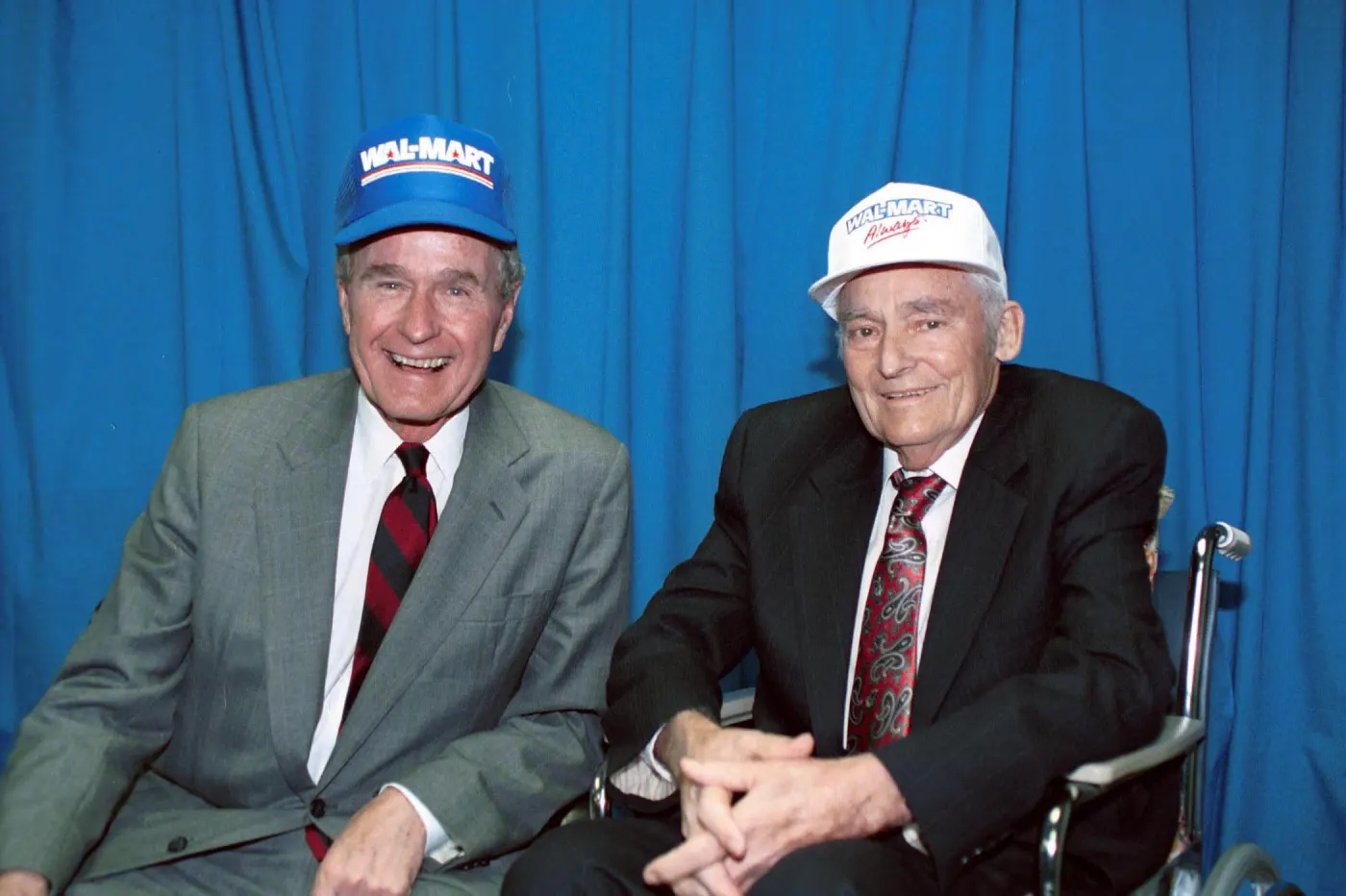
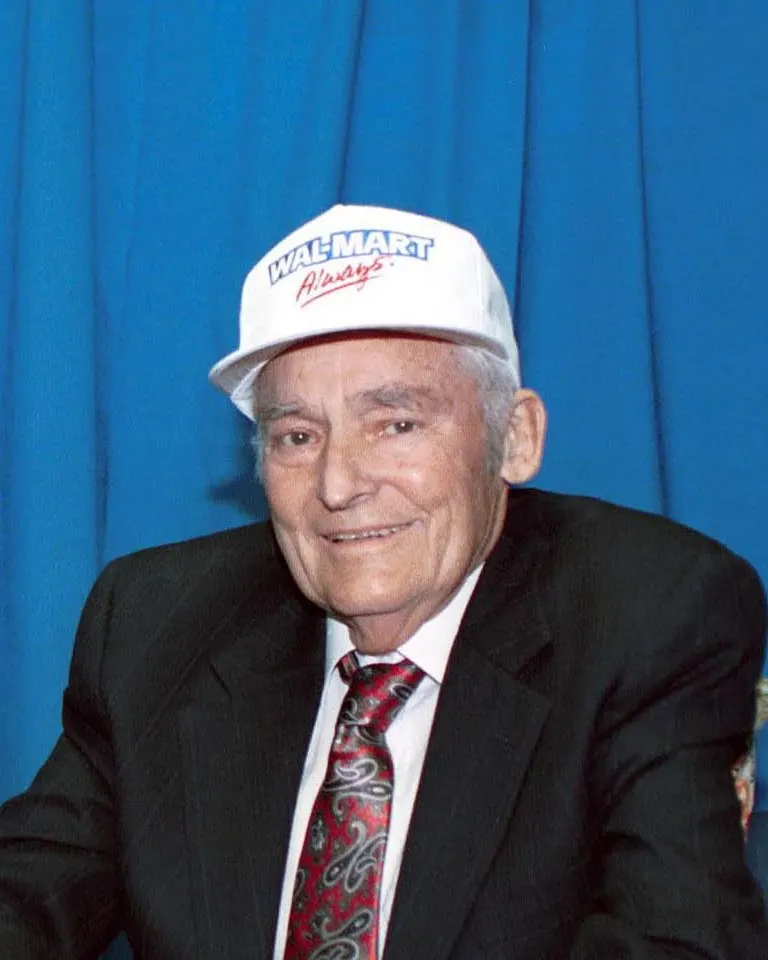
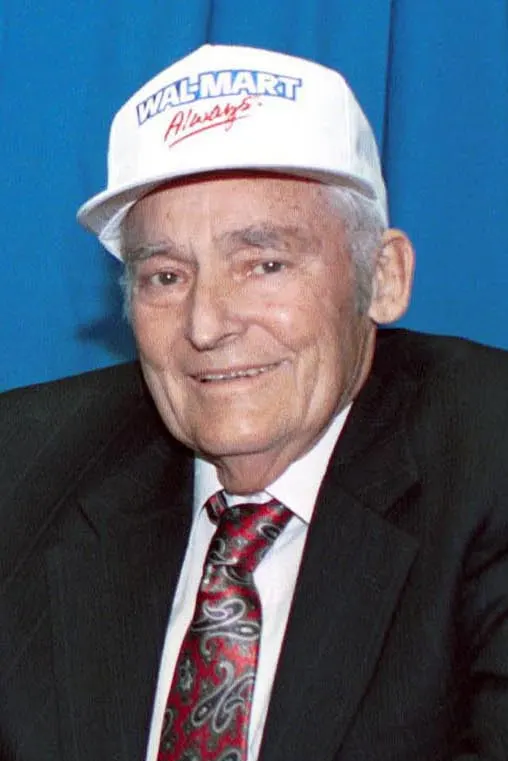
On March 17, 1992, Air Force One touched down in northwest Arkansas. President George H. W. Bush and First Lady Barbara Bush came to Bentonville because Samuel Moore Walton was too sick to travel to Washington for a White House ceremony. Associates packed a room. Cameras rolled. The President placed the Presidential Medal of Freedom around Walton's neck.
Walton stood when doctors had doubted he could. He told the crowd that if they worked together they would lower the cost of living for everyone. Months of cancer treatment had thinned him. The mission sentence still came out clear. Associates cried. It was his last great public appearance among the people he called partners.
Nineteen days later, on April 5, 1992, Sam Walton died in Bentonville at seventy-four. The company he founded kept growing without him. By fiscal 2026 Walmart would report about $713 billion in revenue, more than 10,900 stores and clubs across 19 countries, and roughly 2.1 million associates worldwide. The man was gone. The system he obsessed over was not.
Kingfisher, Depression grit, and newspaper routes
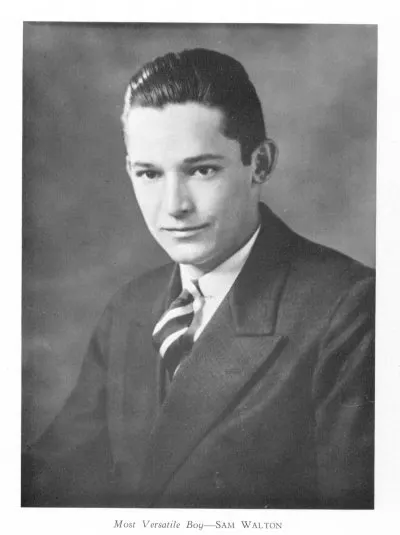
Sam Walton was born on March 29, 1918, in Kingfisher, Oklahoma. The family moved with work and weather through the Midwest. The Great Depression was not a chapter in a textbook for him. It was empty pockets, odd jobs, and the habit of turning a dollar over twice.
He sold magazine subscriptions as a boy. He milked cows. He built newspaper routes through college until the routes and helpers produced serious student income for the era. Those early hustles were not cute origin stickers. They were training in volume, reliability, and customer faces.
He attended the University of Missouri in Columbia and earned a business degree in 1940. Classmates remembered energy more than polish. He was already practicing the salesman's smile that later became corporate folklore.
J.C. Penney, war, Helen, and Newport
After college he trained at J.C. Penney in Des Moines, Iowa. Penney's taught retail discipline: floors, stock, customer greetings, the quiet mathematics of margin. Then World War II pulled him into Army service. He married Helen Robson in 1943. Helen's preferences would steer geography as much as Sam's ambition steered square footage.
When the war ended, the couple moved to Newport, Arkansas. In 1945 Walton took on a Ben Franklin variety store. He worked it like a laboratory. Sales climbed hard over a few years. Success created a landlord problem. The lease was not renewed. The location went to someone else. Walton lost the store he had grown.
The Newport store cost $25,000. Sam put in $5,000 of his own savings and borrowed $20,000 from Helen's father. The store was a dud when he got it, doing about $72,000 a year. So he tried everything. He borrowed about $1,800 for a soft ice cream machine and set it on the sidewalk, where kids could not walk past it. He bought goods straight from makers when he could and sold them cheaper. By the fifth year, sales hit about $250,000. It was the best Ben Franklin store in six states.
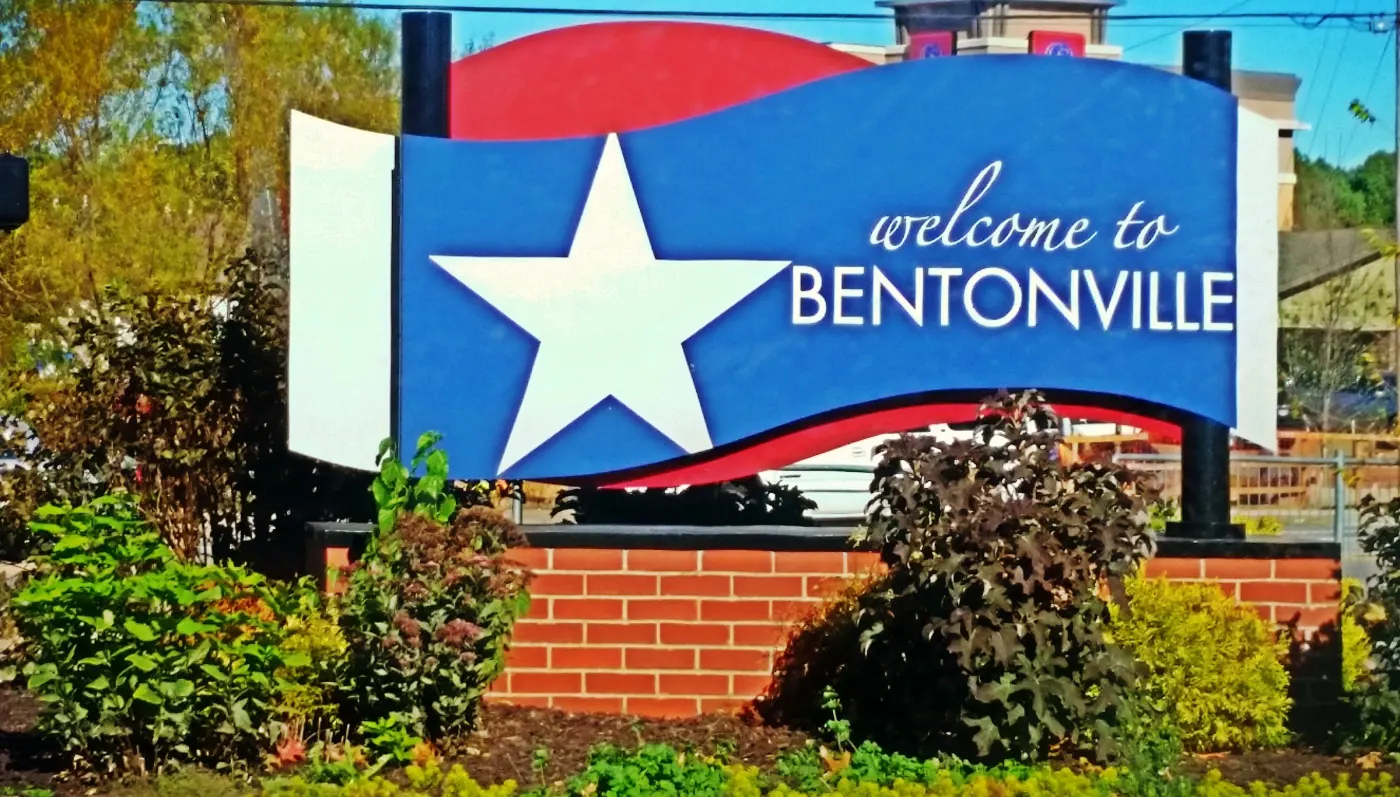
That eviction is the emotional hinge of the legend. He could have quit retail. Instead he treated Newport as tuition. Helen wanted small-town life. Sam wanted another shot at self-service variety retailing. Bentonville, near the corner of several states and rich in hunting seasons Sam loved, became the compromise that built an empire.
Walton's Five and Dime
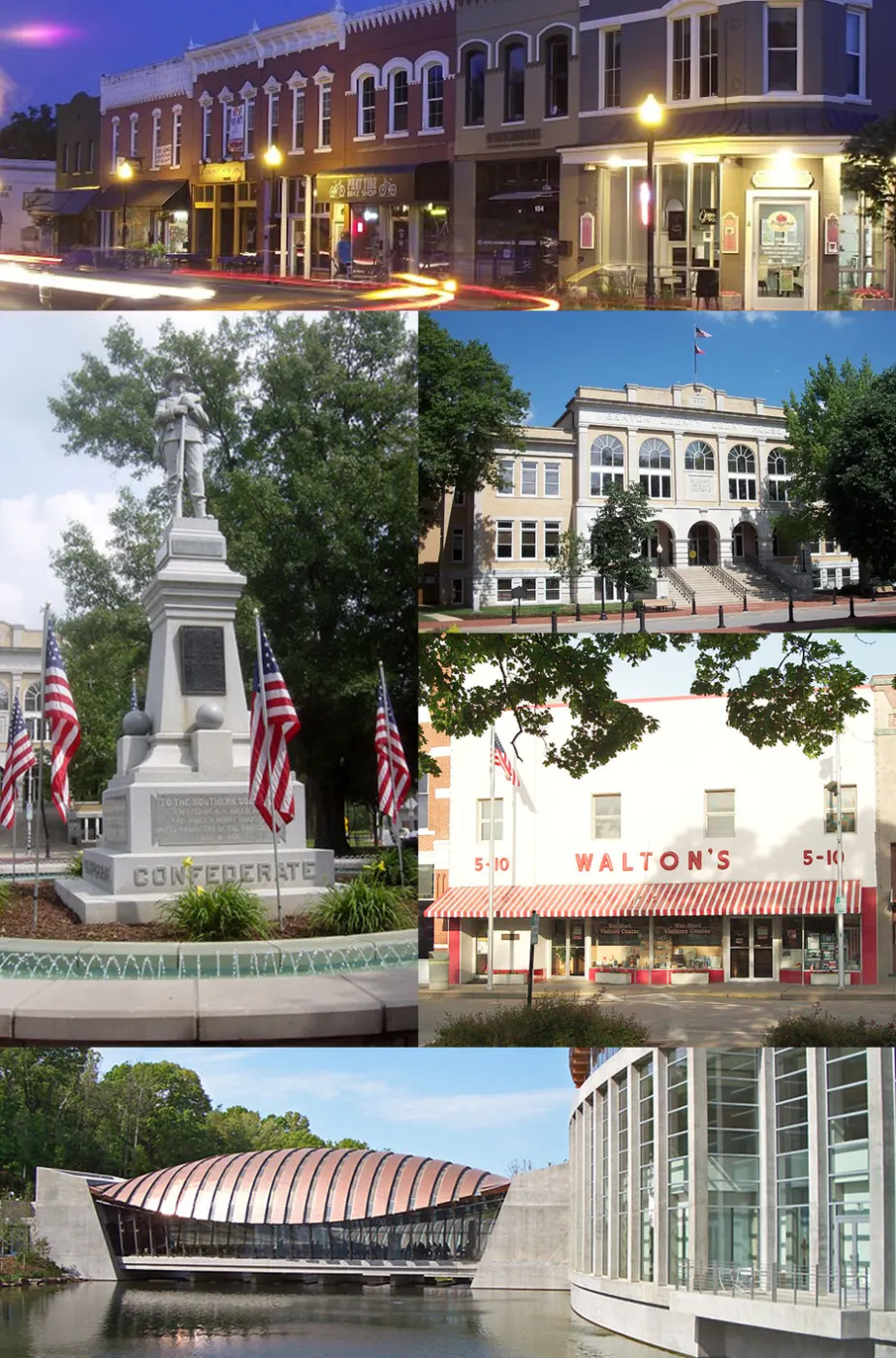
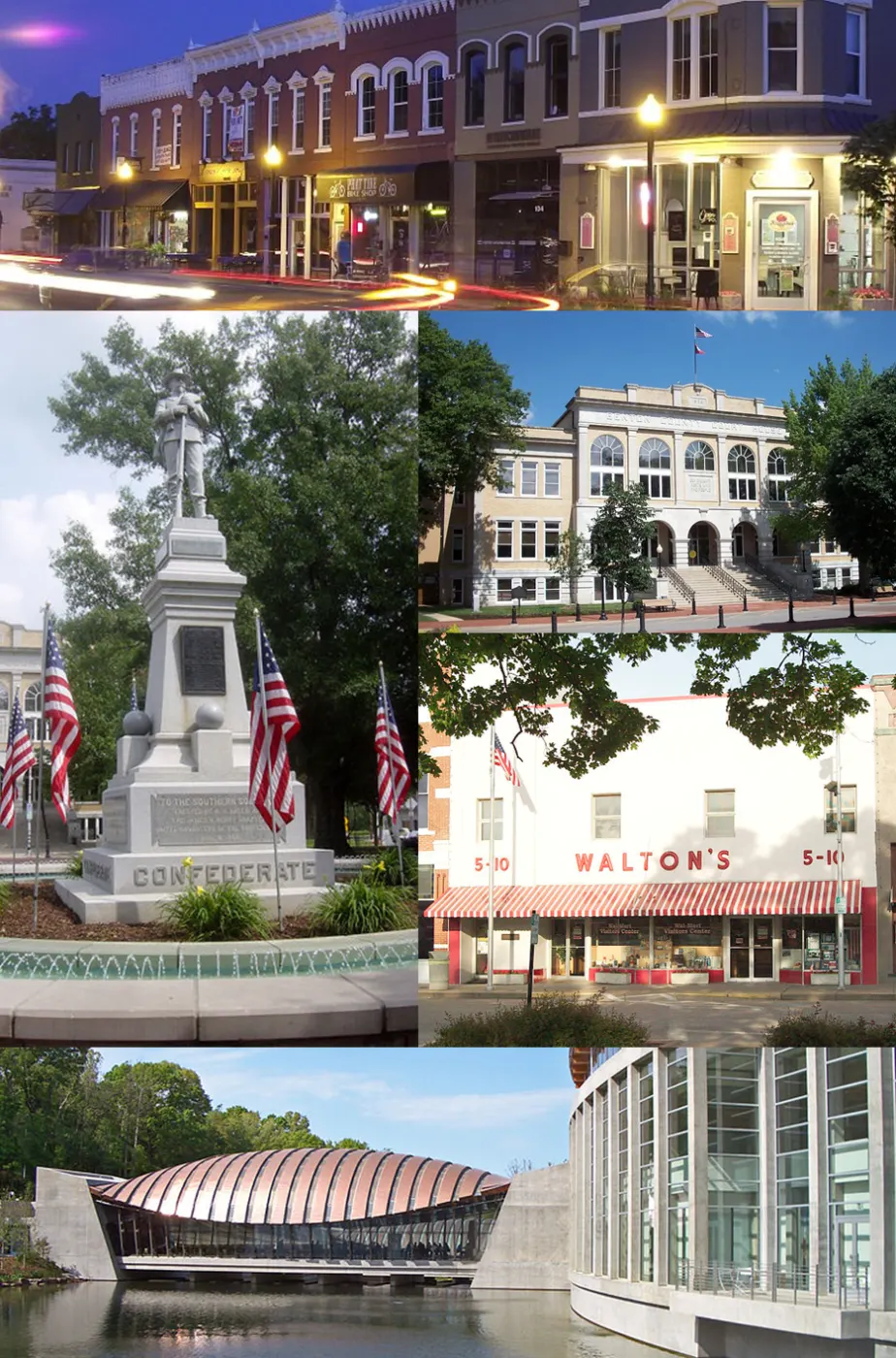
On May 1, 1950, the Waltons landed in Bentonville. Within days, with help from Helen's father, Sam bought a Harrison variety store and threw a remodeling sale. He ran it as Walton's 5 & 10, a Ben Franklin franchise that pioneered self-service shelves in Arkansas. Customers touched goods before paying. Clerks stopped owning every handoff.
Then he heard that two Ben Franklin stores up in Minnesota had tried something new. Shoppers walked the aisles and picked goods themselves, then paid at the front. No clerk behind every counter. Sam got on an all night bus to go see it with his own eyes. He came home sold. His Bentonville store became one of the first self-service variety stores in the country.
Sam and his brother Bud expanded a network of variety stores. Sam became one of Ben Franklin's largest franchisees, operating roughly fifteen stores under the Walton five-and-dime banner. He flew a plane between towns when roads were slow. He studied competitors like a scout. He haunted other people's aisles with a notebook.
Discounting was rising nationally through Kmart, Woolco, Gibson's, and others. Walton asked Ben Franklin headquarters to cut margins so he could push true discount pricing. Chicago said no. In 1962 he answered with his own name over the door.
July 2, 1962: Rogers, Arkansas
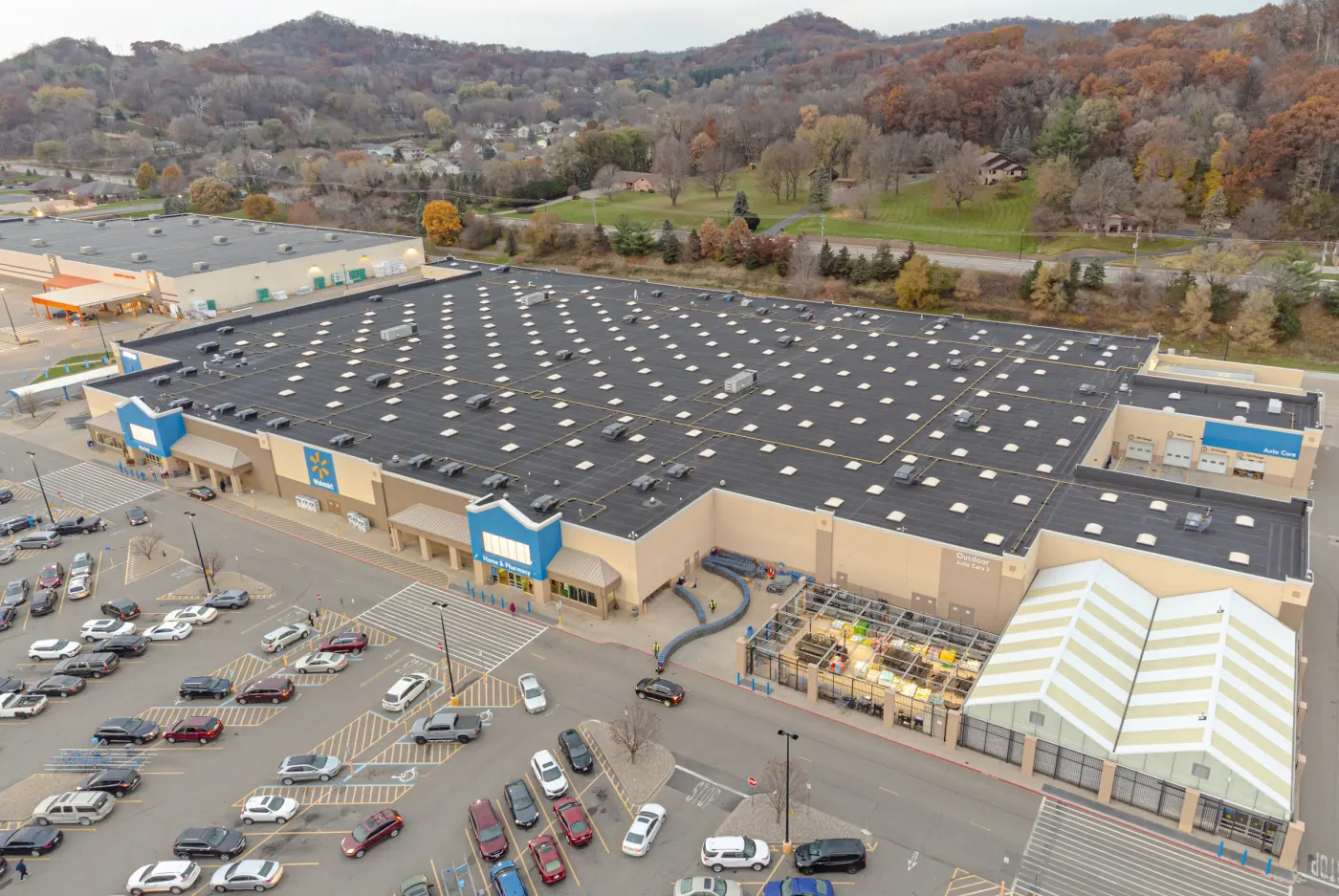
The first Walmart opened in Rogers, Arkansas, on July 2, 1962. Sam was forty-four. The bet was simple and radical for small towns: name-brand goods at discount prices in markets the big coastal retailers ignored. Everyday low prices would replace the circus of constant fake sales.
Critics thought rural density could not feed a discounter. Walton thought rural customers deserved the same price math as city shoppers. He also knew logistics would decide winners. Stores that could replenish fast would underprice stores that sat on fat inventories.
Not every early store looked like genius. For the second Walmart, in Harrison, Arkansas, in 1964, Sam piled truckloads of watermelons on the sidewalk and set up donkey rides in the parking lot. It was about 115 degrees. The melons started to pop. The donkeys did what donkeys do. A young retail man named David Glass drove over to watch and called it the worst store he had ever seen. Years later, that same David Glass would run Walmart as its chief executive.
By 1967 the family owned twenty-four stores doing about $12.7 million in sales. In 1969 the company incorporated as Wal-Mart Stores, Inc. By early 1970 Sam and Bud owned a mix of Walmart and Ben Franklin units. Public capital came next.
Going public and building the machine
In 1970 Walmart sold stock to the public at about $16.50 a share. The money funded distribution muscle. In 1971 the first distribution center and home office deepened Bentonville's role as the brain. Walton chased information the way other merchants chased window displays. Later satellite systems and shared data would become famous. The instinct started earlier: know what is selling before the competitor does.
The public offering was not a victory lap. It was a rescue from debt. Every new store had been built with borrowed money, and Sam had loans stacked at banks across the region. Helen hated the debt and worried about what it could cost the family. In October 1970 the company sold 300,000 shares. For the first time, growth did not depend on one more bank saying yes.
He closed the remaining Ben Franklin stores by the mid-1970s as Walmart became the main vehicle. Store counts climbed: hundreds by 1980, more than fifteen hundred by 1990, with tens of billions in annual sales. Associates, not employees, became the preferred word. Profit sharing and stock culture tried to align floor workers with results. Cheer sessions and Saturday meetings looked corny to outsiders and useful to Sam.
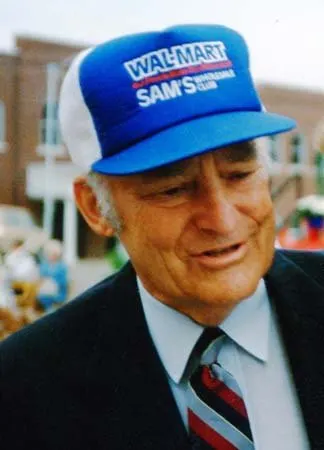
He still visited stores unannounced. He drove pickup trucks. He borrowed ideas shamelessly and said so. Competitors were classrooms. A good idea from a rival aisle was a gift, not a threat to ego.
Formats, Sam's Club, and the Mexico door
Walton did not freeze the model. Sam's Club arrived in 1983 as a membership warehouse play. Supercenters mixed groceries and general merchandise into a one-stop gravity well. Each format was a hypothesis about how families spent time and money.
In 1991 a joint venture with Mexico's Cifra opened a Sam's Club in Mexico City. Global Walmart began while Sam was still alive to see the first step. International expansion after his death would be uneven and sometimes bloody in local politics. The first step still belonged to his watch.

How Mr. Sam worked
Walton's method mixed thrift, speed, and theater.
Thrift: fly coach mentality even after wealth, share hotel rooms on early trips, sweat pennies on fixtures. Speed: open stores where land was cheap, learn by doing, fix mistakes in public. Theater: lead cheers, walk the floor, make associates feel seen by the founder.
He wrote and spoke in plain sentences. He mistrusted bureaucracy that slowed decisions. He trusted technology when it lowered cost. He believed the customer was number one in a way that sounded like a slogan until you watched him rearrange a display because a shopper looked confused.
He also made rules that fit on one card. One was the ten foot rule: if an associate came within ten feet of a customer, they should look the person in the eye, say hello, and offer help. He kept his promises in public, too. In 1984 he bet his team that profits could not beat a hard target. They beat it. So a man worth billions put on a grass skirt and danced the hula on Wall Street while cameras clicked. He named a Walmart dog food brand, Ol' Roy, after his own bird dog.
Helen anchored the family's small-town choice and philanthropic instincts. Bud was the brother in the trenches. The Walton family fortune that later topped global wealth lists began as shared risk on Arkansas real estate and inventory loans.
Controversies that traveled with the brand
No honest documentary skips the backlash. As Walmart scaled, critics argued that Main Street merchants could not match its prices, that supplier pressure was brutal, and that wages and scheduling strained households even as prices helped those same households. Labor disputes, gender-pay litigation in later decades, and community zoning fights became part of the public record around the company Sam built.
Walton's defenders answered with consumer surplus: lower prices are a raise for shoppers who never see a raise. Both claims can be true in the same town. This story does not settle the argument. It notes that Walton knowingly chose a model that privileged volume and price over the cozy boutique ideal. He believed that choice was moral because it stretched paychecks. Opponents believed it hollowed civic fabric. America is still living inside that disagreement in 2026.
Illness, the medal, and the last speech
Bone cancer and related illness marked Walton's final years. He kept working when he could. The Medal of Freedom day in March 1992 was staged for associates as much as for history. Bush called Walmart a bright spot in American enterprise and cited tens of billions in sales and more than seventeen hundred stores. Walton answered with the cost-of-living line that the company later compressed into "save money. live better."
He died on April 5, 1992. Rob Walton became chairman. The culture machine tried to keep Mr. Sam's voice in training videos and museum halls. Mythology always risks soft focus. The operational truth was harder: a network of buyers, truckers, software, and store managers still had to beat last year's numbers every week.
Legacy through 2026: the empire after the founder
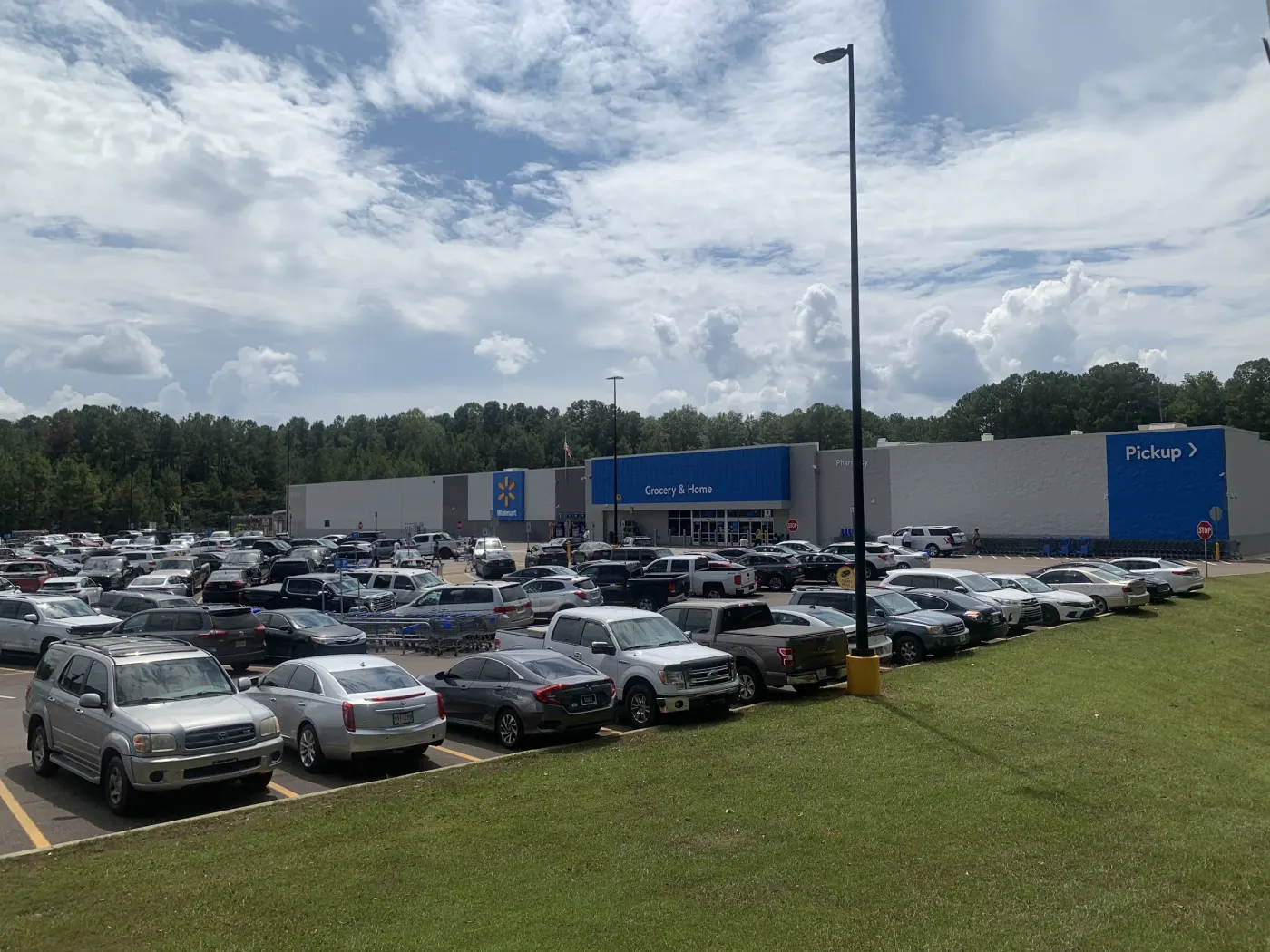
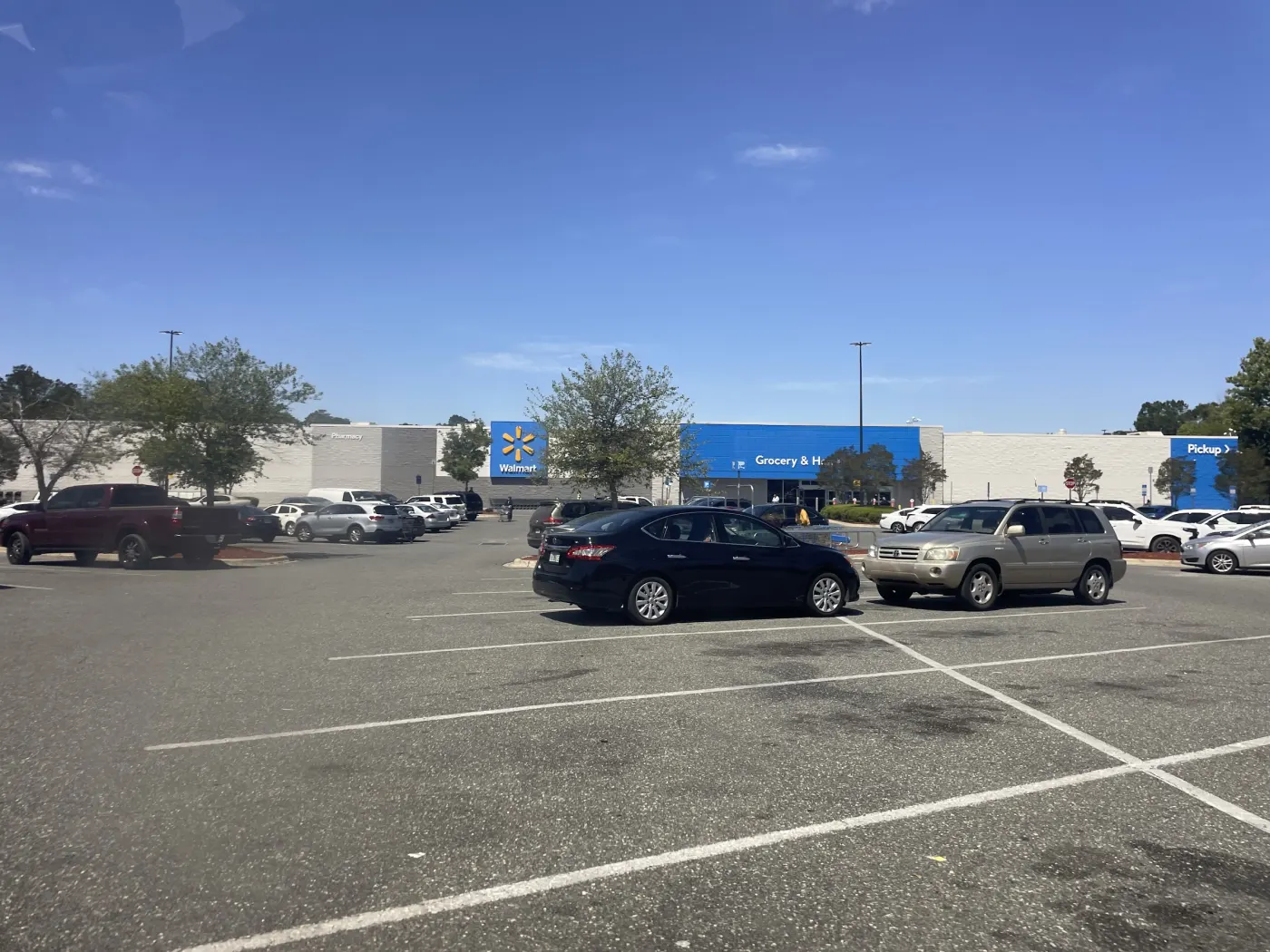
Walmart outlived Sam by decades and kept rewriting retail. E-commerce, grocery delivery, advertising on its platforms, and international portfolios all arrived after his funeral. Yet the spine remains recognizable: everyday low price promises, enormous logistics, Bentonville as nerve center, and a bet that ordinary families will drive for value.
Fiscal 2026 filings show total revenues of about $713.2 billion and net sales of about $706.4 billion. Walmart U.S. alone operated 4,611 stores with about $483 billion in segment net sales. International ran thousands more stores across roughly eighteen countries outside the U.S. Company materials cite about 2.1 million associates and roughly 280 million weekly customer visits across more than 10,900 locations in 19 countries. Those figures are corporate scale Sam only glimpsed in outline.
The Walton family remains among the world's wealthiest lineages because equity compounded. Philanthropy through family foundations reshaped northwest Arkansas arts, education, and landscapes. Crystal Bridges and related projects turned Bentonville into an unlikely cultural destination. That afterlife is Helen and the next generations as much as Sam, but it sits on the cash engine he ignited.
World impact you can measure in a cart
Before Walmart's model spread, many small-town shoppers paid higher prices for thinner selections. Afterward, a standardized big box could offer national brands at aggressive tickets within a short drive. That shift redistributed money from local merchants to consumers and to a publicly traded giant. It also redistributed jobs from independent counters to associate badges and distribution centers.
Supply chains learned Walmart's language: on-time, on-spec, on-cost. Suppliers who adapted grew. Suppliers who could not exited or shrank. Global manufacturing patterns bent toward the retailer's calendars. Environmental and labor campaigns learned to target Walmart because its purchasing power moved factories.
Sam Walton did not invent discounting. He industrialized it for rural and suburban America, then left a company capable of industrializing it for grocery, ecommerce, and abroad. In 2026 a parent buying cereal, a tire, and a phone plan under one roof is living inside his hypothesis.
The pilot, the notebook, the parking lot
Associates told stories of Sam landing his plane, hopping into a ride, and walking a store before the manager finished coffee. He measured success in whether the parking lot filled on payday. He measured failure in dust on a shelf a customer wanted.
He was not a laboratory scientist. He was a competitive athlete of retail who treated every other chain as game film. That posture created a company that could feel both folksy and ruthless. Folksy in the cheer. Ruthless in the price.

Newport numbers and the lease that taught him
The Newport years still matter because they prove Walton could grow a store before he owned a chain. Encyclopedia of Arkansas notes the Ben Franklin there rising from roughly $80,000 to $225,000 in sales across about three years. That jump made the landlord notice. Family lore and later retellings agree on the wound: Walton improved the location so much that he could not keep it.
Helen Walton's insistence on small-town living after that shock redirected capital into Bentonville instead of a bigger city chase. Sam got hunting seasons at the corner of multiple states. Helen got a square she could stand. The company later turned that square into a pilgrimage site. In 1950 it was simply a second chance with a paint-smelling remodel sale.
Self-service was still strange in many American towns. Walton's Five and Dime invited customers to touch merchandise without waiting for a clerk to fetch it. Trust scaled. Labor per transaction fell. The idea looks obvious now because he and peers made it normal.
Bud, the plane, and the Friday notebook
Bud Walton was not a sidekick statue. He co-owned stores, shared risk, and absorbed the grind of openings. Reflections footage of the brothers later softens the edges, but the early work was mileage and mortgage nerves. Sam's plane became a management tool. He could hop town to town faster than a sedan on two-lane roads. The plane also became mythology: the billionaire who still landed like a visiting coach.
He carried a notebook into rival stores. If a fixture worked, he sketched it. If a price ended in a nine that moved merchandise, he tested it. Ego was less important than a working aisle. That intellectual humility paired oddly with ferocious competitiveness. He wanted to win Monday morning, not win an argument about originality.
Saturday morning meetings drilled urgency into managers. Numbers were read aloud. Winners were cheered. Laggards felt the room. Corporate America later mocked the cheerleading. Inside Walmart it functioned like a weekly operating system reboot.
Distribution: the unsexy superpower
Walton understood earlier than many discounters that warehouses are weapons. A pretty store with empty shelves loses. A plain store that replenishes overnight wins. The 1971 distribution center in Bentonville was not a vanity headquarters. It was a promise that trucks would feed the floor.
As store counts multiplied, information systems had to keep up. Walton pushed technology spending when it lowered cost per box moved. He did not romanticize computers. He romanticized in-stocks at everyday low prices. Satellites and shared sales data became famous later. The philosophy was older: see demand fast, buy deep on winners, kill losers without sentiment.
Associates on the floor became sensors. A cashier who noticed a missing size was part of the nervous system. Walton's visits reinforced that sensors should speak.
Price as a theory of justice
Walton talked about price the way pastors talk about sin. High prices wasted the customer's life energy. Lower prices freed money for church, kids, or a better used truck. That moral framing helped him recruit managers who might otherwise have preferred softer boutique retail.
It also justified hard negotiations with brands. If a supplier's cost structure could not meet Walmart's ticket, Walton's machine looked for another supplier. Global sourcing intensified after his death, but the pressure pattern started under his rules: the customer's wallet was the sacred text.
Made in America campaigns in his late career showed he could also market patriotism when politics and public mood demanded it. The deeper constant was still the ticket price on the shelf.
Fortune, family, and the cost of winning
As Walmart's stock compounded, the Walton family wealth became a national talking point. Sam himself preferred understatement in clothes and cars. The contrast fueled profiles: richest quietly shopping in his own aisles. After his death the fortune fragmented across heirs and foundations, yet the brand stayed singular.
Northwest Arkansas transformed. Airport codes, art museums, bike trails, and supplier offices followed the retail cash. Bentonville is both hometown and company town. Visitors who only know the museum version miss the earlier square where a five-and-dime had to earn Saturday traffic without a national ad budget.
What he refused
He refused to let Ben Franklin's no become his ceiling. He refused to believe small towns were unworthy of discount economics. He refused fancy headquarters theater when distribution needed capital. He refused, for a long stretch, the idea that retail success required coastal zip codes.
He did not refuse growth even when growth angered downtown merchants. That refusal to refuse growth is why his statue stands in argument as much as in admiration.
Associates, cheer, and the hard floor
Walton's vocabulary of "associates" and profit sharing tried to make a giant feel like a partnership. Many associates did build houses on stock and careers. Many others experienced the company as demanding physical work with contested wages and hours. Both experiences exist in the oral history.
The cheer is easy to clip for videos. The 4 a.m. freight unload is harder to romanticize. Walton walked both when he could. After he died, managers had to keep the culture without the founder body in the aisle. Some did. Some turned the cheer into empty ritual. Culture is perishable inventory.
1992 to 2026: continuity without the man
Rob Walton's chairmanship began a multi-decade family and professional leadership sequence. CEOs after Sam faced ecommerce invaders, grocery wars, and political scrutiny Sam only tasted. Jet.com, Flipkart stakes, advertising networks, and app grocery are foreign to 1962 Rogers. The customer mission line still gets printed because it still recruits.
Fiscal 2026's $713 billion revenue year would have sounded like science fiction in the Medal of Freedom gym. Yet the path is linear in one sense: more SKUs, more countries, more data, same obsession with not being undersold on the basket that matters to a tight household.
In 1993, the year after Sam died, a young man named John Furner took an hourly job in a Walmart store in Arkansas. On February 1, 2026, Furner became the chief executive of the whole company, taking over from Doug McMillon, who had also started out unloading trucks. Two days later, on February 3, 2026, Walmart became the first retailer in history worth $1 trillion on the stock market. Weeks before, it had moved its stock listing to the Nasdaq and joined the Nasdaq 100, next to the big tech giants. The company that started in a Rogers storefront was now being priced like a technology company.
Critics in 2026 still ask whether such scale softens or hardens American life. Supporters point to inflation fights and one-stop convenience. Walton's ghost does not answer. His balance sheet does.
A day in the life, reconstructed
Imagine a 1970s Thursday. Sam flies to a new market at dawn. He walks the competitor first, then his own store. He asks why a dump bin is empty. He eats a cheap lunch. He phones Bentonville about a shipment. He sketches a fixture change on a notepad. He sleeps in a modest motel. None of that is cinematic until you multiply it by thousands of Thursdays and hundreds of stores.
The drama is compound interest in habits. That is why the documentary must linger on notebooks and leases, not only on medals.
The civic argument in the gym
When Bush's voice broke in Bentonville, the country saw a sick merchant praised as a freedom icon. When Walton answered about lowering the cost of living, he translated his life's work into civic language. Whether one accepts that translation depends on whether one measures freedom in aisle prices or in the survival of independent storefronts. The man who built Walmart forced the question into every American zip code that got a Supercenter parking lot.
Trucks, tires, and the clock
Walmart's logistics poetry is written in dock appointments. A late trailer means empty endcaps. Empty endcaps mean customers drive to a rival. Walton treated time as inventory. Managers who could not feel the clock did not last.
He also understood tires and batteries and fishing tackle as traffic magnets in towns where a Saturday meant errands and recreation in one trip. Assortment was a map of local life. Corporate buyers in Bentonville had to listen to Arkansas and Oklahoma and Mississippi floors, not only to national brand pitch decks.
Helen's veto power on place
Without Helen Walton's small-town preference, Sam might have chased larger metros sooner. The Bentonville choice created a talent magnet in an unexpected place. Suppliers opened offices near the home office. That clustering is strategy disguised as hometown loyalty.
Helen also shaped giving. The family's later cultural investments in northwest Arkansas carry her imprint. Sam filled the parking lots. Helen helped decide what else a town could become when retail cash arrived.
Competitors as teachers
Kmart's early lead haunted him usefully. He studied their ads and layouts. When Walmart surpassed rivals, he did not stop scouting. Paranoia about being undersold kept prices sharp. Complacency is the discounter's cancer. Walton feared complacency more than he feared debt.
Woolworth's variety heritage, Penney's service habits, and regional chains all left fingerprints on his thinking. He was a synthesizer with a price axe.
Public company discipline
Going public in 1970 invited Wall Street into the Saturday meeting. Quarterly expectations can warp merchants. Walton tried to keep the customer as the true quarter. Stock price mattered because it funded growth and associate wealth. It was not allowed, in his rhetoric, to outrank the shopper.
That rhetoric got harder to sustain at scales he never managed personally. Later CEOs inherited the tension. The founder story still gets used in orientation because it simplifies the tension into a parable.
Death and the unfinished aisle
April 5, 1992, froze the parable. Obituaries listed store counts and sales. Associates told personal stories of a handshake. Critics wrote that the handshake came with a hard bargain. The unfinished aisle was international grocery ecommerce omnichannel retail. Successors built those aisles. They still hang Mr. Sam's portrait above the blueprint.
Opening day psychology
A Walmart opening in the Walton era was part revival, part military landing. Circulars flooded mailboxes. Greeters practiced smiles. Managers stalked the clock. Sam wanted the first week to teach the town that prices were not a temporary stunt. Everyday low price only works if the customer trusts tomorrow's ticket will not jump after the balloons die.
He watched traffic patterns in the parking lot like a coach watching formations. If cars clustered near one entrance, he asked why. If a department lagged, he moved merchandise into the path of feet. Retail is physics plus psychology. Walton spoke both fluently without calling it that.
Banking relationships and quiet leverage
Early expansion needed bankers who believed in rural discounting. Walton cultivated credit without drowning in it. He preferred to recycle profits into the next store when he could. Public equity later changed the fuel mix, but the early scar tissue of Newport and Bentonville loans kept him respectful of cash.
Associates who owned stock felt that leverage personally. A good year on the floor could change a household. A bad year hurt. Aligning pay with performance was not charity. It was Walton trying to make thousands of people care about shrink and speed.
The museum versus the machine
Today visitors tour The Walmart Museum and see the medal, the pickup truck lore, and the first-store ads. Museums sand edges. The machine that still runs does not. It negotiates with brands, opens fulfillment nodes, and fights Amazon for attention. Remembering Sam accurately means holding museum warmth and machine coldness in the same frame.
His autobiography, Made in America, sold the warmth with candor about mistakes. Readers who only want a saint leave disappointed. Readers who want a merchant's playbook leave with notes.
Small towns changed anyway
Even when Walmart brought jobs and tax base, downtown fabrics changed. Some towns adapted with niches Walmart ignored. Some hollowed. Walton argued customer choice should decide. Planners and historians still debate externalities he treated as acceptable collateral. A fair documentary names the collateral without pretending Sam invented every modern retail harm or none of them.
Why pilots matter in the story
The plane is not a toy detail. It is a symbol of refusing distance as an excuse. Managers in distant stores could not hide behind geography. The founder might drop from the sky. Surveillance by presence beats surveillance by memo. Later corporations used dashboards instead of Cessnas. The instinct is cousin to Walton's: make reality visible to the person who can fix it by Thursday.
Basket math in 2026
A 2026 shopper scanning a Walmart app still lives inside basket math Sam would recognize: substitute brands, private label, fuel points, delivery fees traded against time. The interface changed. The anxiety about stretching a paycheck did not. That continuity is his most durable product.
When Walmart reports hundreds of billions in revenue, the abstract number is millions of small baskets. Walton built a cathedral for those baskets. He died before smartphones. The cathedral kept adding chapels.
Brothers, sons, and succession without a script
Bud's partnership set a template for family in the business. Sam's children inherited wealth and responsibility in different mixes. Succession after a founder who was also a folk hero is unstable. Too much reverence freezes the company. Too little looks like betrayal. Walmart oscillated and endured. Endurance is the quiet verdict on Walton's systems: they outlived his voice.
Greeters, returns, and trust rituals
Walmart greeters became famous enough to joke about. Underneath the joke was a trust ritual: someone human at the door in a warehouse-scaled space. Returns policies that did not punish customers built repeat traffic. Walton knew a returned toaster that creates a loyal household is cheaper than a perfect inventory percentage that creates resentment.
Shrink and theft fought those rituals. Security tightened over decades. The founder tension remains: welcome the customer, watch the door. He lived that tension every Saturday.
Private label seeds
Great Value and other house brands matured after Sam, yet the seed is his: if brand price will not meet the ticket, invent a controlled alternative. Private label turns a retailer into a product company. It also intensifies supplier fear. Walton accepted that fear as part of consumer advocacy. Brand managers called it bullying. Shoppers often called it relief.
The final weeks and the mission sentence
In the final illness, Walton still cared how the company spoke about itself. The Medal of Freedom speech was not only gratitude. It was positioning: Walmart as a national cost-of-living project. He wanted the country to hear his moral math before he could no longer speak it.
Nineteen days later the speaking ended. The registers did not. That contrast is the biography's final sound: one man's breath stopping while a thousand receipt printers keep going.
What to remember without soft focus
Remember the newspaper routes and the lost Newport lease. Remember Rogers in 1962 and the Ben Franklin refusal. Remember satellites and Saturday cheers and the pickup truck. Remember the critics on Main Street. Remember Bush in Bentonville and the medal on a thin neck. Remember FY2026's $713 billion as the long echo of a discount idea a franchise office would not fund.
If you only remember the cheer, you miss the axe. If you only remember the axe, you miss why associates cried when the President came to their town.
One more aisle before goodbye
In store walks near the end, associates noticed the thinner frame and the same questions. Why is this endcap wrong. Who owns this out-of-stock. The body was failing. The merchant software in his head was not. That split is heartbreaking and instructive. Builders often outpace their bodies. Walton's company was designed to outpace any one body, including his. The greeter at the door, the truck at the dock, and the buyer in Bentonville were meant to keep moving when the founder could not. That was the point of the system: a merchant mind copied into thousands of people who would never meet him.
Closing
Sam Walton's story ends in a Bentonville ceremony and a grave, not in a forever founder tour. The proper last image is not a yacht. It is a metal medal on a sick man's chest and a parking lot full of associates who learned to chant that the customer is number one.
He lost a lease in Newport and refused to lose the lesson. He opened a discount store in Rogers when franchise bosses would not follow him. He took Walmart public, wired it with information, and pushed into clubs and groceries and Mexico before cancer closed his calendar. In 2026 the receipts still print in the hundreds of billions because millions of people still drive to the big box he imagined for towns that coastal retailers skipped.
Mr. Sam is gone. The cart is still rolling. Every low price sticker that still changes a family's week is a footnote to a boy who learned, in the Depression, that pennies are a language.
Watch alongside this story
Short cuts from interviews, keynotes and launches. Each plays only the moment that matters.