He Failed Three Times Before Rappi
He built startups that did not take off. Then he launched Rappi. It became a billion‑dollar company.
Born in 1984 in Cali, Colombia.
Studied Business at Universidad de los Andes.
Earned an MBA at EADA.
He founded Imaginamos and Grability.
He created a super‑app that serves millions.
Rappi now eyes an IPO.
Biography: Simón Borrero
Simón Borrero grew up in Cali.
He loved to help his family.
He learned to earn his own money.
Childhood and Family
He was born in 1984.
His father was an entrepreneur.
His father taught discipline.
His mother taught family values.
His mother taught emotional intelligence.
He grew up in a large, supportive family.
He was encouraged to work for toys.
Hometown and Early Life
Cali is a big city in Colombia.
It shaped his early outlook.
He learned to be resilient.
School and Education
He was an undisciplined student.
He was never exceptional in any area.
He had to work hard at everything.
He studied Business Administration.
He also studied Economics.
He attended Universidad de los Andes.
He earned a Bachelor of Business Administration in 2007.
He added a minor in Economics.
He later completed an MBA at EADA Business School.
He also took executive education at MIT Sloan.
First Jobs and Early Ventures
While in college he tried many ideas.
One early venture was Tim Marín.
It did not succeed.
He founded Imaginamos, a software studio.
Imaginamos grew to over 300 employees.
He also founded Elecciones.com.co.
He co‑founded Ventrevista.
He co‑founded Grability, a white‑label e‑commerce platform.
Founding Rappi
In 2015 he started Rappi in Bogotá.
He worked with Sebastián Mejía and Felipe Villamarín.
They mapped a few blocks.
They tested delivery with a small neighborhood shop.
They gave free donuts to anyone who downloaded the app.
Customers asked for more items.
The model shifted to “deliver anything.”
Crowdsourced couriers handled the last mile.
Early orders included groceries and restaurant meals.
The service grew quickly across neighborhoods.
Rappi became a Latin American super‑app.
It now offers on‑demand delivery, e‑commerce, and financial services.
It serves over 5.5 million monthly active users.
It operates in nine countries.
Growth, Funding, and Impact
Rappi raised about $2.4 billion in 20 funding rounds.
It reached unicorn status in 2018.
Its valuation is $5.25 billion.
Revenue hit $800 million in 2023.
Challenges and Controversies
He faced a US lawsuit over trade‑secret claims.
Plaintiffs said he stole the idea from a project called Kuiky.
Rappi also faced consumer‑protection lawsuits in Colombia.
The company was sanctioned over pricing and service quality.
He publicly opposed Colombian labor reforms.
He said the reforms could hurt delivery partners.
Leadership Philosophy
He calls himself a lifelong entrepreneur.
He values resilience, discipline, and emotional intelligence.
He believes in an abundance mindset.
He avoids a victim mentality.
He focuses on serving others.
He sees challenges as opportunities.
Current Focus
He remains CEO and co‑founder of Rappi.
He has led the company for over 11 years.
He is turning Rappi into an AI‑native organization.
He aims to triple output with a leaner workforce.
Turbo service offers ultra‑fast deliveries.
He is preparing for a potential IPO in late 2026.
He also invests as an angel.
In June 2026 he backed Telepatia, an AI health‑tech startup.
The founding story
Simón Borrero was born in 1984 in Cali, Colombia. He grew up in a large family. His father was an entrepreneur. His mother taught family values. He earned a business degree from Universidad de los Andes in 2007. He later completed an MBA at EADA and studied at MIT Sloan. While in college he started a software studio called Imaginamos. The studio grew to more than 300 employees. He also founded Elecciones.com.co and co‑founded Ventrevista. The white‑label e‑commerce platform Grability later became the seed for Rappi.
In 2015 Simón and his friends Sebastián Mejía and Felipe Villamarín launched Rappi in Bogotá. They mapped a few blocks. They tested deliveries with a small mom‑and‑pop inventory. They asked customers what they wanted and changed the app fast.
First customers and product
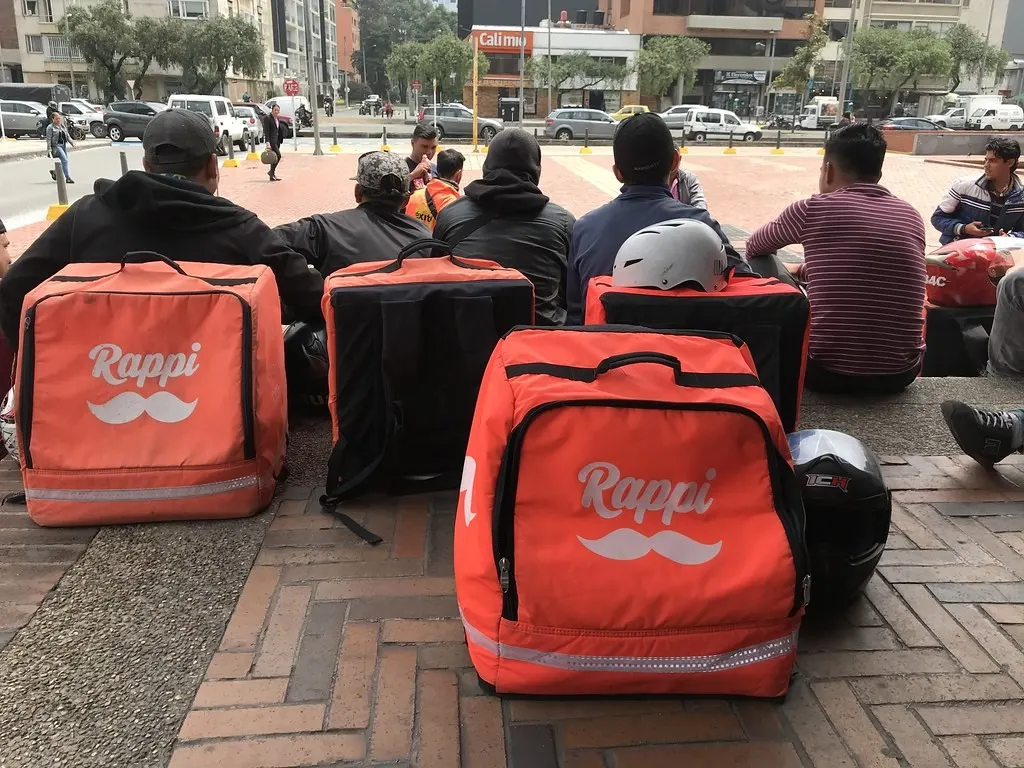
Rappi started as a hyper‑local delivery experiment. The team gave free donuts to anyone who downloaded the app. This helped them get the first users quickly. Early customers asked for groceries, restaurant meals, and odd items. The app let them order anything. Couriers, called Rappitenderos, delivered the orders on foot or by bike. The “deliver anything” promise grew the user base fast.

Early struggles
The early model faced many logistics problems. Delivery times were slow in some areas. The team fixed the issues by adding more couriers and improving the UI. Simón also dealt with legal battles. A US court sued him for alleged trade‑secret theft from a project called Kuiky. Rappi faced consumer‑protection lawsuits in Colombia over pricing and service quality. The company also fought labor‑reform proposals that could hurt delivery partners. Simón has said the business came close to bankruptcy several times.
Key turning points
In 2018 Rappi reached unicorn status. That year the valuation passed $1 billion. The company became a Latin American super‑app. It added restaurants, pharmacies, travel, and financial services. The Turbo service was launched to promise ultra‑fast deliveries. In 2023 Rappi earned $800 million in revenue. The app now serves over 5.5 million monthly active users in nine countries. Simón announced a shift to an AI‑native organization in 2026. The goal is to triple output with a leaner workforce.
Growth with real numbers
Rappi has raised between $2.37 billion and $2.46 billion. The money came from 20 funding rounds. The latest valuation is $5.25 billion. Revenue hit $800 million in 2023. Monthly active users are over 5.5 million. The service operates in nine Latin American countries. These figures show rapid expansion from a single Bogotá block to a regional super‑app.
Funding, IPO and future plans
The company has not held an IPO yet. Simón says Rappi is evaluating market conditions for a public offering. Projections point to a possible IPO in late 2026. While waiting, Rappi keeps attracting investors. In June 2026 Simón invested in the AI health‑tech startup Telepatia. The focus remains on AI, faster deliveries, and preparing the business for a future stock market debut.
All facts are taken from the provided notes.
Setbacks
Simón Borrero tried many businesses before Rappi. He failed three times. One of those failures was a college project called Tim Marín. He also ran a software studio called Imaginamos. The studio grew to over 300 workers. Still, the money ran low many times. He says the company almost went bankrupt.
Criticism and Controversies
Rappi has faced lawsuits. In a U.S. federal court, a plaintiff said Simón stole the idea for Rappi from a project named Kuiky. The claim was about trade secrets. Colombian regulators have also sued Rappi. They said the app broke consumer‑protection rules on pricing and service quality.
Simón has spoken against Colombian labor reforms. He says the rules could hurt delivery partners. Critics say his stance puts profit before workers. The debate is still open.
What Changed Recently
In 2023 Rappi earned $800 million in revenue. The company now serves over 5.5 million monthly users in nine countries. Simón has moved the firm toward AI. He wants the company to be “AI‑native.” The goal is three times more output with fewer staff.
Rappi added a Turbo service for ultra‑fast deliveries. The firm also kept preparing for an IPO. The target date moved to late 2026. Simón also invested in other startups. In June 2026 he backed Telepatia, an AI health‑tech company.
Where He Is Now to 2026
By mid‑2026 Simón still leads Rappi as CEO. He runs the company from its headquarters in Bogotá. The firm is valued at about $5.25 billion. It has raised more than $2.4 billion in funding.
The AI push is the biggest change. Rappi’s tech teams are building tools that learn from orders. The aim is to cut delivery time and lower costs. Simón says the company will be ready for a public offering before the year ends.
He also continues to speak about parenting. He calls raising children an “entrepreneurial project.” He says leaders should help their nations grow, not just chase headlines.
Why the story matters
The story shows that failure can be a teacher. Simón kept trying after each loss. He learned discipline from his dad and empathy from his mom. Those traits helped him survive tough times.
Legal battles remind founders that ideas must be protected. Clear contracts can stop trade‑secret claims.
His labor‑policy stance shows that business leaders shape public policy. Listening to workers can avoid backlash.
The AI shift proves that even big companies must reinvent. Staying still can mean falling behind.
Resilience, responsibility, and reinvention are the keys. Never stop building.
The Record
Born: 1984
From: Cali, Colombia
Education: BBA, Economics to Universidad de los Andes; MBA to EADA; Executive program to MIT Sloan
Early ventures: Tim Marín, Imaginamos, Elecciones.com.co, Ventrevista, Grability
Rappi founded: 2015
Funding raised: $2.4 billion (approx.)
Valuation 2026: $5.25 billion
Revenue 2023: $800 million
Current role: CEO & Co‑founder
Timeline
2007 to Graduated from Universidad de los Andes.
2010 to Launched Imaginamos software studio.
2013 to Created Grability e‑commerce platform.
2015 to Founded Rappi in Bogotá.
2016 to Joined Y Combinator, began rapid expansion.
2018 to Rappi became a unicorn.
2023 to Reported $800 million revenue.
2025 to Announced AI‑native transformation plan.
June 2026 to Invested in Telepatia Series A round.
Late 2026 to Preparing for potential IPO.