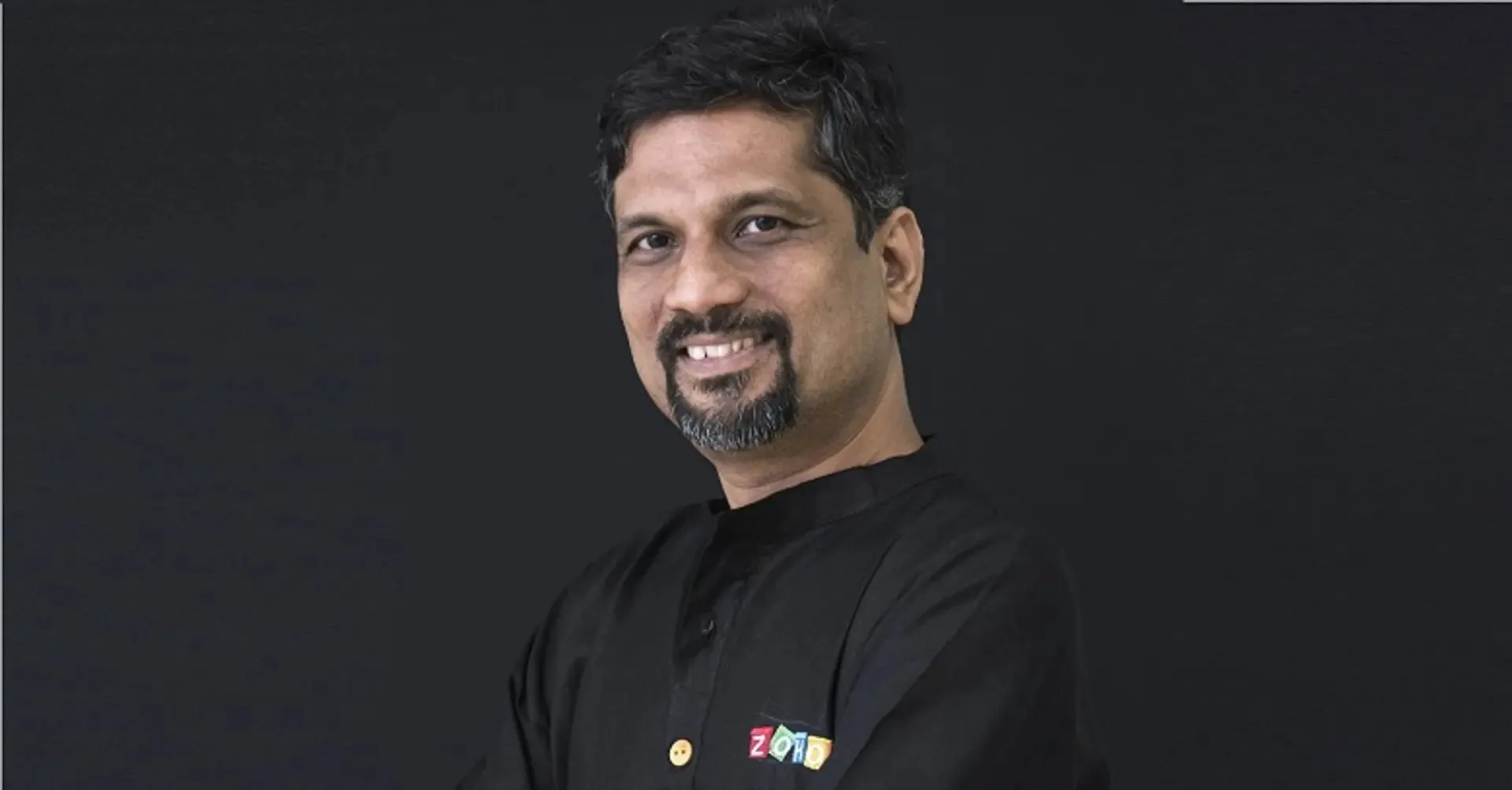
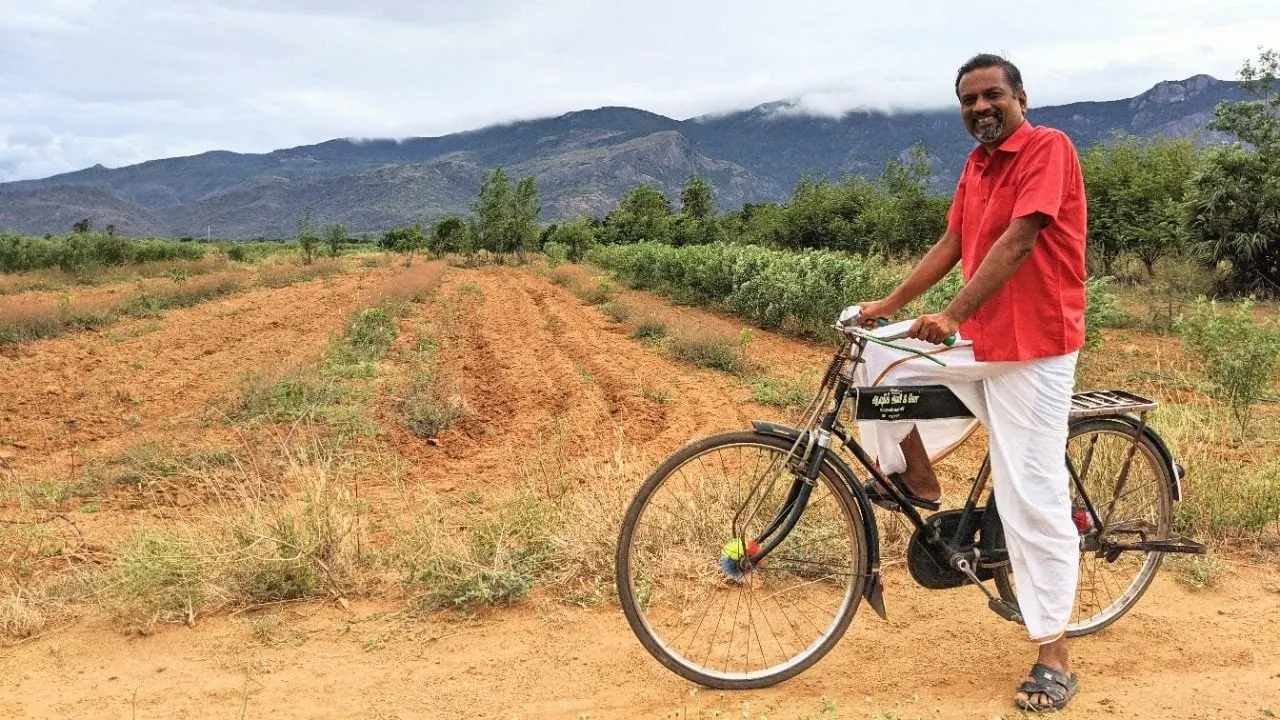
The Billionaire Who Moved to a Village
He earned a PhD at Princeton. He built a global software company without outside investors. Then he moved to a village.
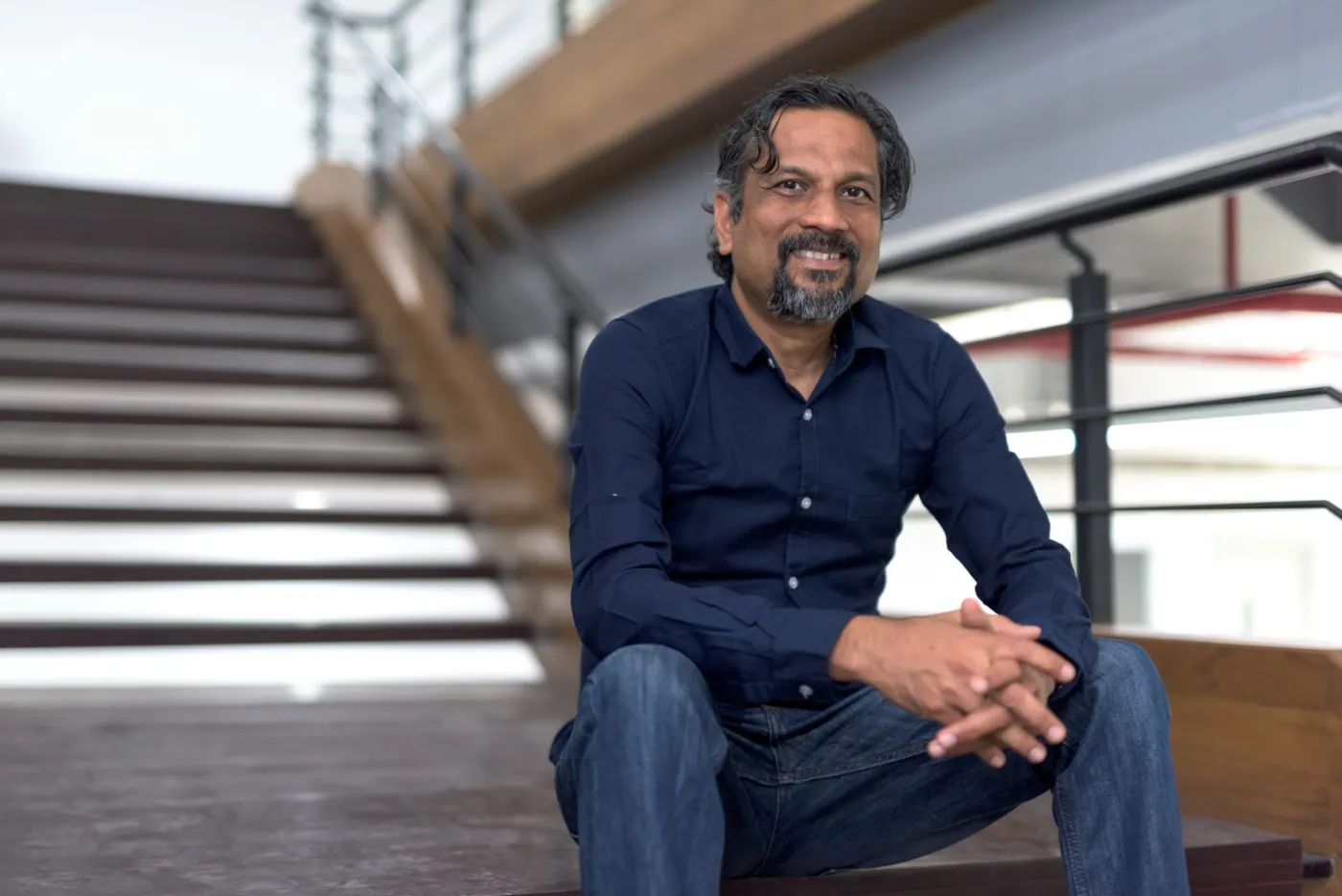
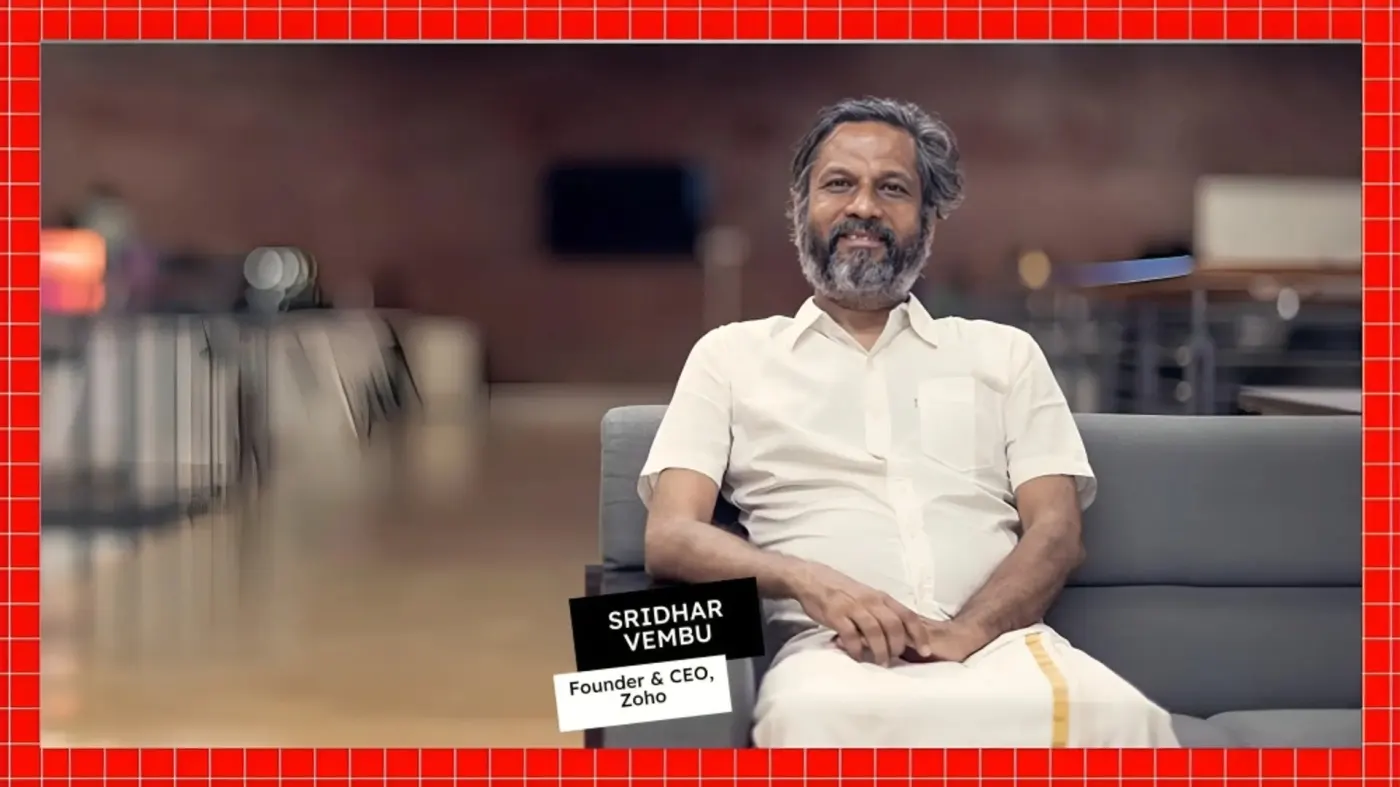
In January 2025, Sridhar Vembu did something most founder CEOs never do on purpose.
He stepped down as chief executive of Zoho Corporation and took the title Chief Scientist. Cofounder Shailesh Kumar Davey became CEO. Tony Thomas would lead U.S. operations. Other longtime leaders took charge of ManageEngine and Zoho.com. Sridhar said he wanted full time focus on research and development, including hard problems around AI and efficient computing, while continuing his rural development mission.
It was not a soft retirement. It was a pivot back into the engine room of a company he had helped build for nearly three decades without taking classic Silicon Valley venture capital.
Where he came from

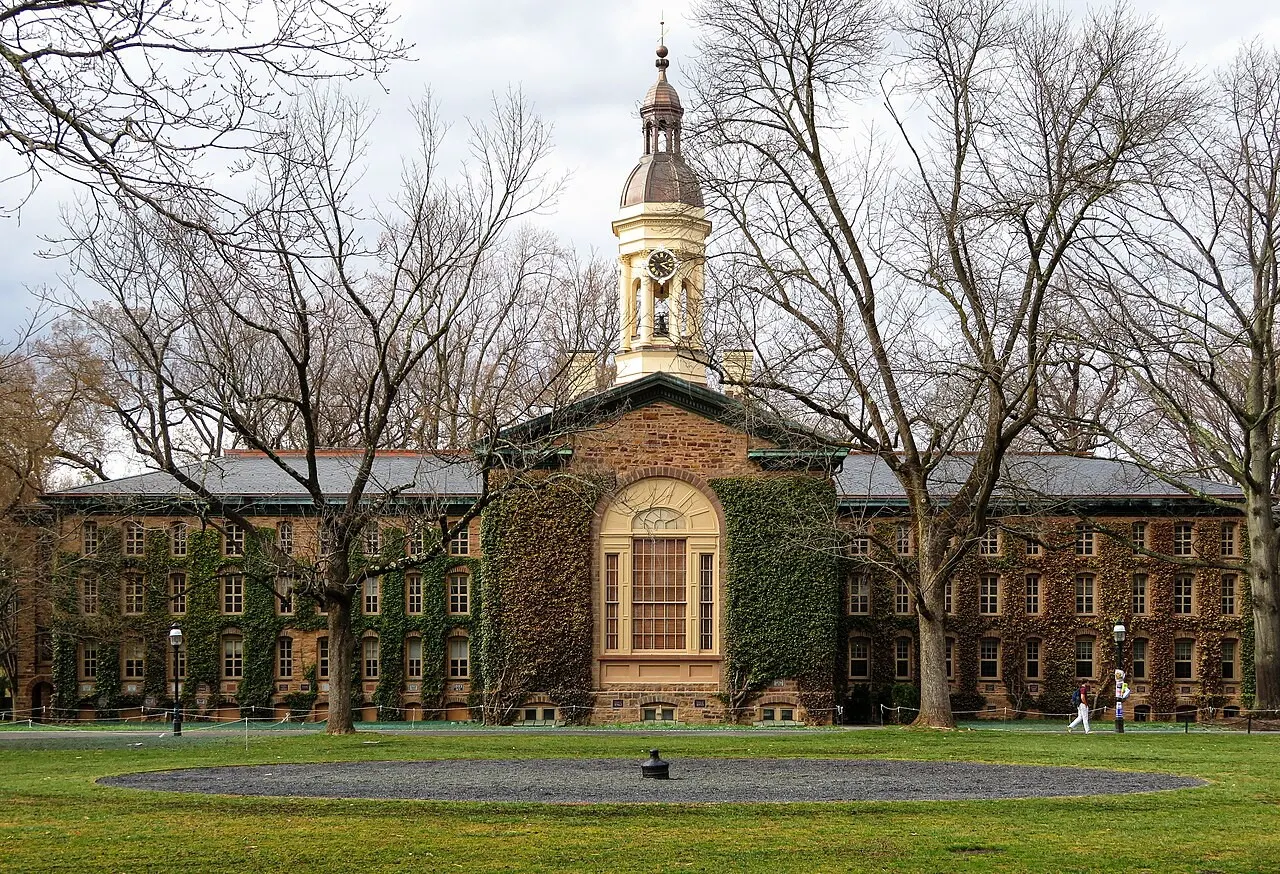


Sridhar Vembu was born in 1968 in rural Tamil Nadu, into a family with farming roots in Thanjavur district. The path out of that geography ran through India's hardest academic filters. He studied at IIT Madras, then crossed the ocean for a master's and a PhD in electrical engineering at Princeton University.
After Princeton he worked as a wireless systems engineer at Qualcomm in the United States. From inside American tech, he watched Indian engineers sit in critical roles at global companies while few Indian product companies competed at the top of software. That gap became a personal argument. Building services exports was not enough. Someone had to build products.
AdventNet becomes Zoho
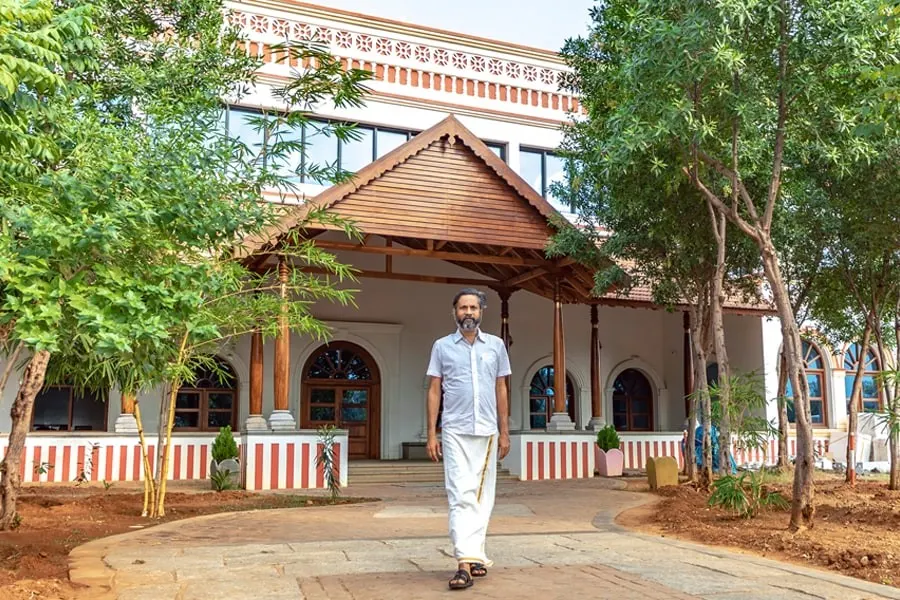
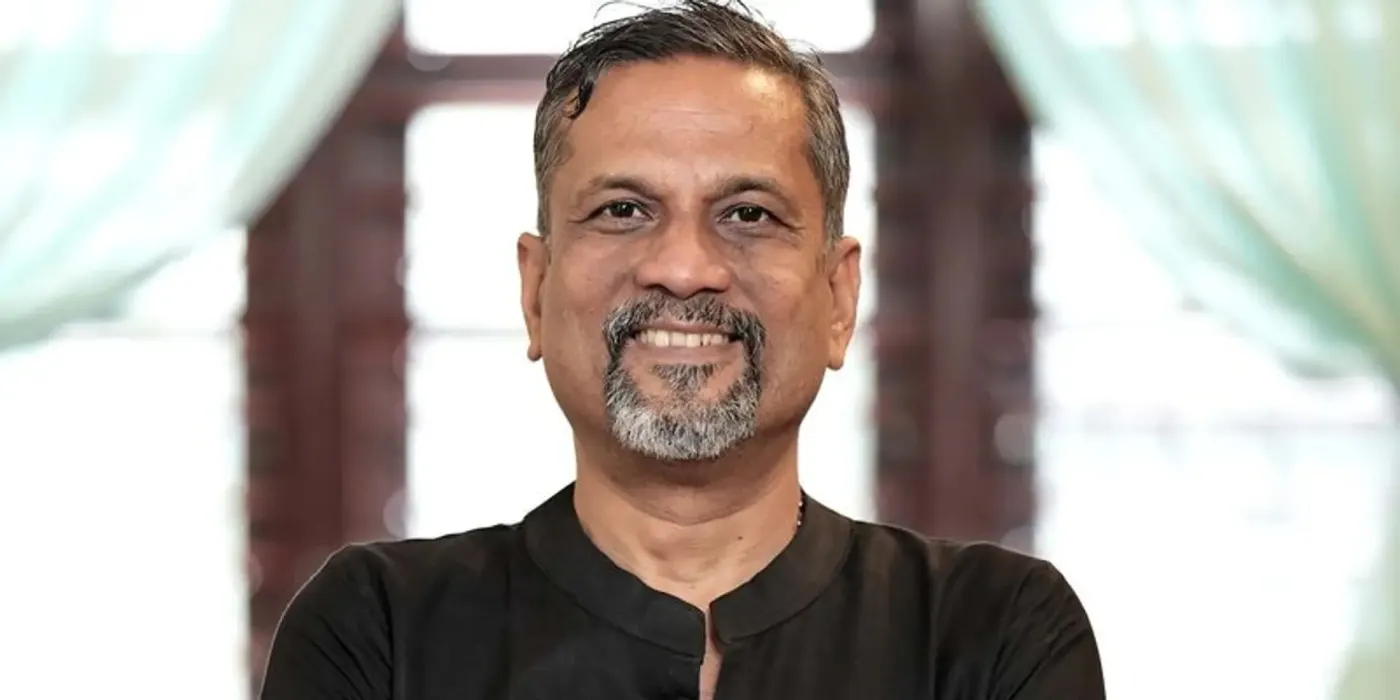
In 1996, Sridhar cofounded AdventNet with brothers and friends, including Tony Thomas. The early business made network management software for equipment vendors. It was unglamorous. It paid bills. It taught the company how to ship.
Over the next decade the firm expanded into online business applications. The Zoho brand grew into a suite for email, documents, CRM, help desk, finance tools, and more. In 2009 the company renamed itself Zoho Corporation to match what customers already called the products.
The capital story mattered as much as the product story. Zoho did not run the classic venture treadmill of raise, grow at any cost, exit. Bootstrapped discipline forced different choices: profitability, long product cycles, and an allergy to fashion. That choice later looked like courage. At the time it often looked like stubbornness.
Tenkasi and the rural bet
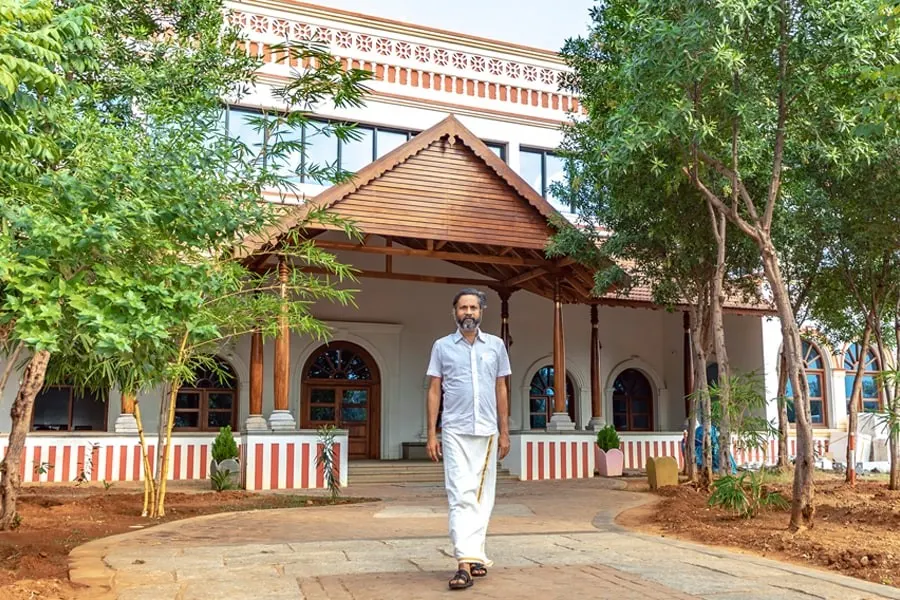
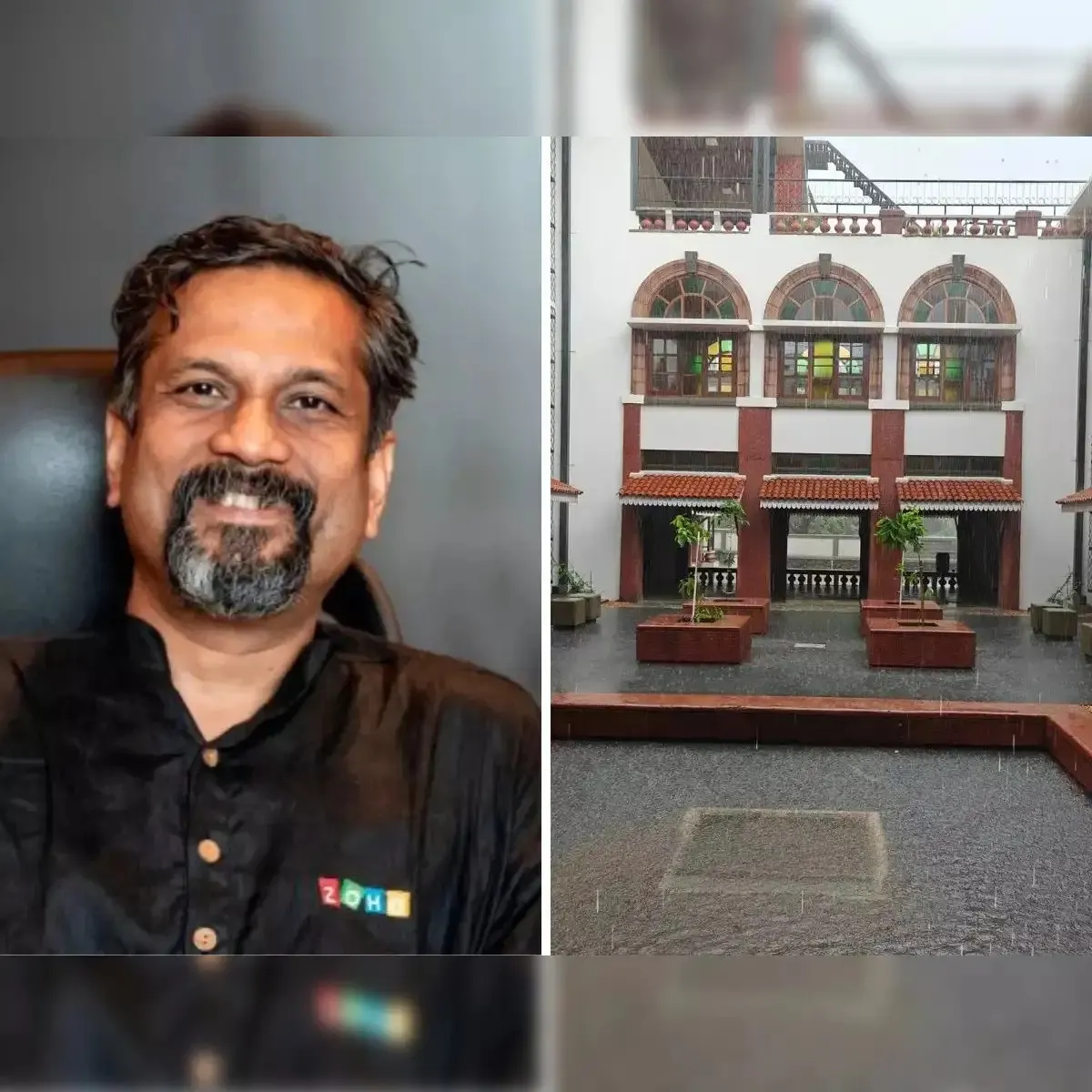
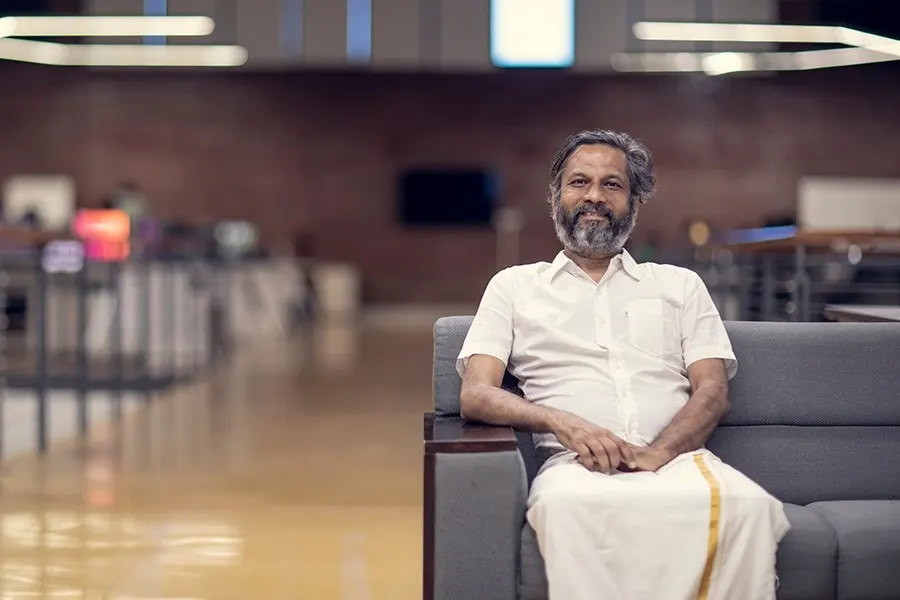
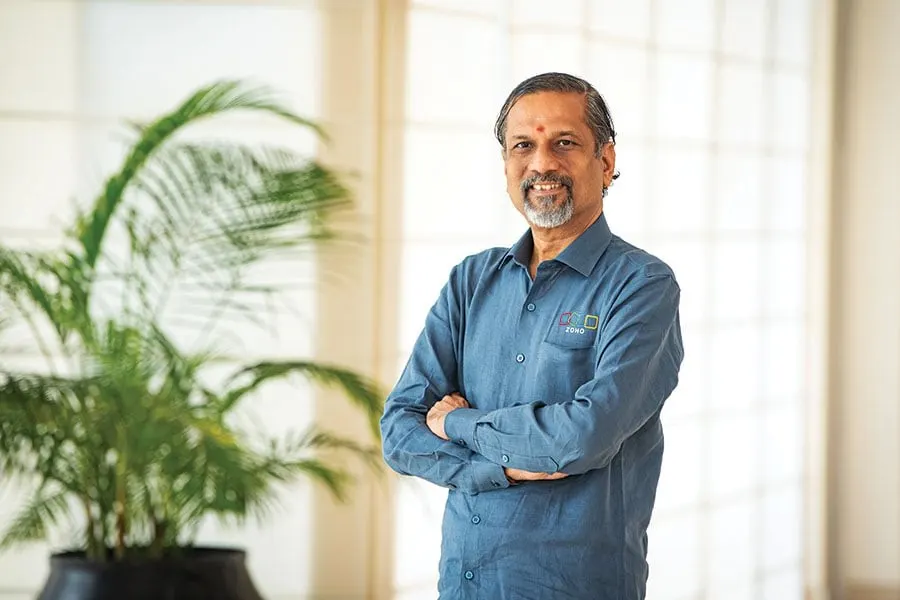
Sridhar's public identity shifted when he bet on building serious software capacity outside India's usual metro magnets. Tenkasi and rural Tamil Nadu became a second headquarters of meaning. Zoho Schools and related education efforts trained young people near home instead of forcing every talent pipeline through a coastal megacity.
Critics called rural tech romantic. Operators who visited saw offices, stipends, and product work. Public explainers of the model focus on how village economy and Zoho Schools style programs reconnect education to employment without pretending farming villages become San Francisco overnight.
For Sridhar the rural bet was also national strategy. If India only exports services from Bangalore glass towers, it leaves vast human capital stranded. If a product company can hire and train in Tenkasi, the map of Indian tech expands.
Products, customers, and quiet scale
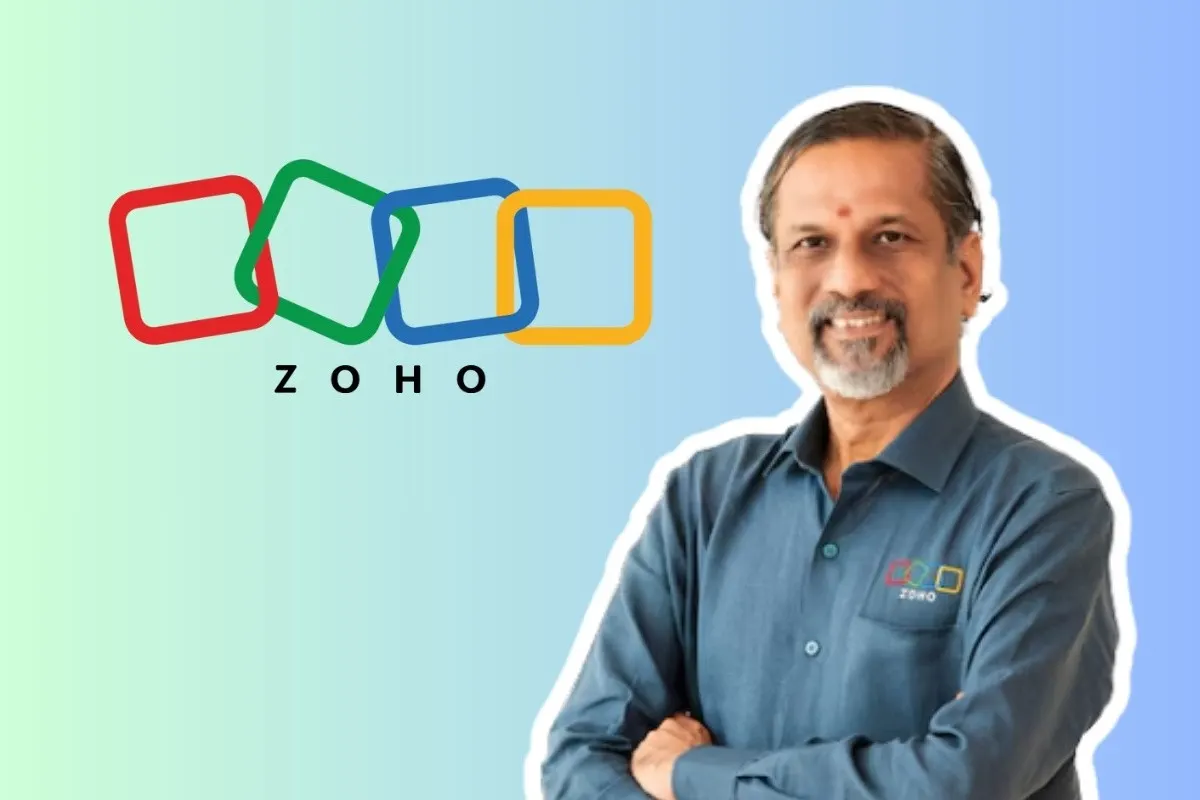
Zoho's suite strategy was to become the operating system of a small or midsize business: mail, docs, CRM, books, projects, support. Depth beat fashion features. Customers stayed because switching a whole suite hurts. Competitors from Silicon Valley giants to other SaaS suites pressed on price and brand. Zoho pressed on breadth, privacy posture, and long support.
ManageEngine, the IT management line with roots in the AdventNet era, remained a cash and credibility engine. Zoho.com consumer facing and business facing apps carried the modern brand. The company spoke less than peers and shipped more versions than press cycles noticed.
Quiet scale meant millions of business users over time without the IPO theater many peers required. Privacy and data residency conversations became part of the sales motion as global buyers worried about hyperscaler concentration.
Failures, pressure, and the AI turn
Not every product landed. Not every geography grew on schedule. Bootstrapping removed investor panic and replaced it with customer panic: if products stall, revenue stalls, and there is no fresh fundraise to hide behind. Sridhar has talked about long compounding and also about the loneliness of refusing the Valley script.
By the mid 2020s AI changed every software roadmap. His move to Chief Scientist in 2025 signaled that he wanted to wrestle with model efficiency and productized intelligence without losing Zoho's cost discipline. Zoholics keynotes and public talks returned to a theme: AI that does not bankrupt the operator or the customer.
How he works
Sridhar works like an engineer founder who still believes research is a department, not a slogan. He writes and speaks in long arcs about India, education, and technology sovereignty. He delegates operations to cofounders who have been beside him for decades. Tony Thomas and others appear in fireside talks as proof the company is not a single person cult even when the press prefers a single face.
He also works geographically. Presence in rural Tamil Nadu is a statement and a management choice. Recruiting conversations change when the CEO or Chief Scientist treats the village office as real.
Current achievements and world impact as of 2026
As of 2026 Zoho remained a privately held global software company known for bootstrapped growth, a wide business suite, and a rural talent experiment that other firms study even when they do not copy it. A Padma Shri and national business press attention marked recognition. His larger impact is proving an Indian product company can compound for decades without selling the cap table to classic venture structures.
World impact also includes the idea that engineering education can be local. Zoho Schools style pathways matter to families who cannot relocate. They matter to India's attempt to broaden where software value is created.
Childhood geometry and the long commute of ambition
Rural Tamil Nadu shaped his sense of what distance costs. The commute of ambition from farm districts to IIT Madras to Princeton is not a cute origin sticker. It is a map of filters that leave most people behind. Sridhar's later rural hiring is an attempt to shorten that map for the next generation without pretending filters disappear.
Farming roots also immunized him against certain kinds of urban tech snobbery. Software that only works for coastal elites fails his taste. Business tools for ordinary firms fit the autobiography better.
Qualcomm years as a mirror
Inside Qualcomm he saw Indian talent powering American product companies. The mirror question was painful: why not build the product company from India with Indian ownership of the roadmap. Services exports were already a national success story. Product success was thinner. AdventNet began as an answer written in network management code.
The wireless systems engineer did not vanish. He reappeared decades later in Chief Scientist language about efficient computing. Continuity of technical seriousness is part of why employees and customers trust the long game.
Bootstrapping as product strategy
Without venture money, Zoho could not buy growth with blank checks. It had to earn customers who paid. That constraint shaped UX patience, support culture, and an unwillingness to sunset products casually. Critics said bootstrap meant slow. Supporters said bootstrap meant free.
The strategy also shaped culture. Hiring could emphasize learning ability over pedigree theater. Zoho Schools made that philosophy explicit. A stipend and a curriculum near home beat a hopeless metro job hunt for many students.
Suite wars without Super Bowl ads
Microsoft, Google, and specialized SaaS players fight for the same small business wallet. Zoho rarely won on advertising volume. It won when a firm wanted one vendor for many jobs and when privacy or pricing arguments landed. Sridhar's public calm about that war is strategic. Panic sells discounts. Calm ships roadmaps.
ManageEngine's IT buyer relationships gave the group a second customer brain. That dual brain is hard for pure CRM startups to copy.
Tenkasi as industrial policy by a company
When a private company builds education and offices in a smaller city, it is doing a version of industrial policy without waiting for a perfect government scheme. Sridhar talks about this as nation building. Skeptics hear brand. Both can be true. The measurable pieces are jobs, skills, and whether product code actually ships from those offices.
The story is unusual on purpose: a global software leader associated with farmland geography. That association challenges where innovation is allowed to live, and he keeps returning to it in hiring and office decisions.
Leadership handoff without myth collapse
The 2025 CEO handoff to Shailesh Kumar Davey tested whether Zoho was an institution. Sridhar remaining as Chief Scientist reduced the fear of abandonment while clarifying that day to day CEO craft would sit with someone else. Tony Thomas leading U.S. operations acknowledged where a large share of revenue conversations happen.
Founders who cannot hand off become risks. Founders who hand off and disappear become other risks. His hybrid path tries to avoid both.
AI without abandoning cost discipline
AI features can destroy margins if inference costs run wild. Sridhar's research focus on efficiency is commercial, not only academic. A bootstrapped culture that suddenly burns cash on fashionable models would betray its own story. He wants intelligence features that fit Zoho's price architecture and customer trust.
Public keynotes that stress efficiency are recruiting messages to engineers who care about constraints. Constraints are Zoho's ancestral religion.
Privacy, residency, and trust sales
As enterprises worried about where data lives, Zoho leaned into trust sales. Sridhar's India product company narrative pairs with customer control narratives. Not every buyer chooses Zoho for geography. Enough do that it becomes a wedge.
Trust sales fail if product quality lags. So the wedge only works while the suite remains good enough daily. That dependency keeps engineering central even when the rural story gets more press.
Brothers, cofounders, and distributed credit
Press prefers a lone genius. Zoho's actual founding and scaling included brothers and long tenure cofounders. Sridhar accepts the face role while pointing at the bench. Distributed credit is how a company survives a Chief Scientist pivot.
Fireside conversations with Tony Thomas are useful primary documents for that bench reality.
What young Indian founders mis-copy
They copy the no VC slogan without copying profitability discipline. They copy rural optics without copying training systems. They copy suite breadth without support depth. Sridhar's path punishes costume strategy. The real copyables are patience, customer funded growth, education pipelines, and technical seriousness.
Padma Shri and billionaire headlines are not copyables. They are lagging indicators of decades of unglamorous shipping.
Press mirrors and what they miss
Business press mirrors wealth and unusual geography. They underplay bug databases and support tickets. Sridhar uses interviews when they advance India product narratives and rural experiments. He does not run the company for cover stories. Attention is an artifact. The operating system is still shipping and support.
Failure modes he lives with
Slow adoption in some categories. Talent competition from higher cash employers. The risk that rural centers become second class inside the company. The risk that AI spending breaks culture. He lives with these by keeping metrics and by walking the geography he champions.
A founder who only visits Tenkasi for photography would be found out. Habitual presence is the audit.
2026 desk of a Chief Scientist founder
As of 2026 his desk mixes research agendas, rural program stewardship, and elder statesman talk about India's software future. The CEO title sits with someone else. The company still bears his architecture. Customers still buy a suite shaped by his refusal of the venture treadmill.
The transition from operator CEO to scientist steward belongs in the same biography because the argument never changed: build product power in India, widen where talent can live, compound for decades.
Shipping culture as moral culture
At Zoho, shipping is not only velocity. It is a moral claim that customers who pay deserve continuous care. Sridhar's intolerance for fashion pivots protects that claim. Teams sometimes feel constrained. Customers sometimes feel remembered. He prefers the second complaint.
Moral culture also shows in education bets. Training someone who might never have reached a metro campus is a values statement with payroll consequences.
Global customers, Indian base
Zoho sells globally while arguing for Indian product capability. That dual identity confuses nationalists and globalists in different ways. Sridhar holds both: be world class, stay rooted. The hold requires product quality that survives comparison in American and European buyer meetings.
U.S. operations leadership under Tony Thomas is part of that hold. Someone has to be in the buyer's morning while Tenkasi sleeps.
The long compound versus the exit fantasy
Many founders optimize for exit. Sridhar optimized for compound ownership and control. The fantasy cost was liquidity events and some categories of talent who want startup lottery tickets. The fantasy benefit was strategic patience. As of 2026 that patience still defines Zoho's unusual shape among large SaaS names.
Network management before the pretty suite
AdventNet's early network management tools were the opposite of consumer delight. Equipment vendors needed monitoring and management software that worked in ugly real networks. Shipping that class of product taught Zoho engineers about reliability under boredom. Boredom is where enterprise trust is born. Sridhar kept that DNA even when Zoho Mail and Docs became the public face.
People who only know the suite forget that ManageEngine era seriousness funded experiments. Cash from unglamorous IT tools bought time for business apps to mature without a venture whip.
Why no VC became a culture, not a tweet
Refusing venture capital is easy to announce and hard to live. Living it meant saying no to hiring sprees that look like progress. It meant pricing for survival. It meant founders who stay through boring decades. Sridhar made the refusal a culture by repeating it in recruiting and in public until employees could predict the answer to "should we raise."
Culture shows up when a competitor raises a huge round and floods the market with discounts. Zoho's response had to be product and patience, not panic equity.
Classroom to cubicle in the same district
Zoho Schools style pathways try to make the distance from classroom to cubicle short enough that families can believe it. A stipend matters. A local office matters. A curriculum tied to real tools matters. Sridhar treats these as one system. Education theater without jobs becomes cruelty. Jobs without education pipelines become bidding wars for the same metro talent.
Rural India's skepticism toward tech careers is rational when the only stories are displacement stories. He is trying to write a staying story.
Princeton rigor without Princeton geography as destiny
His PhD is proof he can win in elite geographies. His career after is proof he does not owe those geographies his company's headquarters forever. That combination confuses status seekers. It inspires builders who want excellence without permanent exile from home regions.
Princeton was not nostalgia alone. The degree marked a capability stamp he brought back and redirected toward Indian product building.
Customer support as a product surface
Bootstrapped companies die when support is an afterthought. Zoho's long relationship with small businesses depends on humans who answer. Sridhar's product philosophy includes that unsexy surface. AI support experiments must not destroy the trust that humans built. Efficiency research includes the cost of bad automation.
Competitors who can outspend
Outspending is a real weapon. Google and Microsoft can attach office suites to existing monopolies. Pure SaaS competitors can burn capital. Zoho's counterweapons are switching costs across a suite, privacy narratives, and price architectures that still feel fair. Sridhar does not pretend the fight is equal. He designs for asymmetric endurance.
Public speech as industrial messaging
When he talks about India, rural talent, or AI efficiency, he is messaging to policy makers, parents, engineers, and customers at once. The speeches are long because the audience mix is wide. Soundbites would simplify him into a mascot. He refuses mascot status by staying technical.
The loneliness of compounding
Compounding over decades is lonely because peers exit or pivot into fashion. Sridhar's peer set becomes historical rather than social. That loneliness can harden into arrogance. His better periods convert loneliness into clarity: keep shipping, keep teaching, keep the map wide.
Family firm dynamics without soap opera
Brothers and long cofounders mean family firm dynamics even at global scale. Credit, succession, and disagreement must be managed without soap opera leaks. The relatively quiet public succession in 2025 suggests practice. Practice is underrated relative to vision.
What Tenkasi changes in a sales call
A sales call that mentions rural delivery centers can land as authentic or as gimmick. It lands as authentic when the engineering manager on the call actually works there. Sridhar's presence policies try to keep authenticity available. If Tenkasi were only a press set, sophisticated buyers would smell it.
Research agenda items that fit the autobiography
Efficient AI, on device or cost aware intelligence, tools for ordinary businesses, education tech that does not assume metro broadband perfection: these agenda items rhyme with his life. Research that only serves billion user consumer toys would break the rhyme. He is choosing rhymes on purpose.
Hiring for learning rate
Zoho's hiring stories often emphasize learning rate over brand name degrees. That preference aligns with Zoho Schools and with Sridhar's own path through filters that are real but not identical to Valley pedigree theater. Learning rate hiring is harder to manage. It requires managers who teach. He keeps insisting the company be a teaching machine.
Global privacy politics and an Indian vendor
As countries argue about data borders, an Indian vendor with a trust story can win rooms it used to lose. Sridhar leans into that without pretending geopolitics is a product feature. Products still have to work on Monday morning.
Failure to romanticize
He can romanticize villages in speeches and still know power cuts, talent leakage, and parent pressure to send children abroad. The documentary honest version holds romance and friction together. Rural tech is a bet with variance, not a parable with guaranteed morals.
2026 questions still open
Can Zoho keep suite relevance as AI assistants rewrite workflows. Can rural centers remain first class. Can a Chief Scientist founder stay out of CEO traps when crises hit. Can India produce more Zoho shaped companies without copying only the slogans. Sridhar's biography is unfinished because those questions are unfinished.
Tools for the firm that cannot hire a CIO army
Zoho's sweet spot includes firms that need software discipline without a fifty person IT department. Sridhar designs for that constraint because India's and the world's business fabric is full of such firms. When suite tools become too complex, those firms flee to spreadsheets. When tools become too shallow, they flee to specialists. The middle path is Zoho's forever problem.
His rural education bets also feed this market. Students trained near home may join Zoho or join the small firms Zoho serves. Either outcome widens the ecosystem.
Against the fetish of disruption language
Disruption language flatters founders and frightens customers. Sridhar prefers continuity language: keep your business running, keep your data safe, keep improving. That preference is why Zoho rarely sounds like a hype cycle company. Hype cycles raise capital. Continuity keeps subscription renewals.
Engineers who want only greenfield toys sometimes leave. Engineers who want systems that age well sometimes stay for decades. He recruits the second tribe in public by how he talks.
ManageEngine as the older sibling
The older sibling still pays rent. ManageEngine's buyers are IT professionals who judge on packet level seriousness. That audience keeps Zoho Corporation honest when marketing wants only pretty CRM screenshots. Sridhar's willingness to keep the older sibling central is strategic maturity.
Younger founders kill older products to look clean. He kept the messy portfolio because messy portfolios can be profitable portfolios.
Nation branding without becoming a government department
He speaks about India in ways that attract policy attention. The risk is becoming a mascot for slogans he does not control. His protection is shipping. As long as Zoho ships global quality from Indian bases, the nation branding is earned. If shipping stalls, branding becomes embarrassment.
Padma Shri recognition sits in that earned zone. It is not the business model. It is a medal on top of a model.
Days that look like research and days that look like dispute
Chief Scientist days can look like papers and prototypes. Founder days still look like disputes about pricing, people, and geography. He will not escape disputes entirely. The title change reallocates hours. It does not delete history.
Cofounders absorbing CEO disputes is the gift of a deep bench. Deep benches are built in the boring years when stock options are not lottery tickets.
Why the village story matters and misleads
The village story matters because it challenges metro default settings. It misleads if listeners think the work is pastoral. The work is software. Farming geography does not write query optimizers. Sridhar invites the association and then insists on the code. Both moves are intentional.
Customer privacy as a sales engineer problem
Privacy promises die in configuration mistakes and in unclear admin tools. Making privacy usable is a sales engineer problem as much as a legal problem. Zoho's trust narrative only converts when admins can actually control access. Sridhar's product taste includes that admin reality.
The anti portfolio of things he will not do
He will not treat venture capital as inevitable. He will not treat metro addresses as inevitable. He will not treat AI features as mandatory if they destroy unit economics. Anti portfolios define founders as much as portfolios. His anti portfolio is unusually stable across decades.
Mentoring through speeches to a country
Not every mentee meets him. Many meet the speeches. That is leverage and distortion. Leverage because ideas travel. Distortion because listeners copy tone without copying balance sheets. He cannot fully prevent distortion. He can keep repeating the boring parts: profitability, training, patience.
Continuity after the cover story fades
Cover stories fade. Product lines remain. As of 2026 the test is whether Zoho's next decade still feels like Sridhar's argument even when he is not CEO. Institutions that pass that test become national assets. Institutions that fail become cautionary tales about founder dependence.
His Chief Scientist role is a bet that he can help the institution pass without clinging to the throne.
Office parks versus farmland adjacent campuses
Zoho's physical footprint mixes conventional offices with farmland adjacent experiments. The mix is the message. Pure farmland romanticism would fail global customers. Pure office park conventionalism would fail his rural thesis. Holding both footprints keeps the company bilingual in ambition.
Employees feel the bilingual tension as travel, as status questions, as career path confusion. Management has to make rural tours of duty prestigious, not punitive. Sridhar's own location choices are the strongest prestige signal available.
Pricing ethics in a discount addicted market
Small businesses train themselves to wait for discounts. Suite vendors train them further. Sridhar's pricing ethics try to stay understandable and sustainable. Unsustainable discounts are deferred suffering. He prefers honest price architecture even when sales teams beg for more weapons.
Ethics here are commercial. A bootstrapped firm that discounts like a venture firm dies slowly then suddenly.
Open source adjacency without losing the product company
Zoho engages open conversations about standards and developer ecosystems without becoming only an open source charity. Product companies need revenue. Sridhar's balance is pragmatic: use openness where it builds trust and standards, keep proprietary value where it pays salaries in Tenkasi and elsewhere.
Crisis years that do not trend
Currency swings, pandemic office shocks, sudden cloud cost changes, talent wars: crisis years that do not trend on Twitter still hit payroll. Bootstrapped reserves and profitable habits are crisis instruments. Sridhar treats reserves as moral obligations to employees who believed the long story.
Speaking to parents in Tamil Nadu and to CIOs abroad
The same man must make sense to a parent deciding whether a child should join Zoho Schools and to a CIO deciding whether to move email. Different vocabularies, same underlying bet on competence. If either audience smells incompetence, the geography story collapses.
That dual speech burden is why his talks run long and why he refuses to be only a village mascot or only a SaaS CEO.
Metrics he watches that press ignores
Attach rates across suite apps. Support ticket aging. Training completion in rural cohorts. Inference cost per AI feature. Gross margin discipline. Press ignores these. His Chief Scientist calendar still orbits them because they decide whether ideals survive contact with accounting.
A note on billionaire framing
Billionaire framing sells magazines and flattens people into net worth. Sridhar's more interesting number is years of independent compounding. Net worth follows. Founders who chase the framing first usually fail the compounding. He chased compounding first and got the framing as a side effect he sometimes uses and sometimes endures.
Engineers as teachers and teachers as engineers
Zoho Schools collapses the wall between engineer and teacher. Engineers who cannot explain will fail the next rural cohort. Teachers who cannot touch product will teach fiction. Sridhar wants both identities in the same bodies. That demand is heavy. It is also how a company becomes a regional institution rather than only an employer.
Institution building is slower than app shipping and longer lasting when it works.
The suite as a promise that creates obligations
When you sell a suite, you promise coherence. Coherence is an obligation across teams that would rather optimize locally. Sridhar's leadership style includes reminding teams that local elegance that breaks suite coherence is a customer injury. Injuries show up as churn months later.
Obligations are why he distrusts fashion features that do not connect.
India stack dreams and company scale reality
Public talk about India stack style ambition can outrun any single company. Sridhar participates in national tech optimism while keeping Zoho sized responsibilities. The discipline is not to confuse keynote scale with sprint scale. Sprint scale is what pays rural stipends next month.
Memory of being an outsider in elite rooms
IIT and Princeton open doors and still leave people feeling like outsiders depending on class and accent and passport history. That memory can become bitterness or fuel. He converted it into a company that creates more rooms where outsiders can become builders without identical elite stamps.
Fuel is the better conversion. Bitterness would have kept him in critique mode. Zoho is critique converted into payroll.
His story remains a live experiment in where software value can be created, who gets to create it, and how long a founder can compound without selling the clock. As long as Zoho keeps shipping from wide geographies, the experiment still has a pulse.
Road travel between centers as management
Moving between Chennai style centers, Tenkasi, and international offices is not glamorous travel content. It is how he audits reality. Road hours create time to think and time to see whether local managers are performing confidence or competence. Founders who only fly metro to metro miss the audit.
Why he keeps returning to efficient computing
Efficient computing is a technical taste and a moral taste. Wasteful computing taxes customers and the planet and the company's bootstrap religion. AI makes the tax larger. Returning to efficiency is returning to self. The Chief Scientist title makes that return official.
Enduring misreadings
He will be misread as anti venture rather than pro independence, as anti metro rather than pro distributed excellence, as nationalist rather than product globalist. Misreadings are the cost of a clear public thesis. He endures them by pointing at customers in many countries and employees in many towns.
Those misreadings fade when a small business renews a suite for another year and when a student from a smaller town ships code that customers never see as rural. Those quiet renewals and quiet commits are the real biography underneath fame and geography talk alike, year after ordinary year of careful shipping and teaching. That ordinary daily pulse is the whole lasting point of his long patient India bet.
He kept telling engineers that rural delivery centers were not charity branding. They were capacity. If the code that customers paid for did not ship from those centers, the geography story would become a costume, and he refused costumes.
Closing
Sridhar Vembu's arc runs from Thanjavur farming geography to IIT Madras to Princeton to Qualcomm to AdventNet to Zoho to Tenkasi to a Chief Scientist title in 2025. The continuous argument is that India can own product destinies, that talent need not all migrate to the same five cities, and that software companies can compound without selling their urgency to venture clocks.
As of 2026 the village offices, the suite, and the research turn are one biography. Fame shows a face. The real story is a map redrawn in code and classrooms.
Watch alongside this story
Short cuts from interviews, keynotes and launches. Each plays only the moment that matters.