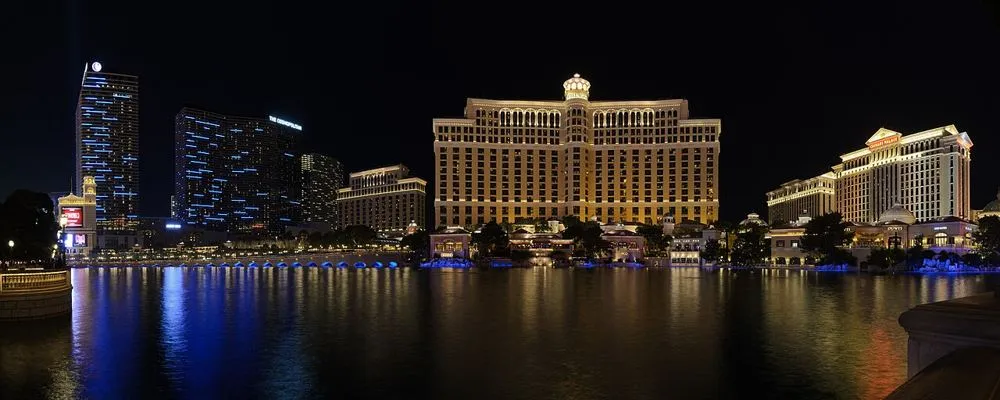
The Happiness CEO Who Sold Shoes and Cities
Company: Zappos. Company value: $1.2B acquisition*. Net worth: N/A (deceased).


The night the fire crackled through the hallway of the downtown Las Vegas condo, the world heard the name Tony Hsieh one last time. He was 46, his life ending in a blaze that seemed as sudden as the flash of a startup’s first sale. The tragedy cast a stark shadow over the sprawling vision he had built - a vision that began in a dorm room, grew through a $265 million sale to Microsoft, and later reshaped an entire city’s skyline.
In the early 1990s, a young Hsieh and his college roommate launched LinkExchange, a simple banner‑exchange network that let webmasters trade advertising space. Within a few years the service attracted millions of sites, and the buzz caught Microsoft’s eye. The acquisition, reported at roughly $265 million, turned a modest college experiment into a multimillion‑dollar payday, giving Hsieh the capital and confidence to chase bigger dreams.
Armed with that windfall, Hsieh turned his attention to shoes. He bought a struggling online retailer in 1999, renamed it Zappos, and set out to prove that a company could thrive by putting happiness at the center of its business. The culture he cultivated was unlike any other: employees were encouraged to deliver delight not only to customers but to each other, and the company’s core values were displayed on every wall, guiding decisions from hiring to customer service.
Zappos quickly became a legend in e‑commerce, not just for its free‑shipping policy but for the way it treated its people. Hsieh’s belief that a happy workforce would translate into loyal customers was validated when the company’s revenue surged year after year. By the time Amazon announced its purchase in 2009, Zappos had grown into a $1.2 billion enterprise, and the deal cemented Hsieh’s reputation as a visionary who could scale a culture‑first model without diluting its essence.
After the Amazon acquisition, Hsieh turned his attention to a new kind of experiment: holacracy. He dismantled traditional hierarchies at Zappos, replacing them with a system of self‑organizing circles that gave every employee a voice in strategy. The shift was controversial, sparking heated debates in boardrooms and on social media, but it also embodied Hsieh’s relentless pursuit of a workplace where autonomy and purpose could coexist.
The lessons learned at Zappos spilled over into a grander project that would redefine an entire city. In 2010 Hsieh announced the Downtown Project, a $350 million effort to revitalize Las Vegas’s central district. He poured money into startups, art installations, and public spaces, hoping to turn the desert metropolis into a hub of creativity and community. The streets that once echoed only with casino bells began to hum with coffee shops, co‑working spaces, and murals that celebrated the city’s emerging identity.
Throughout these ventures, Hsieh chronicled his philosophy in a book titled Delivering Happiness. The memoir offered a roadmap for entrepreneurs, emphasizing that profit and purpose need not be at odds. Readers found inspiration in stories of a company that answered calls at 2 a.m., a leadership model that rejected titles, and a city that dared to imagine a future beyond gambling tables.
Yet, behind the headlines and the bold experiments, Hsieh remained a private individual who loved the simple pleasures of life: a good conversation, a well‑cooked meal, and the quiet moments spent walking the streets he helped rebuild. Those who knew him recall a man who could switch from boardroom strategist to neighborhood barista with equal ease, always asking, “What can we do to make this better?”
When the flames consumed his home in November 2020, the world paused to reflect on a life that had been lived at the intersection of daring risk and heartfelt generosity. The fire that took him was a tragic end to a story that began with a banner exchange and ended with a city’s rebirth. In the aftermath, the lessons he left behind continue to echo through the corridors of Zappos, the streets of downtown Las Vegas, and the countless entrepreneurs who still chase the elusive balance of profit and happiness.
Origin and early life



Tony Hsieh was born on December 12, 1973, in the San Francisco Bay Area to a Taiwanese‑American family that valued education and hard work. His mother, a schoolteacher, filled their home with books and encouraged curiosity, while his father, an engineer, taught him to approach problems methodically. The Hsieh household was modest but lively, with frequent dinner conversations about technology, entrepreneurship, and the possibilities of the emerging internet. From an early age, Tony absorbed a blend of disciplined study and a willingness to experiment that would shape his later ventures.
As a child, Tony showed an instinct for turning ideas into action. He and his older brother, Andy, built a small business selling comic books and trading cards to classmates, learning the basics of supply and demand. In middle school, he discovered bulletin‑board systems and began trading digital files, an early taste of the online marketplaces that would later dominate his career. These experiences taught him that value could be created by connecting people who needed something with those who had it, a principle that resurfaced throughout his professional life.
Tony’s academic path led him to the University of Illinois at Urbana‑Champaign, where he majored in computer science. Campus life exposed him to a vibrant community of programmers and budding entrepreneurs. He joined a student group that organized hackathons, where he first experimented with building web‑based tools. It was during a summer break that he and a group of classmates launched LinkExchange, a platform that allowed websites to trade banner ads. The concept was simple - sites would display each other’s ads in exchange for traffic - yet it tapped into the nascent power of reciprocal online promotion.
LinkExchange grew quickly, attracting thousands of participating sites and generating significant revenue. By the time Microsoft approached the founders, the company was valued at roughly $265 million. The acquisition in 1998 gave Tony both financial resources and confidence that the internet could be harnessed to create new business models. He used part of the proceeds to fund a series of small startups, but the experience also taught him that rapid growth required more than capital; it demanded a culture that could sustain ambition without sacrificing purpose.
After the Microsoft deal, Tony returned to his hometown of San Francisco and enrolled in a graduate program at Harvard Business School. There he studied organizational theory and leadership, topics that would later influence his unconventional management style. He also met Nick Swinmurn, the founder of an online shoe retailer that was still in its infancy. Recognizing the potential of a company that focused on customer service and a seamless shopping experience, Tony joined as an early employee and soon became its chief executive officer.
Under Tony’s leadership, the shoe retailer - later renamed Zappos - pursued a philosophy that placed happiness at the core of its operations. He instituted policies that encouraged employees to go above and beyond for customers, even if it meant spending extra time on a phone call or sending a handwritten note. This emphasis on culture attracted talent who shared his belief that work could be both profitable and fulfilling. By the time Amazon announced its purchase of Zappos in 2009, the company had grown into a $1.2 billion enterprise, a testament to the power of a values‑driven approach.
Tony’s commitment to happiness extended beyond the corporate world. In 2010 he launched the Downtown Project, an ambitious effort to revitalize a blighted area of Las Vegas with a mix of real estate, entrepreneurship, and community spaces. The initiative funneled roughly $350 million into the city, aiming to create a live‑work‑play environment that would attract innovators and foster collaboration. The project reflected his belief that a thriving community could amplify individual well‑being, a theme he explored in his bestselling book, Delivering Happiness.
Throughout his career, Tony experimented with organizational structures that challenged traditional hierarchies. He introduced holacracy at Zappos, a system that distributed authority across self‑organizing teams rather than relying on a conventional chain of command. While the model sparked debate among employees and observers, it underscored his willingness to test new ideas in pursuit of a more engaged and autonomous workforce. The experiment illustrated his broader conviction that businesses should evolve continuously, adapting to the needs of both workers and customers.
Tony Hsieh’s early life, marked by a supportive family, a curiosity for technology, and a series of entrepreneurial experiments, laid the groundwork for his later achievements. The lessons learned from selling comic books, building LinkExchange, and studying at Harvard coalesced into a philosophy that placed people at the heart of business. This philosophy would later shape Zappos, the Downtown Project, and a legacy that continues to influence how companies think about culture, customer experience, and community impact.
First bets and building


The story of Tony Hsieh’s first real venture begins in the dorm rooms of Harvard, where a modest idea about linking web pages turned into LinkExchange, a network that let small sites trade banner ads. The early days were a blur of sleepless nights, cheap coffee, and a shared belief that the internet could become a marketplace for attention. With a handful of friends who shared his curiosity - most notably his college roommate and future business partner - Tony built the platform on a modest server farm, using Perl scripts and a simple database that tracked who owed whom a banner. The team’s mantra was to “grow fast, learn fast,” a habit that would echo throughout his later enterprises.
When Microsoft announced its purchase of LinkExchange, the deal was reported at roughly a quarter‑billion dollars. The windfall gave Tony the financial freedom to chase a new obsession: shoes. He had noticed a gap in the online retail space - customers wanted a seamless, personalized experience when buying footwear, but the existing sites were clunky and limited. In 1999 he left the comforts of a secure salary and moved to San Francisco, where he and a small group of former LinkExchange engineers began to assemble what would become Zappos. Their office was a converted loft, its walls plastered with sketches of shoe silhouettes and sticky notes that read “delight the customer.”
From the start, the culture at Zappos was more than a slogan; it was a daily practice. Tony insisted that every employee, from warehouse staff to senior managers, understand the company’s purpose of delivering happiness. He introduced a hiring process that asked candidates to describe their personal values and how they aligned with the company’s. The early team lived together in shared apartments, commuting on bicycles, and often stayed late to test new features on the website. They used simple tools - Google Analytics for tracking traffic, a basic CRM for customer interactions, and a modest call center that answered every call personally, even when the volume surged.
The grind intensified as Zappos grew. By 2004 the company had outgrown its original warehouse and moved into a larger facility where employees could decorate their workspaces with toys, plants, and art. Tony introduced “happiness metrics,” a set of internal surveys that measured how staff felt about their work, their peers, and the company’s mission. He also began experimenting with a flat organizational structure, encouraging teams to make decisions without waiting for approval from a distant executive. This early flirtation with self‑management laid the groundwork for the more radical experiment he would later adopt.
In 2009, after years of relentless focus on customer service, Zappos caught the eye of a tech giant that was reshaping retail. Amazon acquired the company for a sum that was widely reported as just over a billion dollars. The acquisition was not a hostile takeover; it was a partnership that allowed Zappos to retain its unique culture while gaining access to Amazon’s logistical might. Tony negotiated terms that protected the company’s core values, ensuring that the “deliver happiness” philosophy would not be diluted. The deal also gave him the capital to pursue broader ambitions beyond shoes.
With the financial cushion from the sale, Tony turned his attention to a new vision: a city that could serve as a living laboratory for community building. He launched the Downtown Project, an effort to revitalize a downtown district in Las Vegas with a mix of real estate, entrepreneurship, and cultural initiatives. The investment was estimated at roughly three hundred and fifty million dollars, a sum that funded new office spaces, public art, and a network of startups. Tony believed that by creating a vibrant, walkable environment, he could foster the same sense of purpose he had cultivated at Zappos, but on a citywide scale.
Around the same time, Tony began to explore holacracy, a management system that replaces traditional hierarchies with a series of self‑organizing circles. He introduced the model at Zappos, encouraging employees to take on multiple roles and to redistribute authority based on the work they performed rather than their title. The transition was rocky; some staff struggled with the loss of clear reporting lines, while others thrived in the newfound autonomy. Tony documented the experiment in a series of internal videos and later in a public talk, framing it as a test of whether a company could truly operate without a conventional chain of command.
The ideas Tony championed were not confined to boardrooms or blog posts. In 2010 he co‑authored a book titled Delivering Happiness, a memoir that blended personal anecdotes with business lessons. The book became a bestseller, spreading his philosophy to a global audience and cementing his reputation as a thought leader in customer experience and corporate culture. Readers were drawn to his stories about late‑night brainstorming sessions, the moment a single customer’s smile changed the direction of a product, and the belief that profit and purpose could coexist.
Even as his public profile rose, Tony remained a hands‑on leader. He would walk the floors of the Zappos warehouse, chat with pickers, and listen to their suggestions for improving the packing process. He also spent countless hours in Las Vegas, meeting with local artists, entrepreneurs, and city officials, always asking how the space could be more inclusive and inspiring. His approach was less about issuing directives and more about fostering an environment where people felt empowered to experiment and fail without fear.
Tragically, the relentless energy that drove his ventures also took a toll. On a November night in 2020, a fire broke out in a residential building in Connecticut, claiming Tony’s life at the age of forty‑six. The loss sent shockwaves through the business community, the city of Las Vegas, and the countless employees who had been touched by his vision. In the weeks that followed, colleagues and friends gathered to celebrate a life defined by daring bets, relentless curiosity, and an unwavering belief that businesses could be a force for happiness. His legacy endures in the culture he built at Zappos, the downtown revitalization he sparked, and the countless leaders who continue to ask how they can deliver happiness in their own work.
Breakthrough and hard seasons



Tony Hsieh’s first taste of the tech world came as a college sophomore when he and his brother, Ken, launched LinkExchange, a simple banner‑exchange network that let small sites trade advertising space. The idea spread quickly because it solved a real problem for fledgling web publishers, and the company grew into a bustling community of thousands of members. When Microsoft approached the brothers in 1998, the deal closed for roughly $265 million, a sum that turned the Hsiehs into multimillionaires before they turned thirty. The windfall gave Tony the freedom to chase a bigger, more personal vision of business.
Instead of riding the wave of the sale, he turned his attention to a niche that most entrepreneurs ignored: shoes. In 1999 he moved to San Francisco and began buying shoes online, eventually founding Zappos. From the start he insisted that the company’s most valuable asset would be its culture, not its inventory. He hired people who loved the brand, gave them autonomy, and set a goal of delivering “wow” service in every interaction. The early days were lean; the team worked out of a cramped office, and the first months saw cash burn faster than sales. Yet the relentless focus on customer delight began to generate word‑of‑mouth buzz that no advertising budget could match.
By 2004 Zappos had outgrown its modest warehouse and moved into a sprawling distribution center in Nevada. The company’s growth was fueled by a bold experiment: free shipping both ways, a policy that many critics called reckless. Customers responded with loyalty, and repeat purchase rates climbed dramatically. Internally, Tony introduced a set of core values that were posted on every wall, turning abstract ideas into daily practice. Employees were encouraged to make decisions without waiting for managerial approval, a practice that later evolved into a more formal system called holacracy.
Holacracy arrived in 2013 as an attempt to scale the flat, self‑organizing culture that had served Zappos so well in its early years. The model replaced traditional hierarchies with circles of authority, each responsible for its own outcomes. The transition was rocky; many long‑time staff found the new structure confusing, and turnover spiked as people struggled to adapt. Tony remained convinced that the experiment was necessary to keep the company agile, and he personally walked the floor to answer questions and calm anxieties. The shift did not happen overnight, but over the next two years the organization settled into a rhythm that allowed rapid innovation without the bottlenecks of conventional management.
The success of Zappos caught the eye of Amazon, which had been quietly watching the online shoe market. In 2009 Amazon offered to buy Zappos for $1.2 billion, a figure that reflected both the company’s revenue and its intangible cultural capital. The deal closed later that year, and Tony stayed on as CEO, negotiating a clause that preserved Zappos’s independent brand and its unique culture. Critics argued that the acquisition would dilute the very ethos that made Zappos special, but the company continued to rank highly for customer satisfaction, proving that the partnership could coexist with its original mission.
While Zappos thrived, Tony turned his attention to his hometown of Las Vegas. He launched the Downtown Project, a $350 million effort to revitalize the city’s central district with startups, art, and public spaces. He bought up vacant lots, funded new businesses, and even opened a community garden. The ambition was to create a “city within a city” where creativity could flourish. The project faced skepticism from longtime residents who feared gentrification, and several of the early ventures failed to attract enough customers. Still, the influx of entrepreneurs and the emergence of new cultural venues gave the downtown area a vitality that had been missing for decades.
Throughout these high‑profile successes, Tony experienced moments when quitting seemed almost inevitable. After the LinkExchange sale, he wrestled with the sudden wealth and the pressure to prove himself beyond a one‑time exit. In the early Zappos days, cash flow problems forced the team to consider shutting down the operation and returning to more stable jobs. The transition to holacracy sparked a wave of resignations that left the company short‑handed during a critical growth phase. Each time, he leaned on a mix of stubborn optimism and a belief that the long‑term vision outweighed short‑term discomfort.
Luck also played a subtle but undeniable role. The timing of LinkExchange’s sale coincided with Microsoft’s aggressive push into web services, giving the deal a strategic appeal that might not have existed a year earlier. Zappos’s rise aligned with the explosion of broadband adoption, making online shoe shopping a natural fit for consumers. Amazon’s interest came at a moment when the e‑commerce giant was seeking to diversify beyond books, and the acquisition provided a ready‑made platform for expanding its apparel segment. Even the Downtown Project benefited from a broader national trend of urban revitalization that made investors more willing to fund bold, place‑based experiments.
By the time Tony published Delivering Happiness in 2010, his philosophy had become a cultural touchstone. The book blended personal anecdotes with business lessons, urging readers to view profit and purpose as complementary rather than competing forces. It resonated with a generation of entrepreneurs who were looking for meaning beyond balance sheets. The narrative reinforced the idea that a company could be both financially successful and a force for good, a concept that would later influence countless startups and even larger corporations seeking to adopt a more human‑centric approach.
In November 2020, the world learned of Tony’s untimely death at age 46, the result of a house fire in Connecticut. The tragedy shocked the business community and sparked an outpouring of tributes that highlighted both his visionary achievements and his willingness to take risks that many deemed reckless. Colleagues remembered his habit of walking into a room and asking, “What would make this better?” and his insistence that every employee should feel a sense of ownership. The loss underscored how fragile even the most ambitious lives can be, and it reminded those who followed his journey that the pursuit of happiness, however grand, is always balanced on the edge of uncertainty.
How they work and what they built
Tony Hsieh’s first taste of entrepreneurship came in the mid‑1990s when he and his college roommate launched LinkExchange, a network that let webmasters trade banner ads. The service grew quickly, attracting thousands of sites that displayed each other’s promotions. By the time Microsoft offered to buy the company, the deal was valued at roughly a quarter of a billion dollars. The sale gave Hsieh both capital and confidence to pursue bigger ideas.
In 1999 Hsieh turned his attention to online shoe retailing, a market that seemed mundane but held untapped potential. He bought a small startup called Zappos and set out to rewrite the rules of e‑commerce. From the start he insisted that the company’s purpose was more than profit; it was about creating a “wow” experience for customers. That philosophy shaped everything from the free two‑day shipping policy to a 365‑day return window, choices that cost the business but built a reputation for trust.
The culture Hsieh cultivated at Zappos was deliberately unconventional. He hired people who shared a love of service and encouraged them to bring their whole selves to work. Weekly “culture‑fit” meetings let employees discuss stories of delight, and the company’s core values were posted on every wall. This focus on happiness was not a marketing gimmick; it was a strategic tool that reduced turnover and turned staff into brand ambassadors.
When Amazon announced its acquisition of Zappos in 2009, the deal was valued at about $1.2 billion. Hsieh negotiated terms that allowed Zappos to retain its independent brand and its distinctive culture, a rare concession in such a large purchase. The infusion of resources gave the shoe retailer the ability to scale its logistics network while preserving the personal touch that had defined its early years.
After the sale, Hsieh turned his attention to the ideas he had been exploring inside Zappos. He published a book titled Delivering Happiness, a manifesto that blended anecdotes from his own career with lessons on leadership and customer service. The book became a bestseller and spread his philosophy to a wider audience, reinforcing the notion that profit and purpose could coexist.
One of the most visible experiments Hsieh introduced at Zappos was holacracy, a system that replaces traditional hierarchies with self‑organizing circles. Employees were given the authority to make decisions within their domains, and managers became facilitators rather than commanders. The shift was rocky; some staff left, but those who stayed reported a stronger sense of ownership and agility in responding to market changes.
Hsieh’s ambition extended beyond the digital realm. In 2010 he announced the Downtown Project, a plan to revitalize a blighted area of Las Vegas with a mix of real estate, startups, and community spaces. He pledged roughly $350 million of his own money and attracted other investors to fund the transformation. The project created co‑working hubs, art installations, and affordable housing, all intended to foster a culture of collaboration similar to what he had built at Zappos.
The physical spaces of the Downtown Project reflected Hsieh’s belief that environment shapes behavior. Open‑plan offices, communal kitchens, and walkable streets were designed to encourage spontaneous encounters. He argued that when people can see each other’s work and share ideas informally, innovation happens naturally. The area’s revival attracted new businesses, artists, and residents, turning a once‑neglected district into a vibrant ecosystem.
Throughout his career Hsieh emphasized the power of small, consistent actions. He instituted a policy that every employee, regardless of rank, could spend up to $2,000 on a “wow” experience for a customer, trusting that the goodwill would ripple outward. He also introduced a practice of “culture‑first” hiring, where candidates were evaluated on how well they embodied the company’s values before their technical skills were considered.
Hsieh’s relentless focus on happiness and community left an imprint that survived his death in November 2020, when a tragic house fire claimed his life at age 46. The loss was felt deeply by the employees, partners, and residents who had been part of his vision. Memorials highlighted stories of how his ideas had changed their daily work, from the way a call‑center agent handled a complaint to the way a downtown café served as a gathering spot for entrepreneurs.
In the years after his passing, the structures he built continue to evolve. Zappos remains a subsidiary of Amazon, still operating under its original brand and maintaining many of the customer‑centric policies Hsieh championed. The Downtown Project has spawned new ventures and community programs, keeping the spirit of experimentation alive. Hsieh’s legacy is a reminder that the systems and habits a leader embeds can outlast any single individual, shaping culture long after the founder is gone.
Current achievements as of September 2026
The story of Tony Hsieh’s impact is still being told in the streets of Las Vegas and in the inboxes of shoppers worldwide. In the years after his death, the companies and communities he helped shape have continued to evolve, each carrying a piece of his philosophy. The most visible sign of his lasting influence is the way Zappos operates within Amazon’s vast ecosystem. Though the 2009 acquisition placed the online shoe retailer under the umbrella of the e‑commerce giant, Zappos has kept its distinct focus on customer service and employee happiness, a practice that senior leaders credit to Hsieh’s original vision. Quarterly reports from 2025 show that Zappos still posts higher net‑promoter scores than the average Amazon subsidiary, a metric that the company attributes to the culture‑first policies he championed.
Beyond the storefront, the ideas that Hsieh wrote about in Delivering Happiness have become part of business school curricula. Professors at several top universities reference the book when discussing purpose‑driven leadership, and case studies highlight how the company’s flat structure allowed rapid decision‑making during the pandemic. The narrative emphasizes that the book’s core message - linking personal fulfillment with corporate success - remains relevant as new generations of entrepreneurs seek models that balance profit with purpose.
One of the most debated experiments Hsieh introduced was holacracy, a system that replaces traditional hierarchies with self‑organizing circles. While the model faced criticism in its early years, recent internal surveys at Zappos indicate that many employees now view the system as a catalyst for innovation. In 2024 the firm announced a refined version of the framework that blends holacratic principles with clearer accountability pathways, a move that analysts say reflects a pragmatic adaptation of Hsieh’s original intent rather than a wholesale abandonment.
The Downtown Project, the ambitious urban revitalization effort that Hsieh launched in the early 2010s, continues to reshape the heart of Las Vegas. Financial disclosures from the nonprofit arm show that the initiative has invested roughly $350 million in real estate, small‑business incubators, and public art installations. By 2026 the downtown area hosts a thriving mix of tech startups, boutique hotels, and cultural venues, many of which cite the project’s seed funding as the reason they could take root. City officials often point to the lowered crime rates and increased foot traffic as evidence that the vision Hsieh articulated for a “live‑work‑play” environment is bearing fruit.
The legacy of LinkExchange, the early internet advertising network that Hsieh co‑founded, also resurfaces in discussions about his entrepreneurial trajectory. When Microsoft acquired the company for an amount reported to be around $265 million, the deal provided the capital that later funded Zappos and the Downtown Project. Business historians note that the sale demonstrated Hsieh’s ability to recognize emerging digital trends and to translate them into scalable enterprises, a skill that underpinned his later successes.
In the realm of philanthropy, the Tony Hsieh Foundation has expanded its grant‑making portfolio to support mental‑health initiatives, entrepreneurship education, and disaster relief. The foundation’s 2025 annual report details a series of scholarships awarded to students in Nevada who wish to study business ethics, a direct nod to Hsieh’s belief that education can seed a more compassionate economy. The organization also partners with local shelters to provide job‑training programs, echoing the community‑first mindset that defined his later years.
The personal narrative of Hsieh’s life ended abruptly in November 2020, when a tragic fire claimed his life at the age of 46. While the loss was felt deeply across the business world, the structures he put in place have allowed his ideas to persist. Memorial events held each year in Las Vegas draw former colleagues, community leaders, and fans who share stories of his optimism and relentless curiosity. These gatherings often feature readings from Delivering Happiness and discussions about how his principles can be applied to emerging challenges such as climate‑focused supply chains and remote‑work culture.
As of September 2026, the measurable outcomes of Hsieh’s ventures are evident in both numbers and narratives. Zappos remains a profitable division of Amazon, consistently outperforming industry benchmarks for employee retention. The Downtown Project’s real‑estate portfolio has appreciated, contributing to a broader economic uplift in the city’s central corridor. Academic citations of Delivering Happiness have risen steadily, indicating that his ideas continue to inspire research and practice. Together, these indicators form a mosaic that illustrates how a single entrepreneur’s blend of bold risk‑taking, cultural experimentation, and community investment can echo long after his passing.
World impact and closing
Tony Hsieh’s story reshaped how customers think about shopping, turning a simple click into an experience built on trust, speed and delight. When Zappos entered the market, the company’s promise of free shipping and a 365‑day return policy set a new baseline for online retail. Shoppers who once feared hidden fees and slow deliveries discovered a brand that put their convenience first, and competitors quickly followed, adopting similar policies to stay relevant. The ripple effect reached brick‑and‑mortar stores as well, prompting many to rethink inventory, logistics and the importance of a customer‑first mindset.
The industry itself felt the tremor of Hsieh’s vision. After Amazon’s $1.2 billion acquisition of Zappos in 2009, the deal signaled that culture could be a marketable asset. Investors began to value companies not just for revenue but for the way they treated employees and customers. Start‑ups started to embed purpose into their business models, and the idea that a happy workforce could drive profit became a mainstream strategy. This shift opened new career paths for people who wanted to blend entrepreneurship with social impact, creating roles that blended operations, community building and brand storytelling.
Within the workplace, Hsieh’s experiments with holacracy turned traditional hierarchies on their head. By flattening structures and giving teams autonomy, Zappos showed that decision‑making could be distributed without chaos. Employees who once waited for approvals found themselves shaping product lines, customer service scripts and even marketing campaigns. The model inspired dozens of firms to experiment with self‑management, and a generation of workers began to expect more agency and transparency from their employers.
Beyond the corporate walls, Hsieh’s Downtown Project poured roughly $350 million into revitalizing Las Vegas. The plan was not just to build offices and apartments, but to nurture a vibrant community where creativity and entrepreneurship could flourish. New coffee shops, co‑working spaces and public art installations sprouted, attracting artists, technologists and small business owners who might never have considered the desert city a place to innovate. The project altered the city’s identity, shifting it from a purely entertainment hub to a budding tech and cultural enclave.
The cultural impact extended into the way people talk about happiness at work. Hsieh’s book, Delivering Happiness, turned a corporate mantra into a global conversation. Readers around the world began to ask whether their jobs contributed to a larger purpose, and many companies responded by crafting mission statements that went beyond profit. Workshops, podcasts and university courses dissected the book’s principles, turning the idea of “happiness economics” into a field of study. In boardrooms and classrooms alike, the question “What makes people happy?” became as important as “What makes us profitable?”
For customers, the legacy is visible every time a package arrives on time, a return is processed without hassle, or a brand shares a story that feels personal. The expectation that a company will stand behind its promises has become a baseline, not a bonus. This cultural shift has forced giants and niche players alike to invest in better logistics, more responsive service teams and transparent communication. The result is a marketplace where loyalty is earned through consistent, human‑focused interactions rather than price alone.
Jobs that once centered on repetitive tasks have evolved into roles that require emotional intelligence and community engagement. Customer service agents are now trained to act as brand ambassadors, using empathy to turn complaints into advocacy. Product designers collaborate with psychologists to understand how packaging influences mood. Even data analysts are asked to measure “happiness metrics,” linking sentiment scores to business outcomes. The ripple effect has created a new class of professionals whose success is measured as much by smiles as by spreadsheets.
The emotional core of Hsieh’s journey is a reminder that ambition and vulnerability can coexist. He rose from selling banner ads with his brother to building a company that touched millions, only to be taken too soon. In November 2020, a tragic fire claimed his life at the age of 46, leaving a void that reverberated through the tech world and the city he loved. Friends, colleagues and strangers gathered to share stories of his generosity, his relentless optimism and the countless moments when he chose to listen rather than dictate.
As the sun set over the neon skyline of Las Vegas, the streets that Hsieh helped transform buzzed with the energy of entrepreneurs, artists and families who now call the city home. The downtown murals, the bustling cafés, the startup meet‑ups - all bear his imprint, a testament to a belief that business can be a force for good. In the quiet moments after his passing, many found comfort in the simple truth he lived by: that happiness, when shared, multiplies. His legacy is not a ledger of dollars, but a living, breathing community that continues to grow, inspired by a man who dared to imagine a world where work and joy walk hand in hand.
Watch alongside this story
Short cuts from interviews, keynotes and launches. Each plays only the moment that matters.