Second Chance: The Tyler Winklevoss Story
The morning bell
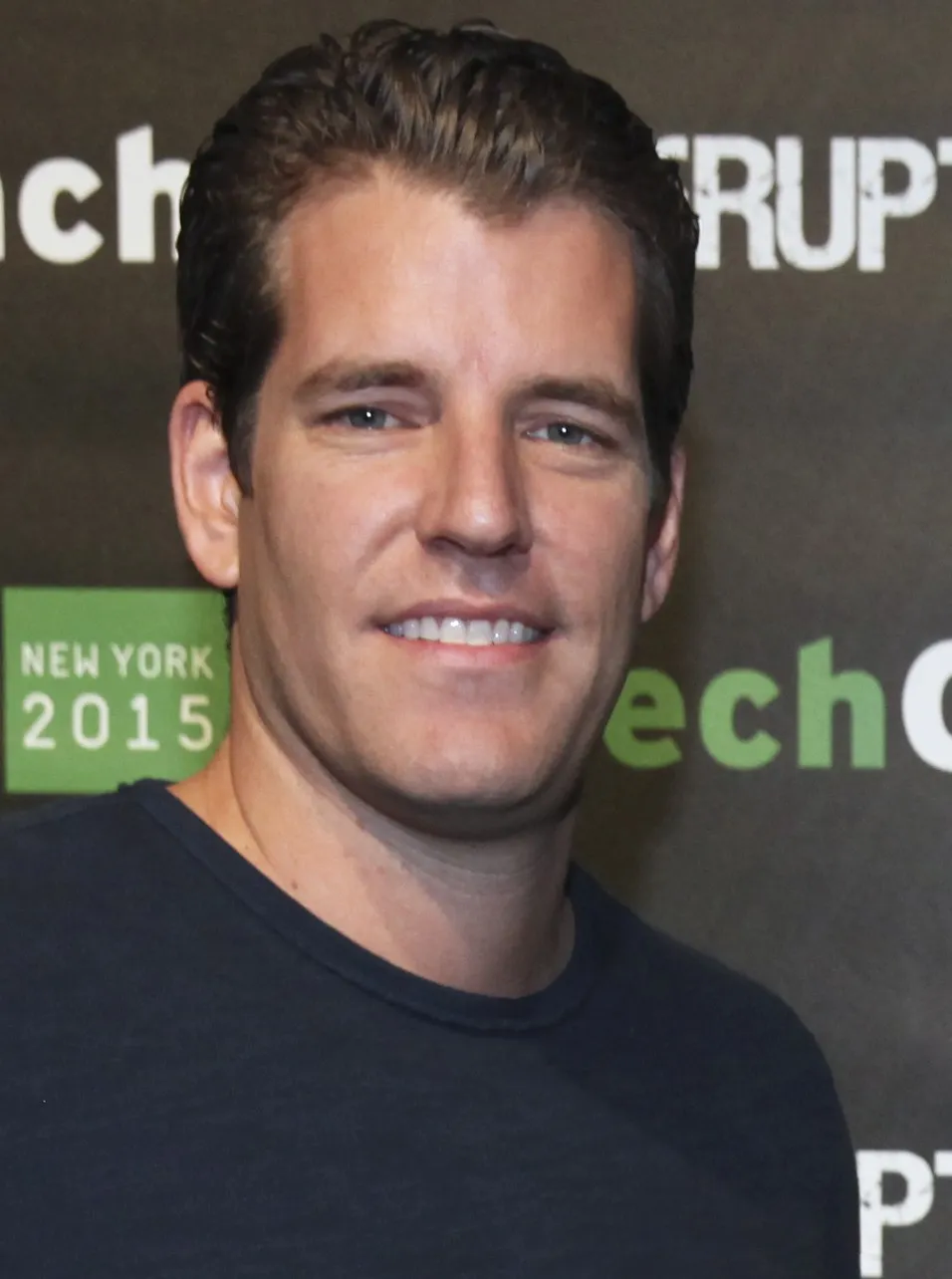
On September 12, 2025, Tyler Winklevoss stood in front of the Nasdaq stock exchange in New York and watched confetti fall.
Beside him was his identical twin brother, Cameron. Behind them was a crowd of workers from the company they had built, Gemini. On the big screens, the letters GEMI appeared. Gemini, their cryptocurrency exchange, was now a public company.
The shares had been priced at $28 each. When trading opened, they jumped higher.
Tyler was forty-four. He was the chief executive officer. Cameron was the president.
It was a strange place for them to be. Twenty years earlier, the brothers had been known for one thing: the lawsuit. They were the tall, rich Harvard rowers who said Mark Zuckerberg took their idea for a social network. A hit movie had made them look like spoiled villains. Late-night hosts made jokes about them. People called them "the Winklevii."
Many thought their story had ended there.
They were wrong. The twins had found a second act in a new kind of money that most people did not understand, or trust.
That bet made them billionaires. It also dragged them through some of the hardest years of their lives.

Two boys, one mirror
Tyler Howard Winklevoss was born on August 21, 1981, in Southampton, New York. Cameron was born the same day, minutes apart.
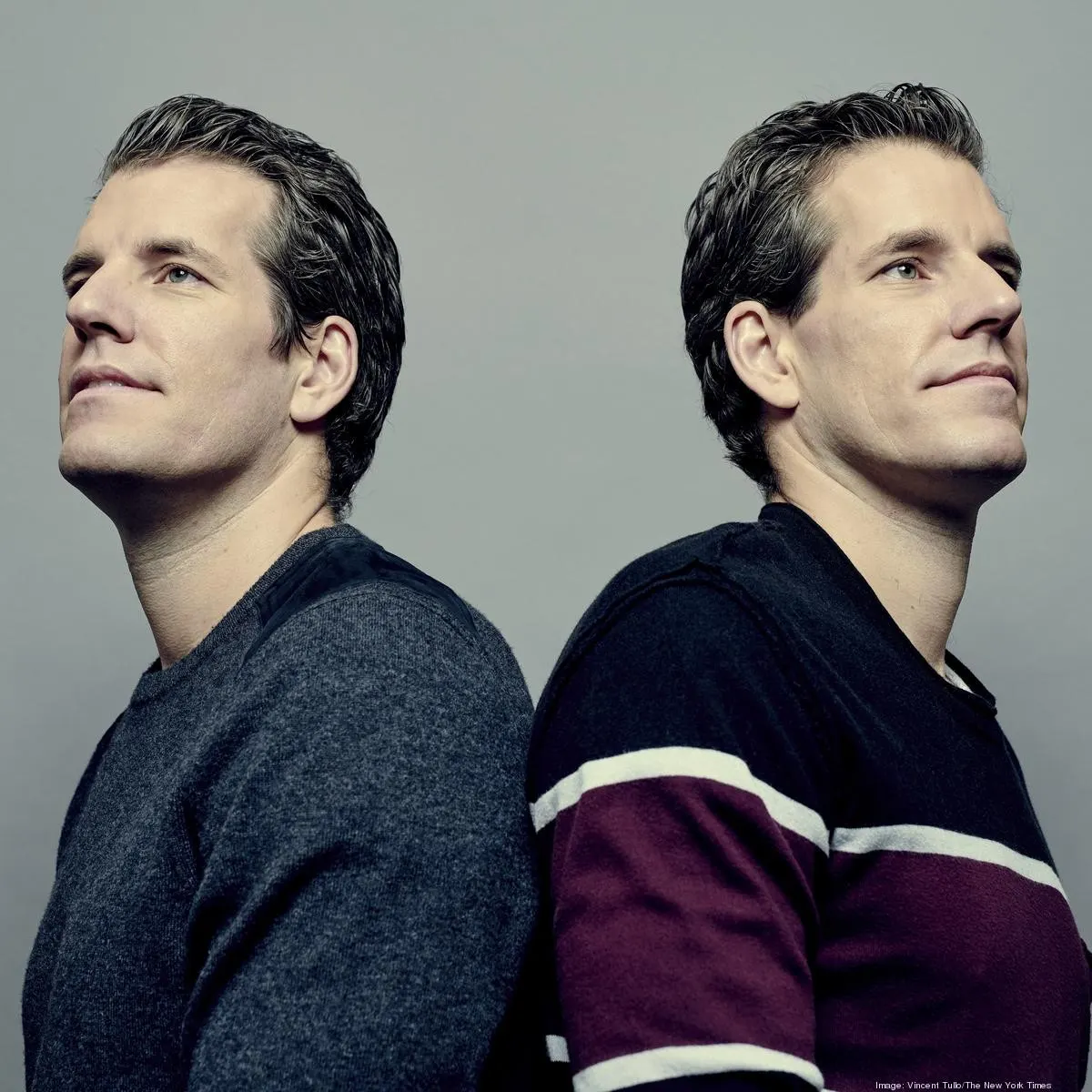
They are mirror twins. That means they look the same, but in a flipped way, like a reflection. Cameron is left-handed. Tyler is right-handed.
They grew up in Greenwich, Connecticut, a wealthy town outside New York City. Their father, Howard Winklevoss, was a business professor at the Wharton School who became an expert in the math behind pension plans. He started a consulting and software company and did well. Their mother, Carol, raised the boys and their older sister, Amanda.
The twins did almost everything together. They studied together. They played together. They competed with each other, hard.
At about thirteen, they taught themselves to build websites. They learned the code that makes web pages work and made sites for local businesses. It was the mid-1990s, and the internet was brand new to most people.
They also loved music and learned Latin in school. But their real passion came in high school.
The boat
At the Brunswick School, a private boys' school in Greenwich, the twins found rowing.
Rowing is a brutal sport. Crews sit in long, thin boats, backs to the finish line, and pull oars in perfect time. Races last only a few minutes, but they feel like forever. Legs burn. Lungs scream. If one rower is off, the boat slows.
For twins who moved in sync, it was a perfect fit.
They helped start a rowing program at their school and trained hard. Both grew to about six feet five inches tall. They were strong, patient, and stubborn.
Rowing taught them lessons they would use for the rest of their lives. You cannot see the finish line. You trust the plan, you pull, and you keep pulling.
In 2000, both brothers went to Harvard University.
Harvard, 2002
At Harvard, the twins studied economics and rowed on the university's top crew.
In December 2002, they and a classmate named Divya Narendra came up with an idea. They wanted to build a social website just for Harvard students. It would let students make profiles, connect with each other, and later spread to other colleges. They called it HarvardConnection.
The twins were not full-time programmers anymore. They were rowing and studying. They hired student coders to build the site. The first coders moved on. The project stalled.
The twins tried again. A friend named Sanjay Mavinkurve worked on the code for a while, then left when he graduated to take a job at Google. Another student programmer, Victor Gao, did some work and then stepped away for his own reasons. The site sat unfinished on a server, waiting.
The twins were frustrated. They had a plan, a name, and a design. What they did not have was someone to write the code.
In November 2003, they reached out to a sophomore who had just caused an uproar on campus with a website that compared students' photos. His name was Mark Zuckerberg.
According to the twins, Zuckerberg agreed to help finish their site. They met with him. They exchanged emails. He told them he was working on it.
Weeks went by. The twins said Zuckerberg kept delaying.
Then, on February 4, 2004, Zuckerberg launched his own website: TheFacebook.
The fight begins
Tyler and Cameron were stunned. To them, it looked like Zuckerberg had kept them waiting while he built a competing site first.
They sent Zuckerberg a cease-and-desist letter. They went to Harvard's president, Larry Summers, and asked the university to step in. Summers declined. He told them, in effect, that this was a dispute between students and not the school's business. Years later, he made it clear he thought little of their complaint.
Zuckerberg's side always said the ideas were different. Social websites already existed, and Zuckerberg said he had built Facebook himself with his own code. He said he did not owe the twins anything.
In May 2004, the twins and Narendra launched their own site, renamed ConnectU. It never caught on the way Facebook did.
That fall, ConnectU sued Facebook in federal court.
It was the start of a legal fight that would last for years.
The God Squad
Even while the lawsuit brewed, the twins kept rowing.
In their senior year, 2004, they rowed in Harvard's varsity eight, a crew so dominant that people called it the "God Squad." The boat went undefeated through the college season and won the major national championships.
That summer, the Harvard crew traveled to England for the Henley Royal Regatta, one of the oldest rowing races in the world. They made it to the final of the Grand Challenge Cup, the top event for eights, against a powerful Dutch crew. Harvard lost by a narrow margin.
Years later, a version of that race would appear on movie screens around the world.
It was a golden year on the water. Off the water, their names were becoming tied to Facebook forever.
After graduating, the twins kept training. They wanted to row in the Olympics.
The settlement
By 2008, Facebook was huge. It had tens of millions of users and was worth billions of dollars.
That year, after long court battles, the two sides reached a settlement. ConnectU would receive $20 million in cash plus Facebook shares. At the time, the whole deal was described as worth about $65 million.
The twins did not stay happy with it. They said Facebook had misled them about the true value of its shares when they agreed. They went back to court, asking to undo the deal.
In April 2011, a federal appeals court ruled against them. One of the judges wrote that at some point, litigation must come to an end. The twins, who were sophisticated people with good lawyers, had made a deal, the court said, and they had to live with it.
In June 2011, the twins announced they would stop fighting. They would not take the case to the Supreme Court.
It was over. As Facebook grew, the shares they received became worth far more than the original estimate, which made them very rich. But they would always wonder what might have been.
Beijing
In August 2008, Tyler and Cameron rowed for the United States at the Olympic Games in Beijing.
They competed in the men's pair, a boat with just two rowers. Tyler and Cameron, side by side, pulling together.
They made it to the final race. They finished sixth.
It was not a medal. But it meant they had become two of the best rowers in the world.
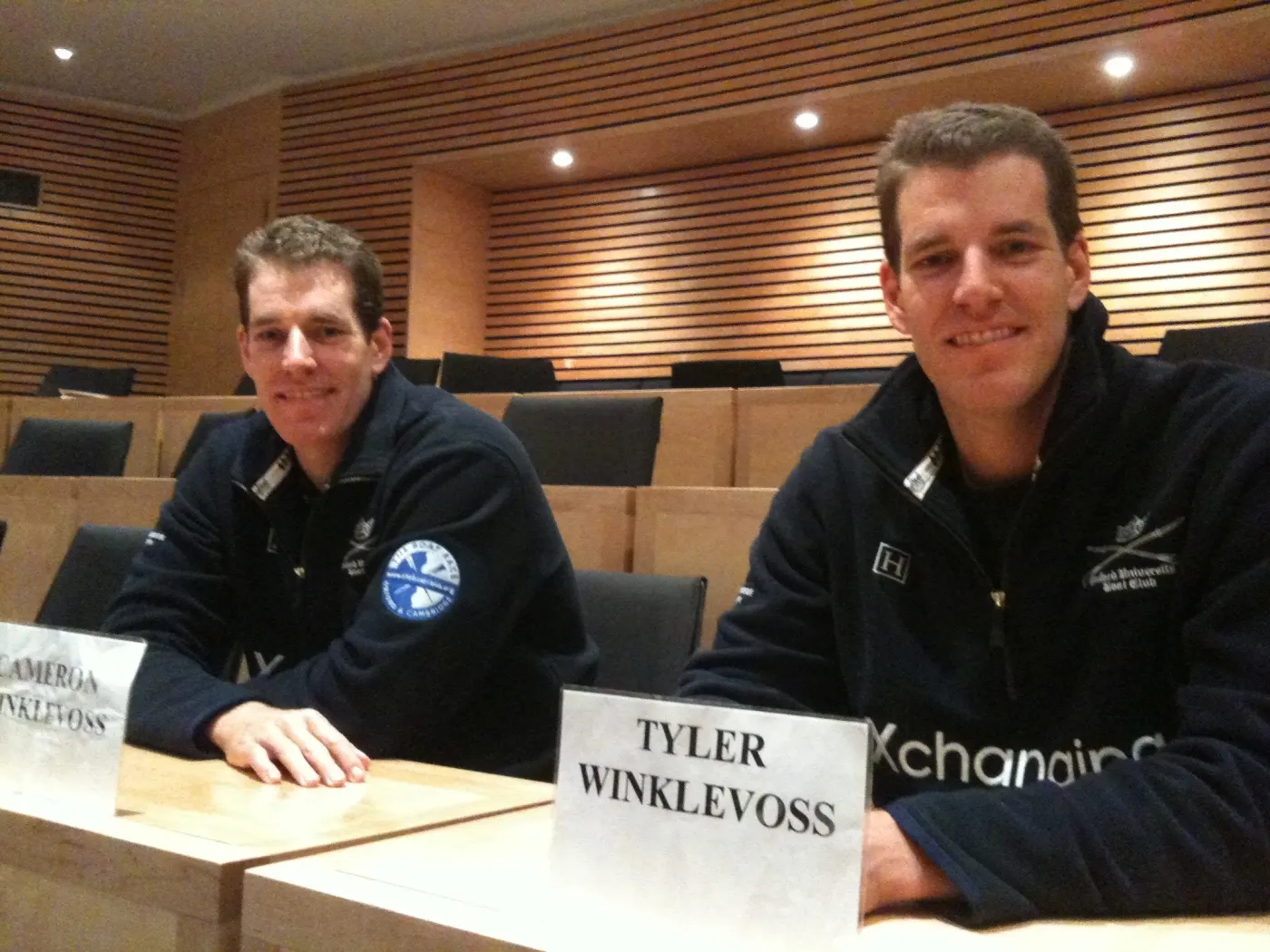
After Beijing, the twins went to England to study for business degrees at the University of Oxford. There they rowed again. In 2010, they raced for Oxford in the famous Boat Race against Cambridge on the River Thames. Oxford lost.
The movie
In October 2010, a movie called The Social Network came out.
It told the story of how Facebook began. It was written by Aaron Sorkin and directed by David Fincher. It won three Academy Awards.
In the film, the Winklevoss twins were played by one actor, Armie Hammer, with help from camera tricks. The movie showed them as tall, polished, privileged rowers. It gave them some of the funniest lines. One scene showed them angrily meeting Larry Summers. Another showed them losing a close race at the Henley Royal Regatta in England.
The filmmakers pulled off a clever trick. Another actor, Josh Pence, played Tyler's body on set. Later, computers placed Armie Hammer's face onto Pence's head, so audiences saw two identical brothers played by one man. Few people noticed.
The film earned more than $200 million around the world.
The movie made the twins famous. It also made them a joke.
Millions of people now knew them as the rich kids who lost to Zuckerberg. Wherever they went, people brought it up.
The twins took it with humor in public. In private, it stung. They had tried to build things, and people saw them only as the guys who sued.
They decided they needed to start over. They wanted to invest in new companies, the way the early backers of Facebook had.
But no one wanted to take their money.
Nobody wanted their money
In 2012, the twins set up an investment firm called Winklevoss Capital. They had tens of millions of dollars to invest. They went around Silicon Valley looking for promising startups.
It did not go well.
Many founders did not want the twins as investors. Being connected to Zuckerberg's enemies could hurt a young company's chances of later getting money from Facebook, or even of being bought by Facebook one day. In at least one case, a startup the twins wanted to back reportedly turned them down for exactly that reason.
They did make some deals. In 2012 they put money into SumZero, an online network where professional investors shared research. Reporters joked that the Winklevoss twins had finally invested in a social network. The brothers laughed along.
But the big, exciting startups kept their distance.
They were rich, smart, and eager. And they were shut out.
They needed something new. Something outside the world Facebook ruled.
They found it on a beach.
Ibiza, 2012
In the summer of 2012, Tyler and Cameron were on vacation in Ibiza, a Spanish island known for beaches and nightclubs.
A man they met there, an entrepreneur named David Azar, started telling them about something strange. It was a kind of internet money called Bitcoin.
Bitcoin had been invented a few years earlier by a mysterious person, or group, using the name Satoshi Nakamoto. Nobody knew who Satoshi really was. In 2008, Satoshi published a short paper describing digital money that no bank or government controlled. Instead, thousands of computers around the world kept a shared record of every payment, called a blockchain. Only 21 million bitcoins would ever exist.
Azar was looking for investors for a Bitcoin business. The twins did not invest in his company. But they could not stop thinking about Bitcoin itself.
When they got home, they read everything they could find. They read Satoshi's paper. They talked to early users.
As economics majors, they saw something in it. Gold is valuable partly because it is rare and hard to fake. Bitcoin, they believed, had those same qualities, with some advantages. It could be sent anywhere in the world in minutes. It could be split into tiny pieces. And its supply was fixed forever.
They came to call it "gold 2.0."
In 2012, one bitcoin cost around ten dollars. Most people who had heard of it thought it was a toy, or a tool for criminals.
The twins decided to buy it anyway.
One percent
Over the next months, the twins bought bitcoin steadily. By the spring of 2013, they told reporters they had bought about $11 million worth.
At that time, that was around one percent of all the bitcoins that existed.
Their friends thought they were crazy. Some tried to talk them out of it. After everything that had happened with Facebook, why risk so much on something so strange?
Tyler and Cameron had an answer. They had missed one revolution. They did not want to miss the next one.
Events soon made their bet look less crazy. In March 2013, a banking crisis hit the island nation of Cyprus. To rescue its banks, the government took a slice of large savings accounts. Around the world, people asked a new question: what if your money was not safe in a bank? The price of bitcoin shot up that spring.
Charlie
To buy so much bitcoin, the twins needed help. Buying it in 2012 was slow and awkward. You had to send money to exchanges that were often run out of apartments, many of them overseas.
They teamed up with a young man in New York named Charlie Shrem, who ran a startup called BitInstant. It let people buy bitcoin fast, using cash deposits at stores. The twins invested in the company, and BitInstant helped them buy.
For a while, it seemed like a great partnership.
Then it went wrong. In January 2014, Charlie Shrem was arrested at an airport in New York. Prosecutors said he had helped a customer sell bitcoin to users of Silk Road, an illegal online market where people bought drugs. Shrem later pleaded guilty to a charge connected to running an unlicensed money business and went to prison.
The twins were not accused of any wrongdoing. But the case shook them. It showed how much of the early Bitcoin world was built outside the law.
The crash that taught them
Around the same time, the biggest Bitcoin exchange in the world collapsed.
It was called Mt. Gox, and it was based in Tokyo. In early 2014, it stopped letting customers take out their money. Then it announced that hundreds of thousands of bitcoins had gone missing, much of it apparently stolen by hackers over years.
Customers lost fortunes. The price of bitcoin crashed. Newspapers wrote that Bitcoin was finished.
The twins drew a different lesson. Bitcoin was not the problem, they believed. The problem was that people had nowhere safe to buy and store it.
What the world needed, they decided, was a Bitcoin exchange that behaved like a bank. One that followed the rules, kept customer money safe, and let regulators look inside.
They would build it.
Asking permission
In July 2013, the twins had already tried one big idea. They filed papers with the U.S. Securities and Exchange Commission to create a fund, called the Winklevoss Bitcoin Trust, that would let ordinary investors buy bitcoin through the stock market, the way people buy shares in a company.
It would be one of the first attempts at a bitcoin exchange-traded fund, or ETF.
The SEC took years to decide. In March 2017, it said no. The twins tried again. In July 2018, it said no again. Regulators worried that bitcoin markets could be manipulated and were not watched closely enough.
The twins were frustrated. But they had learned the rules of the game, and they took a lesson from the rejection: the way to win in this new industry was to earn the trust of regulators, not fight them.
At Gemini, the motto became "ask for permission, not forgiveness." It was the opposite of the famous Silicon Valley saying.
Gemini
The twins named their exchange Gemini, the Latin word for twins and the star sign of two brothers.
Instead of launching quickly and worrying about rules later, they went to New York's financial regulator and asked for a special license. They became a New York trust company, the same type of legal structure that some big banks use to hold money for clients.
Gemini opened for business in October 2015.
Tyler became chief executive. Cameron became president. They split the work, but they made big decisions together. Employees said the brothers often finished each other's thoughts.
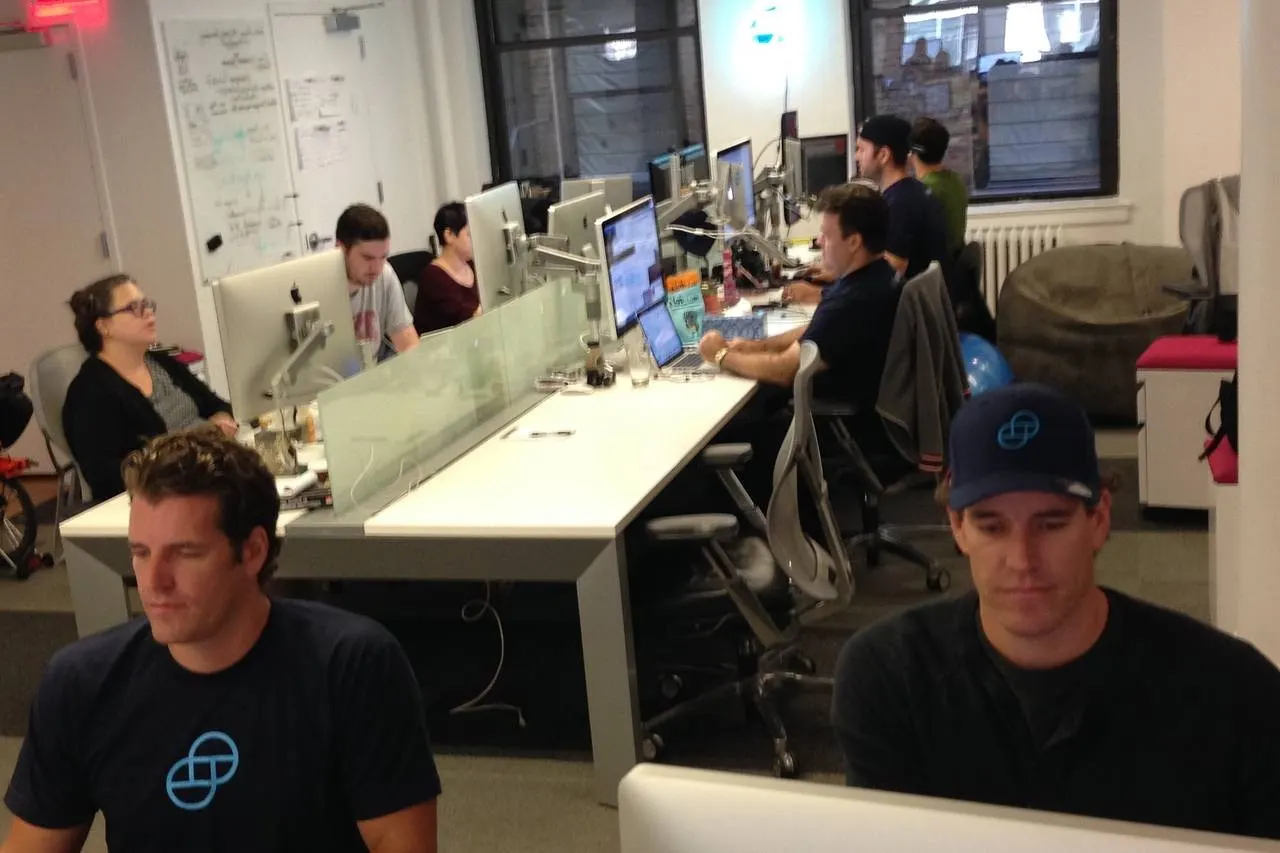
Gemini was not flashy at first. It did not offer hundreds of strange coins. It moved slowly, got approvals, hired security experts, and paid for outside audits. The twins wanted it to be the exchange a careful grandmother, or a big bank, could trust.
Some crypto fans mocked them for being too cautious. The twins did not care. They thought rules were coming, and they wanted to be ready.
The first futures
Gemini's careful approach started to pay off in unexpected ways.
In 2016, it became one of the first exchanges licensed to trade ether, the coin of the Ethereum network. Then, in December 2017, the Cboe, one of the biggest options exchanges in Chicago, launched the first bitcoin futures in the United States. Futures let big investors bet on where the price is going without holding the coins.
Cboe needed a trusted bitcoin price to settle those contracts. It chose a daily auction run by Gemini.
For a young crypto company, it was a huge vote of confidence. Wall Street was using Gemini's price.
That link later brought trouble. Regulators at the CFTC claimed that Gemini had made misleading statements in 2017 about how hard the auction would be to manipulate. Gemini fought the case for years before settling it in January 2025.
Bitcoin billionaires
In 2017, bitcoin exploded.
It started the year around $1,000. By December it was near $20,000. Everyone suddenly wanted to know about crypto.
Many news outlets reported that the Winklevoss twins had become the world's first bitcoin billionaires. The value of the coins they had bought for about ten dollars each had multiplied many times.
The punchline was now rich beyond anything the Facebook settlement had given them.
In 2019, the writer Ben Mezrich, whose earlier book had inspired The Social Network, published a new book about them called Bitcoin Billionaires. This time, the twins were the heroes of the story.
The price fell hard in 2018. Then it rose again. The twins held on. They said they were in it for the long term.
Building out
Gemini kept adding pieces.
In 2018, it launched the Gemini dollar, a digital token backed one for one by U.S. dollars held at a bank. In 2019, Gemini bought Nifty Gateway, a website for buying digital art, just before a craze for digital art tokens called NFTs took off. Gemini added a custody business to store coins for big investors, and later a credit card that paid rewards in crypto.
In November 2021, at the height of a new crypto boom, Gemini raised money at a value of about $7.1 billion.
The twins spoke at conferences around the world. They played in a rock band called Mars Junction. They invested in dozens of crypto startups. In England, they put money into a small soccer club called Real Bedford, with dreams of taking it up through the leagues.
It seemed like everything was going their way.
Then it all began to shake.
Crypto winter
Crypto has always moved in wild swings, and Gemini felt every one.
After the 2017 boom, bitcoin lost more than 80 percent of its value by late 2018. Trading slowed to a crawl. Many crypto companies shut down. People called it a crypto winter.
Gemini survived by keeping costs in check and leaning on its reputation for safety. The company said it was the first crypto exchange to complete an important outside security audit, known as a SOC 2 exam, in 2018. Banks and big investors who were nervous about crypto felt better knowing someone had checked.
The next winter came in 2022. Prices were falling fast after the 2021 peak, when bitcoin briefly passed $69,000. In June 2022, Tyler and Cameron announced that Gemini would cut about 10 percent of its staff. In a note to employees, they said the industry was entering a contraction phase that could last a long time.
They were right. And the worst was still ahead.
Earn
One of Gemini's most popular products was called Gemini Earn.
Customers could lend their crypto through Gemini and earn interest, sometimes much more than a normal bank paid. The money was lent to a company called Genesis Global Capital, a crypto lending firm owned by Digital Currency Group, whose founder was Barry Silbert.
In November 2022, the crypto exchange FTX, run by Sam Bankman-Fried, collapsed in a scandal. The crash spread through the industry. Genesis had lent money to firms that failed. On November 16, 2022, Genesis stopped letting clients withdraw funds.
That meant Gemini Earn customers could not get their money back. Hundreds of thousands of people had about $900 million or more stuck. For many, it was their savings.
Gemini, the exchange built to be the safe one, was suddenly at the center of a crisis.
The public feud
Cameron wrote open letters to Barry Silbert, accusing Digital Currency Group of stalling and asking him to pay back what was owed. Silbert's company denied wrongdoing and said it was working on a solution. The fight played out on social media for all to see.
Then regulators turned on Gemini too. In January 2023, the SEC sued Gemini and Genesis, saying the Earn program should have been registered as a securities offering. Gemini disagreed. Later that year, the New York attorney general sued Genesis, Digital Currency Group, and Gemini, claiming investors had been misled about the risks. Gemini denied the claims.
It was a painful time for the twins. For years they had preached that crypto needed rules. Now they were being sued by the regulators they had courted.
Making them whole
The Earn mess took more than a year to untangle.
Genesis went through bankruptcy. Settlements were worked out with New York regulators. In 2024, New York's financial regulator announced that Gemini would return at least $1.1 billion to Earn customers and pay a fine. Gemini also agreed to put in money of its own to help make customers whole.
By mid-2024, Earn customers had received their crypto back in full, in the same coins they had lent. Because prices had risen during the delay, many got back assets worth more in dollars than when they were frozen.
The twins presented it as a promise kept. Critics said customers should never have been exposed to that risk at all.
Other legal fights also wound down. In January 2025, Gemini agreed to pay a $5 million penalty to the Commodity Futures Trading Commission to settle the old bitcoin futures case.
The ETF finally arrives
On January 10, 2024, the SEC did something it had refused to do for more than ten years. It approved a group of spot bitcoin ETFs.
Huge investment firms like BlackRock and Fidelity launched funds that held real bitcoin. Anyone with a normal brokerage account could now buy them, the same way they bought shares of Apple or an index fund.
It was almost exactly the product the twins had proposed in 2013. They were not the ones who got to launch it. But they had spent years knocking on the SEC's door, answering questions, and building the market surveillance tools regulators asked for. Tyler said publicly that it was a good day for Bitcoin.
Money poured into the new funds. In December 2024, the price of one bitcoin passed $100,000 for the first time. The coins the twins had bought for about ten dollars each were now worth ten thousand times as much.
How he works
Tyler Winklevoss thinks like a rower.
He talks about the long game. He believes in picking a direction, trusting it, and pulling hard for years without looking at the finish line. He and Cameron have said they never sold their bitcoin, even during crashes.
He works as half of a team. Tyler handles the job of chief executive. Cameron runs much of the business side. They share an office life that has lasted since childhood. They have said they argue in private and speak with one voice in public.
He likes rules. Where many crypto founders fought regulators, Tyler spent years asking for licenses. He likes to say that crypto needs clear laws so ordinary people can trust it.
He is also a fighter. When he believes he has been wronged, by Facebook, by Digital Currency Group, by regulators, he says so loudly and publicly. Supporters call that courage. Critics call it stubbornness.
And he does not mind being underestimated. Being a punchline for years taught him that.
Politics and power
As crypto grew, so did the twins' interest in politics.
In 2024, both brothers publicly backed Donald Trump for president, saying his campaign was friendlier to crypto than the other side. They each gave bitcoin worth about $1 million to his campaign. Part of the gifts was later returned because they went over legal limits for individual donations.
After the election, the new government took a much friendlier approach to crypto. For Gemini, the timing seemed right to go public.
Going public
On September 12, 2025, Gemini Space Station, Inc. began trading on the Nasdaq under the symbol GEMI.
The shares were priced at $28, and the company raised about $425 million. On the first day, the stock opened well above that price. On paper, the twins' stakes were worth billions.
It was a moment of triumph. The Harvard rowers who had been laughed at in a movie now ran a public company.
Rough water in 2026
The celebration did not last.
Crypto prices fell from their highs soon after the listing. Gemini's shares fell with them, and kept falling. The company was spending much more than it earned. In early 2026 it estimated that it had lost more than $580 million in 2025.
In February 2026, Tyler and Cameron announced a plan they called Gemini 2.0. Gemini would cut up to 200 jobs, about a quarter of its workers. It would shut down its business in the United Kingdom, the European Union, and Australia and focus on the United States and Singapore.
Weeks later, three top executives left: the chief financial officer, the chief legal officer, and the chief operating officer. Cameron took over the operating chief's work. By then, the stock was trading more than 70 percent below its IPO price.
Tyler kept pushing forward. Gemini added prediction markets, where people bet on real-world events. It grew its credit card. In July 2026, it added commission-free stock trading, so customers could buy shares of companies alongside crypto.
In August 2026, Gemini reported its second-quarter results. Revenue rose 37 percent from a year earlier, to $45.5 million. But the company still lost $107.7 million in three months. It was the fourth loss in a row since going public.
Tyler said the company still had work to do, but was building ways to earn money that depended less on crypto prices.
For the first time in years, the twins were fighting not for respect, but to prove their company could make a profit.
What changed because of him
Tyler Winklevoss did not invent Bitcoin. He did not build the first exchange.
What he and Cameron helped do was make crypto look legal and grown-up.
When Gemini became a New York trust company in 2015, most of the crypto world was still running without licenses. Gemini showed that a crypto company could follow banking-style rules and survive. Many exchanges later followed that path.
Their long push for a bitcoin ETF helped open the door. The SEC rejected their fund, but in January 2024 it finally approved spot bitcoin ETFs from big Wall Street firms. Millions of ordinary investors could now own bitcoin through a normal brokerage account, just as the twins had proposed more than ten years earlier.
The Earn crisis showed the other side: how quickly crypto trouble could spread, and why rules for lending customer money mattered.
And their personal story changed how people see second chances. Two men known for losing a famous fight turned themselves into builders of something new.
Closing
In 2004, Tyler Winklevoss watched another man launch the website he believed he had been building.
He could have spent the rest of his life telling that story.
Instead, he found another one. On a beach in Ibiza, he heard about a strange new kind of money. He bought it when it cost ten dollars. He built an exchange that asked for permission when everyone else was asking for forgiveness. He watched it rise, crack, and rise again.
In 2026, his company is still fighting rough water.
But Tyler learned long ago, in a narrow boat on a cold river, that you do not look at the finish line. You pull.