
The Shark Who Had to Save Her Own Company
She turned down a one-crore banking offer at twenty-three. Two startups taught her what not to scale. SUGAR made her a national face, then forced a hard reset.

In September 2026, Vineeta Singh did something founders on television almost never do in public. After SUGAR Cosmetics took a large cheque from existing investor A91 Partners at a valuation far below the heights that once put the brand next to India's consumer-startup poster board, she posted a blunt line on Instagram. Yes, they had raised a large round. Yes, it was at a worse valuation. The reason, she wrote with co-founder and husband Kaushik Mukherjee in the frame of the story, was that they were still there to build.
The numbers behind the post were cold enough to end most fairy tales. Filings and reporting around the September 1, 2026 board approval described about one hundred forty-four and a half crore rupees of fresh capital into compulsorily convertible preference shares, with the post-money value of the company commonly estimated near five hundred fifty to six hundred crore rupees. That sat against a May 2022 Series D moment when L Catterton led a fifty-million-dollar round often framed near a five-hundred-million-dollar, or roughly thirty-seven-hundred-fifty-crore-rupee, peak. Between those poles sat a warehouse fire, a retail footprint that had raced ahead of brand pull, inventory that could not keep shelves honest, and a year when revenue fell while losses widened. This is the story of how an electrical engineer from IIT Madras and an MBA from IIM Ahmedabad built one of India's most visible beauty brands, became a Shark Tank India judge who grilled other founders on unit economics, and then had to apply the same harsh math to her own house.
Anand, Bhavnagar, Delhi, and a family that measured in degrees
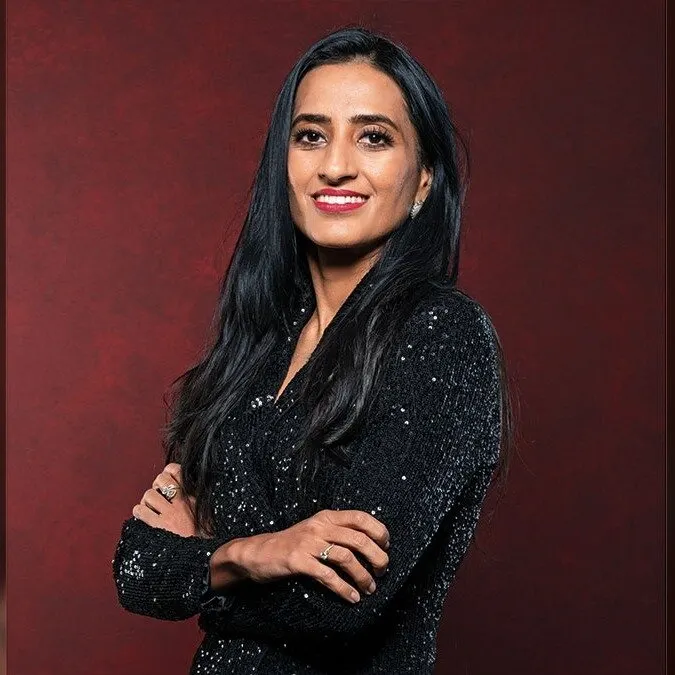
Vineeta Singh was born in 1983 in Anand, Gujarat. Secondary profiles place stretches of childhood in Bhavnagar with her grandmother before the family moved when her father, biophysicist Tej P. Singh, took a post at the All India Institute of Medical Sciences in Delhi. Her mother holds a PhD. The household signal was study, not shopkeeping. She finished school at Delhi Public School, R. K. Puram, in 2001, then entered IIT Madras for electrical engineering, graduating in 2005. Medals from Inter-IIT sports meets later became part of the public athletic lore around her name, but the quieter fact is the curriculum: circuits, systems, and the habit of reducing a messy world to variables you can move.
IIM Ahmedabad came next, class of 2007. She has said she chose the school partly because it talked about leadership and entrepreneurship when other paths still pointed straight at banks and consultancies. In 2006 she summer-interned at Deutsche Bank. Campus folklore and contemporary newspaper coverage then lit up around a placement offer near one crore rupees a year from an international bank, framed as a first of its kind for an Indian B-school graduate at that moment. Singh walked away. She wanted to build something in the women's consumer space. An early lingerie idea with batchmates did not raise. The refusal still made Times of India and Telegraph headlines. Years later, on camera, she would admit she regretted the money many times, and that her first startup salary was about ten thousand rupees a month in a Mumbai room that flooded in the monsoon while the rent ate half of it.
She met Kaushik Mukherjee at IIM-A. They married in 2011. The partnership would become the operating spine of SUGAR, for better and for harder: two people who share a bed, a cap table tension, and the same festive-season panic when stock is wrong.
Quetzal: the failure she refuses to romanticize
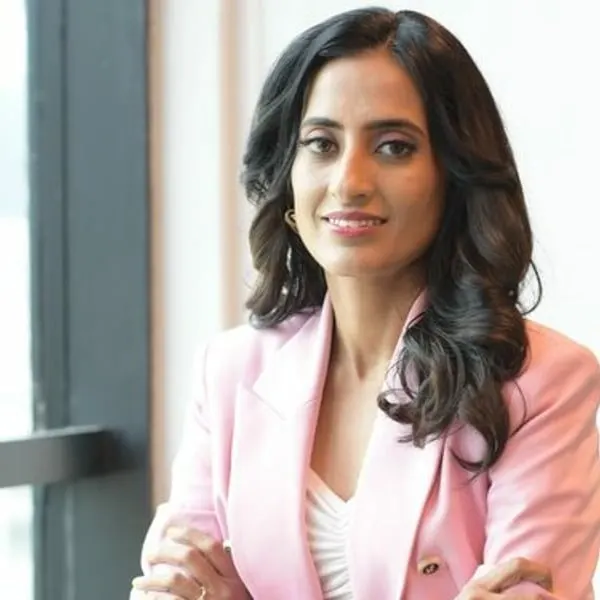
In 2007 she founded Quetzal, a background-verification and HR-services business aimed at recruiters. The market looked rational on a slide. In practice it was a commodity race. Cheaper competitors undercut. She has called the company a spectacular failure in later interviews, and she has described fundraising rooms where she felt invisible next to older male co-founders, even trying grey powder in her hair to look senior. One investor story she has repeated in public: a refusal to meet because the person expected a male entrepreneur. Treat single anecdotes as her testimony, not a court finding. The pattern she names is clearer. India's early consumer and services venture scene did not hand young women easy trust.
Quetzal did not become the empire. It became tuition. She learned how fast a "needed" B2B service can become a price war, and how little a pedigree protects you when the customer only wants the lowest check.
FabBag: two hundred thousand quiet teachers
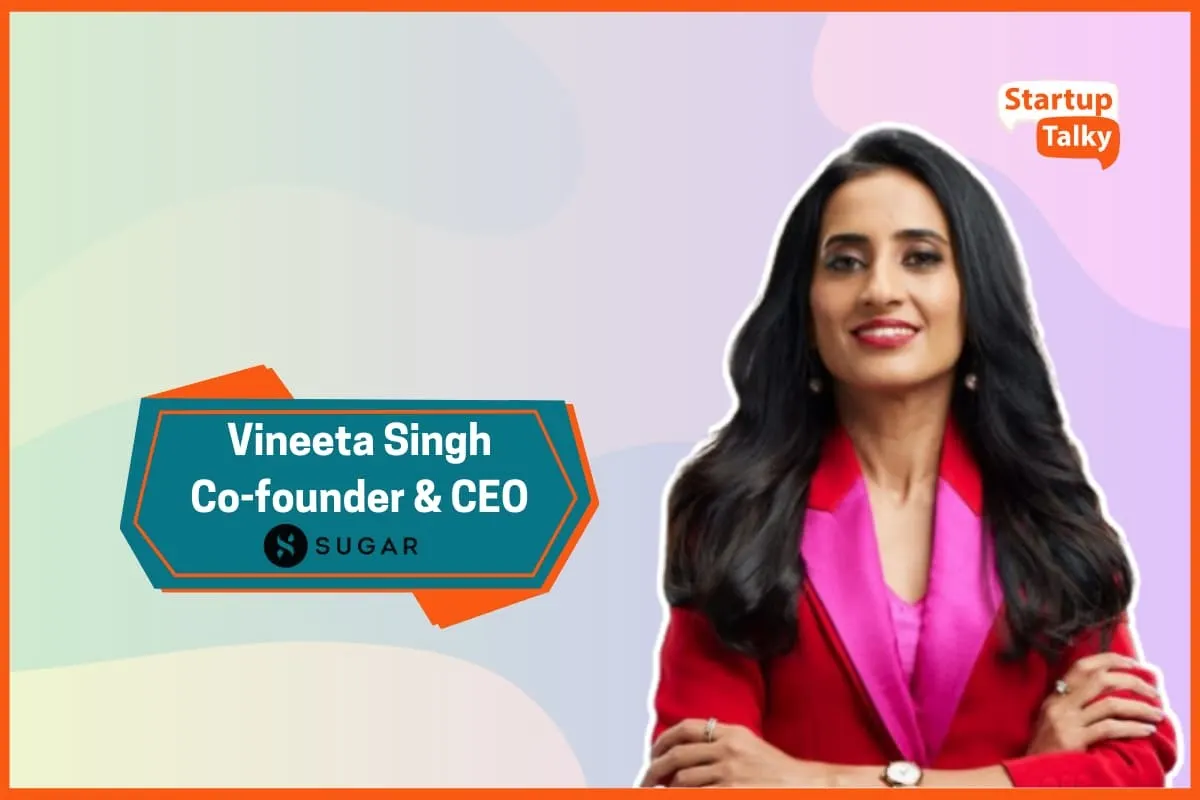
In 2012 Singh and Mukherjee started FabBag, a monthly beauty-subscription box. The pitch was curation and discovery: products arriving on a schedule, profiles deepening over time. They have said the box eventually held beauty preferences for on the order of two hundred thousand women. Multinational partners of that era, in her telling, still doubted that Indian women would post lipstick selfies or that influencers would matter more than classic brand advertising. FabBag sat in the gap between those assumptions and what subscribers actually did.
Subscription economics are unforgiving. Churn, shipping, dead inventory, and the endless hunt for the next delightful SKU can eat a team alive. FabBag mattered less as a forever business than as a listening device. Women told them, month after month, what shades failed in humidity, what undertones international charts ignored, and how differently a twenty-one-year-old wanted to show up compared with her mother who mostly wore kajal and moisturizer. That listening became the brief for SUGAR.
First institutional capital was slow. In a WIMWIAN alumni interview she placed an angel round around 2013 and said raising as a woman founder in those years was hard. Exact cheque sizes from that period remain thinly documented in English press. The operational fact is enough. They kept going long enough to pivot the insight into a brand.
SUGAR, 2015: color for Indian heat
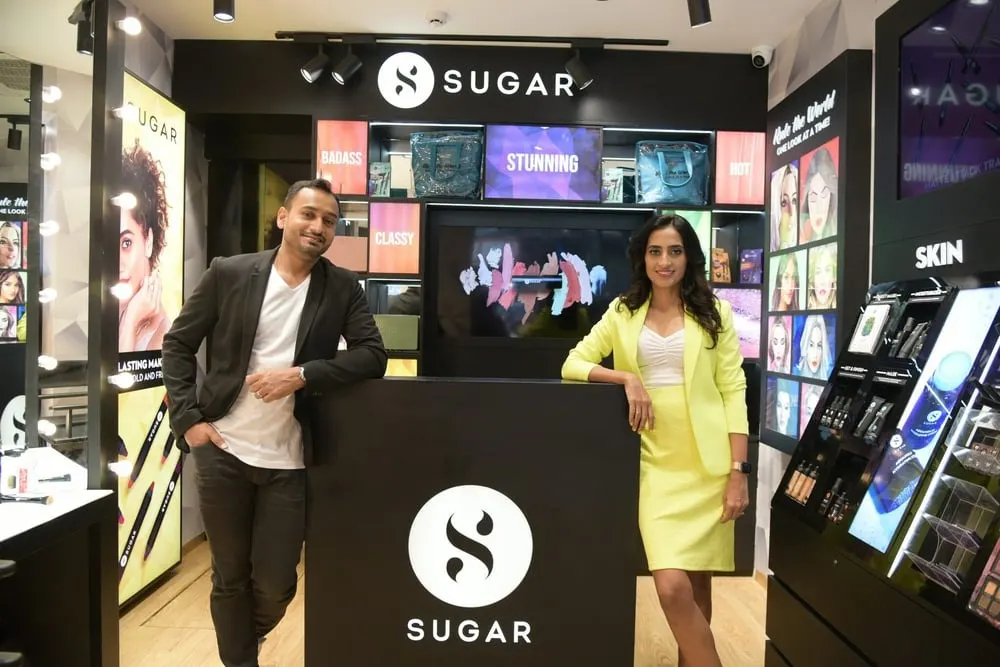
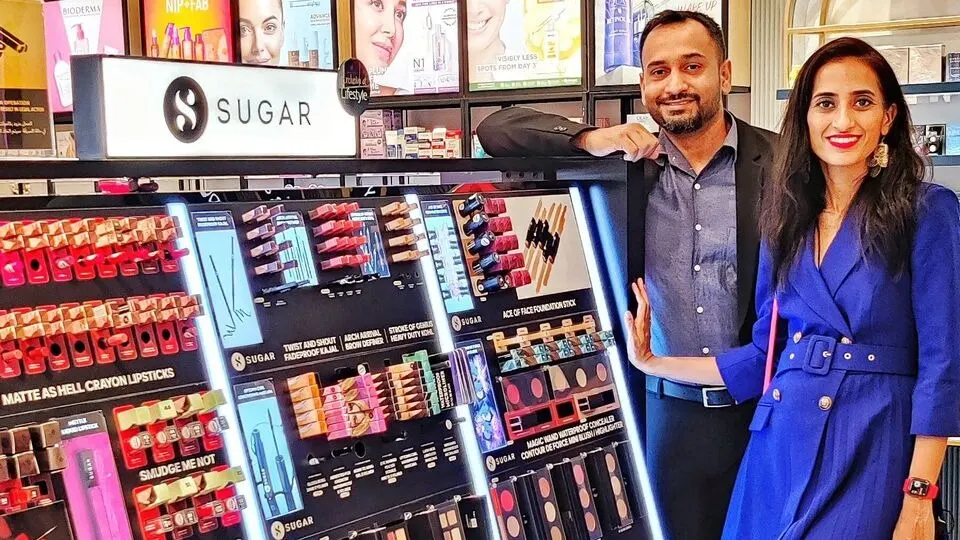
SUGAR Cosmetics launched in 2015 as a digital-first color brand built for Indian skin tones, Indian heat, and a voice that refused to whisper. Naming leaned witty. Packaging leaned bold. The founding claim was simple enough for a fifth-grader and sharp enough for a category fight: beauty products for women, designed with women in the room, in shades that did not treat darker and warmer complexions as an afterthought. Singh has described having more than ten foundation options for her own deepest skin tone when traditional counters offered maybe one shade that was still too light.
The company rode India's D2C wave: Instagram education, YouTube tutorials, marketplace presence, then a push into modern trade and exclusive brand outlets. Discovery often happened online even when purchase happened offline, a split she explained in trade interviews. By the early 2020s SUGAR was a familiar name in Indian color cosmetics, with hundreds of SKUs and a growing claim on shelves that once belonged only to older multinational and homegrown giants.
Money arrived in waves. The chapter investors still cite is May 2022, when L Catterton led a fifty-million-dollar Series D. Press around the round commonly paired it with a valuation near five hundred million dollars. Actor Ranveer Singh invested an undisclosed amount in September 2022 and took a "brand evangelist" role, the kind of celebrity capital that thrills marketers and complicates governance if fame outruns fill rates. In October 2023, Singh and Mukherjee partnered with Kareena Kapoor Khan on Quench Botanics, a Korean-made skincare push aimed at Indian skin, with Kapoor as the education voice.
Public Vineeta became a magazine cover language: Forbes India W-Power, Economic Times and Fortune-style forty-under-forty lists, Business Today most-powerful-women nods, a World Economic Forum Young Global Leader badge in 2022. Private Vineeta was still arguing with factories, creators, and the calendar.
How she works when the cameras are off
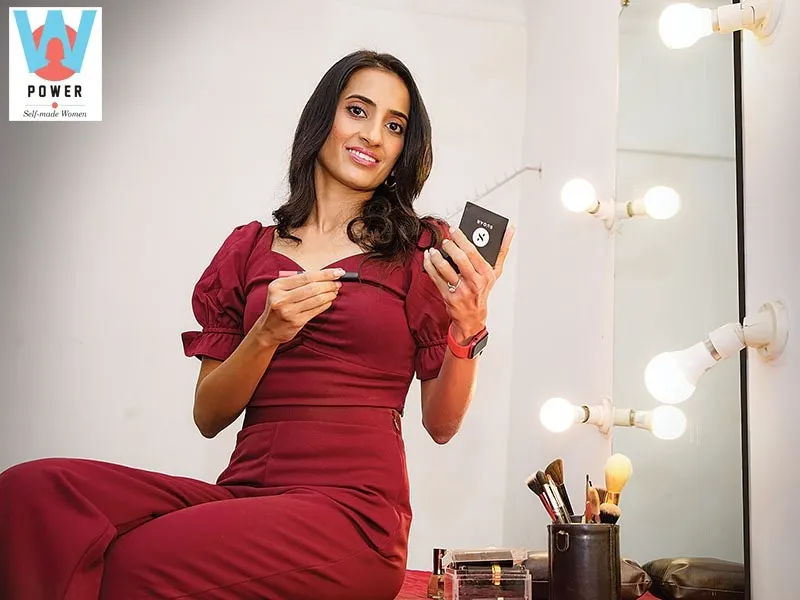
Ask her what makes a CEO and she reaches for people and numbers together. In a Times Now interview she offered a plain line: you cannot be a CEO if you are not fond of people. She also swore by mathematics as a core executive skill, the unglamorous ability to see profit as a system rather than a vibe. Inside SUGAR she has talked about a 4H culture mantra in that same conversation set, the kind of internal shorthand companies invent so values survive headcount growth.
On endurance sports the public record is thicker. She finished the roughly eighty-nine-kilometer Comrades Marathon in South Africa across 2012 to 2014, among a small set of Indian women finishers in that era's coverage. She completed an Ironman triathlon in Austria in 2017. In the 2018 Mumbai Marathon she ran a half marathon of twenty-one kilometers in about two hours forty-two minutes while around six months pregnant. The athletic file is not decoration. It is how she narrates pain tolerance: long efforts, paced suffering, finish lines that do not care about your brand deck.
She has also described a quieter bias trap inside her own marriage partnership. Even after years of building, she caught herself planning smaller salaries and smaller valuations than Mukherjee assumed they deserved. She has said the correction had to be conscious. Living-person care means holding that as her self-report about gendered self-discounting, not as a verdict on him.
Shark Tank India: the second job
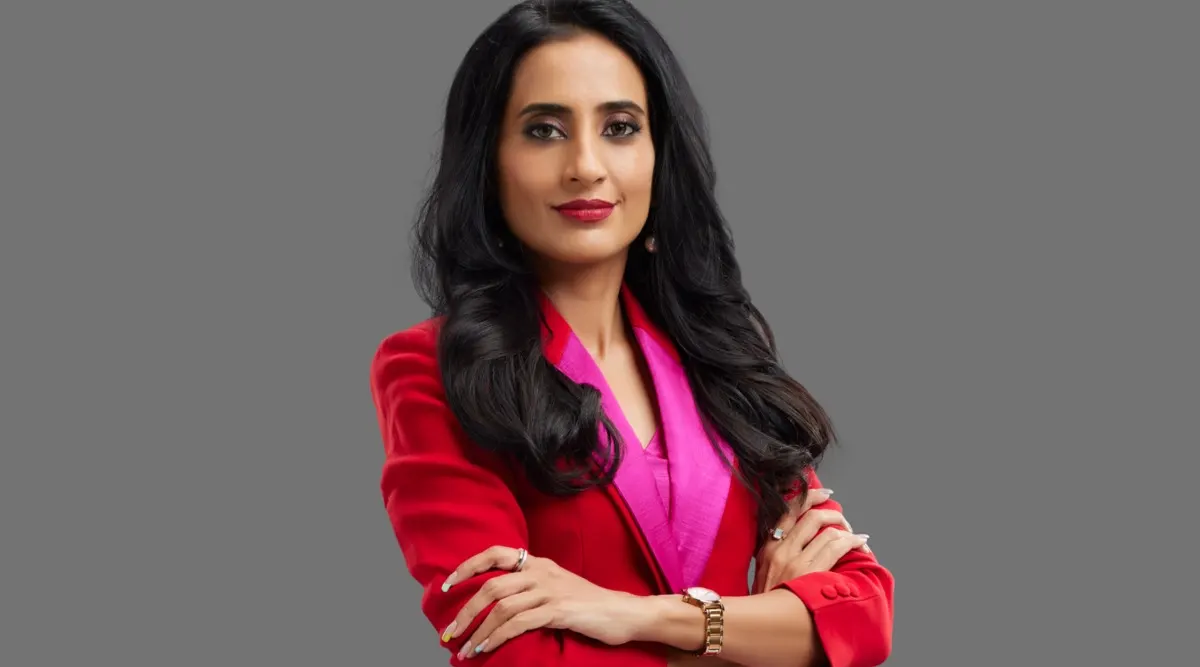
When Shark Tank India launched on SonyLIV in 2021, Singh joined the investor panel and became, almost overnight, a national classroom. Founders who would never meet a Mumbai CEO watched her ask about gross margin, repeat rates, and whether a cute story had a road to profit. She has said more than half of the capital she deploys from the show goes to women founders, a corrective instinct after years of hearing investors treat one failed woman-led company as a category lesson.
The fame had a cost. Early social-media discourse compared her look to a sitcom mother character and piled on appearance commentary she read as gendered in a way male co-panelists rarely faced. Her children asked why strangers wanted photographs. Weekend shoots, according to people around the company speaking to Moneycontrol in 2026, were the typical pattern, and SUGAR's board had not once demanded she quit the show. Critics still wondered whether television stole hours from a brand in trouble. The honest answer is both can be true: the show minted trust and distribution for SUGAR's name, and no amount of trust replaces cartons in a warehouse.
She appeared with fellow Sharks on Kaun Banega Crorepati and The Kapil Sharma Show, the full celebrity-business crossover India loves. None of that changed the physics of lipstick inventory.
Peak ambition: become the Maybelline of India
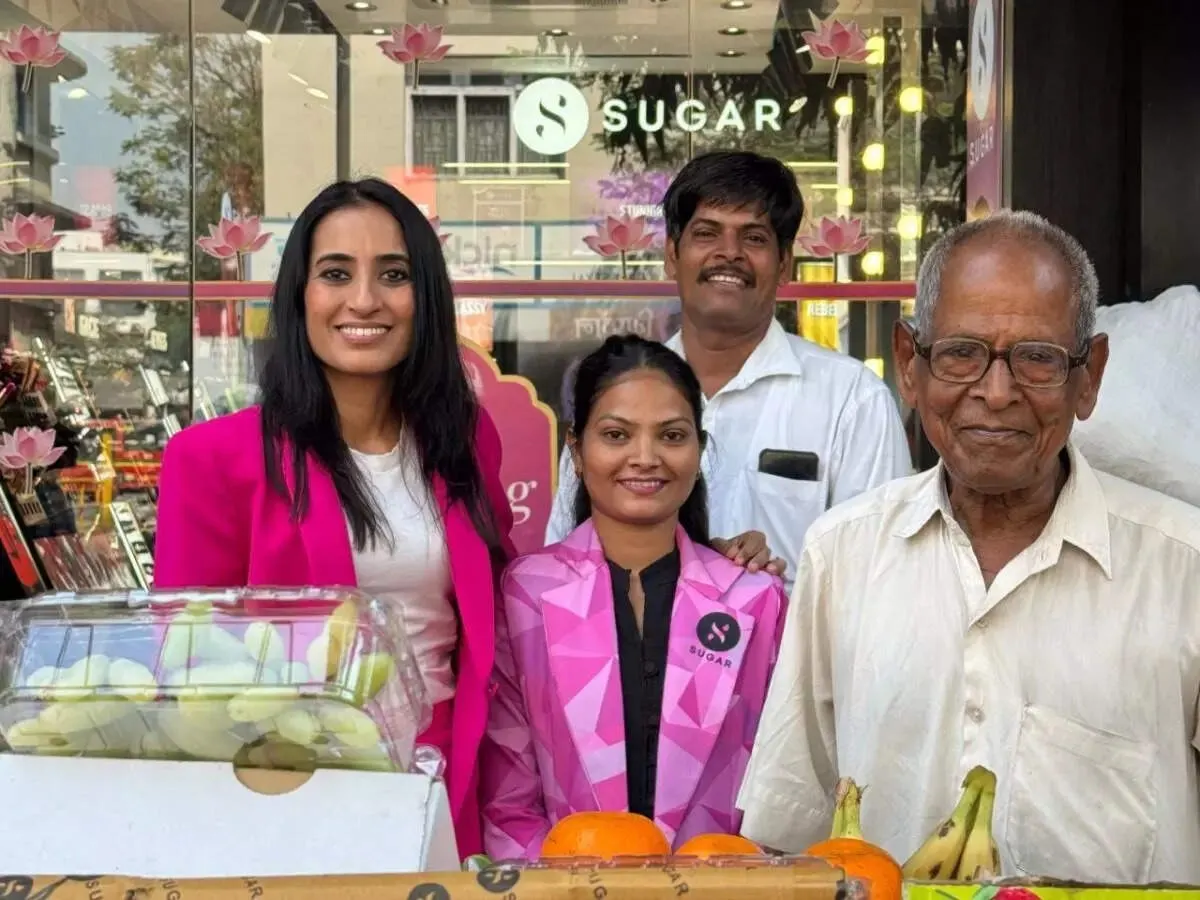
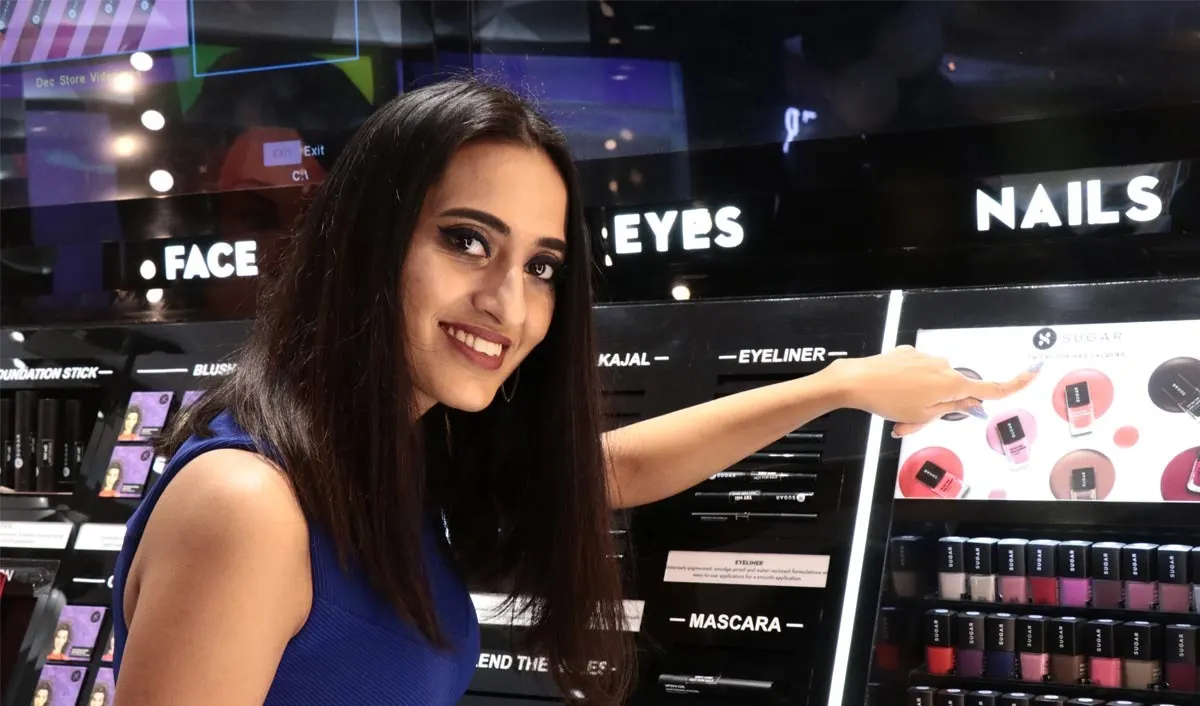
After the Catterton round, SUGAR's ambition scaled like a dare. Sources later told Moneycontrol the company wanted to be everywhere Maybelline and Lakmé were: every town, every relevant shelf, a future where a counter could brag about being India's number one makeup brand the way global signage bragged for someone else. Store count became a proxy for destiny. SUGAR took about four years to open its first hundred stores, then roughly a year to open the next hundred. At peak, reporting put the broader footprint above twenty-four hundred doors, including around two hundred exclusive brand outlets. SKUs swelled toward about eight hundred fifty. Offline mix pushed toward something like seventy-thirty as the company chased physical presence.
Mukherjee, speaking in September 2026, put the cultural mistake in one sentence. When you open a hundred stores in four years, you are cautious. When you open the next hundred in a year, you are in euphoria, not paranoia. Paranoia, he suggested, is healthier when the rent meter is running.
Distribution without pull creates a special kind of hell. Products that do not move must be pulled back. Retailer relationships sour. Working capital traps itself in the wrong shade in the wrong town. Color cosmetics, he noted, invent a new hero brand almost yearly. Good Glamm had a year. Renee had a year. Swiss Beauty had a year. Trying to win by cloning the shelf width of fifty-year incumbents was a trap dressed as strategy.
November 27, 2024: fire in Bhiwandi
On November 27, 2024, a fire at SUGAR's Bhiwandi warehouse destroyed inventory later described as about eighty crore rupees at maximum retail price. November sits inside India's festive demand peak. Beauty brands cannot pause Diwali because a shed burned. Mukherjee later estimated the fire as perhaps twenty to thirty percent of the company's problems. The larger share, in his accounting, was the over-expansion that left too many doors hungry when stock vanished.
Fill rate, the share of orders actually delivered against what partners asked for, fell toward about sixty percent against an industry comfort zone nearer eighty-five to ninety, according to people familiar with the numbers who spoke to Moneycontrol. SUGAR was taking orders it could not finish. Demand existed. Conversion died in the aisle between a confirmed ask and an empty carton. Monthly cash burn, once described in the range of fifty to eighty lakh rupees, spiked toward four to five crore rupees at the worst stretch.
The ugly scoreboard: FY25 into FY26
FY24 had looked like a corner turning. Early 2024 interviews had Singh talking about a first profitable month, revenue a little above five hundred crore rupees, and an IPO window two to three years out if the company could be stably profitable near a thousand-crore revenue line. FY25 broke that story. Operating revenue fell about twenty percent to roughly four hundred four crore rupees. Net loss roughly doubled to about one hundred thirty-five crore rupees from about sixty-eight crore. Wikipedia and other roundups sometimes cite nearby figures such as four hundred fifteen crore of revenue and about one hundred eight crore of loss. Prefer the Moneycontrol and filing-adjacent band, and treat exact rupees as reporting estimates until audited statements are the cite.
FY26, still incomplete in public filings when Moneycontrol reported in mid-September 2026, looked worse on throughput. Sources said sales may have landed near three hundred fifty to three hundred seventy crore rupees even though orders near five hundred fifty crore existed, another way of saying inventory failure taxed the top line. Losses for FY26 were described around fifty-five crore. First-half FY27 burn was described around fifteen crore. The company explored selling. Potential buyers, those sources said, showed interest at valuations north of twenty-five hundred crore rupees, far above the rescue round that followed. The founders declined. Mukherjee's line was stark. The ship was on fire. They would not spend a year peddling a burning ship to someone else.
September 2026: A91, Stride, and a valuation that hurts

By the time A91 Partners' term sheet turned into money, SUGAR had virtually no runway. The gap between term sheet and cash stretched about four months. Stride Ventures' roughly twenty-five-crore-rupee loan, in the Moneycontrol account, kept lights on for about three months. Then came the September allotment: about one hundred forty-four and a half crore from A91 Emerging Fund III at an issue price near twelve thousand eight hundred seventy-one rupees per preference share, with talk of another hundred to hundred five crore in tranches that could take the fresh total near two hundred fifty crore and leave A91 a significant minority holder. The valuation band of five hundred fifty to six hundred crore rupees was not a victory lap. It was oxygen.
Singh's Instagram honesty mattered because Shark Tank India had taught a generation to sneer at vanity valuations. She refused to pretend the markdown was a rounding error. Building, she insisted, was the point.
The makeover: fewer doors, fewer SKUs, clearer jobs
The operating reset matched the capital humility. SUGAR began cutting toward roughly one thousand to eleven hundred stores from more than two thousand, with exclusive outlets possibly shrinking toward about sixty-five and maybe thirty-five depending on festive performance. The assortment theory shifted from "everything everywhere" to about two hundred fifty never-out-of-stock heroes that would receive working-capital priority. Online and offline were to rebalance toward something nearer fifty-fifty rather than an offline sugar high. Mukherjee's takeaway sounded like a textbook written in scar tissue. You cannot grow retail on steroids or on performance marketing alone.
Roles flexed with the plan. Over the next six months from that September 2026 interview, Singh would lead SUGAR operations while Mukherjee spent more active time building Quench's separate muscle, without dropping Sugar's marketing, operations, and technology reporting lines. The marriage-company knot tightened again: one household, two brands, one shared near-death memory.
World impact in plain language
SUGAR's cultural impact was never only rupees. For a cohort of Indian women who grew up failing foundation matches designed elsewhere, a brand that treated undertone as engineering rather than charity changed the mirror. Affordable experimentation, tutorial-led confidence, and a tone that joked instead of shamed pulled first-time makeup users into a category their mothers had treated as rare occasion wear. Shark Tank multiplied that effect beyond beauty. Young founders, especially women, watched a CEO who looked like their ambitious cousin ask hard questions without needing a male translator.
The 2025-2026 crisis is part of the impact record too. It warned India's D2C generation that television fame, celebrity investors, and peak private valuations do not suspend inventory physics. A generation that learned growth from SUGAR's rise now gets a free lecture from SUGAR's repair.
Living-person care and open arguments
Singh is alive, working, and still judging on national television while her company digs out. That demands restraint. Gendered fundraising stories are her reported experience. Exact personal net worth is not a responsible invention; older batch estimates in the low single-digit millions of dollars are stale relative to private-company complexity and should not be recycled as fact. Ranveer Singh's cheque size remains undisclosed. FY25 and FY26 rupee figures carry source variance. The IIT JEE rank sometimes quoted in profiles is secondary. Childhood magazine-selling anecdotes appear in lifestyle retellings more than in primary business interviews. Death-hoax noise around her name in prior years was garbage internet weather, not biography.
What is solid enough to carry: the education spine, the rejected crore offer as contemporaneous news, Quetzal and FabBag as stepping stones she herself narrates, SUGAR's founding thesis, the Catterton-era peak ambition, the Bhiwandi fire date and scale as reported, the FY25 decline band, the September 2026 A91 rescue math, and the founders' choice to keep steering.
The lingerie almost-life and the courage tax
The 2006 campus story is easy to flatten into a motivational poster. The textured version is stranger. A bank decided Indian B-school talent deserved a global-style package, newspapers printed the crore, and two graduates said no because they wanted to sell intimate apparel online in a country where even offline lingerie shopping felt awkward. Funding did not arrive. The idea died. What survived was Singh's public identity as the person who walked away, which is a brand of its own and a trap of its own. Every later failure got measured against the counterfactual banking career. She has said it took maybe fifteen or sixteen years before she could imagine matching the money she had refused. The privilege she names instead is signing paychecks for thousands of people, with a large share of them women, when SUGAR was in its stronger employment years. Headcount figures move with crises; the moral claim is the one she keeps repeating. Building employers beat collecting a personal W-2 from a trading floor.
That courage tax shows up in small humiliations. Grey powder in the hair. Trying to sound older. Sitting invisible beside a co-founder fifteen years senior. Investors narrating one woman founder's choice to have a family as a portfolio lesson. Singh's response on Shark Tank, by her own account, was to bias capital toward women without turning the show into a charity. Gross margin still had to work. Unit economics still had to work. Soft bias and hard numbers in the same breath is her operating signature.
Brand voice, education, and the mirror test
SUGAR's marketing bet was that Indian consumers would learn makeup the way they learn cricket highlights: on the phone, from people who look like them, in language that does not scold. Trade interviews from the brand's growth years put Instagram and YouTube at the center of discovery, with follower communities in the millions on Instagram and hundreds of thousands on YouTube when those snapshots were taken. The insight was educational. Contouring, winged liner, and skin-tone lipstick matching were not frivolous. They were onboarding. A woman who feels competent in front of a mirror becomes a repeat buyer without needing a mall auntie to grant permission.
Product architecture followed the same mirror test. Global trends were welcome if they could be Indianized. Hollywood references mattered less than whether the shade survived Mumbai humidity and whether a darker undertone had somewhere to live on the shelf. When multinational partners of the FabBag era doubted selfie culture, SUGAR later treated the selfie as proof of product-market fit. That cultural read helped the brand punch above its age against houses with decades of retail muscle. It also tempted the company to believe awareness equalled availability. Awareness without fill rate is a crowd at a locked door.
Money, boardrooms, and the husband condition
Singh has told Business Today that some early funding conversations only moved when her husband joined the company full time, a condition she read as gender discrimination. The detail matters because SUGAR is often sold as a power-couple fairy tale. The less pretty version is that markets sometimes trusted the married unit more than the woman alone, even when she was the public CEO. Mukherjee as COO and operator became both a strength and a spotlight problem. When the 2026 crisis hit, some online noise asked whether her Shark Tank hours were the villain. Company-adjacent voices answered that shoots were weekend-heavy and that the board had never once asked her to step away. The deeper operational autopsy from Mukherjee himself pointed at store euphoria, SKU sprawl, and inventory, not studio lights.
Celebrity capital added another mirror. Ranveer Singh's 2022 cheque and evangelist title made SUGAR feel inevitable in popular culture. Kareena Kapoor Khan's Quench partnership extended the bet into skincare education. Those alliances are real assets when product is in stock and real embarrassments when a consumer walks into a dead planogram. Fame is leverage. Fame is not a warehouse.
What Shark Tank taught her about other people's books
Long-form conversations with fellow Sharks show Singh's diligence style. She looks for category tailwinds even in small businesses, then hunts for gross margin as the simplest evidence that profitability is a switch you can eventually flip rather than a fantasy. Brand businesses, in her framing, can survive turning marketing down because some residual love and repeat remain, unlike pure marketplace middlemen that go to zero when the ad spend stops. That philosophy explains why she could back many loss-making consumer pitches without panicking, and why SUGAR's own later losses stung in a special way. She knew the theory of the marketing switch. She also learned that you cannot flip a switch if the SKU is missing and the retailer has stopped trusting your promise date.
Her season-by-season investment counts vary in secondary retellings. What stays stable is the posture: ask the question that makes a founder sweat the spreadsheet, then leave them dignity. Young India did not only get entertainment. It got a vernacular for unit economics spoken by a woman who had failed twice before she won once.
Inside the 2026 repair bay
By the time Moneycontrol published its mid-September 2026 autopsy, SUGAR's plan read like a turnaround binder. Concentrate cash on never-out-of-stock heroes. Shrink doors until demand and supply can see each other again. Admit that copying Maybelline's footprint without Maybelline's decades of pull was ego dressed as strategy. Use A91's capital to rebuild inventory honesty rather than to plant more flags on a map. Let Quench grow under clearer leadership attention so SUGAR is not the only child in a burning house.
Singh's public job in that season is dual and unfair. On television she remains the composed Shark. In the company she is the operator of a repair. The Instagram admission about the down round was a way to seize the narrative before valuation screenshots seized it for her. Critics heard weakness. Operators heard a founder refusing to waste oxygen on denial.
Threads that still do not tie neatly
Some threads remain intentionally loose. Exact childhood entrepreneurship stories about a three-rupee magazine sold door to door at age ten appear in lifestyle profiles more than in audited business histories. They are charming and soft. The Deutsche Bank internship, the crore offer as contemporaneous news, and the flooded Mumbai room are firmer. Quetzal's legal ending details are thin in English sources. FabBag's final operational status is less important than its role as SUGAR's unpaid focus group. Personal wealth estimates online are a mess of recycled figures and should be treated as unverified. The company's second chance will be judged on fill rates, contribution margins, and whether festive 2026 and 2027 look like commerce or like apology.
Closing

Picture a Delhi schoolgirl from a scientist's home who collected IIT and IIM credentials like armor, then refused the armor's easiest reward. Picture a flooded Mumbai room and a ten-thousand-rupee salary after a one-crore almost-life. Picture Quetzal dying into a lesson, FabBag turning subscribers into a product laboratory, and SUGAR launching with the nerve to say Indian heat and Indian undertones deserved their own engineering.
Picture the Shark Tank lights, the children puzzled by autograph strangers, the Maybelline dare, the store maps filling too fast. Picture smoke over Bhiwandi in late November 2024, empty festive shelves, and a fill rate that told the truth when dashboards lied. Picture a September 2026 preference-share allotment that looked like defeat to people who only read valuations, and like oxygen to people who still had payrolls to meet.
Vineeta Singh's life so far is not a straight sugar rush. It is a loop: listen, build, overreach, confess, rebuild. SUGAR's second chance, as Mukherjee framed it, is binary in the way endurance sports are binary. They will get there, or they will die trying. The cameras will keep rolling either way. The warehouses will not care.