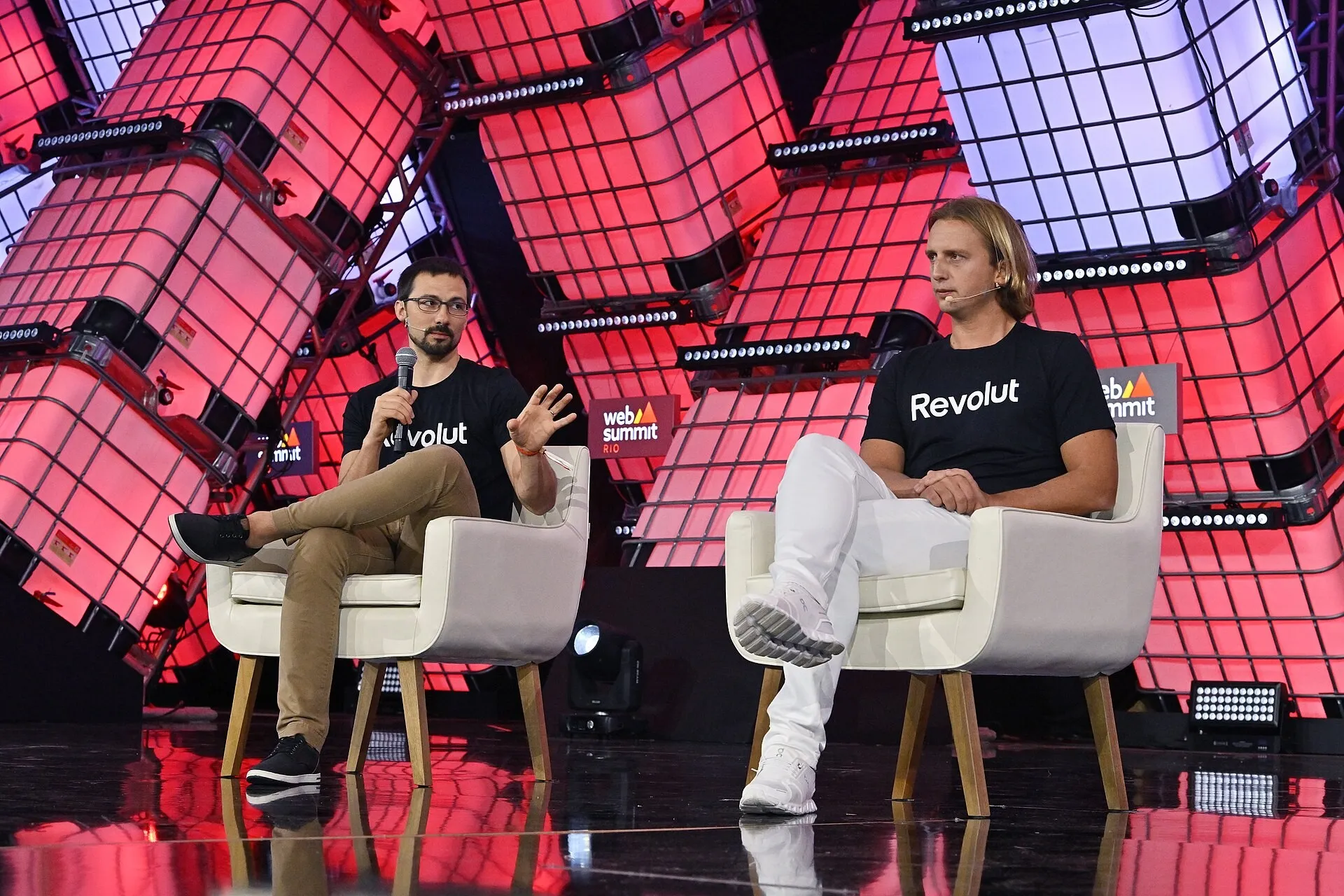
The Engineer Who Built a Bank From Scratch
His partner had the idea. He had the code. Together they built Revolut.
Banks usually run on old computer systems. Some of the code is decades old.
Vlad Yatsenko believed a bank could be built from scratch, fast and modern, like a tech company.
He gave a talk with a bold title: anyone can build a bank. Then he proved it by building Revolut with Nik Storonsky.
An engineer from Ukraine

Vlad Yatsenko is from Ukraine. He grew up loving computers and became a software engineer.
He built trading systems for big banks, including Credit Suisse and Deutsche Bank. That work taught him how money moves through banks, and how slow and clunky the systems behind them often are.
Teaming up with Nik
In London, Vlad met Nik Storonsky, a trader who was fed up with bank fees on foreign currency.
Nik had the idea for a cheaper way to spend abroad. Vlad knew how to build it.
On July 1, 2015, they launched Revolut. Vlad became chief technology officer, the CTO.
Building a bank backend

Instead of buying old banking software, Vlad's team wrote their own. That let Revolut add new features fast: new currencies, stock trading, crypto, savings and more.
As millions of people joined, Vlad's systems had to handle more than a billion transactions a month.

Anyone can build a bank
Vlad often spoke to developers about how Revolut built its technology. His message was that modern engineering could replace the old ways banks work.
Stepping back

In March 2026, Revolut won its full UK banking licence, a huge moment for the company Vlad helped build.
A few months later, after a decade as CTO, Vlad stepped down from his executive role. From July 1, 2026, he became a non executive director on Revolut's board. Revolut's head of technology, Donato Lucia, took over the tech team.
Where he is now
Today, Vlad Yatsenko sits on Revolut's board as a non executive director. The company he co-founded has tens of millions of customers and is one of the most valuable private fintechs in the world.
Why the story matters
Every big idea needs someone who can actually build it. Vlad Yatsenko was that person for Revolut.
He used his years inside big banks to see what was broken, then wrote better systems from scratch.
For young builders, the lesson is simple. Great partnerships pair a person who sees the problem with a person who can build the solution. You do not need to be the loudest voice to shape a giant company.
Nik dreamed the bank. Vlad built it.
The Record
From: Ukraine
Career before Revolut: Engineer building trading systems at Credit Suisse and Deutsche Bank
Built: Revolut (with Nik Storonsky)
Role: CTO 2015 to 2026; now non executive director
Timeline
2015 Co-founds Revolut in London and becomes CTO.
2016 Revolut reaches around 300,000 users.
2021 Revolut valued at $33 billion.
2024 Restricted UK banking licence.
2026 Full UK banking licence in March.
2026 Steps down as CTO, joins the board from July 1.